

Two Authors Cisco Bradley and Kwami Coleman, Echo Two New Histories of Free Jazz
On November 19 in New York City, the Center for Art, Research and Alliances (CARA), hosted two music historians and authors, Cisco Bradley and Kwami Coleman, to discuss their books on the Jazz Music genre
By Africa-Related, New York
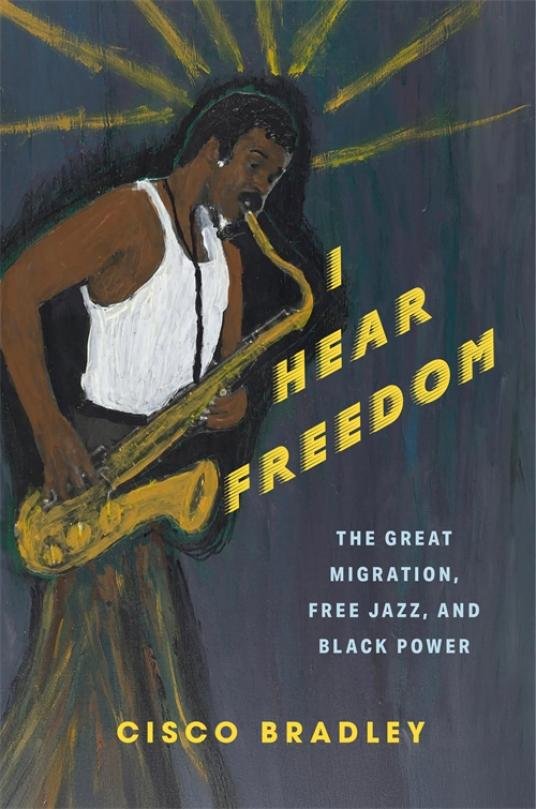
CISCO BRADLEY
I Hear Freedom: The Great Migration, Free Jazz, and Black Power (Columbia University Press, 2026)
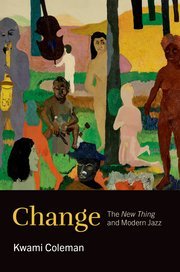
KWAMI COLEMAN
Change: The New Thing and Modern Jazz (Oxford University Press, 2025)
On November 19 in New York City, the Center for Art, Research and Alliances (CARA), hosted two music historians and authors, Cisco Bradley and Kwami Coleman, to discuss their books on the Jazz Music genre.
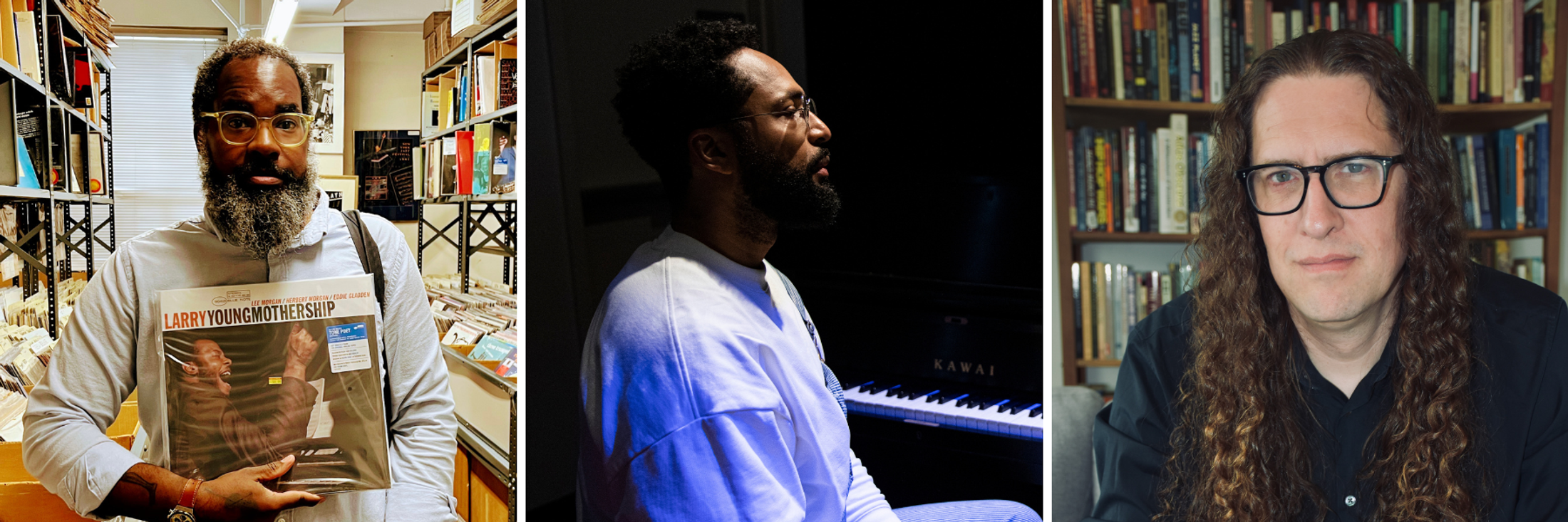
L-R: Gabriel Jermaine Vanlandingham-Dunn (Photo: Eliza Grace Martin), Kwami Coleman (Photo: Jonathan King), Cisco Bradley (Photo: Jennie Romero)
The Center for Art, Research and Alliances (CARA) in New York hosted an event celebrating two new books on free jazz. Cisco Bradley, a history professor and music director, wrote I Hear Freedom: The Great Migration, Free Jazz, and Black Power (Columbia University Press, 2026). Kwami Coleman, a musicologist and associate professor, wrote Change: The New Thing and Modern Jazz (Oxford University Press, 2025).
The shared launch had Bradley and Coleman in conversation with music historian and DJ Gabriel Jermaine Vanlandingham-Dunn, who wrote the foreword to I Hear Freedom. Vanlandingham-Dunn also played selections from vinyl records as part of the conversation, bringing the sounds discussed in both books into the room.
Bradley's book traces the free jazz movement that took shape in Cleveland and Detroit in the 1960s. Drawing on interviews with dozens of musicians, he shows how artists broke from the constraints of bebop to develop a new musical language, pulling from figures like Ornette Coleman, Cecil Taylor, and John Coltrane, as well as African and Middle Eastern musical traditions, avant-garde art movements, and the politics of Black Power. The book locates this Midwestern scene within a longer arc, showing how the musical and cultural inheritance carried north by the Great Migration shaped its sound and sensibility.
Coleman's Change offers a parallel history, tracing the stylistic genealogy of the twentieth-century music that came to be known as free jazz, or the "new thing," as it was called in the early 1960s. Coleman examines how and why artists created this work, its cultural significance, and its often contentious reception in the music press of the era, offering readers new ways to listen to and understand this innovative and disruptive music.
Copies of the books are available for purchase at CARA Bookstore.
The Authors
Dr. Cisco Bradley is professor of history and director of the Music and Migration Lab at the Pratt Institute, and he is currently the Digital Studies Fellow at the John W. Kluge Center at the Library of Congress. He is an award-winning author, film director, and screenwriter. His work spans the fields of Black studies, music studies, migration studies, oral history, and cultural Memory. He is the author of four books, including I Hear Freedom: The Great Migration, Free Jazz, and Black Power (Columbia University Press, 2026), The Williamsburg Avant-Garde: Experimental Music and Sound on the Brooklyn Waterfront (Duke University Press, 2023), and Universal Tonality: The Life and Music of William Parker (Duke University Press, 2021). His first documentary film, Take Me to Fendika (2024), illustrating the work of world-renowned Ethiopian dancer Melaku Belay, won numerous awards, including best documentary at Cannes FIFI in 2025. His current research focuses on tracing the oral transmission of African music in North America and the Caribbean from the 17th to the early 20th centuries.
Dr. Kwami Coleman is a musicologist, music creator, and an associate professor at the Gallatin School of Individualized Study, New York University. He researches and writes on improvised and experimental music, American music history, jazz history, music and the African Diaspora, music's political economy, music aesthetics, technology, and culture. He is a pianist and producer who creates solo and collaborative work with electronics, machines, and other human Beings. Coleman’s book, Change: The New Thing and Modern Jazz, published by Oxford University Press in Fall 2025, is a stylistic genealogy of the twentieth-century abstract music now referred to as free jazz, or jazz’s "new thing" as it was known in the early 1960s. In it he makes connections between how and why artists created this work, its cultural significances, and its complicated reception in the music press of the 1960s while providing readers with new ways to listen to and understand this innovative and disruptive music. At Gallatin, Coleman teaches courses on American music history, music aesthetics, music and sound-based improvisation, and Black Music. He has, as a composer, premiered commissioned work for the Studio Museum of Harlem, Maysles Documentary Center, and the March on Washington Film Festival and continues to perform internationally. Currently, Coleman is at work on several recording projects following his 2017 full-length album Local Music.
Gabriel Jermaine Vanlandingham-Dunn is a writer, music historian, DJ, independent archivist, and professional listener based in Brooklyn, New York. He runs cow: Music, an independent record label focusing on accessible avant-garde music, and is the Creative Consultant for Astral Spirits Records (Austin, Texas). He has DJ’d in his native Baltimore, Maryland, Philadelphia, PA, and various locations in Brooklyn for over two decades. His essays, short stories, and reviews have appeared in Jazz Right Now, The Wire (UK), Musiqology (run by Dr. Guthrie Ramsey of the University of Pennsylvania), Oh Reader Magazine, Men In This Town, Penn Museum’s Expedition Magazine, Journals for Blackstar Film Fest, various album liner notes, and many other places. Most recently, he published a discographic essay about the great Sonny Rollins for the Black-centered journal A Gathering Together (his fourth for the journal) and provided the foreword for I Hear Freedom: The Great Migration, Free Jazz, and Black Power (Columbia University Press, 2026) by Dr. Cisco Bradley.
SHARE THIS STORY