
DELA Screening At UNN: More Photos
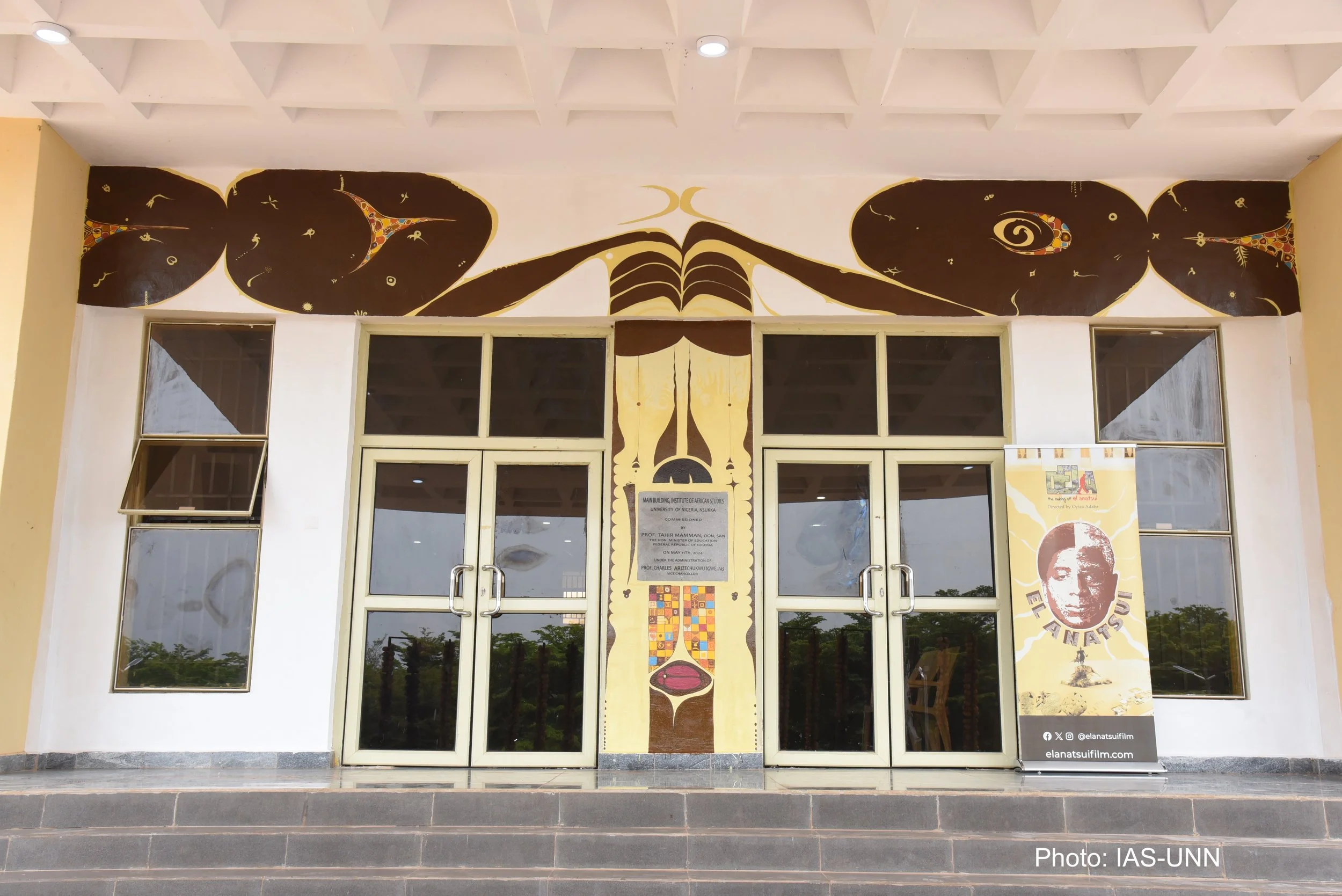
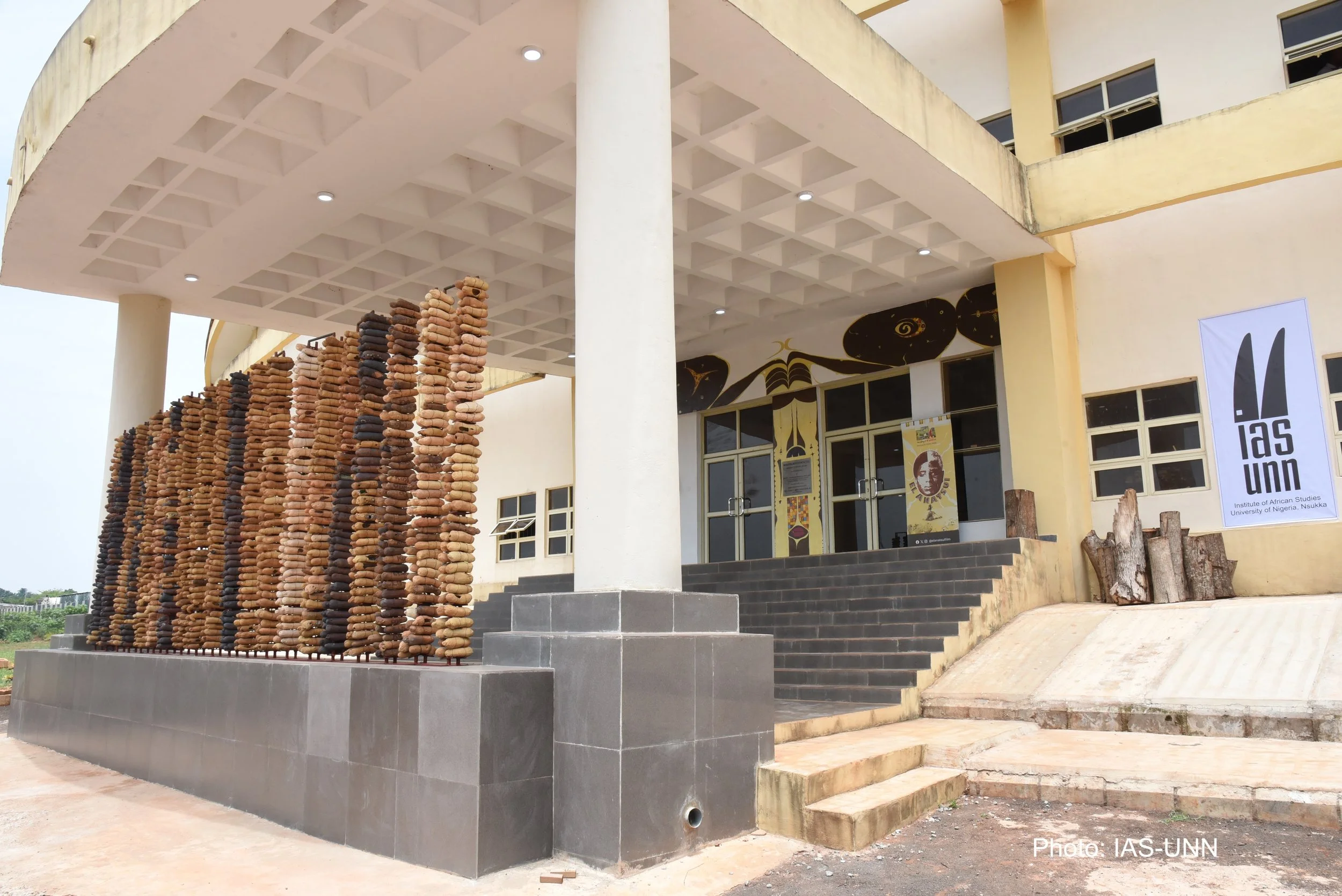
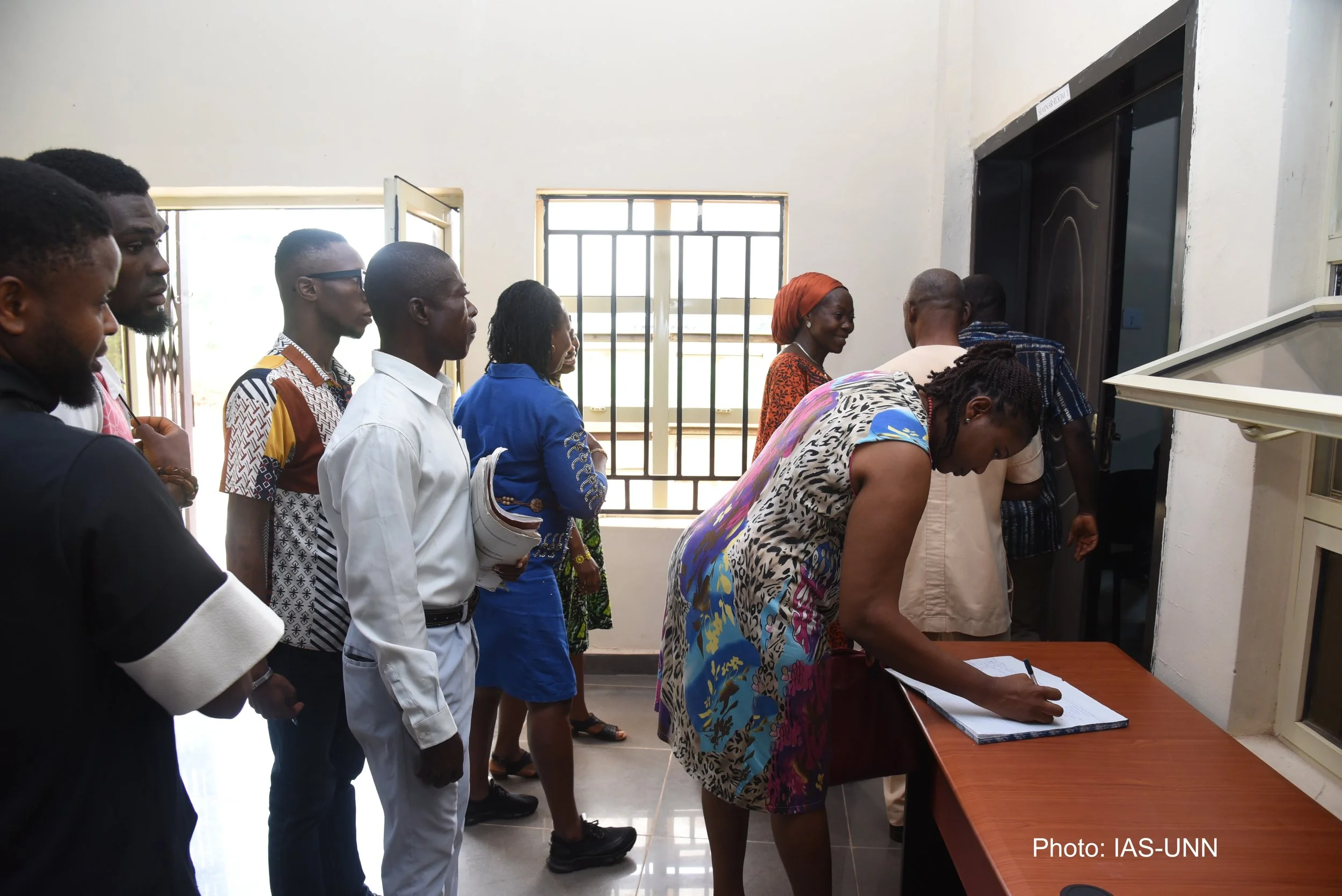
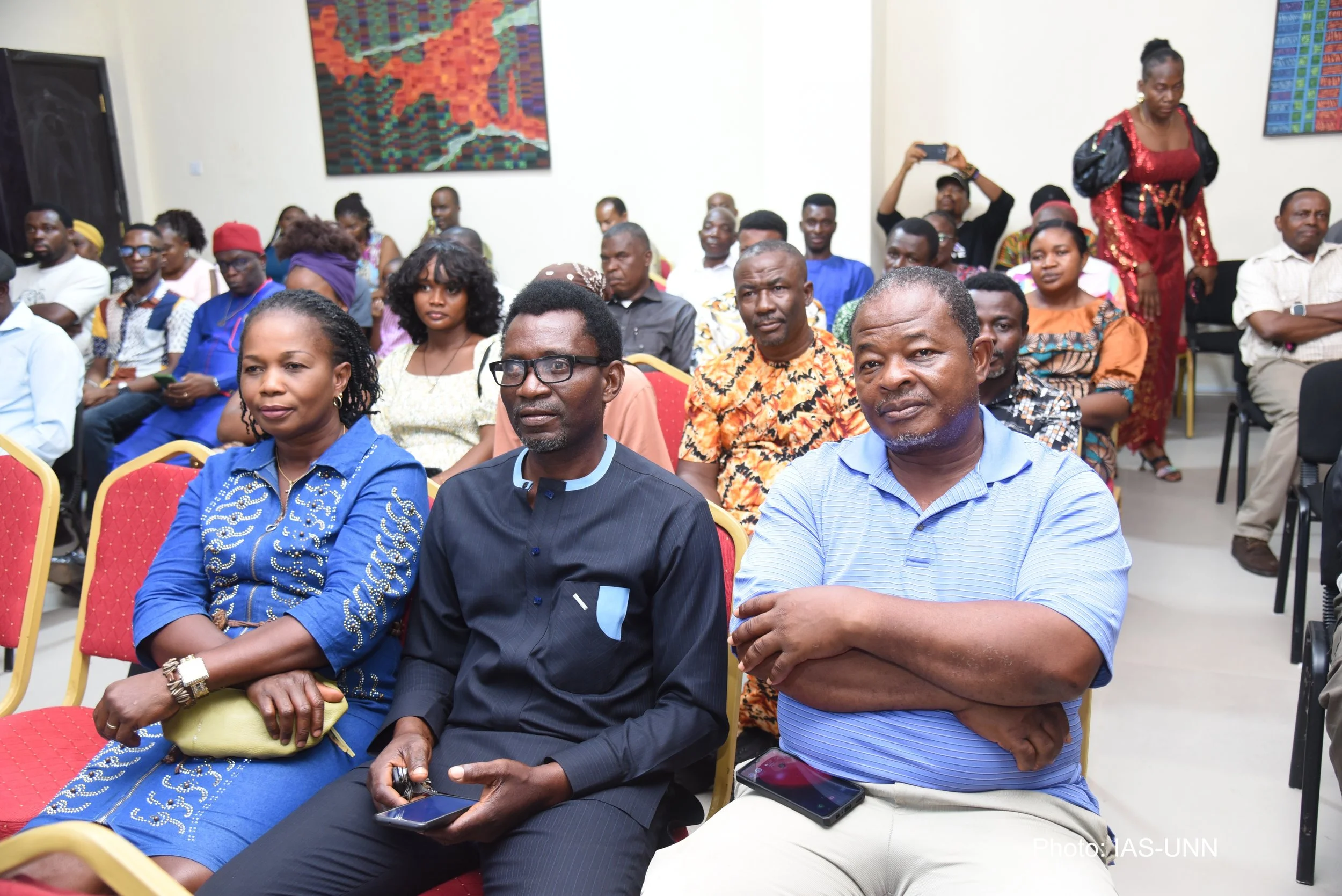
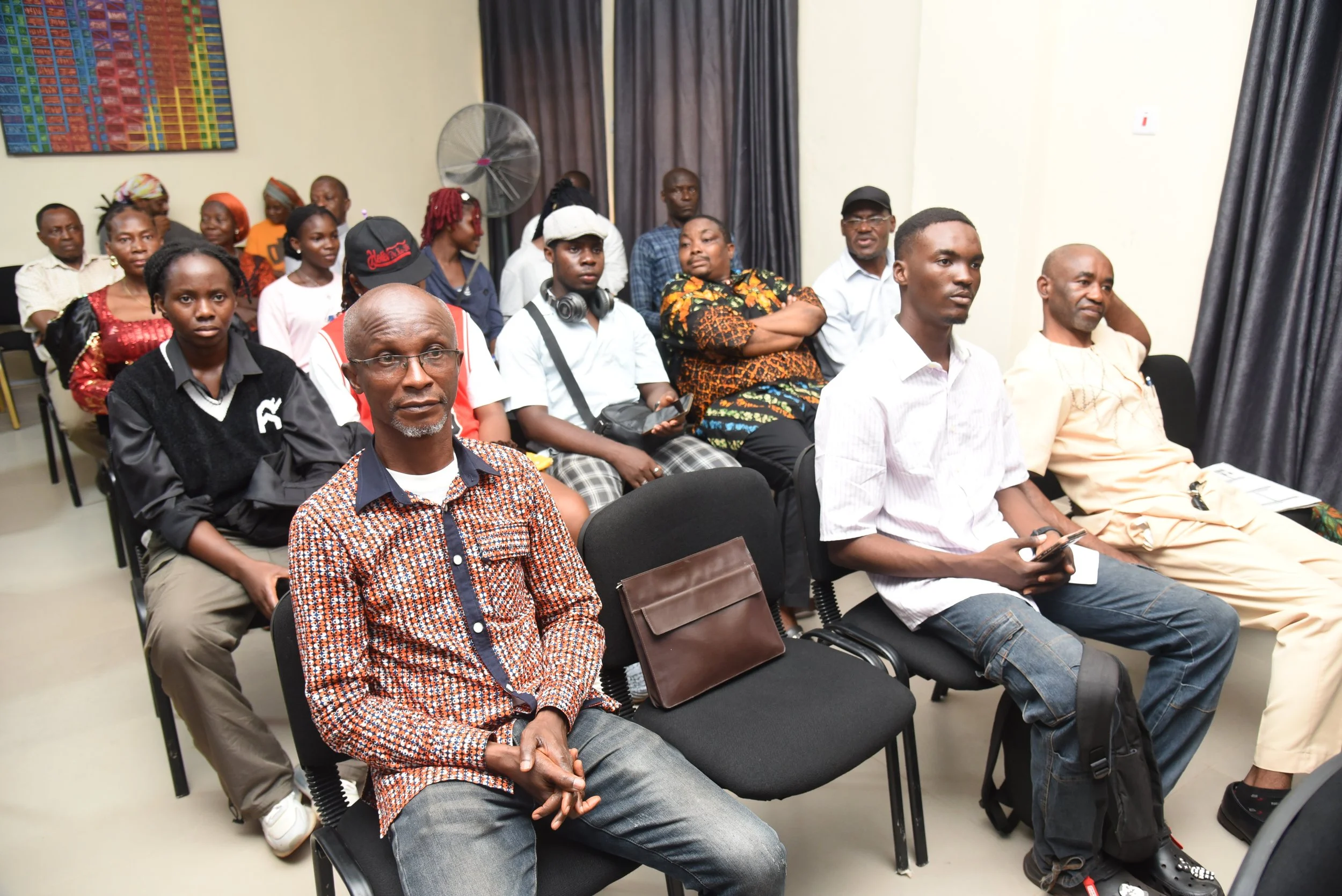
The DELA Campus Tour officially premieres at the esteemed University of Nigeria Nsukka. The screening and exhibition event was hosted by the Institute of African Studies (IAS) in their modern new venue, which was packed with an enthusiastic audience eager to engage with the content, highlighting both interest and meaningful impact.
Photos by IAS-UNN: DELA SCREENING & UNN CAMPUS
More images of the DELA Campus Tour at the esteemed University of Nigeria Nsukka (UNN). The screening and exhibition event was hosted by the Institute of African Studies (IAS) in their modern new venue, which was packed with an enthusiastic audience.
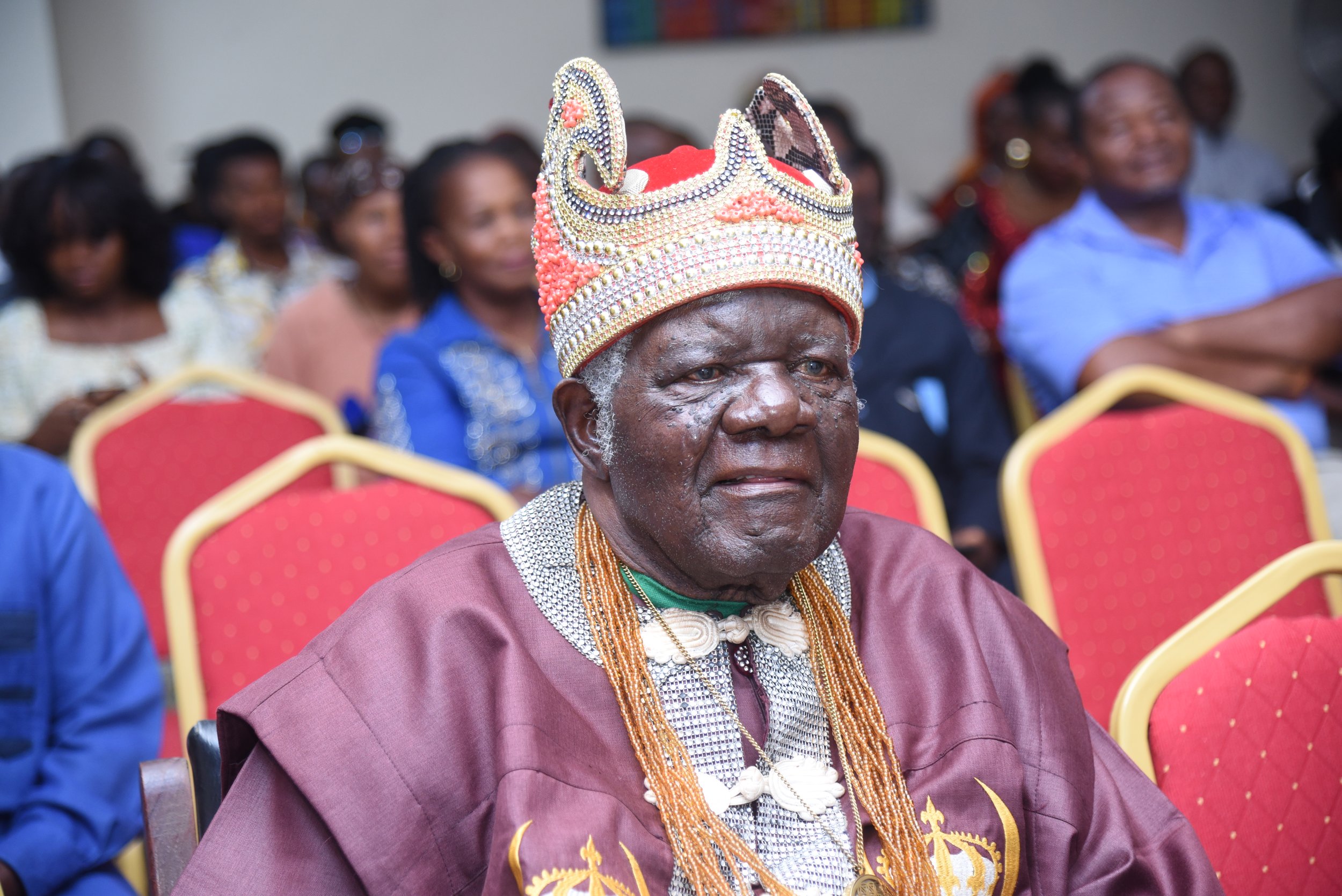
Special Guest: The paramount traditional ruler H.R.H Igwe George ASADU, The Okpe Udo of Ihe Nsukka, who in 2015 conferred the title "Ikedire of Nsukka" (“power which is effective”) on Prof. EI Anatsui.
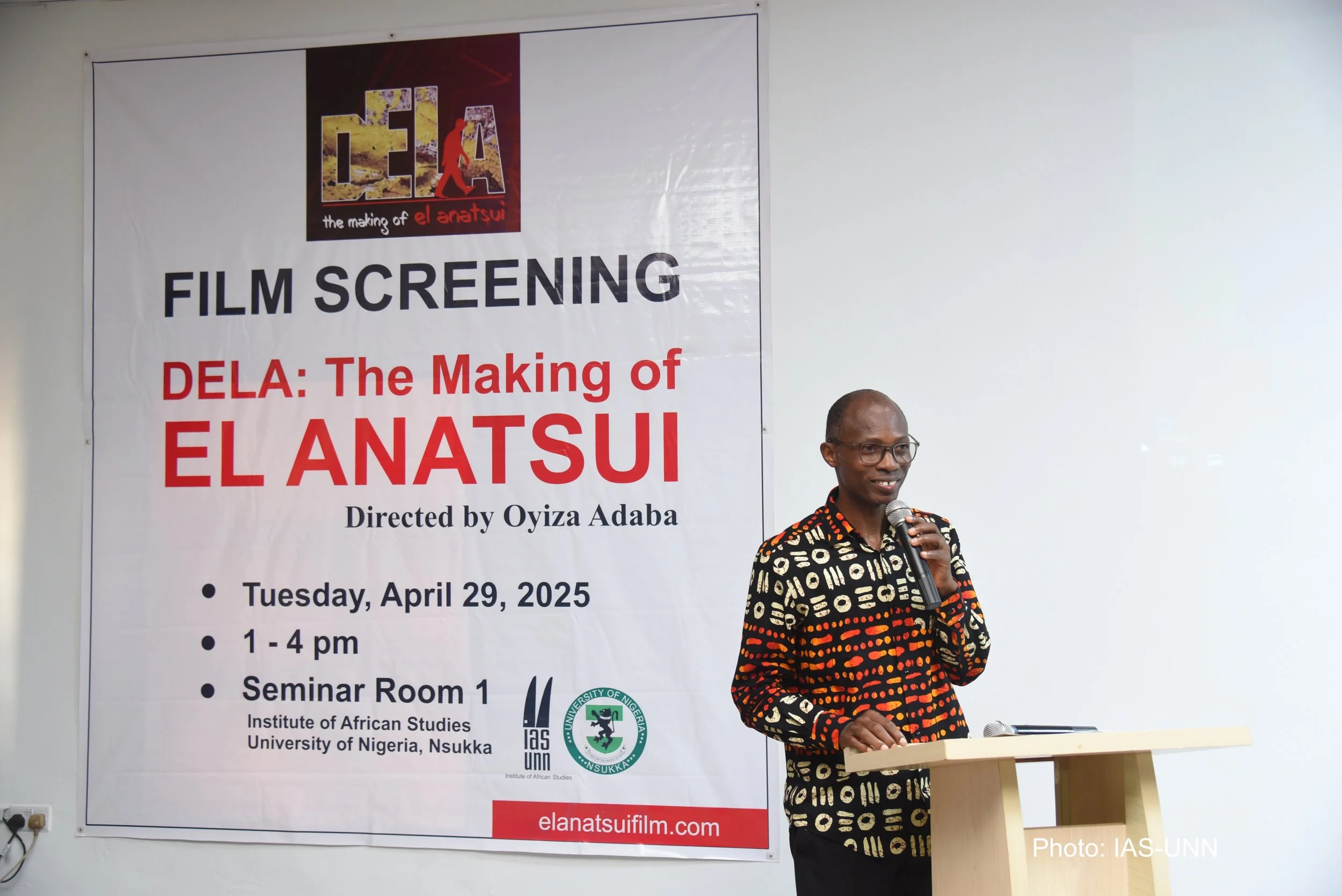
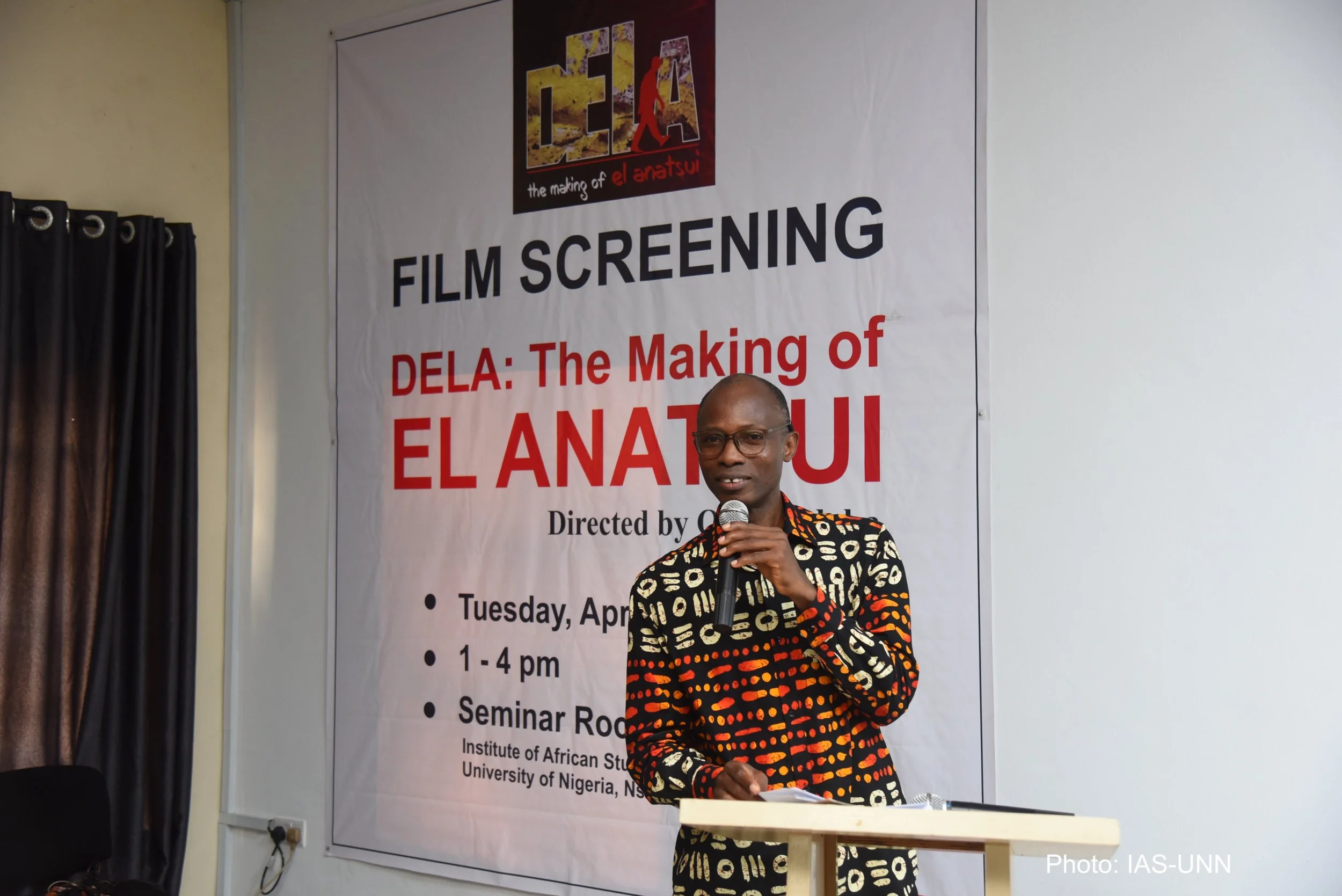
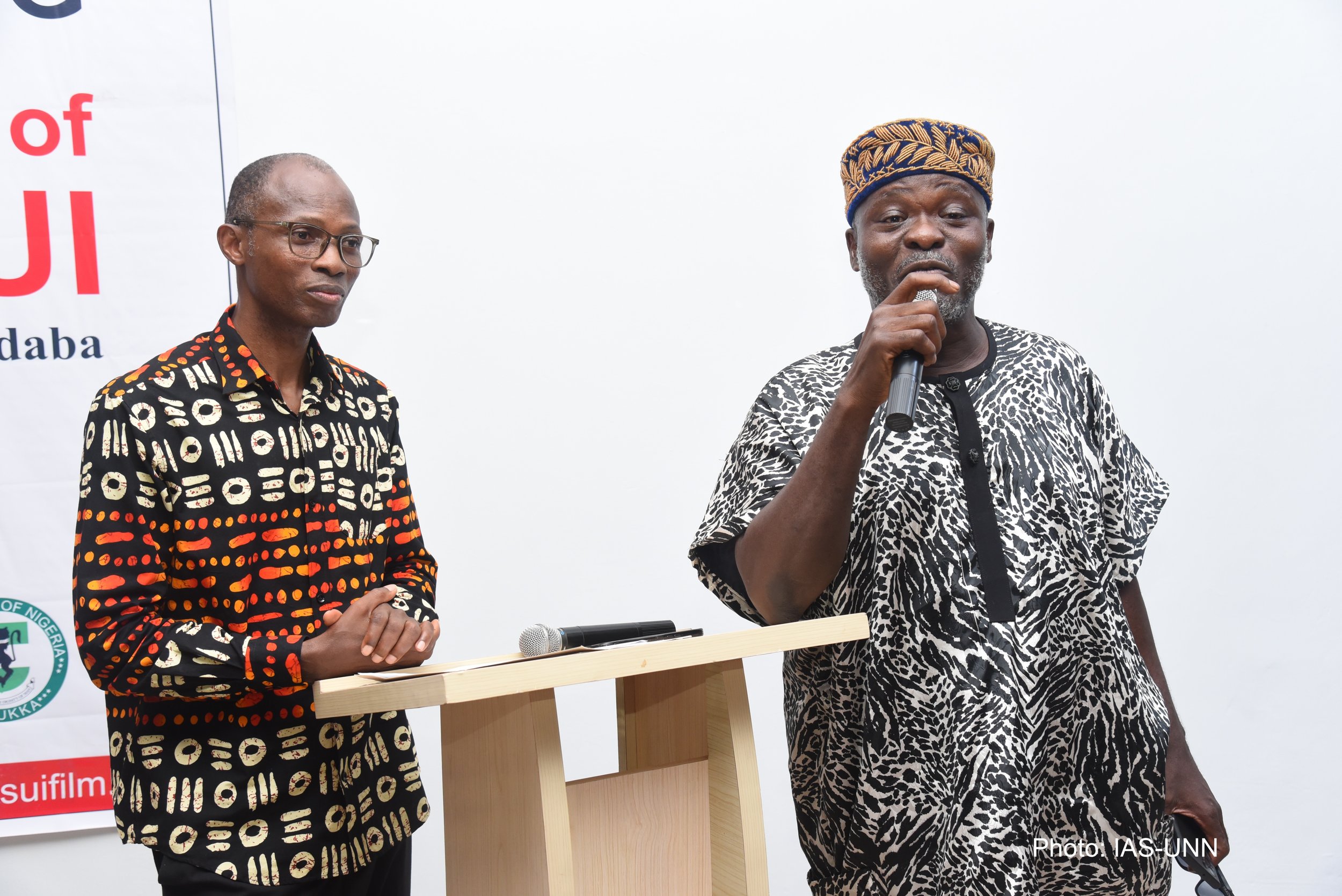
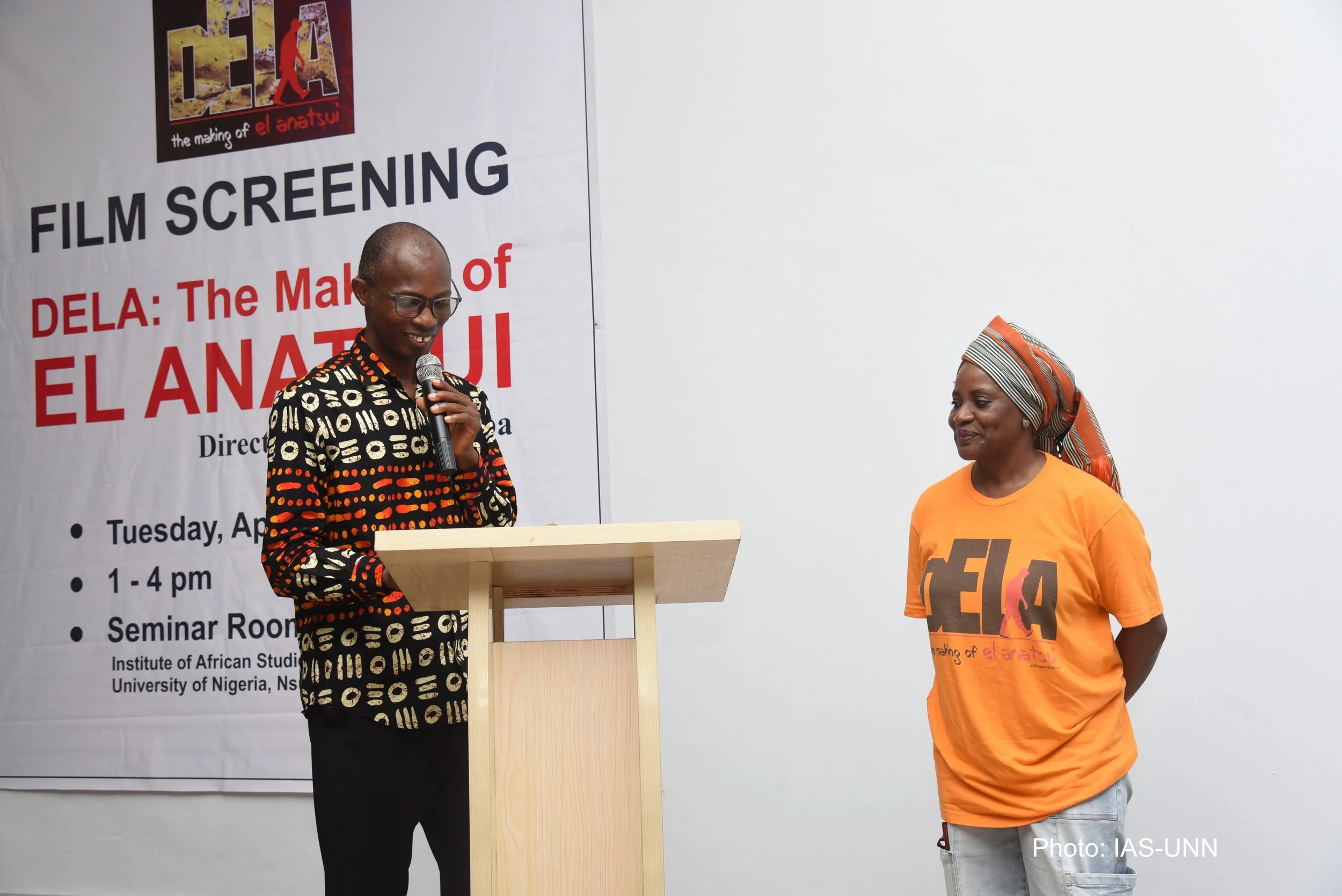
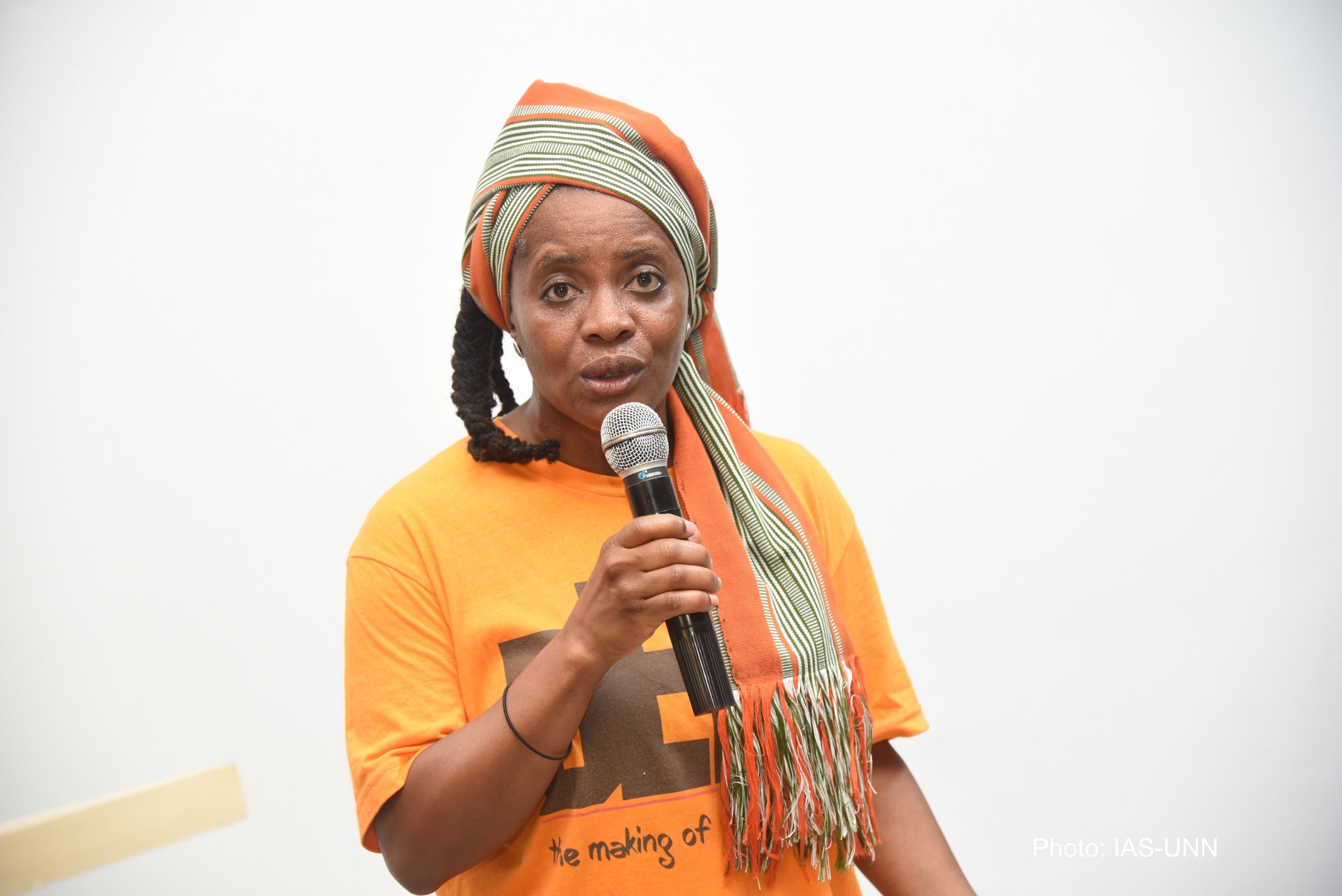
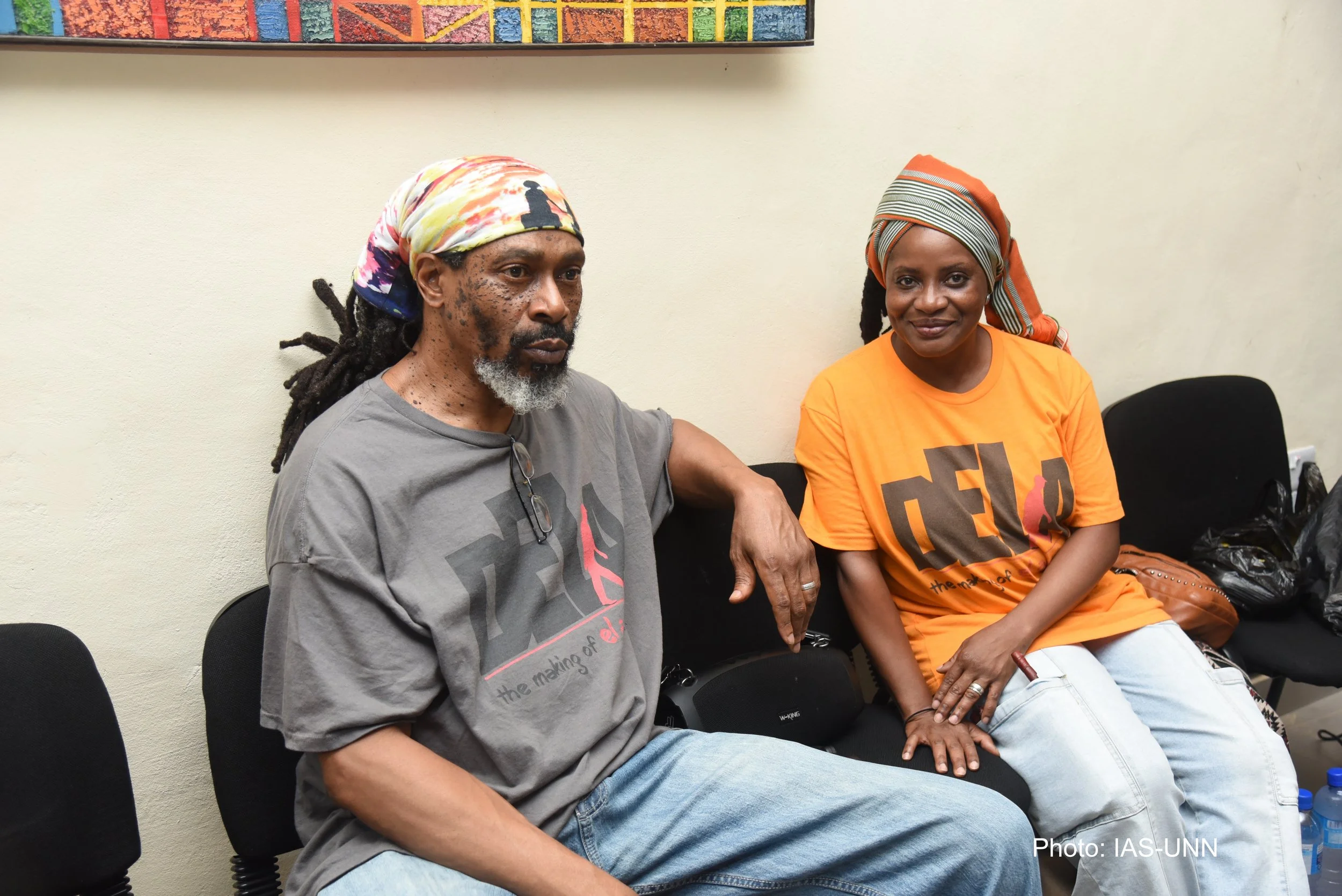
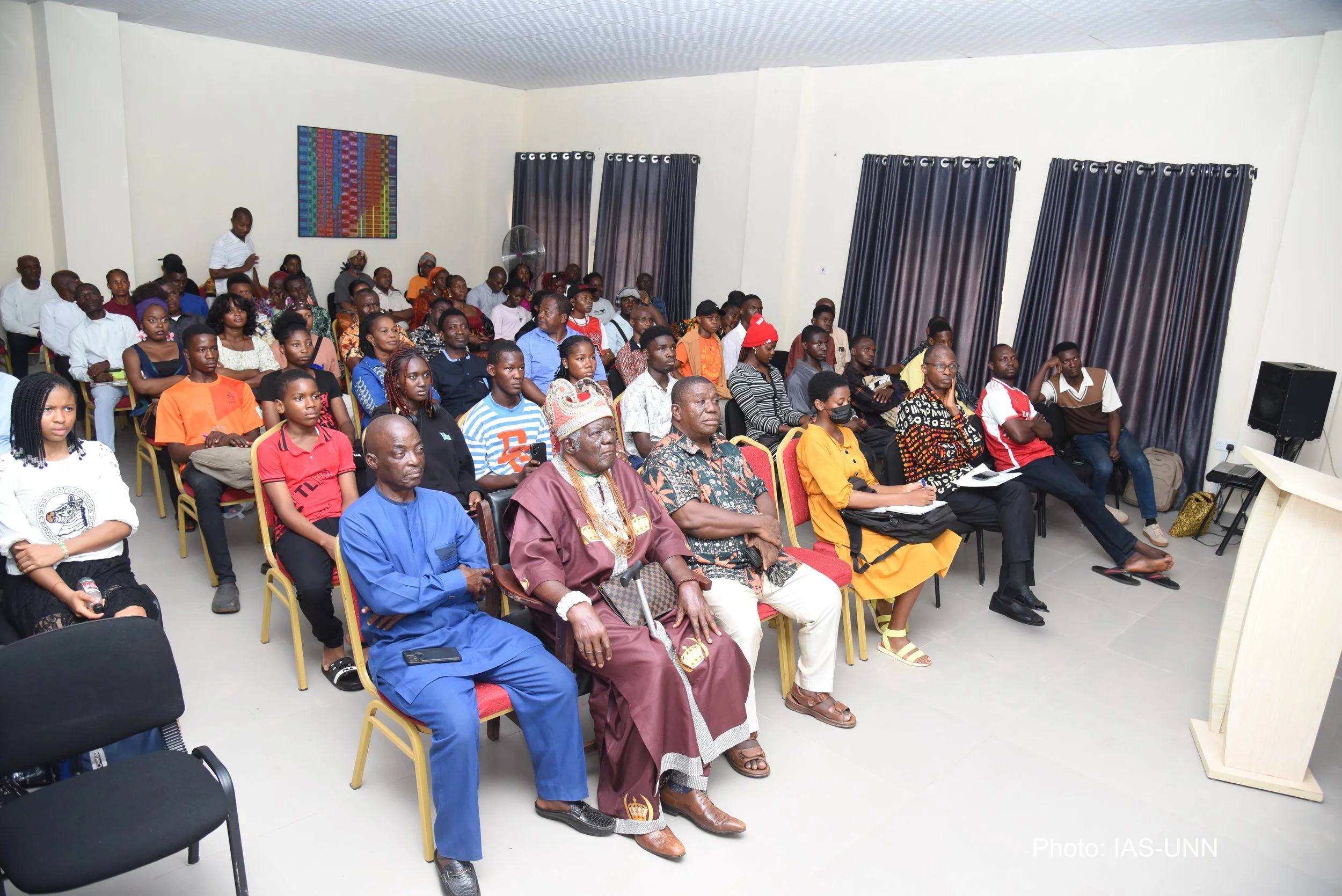
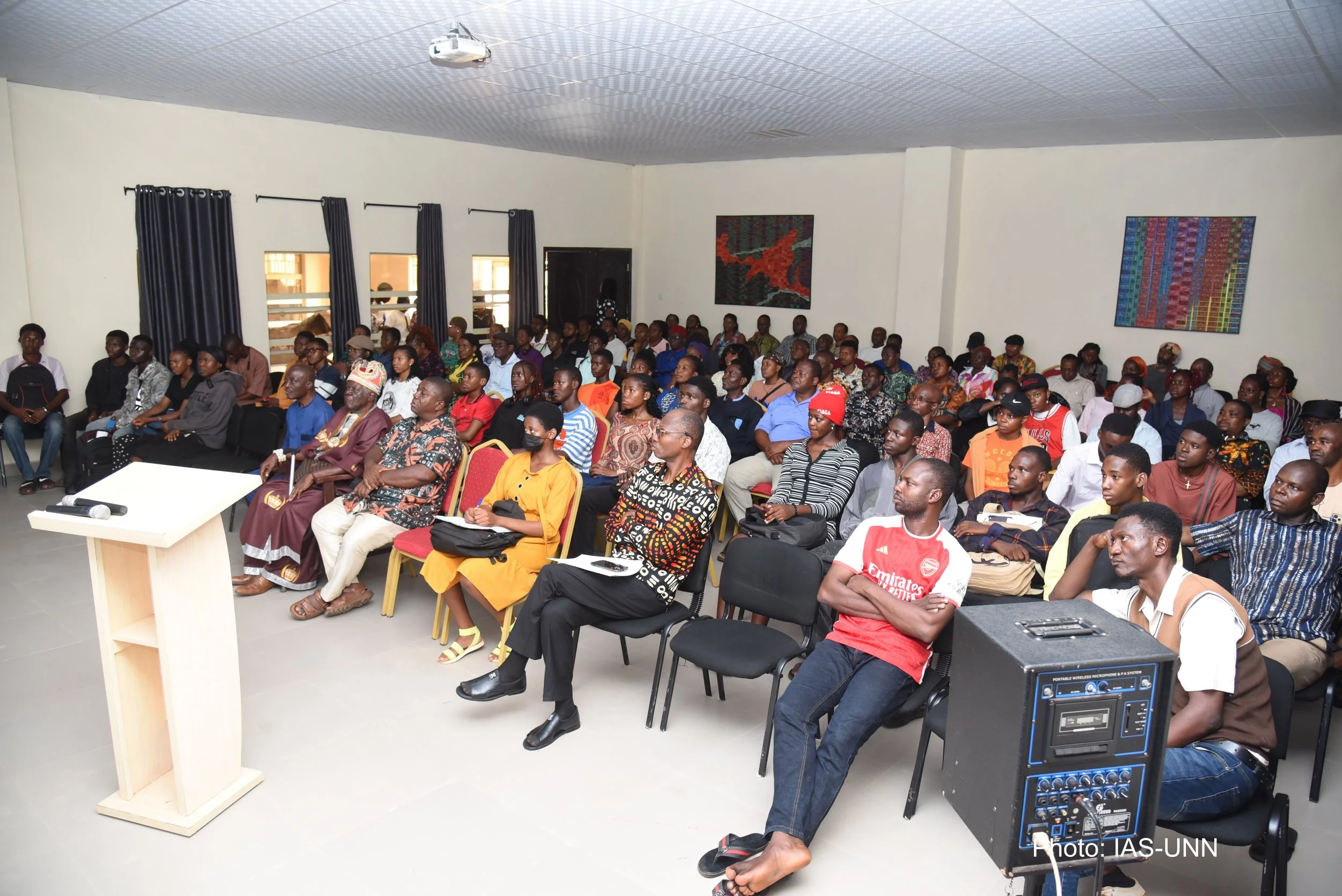
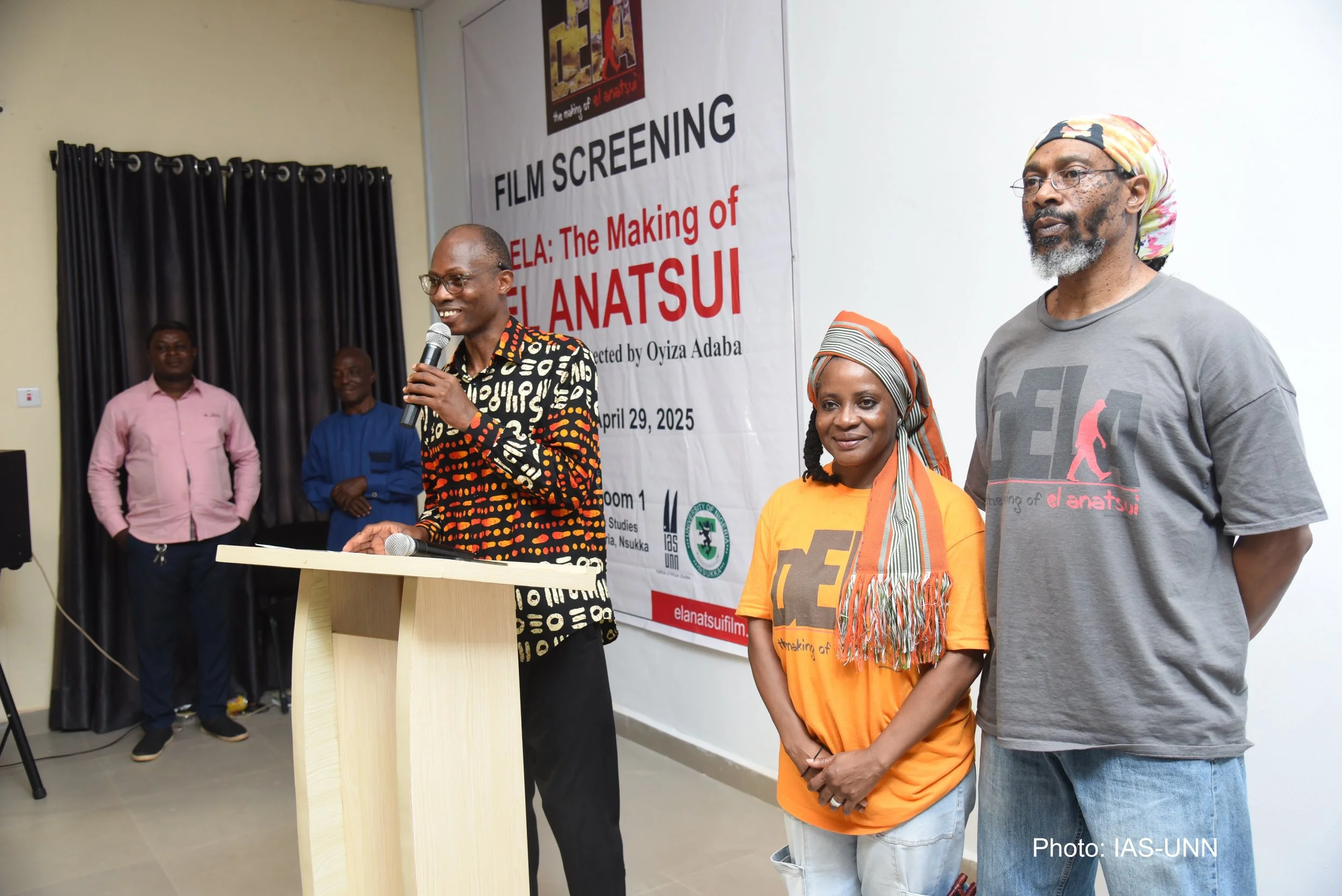
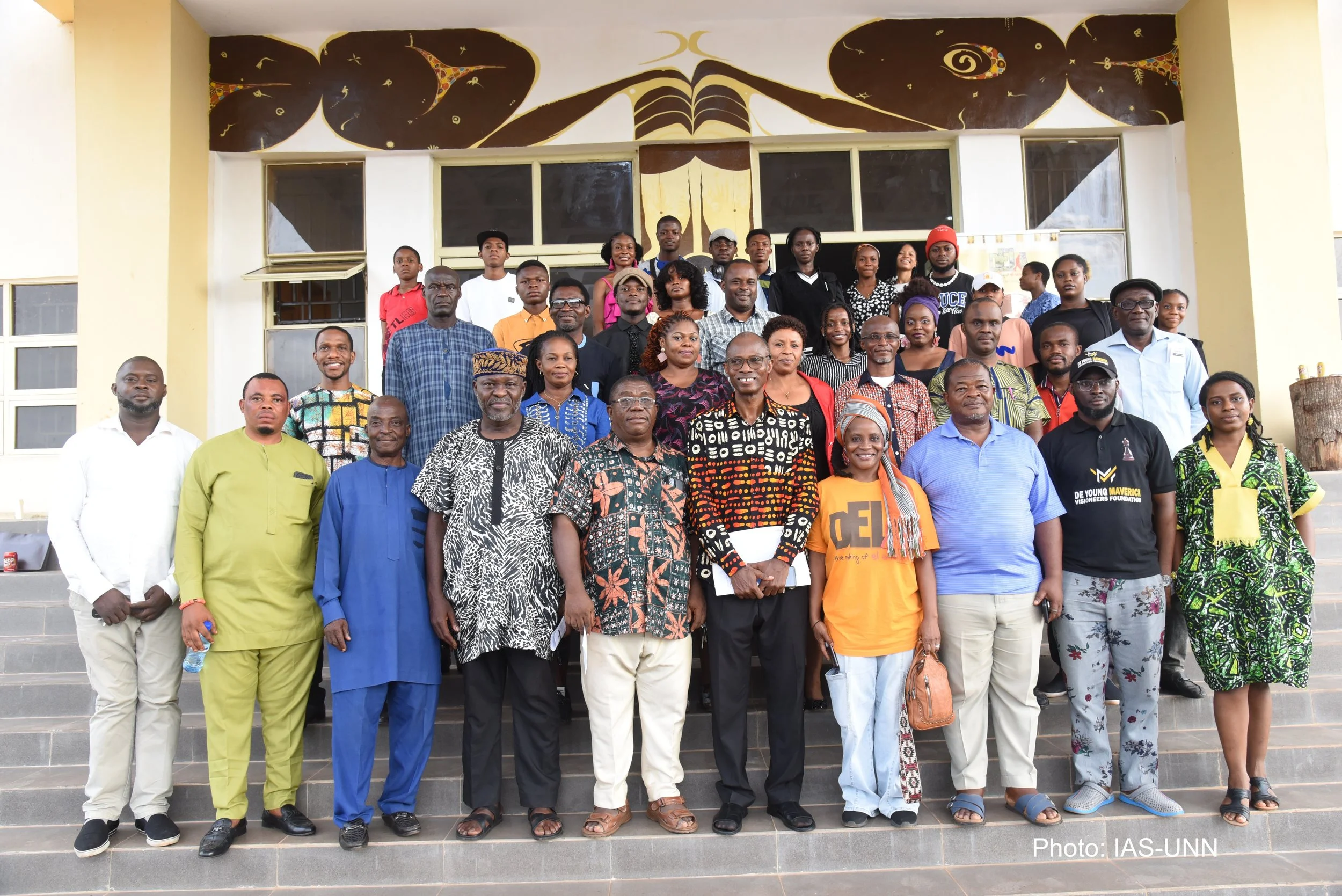
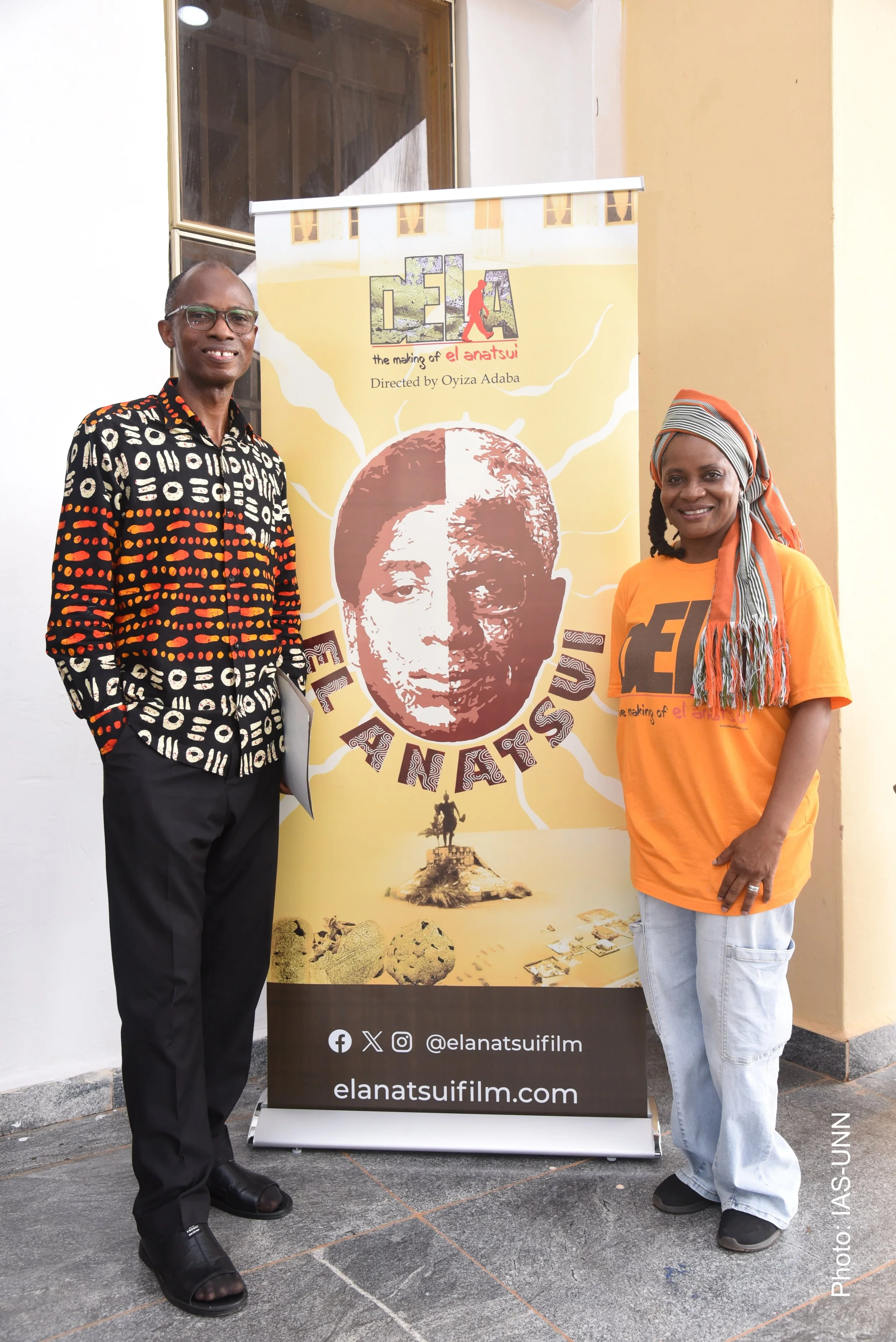
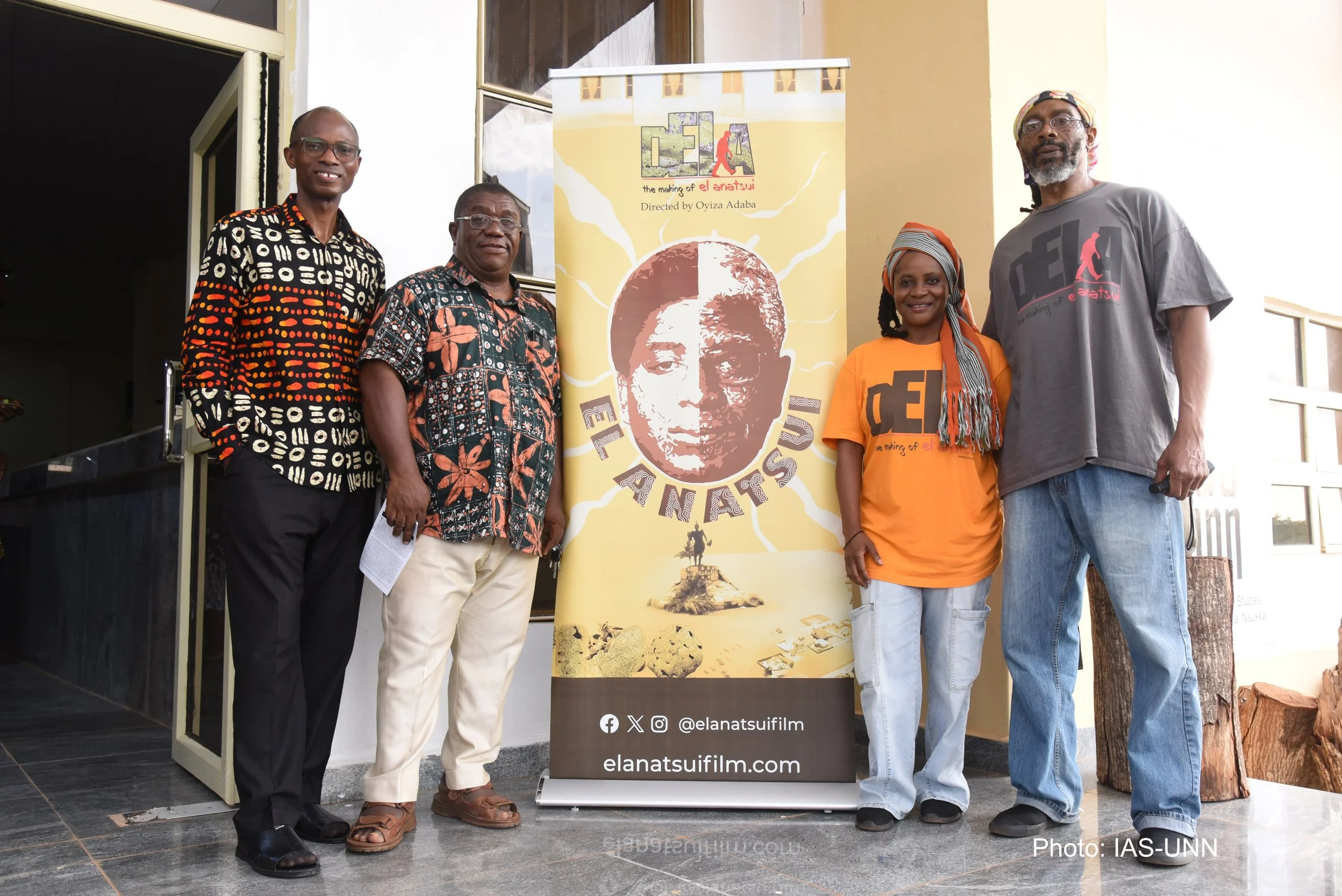
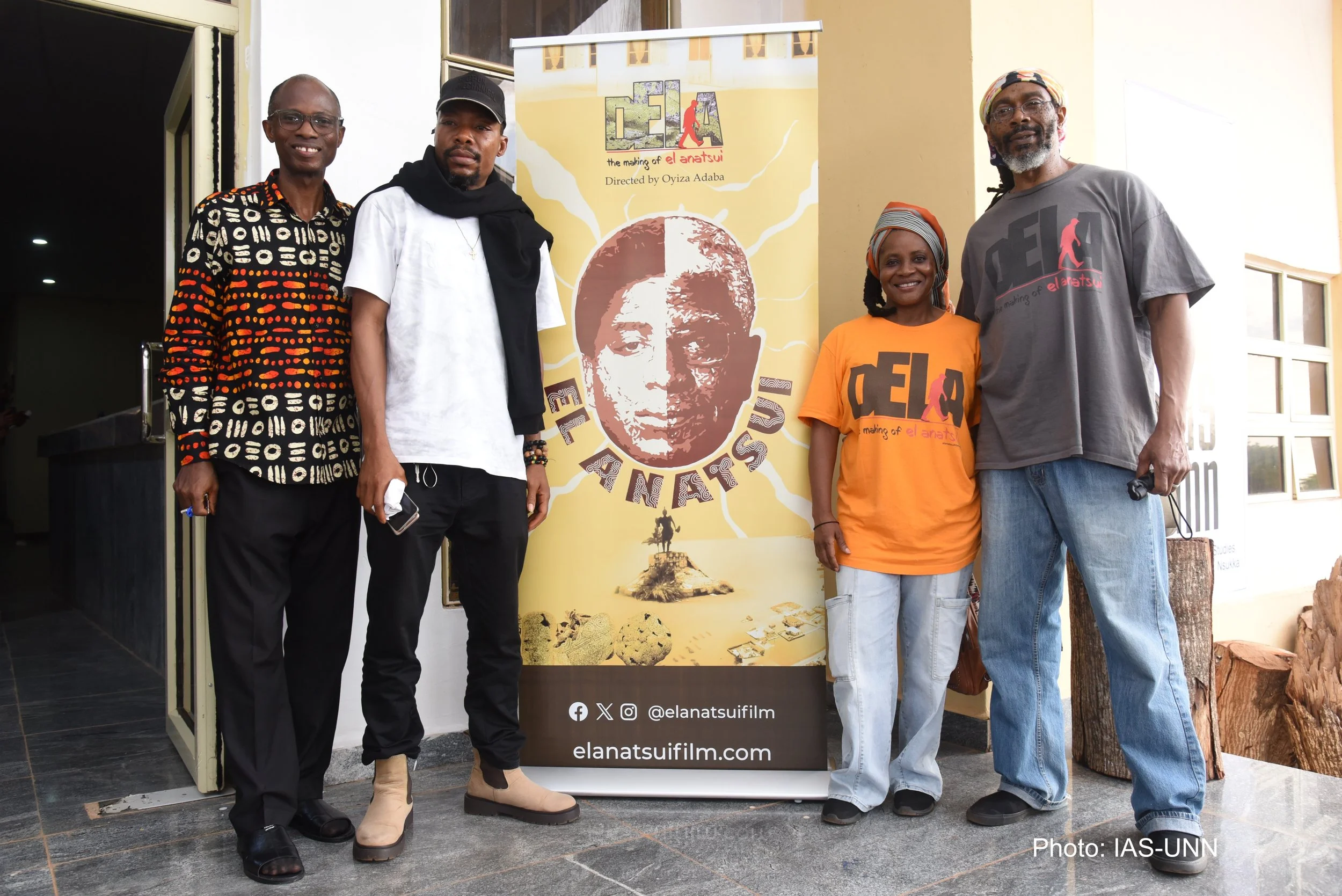
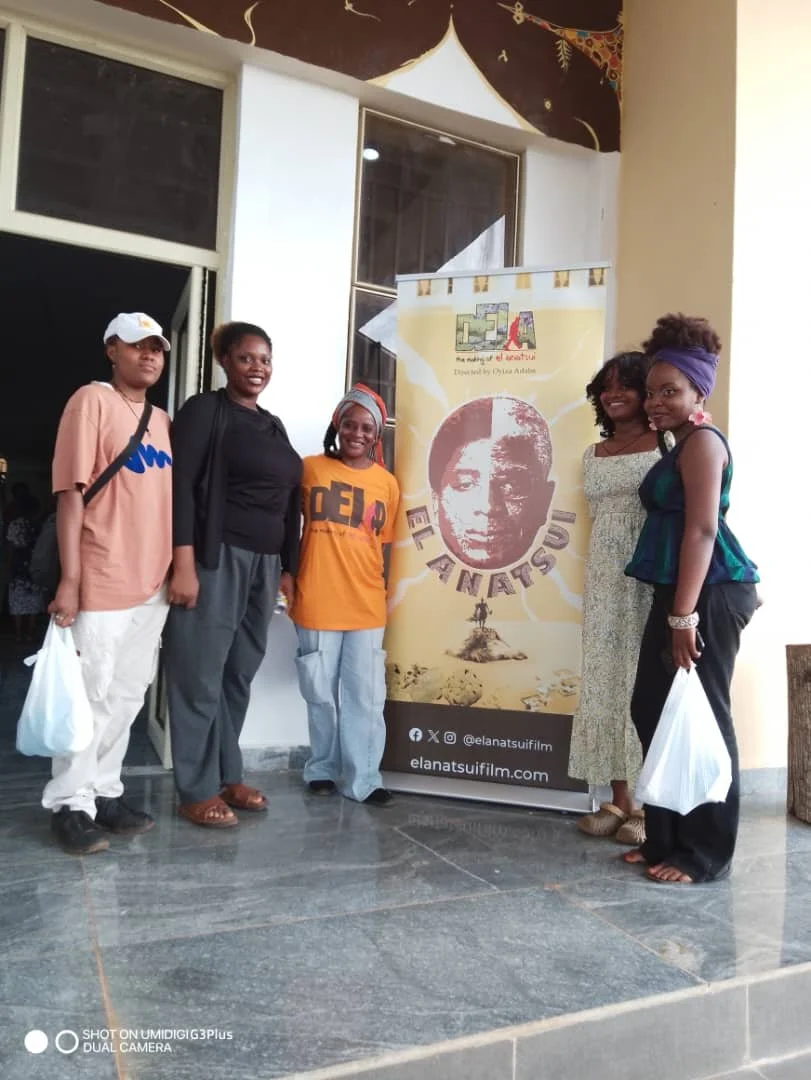
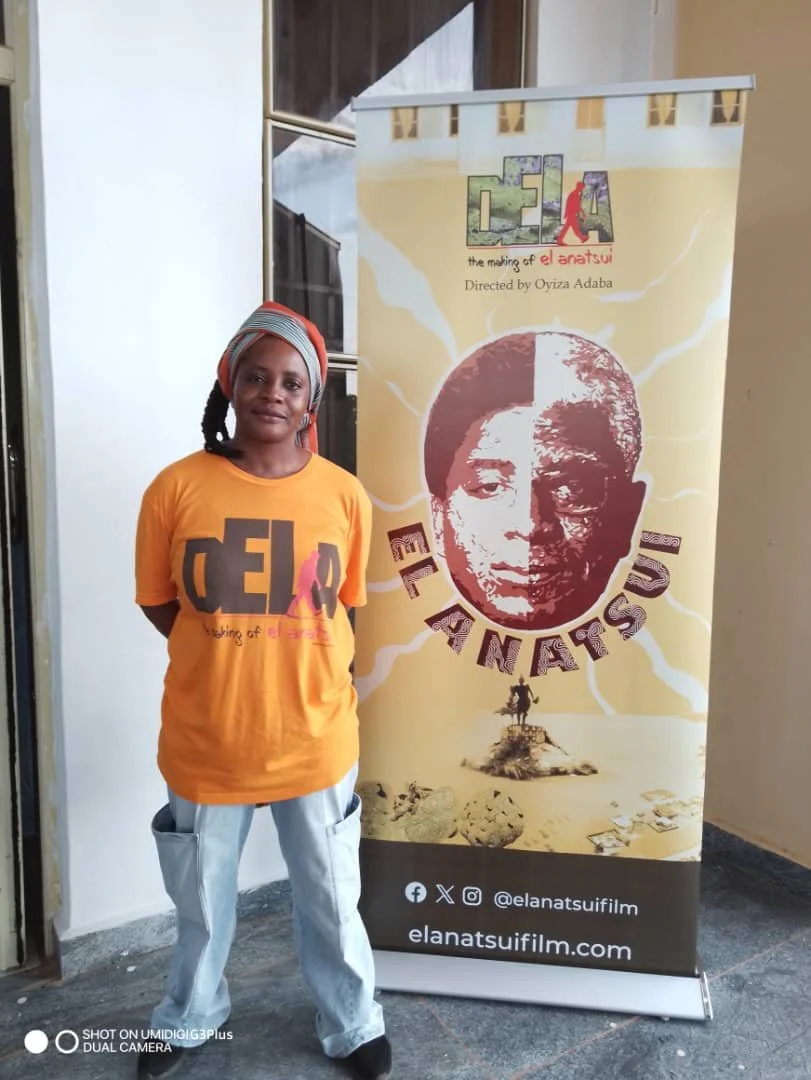
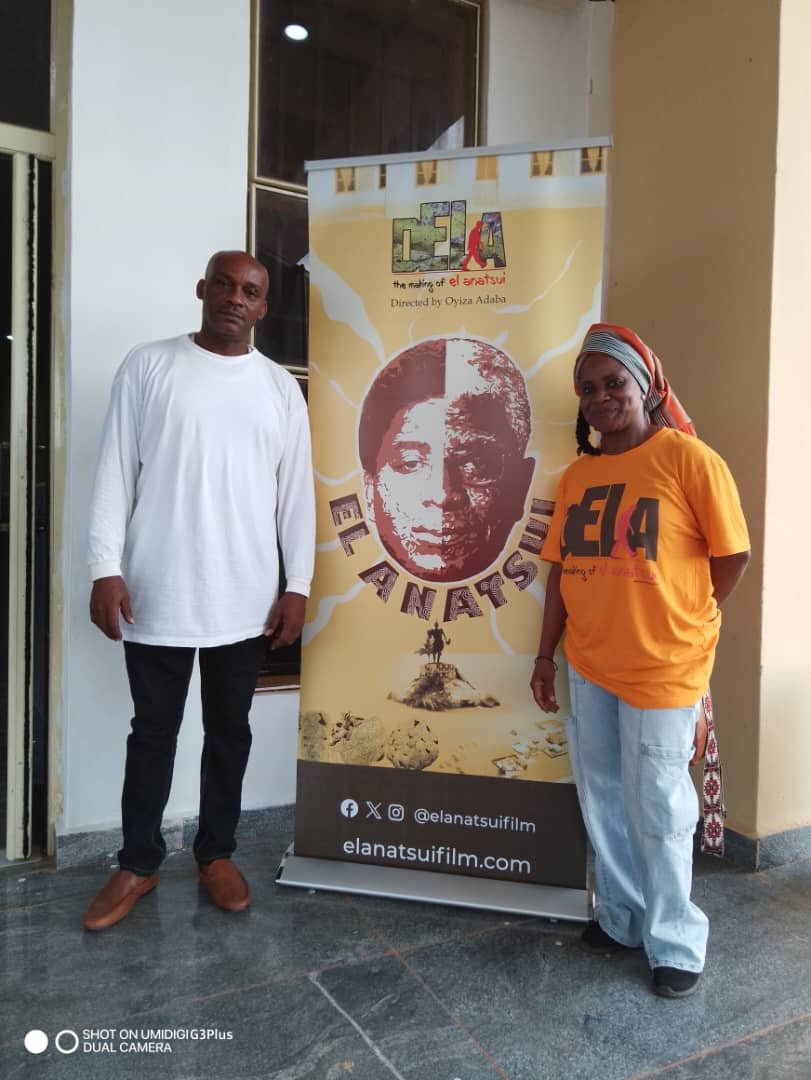
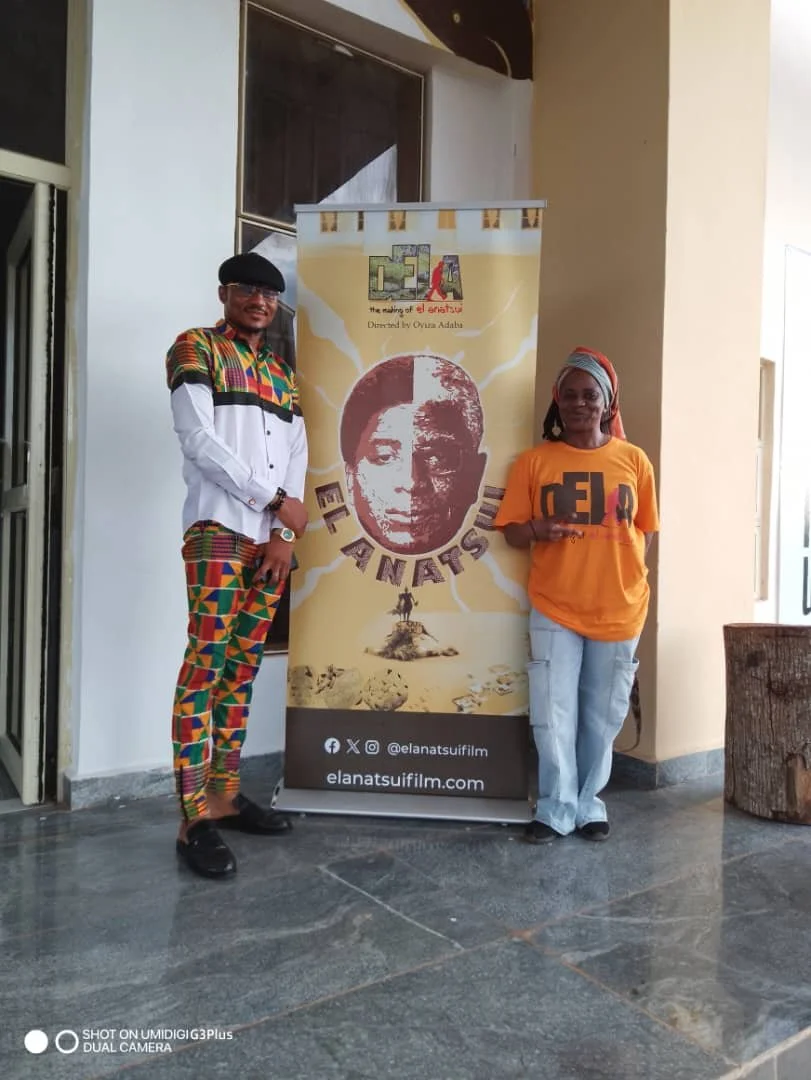
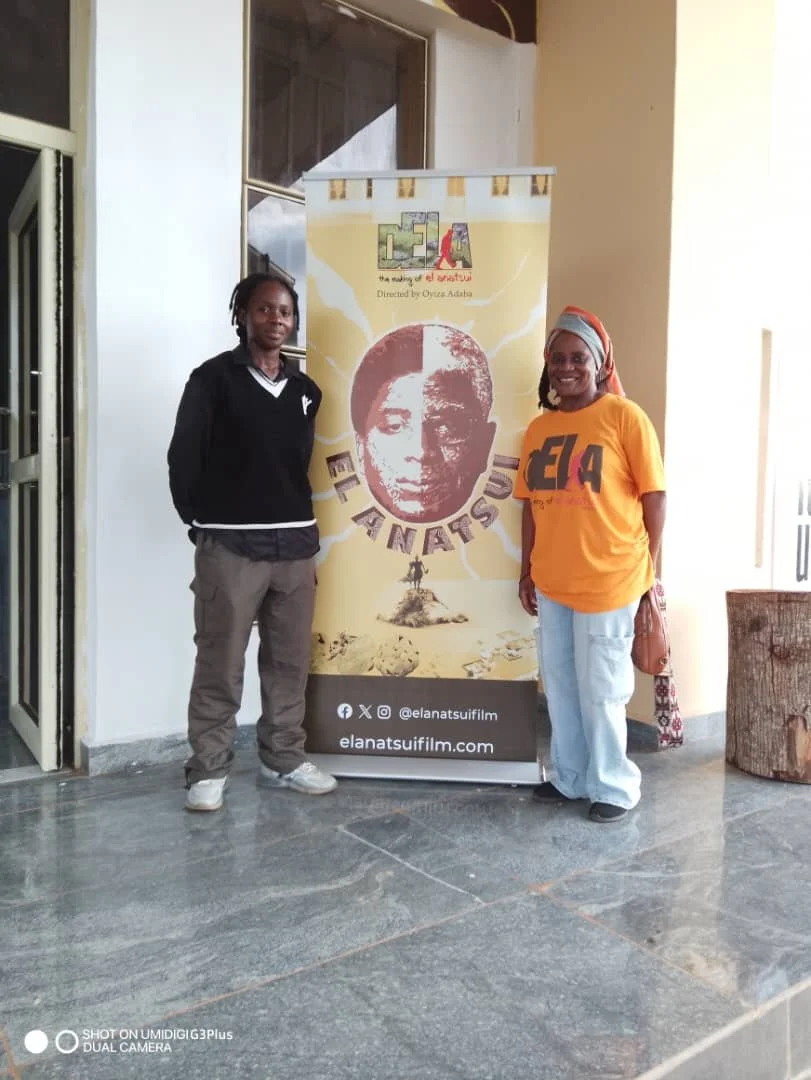
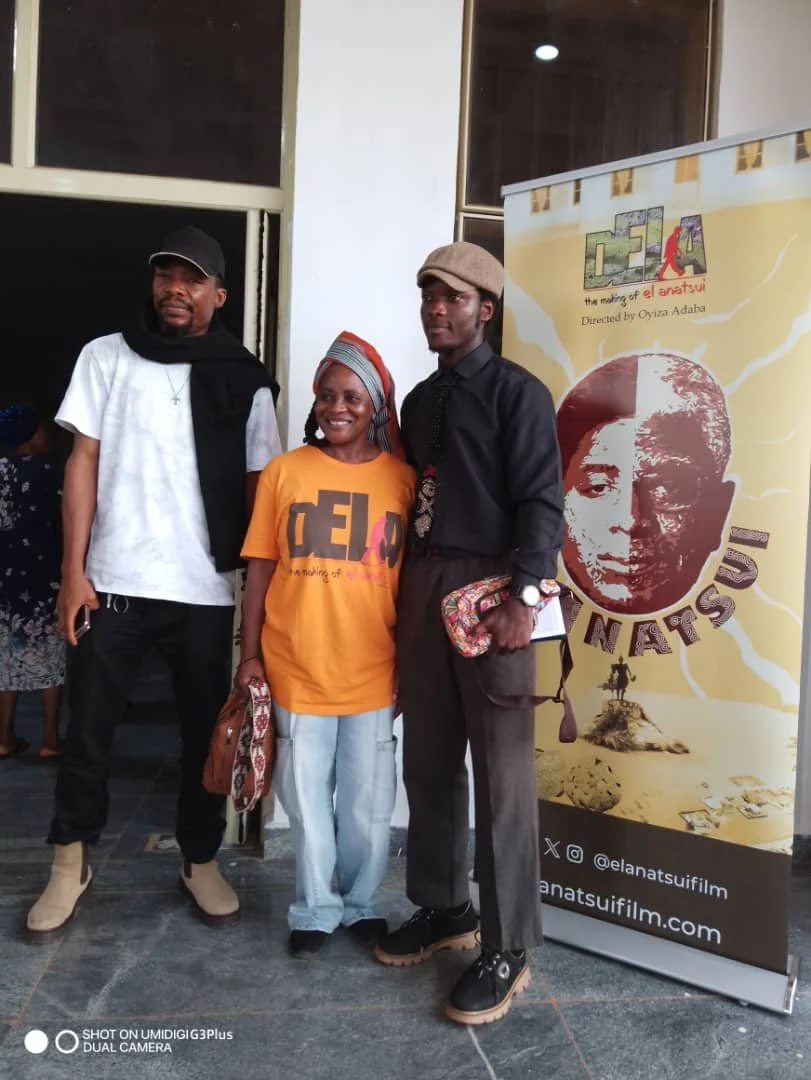
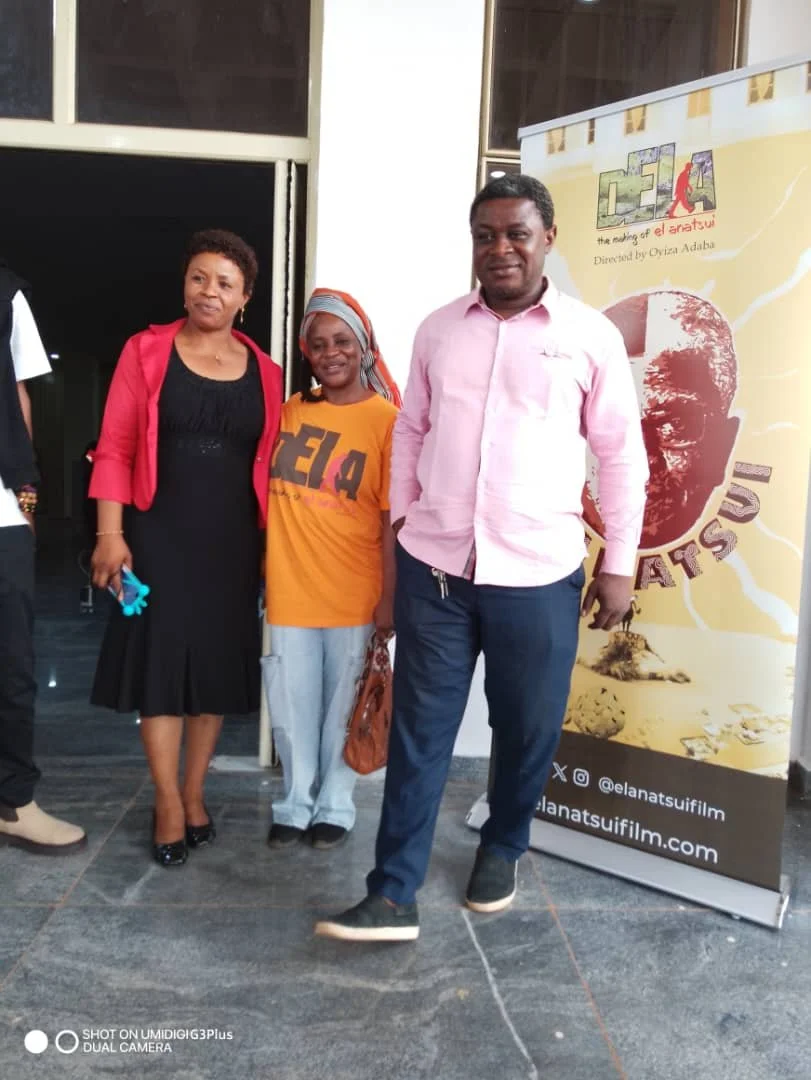
DELA: The Making of El Anatsui is a biographical documentary about one of the world's greatest sculptors. The Campus Tour aims to bring art and film students closer to the film's subject. It has so far, screened at Pan-Atlantic University Lagos, University of Nigeria Nsukka (UNN). In Ghana, the tour will continue at the artist’s five alma mater institutions.
SHARE THIS STORY
DELA Campus Tour: University Of Nigeria, Nsukka (UNN)
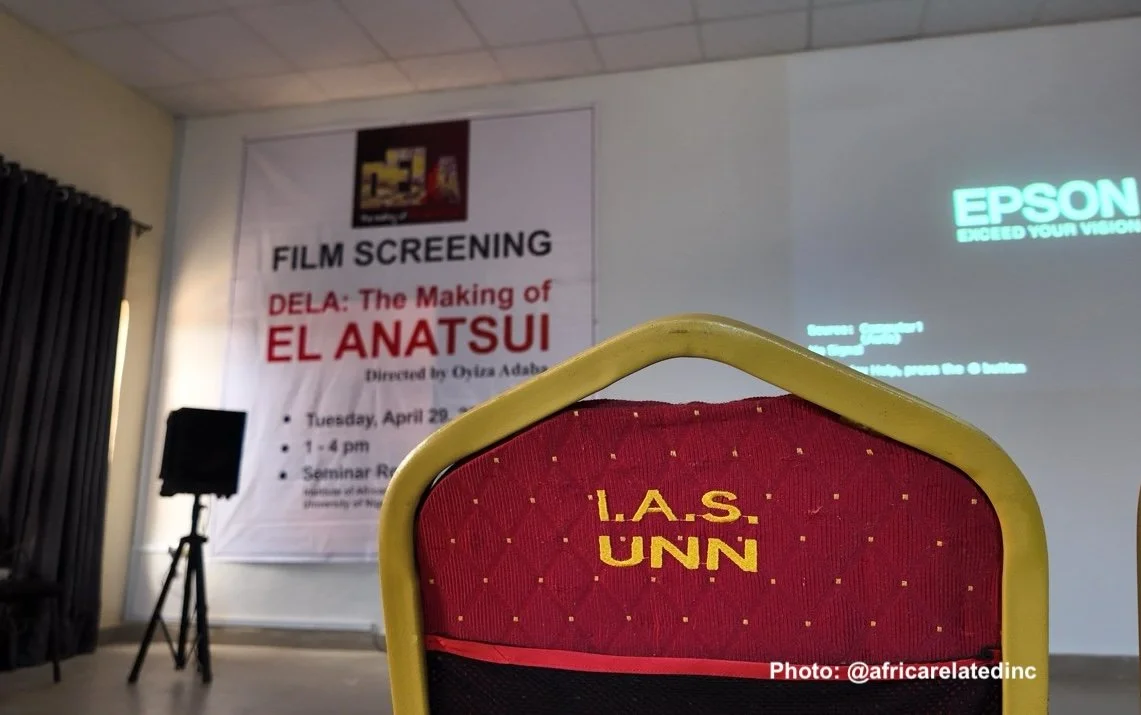
The DELA Campus Tour officially premieres at the esteemed University of Nigeria Nsukka. The screening and exhibition event was hosted by the Institute of African Studies (IAS) in their modern new venue, which was packed with an enthusiastic audience eager to engage with the content, highlighting both interest and meaningful impact.
oyiza adaba
maurice E. Okereke
The DELA Campus Tour officially premiered at the esteemed University of Nigeria Nsukka (UNN). The screening and exhibition event was hosted by the Institute of African Studies (IAS) in their modern new venue, which was packed with an enthusiastic audience eager to engage with the content, highlighting both interest and meaningful impact.

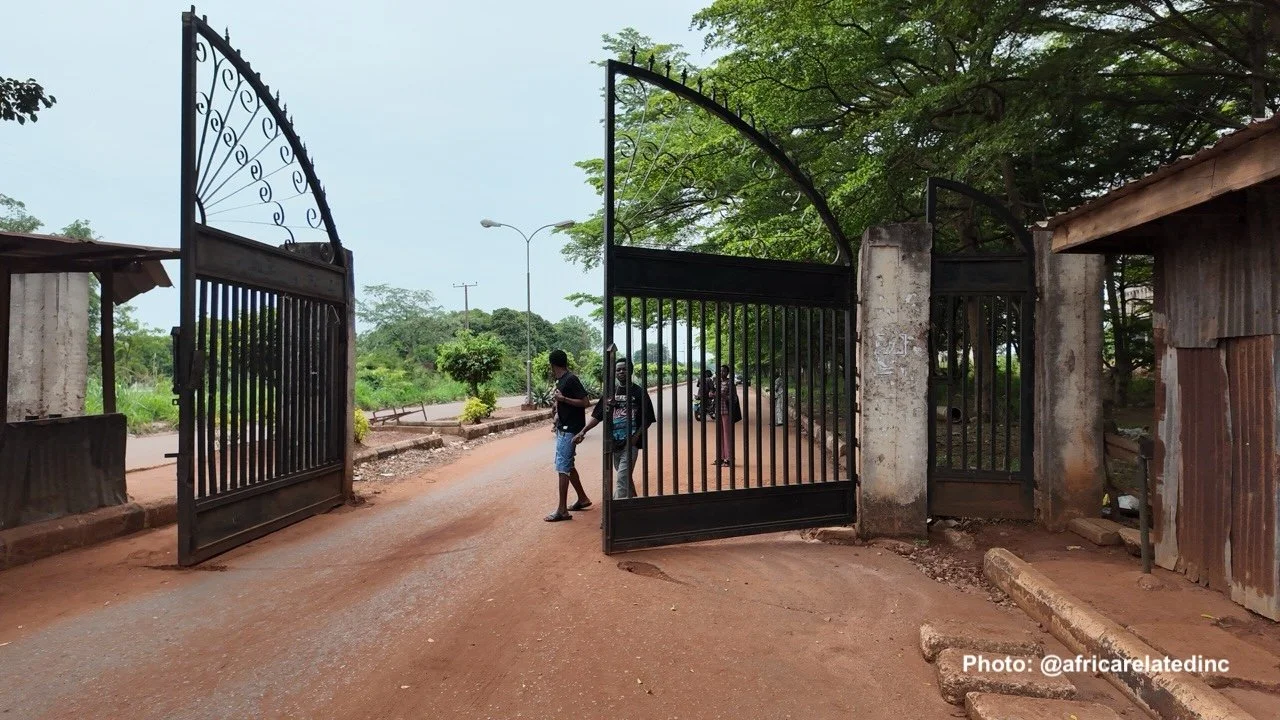
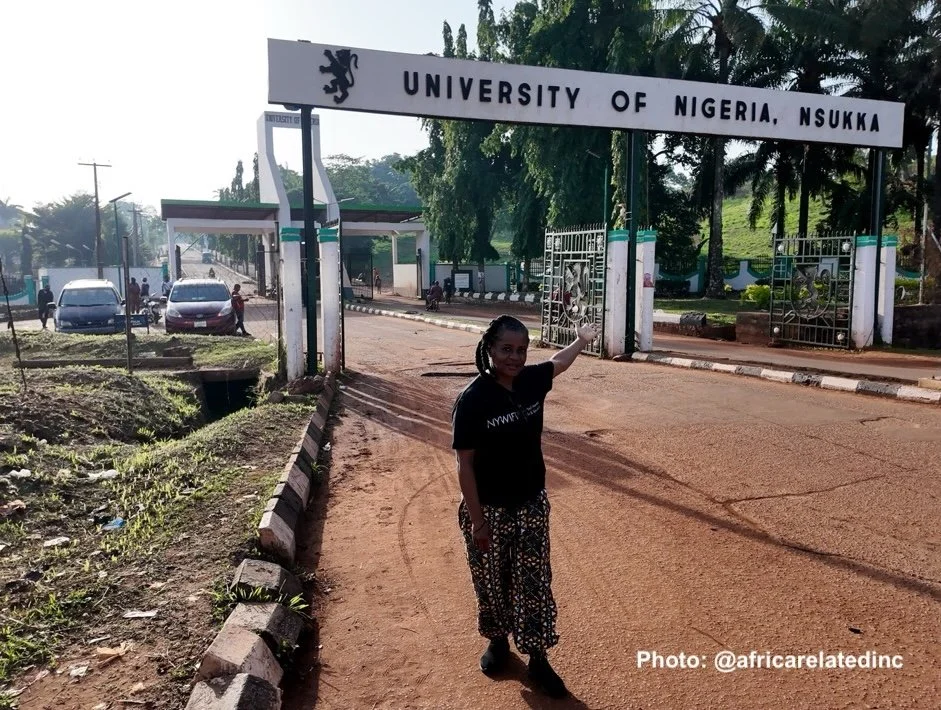
Main Gate of the University of Nigeria, Nsukka reading the institution’s motto “To Restore The Dignity Of Man”. Photo: Africa-Related.
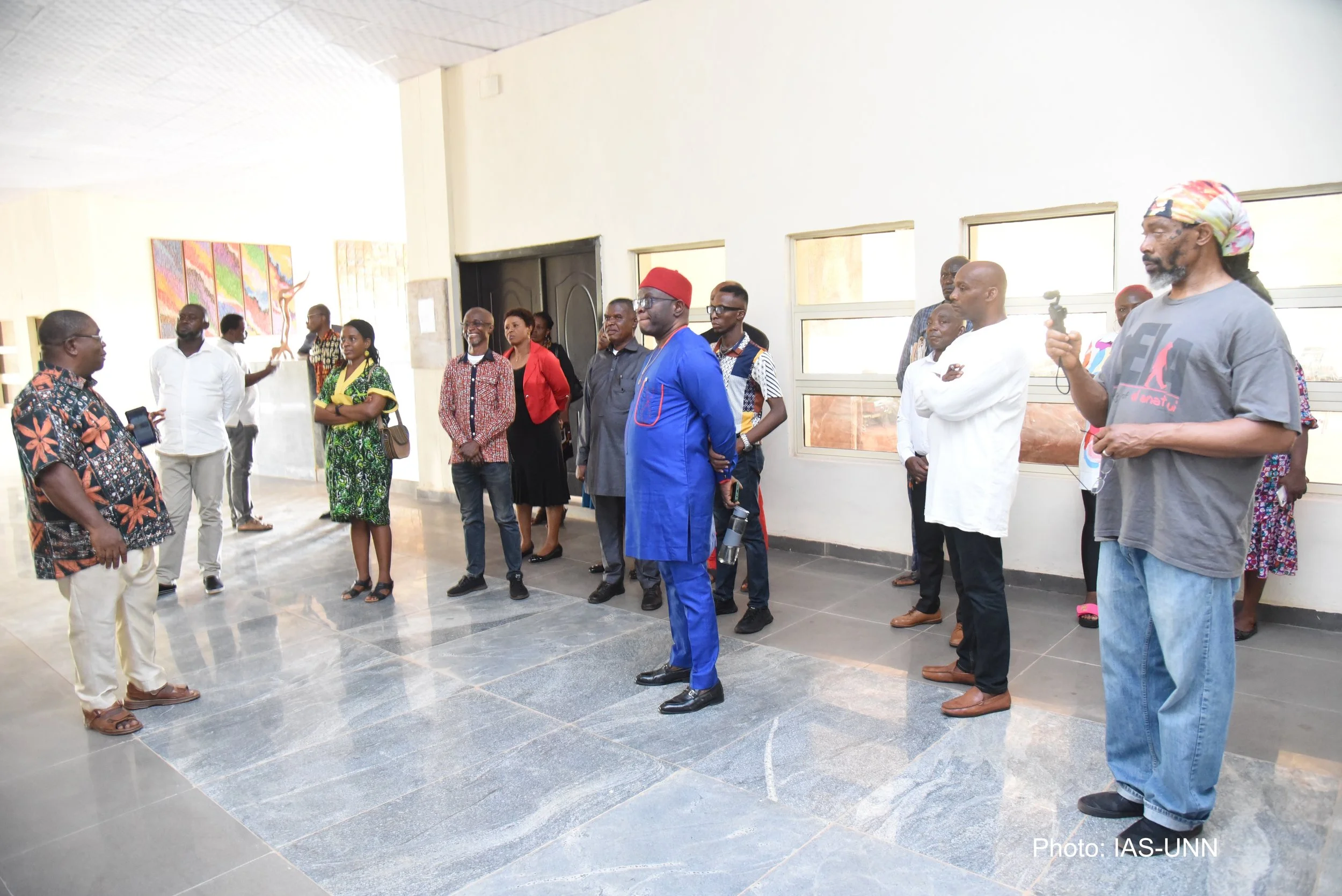
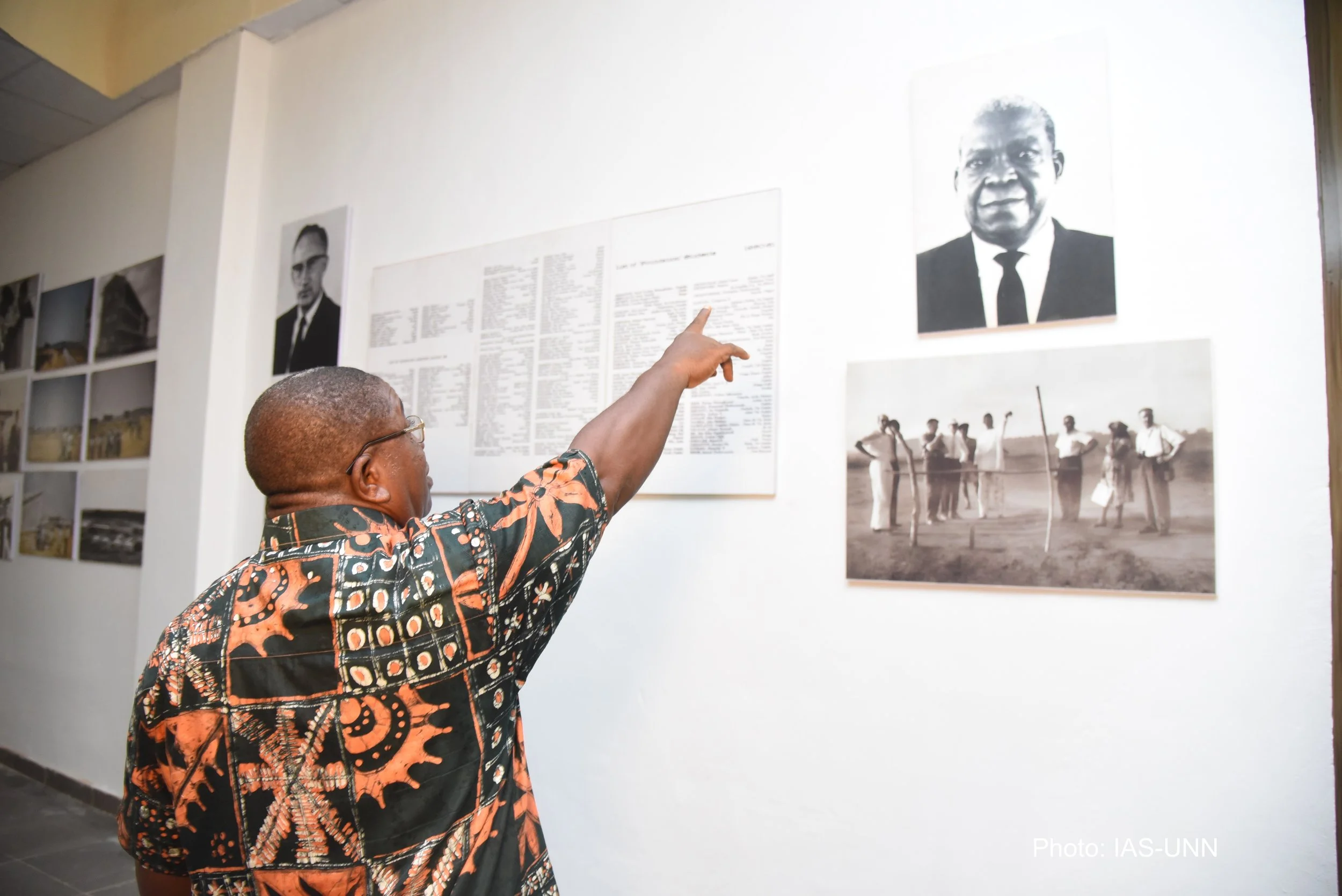
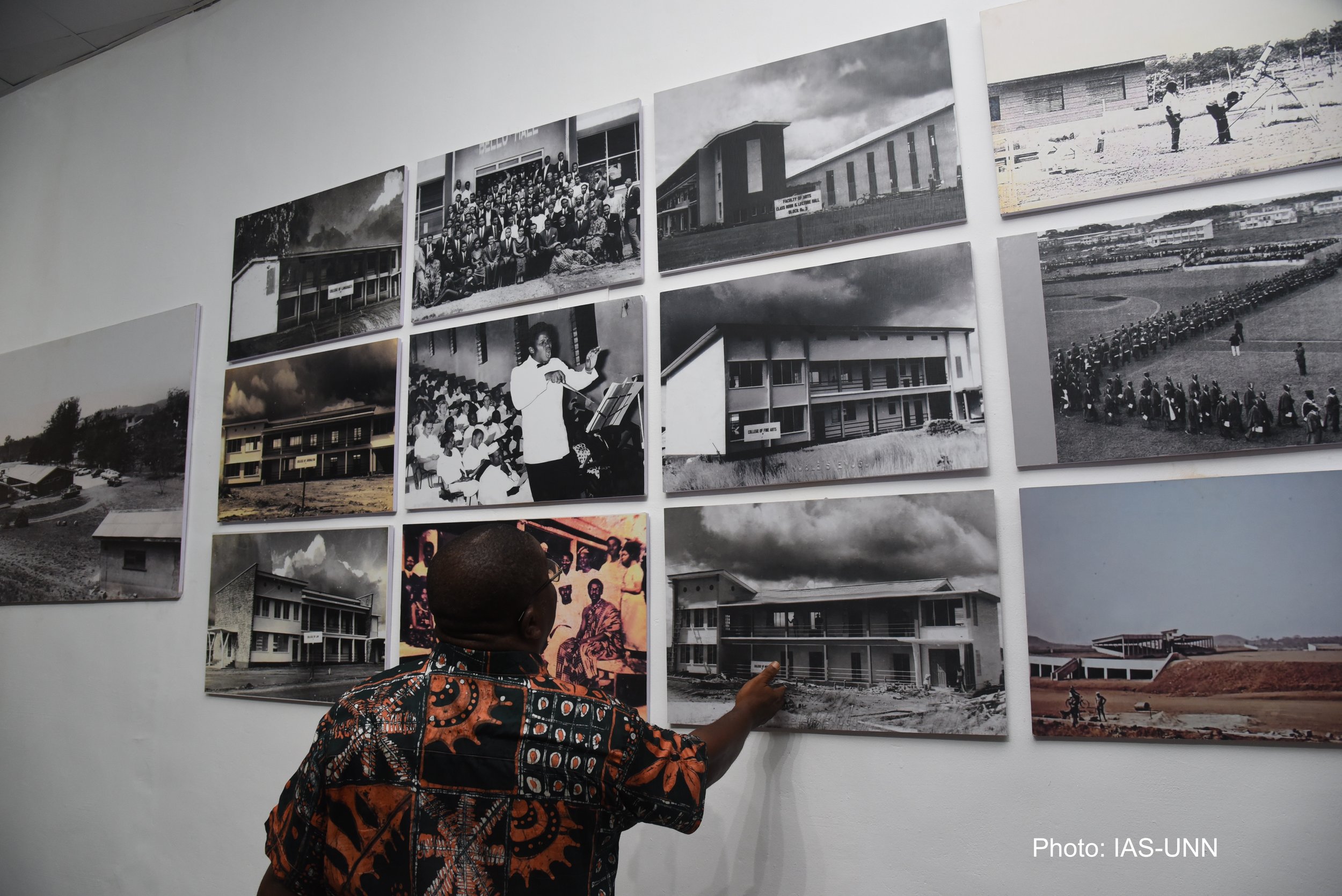
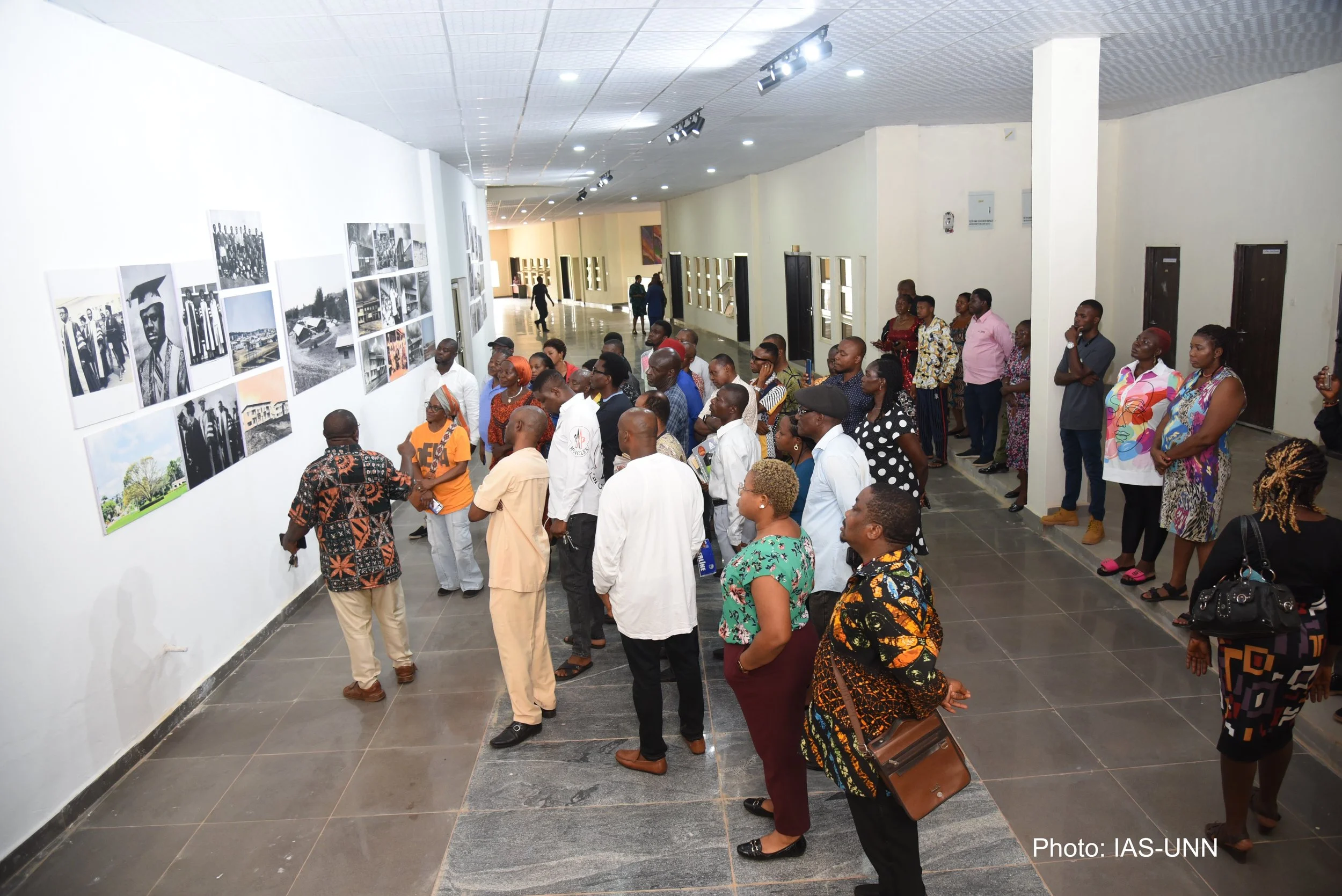
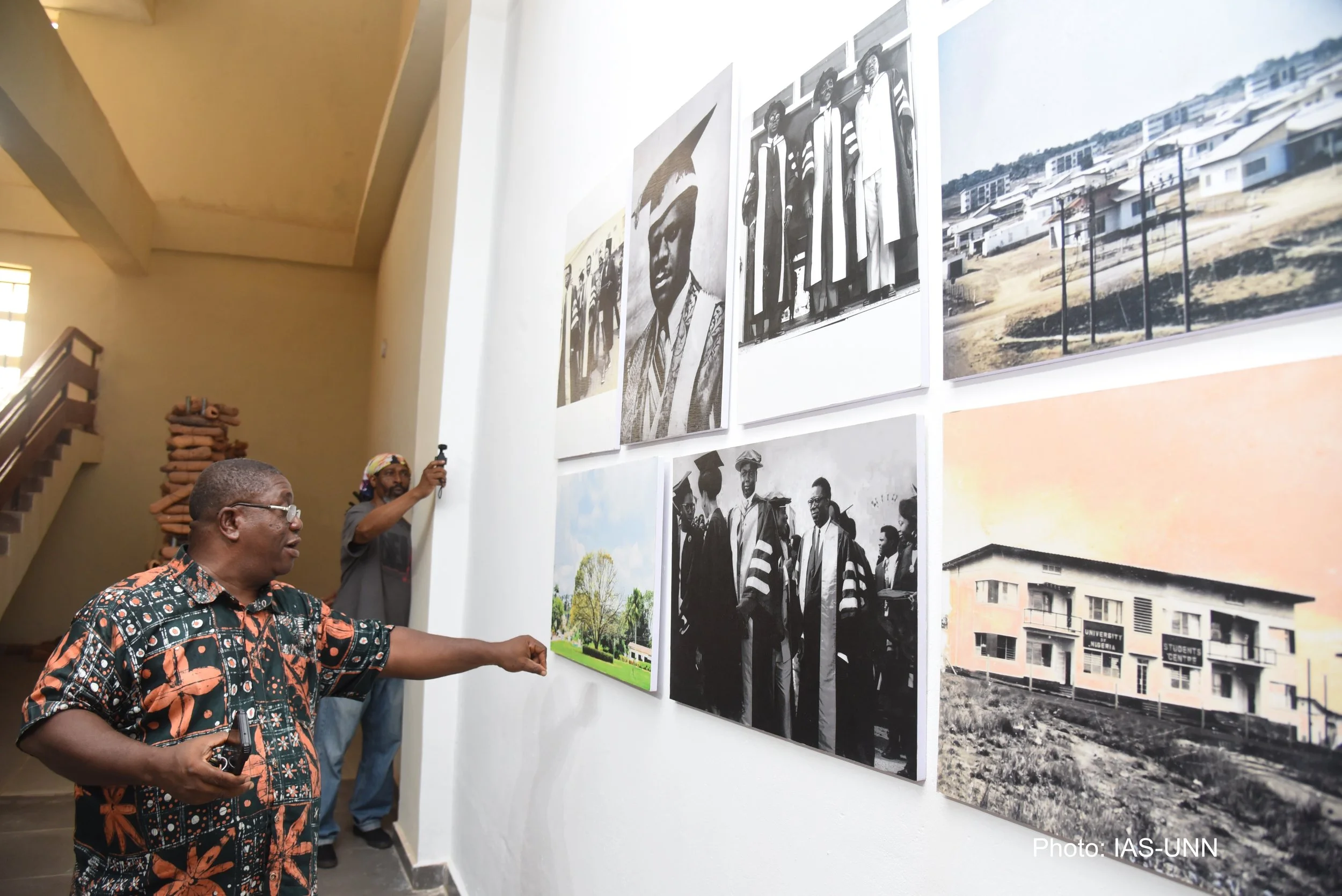
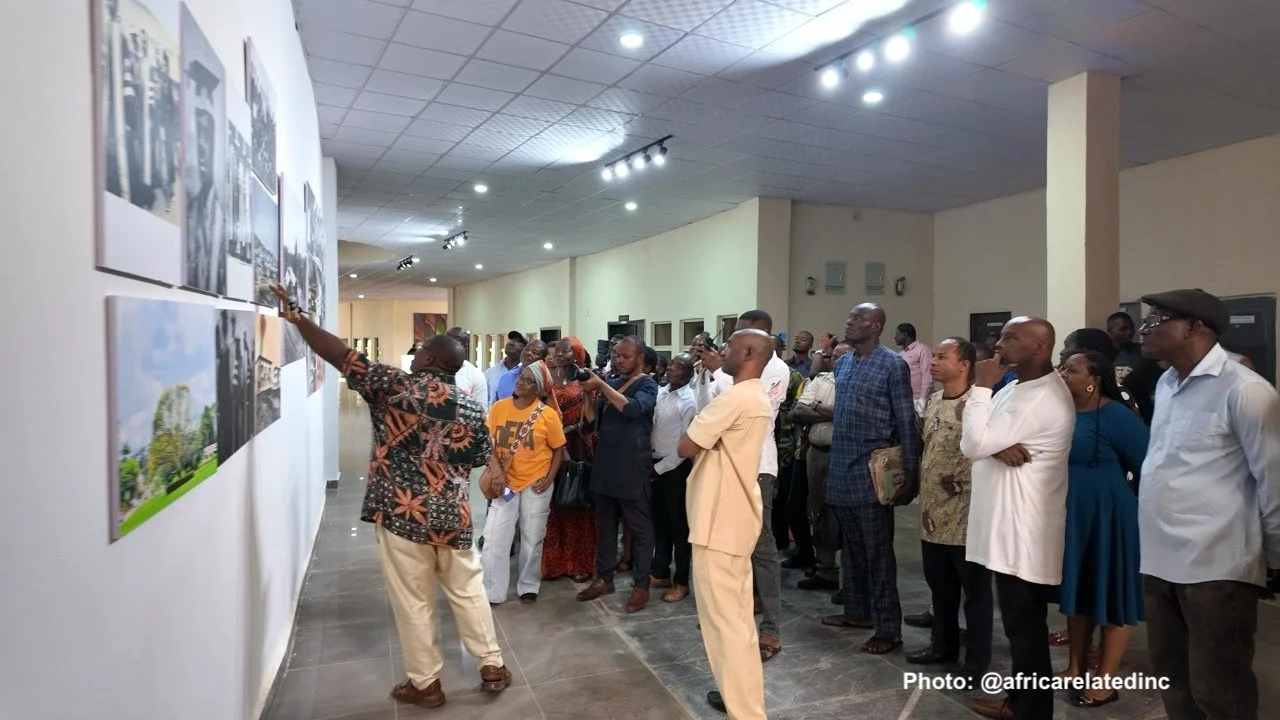
To kick off the screening on April 29, 2025, Prof. Chijioke Onuora, a professor of drawing and sculpture in the Fine and Industrial Arts Department conducted an enlightening tour of the captivating photo exhibition that beautifully encapsulates the rich history and vibrant culture of the University of Nigeria.
The ground floor of the Institute of African Studies serves as a walk-in gallery of various artworks by both current and past students and teachers. Our guide was Prof. Chijoke Onuora, a former student of El Anatsui, and also the son of Mr. Joshua Chukwuemeka Onuorah, a pioneer student of Physical Health Education and the UNN unofficial photographer in the 60s and 70s. He showed us beautiful photos taken in the very early days of the university's existence, capturing various occasions such as the first graduation ceremony, and first set of female graduates etc.
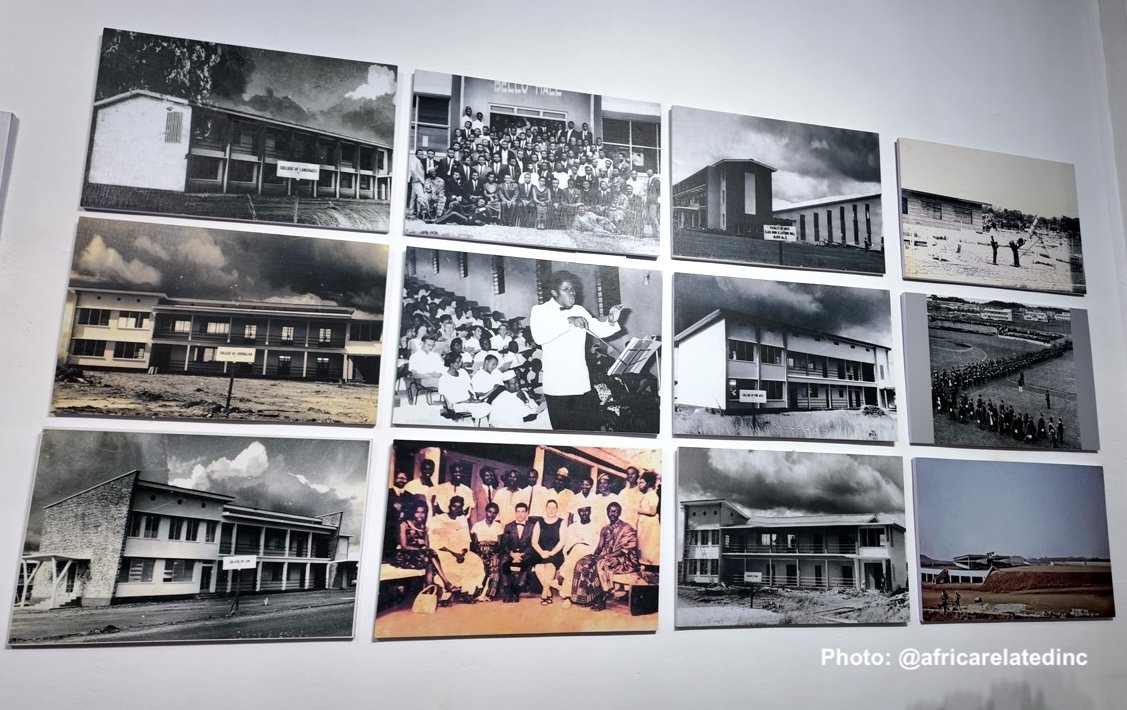
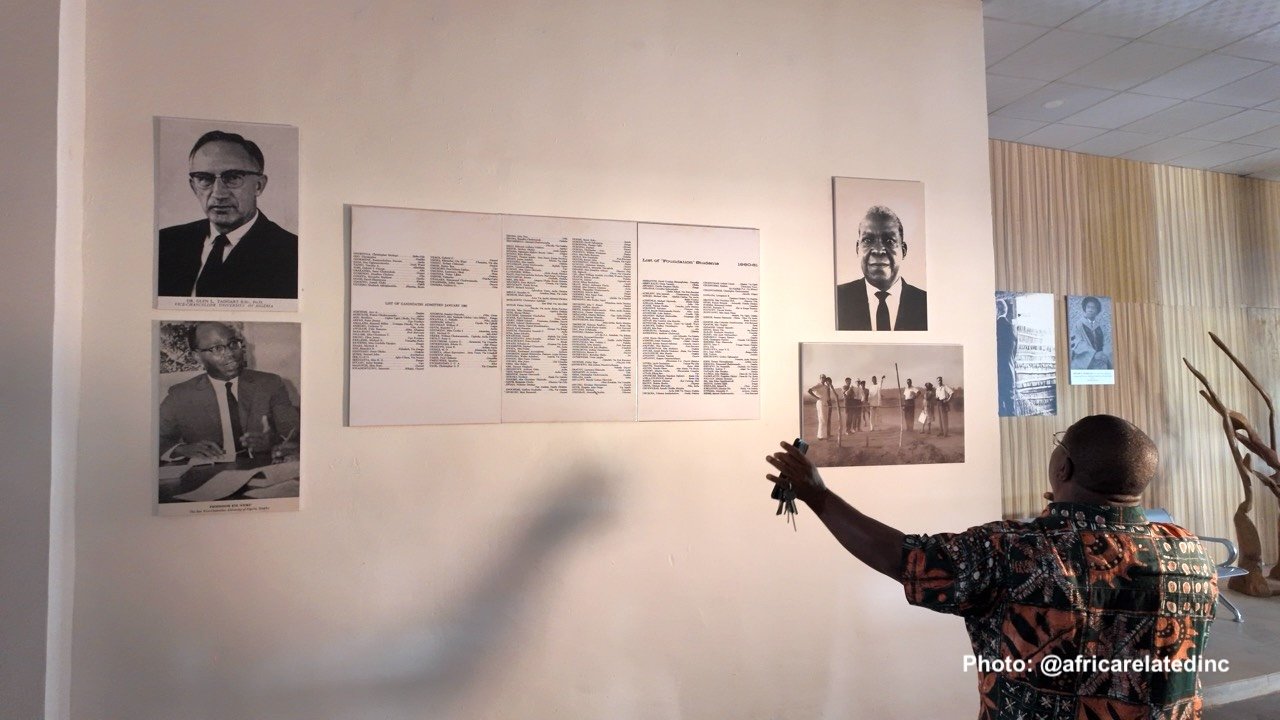
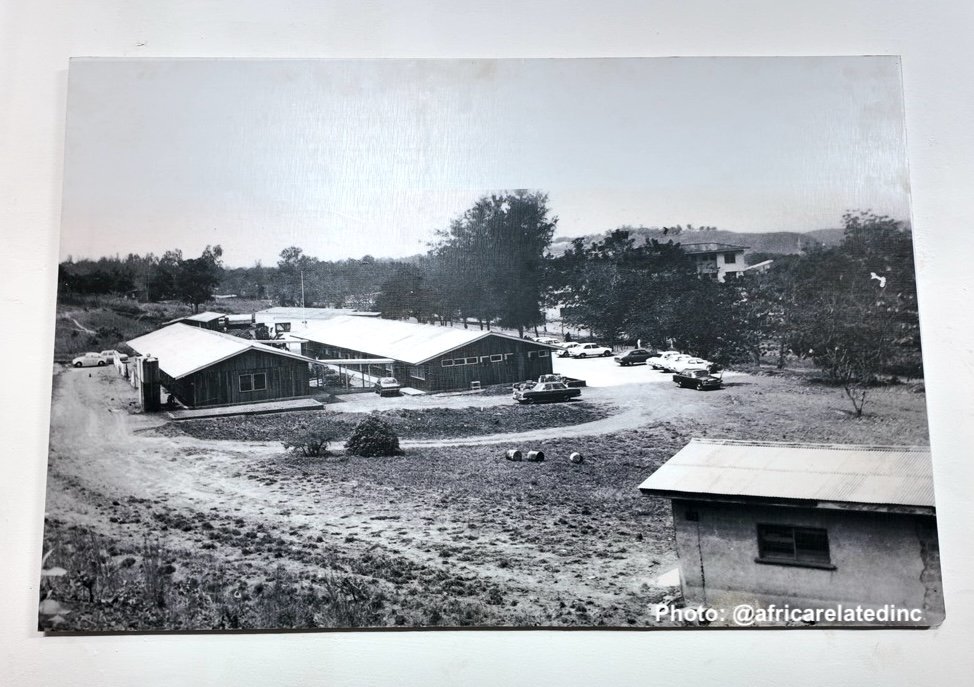
Shortly afterwards, the screening began, the atmosphere was quite pleasant. A lot of students streamed in, as the special guest the paramount traditional ruler H.R.H Igwe George ASADU, The Okpe Udo of Ihe Nsukka occupied the front row seat. He, in 2015, conferred the title "Ikedire of Nsukka" (power which is effective) on Prof. EI Anatsui.
Also seated in the packed room were Prof. Krydz Ikwuemesi, Prof. Chidi Ugwu, Assoc. Prof. Greg Mbajiorgu and Assoc. Prof. Vincent Okpara H.O.D, Department of Fine and Industrial Arts. The audience was very receptive and attentive during the viewing, one could tell on account of their humorous and enthused responses. The event concluded with a short Q and A which yielded a few comments with much praise and plenty of thanks to the production team. The organizers were quite gracious, extremely polite and very courteous.

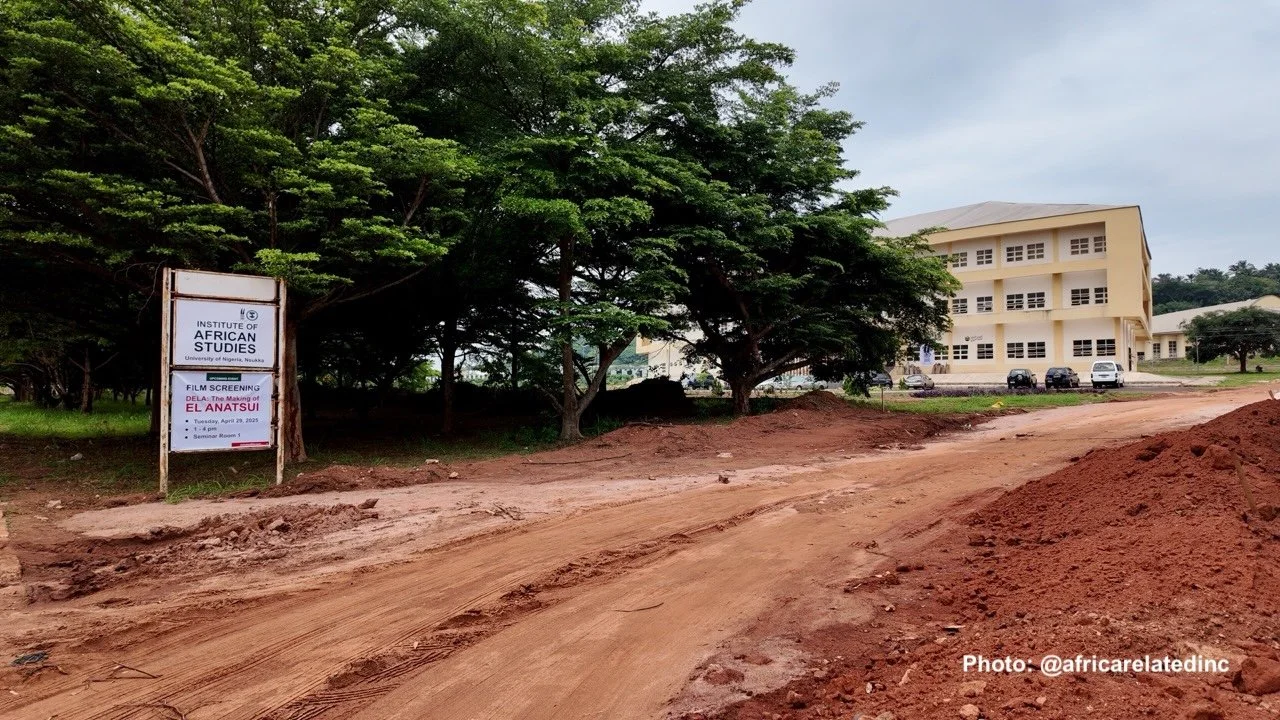
This happened to be the very first event since the inauguration of the new building of the Institute of African Studies, situated close to the UBA gate on campus. It also happened to be the first screening I am attending in person in Nigeria. DELA’s journey to Nsukka was extra special as it was a homecoming of sorts, not just for the film, but also for my ever-supportive husband Maurice Okereke (Words By MOE), a 1995 UNN alumnus, who worked on the film as an assistant music director - contributing original music scores from his poetic pieces, to the film’s soundtrack.
Oyiza Adaba with Nsukka DoP Michael ‘Lenix’ Onah, who filmed some of the Nsukka shots.

DELA: Soundtrack Poster with featured artists.
Other contributing artists include UNN Graduate, the late Bright Andrew Igho a.k.a B-Elect, a musician/author who contributed his track 'WAT THE OLD MAN SAID (B.I.B.L.E.)' to the film. Uchenna Ohagwu (Minista Busta), an IMT Enugu graduate is the visual/graphic artist/musician who designed the DELA icon head logo that depicts El Anatsui’s young and older face. Amarachi Attamah, a griot/chant performer composed a beautiful chant piece entitled 'EGARA EL', used in the opening sequence. Lemi Ghariokwu is the graphic artist who designed several of Fela Kuti's album covers and also designed the DELA 'walking man' logo. Two indigenous musicians DJ Robintonzz added the track 'AFRICA' Ft. New Prince, while Lake Spy composed the film's end credit track 'ASIGI II' in honour of El Anatsui.
The Institute of African Studies, UNN
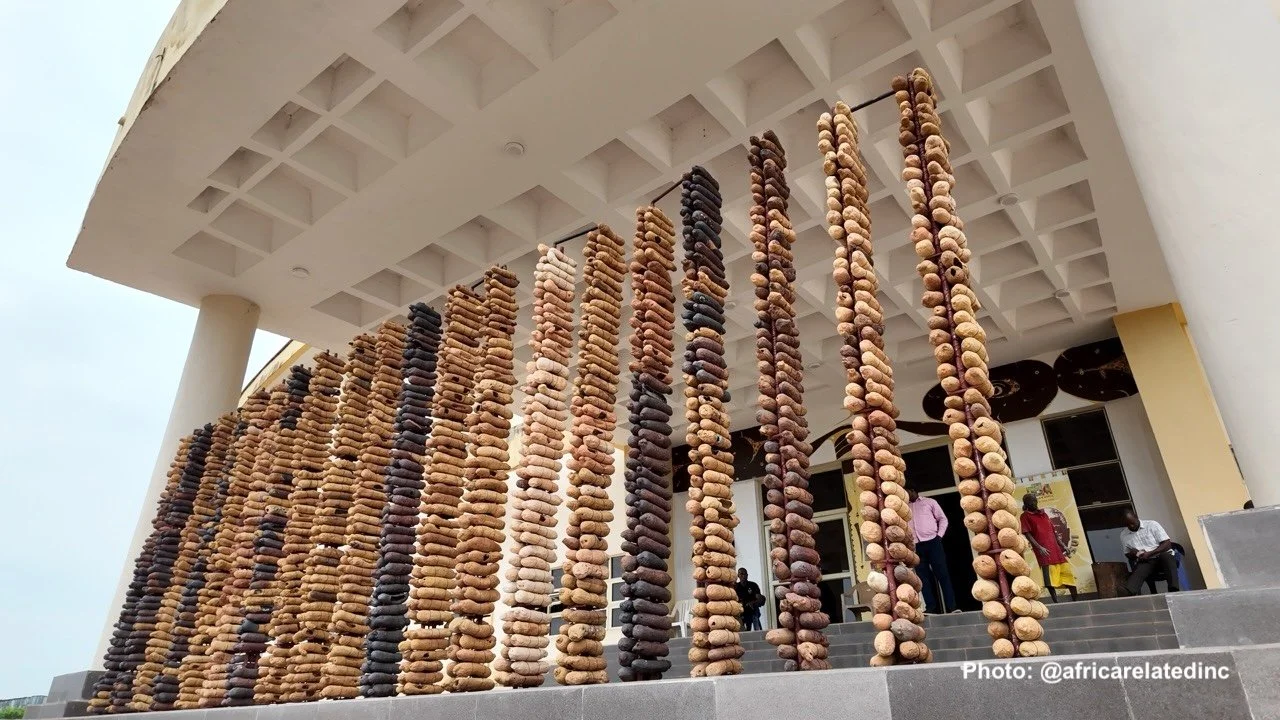
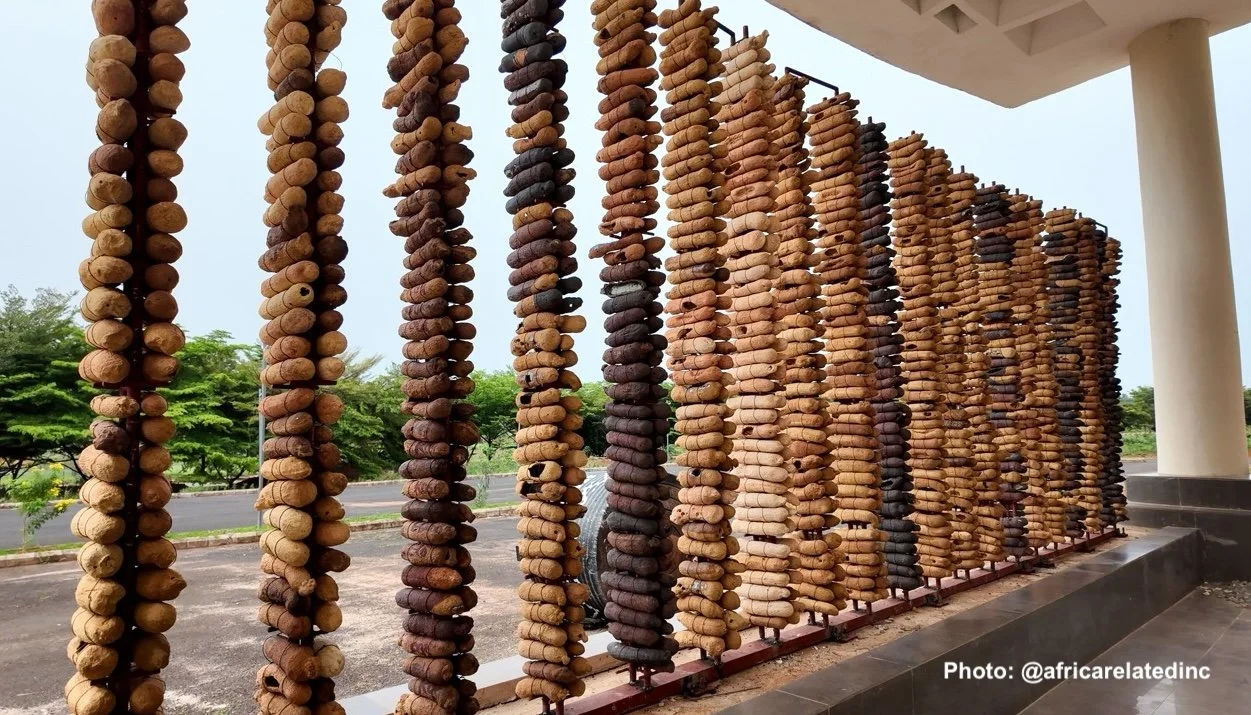
Ozioma Onuzulike’s piece ‘Seed Yams of Our Land’ series drape the front entrance Institute of African Studies (IAS), University of Nigeria Nsukka. Photo: Africa-Related

New Address: Front entrance Institute of African Studies (IAS), University of Nigeria, Nsukka UNN..
Nsukka town is about eighty kilometers north of Enugu in South Eastern Nigeria, where the University campus sits on 871 hectares of hilly savannah with lush vegetation. The Institute of African Studies was established in 1963, initially as the Hansberry College of African Studies. It was named after Professor William Leo Hansberry, an eminent Afro-American Historian and Africanist, who served as its Director, and taught two African presidents - Dr. Nnamdi Azikiwe of Nigeria and Ghana’s Dr. Kwame Nkrumah.
According to A.E. Afigbo, the idea for a graduate Institute of African Studies in the University of Nigeria was channeled towards research and was designed as a rallying point for “all men of colour who can trace their descent to the African continent no matter in what part of the world they now find their habitation”. The institute’s current Director Prof. Ozioma Onuzulike has ably stepped into the big shoes left by past directors, such as Prof. Edward Wilmot Blyden III, Prof. Donatus I. Nwoga, Prof. Uche Okeke, Prof. Chike Aniakor and many others that followed.
El Anatusi’s sculptures on UNN campus
Prof. El Anatsui was a resident of Nsukka for forty-four years (1975-2020), and retired from teaching sculpture at the Department of Fine and Applied Arts in 2012. Two free-standing sculptures made of concrete with terrazzo finish titled For the Upliftment of Man (1983) and Ambivalent Hold (1983) were selected by the University, and can be found on the grounds of the Physical Sciences building. They were jointly sculpted by members of an art collective called SKEP.
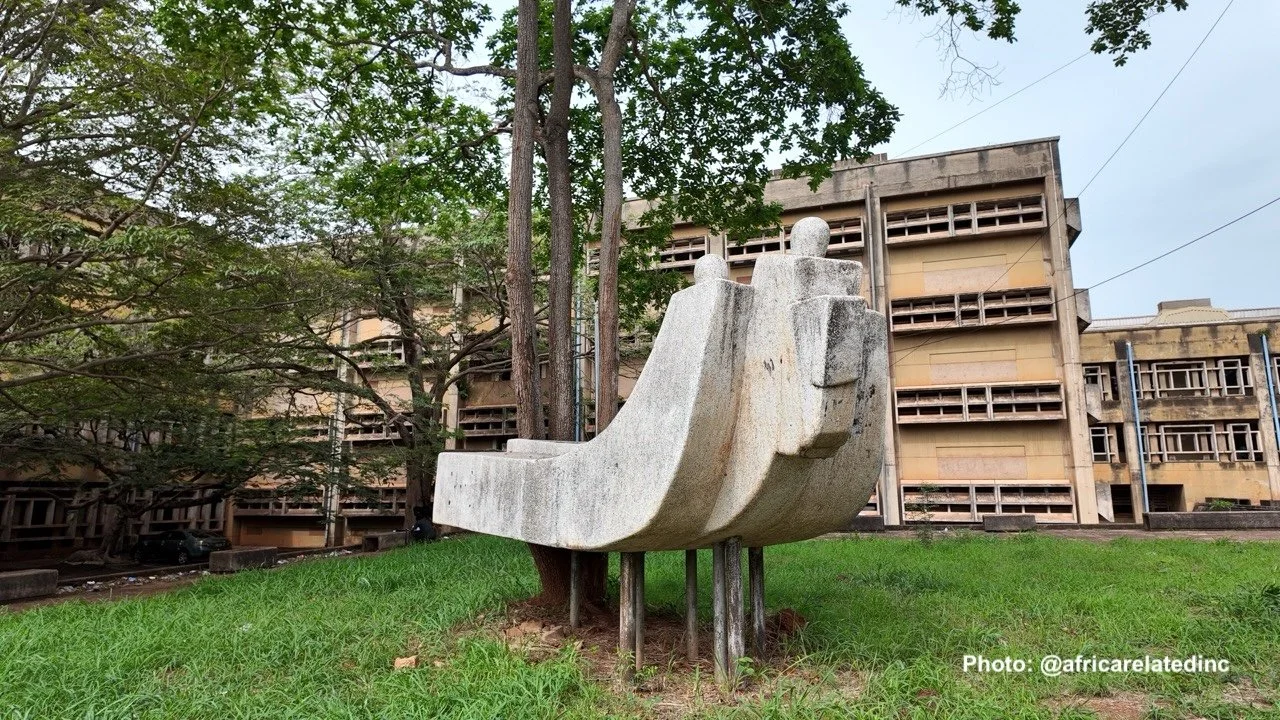
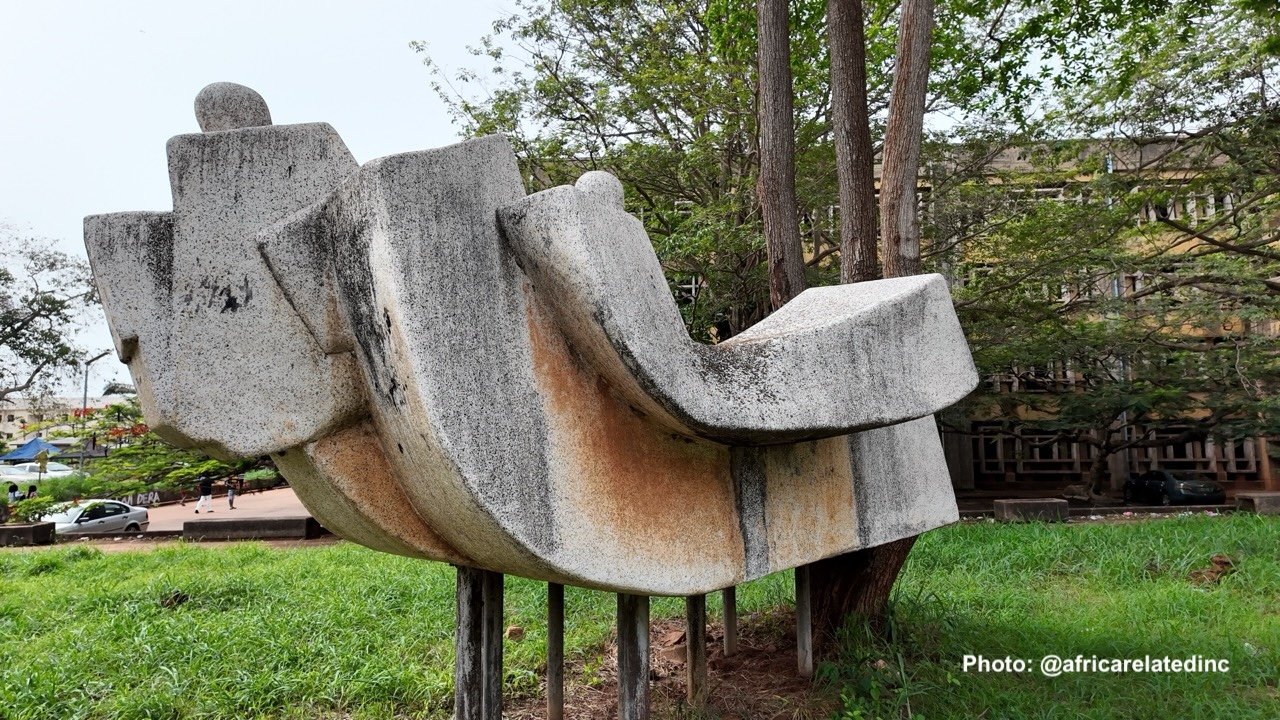

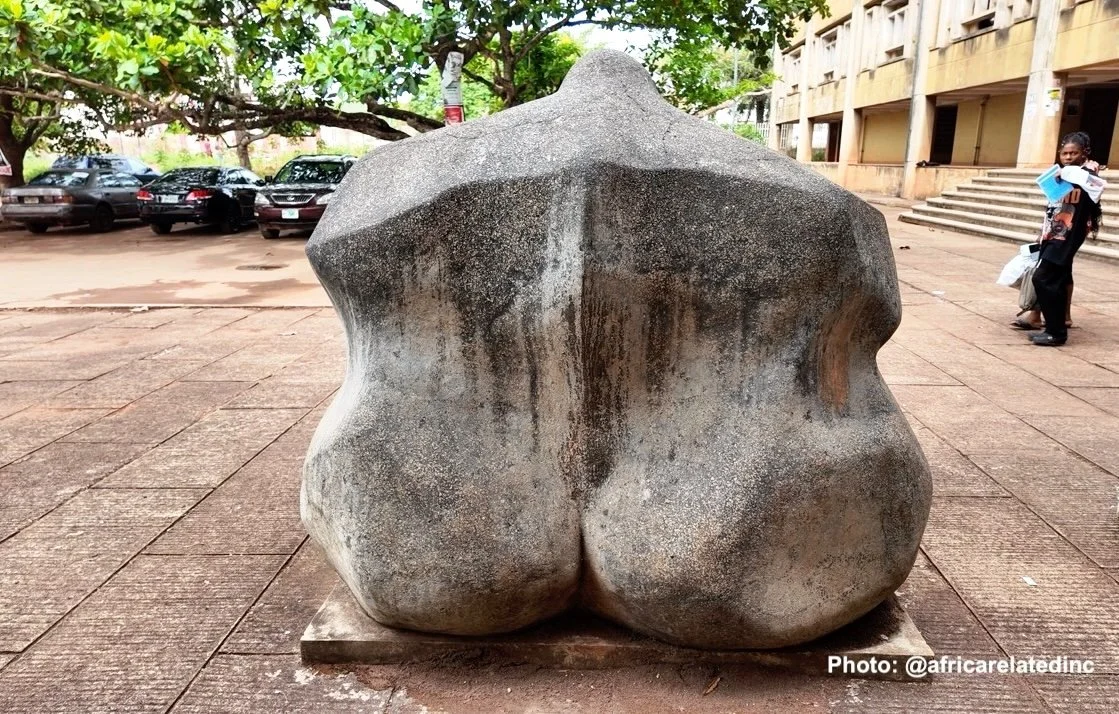
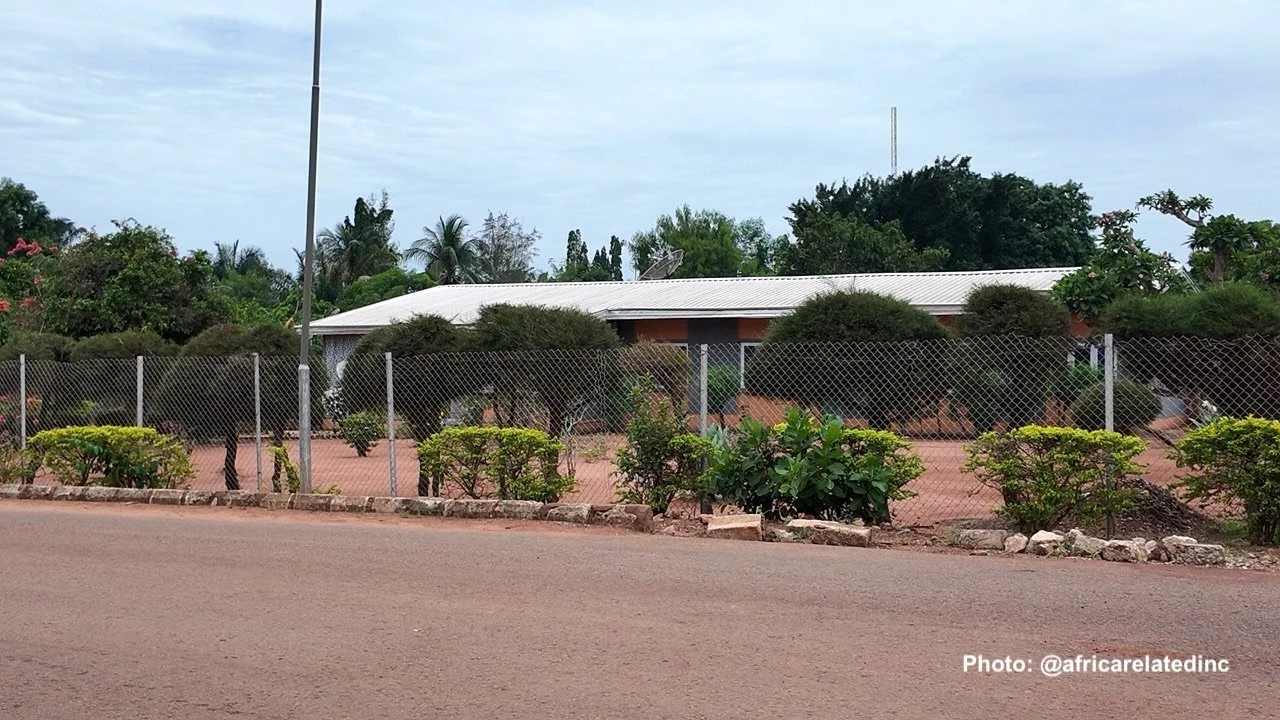
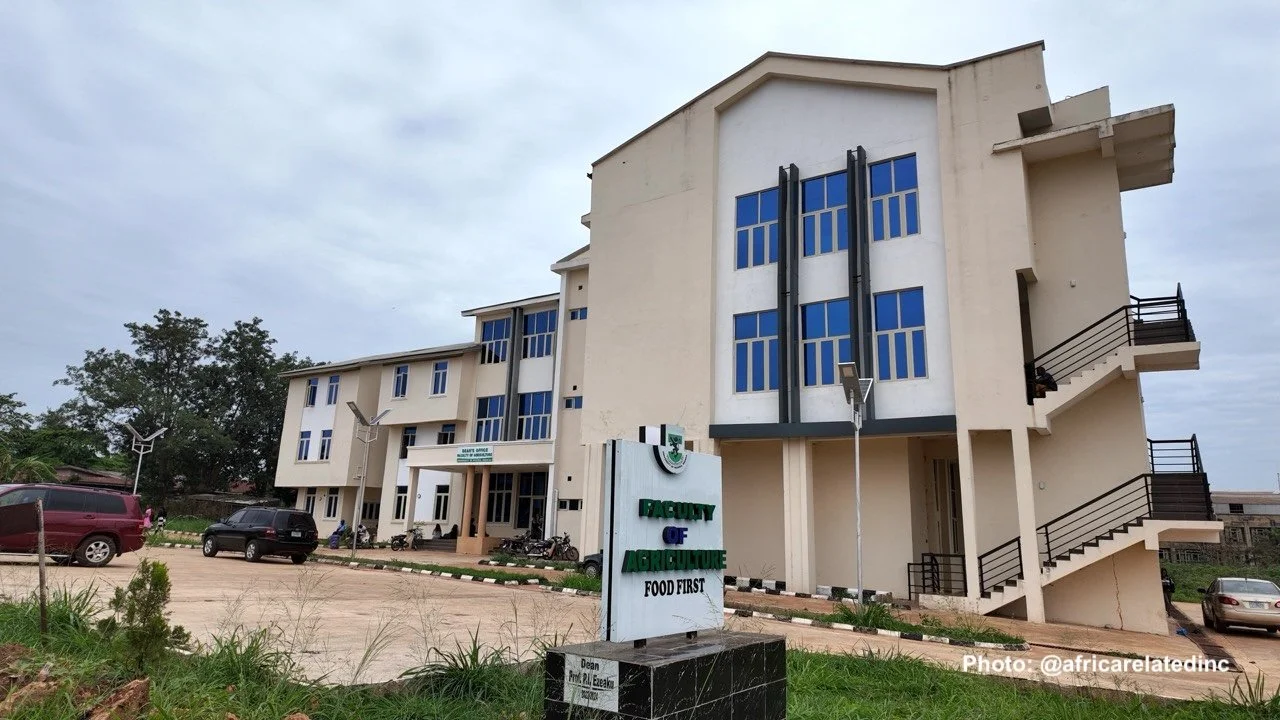
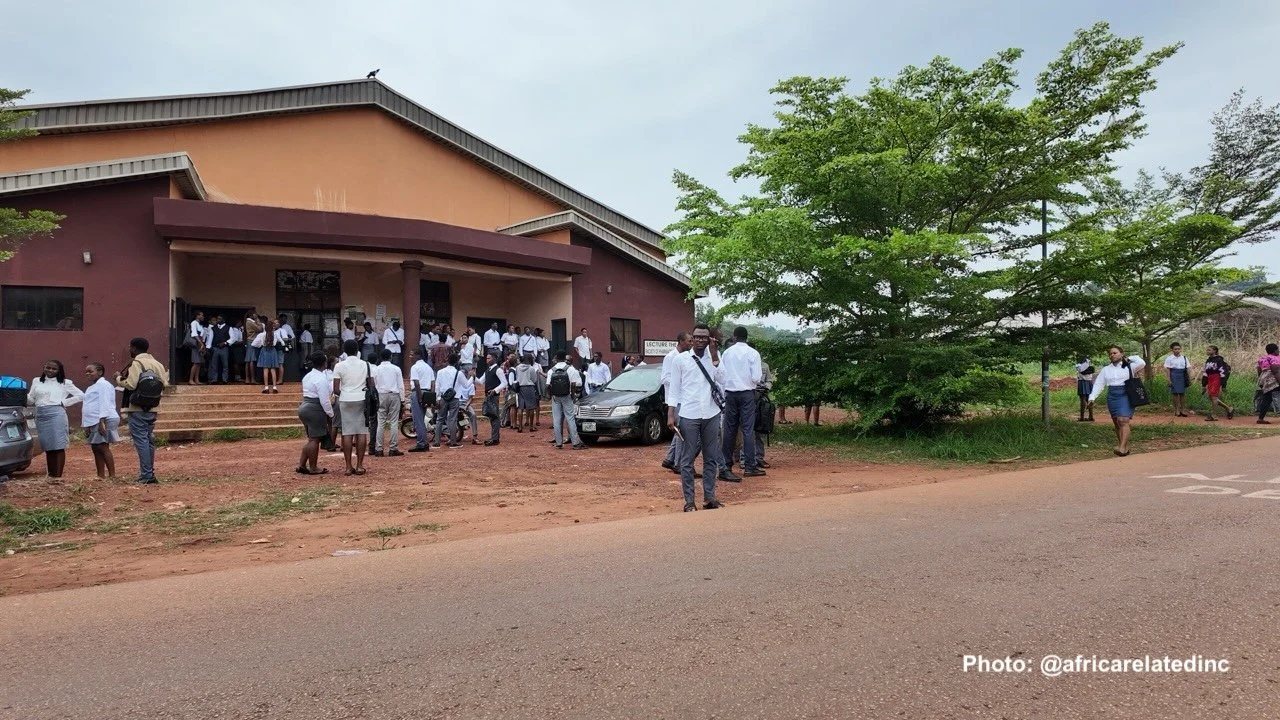
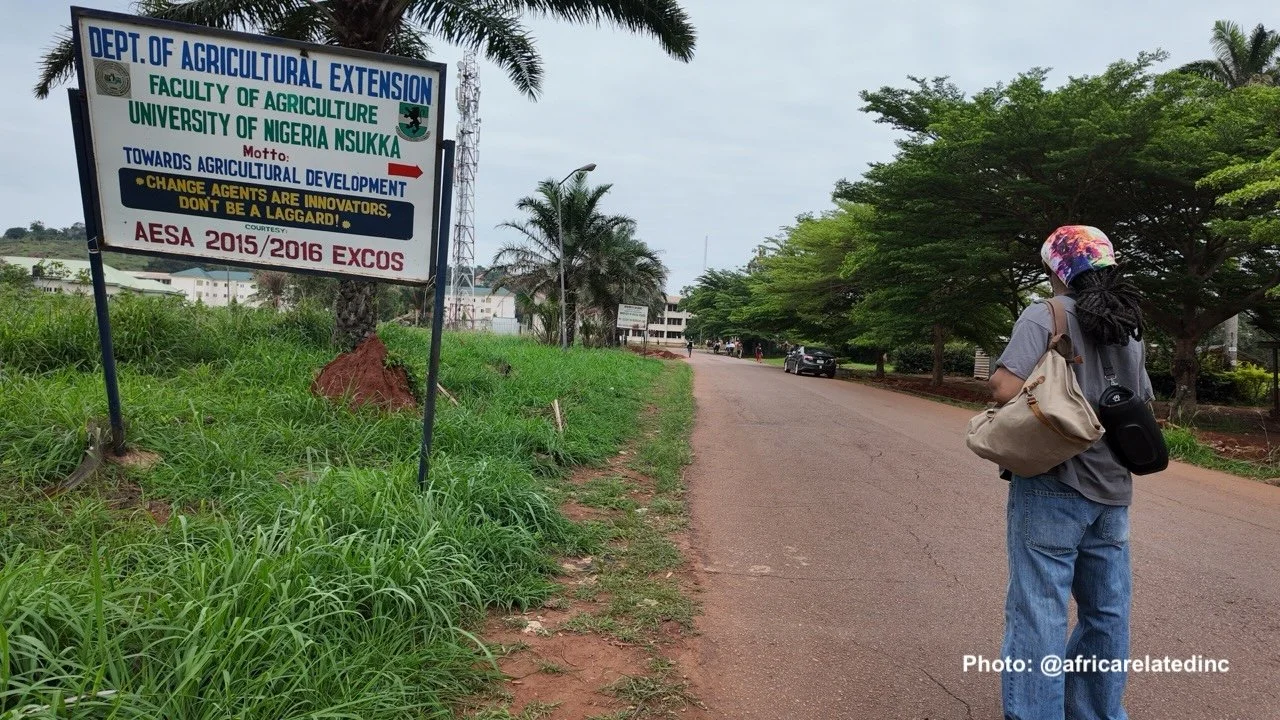
Photos: DELA SCREENING & UNN CAMPUS
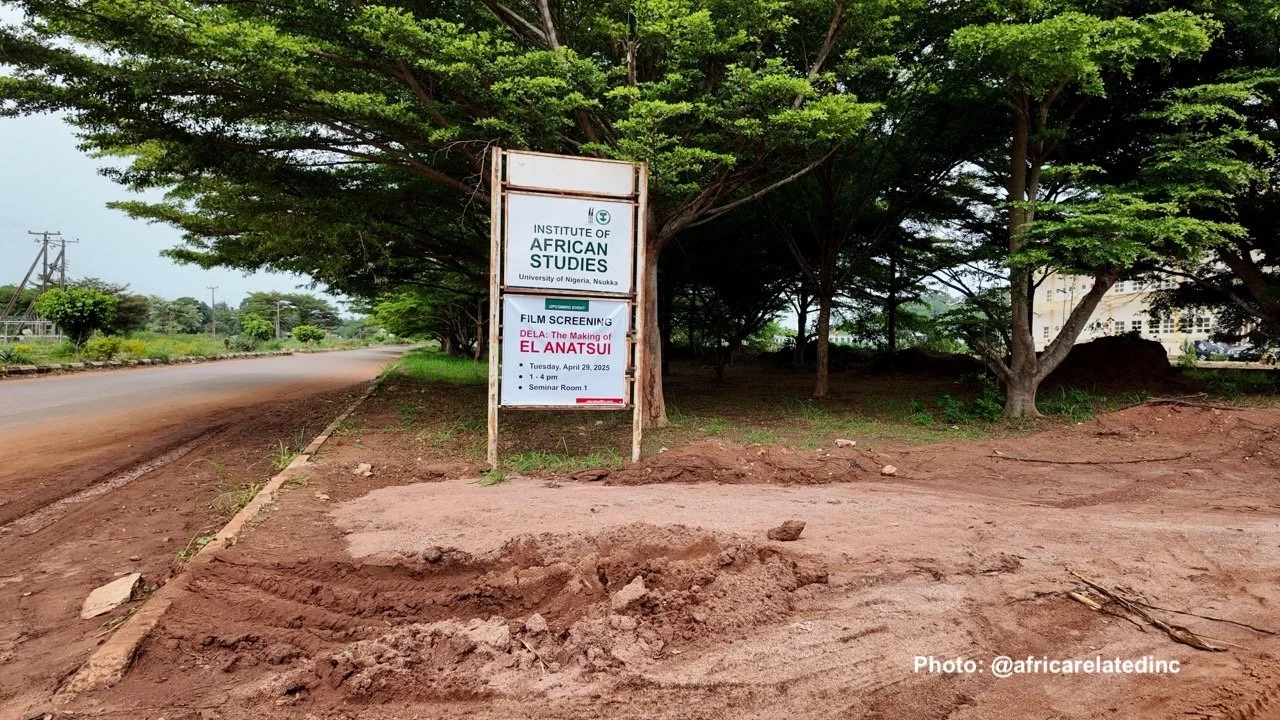
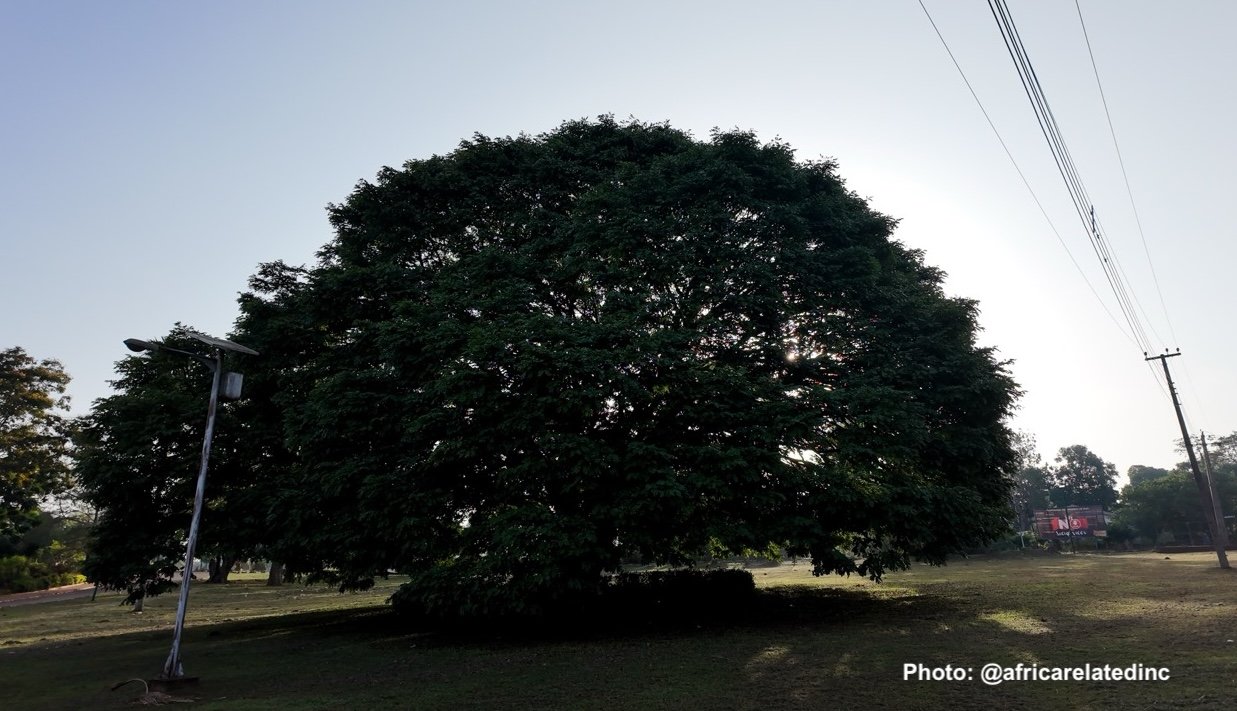
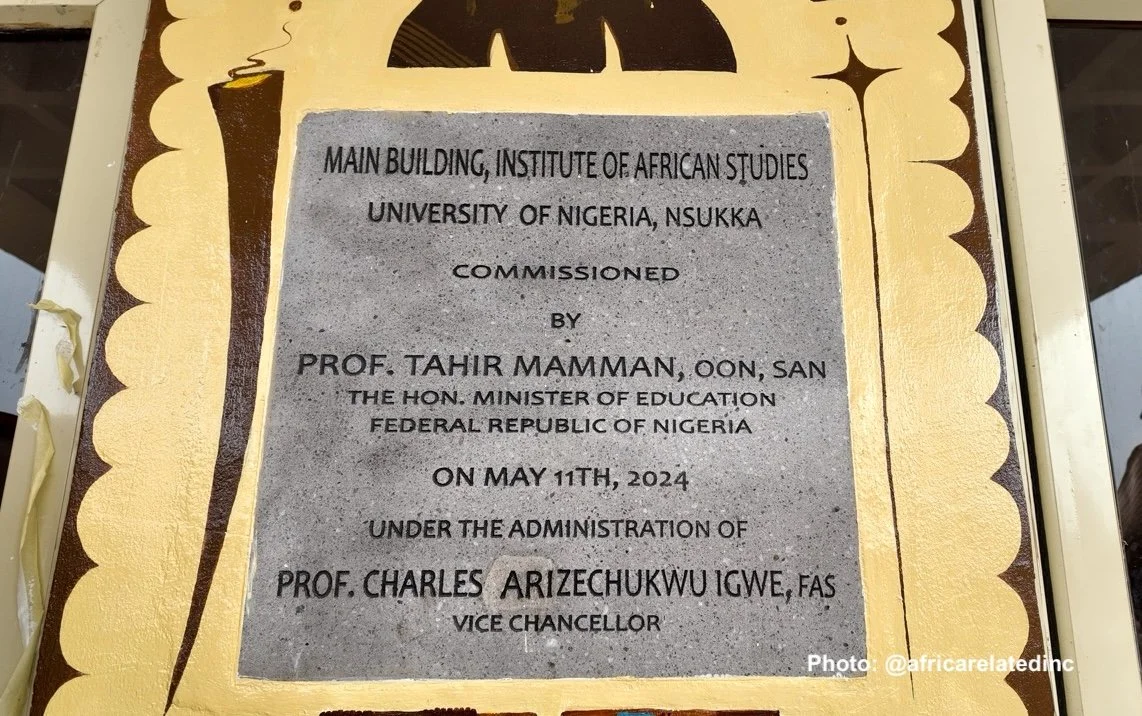
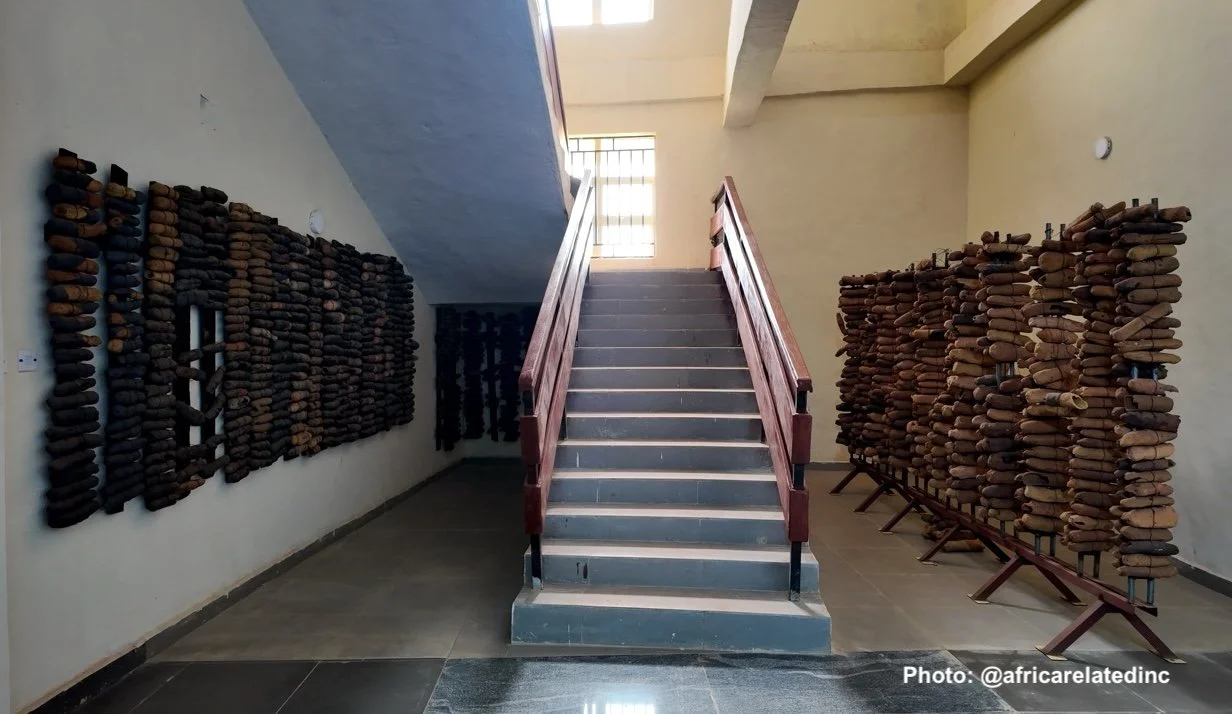
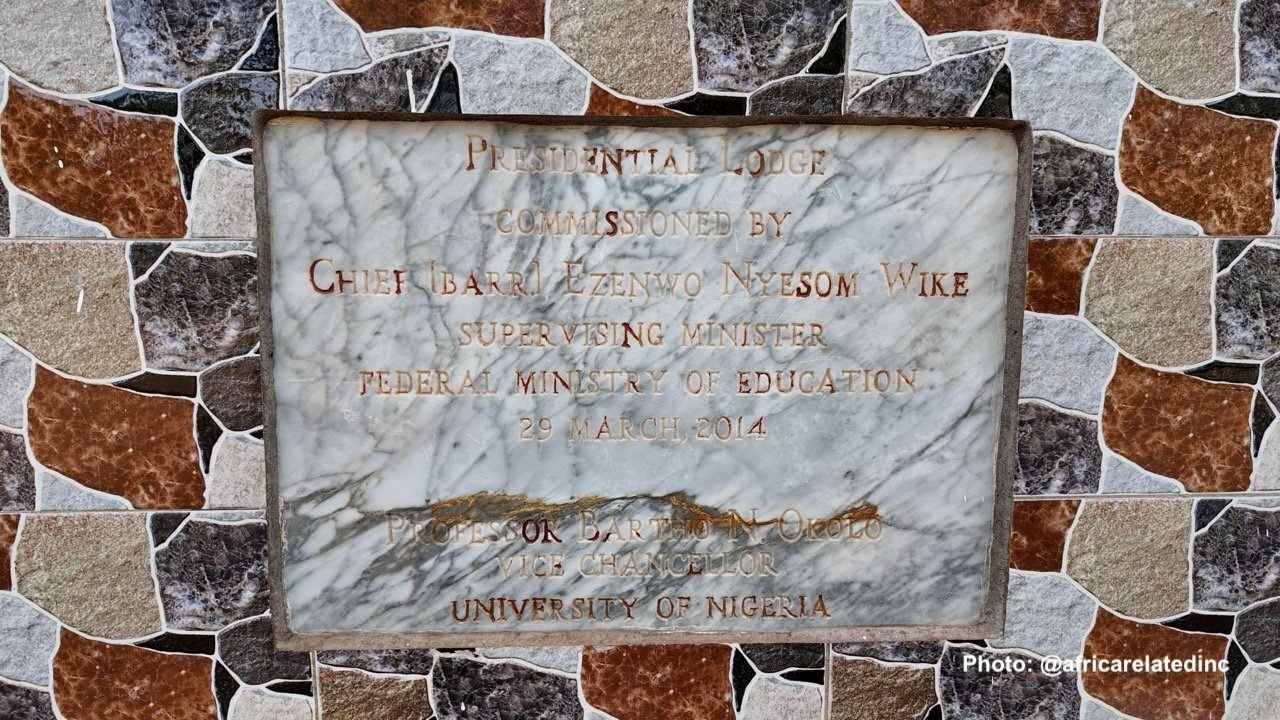
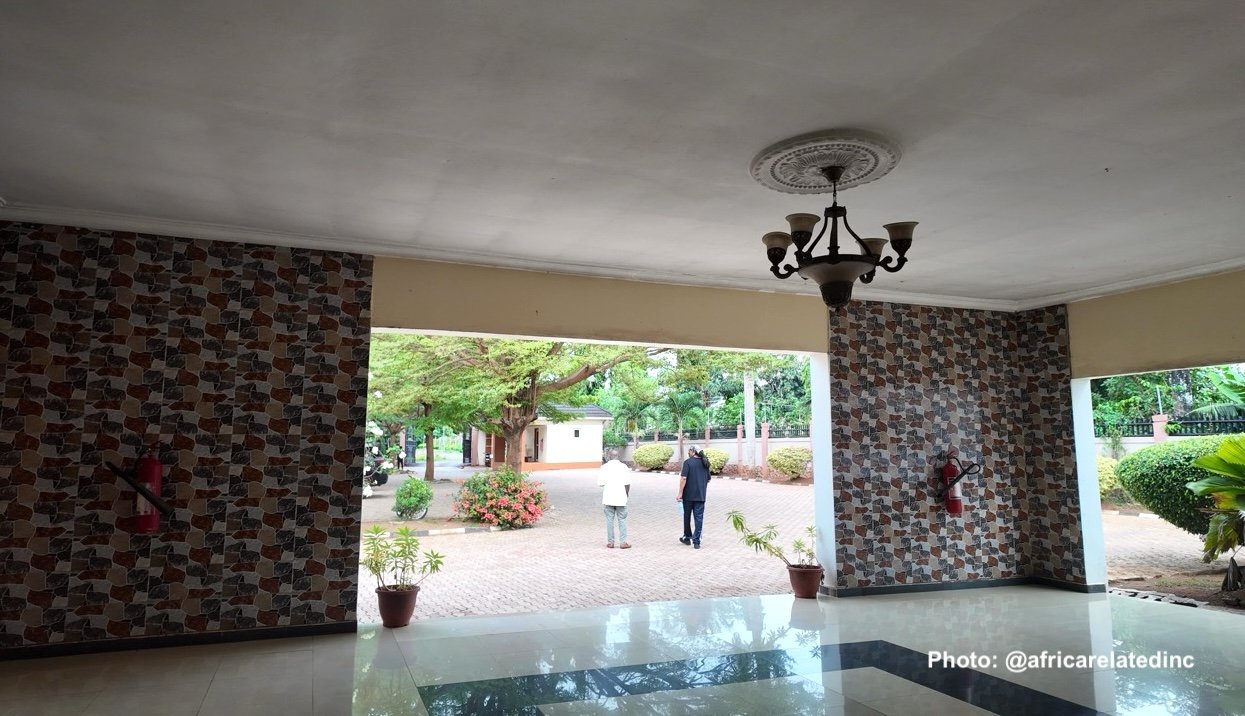



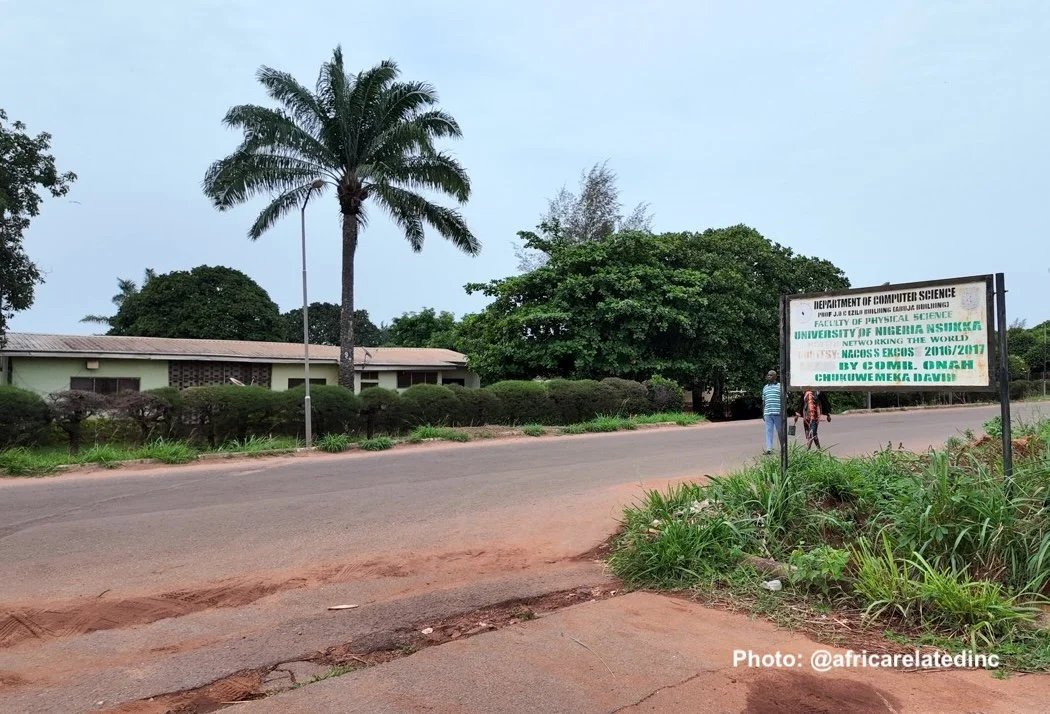
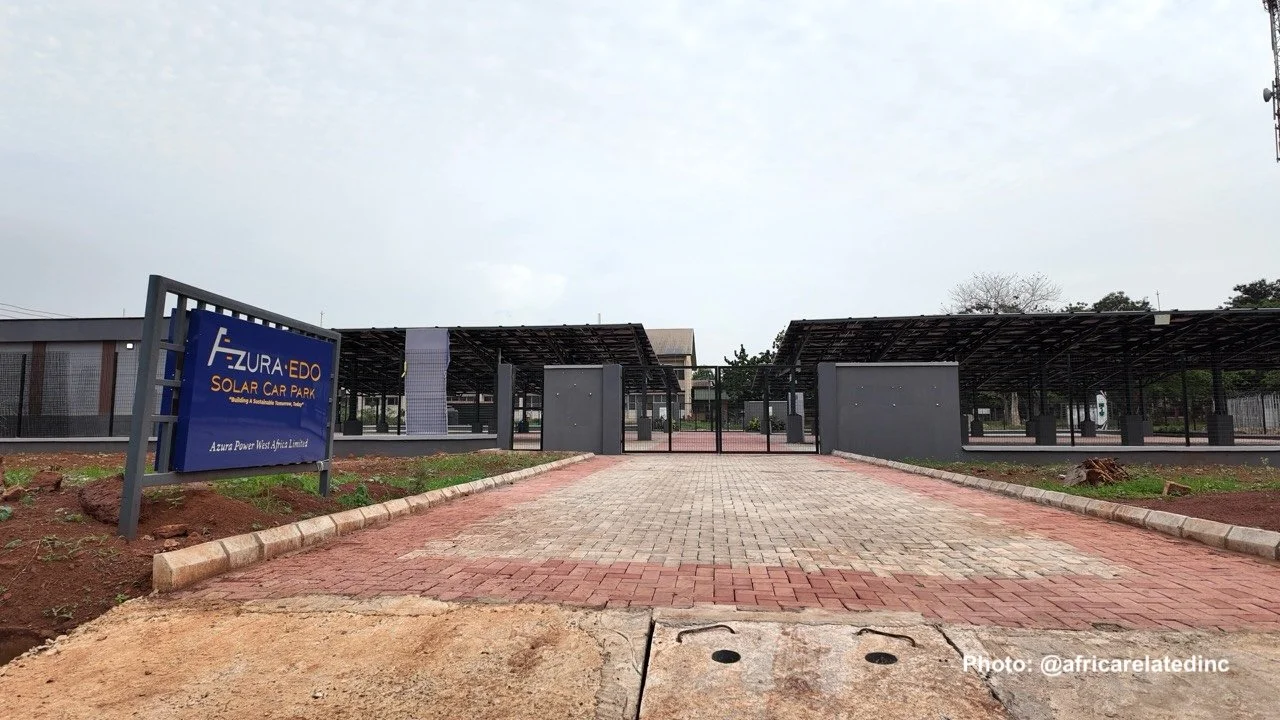
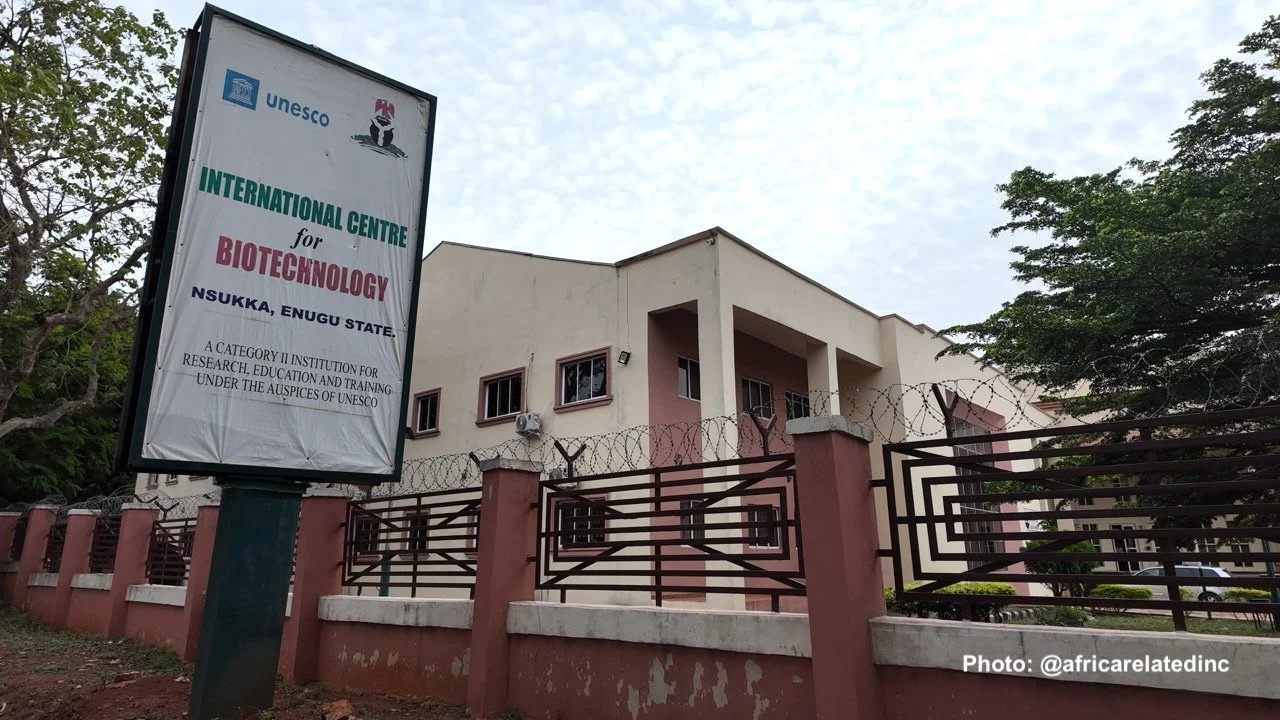
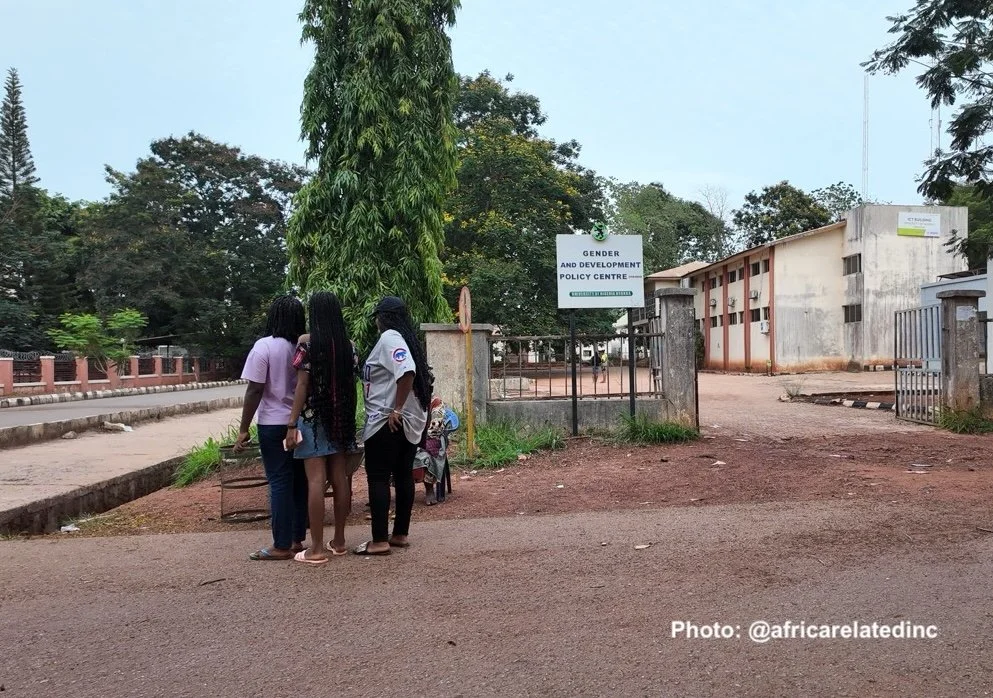

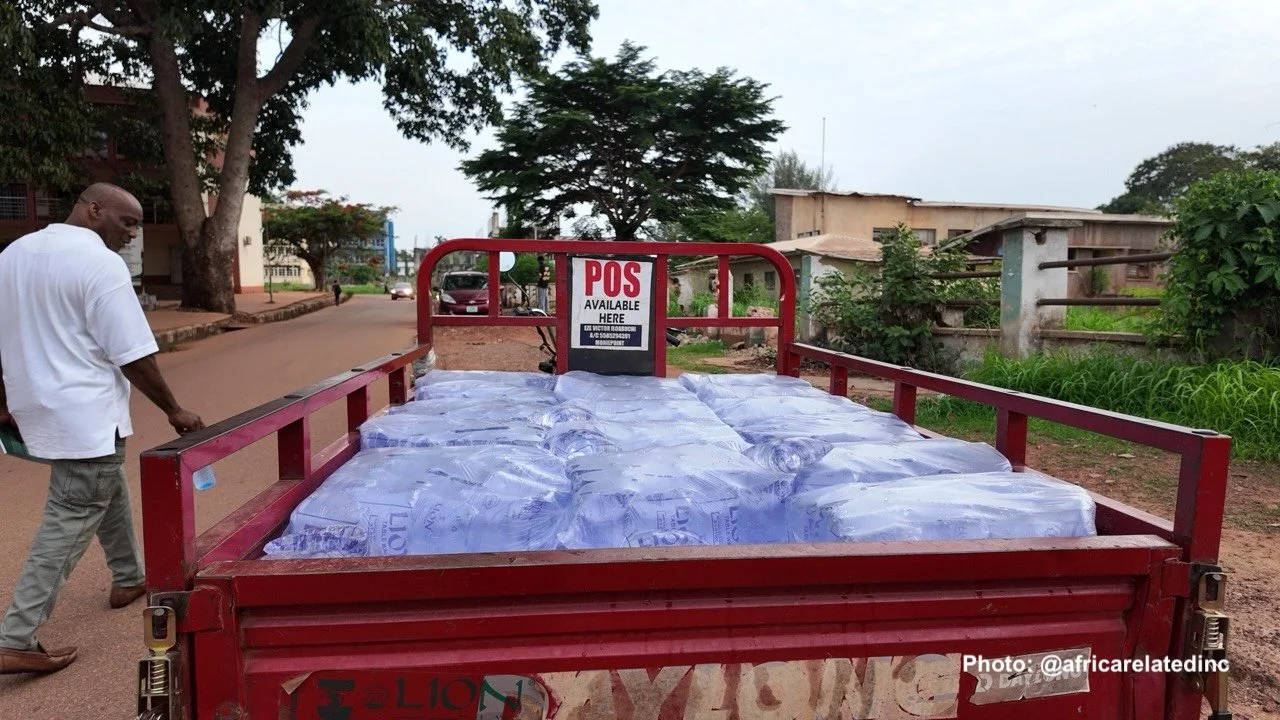
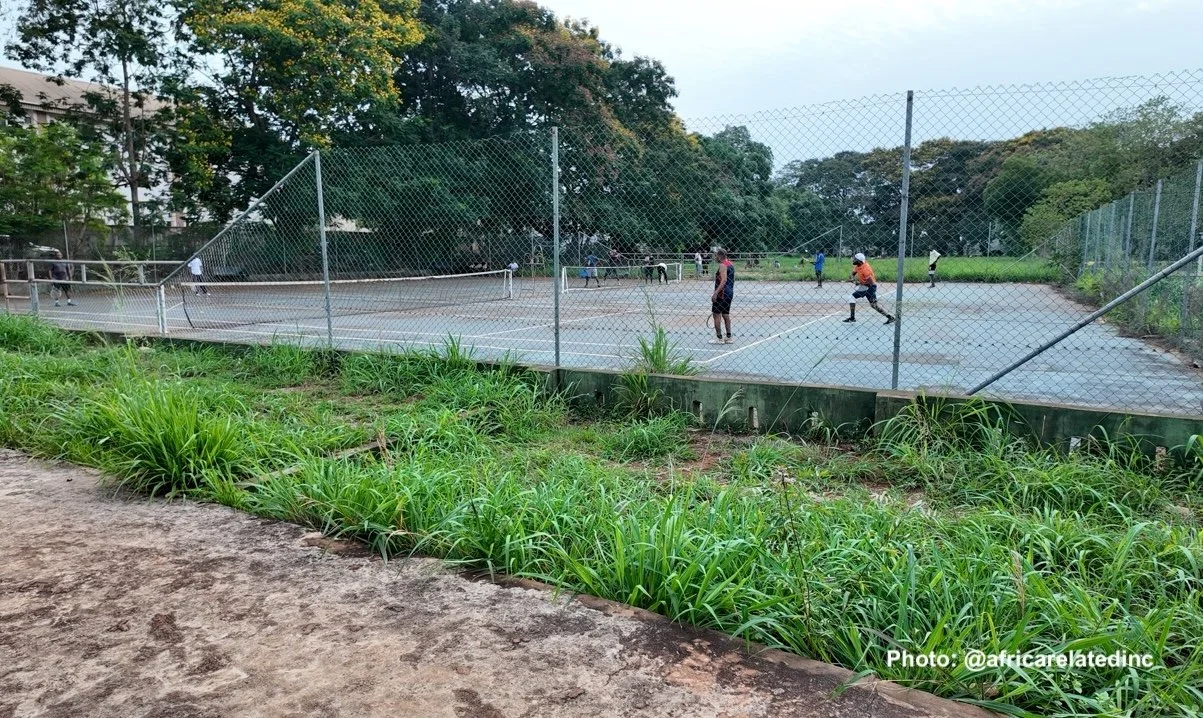

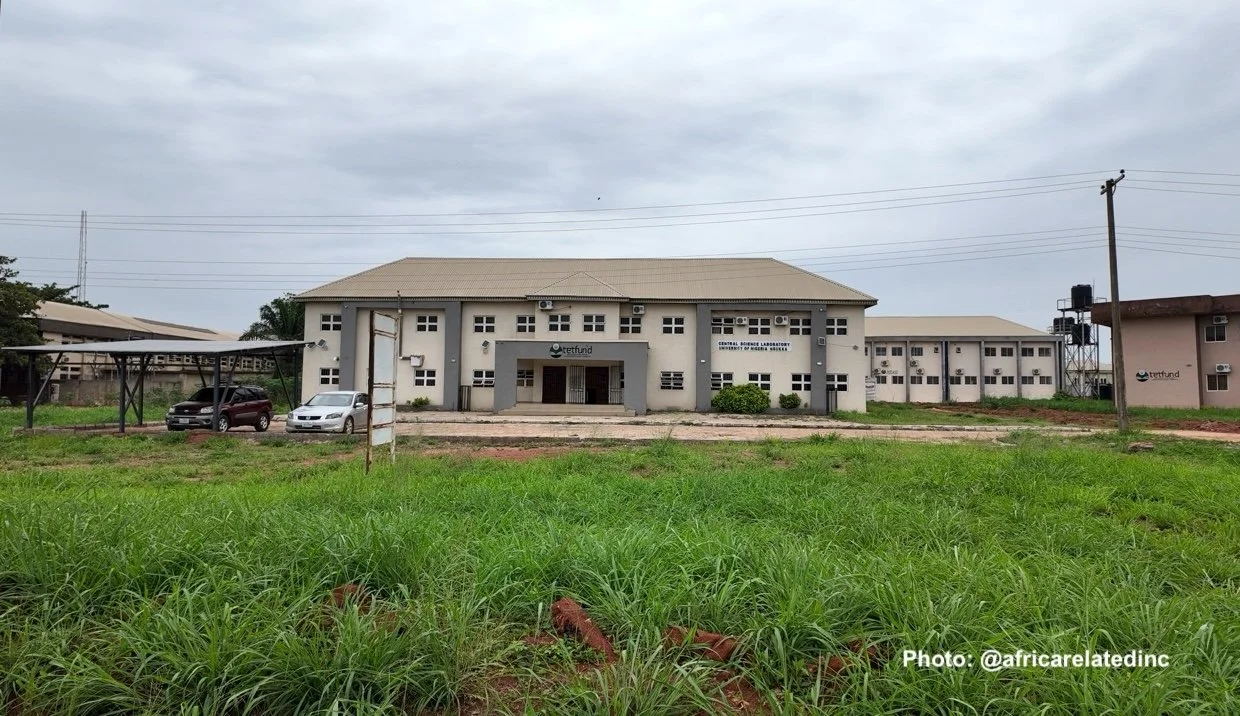
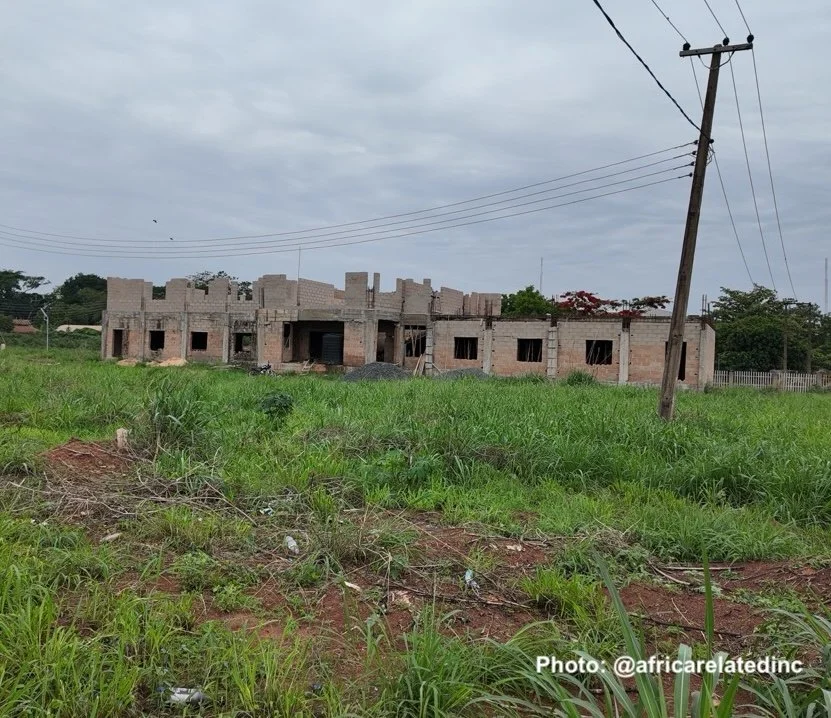
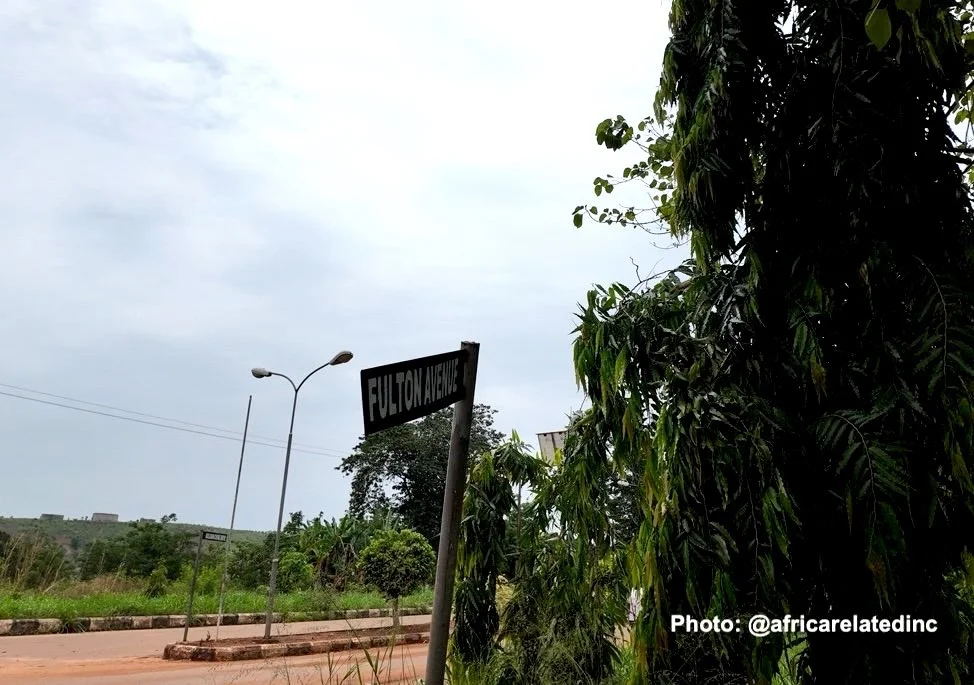
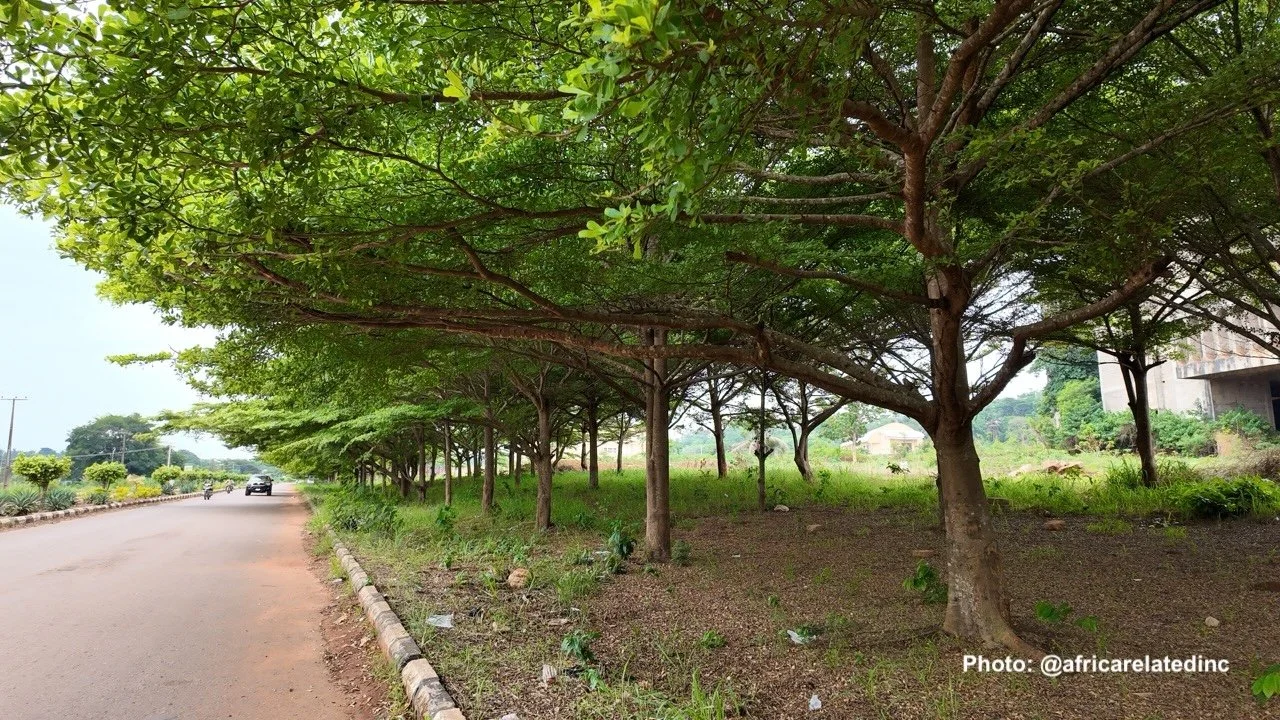
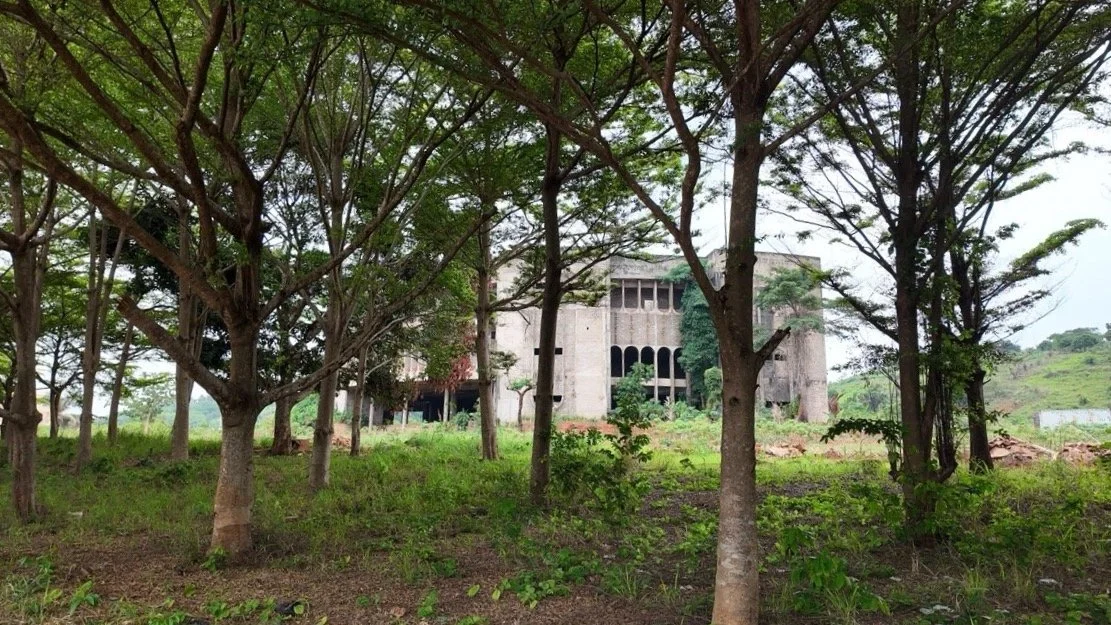
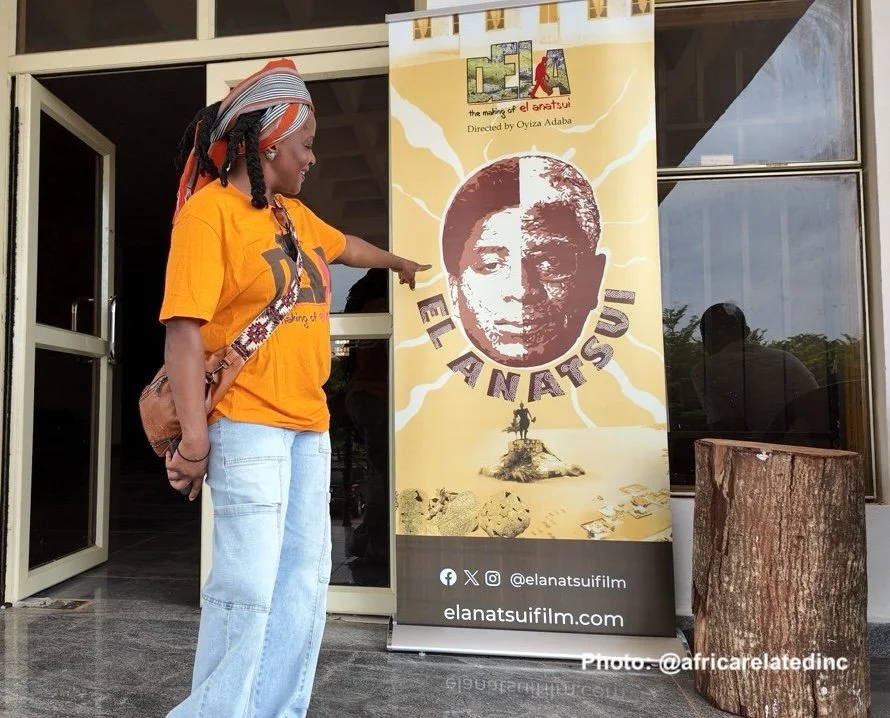
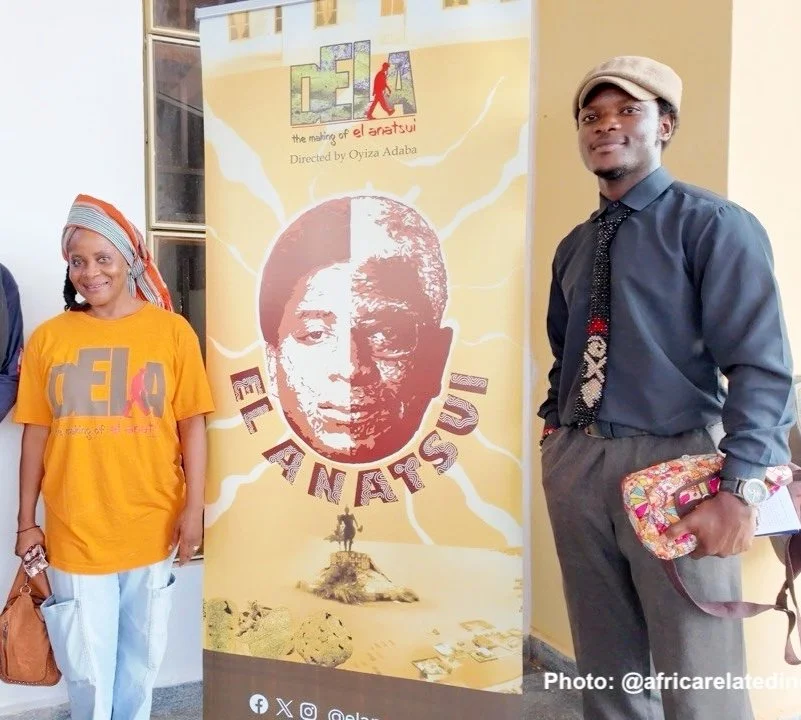
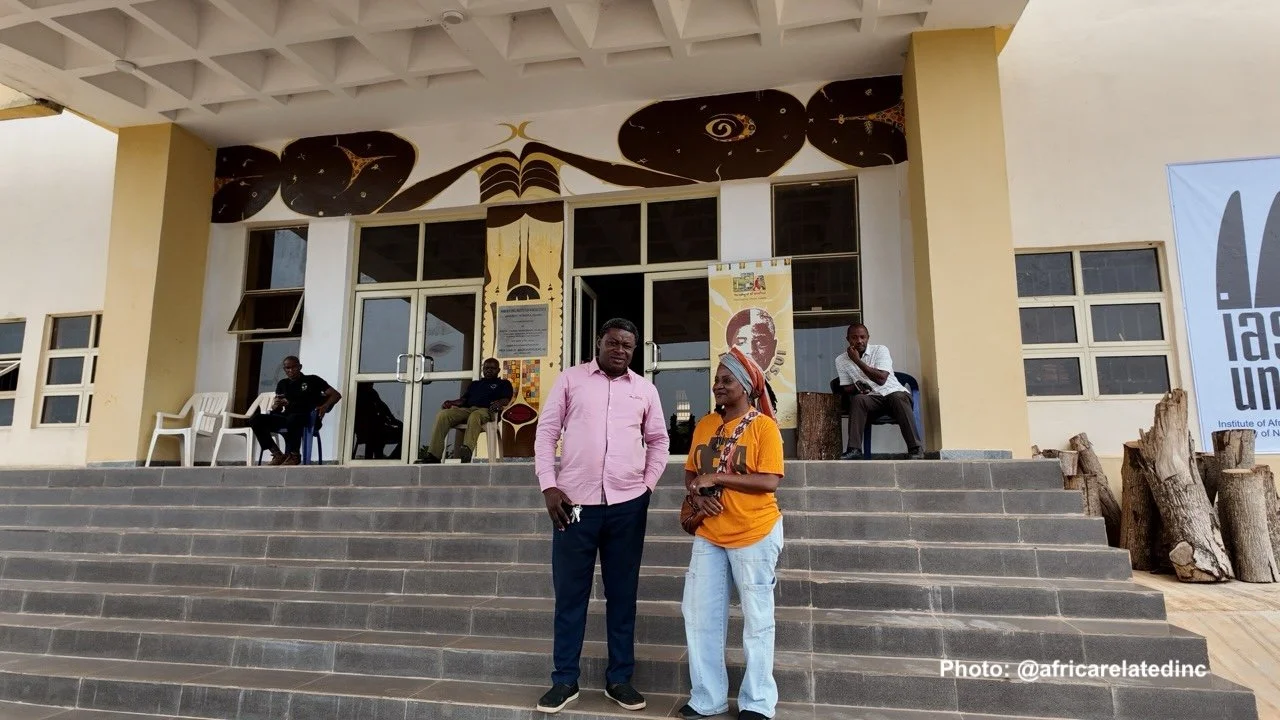
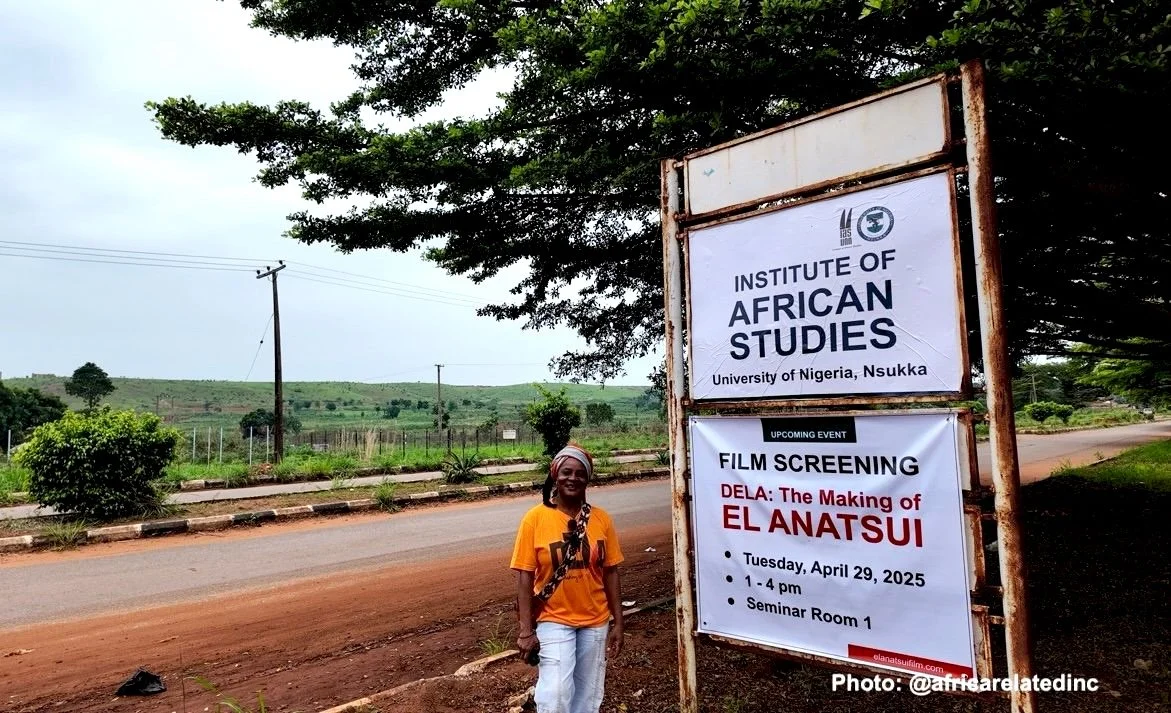
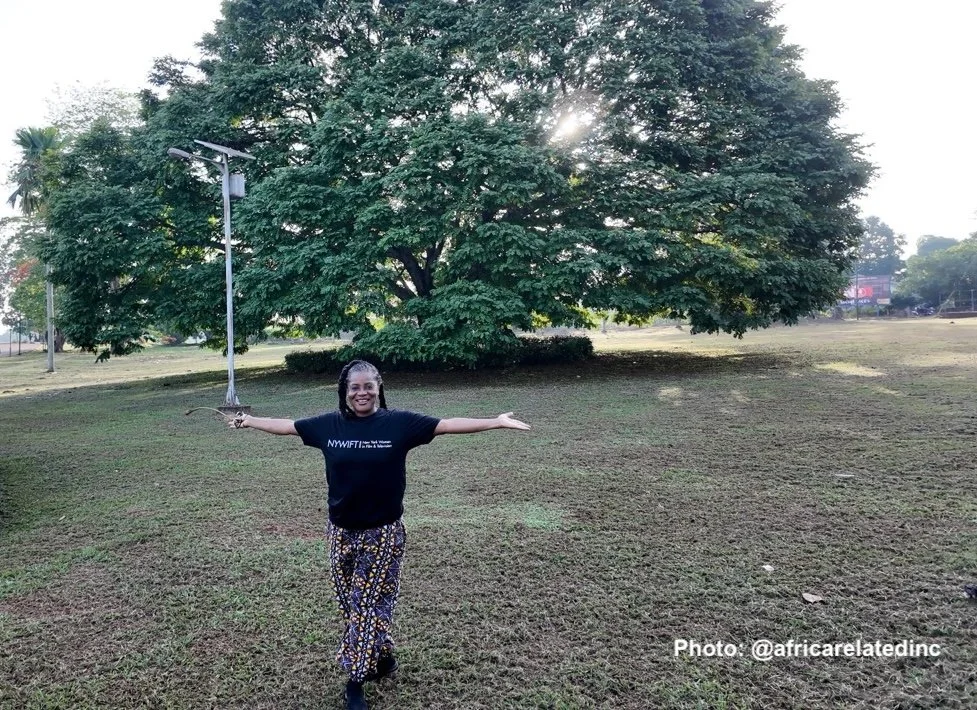
DELA: The Making of El Anatsui is a biographical documentary about one of the world's greatest sculptors. The Campus Tour aims to bring art and film students closer to the film's subject. It has so far, screened at Pan-Atlantic University Lagos, University of Nigeria Nsukka (UNN). In Ghana, the tour will continue at the artist’s five alma mater institutions.
SHARE THIS STORY
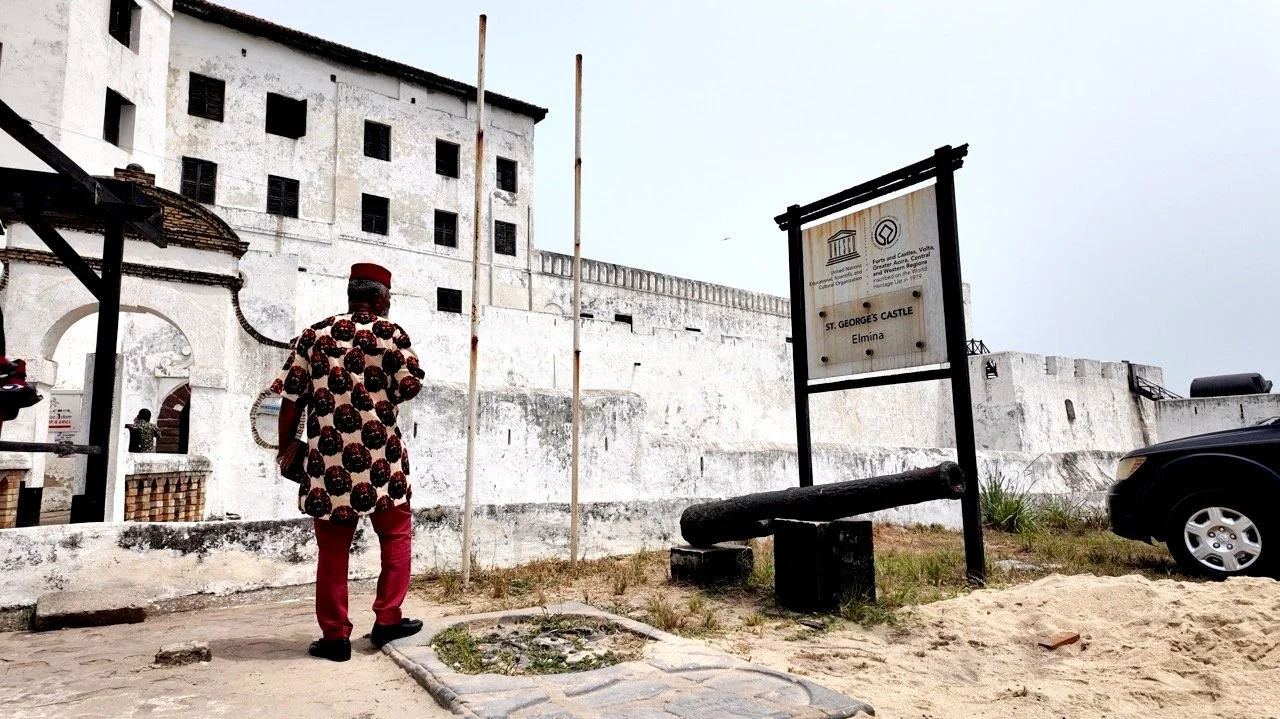
ELMINA: The Struggle Between Suffering and Healing
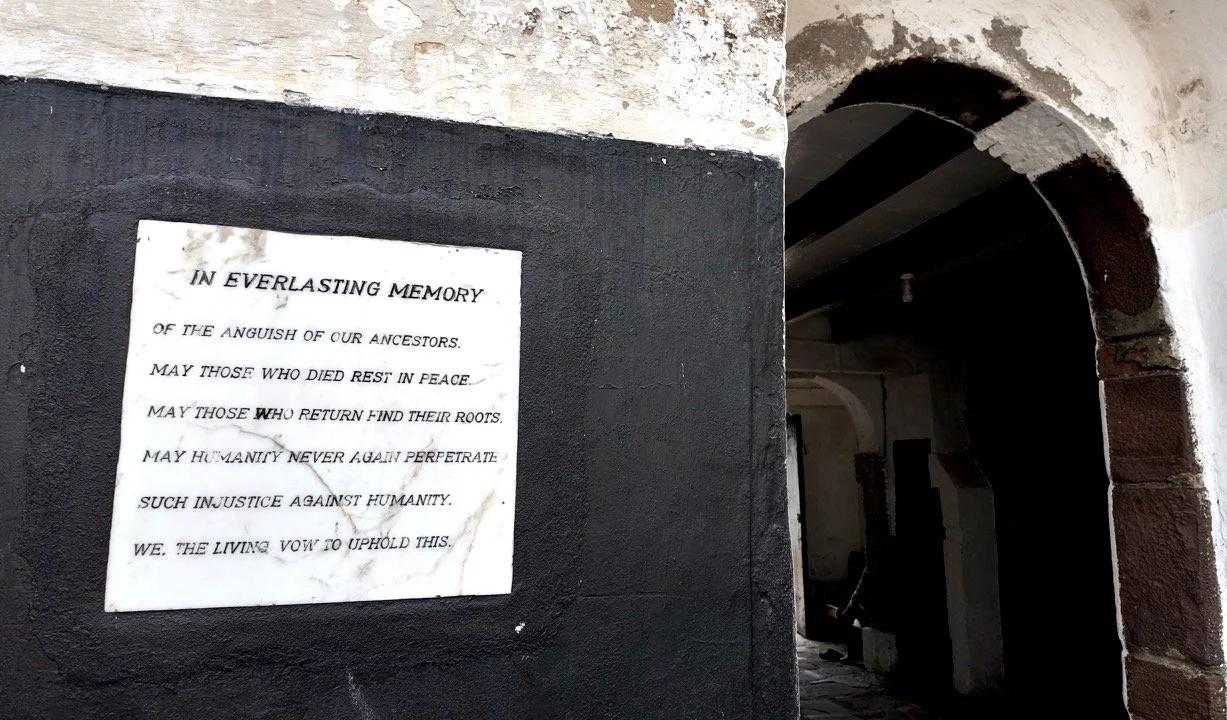
A visit to Elmina Castle, over three hours from Accra, Ghana, evokes strong feelings about our connection to the Transatlantic Slave Trade. As the 1992 Pan African Historical Theater Festival declared, “May we never allow such injustice again. We, the living, promise to uphold this.”
by Oyiza Adaba, New York
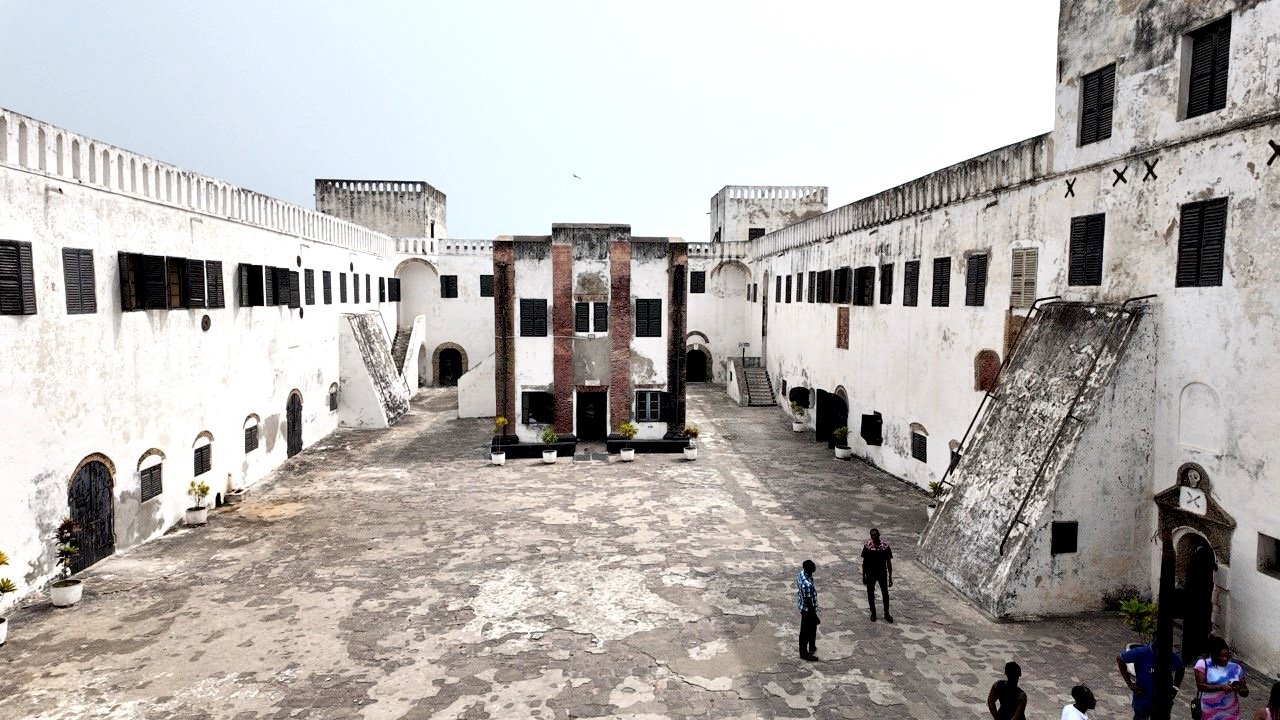
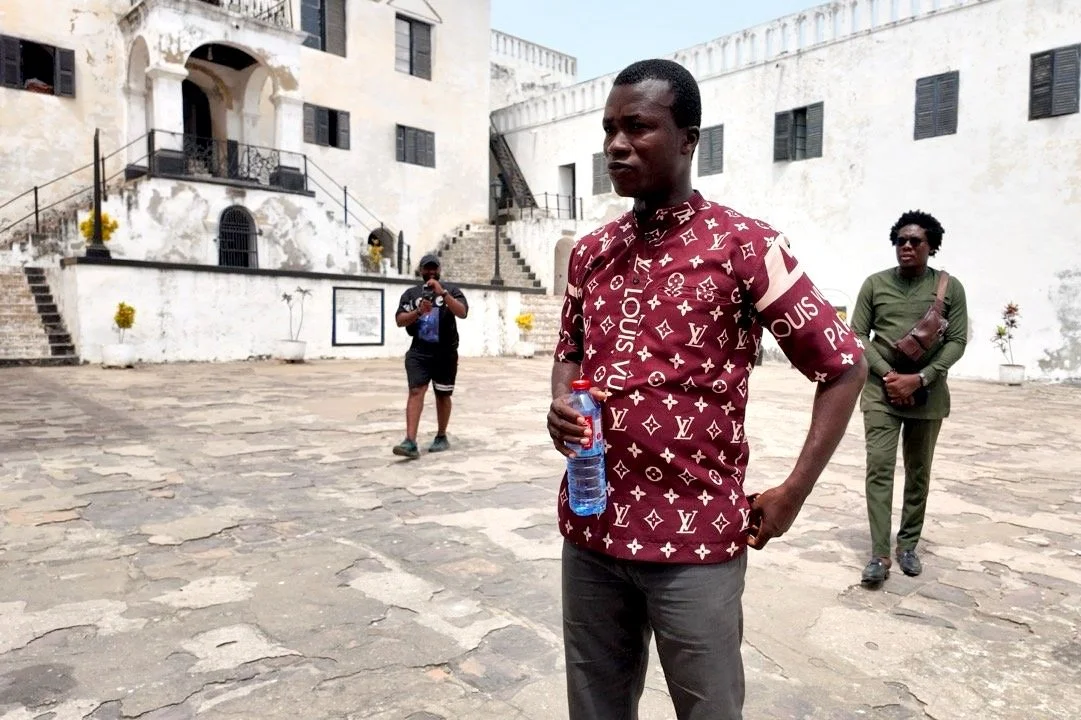
The main courtyard at Elmina Castle, Ghana. Built by the Dutch in 1482. (Photo:Africa-Related)
A SPECIAL REPORT
Made possible by Meridian Creative Center, Tema
A visit to Elmina Castle, over three hours from Accra, Ghana, evokes strong feelings about our collective connection to the Transatlantic Slave Trade. As the 1992 Pan African Historical Theater Festival declared, “May we never allow such injustice again. We, the living, promise to uphold this.”
In the coastal town of Elmina, the ongoing struggle between reliving a horrific era and healing unfolds daily. Here, the remnants of a painful past clash with the hopeful emergence of transformation. Locals, guides and tourists alike navigate these intricate emotions, confronting the weight of their history while striving to cultivate a future filled with resilience and recovery. This delicate balance begins the journey toward healing that many individuals undergo.
“In everlasting memory of the anguish of our ancestors. May those who died, rest in peace. May those who return find their roots. May humanity never again, perpetuate such injustice against humanity. We, the living vow to uphold this
”
Video by Africa-Related for #El@80
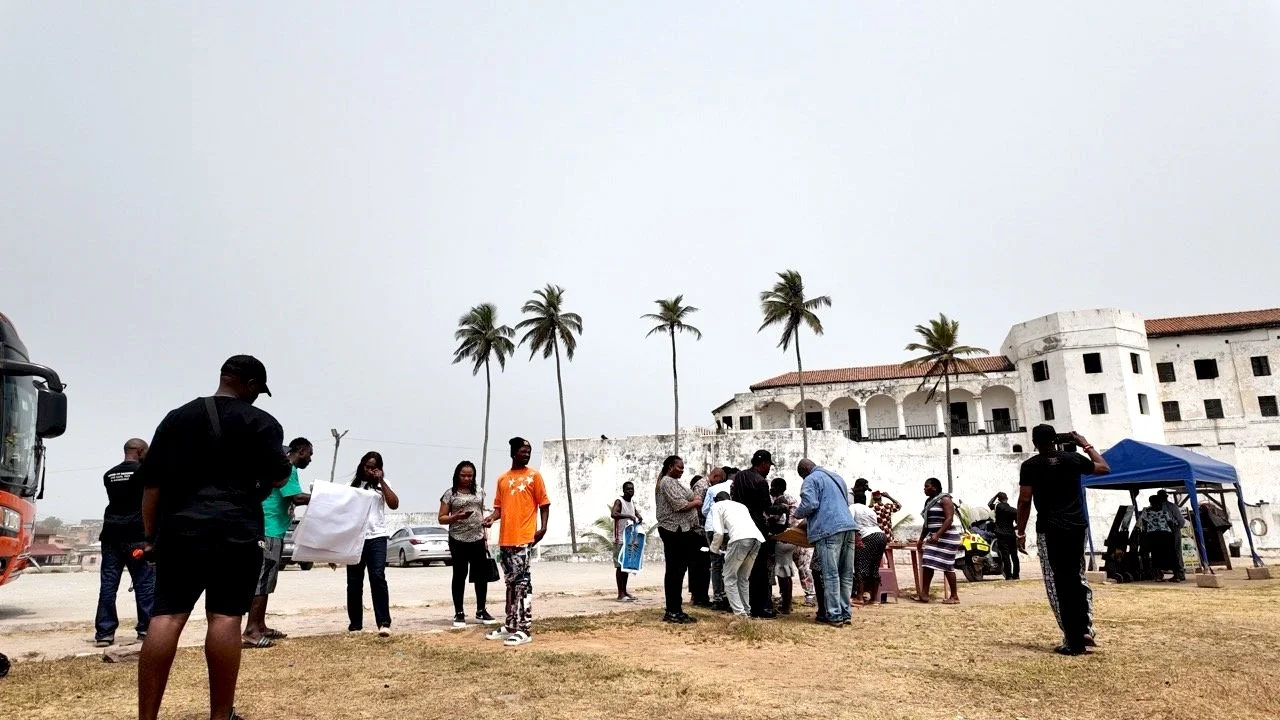
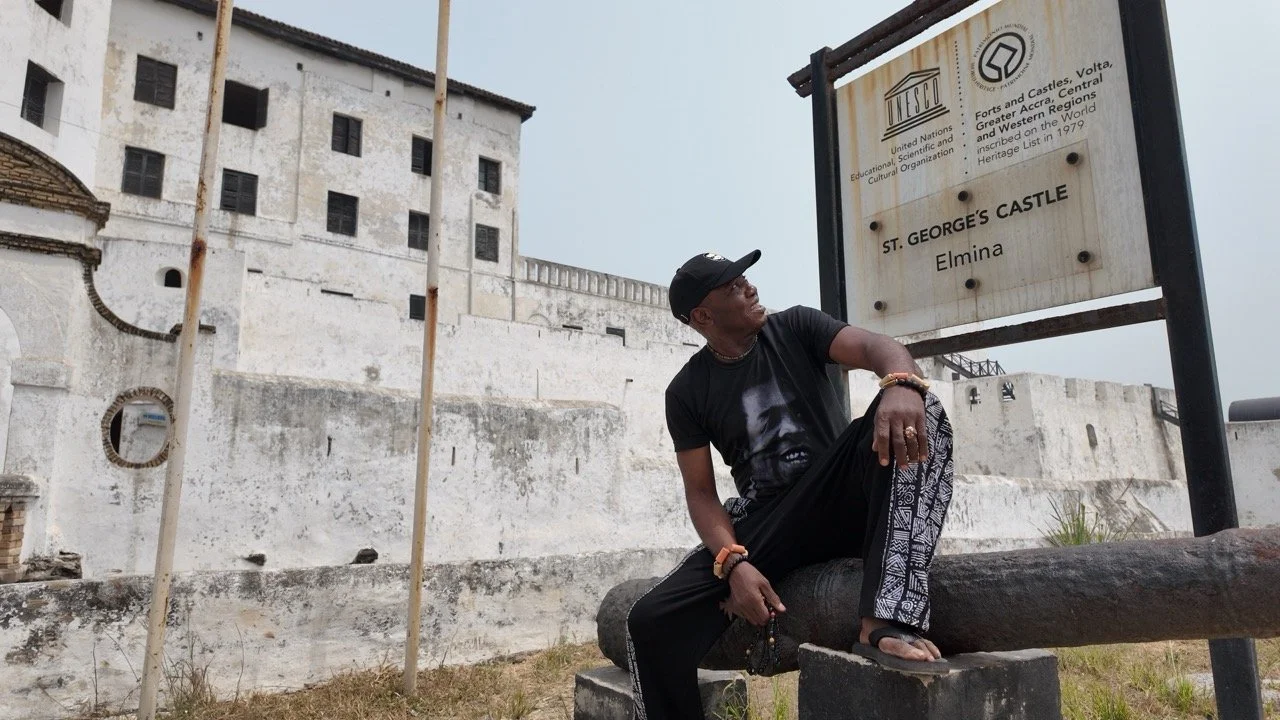
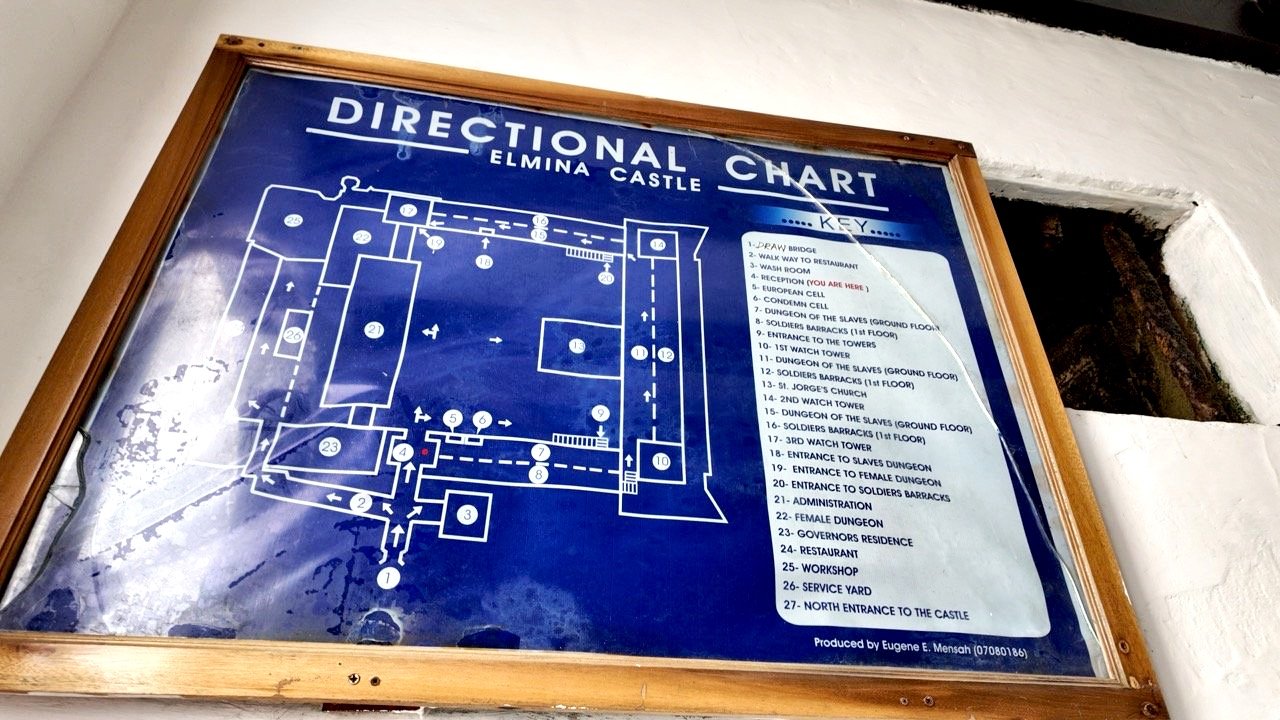
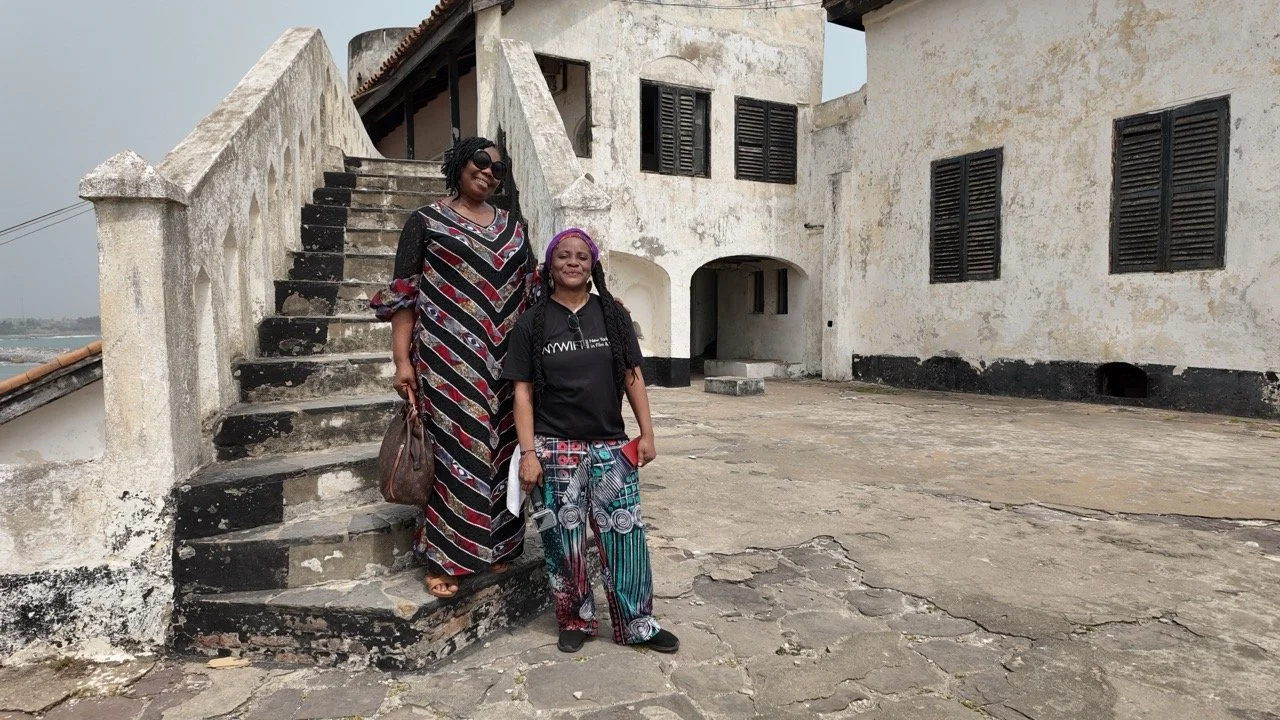
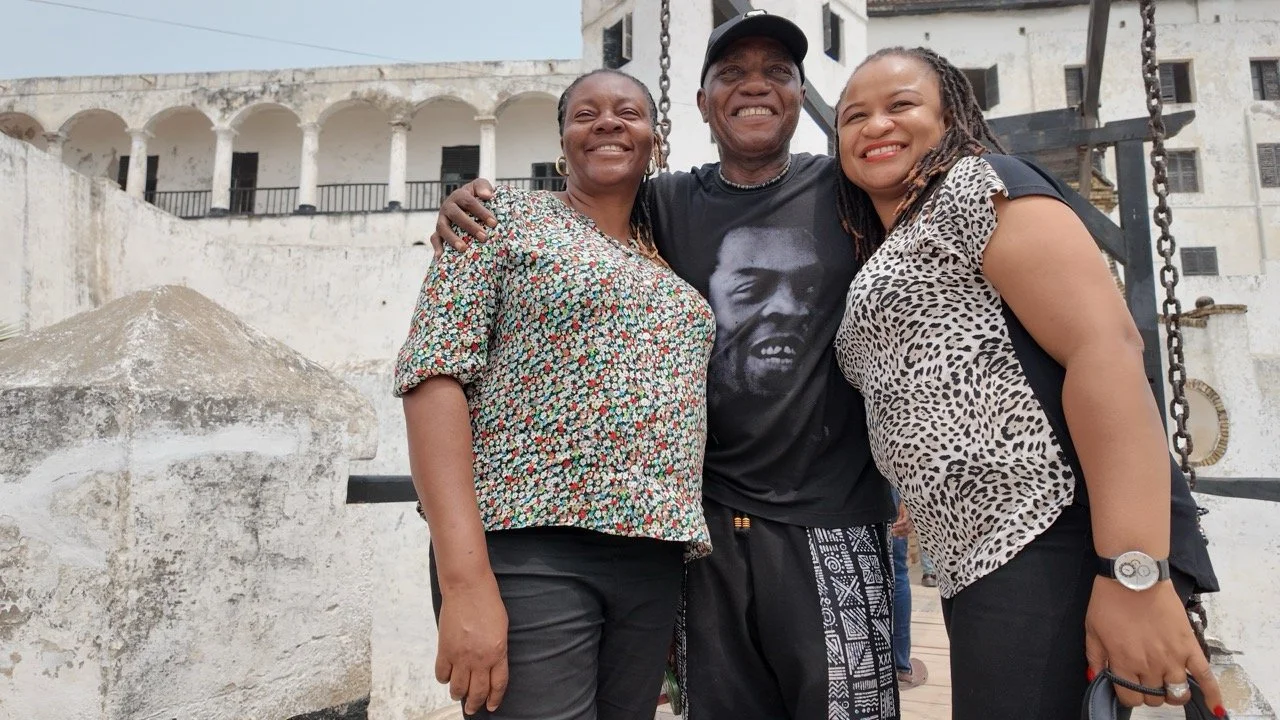
In February 2024, friends and colleagues of the globally recognized sculptor and Emeritus Professor of Art, El Anatsui, came together to celebrate his significant 80th birthday with a tour of the Elmina Slave Castle. This historical UNESCO World Heritage site is located in the picturesque town of Elmina, which lies approximately a three-hour drive from Ghana's vibrant capital, Accra.
According to Wikipedia, the castle was the very first trading post established on the Gulf of Guinea by the Portuguese back in 1482, originally called Castelo de São Jorge da Mina, but also known simply as Castelo da Mina or Mina, in what is now present-day Elmina, Ghana, which was formerly known as the Gold Coast.
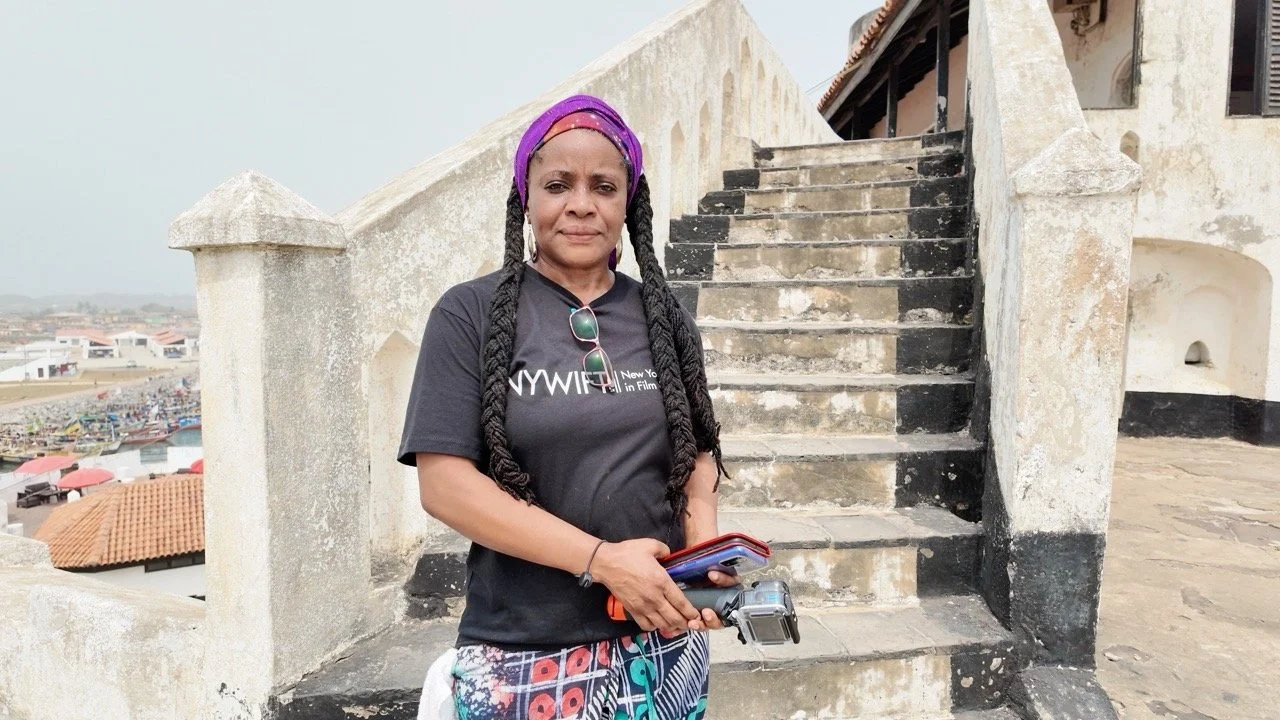
Journalist/Filmmaker Oyiza Adaba at Elmina Slave Castle, Ghana (Photo by Africa-Related)
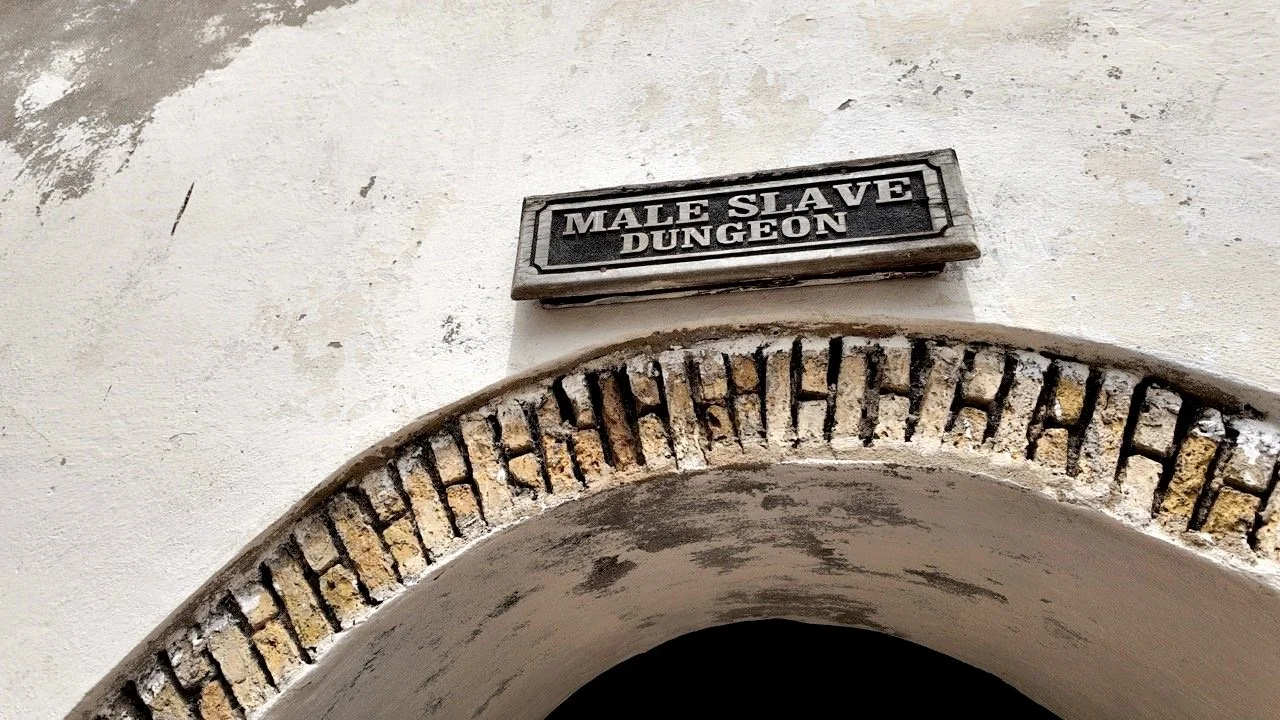
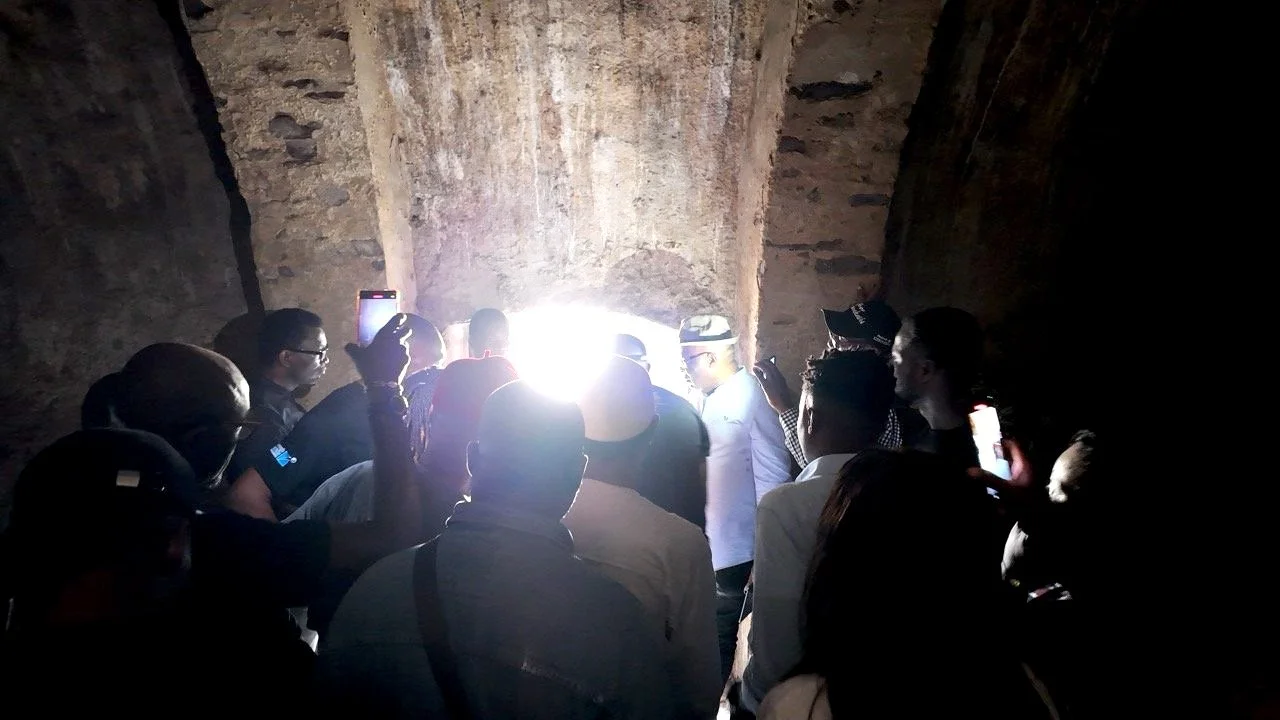
I have yet to encounter anyone who did not experience strong emotions following an Elmina tour, and this occasion was no different. Not everyone feels at ease when it comes to listening to accounts from what can only be described as a "barbaric" era, one that was paradoxically executed with The Bible in one hand and The Gun in the other, where chapels were ominously built directly above the grim chambers of torture.
Film director Katrina C. Browne thoughtfully tackles this complex subject concerning the church’s role in the Transatlantic Slave trade in her compelling film, Repairing The Breach: The Episcopal Church and Slavery Atonement. This documentary not only examines historical injustices but also seeks a deeper understanding of the implications of these actions within the context of today’s society.
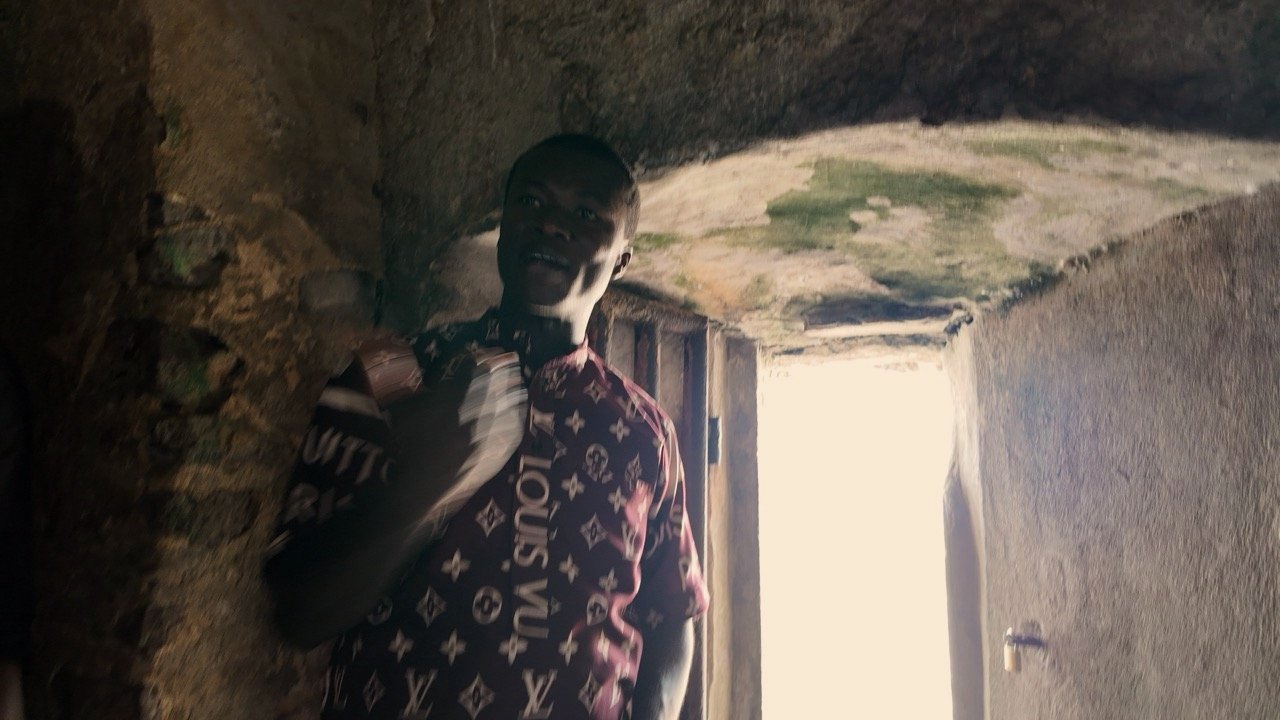
Tour guide at the infamous Door of No Return. (Africa-Related)
There is no doubt that the subject of slavery continues to be a challenging one to confront, affecting all levels of society and individuals from every race that participated. During the poignant tour, the small group, comprised of academics, artists, enthusiastic entrepreneurs, and members of the media, struggled just as deeply with the history and emotions evoked by the experience.
Slavery Theme in El Anatsui’s Works
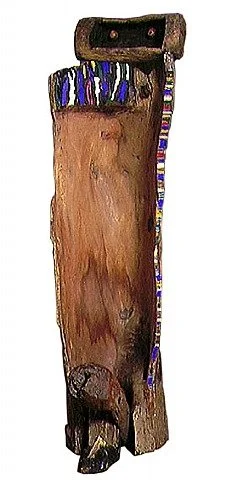
As an artist who single-handedly redefined comtmporary sculptor, El Anatsui uses bottle caps in his jaw dropping sculptures to highlight the history of alcoholic drinks tied to the European slave trade. His earlier works in wood and ceramics, along with his bottle cap pieces, reflect themes of slavery and the effects of globalization and consumerism in Africa. Some notable titles that evoke strong imagery and deep reflection on these historical realities and contemporary issues, include: Man Resplendent Pissing Around the World (1995), They Saw Us Through Puffs of Smoke; They Made It Happen, Watched It Happen, But Now With Disheveled Hair, Wonder What Happened (1986), and The Elements Threatened Immediately Above While We Still Milled Around in a Mass of Complacency'; Rising Sea (2019).


Additional Reading:
- A History of Indigenous Slavery in Ghana from the 15th to the 19th Century by Akosua Adoma Perbi
- A Cry & the Lamentations from the Ancestors: A Chronicle from the Trans-Atlantic Slave Trade: (Voices from the Captive Africans)
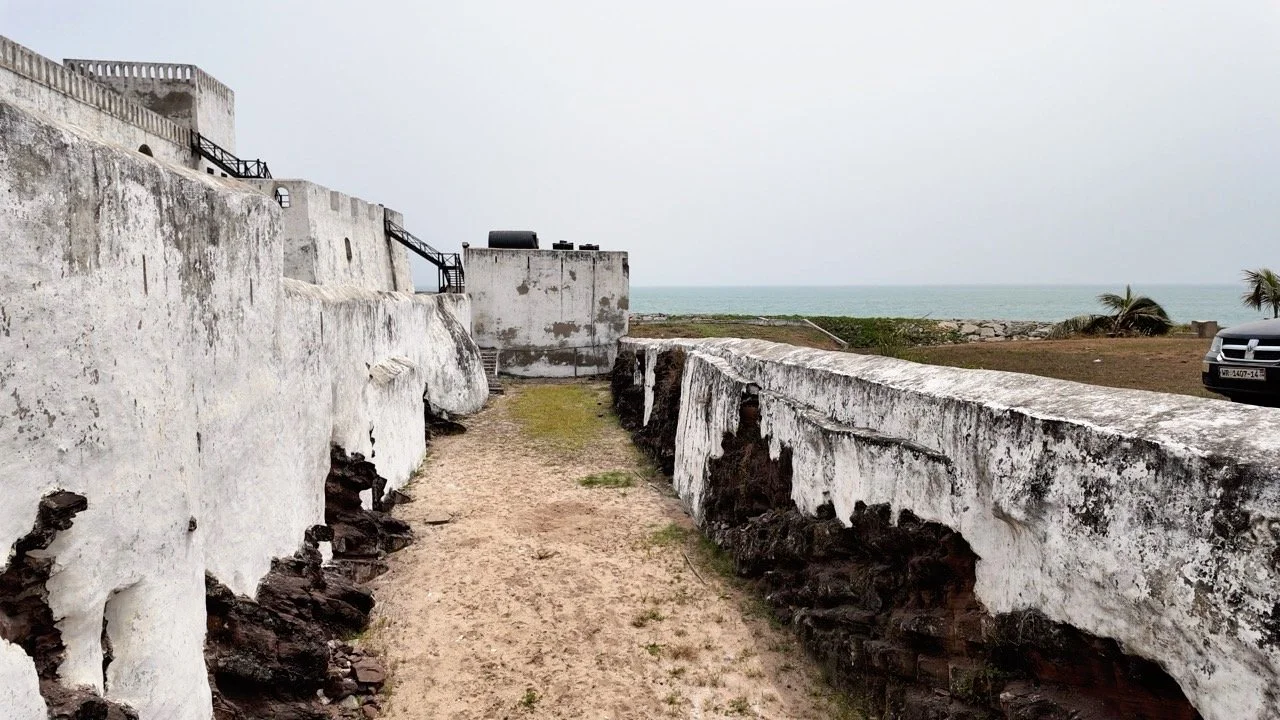
The various contrasts that Elmina presents to us is certainly not lost on our awareness and understanding. In its sordid history, accompanied by the distinct 'smell you never forget'‘, lies a magnificent, imposing beauty that serves to keep the memory of the past alive, thereby ensuring that history does not repeat itself ever again.
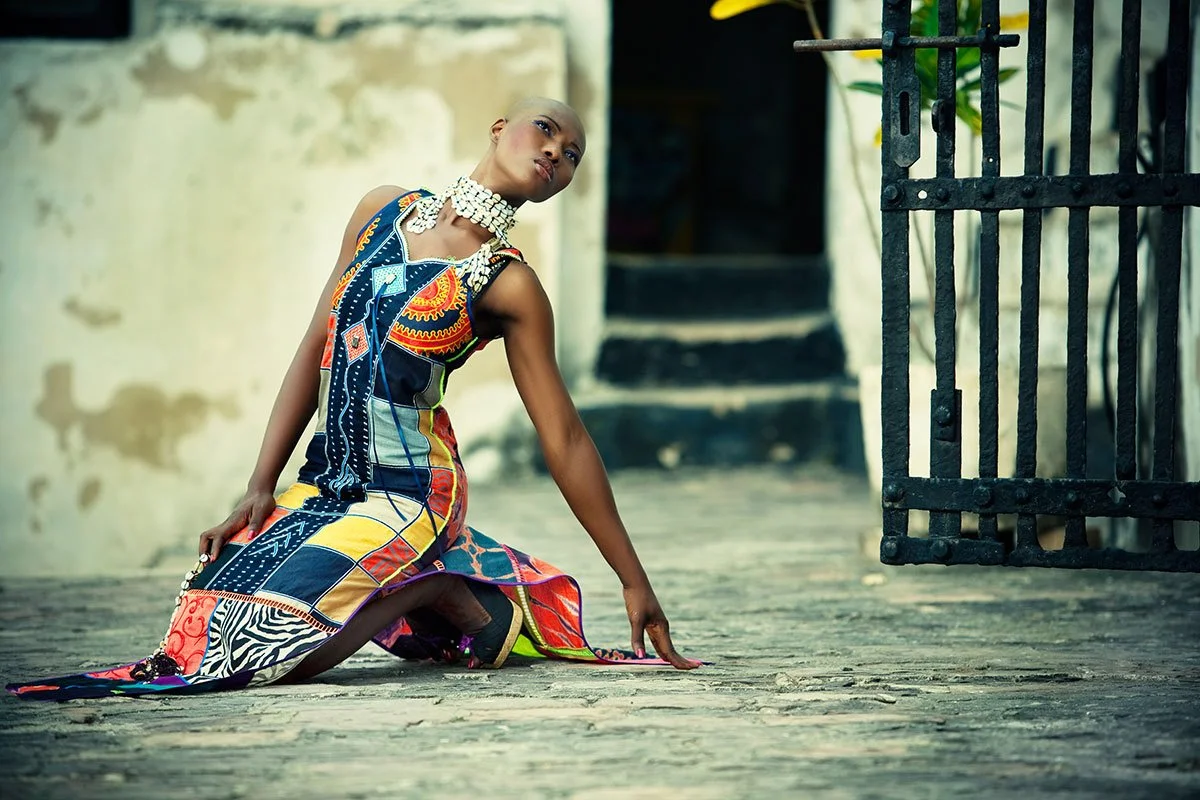
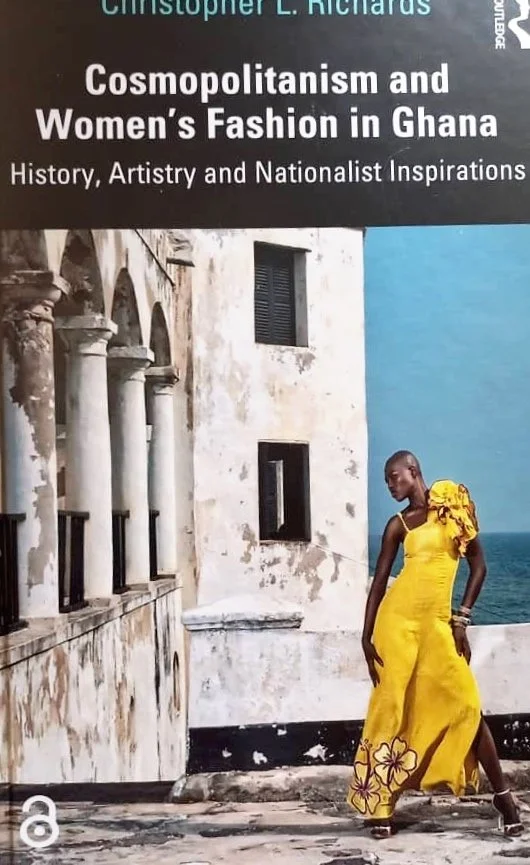
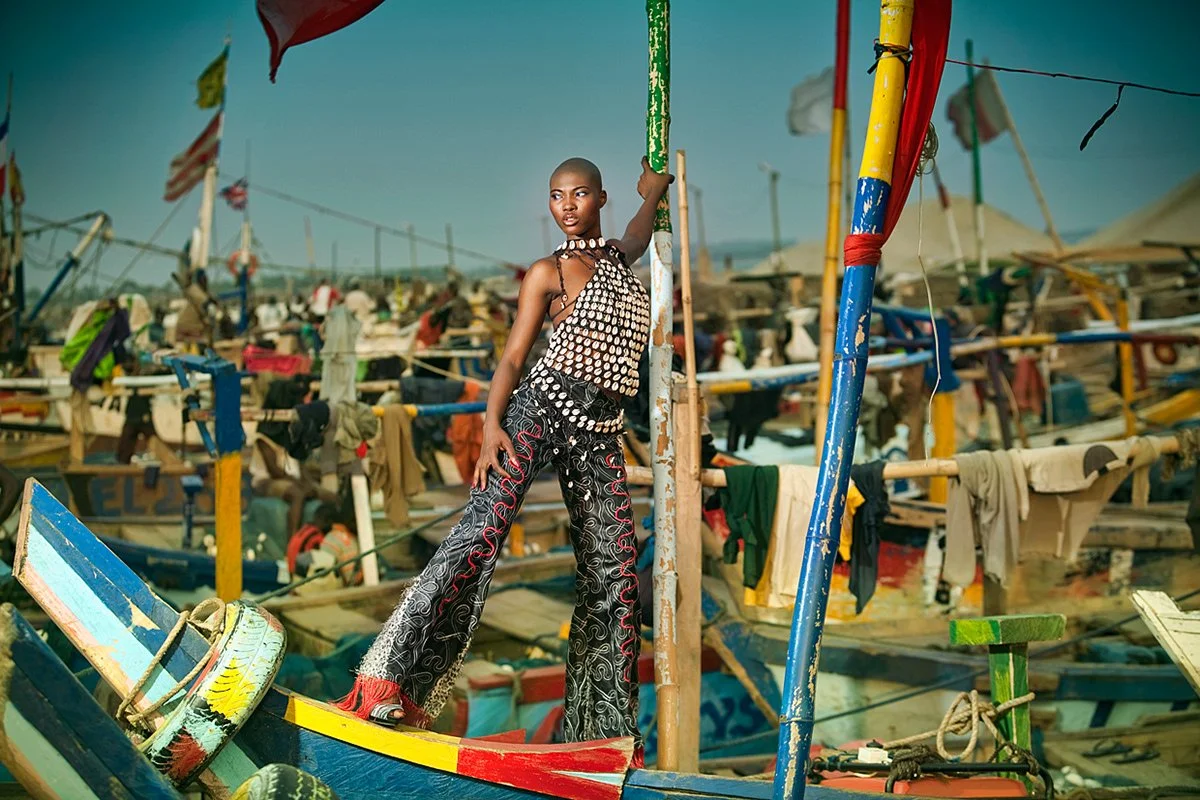
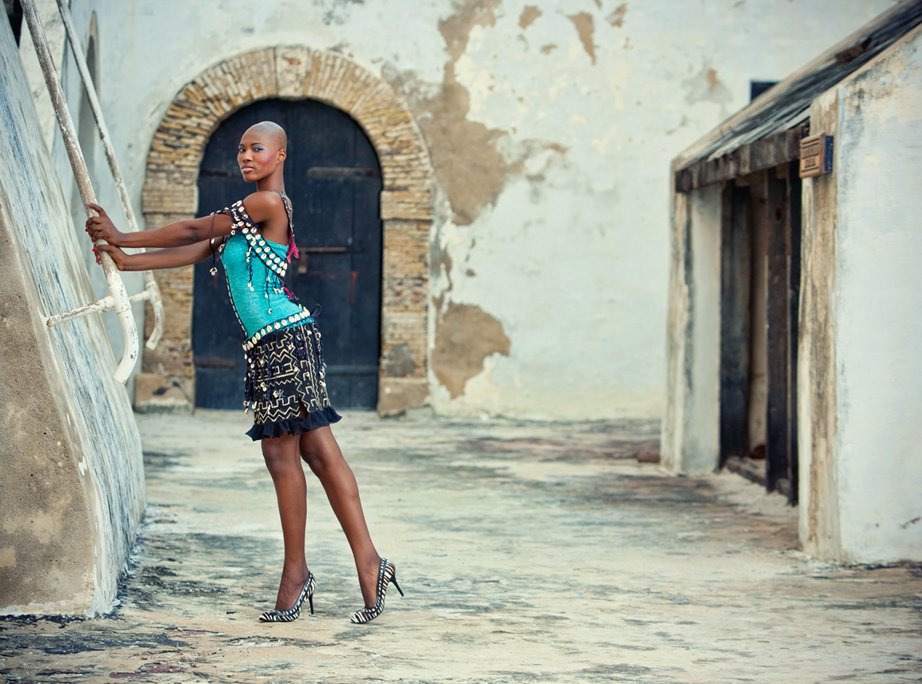
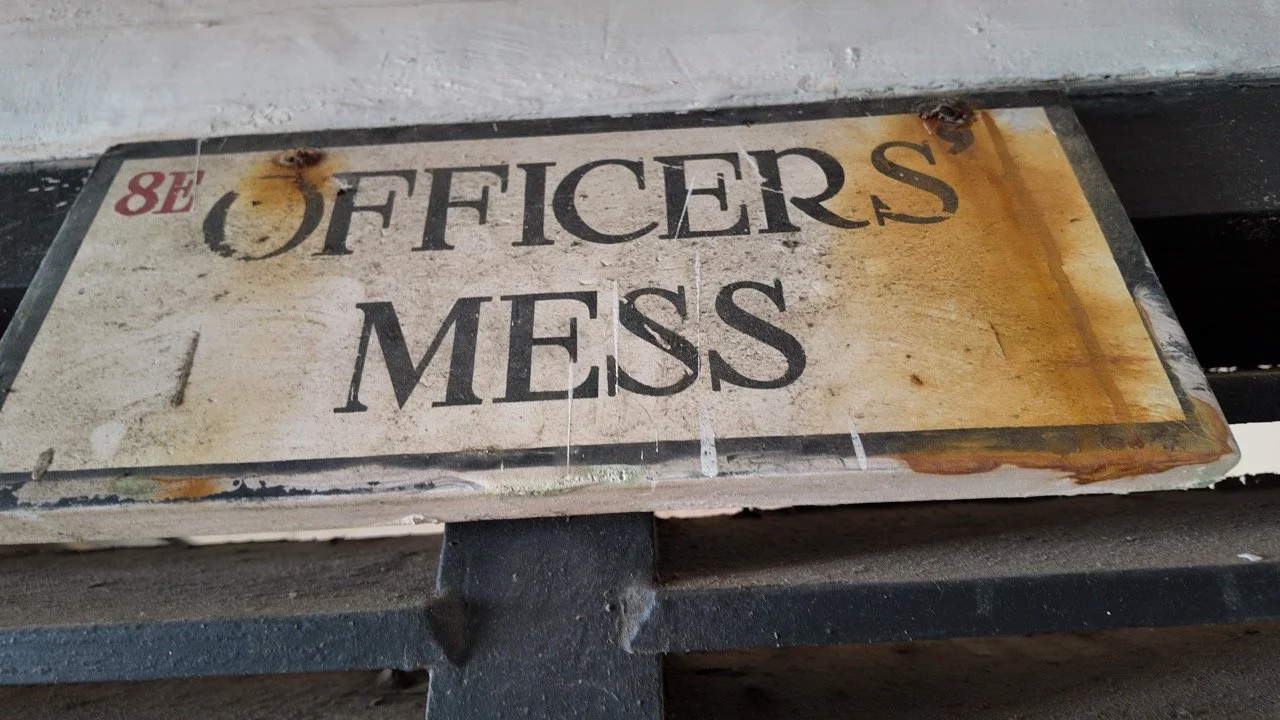
The whitewashed walls of this remarkable place hold significant historical dirt that tells a story of resilience and survival, yet Elmina has also become a hauntingly beautiful backdrop for an array of films, captivating books, and striking photo shoots. Renowned writer and historian Prof. Christopher L. Richards used Elimna as the cover of his book Cosmopolitanism and Women’s Fashion in Ghana History, Artistry and Nationalist Inspirations. He worked with the creative duo of photographer, Dean Zulich and Fashion Curator Beatrice ‘Bee’ Arthur, who recount their unique Elmina experiences on TV Series Messengers, all while diligently capturing the rich history and tapestry of Ghanaian fashion.
Cosmopolitanism and Women’s Fashion in Ghana
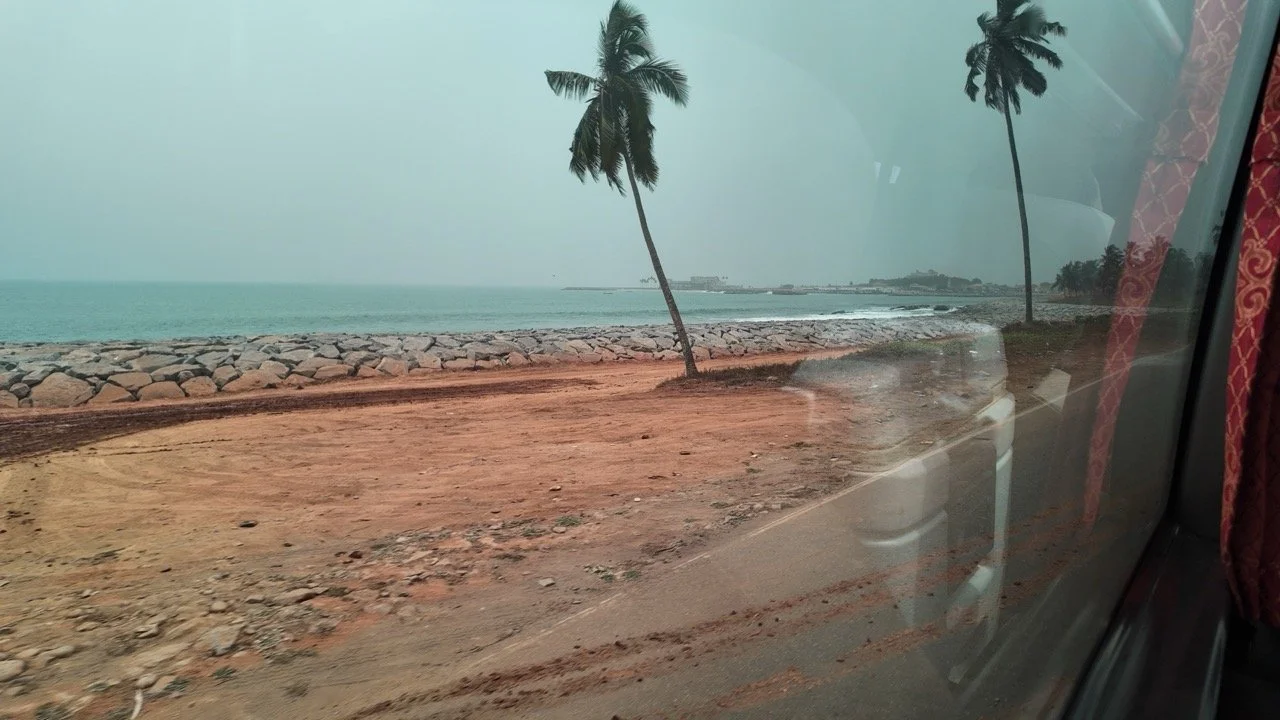
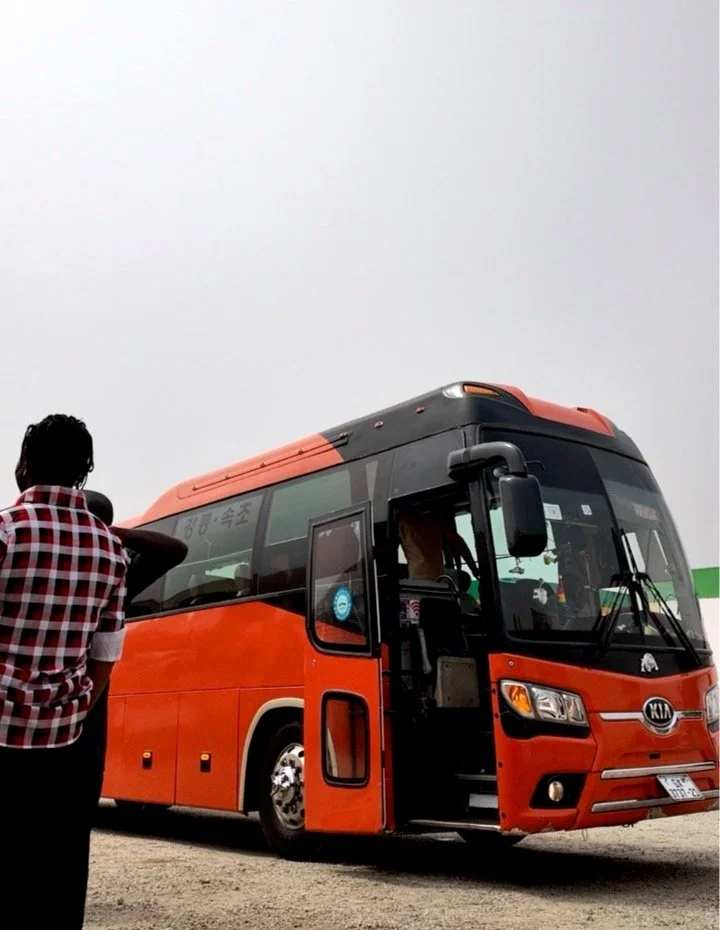
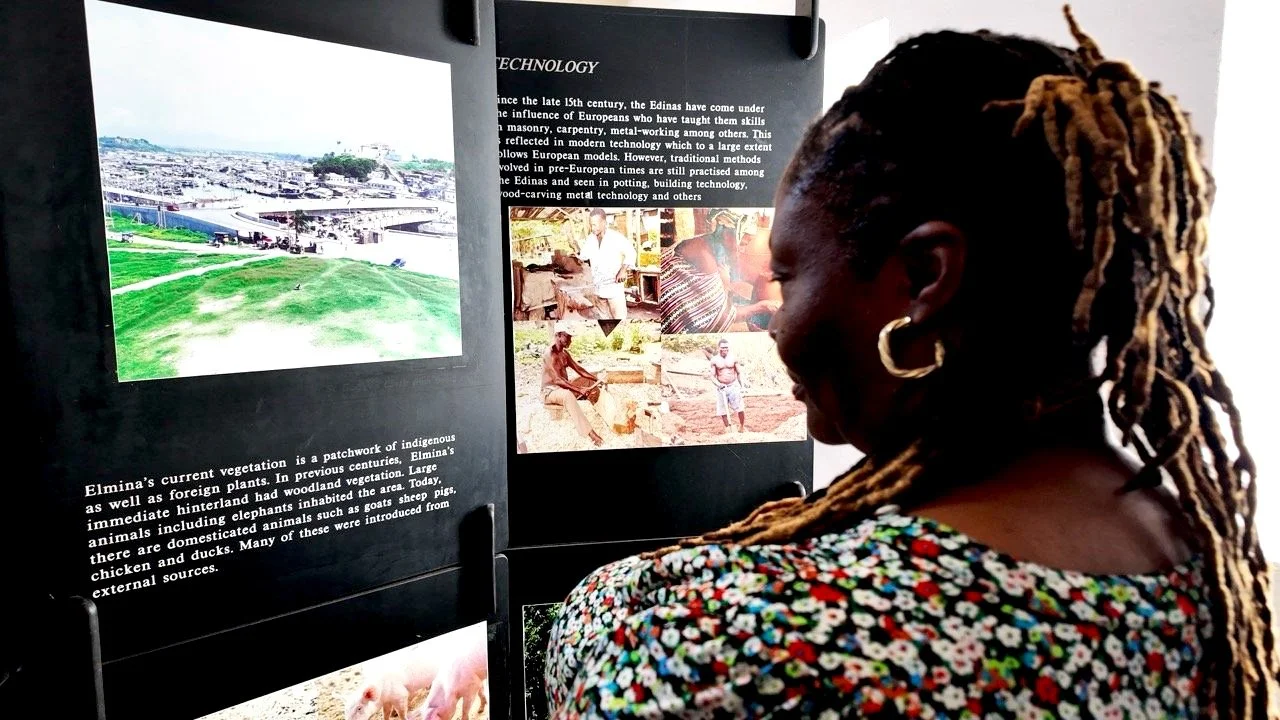
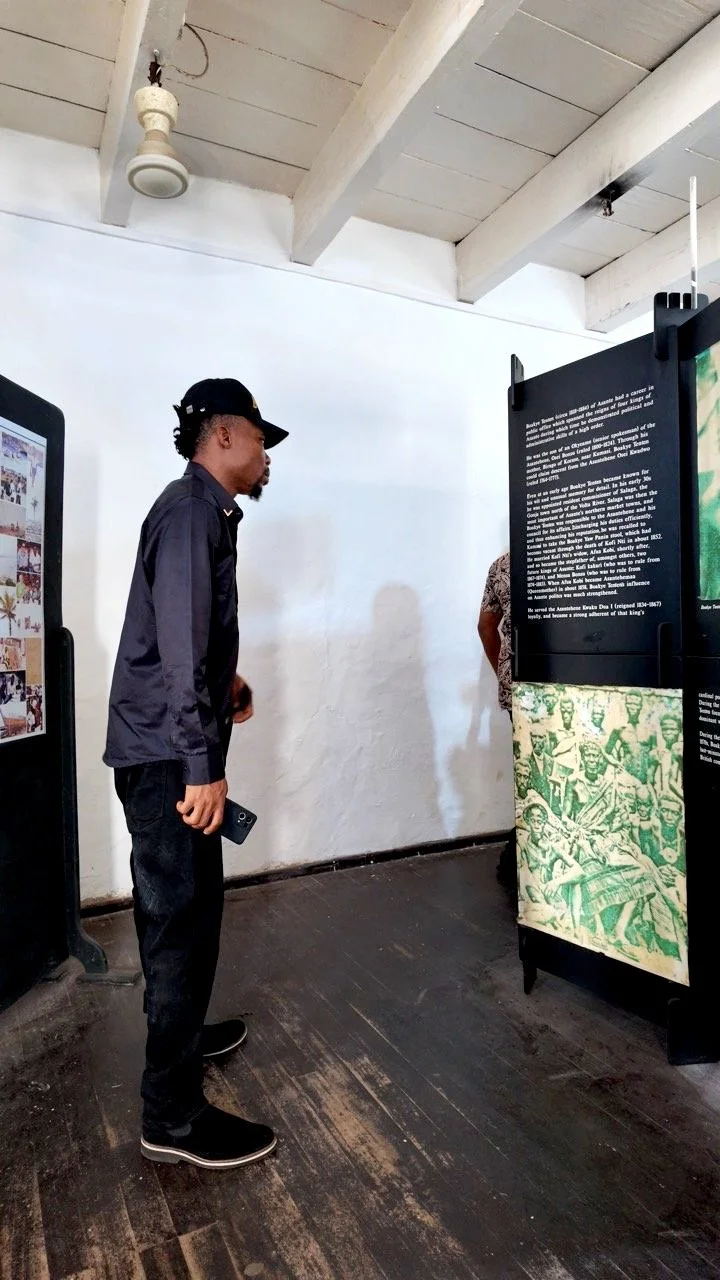
#El@80 elmina tour: PHOTOS BY AFRICA-RELATED



This report was made possible by Meridian Creative Center, Tema with additional images provided by elanatsuifilm.com, elanatsui.art, #el@80, Timothy Doh, Dean Zulich, and Moses Adeyemi.