Cerca Africa Hosts Women Entrepreneurs and Leaders
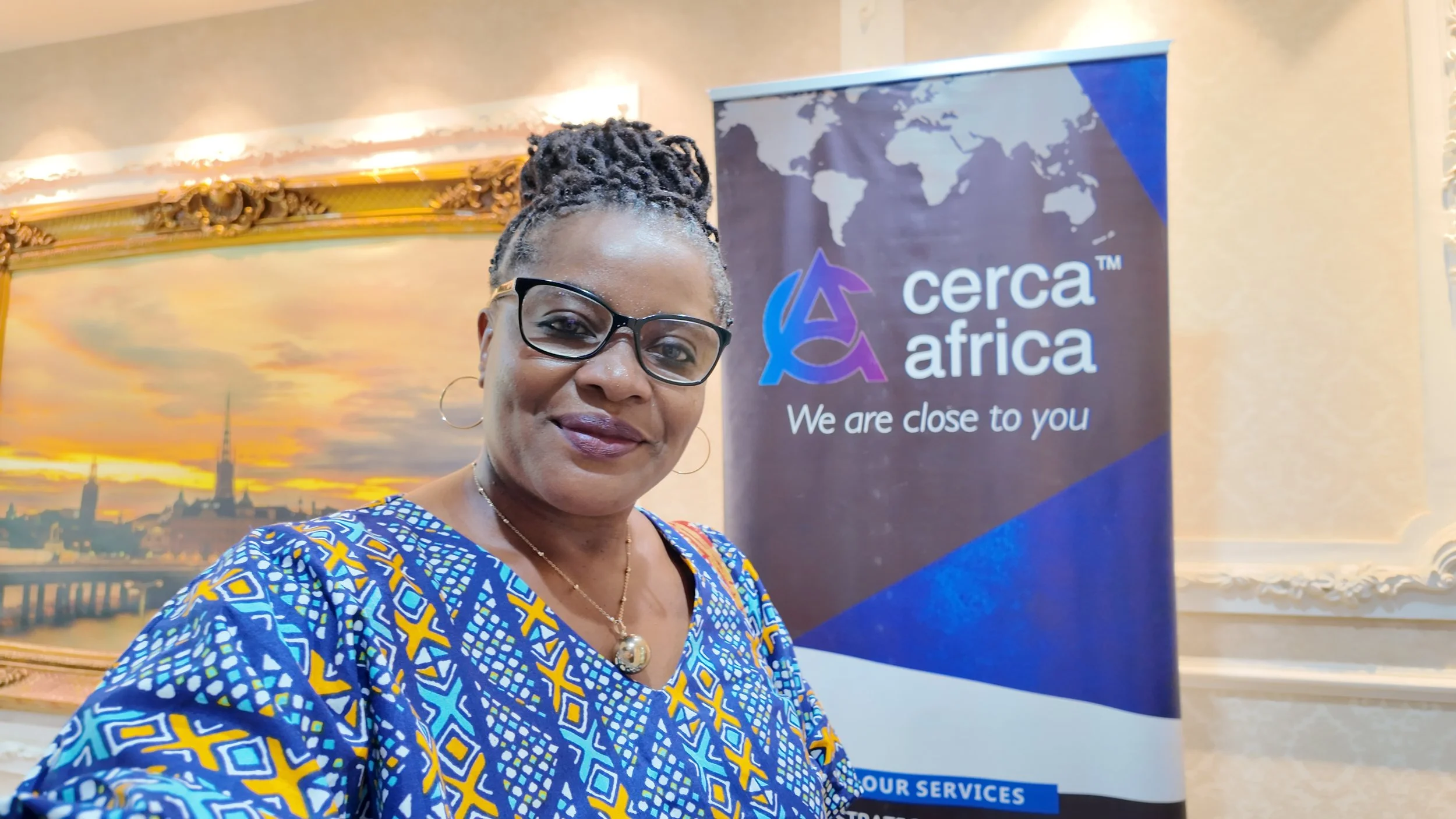
Cerca Africa, in partnership with the China Europe International Business School (CEIBS) hosts 75 Women Entrepreneurs and Leaders in Abuja, Nigeria.
Africa-Related, Abuja
Cerca Africa Hosts 75 Women in Entrepreneurship & Leadership
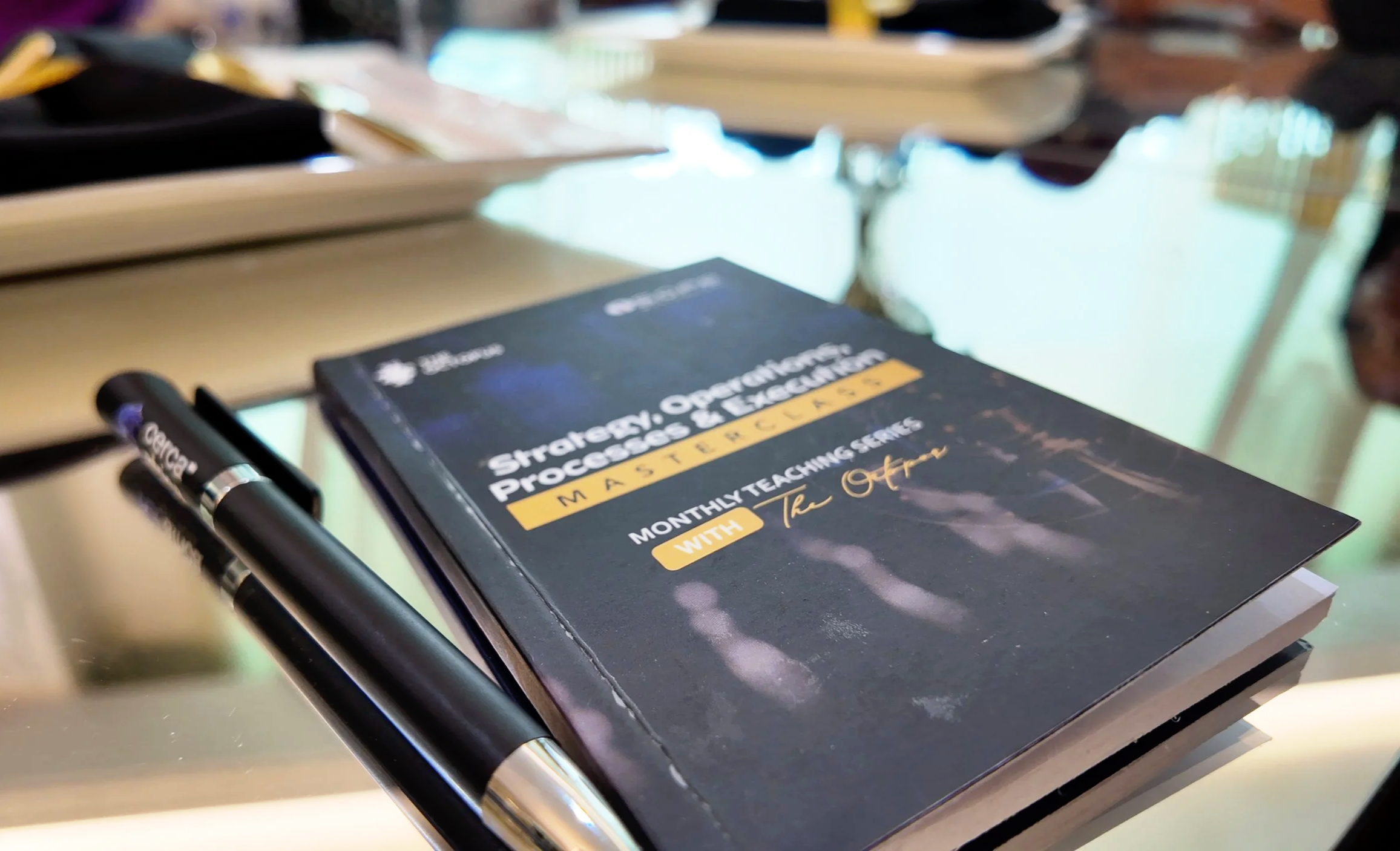
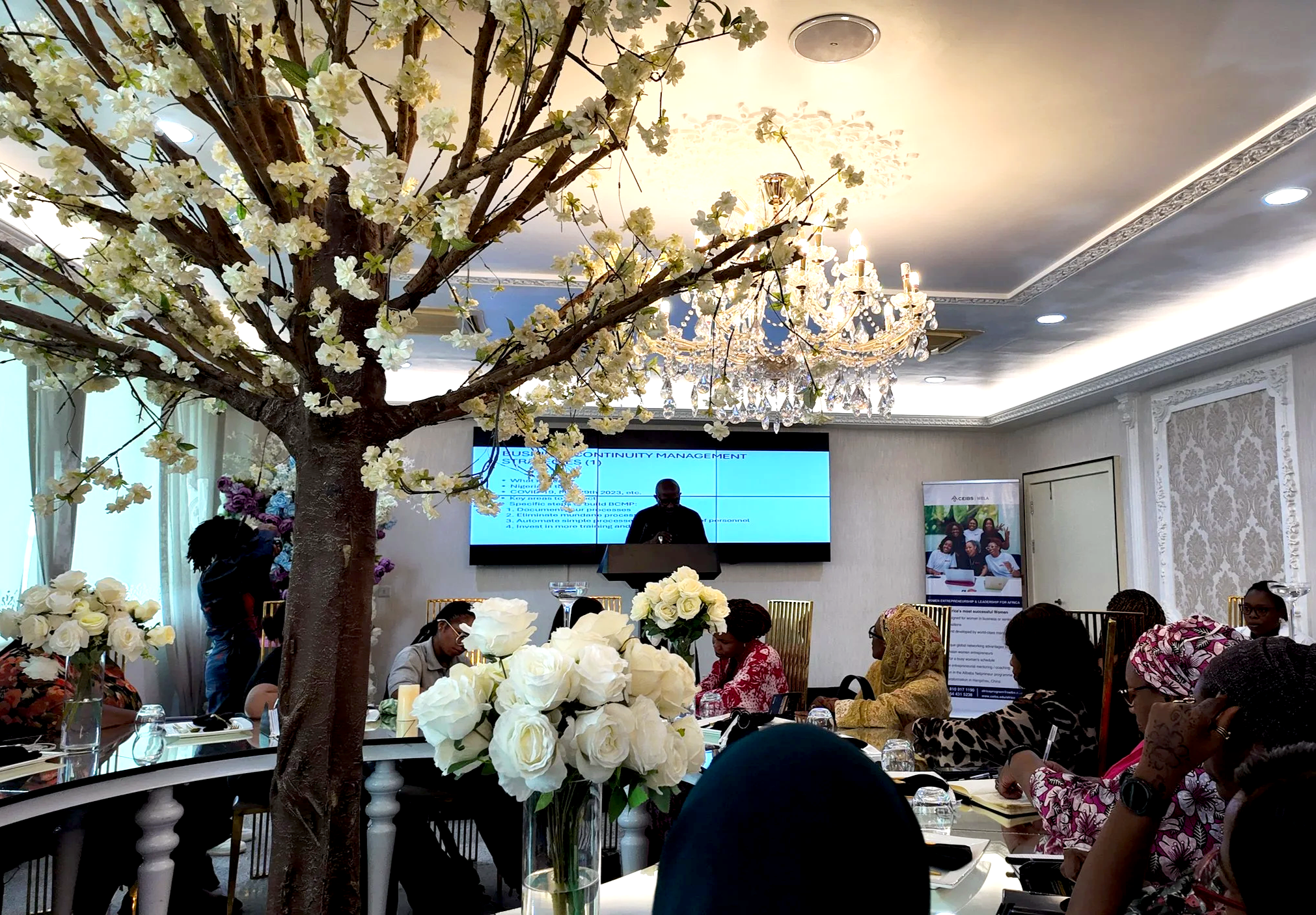
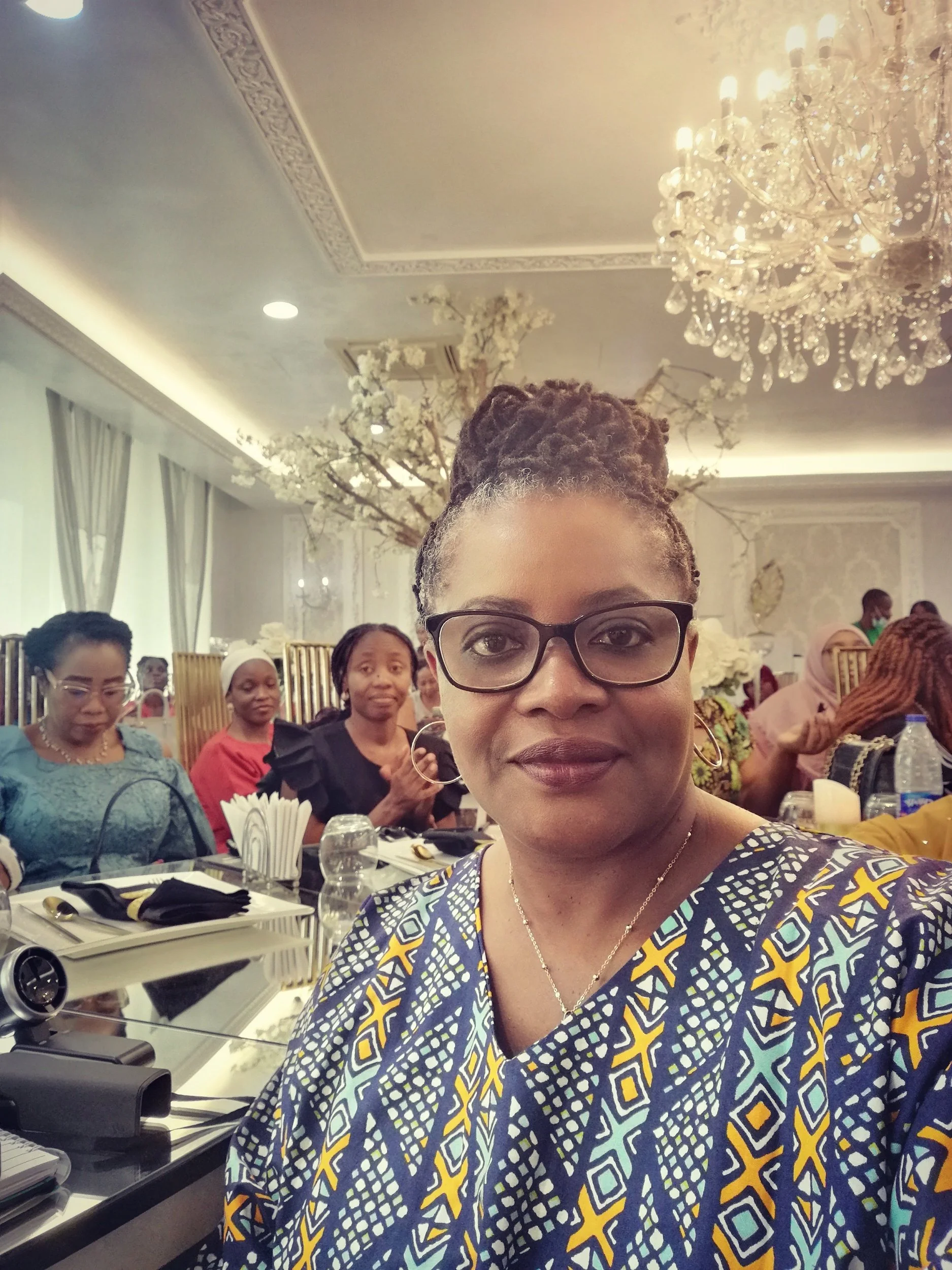
The IWD2026 Strategy, Operations, Processes & Execution (S.O.P.E) masterclass held in Abuja on March 26, 2026.
The event was organized in partnership with the China Europe International Business School (CEIBS) for their Women Entrepreneurship & Leadership for Africa (WELA) programme.
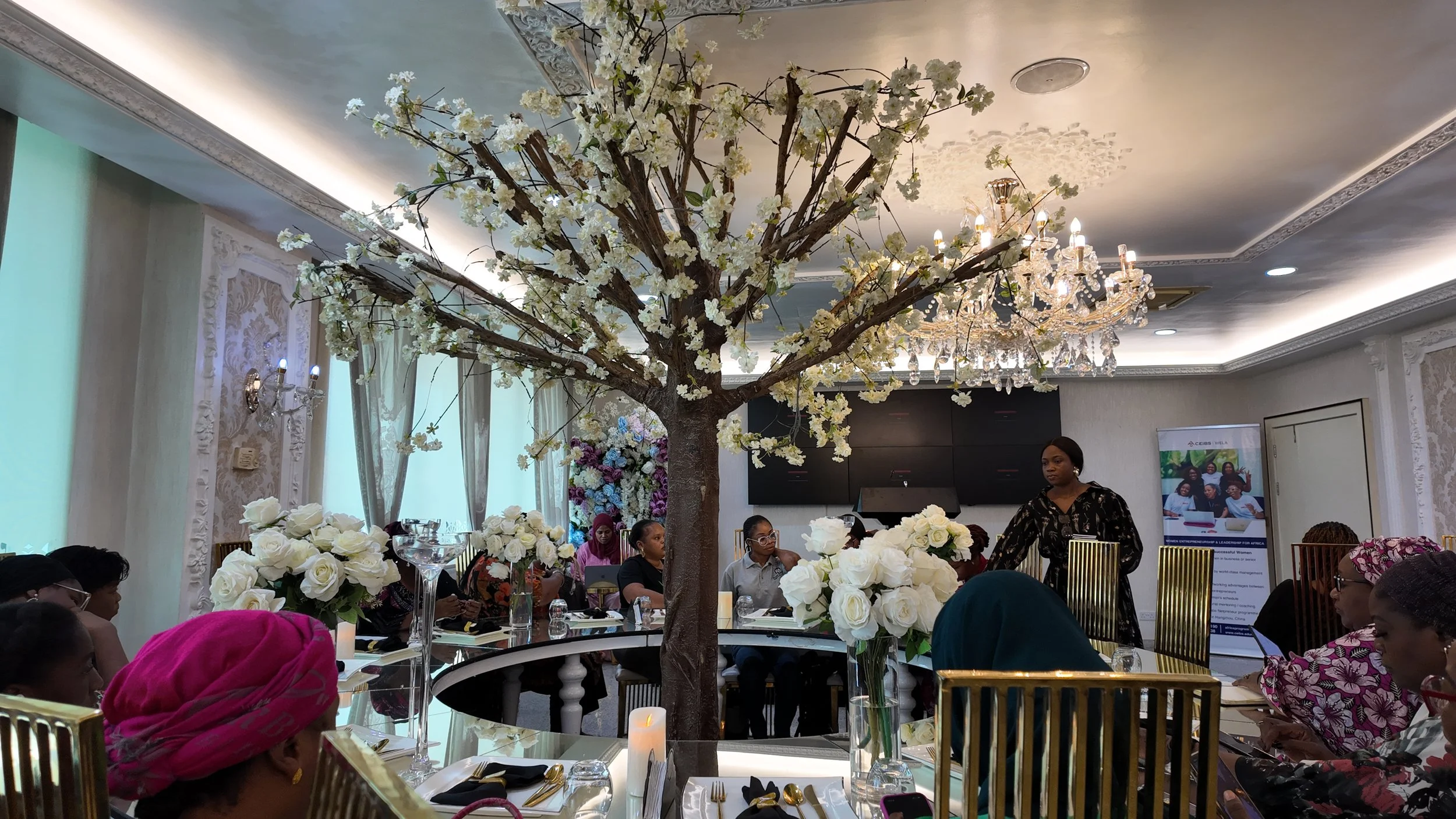
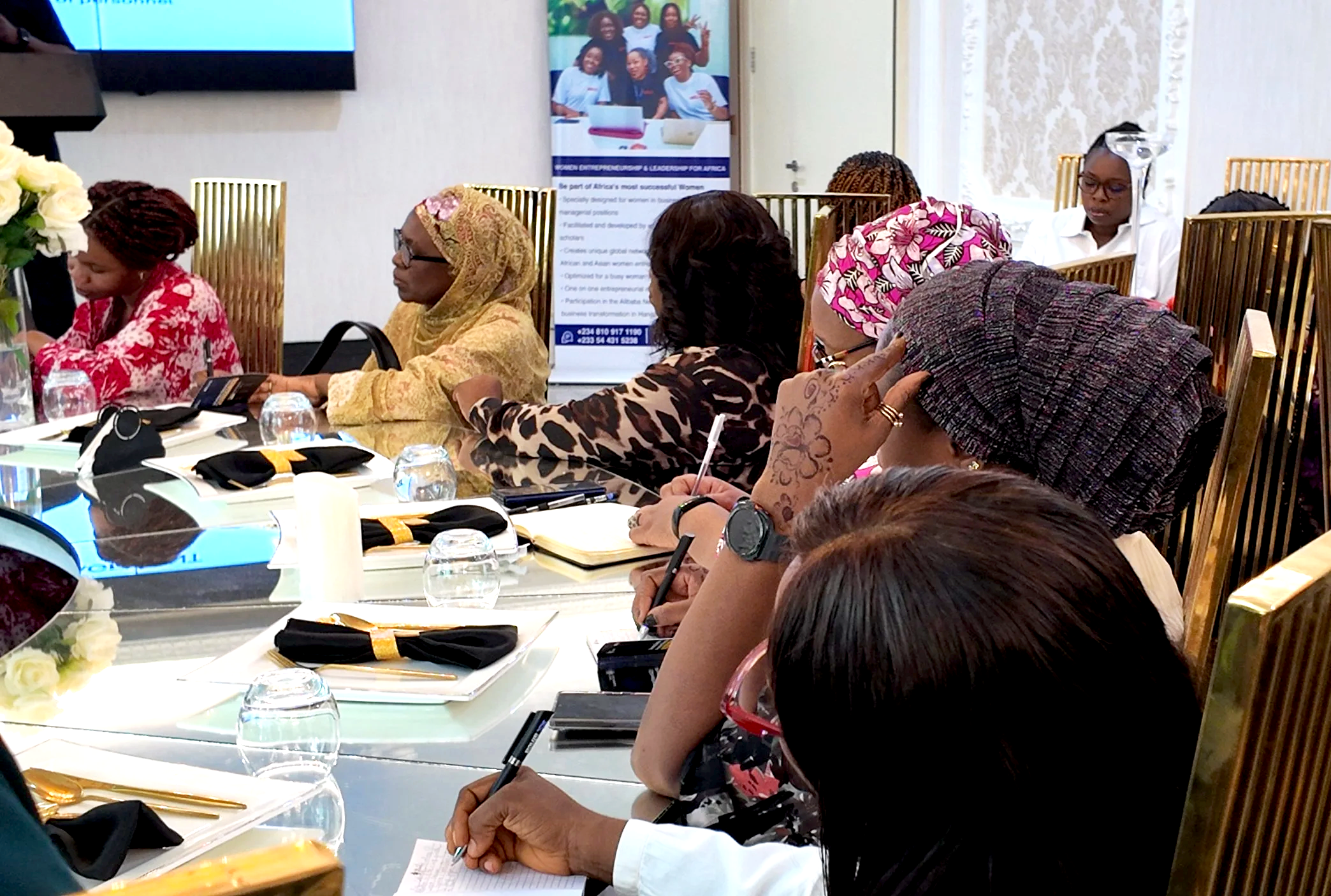
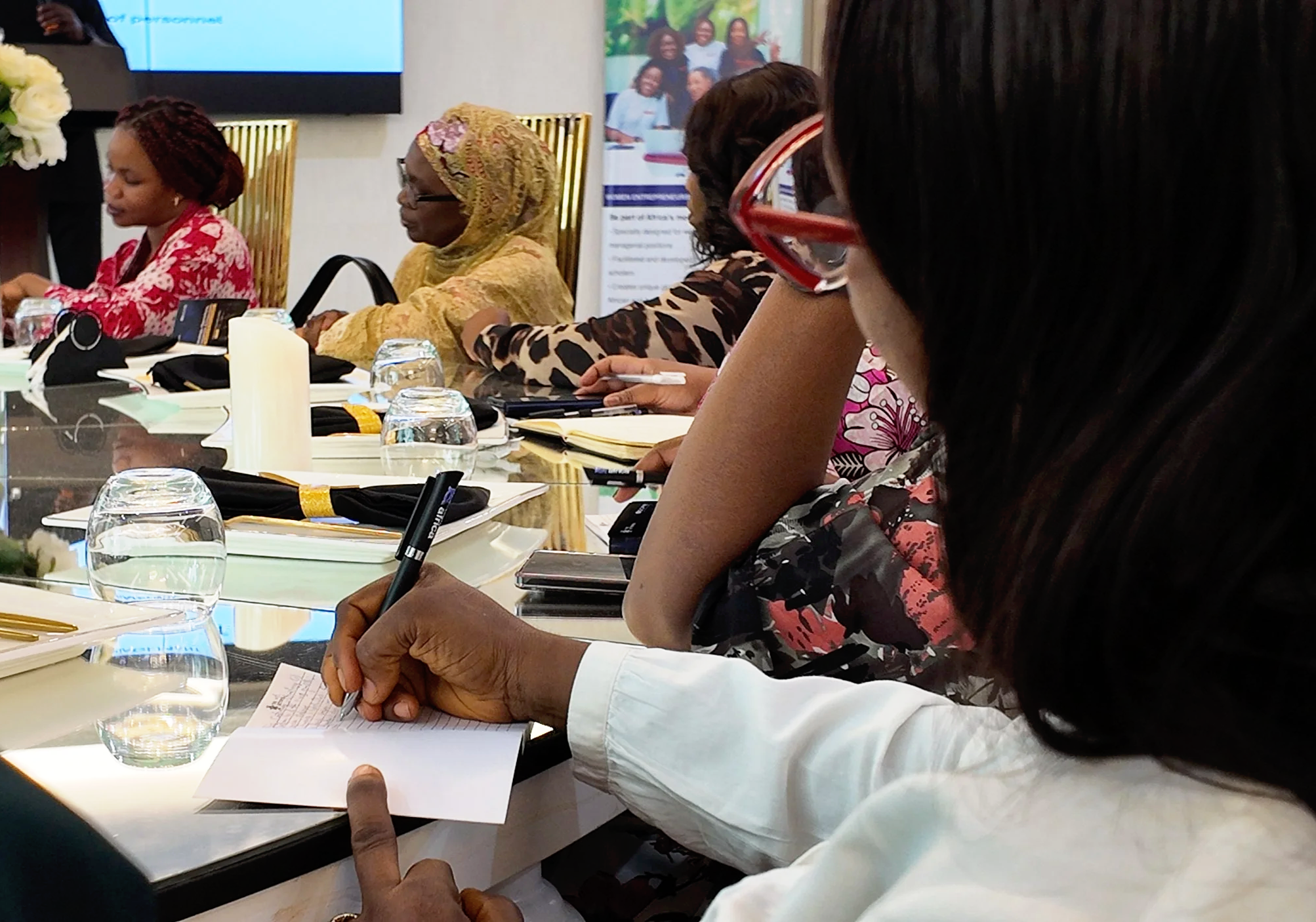
Hosted by Cerca Africa and CEO Sam Obafemi (The Octopus) at Elegante Mall, the exclusive evening was attended by 75 entrepreneurial women from various professional backgrounds.
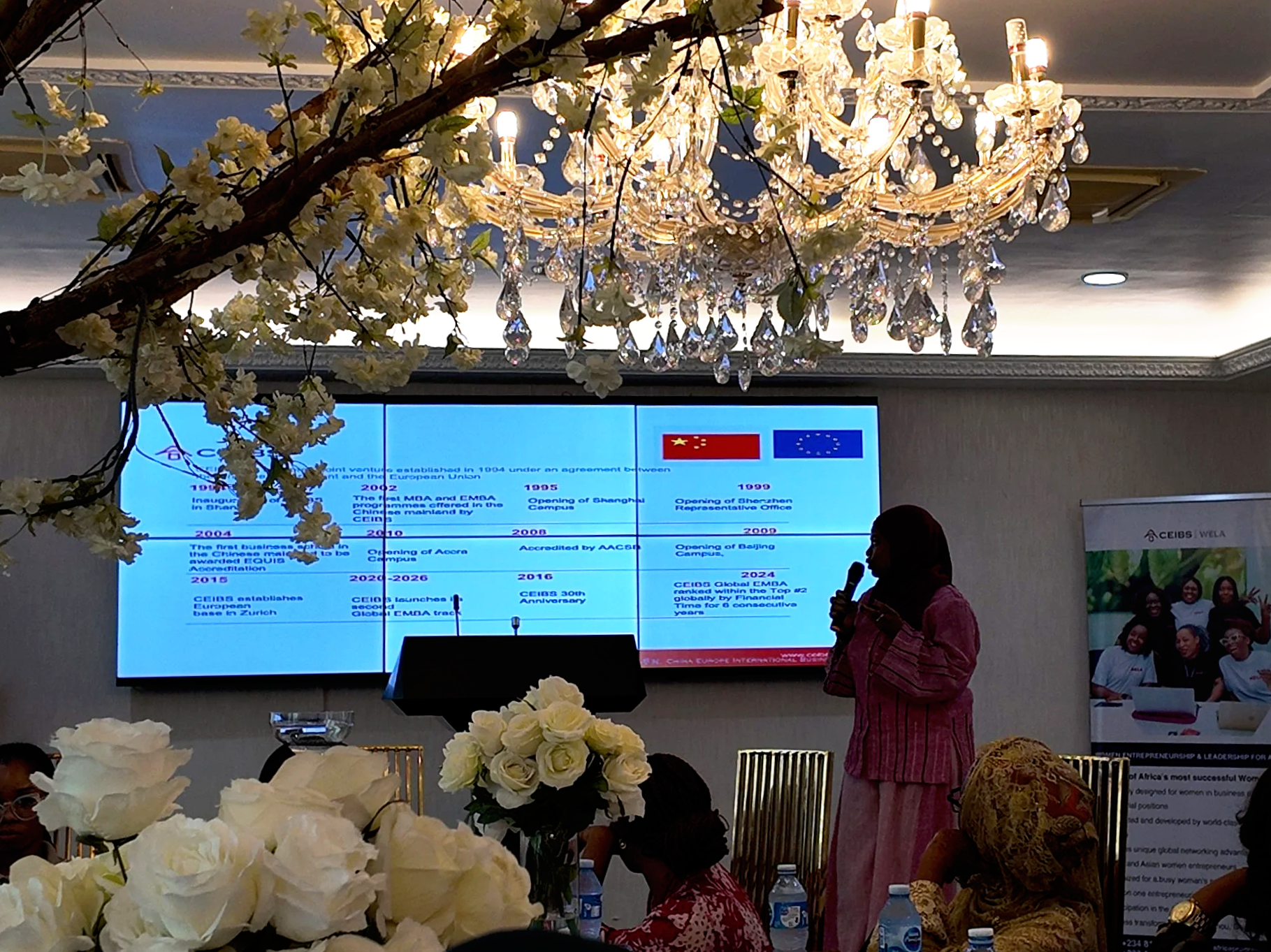
The event featured two key presentations. Mr. Sam Obafemi spoke on Business Continuity Management, and Mrs. Saidat Lawal-Mohammed, CEIBS’ Head of Executive Education Africa, provided an overview of the institution’s programs. The sessions were followed by dinner and networking opportunities for all participants.
Cerca Africa holds targeted monthly masterclasses for registered participants. They work with individuals and organizations to achieve mental, emotional, and economic freedom through coaching programs focused on strategy, processes, and behavioral change.
CEIBS is a non-profit joint venture established in 1994 under an agreement between the Chinese government and the European Union. The Business School offers Global Executive MBA programme, as well as a tailored Executive Education Africa Programmes
Learn more about upcoming sessions or coaching services.
#sopeceibswela
Photos by Africa-Related
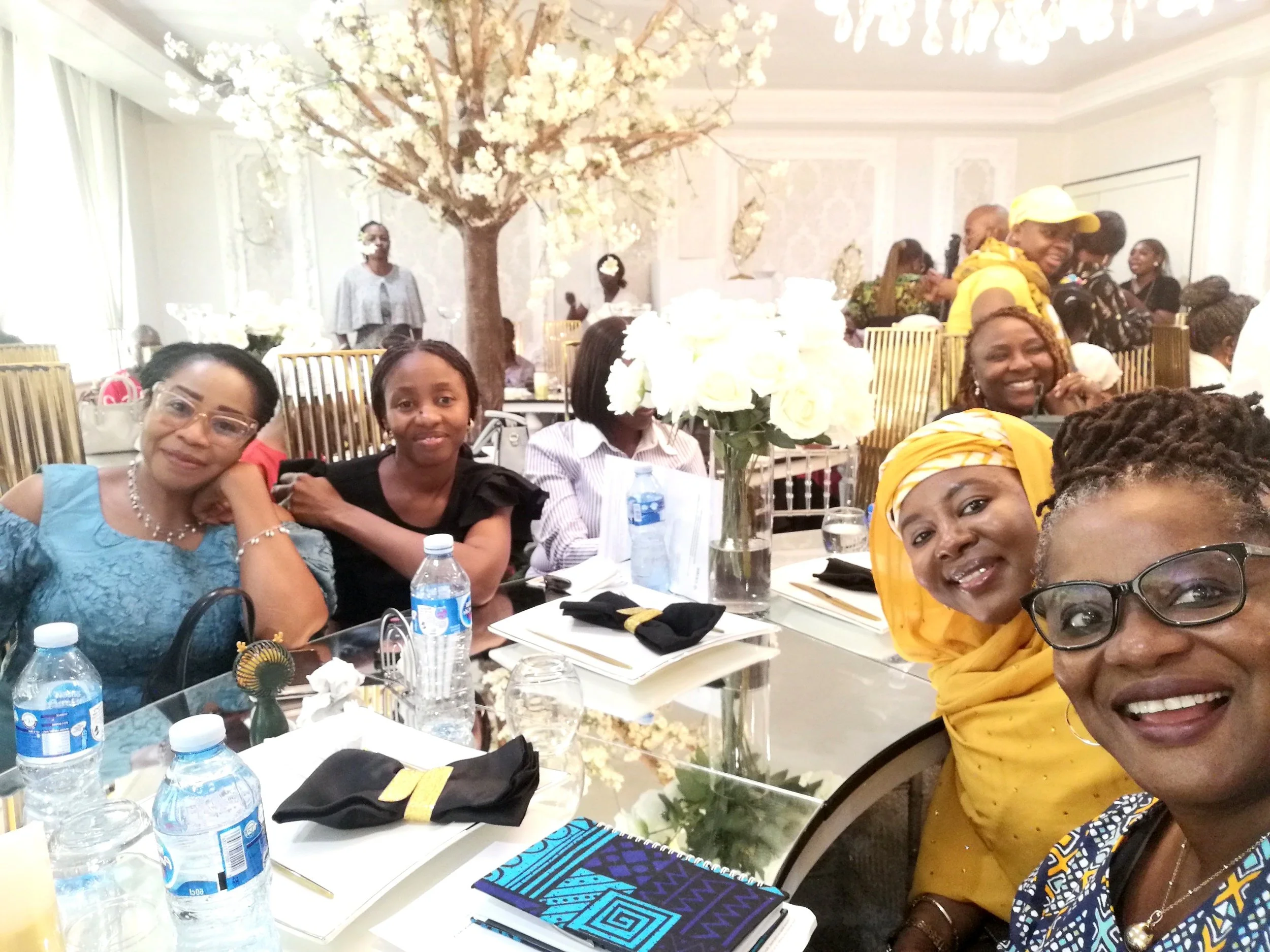
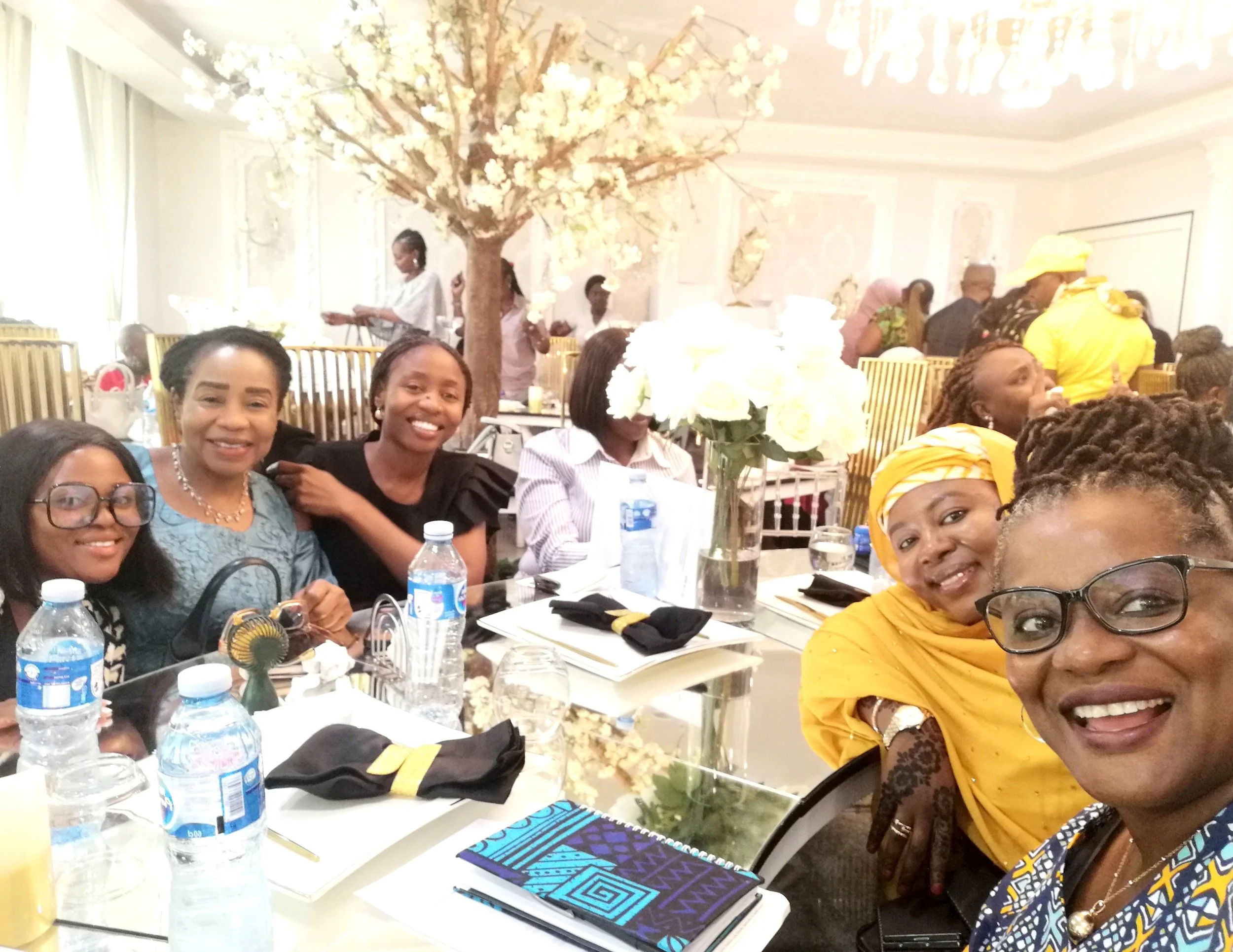
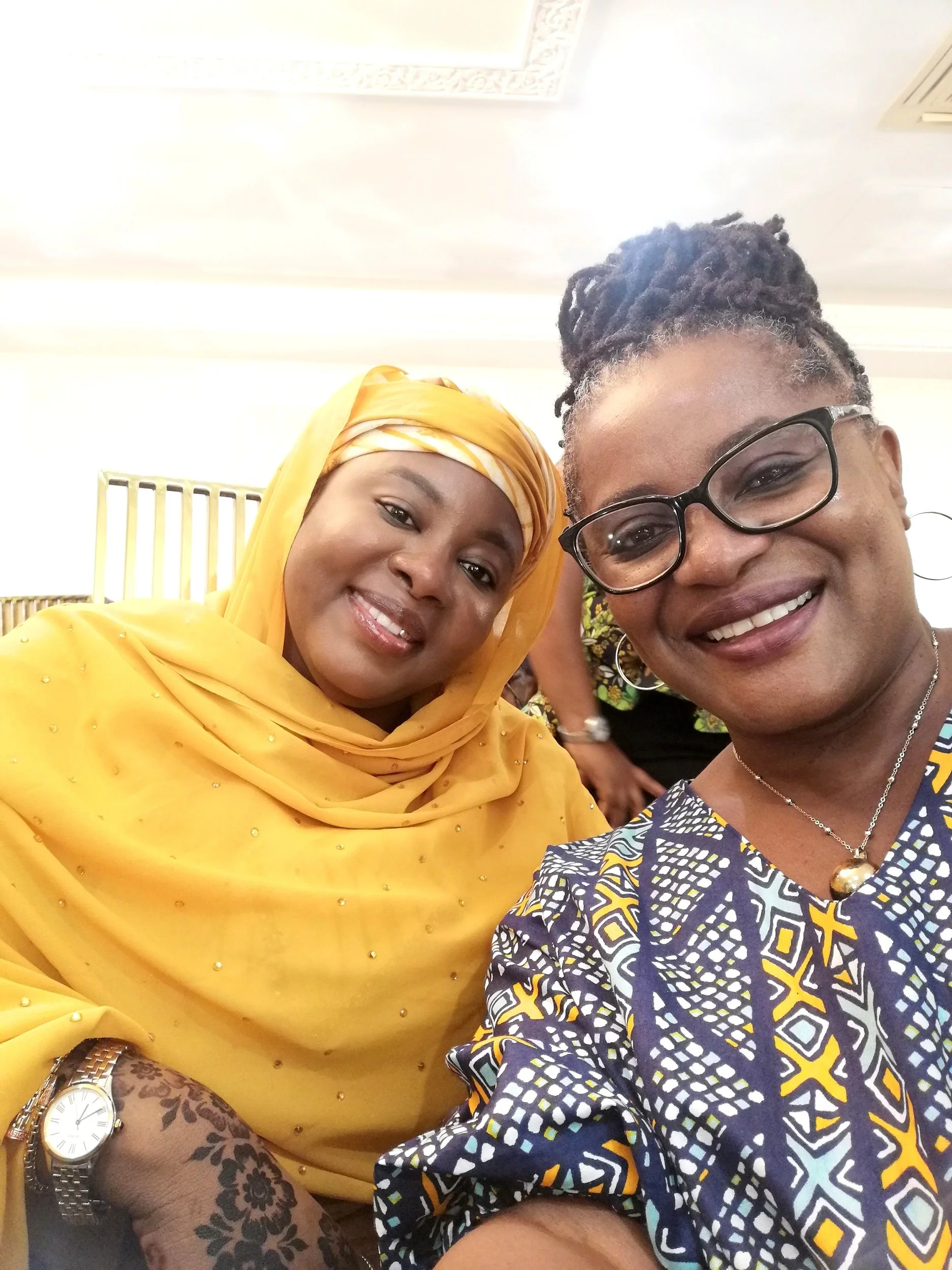
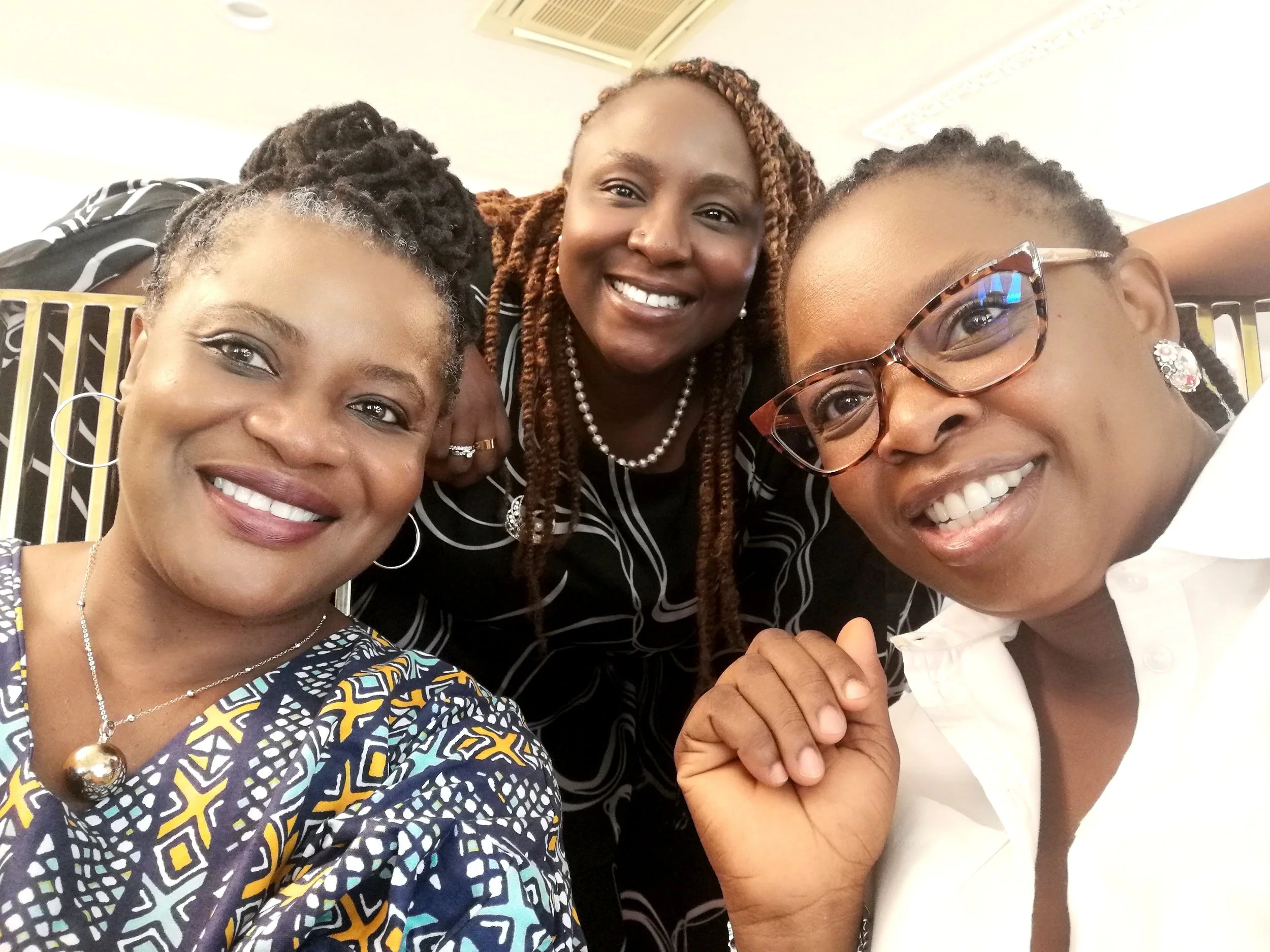
For more stories told from an African perspective, follow us at africarelatedinc
SHARE THIS STORY
The Power of Soft Skills: Key Takeaway From The International Project Management Day Conference 2025
The Power of Soft Skills is the key takeaway from the International Project Management Day Conference 2025. It brought together thought leaders, practitioners, and innovators to explore how project management continues to evolve as both a technical and human-centered craft.
By melody-Esther soyemi - Africa-Related, Nigeria
Creating Connections in Project Management
“The International Project Management Day Conference 2025 brought together thought leaders, practitioners, and innovators to explore how project management continues to evolve as both a technical and human-centered craft.”
On November 6, 2025, project management professionals around the world came together to celebrate International Project Management Day 2025, a global event dedicated to recognizing the discipline’s impact on organizational success and human collaboration. The conference program featured two thematic tracks that ran concurrently throughout the day, Track A focused on communication, self-awareness, and workplace civility, while Track B emphasized sustainable project management, certification pathways, and emerging professional standards.
Opening Keynote: Building Respectful Engagement
The conference opened with a powerful keynote titled “The 3-Pass Process: Building Respectful Engagement by Ted Lalonde.” Lalonde emphasized the growing importance of empathy, inclusivity, and trust in managing teams, especially in today’s hybrid and multicultural work environments. He also encouraged attendees to see respectful engagement not just as etiquette, but as a project management competency essential for achieving long-term results.
Practical Communication Skills to Build Civility in the Workplace
(Video source)
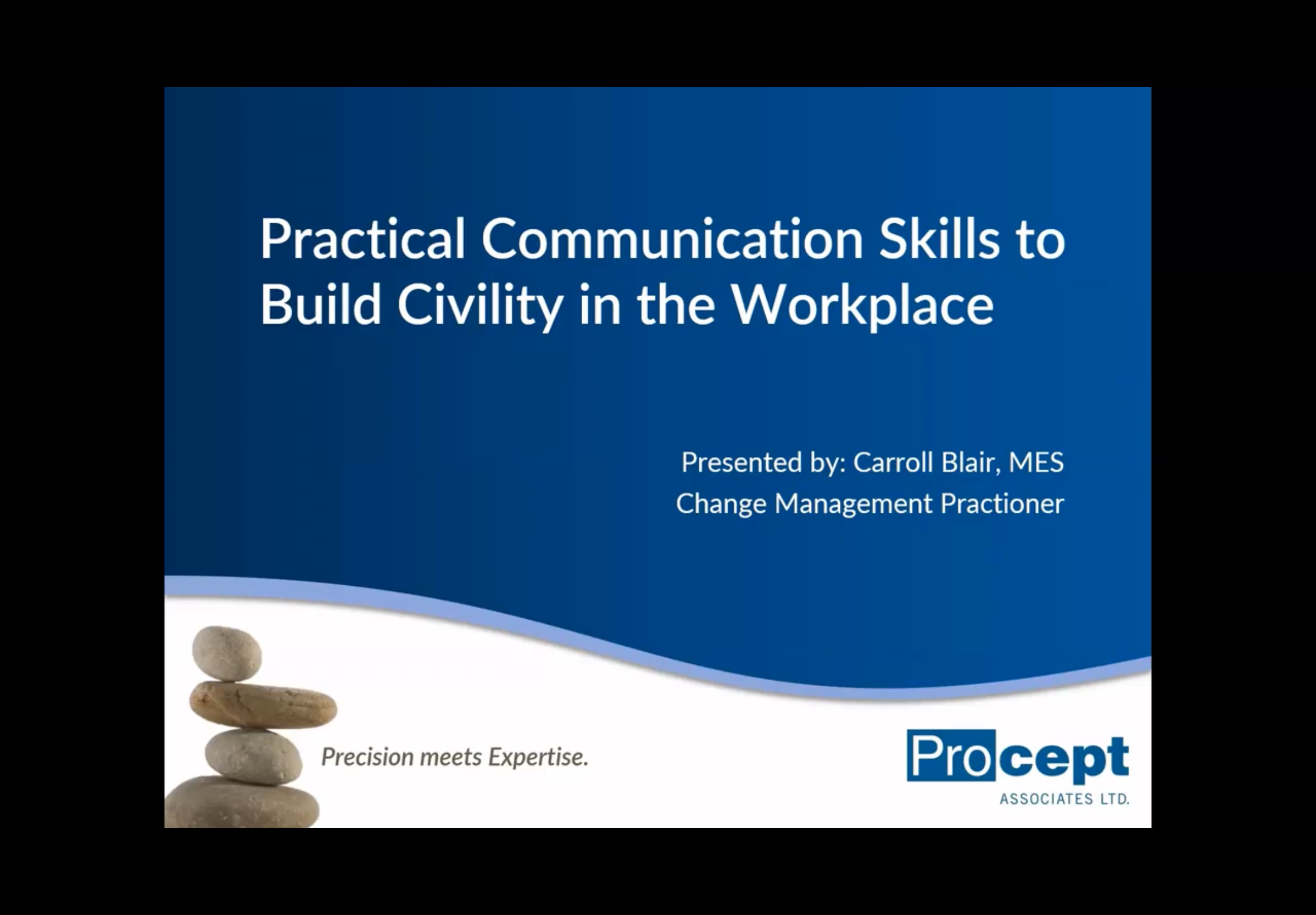
This session was led by Carroll Blair who highlighted one of the most discussed topics of the day: Practical Communication Skills to Build Civility in the Workplace. It explored how project managers can intentionally create psychologically safe spaces that foster honest dialogue and collaboration. She stressed that civility is more than politeness, it’s a measurable factor in reducing project risks and improving stakeholder relationships. She stated “ when talking about civility in the work place do we want to expect less from each other, do we want technology to do all of our human interactions, or do we want to be alone together.”
Real-world examples illustrated how communication breakdowns often lead to project delays, while open feedback channels help teams navigate uncertainty with shared purpose. The key takeaway is that effective project management starts with human connection.
Circling the Dragon: Diagnosing and Resolving Organizational Culture Issues
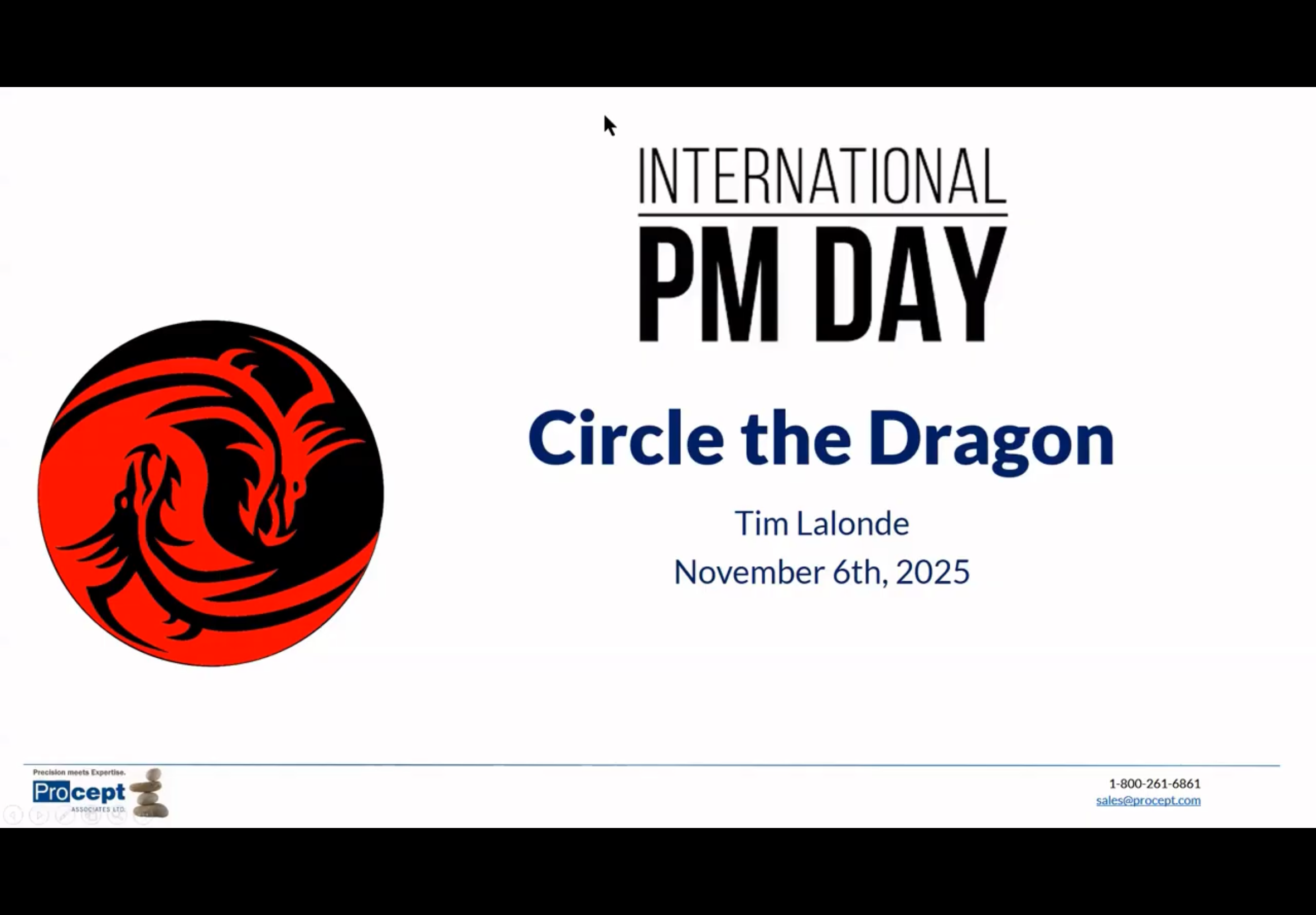
This session was conducted by Tim Lalonde, Circling the Dragon, He guided participants through the complexities of diagnosing and resolving organizational culture challenges. Using the metaphor of “the dragon,” the session addressed how unspoken issues such as misaligned values or fear-based communication can silently undermine team performance.
He called on project leaders to take on the role of culture stewards, combining data-driven insight with emotional intelligence to identify and address underlying tensions. A standout message was that projects do not fail because of technology they fail because of culture. By “circling the dragon,” leaders can face these invisible challenges head-on and transform organizational friction into collective growth.
African Perspective:
Across many African mostly Nigerian workplaces, project outcomes are often shaped more by culture than by technical capability. Hierarchical communication remains a major limitation, as employees frequently hesitate to speak openly or give feedback to senior leaders. This reluctance to express disagreement leads to unresolved issues that eventually harm or be harmful to projects. Soft skills are also underemphasized, with organizations focusing heavily on certifications while overlooking emotional intelligence, conflict management, and communication competence. Combined with limited psychological safety, these factors create environments where innovation is slow and teams operate cautiously.
Yet Africa also demonstrates remarkable strengths. The continent’s strong communal values naturally support collaboration and collective problem-solving. African professionals are highly adaptable and resilient,which increases their survival skills and often excels in uncertain or resource-constrained environments. A rapidly expanding youth workforce is embracing global project management standards with energy and curiosity, and the rise of PMI chapters and PM training hubs across African nations reflects a continent moving forward.
By applying the global conference themes locally, African and Nigerian organizations stand to benefit significantly. Emphasizing civility in communication will ease workplace tensions and improve teamwork. Addressing cultural issues head-on, rather than ignoring them, will reduce project failures caused by silence or misalignment. Prioritizing soft skills alongside technical training will produce project managers who can lead confidently across cultures and sectors. Above all, adopting respectful engagement as a leadership mindset will deepen trust, strengthen morale, and create workplaces where people feel empowered to contribute.
In this way, Africa and Nigeria can not only align with global project management standards but also position itself as a rising leader in innovation, collaboration, and modern project delivery.
Panel Discussions and Awards

The conference also featured thought-provoking panels on topics such as “What Soft Skills are Key for Today’s Project Managers” and “Everything You Wanted to Know About PM Certifications But Were Afraid to Ask.” These discussions reinforced that modern project management requires more than tools and frameworks; it requires resilience, adaptability, and emotional literacy.
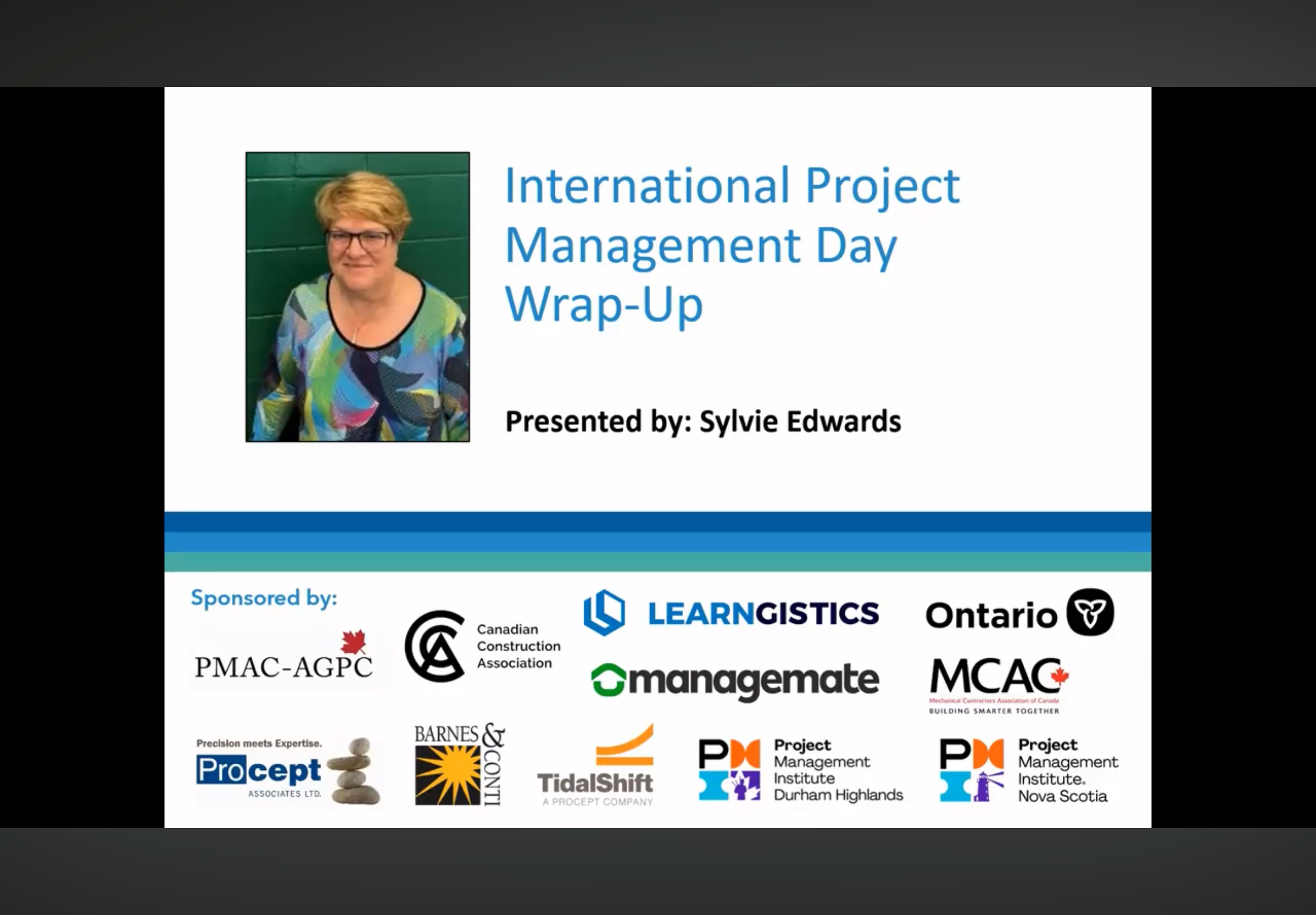
The day concluded with prize draws and recognition ceremonies celebrating excellence in the field, including the Canadian PM of the Year, Project of the Year, and the Young PM of the Year Awards, as well as an announcement of the 2026 PM Paper Competition. These honors underscored the community’s ongoing commitment to innovation, mentorship, and professional growth.
A Shared Global Vision
The 2025 International Project Management Day Conference reminded attendees that while methodologies evolve, the heart of project management remains the same: people working together toward meaningful goals. From sustainable practices to civil communication and cultural awareness, the event captured the essence of leadership in the modern era: strategic, empathetic, and purpose-driven.
As the profession continues to adapt to an increasingly complex world, this year’s conference was both a celebration and a call to action: to lead not just with skill, but with humanity.


Key Takeaways from International Project Management Day Conference 2025
Respectful engagement is a project competency. Building trust and empathy within teams is no longer optional; it's a measurable skill that drives performance.
Civility creates stronger teams. Communication grounded in respect reduces conflict, improves morale, and increases project success rates.
Culture determines project outcomes. Technical expertise alone cannot save a project if organizational culture is broken. Leaders must “circle the dragon.”
Soft skills are the new hard skills. Emotional intelligence, adaptability, and feedback literacy define the next generation of project managers.
Global collaboration is the future. From sustainability to digital transformation, project managers must lead across cultures, disciplines, and time zones with empathy and purpose.
share this story
T.A.L Board Visits Tom Adaba Legacy Center, Okene
Site Visit to Tom Adaba Legacy Center, Okene
By Glory Ize Isaiah
OKENE, KOGI STATE
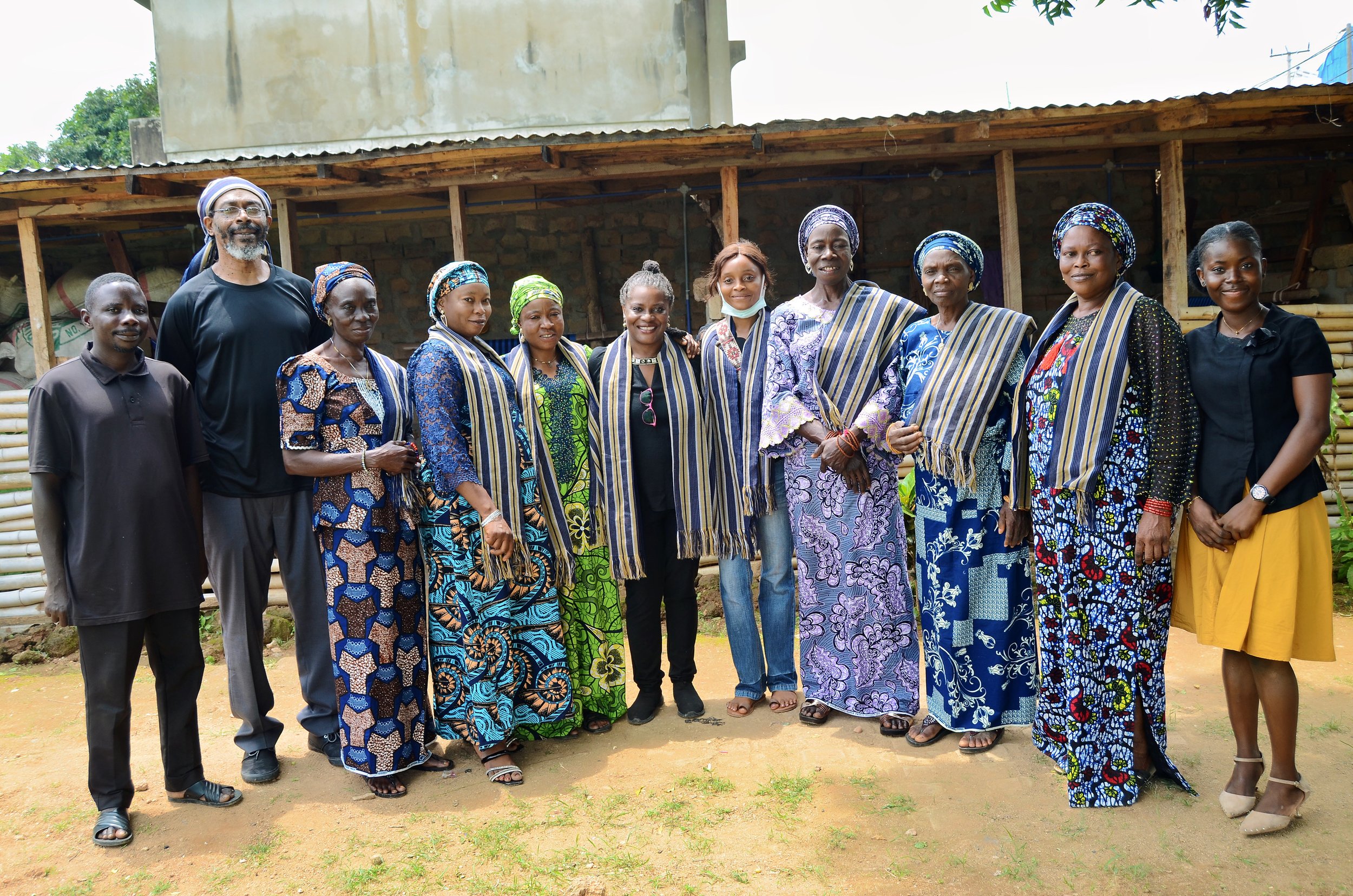
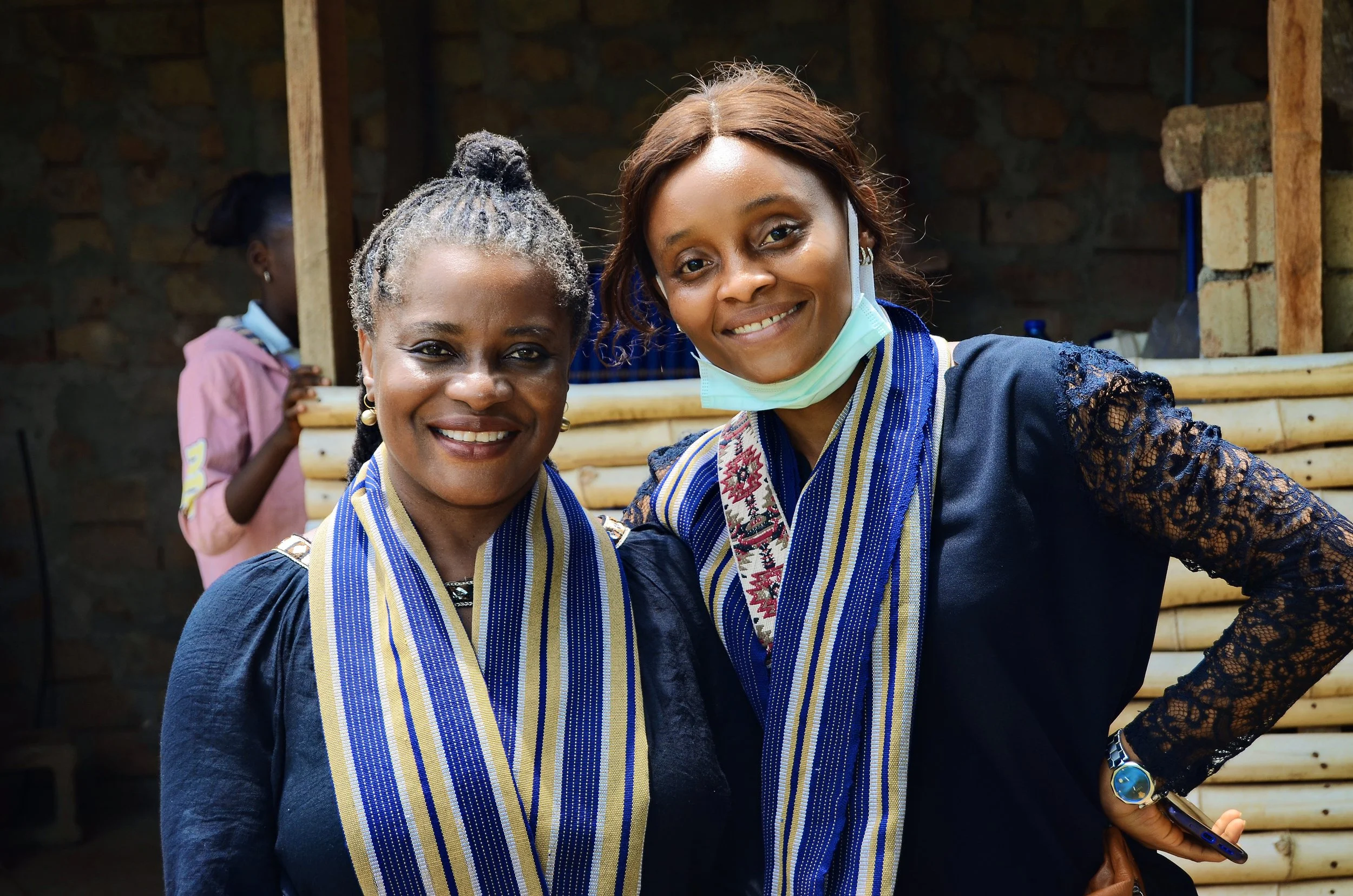
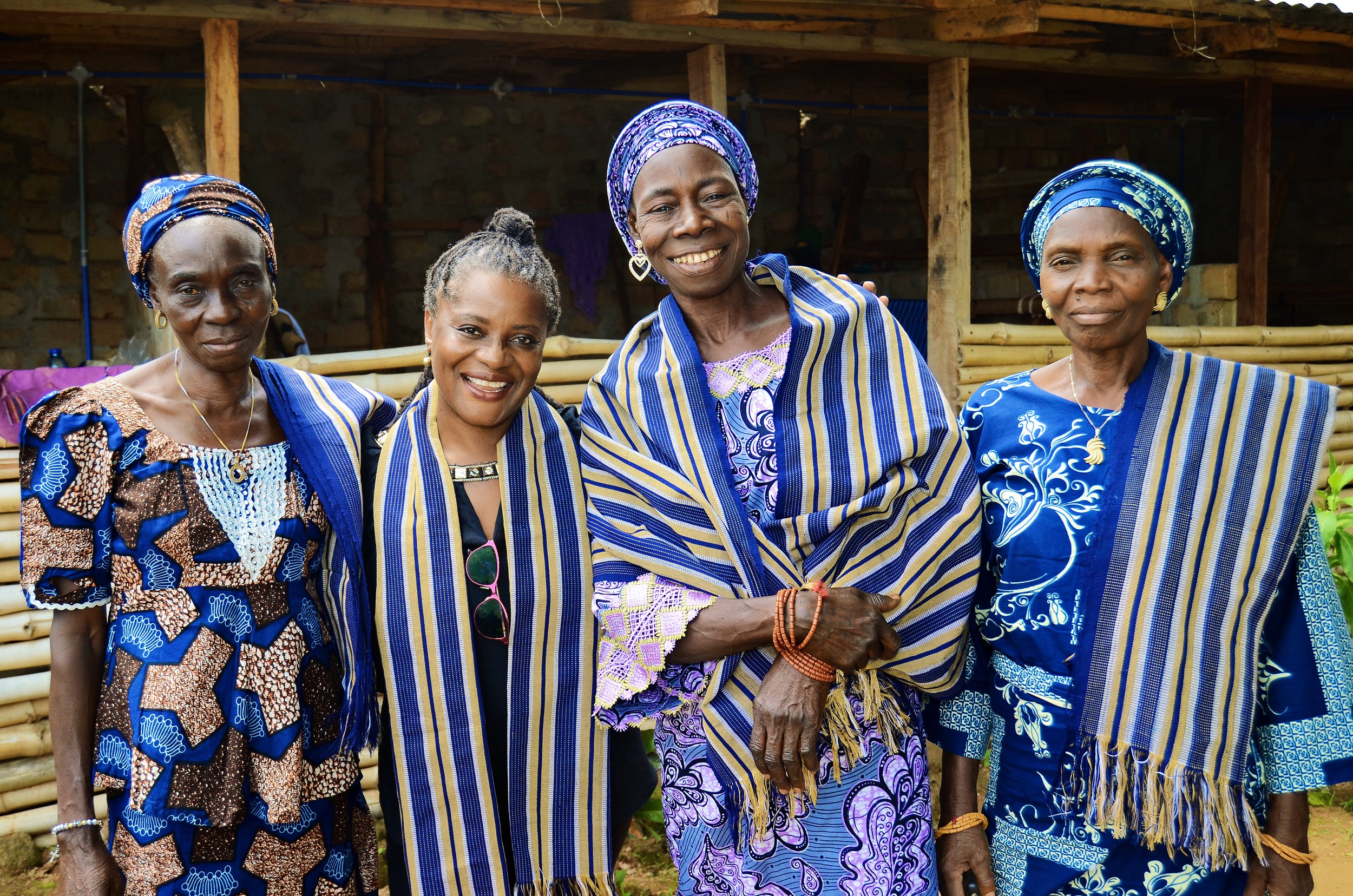
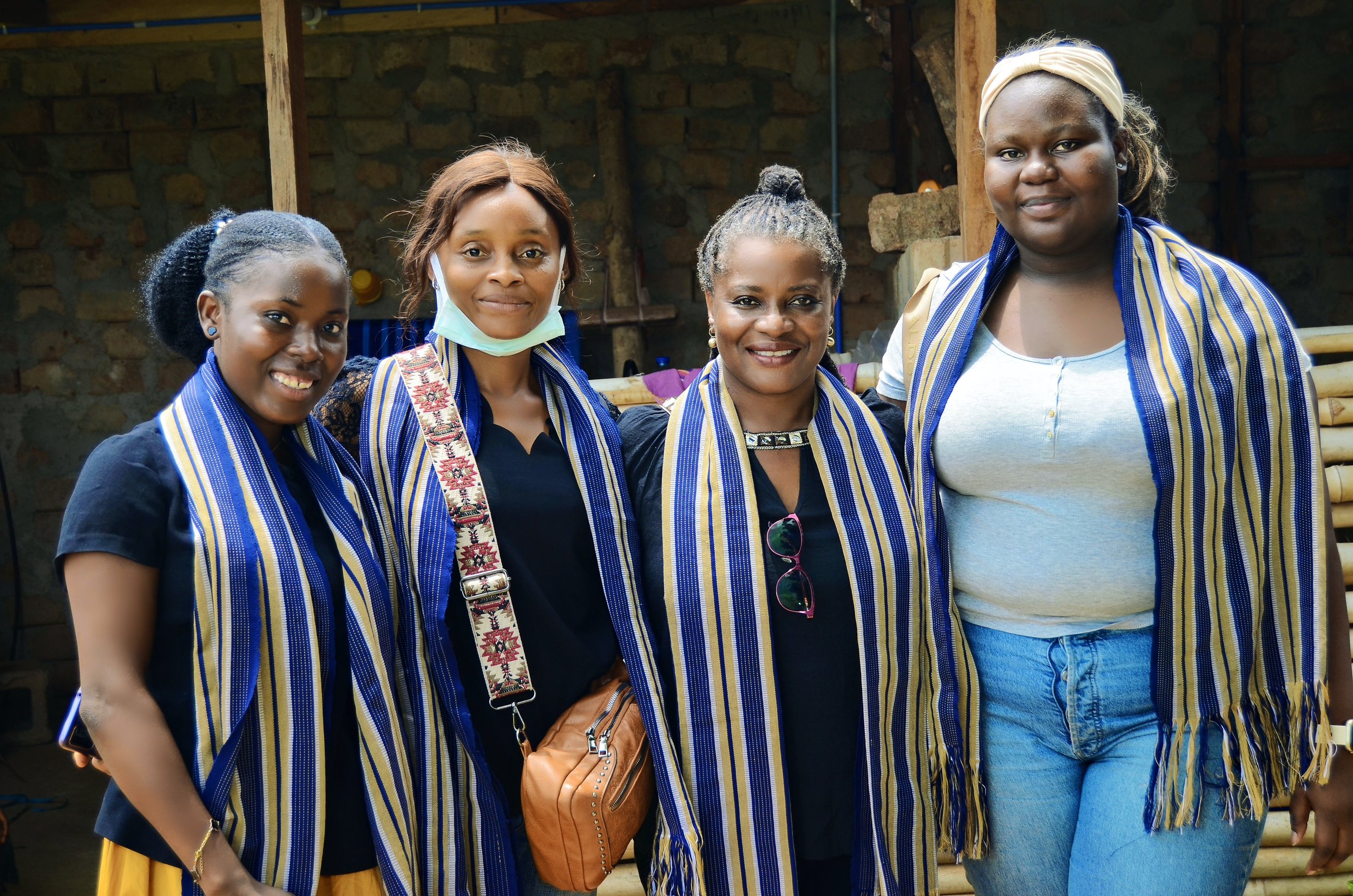
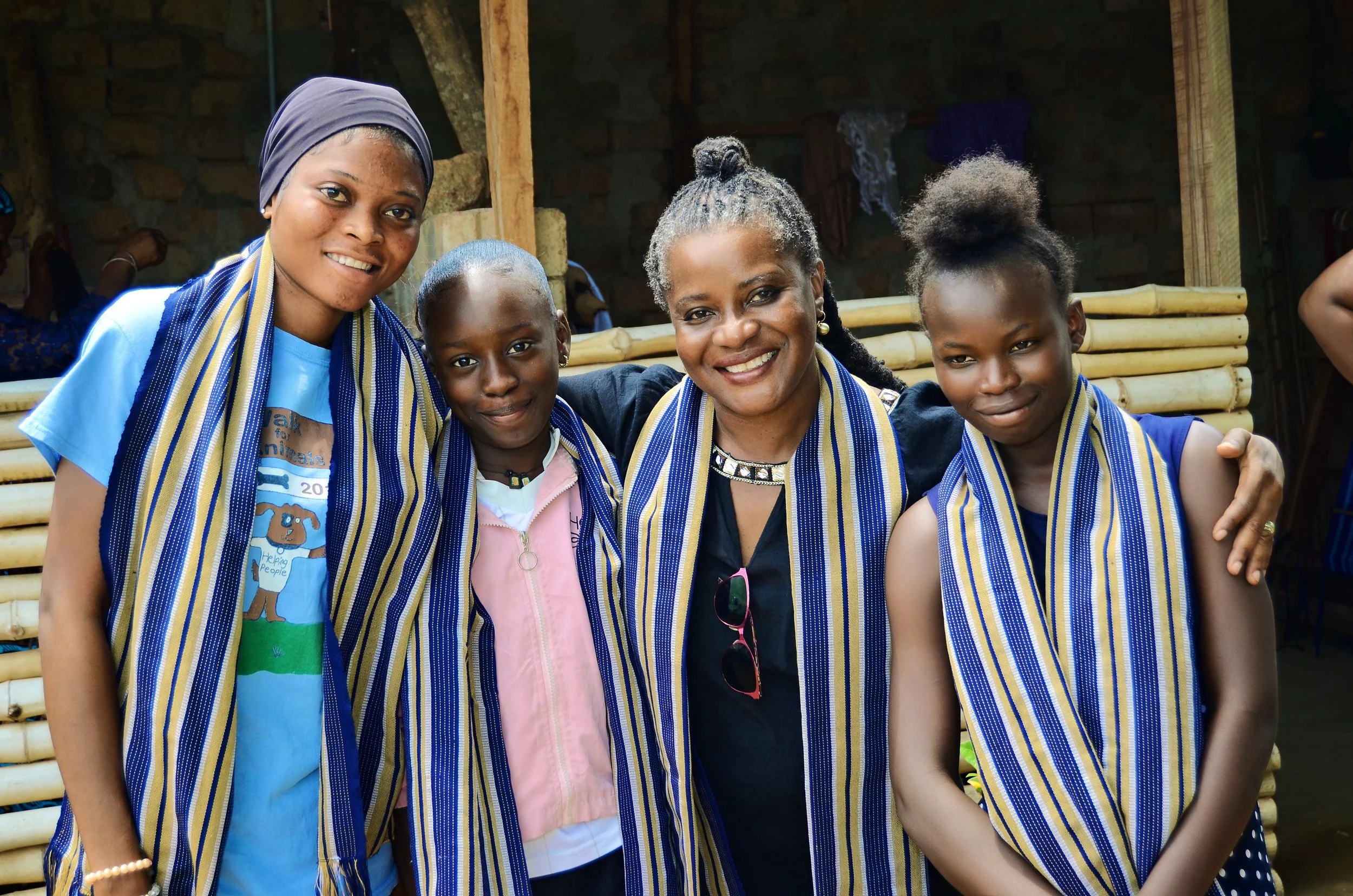
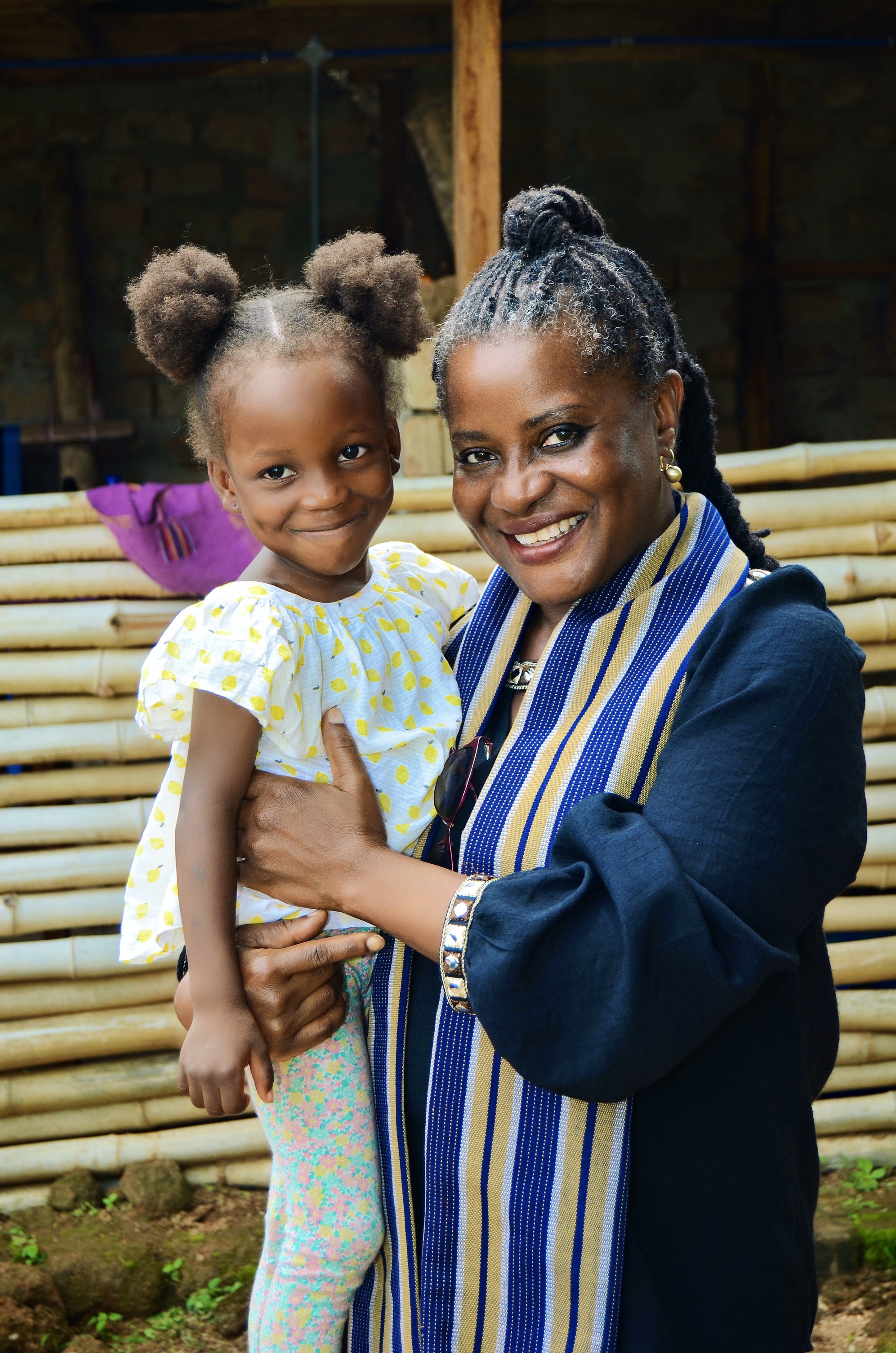
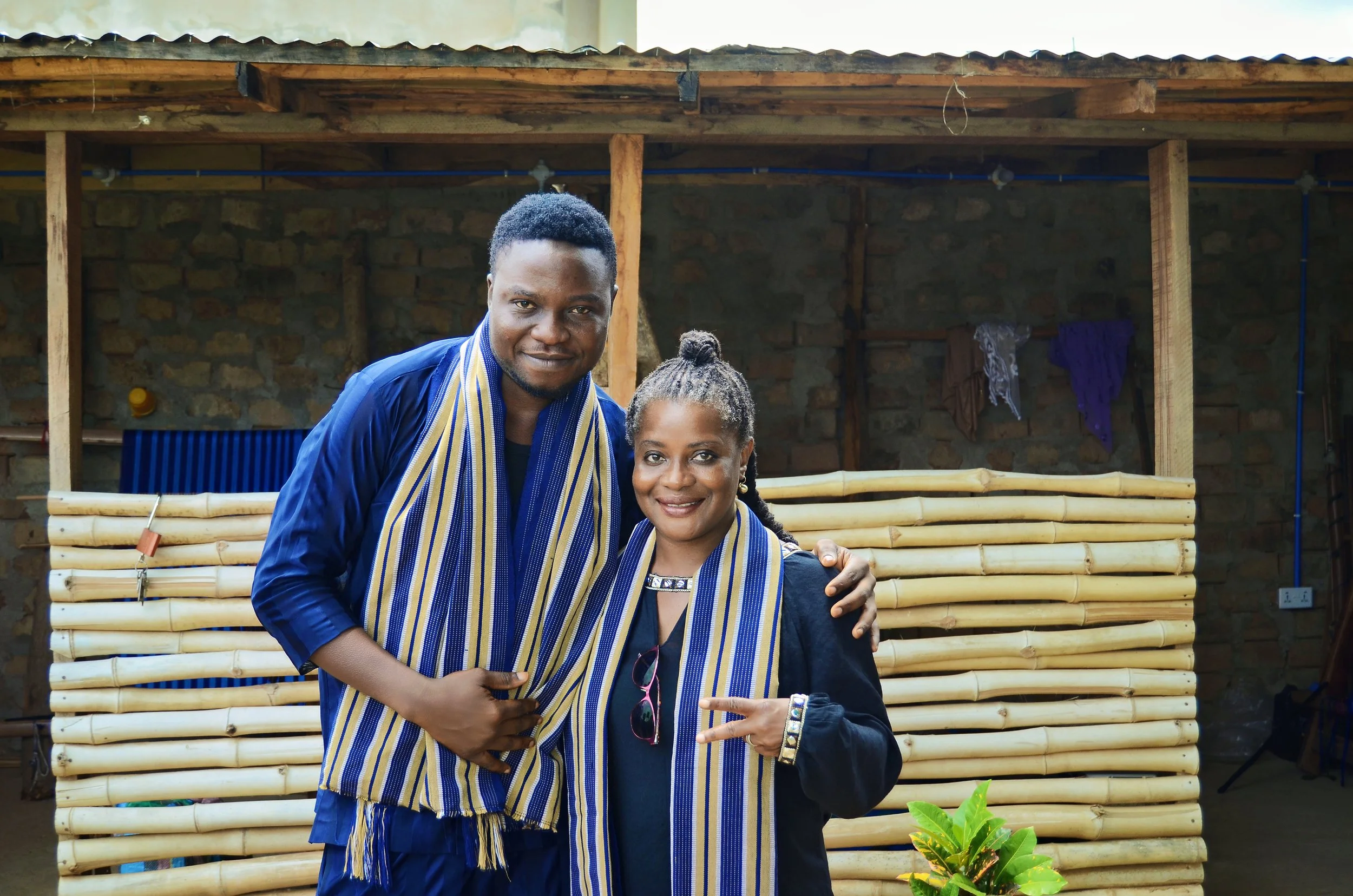
Group Photo of Tom Adaba Legacy Team and Ita’i Weavers during the site visit on July 25, 2025. (Photo by DrQuest/Africa-Related)
Project/Facility Name: Tom Adaba Legacy Center, Okene, Home of Itai’ Our Cloth
Date of Visit: Friday, July 25, 2025
Time: 10:00 AM
Location: T.A.L Center G.R.A Okene, Kogi State
Board Members of the Tom Adaba Legacy Foundation conducted a site visit to Okene, Kogi State. The purpose of the visit was to carry out an inspection and engagement tour of the Tom Adaba Legacy Center, evaluate the operations of Itai’ Our Cloth, interact with the weavers and apprentices, identify challenges and opportunities for scale, and strengthen stakeholder relations with the Tom Adaba Legacy board, including its Executive director and accompanying executives.
Attendees
Mrs. Oyiza Adaba-Okereke - Board President/ED Tom Adaba Legacy and CEO - Itai Our Cloth
Mr. Maurice Okereke - Tom Adaba Legacy (Community Initiatives) /Founder, Words By MOE
Mrs. Rosemary Onubaiye - Country Director Ita’i Our Cloth
Members of the Tom Adaba Legacy Foundation
Weavers’ Coordinators
Community Weavers & Apprentices
Media Personnels
And other Staff
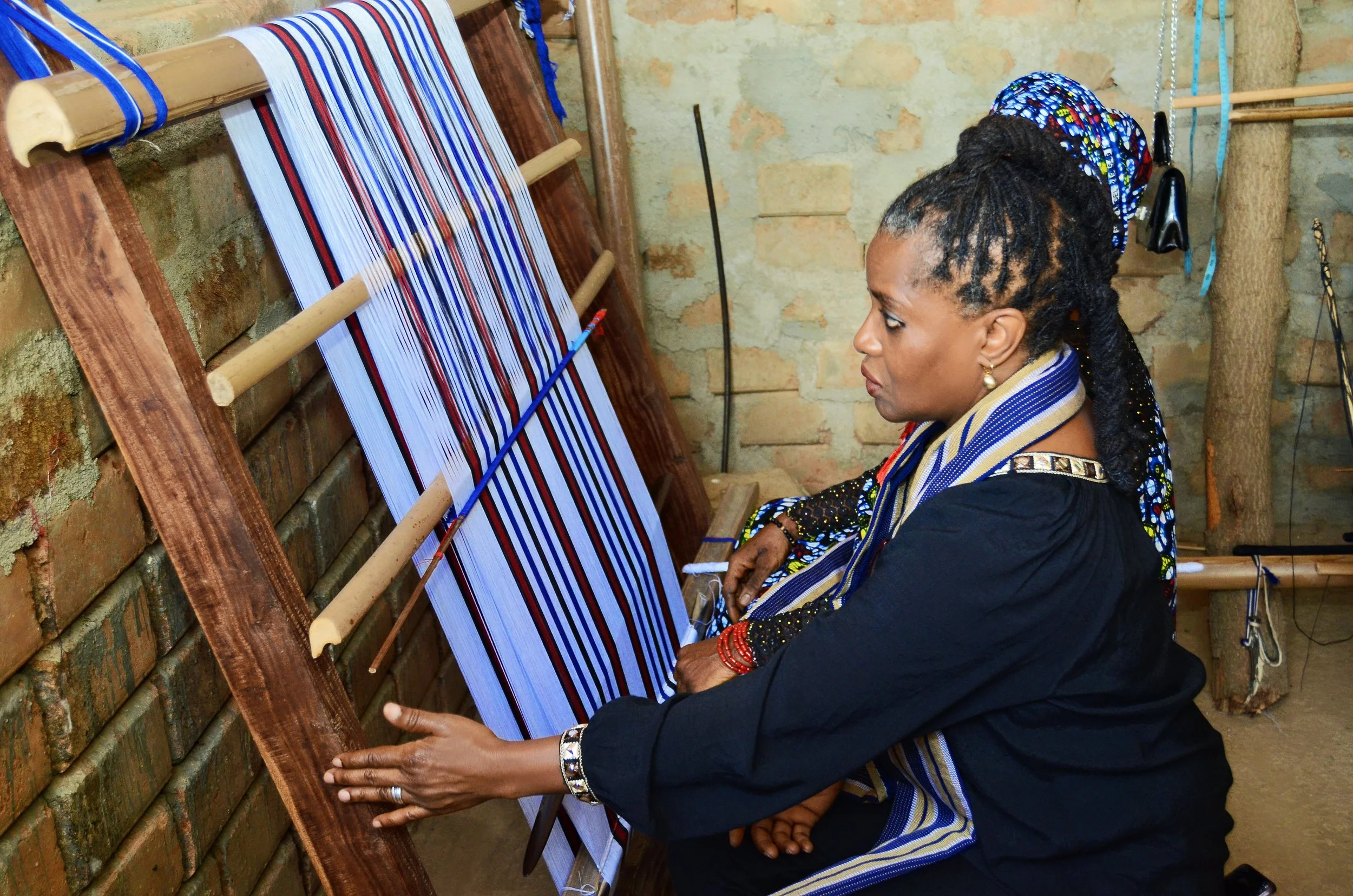
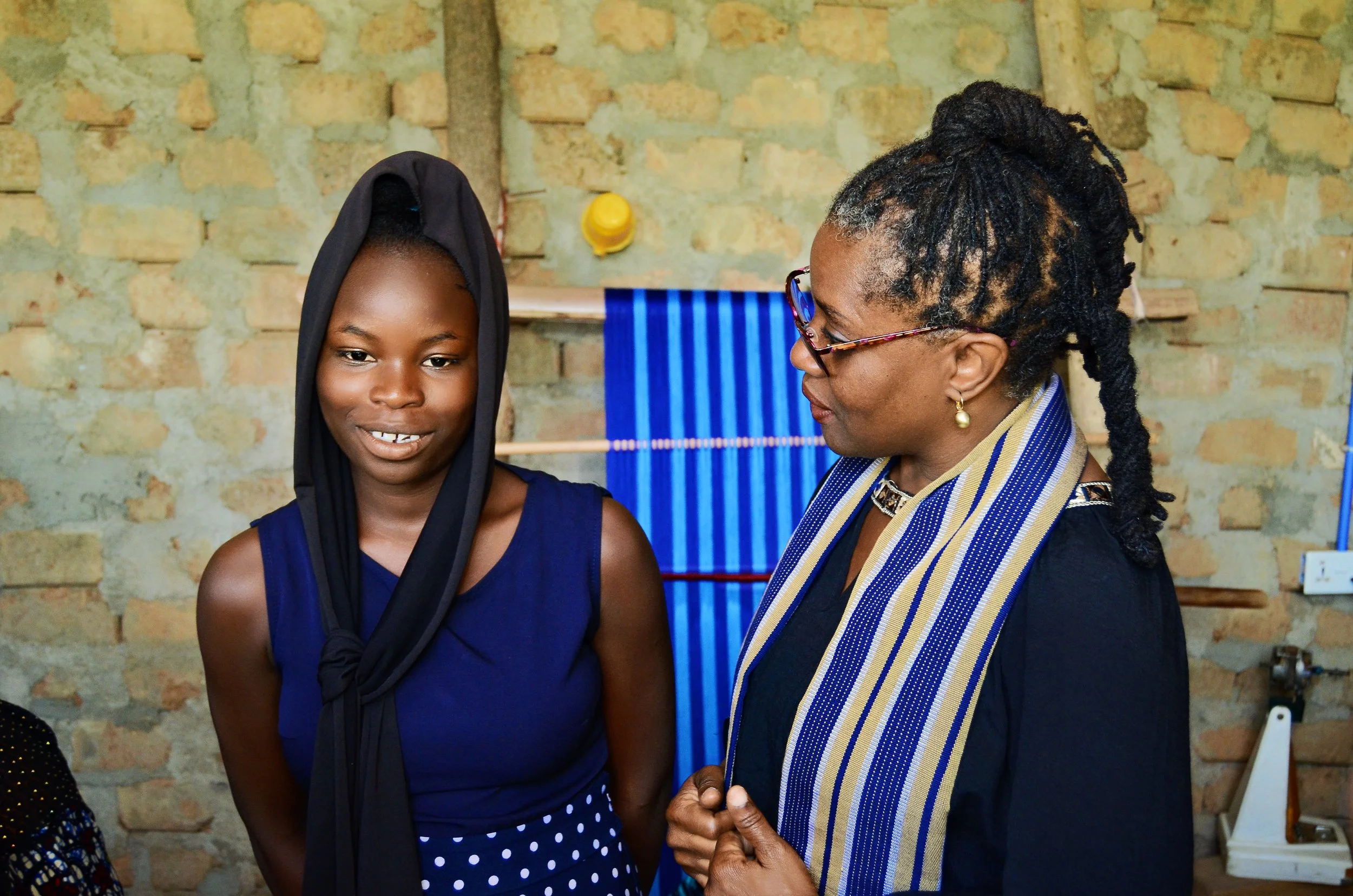
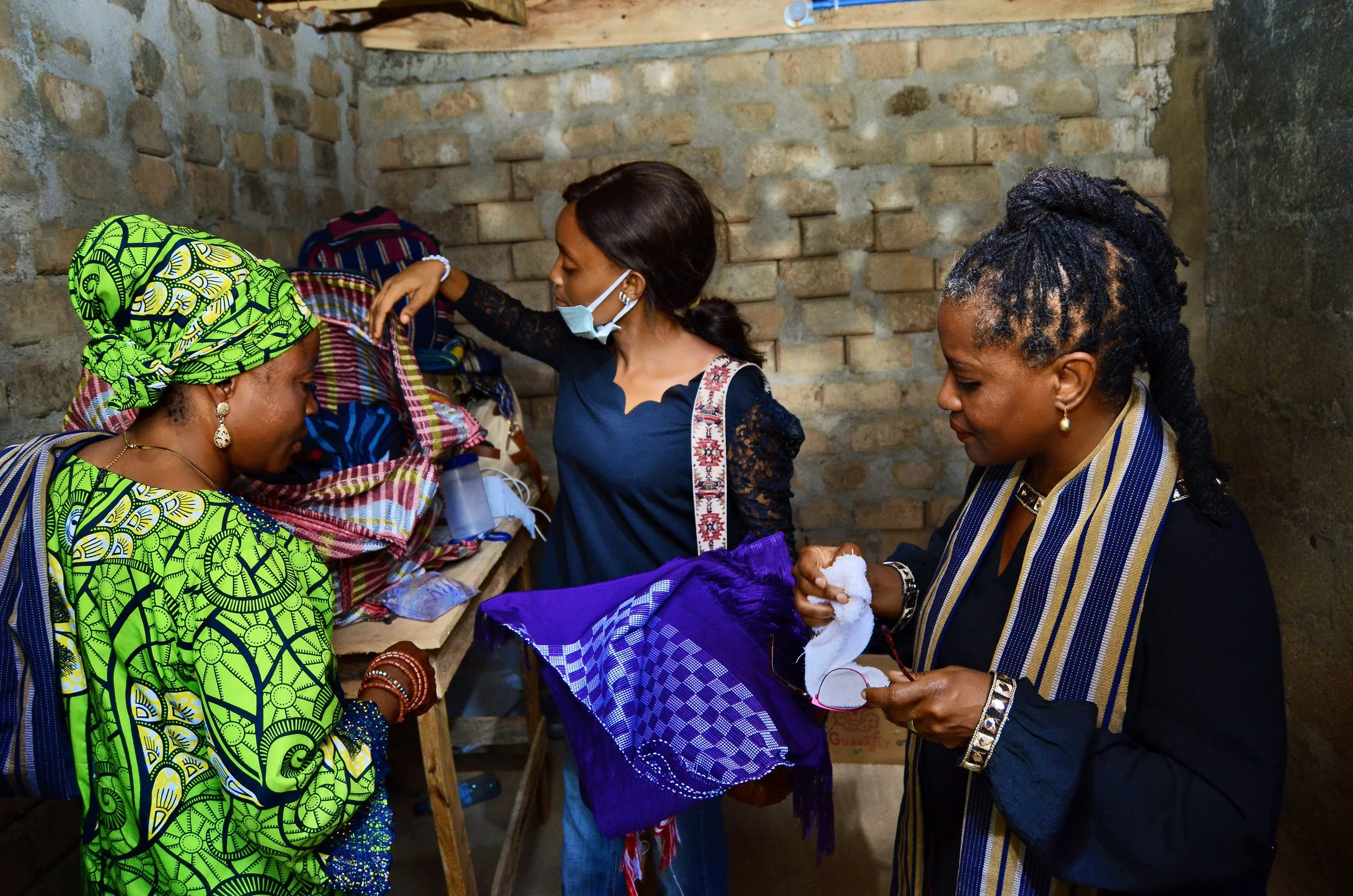
Visit Narrative & Key Highlights
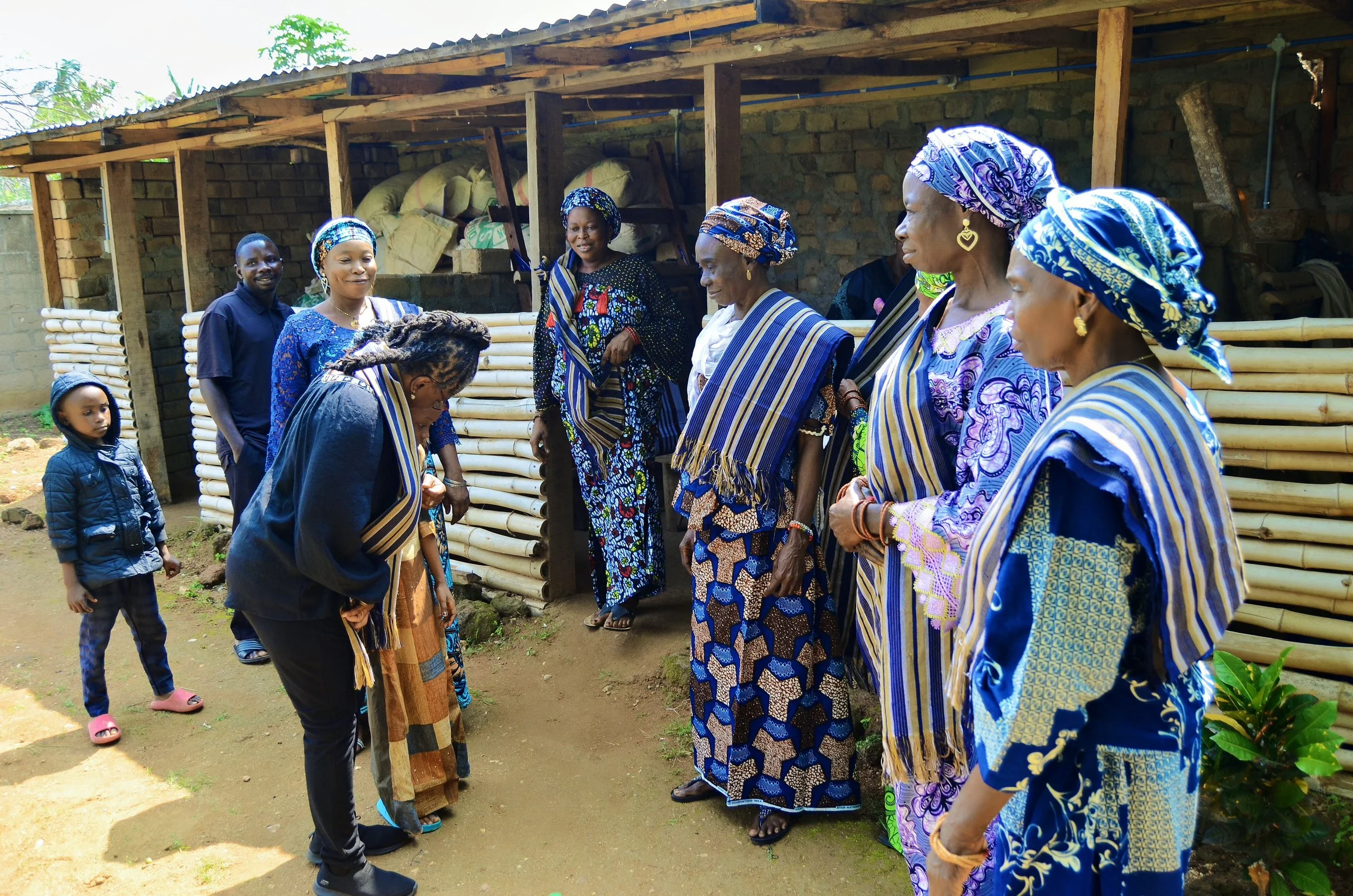
The official site visitation commenced at 10:00 AM on Friday, July 25, 2025. The Board President and Executive Director of Tom Adaba Legacy Foundation arrived in the company of her husband and board members. The atmosphere at the facility was electrifying as the women weavers, visibly overjoyed, welcomed the team with songs and dances in their local dialect, a heartfelt expression of gratitude and excitement.
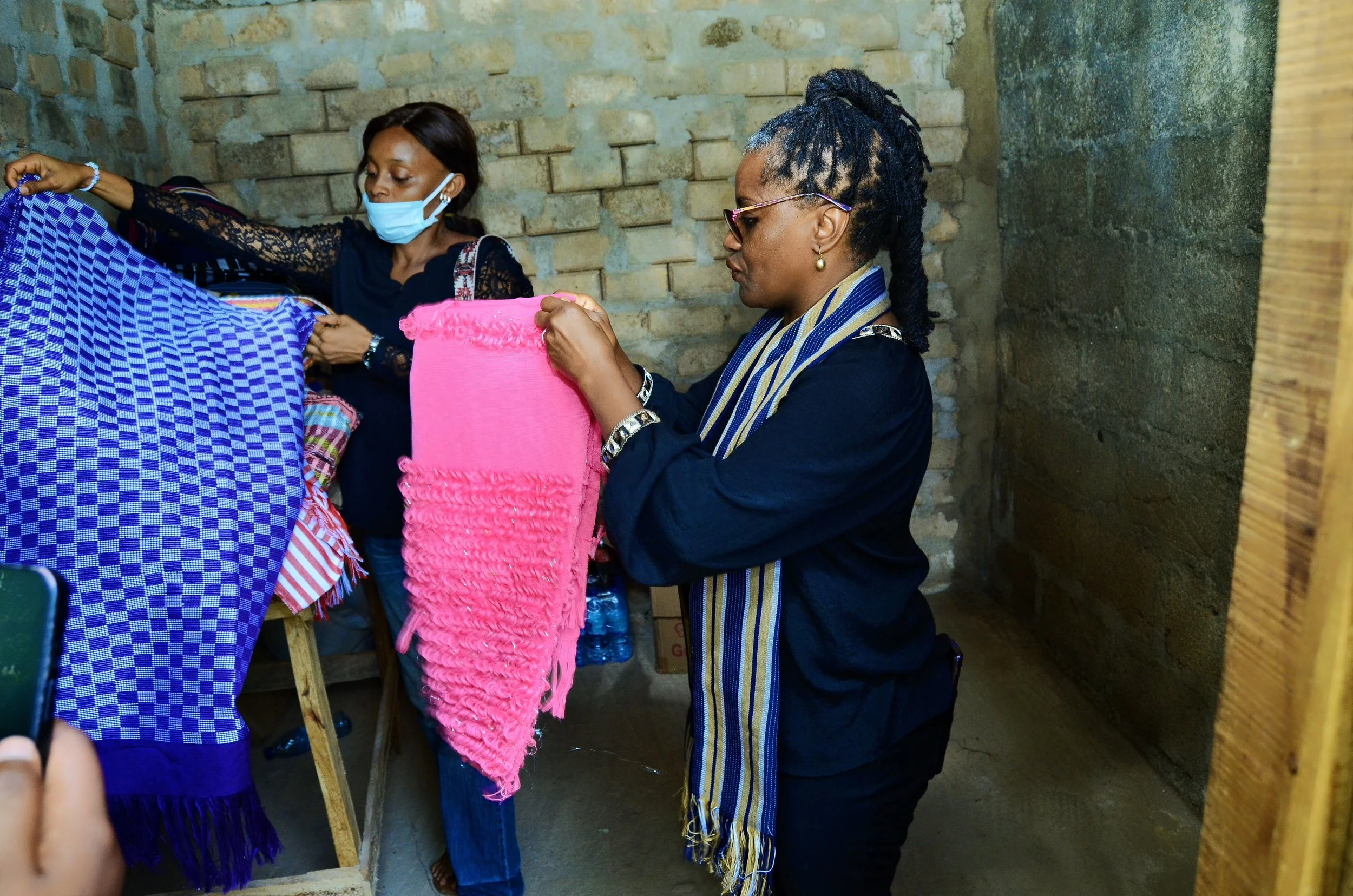
The Executive Director responded warmly, asking after each woman's welfare and inquiring about their families. Led by the Country Director and the Weavers’ Coordinators, the women took the E.D and her team on a guided tour of the center, showing the facility and ongoing work.
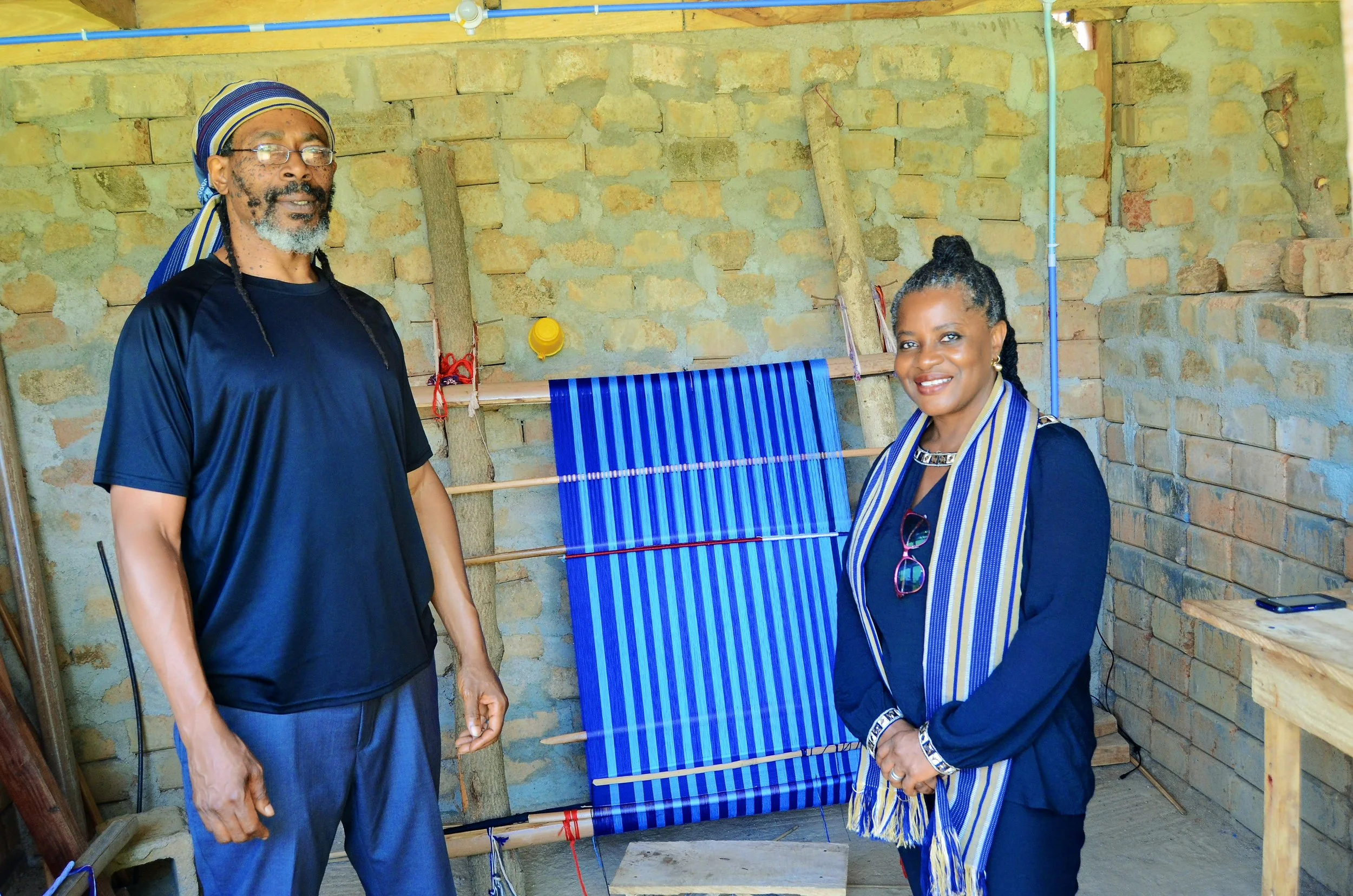
The weavers, excited by the presence of the leadership team, quickly resumed their craft while the Executive Director observed them at work. Demonstrating deep interest and solidarity, she sat beside them, learned the basics of weaving, and participated in the process, showing humility and respect for their skill.
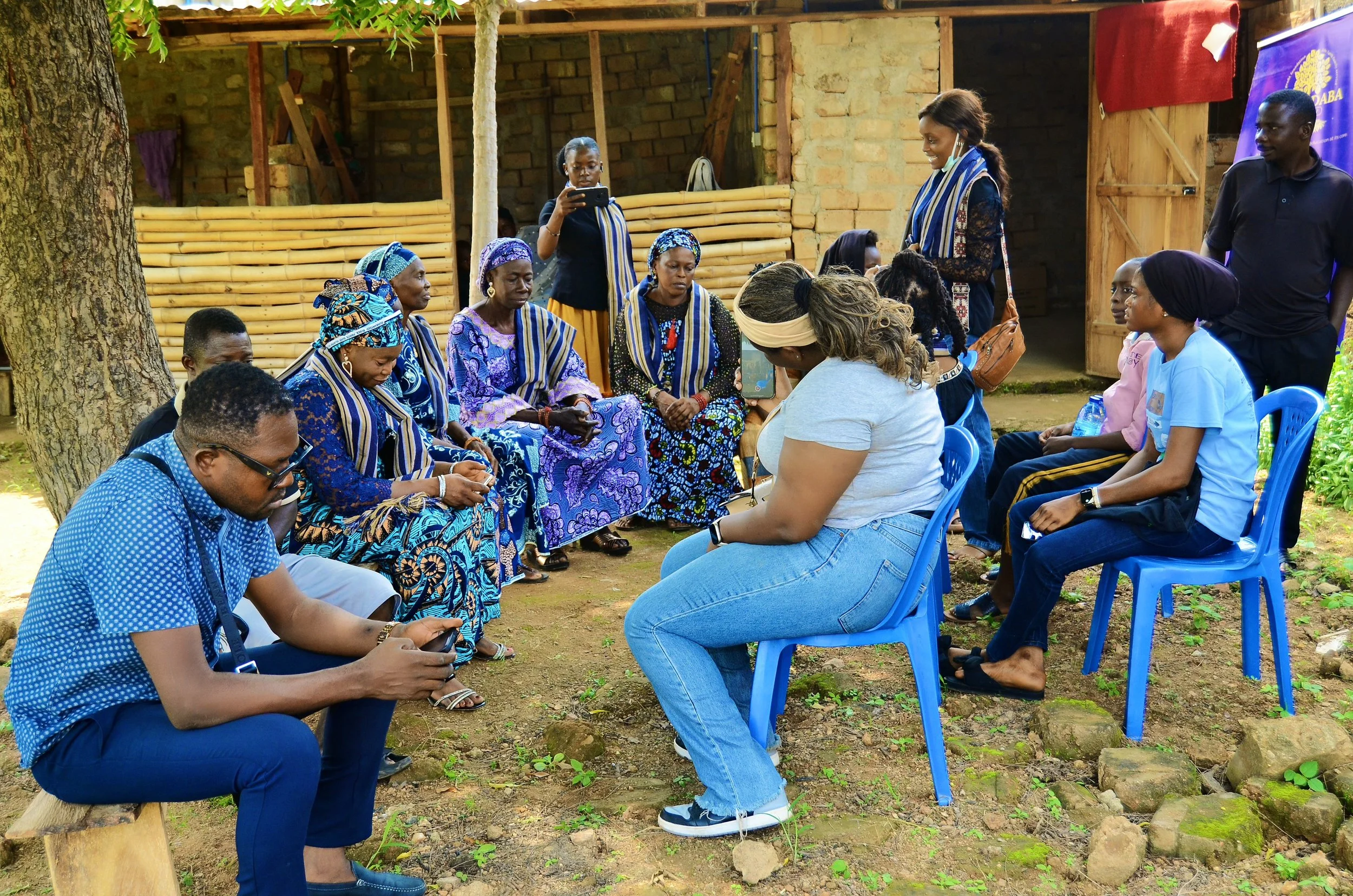
Mrs. Adaba-Okereke later engaged in deep, sincere conversations with the young apprentices who are currently undergoing training in weaving. They expressed how learning this trade has shifted their perspectives on life, offering them not just a skill, but a path toward independence and self-determination. However, they also raised concerns: the tradition of weaving is slowly fading, with fewer young people interested in carrying it on. They voiced hope that more efforts would be made to preserve and promote the craft, particularly among youth.
In response to questions about their future aspirations, several young women expressed their desire to pursue higher education and use weaving as a means to support themselves and their families financially while in school.
A particularly emotional moment came during a conversation with an older woman who demonstrated the rare and laborious art of spinning cotton into yarn by hand, a nearly extinct skill in today’s world. The woman explained the intricate process and how the younger generation often lacks interest in learning it. Acknowledging this, the Executive Director stressed the need for machinery to support scaling operations, noting that such investment could provide technical jobs, increase production, and bring long-term sustainability. She emphasized that cotton processed locally, such as from the Tom Adaba Legacy Foundation Farms in Gwagwalada and Osara, can contribute significantly to national and continental development.
Mrs Oyiza Adaba-Okereke maintained that the Center remains committed to training more youths, particularly young girls, equipping them with both cultural knowledge and economic empowerment through weaving.
She was visibly moved by the work being done and expressed deep admiration for the weavers’ dedication. She commended the women for leveraging their skills, even in the absence of formal education, to support their families, educate their children, and preserve a vital part of the Ebira cultural identity.
The visit culminated in a display of beautifully woven cloths, showcasing the weavers’ incredible craftsmanship. The team was deeply impressed by the quality and intricacy of the works presented.
Finally, an open forum was held, giving the women a platform to share their struggles, celebrate their wins, and brainstorm collaboratively on how to take the organisation’s vision to the next level, strategies for market value, and how to make sure that in telling our unique African story, the culture is not lost in sharing.



Vision for Global Scale & Market Impact
The ED made it clear: This is not just about the cloth. This is about telling a generational story, celebrating the resilience and brilliance of Ebira women, and positioning their work on the global cultural and commercial map.
She emphasized that the goal is to scale the Itai Cloth brand globally, not just for decorative or tourist appeal, but as a luxury heritage product that commands attention, respect, and value in international markets. These woven pieces are wearable history, textile testimonies, and economic vehicles. She spoke about attracting new markets, partnering with international brands and diaspora communities, and using the craft as a tool to reclaim and project indigenous identity with pride.
“We are not just weaving. We are building a cultural economy. We want the world to wear our story. We want our women’s legacy to be seen on runways, in boardrooms, and on global stages. This culture has been ours for decades. It’s time the world saw it, valued it, and paid for it.”
This vision goes beyond production. It encompasses:
Exporting products under a globally recognized Ita’i Our Cloth label
Building brand collaborations that center African textile heritage
Creating digital storytelling platforms for each weaver's narrative
Generating revenue that flows directly into the hands of the creators
Facility Condition & Need for Support
The current facility structure is makeshift and temporary, lacking the solid infrastructure needed for a center of this scale and vision. Despite this, the women have continued to produce excellent work, an inspiring testament to their commitment and resilience.
However, the need for a permanent, well-equipped weaving hub was evident throughout the visit.
Support and partnerships are urgently needed, to provide machinery for cotton processing and weaving, improve infrastructure, fund training programs, enhance market access, and scale production sustainably. Strategic collaborations with private sector partners, government agencies, cultural institutions, and global allies will be critical in turning this bold vision into a living, thriving reality.
Key Observations
The weaving center is a powerful model for economic and cultural empowerment.
There’s an urgent need to introduce technology to certain aspects of cloth production (especially yarn spinning) to meet growing demand and ensure sustainability.
A gap remains in attracting young people into the weaving trade, this presents a risk to cultural continuity.
The community has strong emotional and cultural ties to the craft, and preserving it will require intentional efforts across education, policy, and entrepreneurship.
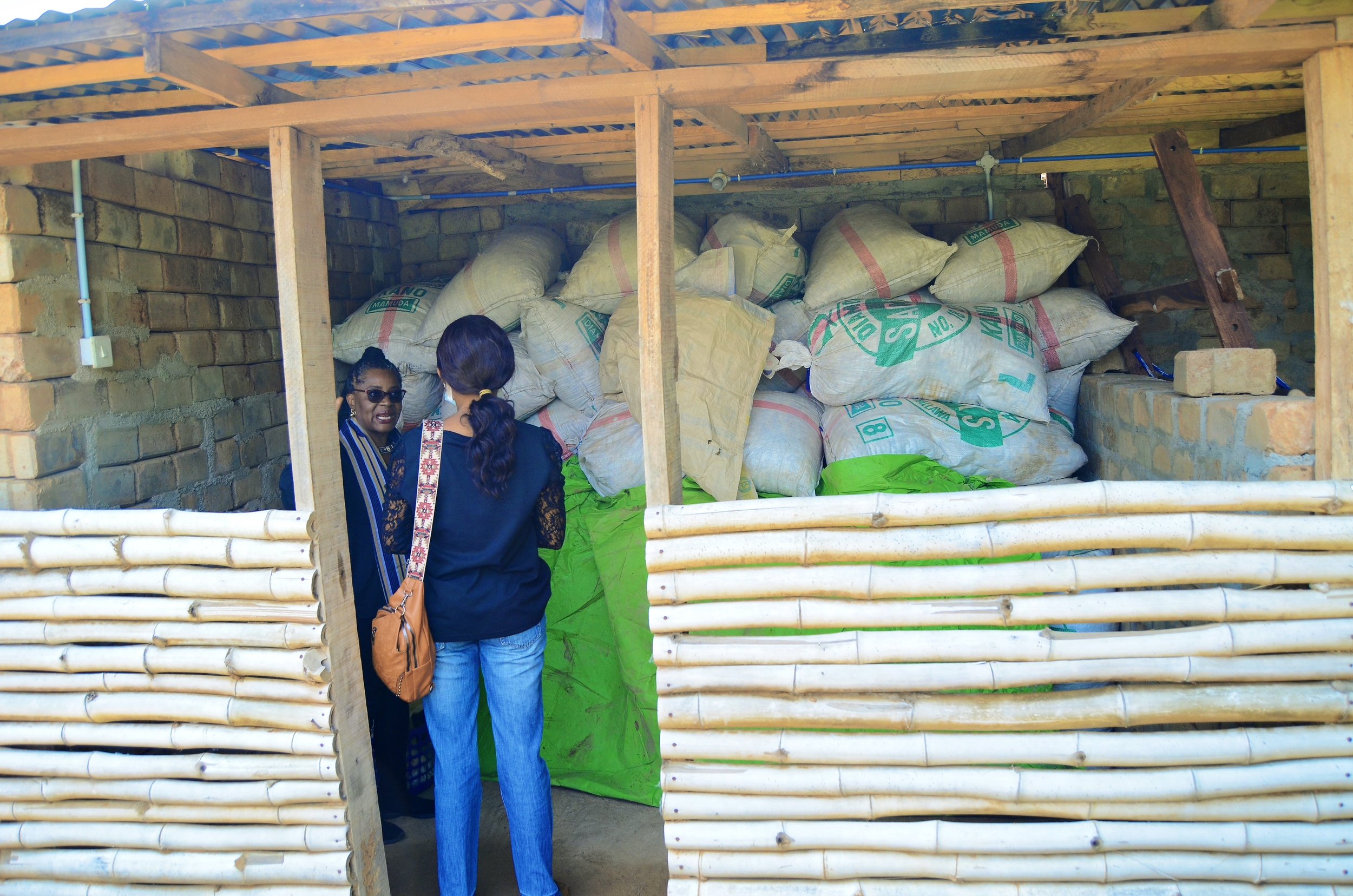
PHOTO HIGHLIGHTS : DRQuest/Africa-Related
6th Chinua Achebe International Conference and Exhibition!
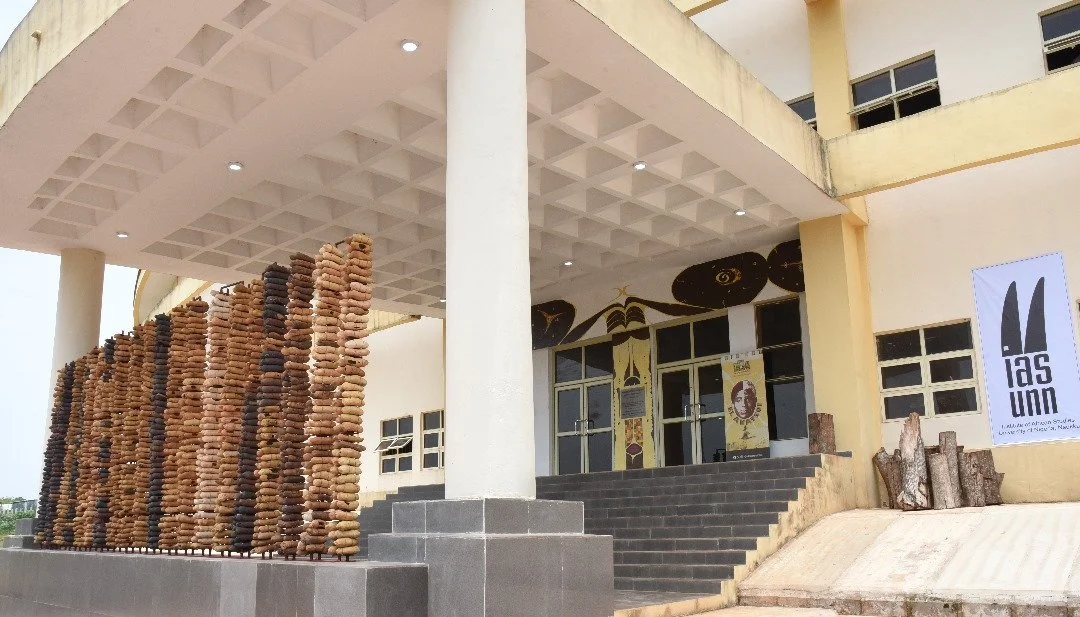
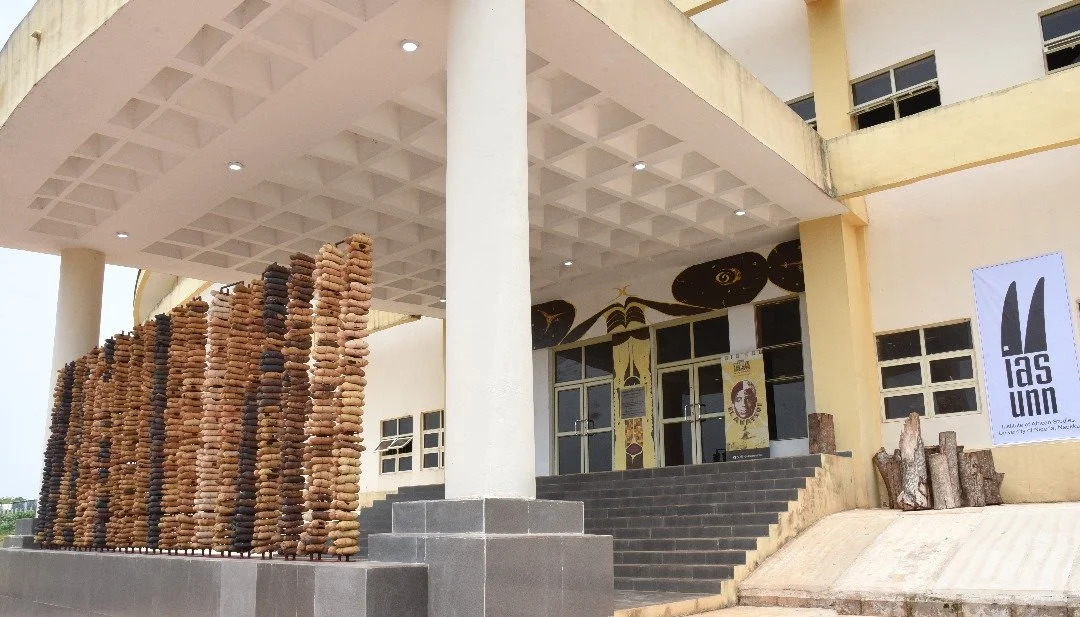
As Director of the Institute of African Studies at the University of Nigeria, Nsukka, I am delighted to welcome scholars, artists, students, and guests from around the world to our newly upgraded home—a space now brimming with art, ideas, and the enduring legacy of Chinua Achebe.
Welcome to the 6th Chinua Achebe International Conference and Exhibition!
As Director of the Institute of African Studies at the University of Nigeria, Nsukka, I am delighted to welcome scholars, artists, students, and guests from around the world to our newly upgraded home—a space now brimming with art, ideas, and the enduring legacy of Chinua Achebe.
This year’s theme, Africa’s Democratisation Journey: Historical and Contemporary Perspectives, comes at a time when Africa’s democratic experiment faces profound challenges. Together, through conversations and a vibrant art exhibition, we honour Achebe’s legacy of critical thought and creative resistance.
Join us at the opening ceremony on Wednesday, 23rd July 2024.
Venue: Seminar Room 1, Institute of African Studies [New site, off UBA Gate on Greenhouse Road], University of Nigeria, Nsukka.
Google Meet joining info: meet.google.com/nfn-viyg-nyh
Join by phone (US) +1 210-951-8557 PIN: 874 061 744#
Time: 10:00 am WAT
Keynote speakers: Rufai Oseni [ Arise TV, Lagos, Nigeria; Title: "African Democratic Journey: Pitfalls and Possibilities"] & Professor Ifeanyi C. Ezeonu [ Department of Sociology, Brock University, Canada; Title: "The Nigerian Economic Cul de Sac: Critical Reflections on Liberal Democracy and Its Challenges for the Next Generation"]
Special thanks to our Acting Vice-Chancellor, Prof. Oguejiofo Ujam, for his unwavering support; my co-convener, Prof. Raphael Njoku [Department of History, Idaho State University, Pocatello, USA.]; the Local Organising Committee led by Prof. Chima Korieh; our dedicated volunteers; and the staff and students of the Institute who made this vision a reality.
Please join us. Let’s make this gathering a spark for new ideas and a beacon of hope for Africa’s democratic future.
Professor Ozioma Onuzulike
Director, IAS-UNN
IG: @ozioma.onuzulike
#AchebeConference2025 #UNN #InstituteOfAfricanStudies #AfricaDemocracy #ChinuaAchebe #Nsukka
DRONE SECURITY TRAINING HELD IN IHIMA, KOGI STATE
On Saturday, July 19, 2025, Ihima town played host to a high-impact training on Drone Security, an emerging field that combines innovation with national development. It was made possible by Meterverse Technologies Ltd, the Nigerian Content Development and Monitoring Board (NCDMB) and Senator Natasha Akpoti-Uduaghan.
By Glory Ize Isaiah & Rosemary O. Onubaiye
Photos by Africa-Related
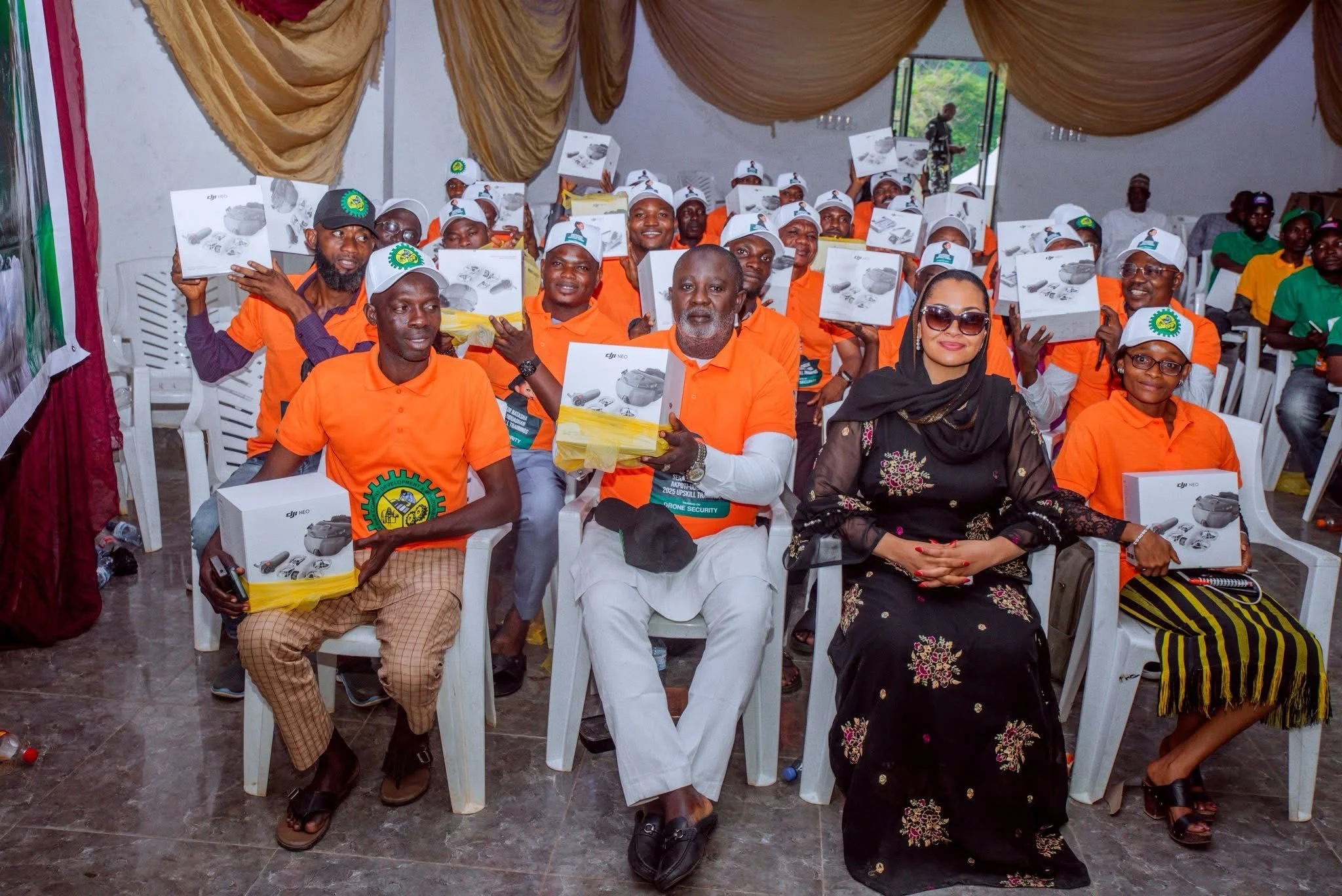
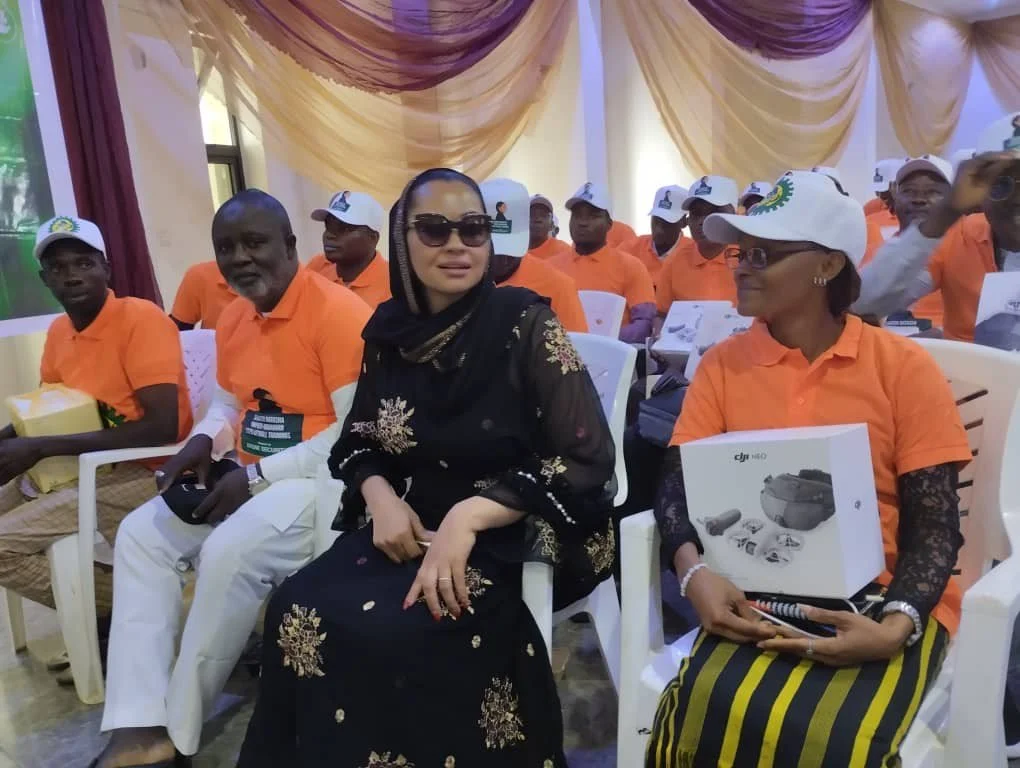
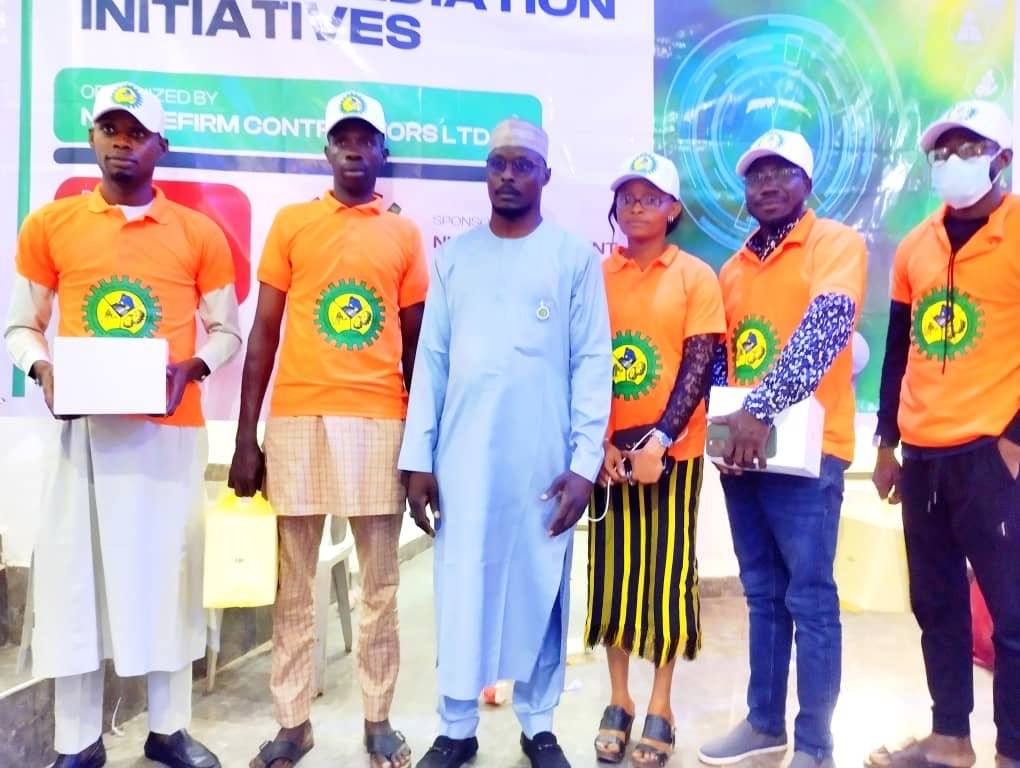
Senator Natasha Akpoti-Uduaghan (in black) facilitated a high-impact training on Drone Security, that was organized by Meterverse Technologies Ltd and sponsored by the Nigerian Content Development and Monitoring Board (NCDMB).
Organized by Meterverse Technologies Ltd.
Sponsored by Nigerian Content Development & Monitoring Board (NCDMB)
Facilitated by Senator Natasha Akpoti-Uduaghan
Date: Saturday, July 19, 2025
Venue: Sen. Natasha Akpoti-Uduaghan’s Residence. Ihima, Kogi State, Nigeria
Introduction
On Saturday, July 19, 2025, Ihima town played host to a high-impact training on Drone Security, an emerging field that combines innovation with national development. The event was organized by Meterverse Technologies Ltd and sponsored by the Nigerian Content Development and Monitoring Board (NCDMB). It was notably facilitated and attracted to the region by Senator Natasha Akpoti-Uduaghan, a prominent advocate for innovation-driven development in Kogi Central.
The training marked a significant step in building local capacity around the strategic application of drone technology in security operations, a theme that resonates with Nigeria’s growing commitment to indigenous tech solutions for surveillance, safety, and national infrastructure protection.
Opening and Accreditation
The event began with arrivals at 8:00 a.m., and accreditation commenced by 8:30 a.m., continuing until 10:00 a.m. when the formal proceedings officially began. The warm and anticipatory atmosphere set the tone for an impactful and educative session.
The official opening of the training was done by Senator Natasha Akpoti-Uduaghan, who welcomed the participants and highlighted the importance of adopting cutting-edge security technology in safeguarding communities and critical infrastructure. Her address emphasized the potential for local talent to be harnessed in this area, especially among the youth of Kogi Central and surrounding regions.
Though representatives of Meterverse Technologies and NCDMB were present, they took a more reserved role, with minimal public speeches. The spotlight remained on the participants and the training process itself, underscoring a people-first approach to knowledge transfer.
Training Highlights
Participants were introduced to the fundamentals of drone technology, types of drones used in security operations, relevant regulations, and hands-on demonstrations. Topics covered included:
Introduction to Drone Types and Security Applications
Airspace Rules and Ethical Use of Drones
Real-time Demonstrations on Drone Control and Flight
The Role of Drones in Critical Infrastructure Surveillance
Career Opportunities in the Drone Security Sector
The session blended theoretical instruction with live practical demonstrations, offering participants a comprehensive understanding of drone operations, especially in the Nigerian context.
Senator Akpoti-Uduaghan’s initiative successfully trained and empowered 250 constituents with digital and technical skills across the following disciplines:
Drone Security and Environmental Sustainability/Remediation Initiatives – 80 beneficiaries
Advanced Welding and Fabrication Techniques – 50 beneficiaries
Renewable Energy Installation – 50 beneficiaries
Data Analytics and Digital Transformation – 70 beneficiaries
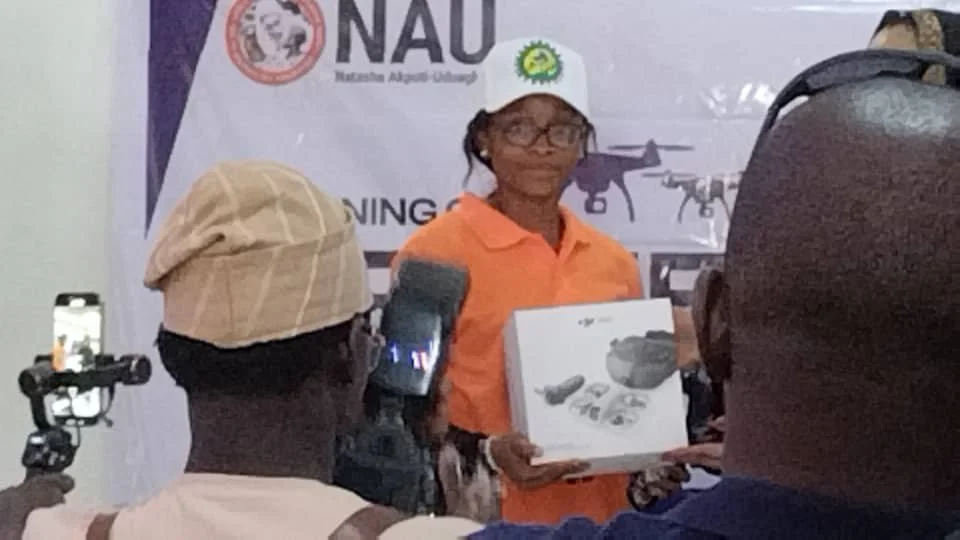
A key highlight was the distribution of 80 DJI Neo drones to individuals and departments from 10 tertiary institutions, including the University of Ilorin, Ahmadu Bello University, Federal Polytechnic Idah, and others.
Attendance and Representation
Africa-Related’s Representation and Contribution
Africa-Related, a media content and strategy production house, was present through its Country Director, Mrs. Rosemary Onubaiye, and representative Ms Glory Ize Isaiah. Africa-Related’s presence was centered on observation, documentation, and potential partnership development in future media-technology initiatives.
With bases in Abuja, Nigeria and New York City, USA, Africa-Related is known for crafting compelling African narratives across multiple platforms - including film, television, radio, publishing, and photography. The organization’s mission to amplify African perspectives through narrative-shaping content aligns deeply with initiatives such as this.
Africa-Related’s attendance demonstrates its broader commitment to community empowerment, youth engagement, and digital inclusion - particularly in exploring how drone technology can be utilized for media production, cultural preservation, and security awareness campaigns in rural and semi-urban communities.
Strategic Relevance to Africa-Related’s Mission
This training initiative aligns with Africa-Related’s core objectives in several critical ways:
1. Narrative & Content Innovation - The use of drones opens up expansive possibilities in visual storytelling and documentary filmmaking, especially in remote or difficult-to-access areas.
2. Youth-Focused Empowerment - The skills taught provide fertile ground for future training partnerships, fellowships, and mentoring programs that Africa-Related could support or amplify.
3. Tech-Creative Integration - Drone operations intersect with Africa-Related’s interest in merging technology and creativity, from environmental/agreicultural documentation to cultural archiving.
4. Community-Driven Media Campaigns - There’s strong potential to use drone-enabled content to produce campaigns around peace, infrastructure, culture, and environmental responsibility.
Recommendations & Next Steps
To extend the value of this engagement, the following are proposed:
Post-Training Debrief: Host an internal knowledge session to evaluate training insights and consider ways to incorporate drone visuals in future productions.
Pilot Projects: Design a community storytelling project using drones to capture environmental shifts, cultural landmarks, or human-interest stories.
Youth Media Bootcamps: Launch short training intensives focused on using drones for creative storytelling and advocacy.
Stakeholder Partnerships: Engage Meterverse Technologies and NCDMB for future collaborations in creative tech empowerment programs.
Conclusion
The Drone Security Training in Okene stands as a powerful example of how public-private collaboration can be used to equip Nigerian youth with relevant, forward-facing skills. With growing concerns about security and surveillance, the role of drone technology will only become more vital in the years to come.
The efforts of Senator Natasha Akpoti-Uduaghan, Meterverse Technologies Ltd, and NCDMB in bringing this initiative to life are commendable. It is expected that this training will be a catalyst for more technologically driven capacity-building efforts across Kogi State and beyond.
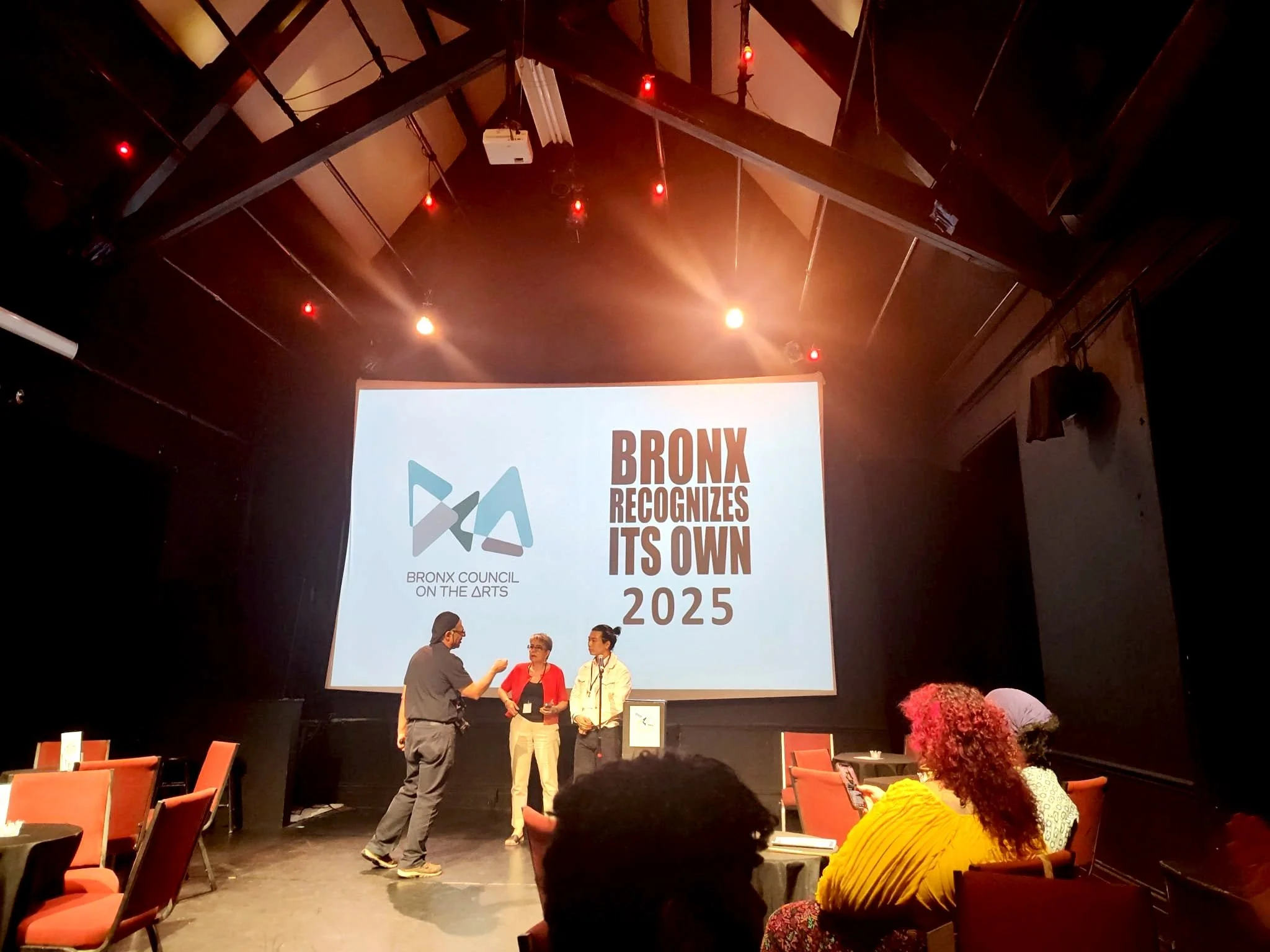
Oyiza Adaba Bags 2025 'Bronx Recognizes Its Own' (BRIO) Award
For over 35 years, BCA’s BRIO Award has recognized artists from a wide range of creative disciplines who demonstrate proficiency, knowledge, and intense practice in their chosen art form. Award-winning Director Oyiza Adaba was selected in recognition of her contribution to the borough's creative spirit.
Africa-Related, New York
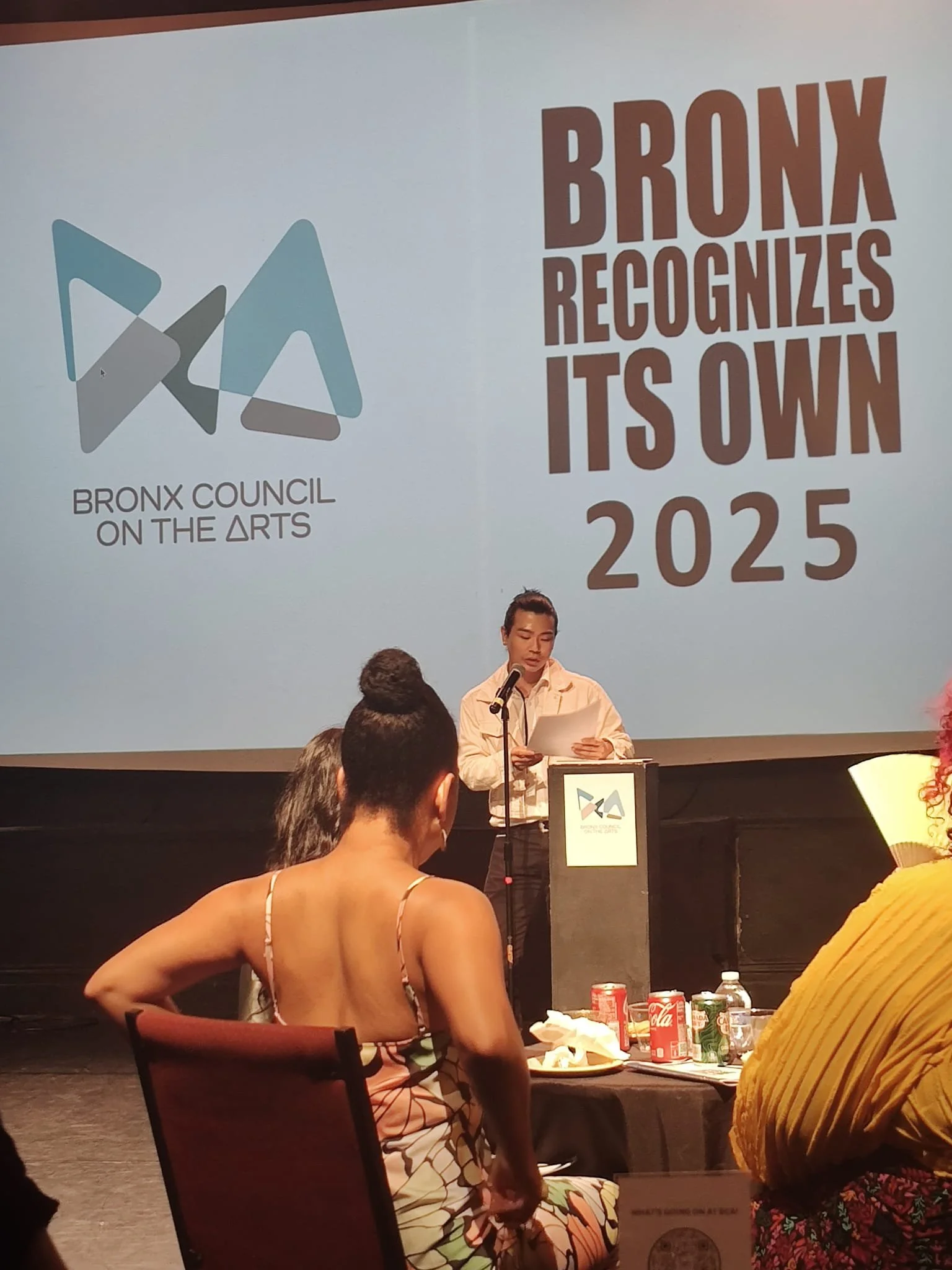
Bronx Council on the Arts (BCA) selected 42 recipients for the 2025 Bronx Recognizes Its Own (BRIO) Award.
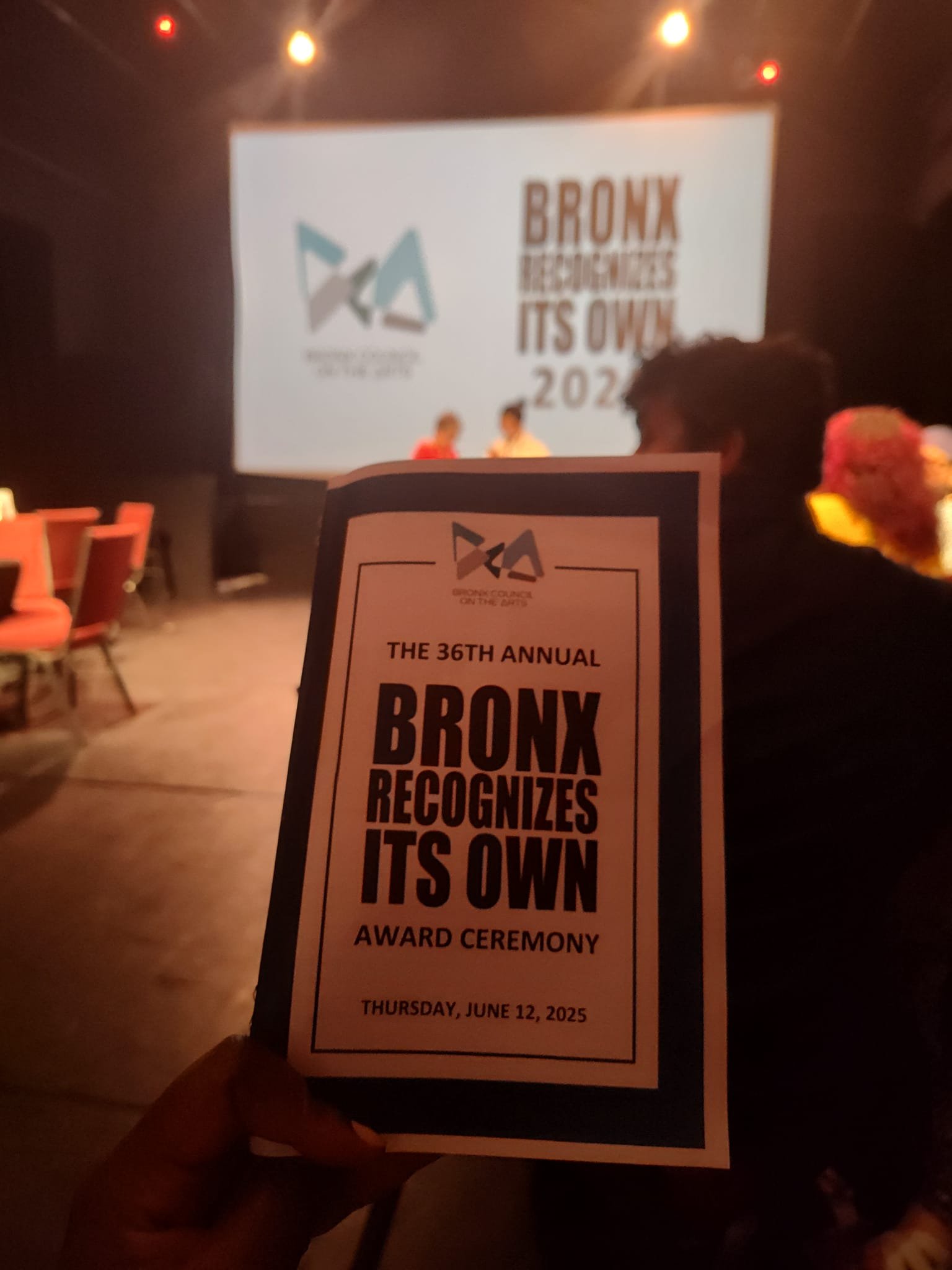
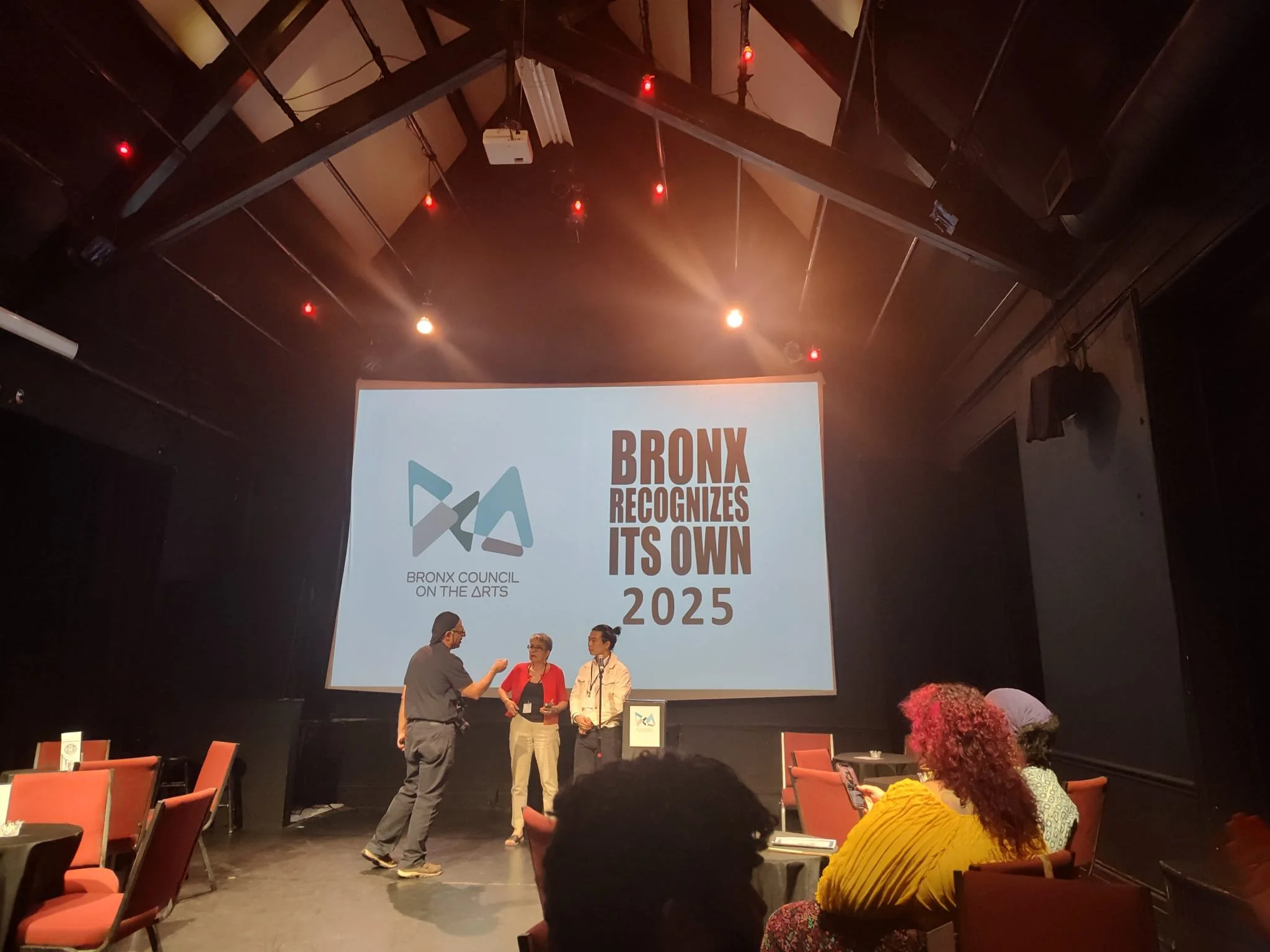

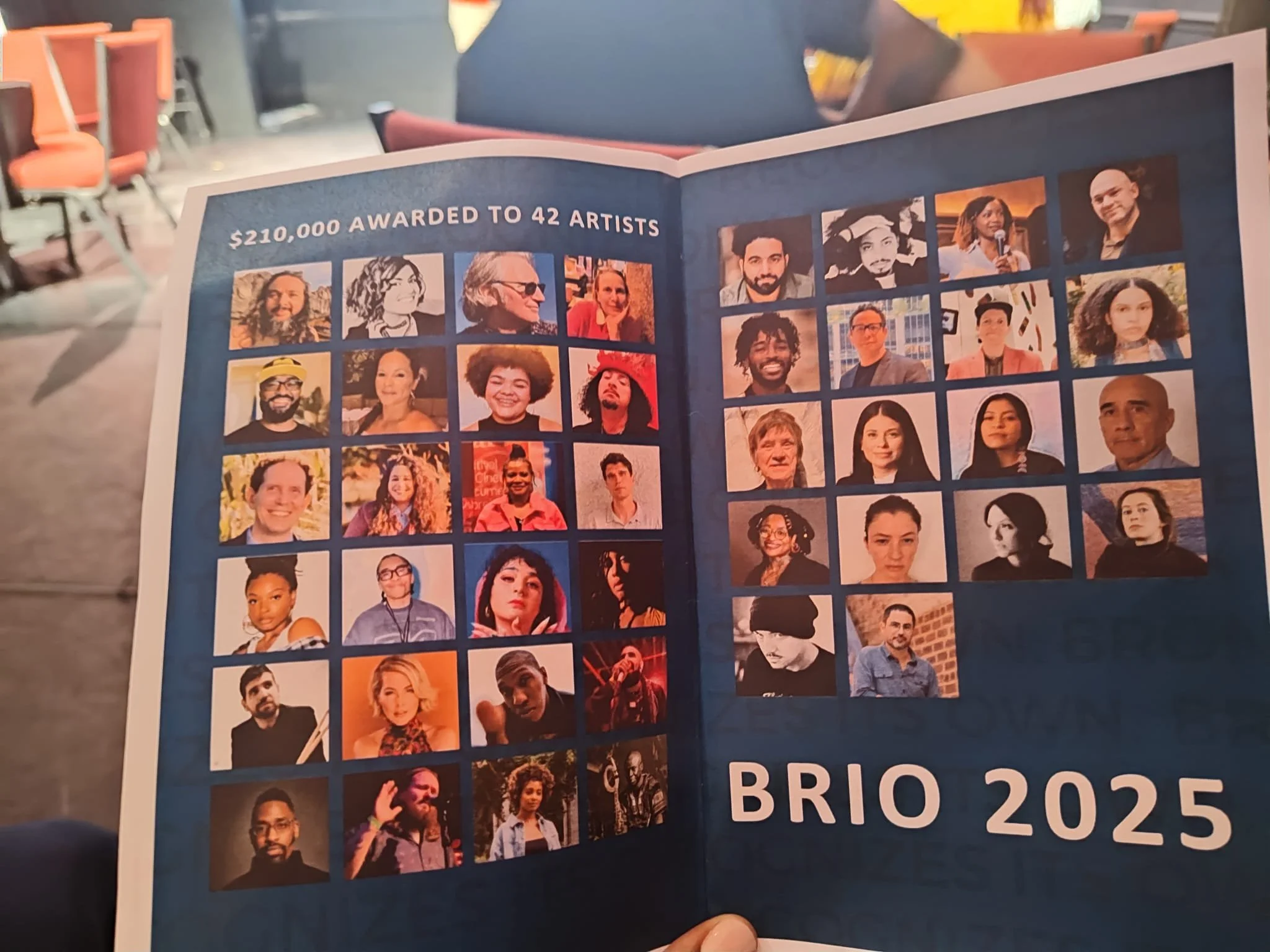
For over 35 years, BCA’s BRIO Award has recognized artists from a wide range of creative disciplines who demonstrate proficiency, knowledge, and intense practice in their chosen art form.
A celebration ceremony of all BRIO winners' outstanding achievements was held on Thursday, June 12th the Bronx Academy of Arts and Dance, to honor the 42 recipients of the award this year. Each awardee also received a sum of $5000 to support their work.
Among the awardees is Oyiza Adaba, an award-winning Nigerian producer and journalist and Bronx resident, whose 30-year career has been focused on bridging the media gap with deeply impacting news and television and film productions. Her feature documentary "DELA: The Making of El Anatsui" (2023) is highly praised globally for bringing African art and culture to international audiences.
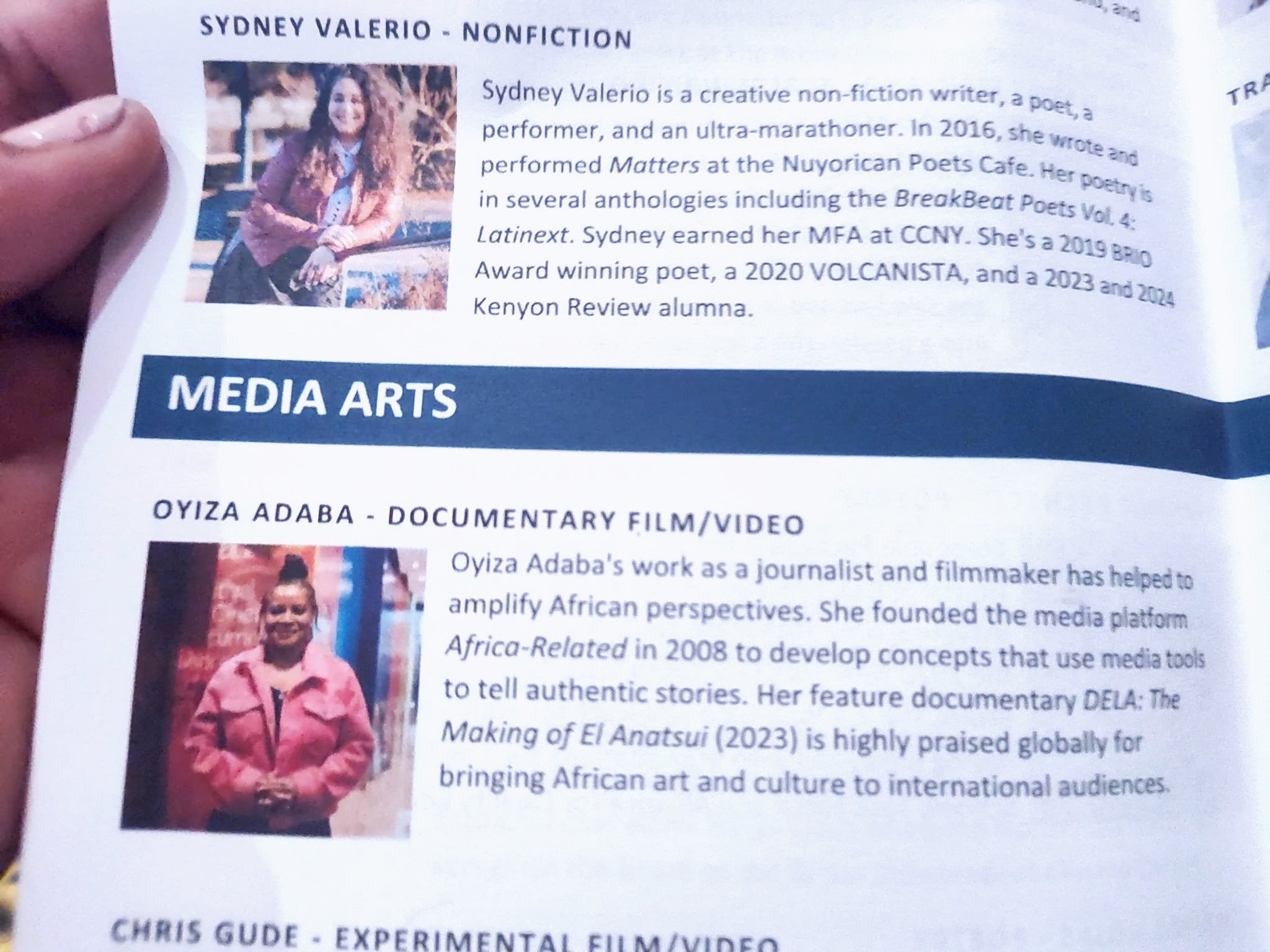
Oyiza Adaba is recognized for her role in documentary filmmaking and dedication to the borough’s creative history.
share this story
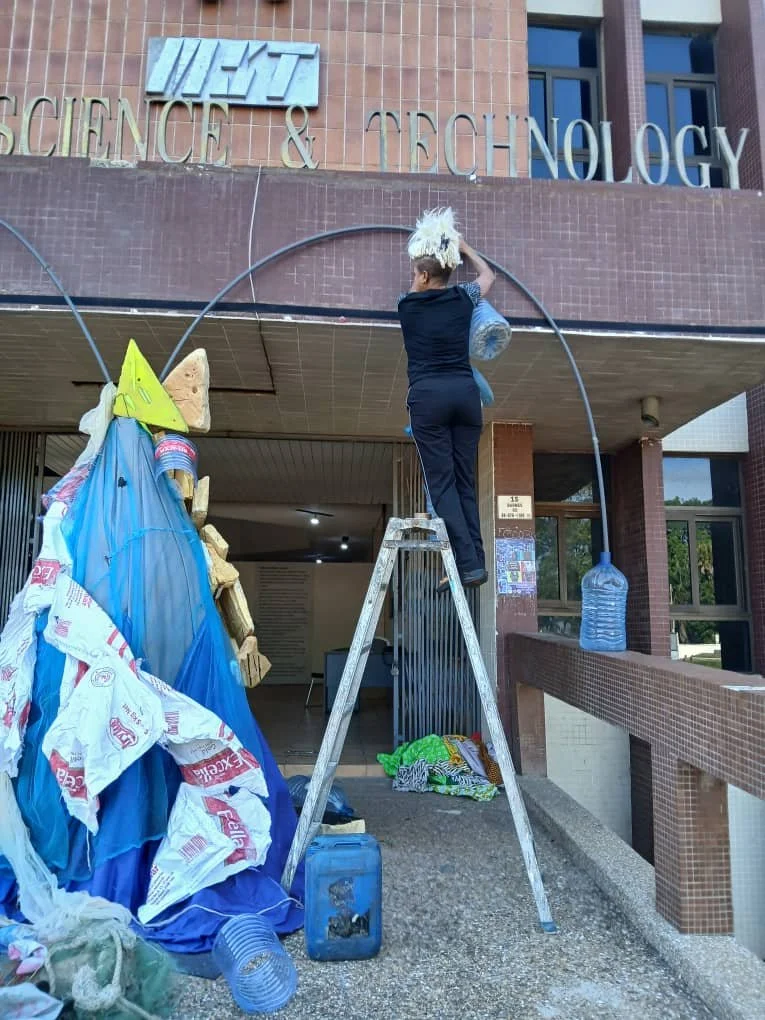
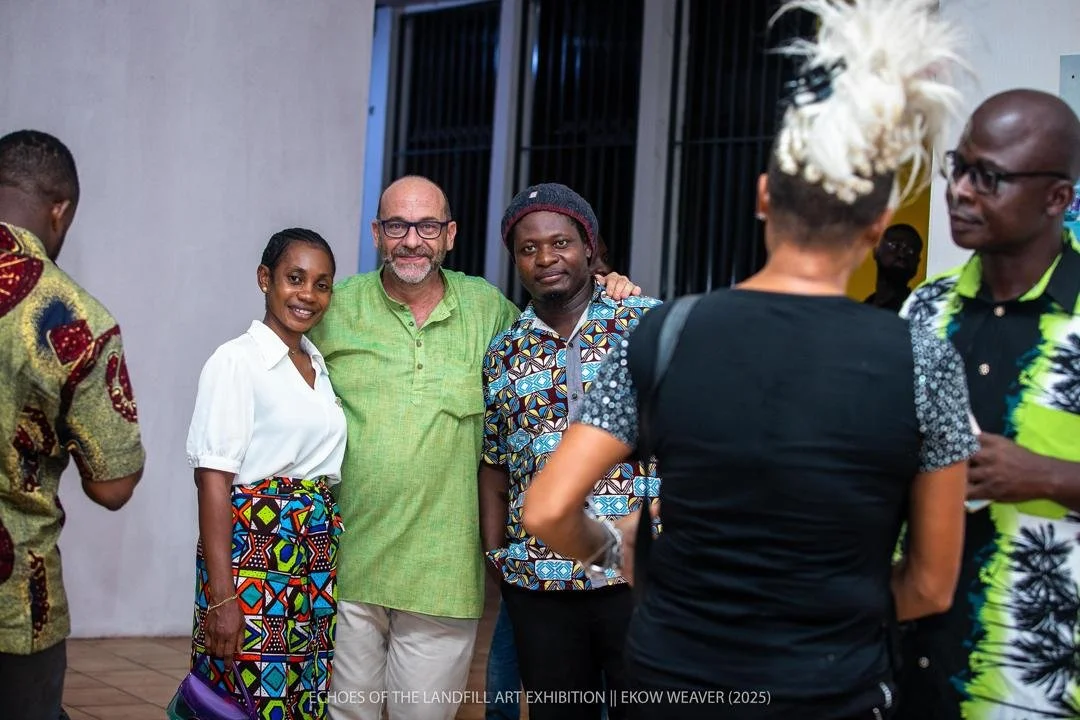
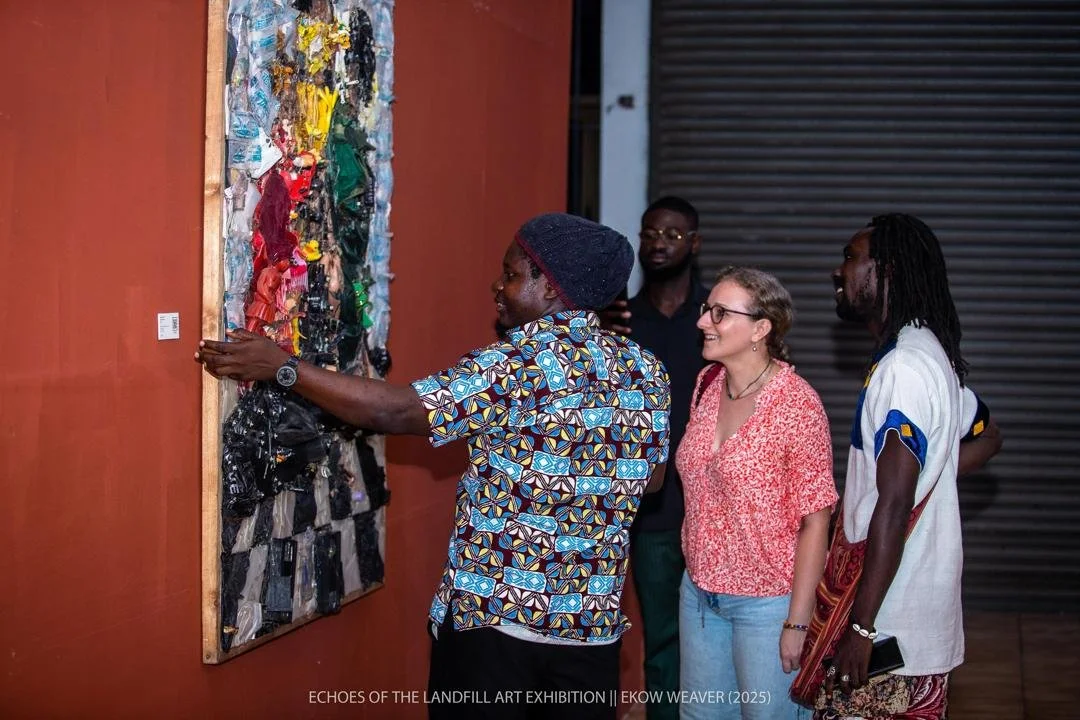
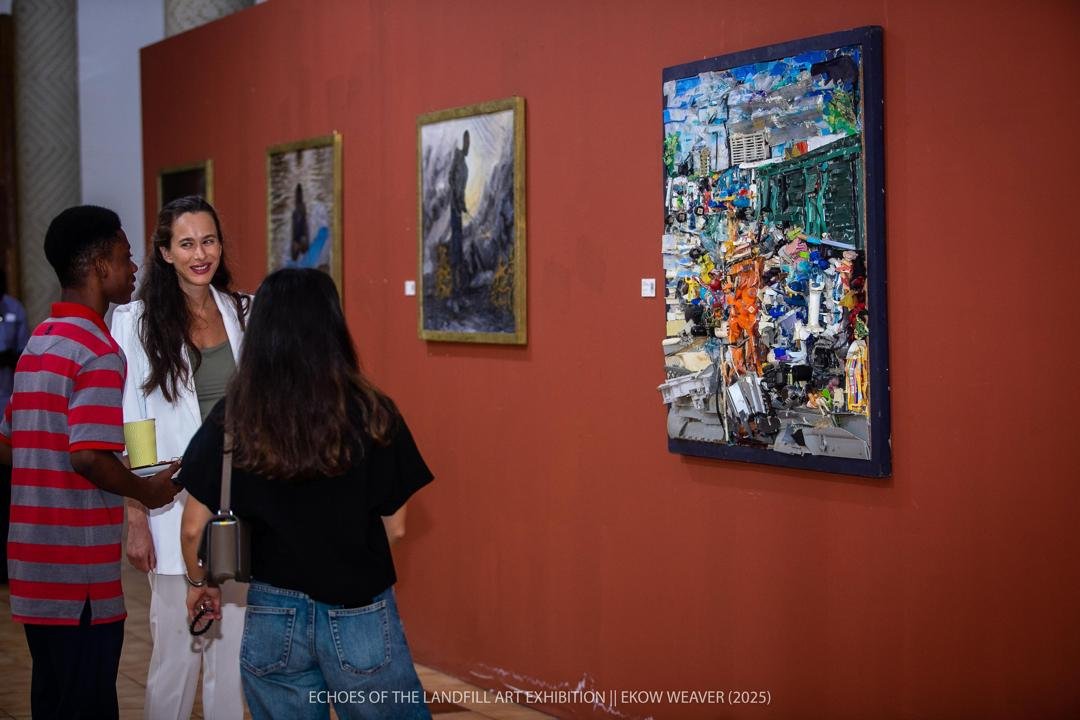
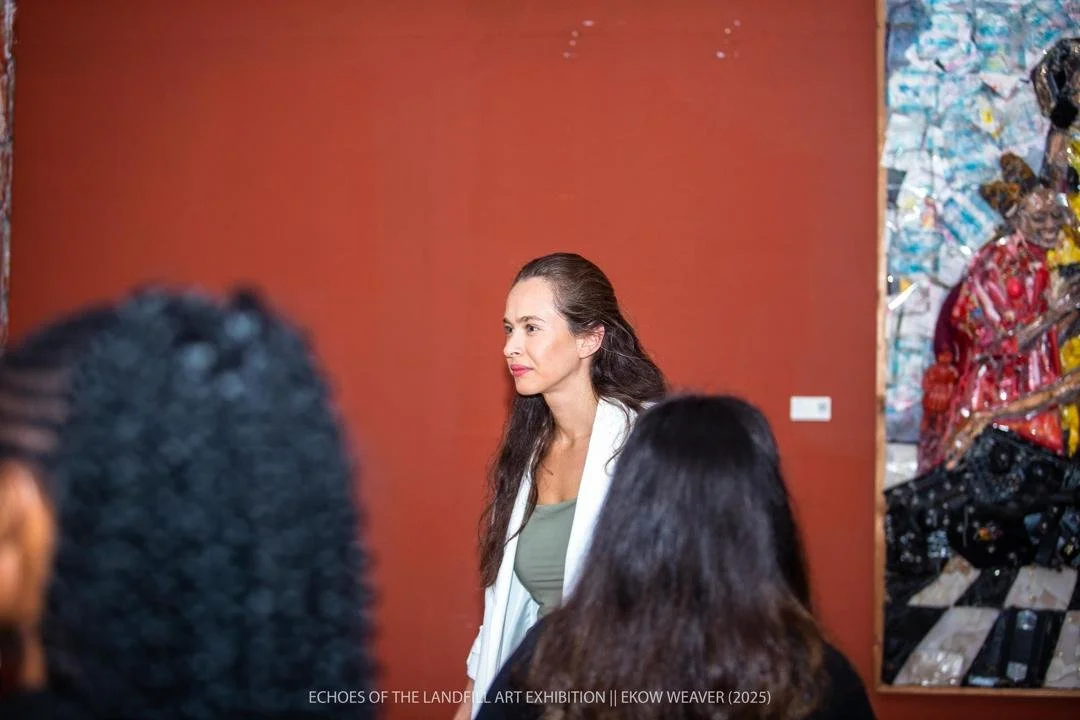
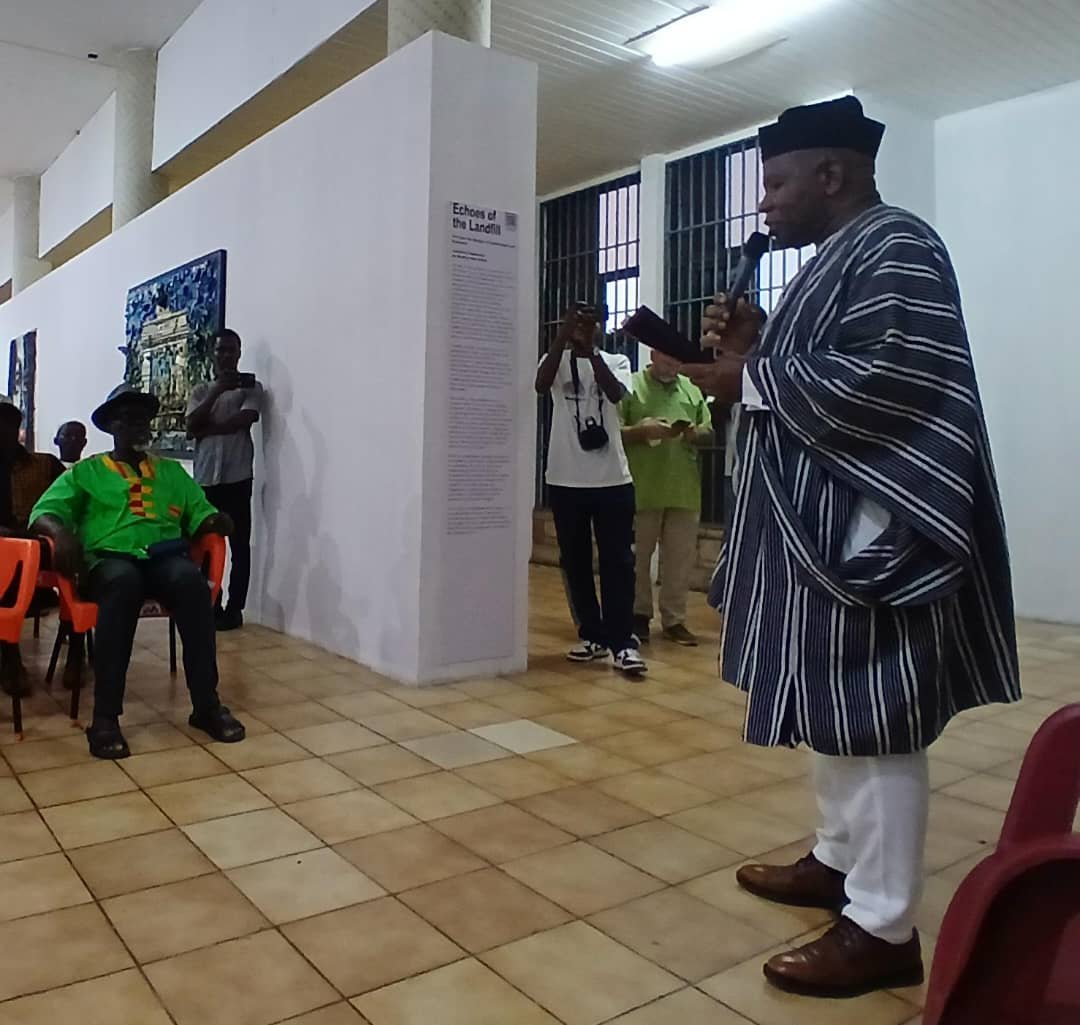
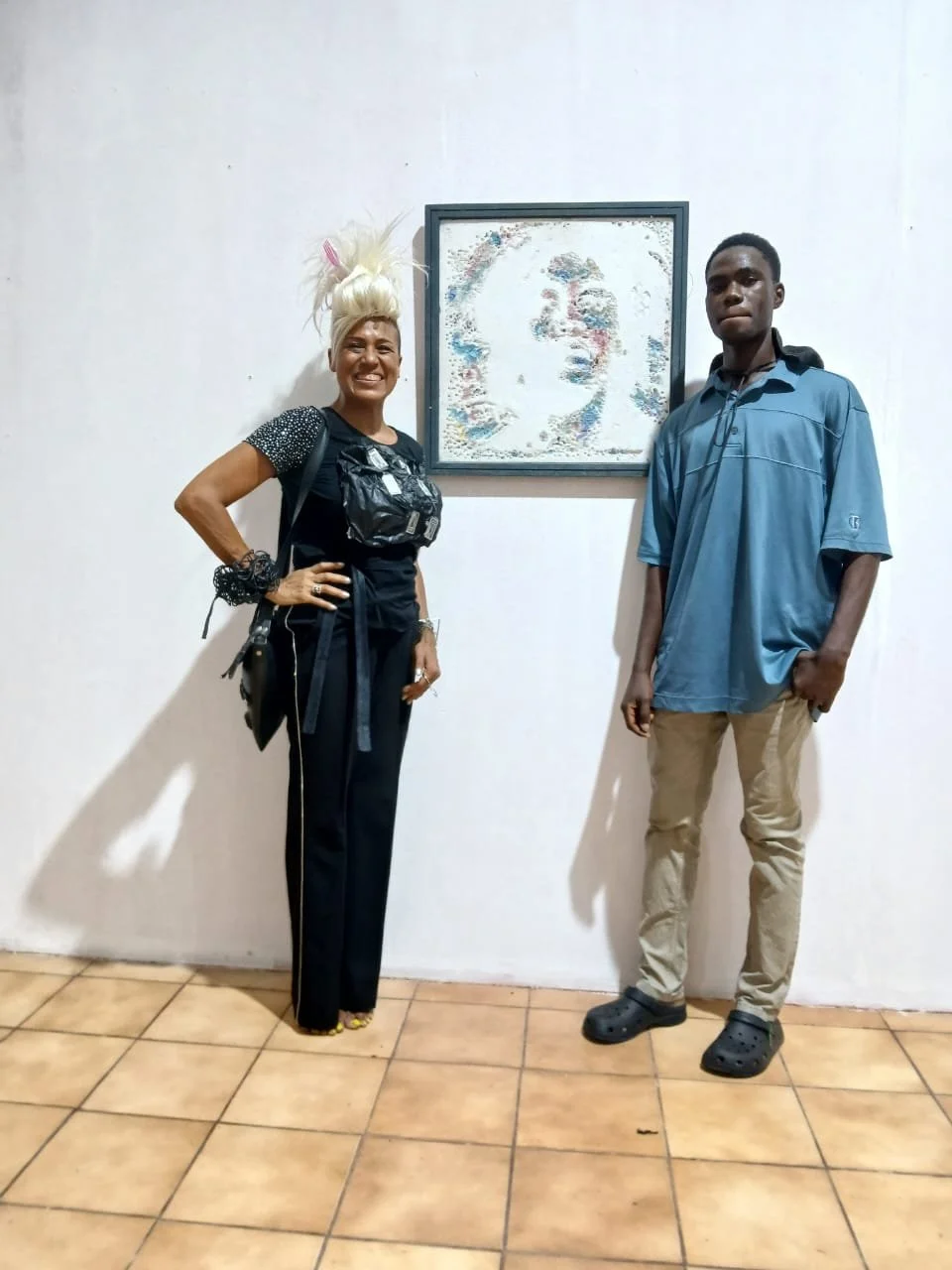
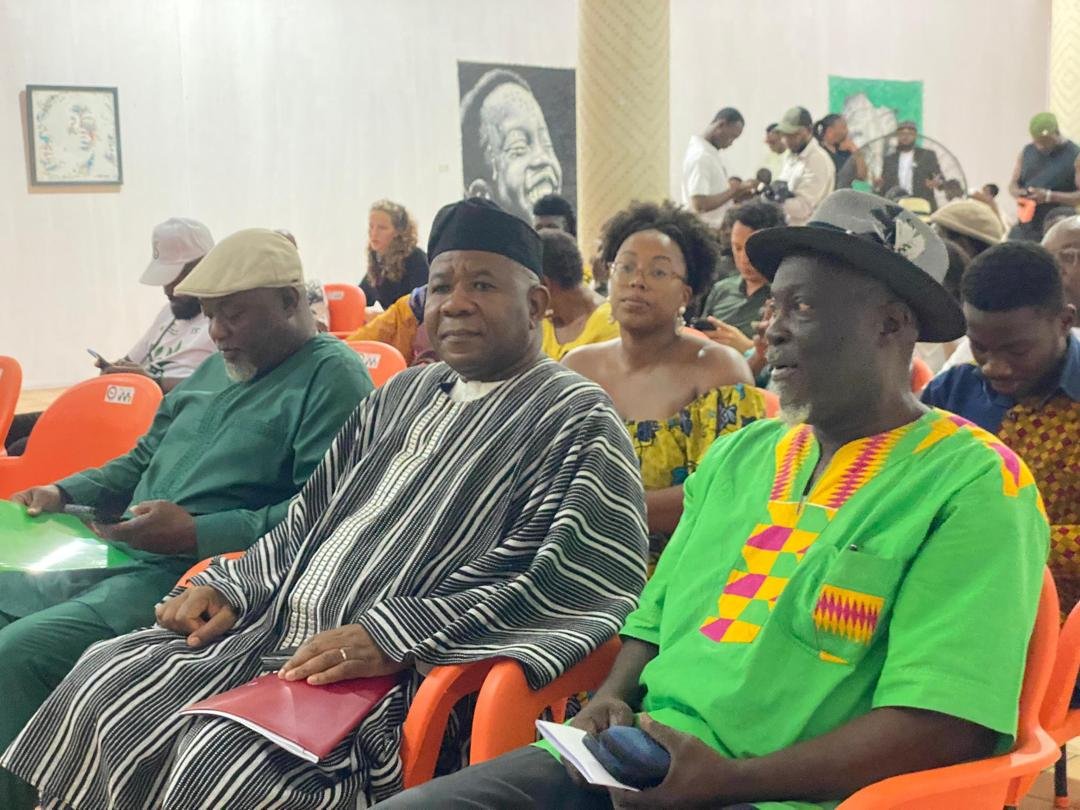
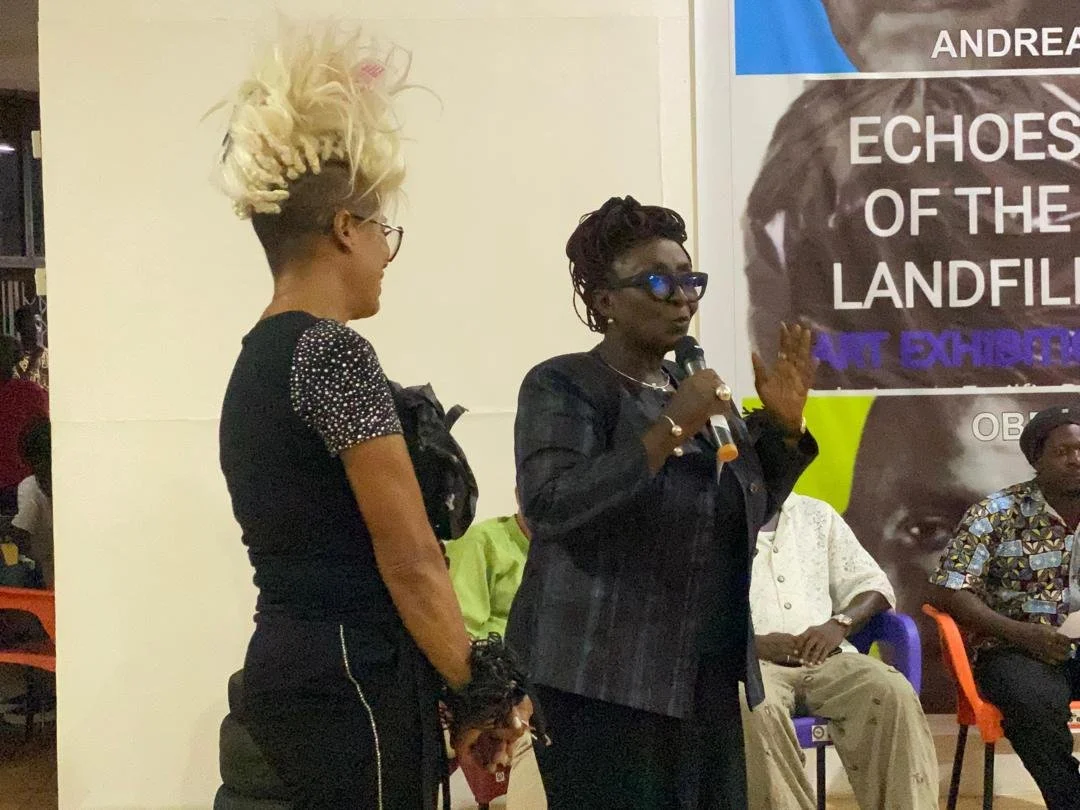
Echoes of the Landfill: Turning Ghana’s Plastic Waste into Art
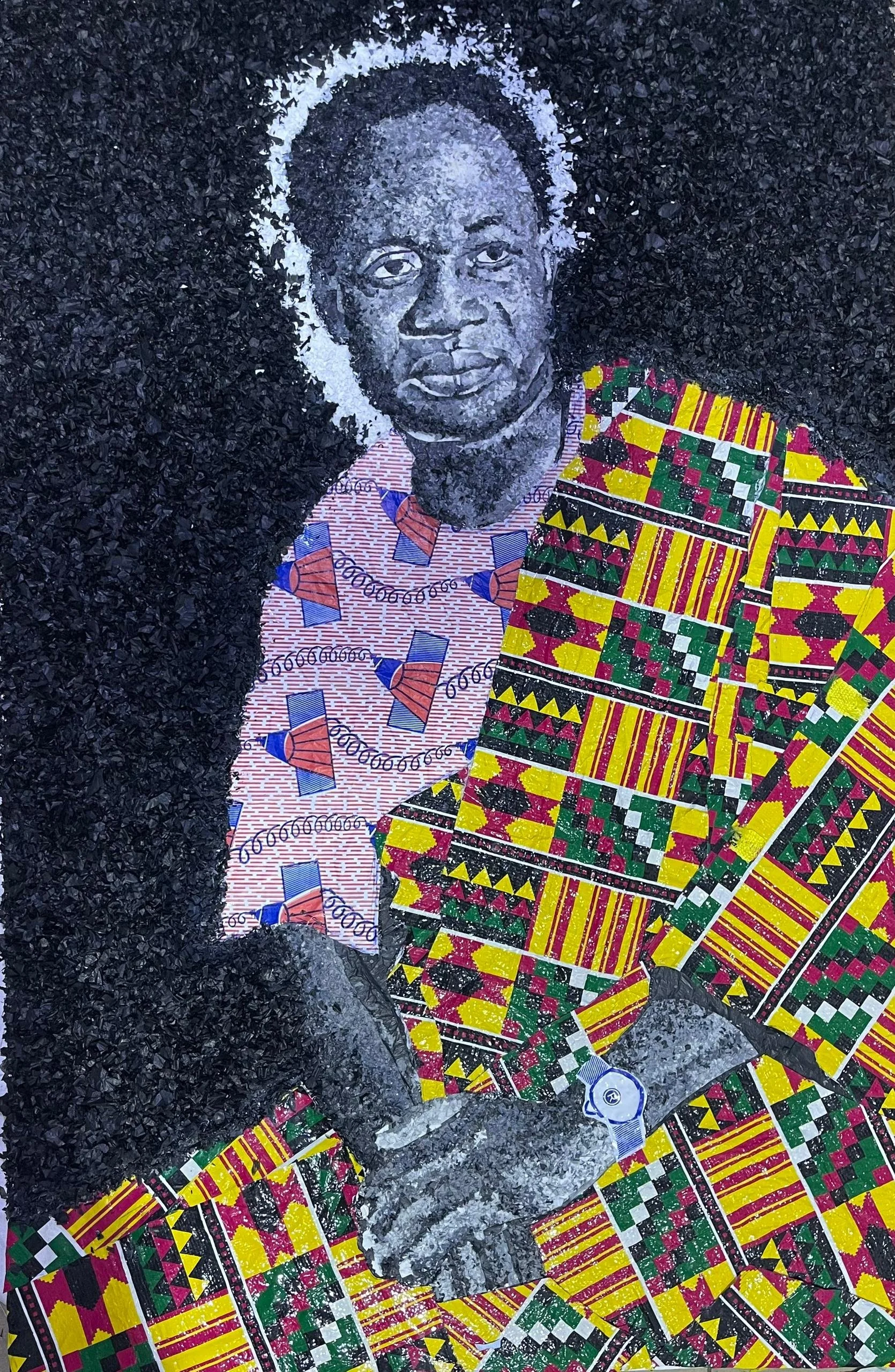
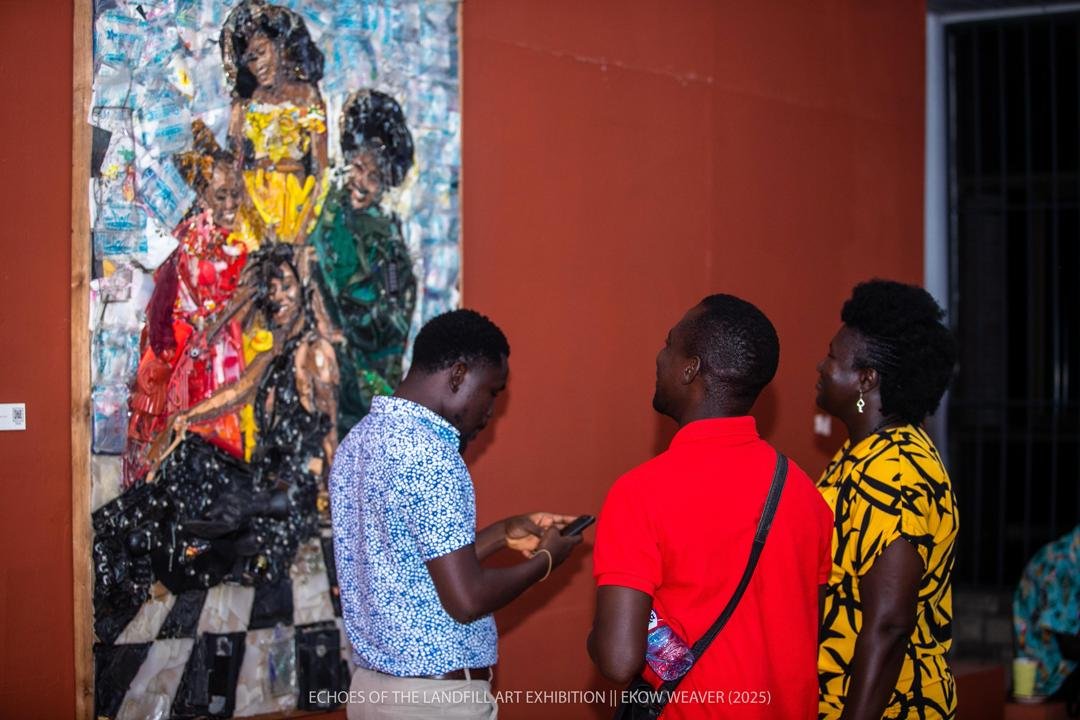
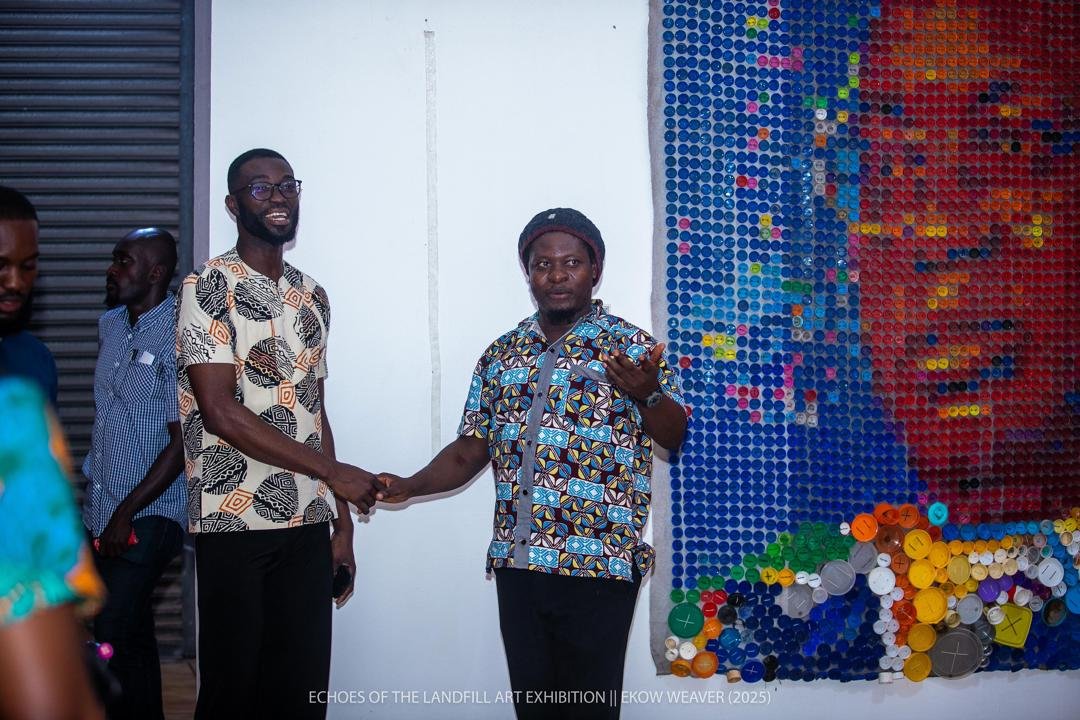
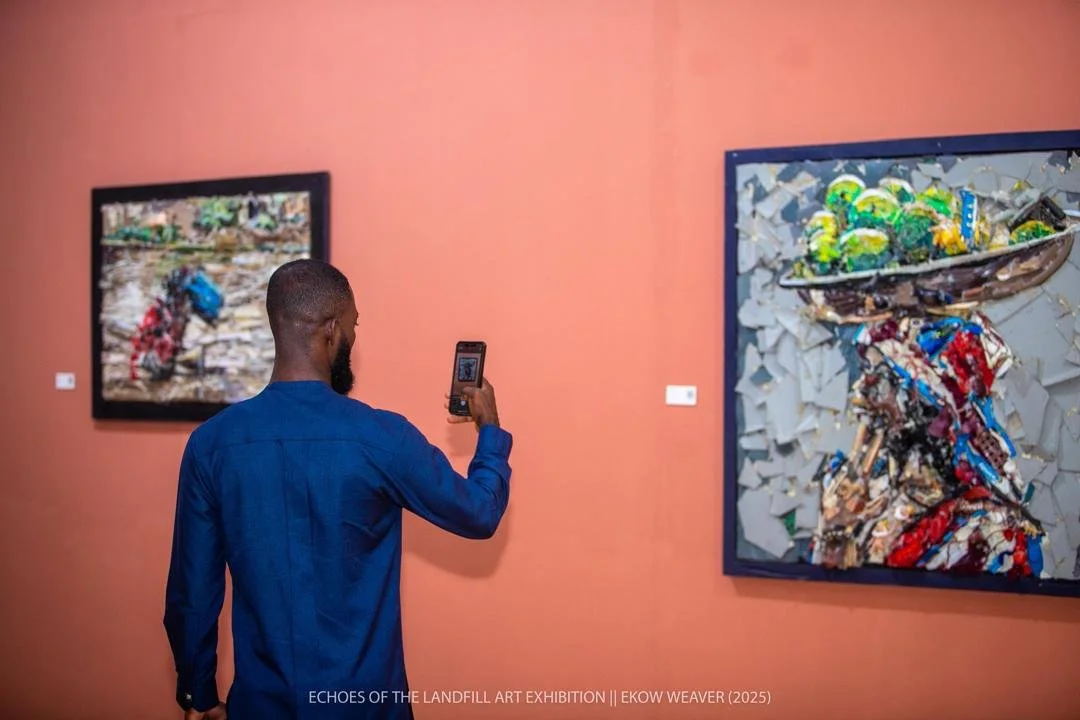
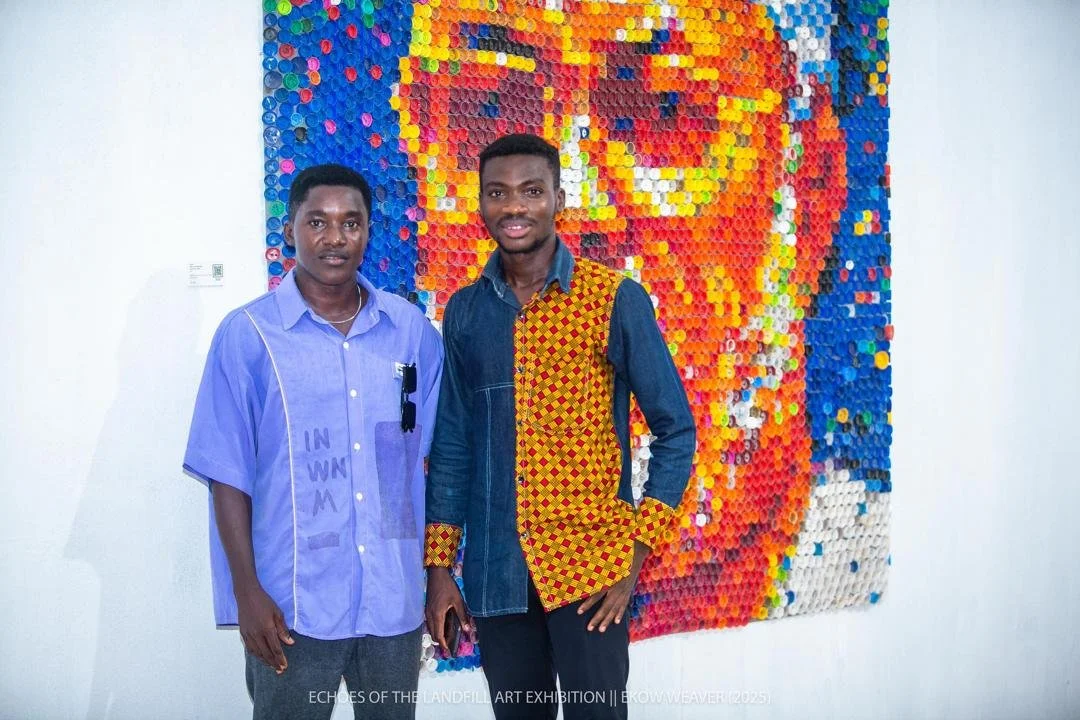
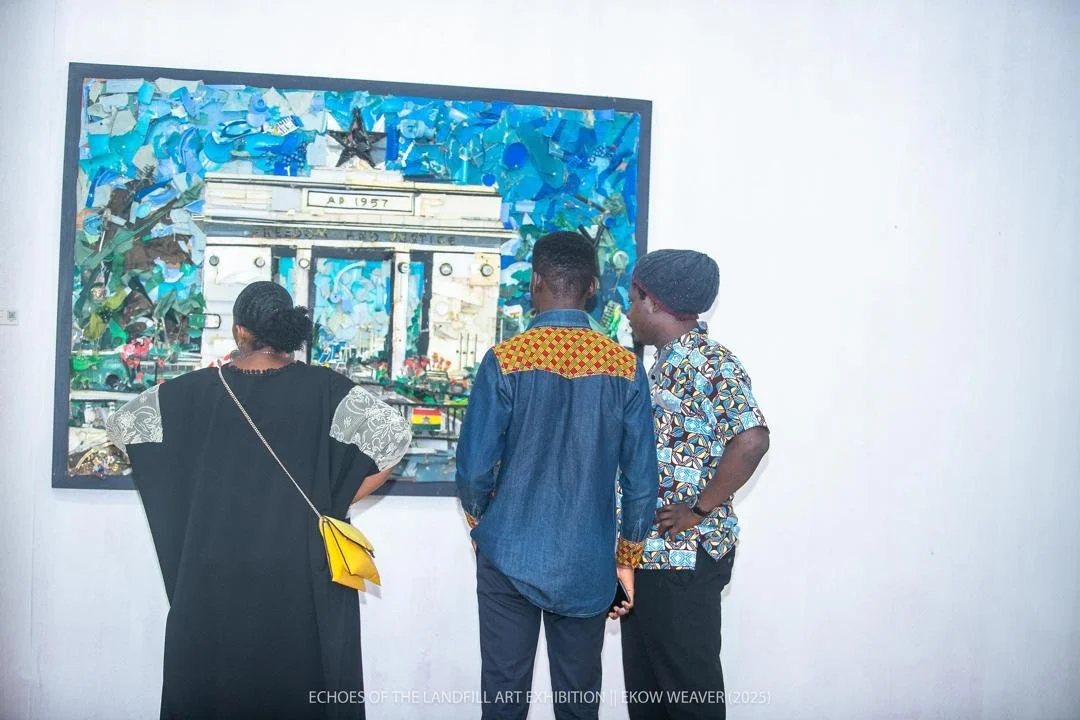
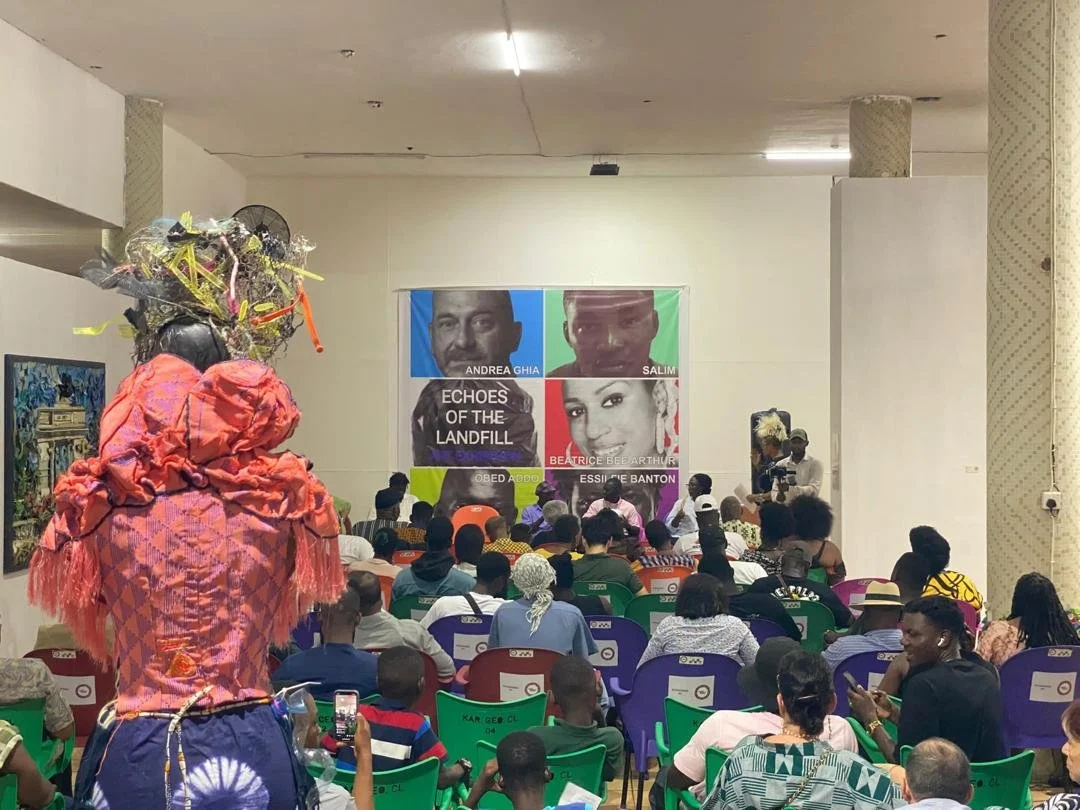
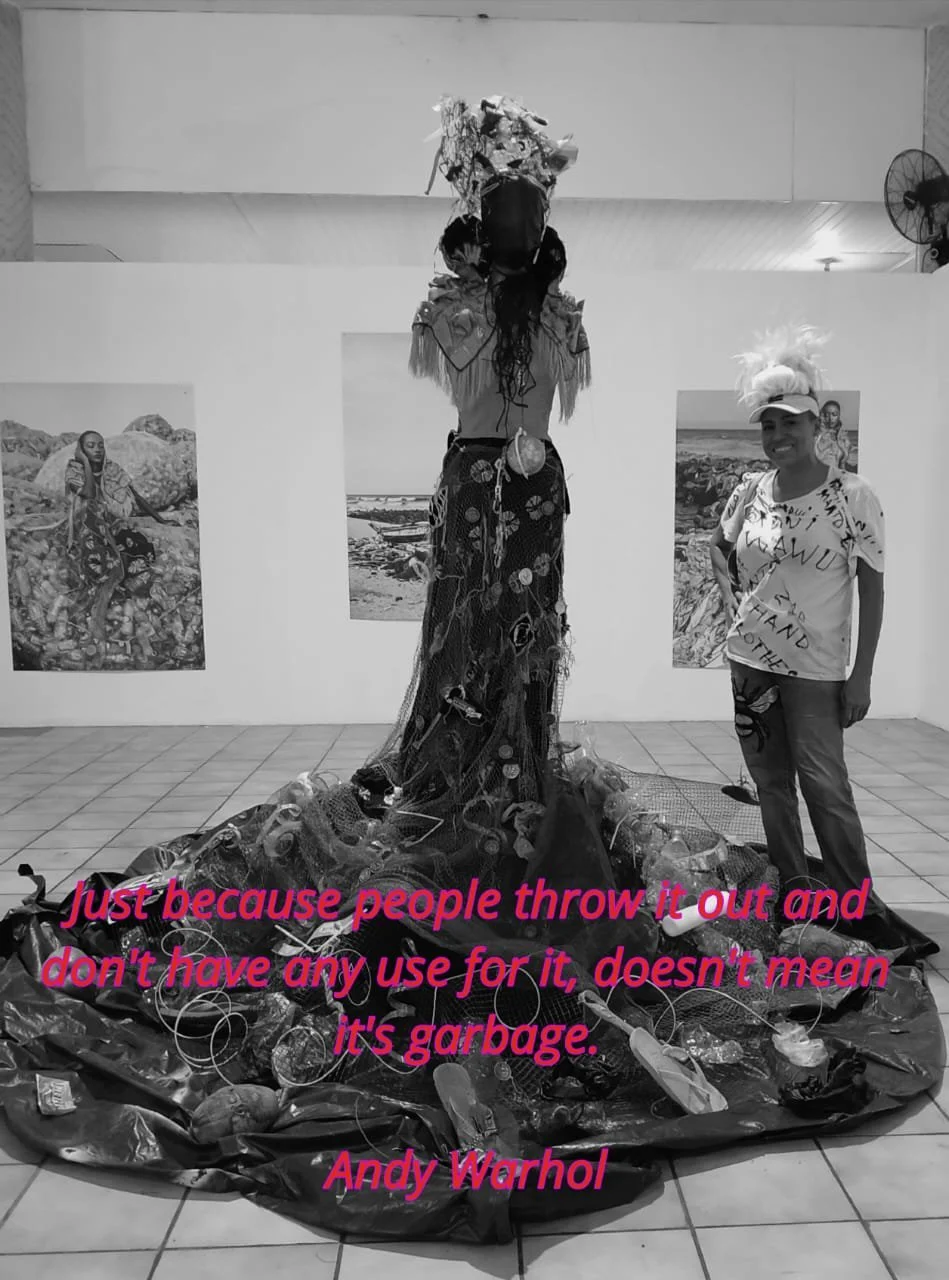
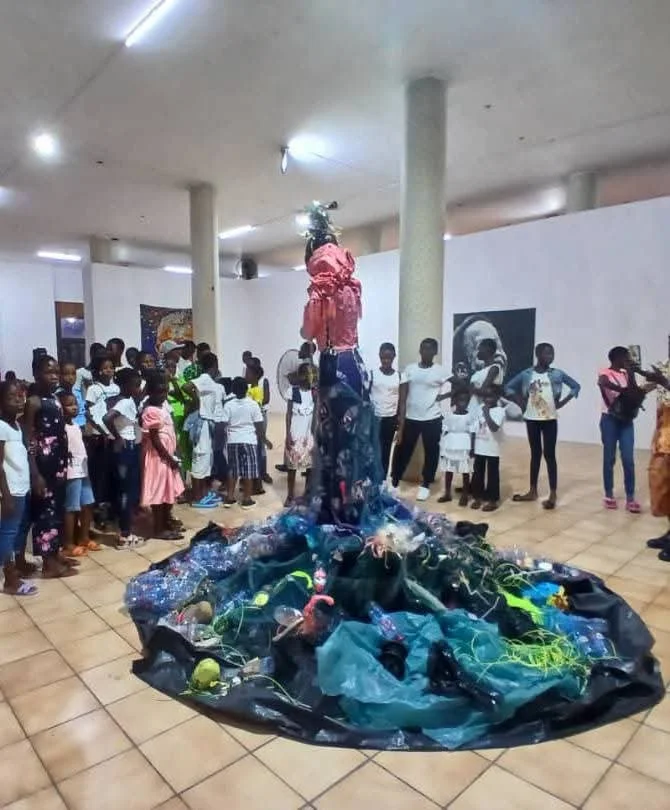
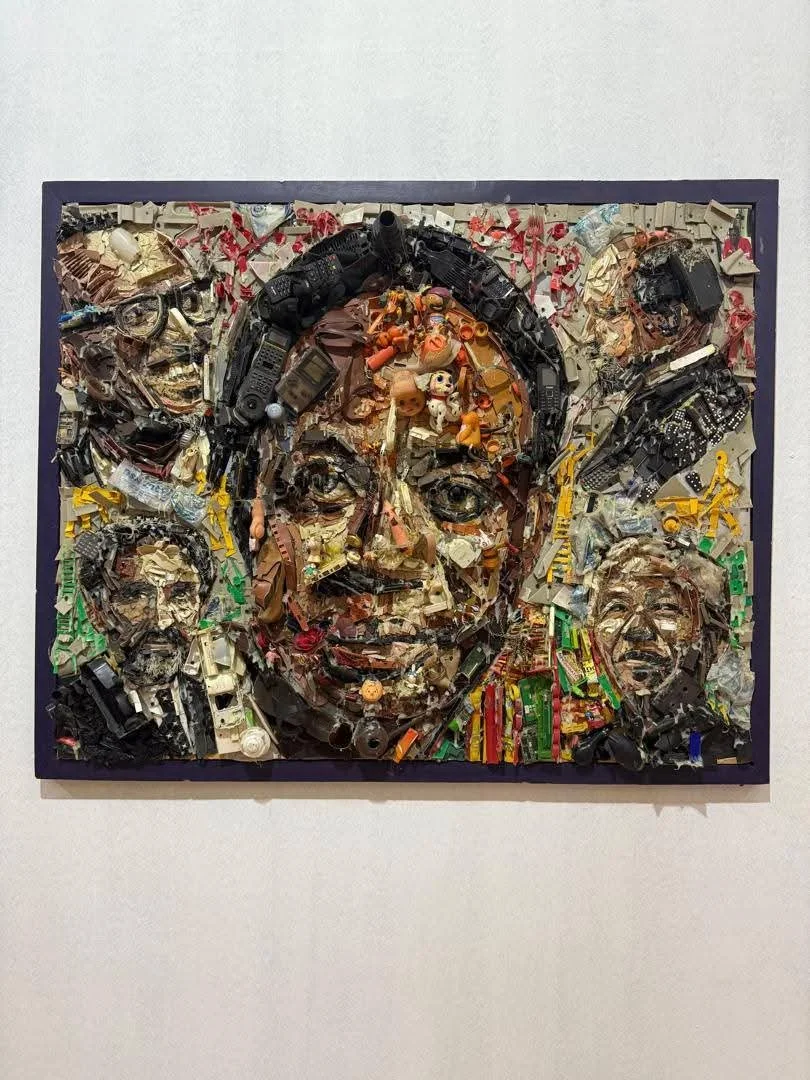
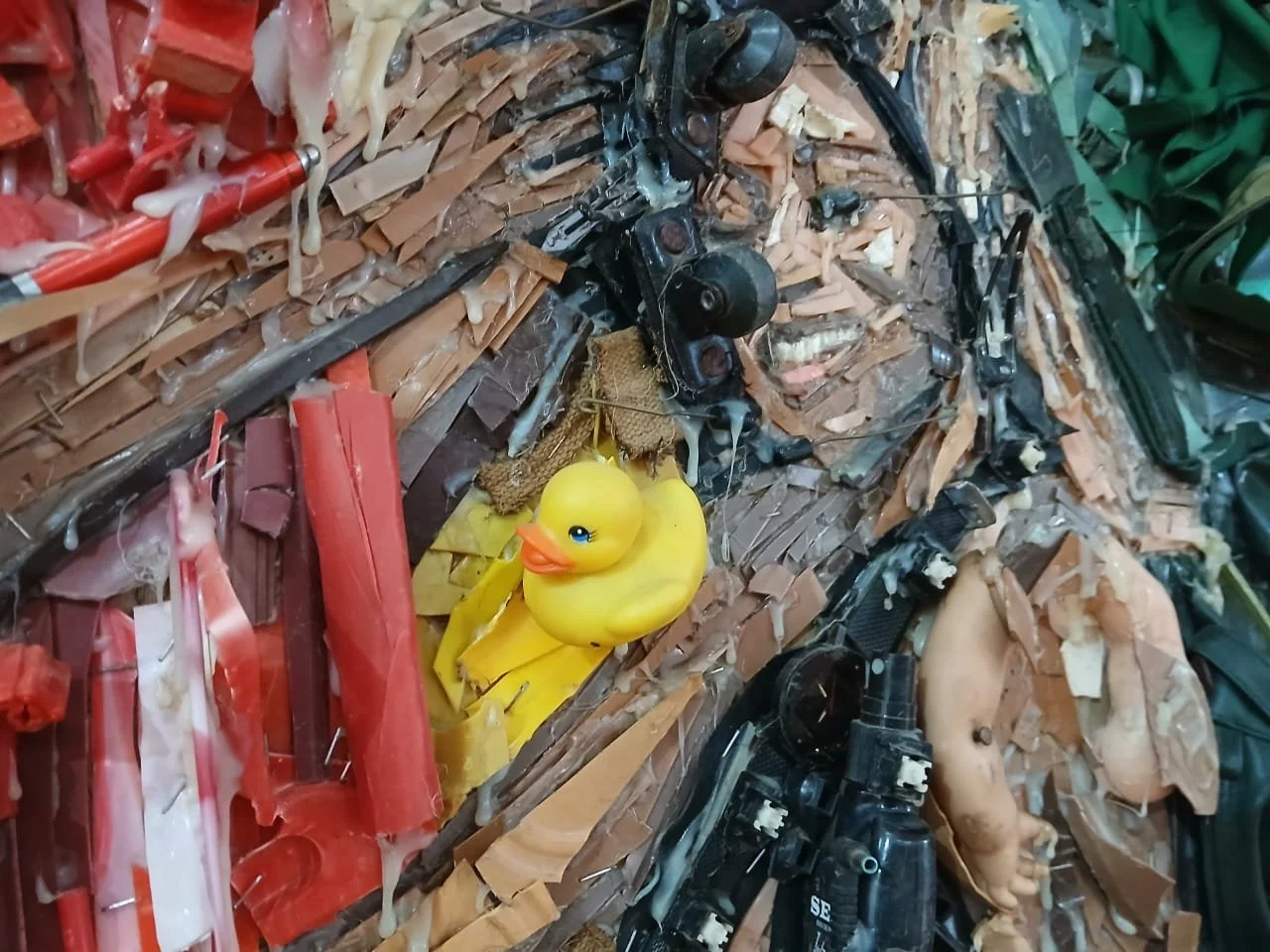
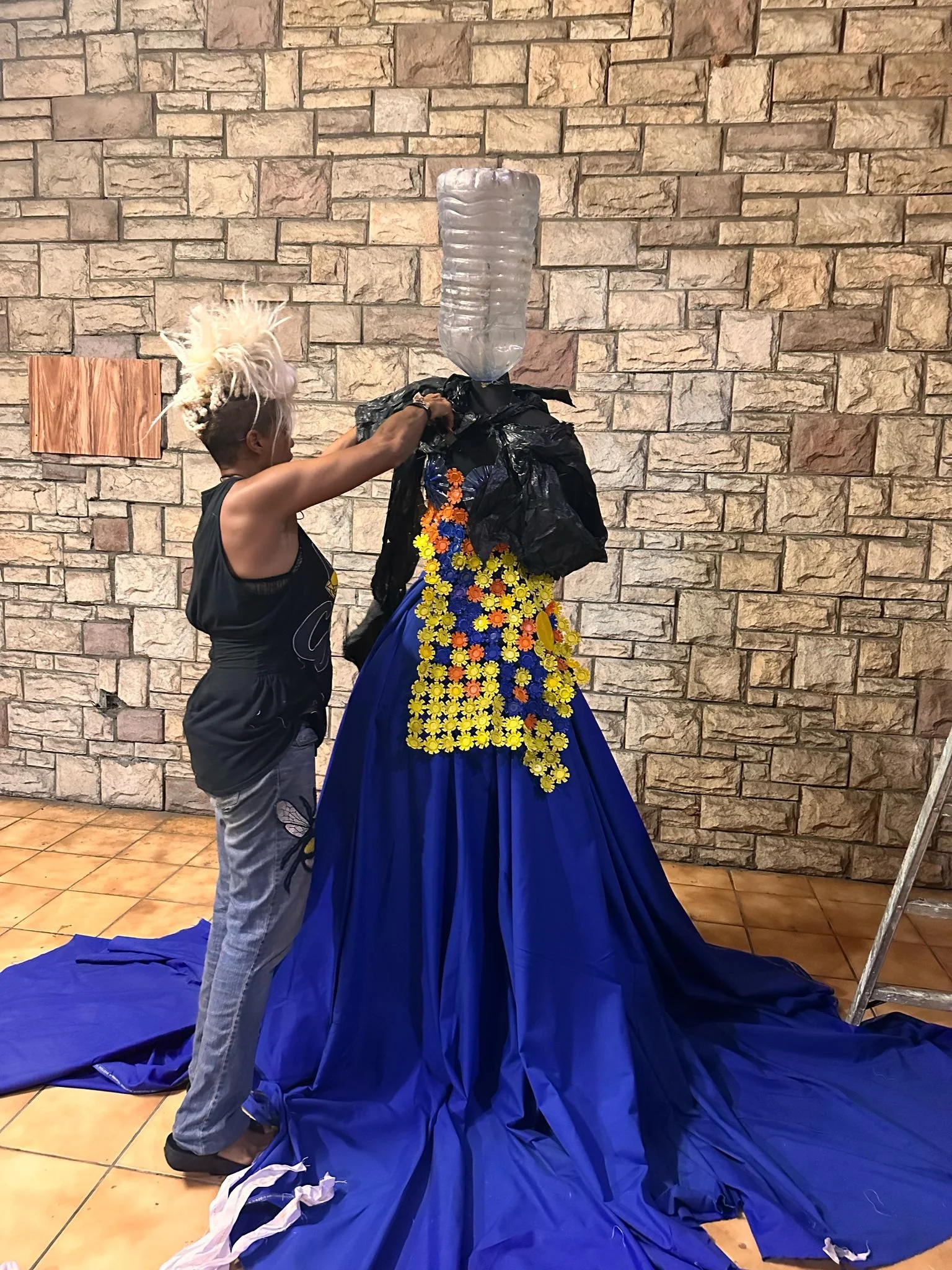
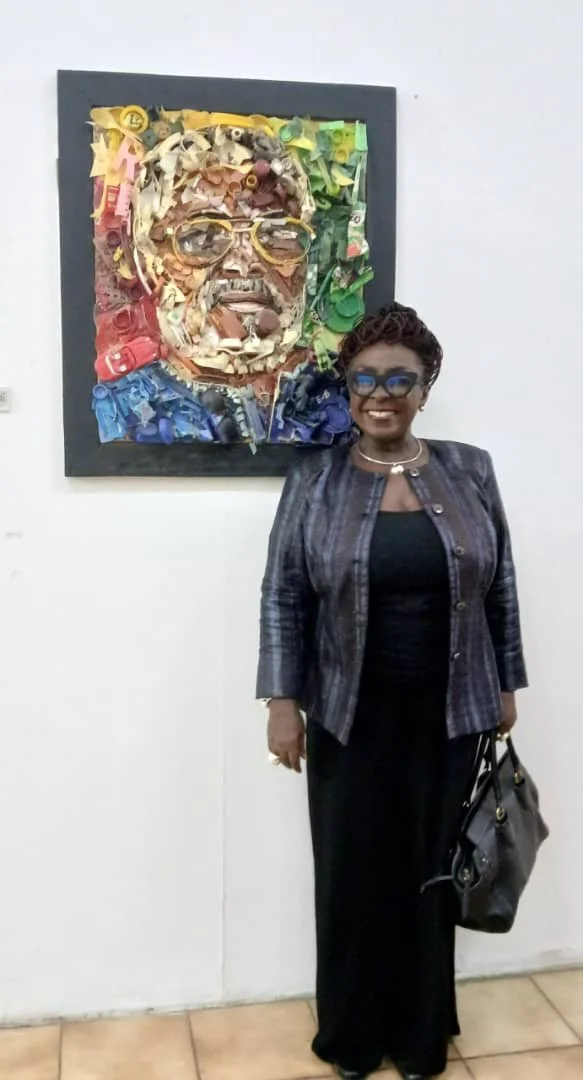
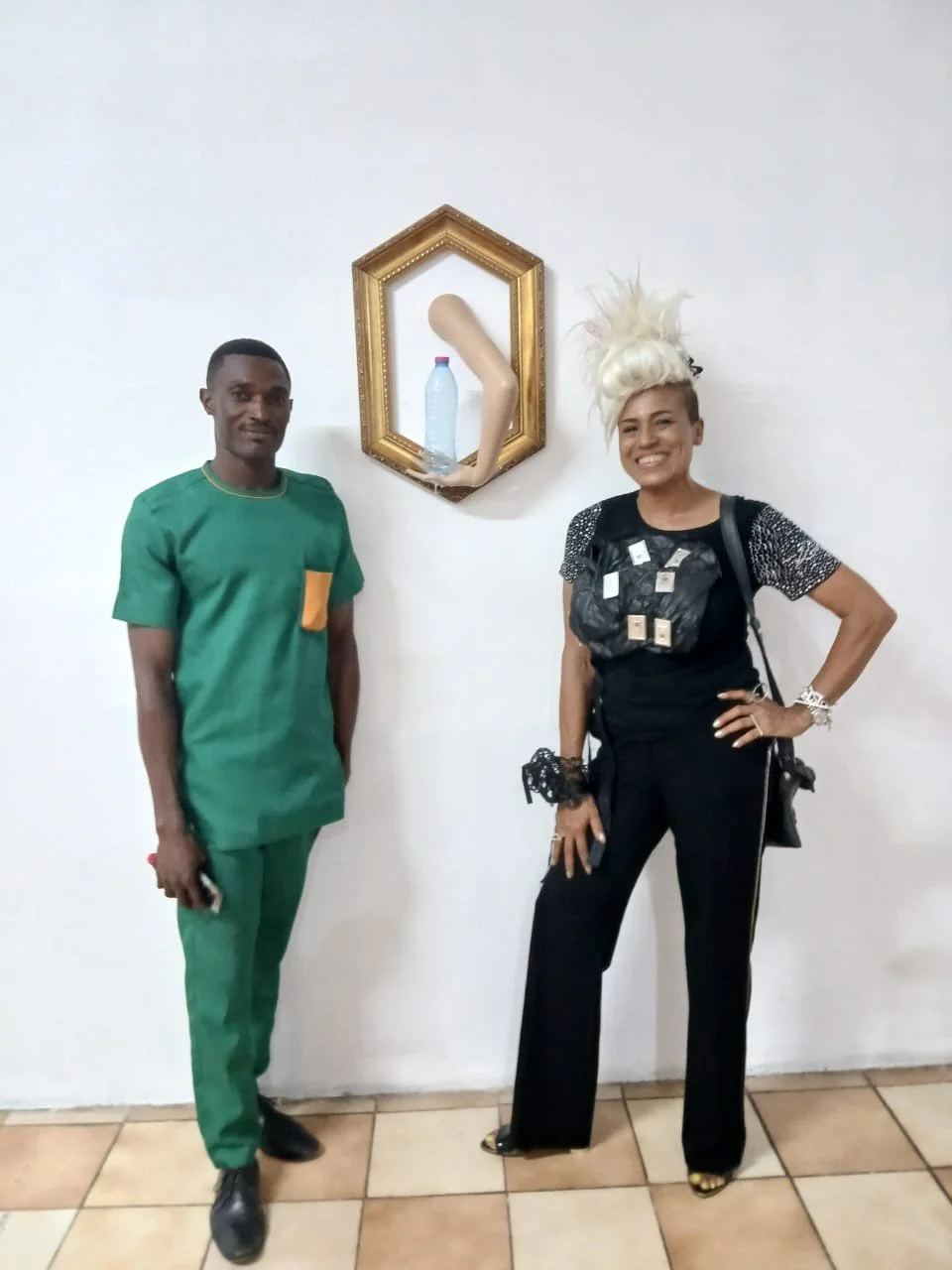
Echoes of the Landfill is not another art exhibition. It is a radical reclamation where plastic waste is reimagined as both medium and living testimony to our callous disregard for the environment.
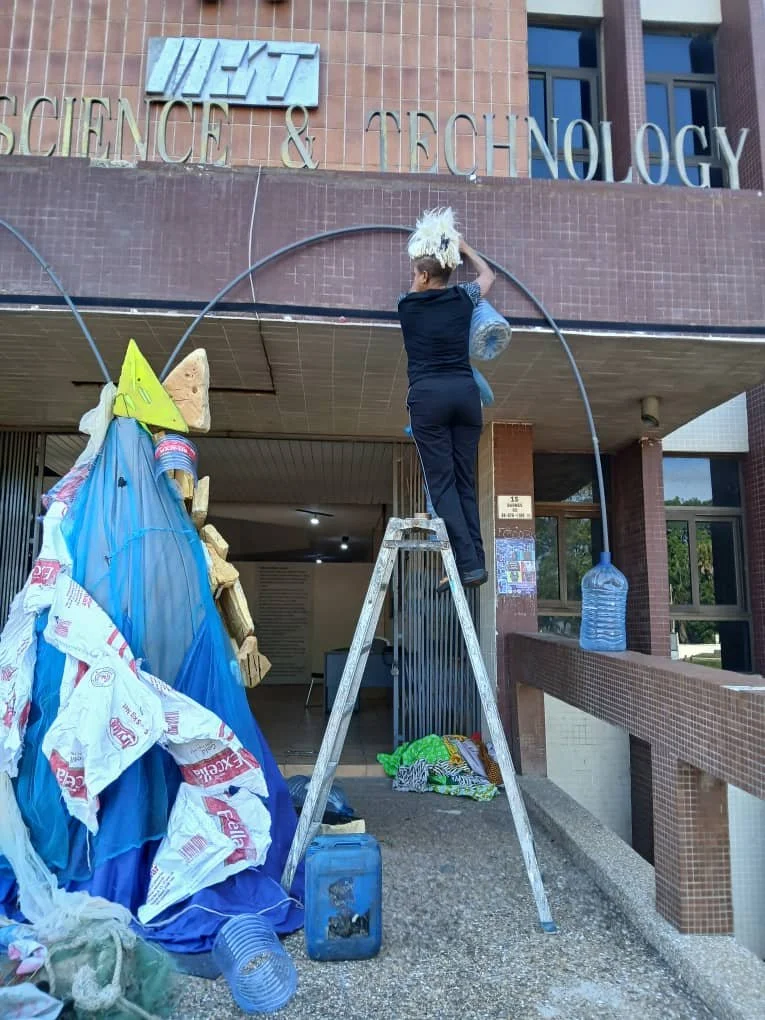
ECHOES OF THE LANDFILL
Art from the Margins of Environment and Economy
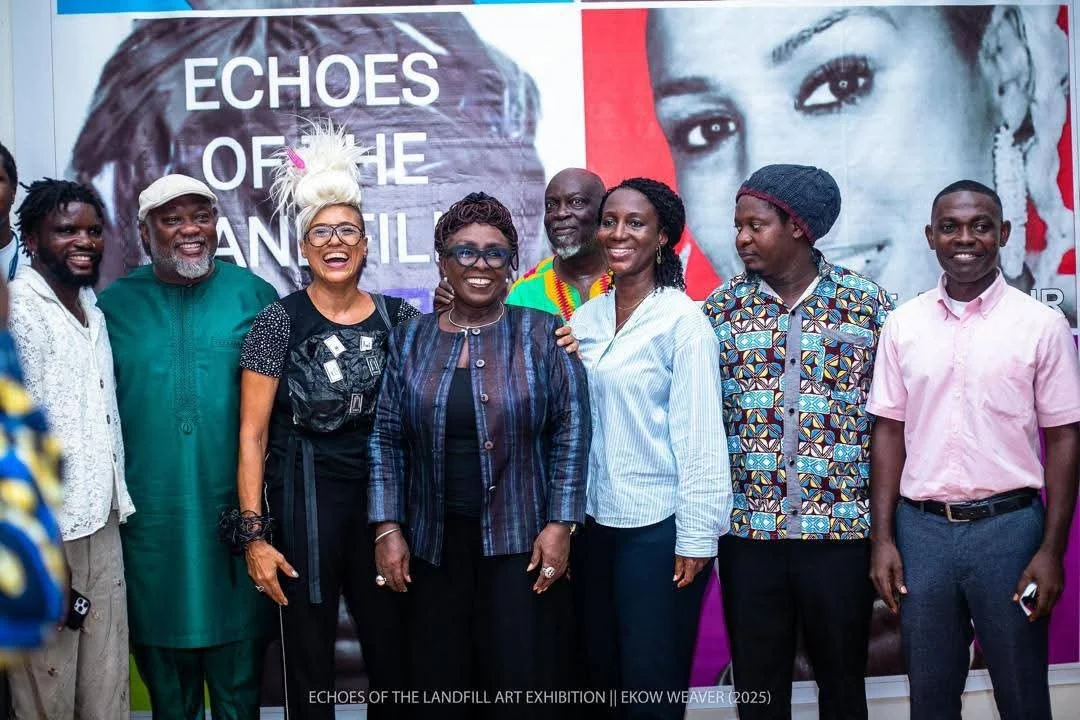
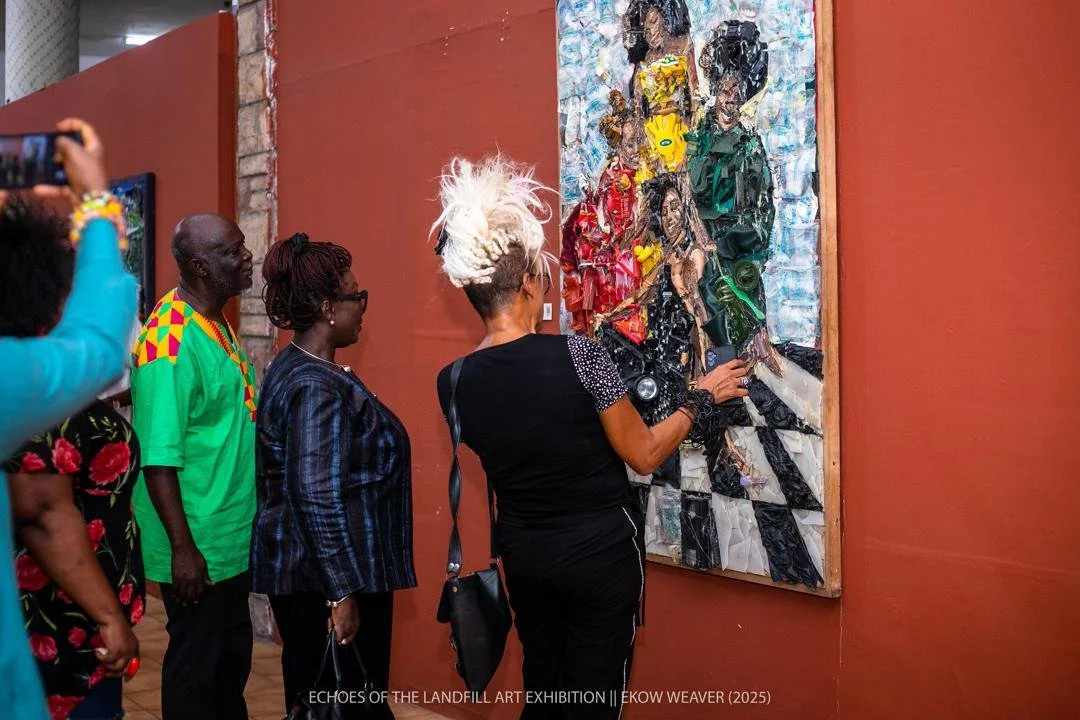
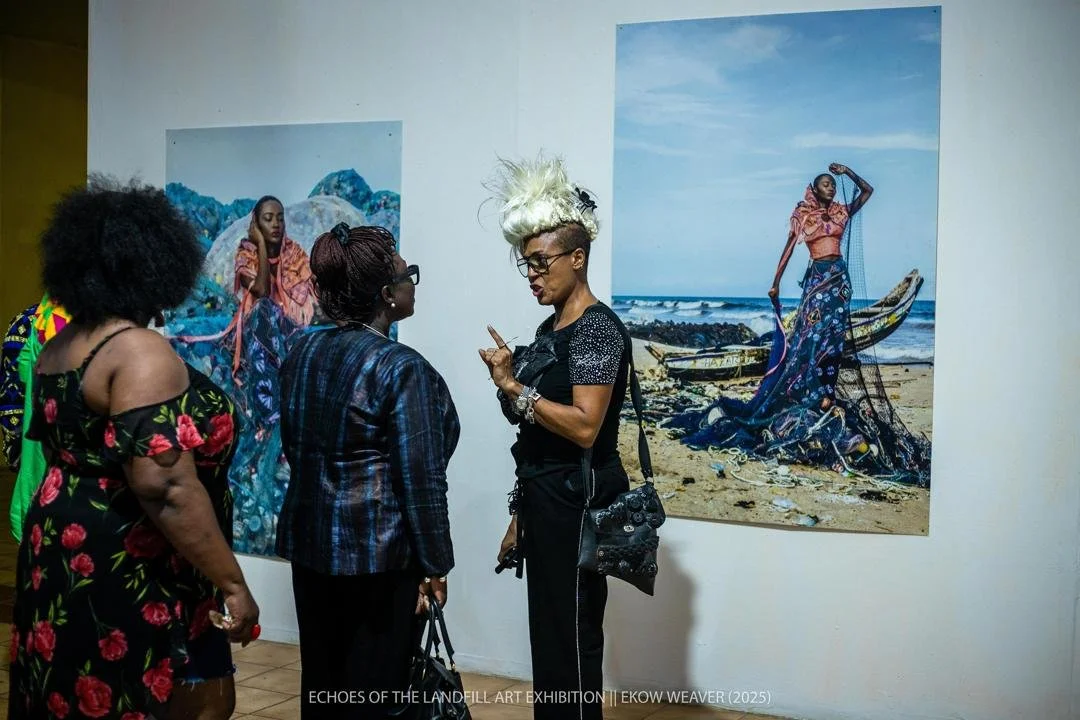
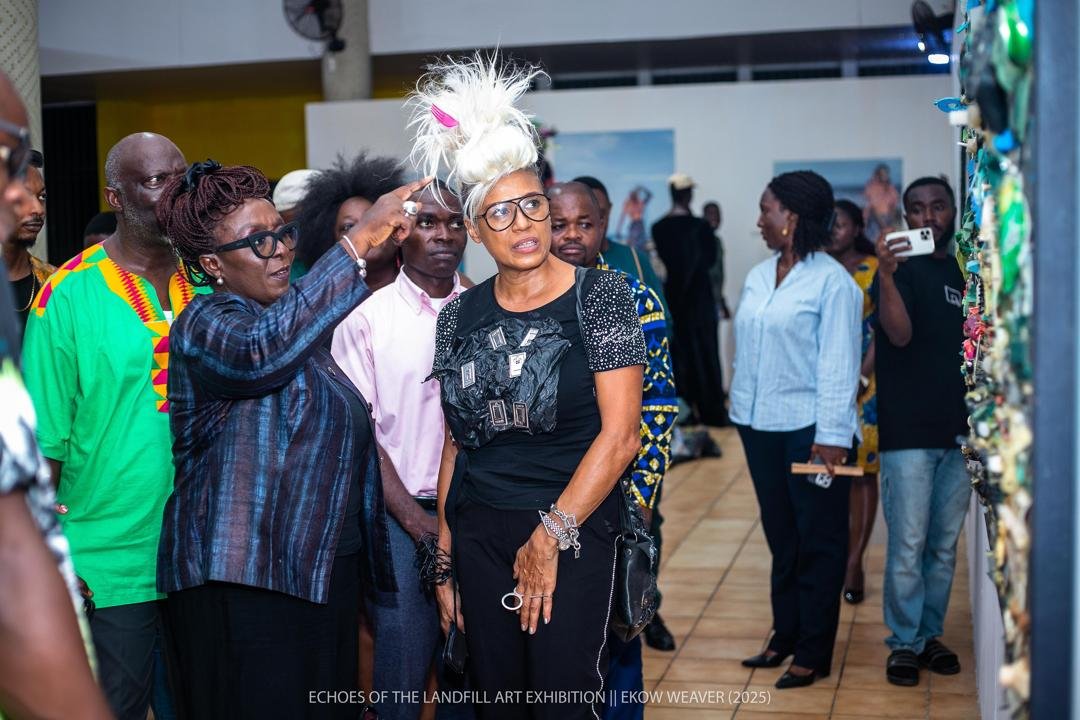

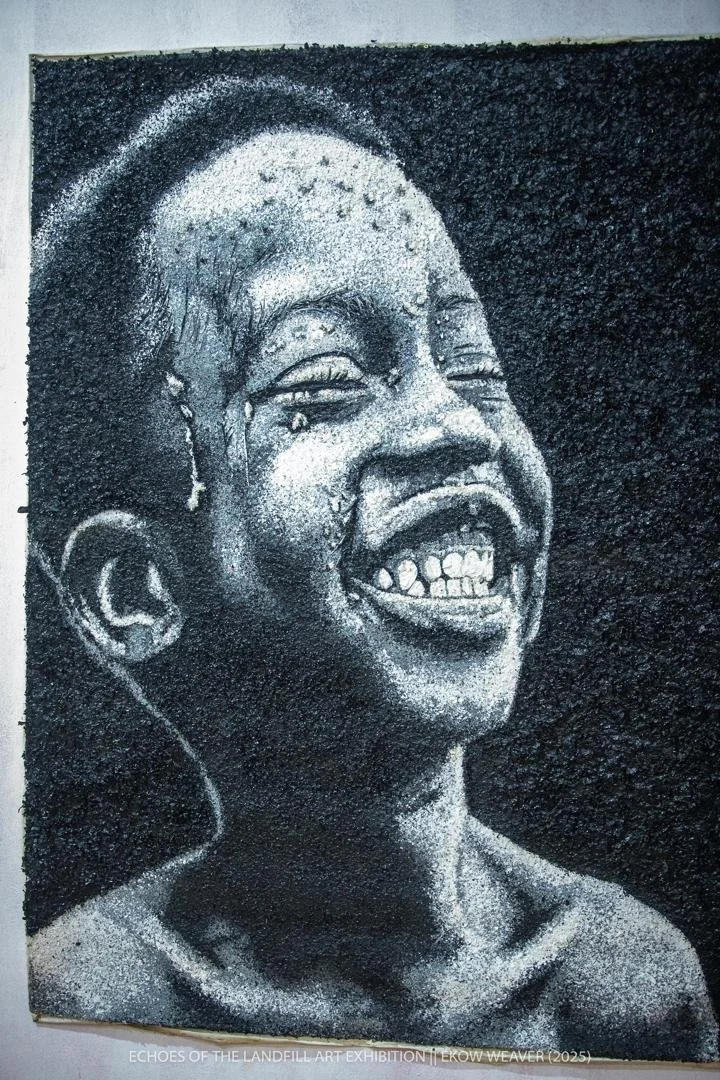


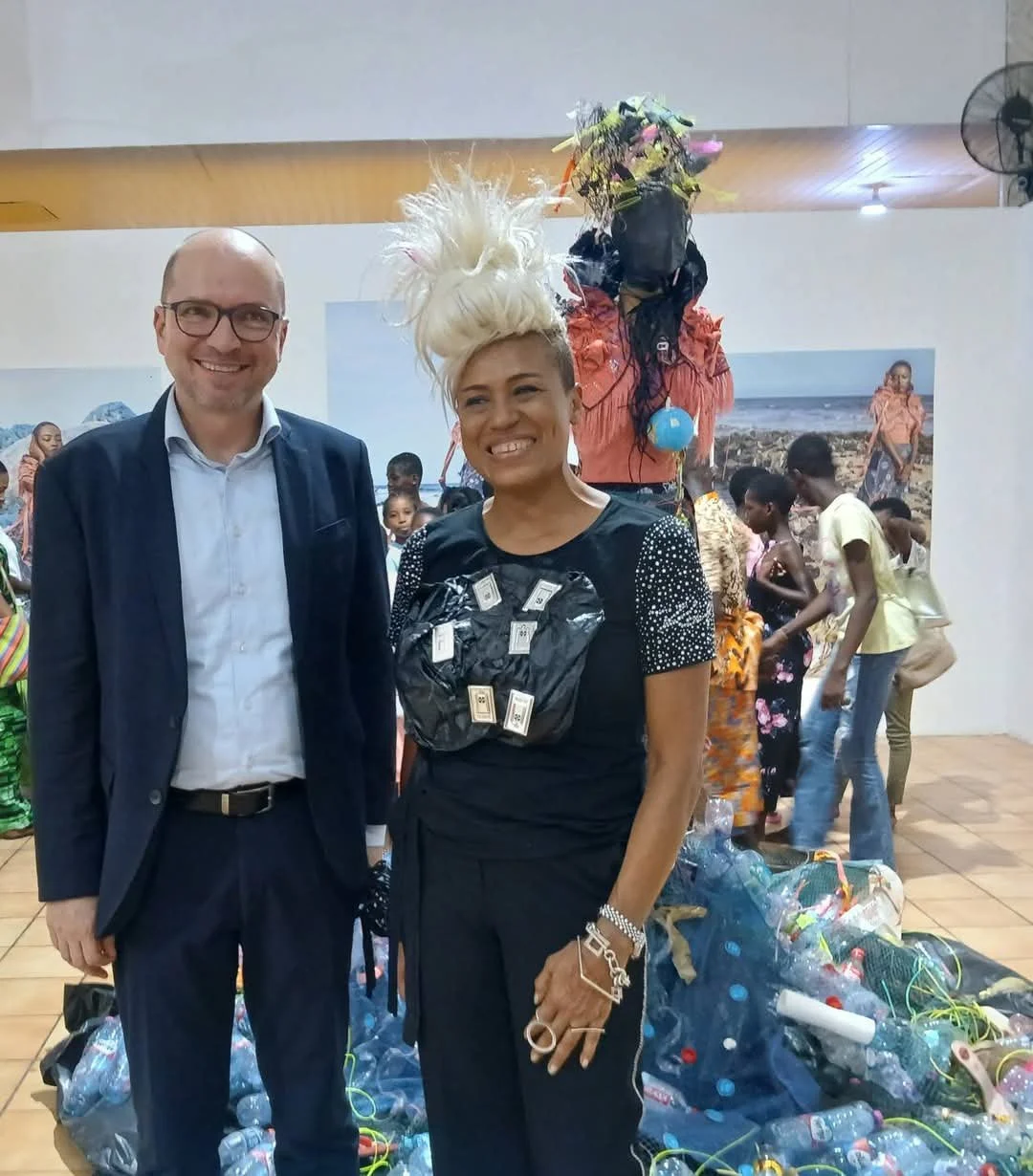
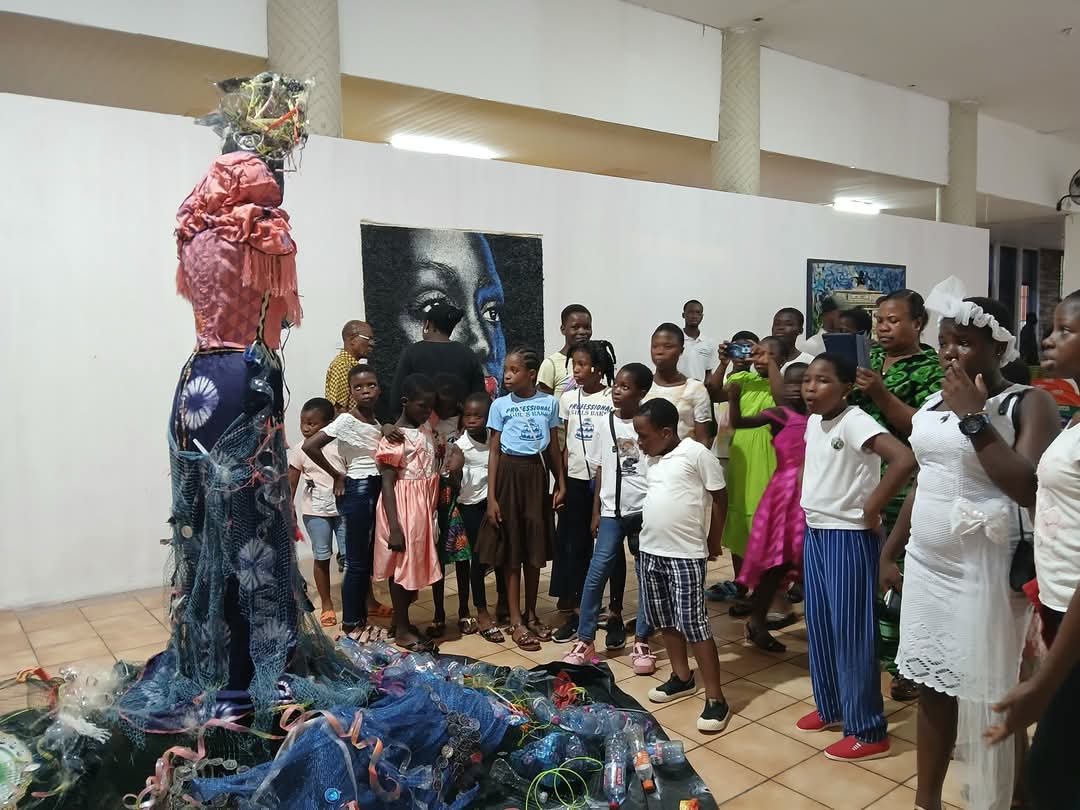
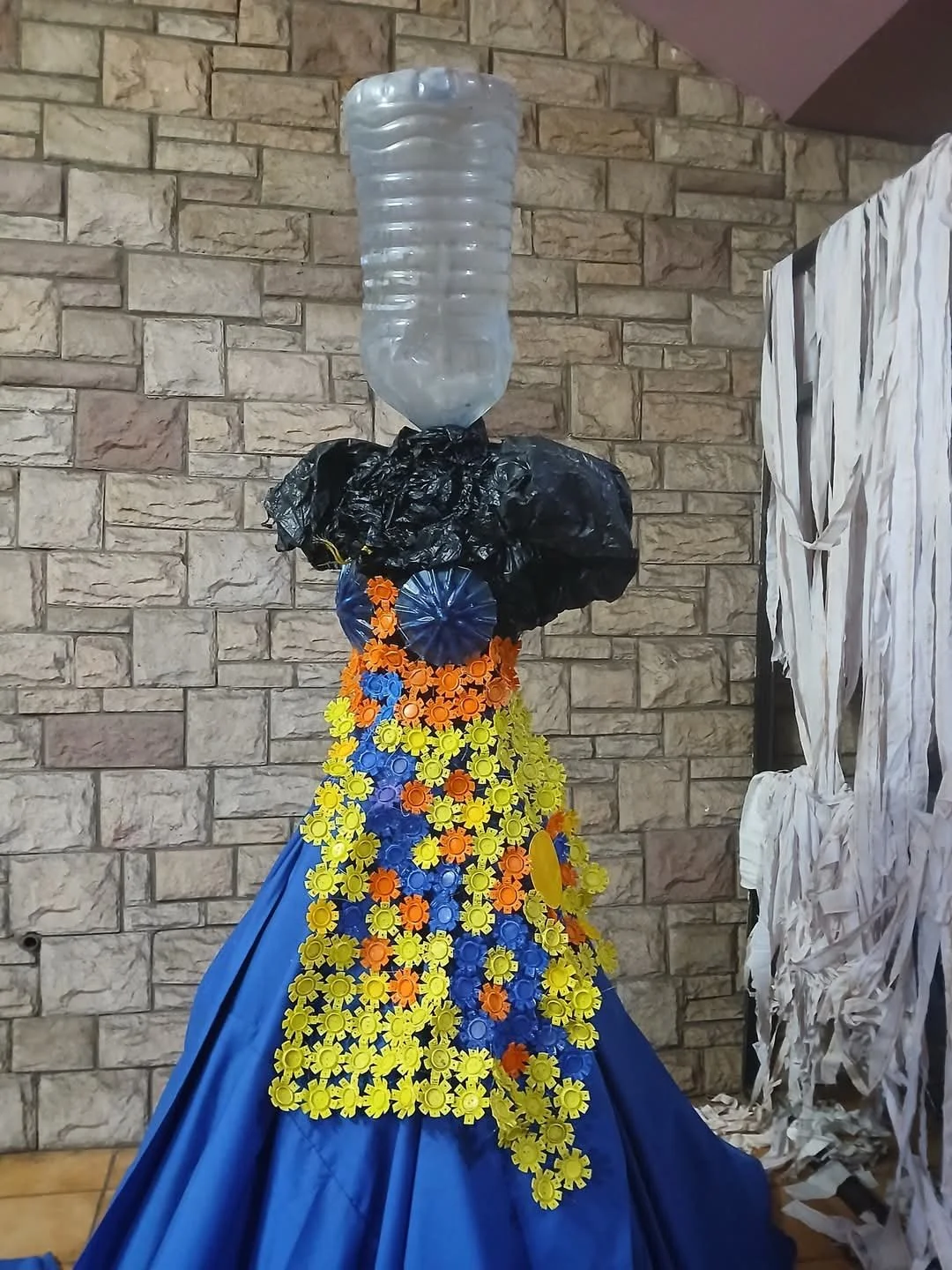
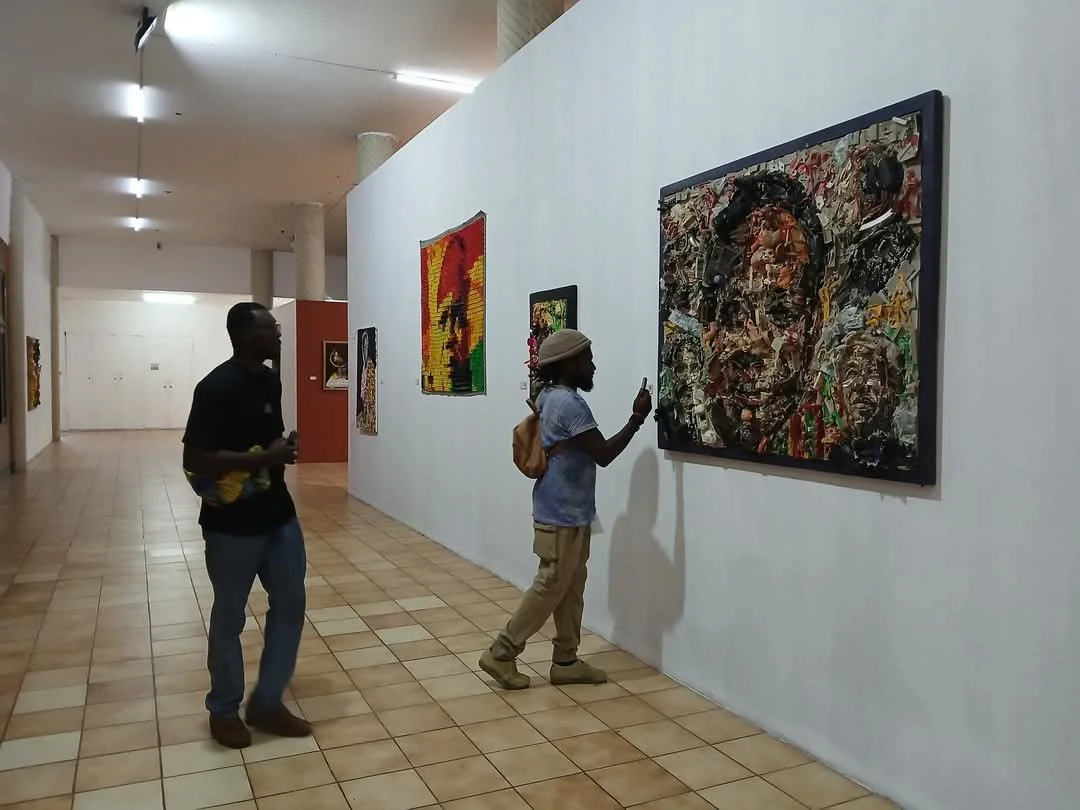
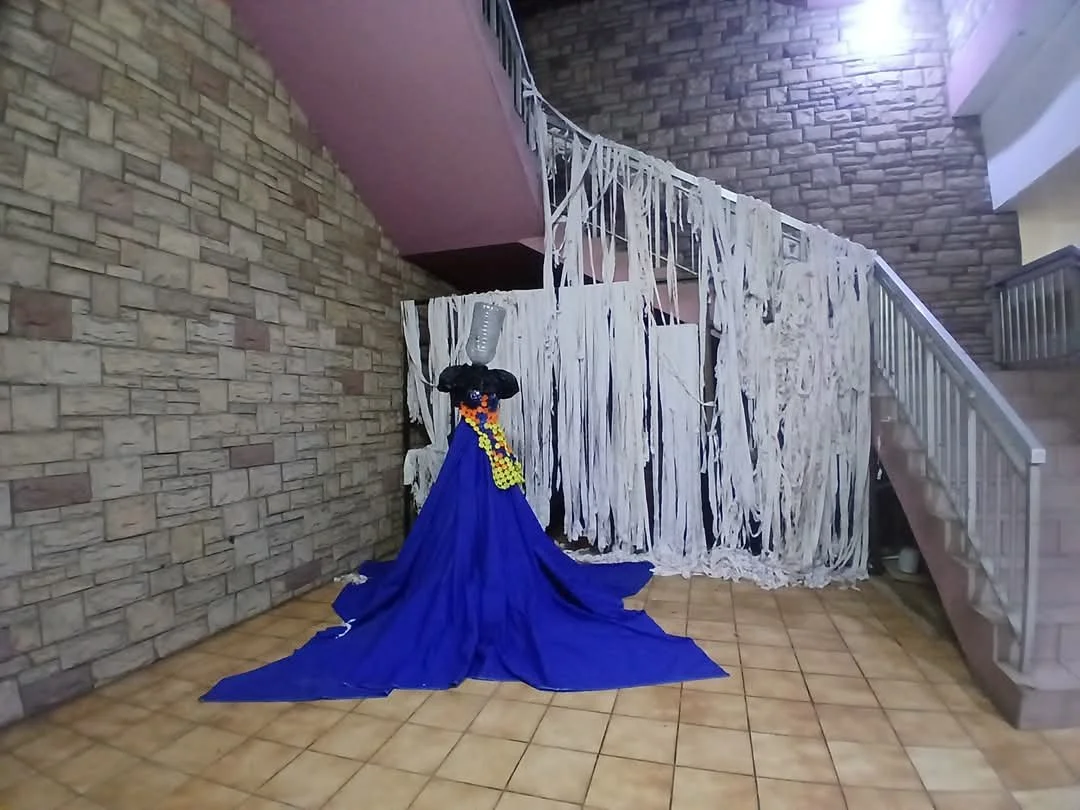
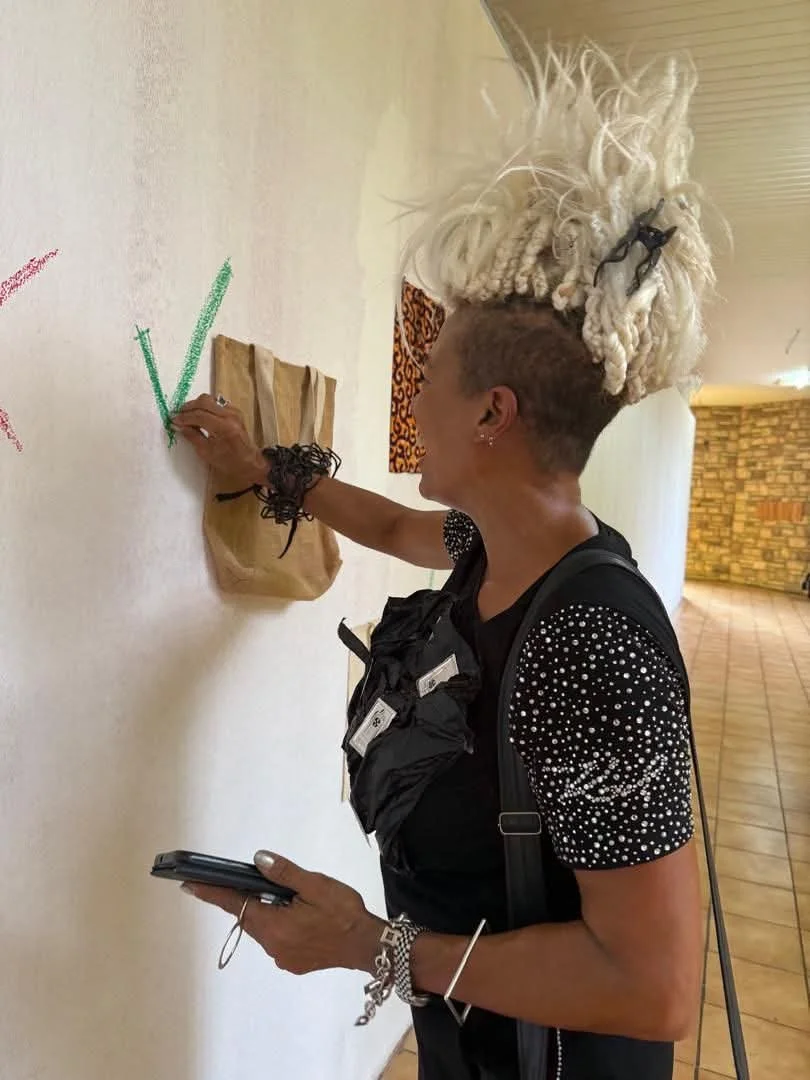
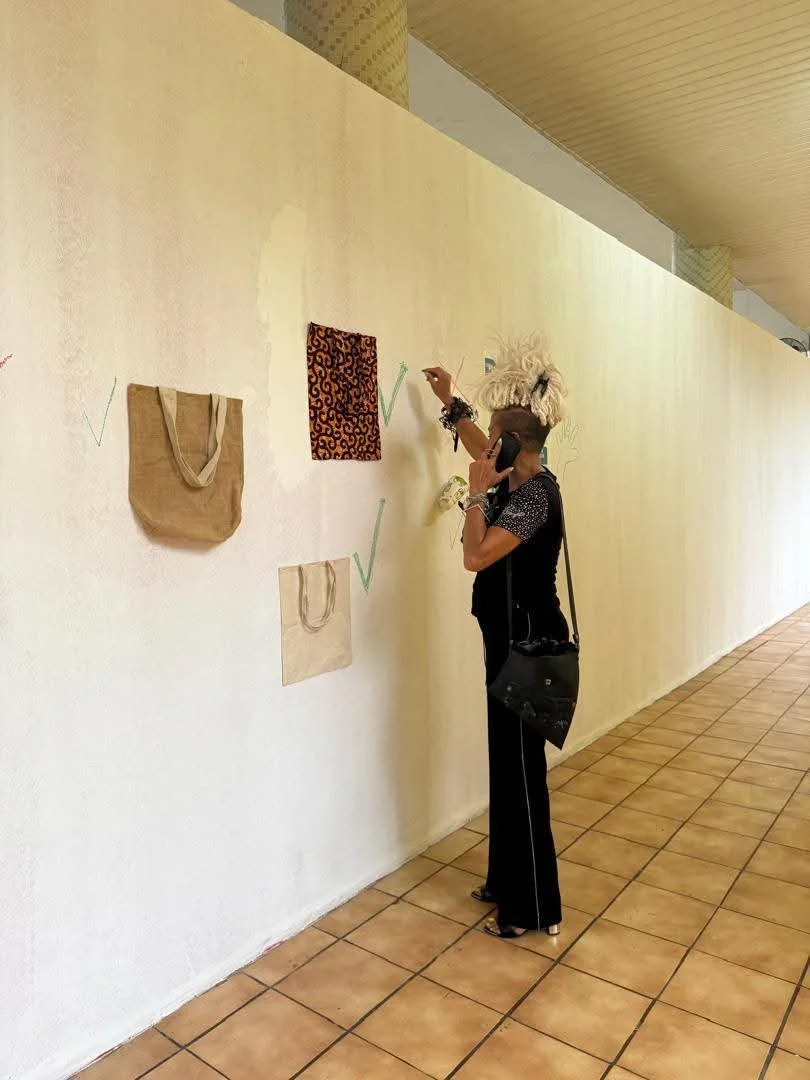
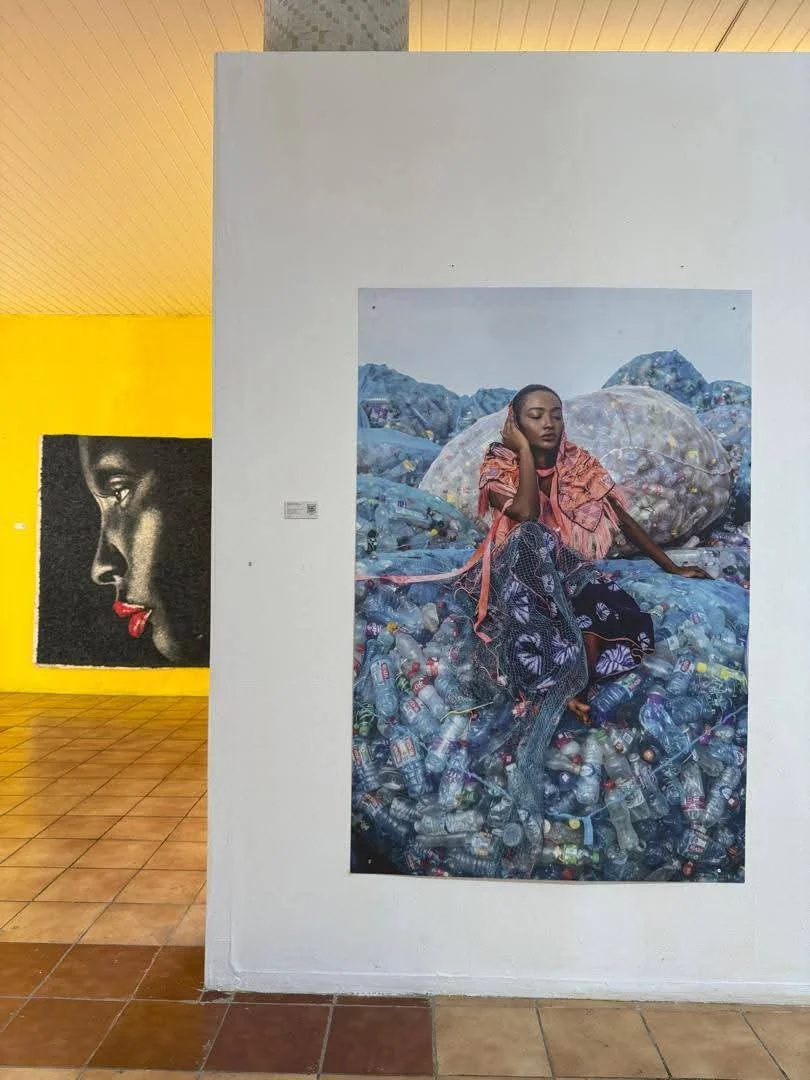

Curatorial Statement by Beatrice Bee Arthur
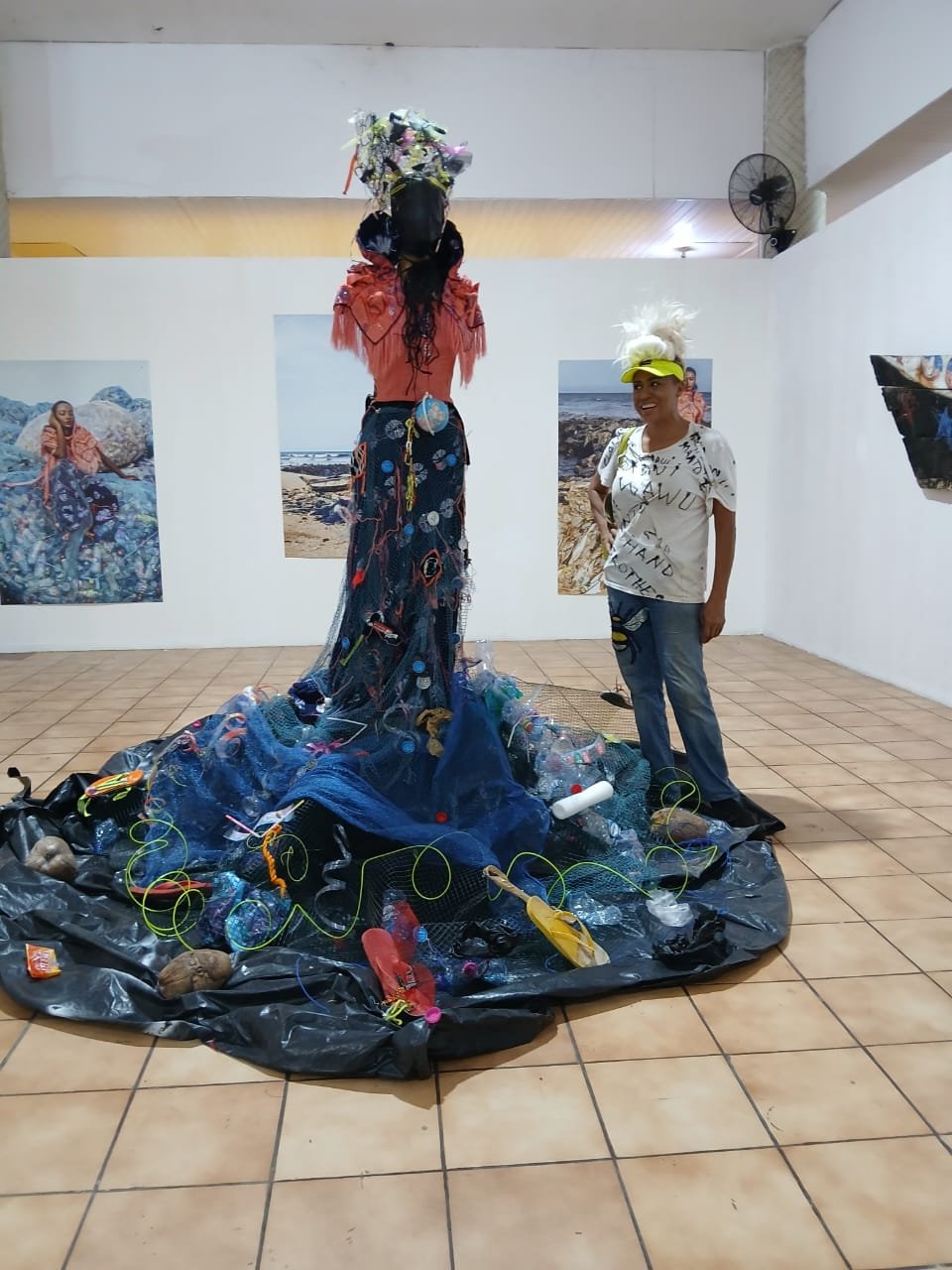
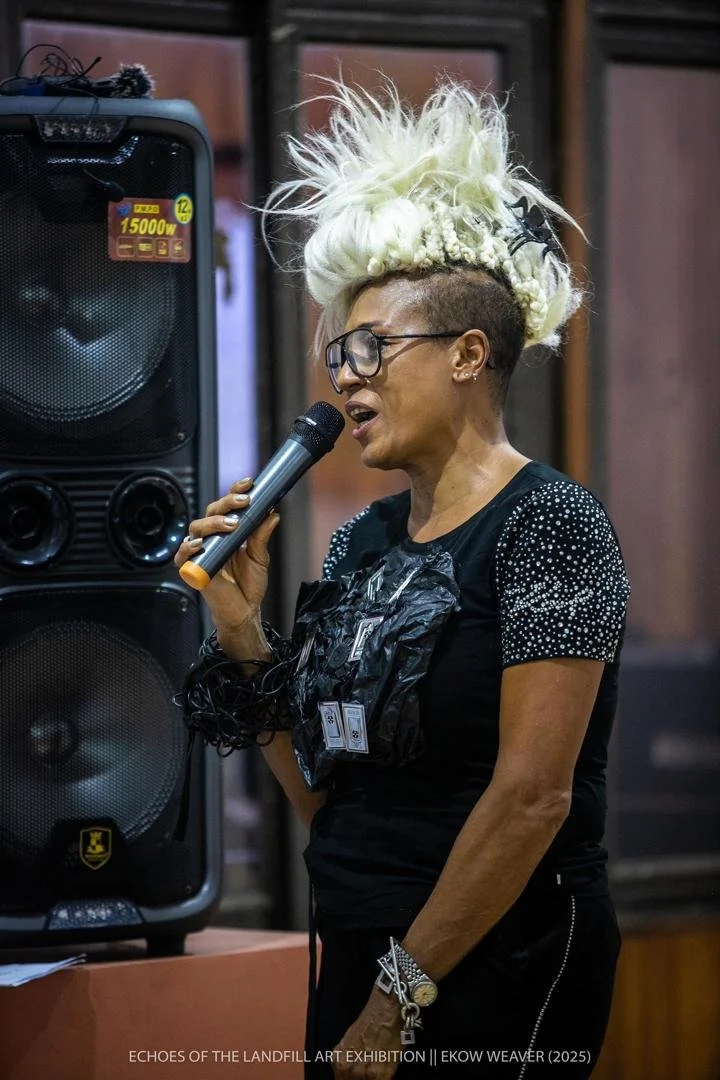
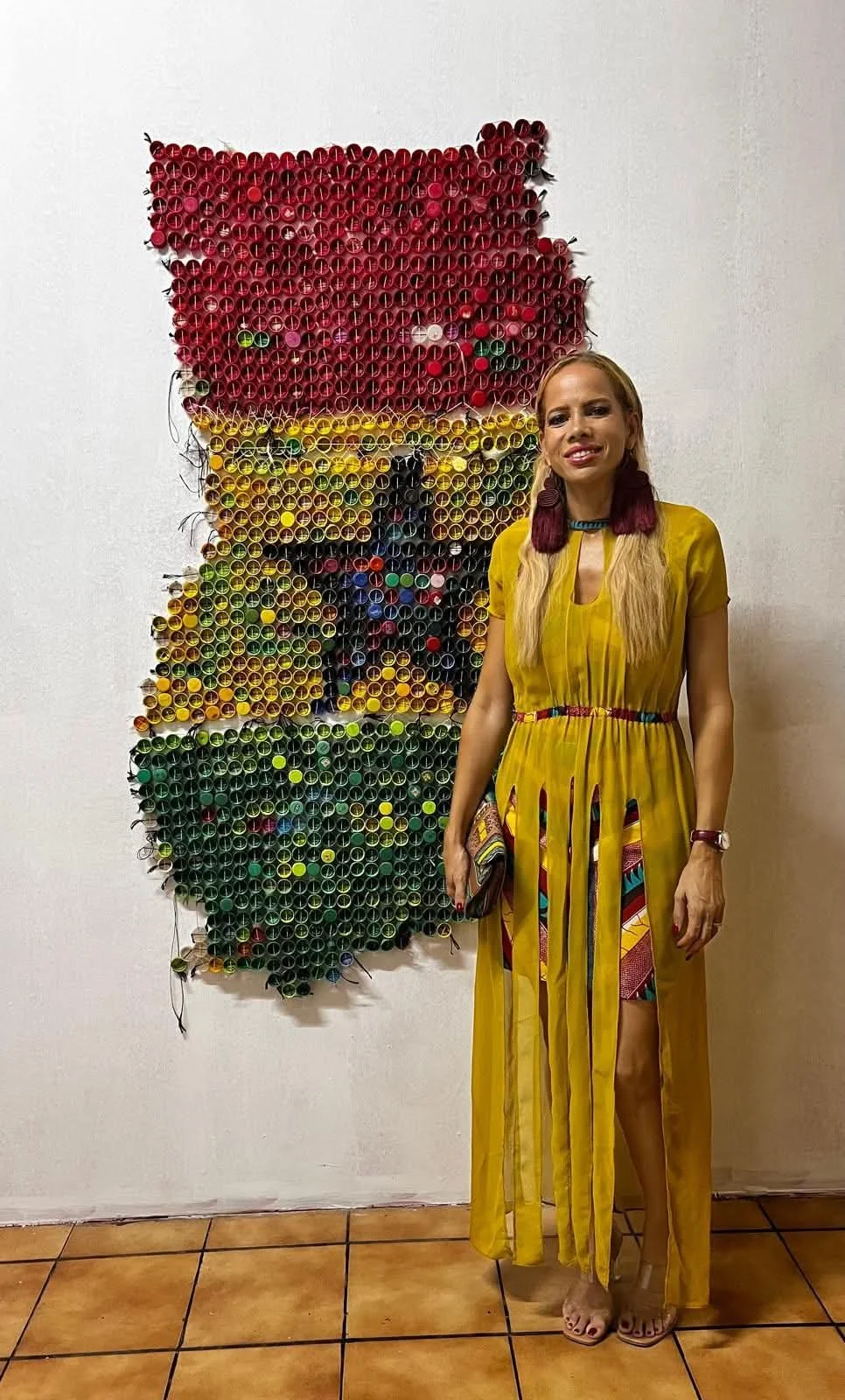
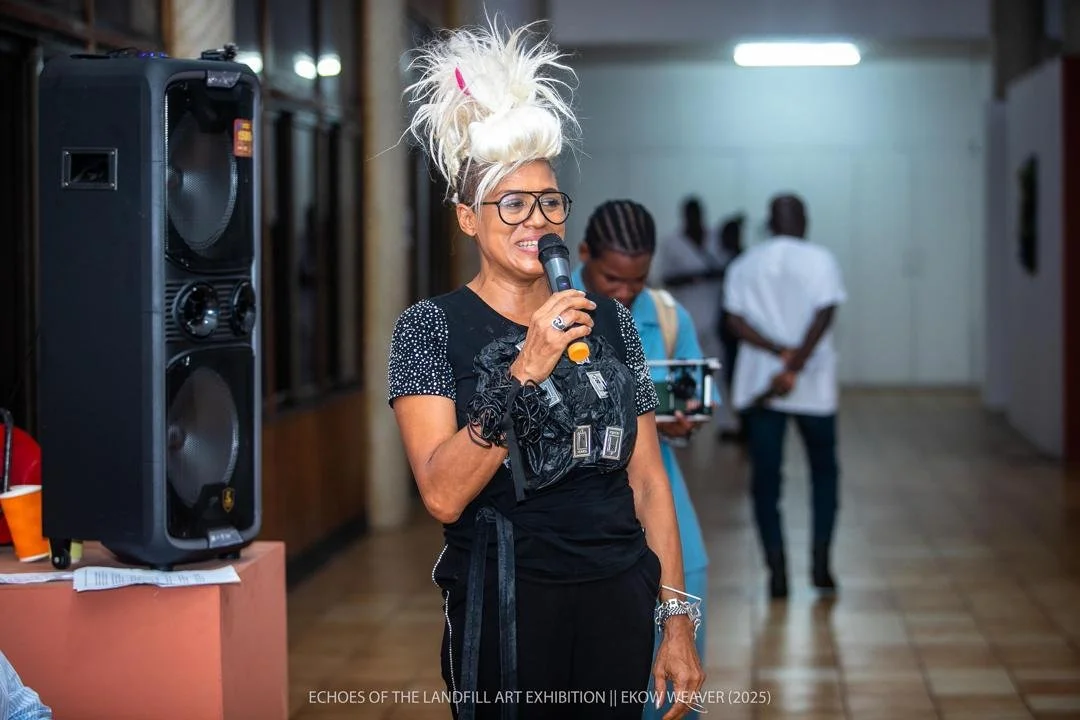
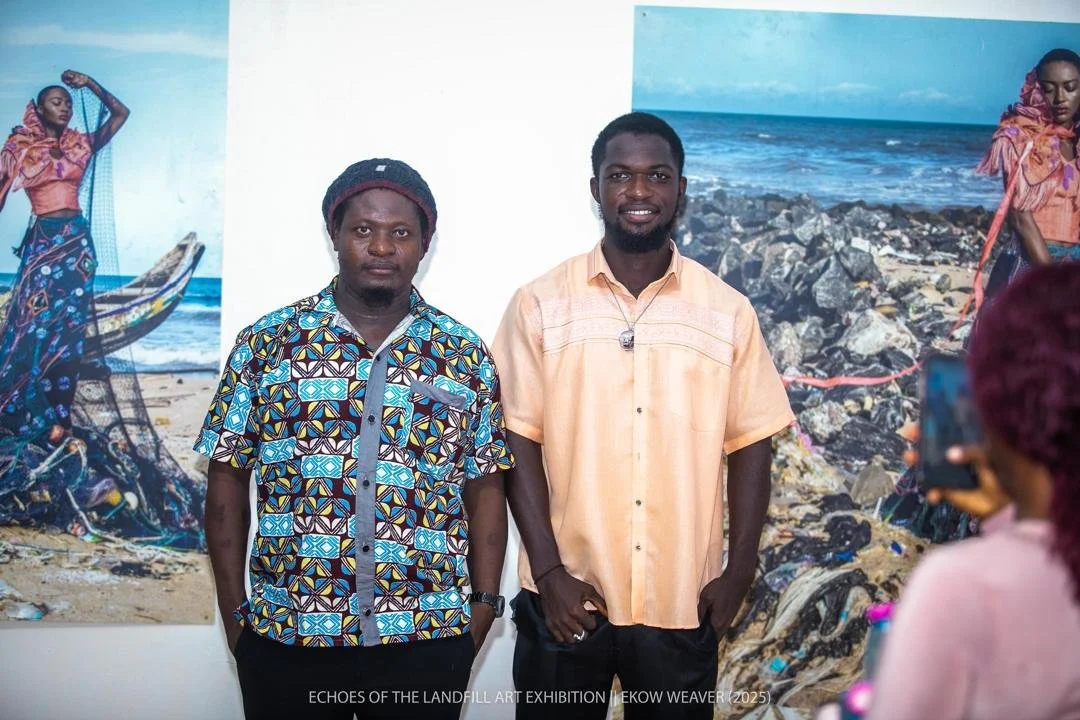
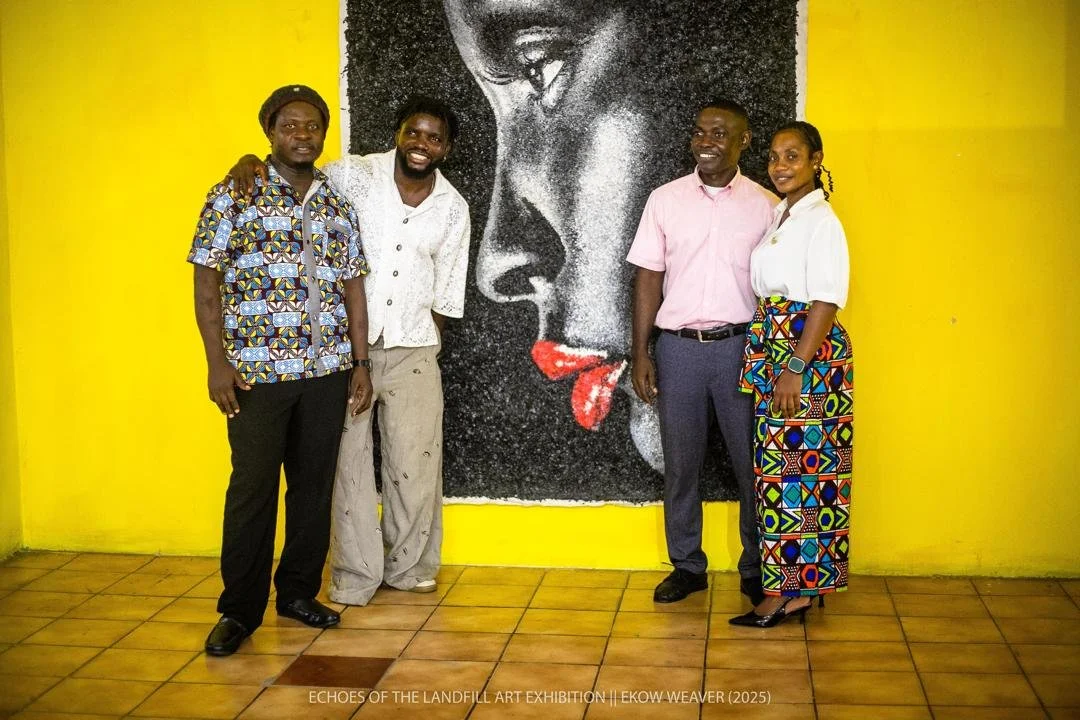
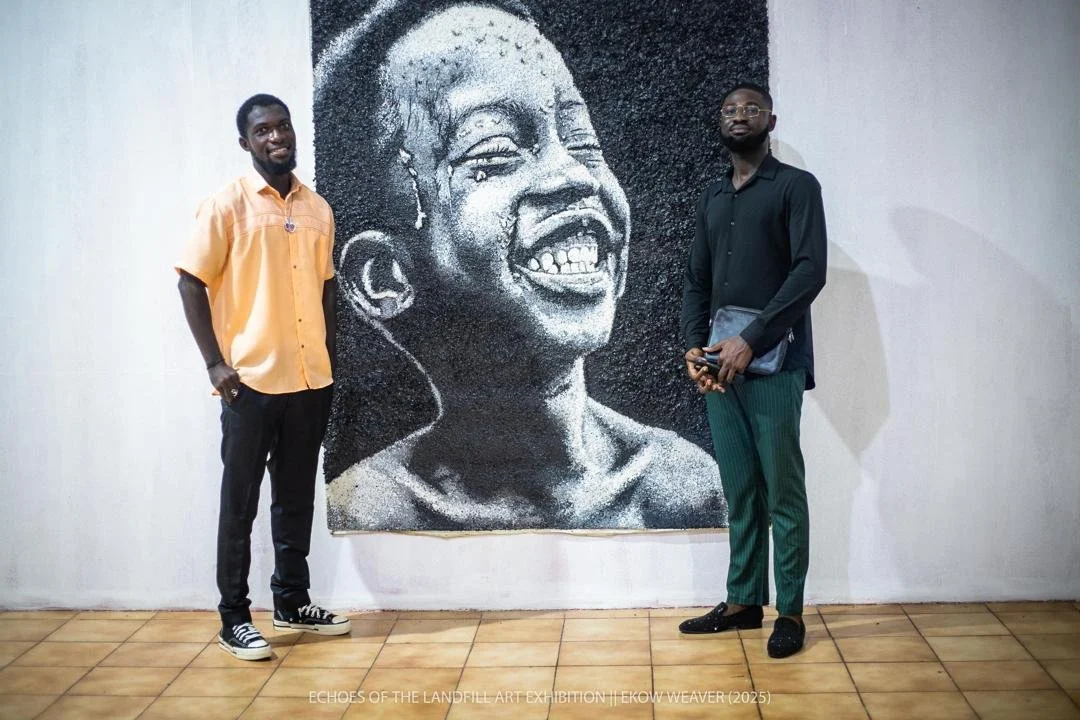
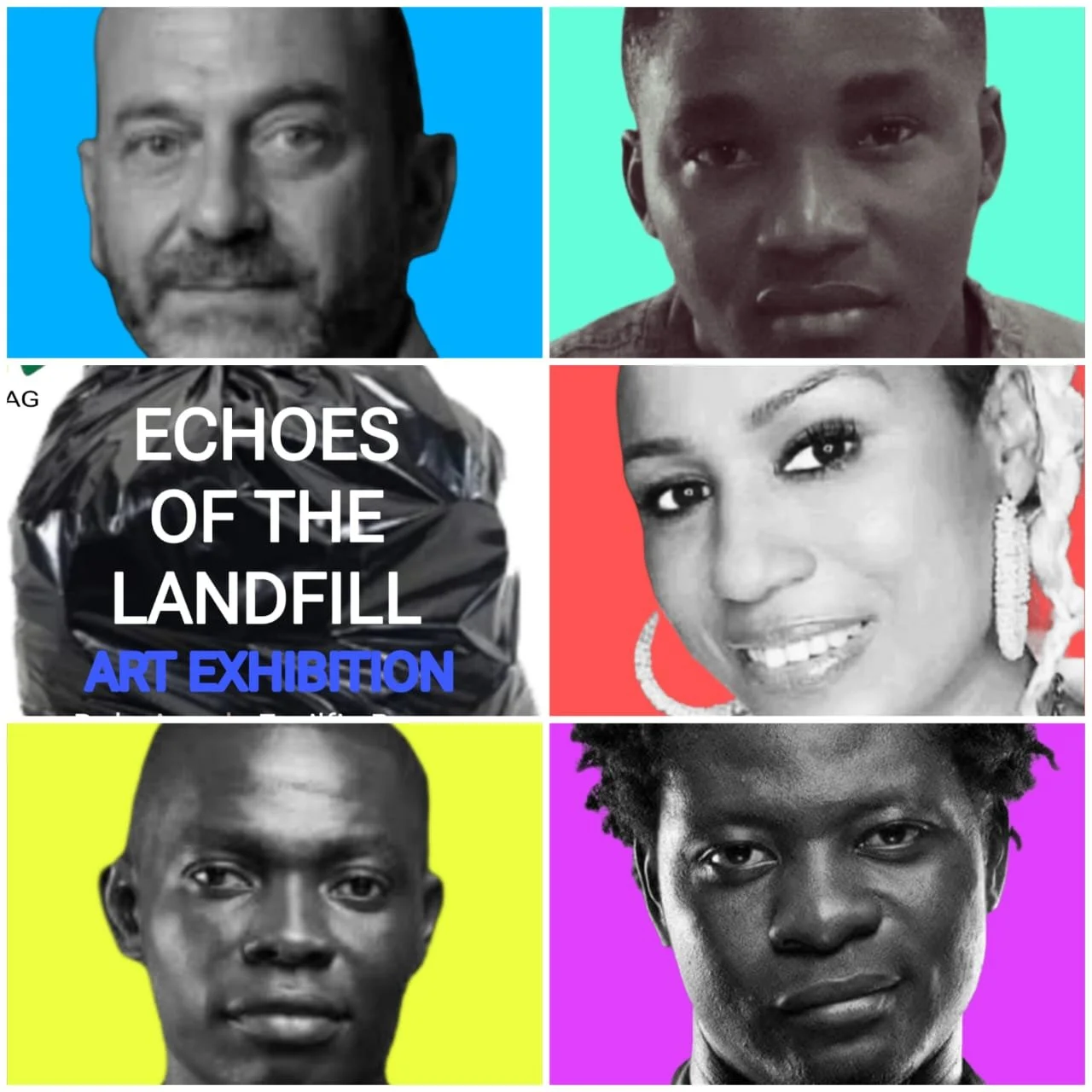
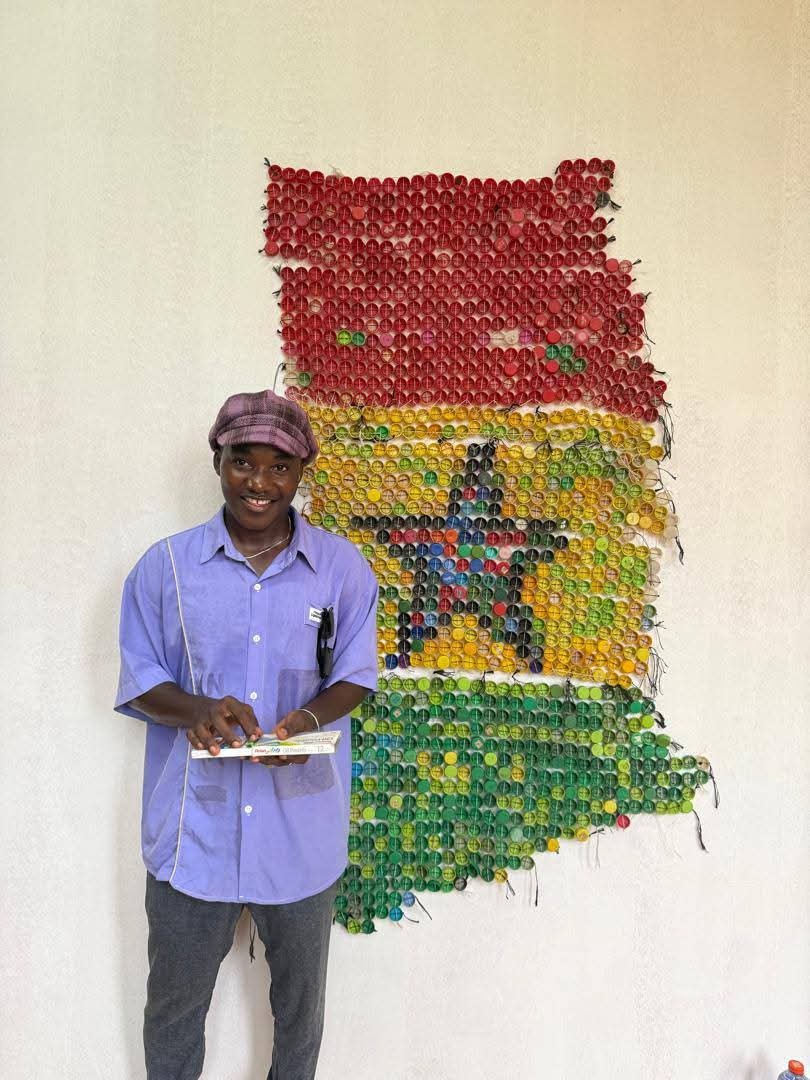
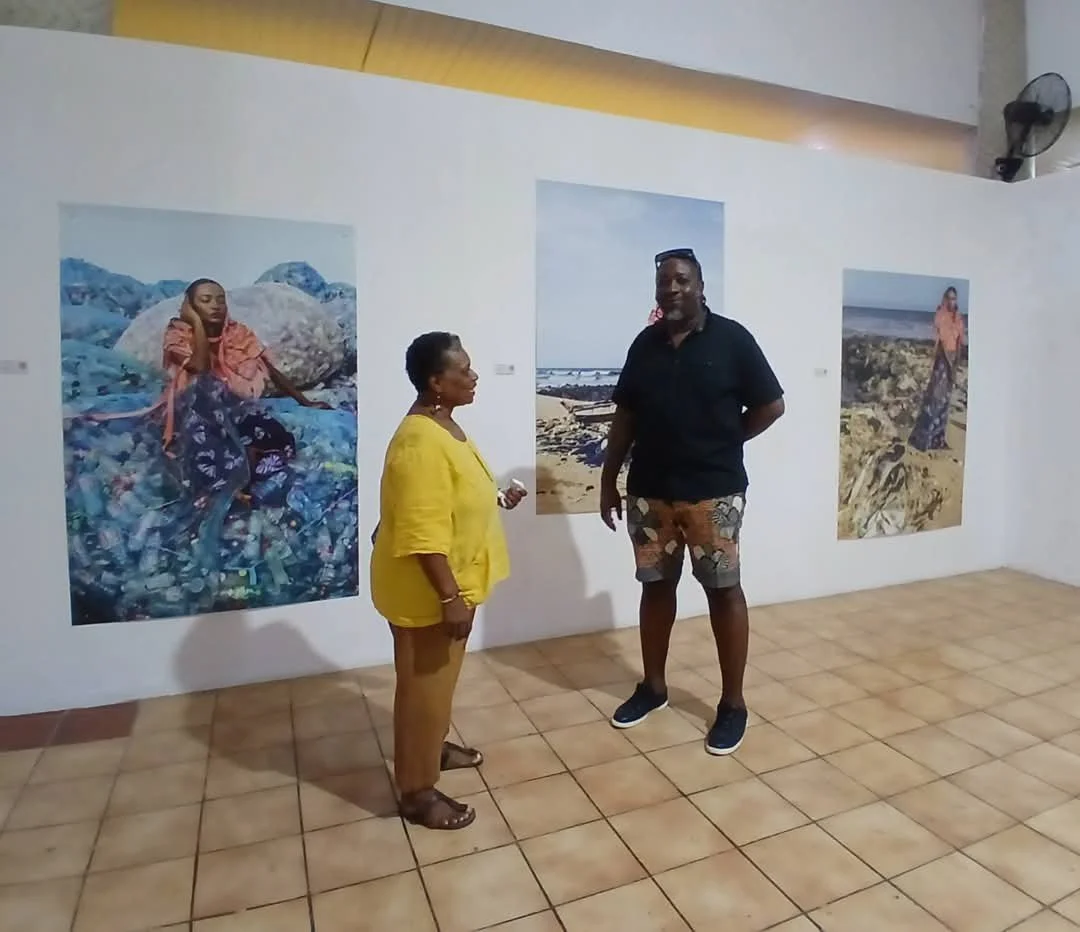
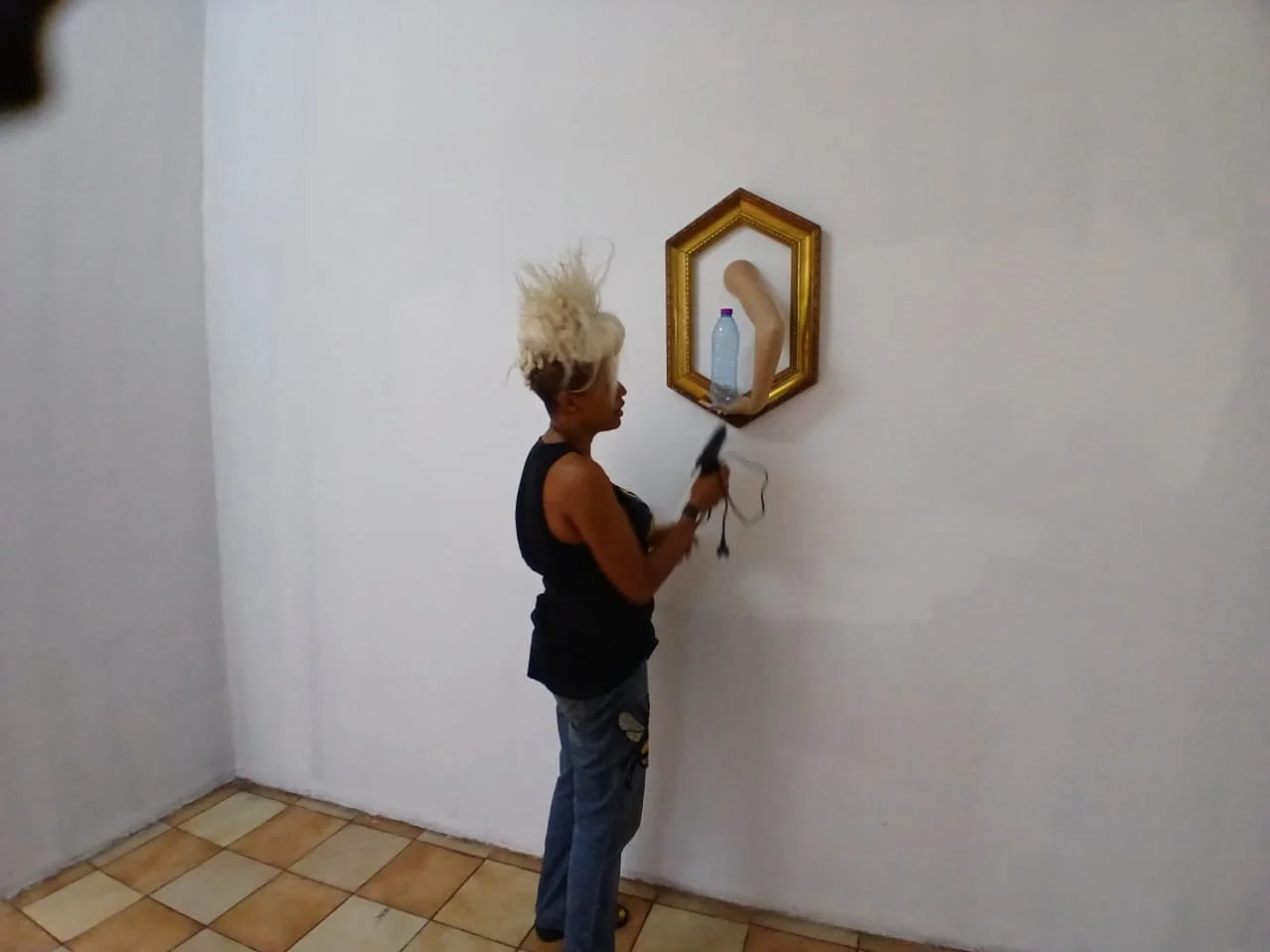
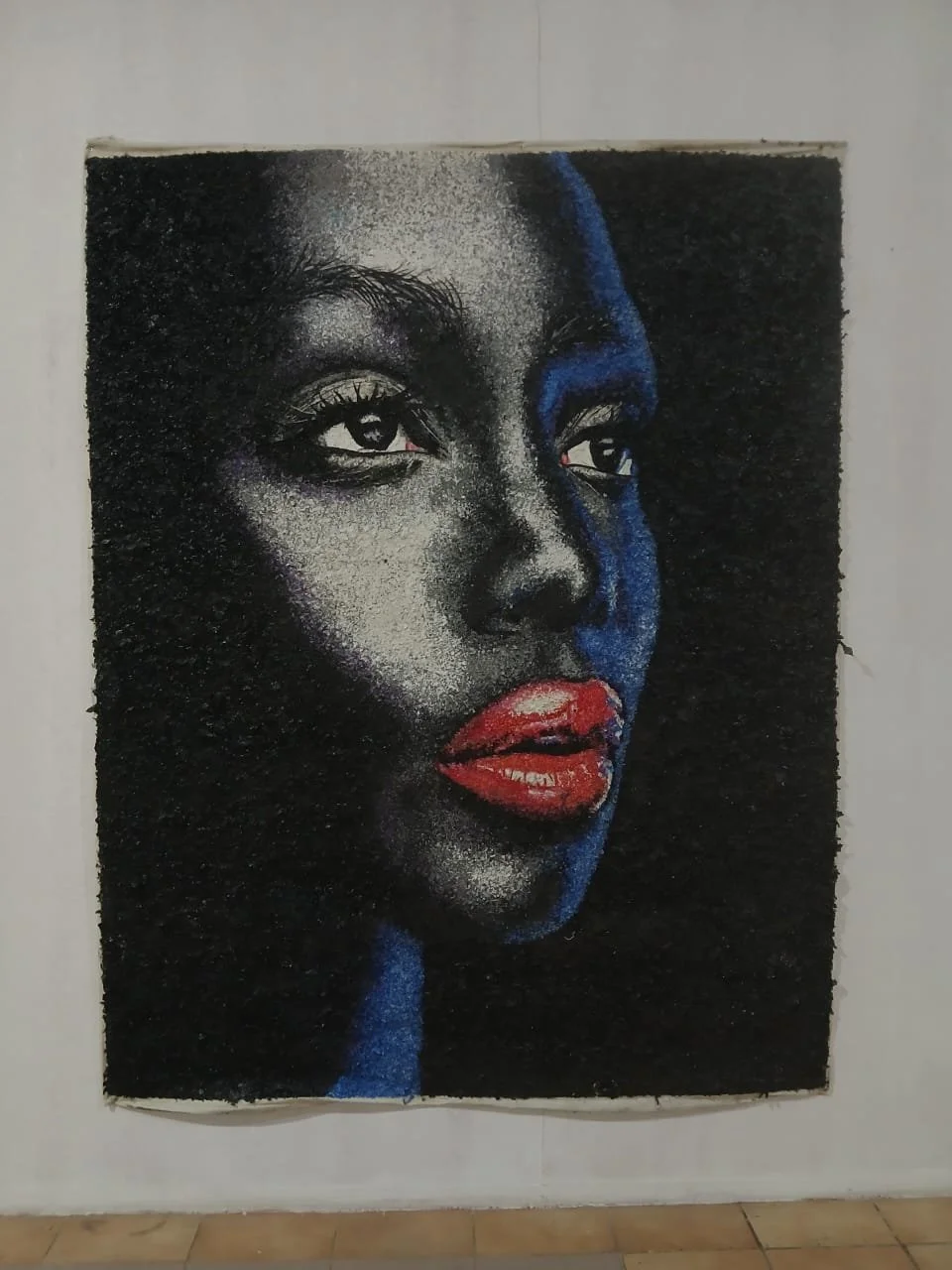
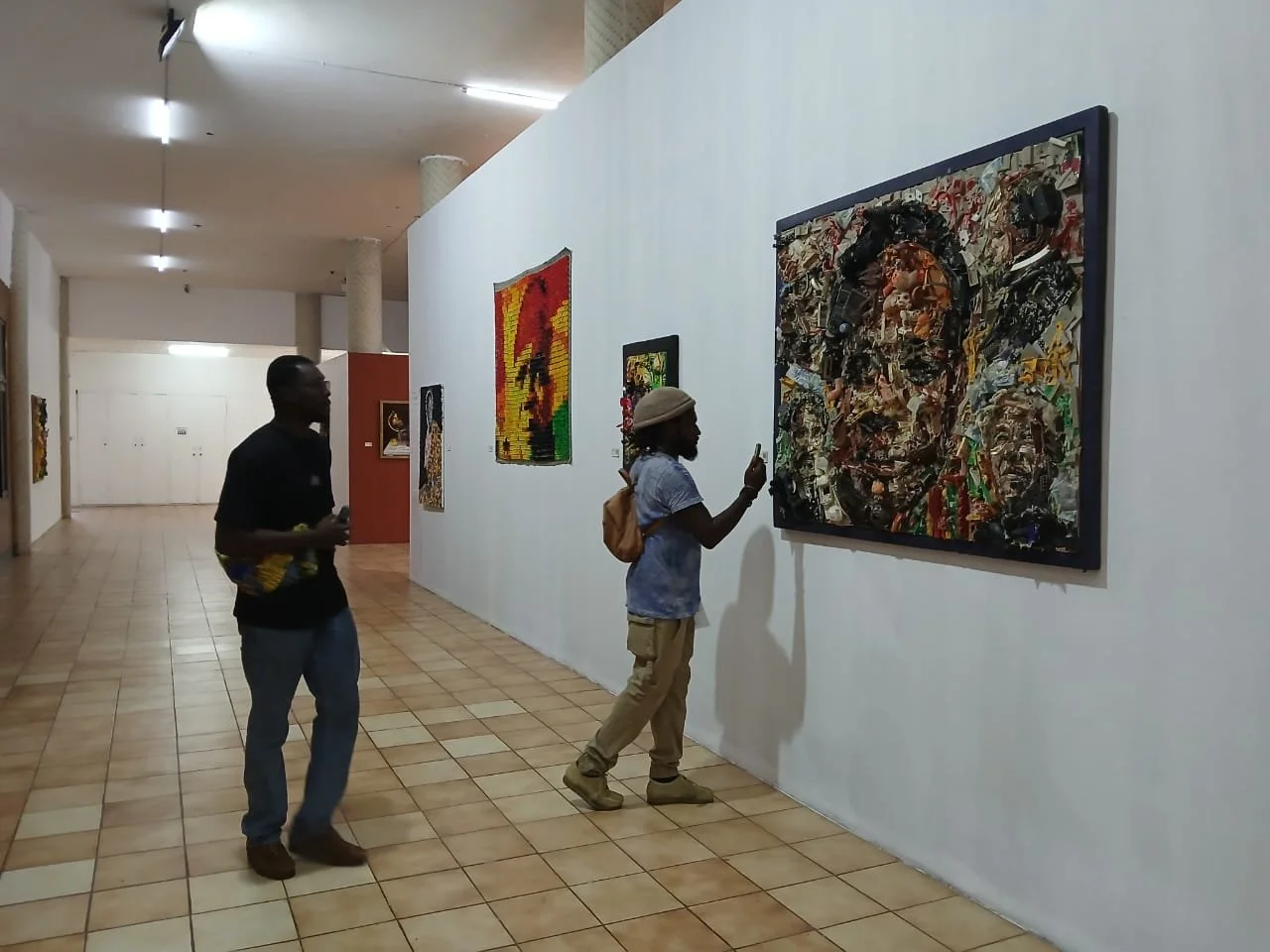
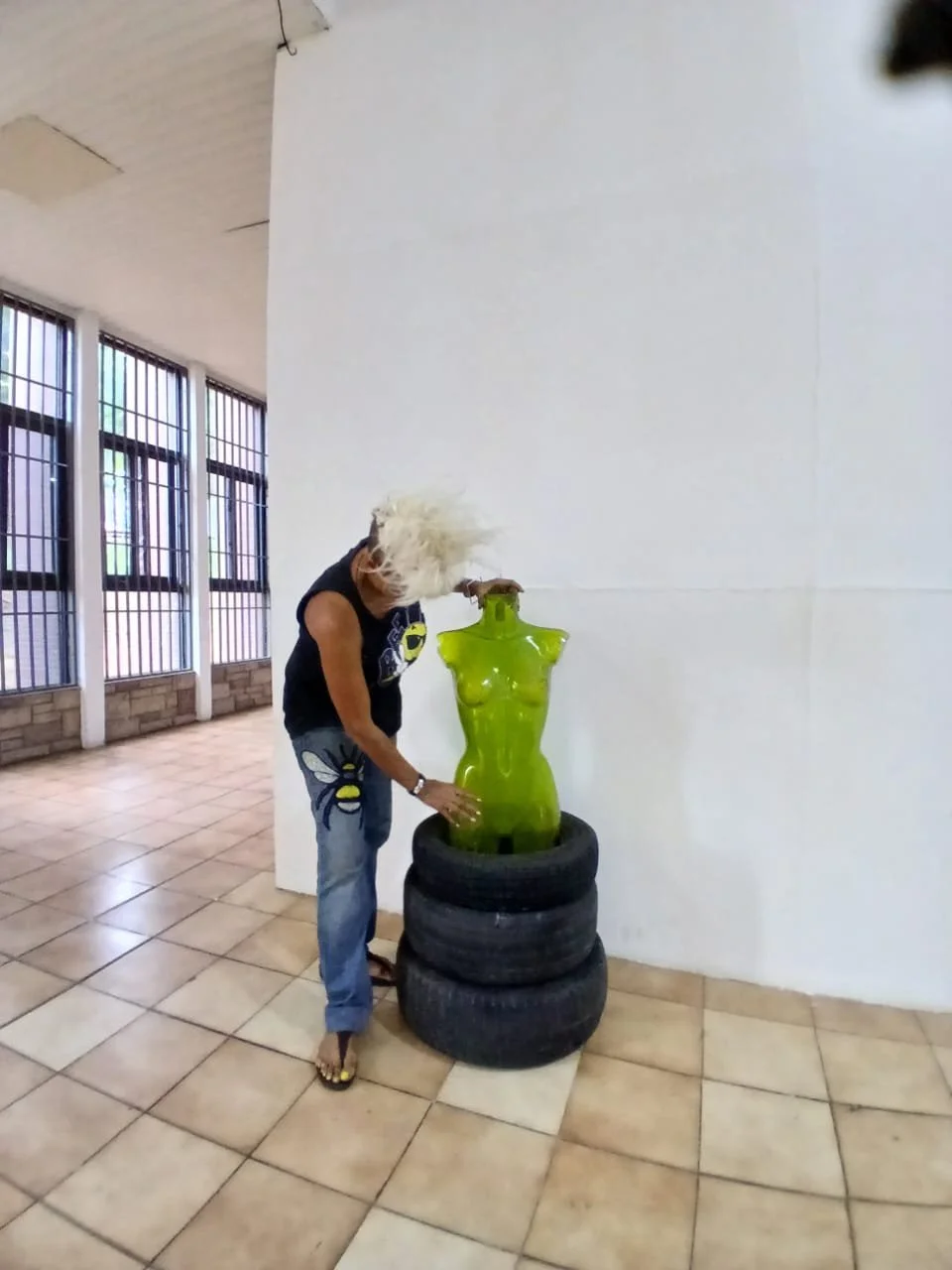
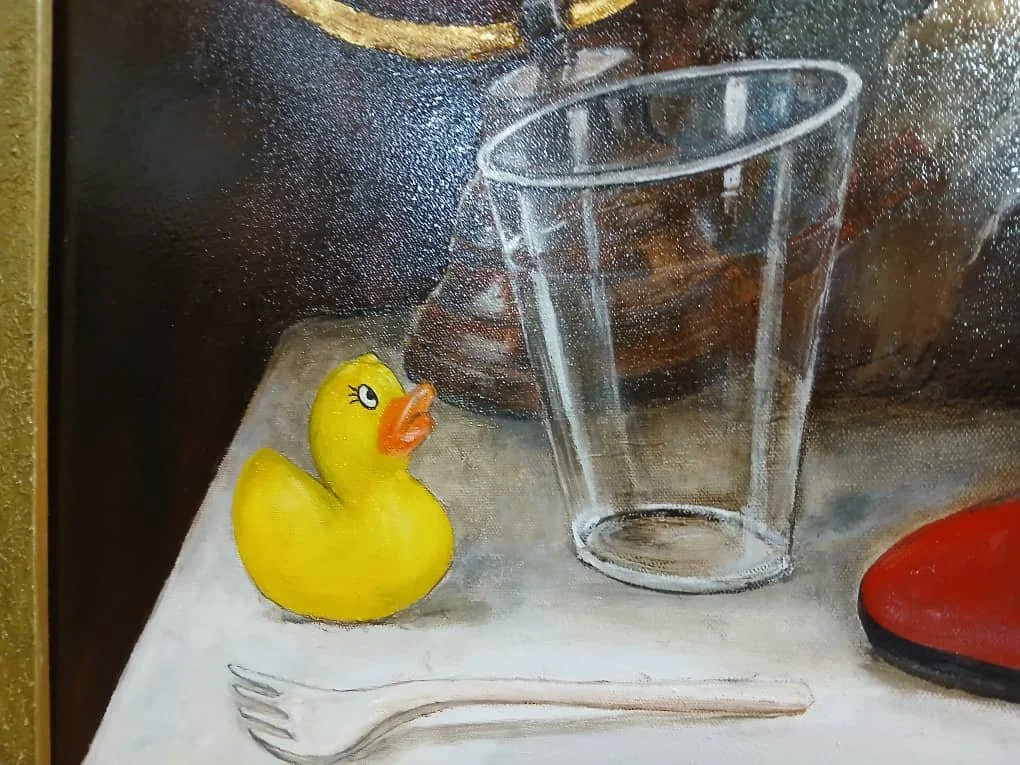
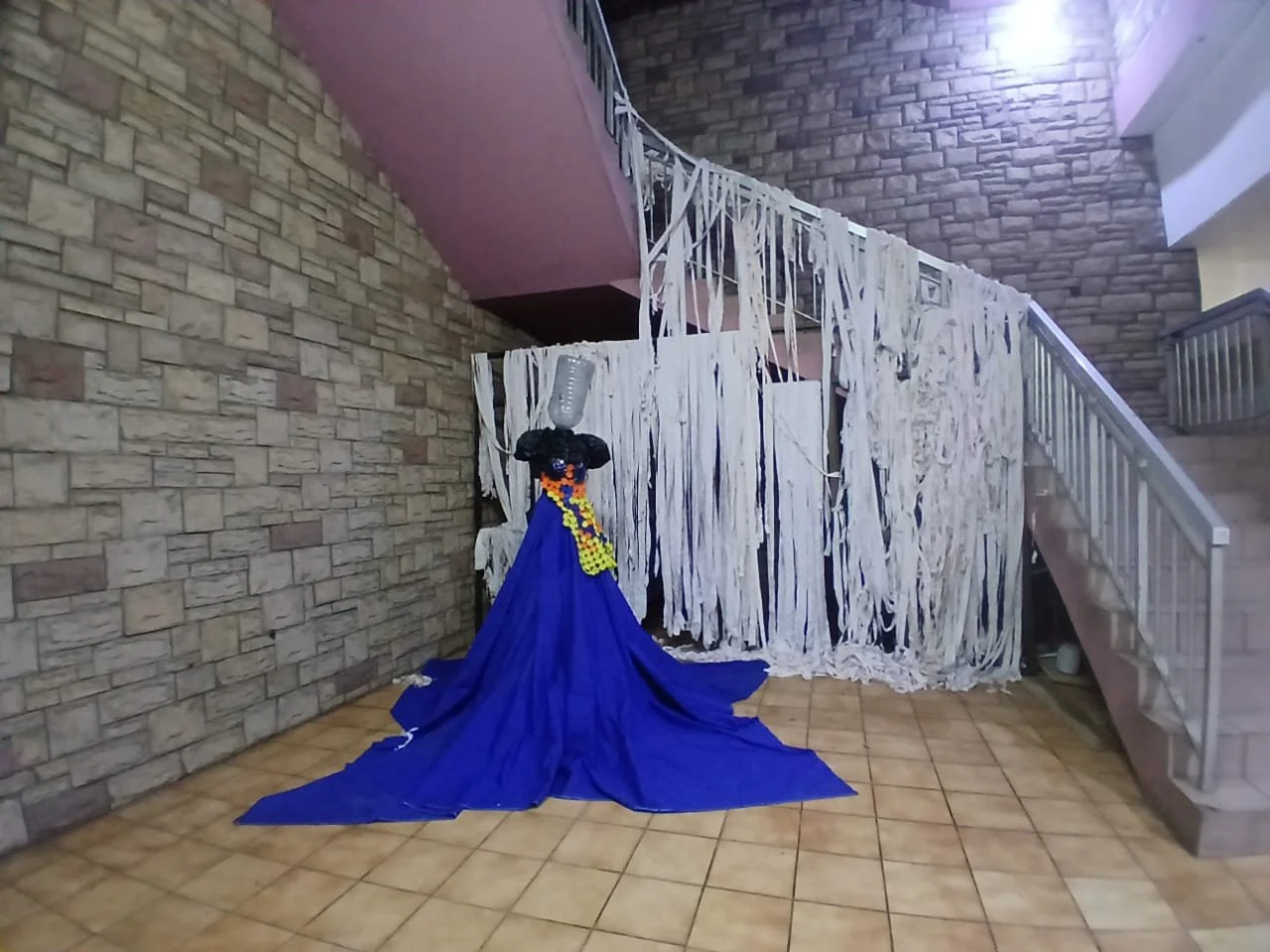
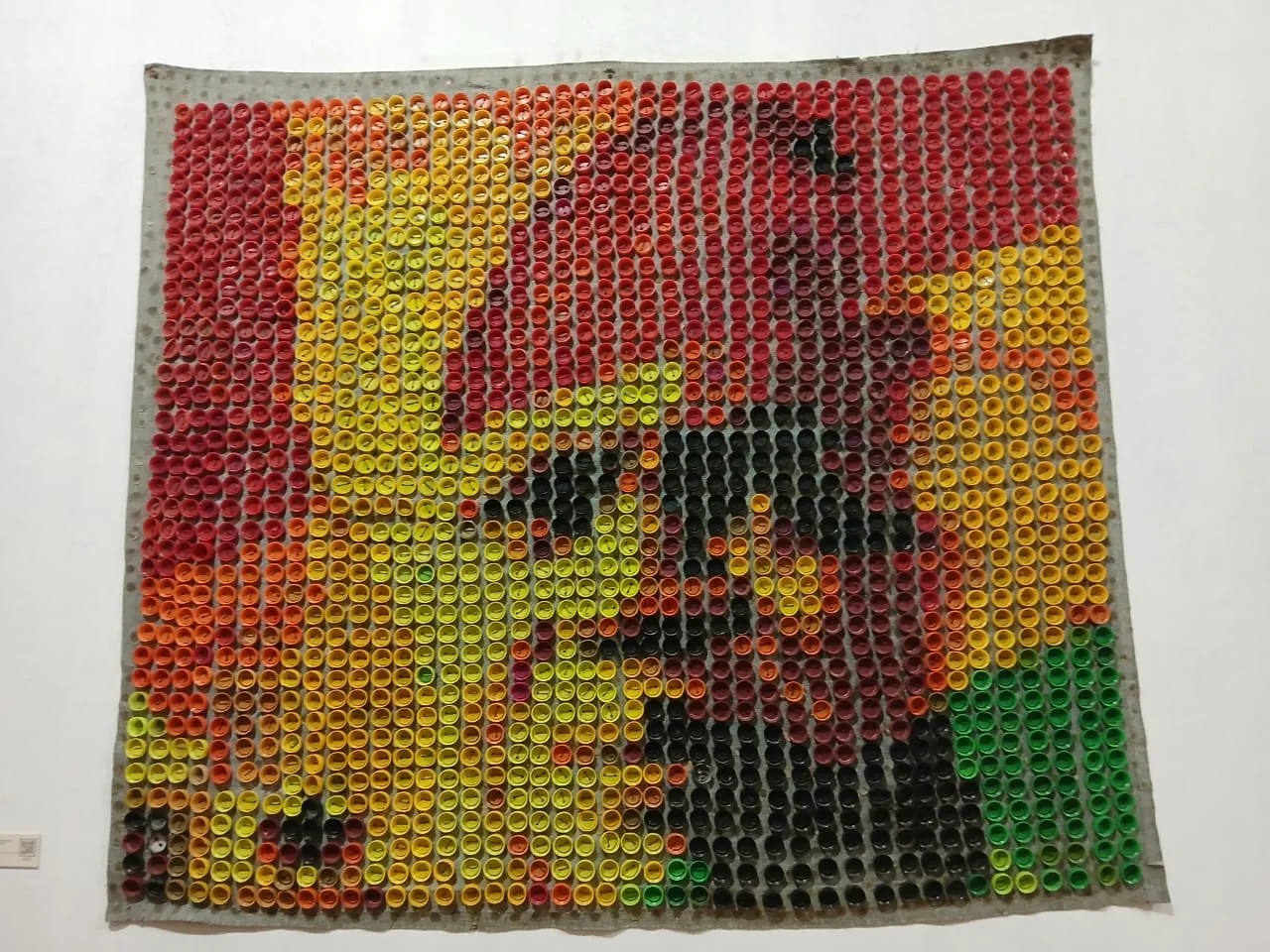
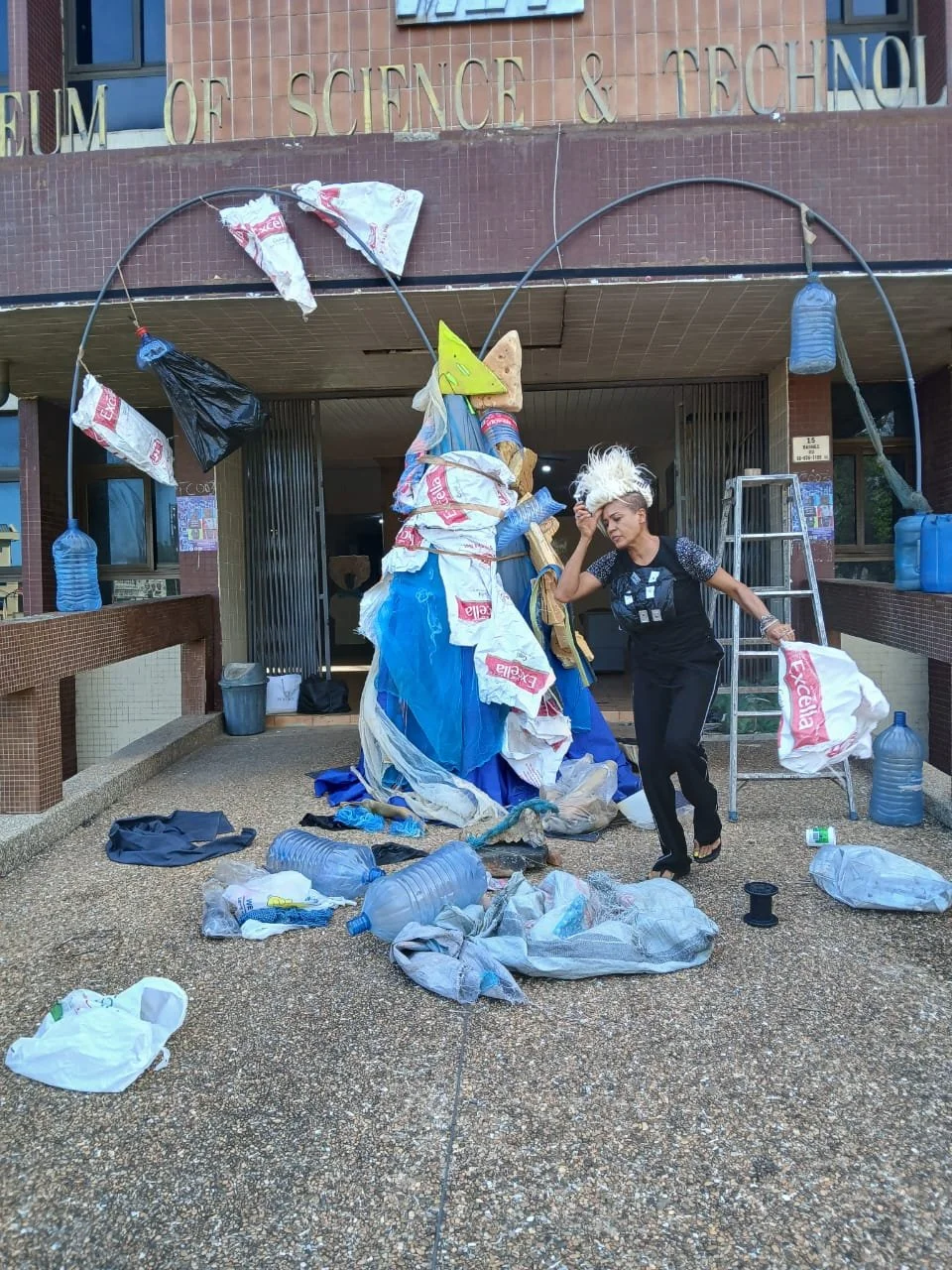
Echoes of the Landfill is not another art exhibition. It is a radical reclamation where plastic waste is reimagined as both medium and living testimony to our callous disregard for the environment. A collaborative effort by the Museum of Science and Technology (MST) and ArtfullyYours, Bee Arthur Creative Productions for World Environment Day 2025, this exhibition convenes six Ghanaian eco-conscious artists—Obed Addo, Beatrice Bee Arthur, Essilfie Banton, Andrea Ghia, and Salim—who excavate the hidden politics within discarded plastic: narratives of colonial residues, neoliberal excess, and quiet acts of African resilience.
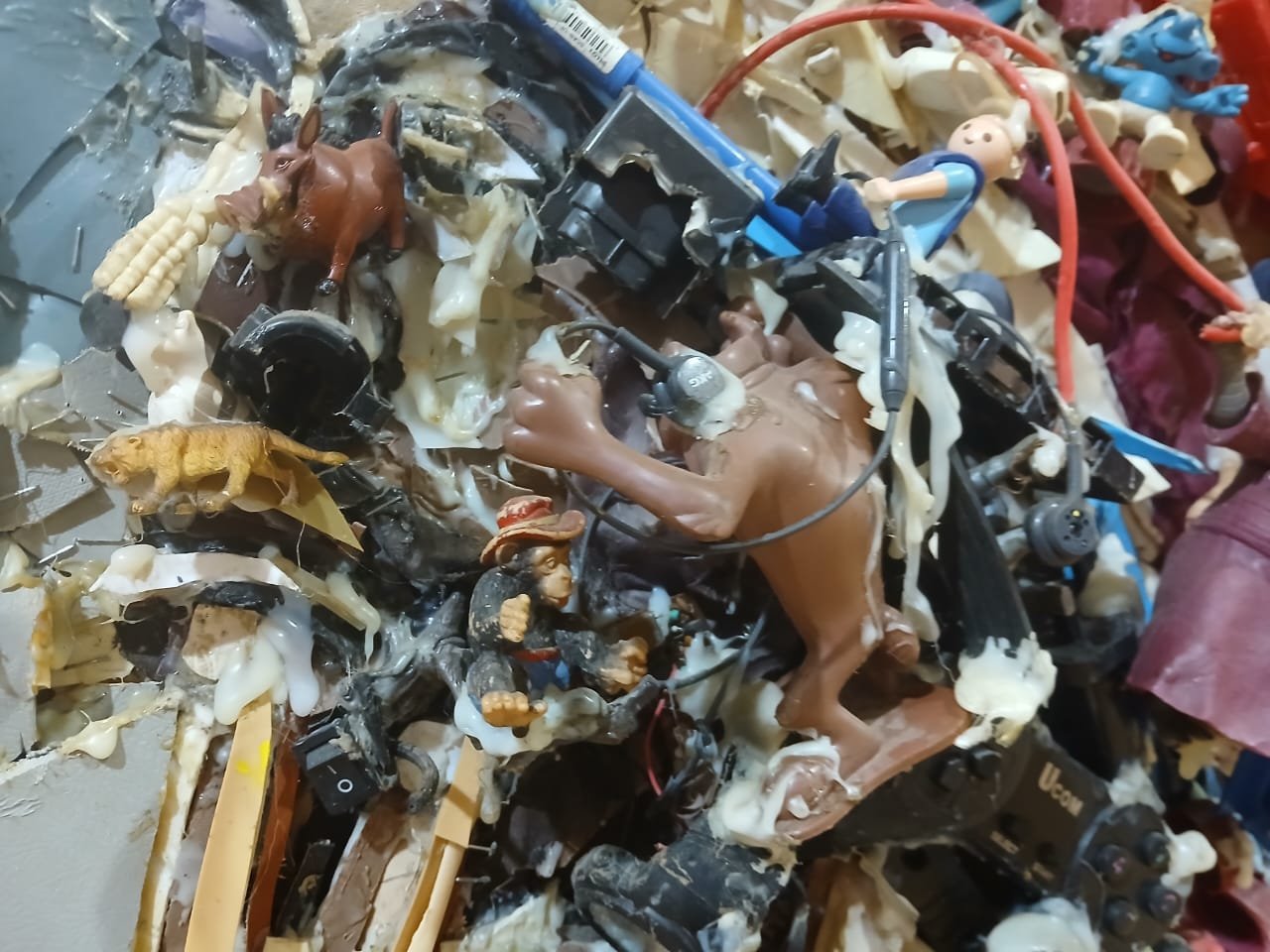
Landfills are the unmarked graves of globalisation. Here, Accra’s streets and shorelines become archives of abandonment—water sachets like shed skin, flip-flops as fossilised footprints, toy limbs tangled with fishing nets. These are not inert objects but silent accusers, materialising the violence of an economy that treats both people and land as disposable.
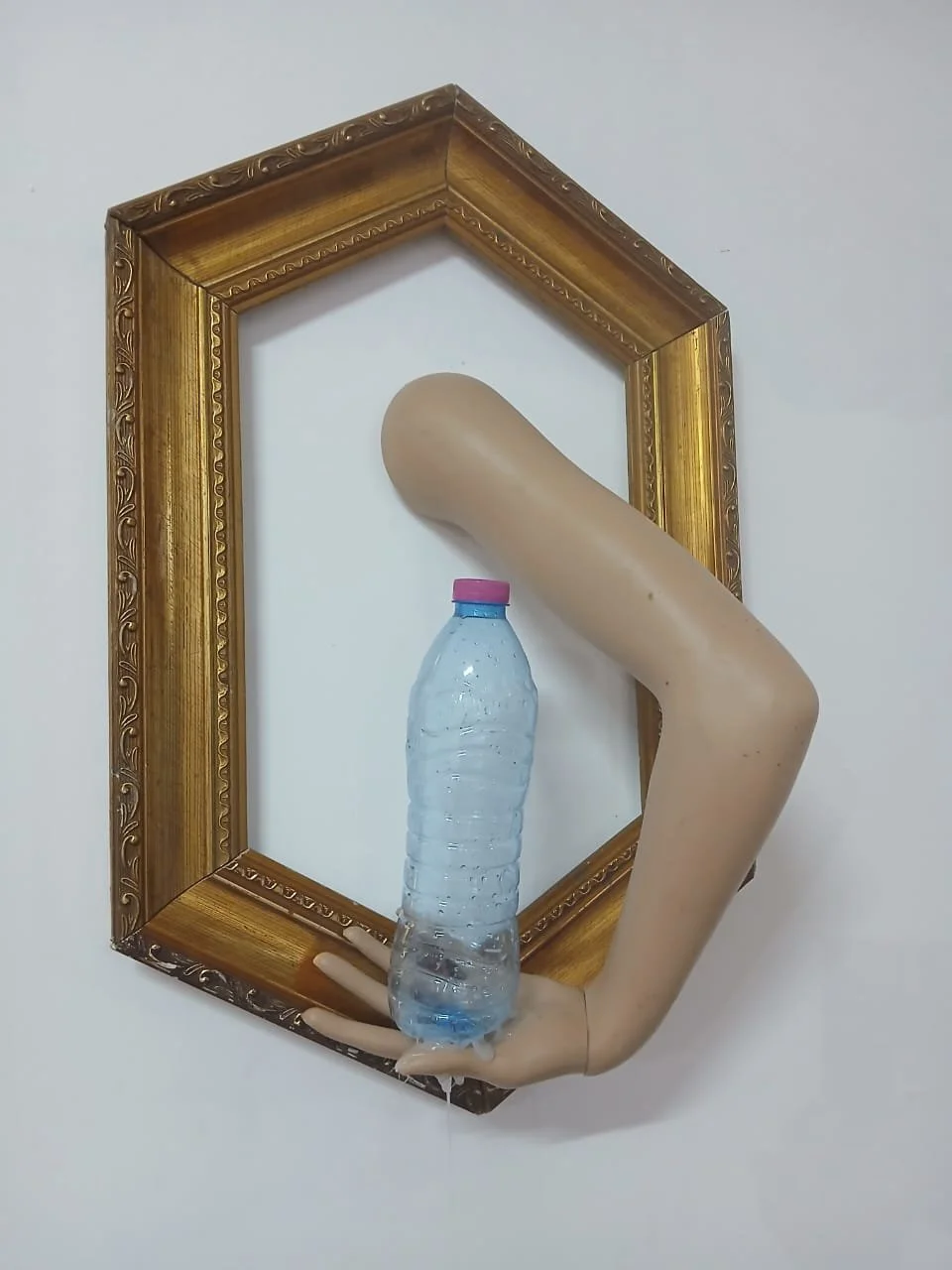
The artists in this exhibition do not recycle—they resurrect trash. Through sculpture, installation, painting, poetry, and photography, they force plastic to confess: as a relic of extractivism, a marker of climate injustice, and paradoxically, a medium for African futurity. Indigenous philosophies of circularity collide with the toxic immortality of synthetic materials, asking: What does it mean to "dispose" when there is no "away?"
Without institutional funding, this project embodies its own thesis: resourcefulness as resistance. The artists’ grassroots mobilisation mirrors the informal economies that already transform waste into worth across Africa. Echoes of the Landfill is thus both mirror and megaphone—refusing the neoliberal spectacle of sustainability to center community-led epistemologies.
This is NOT an exhibition about waste. It is an intervention in time. A demand to rewrite the lexicon of value: that a bag is not "single-use" but a generational artifact; that those who scavenge are archivists of the Anthropocene.
ARTISTS
Obed Addo
"My work is about dignity—finding it in discarded things, and in ourselves."
Beatrice Bee Arthur
"This exhibition is the toxic truth where plastics and capitalists lie."
Salim
"When I sculpt from trash, I think of ancestors. Would they forgive us?"
Andrea Ghia
"In painting about plastic pollution, I am confronting the ability of permanence to outlive memory."
Essilfie Banton
"Each artwork I make is a conversation with discarded materials. I want the viewer to see the soul of what we discard."
Nii Noi Candos
---“We are not just picking up plastic—we are picking up the pieces of a broken system. Every salvaged fragment is a challenge to the world that discarded it.”
Data Point: Ghana generates 1.1 million tons of plastic waste annually—less than 2% is recycled.

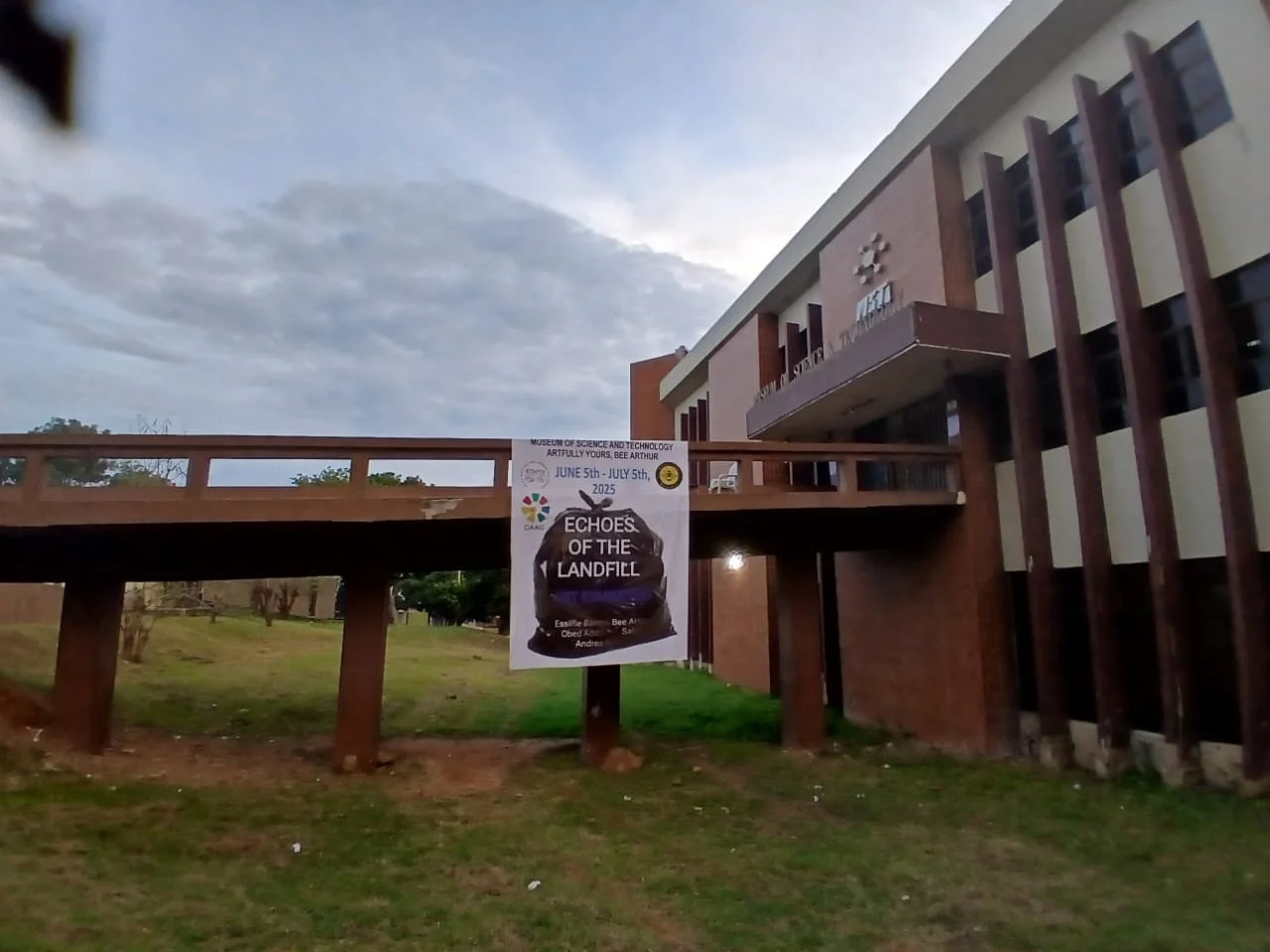
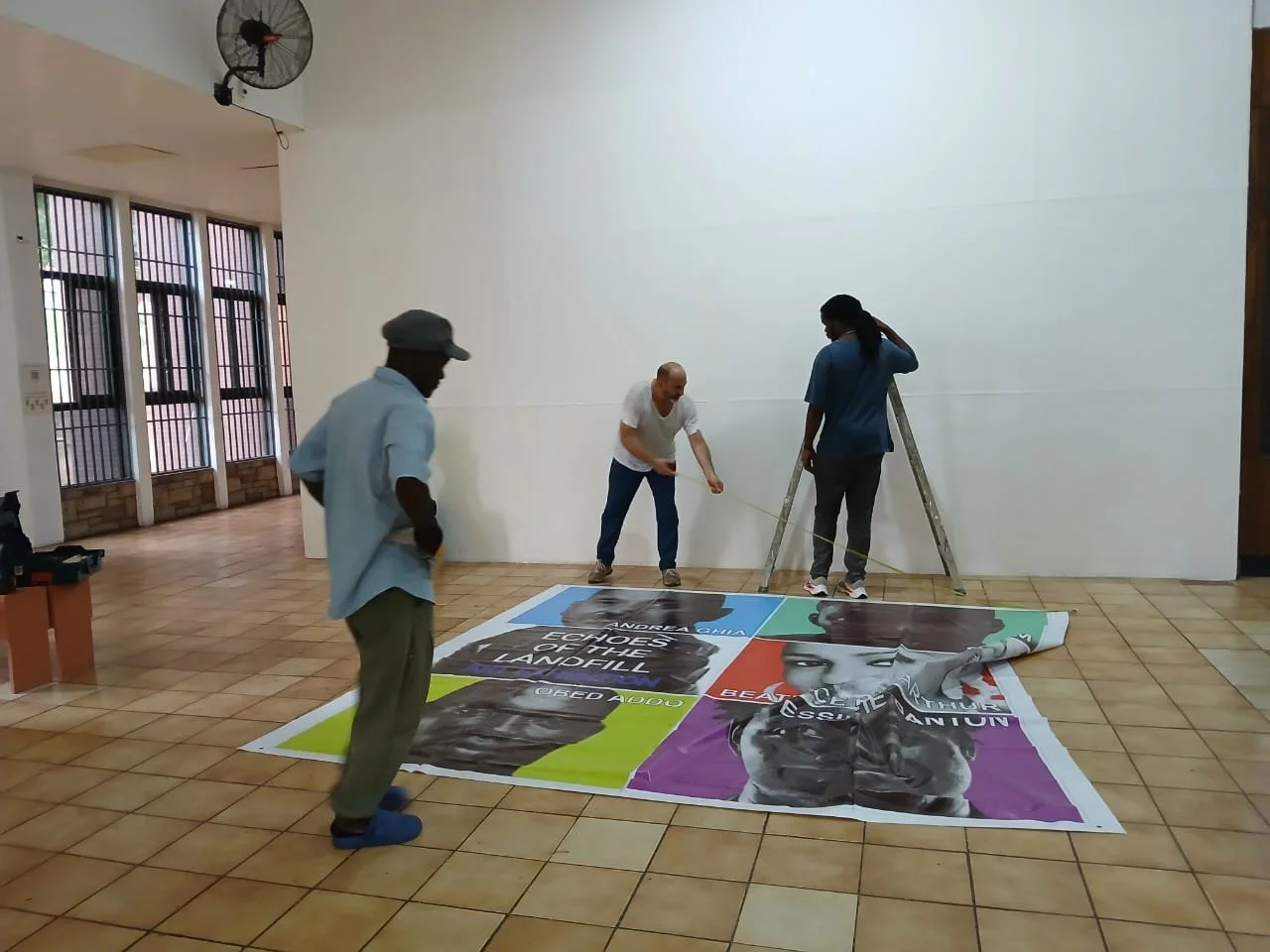

SHARE THIS STORY
Steps Toward Investment-led Strategy In U.S-Africa Relations
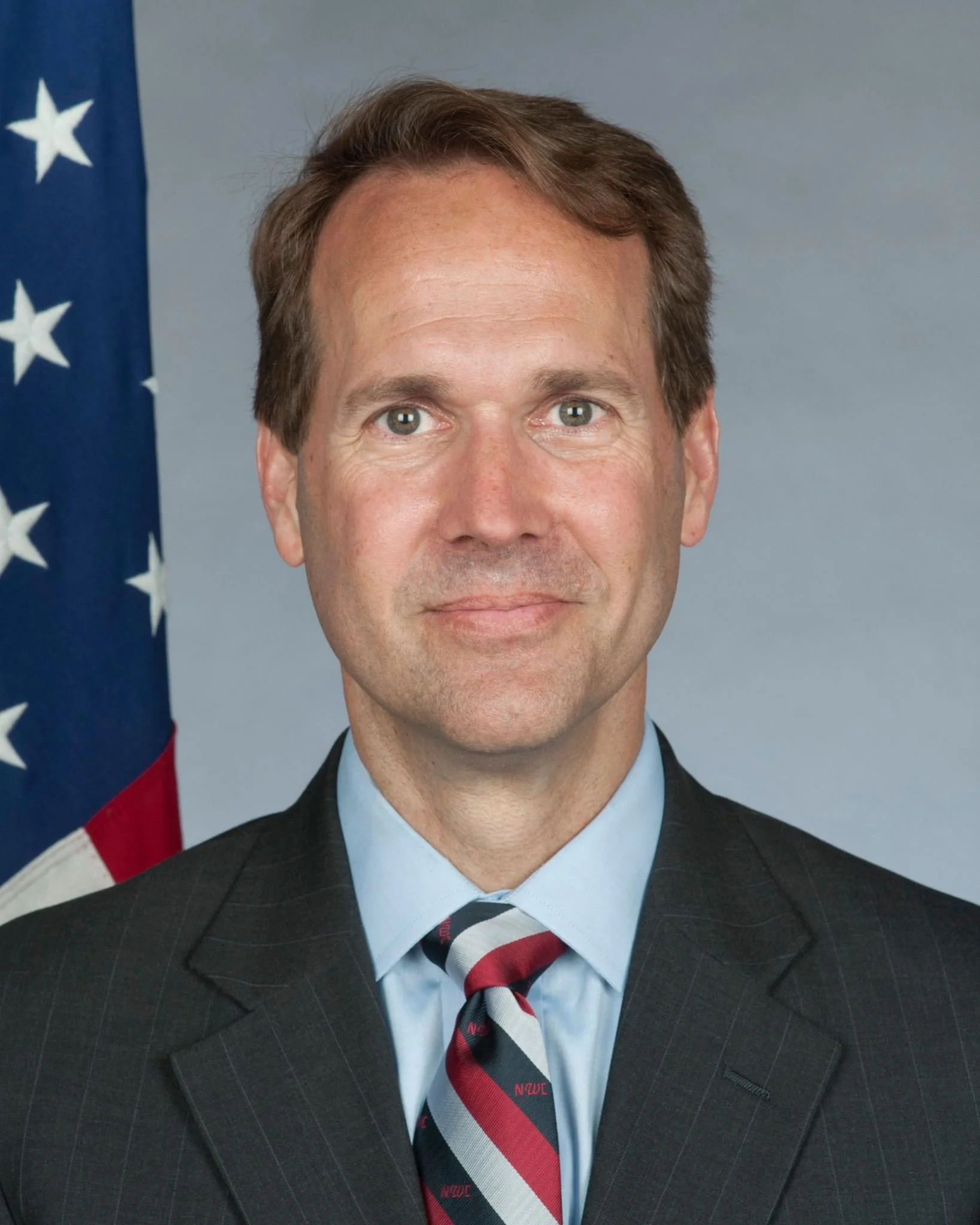
The Senior Bureau Official for the Department of State’s Bureau of African Affairs, Ambassador Troy Fitrell and U.S. Ambassador to Cote D'Ivoire, Ambassador Jessica Davis Ba reviewed commercial diplomacy trip to West Africa and outlined the State Department’s new commercial diplomacy strategy for Sub-Saharan Africa.
Senior Bureau Official Troy Fitrell’s Commercial Diplomacy Trip to West Africa
Digital Press Briefing
The Senior Bureau Official for the Department of State’s Bureau of African Affairs, Ambassador Troy Fitrell and U.S. Ambassador to Cote D'Ivoire, Ambassador Jessica Davis Ba. Ambassador Fitrell reviewed his commercial diplomacy trip to West Africa and outlined the State Department’s new commercial diplomacy strategy for Sub-Saharan Africa.
You can find the full transcript of the briefing here:

A Group Exhibition of Art and Poetry on Wate
The official documentary of the Mmiri bụ Ndụ (Water Is Life) art and poetry exhibition is now available!
Now Live! The Mmiri bụ Ndụ (Water is Life) Exhibition Documentary 🌍💧
IAS-UNN announces that the official documentary of the Mmiri bụ Ndụ art and poetry exhibition is now available. The exhibition, curated by the Institute of African Studies at the University of Nigeria, Nsukka, in collaboration with Our Water and Health Network Africa, formed part of the 4th International Conference on Water in Africa. Through powerful visual art and poetry, Mmiri Bu Ndu examines the presence, absence, social history, and state of water in Africa and in African life.
DELA Screening At UNN: More Photos
The DELA Campus Tour officially premieres at the esteemed University of Nigeria Nsukka. The screening and exhibition event was hosted by the Institute of African Studies (IAS) in their modern new venue, which was packed with an enthusiastic audience eager to engage with the content, highlighting both interest and meaningful impact.
Photos by IAS-UNN: DELA SCREENING & UNN CAMPUS
More images of the DELA Campus Tour at the esteemed University of Nigeria Nsukka (UNN). The screening and exhibition event was hosted by the Institute of African Studies (IAS) in their modern new venue, which was packed with an enthusiastic audience.
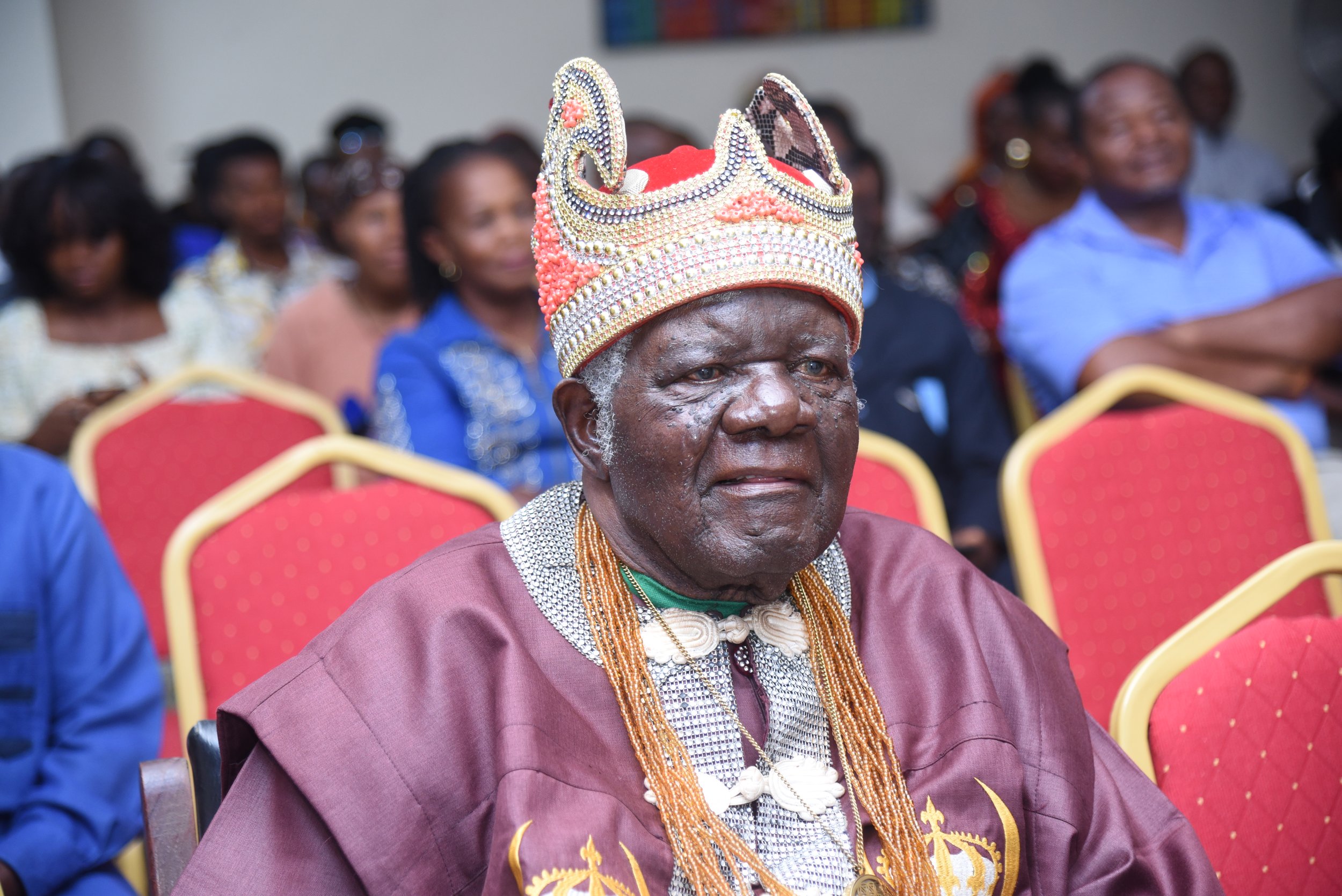
Special Guest: The paramount traditional ruler H.R.H Igwe George ASADU, The Okpe Udo of Ihe Nsukka, who in 2015 conferred the title "Ikedire of Nsukka" (“power which is effective”) on Prof. EI Anatsui.
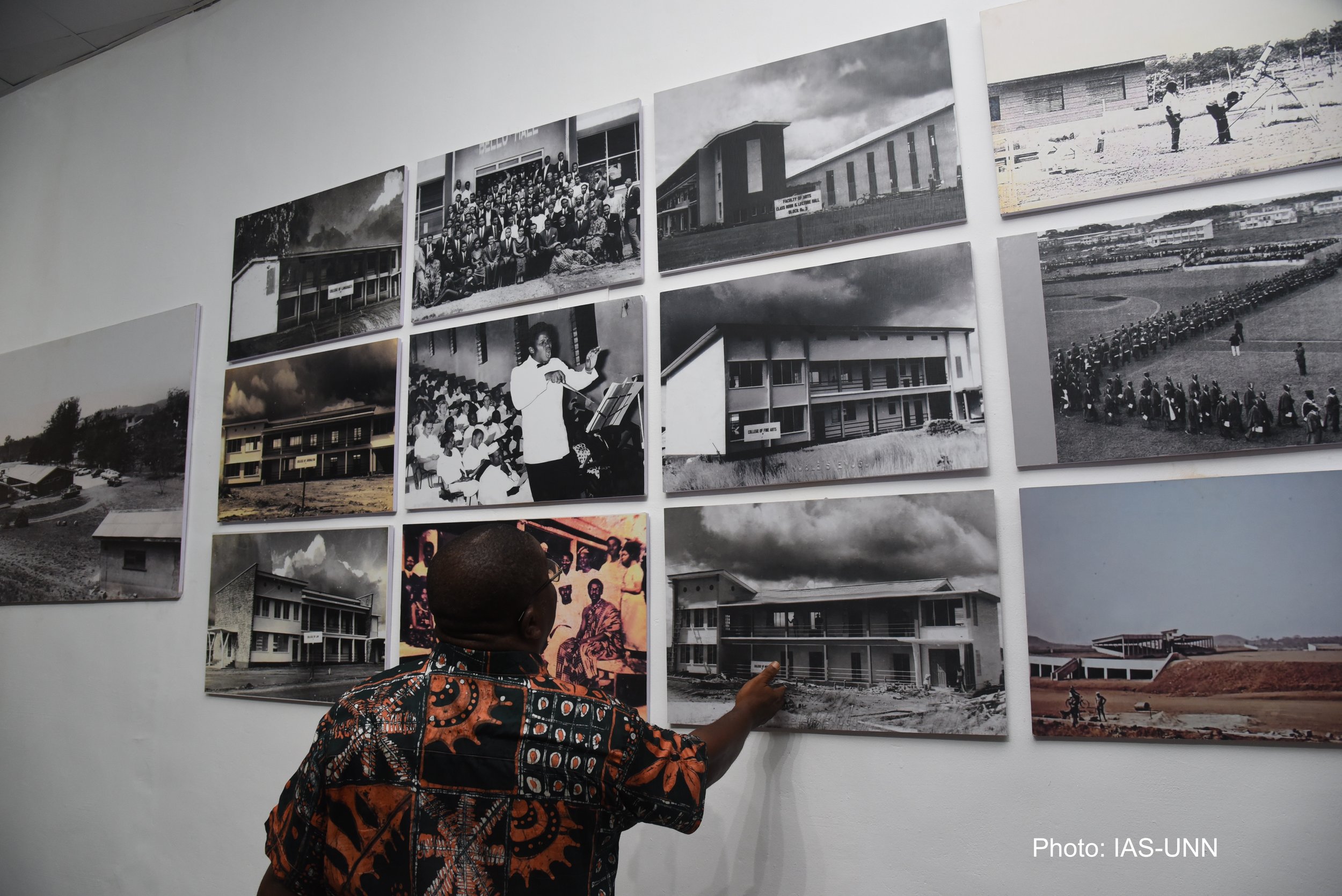
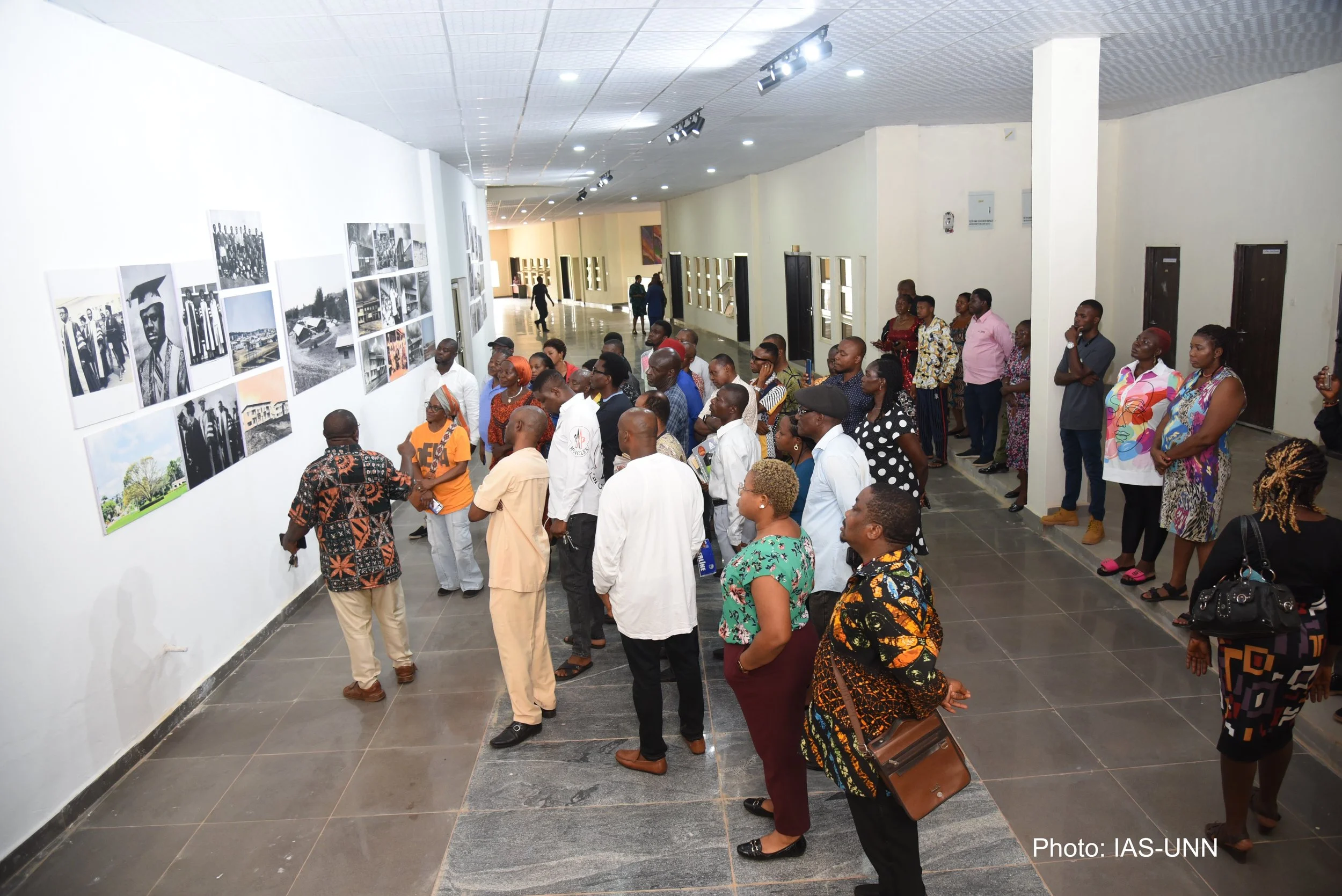
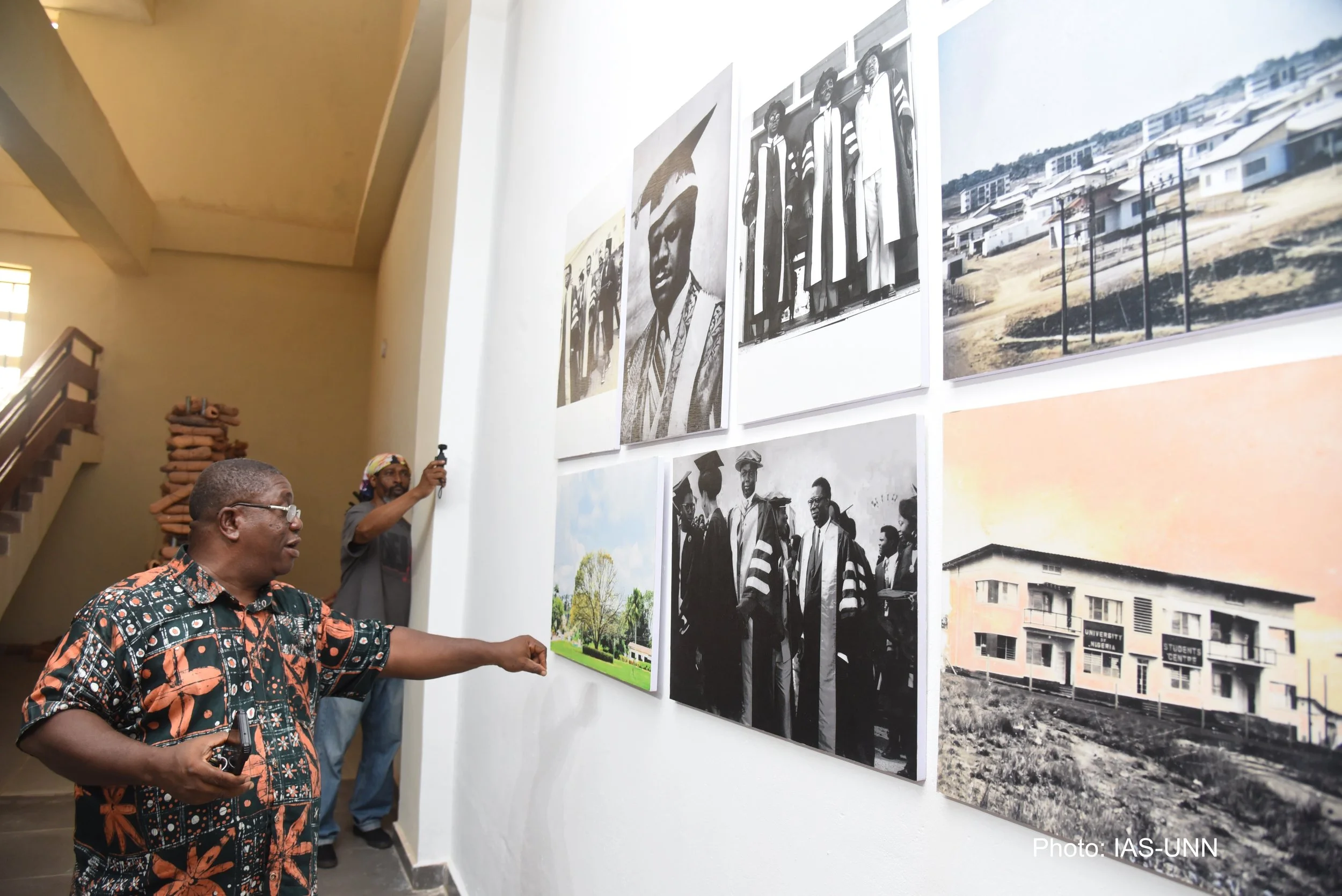
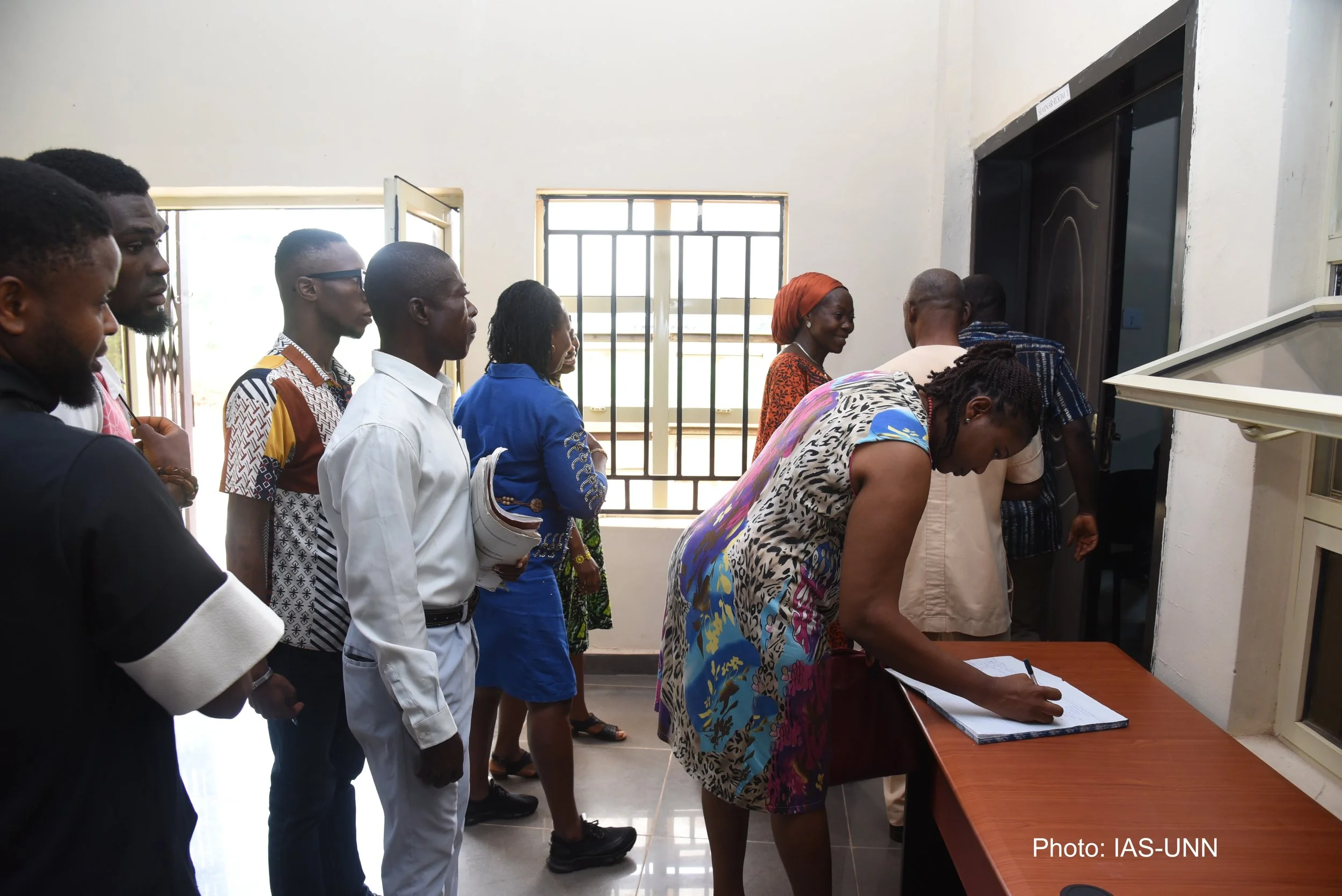
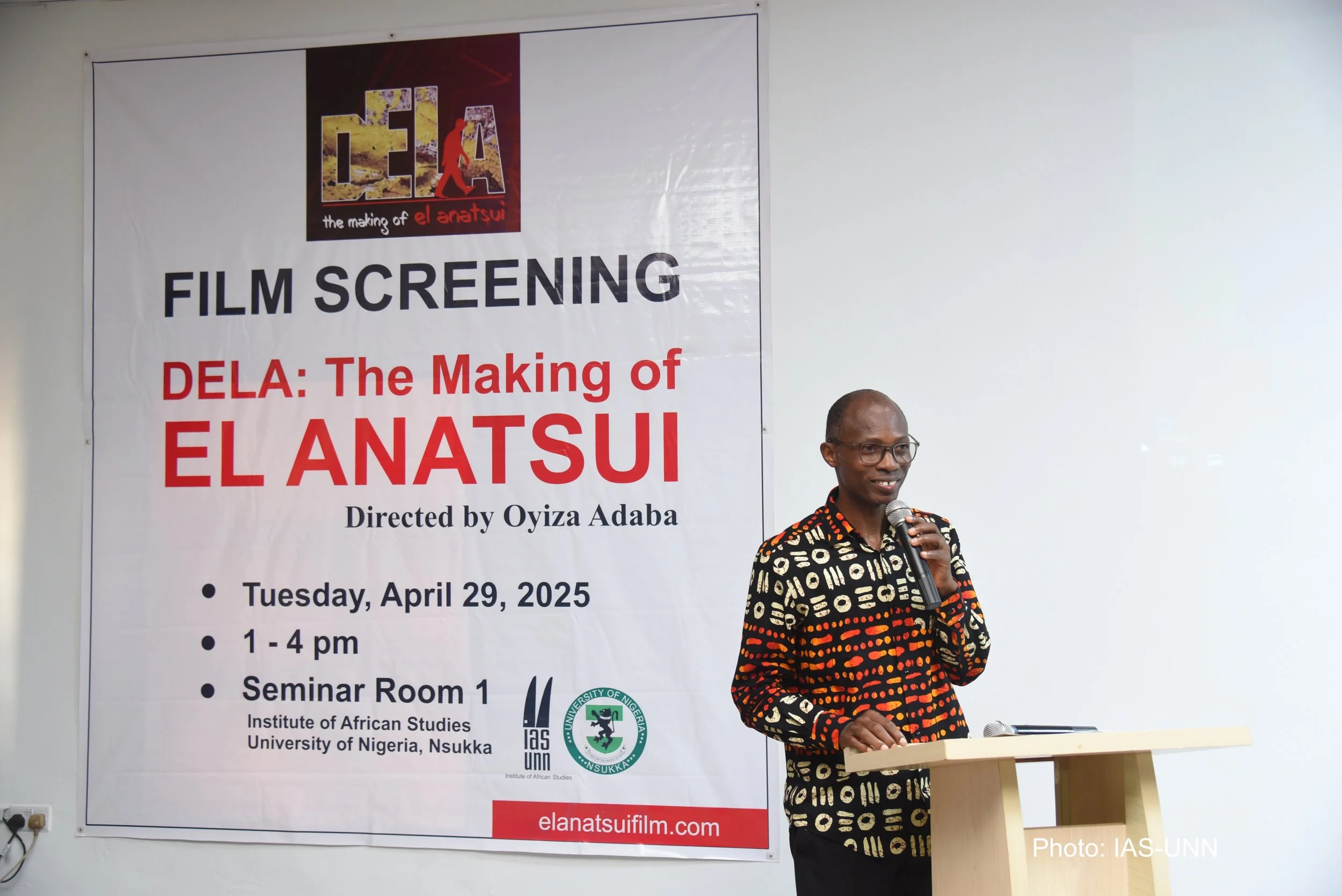
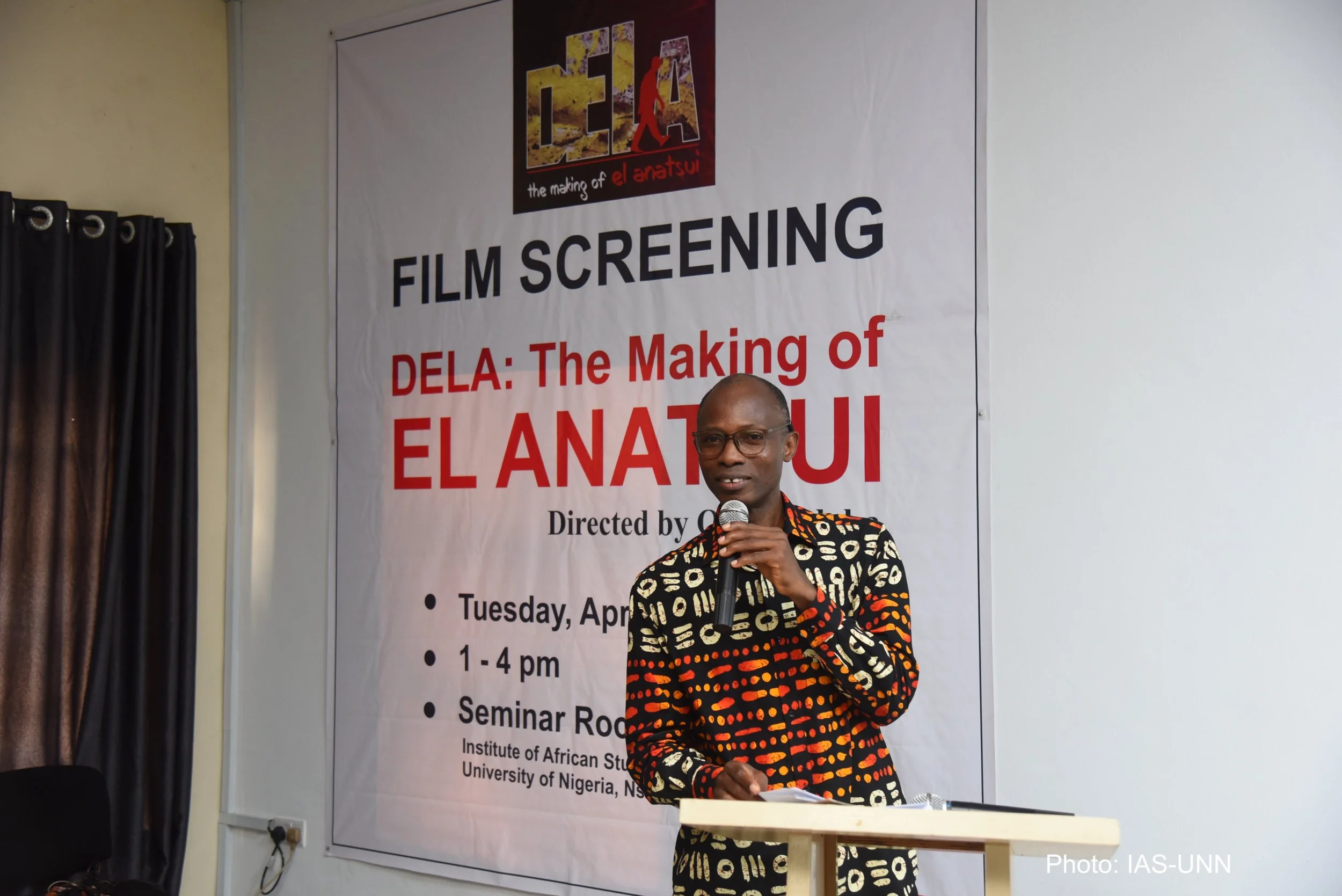
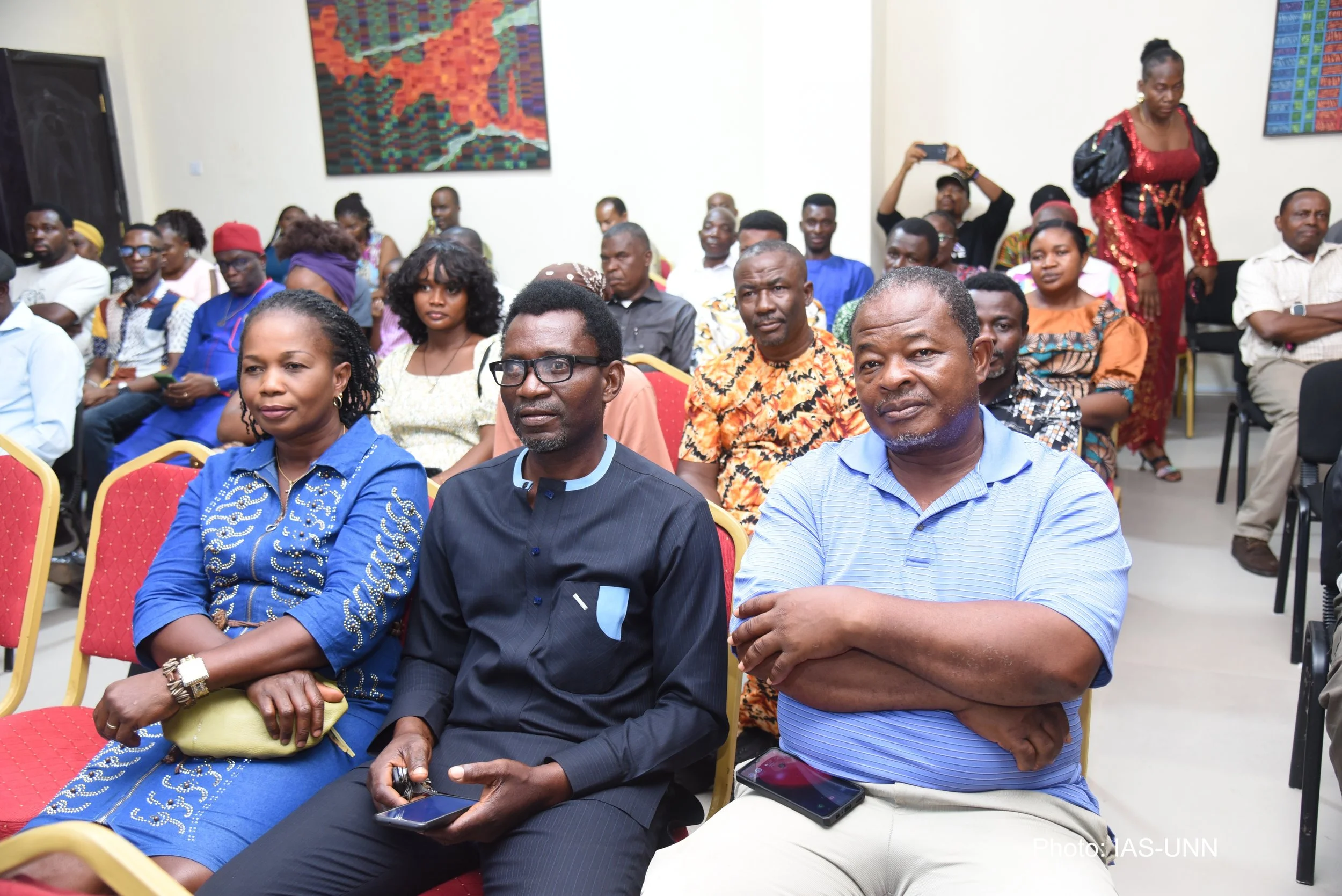
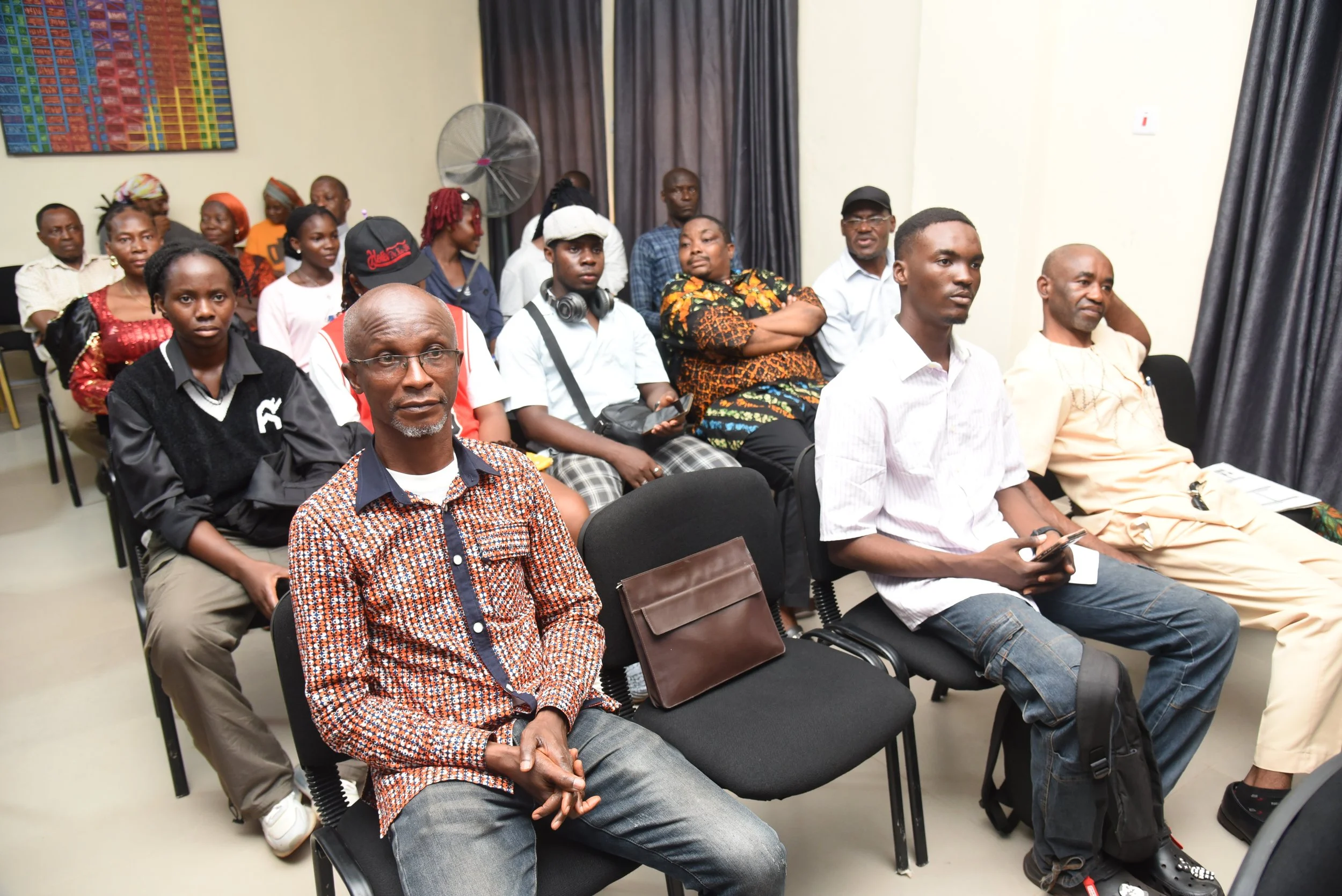
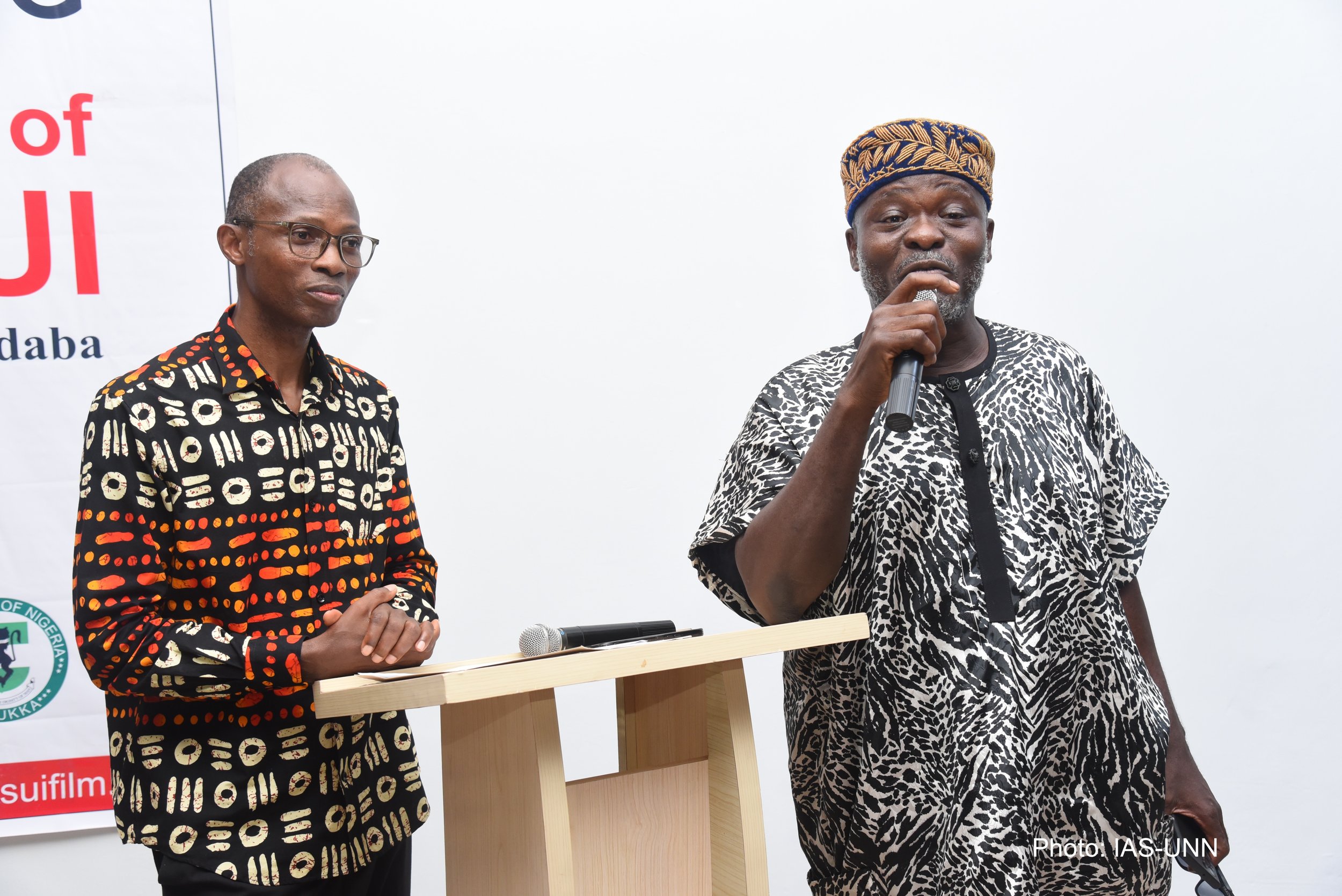
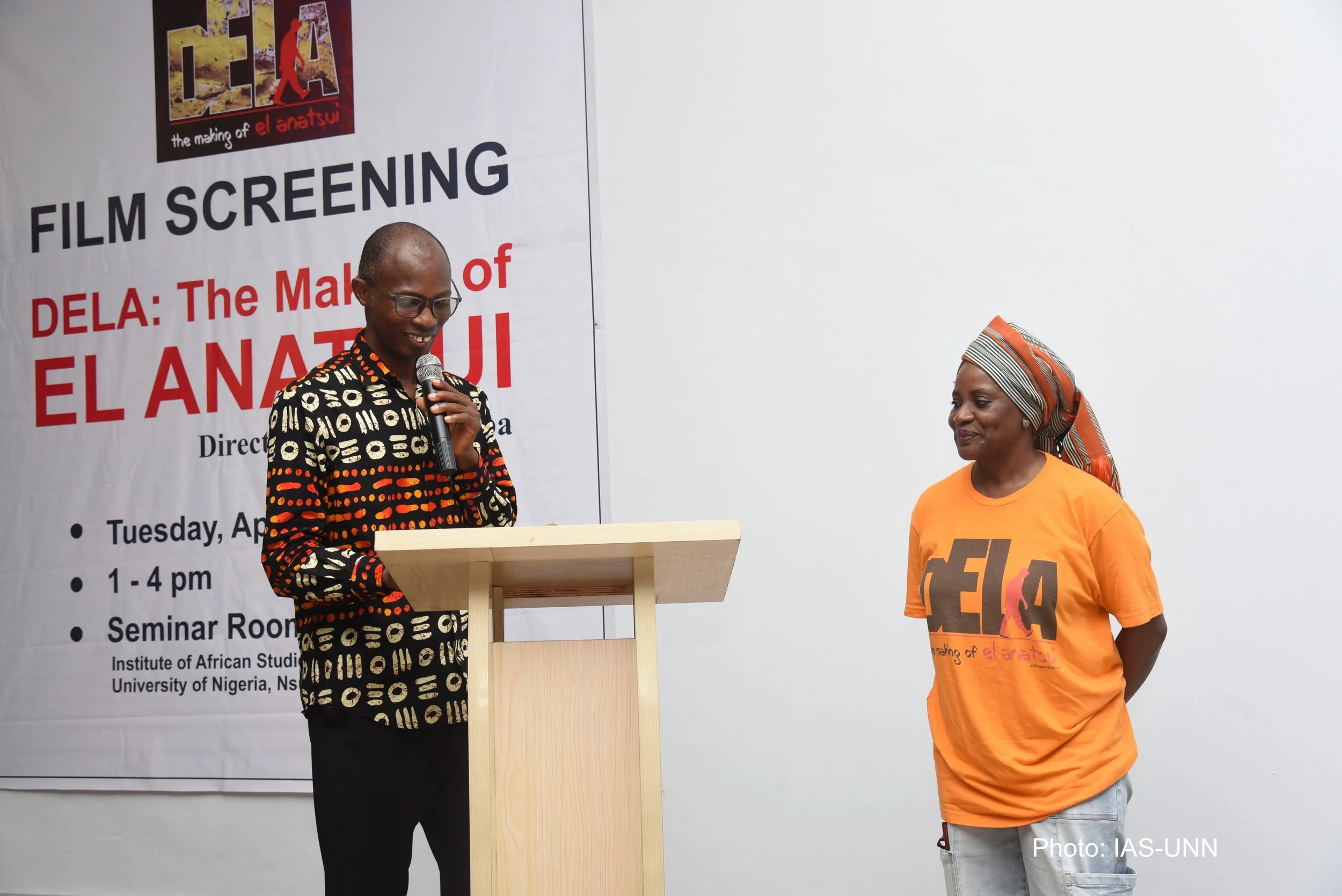
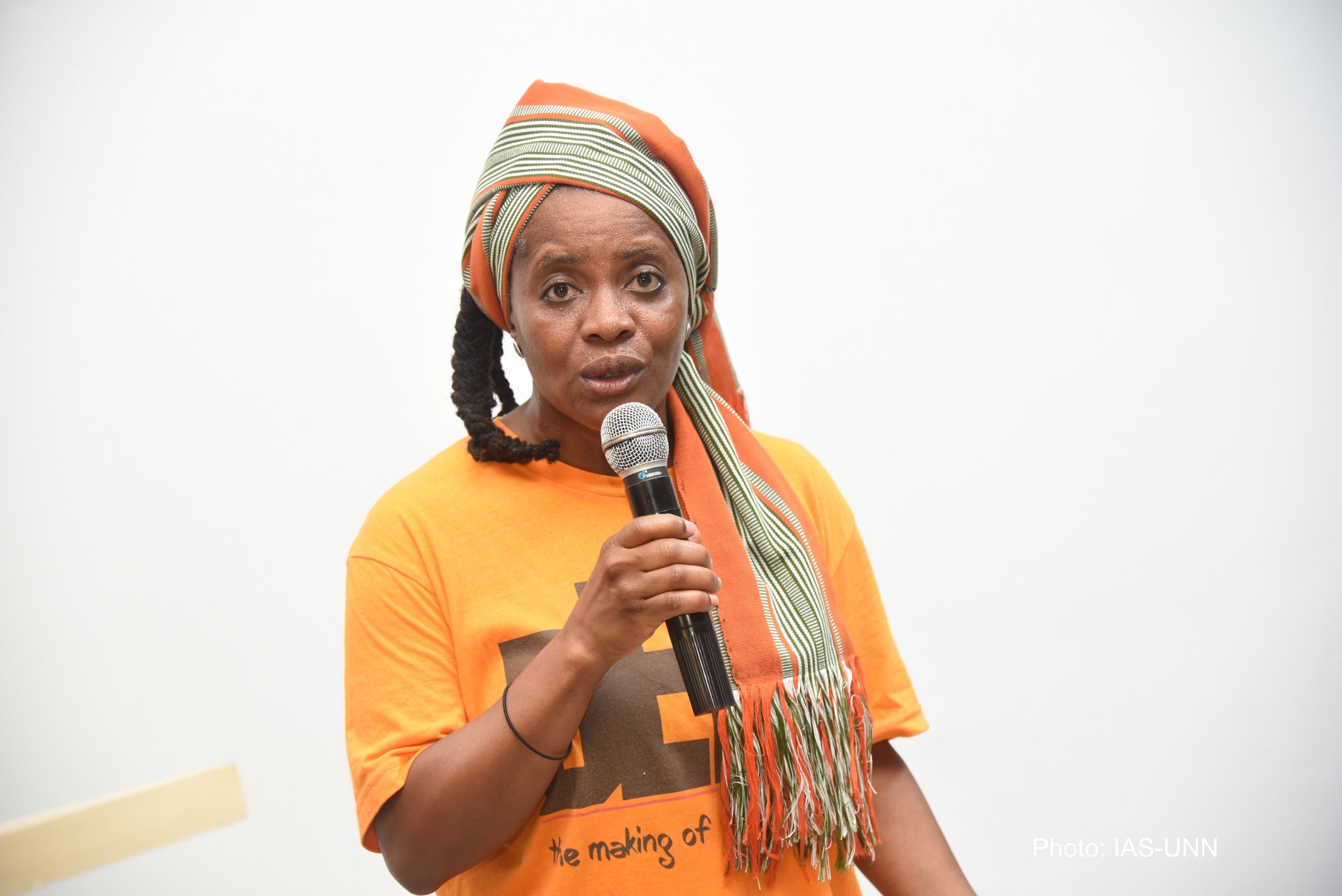
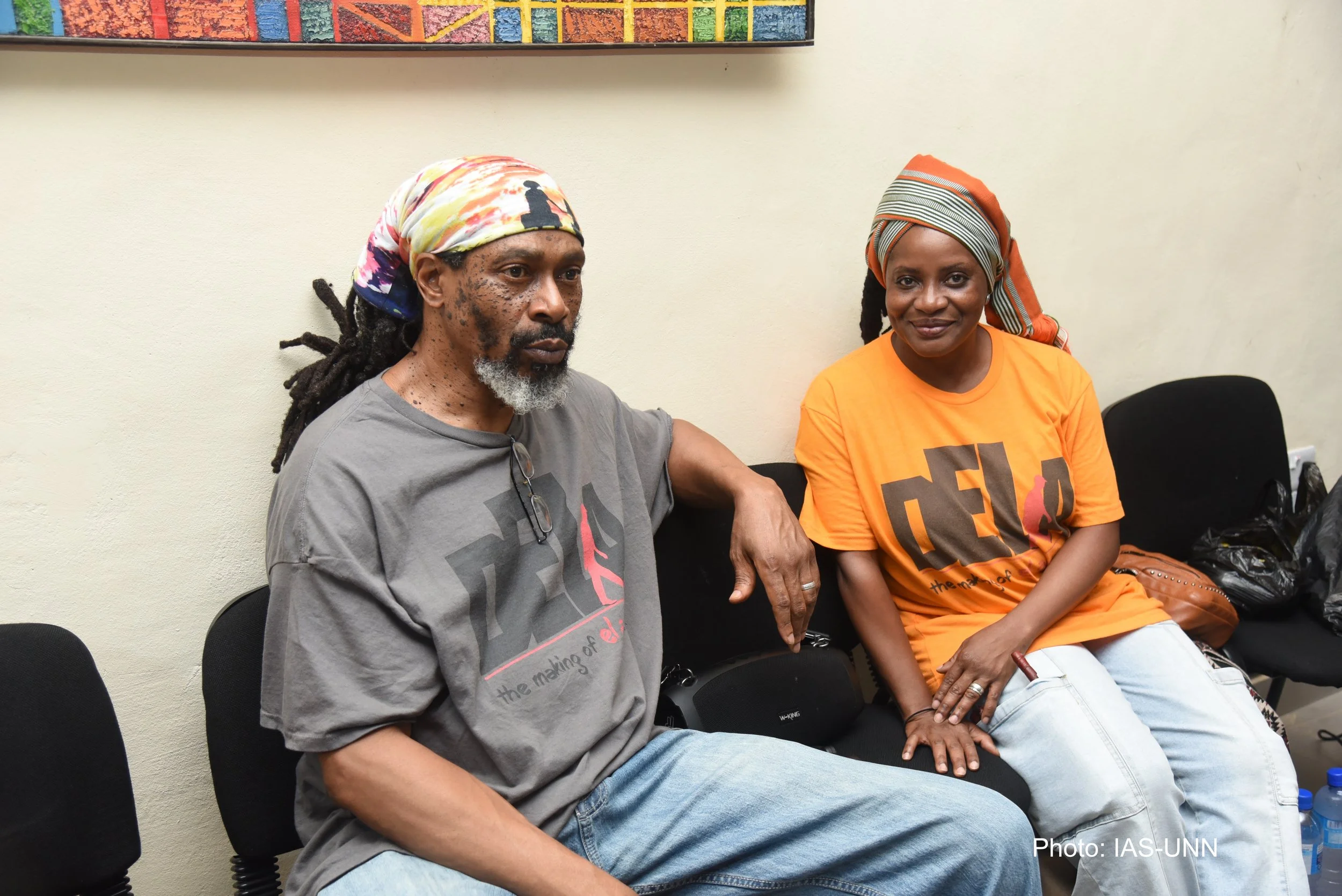
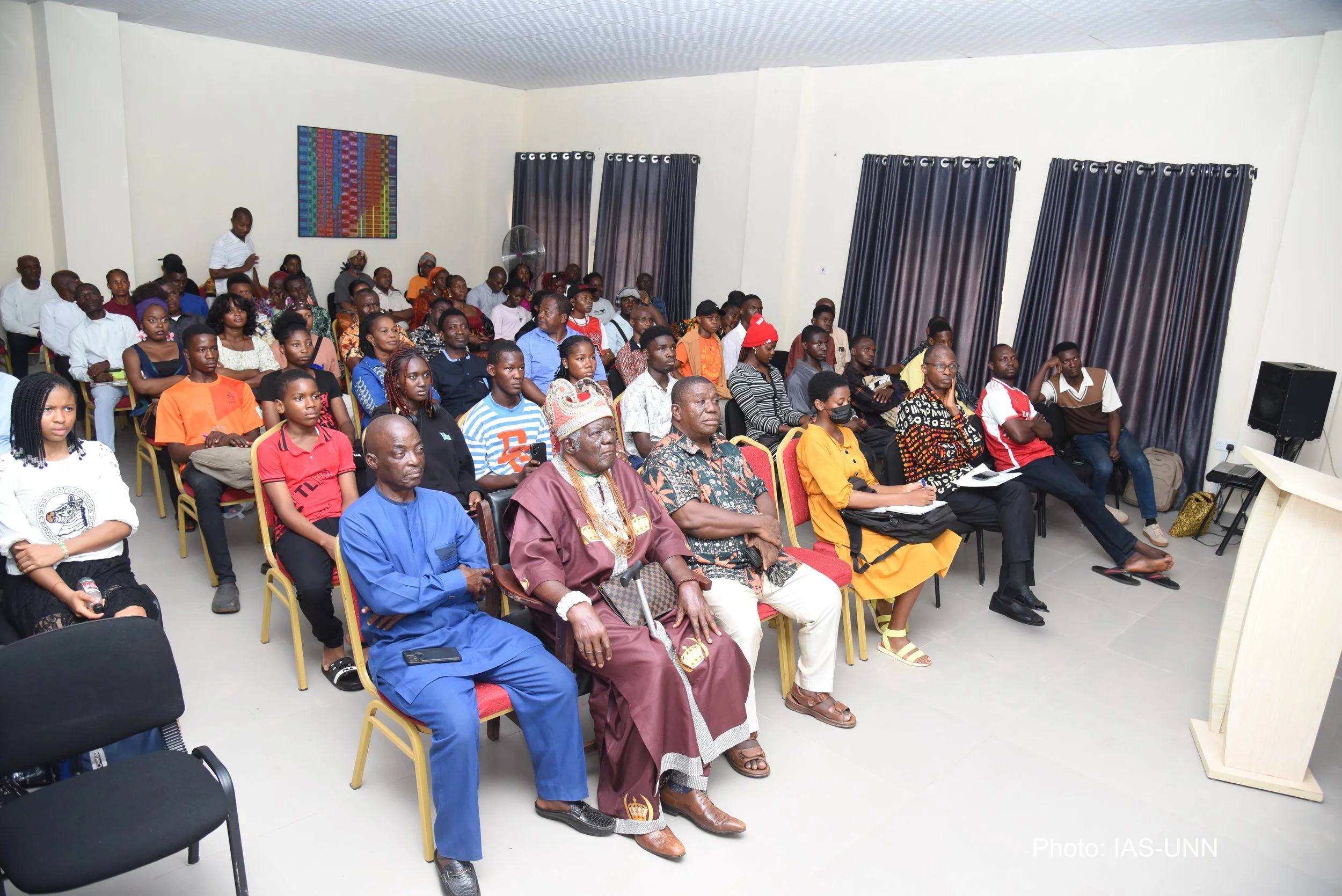
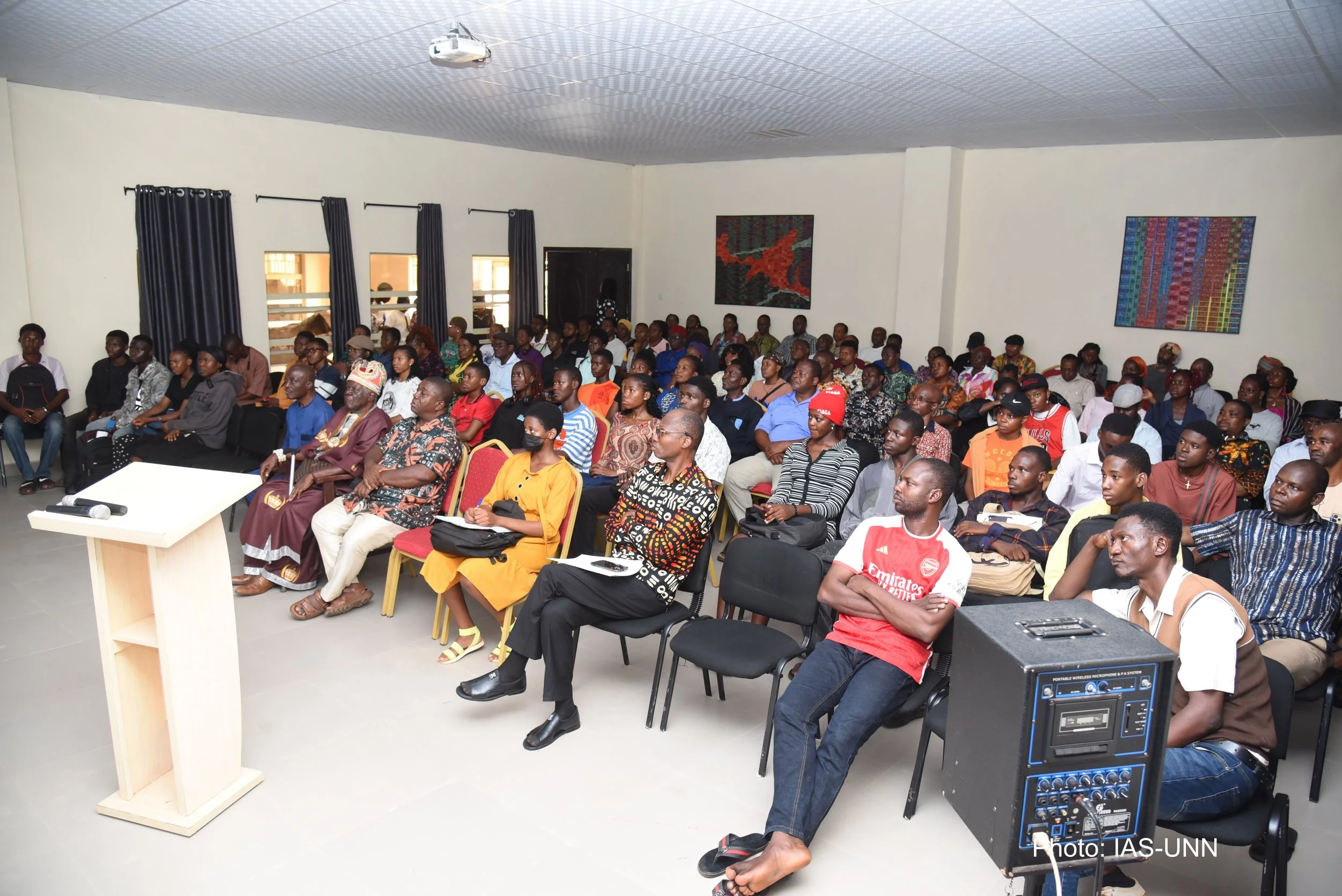
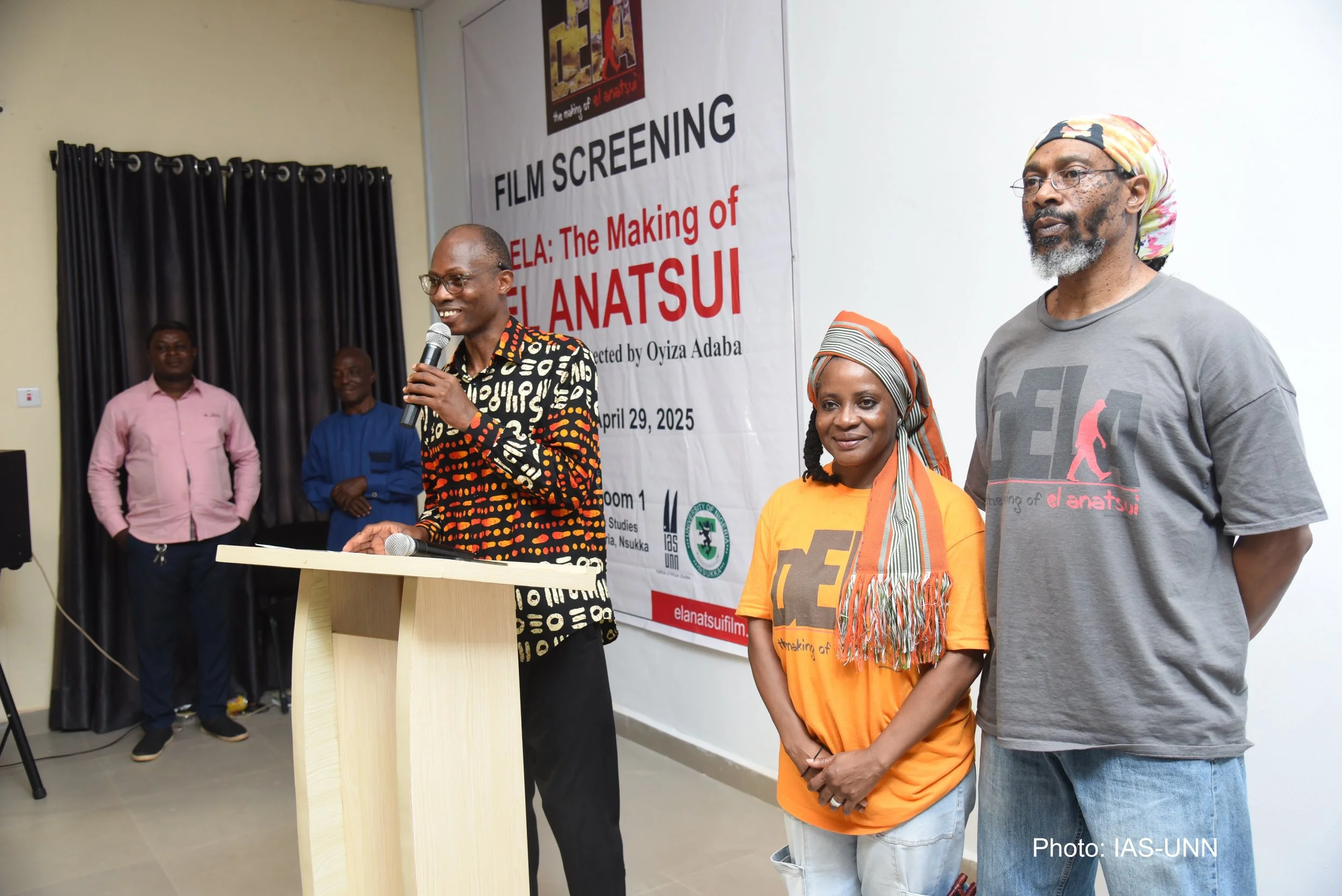
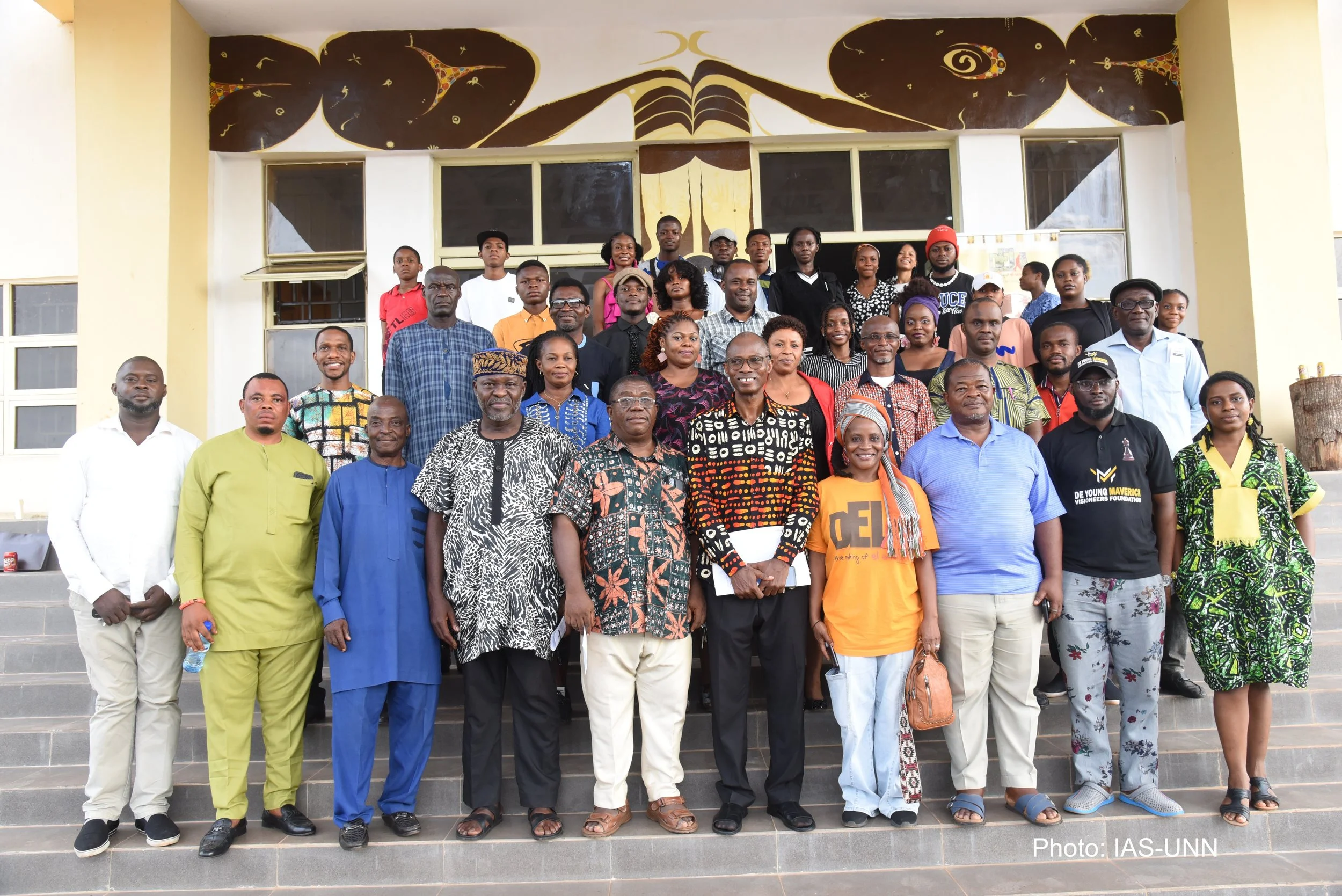
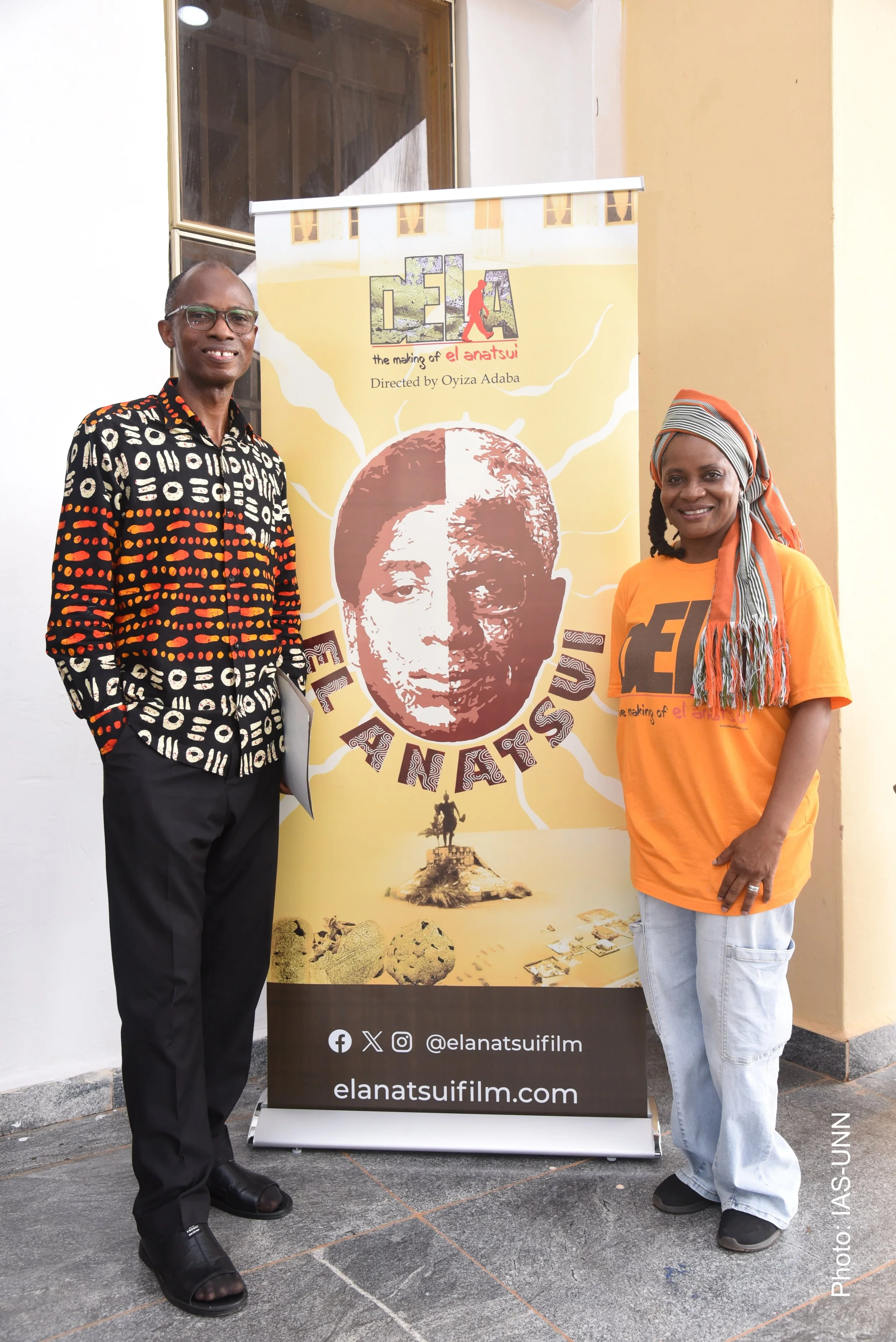
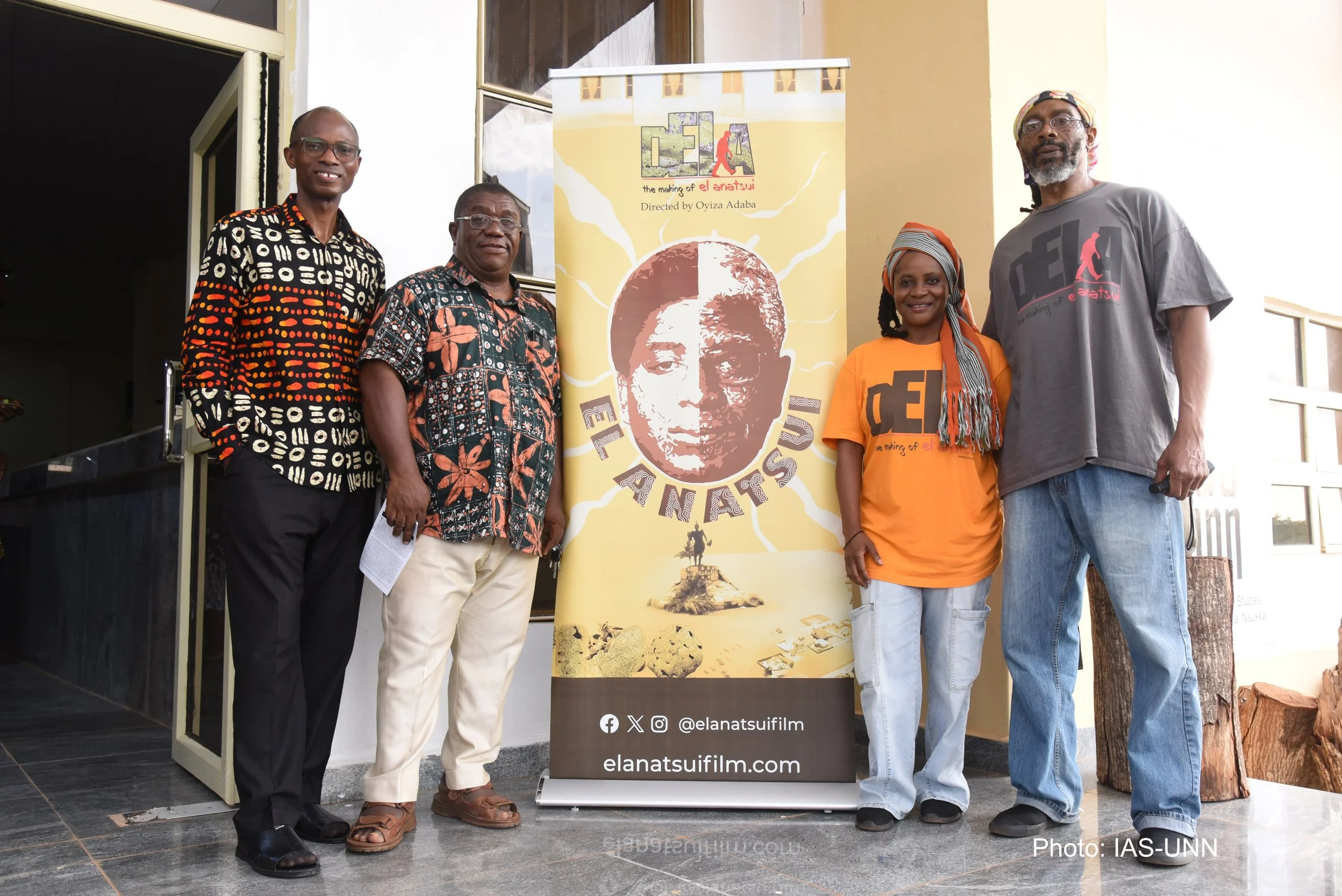
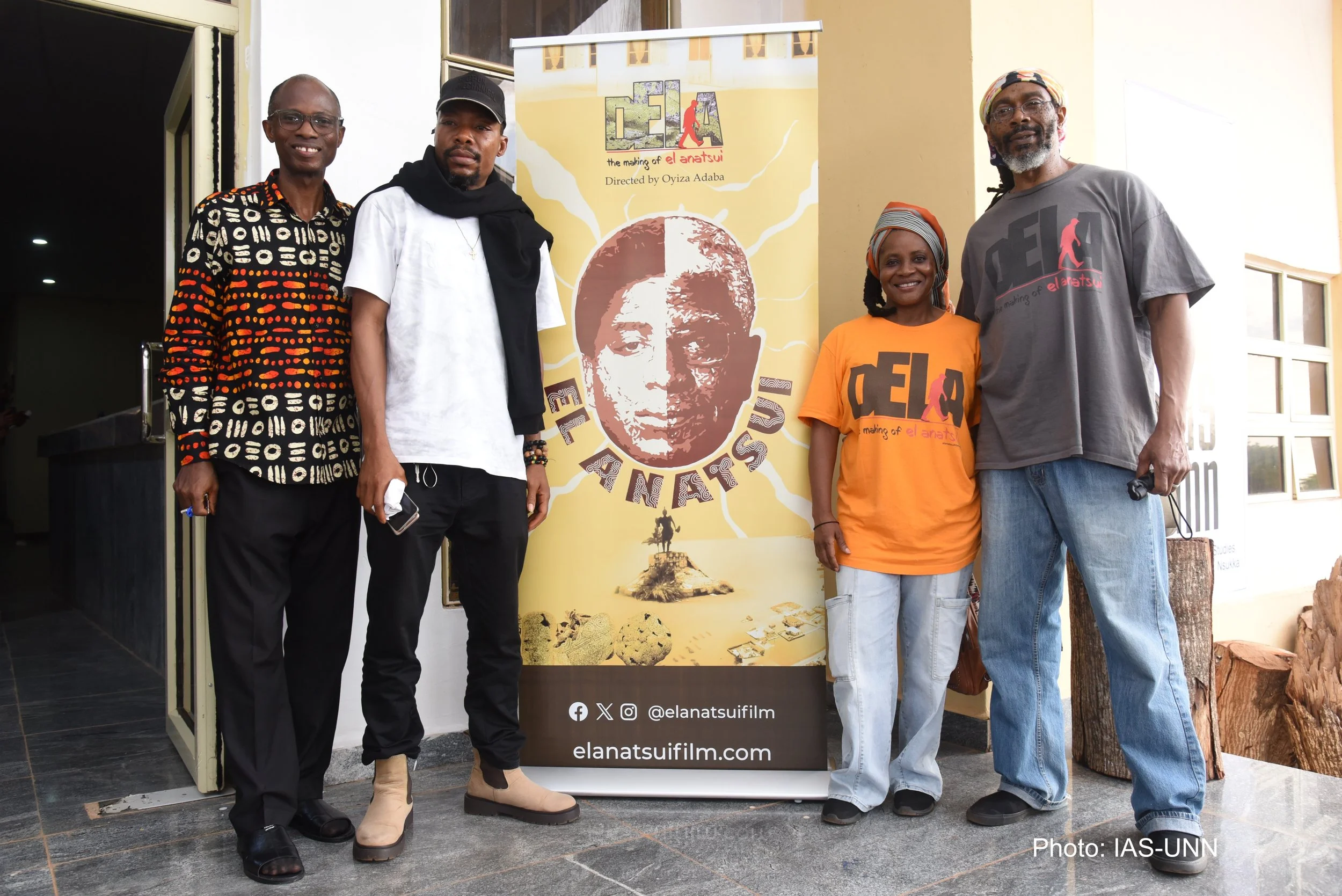
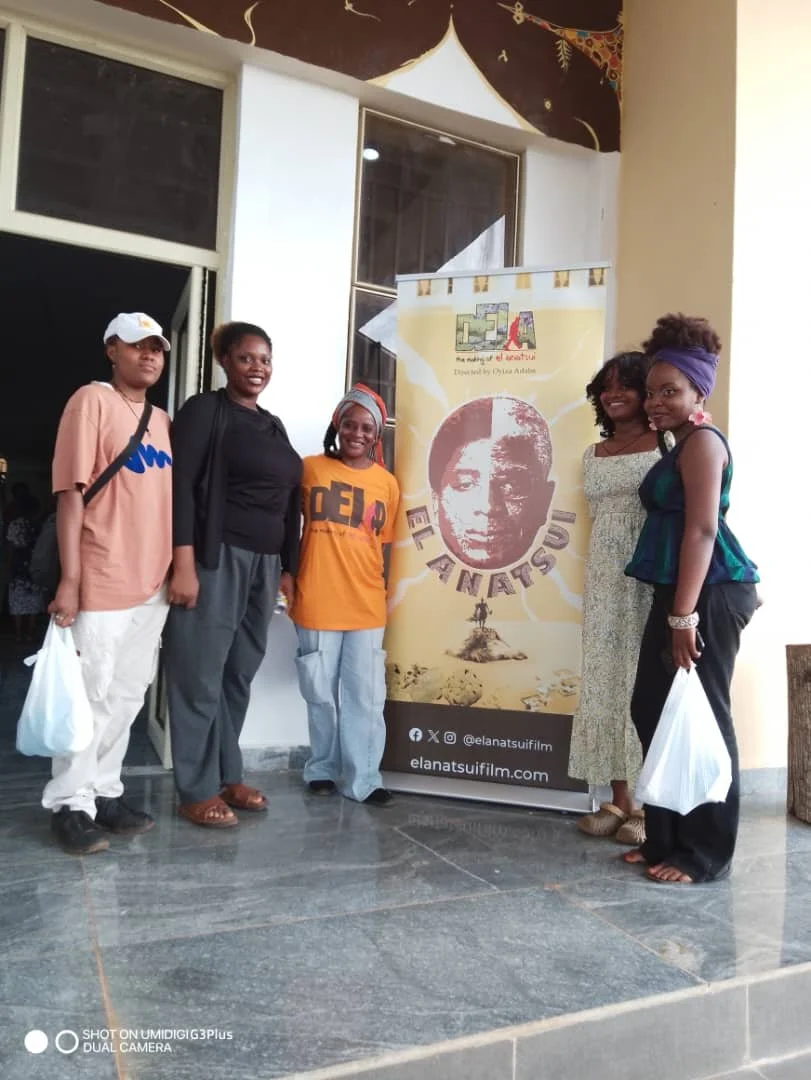
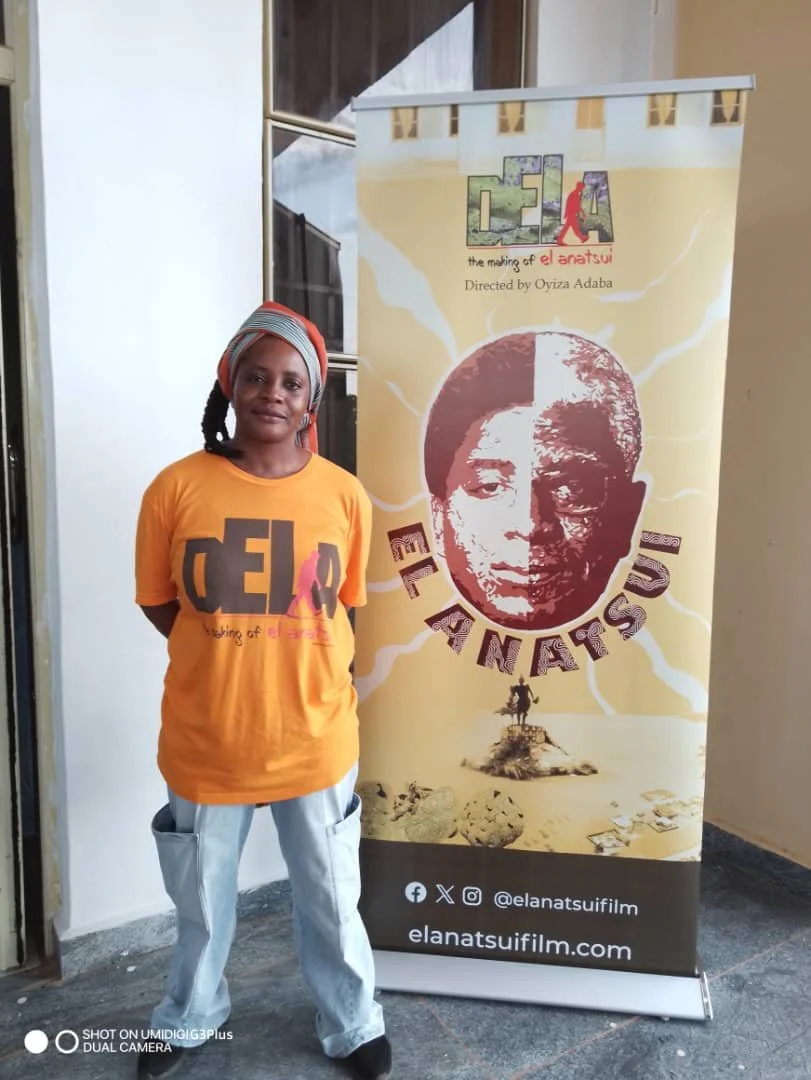
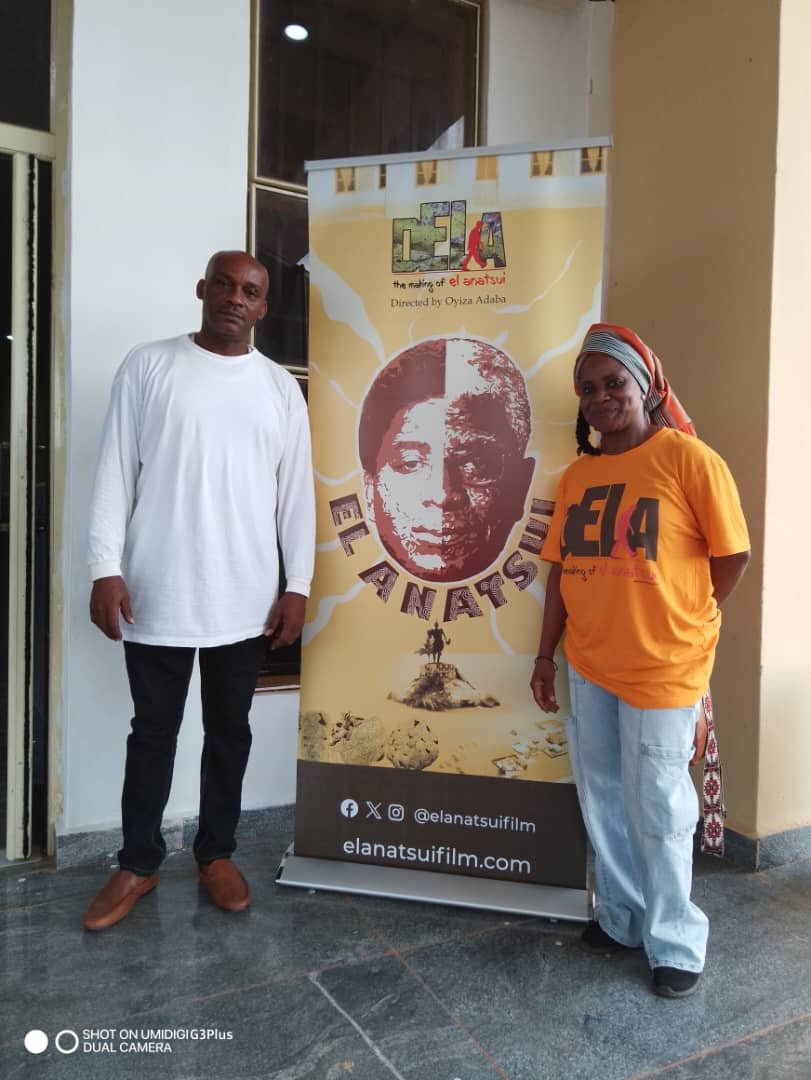
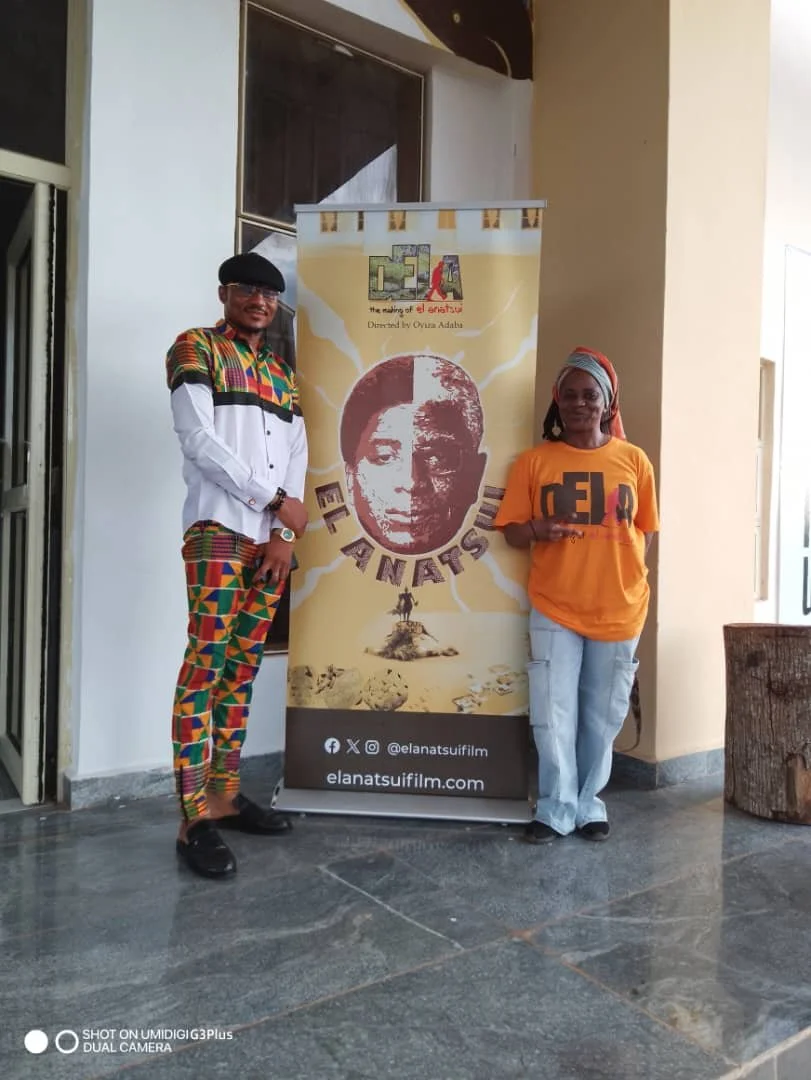
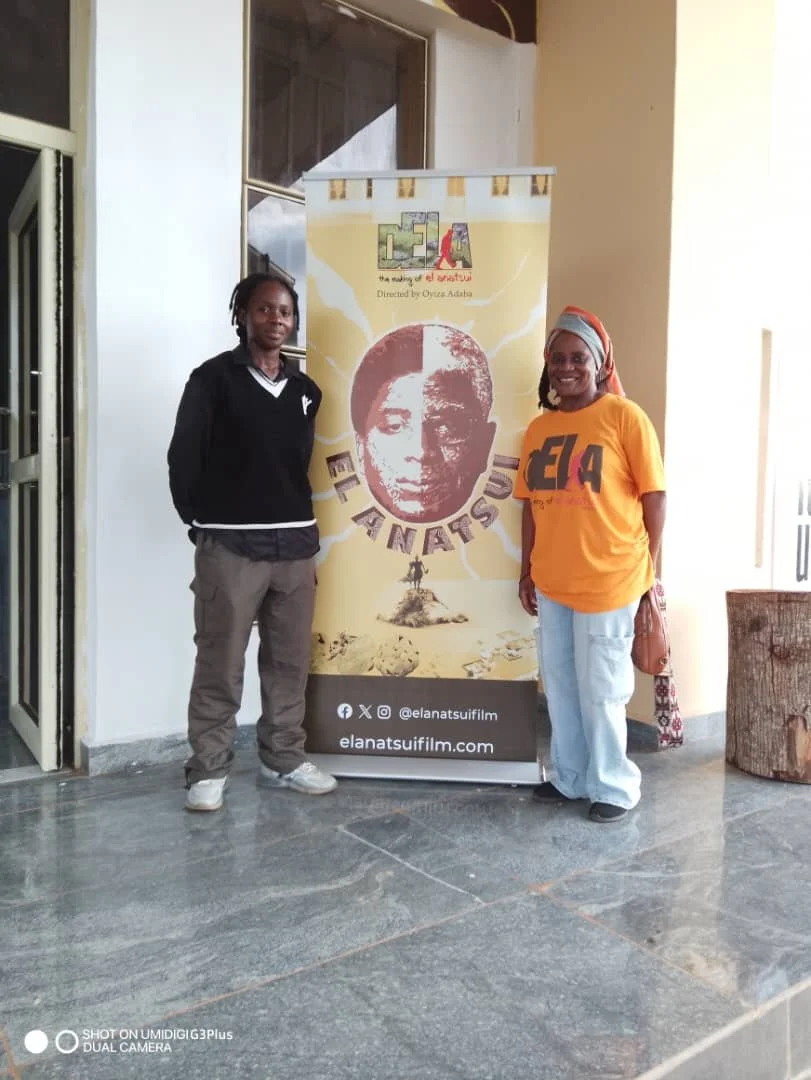
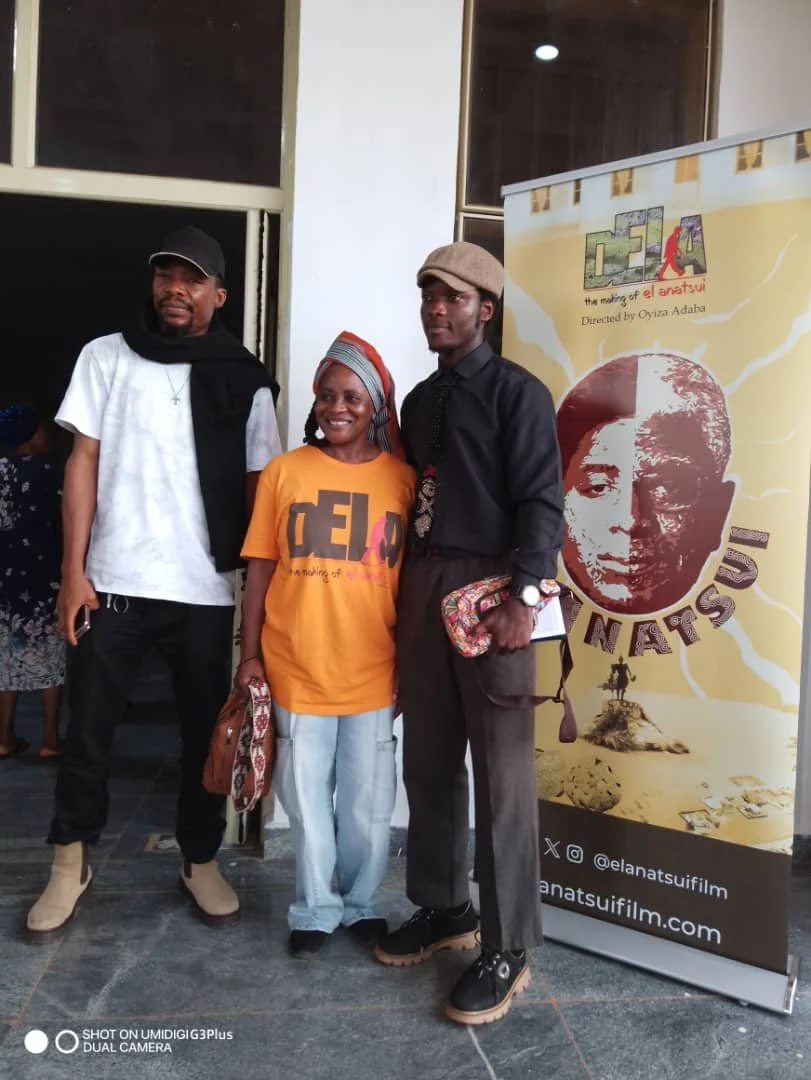
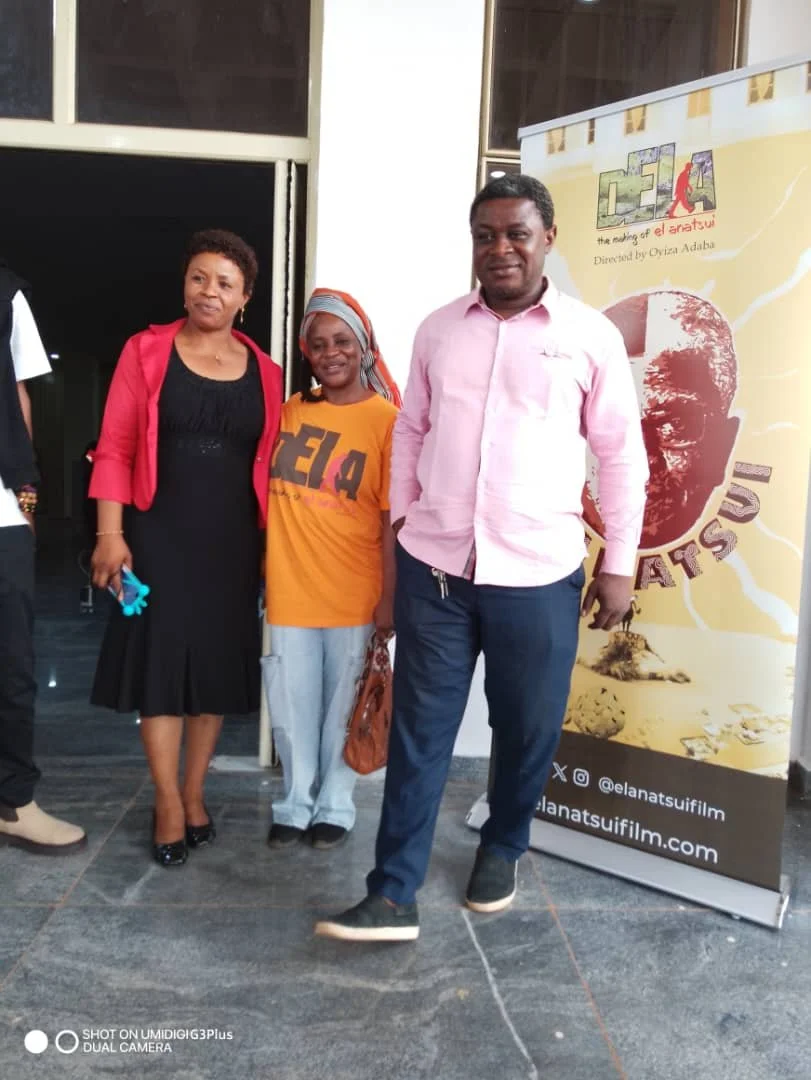
DELA: The Making of El Anatsui is a biographical documentary about one of the world's greatest sculptors. The Campus Tour aims to bring art and film students closer to the film's subject. It has so far, screened at Pan-Atlantic University Lagos, University of Nigeria Nsukka (UNN). In Ghana, the tour will continue at the artist’s five alma mater institutions.
SHARE THIS STORY
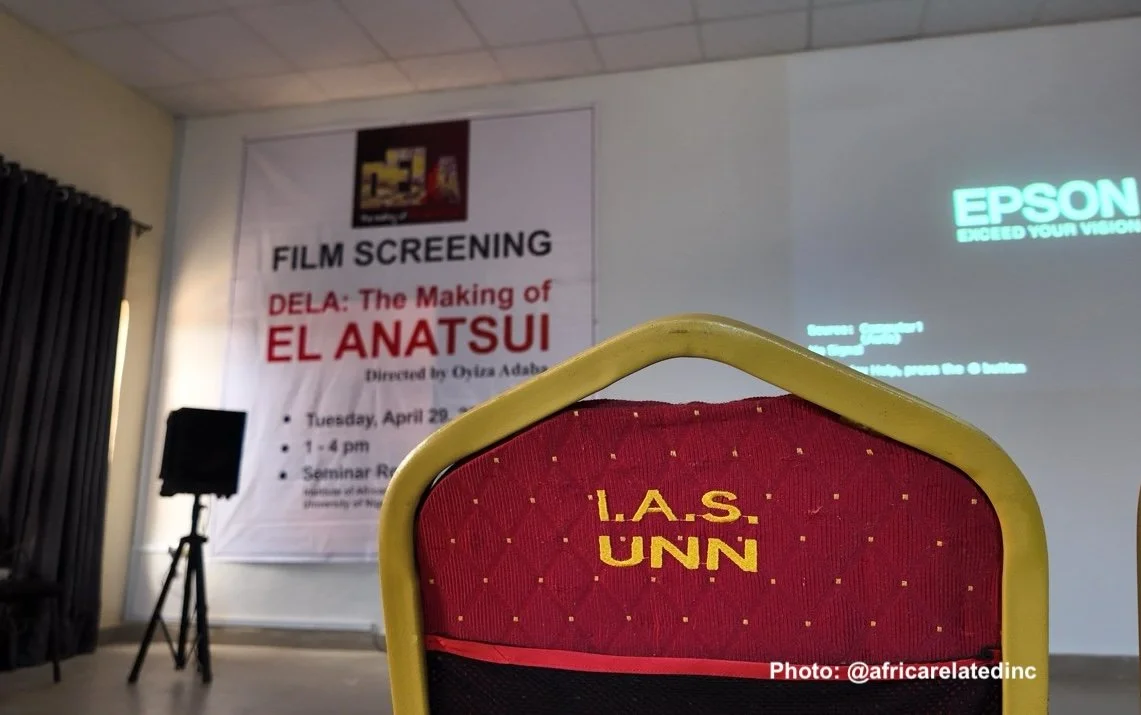
DELA Campus Tour: University Of Nigeria, Nsukka (UNN)
The DELA Campus Tour officially premieres at the esteemed University of Nigeria Nsukka. The screening and exhibition event was hosted by the Institute of African Studies (IAS) in their modern new venue, which was packed with an enthusiastic audience eager to engage with the content, highlighting both interest and meaningful impact.
oyiza adaba
maurice E. Okereke
The DELA Campus Tour officially premiered at the esteemed University of Nigeria Nsukka (UNN). The screening and exhibition event was hosted by the Institute of African Studies (IAS) in their modern new venue, which was packed with an enthusiastic audience eager to engage with the content, highlighting both interest and meaningful impact.

Main Gate of the University of Nigeria, Nsukka reading the institution’s motto “To Restore The Dignity Of Man”. Photo: Africa-Related.
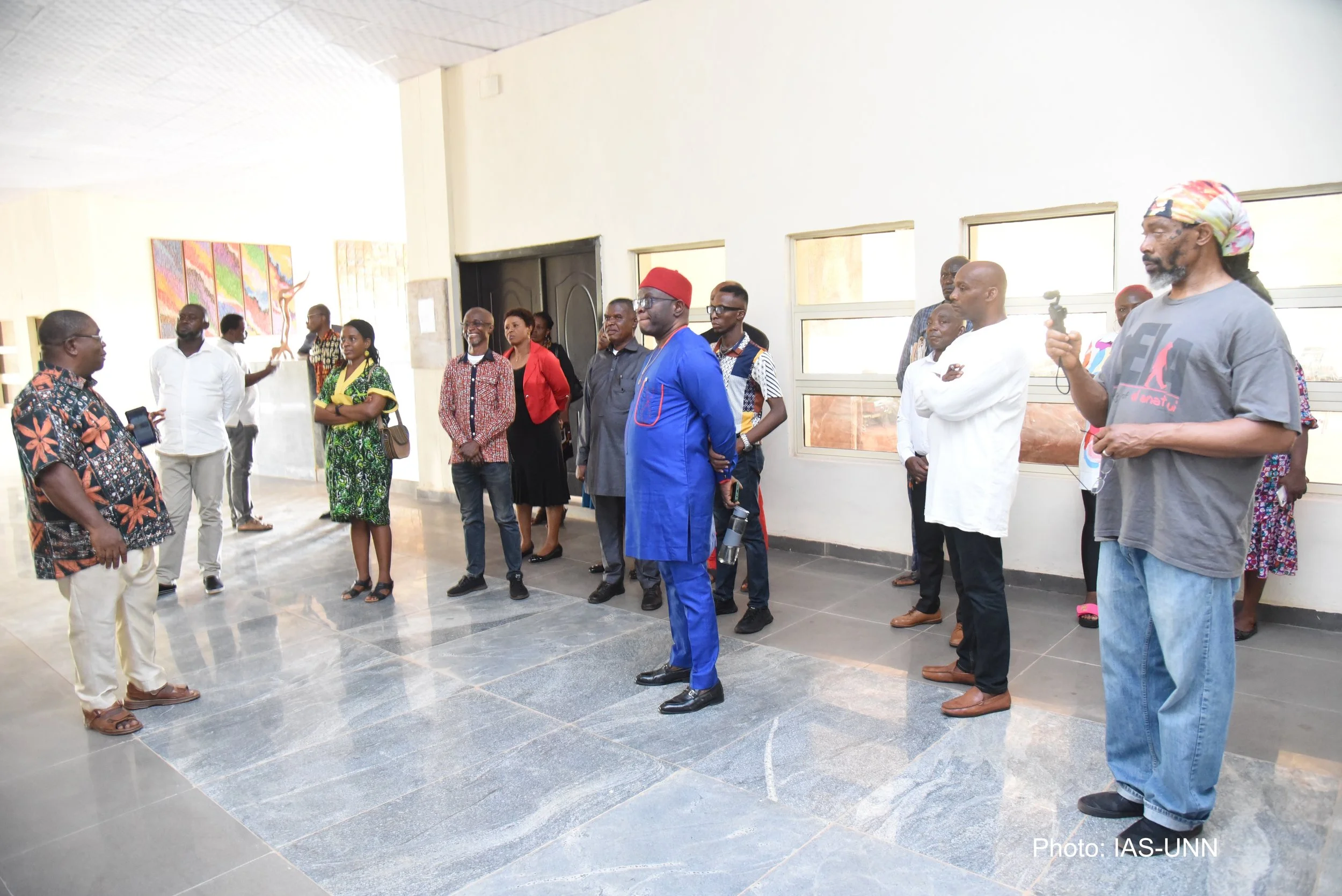
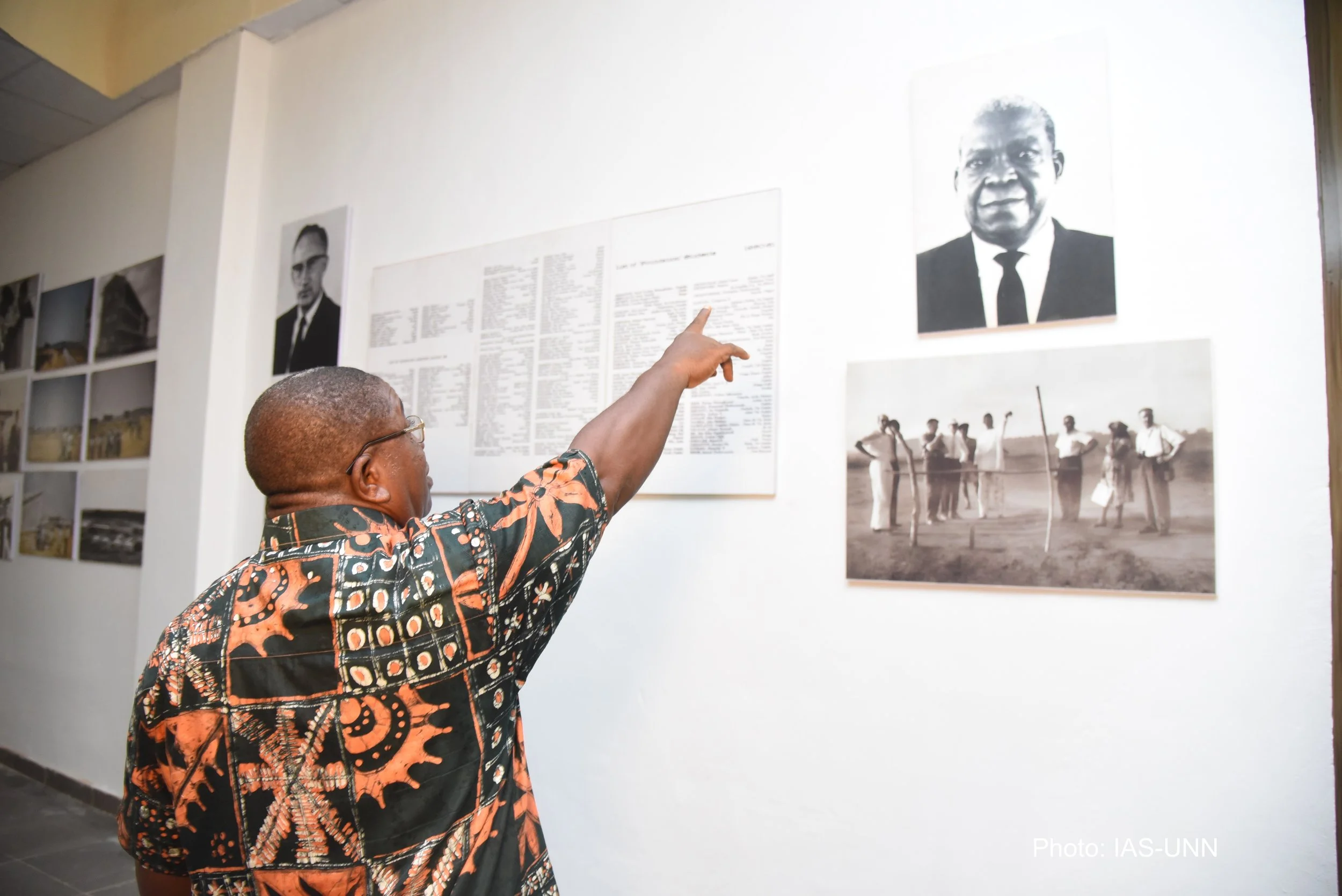
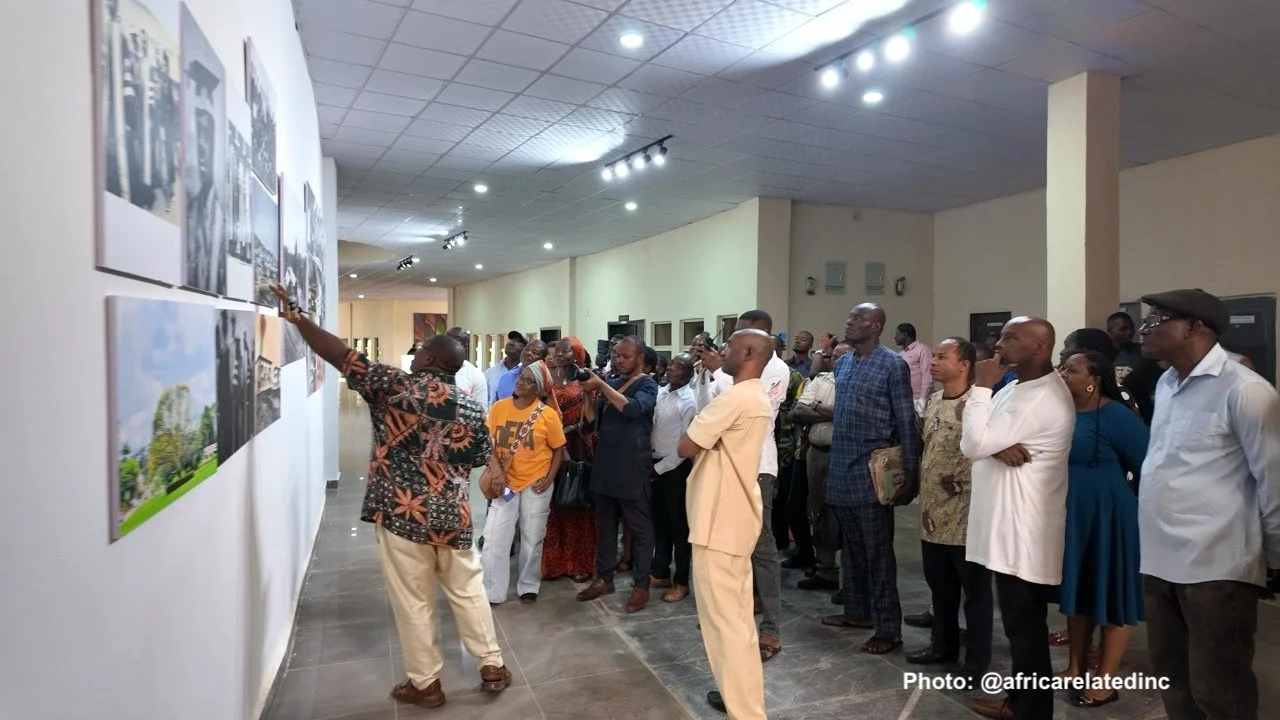
To kick off the screening on April 29, 2025, Prof. Chijioke Onuora, a professor of drawing and sculpture in the Fine and Industrial Arts Department conducted an enlightening tour of the captivating photo exhibition that beautifully encapsulates the rich history and vibrant culture of the University of Nigeria.
The ground floor of the Institute of African Studies serves as a walk-in gallery of various artworks by both current and past students and teachers. Our guide was Prof. Chijoke Onuora, a former student of El Anatsui, and also the son of Mr. Joshua Chukwuemeka Onuorah, a pioneer student of Physical Health Education and the UNN unofficial photographer in the 60s and 70s. He showed us beautiful photos taken in the very early days of the university's existence, capturing various occasions such as the first graduation ceremony, and first set of female graduates etc.
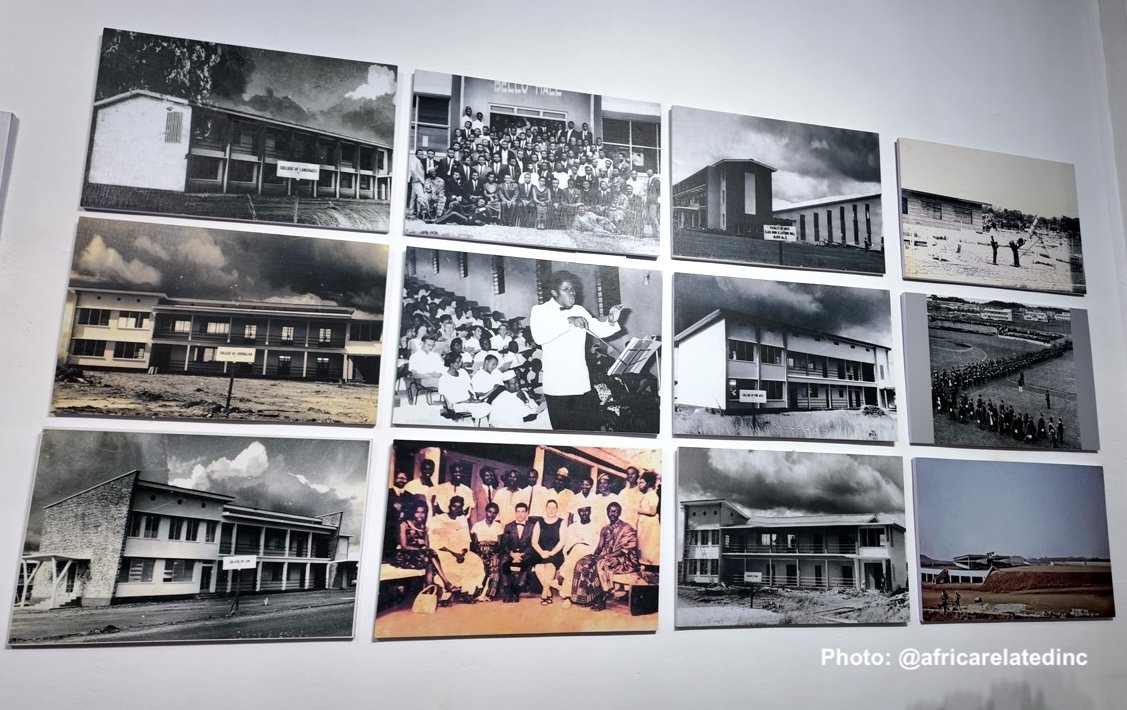
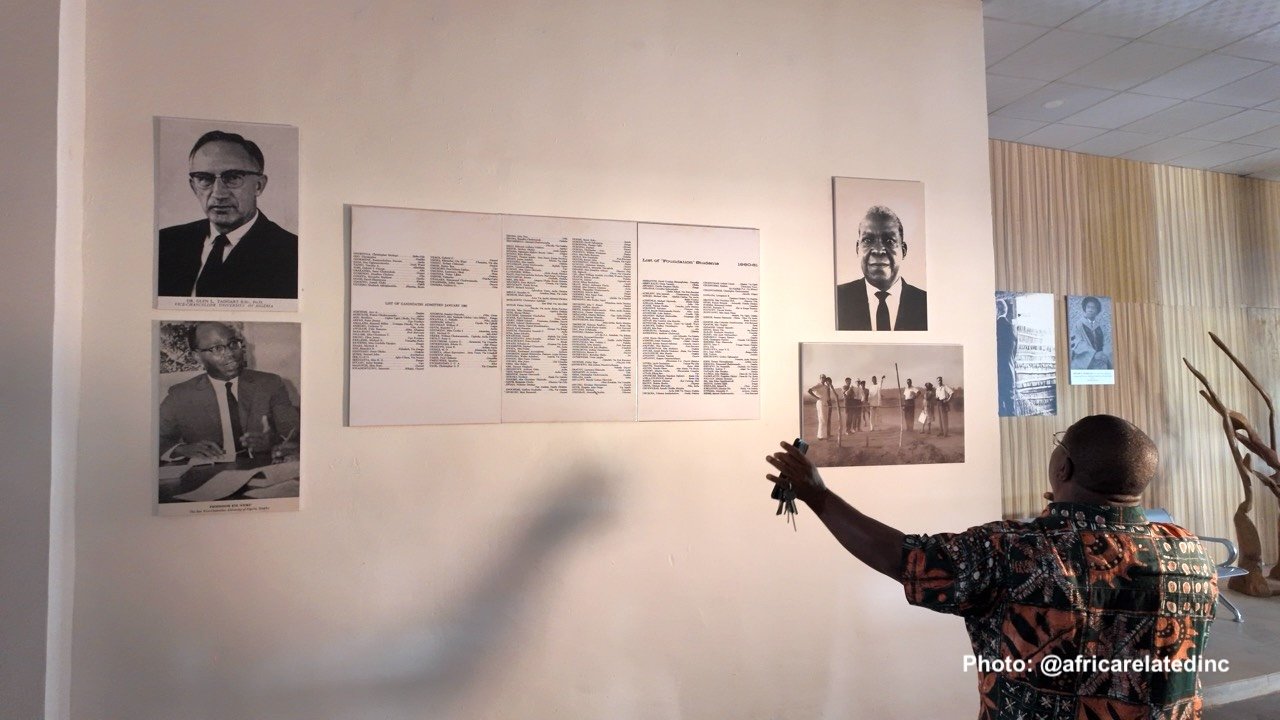
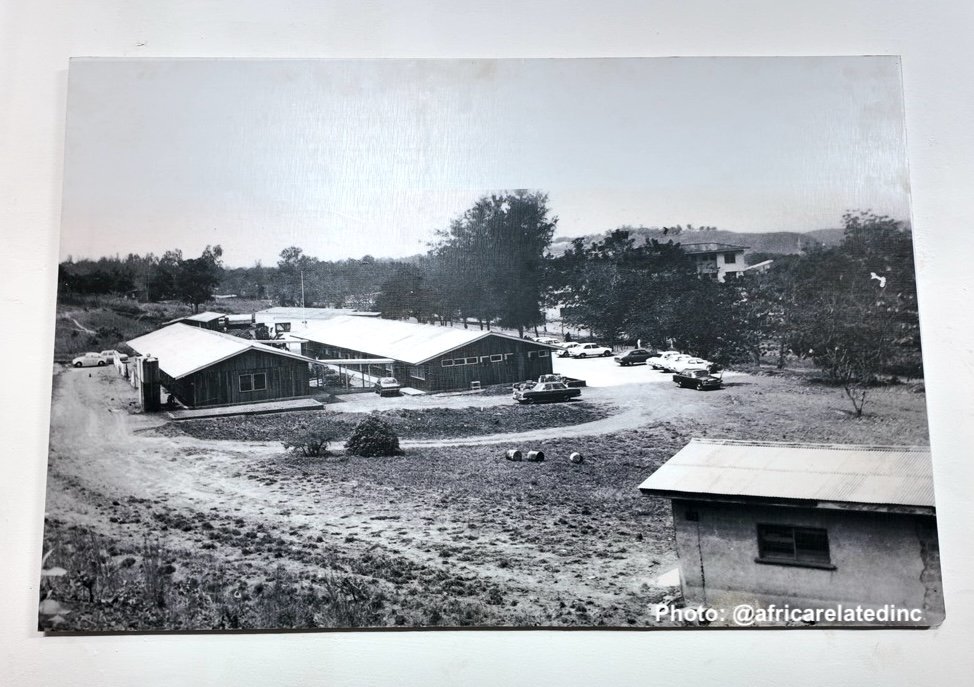
Shortly afterwards, the screening began, the atmosphere was quite pleasant. A lot of students streamed in, as the special guest the paramount traditional ruler H.R.H Igwe George ASADU, The Okpe Udo of Ihe Nsukka occupied the front row seat. He, in 2015, conferred the title "Ikedire of Nsukka" (power which is effective) on Prof. EI Anatsui.
Also seated in the packed room were Prof. Krydz Ikwuemesi, Prof. Chidi Ugwu, Assoc. Prof. Greg Mbajiorgu and Assoc. Prof. Vincent Okpara H.O.D, Department of Fine and Industrial Arts. The audience was very receptive and attentive during the viewing, one could tell on account of their humorous and enthused responses. The event concluded with a short Q and A which yielded a few comments with much praise and plenty of thanks to the production team. The organizers were quite gracious, extremely polite and very courteous.

This happened to be the very first event since the inauguration of the new building of the Institute of African Studies, situated close to the UBA gate on campus. It also happened to be the first screening I am attending in person in Nigeria. DELA’s journey to Nsukka was extra special as it was a homecoming of sorts, not just for the film, but also for my ever-supportive husband Maurice Okereke (Words By MOE), a 1995 UNN alumnus, who worked on the film as an assistant music director - contributing original music scores from his poetic pieces, to the film’s soundtrack.
Oyiza Adaba with Nsukka DoP Michael ‘Lenix’ Onah, who filmed some of the Nsukka shots.
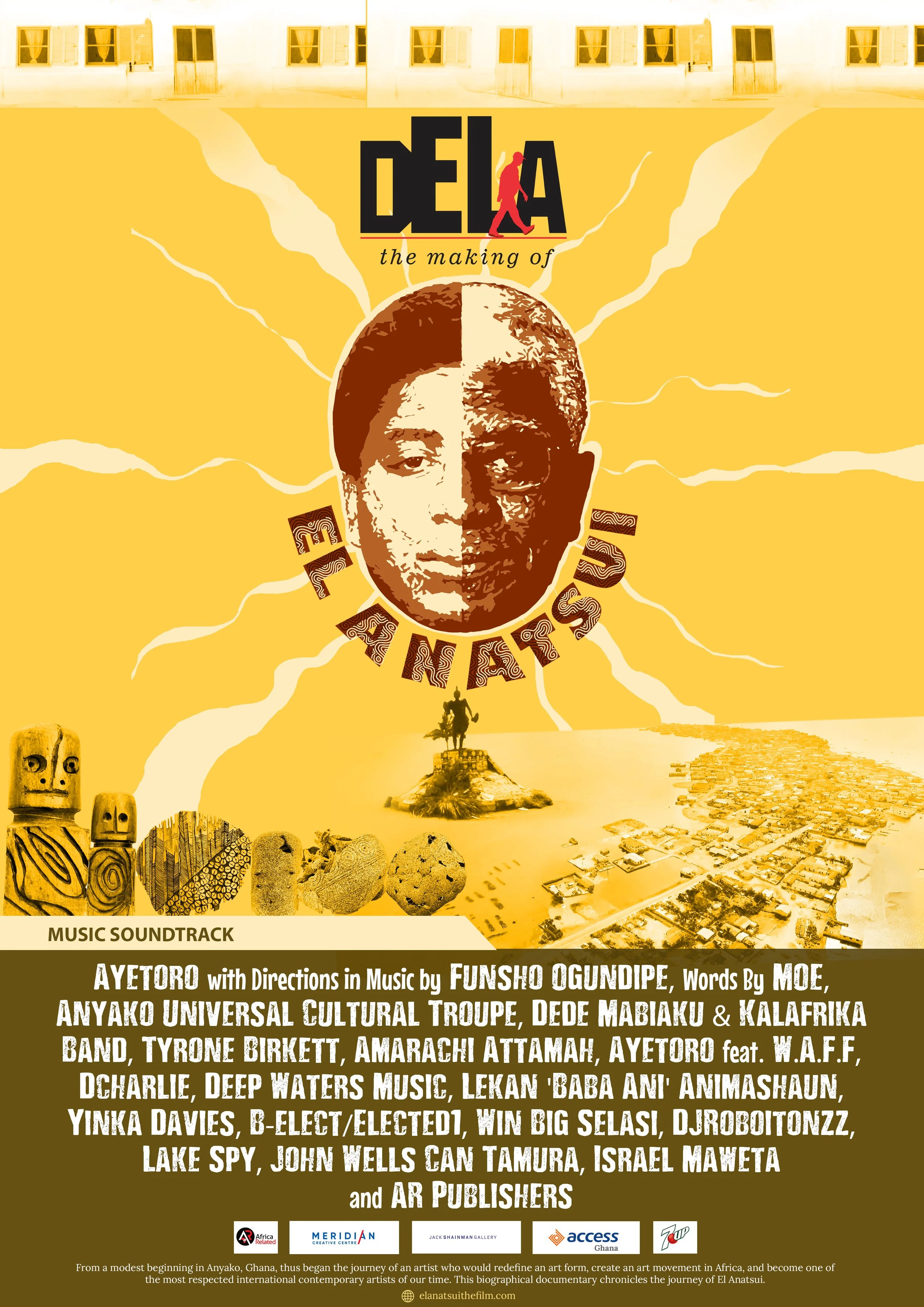
DELA: Soundtrack Poster with featured artists.
Other contributing artists include UNN Graduate, the late Bright Andrew Igho a.k.a B-Elect, a musician/author who contributed his track 'WAT THE OLD MAN SAID (B.I.B.L.E.)' to the film. Uchenna Ohagwu (Minista Busta), an IMT Enugu graduate is the visual/graphic artist/musician who designed the DELA icon head logo that depicts El Anatsui’s young and older face. Amarachi Attamah, a griot/chant performer composed a beautiful chant piece entitled 'EGARA EL', used in the opening sequence. Lemi Ghariokwu is the graphic artist who designed several of Fela Kuti's album covers and also designed the DELA 'walking man' logo. Two indigenous musicians DJ Robintonzz added the track 'AFRICA' Ft. New Prince, while Lake Spy composed the film's end credit track 'ASIGI II' in honour of El Anatsui.
The Institute of African Studies, UNN
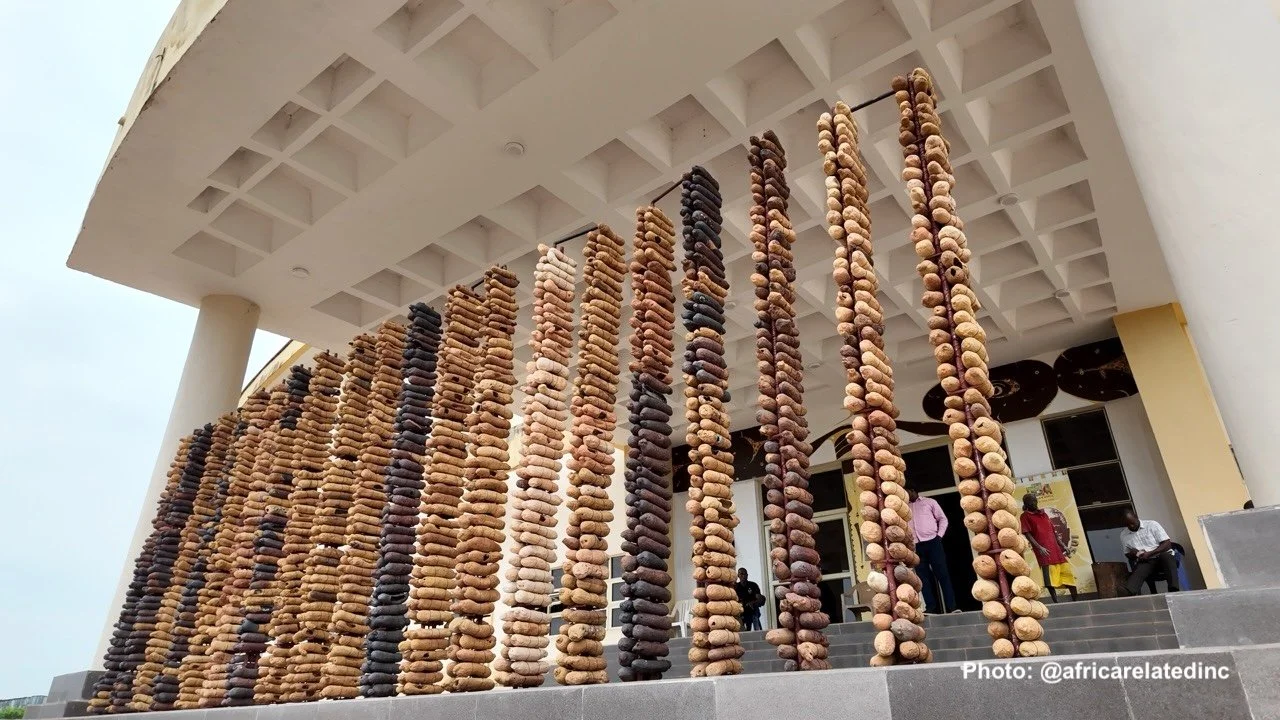
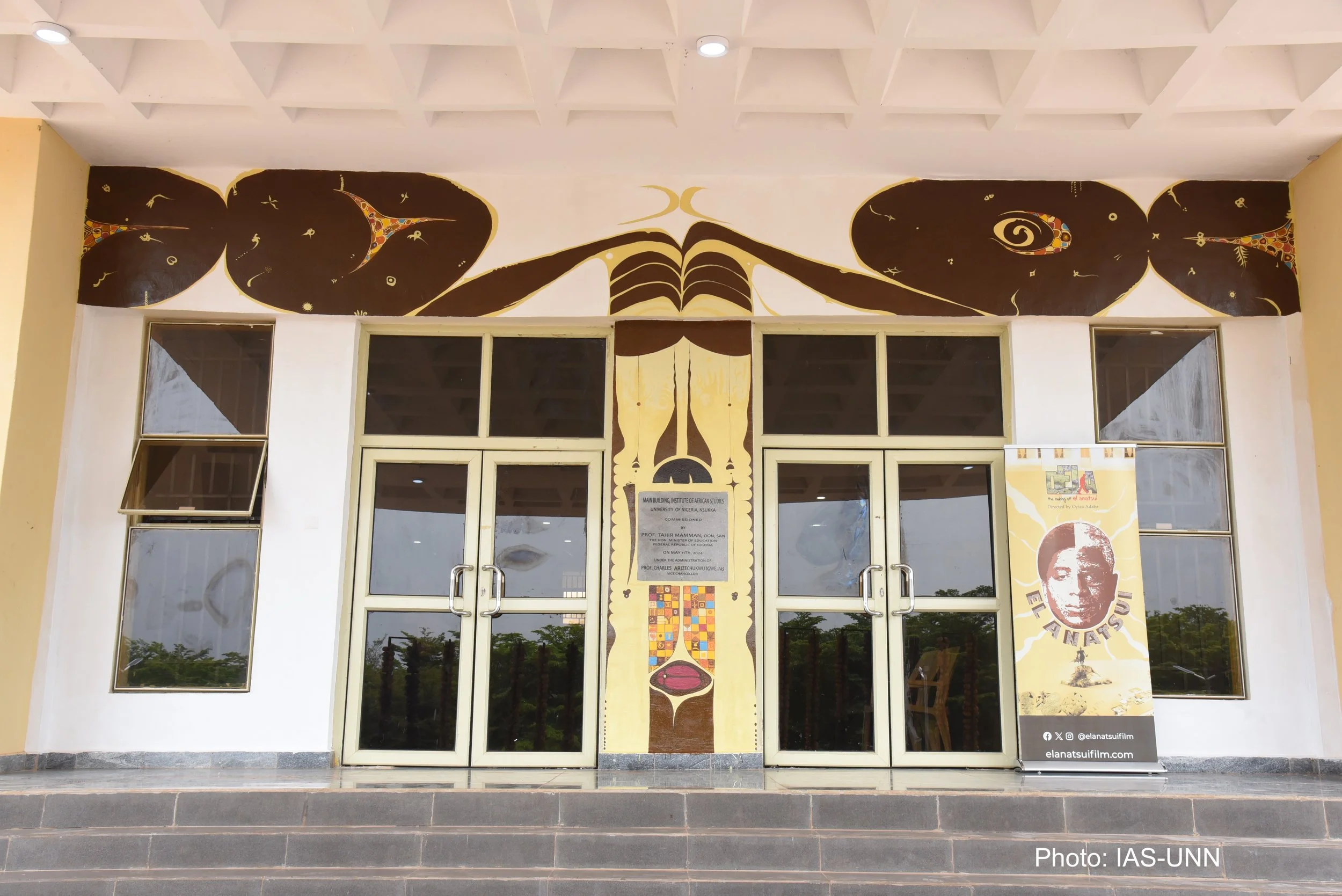
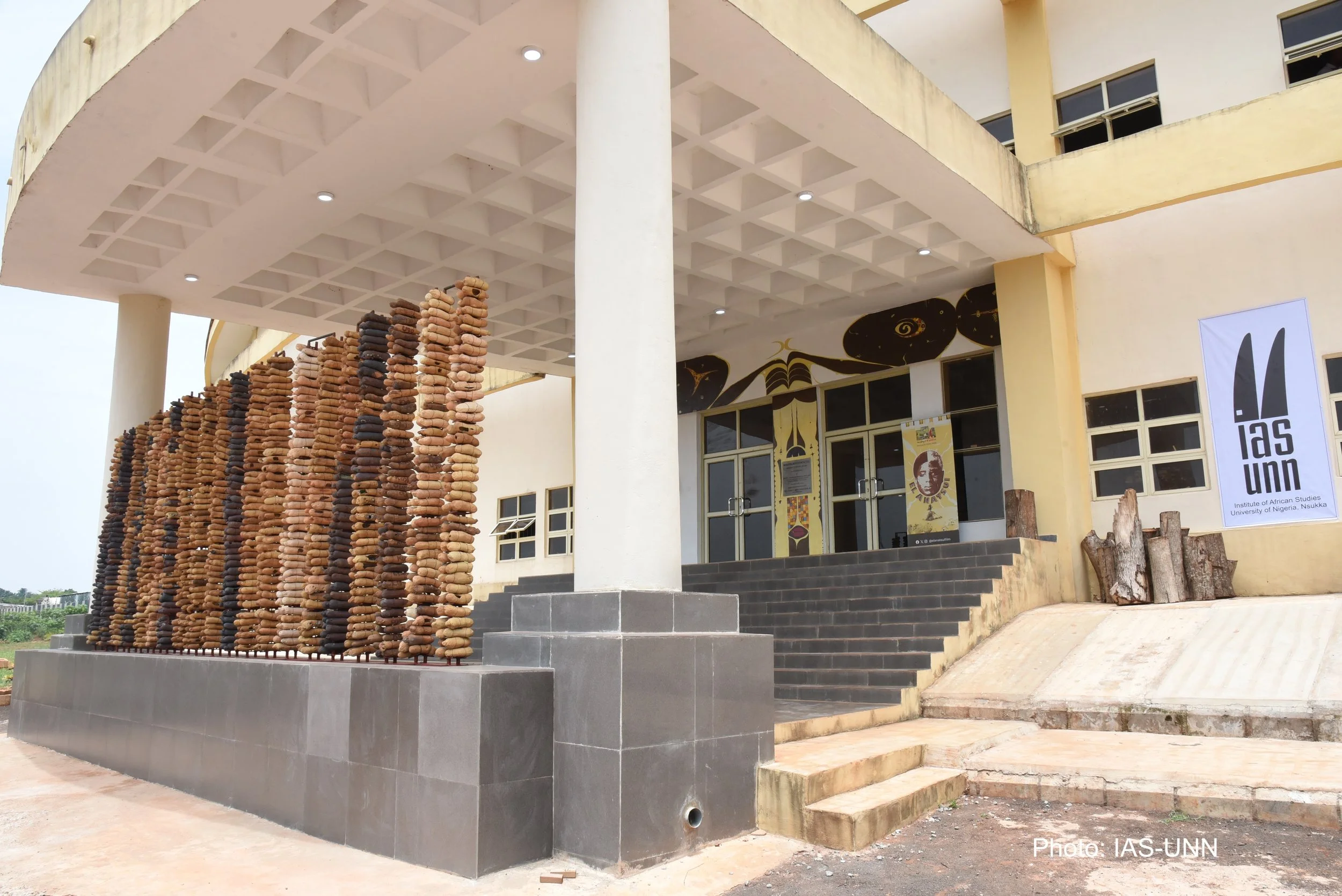
Ozioma Onuzulike’s piece ‘Seed Yams of Our Land’ series drape the front entrance Institute of African Studies (IAS), University of Nigeria Nsukka. Photo: Africa-Related

New Address: Front entrance Institute of African Studies (IAS), University of Nigeria, Nsukka UNN..
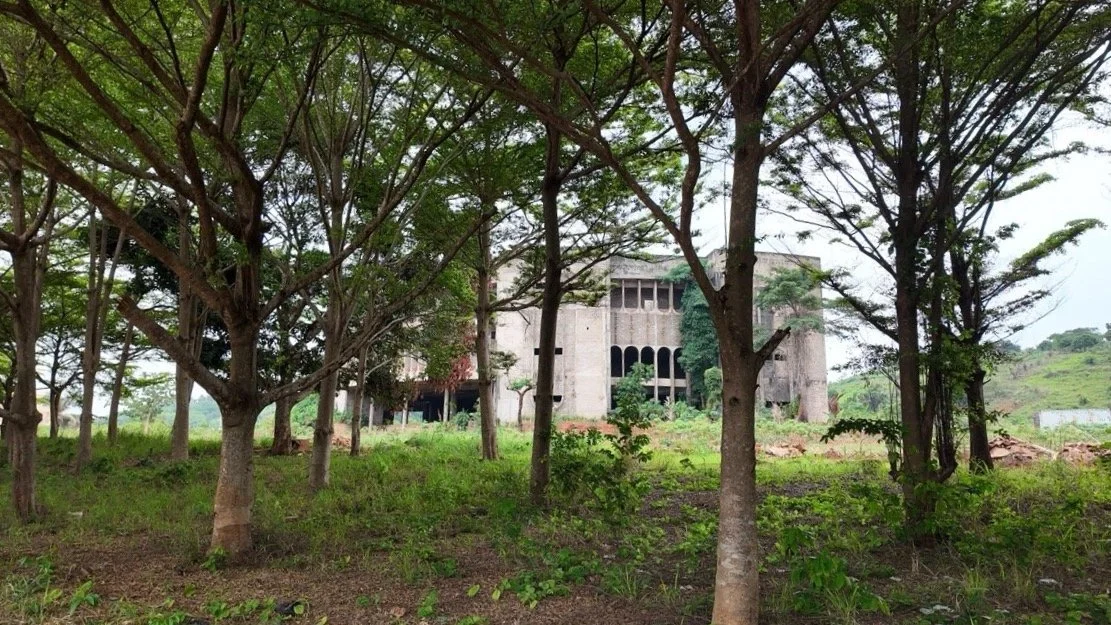
Nsukka town is about eighty kilometers north of Enugu in South Eastern Nigeria, where the University campus sits on 871 hectares of hilly savannah with lush vegetation. The Institute of African Studies was established in 1963, initially as the Hansberry College of African Studies. It was named after Professor William Leo Hansberry, an eminent Afro-American Historian and Africanist, who served as its Director, and taught two African presidents - Dr. Nnamdi Azikiwe of Nigeria and Ghana’s Dr. Kwame Nkrumah.
According to A.E. Afigbo, the idea for a graduate Institute of African Studies in the University of Nigeria was channeled towards research and was designed as a rallying point for “all men of colour who can trace their descent to the African continent no matter in what part of the world they now find their habitation”. The institute’s current Director Prof. Ozioma Onuzulike has ably stepped into the big shoes left by past directors, such as Prof. Edward Wilmot Blyden III, Prof. Donatus I. Nwoga, Prof. Uche Okeke, Prof. Chike Aniakor and many others that followed.
El Anatusi’s sculptures on UNN campus
Prof. El Anatsui was a resident of Nsukka for forty-four years (1975-2020), and retired from teaching sculpture at the Department of Fine and Applied Arts in 2012. Two free-standing sculptures made of concrete with terrazzo finish titled For the Upliftment of Man (1983) and Ambivalent Hold (1983) were selected by the University, and can be found on the grounds of the Physical Sciences building. They were jointly sculpted by members of an art collective called SKEP.
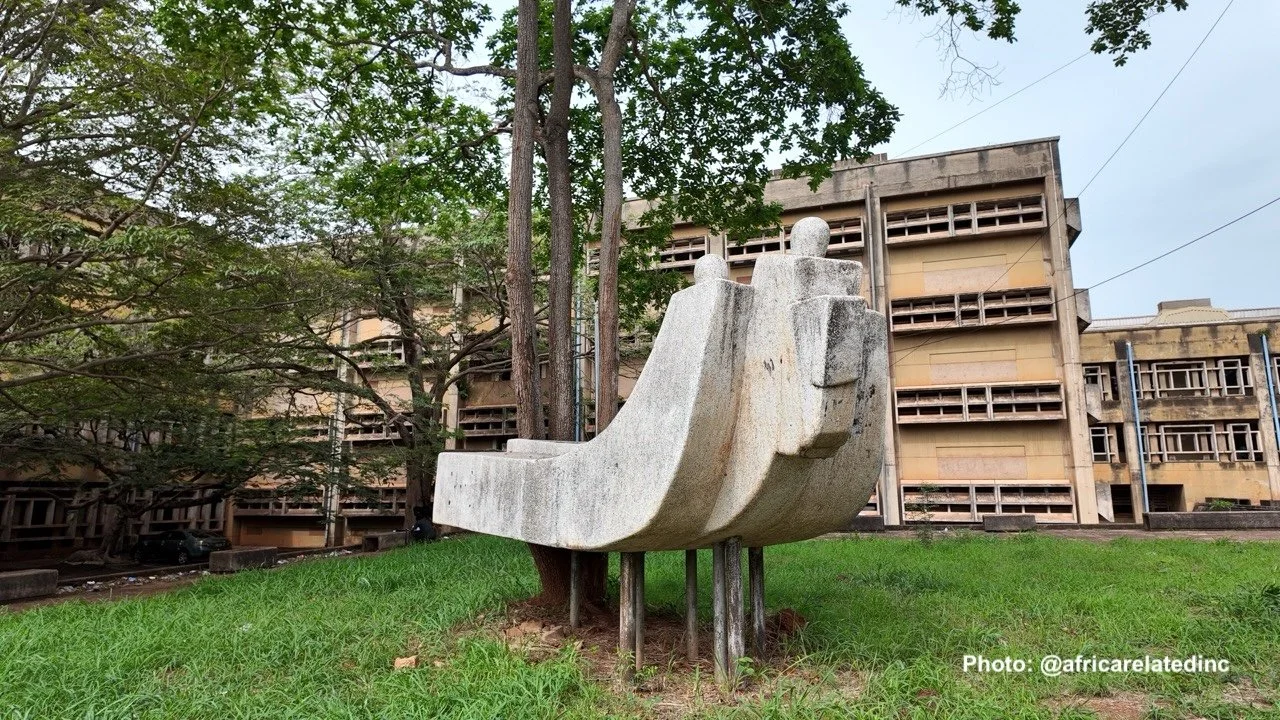
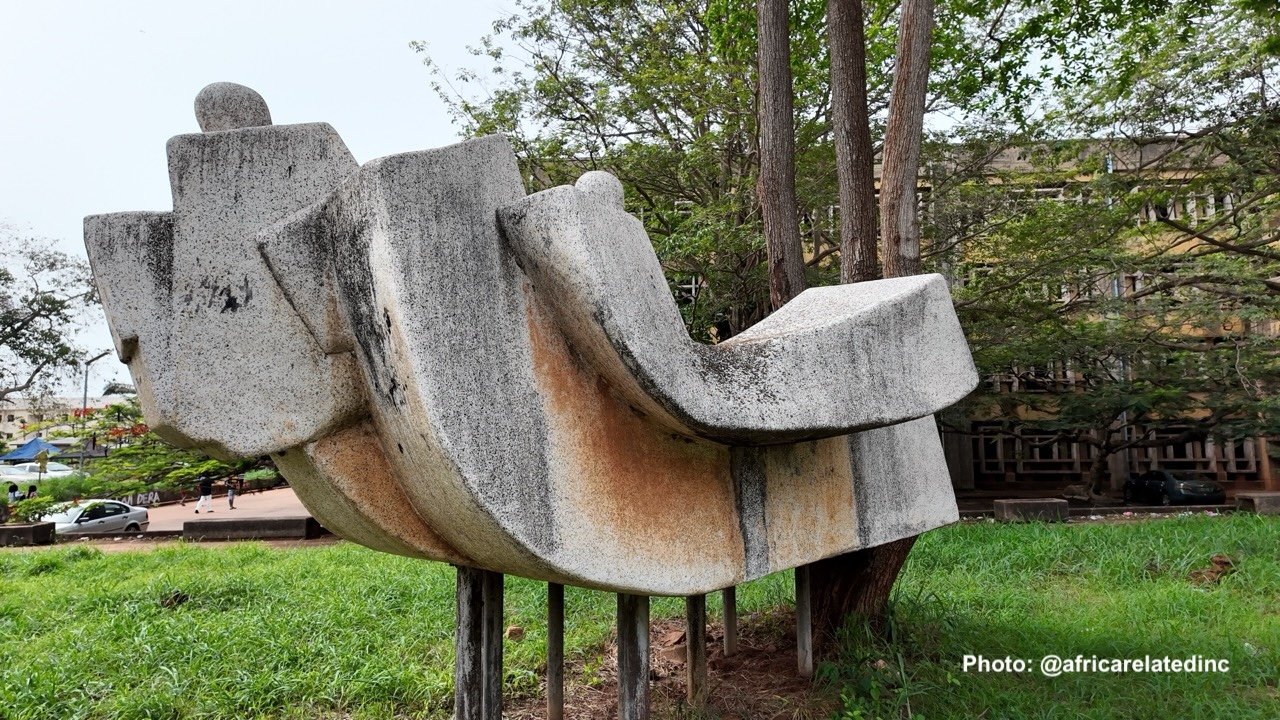

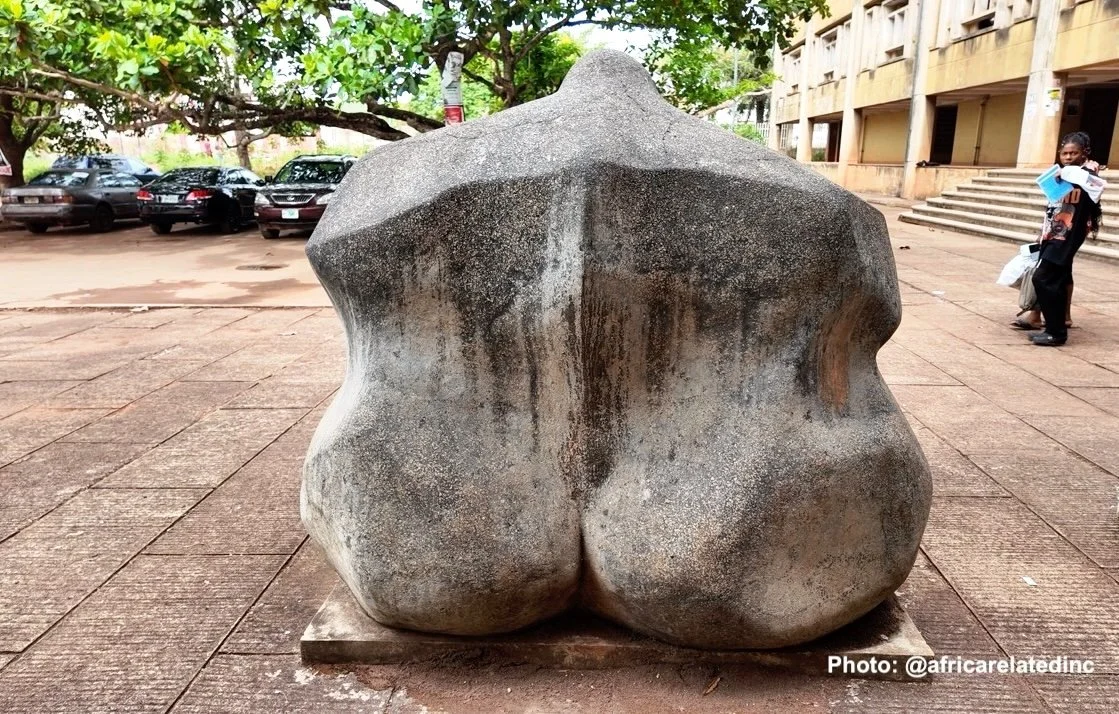
Photos: DELA SCREENING & UNN CAMPUS
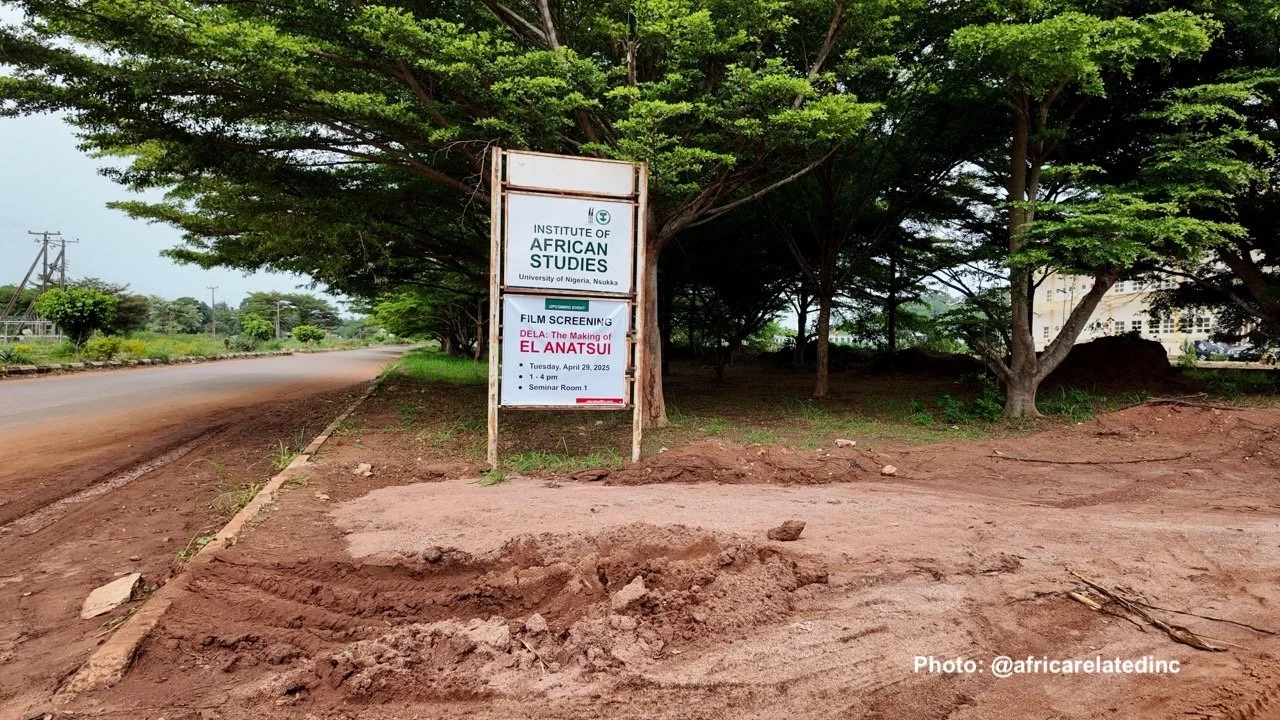
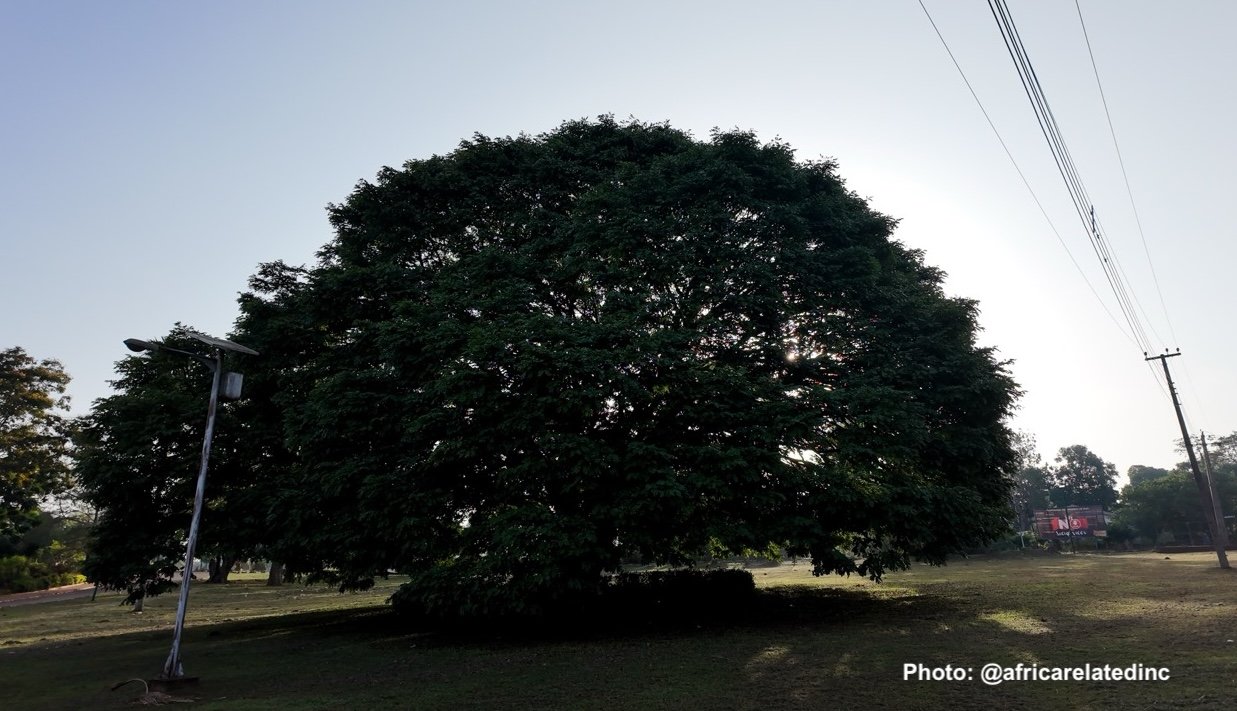
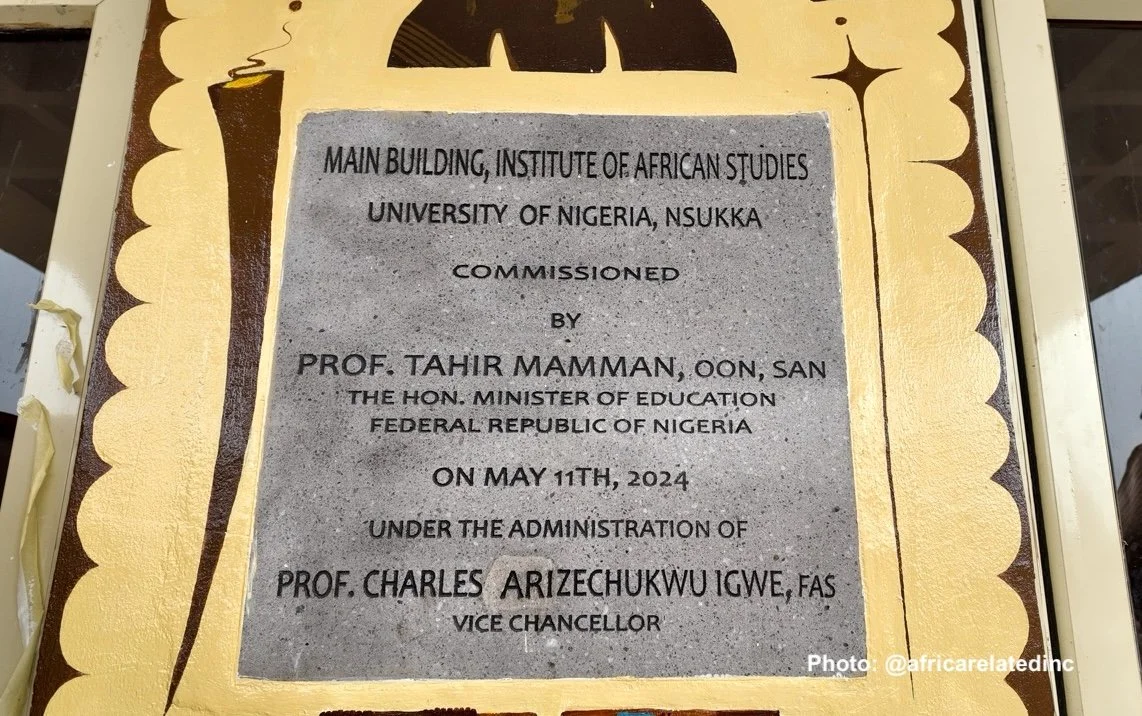
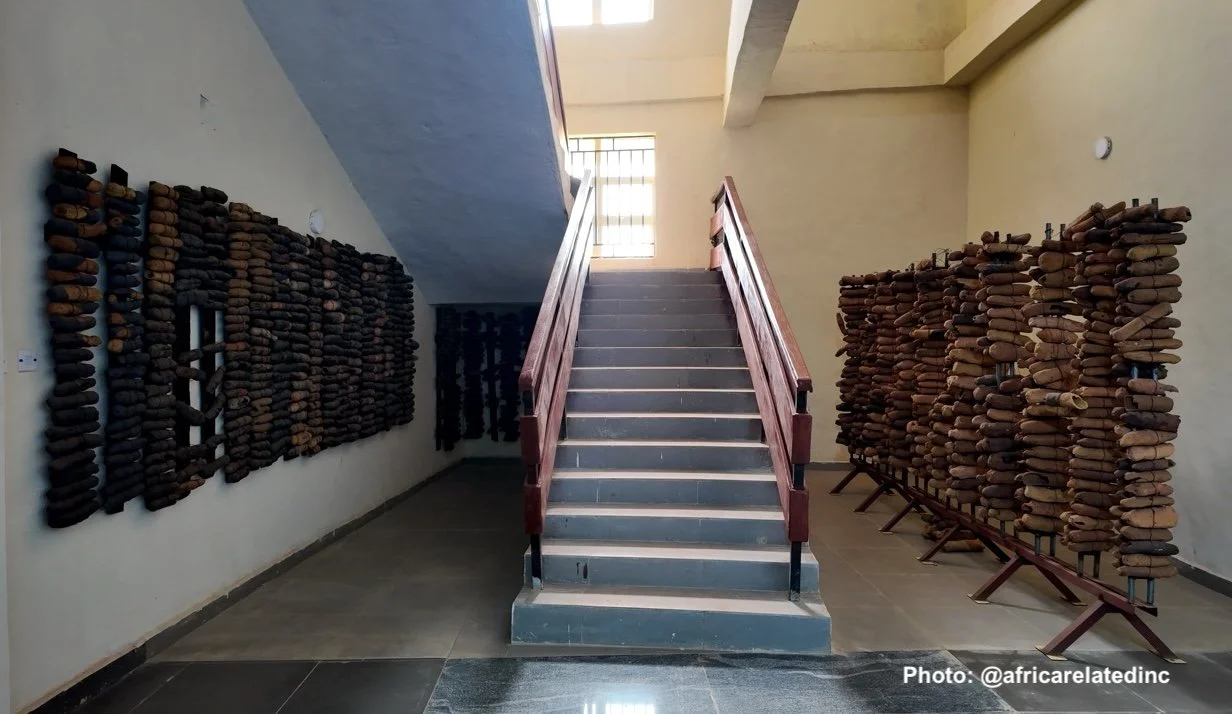
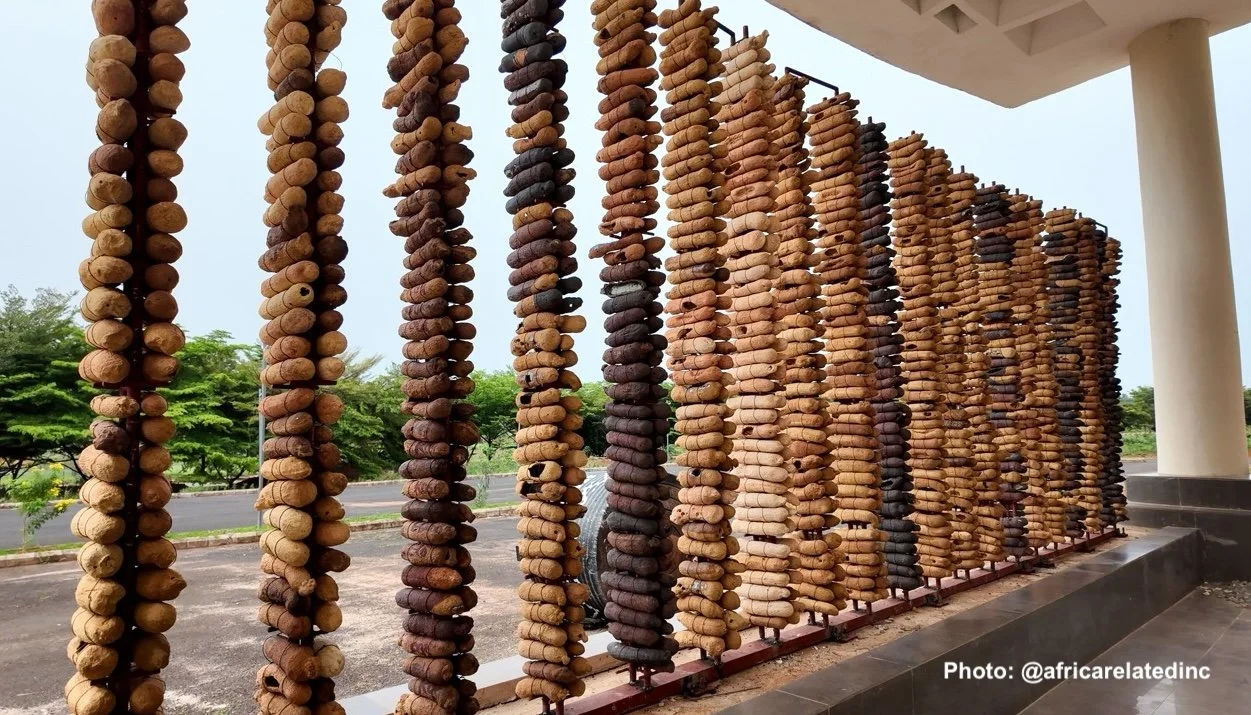
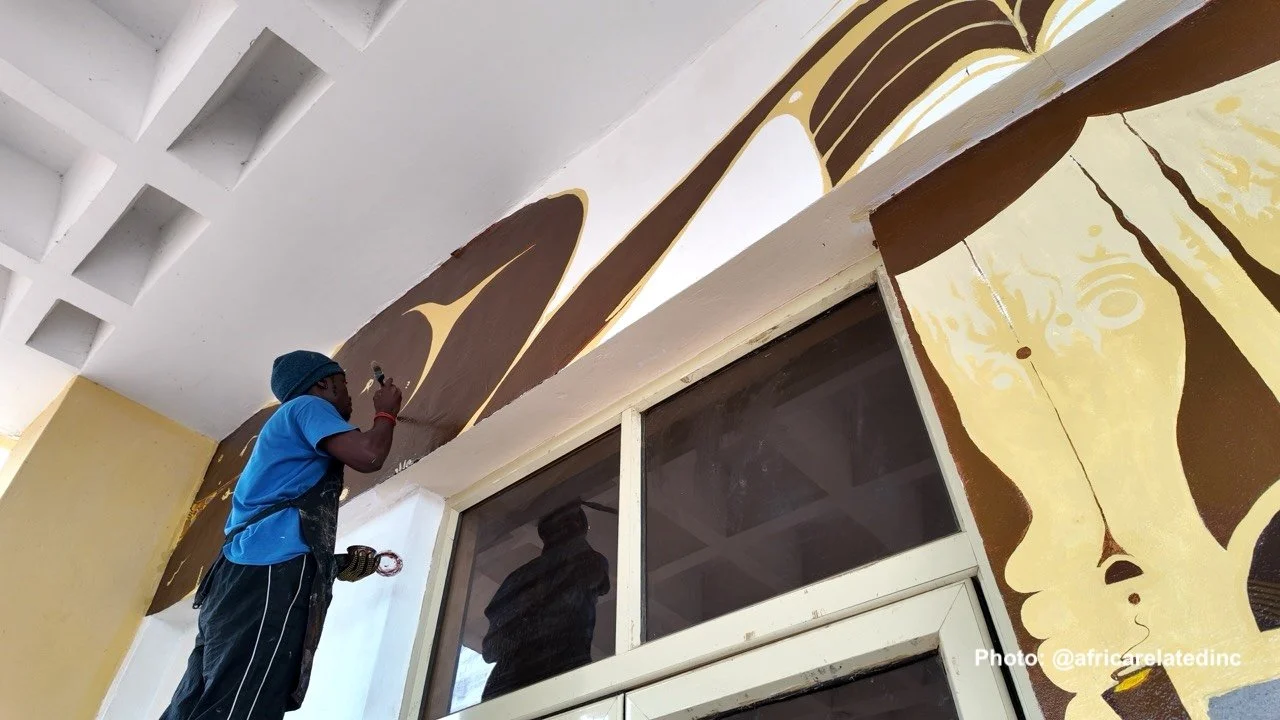


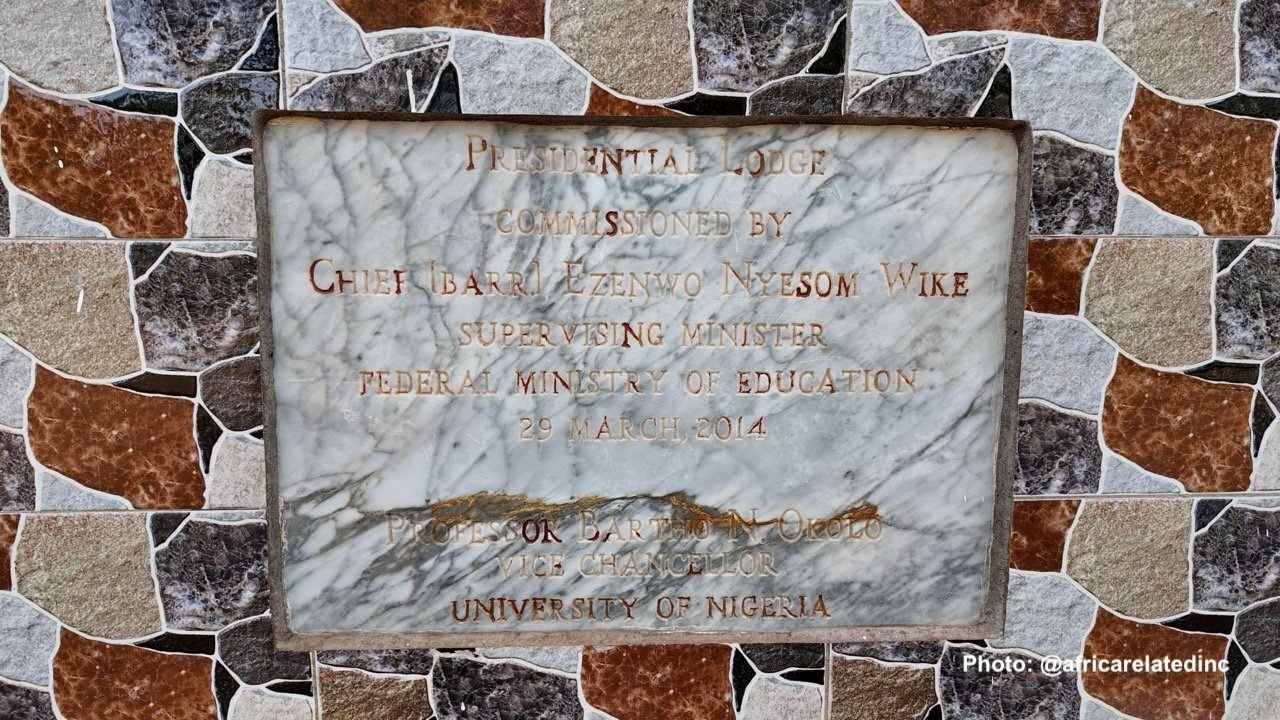
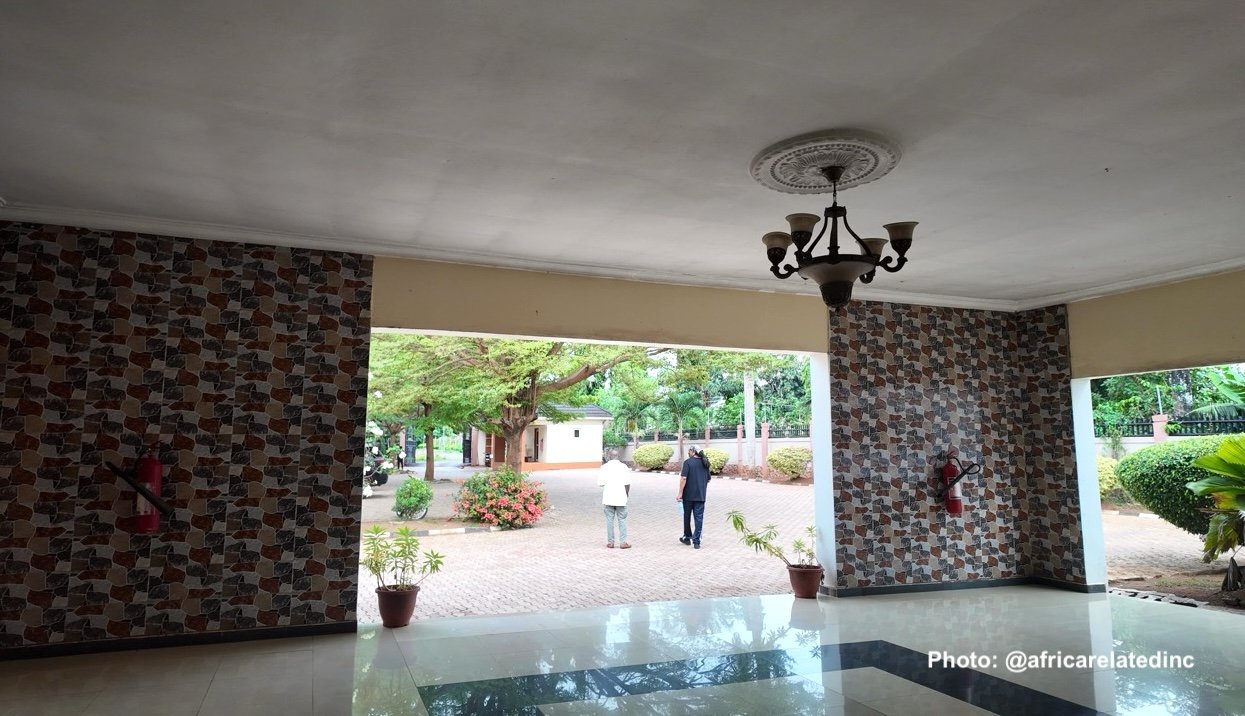

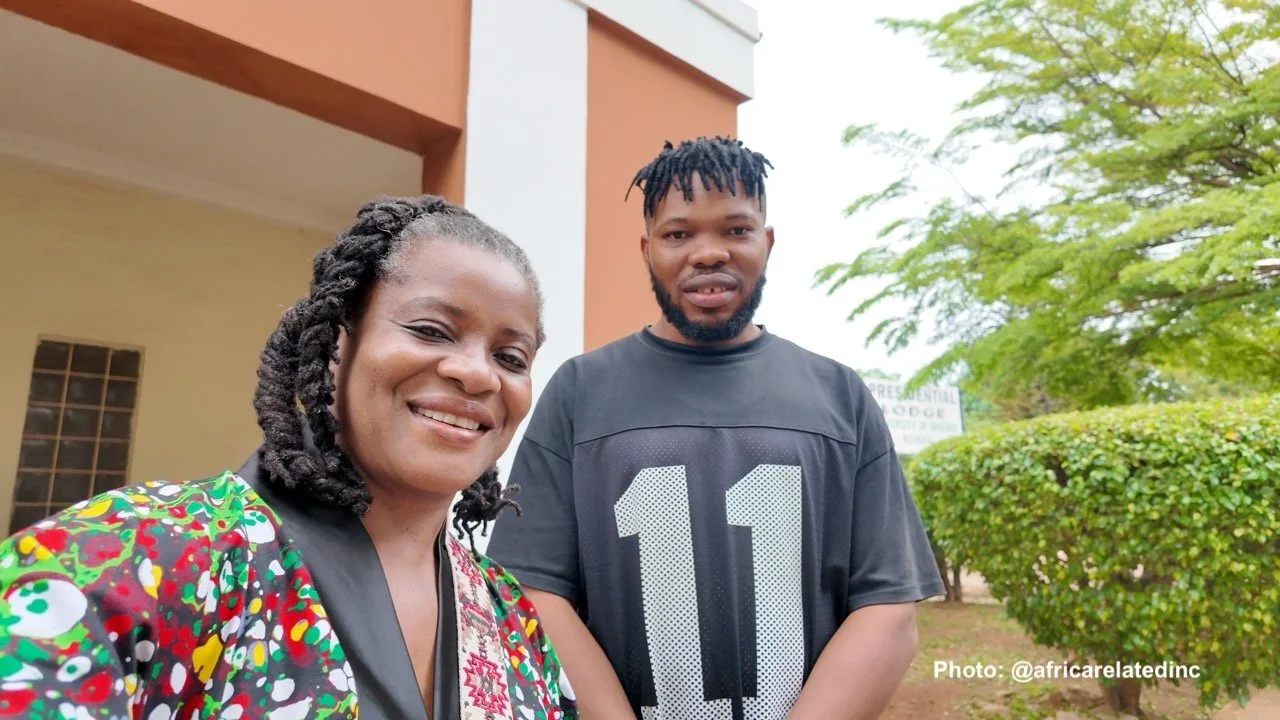

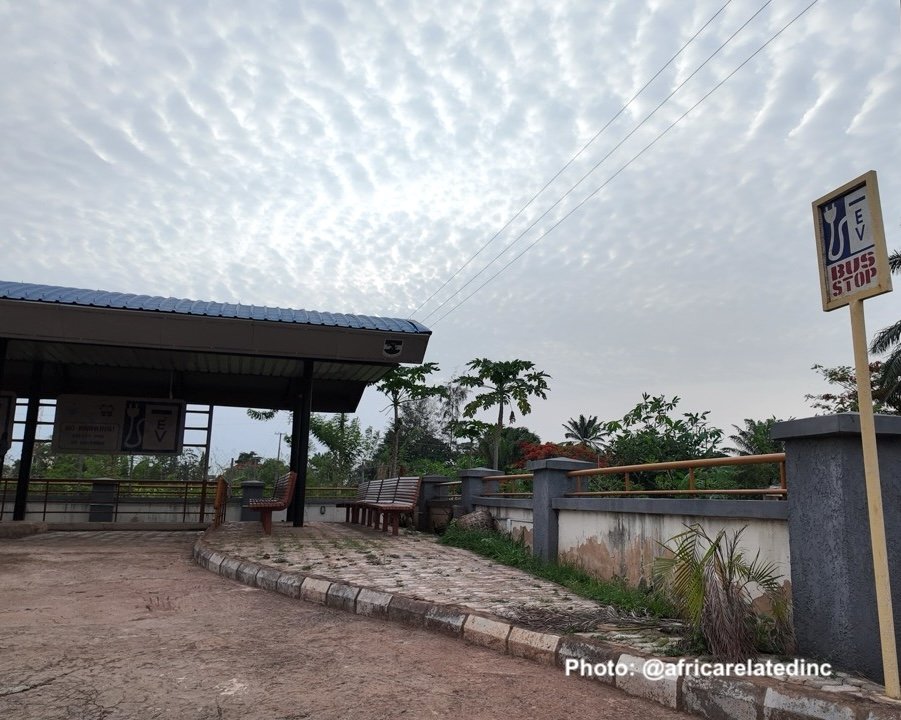
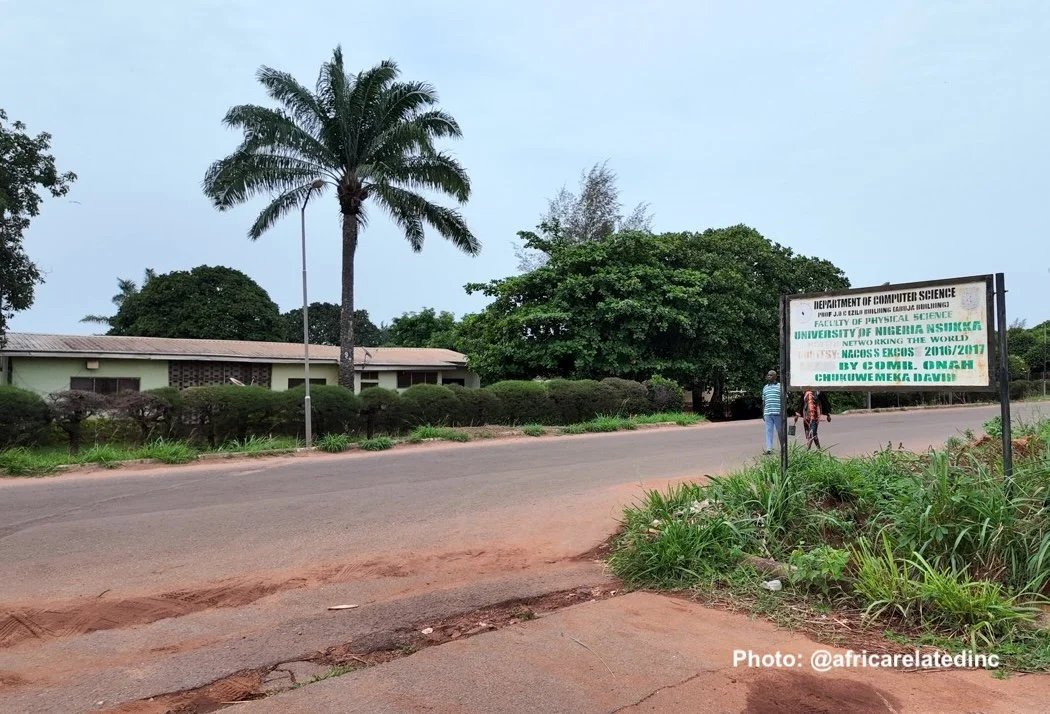
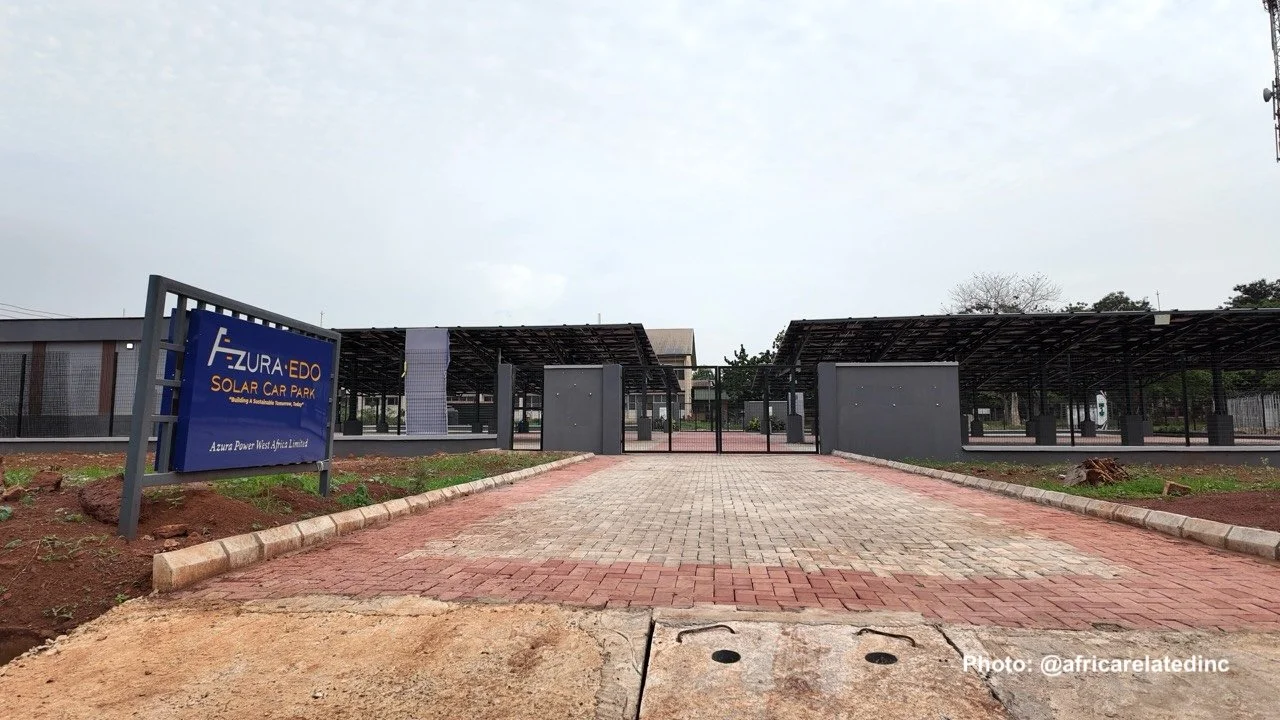
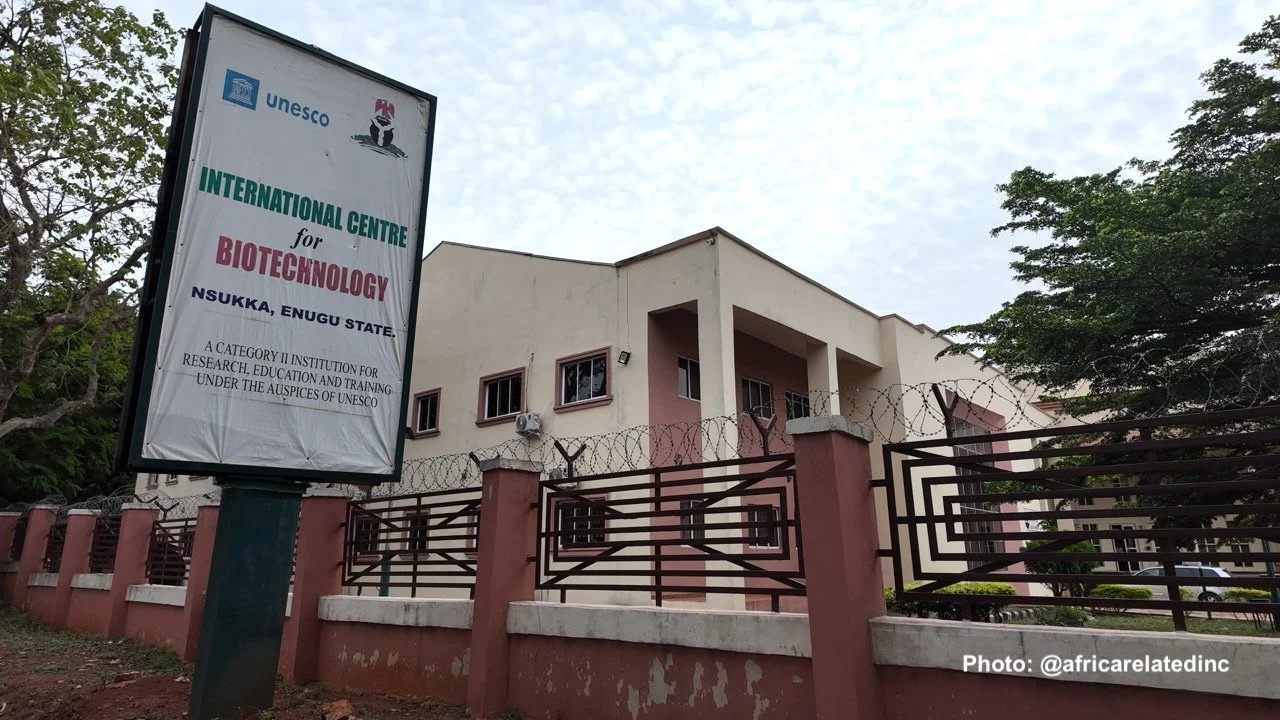
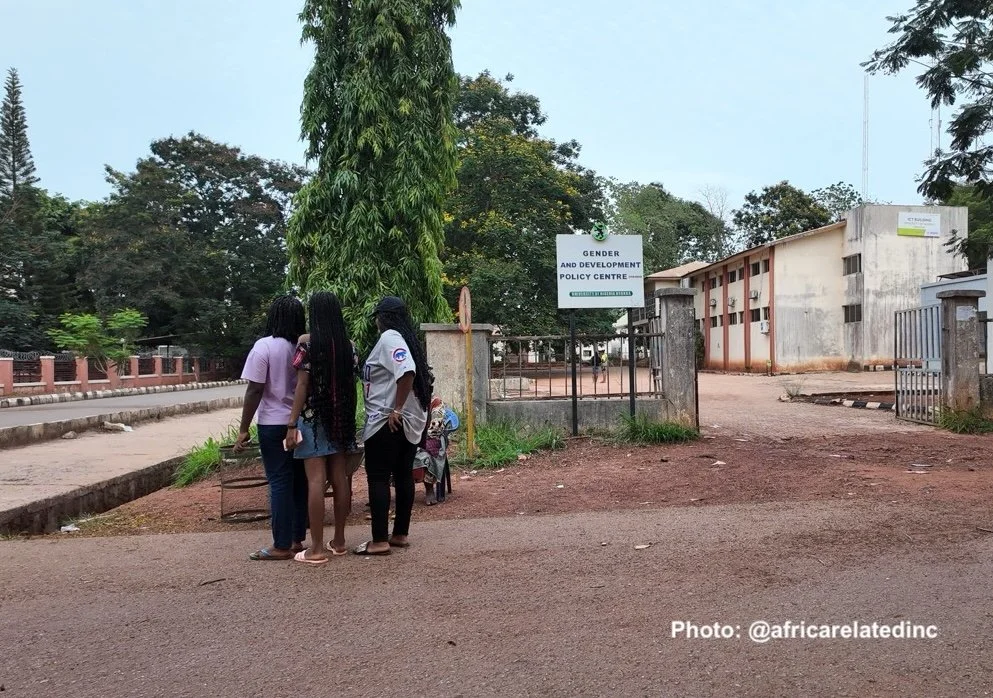

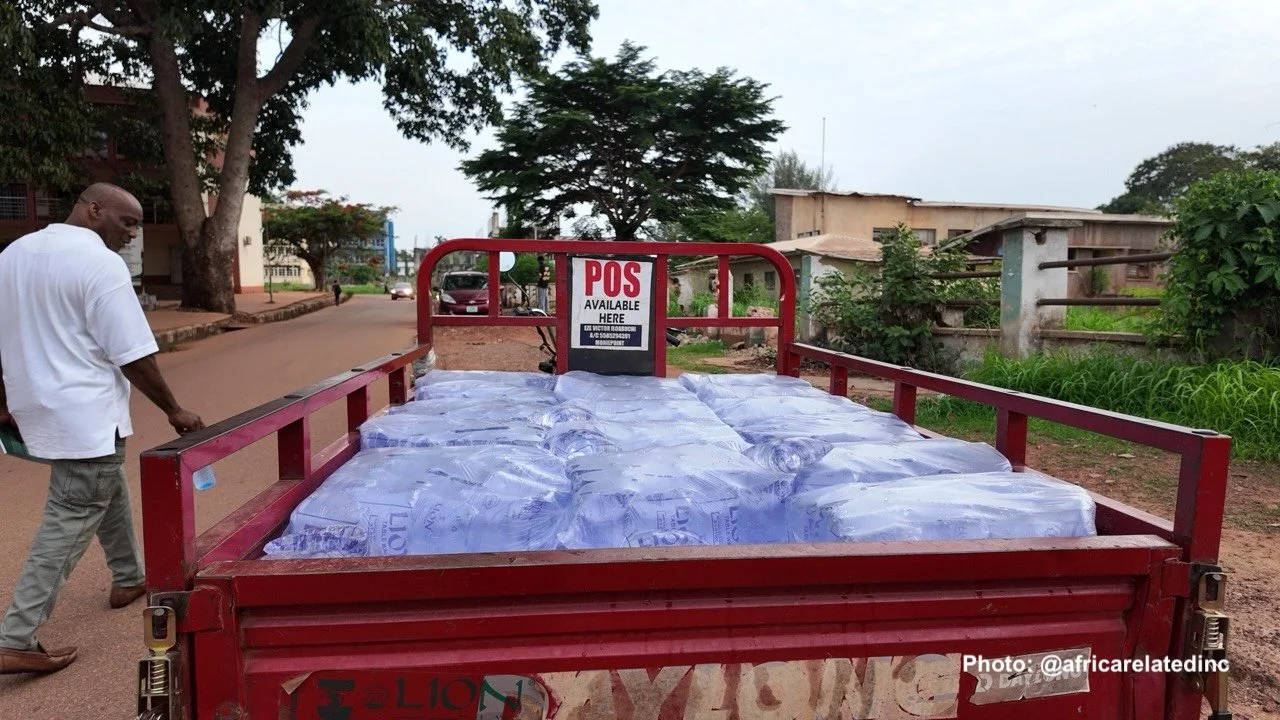
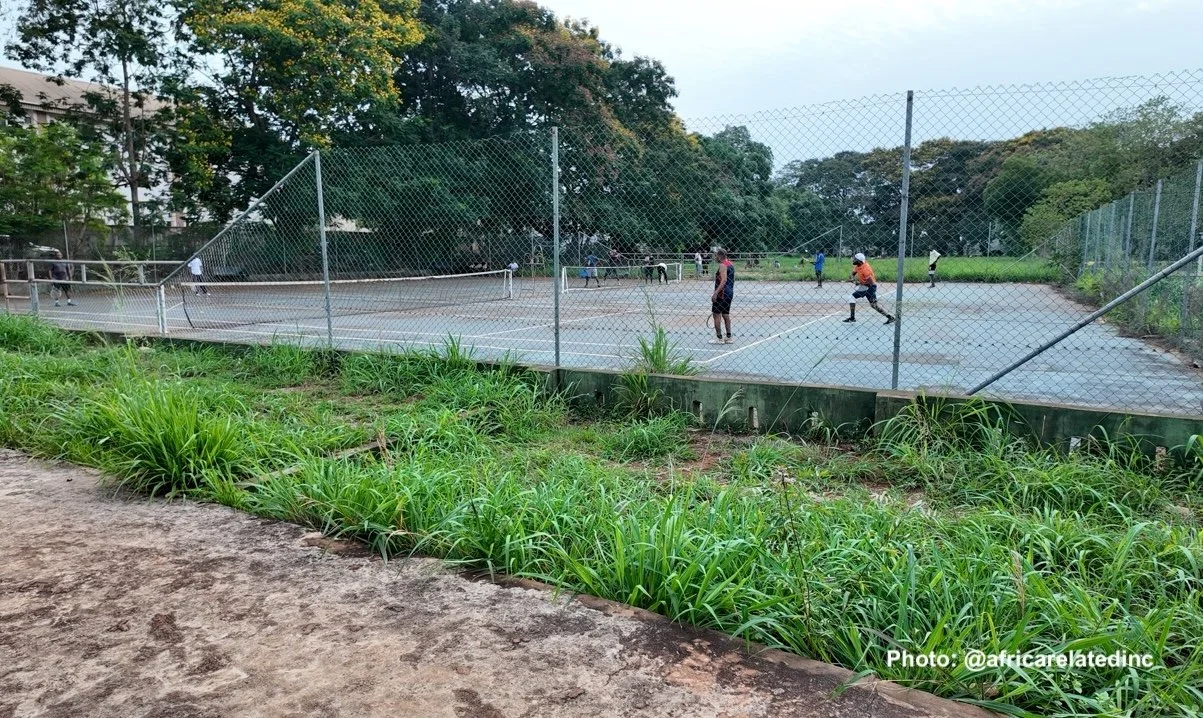

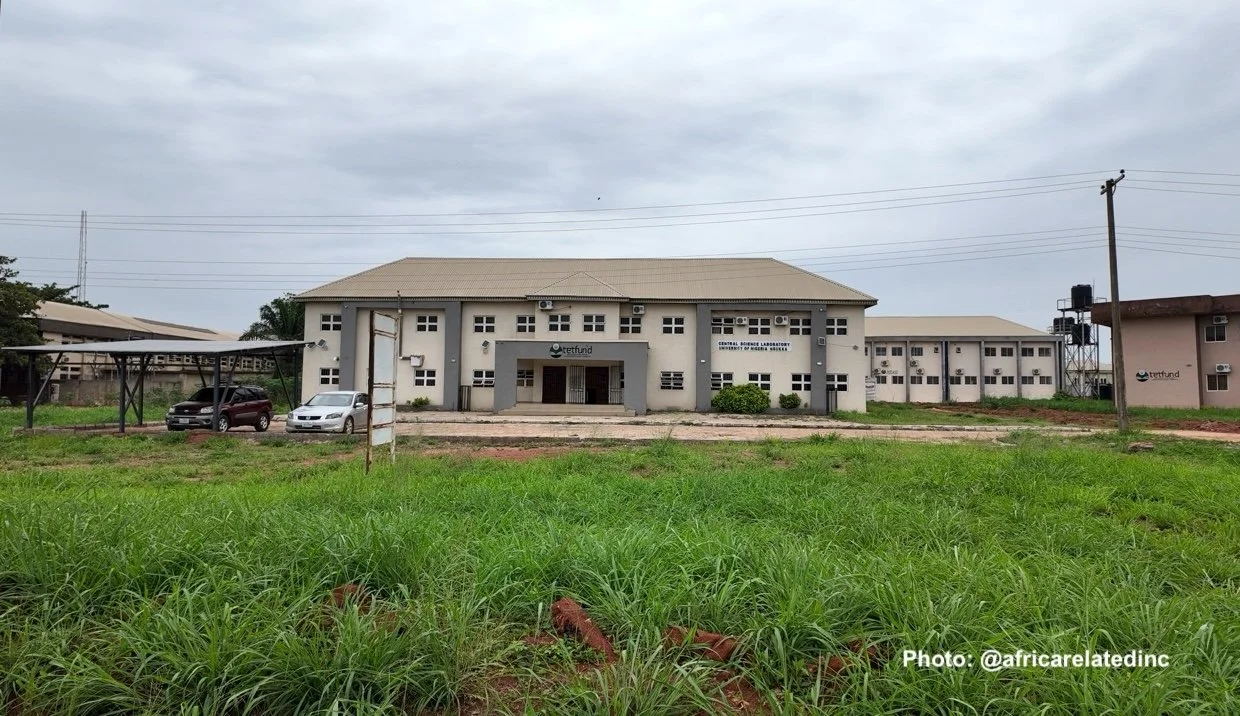
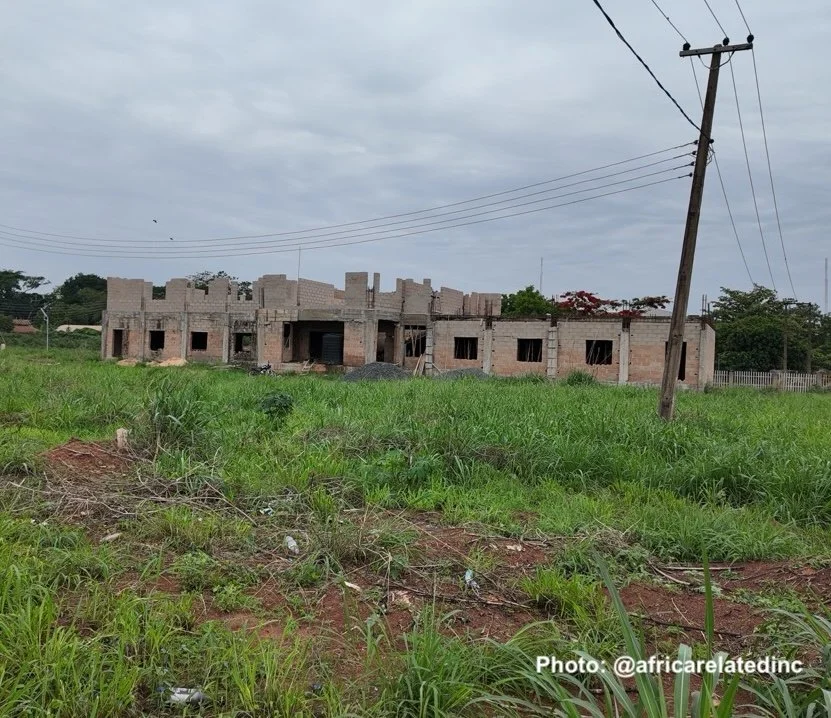
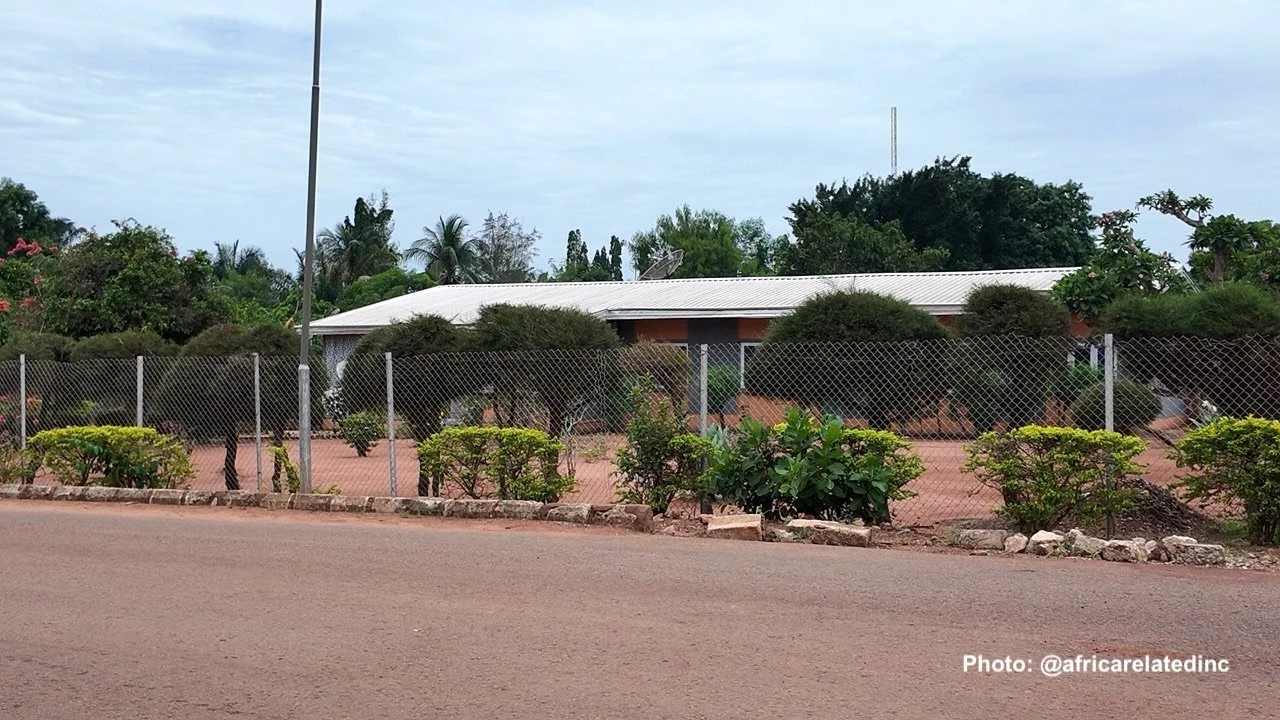
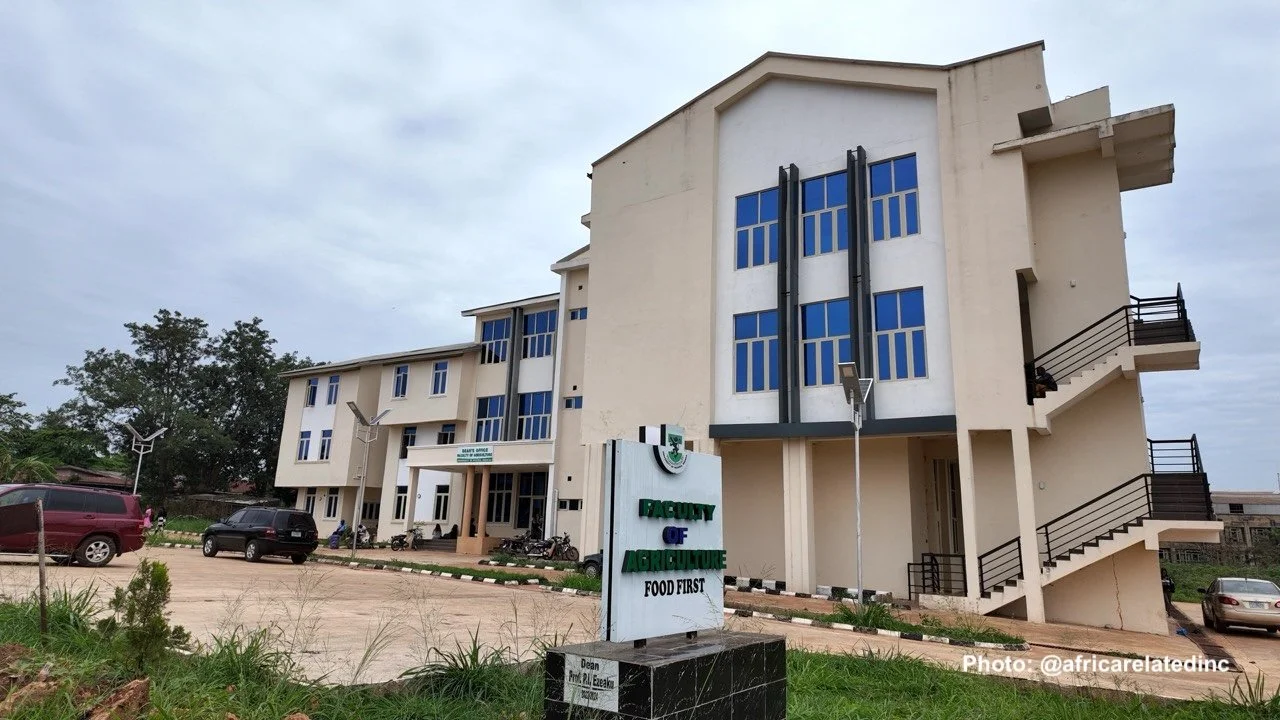
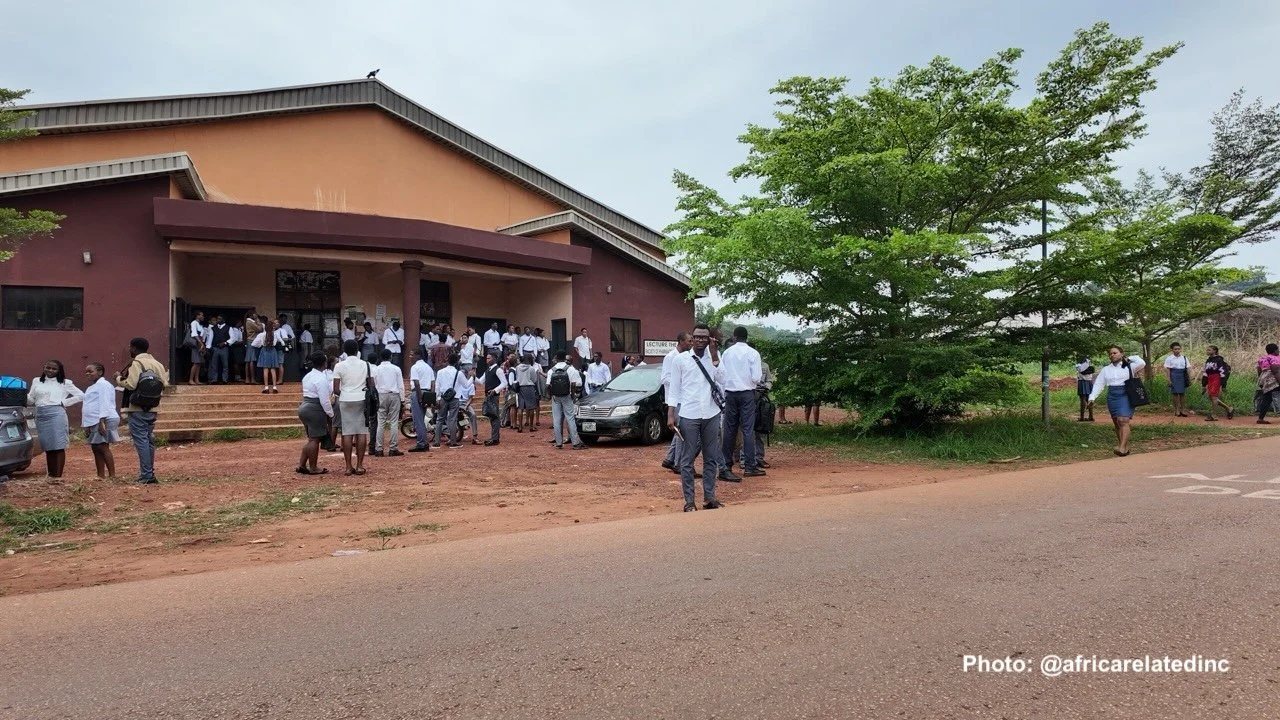
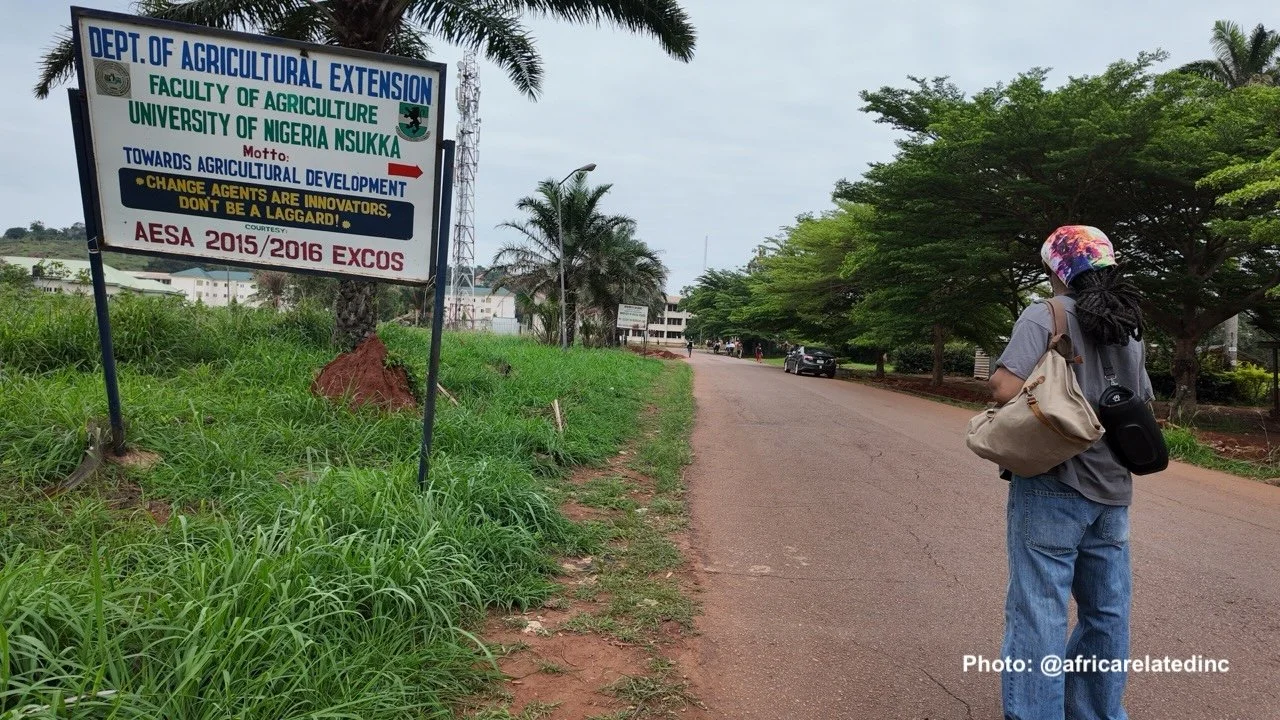
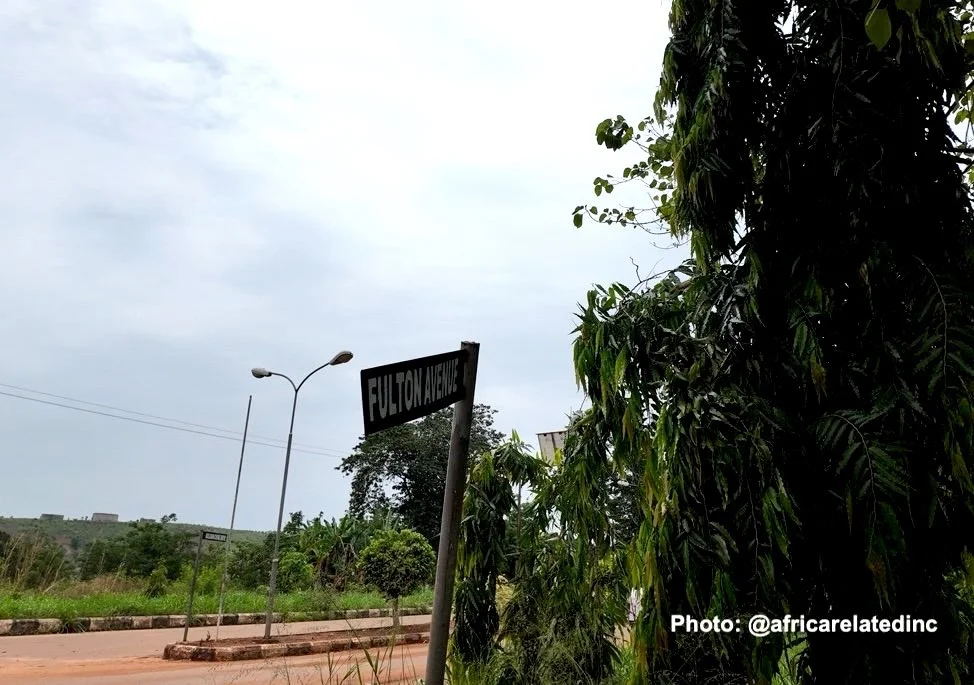
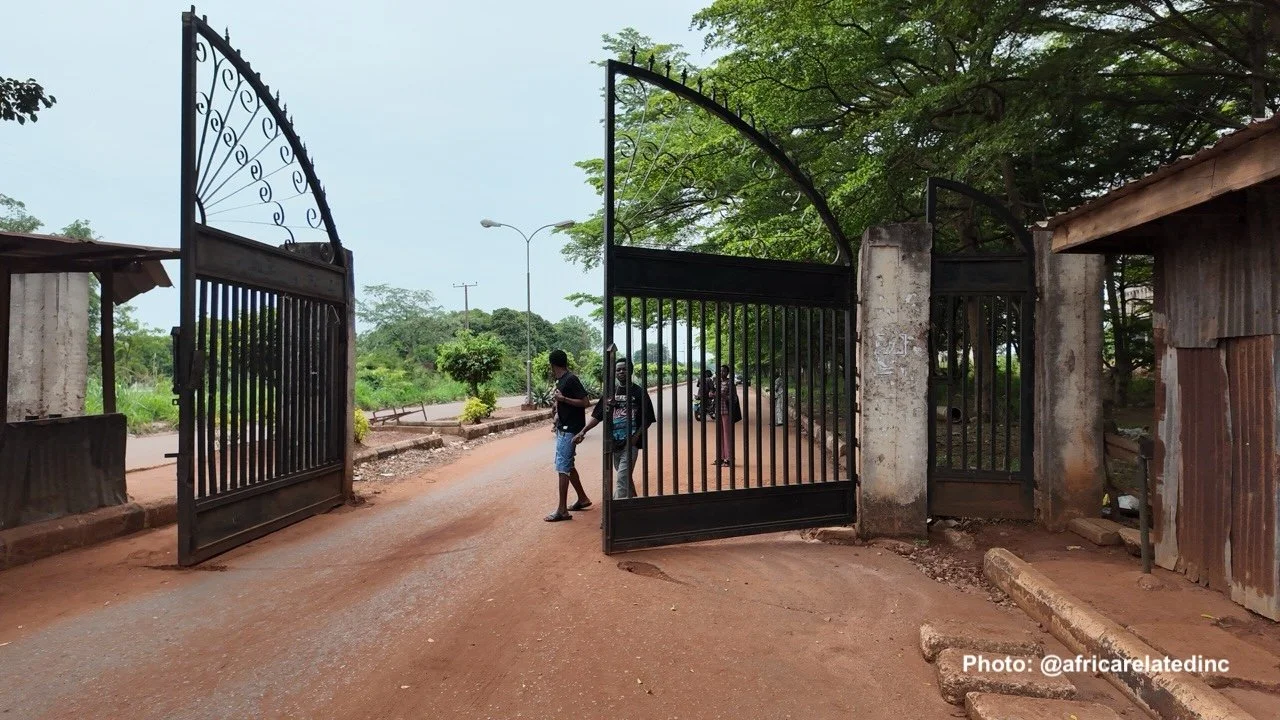
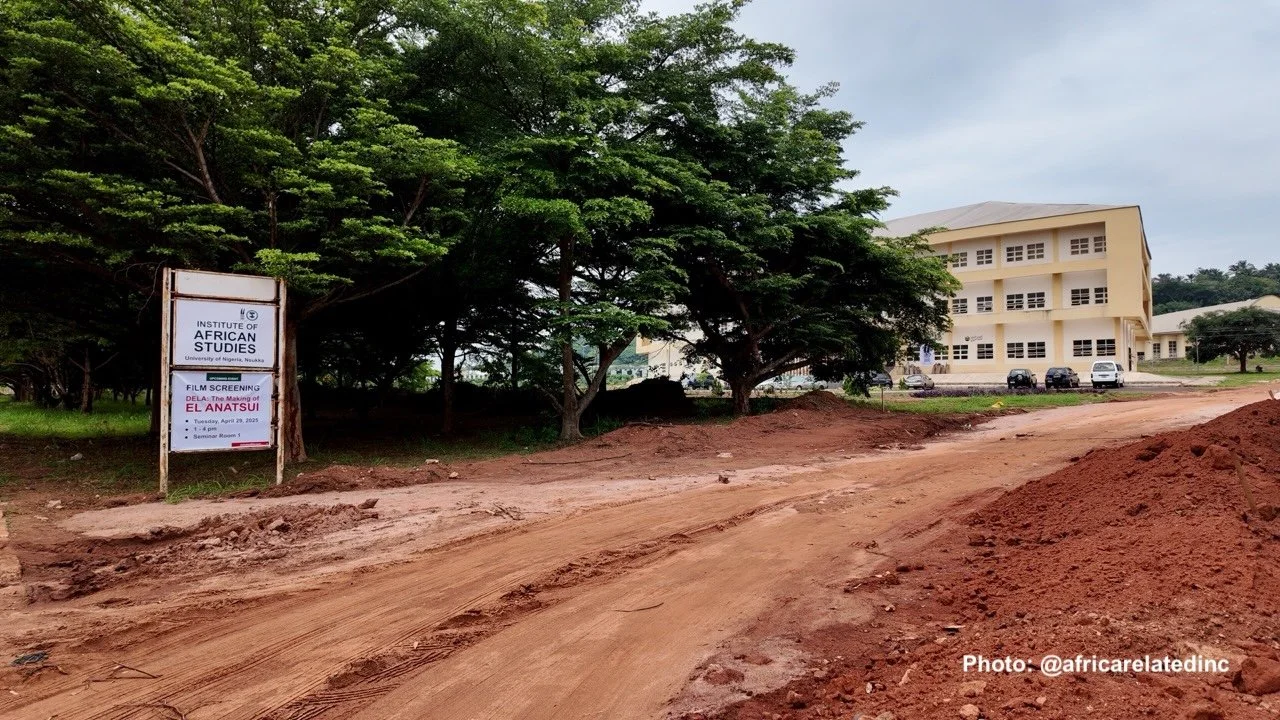
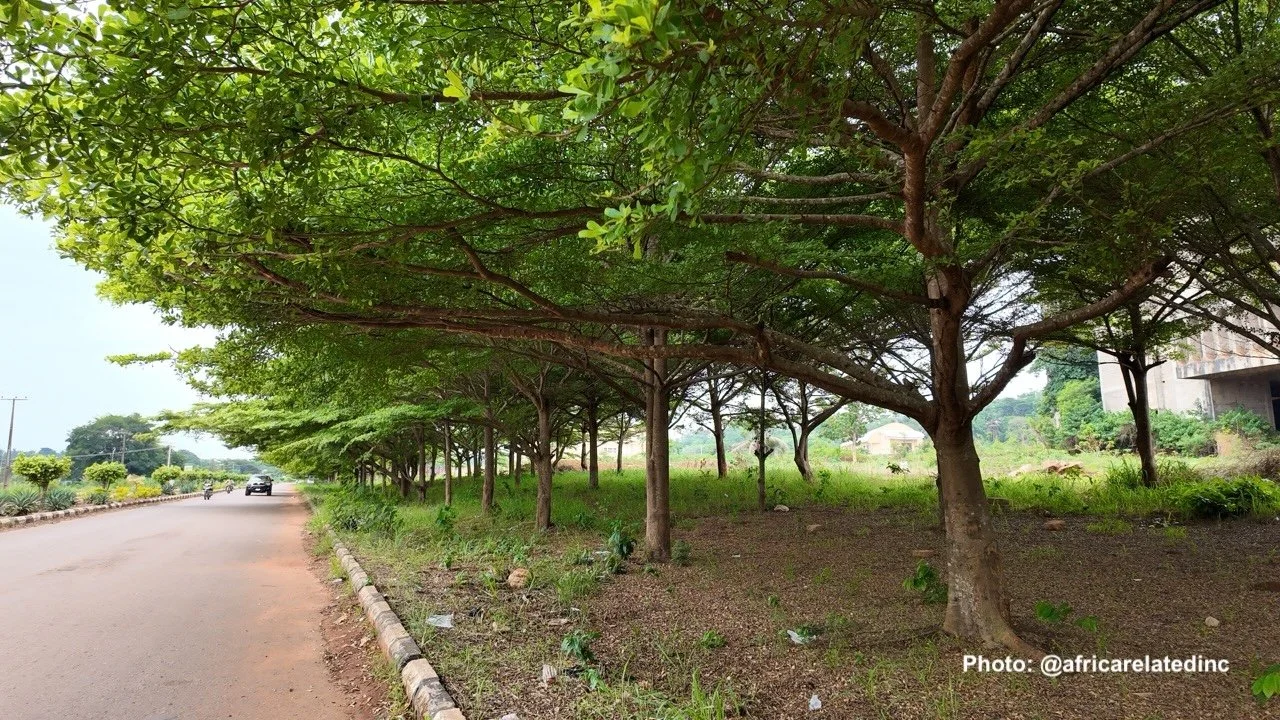
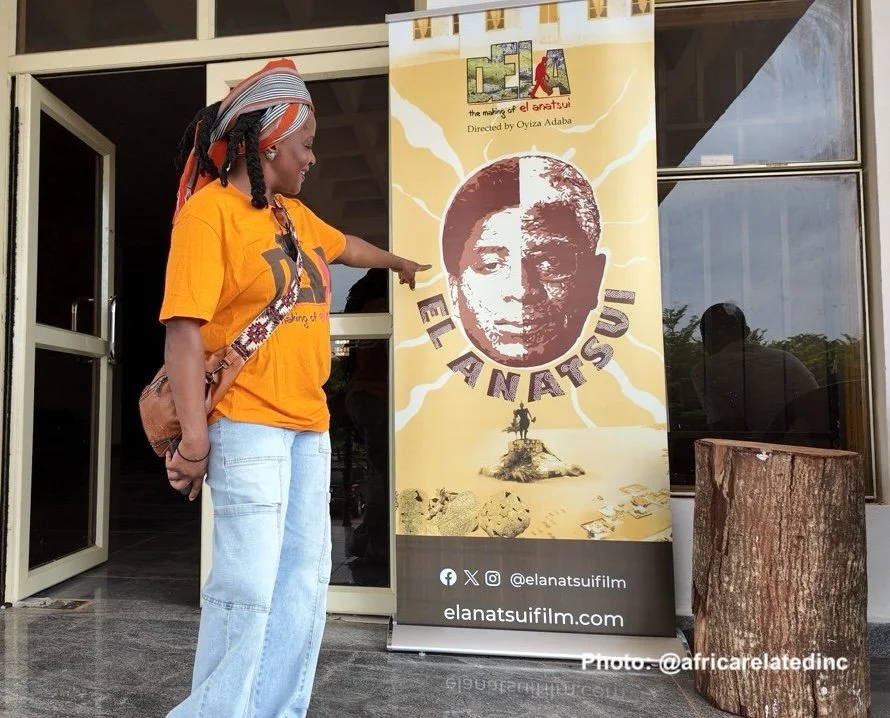
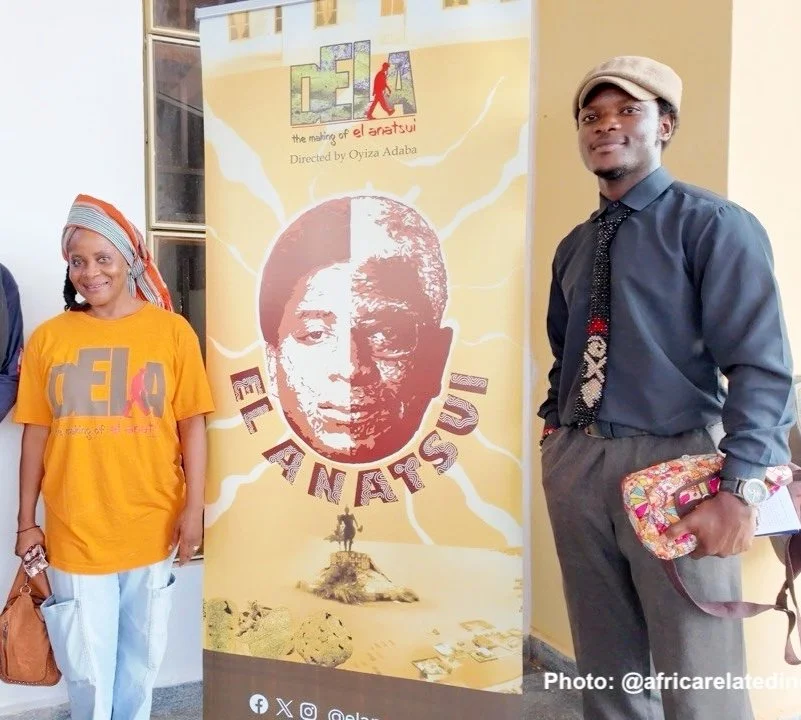
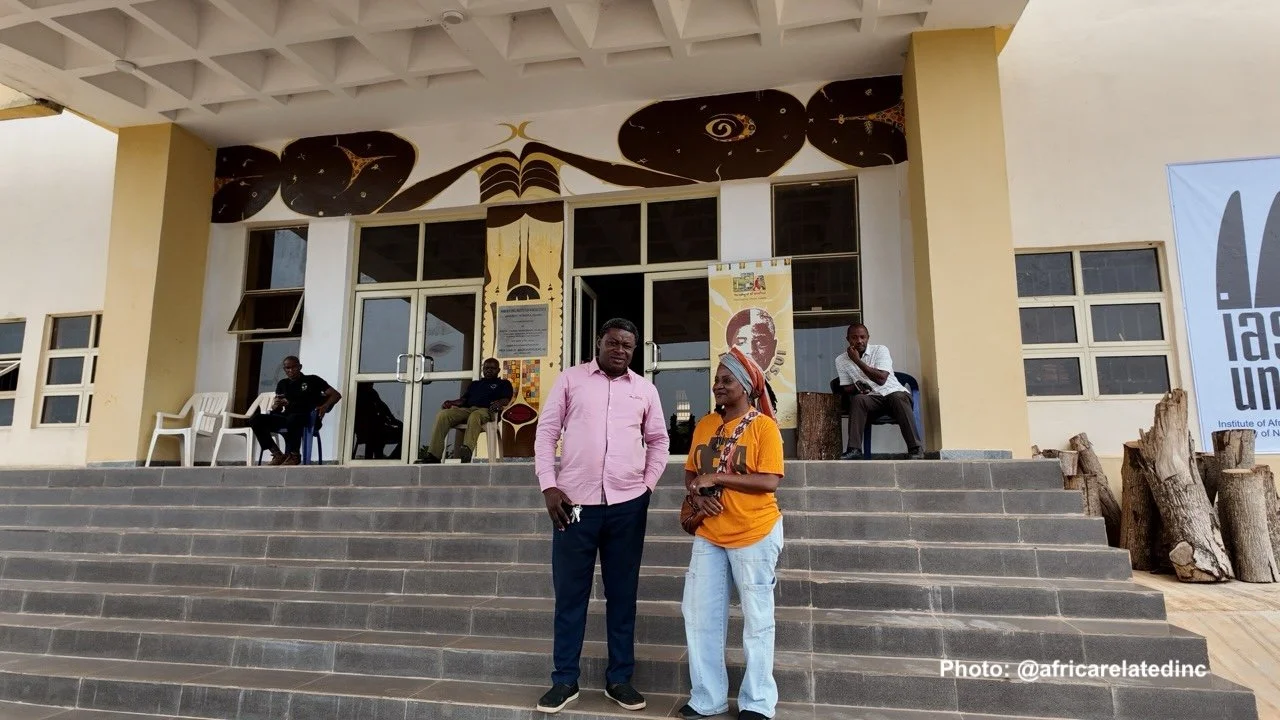
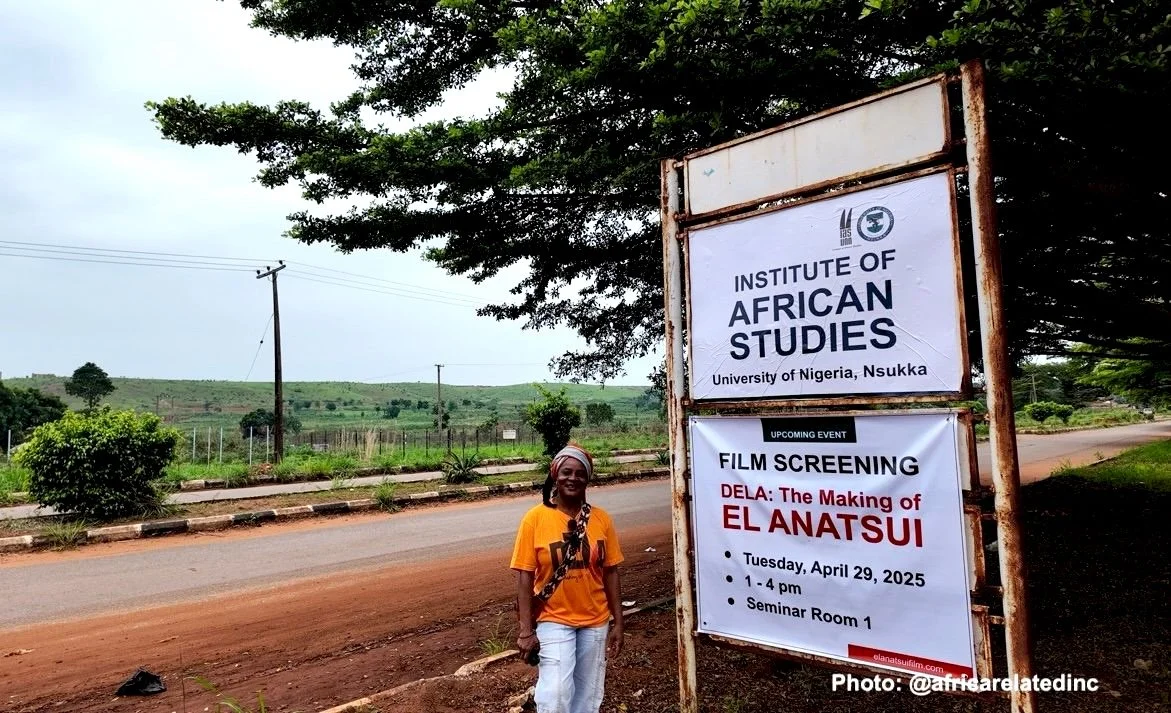
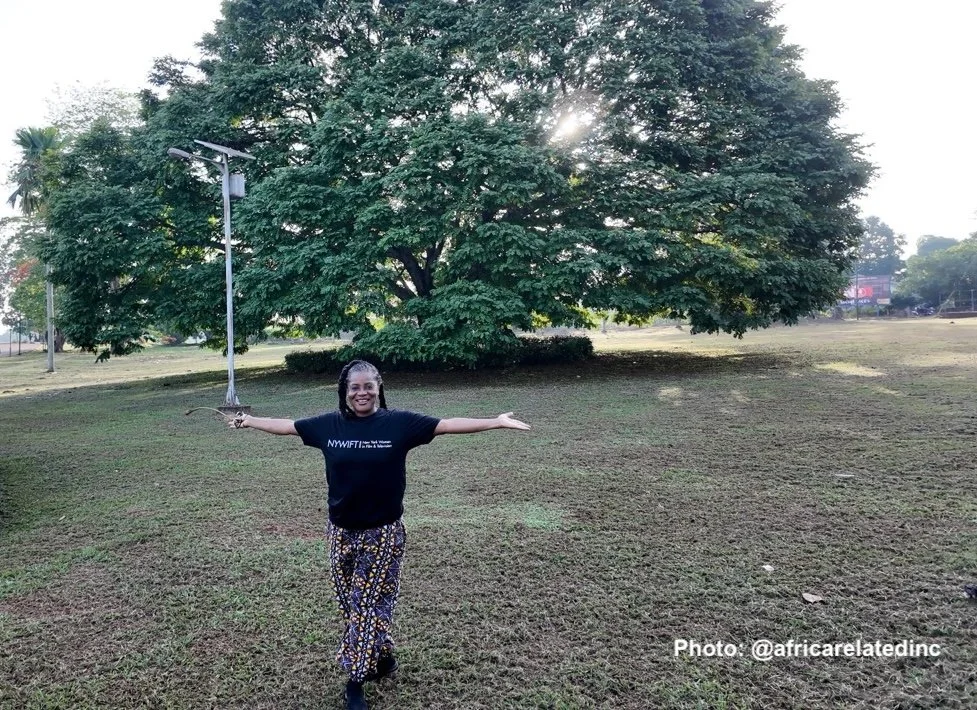
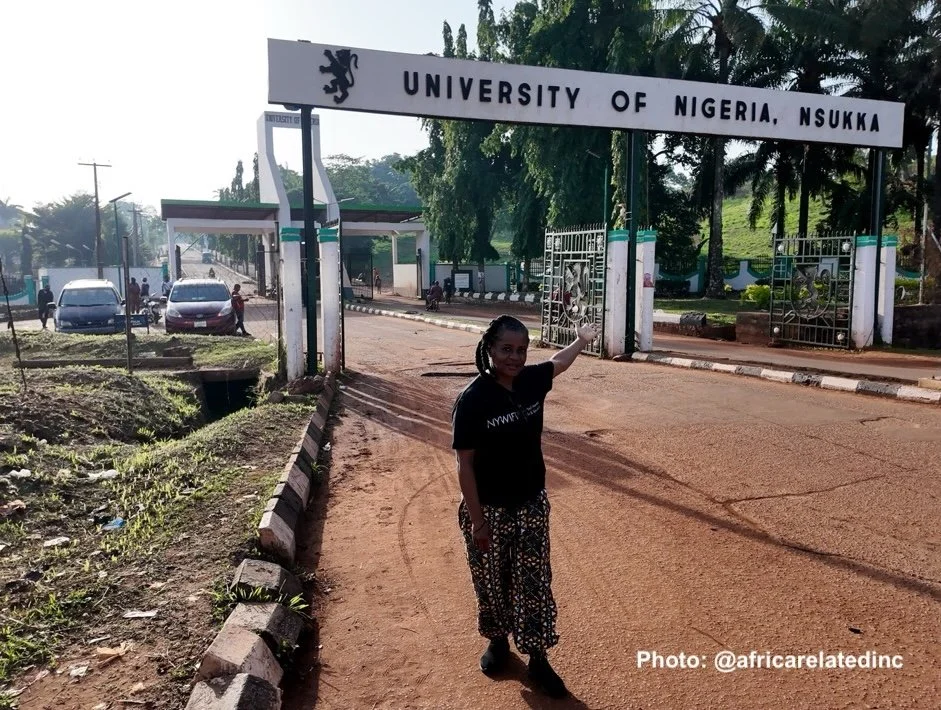
DELA: The Making of El Anatsui is a biographical documentary about one of the world's greatest sculptors. The Campus Tour aims to bring art and film students closer to the film's subject. It has so far, screened at Pan-Atlantic University Lagos, University of Nigeria Nsukka (UNN). In Ghana, the tour will continue at the artist’s five alma mater institutions.
SHARE THIS STORY
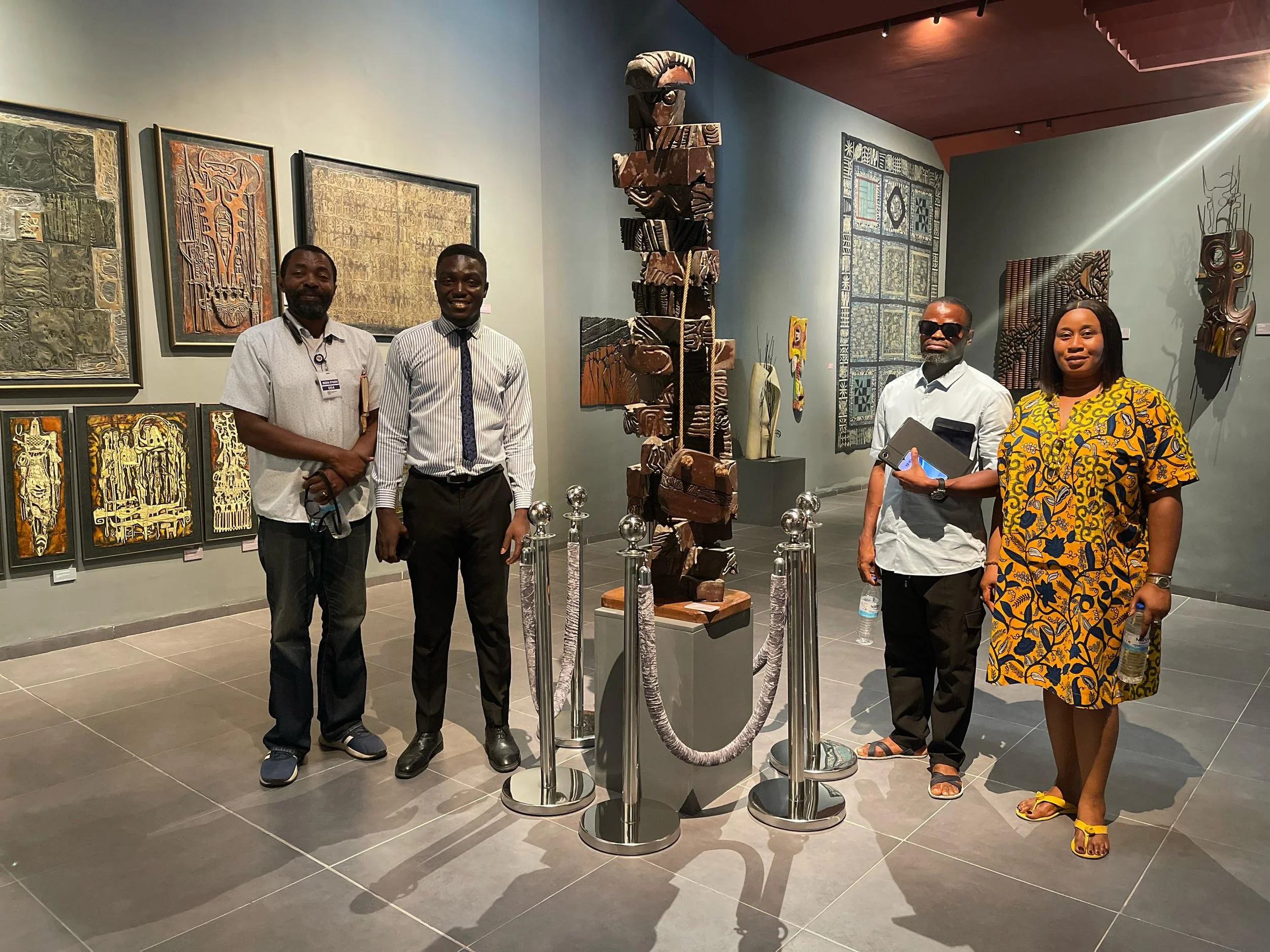
DELA Campus Tour Kicks Off With Pan-Atlantic University
The Nigeria leg of the DELA Campus Tour kicked off with the Pan-Atlantic University in Lagos on 20th March 2025. From 10am, the technical crew began setting up at Benin Hall, the theatre style 60-seater venue for the screening.
Patricia Igho, Lagos - Nigeria
The Nigeria leg of the DELA Campus Tour kicked off with the Pan-Atlantic University in Lagos on 20th March 2025. From 10:00 am, the technical crew began setting up at Benin Hall, the theatre style 60-seater venue for the screening
L-R: Standing by on of El Anatsui’s early wood works: Ayodele O. Banjo (DELA Editor/TWPC), Clement Eno, Solomon Nkwagu (Head Corporate Communications, Yemisi Shyllon Museum). and Patricia Igho ( Africa-Related). Photo by Yemisi Shyllon Museum
The DELA Team was given a tour of the Yemisi Shyllon Museum of Art by the Head Corporate Communications Mr. Solomon Nkwagu. The museum is situated on the campus, where some of El Anatsui's earlier works are part of the its permanent collection.
The screening was scheduled to take place at 2:00 pm, and students began arriving as early as 1:30 pm, having completed their registration prior to the event. Those students who had classes scheduled in between the start time and the screening later joined the gathering as they were able. Additionally, several members of the staff also made their way to the venue to participate in the event, contributing to the overall atmosphere of engagement and anticipation.
Dr. Añulika Agina, an Associate Professor, Media Studies and MSc Programme Director, made the introductions, and prompted the students to observe a minute of silence for the late Dr. Tom Adaba, who also served as a Senior Consultant on the film project.
The screening kicked off about 2:10 pm and ran through to 4pm. The students displayed keen interest and were actively taking notes during the course. Some of the scenes elicited different reactions such as laughter and awe.
The ‘intense’ Q&A session that followed lasted for an hour and ten minutes. It was an enlightening session, where five students were given the opportunity to ask questions. Mr. Ayodele O. Banjo, the lead editor and co-producer on the project, answered questions that centered on the technical aspects of the documentary i.e filming, music, editing, and personal motivation..
Q & A Photos with DELA Editor Mr. Ayodele Banjo
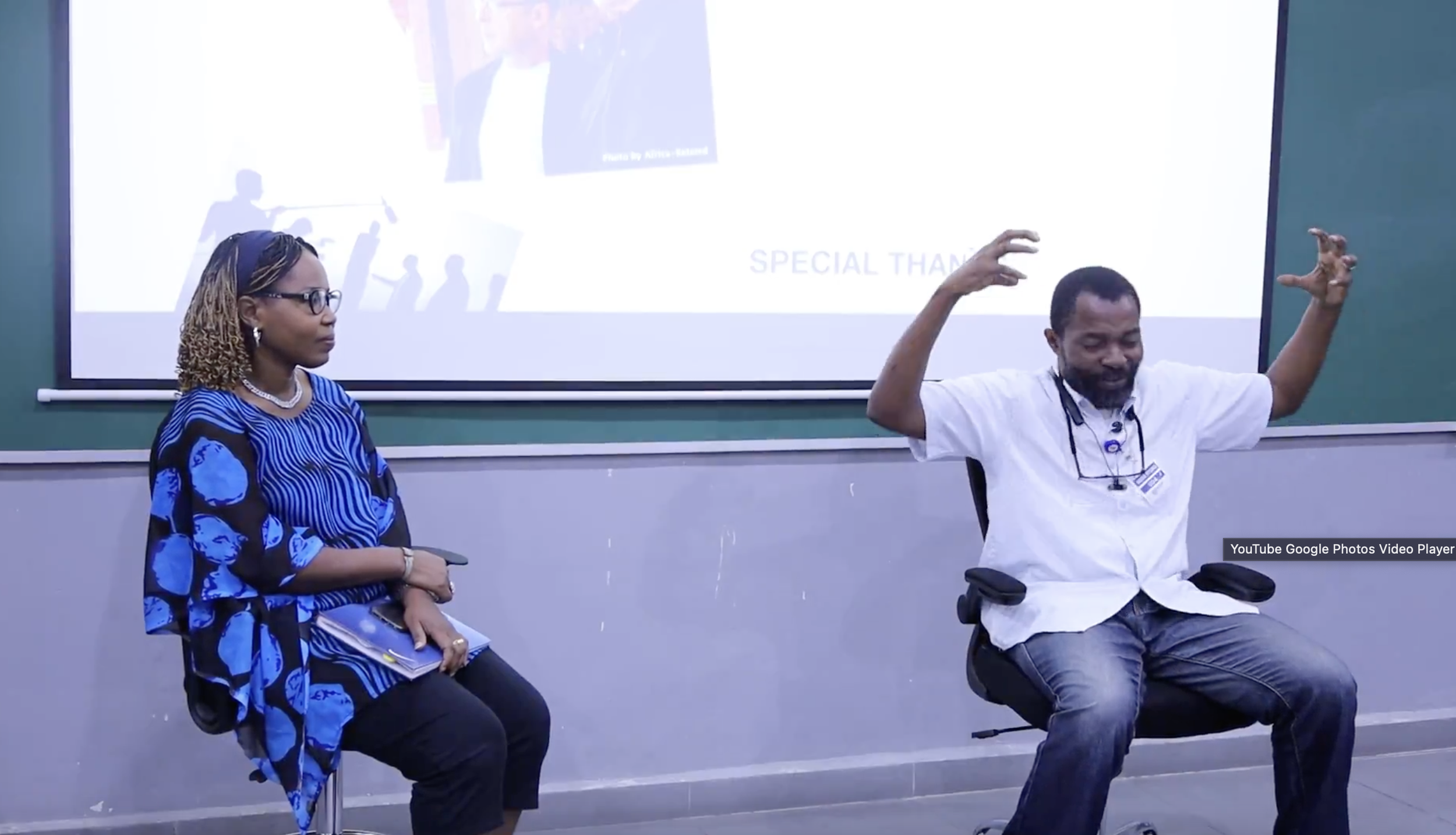

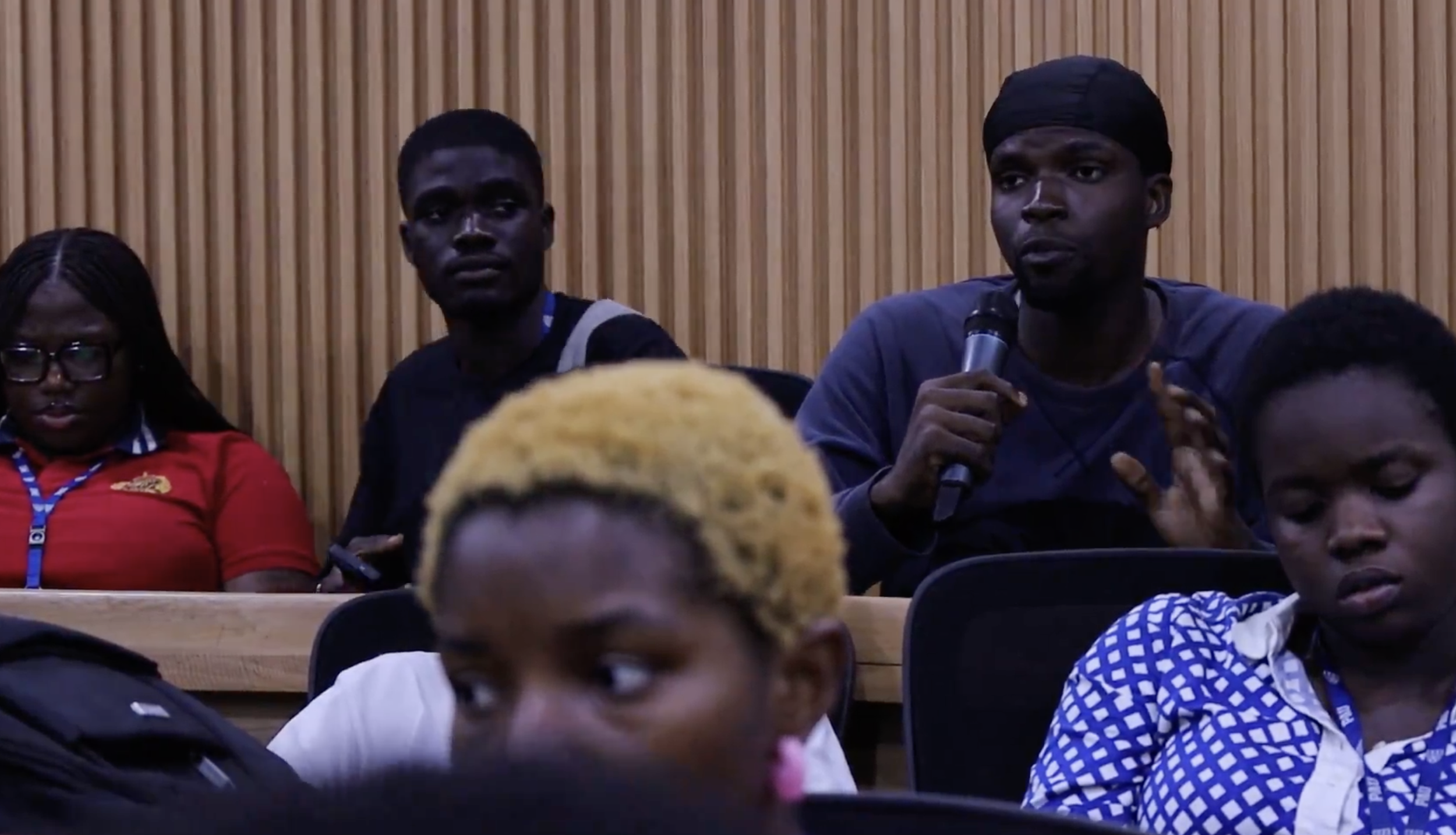
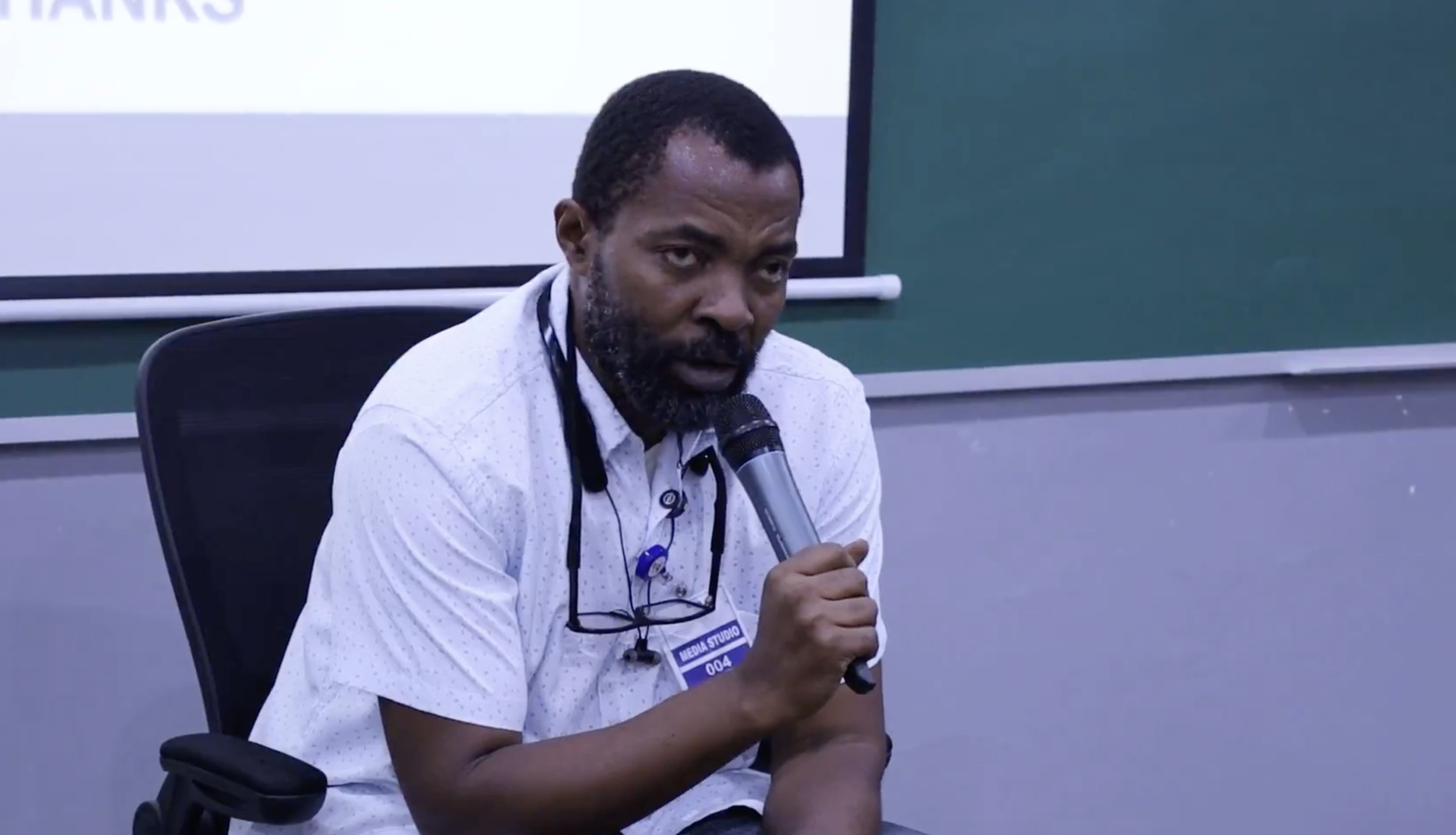
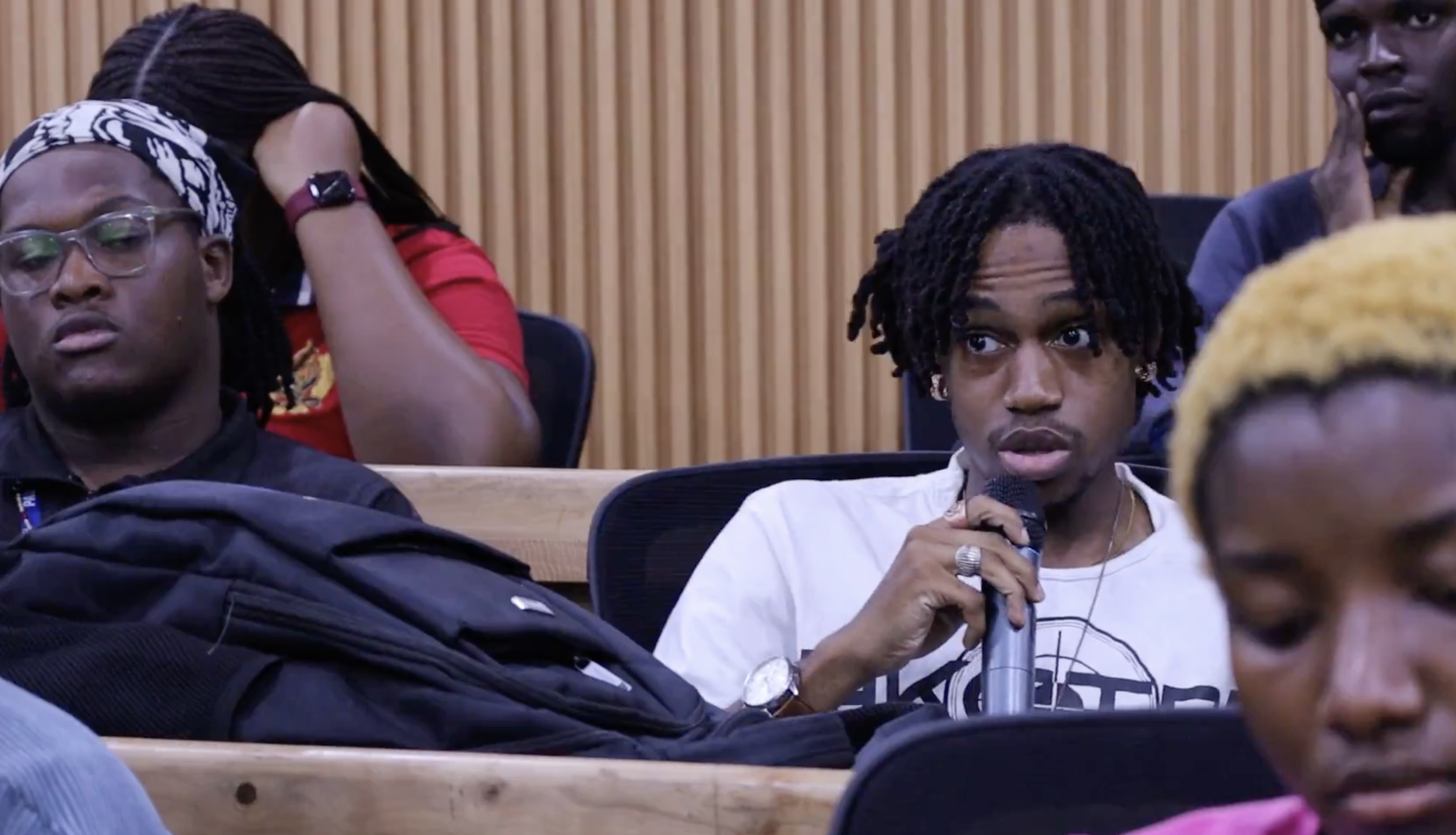
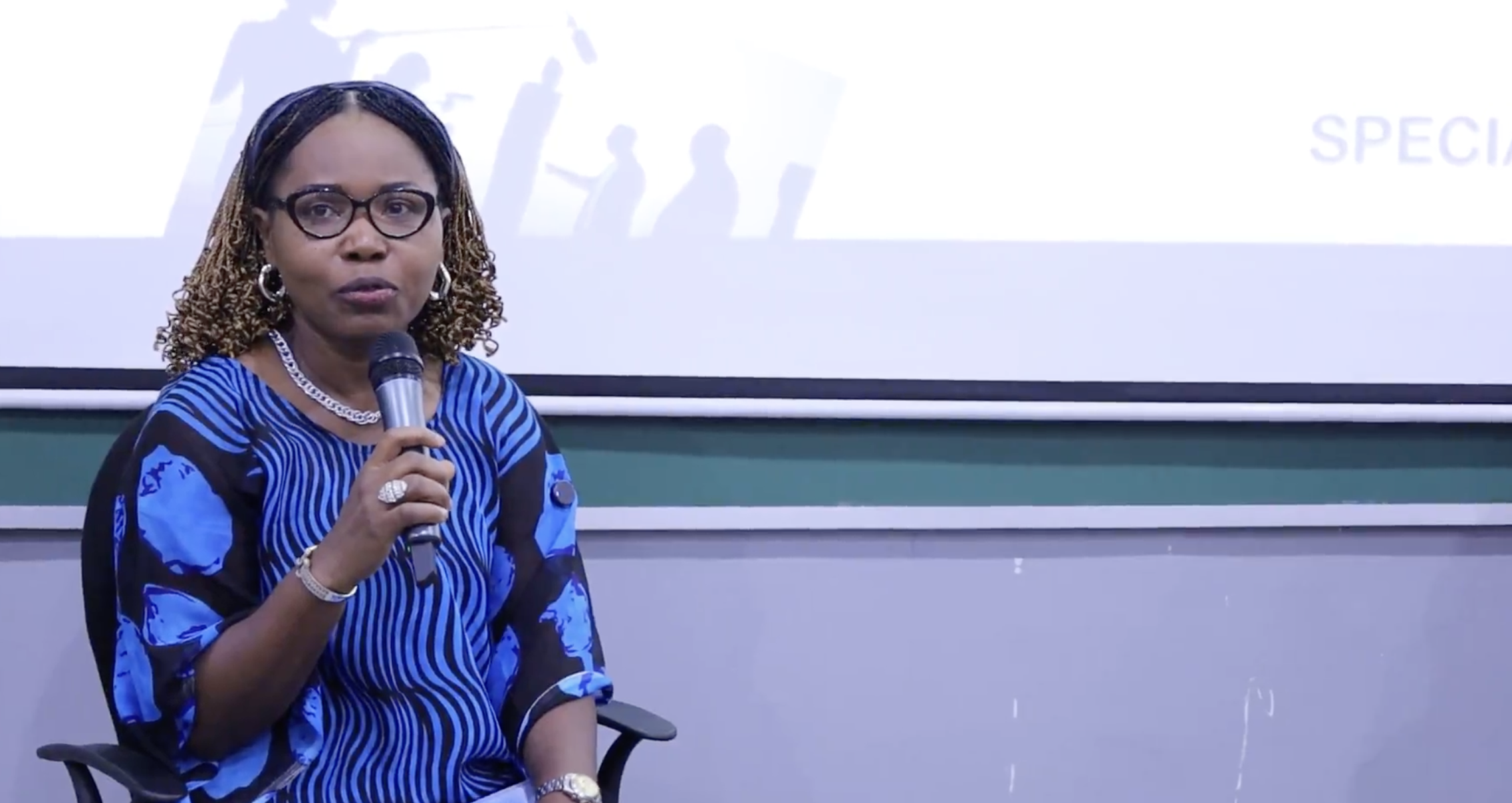
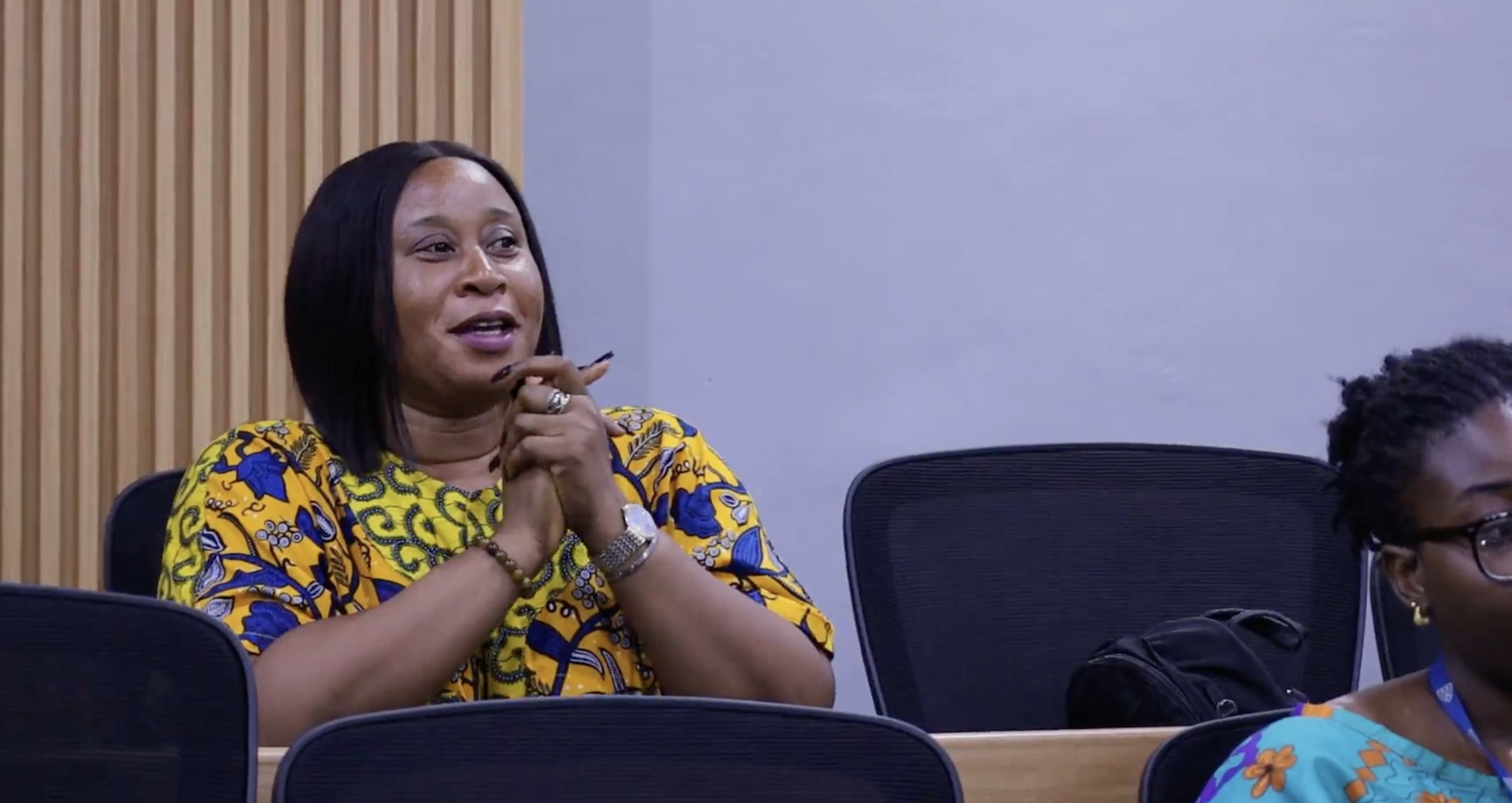
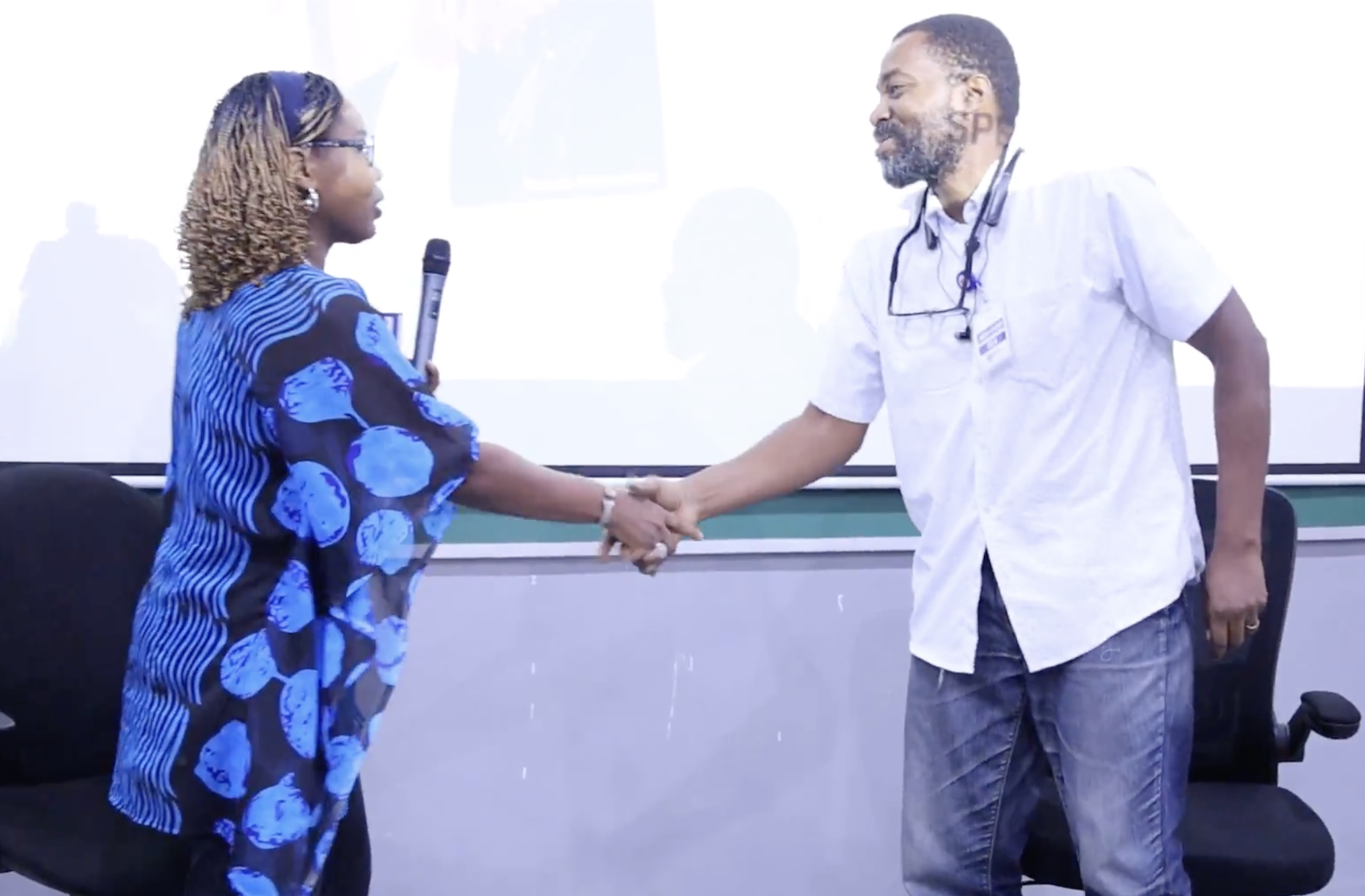
The day ended with three copies each of books authored by two participants in the film, presented to the PAU library and received by Dr. Ajina. The books are 'But For God' by Dr. Tom Adaba and 'A Samson In The Wild' by Bright Andrew Igho.
DELA: The Making of El Anatsui is a biographical documentary about one of the world's greatest sculptors. The Campus Tour aims to bring art and film students closer to the film's subject. The next stop in Nigeria is the University of Nigeria Nsukka (UNN) on April 10, 2025. In Ghana, the tour will screen at the artist’s five alma mater institutions.
SHARE THIS STORY
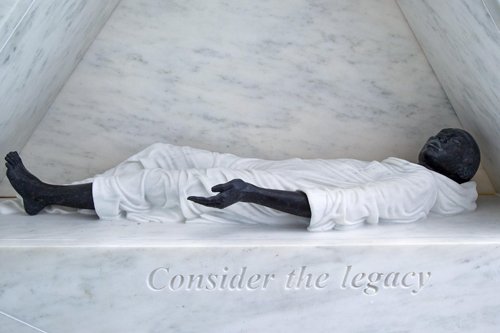
International Day of Remembrance of the Victims of Slavery and the Transatlantic Slave Trade
Beginning in 2008, 25 March was designated as the annual International Day of Remembrance of the Victims of Slavery and the Transatlantic Slave Trade.
New York
International Day of Remembrance of the Victims of Slavery and the Transatlantic Slave Trade
In 2006, the United Nations General Assembly, through resolution 61/19, recognized that “the slave trade and slavery are among the worst violations of human rights in the history of humanity, bearing in mind particularly their scale and duration” and designated 25 March 2007 as the International Day for the Commemoration of the Two-hundredth Anniversary of the Abolition of the Transatlantic Slave Trade. The following year, through resolution 62/122, it designated 25 March as an annual International Day of Remembrance of the Victims of Slavery and the Transatlantic Slave Trade, beginning in 2008.
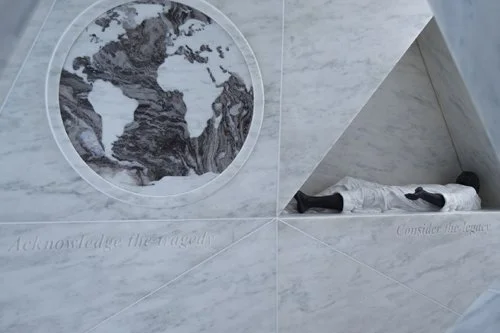
The Ark of Return – The Permanent Memorial to Honour the Victims of Slavery
and the Transatlantic Slave Trade at the United Nations
Water is Life group exhibition of art and poetry
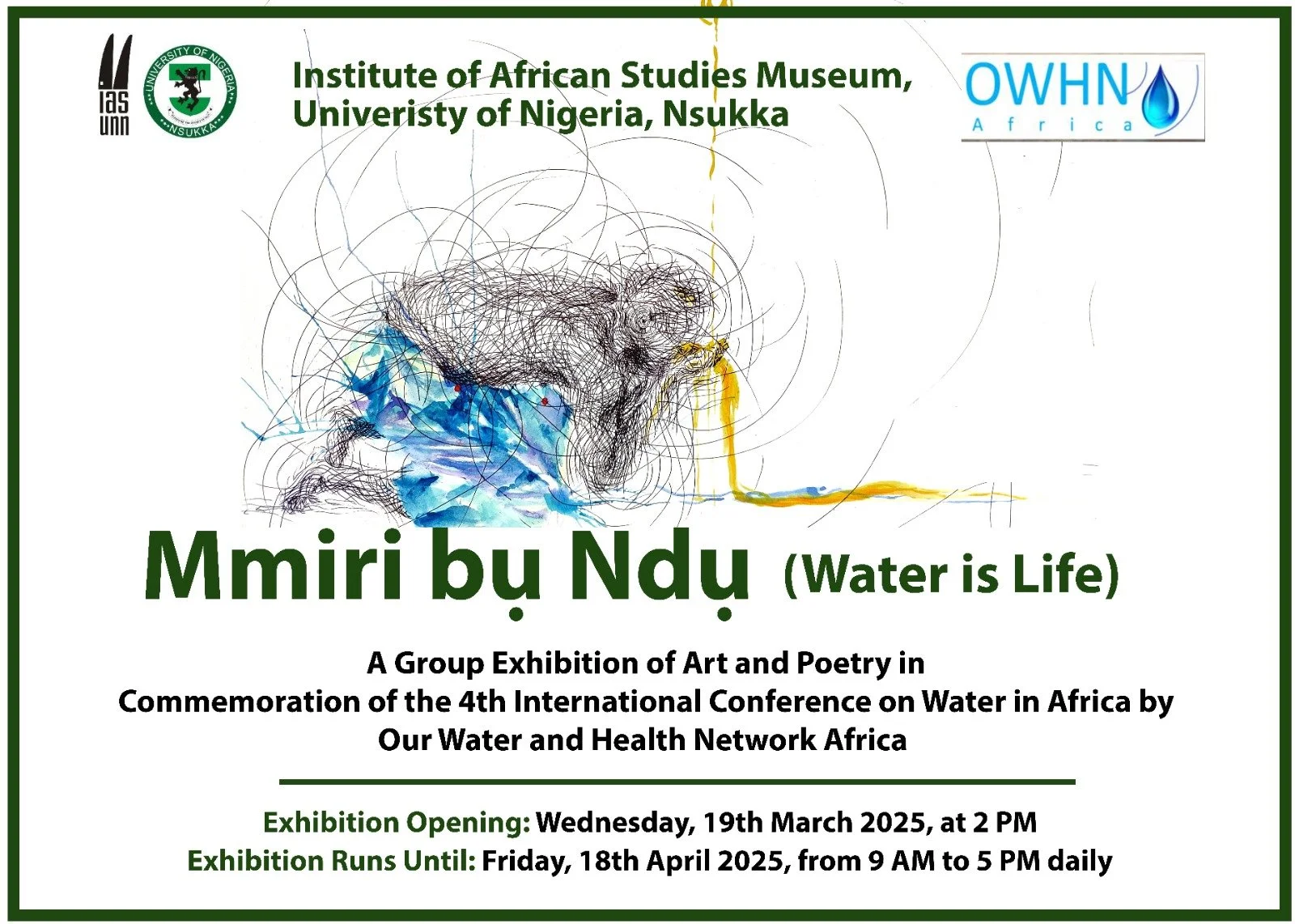
Mmiri bụ Ndụ - (Water is Life) group exhibition of art and poetry commemorating the 4th International Conference on Water in Africa by *Our Water and Health Network Africa.
Mmiri bụ Ndụ - (Water is Life) group exhibition of art and poetry commemorating the 4th International Conference on Water in Africa by *Our Water and Health Network Africa. Opens at 2 pm Wednesday, 19th March 2025, at the Institute of African Studies Museum, University of Nigeria, Nsukka and runs until Friday, 18th April 2025, Monday through Friday, 9:00 a.m. to 5:00 p.m.

Submission Open: One World Media Awards 2025
One World Media is looking for impactful journalism in print, digital media, audio, film and broadcast mediums, as well as feature and short documentaries that raise awareness of global and local issues, covering underreported topics or offering new approaches to more familiar stories. Additionally, since last year we opened the “Innovative Storytelling” category for media using new technologies and platforms, such as TikTok, gaming, data, VR, AR, XR or AI.

Celebrating underreported stories from around the world
One World Media is looking for impactful journalism in print, digital media, audio, film and broadcast mediums, as well as feature and short documentaries that raise awareness of global and local issues, covering underreported topics or offering new approaches to more familiar stories. Additionally, since last year we opened the “Innovative Storytelling” category for media using new technologies and platforms, such as TikTok, gaming, data, VR, AR, XR or AI.
Free entries are available for students who are from and based in the global south and for organisations interested in entering the “Press Freedom” category. Discounts are available for those in the global south for all categories, please see the website for details.
You can read all about the application process and enter a submission here.
The deadline for entries is 6 February 2025 at 17:00 GMT+1.
https://oneworldmedia.org.uk/awards/
Please help us spread the word
SHARE THIS STORY
Two UN Exhibitions Shed Light On Human Rights & Gender-Based Violence
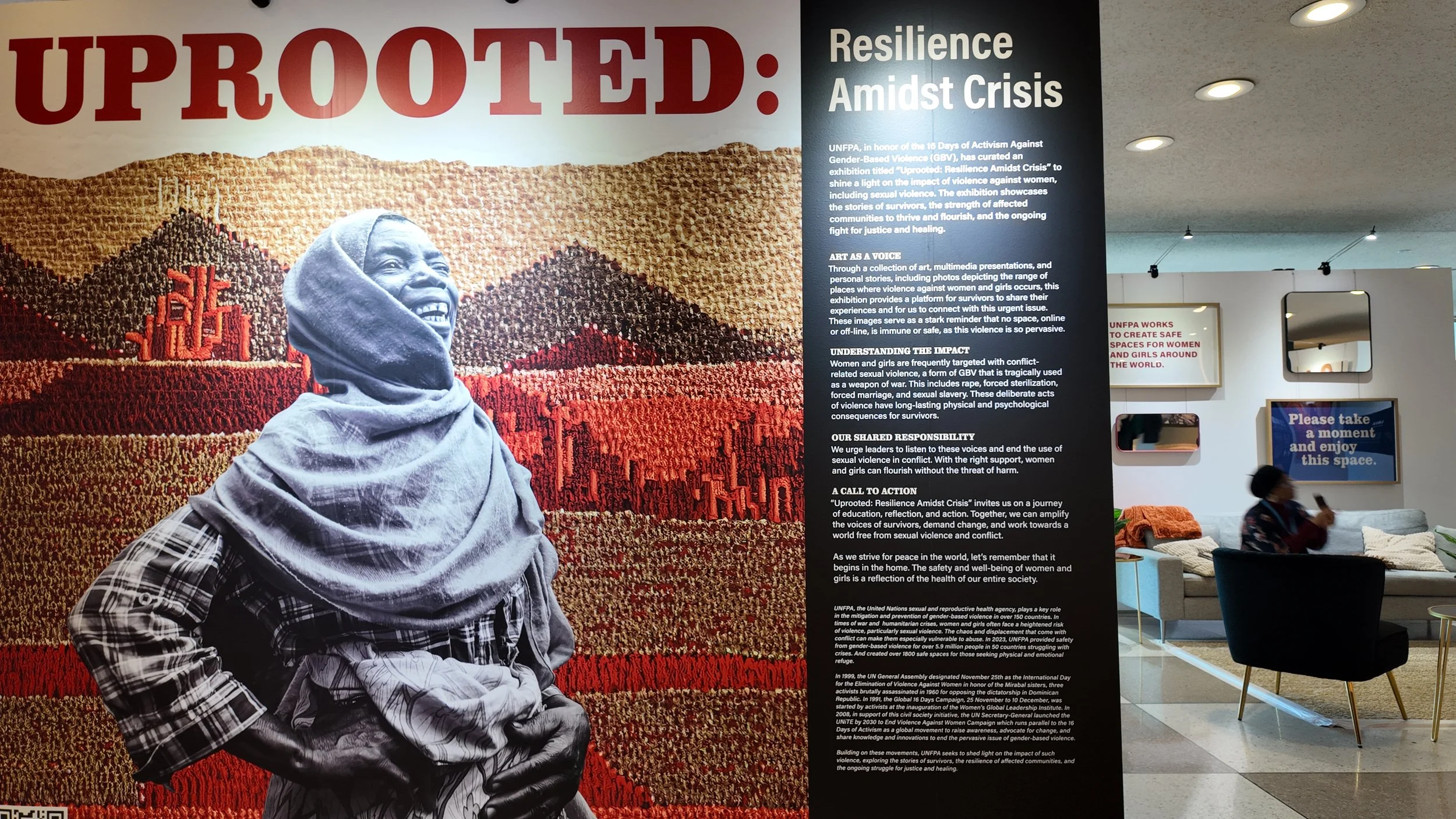
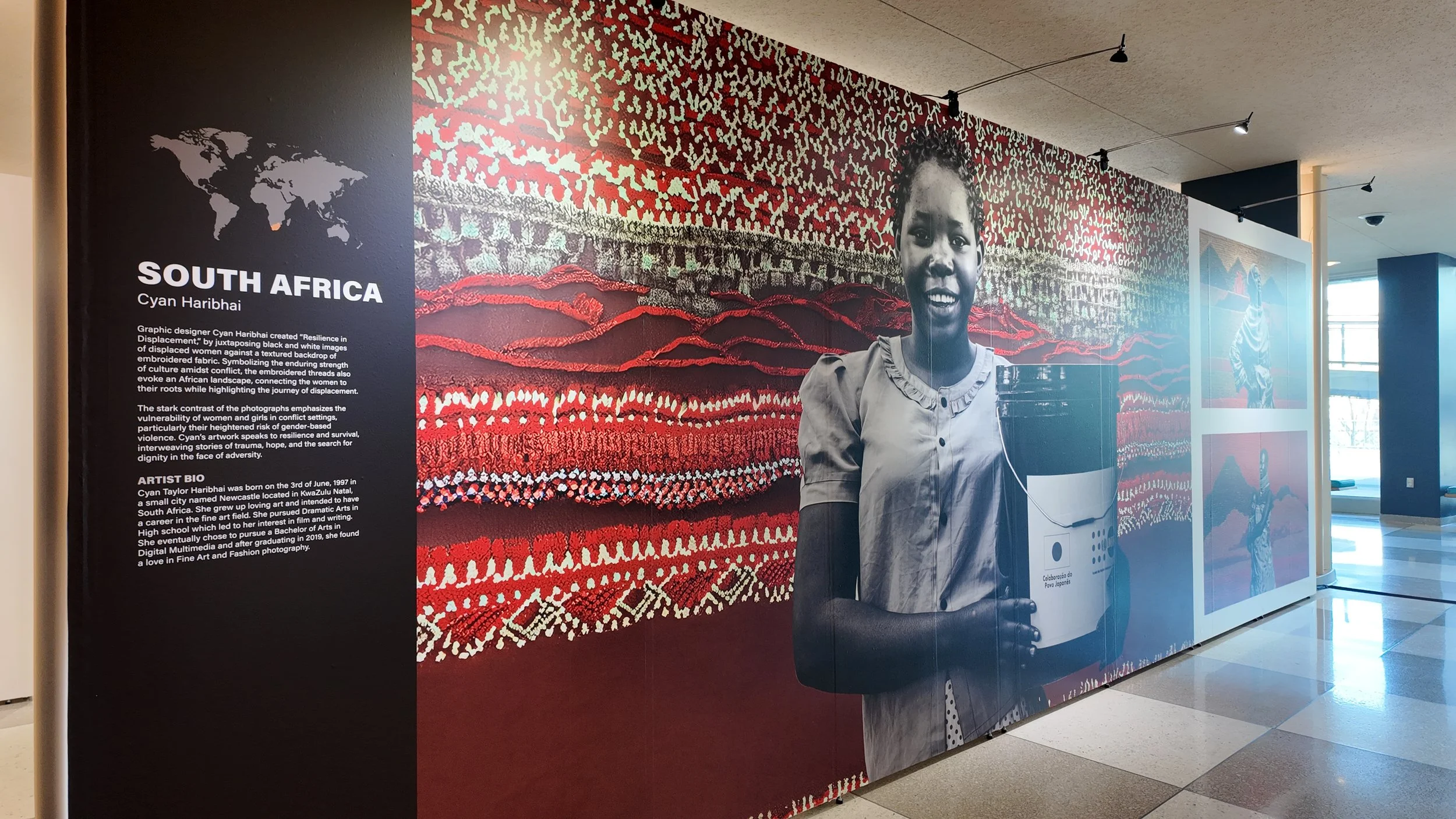
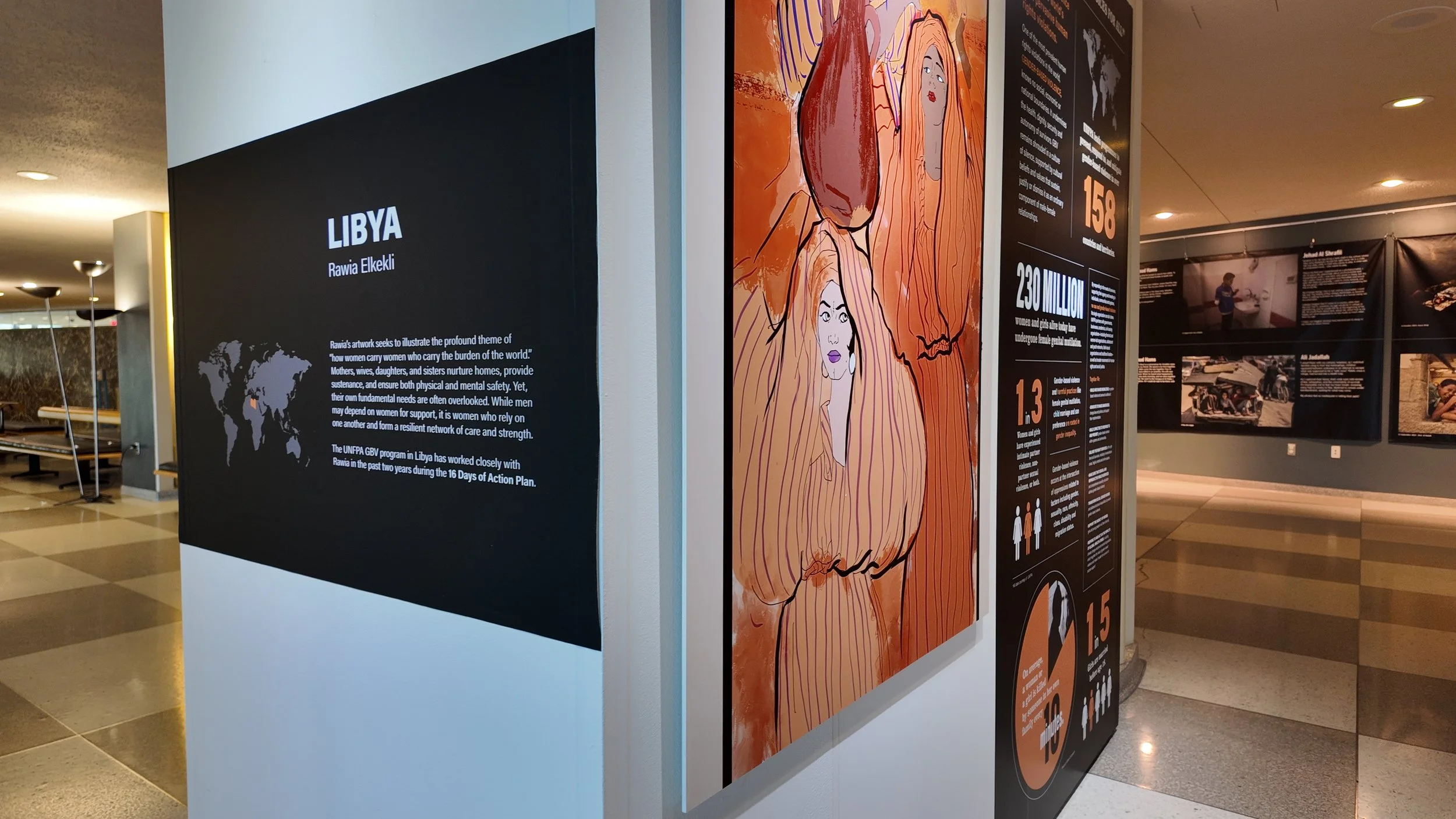
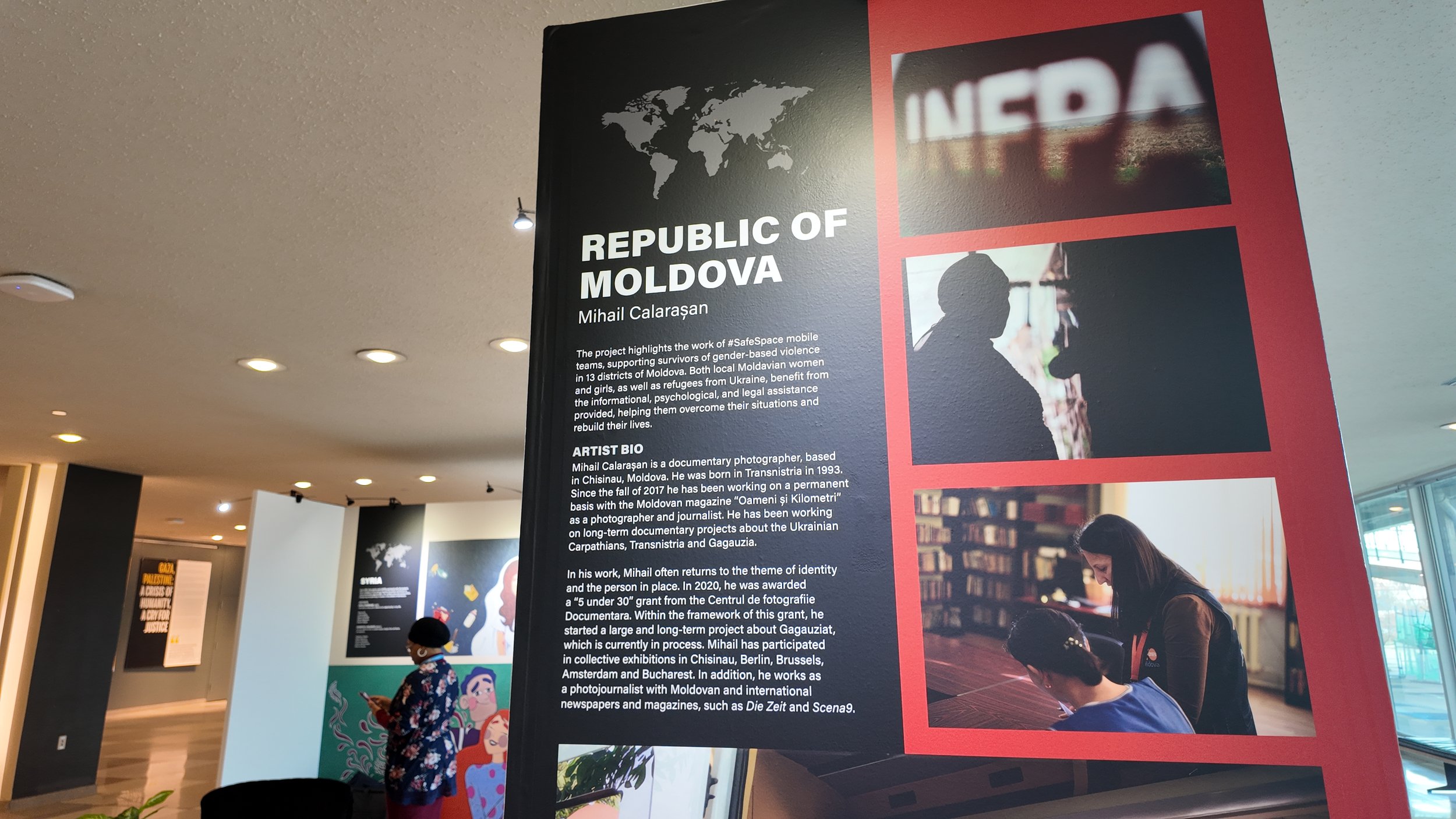
Two exhibition are showing at the lobby of the United Nations HQ in New York - Pictures for the Human Rights features 30 pictures by 30 artists of 30 articles of the Universal Declaration of Human Rights; while Uprooted: Resilience in Crisis sheds light on the impact of gender-based violence, exploring the resilience of survivors.
by Oyiza Adaba
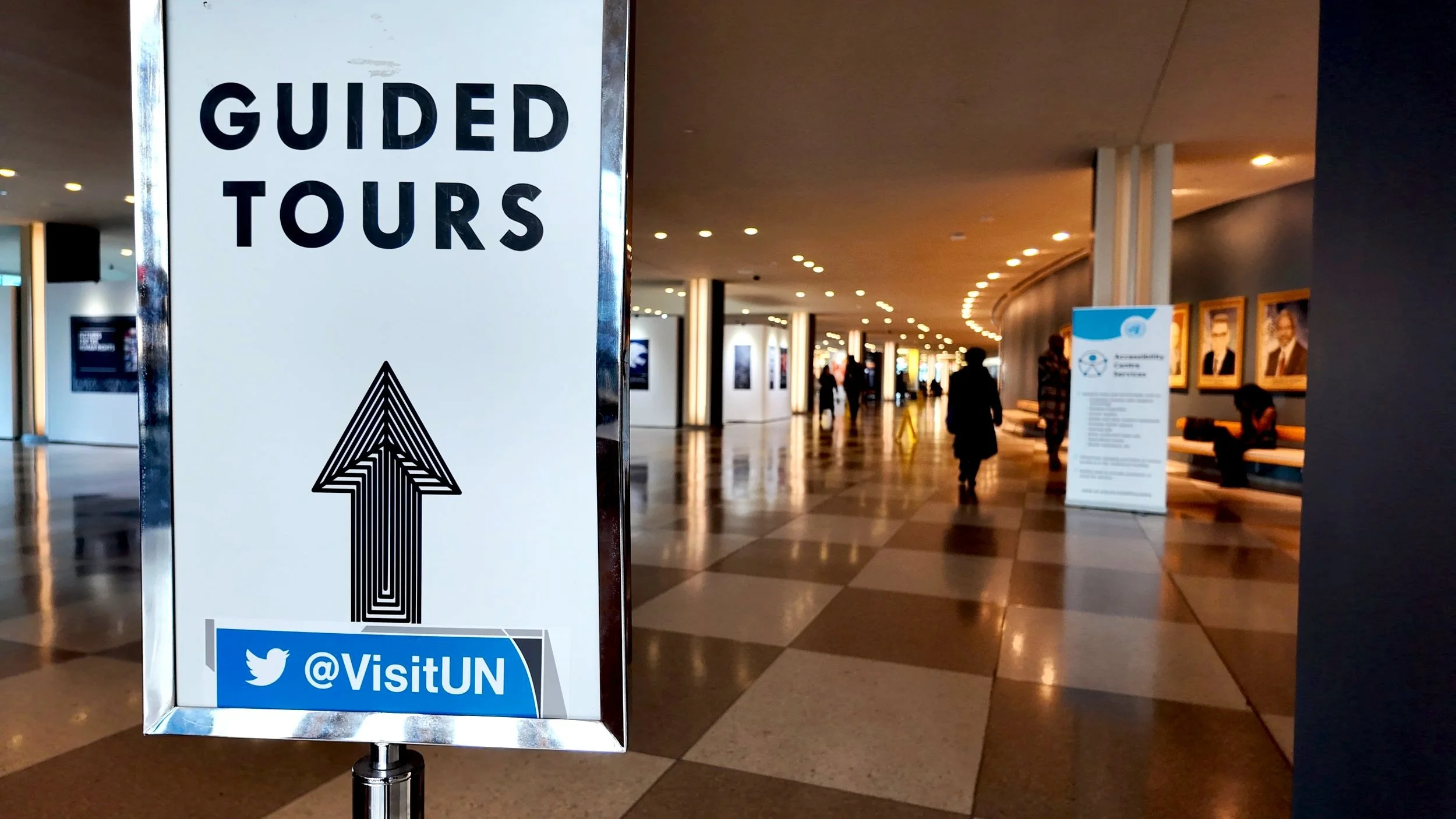
Free guided tours at the United Nations Headquarters in New York. (Africa-Related)
Exhibition
UN Exhibits
United Nations HQ, New York
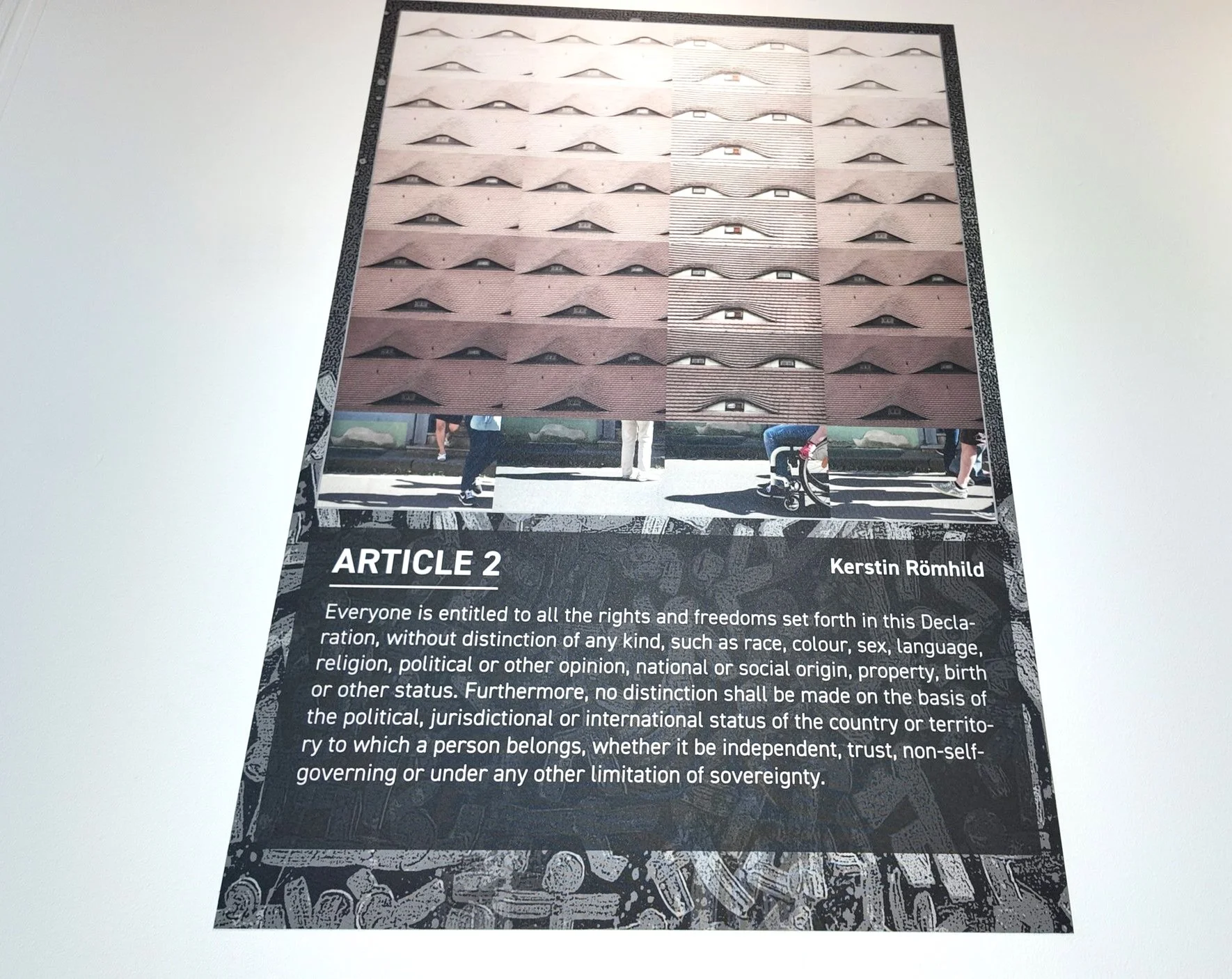
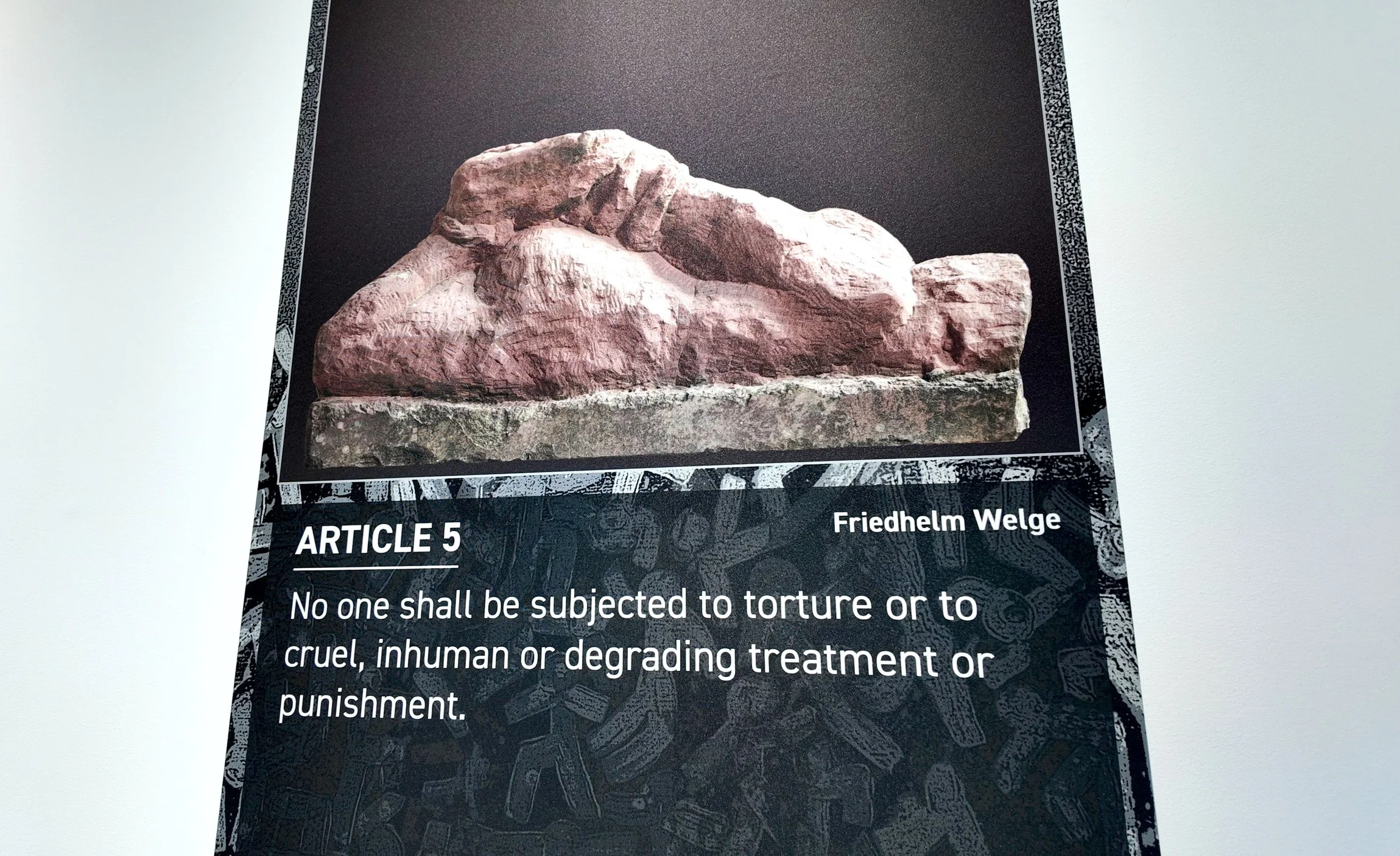
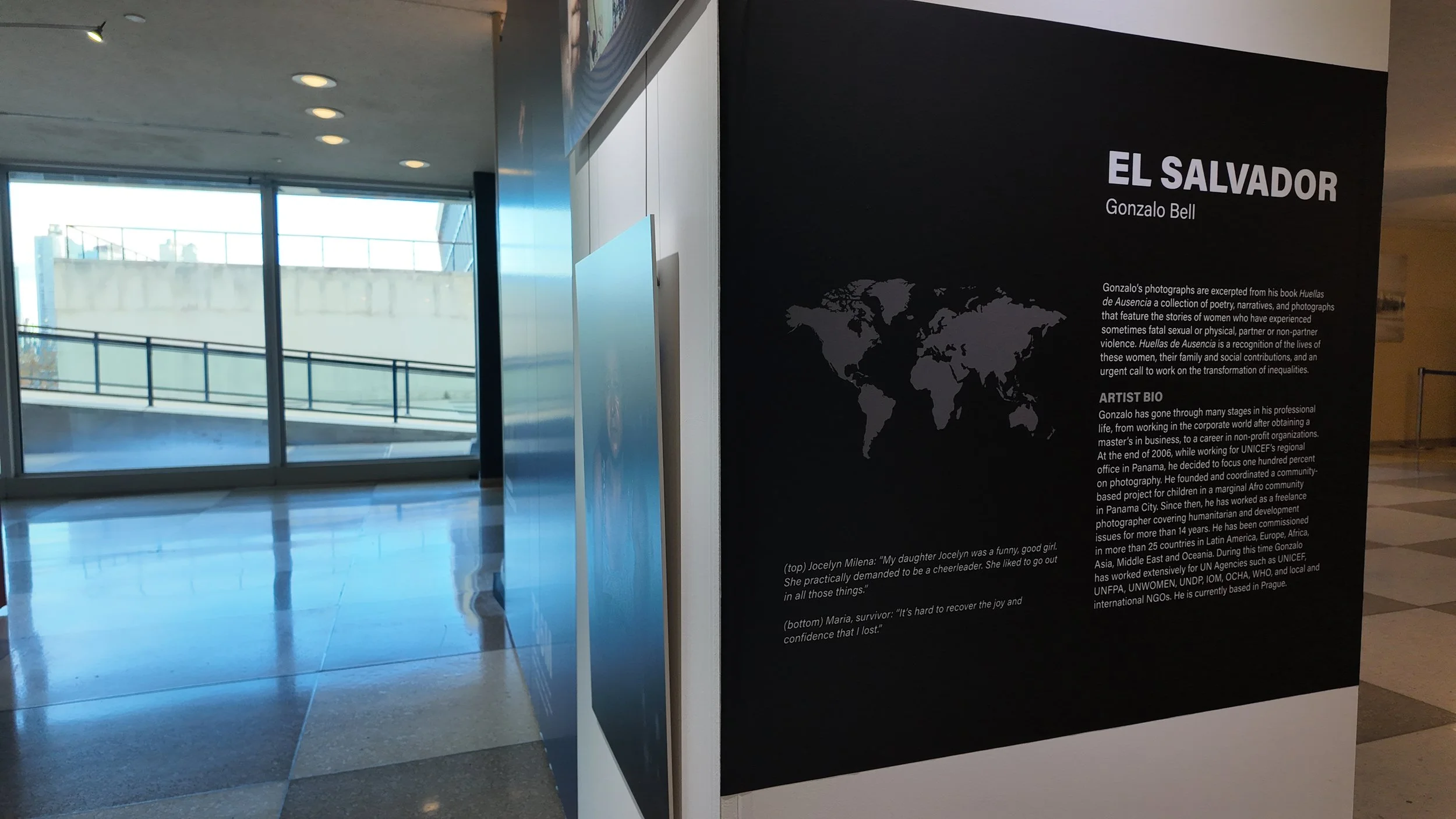
Two exhibitions are showing at the lobby of the United Nations HQ in New York - Pictures for the Human Rights features 30 pictures by 30 artists of 30 articles of the Universal Declaration of Human Rights; while Uprooted: Resilience in Crisis sheds light on the impact of gender-based violence, exploring the resilience of survivors.
Pictures for the Human Rights
According to UN Exhibits, this exhibition features 30 pictures in which artists from many countries have interpreted the 30 articles of the Universal Declaration of Human Rights in their own visual language. These images make human rights easier to understand in words and pictures, inspiring visitors to defend and promote Human Rights for everyone everywhere. The exhibit is in connection with Human Rights Day (10 December).
This exhibit is organized by the Pictures for the Human Rights e.V and endorsed by the Permanent Mission of the Federal Republic of Germany to the United Nations.
This exhibition is on display until 10 January 2025





Uprooted: Resilience in Crisis (Photos by Africa-Related)
According to Un Exhibits, this exhibit seeks to shed light on the impact of gender-based violence, exploring the stories of survivors, the resilience of affected communities, and the ongoing struggle for justice and healing. Through a diverse array of art forms, it offers a platform for survivors to share their experiences and for audiences to engage with this urgent issue. This exhibit is organized and endorsed by the UN Population Fund (UNFPA).
This exhibition is on display until 7 February 2025
Photos by Africa-Related



share this story

United Nations Women's Guild Annual Bazaar
Highlights from United Nations Women's Guild Annual Bazaar
by Oyiza Adaba
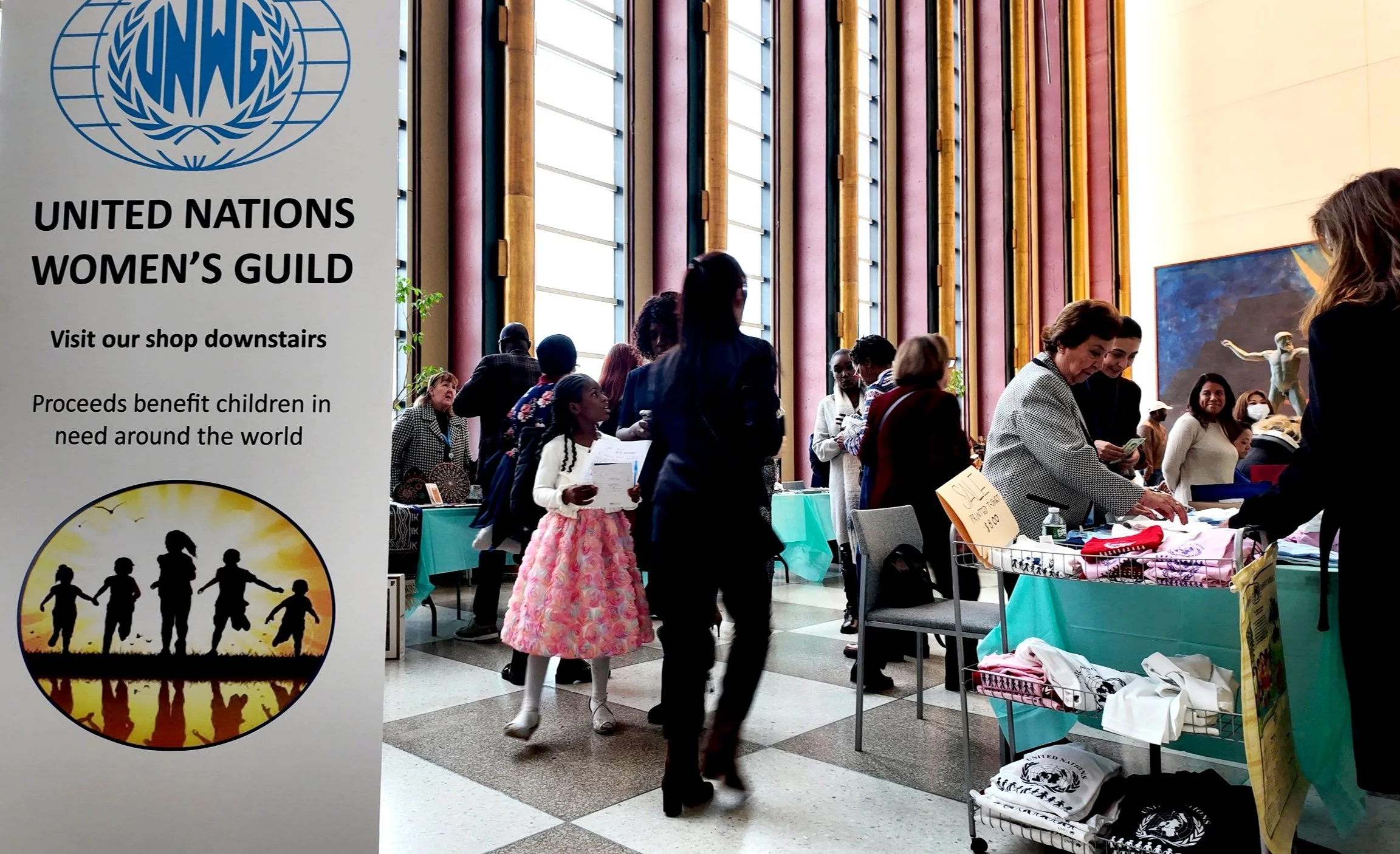
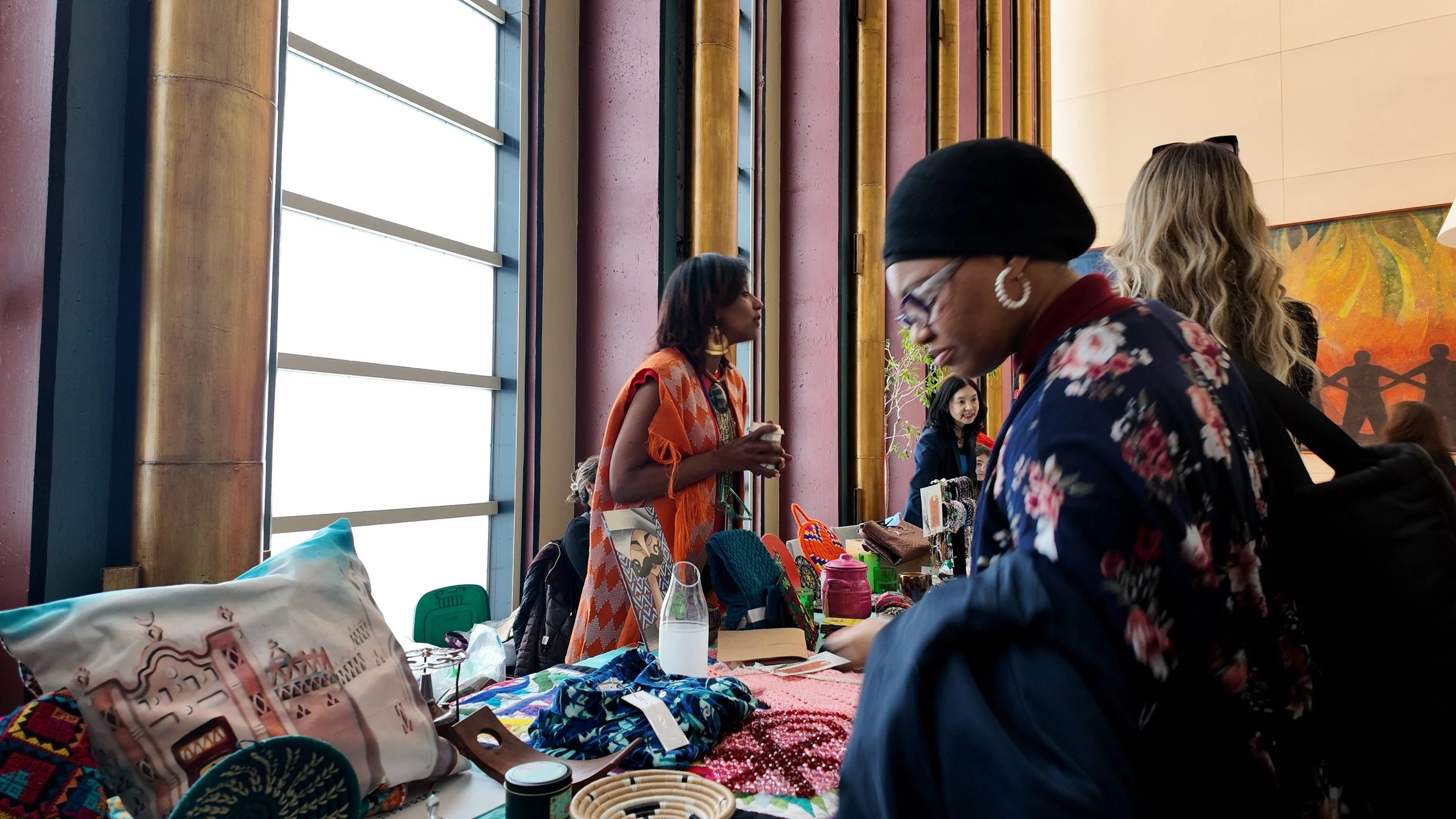
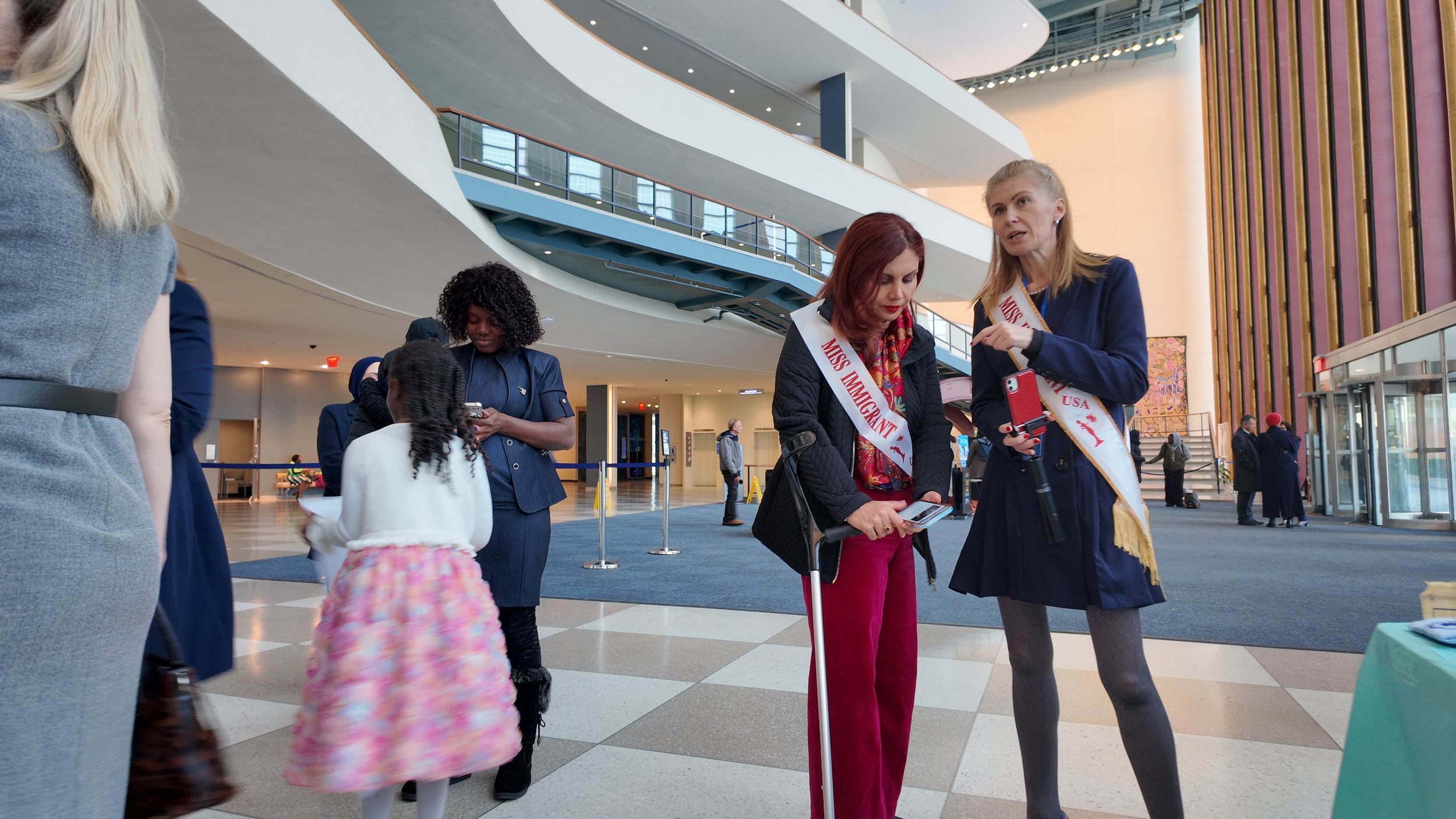
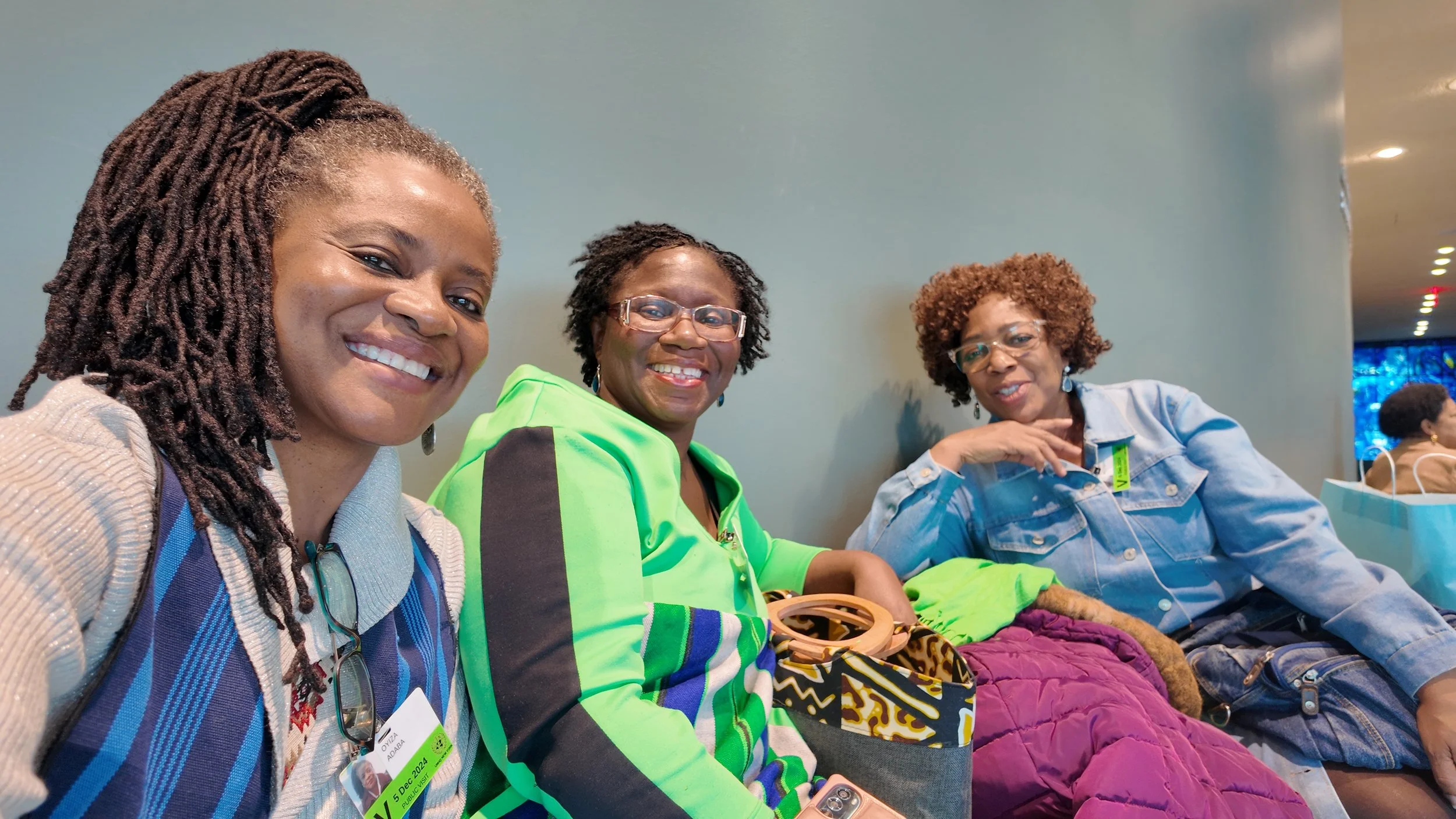
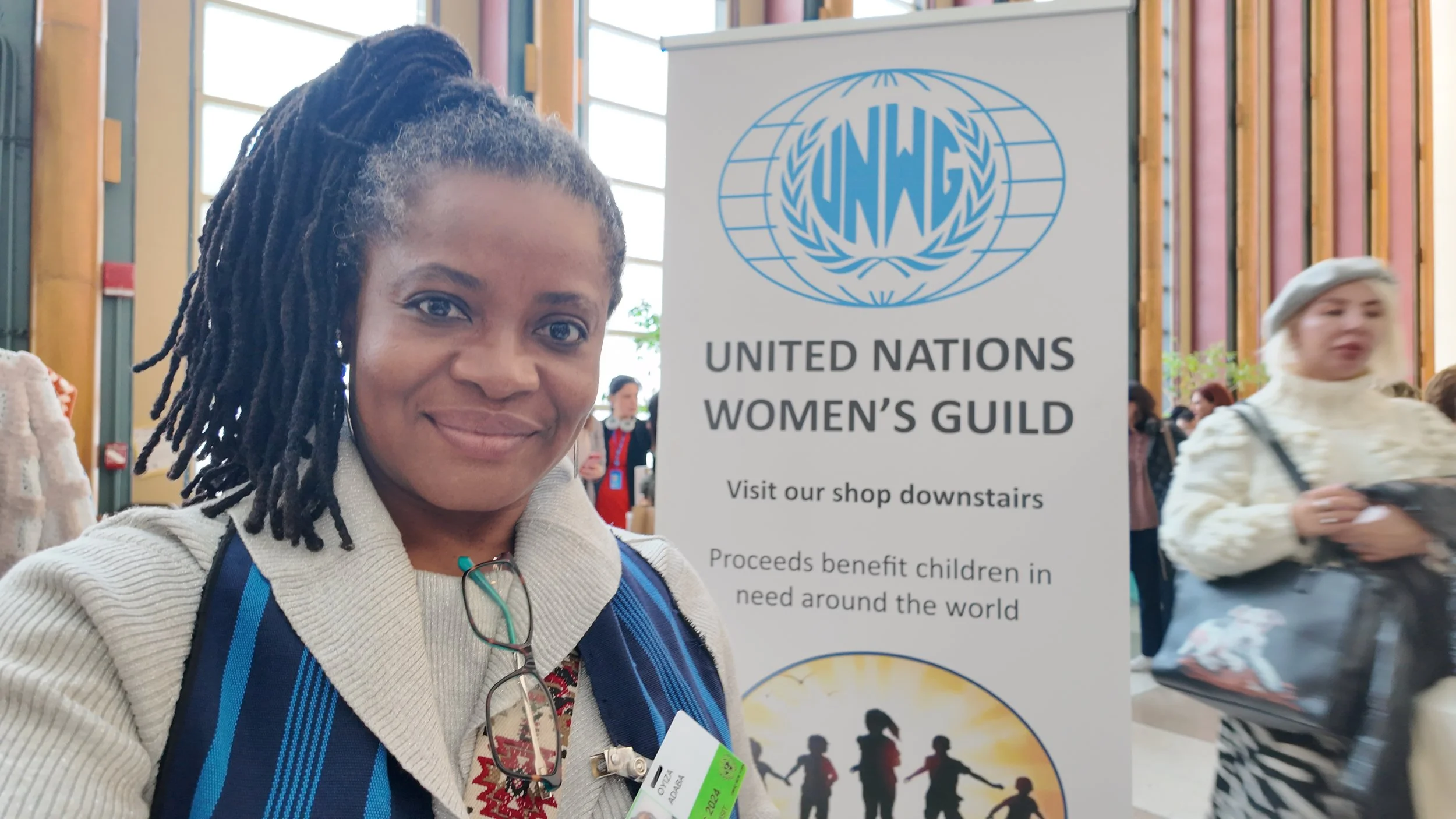
UN Women’s Guild Bazaar 2024
Highlights
United Nations Women's Guild Holiday Bazaar
Date: December 5, 2024.
Time: 2.30pm
Venue: UN HQ Lobby, New York
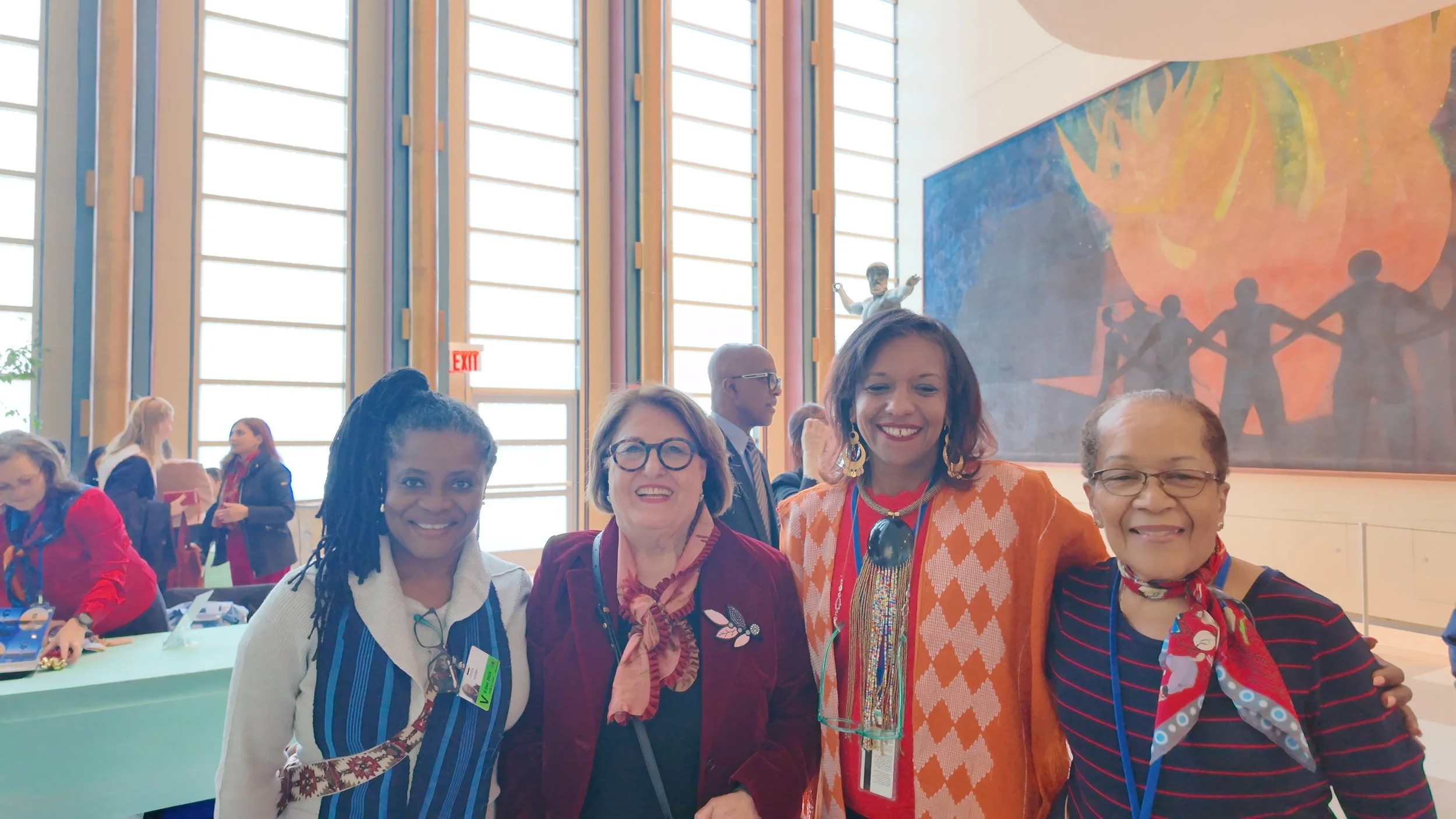
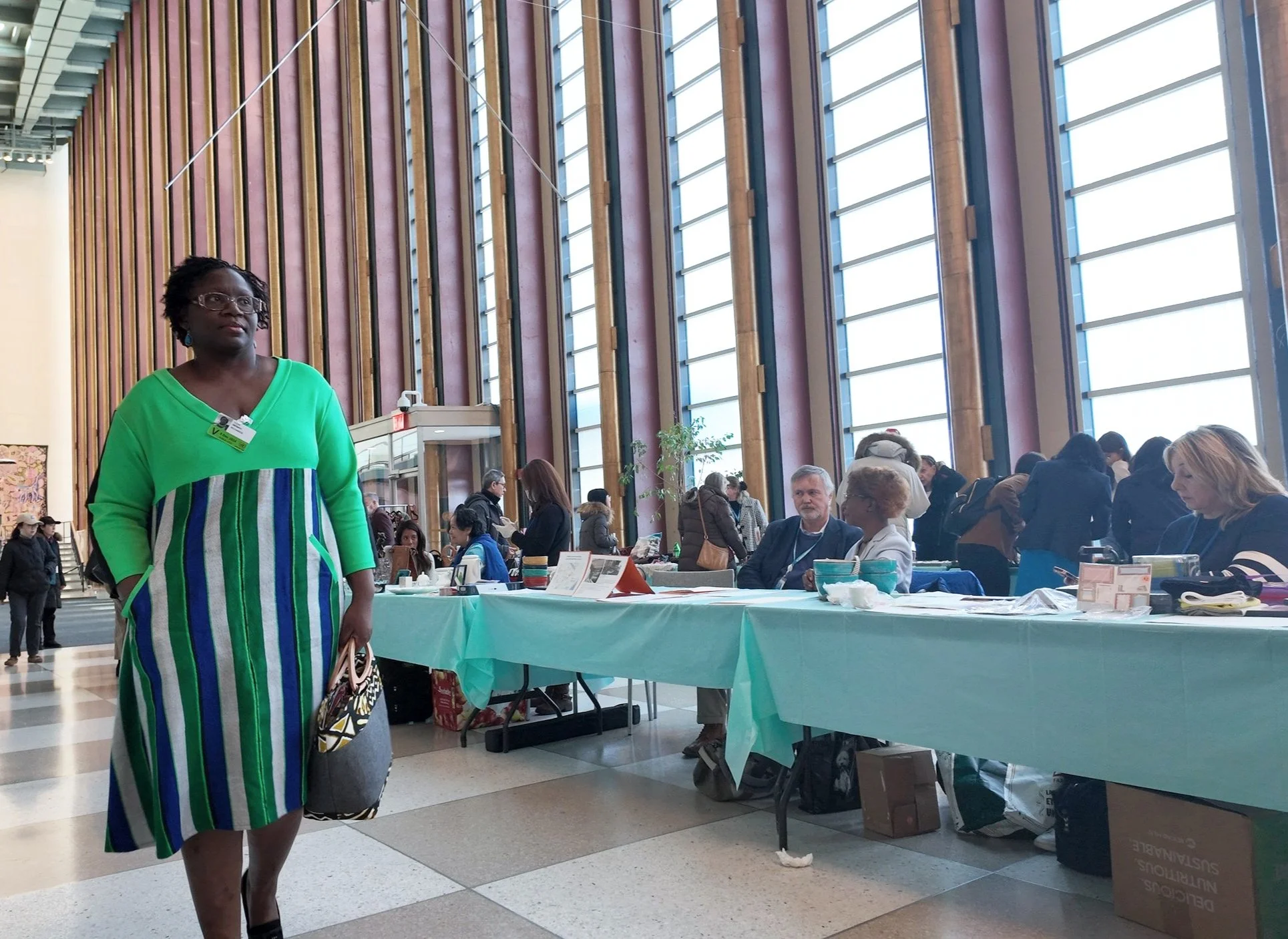
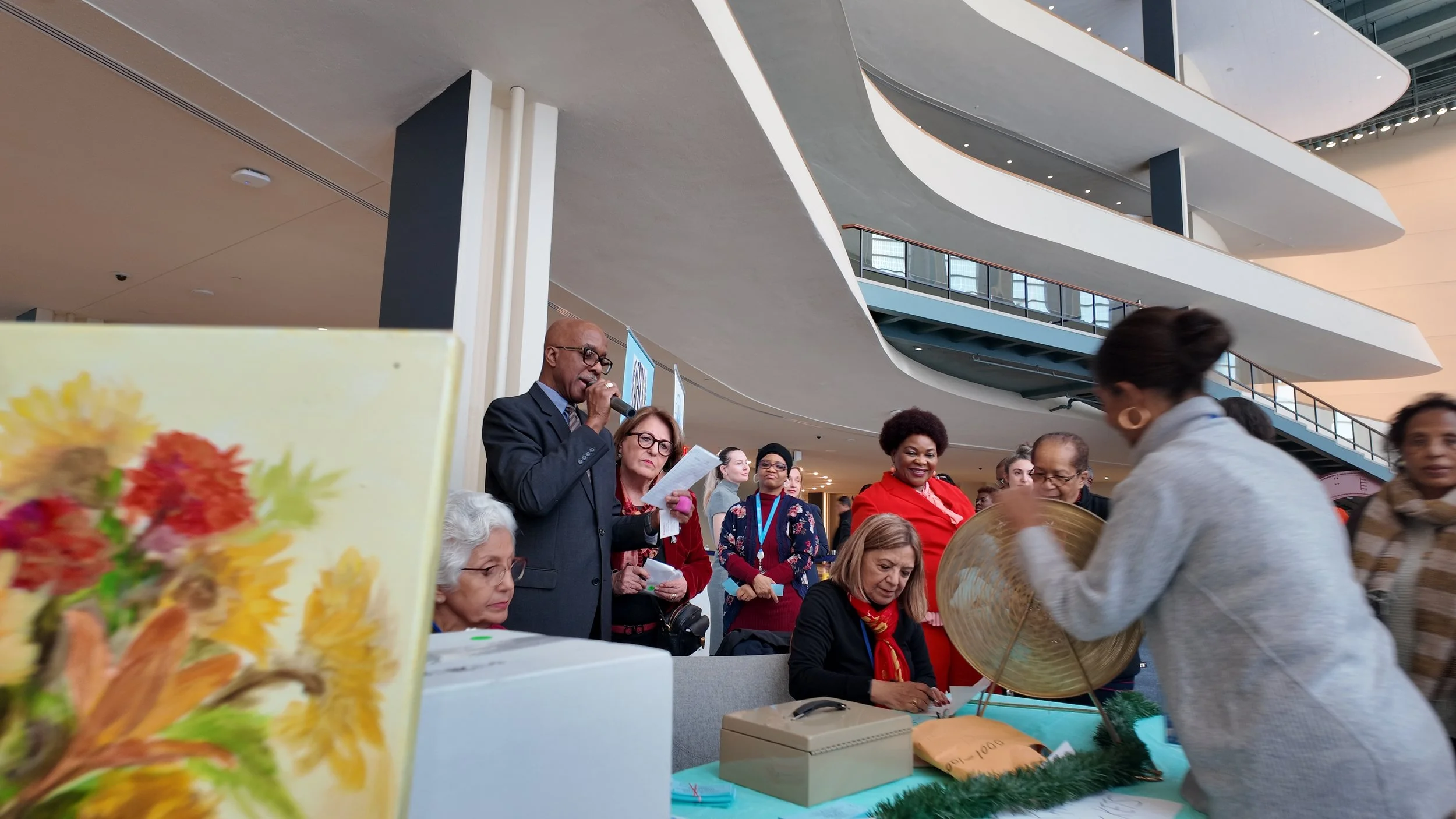
Women and artisans from around the world gathered to showcase and sell their products at this annual bazaar. There were outstanding raffle draw prizes including @kenyaairways tickets, apparels from @itaiourcloth and exclusive designs from @nubaarts. The Hansol Music Group provided the entertainment.
UN Women’s Guild Event Organizers
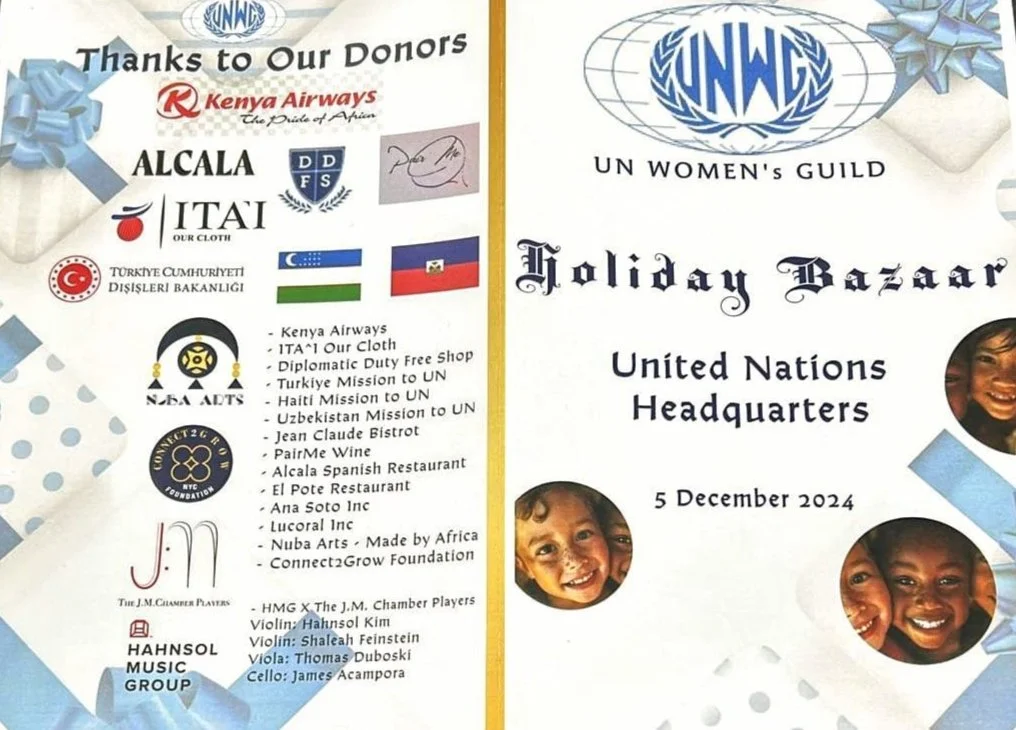
Event Flyer
All proceeds benefit women and children around the world.
Photos by Africa-Related


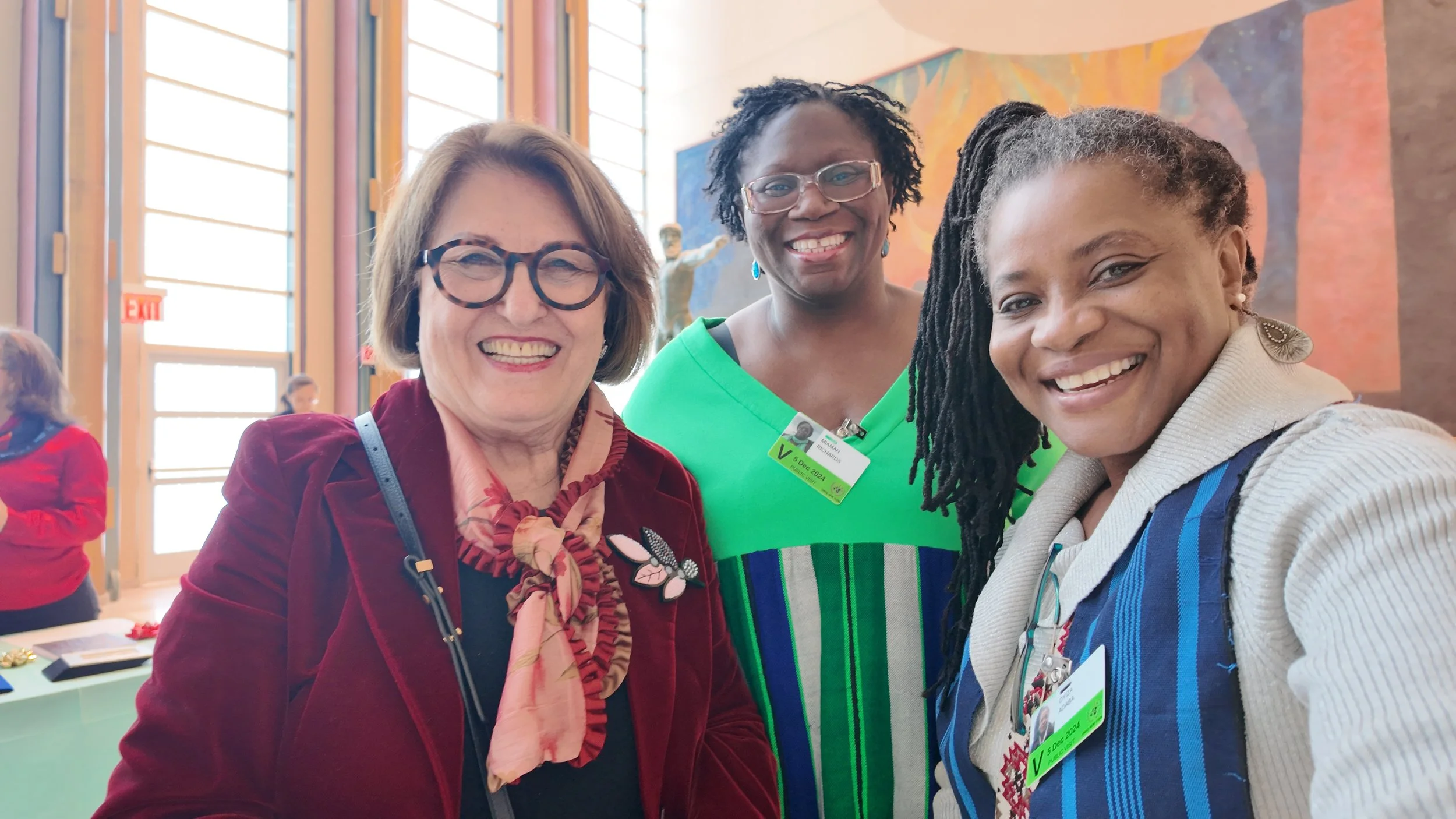
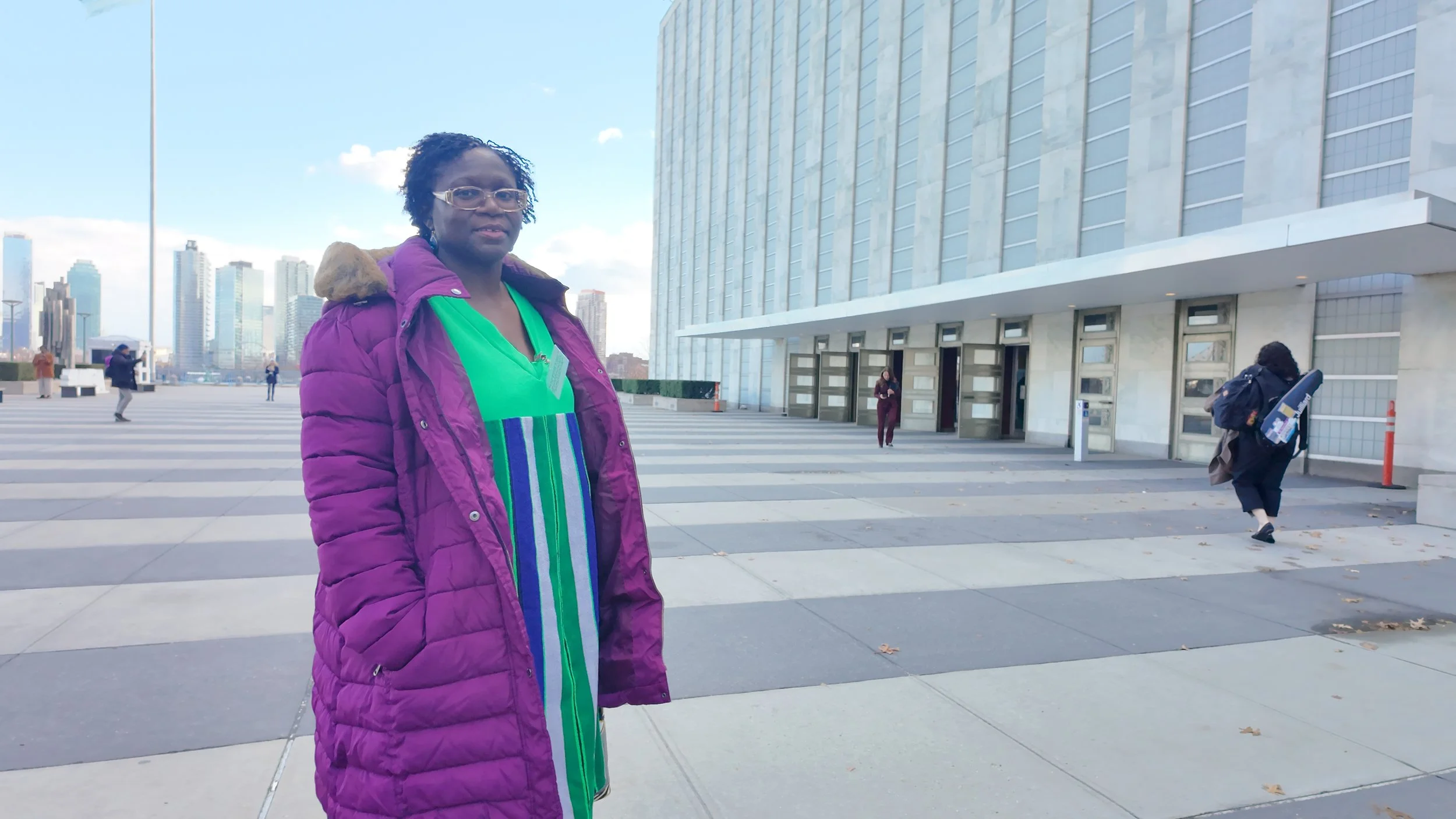
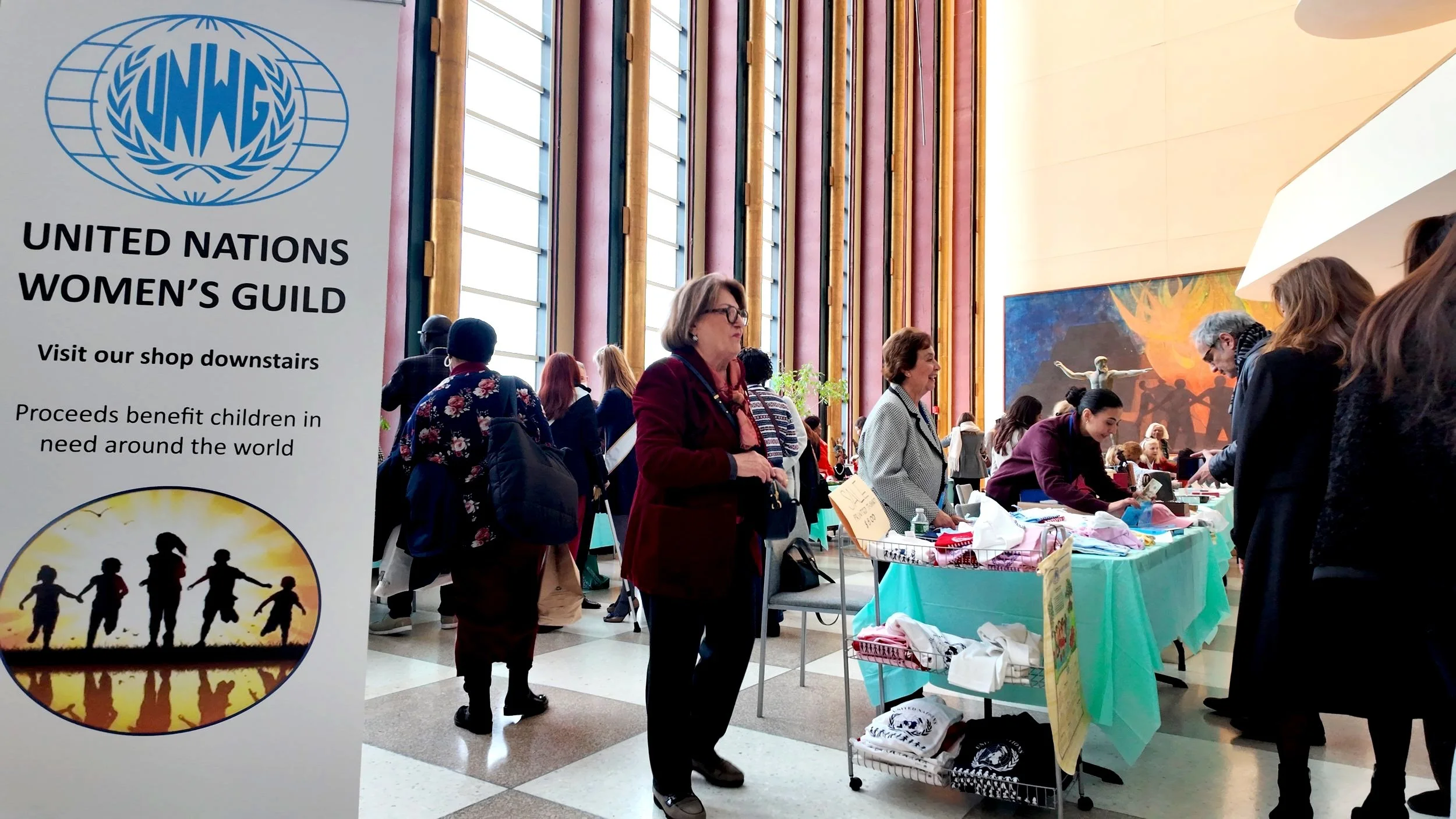
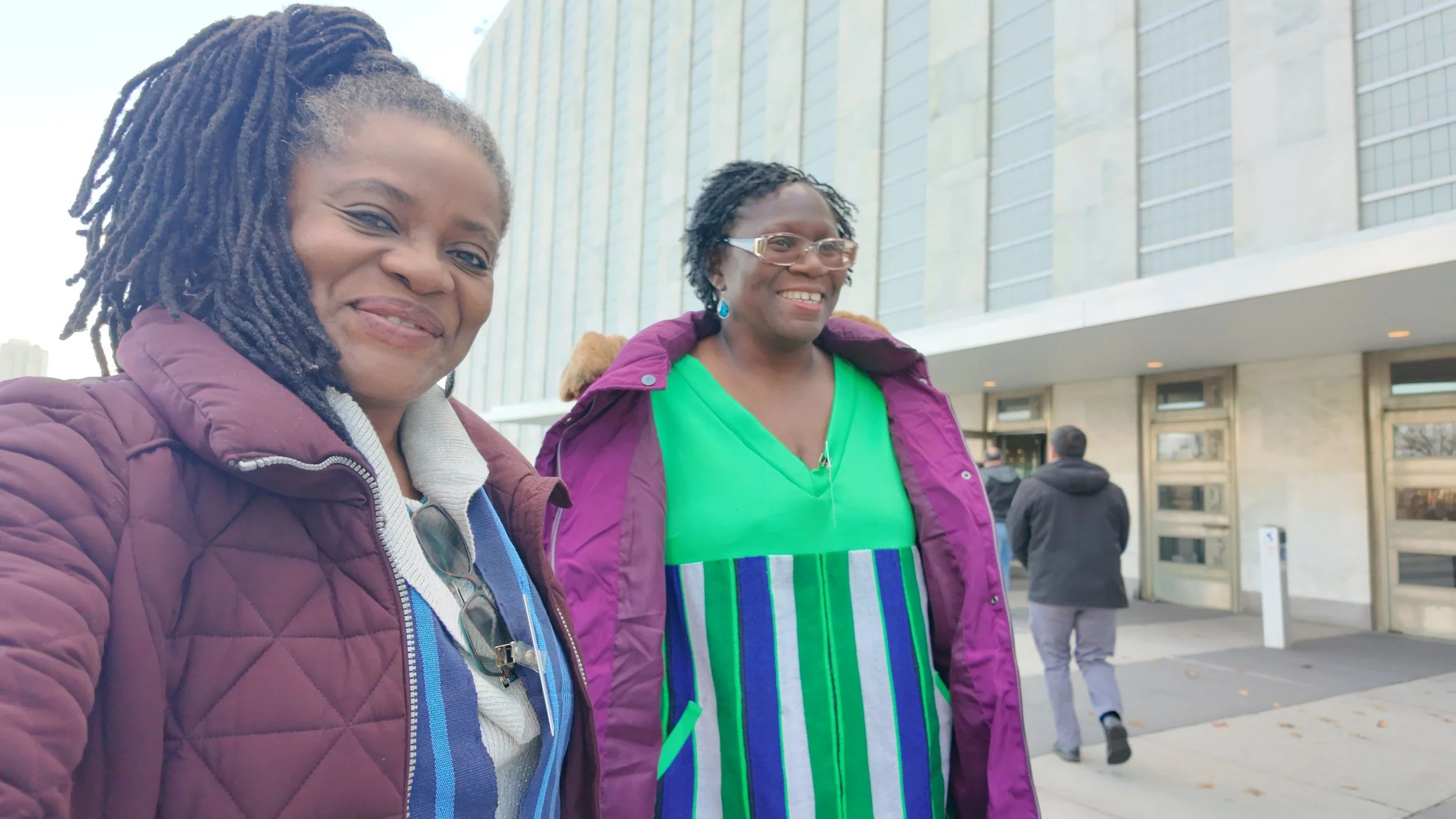




share this story

Bronx Council on the Arts Community Engagement
Since its founding, BCA has been committed to offering direct services and funding to systematically underresourced and underrepresented groups - artists of color, women, veterans, and the LGBTQ+ community, among others. This legacy of sharing space, connecting, and building brought the community together on November 8, 2024
by Oyiza Adaba
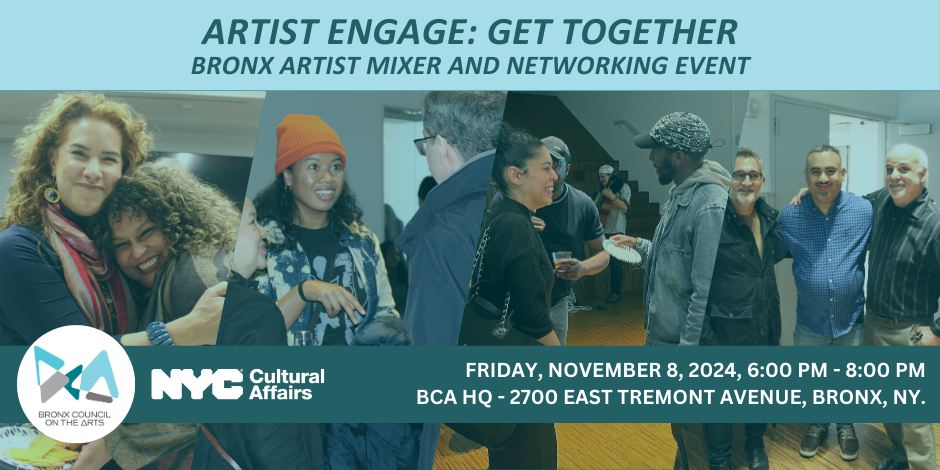
Event Flyer
Event
Artsist Engage - Get Together
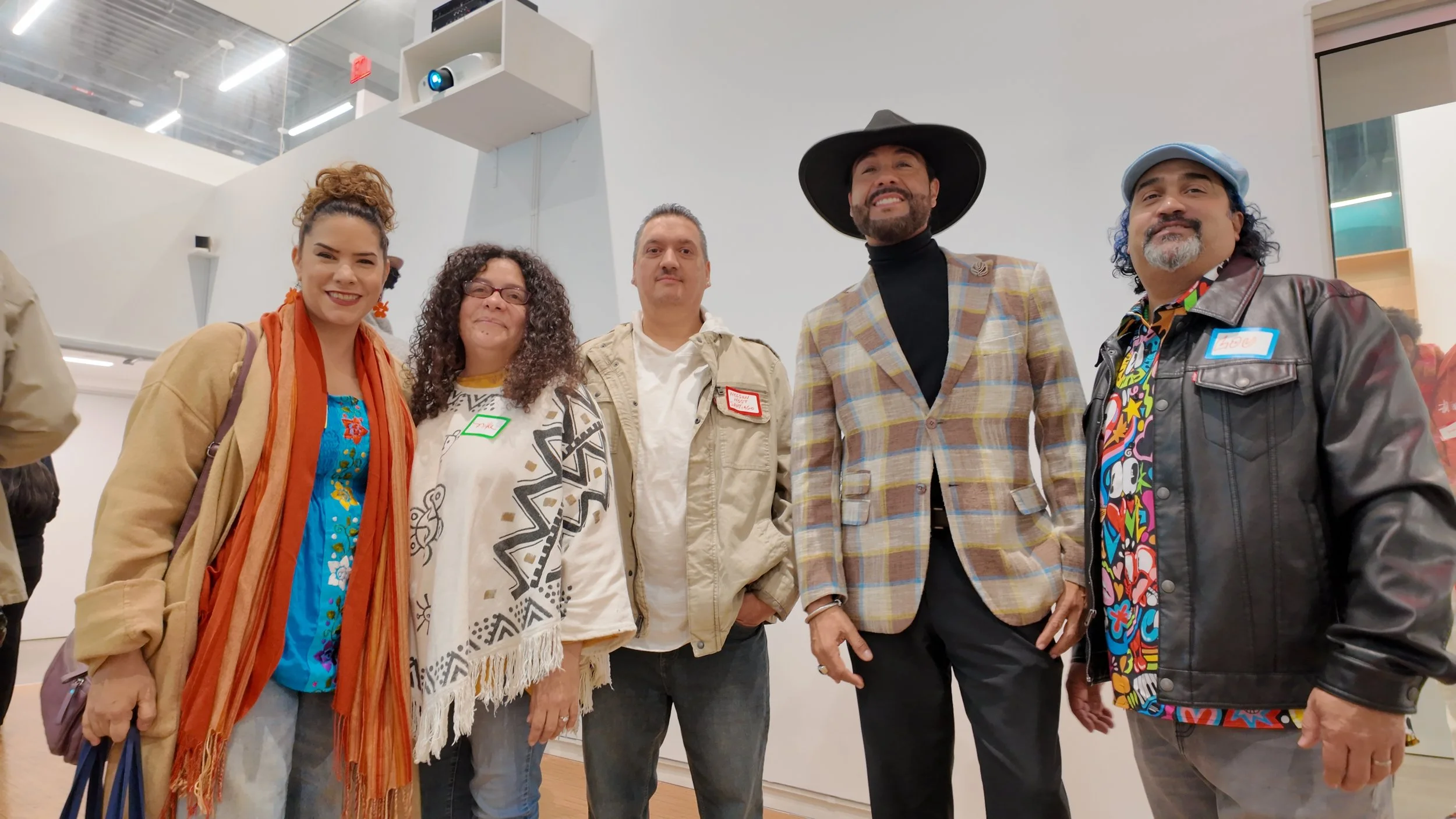
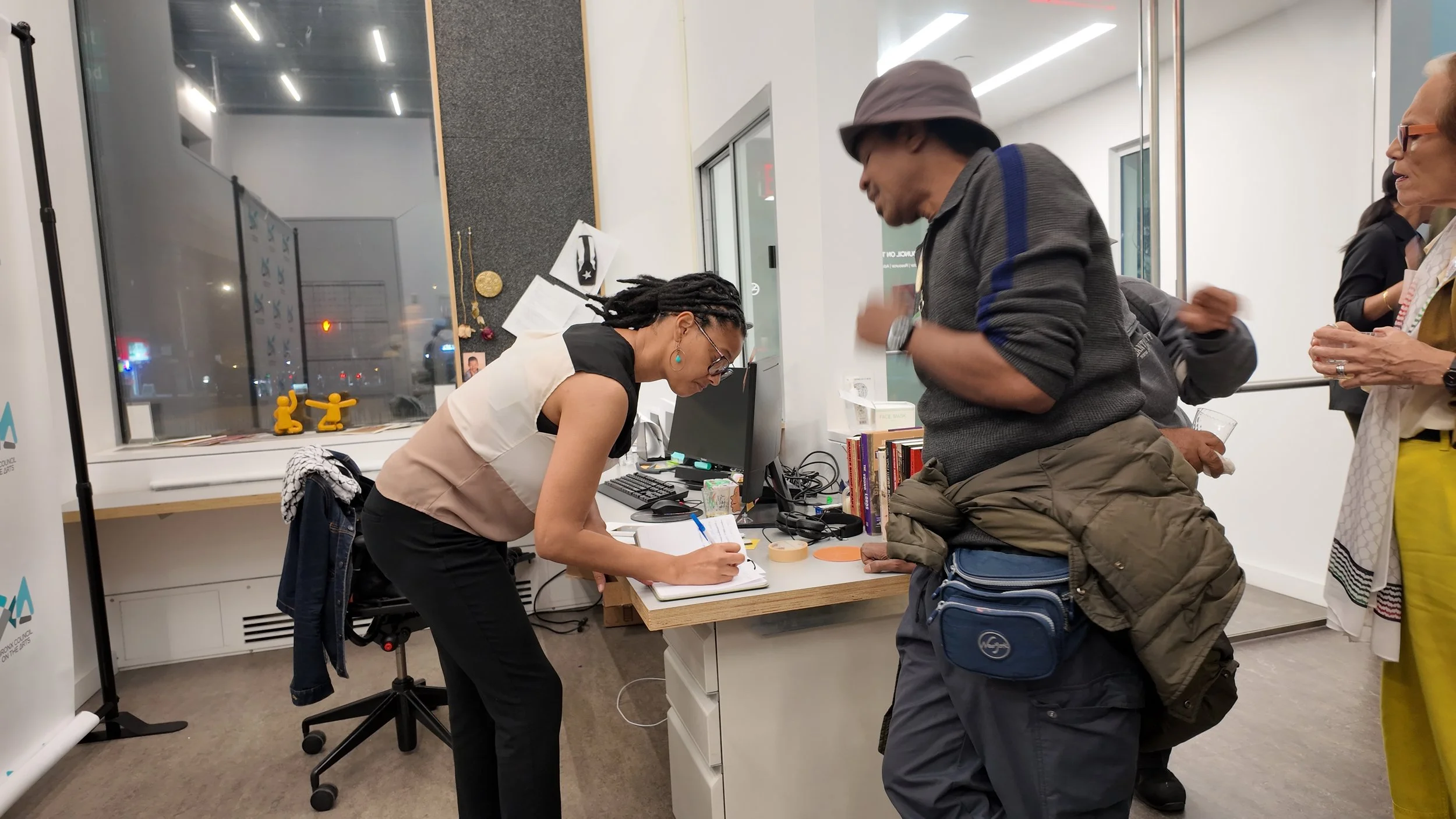
Since its founding, BCA has been committed to offering direct services and funding to systematically underresourced and underrepresented groups - artists of color, women, veterans, and the LGBTQ+ community, among others. This legacy of sharing space, connecting, and building brought the community together on November 8, 2024
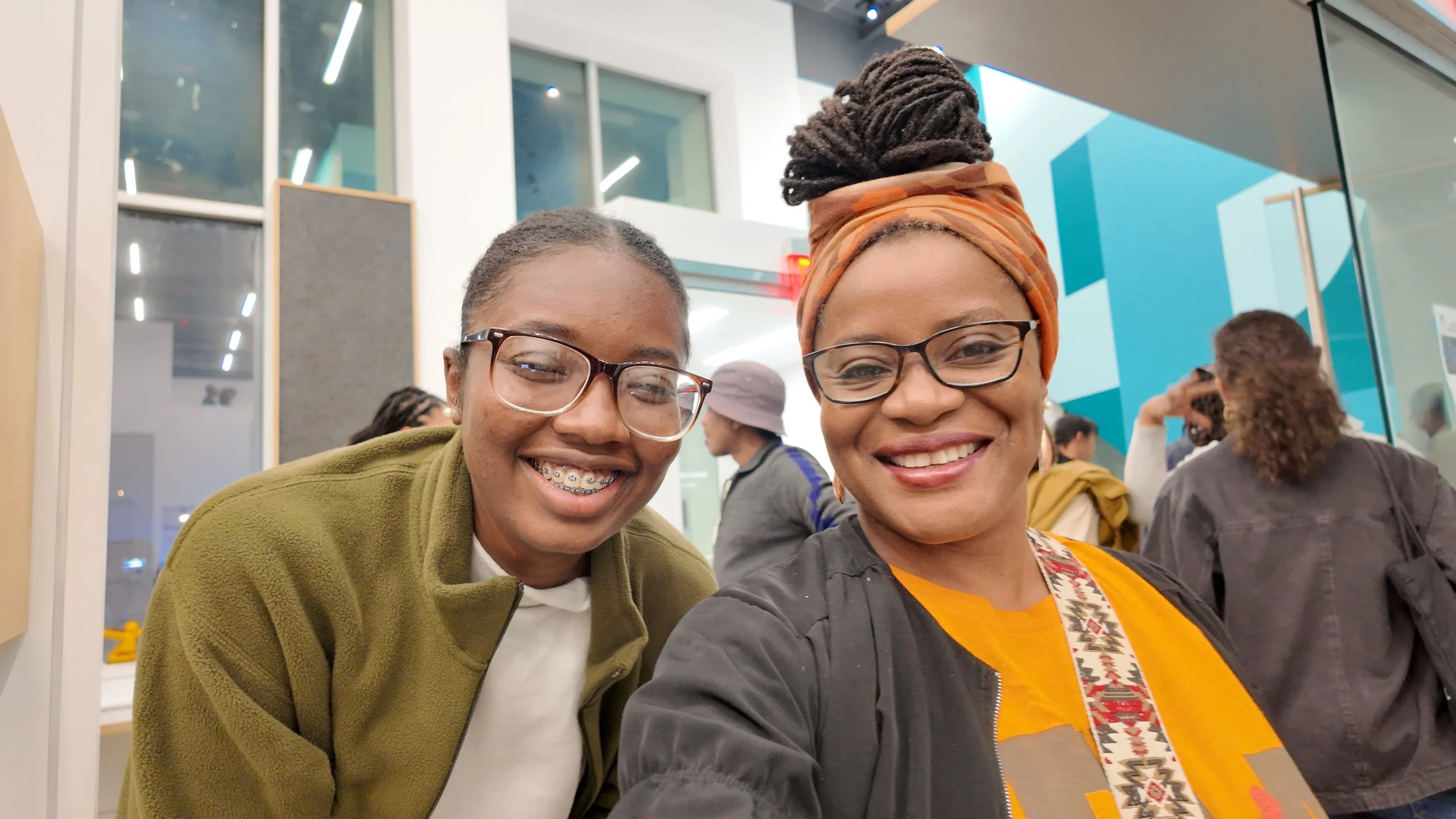
With drinks, music, light refreshments to go, the Bronx Council on the Arts (BCA) hosted a night of connection and reflection at their East Tremont location in the Bronx, New York.
In attendance were artists, staff, and community leaders such as Elena Martínez (Co-Artistic Director, Bronx Music Heritage Center) and Daniel Freeman (Director, Inspiration Point, and Chanelle Aponte Pearson, BCA Programs Manager, who shared experiences and community initiatives.
Photos by Africa-Related


share this story
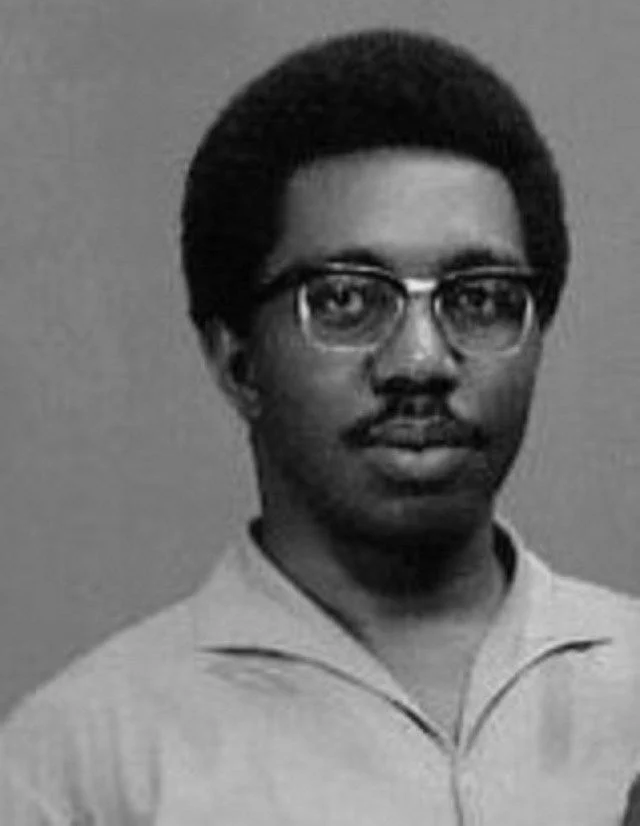
COLONEL VICTOR BANJO – APRIL 01, 1930 to SEPTEMBER 22, 1967
Today marks the 57th anniversary of execution of Col. Victor Banjo, a brilliant and revolutionary soldier.
Today marks the 57th anniversary of execution of Col. Victor Banjo, a brilliant and revolutionary soldier.
Excerpts from the book: COLONEL VICTOR BANJO - A REVOLUTIONARY BETRAYED - by Niyi Aborisade. Please visit here for your copy and other books of interest on Nigeria Political History.
Col. Victor Adebukunola Banjo was born on April 01, 1930 to the family of Mr. James Herbert Banjo and Chief Mrs. Sabina Banjo. He was the third child of his parents. Both of his parents hailed from Ijebu-Ode in today’s Ogun State.
His parents were fairly educated. His father was an officer of the British Crown in Nigeria, who had a distinguished career as a Lay Magistrate with co-extensive record of service all over Nigeria and parts of Cameroon. He was a self-taught legal officer who distinguished himself by an unusual understanding of the fundamentals and basic principles of the English law. His mother was a product of Girls Seminary Lagos, a School founded by the Church Missionary Society (CMS). Through her training and upbringing at home and in School, Chief Mrs. Sabina Banjo became a deeply spiritual and prayerful mother who groomed her children in the ways of God to love people unconditionally and work selflessly to uplift the downtrodden.
Col. Banjo’s siblings are all distinguished individuals in their own rights. His sister, the first child of his parent is Professor Felicia Adetoun Ogunsheye (nee Banjo). She is the first female Professor in Nigeria. She is a Professor of Library Science. She will be 98 years old on December 05, 2024. Next to her is Dr. Ademola Banjo, who attended the University College Ibadan, Manchester University, UK and Harvard University in USA. He became the first Nigeria to obtain a doctorate degree in Metallurgical Engineering. Col. Banjo immediate younger brother was Professor Adesegun Banjo. He was the first Nigerian to earn a doctorate degree in Ultra Structure and Electro-Microscopy. He was a surgeon and Professor of Human Anatomy in USA before he became involved in the struggle for the actualization of mandate given to MKO Abiola after the June 12, 1993 General Election. He plotted an armed struggle against the Government of General Sanni Abacha, unfortunately his plan was thwarted by overzealous port officials in Benin Republic who detected shipment of ammunition for the armed struggle. He was arrested and detained and later released in 1999. He died in 2019 due to debilitating cancer of the blood.
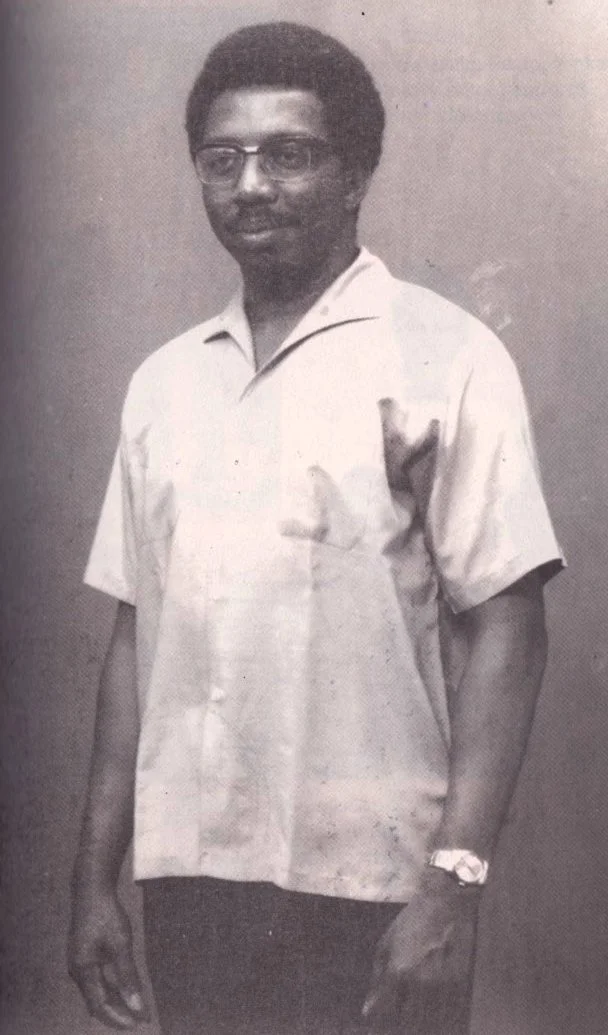
Col. Banjo was married to Mrs. Taiwo Joyce Lucretia Marion George, a Creole from Sierra Leone, but of Yoruba extraction. His children made success of their various careers. His first child, Funto Banjo Oyelese became a Director of Education with Lagos State Ministry of Education. Second child, Ayodele Banjo is a Civil Engineer from then University of Ife, now Obafemi Awolowo University. He is also a Chartered Accountant. His third child is Professor Olayinka Olusola Omigbodun. She is the first female Psychiatric Professor in Nigeria and the first female Provost of the College of Medicine, University of Ibadan. The fourth child is Adeyemi Banjo who was born in 1965 and was barely six month old when Col. Victor Banjo was taken into custody on the orders of the Military Head of State, General Aguiyi Ironsi. He barely recognized his father and could not have formed any impression about him beyond some snippets he must have formed from his mother and older siblings.
Col. Banjo attended CMS Grammar School. He joined the Army in November 1953 as a Warrant Officer II. He attended various Military Training Schools in Ghana and in the UK. While in England, he took London GCE A-Level examinations and passed with flying colours, a feat that positioned him for university admission into the University of London. Due to his brilliant performance, he was the 16th Nigerian to be commissioned as an officer, shortly after he joined the Army. In 1958, the Army sponsored him for a degree programme in UK. He obtained a degree in Mechanical Engineering from the University of London. General Olusegun Obasanjo, the former President of Nigeria described him as a brilliant officer and that he was the first Nigerian to be sponsored for a degree course by the Colonialists. He said, “For someone to be sponsored for a degree course in the Army at that time showed that he was more than the average person”. Up until 1960, there were about five graduates in the Nigerian Army and Major Adewale Ademoyega was the last graduate to be commissioned in 1961. The five graduates as of 1961 were Col. Odumegwu Ojukwu, Col. Victor Banjo, Major Olufemi Olutoye, Major Emmanuel Ifeajuna and Major Adewale Ademoyega.
After the failure of the January 15, 1966 coup, General Aguiyi Ironsi became the Head of State. Col. Banjo was never a party to the coup. According to Captain Ben Gbulie, Col. Banjo was unrestrained in the condemnation of the coup plotters and described them as being “blatantly destructive” and he boasted that he and his loyal colleagues in the Nigerian Army would crush the coup plotters. He was one of those who persuaded General Aguiyi Ironsi to take over the government when they had crushed the coup when it became apparent that the failed coup had taken many politicians, including the Prime Minister. He was the one who mobilized the troops and organized a meeting of loyal troops to cooperate with General Aguiyi Ironsi to preserve the established hierarchy of the Nigeria Army. He persuaded the Hausa officers to accept General Aguiyi Ironsi as the Head of State.
However, on January 17, 1966, barely three days when General Aguiyi Ironsi assumed office as Head of State and within such time, Col. Banjo was becoming too popular for some people’s liking and was arrested on flimsy excuse that he had his service pistol in his pocket while waiting to meet the head of State, which was contrary to the laid down regulation. They further alleged that he was among the January 15, 1966 coup plotters. He was actually waiting to see the Head of State when his comrades in the Army, Major PA. Anruwa and Lt. Col. GT Kurubo pretended to be admiring the latest weapon he was carrying. They both requested his permission for them to handle the sophisticated weapon, which he innocently handed over to them since he had no ulterior motive. He was then arrested on “account of planning a coup to topple General Aguiyi Ironsi in support of the January 15, 1966 coup plotters”.
To say the least, Col. Banjo was very surprised at the turn of event. He was initially detained in Lagos and later in the Eastern part of Nigeria. He was in the East until the outbreak of the civil war in 1967. He wrote to General Aguiyi Ironsi on June 01, 1966 proclaiming his innocence but this was to no avail.
On May 30, 1967, Col. Ojukwu declared the birth of the Republic of Biafra and this declaration was greeted with enthusiasm in the East as virtually everyone and groups in the East embraced it. The East had the most senior officers before the counter coup of July 1966 as many had been killed during the pogrom of July 29, 1966 in the North. Nevertheless, they still had higher numbers of senior military officers than the whole of Nigeria. It must however be said that Col. Ojukwu was not prepared in terms of weapons. Mere zeal and rhetoric were not synonymous with adequate weapons of war. On the day he declared secession, he had few weapons to face the mighty Nigerian Army.
Col. Banjo was released by the new Biafra Head of State; Col. Ojukwu and he Col. Banjo stayed with him in Enugu which was the capital city of the new Biafra. Col. Banjo later formed the 101st Brigade of the Biafra Army. A Brigade is a major tactical military formation that is typically made up of three to six battalions and other elements. A Brigade can be made of up to 3,000 to 5,000 soldiers. He formed this Brigade from scratch and transformed it into a standard fighting force. His position of authority and influence did not go down well with some Biafra military officers, among who was Alexandra Madiebo whose 51st Brigade was under Banjo’s sphere of authority and command. Banjo command covered Nsukka and Nkalagu operational areas. This was one of the first issues Banjo had in Biafra, a non-Biafra with such a large command. He built the Brigade from the scratch and transformed the erstwhile rustic soldiers with crude weapons into a formidable and positively motivated fighting force. He was far ahead of his colleagues in military tactics, operations and strategy. Whilst his colleagues such as Major General Philip Effiong and Major General Alexandra Madiebo concentrated on the defensive position as was in the military textbook, Banjo decided to launch an attack and take the fight to the enemies, sharing the Israeli belief that offence was the best form of defence.
When Banjo was promoted to the rank of Brigadier by General Ojukwu, he made it clear that it would be wrong to use the name ‘Biafra Army’ in the Midwest because that will give an impression that the Biafra Army was an Army of occupation. He said that Biafra still needed the cooperation, even if tacit, of Midwest and South West to push through in confronting the Northern dominated Army in Lagos. He said all efforts must be made to present the Biafra Army as one of liberation, with clear mandate to relieve their people of the burden imposed by the Northern dominated Nigeria State and Army. This was the core of the gentleman agreement between Banjo and Ojukwu. This was what informed Banjo decision to code name the 101st Brigade, “The Liberation Army of Nigeria”. He reorganized the 101st Brigade and chose disciplined officers to execute his plans. He made Lt. Col. Emmanuel Ifeajuna, one of the coup plotters of January 15, 1966 his Chief of Staff. Banjo turned the 101st Brigade into a brutally efficient war machine, recording lightning–speed successes one after the other.
On August 09, 1967, Brigadier Banjo led his Liberation Army into Mid-West in an operation code named “Torch”. He split up his army on reaching Agbor, with the 12th Battalion under Lt. Col. Akhaga moving West and capturing Benin and Ore. The 13th Battalion under Lt. Col. Mike Ivonso took Auchi, Agenebode and Okene. The 18th Battalion under Major Chukwuka took over Warri, Sapele and Ughelli. Within 12 hours, the Liberation Army of Nigeria had completely taken over the Mid-West. David Ejoor, the Nigeria Military Governor was lucky to escape the ambush set up secretly by Ojukwu. The plan to abduct Ejoor was hatched without the knowledge of Banjo and this might have been responsible for his escape.
Immediately after the Liberation Army of Nigeria over ran the Mid-West, serious disagreement arose between Banjo and Ojukwu. First, Ojukwu was advised by senior Igbo Military officers to take power out of Banjo’s hand, they said, afterall, all the ammunition and soldiers were from Biafra. Secondly, Ojukwu rebuffed Banjo’s advice that new Governor of Mid-West should be from the non-Igbo Mid-Westerners like Lt. Col. David Ejoor, Samuel Ogbemudia or Col. Trimnell. This advice was predicated on the need to make the Mid-Westerners feel at home and not think that they are being ruled by Biafra. Ojukwu ignore this advice and appointed Albert Okonkwo, an Igbo Mid-Westerner as the Governor of Mid-West or Republic of Benin as Ojokwu preferred to name it.
Despite the disagreement between Ojukwu and Banjo as to who should be Governor of the Mid-West, Ojukwu ordered Banjo to proceed to take Lagos at all cost despite inadequate ammunition and personnel to confront the almighty army on the Federal side. Even though Banjo had some good officers in the persons of Lt. Col. Emmanuel Ifeajuna, Lt. Col. Adewale Ademoyega who had also been released from prison by Ojukwu to fight on his side, Lt. Col. Mike Ivonso, Major Chukwuka, Lt. Oyewole and Lt. Adeleke. Both Lt. Oyewole and Lt. Adeleke were also released by Ojukwu from prison to fight on his side. Both were later promoted to captain. Notwithstanding the sterling qualities of these officers, they were no match to the officers on the Federal side that were better armed with good weapons. Such officers were Brigadier Benjamin Adekunle, popularly known as the Black Scorpion and Commander of the dreaded 3rd Marine Commando and one of the major heroes of the civil war. There were Col. Obasanjo who was Ibadan Garrison Commander, Col. Murtala Muhammed, Lt. Col Alani Akinrinade and Lt. Col. Alabi Isama. These were better equipped officers that Ojukwu commanded Banjo to take on with inadequate soldiers and ammunitions, things that the Federal side had in abundance.
Ojukwu gave Banjo three conditions via a letter dated August 22, 1967. The conditions are: First, Banjo should not have anything to do with Military Administrator of the Mid-West territory during his sojourn there before the invasion of the West. Second, during the period of Biafran troops’ presence in all territories subdued, all political measures, statements, or decrees shall be subject to approval in writing by Ojukwu or his authority. Third, should the Biafra troops arrive and liberate Lagos, the government of the Republic of Biafra reserves the right to appoint a Military Administrator for the territory. The last conditions exposed the inordinate ambition of Ojukwu. It is possible he would have nominated an Igbo Military Governor over Lagos and by extension the West just as he did in Mid-West.
Banjo realizing the enormity of casualty that will arise in the heart of Yorubaland if he is to fight his ways to Lagos with little ammunitions and soldiers, took advantage of the visitation of Wole Soyinka and send him (Soyinka) to Obasanjo for Obasanjo to allow him a free passage to Lagos through Ibadan and that Soyinka should let the West understand that the he is not leading a Biafra army but an Army of Liberation made up of other ethnic groups. For obvious reason, Obasanjo refused this plea. Obasanjo told Soyinka to tell Banjo that he can use alternative routes like waterways or air to reach Lagos and that he, Banjo need not come through Ibadan as he will not yield his ground for anybody. It was this errand that almost caused Soyinka his life, but was lucky to have a kind-hearted man in person of General Gowon who rather put him in prison than executing him. He spent more than 24 months in prison until his release in 1969. If he had done same to Ojukwu, he will not live to tell the story and he would have been promptly labelled saboteur which was the in-thing in the Republic of Biafra then. If Soyinka had succeeded in his mission and convinced Obasanjo, the story of the civil war could have been a different one.
Of all the civil war battles, the battle at Ore was the fiercest. It was so deadly that it was named “Oleku, ija Ore” in Yoruba language or simply ‘Deadly Battle at Ore” or “Mother of All Battles at Ore”.
The battle to recapture Mid-West started with the coordinated efforts of Benjamin Adekunle’s 3rd Marine Commandos who took over the towns of Koko, Sapele, Warri, Ughelli, Orerokpe, Umutu and Itaga in the Mid-West. He was also assisted by Lt. Col. Alani Akinrinade and Alabi Isama. On September 20, 1967, Benin fell into the hand of troops led by Col. Murtala Muhammed and that ended the Biafra Government in Mid-West.
During the stalemate when Banjo, by necessity due to lack of adequate weapons and heavy bombardment from the Federal side halted his advance to Lagos, he was quickly labelled a saboteur. This was not true, Banjo simply refused to commit mass murder and waste the lives of his soldiers in the face of a great odd and impossible situation.
During the war, Ojukwu had some spies whose duties were to visit Commanders at war fronts and secretly interview them on the State of things. Anyone who expressed himself against the Commander-in-Chief on his poor management of the war and tactics was penned down as a saboteurs. Col. Achuzia was Ojukwu favourite spies. According to Phillip Effiong, it got to a stage when even advice must be carefully given, otherwise one will be labelled a saboteur. He said “Ojukwu spies were everywhere”. In his book The Cage Bird Sang No More, Phillip Effiong maintained that Ojukwu’s “Military appreciation was amateurish ….. he indulged in debates and seminars while the collapse of Biafra was starring us in the face. No saboteurs could have been more effective”. Ojukwu was responsible for the fall of Biafra, unfortunately he needed a scapegoat and found one in some of his officers including Banjo who stood taller above all other officers and who was too independent for him.
Ojukwu invited Banjo to a meeting Enugu, and when Ojukwu was told of his arrival, Banjo was promptly disarmed and arrested on account of planning a coup against the Commander-in-Chief. Lt. Col. Emmanuel Ifeajuna, Major Phillip Alale and Major Sam Agbam had all earlier been arrested but unknown to Banjo. Banjo defended himself against two allegations levied against him. Contrary to the lies in some quarters that Ojukwu obtained his confession. There was no confession anywhere because there was nothing to confess about and no confession statement was tendered at his trial. The two allegation are; one, violation of law and maintenance decree, a charge of insubordination for retreating from Ore and turning back from capturing Lagos and two, subversion as an intention to cause public disorder aiming at capturing power in Biafra. These allegations were a total surprised for Banjo. If truly he wanted to overthrow Ojukwu, he would not have honoured the invite or he would not have gone with just his escort. He would have gone with his troops that would have taken over and shot his way out. After his arrest, he was replaced by another Yoruba man in the person of Lt. Col. Adewale Ademoyega was also released by Ojukwu. He too was later arrested and detained in the same building with Banjo but not the same cell, where Banjo, Ifeajuna, Phillip Alale and Sam Agbam were detained. Ademoyega was never tried and he survived the war. He was briefly 'freed' after the war but the Federal forces put him right back in detention for his participation as part of the Liberation Army.
He was finally released along with twenty others during the 1974 Independence Day amnesty.
Ojukwu constituted a Special Military Tribunal headed by Godwin Nzegwu, a lawyer from Onitsha. He was a great lawyer of impeccable character and sense of duty who was committed to upholding the rule of law. Ojukwu had ordered the Tribunal in advance to condemn Banjo and others as he had already adjudged them guilty. Having listened to the defendants and in the absence of any documentary evidence to establish a case against them, not even the purported confession was tendered, Godwin Nzegwu refused to participate in the murdering of innocent souls. For failing to find them guilty as was ordered, he too was arrested by Ojukwu and detained till the end of the war.
Having removed Lawyer Godwin Nzegwu as the Chairman of the Special Military Tribunal and had him detained, Ojukwu looked for a judge that will do his bidding and he found one in the person of Justice George Ekemena with a strict order that the accused must be found guilt. And that was exactly what the Judge did. Col. Banjo presented his evidence as a litigant in person and also spoke for other accused, i.e. Lt. Col. Emmanuel Ifeajuna, Major Phillip Alale and Major Sam Agbam. Ojukwu Special Military Tribunal found all the accused persons guilty and they were condemned to death by firing squad. The trial was conducted and concluded on September 20, 1967. Just a day trial!
Lt. Col. Adewale Ademoyega in his Book Why We Struck, said he saw the heads of the four condemned men last on September 21, 1967 from his cell, while they were being led out. He said Lt. Col. Emmanuel Ifeajuna last words to him were: “Wale, we have been condemned to death and unless a miracle happens, we could be shot any time, please take care of my wife and children”.
The condemned men were shot on September 22, 1967 and were buried in unmarked graves. It was reported that Col. Banjo was shot several times because he was shouting that he was not dead yet, which made the executioners combined and directed all their fire-power at him. They eventually silenced the great soldier, a great ideologue and a revolutionary. He was just 37 years old when he was killed in his prime not on the battlefield but by a friend turned fiend.
Ojukwu was later pardoned by the Federal Government and had all his benefits paid to him as a Nigerian soldier. This made Col. Achuzia to berate him and condemned what he was paid by the Federal Government as blood money because many of those who fought for him were not compensated and Ojukwu did not fight for them to receive their benefits.
Col. Banjo was not dismissed from the Nigerian Army, and neither was his gratuity paid to his family to date. Ojukwu did not release or mention the place where Banjo was buried to date. The Federal Government ought to have declared Banjo dead instead of declaring him Missing in Action. The war ended 54 years ago and they knew that he had been executed by Ojukwu.
May the soul of Colonel Victor Adebukunola Banjo, Lt. Col. Emmanuel Ifeajuna, Major Phillip Alale and Major Sam Agbam rest in peace, amen.
Excerpts from the book: COLONEL VICTOR BANJO - A REVOLUTIONARY BETRAYED- by Niyi Aborisade. Please visit https://sunshinebookseller.com for your copy and other books of interest on Nigeria Political History.
COPIED.
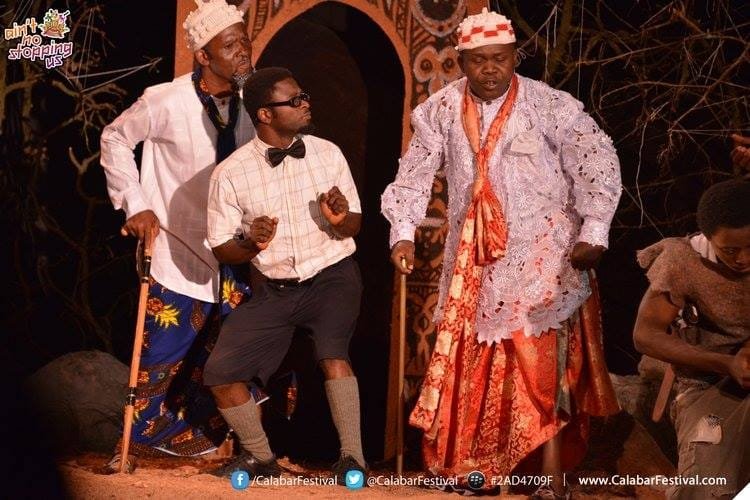
REMINDER! The centenary celebration of James Ene Henshaw (1924 -2007)
The centenary celebration of James Ene Henshaw (1924 -2007) will kick off with a seminar themed, ‘This Is Our Chance Revisited’, on August 29, 2024, from 12:00PM (WAT). The seminar is organized by the James Ene Henshaw Foundation.
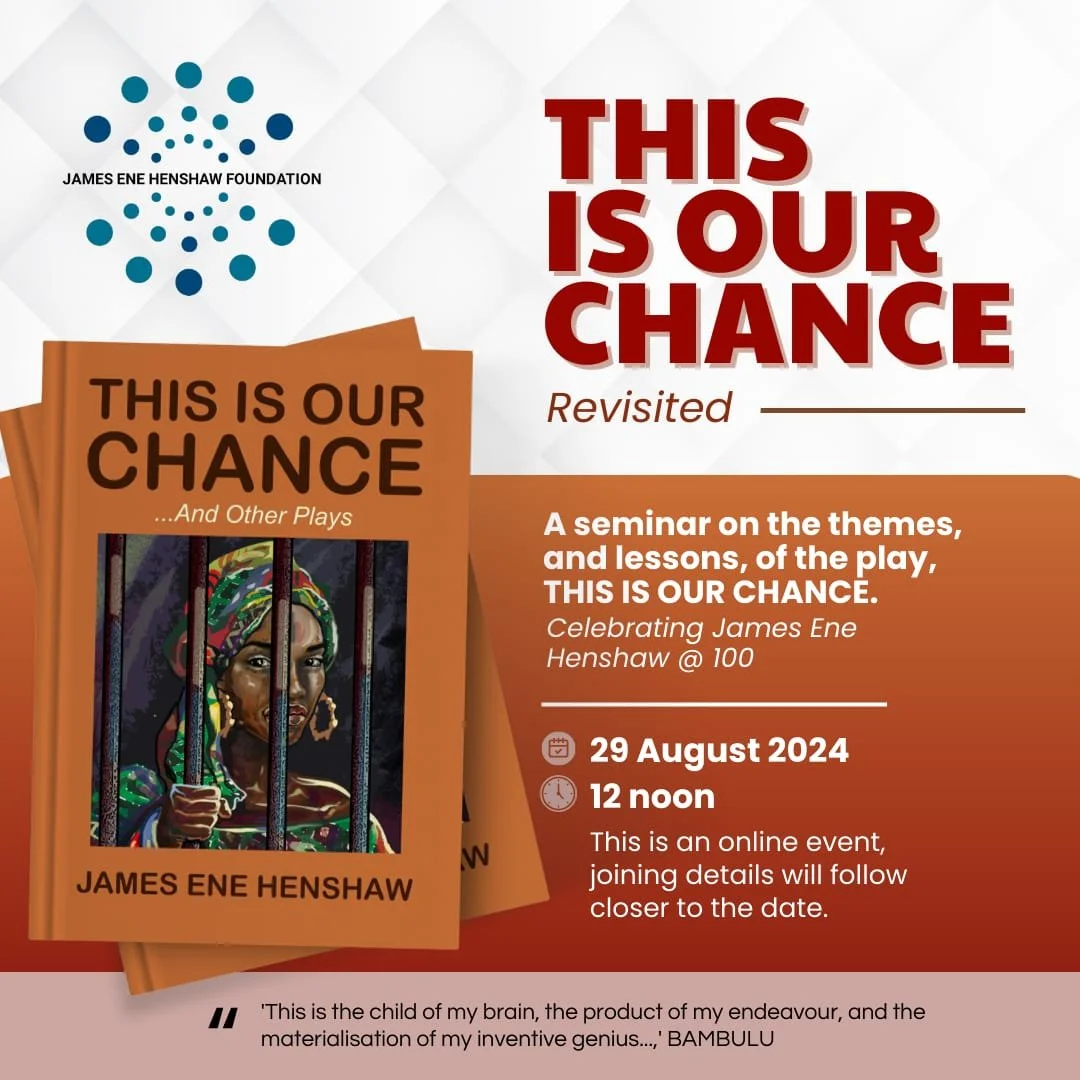
Seminar Invitation by JEHF
“Beautiful. This Is Our Chance still remains my favourite novel from junior school”
The centenary celebration of James Ene Henshaw (1924 -2007) will kick off with a seminar themed, ‘This Is Our Chance Revisited’, on August 29, 2024, 12:00PM (WAT). The seminar is organized by the James Ene Henshaw Foundation.
The seminar will begin with Mallam Denja Abdullahi giving a brief introductory address and Peter Olorunnisomo summarising the play.
Dr. John Yesiebo of the University of Port Harcourt will speak on ‘Maintaining Tradition in the Onslaught of Modernity’. Director of Arojah Theatre, Abuja, Mr. Jerry Adesewo will speak on ‘Tribal Enmity – The Role of Theatre in Nation-building’. Dr Wale Okediran, Secretary-General of Pan-African Writers Association, will speak on ‘Damba and the Challenge of Leadership’; Dr Ekua Ekumah of the University of Ghana, Legon, on ‘The Role of Women in This Is Our Chance‘.
Prof. Liwhu Betiang of the University of Calabar on ‘Reflection – Why Henshaw is Important in the History of Nigerian Drama’. After a 30-minute break for comments and questions, Prof. Effiong Johnson of the University of Uyo will dwell on ‘Musings on the Plays of James Ene Henshaw’, with Dr. Patrick Jude Otteh of Jos Repertory Theatre making critical remarks to bring This Is Our Chance seminar to an end.
THE COLLECTED PLAYS OF JAMES ENE HENSHAW
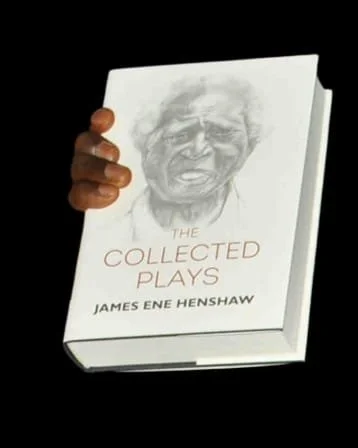
THE COLLECTED PLAYS OF JAMES ENE HENSHAW. A collection of the major plays by the renowned playwright:
- This is Our Chance
- Jewels of the Shrine
- A Man of Character
- Medicine for Love
- Children of the Goddess
- Magic in the Blood
- Companion for a Chief
- Dinner for Promotion
- Enough Is Enough
Available Here:
- JEHF @ £20 (UK)
- Allrange Professional Bookstores, Lagos +2348034544428 N18,000 (Nig)
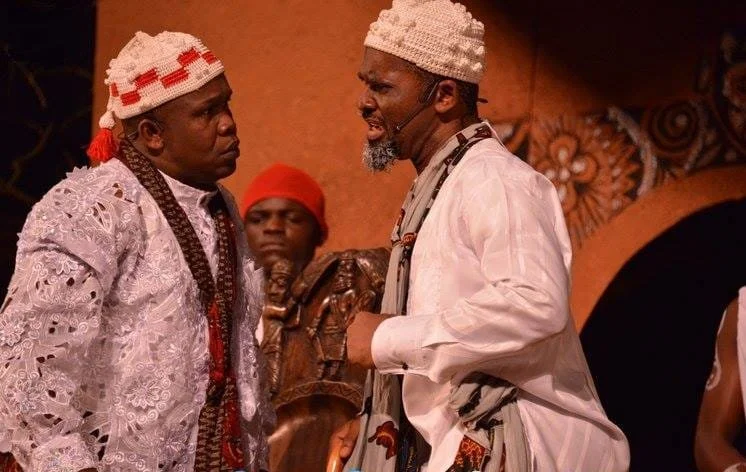
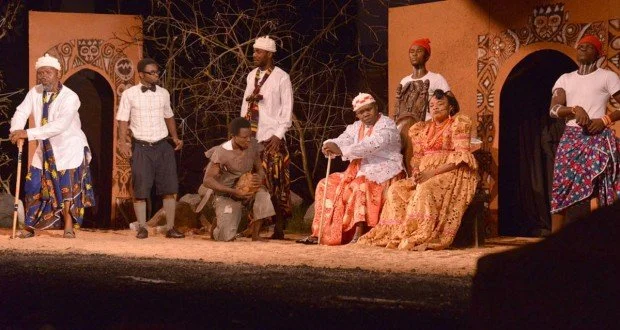
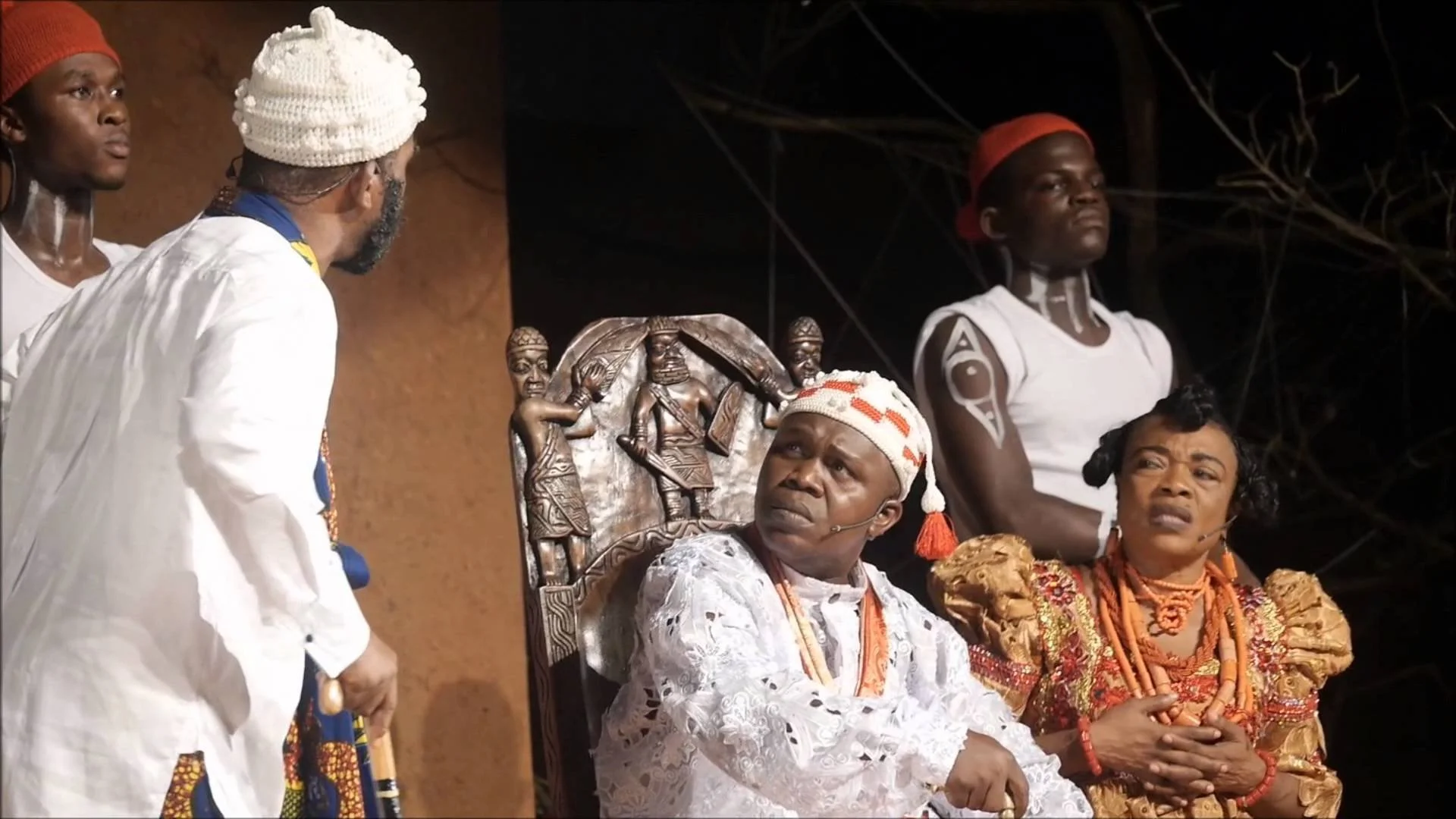
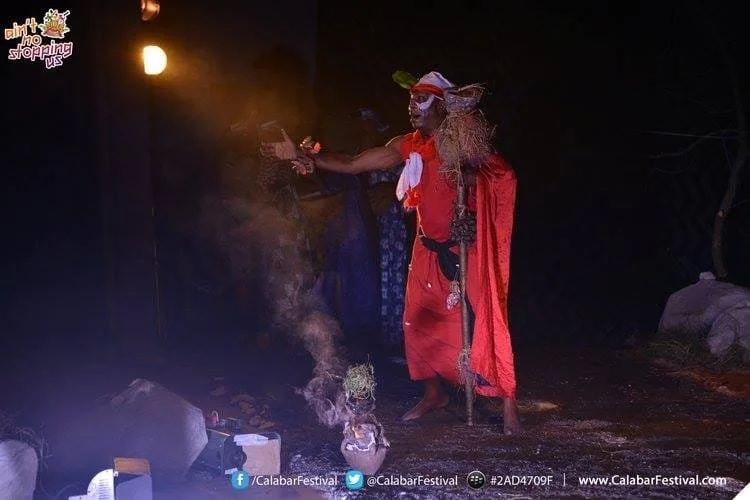
Scenes from THIS IS OUR CHANCE, Cultural Centre, Calabar, Dec. 2013. Photos by JEHF