

Cerca Africa Hosts Women Entrepreneurs and Leaders
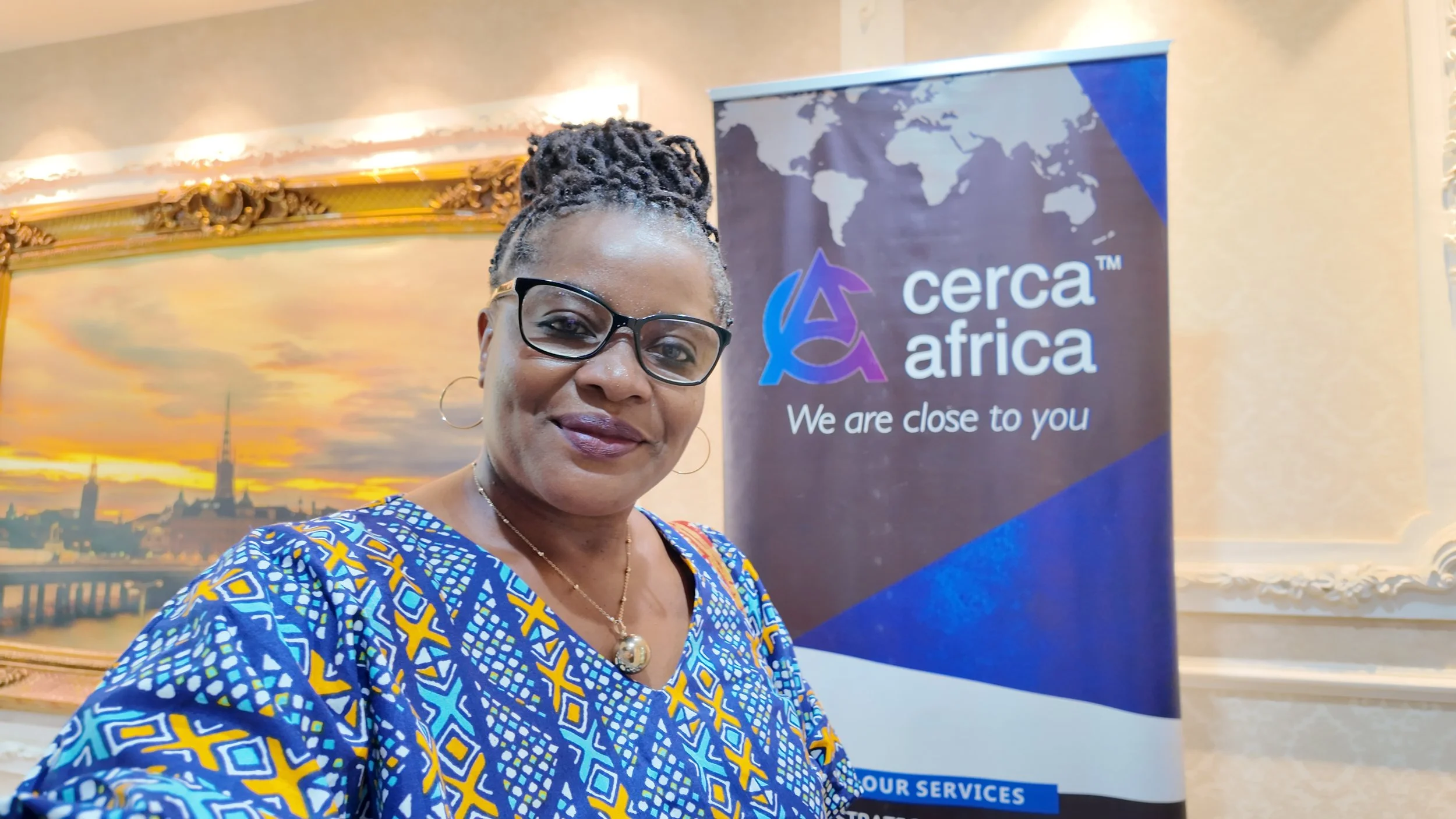
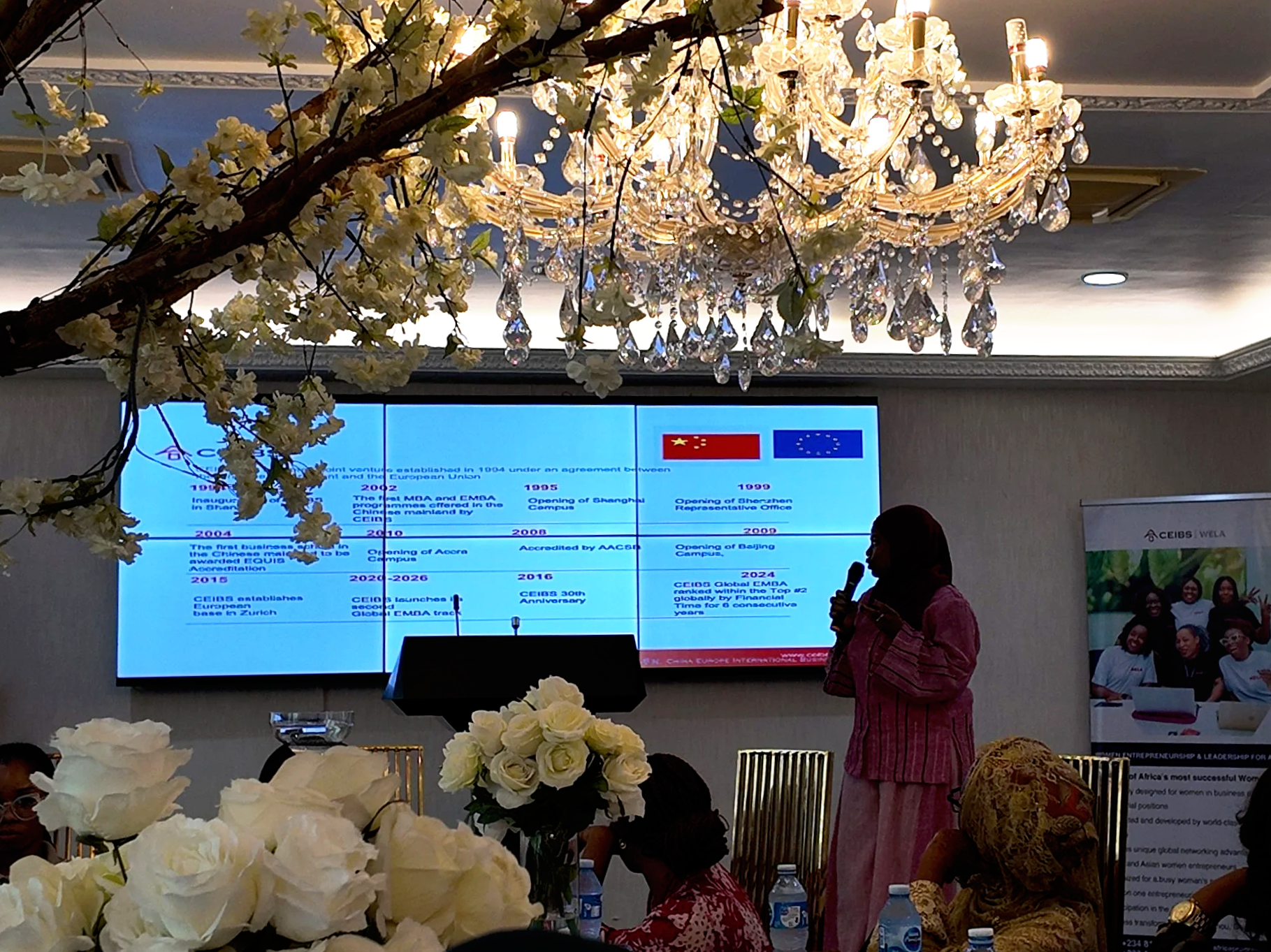
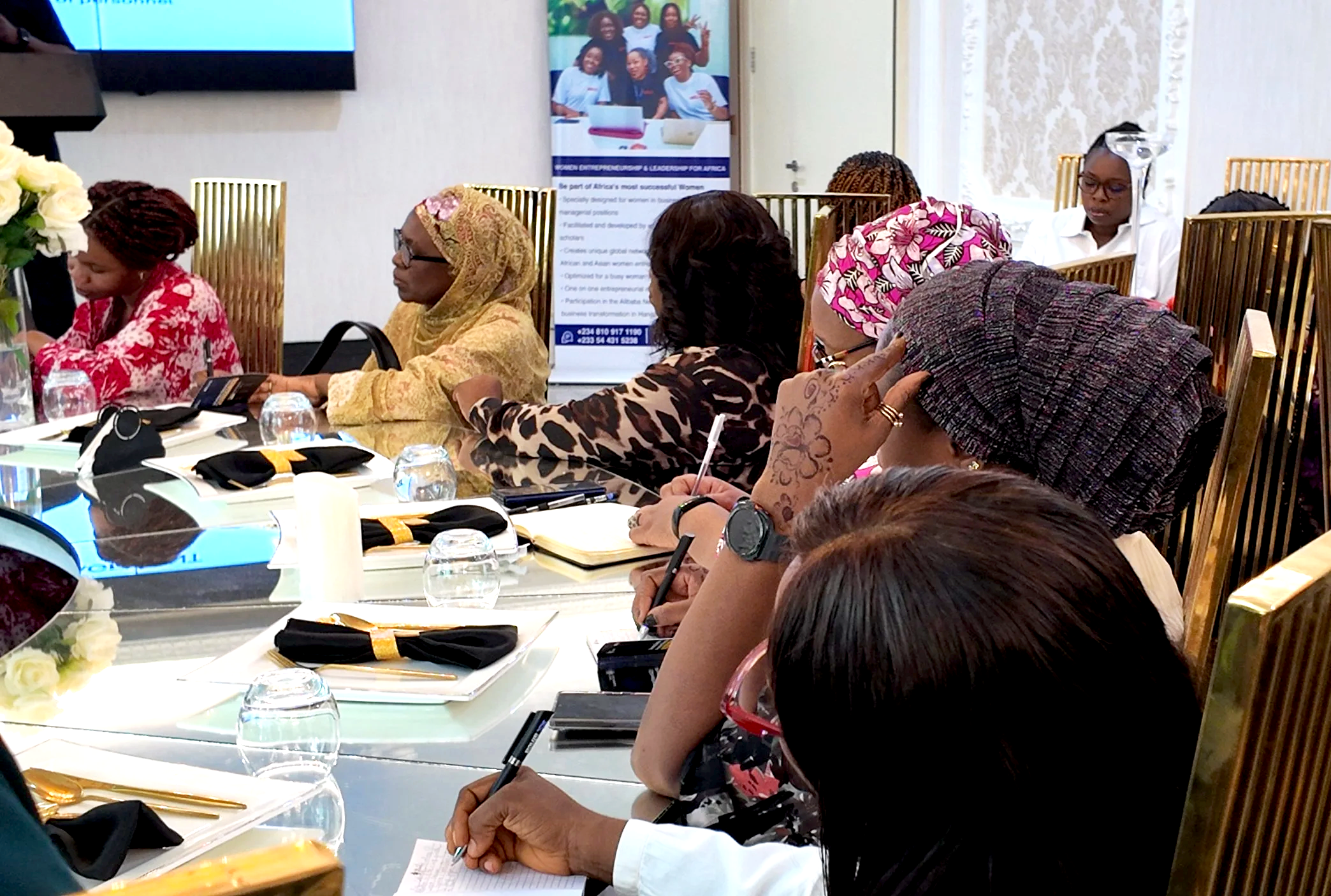
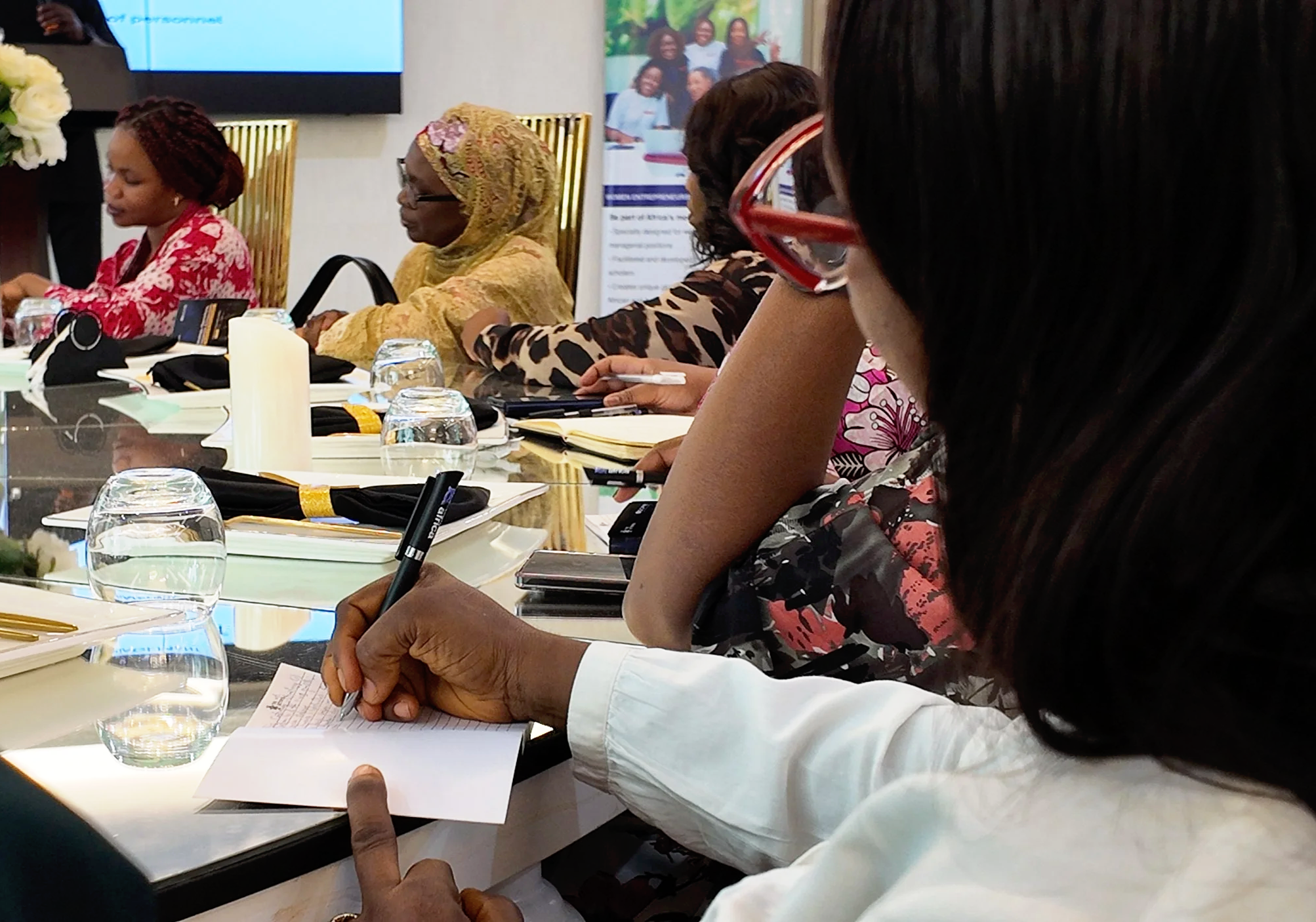
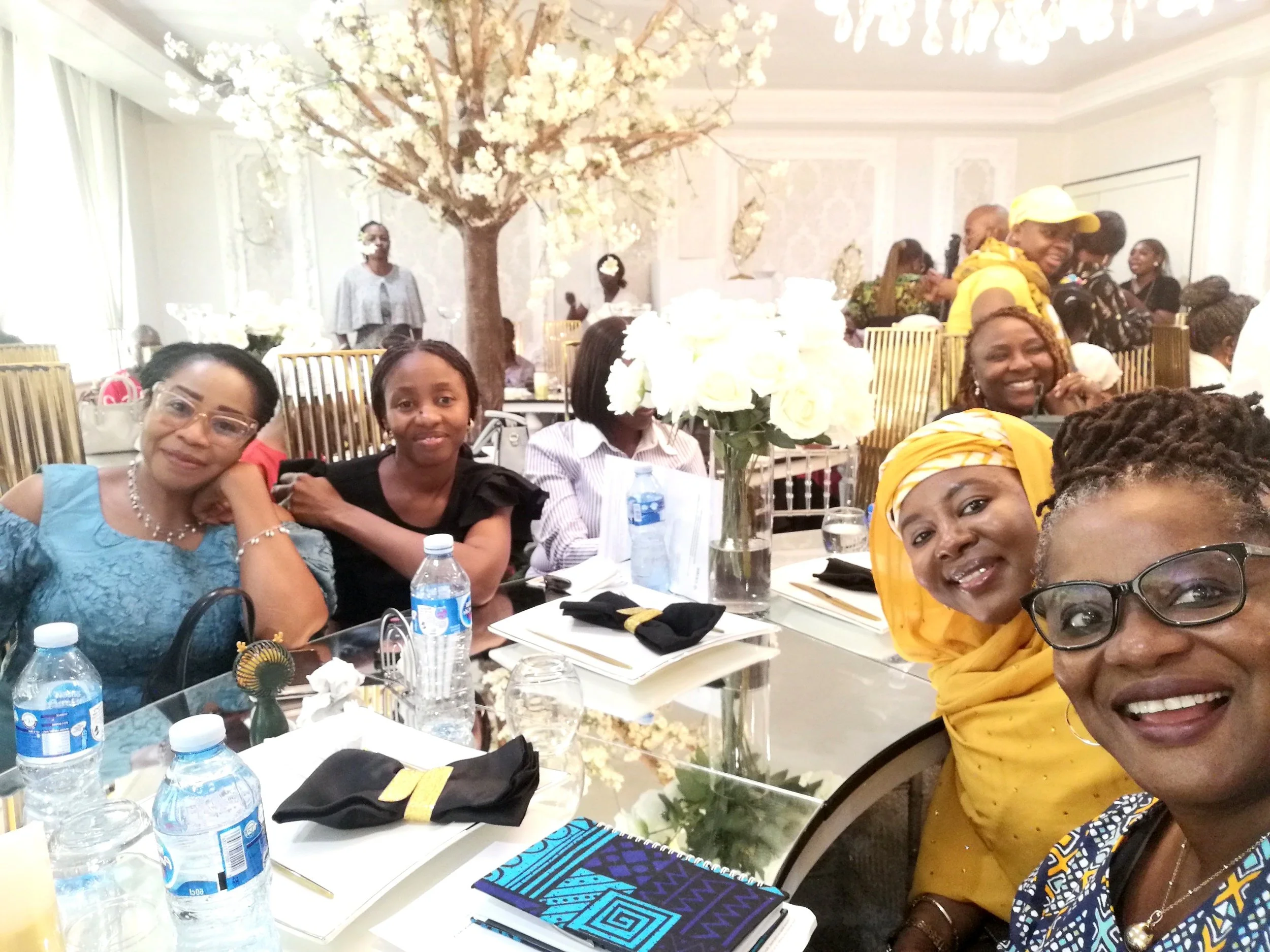
Cerca Africa, in partnership with the China Europe International Business School (CEIBS) hosts 75 Women Entrepreneurs and Leaders in Abuja, Nigeria.
Africa-Related, Abuja
Cerca Africa Hosts 75 Women in Entrepreneurship & Leadership
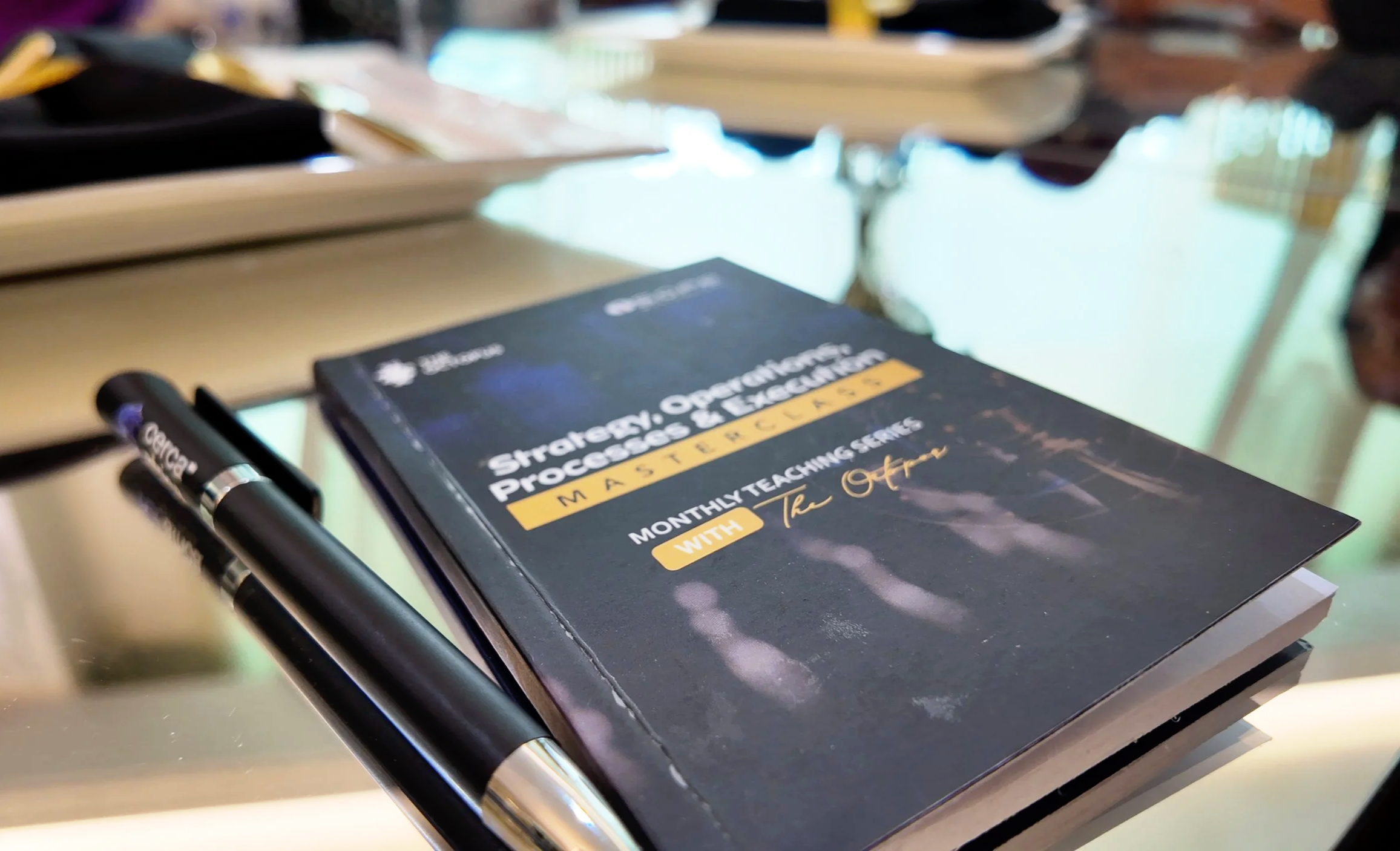
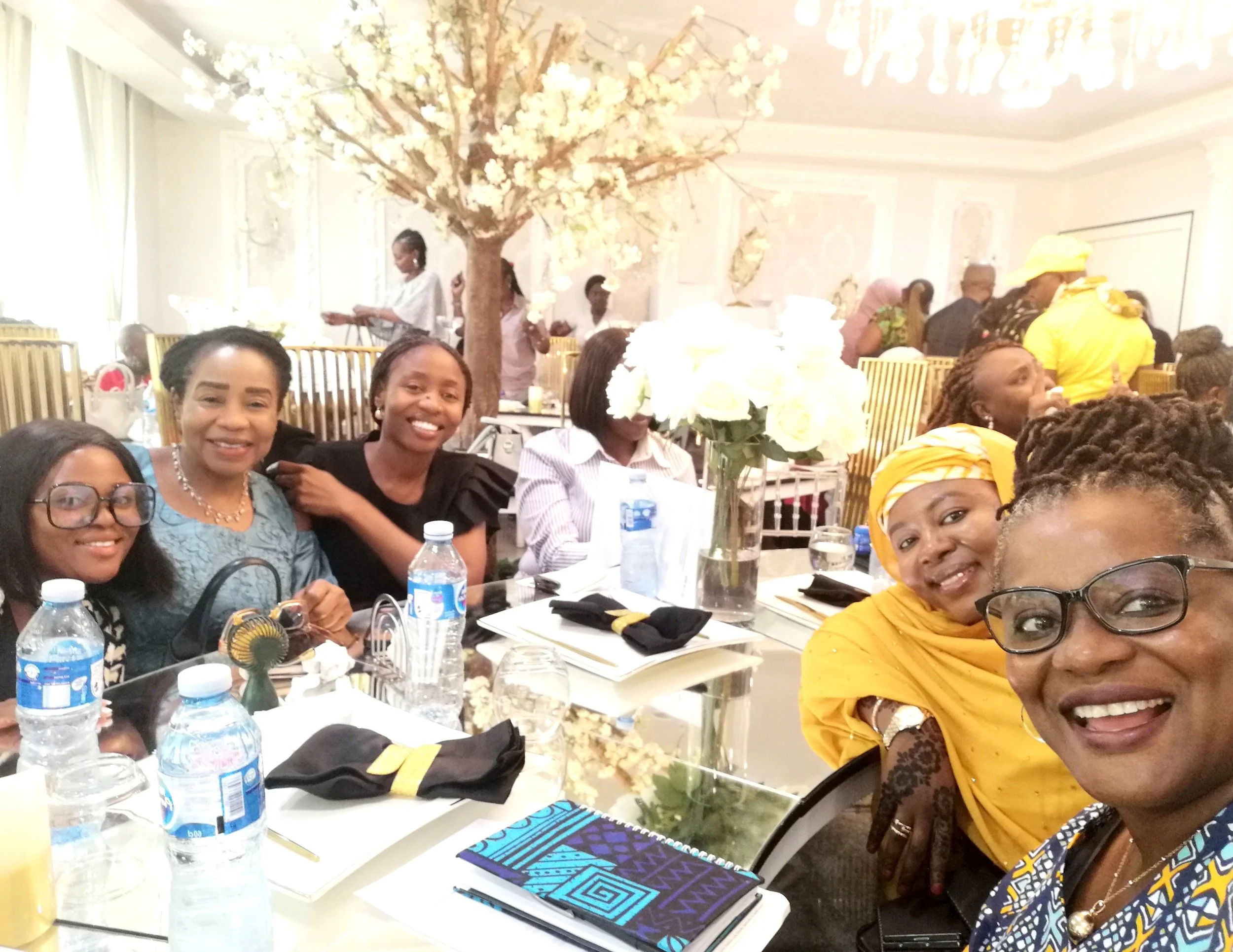
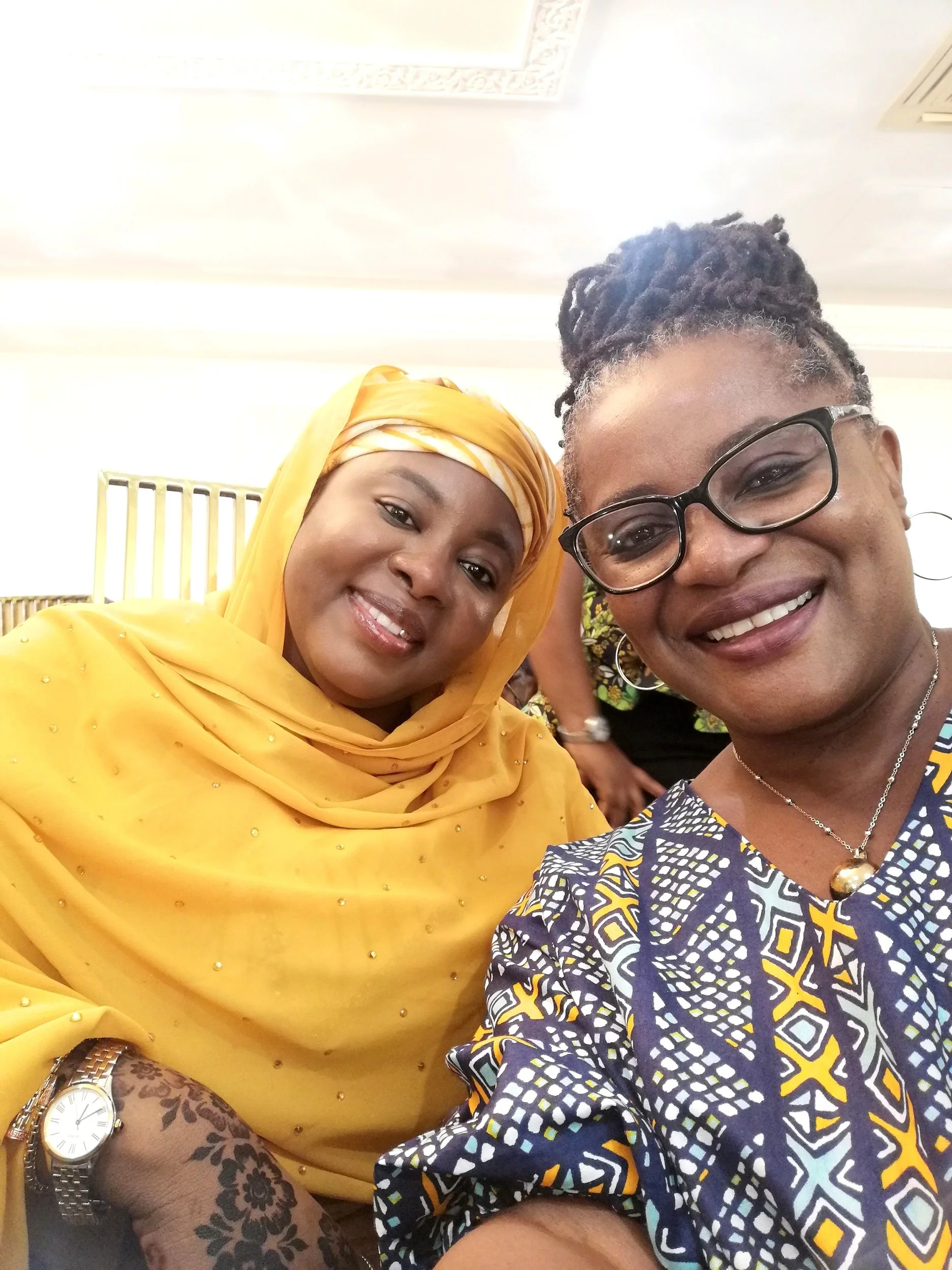
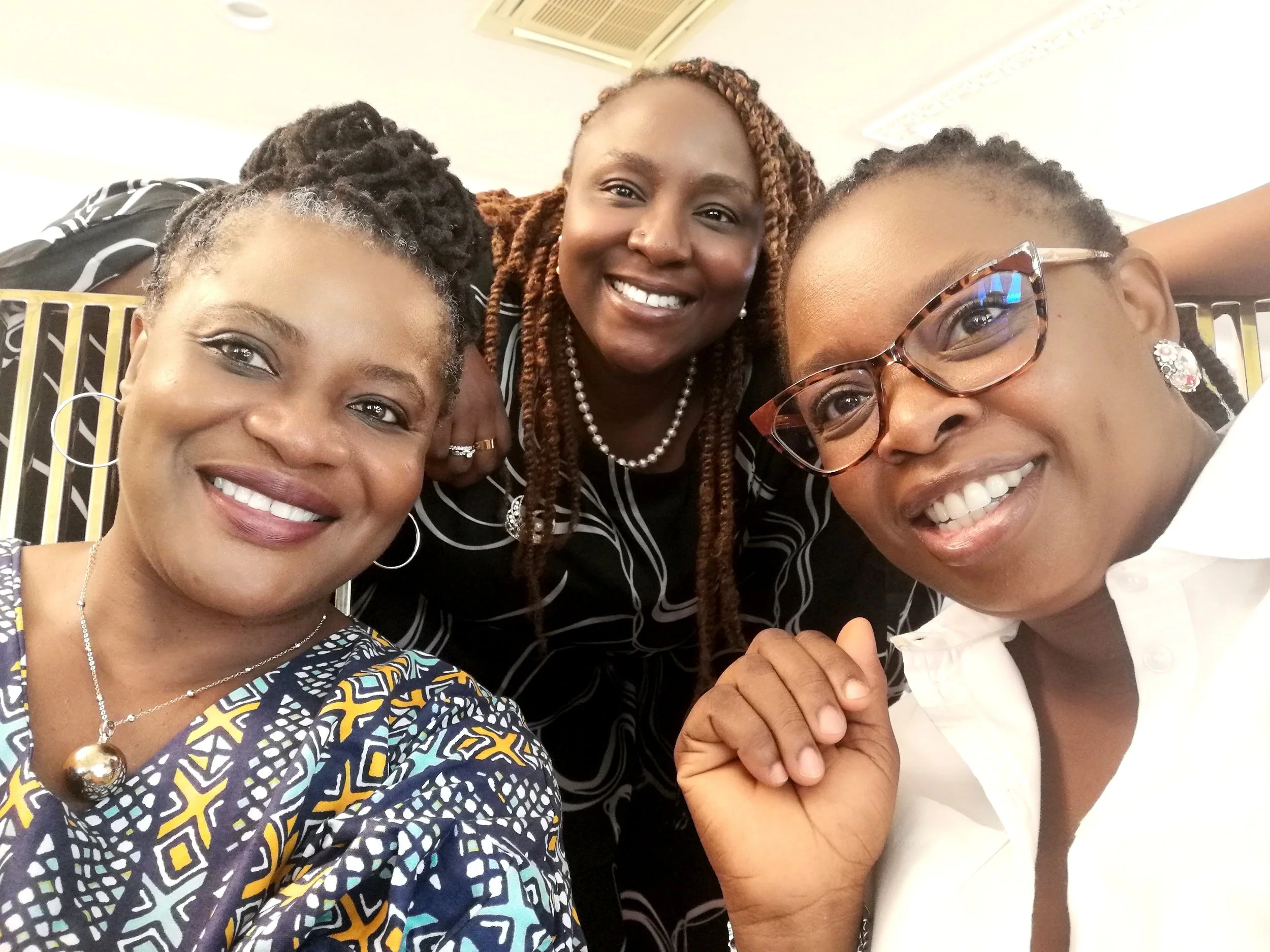
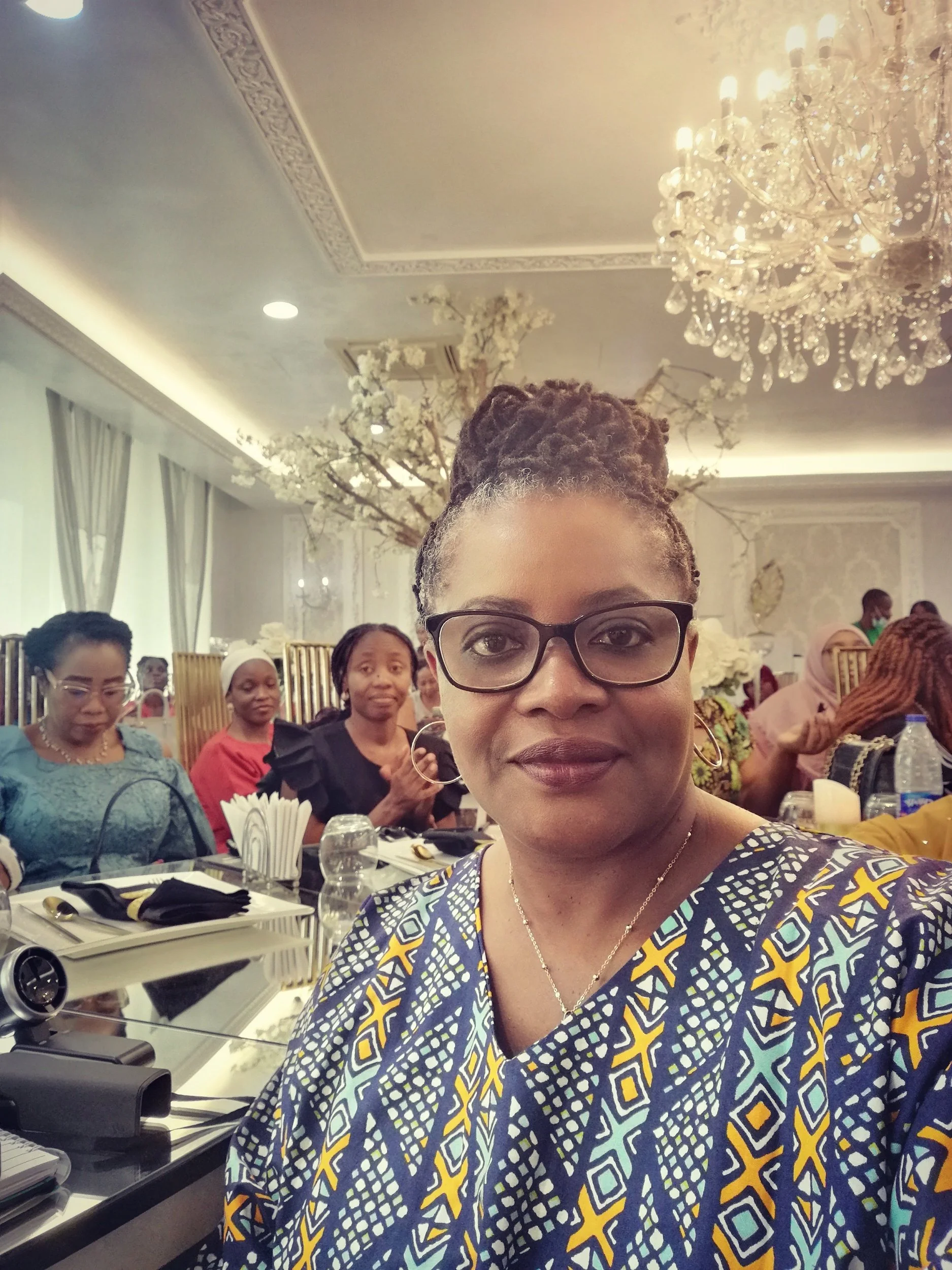
The IWD2026 Strategy, Operations, Processes & Execution (S.O.P.E) masterclass held in Abuja on March 26, 2026.
The event was organized in partnership with the China Europe International Business School (CEIBS) for their Women Entrepreneurship & Leadership for Africa (WELA) programme.
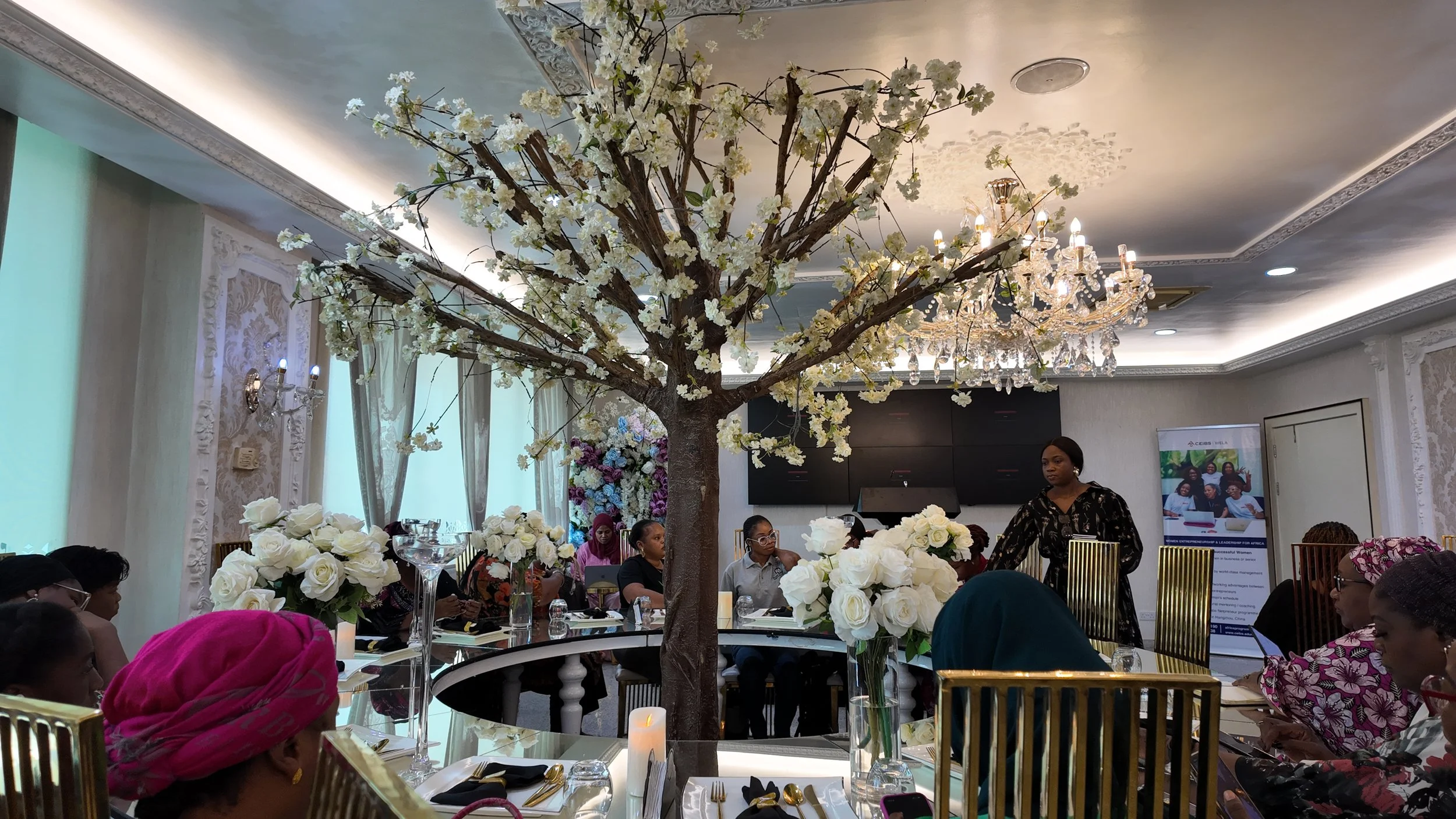
Hosted by Cerca Africa and CEO Sam Obafemi (The Octopus) at Elegante Mall, the exclusive evening was attended by 75 entrepreneurial women from various professional backgrounds.
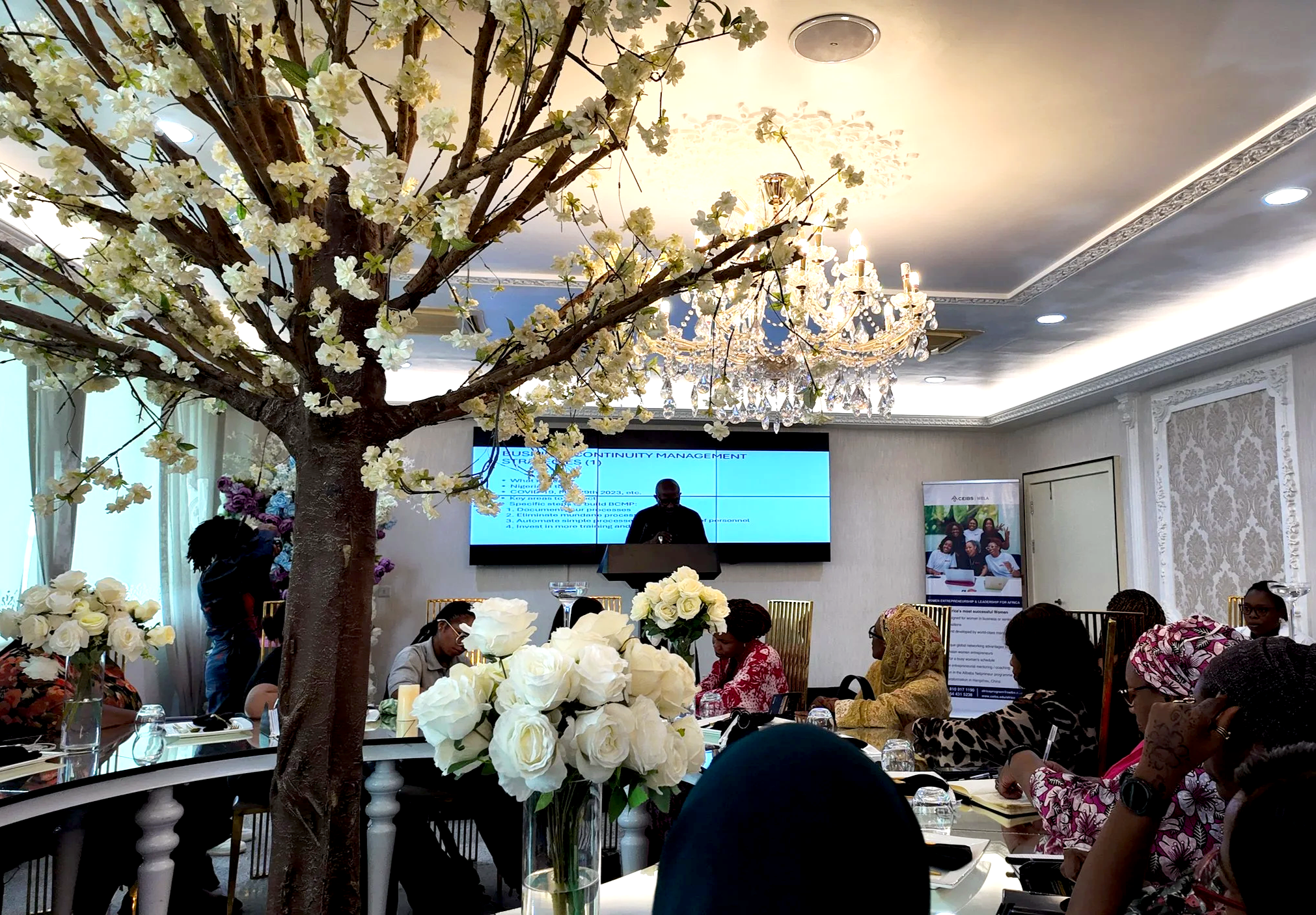
The event featured two key presentations. Mr. Sam Obafemi spoke on Business Continuity Management, and Mrs. Saidat Lawal-Mohammed, CEIBS’ Head of Executive Education Africa, provided an overview of the institution’s programs. The sessions were followed by dinner and networking opportunities for all participants.
Cerca Africa holds targeted monthly masterclasses for registered participants. They work with individuals and organizations to achieve mental, emotional, and economic freedom through coaching programs focused on strategy, processes, and behavioral change.
CEIBS is a non-profit joint venture established in 1994 under an agreement between the Chinese government and the European Union. The Business School offers Global Executive MBA programme, as well as a tailored Executive Education Africa Programmes
Learn more about upcoming sessions or coaching services.
#sopeceibswela
Photos by Africa-Related
For more stories told from an African perspective, follow us at africarelatedinc
SHARE THIS STORY
Afrobeat 'Son' DEDE on MESSENGERS
We are joined by the renowned Afrobeat saxophonist, performer, and bandleader, Dede Mabiaku - often regarded as one of Fela Kuti’s musical sons
Africa-Related New York
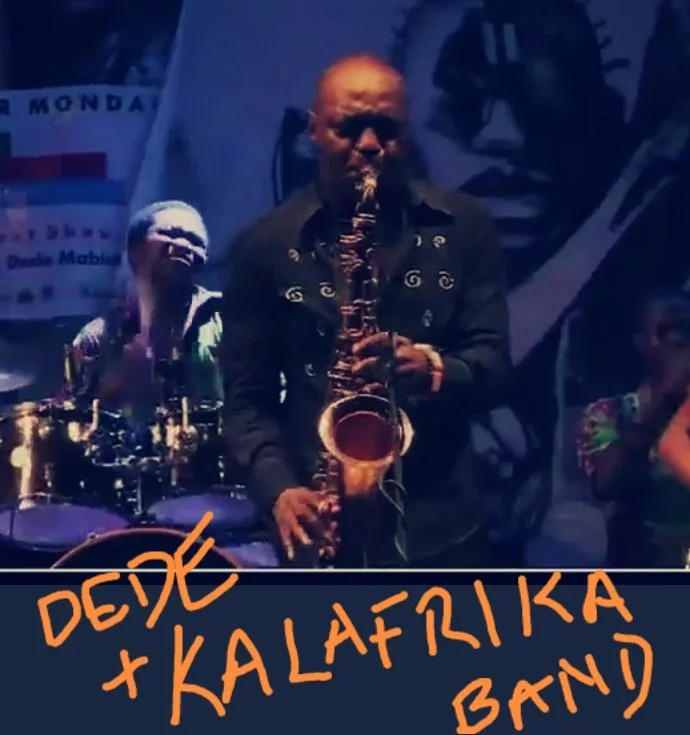
Afrobeat saxophonist Dede Mabiaku. On stage in Lagos, at Felabration 2019.
In this episode of 'Messengers with Oyiza,' we are joined by the renowned Afrobeat saxophonist, performer, and bandleader, Dede Mabiaku. Often regarded as one of Fela Kuti’s musical sons, Dede shares vivid stories from the formative years of Afrobeat, reflecting on his life both on and off stage with Fela and leading The Kalafrika Band.
A trained theatre artist with a commanding stage presence, Dede’s journey is rooted in rhythm, resistance, and a deep commitment to African culture. This episode explores lineage, identity, and the evolution of an artist within a global movement.
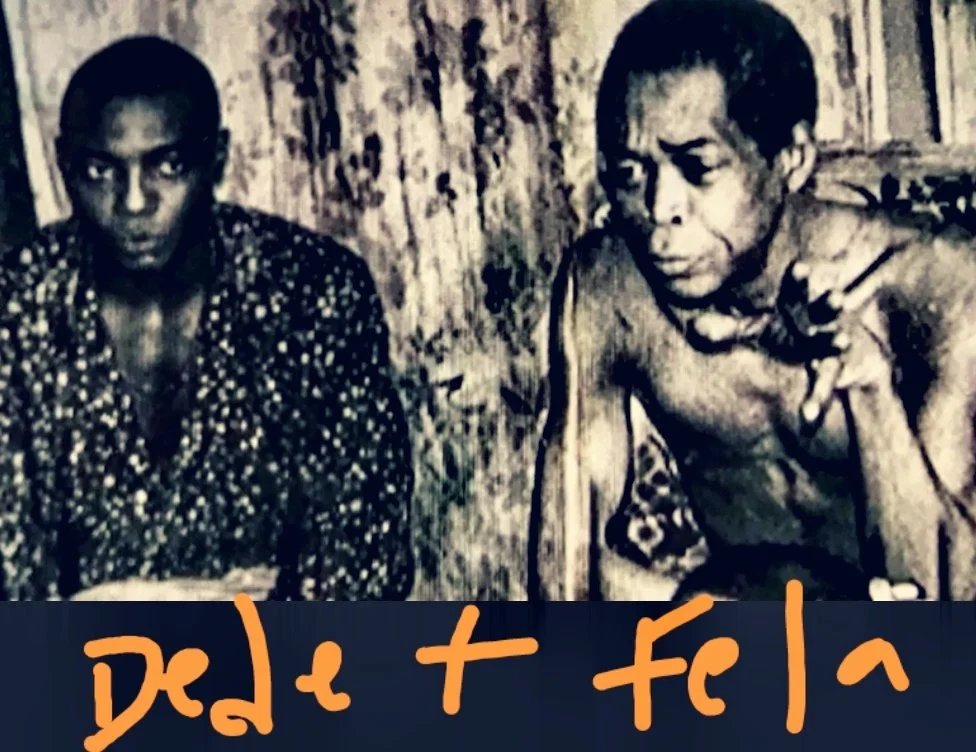
Dede and Fela in an undated photo. Courtesy of Dede Mabiaku
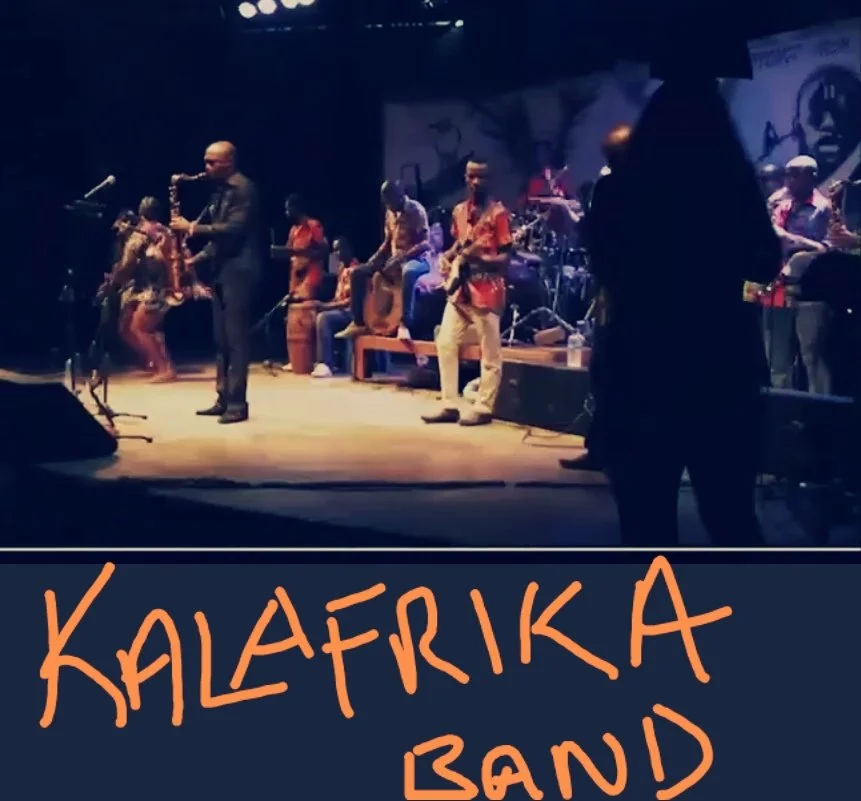
Dede & Kalafrika Band perform at Felabration 2019 at Freedom Park, Lagos.
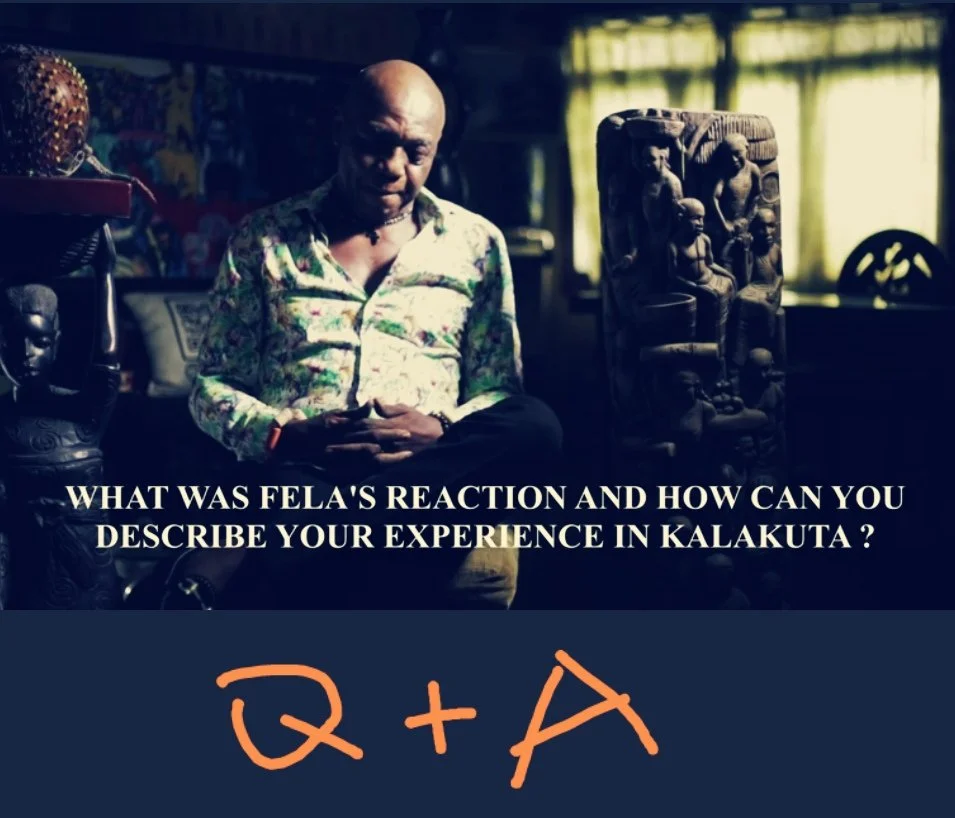
Dede reflects on a question on Messengers Podcast
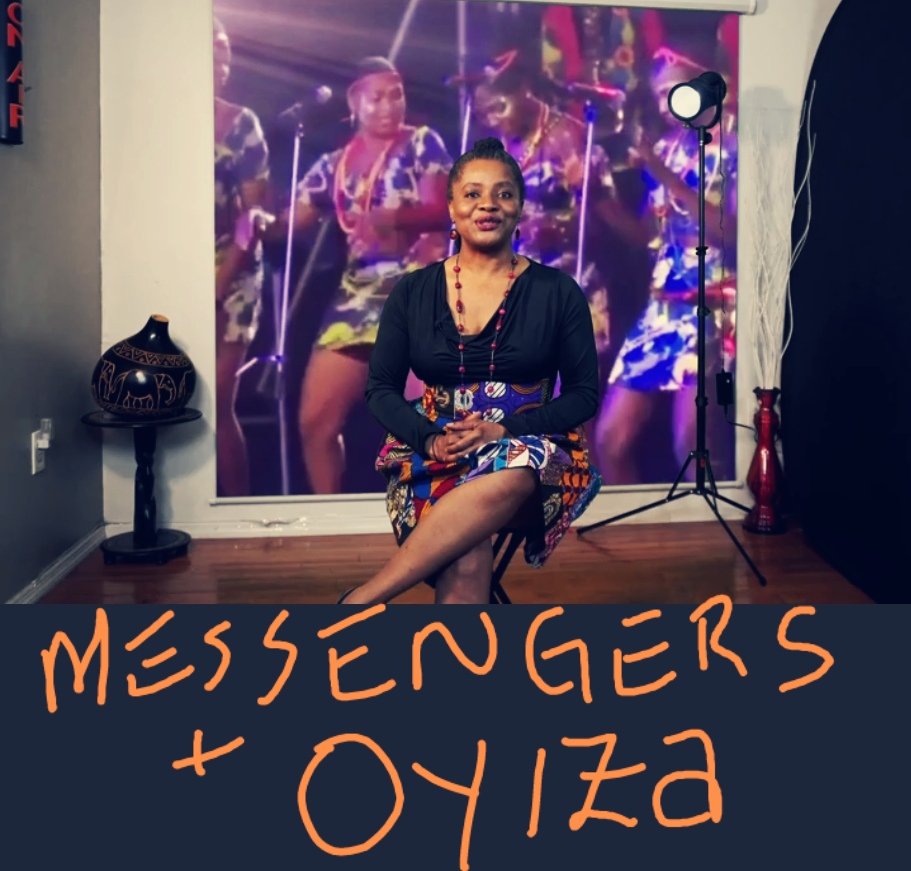
Oyiza Adaba: Host of Podcast series ‘Messengers’.
‘MESSENGERS with Oyiza’ is an engaging interview TV/podcast series hosted by Nigerian journalist and producer Oyiza Adaba. Produced by Africa-Related and recorded remotely from New York and on location, the show blends relaxed conversations with interviews of selected guests who discuss topics about Africa for a global audience. The conversations aim to bridge divides, correct misconceptions, and spark positive discussion about Africa and its people. Each 30-minute episode features inspiring stories, creative graphics, video clips, and background reports. The series focuses on Africa's People, Places and Issues.
For more stories told from an African perspective, follow us at africarelatedinc
SHARE THIS STORY
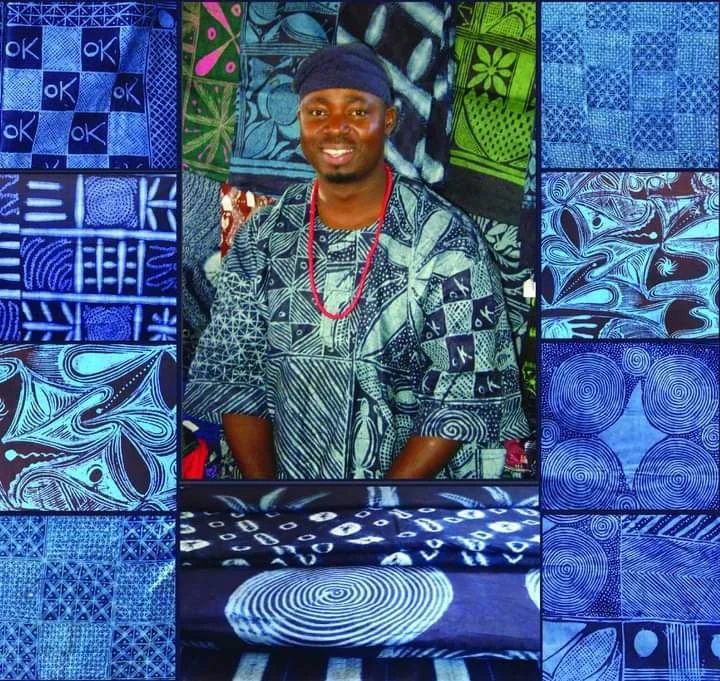
Textile Artist And Teacher Gasali Adeyemo Features on 'Messengers
Textile artist and teacher Gasali Adeyemo talks about preserving Nigeria’s traditional textiles -like batik, adire, itinochi, and akwocha -his humble childhood, his biggest influences, and the next generation.
Africa-Related New York
Textile Artist Gasali Adeyemo dicusses the Yoruba art of Adire (tye-dye) making.
From modest beginnings to becoming a leading voice in textile preservation, Gasali Adeyemo shares a journey rooted in craft, culture, and continuity.
In this episode of Messengers with Oyiza, Gasali explores the rich history and cultural significance of traditional Nigerian textiles from Adire and Batik to Itinochi and Akwocha and the urgent need to preserve these indigenous techniques for future generations.
He shares his experience styling Viola Davis in the film "The Woman King". He also reflects on his early influences like Nike Art Gallery (@nikeartgallery), the discipline behind mastering textile artistry, and the responsibility of passing down knowledge in a rapidly changing world.
This is a conversation about heritage, identity, and the role of artists as custodians of culture.
Follow Gasali @yoruba_indigo. Watch now on Spotify.
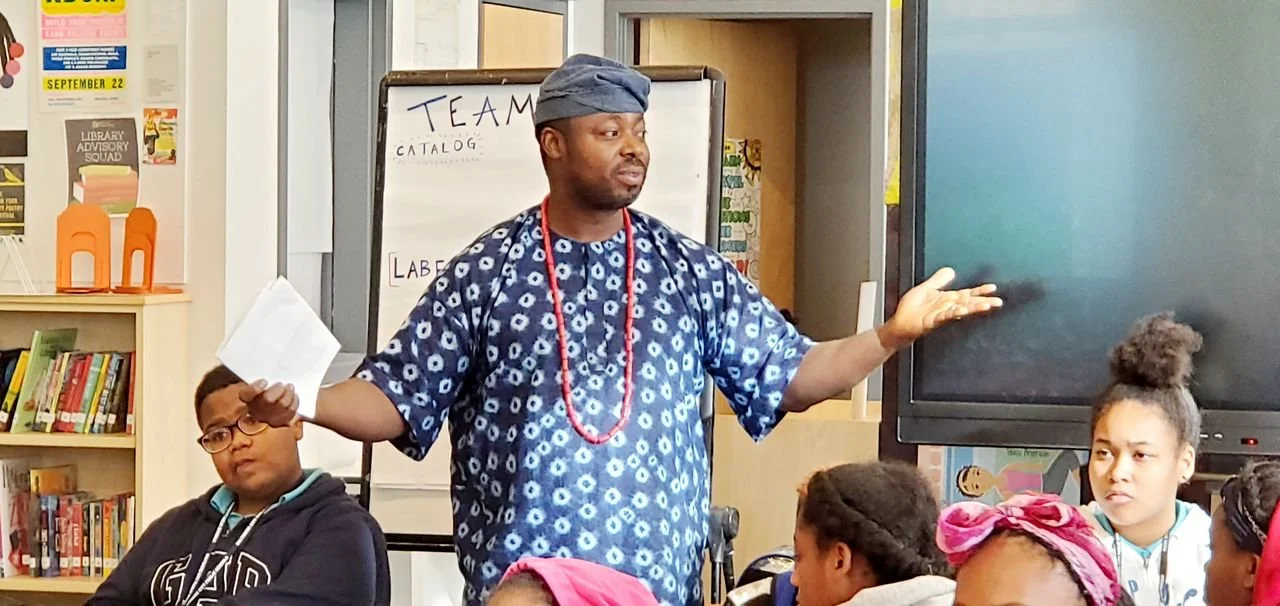
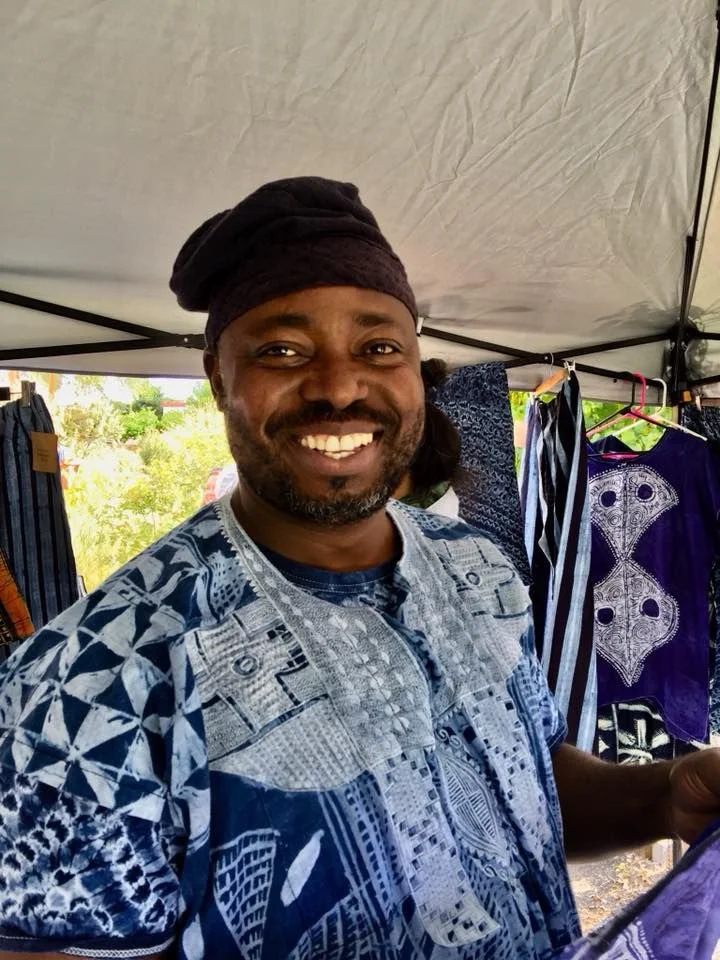
‘MESSENGERS with Oyiza’ is an engaging interview TV/podcast series hosted by Nigerian journalist and producer Oyiza Adaba. Produced by Africa-Related and recorded remotely from New York and on location, the show blends relaxed conversations with interviews of selected guests who discuss topics about Africa for a global audience. The conversations aim to bridge divides, correct misconceptions, and spark positive discussion about Africa and its people. Each 30-minute episode features inspiring stories, creative graphics, video clips, and background reports. The series focuses on Africa's People, Places and Issues.
For more stories told from an African perspective, follow us at africarelatedinc
#AfricaRelated #AfricanArt #art #podcast #conversation #artist #messengerswithoyiza #Messengers #AfricaRelated #TextileArt #adire #batik #CulturalHeritage #TheWomanKing #oyizaadaba
SHARE THIS STORY
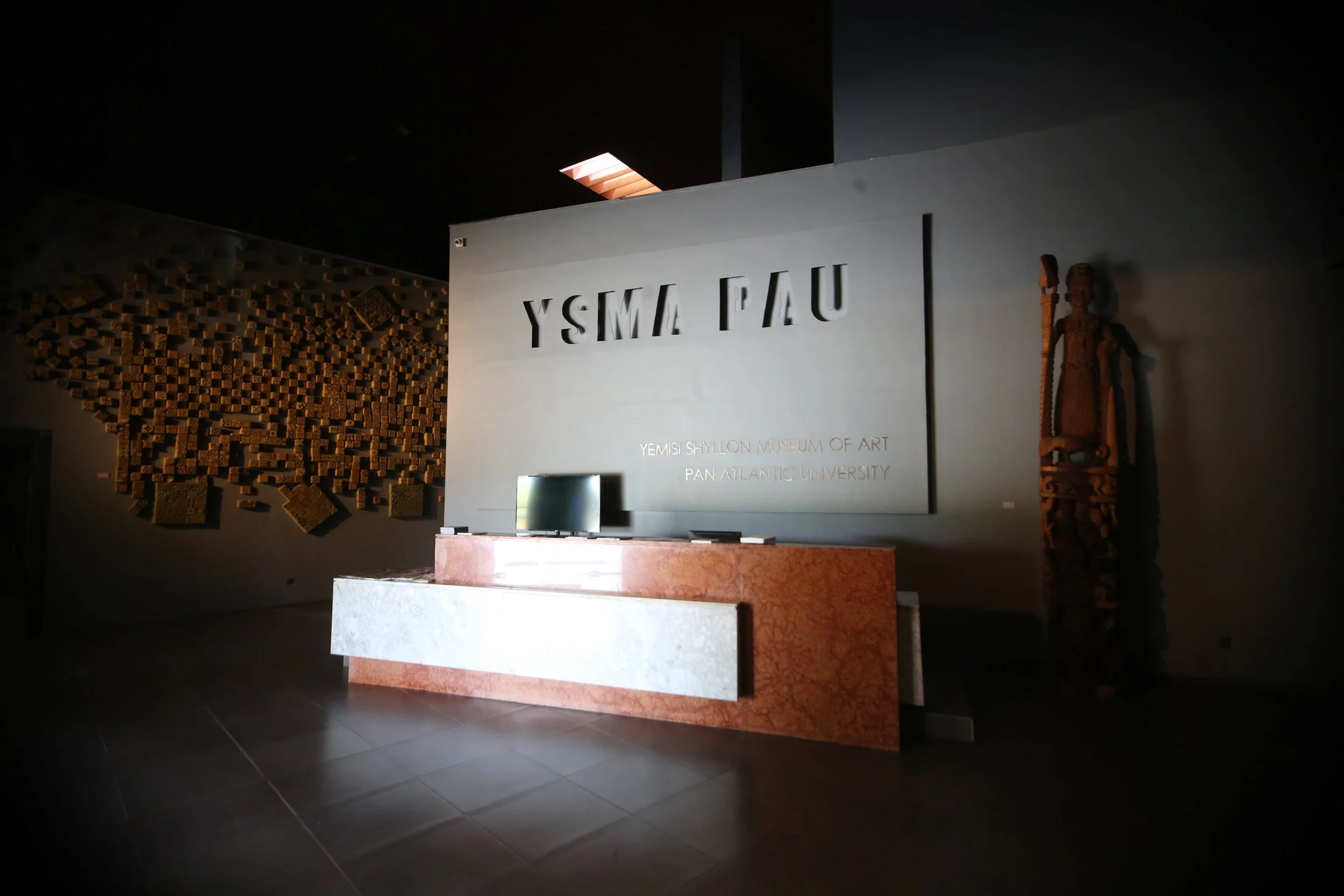
DELA Screens at Yemisi Shyllon Museum of Art Lagos
On March 8, 2026, Lagos hosted a screening of DELA: The Making of El Anatsui, a biographical documentary exploring the creative journey of one of Africa’s most celebrated artists. Directed by Oyiza Adaba and produced by Africa-Related over a ten-year period, the screening was held in collaboration with the Yemisi Shyllon Museum of Art as part of Lagos Gallery Week 2026.
Africa-Related, Lagos
From bottle caps to monumental global artworks, the story behind the art is just as powerful as the work itself.
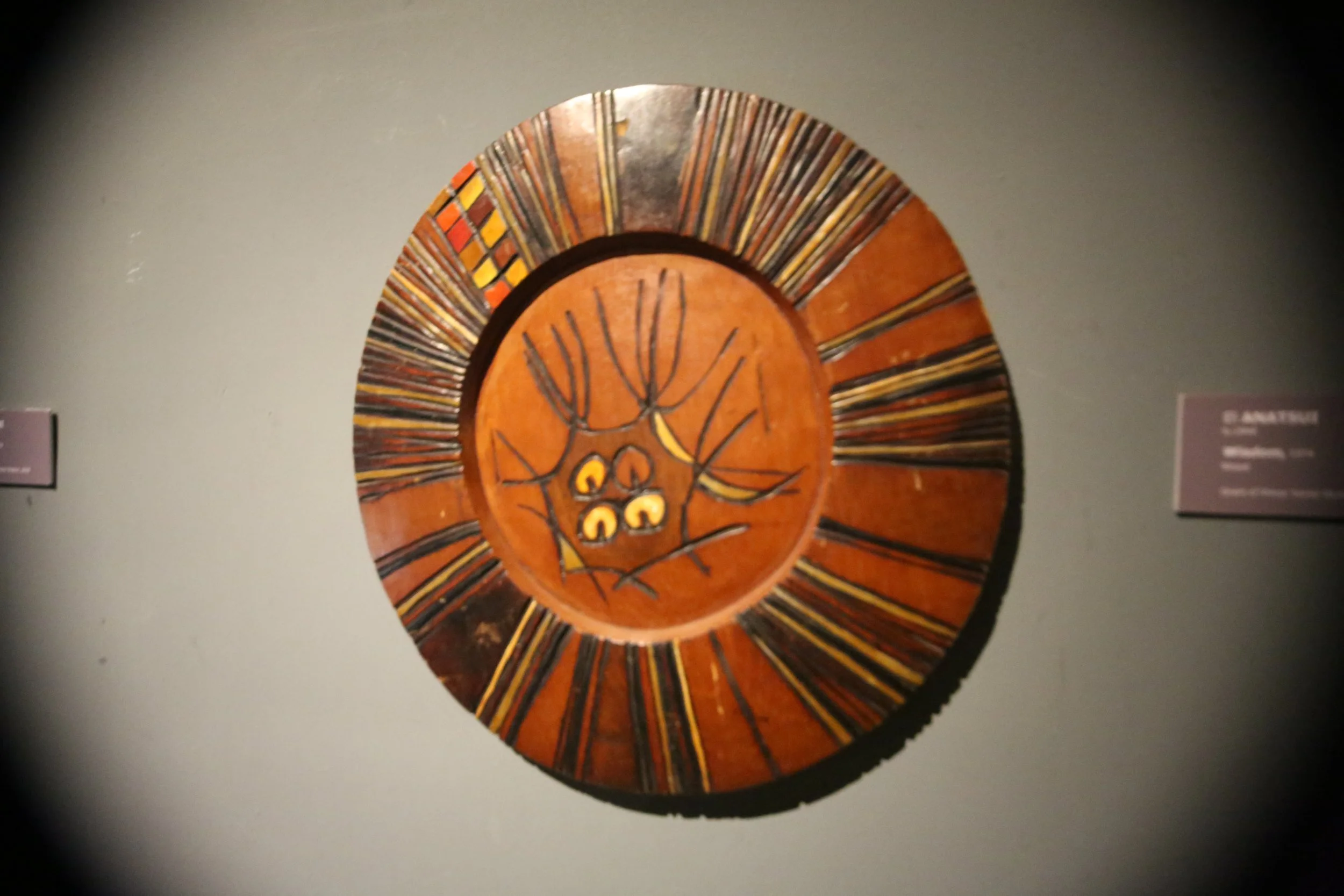
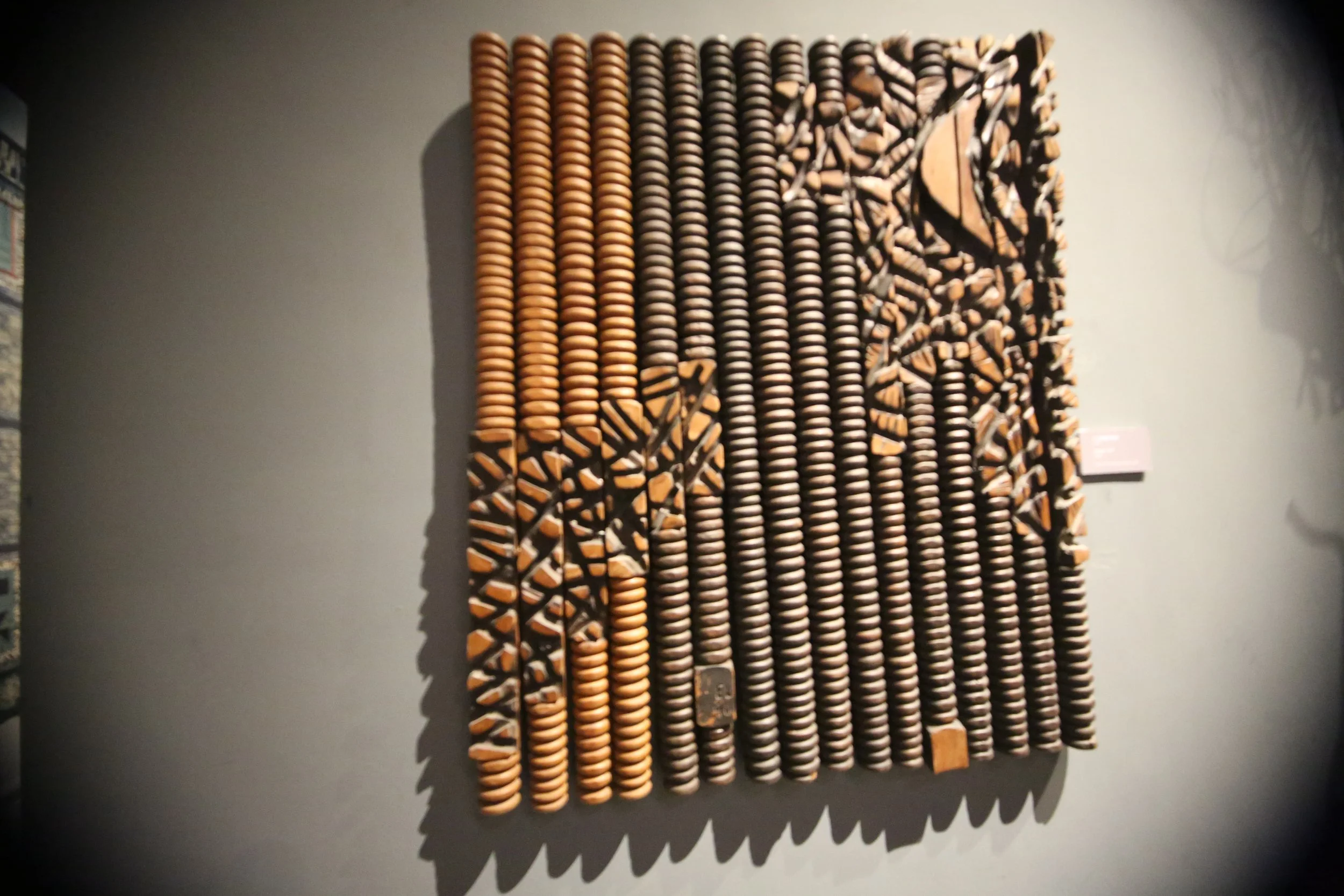
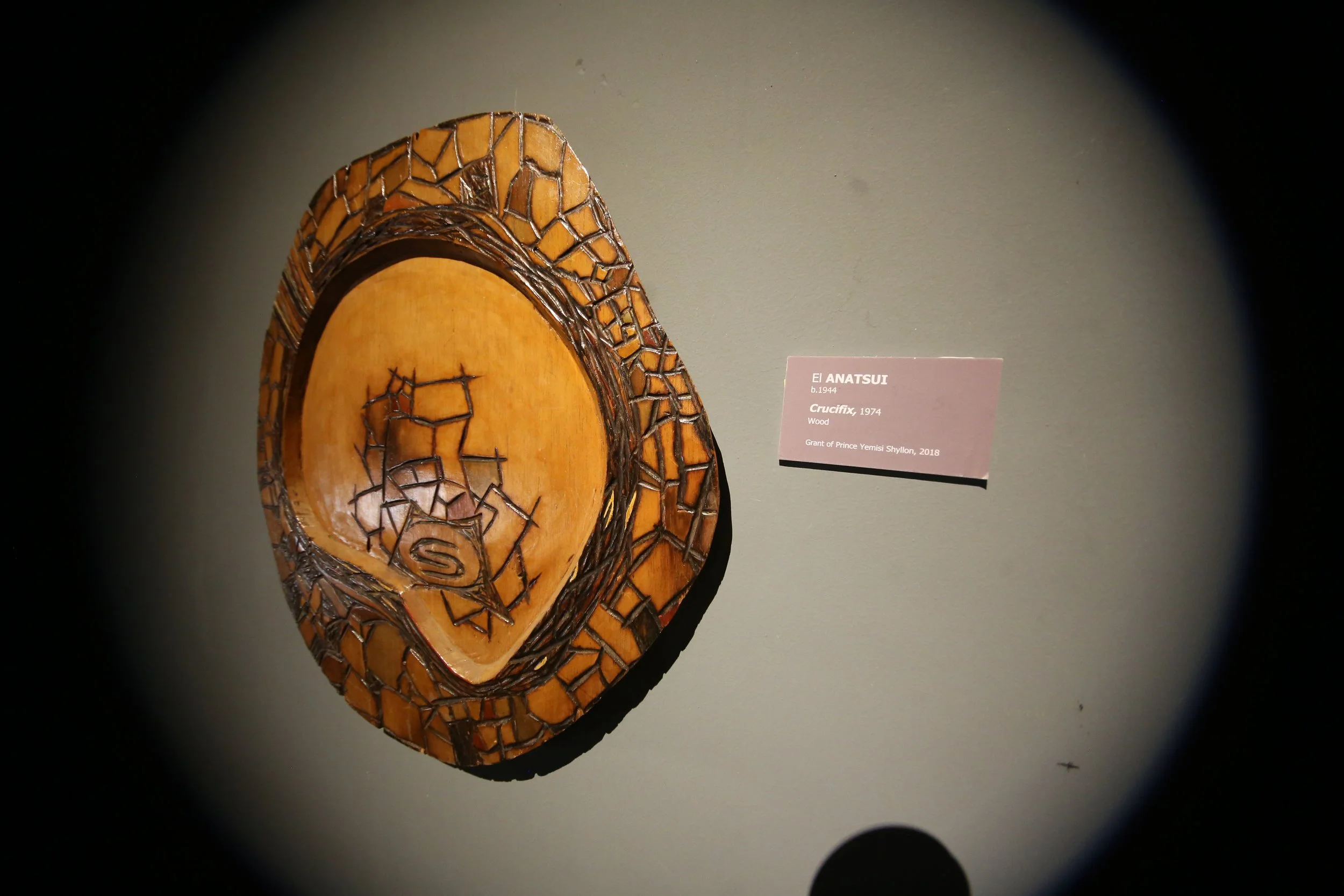
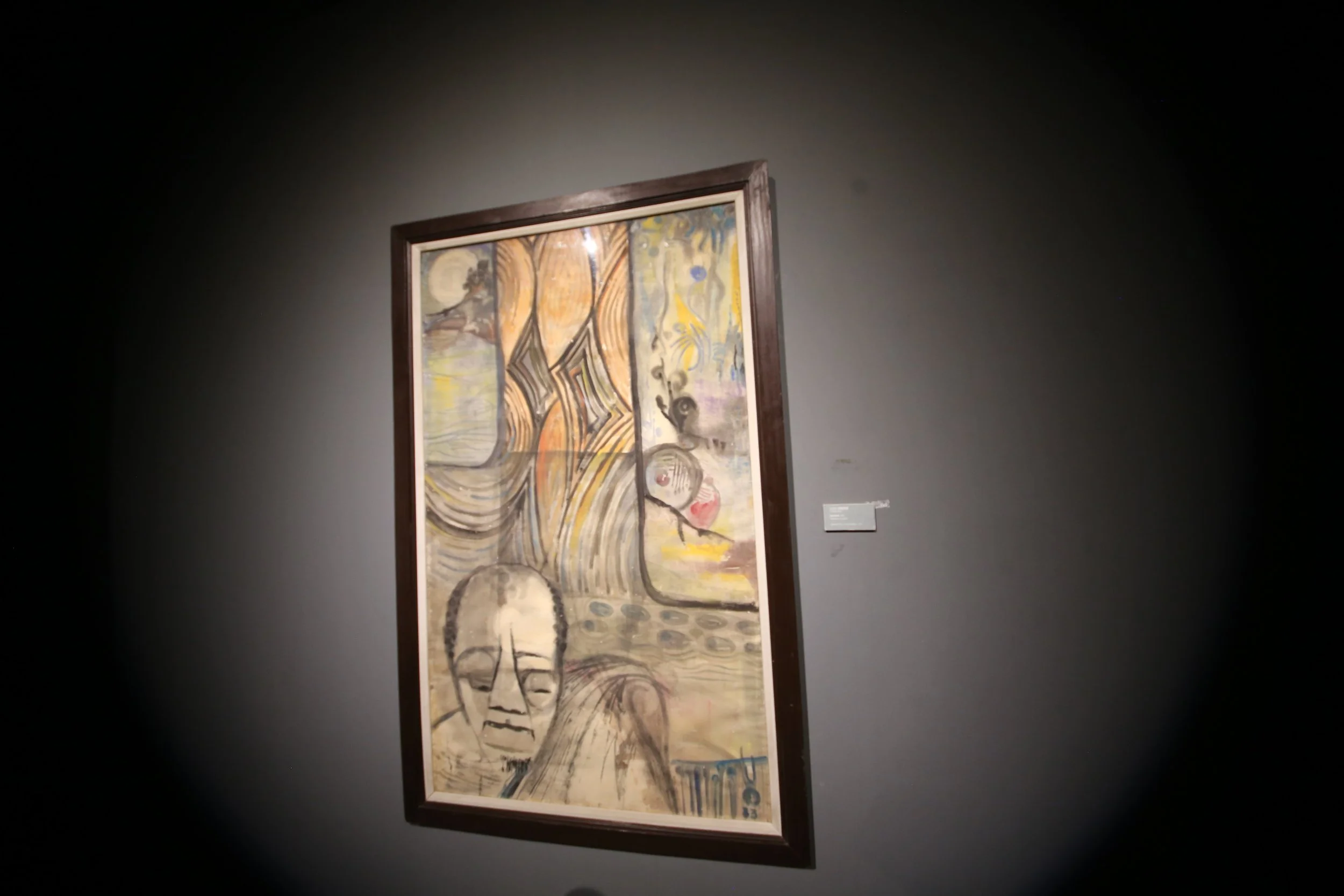
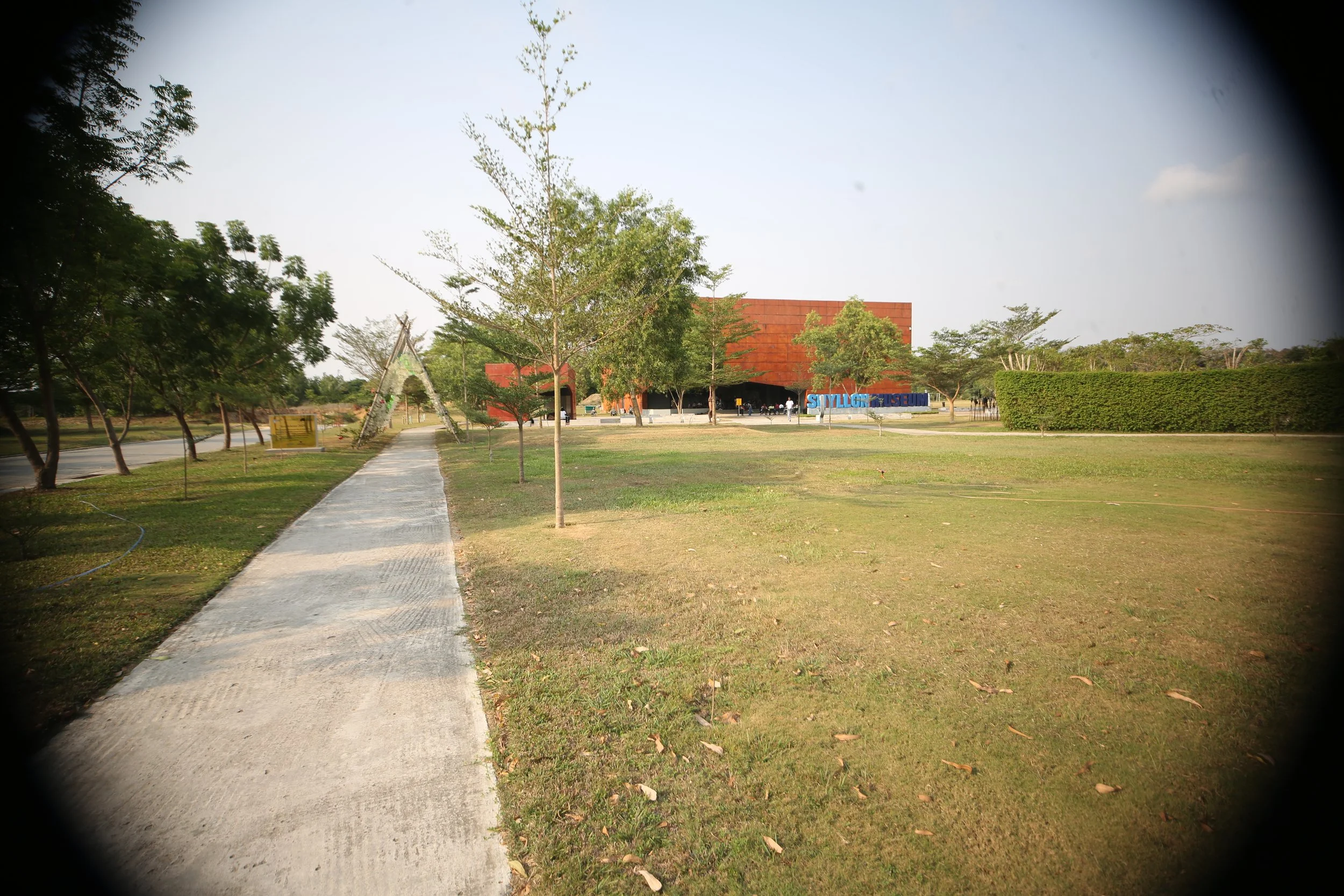
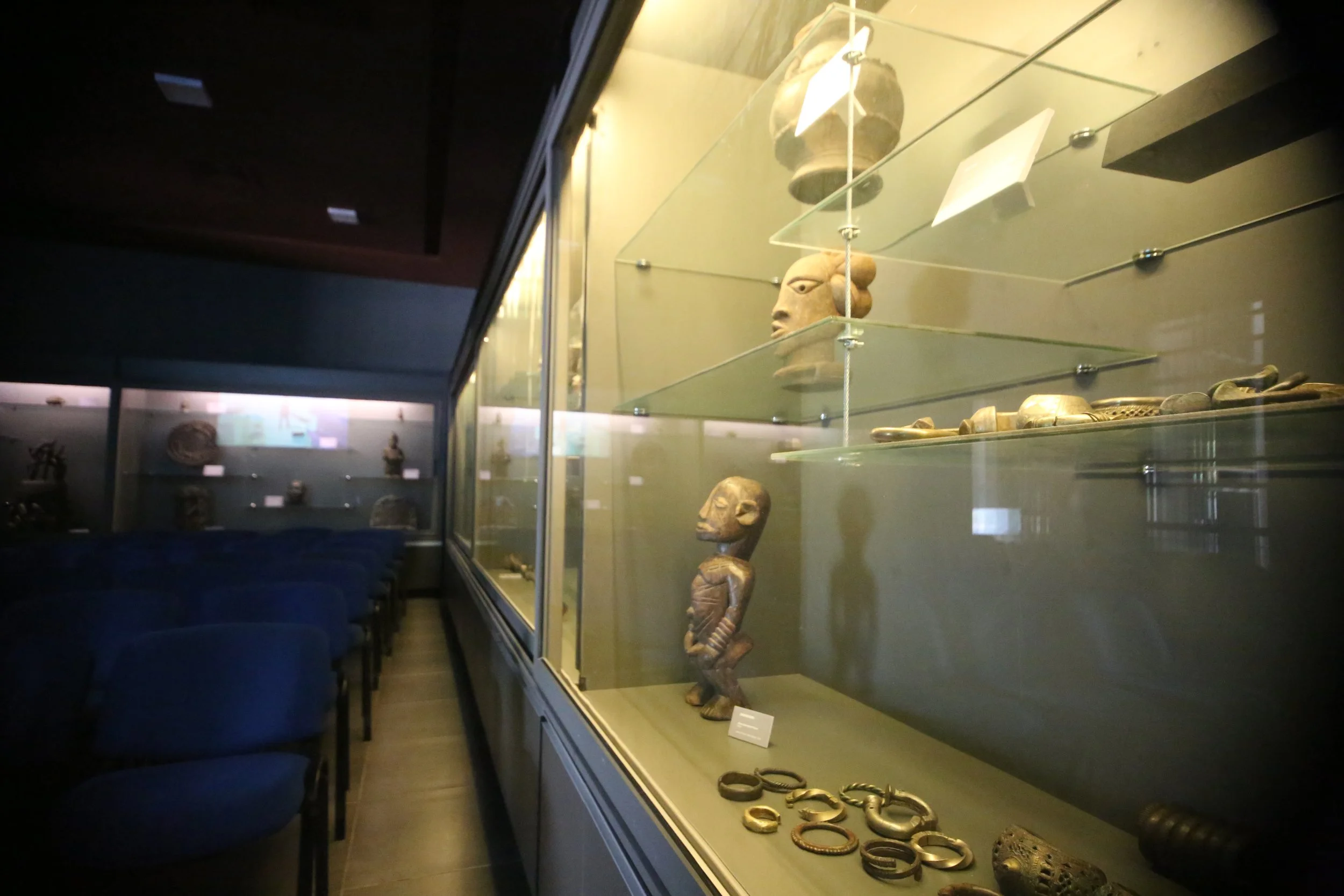
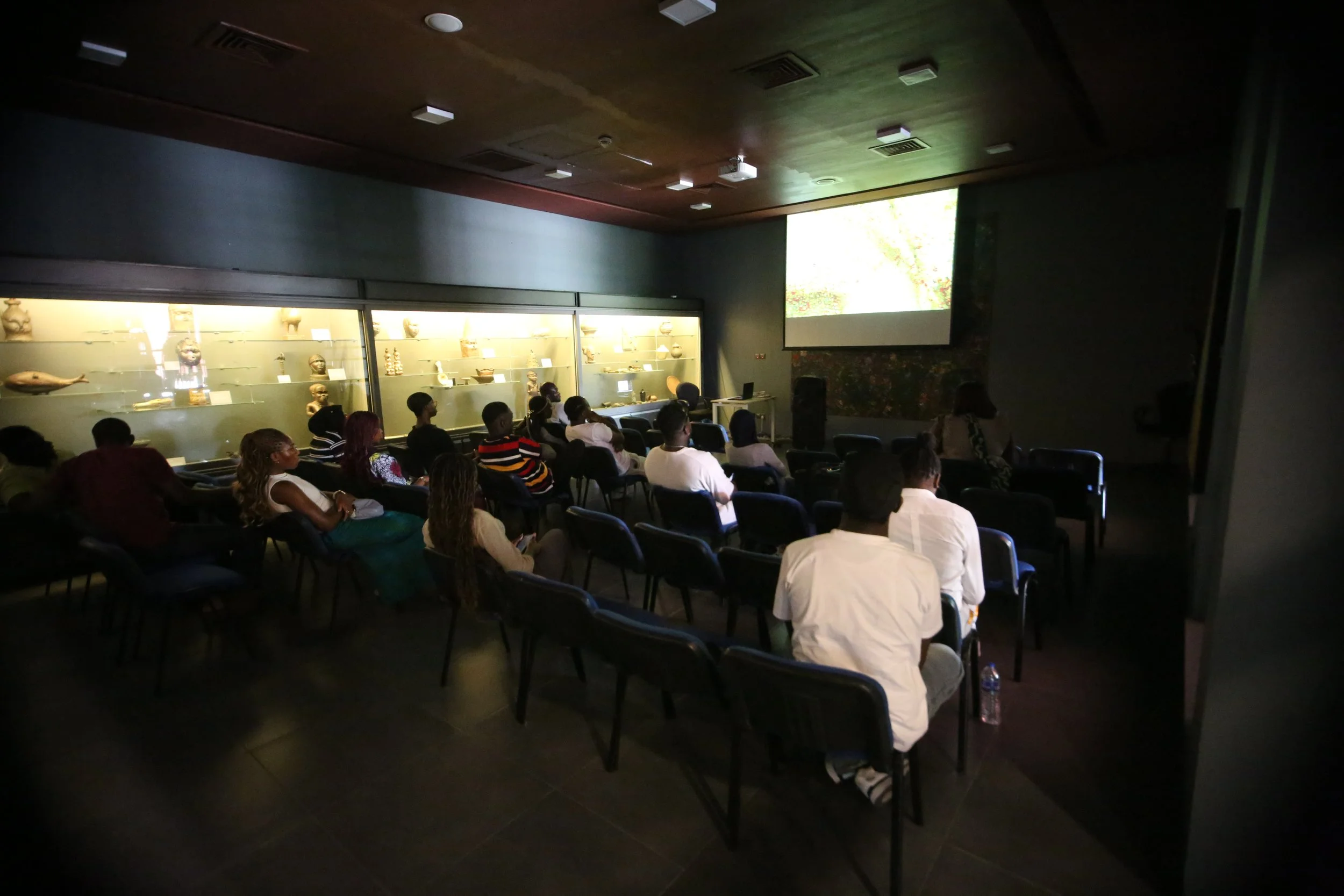
On March 8, 2026, Lagos hosted a screening of DELA: The Making of El Anatsui, a biographical documentary exploring the creative journey of one of Africa’s most celebrated artists. Directed by Oyiza Adaba and produced by Africa-Related over a ten-year period, the screening was held in collaboration with the Yemisi Shyllon Museum of Art as part of Lagos Gallery Week 2026.
The event took place at the museum’s premises within Pan-Atlantic University, drawing an audience of students, staff, and art enthusiasts.
Attendees were also invited to explore the history behind the work of El Anatsui. His early wood carvings, including the famous wooden trays that earned him the nickname "TV Man," are on permanent display at the YSMA in Lagos.
Share this with anyone who appreciates art, film, and African creative history.
Now on SPOTIFY: Podcast Series 'MESSENGERS with OYIZA' Season 3
Don't miss MESSENGERS: with Oyiza - Season 3 on SPOTIFY! Bringing together the rich flavors of Africa's peoples, places and issues.
Africa-Related, New York
MESSENGERS: Bringing together the rich flavors of Africa's peoples, places and issues.
Podcast Series ‘Messengers with Oyiza’ on Spotify
‘MESSENGERS with Oyiza’ is an engaging interview TV/podcast series hosted by Nigerian journalist and producer Oyiza Adaba. Produced by Africa-Related and recorded remotely from New York and on location, the show blends relaxed conversations with interviews of selected guests who discuss topics about Africa for a global audience. The conversations aim to bridge divides, correct misconceptions, and spark positive discussion about Africa and its people. Each 30-minute episode features inspiring stories, creative graphics, video clips, and background reports. The series focuses on Africa's People, Places and Issues.
Season 3 Episodes:
EP 1: Beatrice Bee, Arthur, and Felivian - January 12, 2026
EP 2: Christopher Richards and Dean - January 19, 2026
EP 3: Nmadili Okwumabua - January 26, 2026
EP 4: Demas Nwoko - February 2, 2026
EP 5: Nnamdi Okonkwo - February 9, 2026
EP 6: Enos Nhlane Manthata - February 16, 2026
EP 7: Baba Ani - February 23, 2026
EP 8: Eedris Abdulkareem - March 2, 2026
EP 9: Amarachi Okafor - March 9, 2026
EP 10: Gasali Adeyemo - March 16, 2026
EP 11: Dede Mabiaku - March 23, 2026
EP 12: Lemi Ghariokwu - March 30, 2026
EP 13: Kofo Wonder - April 6, 2026
EP 14: Gogo Anyanwu - April 13, 2026
Produced by Africa-Related
Hosted by Oyiza Adaba
Sponsorship
Africa-Related Contact:
info@africarelatedinc.com
africarelatedinc.com/messengers
@africarelatedinc
Produced by Oyiza Adaba
Music: @thewordsbymoe
© An Africa-Related Production
#messengerswithoyiza #africarelated #africarelatedinc #art #music #textiles #film #africa #artfilms #podcast #museum #nigeria #demasnwoko #architecture #design #fashion #authors #history
SHARE THIS STORY
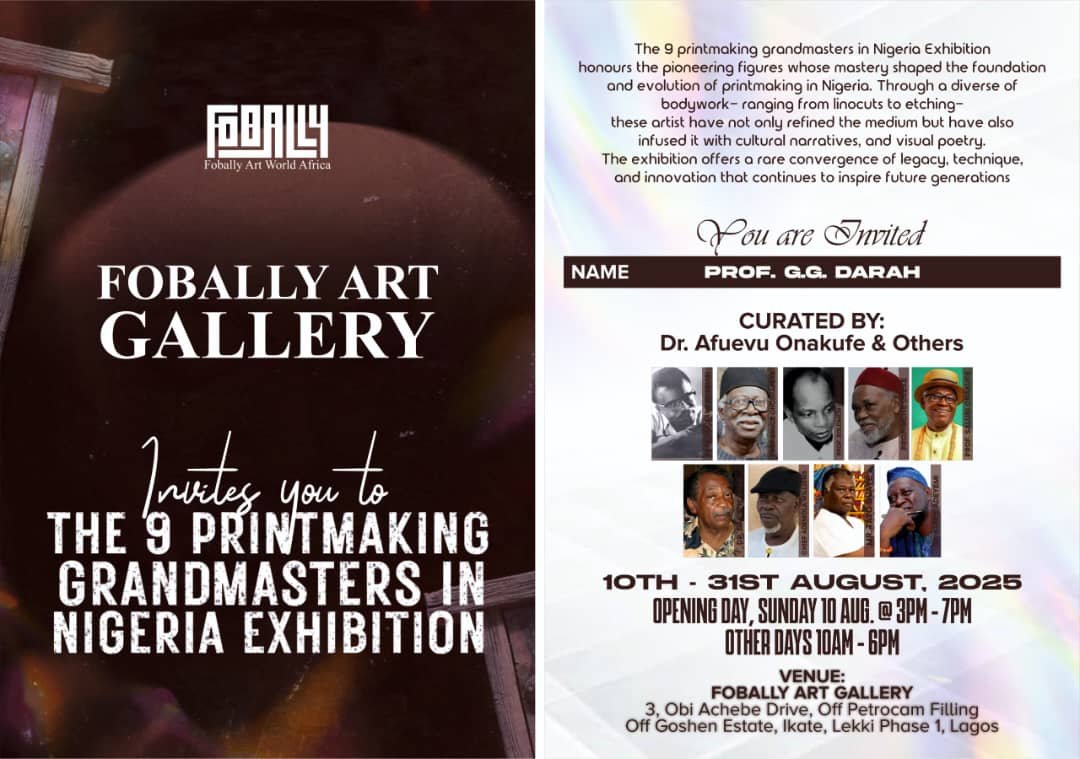
FOBALLY ARTWORLD AFRICA, LAGOS
9 Printmaking Grand Masters In Nigeria
EXHIBITION!
FOBALLY ARTWORLD AFRICA, LAGOS
presents
9 Printmaking Grand Masters In Nigeria
August 16- 31, 2025
10AM to 6PM Daily
T.A.L Board Visits Tom Adaba Legacy Center, Okene
Site Visit to Tom Adaba Legacy Center, Okene
By Glory Ize Isaiah
OKENE, KOGI STATE
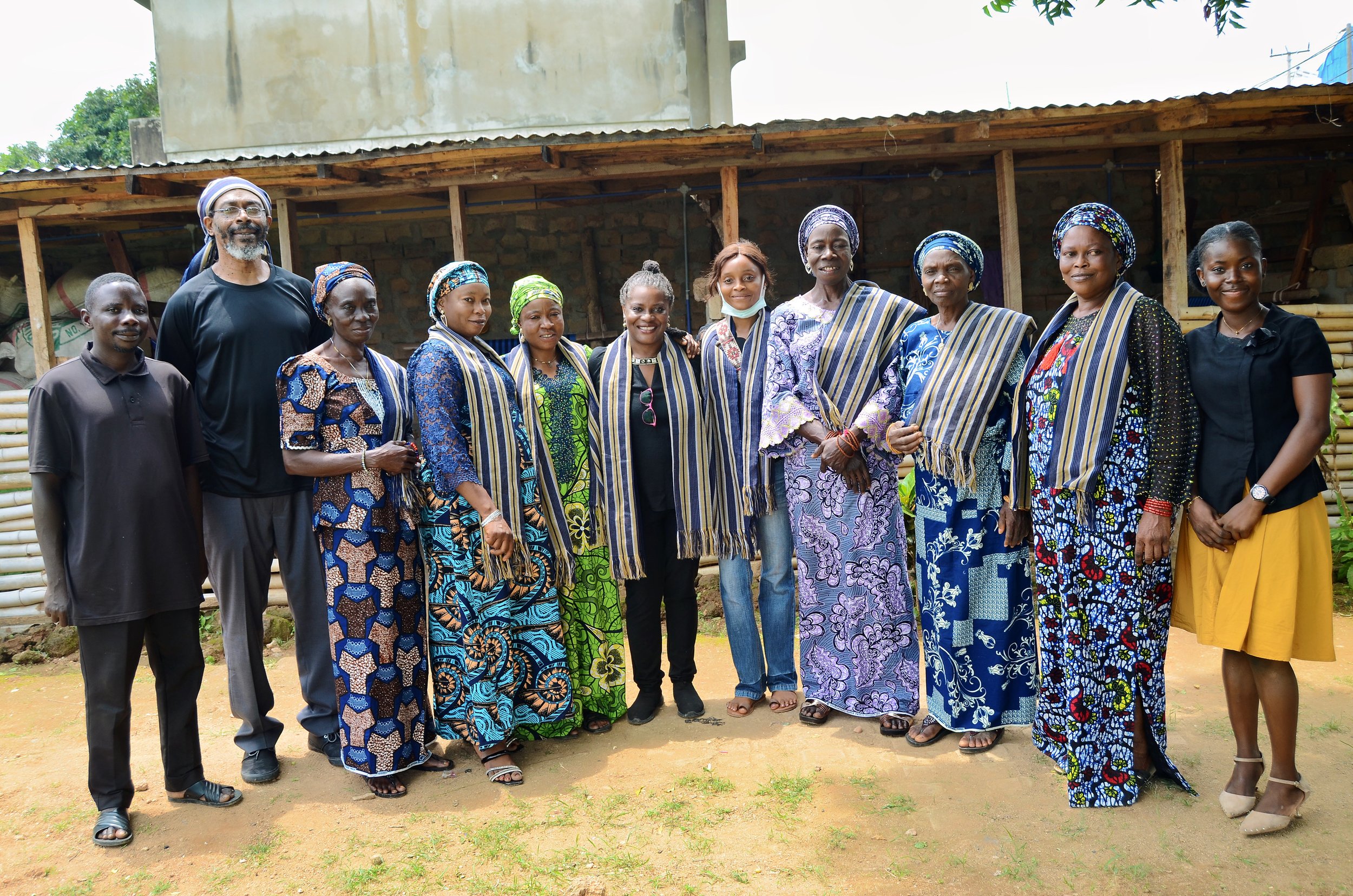
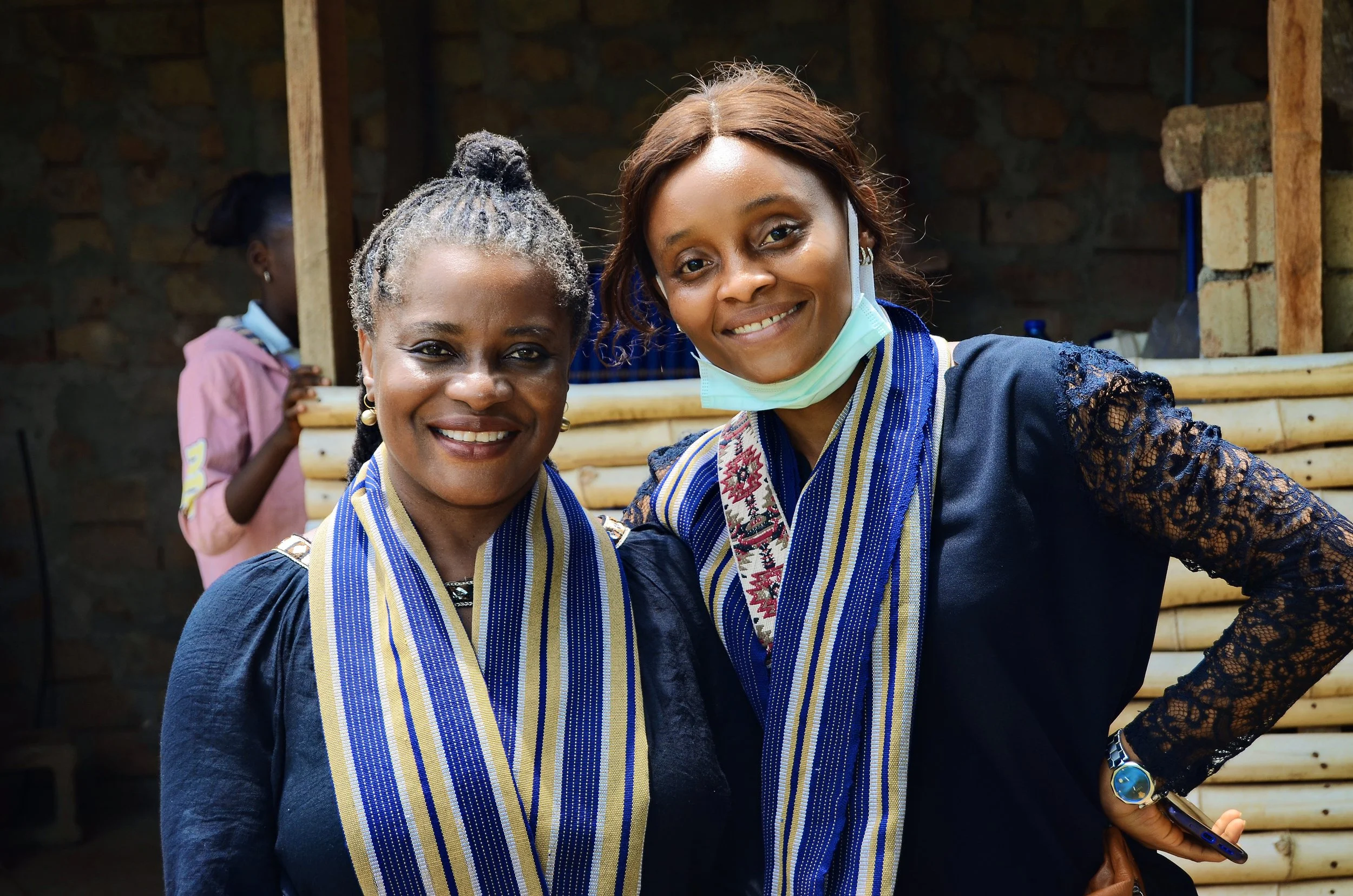
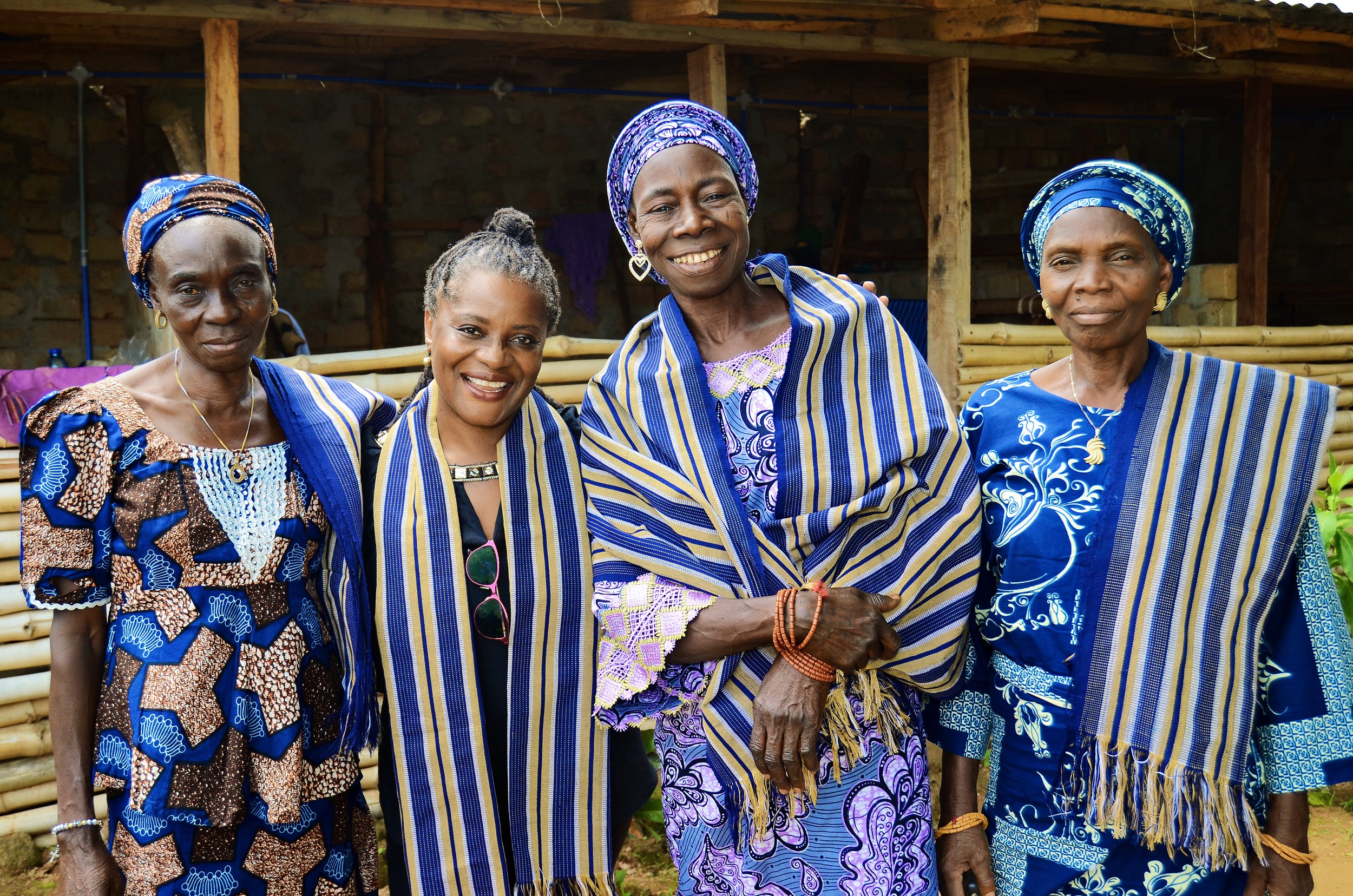
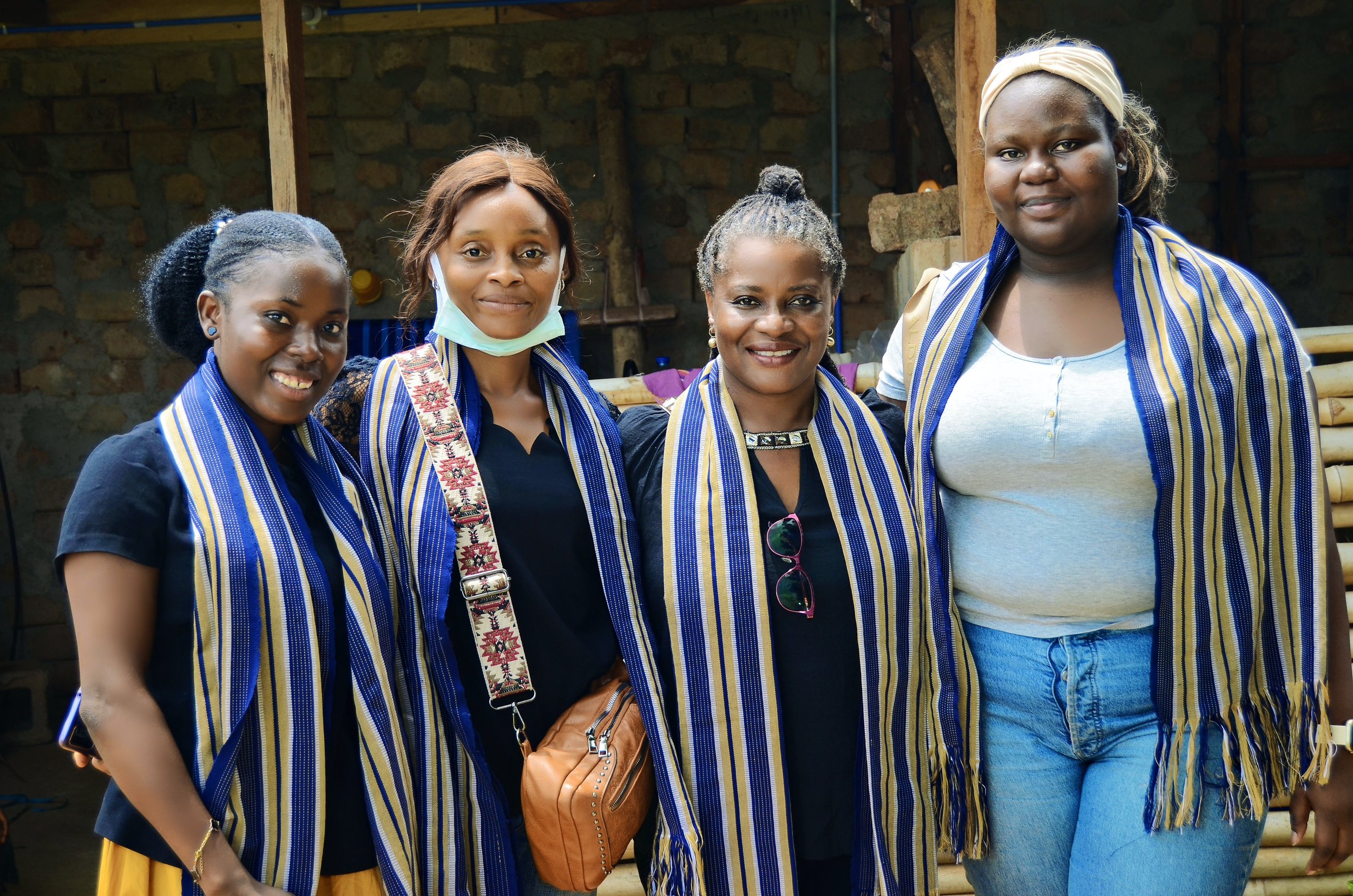
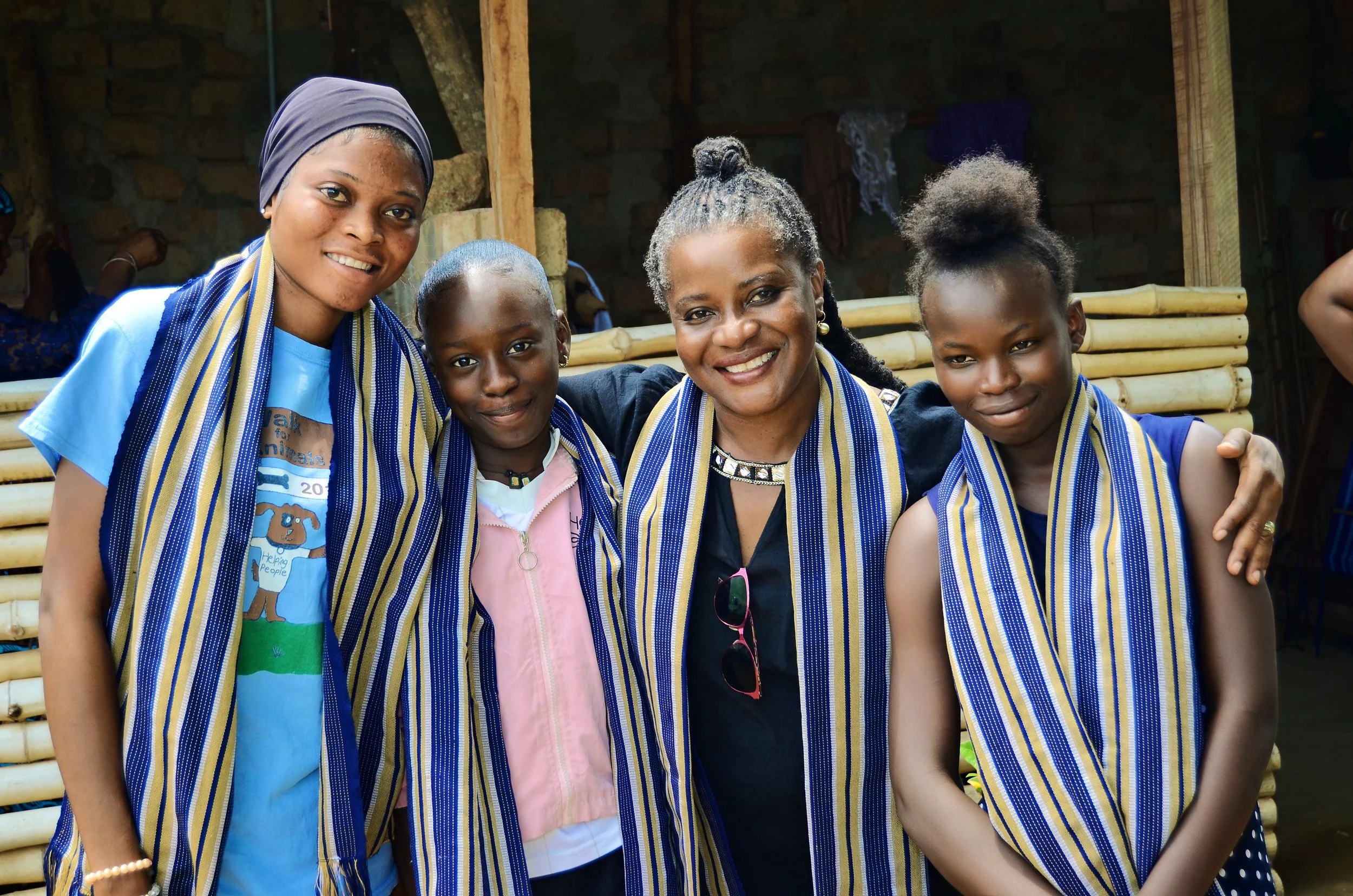
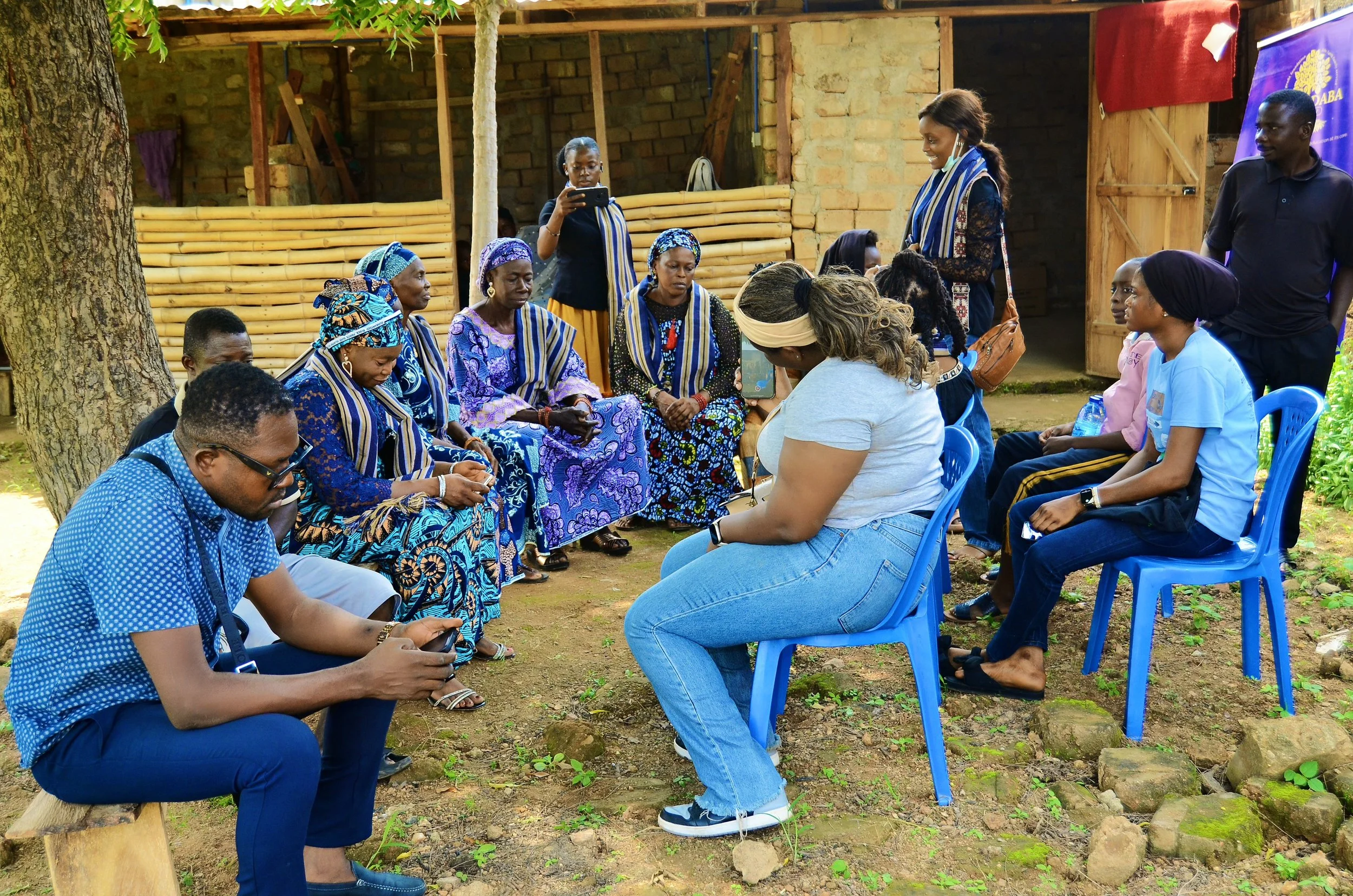
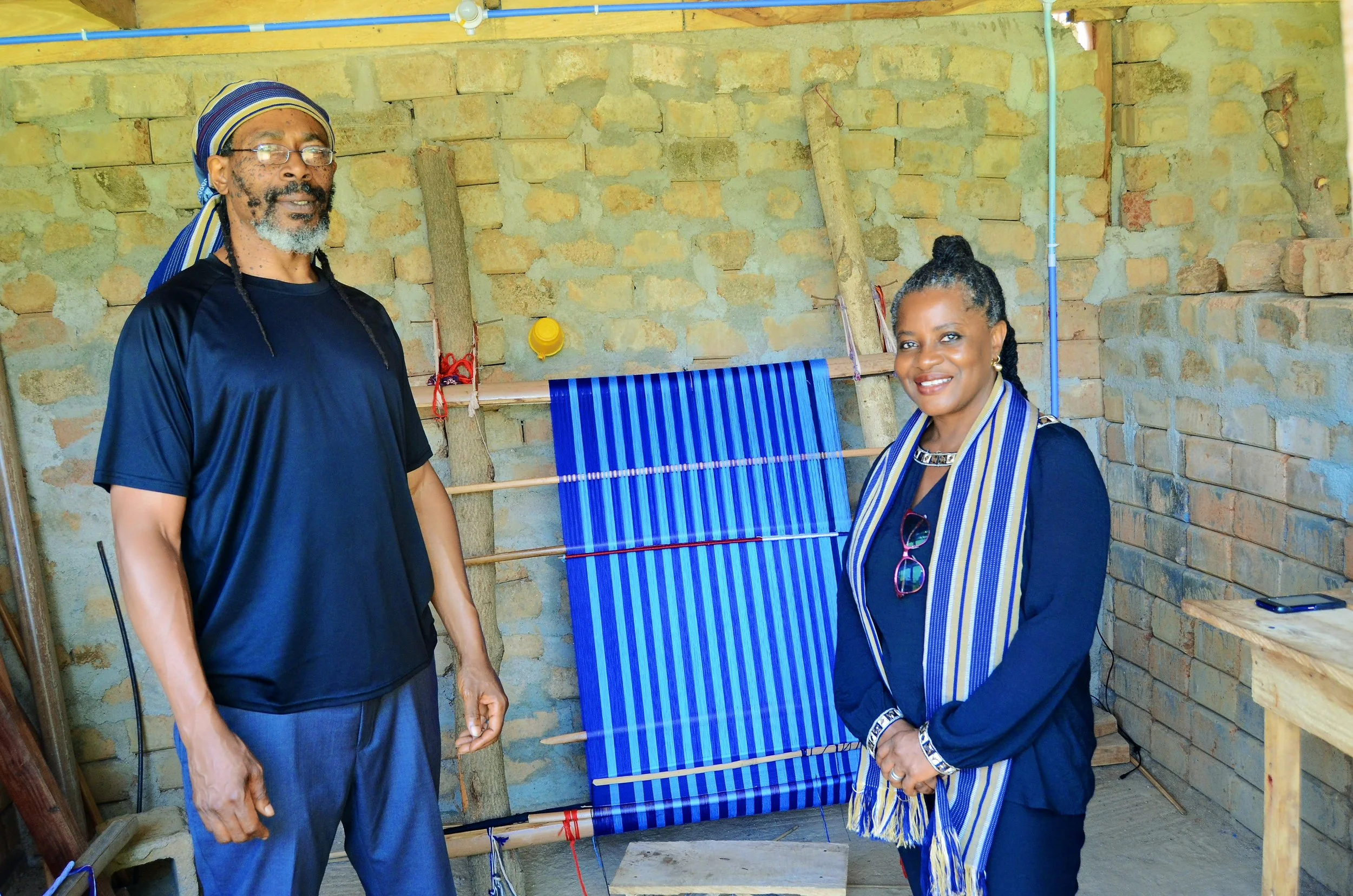
Group Photo of Tom Adaba Legacy Team and Ita’i Weavers during the site visit on July 25, 2025. (Photo by DrQuest/Africa-Related)
Project/Facility Name: Tom Adaba Legacy Center, Okene, Home of Itai’ Our Cloth
Date of Visit: Friday, July 25, 2025
Time: 10:00 AM
Location: T.A.L Center G.R.A Okene, Kogi State
Board Members of the Tom Adaba Legacy Foundation conducted a site visit to Okene, Kogi State. The purpose of the visit was to carry out an inspection and engagement tour of the Tom Adaba Legacy Center, evaluate the operations of Itai’ Our Cloth, interact with the weavers and apprentices, identify challenges and opportunities for scale, and strengthen stakeholder relations with the Tom Adaba Legacy board, including its Executive director and accompanying executives.
Attendees
Mrs. Oyiza Adaba-Okereke - Board President/ED Tom Adaba Legacy and CEO - Itai Our Cloth
Mr. Maurice Okereke - Tom Adaba Legacy (Community Initiatives) /Founder, Words By MOE
Mrs. Rosemary Onubaiye - Country Director Ita’i Our Cloth
Members of the Tom Adaba Legacy Foundation
Weavers’ Coordinators
Community Weavers & Apprentices
Media Personnels
And other Staff
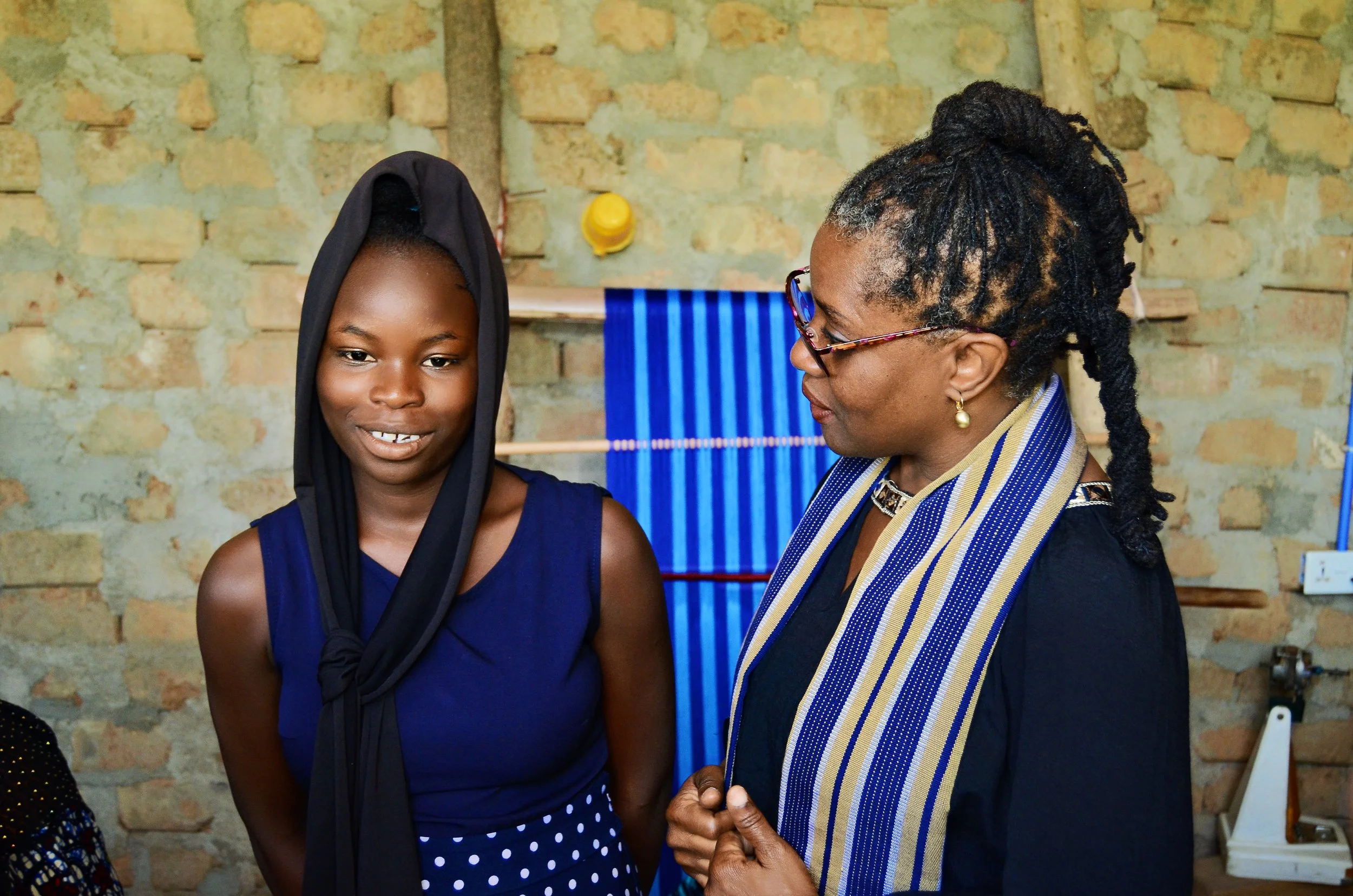
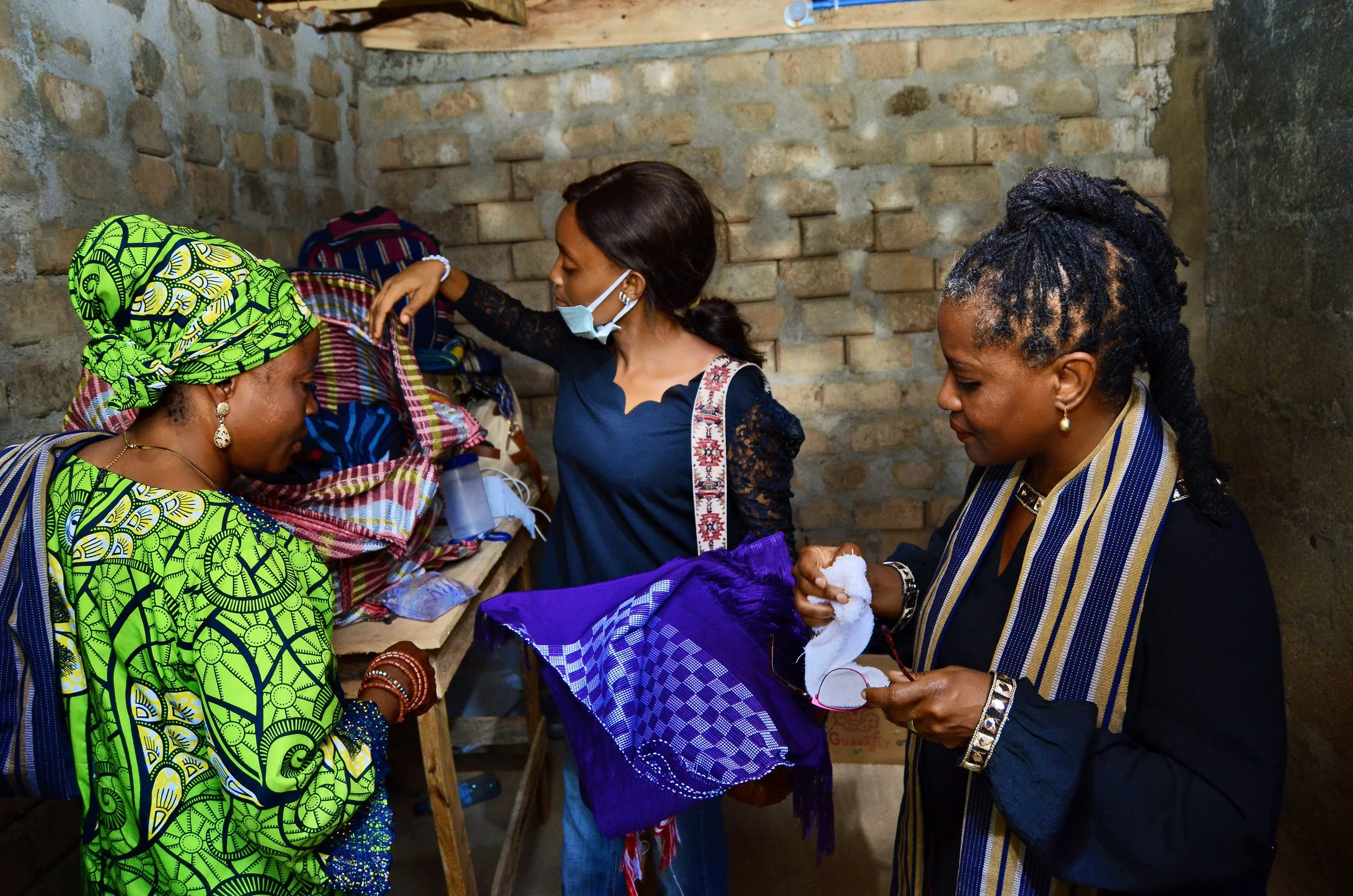
Visit Narrative & Key Highlights
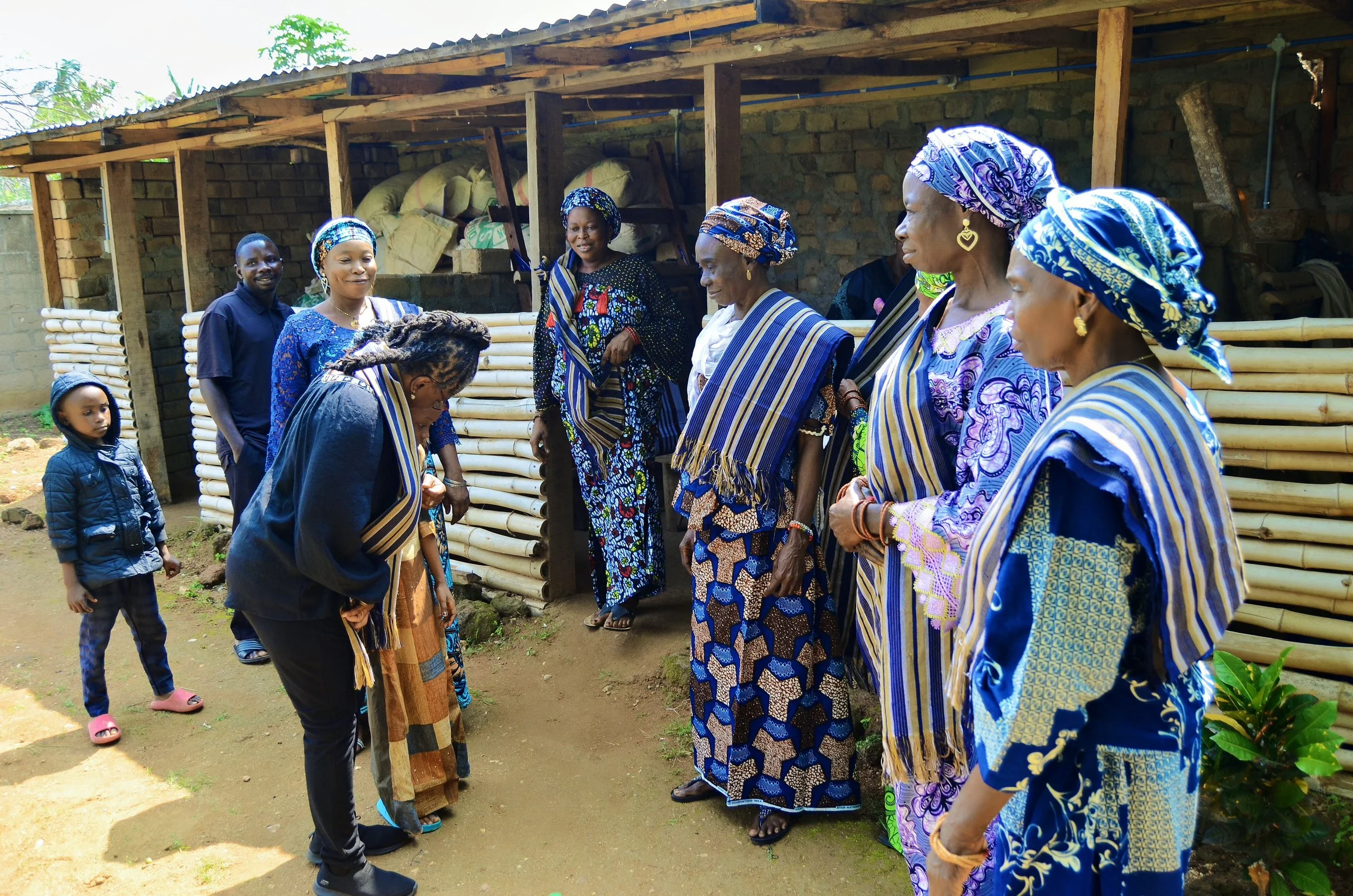
The official site visitation commenced at 10:00 AM on Friday, July 25, 2025. The Board President and Executive Director of Tom Adaba Legacy Foundation arrived in the company of her husband and board members. The atmosphere at the facility was electrifying as the women weavers, visibly overjoyed, welcomed the team with songs and dances in their local dialect, a heartfelt expression of gratitude and excitement.
The Executive Director responded warmly, asking after each woman's welfare and inquiring about their families. Led by the Country Director and the Weavers’ Coordinators, the women took the E.D and her team on a guided tour of the center, showing the facility and ongoing work.
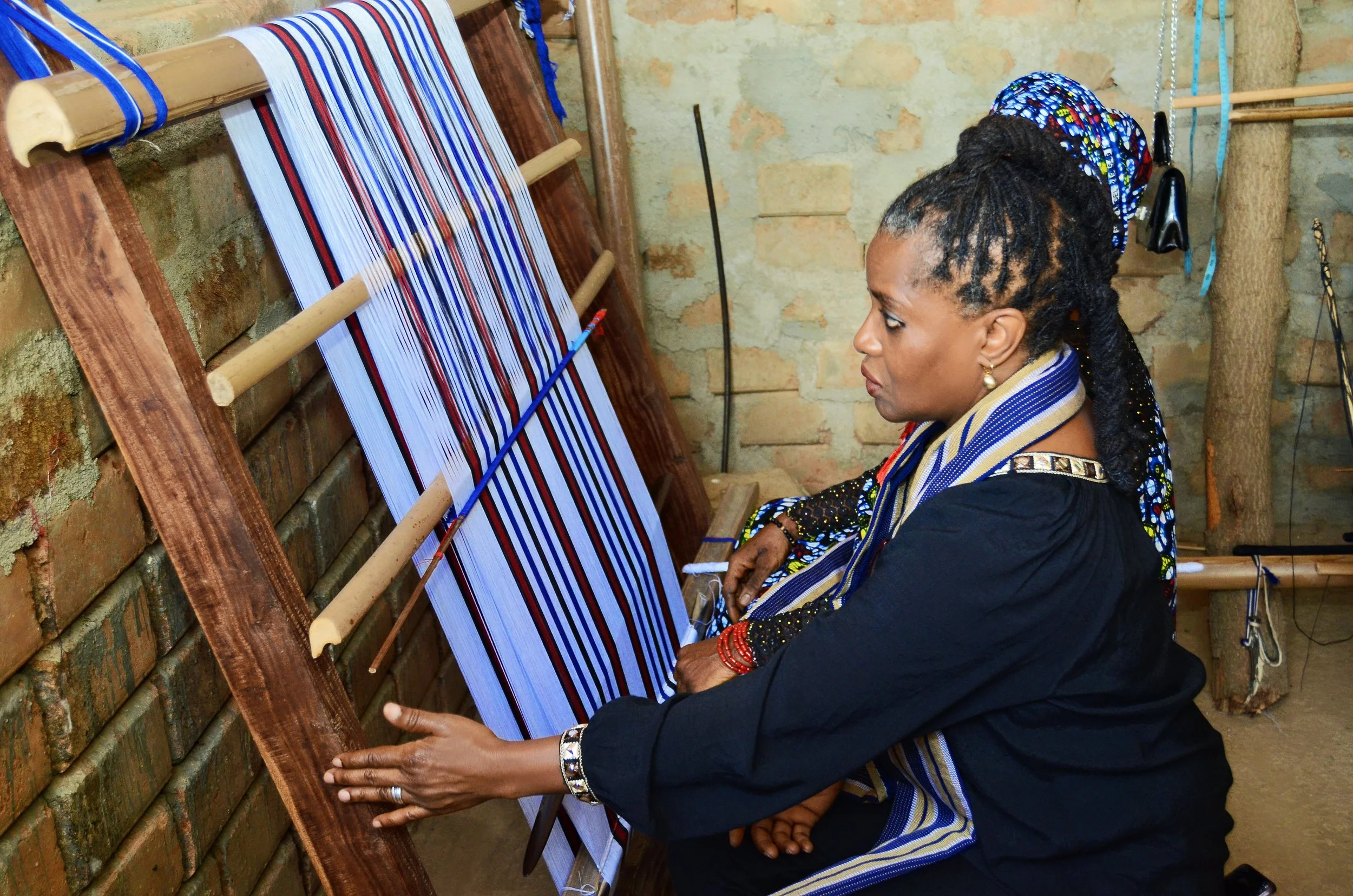
The weavers, excited by the presence of the leadership team, quickly resumed their craft while the Executive Director observed them at work. Demonstrating deep interest and solidarity, she sat beside them, learned the basics of weaving, and participated in the process, showing humility and respect for their skill.
Mrs. Adaba-Okereke later engaged in deep, sincere conversations with the young apprentices who are currently undergoing training in weaving. They expressed how learning this trade has shifted their perspectives on life, offering them not just a skill, but a path toward independence and self-determination. However, they also raised concerns: the tradition of weaving is slowly fading, with fewer young people interested in carrying it on. They voiced hope that more efforts would be made to preserve and promote the craft, particularly among youth.
In response to questions about their future aspirations, several young women expressed their desire to pursue higher education and use weaving as a means to support themselves and their families financially while in school.
A particularly emotional moment came during a conversation with an older woman who demonstrated the rare and laborious art of spinning cotton into yarn by hand, a nearly extinct skill in today’s world. The woman explained the intricate process and how the younger generation often lacks interest in learning it. Acknowledging this, the Executive Director stressed the need for machinery to support scaling operations, noting that such investment could provide technical jobs, increase production, and bring long-term sustainability. She emphasized that cotton processed locally, such as from the Tom Adaba Legacy Foundation Farms in Gwagwalada and Osara, can contribute significantly to national and continental development.
Mrs Oyiza Adaba-Okereke maintained that the Center remains committed to training more youths, particularly young girls, equipping them with both cultural knowledge and economic empowerment through weaving.
She was visibly moved by the work being done and expressed deep admiration for the weavers’ dedication. She commended the women for leveraging their skills, even in the absence of formal education, to support their families, educate their children, and preserve a vital part of the Ebira cultural identity.
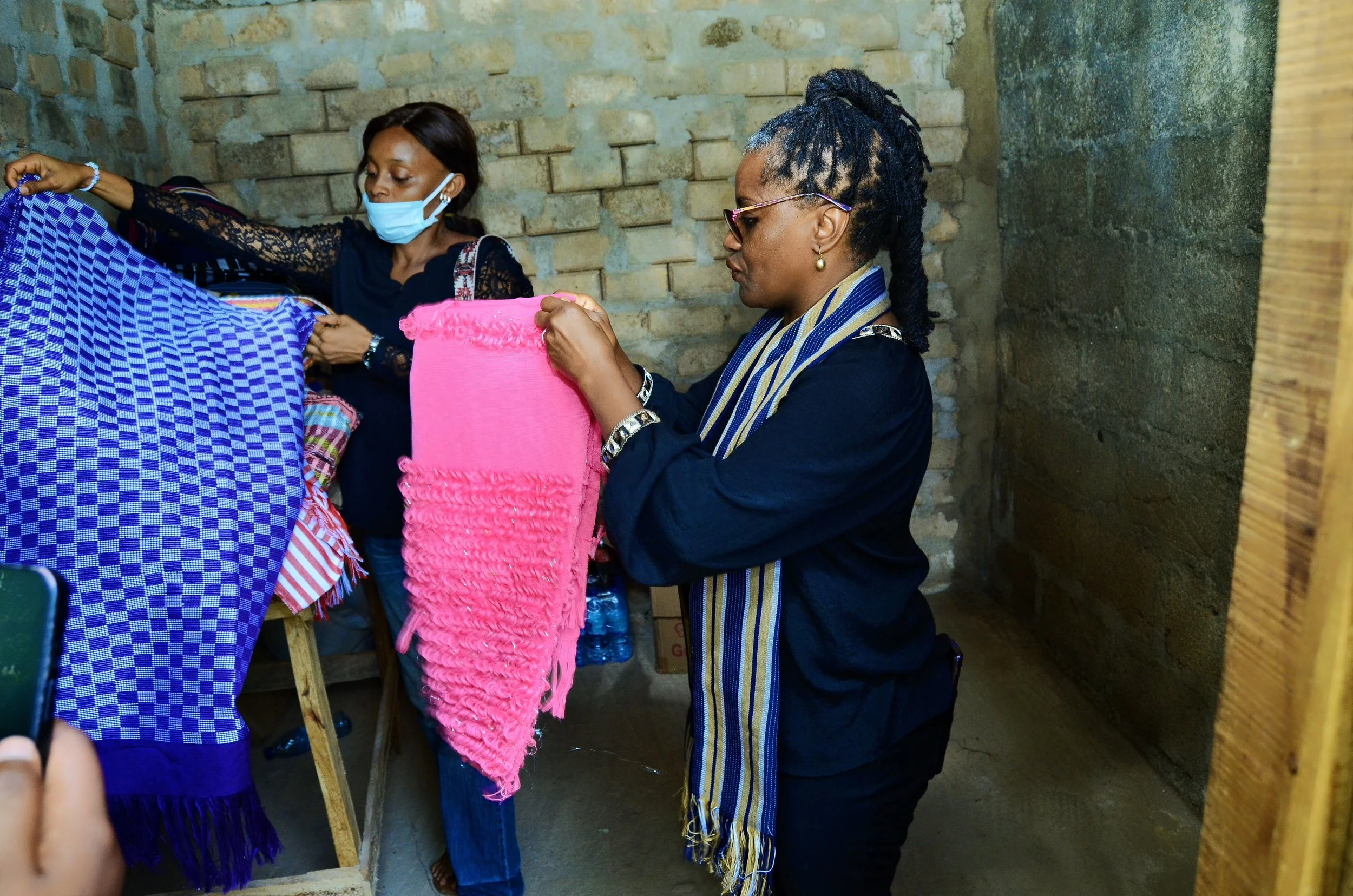
The visit culminated in a display of beautifully woven cloths, showcasing the weavers’ incredible craftsmanship. The team was deeply impressed by the quality and intricacy of the works presented.
Finally, an open forum was held, giving the women a platform to share their struggles, celebrate their wins, and brainstorm collaboratively on how to take the organisation’s vision to the next level, strategies for market value, and how to make sure that in telling our unique African story, the culture is not lost in sharing.
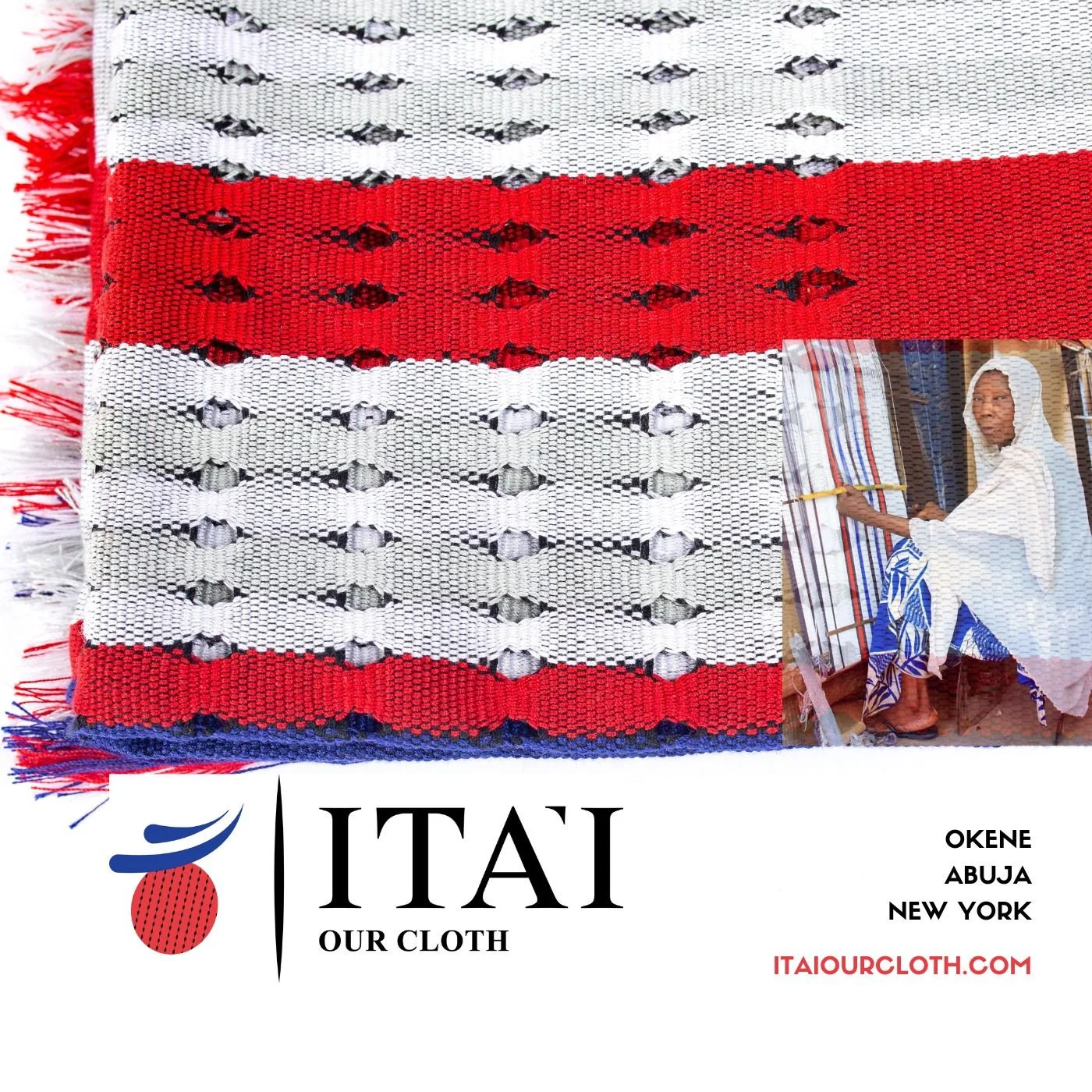
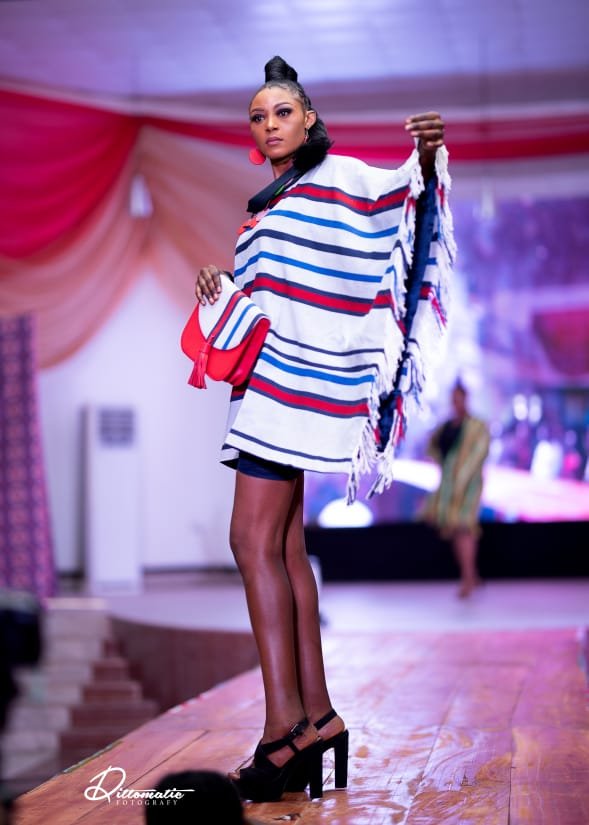
Vision for Global Scale & Market Impact
The ED made it clear: This is not just about the cloth. This is about telling a generational story, celebrating the resilience and brilliance of Ebira women, and positioning their work on the global cultural and commercial map.
She emphasized that the goal is to scale the Itai Cloth brand globally, not just for decorative or tourist appeal, but as a luxury heritage product that commands attention, respect, and value in international markets. These woven pieces are wearable history, textile testimonies, and economic vehicles. She spoke about attracting new markets, partnering with international brands and diaspora communities, and using the craft as a tool to reclaim and project indigenous identity with pride.
“We are not just weaving. We are building a cultural economy. We want the world to wear our story. We want our women’s legacy to be seen on runways, in boardrooms, and on global stages. This culture has been ours for decades. It’s time the world saw it, valued it, and paid for it.”
This vision goes beyond production. It encompasses:
Exporting products under a globally recognized Ita’i Our Cloth label
Building brand collaborations that center African textile heritage
Creating digital storytelling platforms for each weaver's narrative
Generating revenue that flows directly into the hands of the creators
Facility Condition & Need for Support
The current facility structure is makeshift and temporary, lacking the solid infrastructure needed for a center of this scale and vision. Despite this, the women have continued to produce excellent work, an inspiring testament to their commitment and resilience.
However, the need for a permanent, well-equipped weaving hub was evident throughout the visit.
Support and partnerships are urgently needed, to provide machinery for cotton processing and weaving, improve infrastructure, fund training programs, enhance market access, and scale production sustainably. Strategic collaborations with private sector partners, government agencies, cultural institutions, and global allies will be critical in turning this bold vision into a living, thriving reality.
Key Observations
The weaving center is a powerful model for economic and cultural empowerment.
There’s an urgent need to introduce technology to certain aspects of cloth production (especially yarn spinning) to meet growing demand and ensure sustainability.
A gap remains in attracting young people into the weaving trade, this presents a risk to cultural continuity.
The community has strong emotional and cultural ties to the craft, and preserving it will require intentional efforts across education, policy, and entrepreneurship.
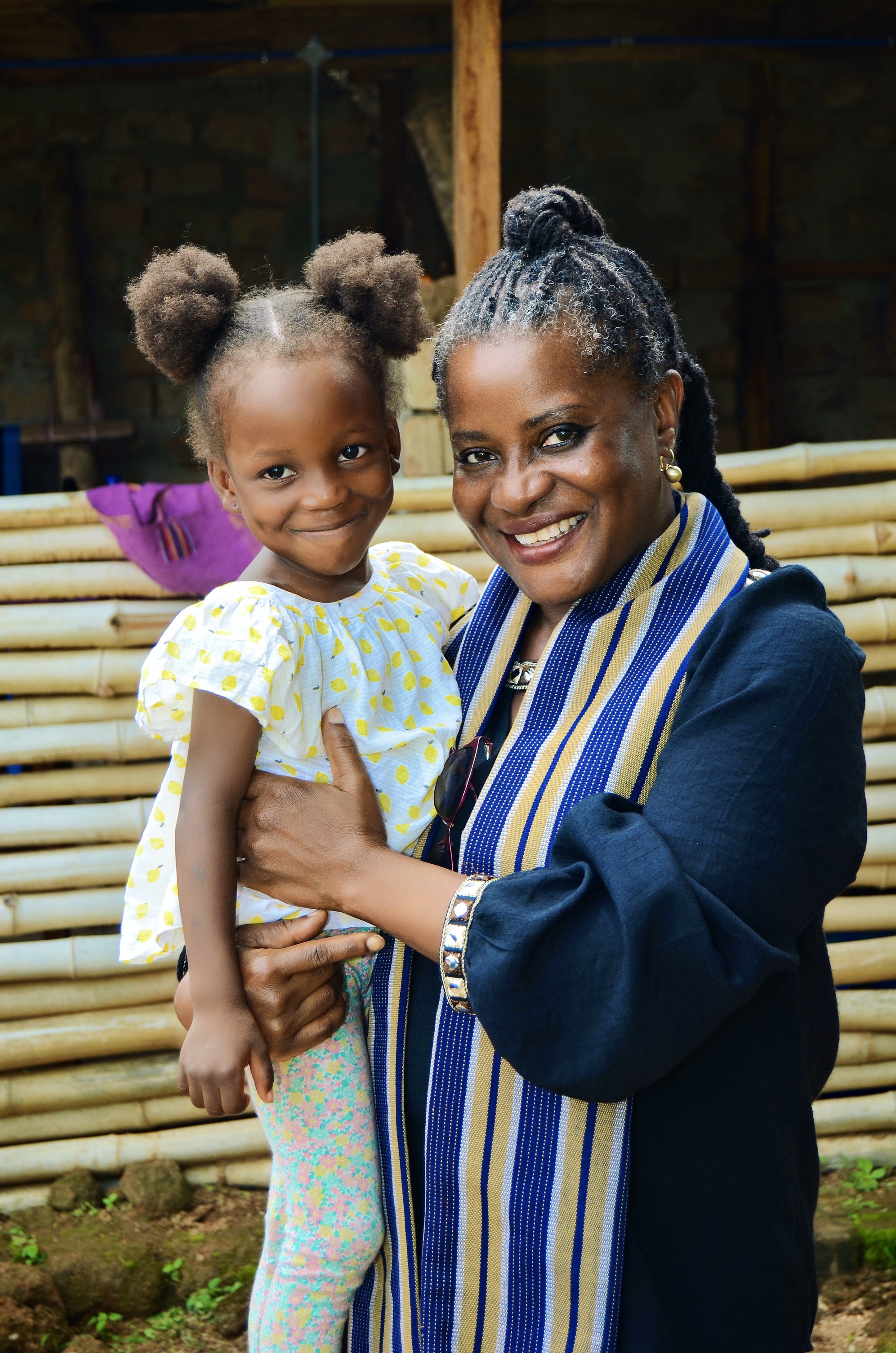
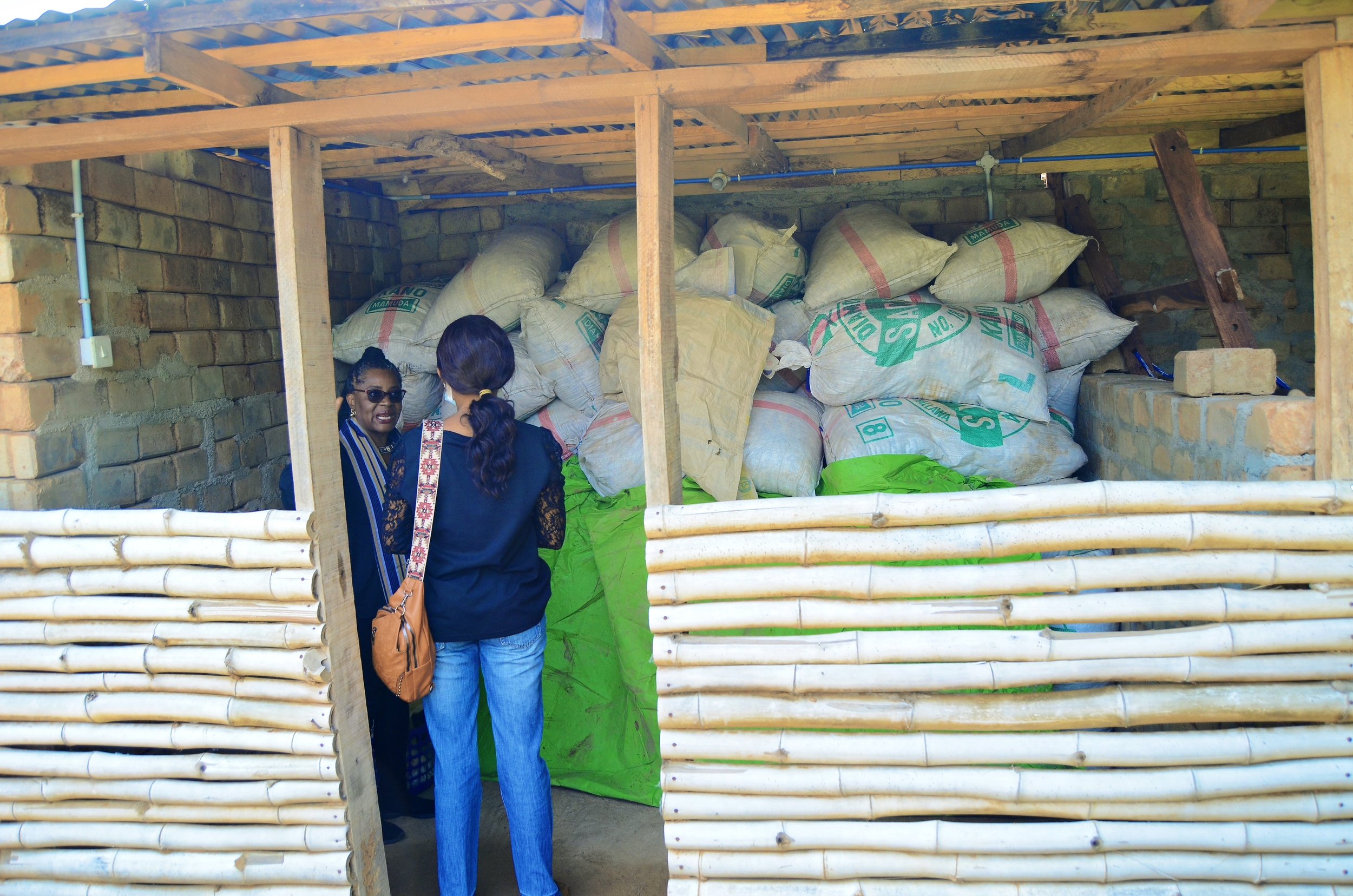
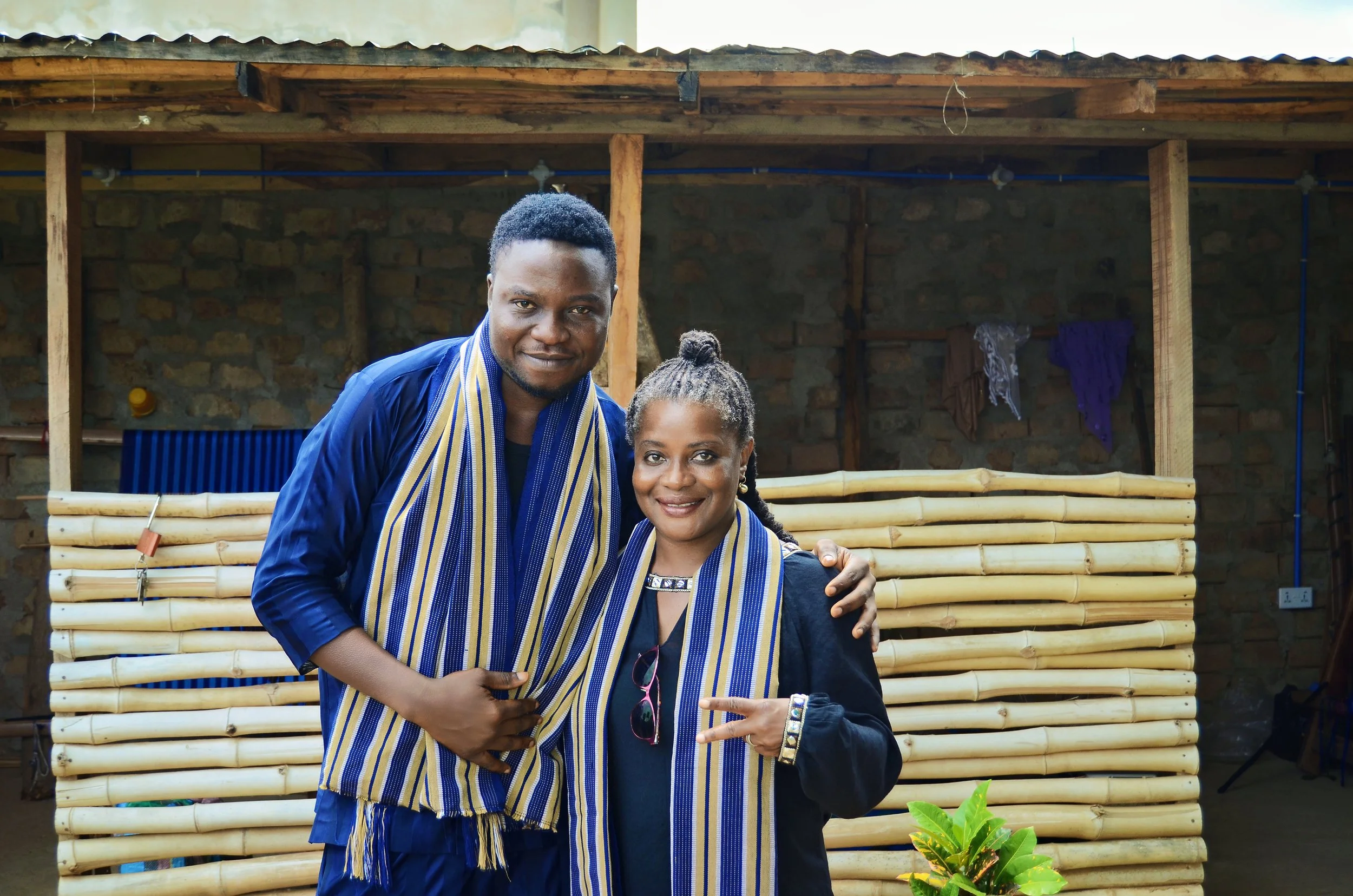
PHOTO HIGHLIGHTS : DRQuest/Africa-Related
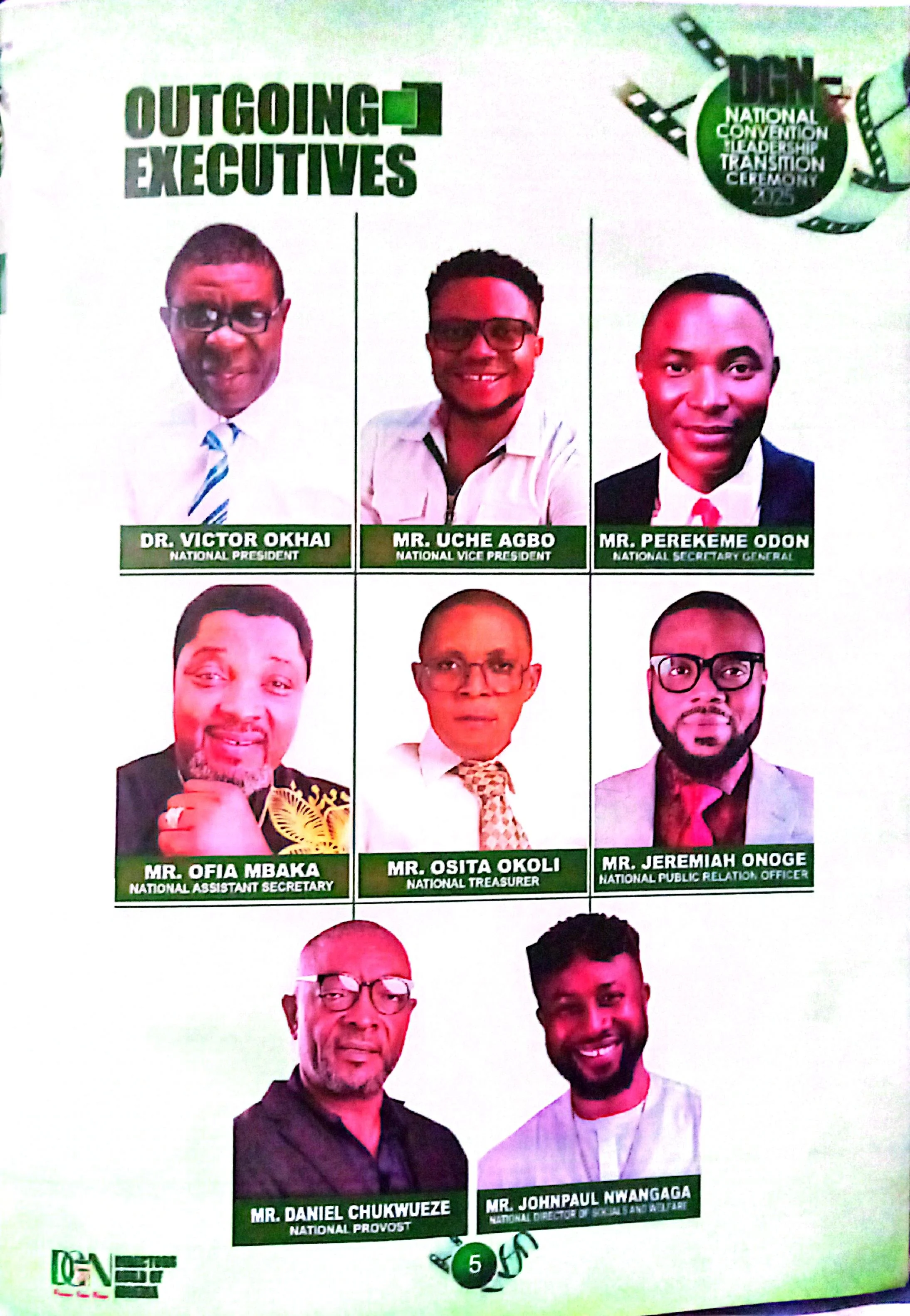
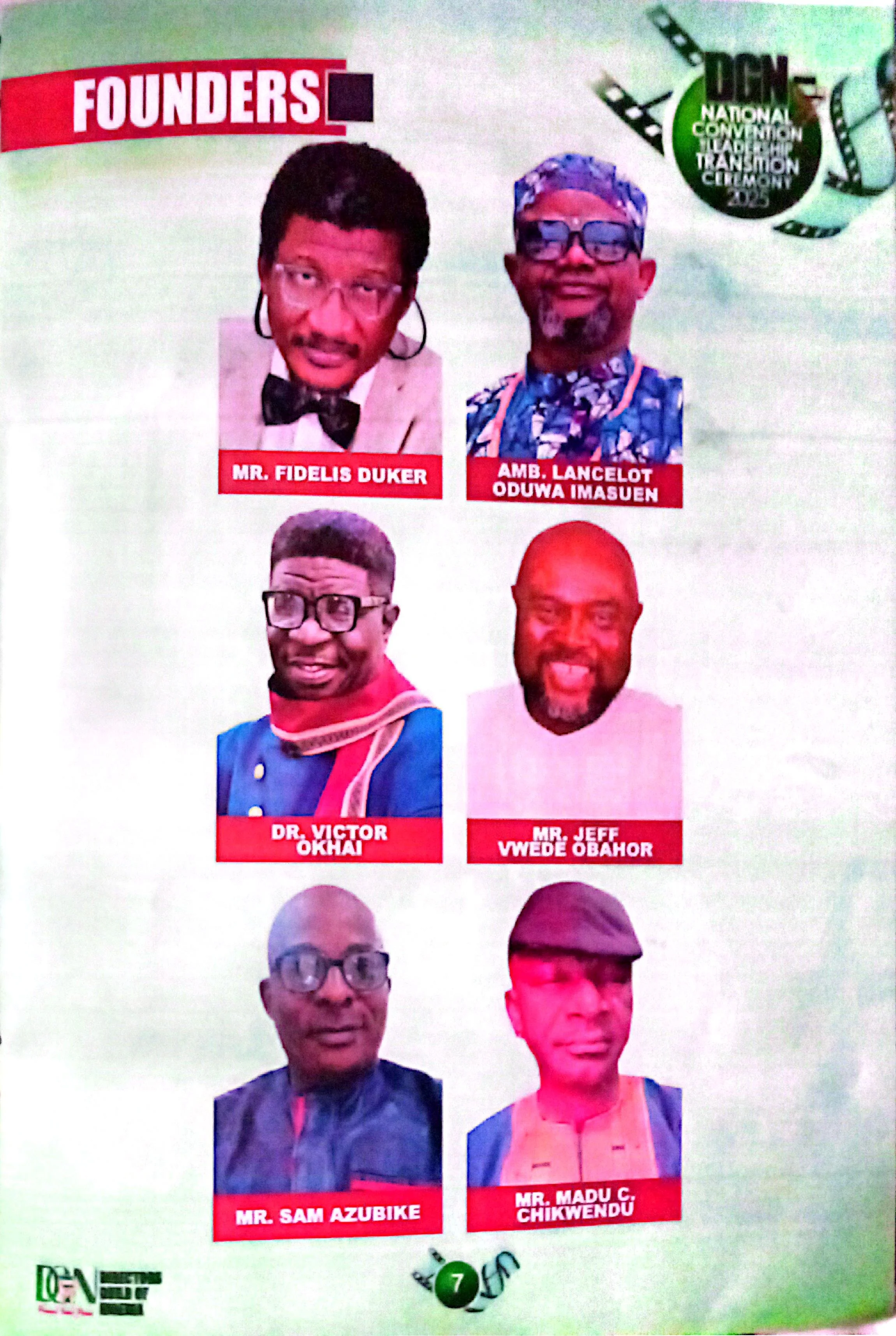
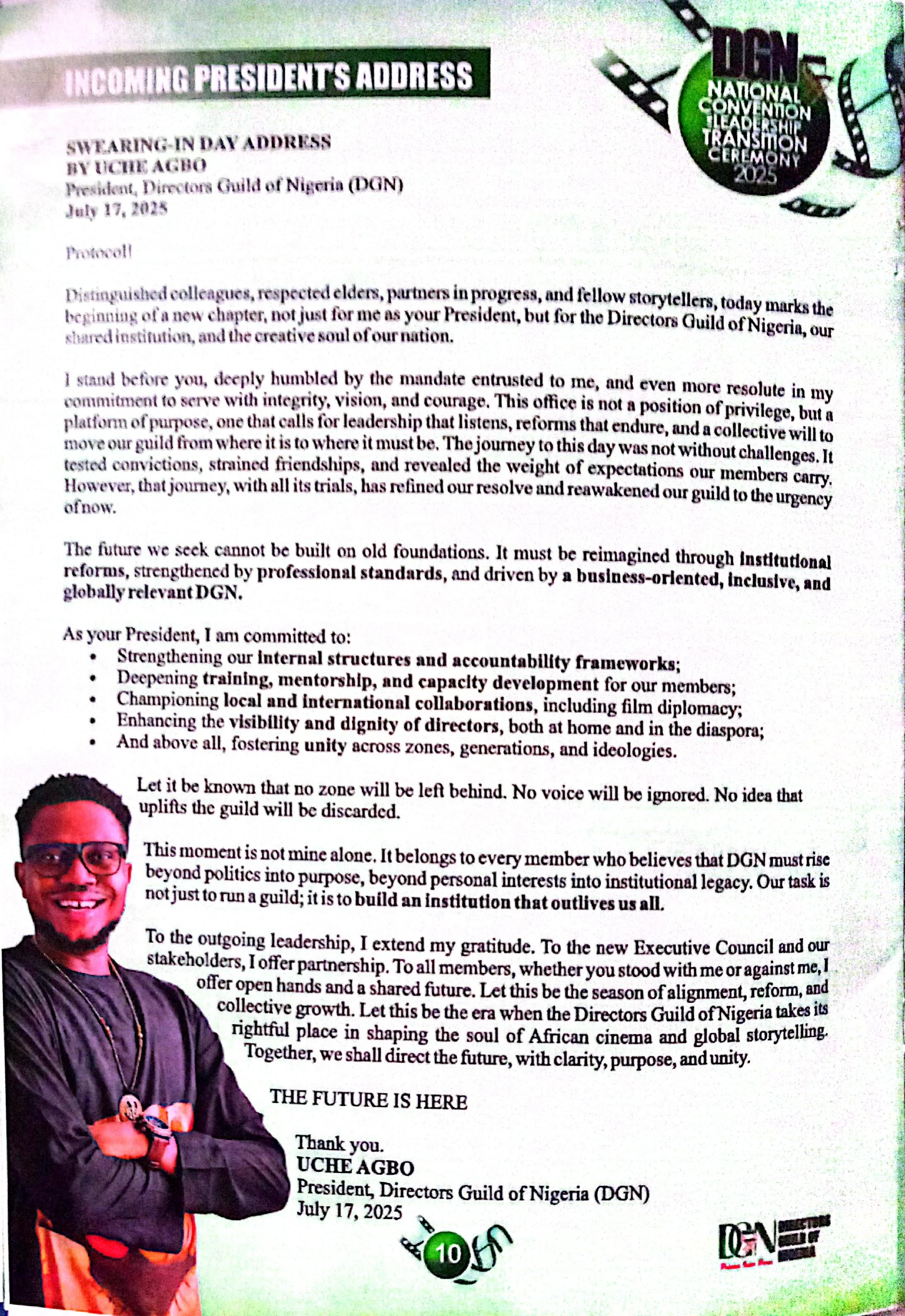
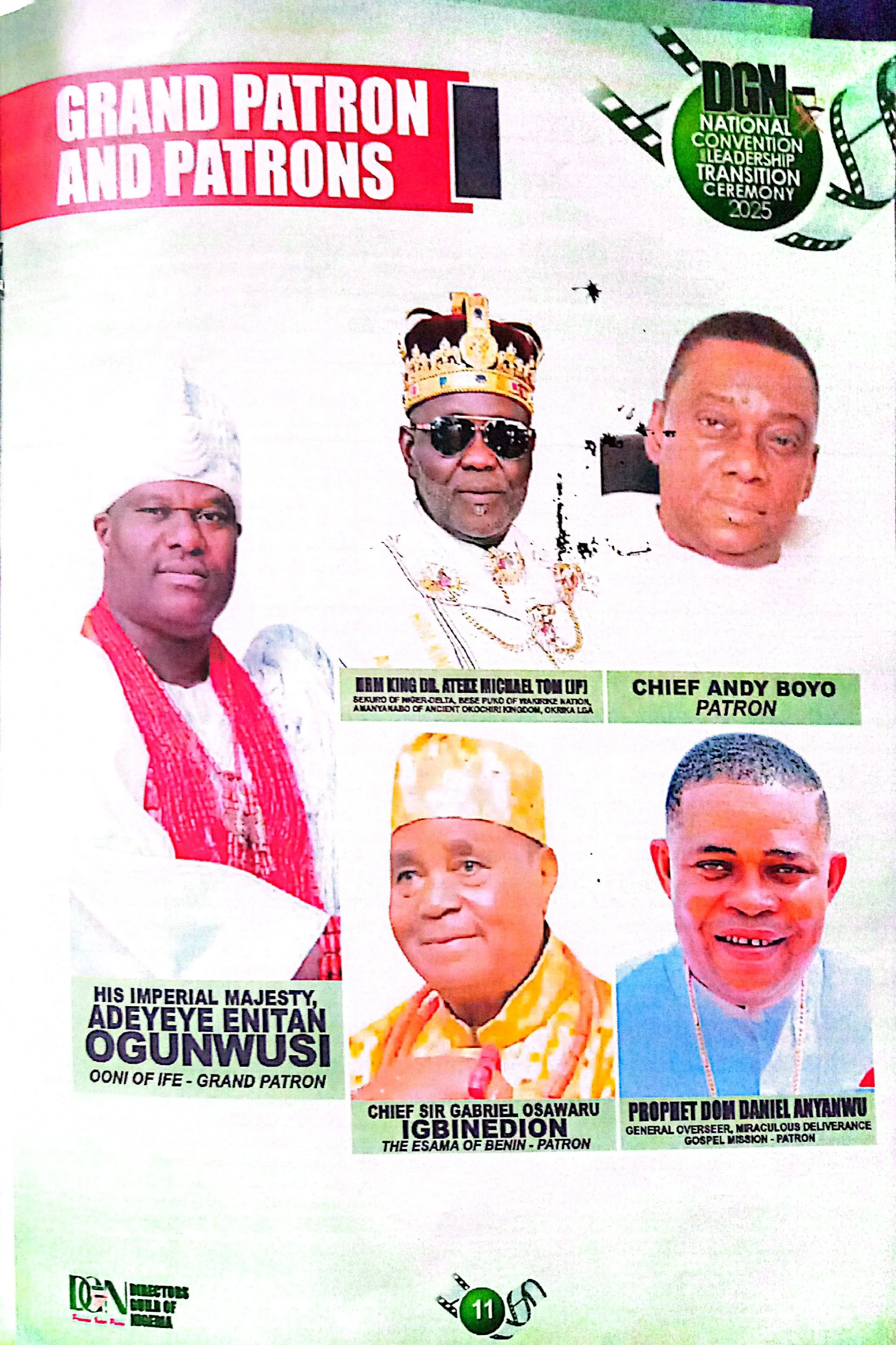
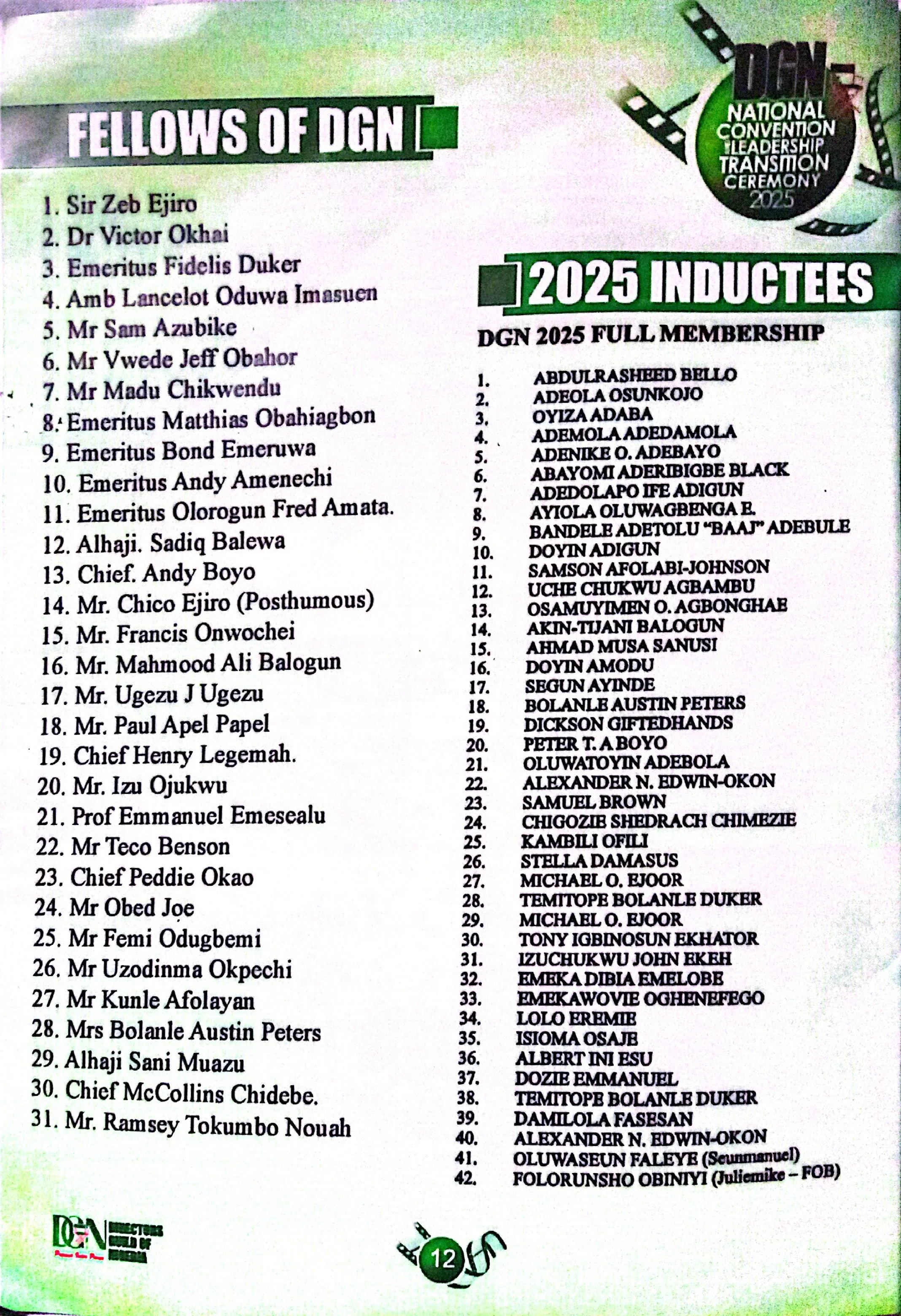
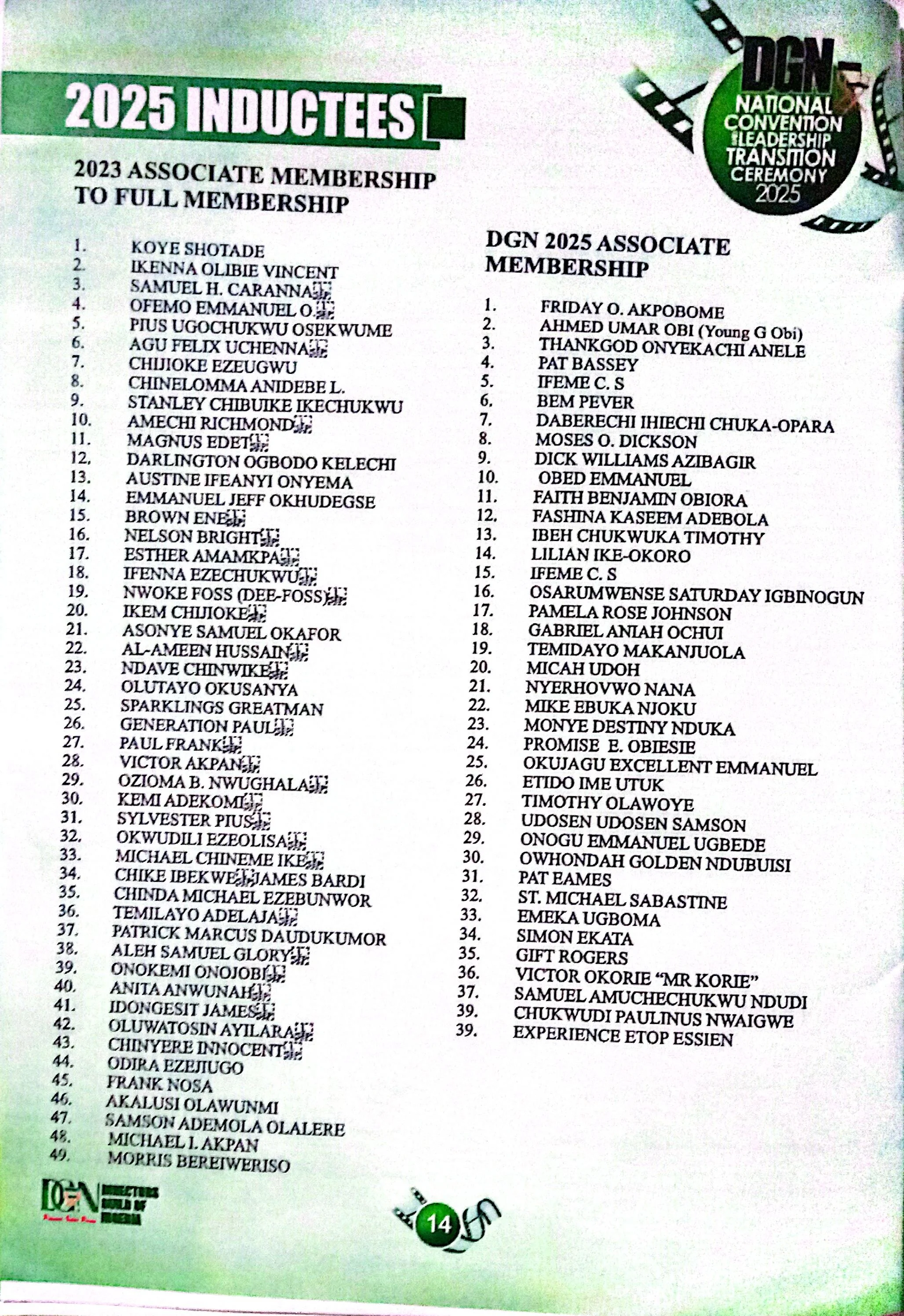
Inside DGN Induction Ceremony 2025
DGN Induction Ceremony 2025
By Isaac Akatah - LAgos, NIgeria
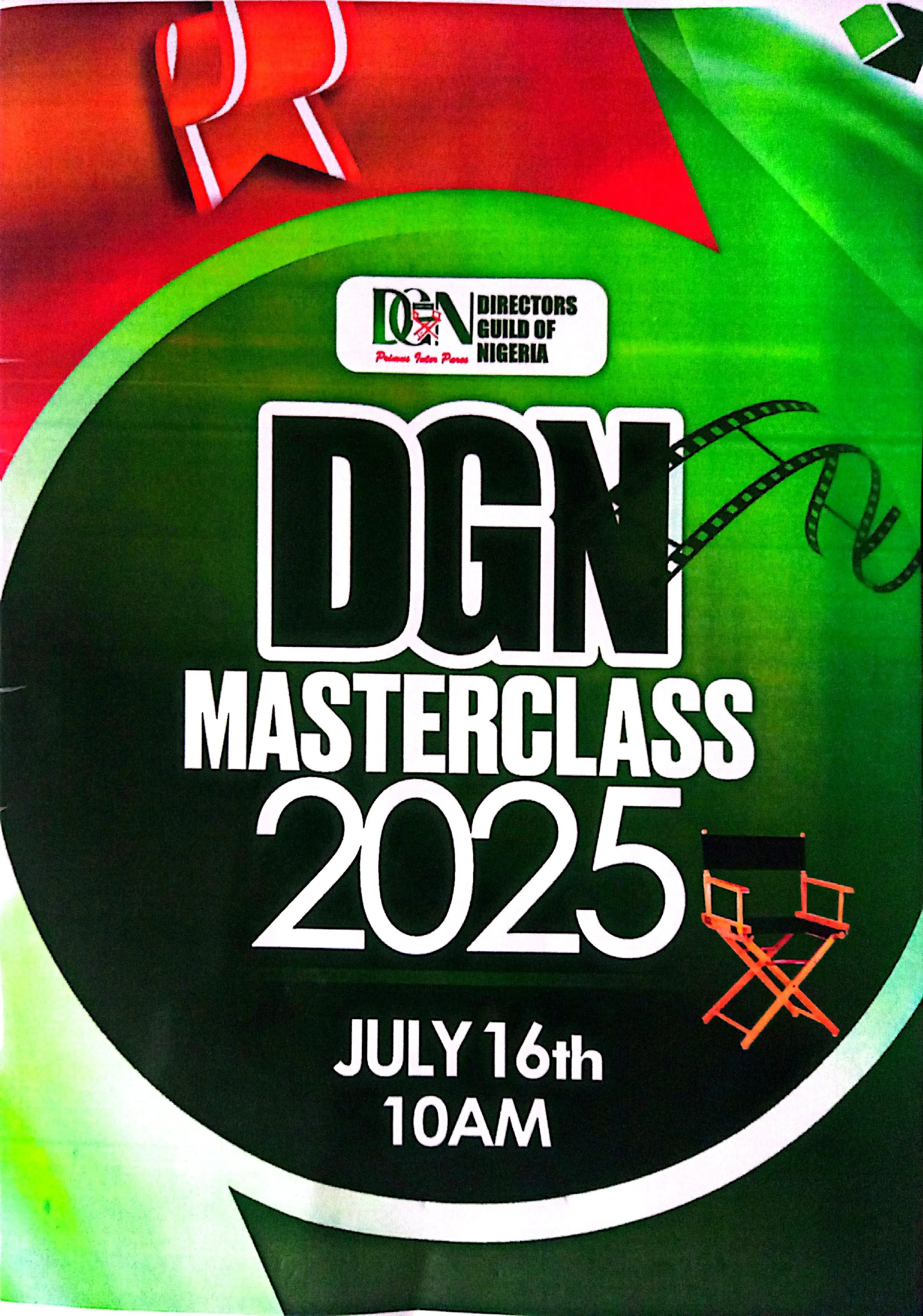
Directors’ Guild of Nigeria (DGN) recently held its annual convention, handing over and formal induction ceremony at Ojez Hotel, Surulere, Lagos State on Wednesday, 16th and Thursday, 17th July 2025
The induction process featured a comprehensive Masterclass on the first day, where veterans in film production like Chief Andy Boyo, took the new inductees through an orientation session, focused on the Guild’s structure, operations, and key initiatives.
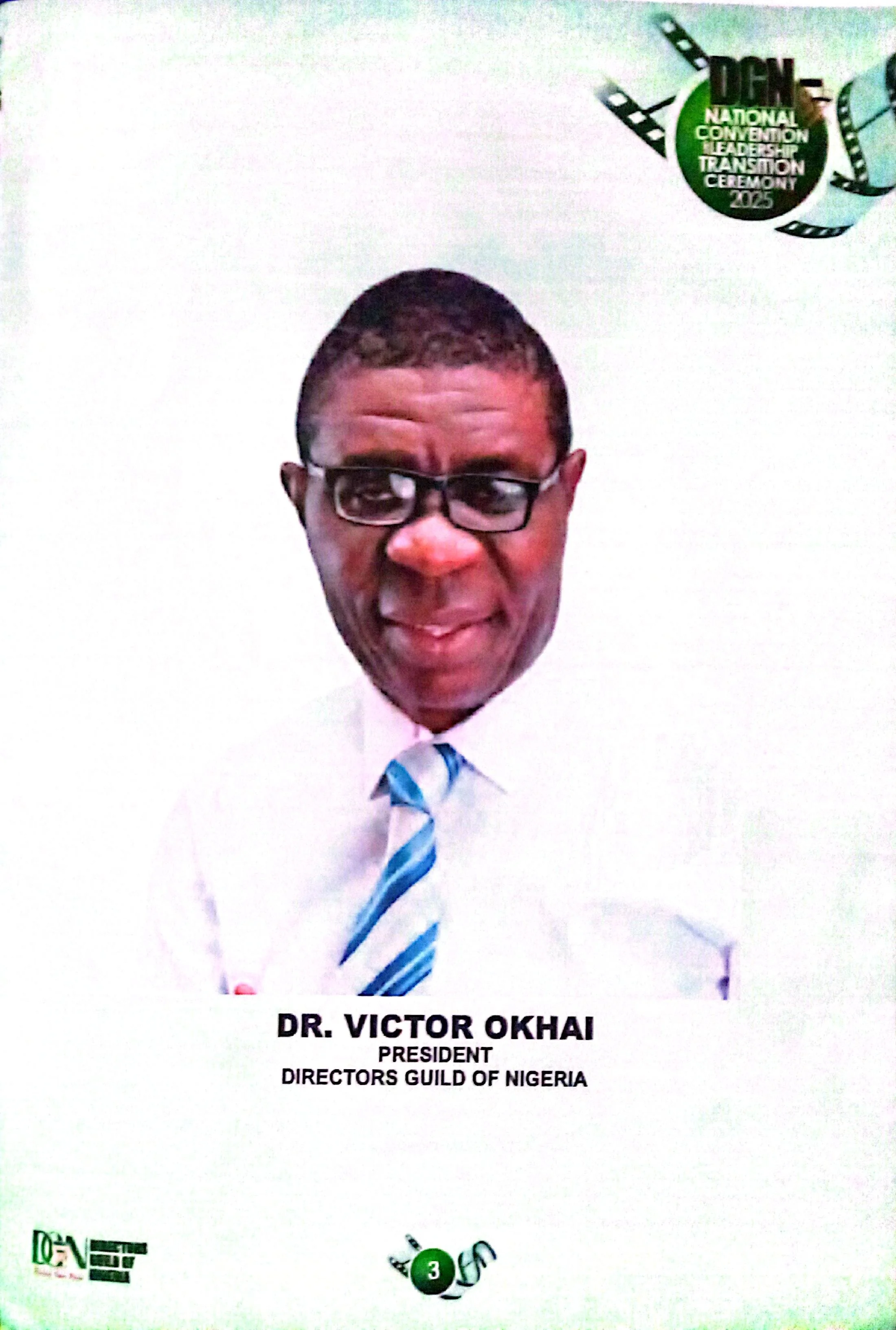
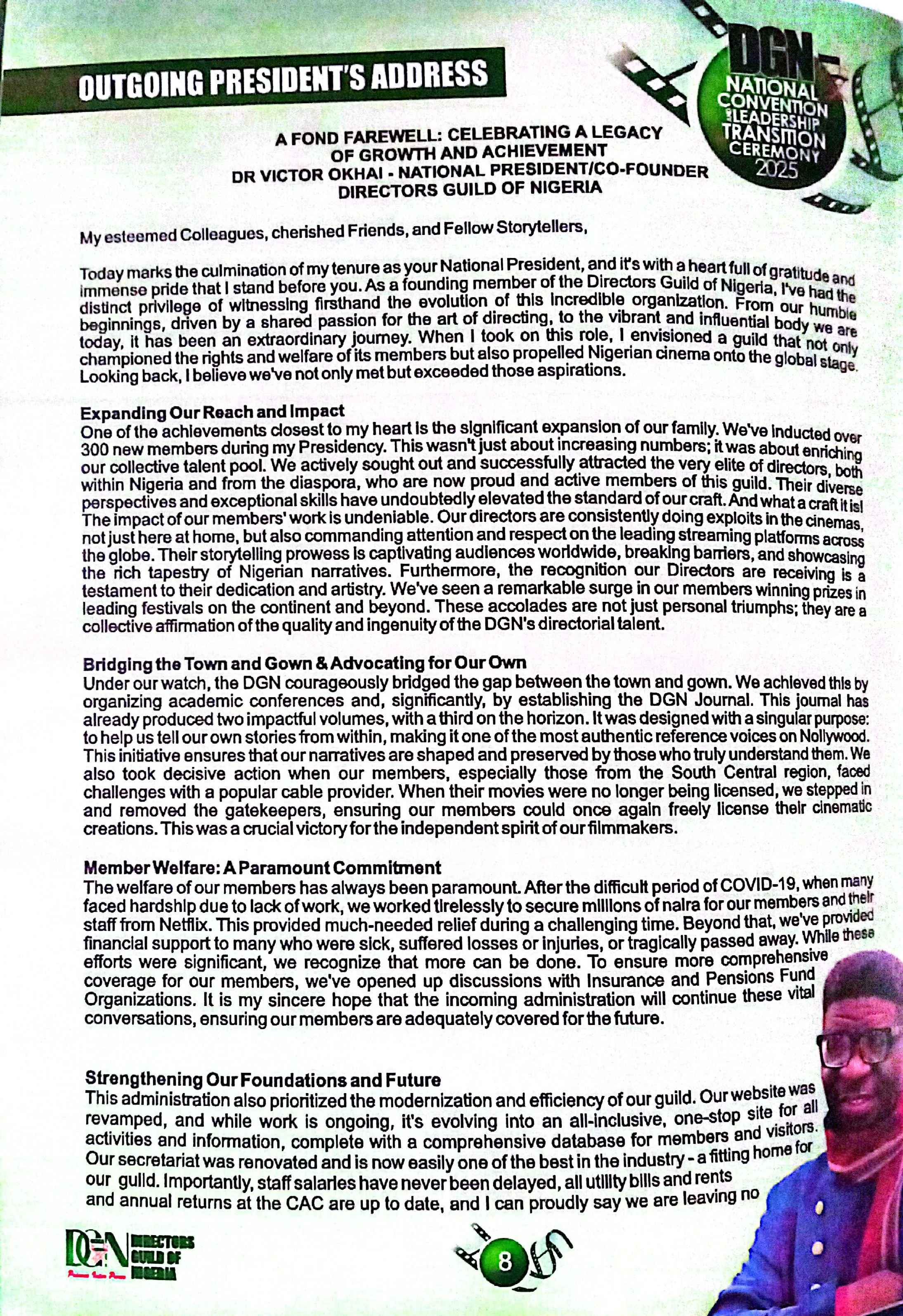
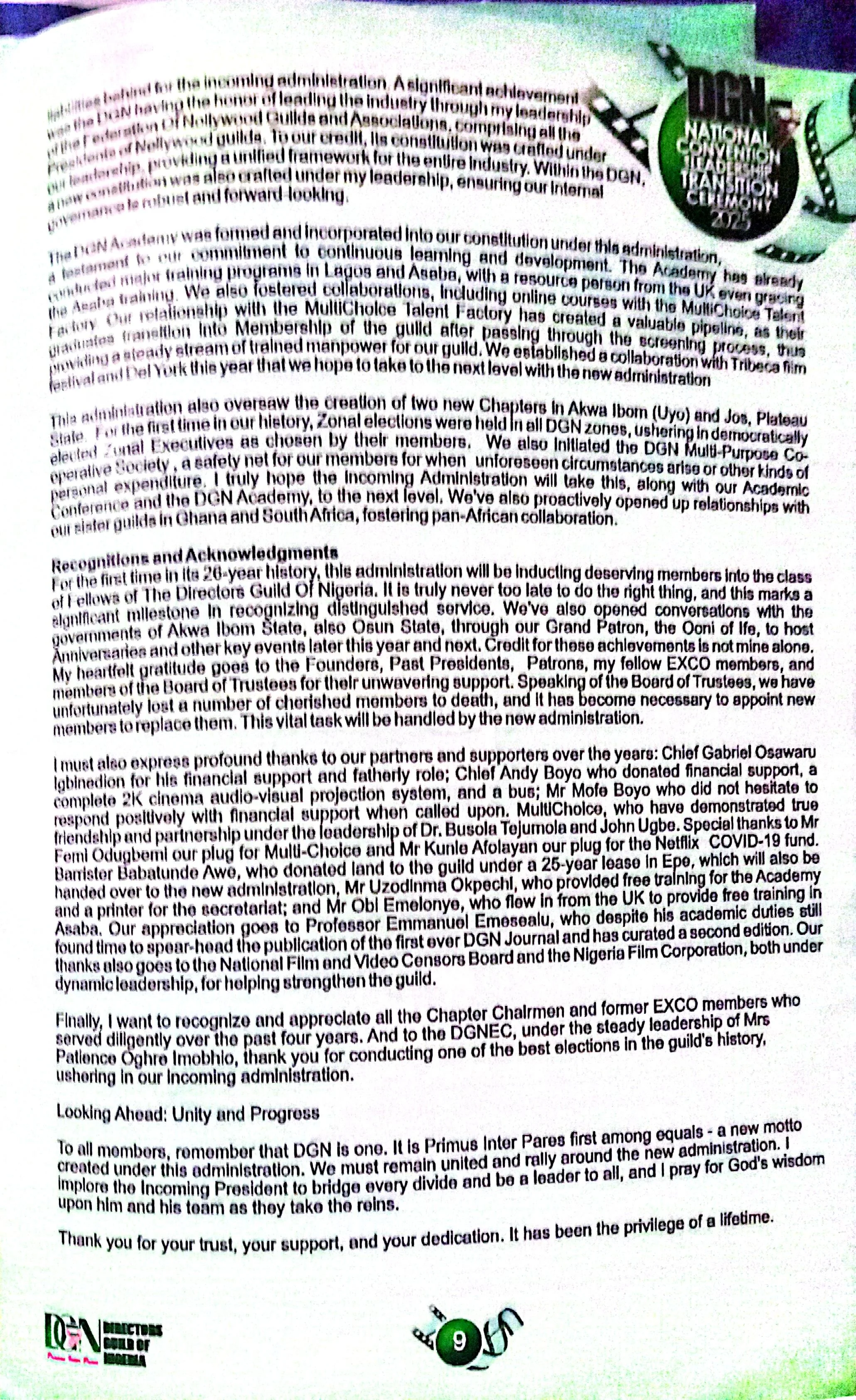
The main ceremony on day two, consisted of the launch of the Guild’s Journal, conferment of DGN Fellows and the induction of 125 new directors to the prestigious national body. Dr. Victor Okhai, the DGN outgoing President who leadership has taken the body to greater heights in the last few years also handed over his mantle of leadership to a new EXCO led by Uche Agbo, a UNIZIK graduate of Theatre And Film Studies.
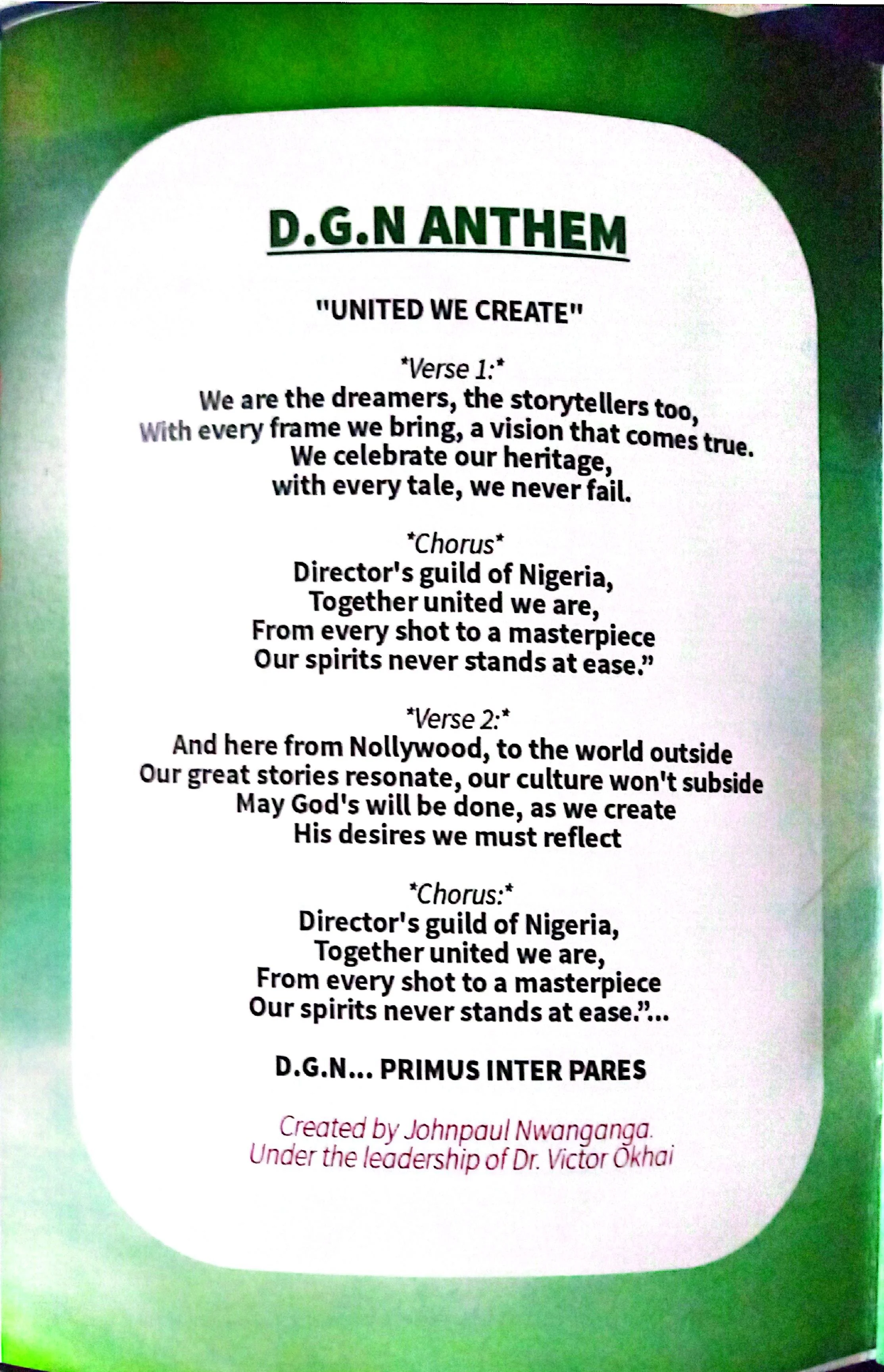
PROGRAM OF EVENTS



Pitch Your Script – Next Narrative Africa Fund
The Next Narrative Africa Fund is a $40 million mission driven content and media fund to invest in commercially viable audio-visual content made on the Continent by African and African-diaspora storytellers.
The Next Narrative Africa Fund aims to change the narrative about Africa and people of African descent by telling African stories for global impact. It will also fuel the growth of the creative industries in Africa, empower artists by promoting business and intellectual property ownership, and contribute to sustainable livelihoods across Africa and its diaspora.
Powering Africa’s Next Narrative
The Next Narrative Africa Fund is a $40 million mission driven content and media fund to invest in commercially viable audio-visual content made on the Continent by African and African-diaspora storytellers.
The Next Narrative Africa Fund aims to change the narrative about Africa and people of African descent by
telling African stories for global impact. It will also fuel the growth of the creative industries in Africa, empower
artists by promoting business and intellectual property ownership, and contribute to sustainable livelihoods across Africa and its diaspora.
Goals of the Inaugural Development Grant
Submissions Process
1. Narrative Change
• NNA Fund is looking for projects that allow for new and different stories about and images of Africa to be seen by the world
• We want to defy and challenge stereotypes about Africa and Africans while we entertain
• We are looking for projects and filmmakers who have something interesting to say about the impact areas we identified and, as a result, the world and the time we are living in
• We are especially interested in projects that have applied a gender lens, whether that be confronting gender tropes/stereotypes or showcasing healthy masculinity.
Ultimately, we want to positively influence norms in ways that benefit young people around the world, but especially women and girls.
In short, we want to support the kinds of projects that the world
should see about Africa and Africans
Goals of the Submissions Process
2. Pipeline Building for Equity Fund
• NNA Fund is looking for projects that will potentially enter the commercial equity fund’s pipeline.
• We want stories and projects that can travel; stories that an audience around the world can relate to it while maintaining the authenticity of the storyteller(s) and the time and place in which the story is told.
• We want to select projects from a cohort of filmmakers and production companies that can be great ambassadors for the brand—we can depend on them to deliver and be great partners to the Fund now and in the future.
• We manage reputational risk by working with partners who align with our values.
In short, we want projects that will make money and win awards
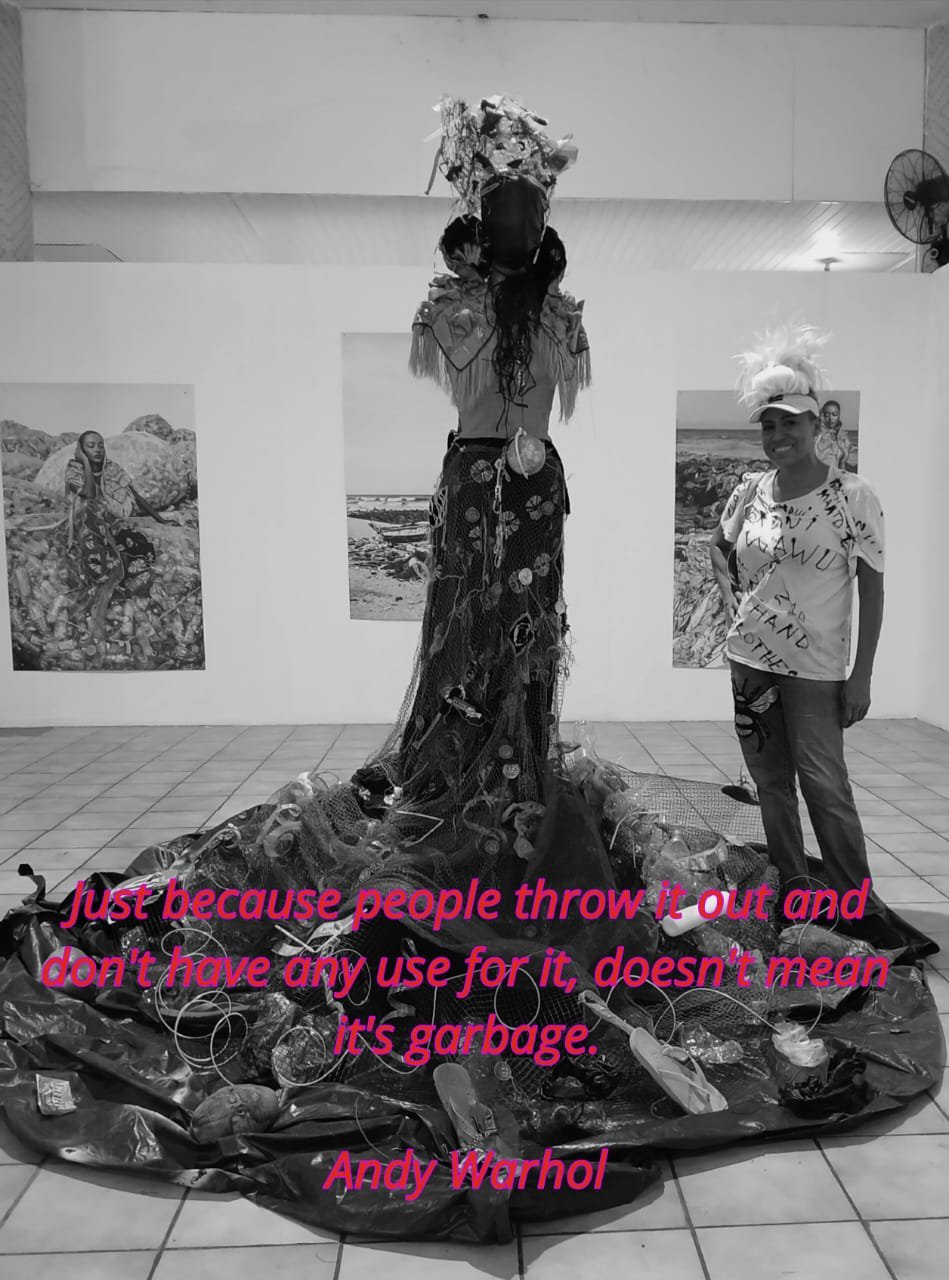
NEW EXHIBITION ALERT
🌍 World Environment Day launch
♻️ Ghana’s 2% recycling rate exposed
✊ Grassroots resistance celebrated
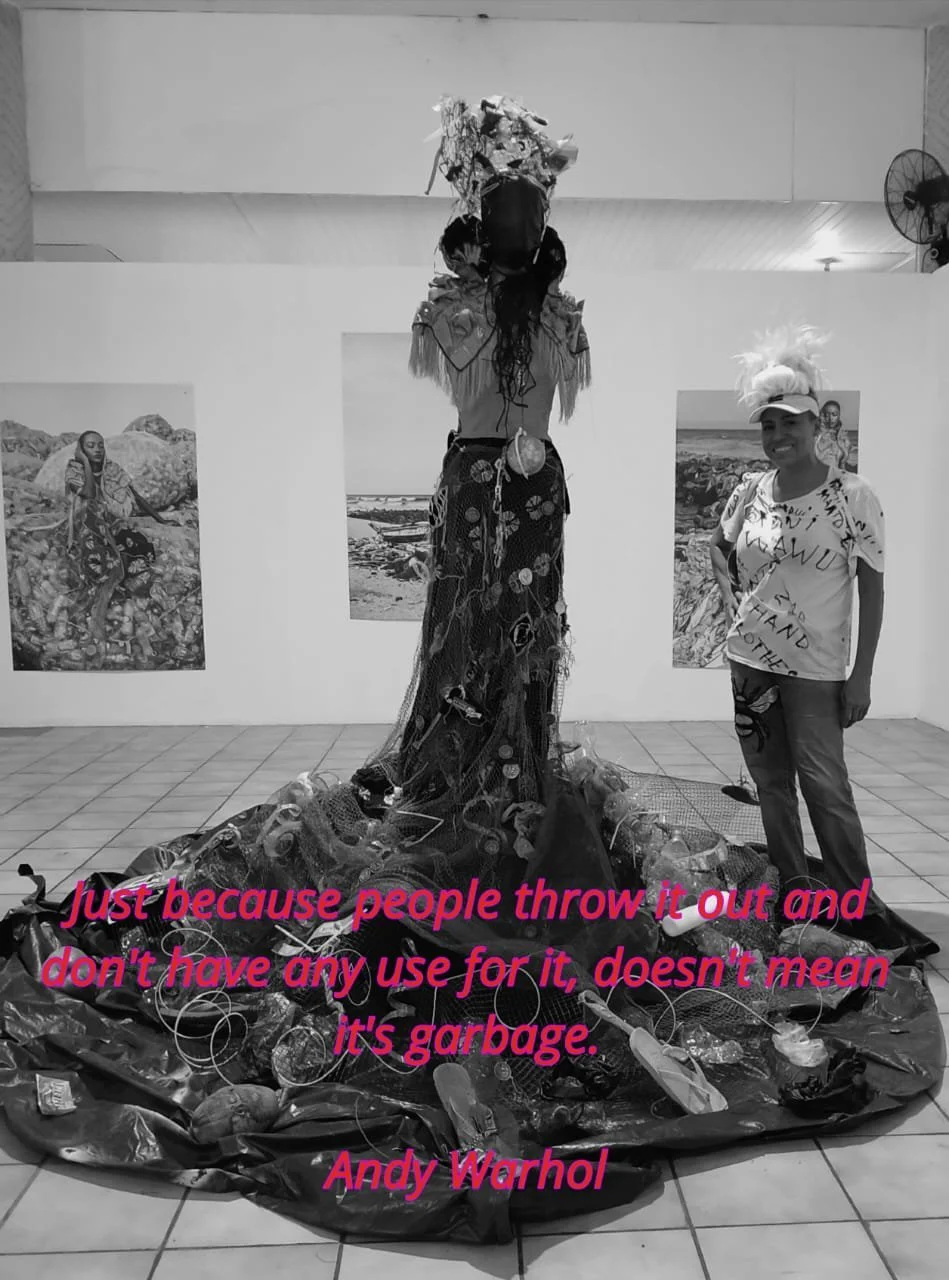
Plastic waste. Radical art. African futures.
#EchoesOfTheLandfill
📍 Museum of Science & Tech, Accra
🗓 June 5 – July 5, 2025
🎟 Free Entry
🛞 5 artists. 1 million tons of plastic. 0 excuses.
🔥 Obed Addo
🔥 Beatrice “Bee” Arthur
🔥 Essilfie Banton
🔥 Andrea Ghia
🔥 Salim
💬 “This isn’t an art show — it’s a plastic protest.”
— Curator, Bee Arthur
🌍 World Environment Day launch
♻️ Ghana’s 2% recycling rate exposed
✊ Grassroots resistance celebrated
📸 Share your plastic shame stories:
#EchoesOfTheLandfill
Supported by
@CreativeArtsAgencyGH | @MSTAccra | @ArtfullyYoursBeeArthur
SHARE THIS STORY
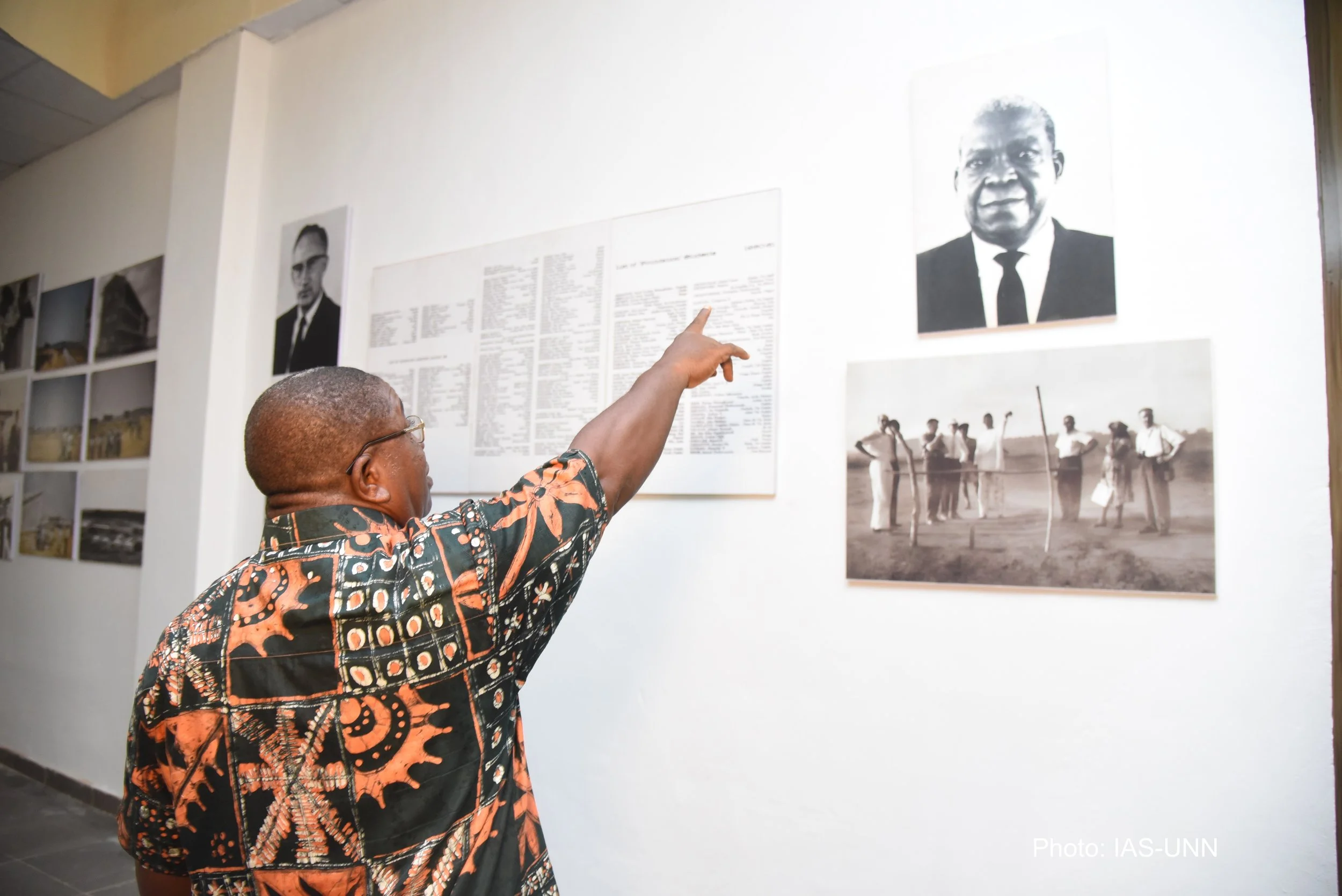
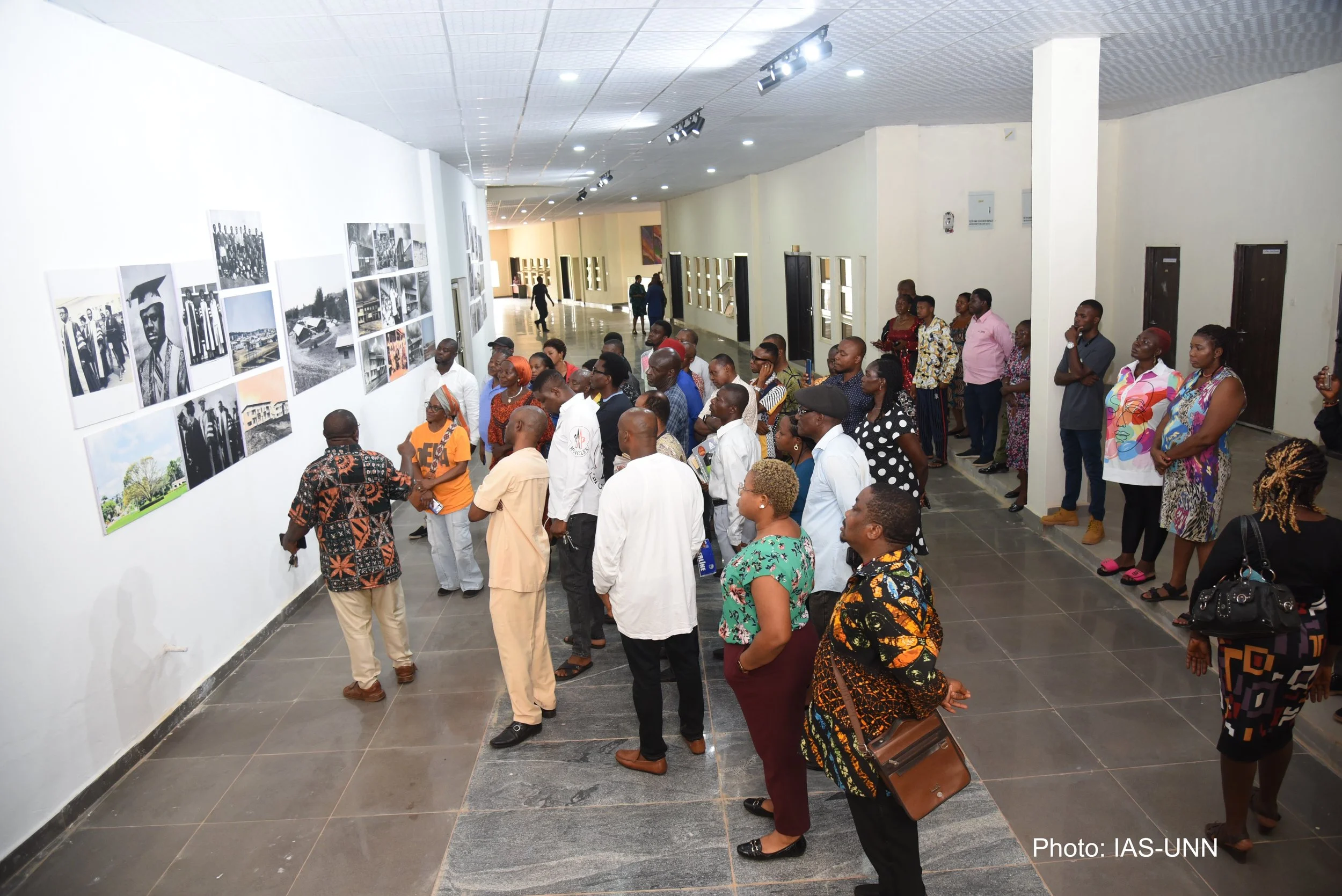
The Hidden Stories Behind Old Nsukka Photographs with Chijoke Onuora
Discover the Hidden Stories Behind Old Photographs with Prof. Chijoke Onuora, speaking on his father Mr. Joshua Chukwuemeka Onuora - the official UNN photographer in the 60s and 70s.
Discover the Hidden Stories Behind Old Photographs with Prof. Chijioke Onuora, a professor of drawing and sculpture in the Fine and Industrial Arts Department, speaking on his father Mr. Joshua Chukwuemeka Onuora - the unofficial UNN photographer in the 60s and 70s.
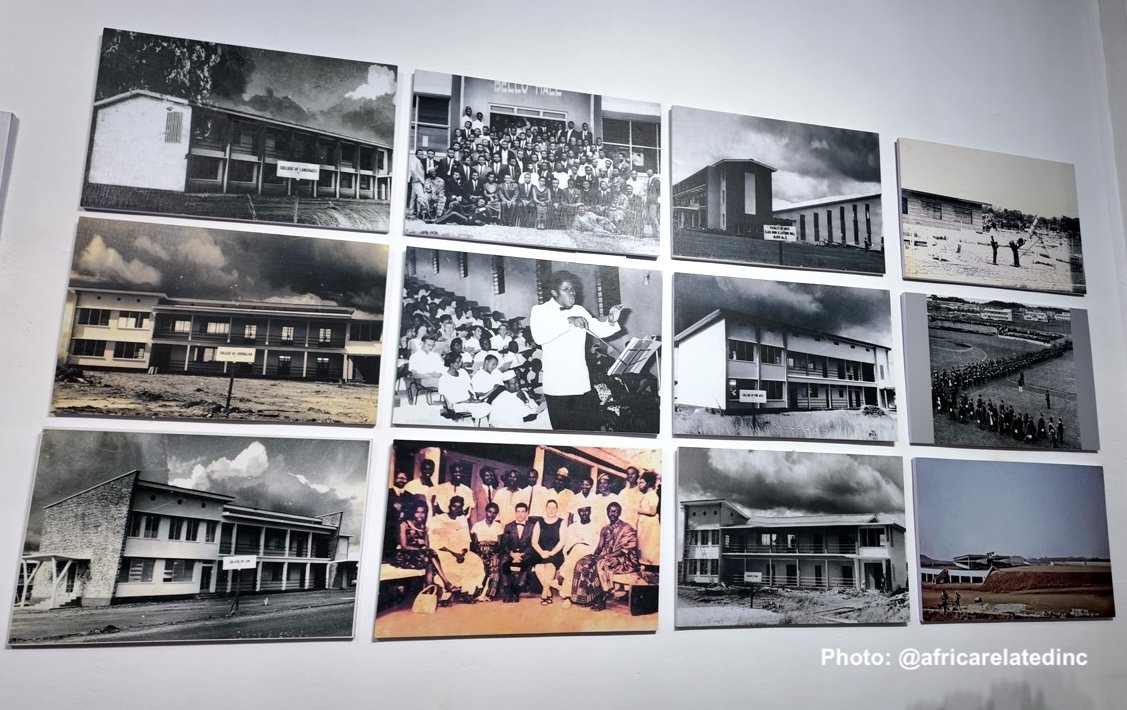
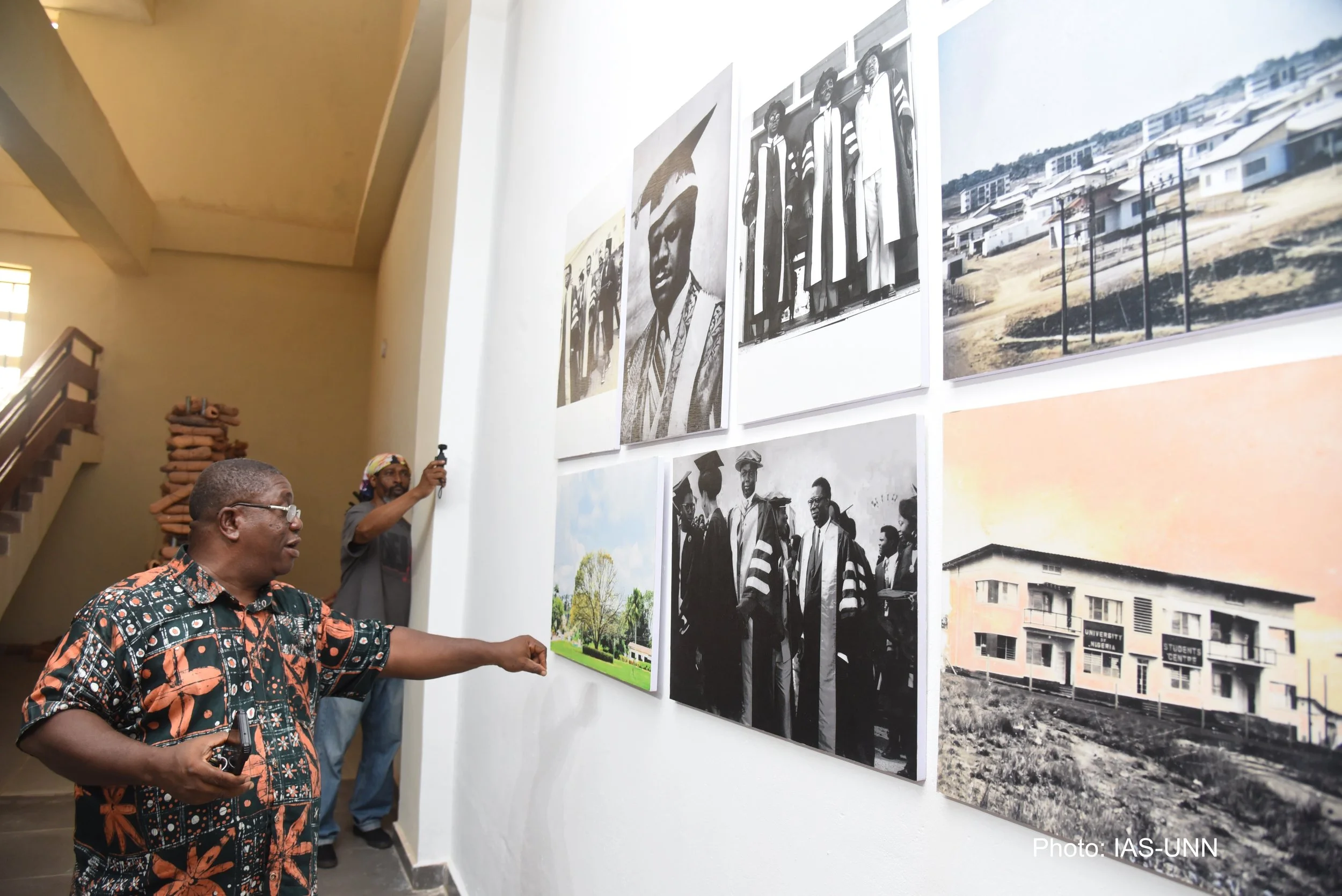
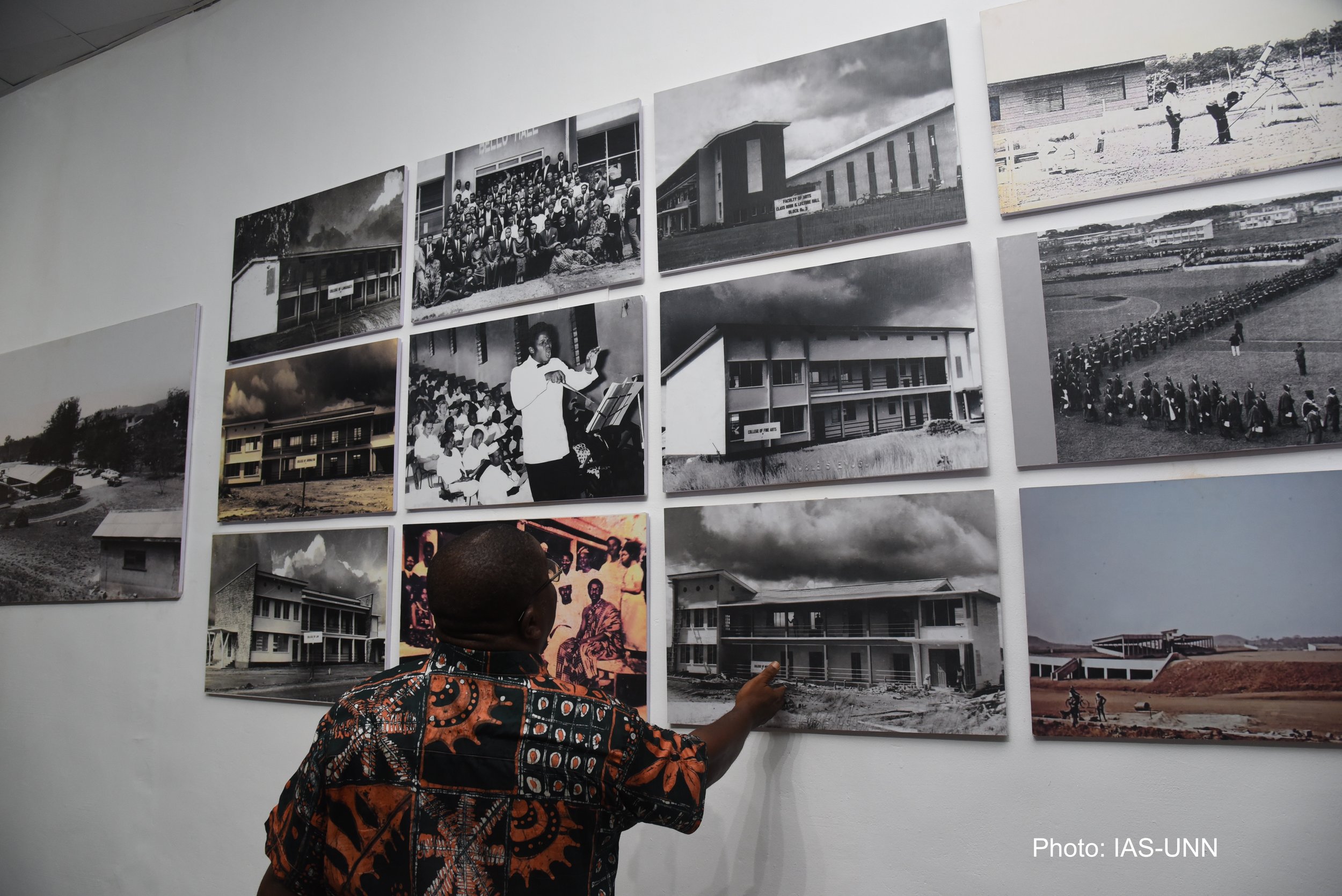
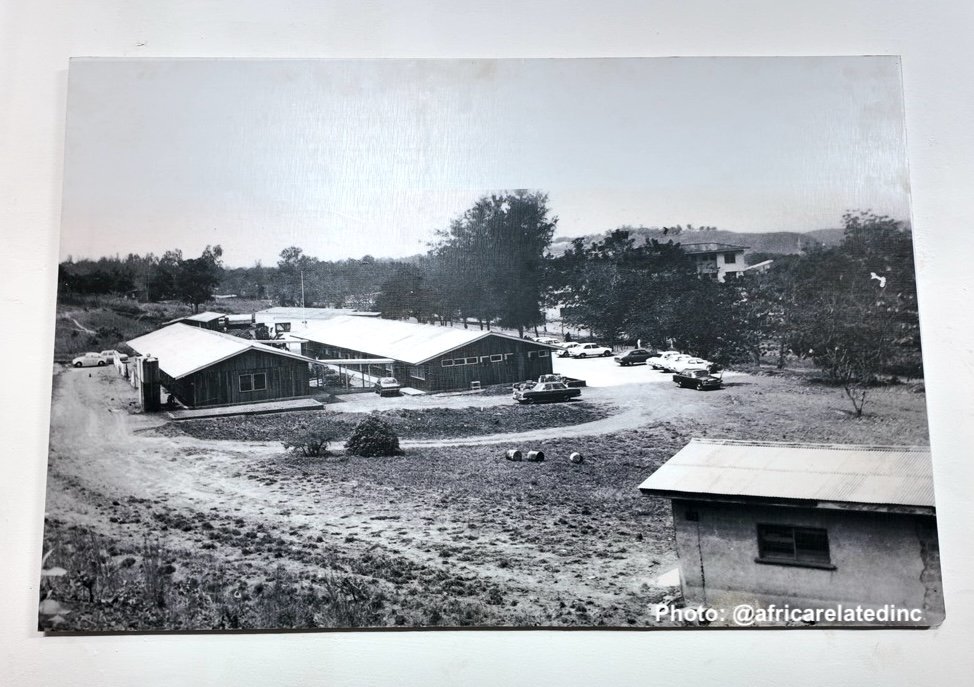
The long-anticipated solo exhibition Ozioma Onuzulike:
The long-anticipated solo exhibition Ozioma Onuzulike: Who Knows Tomorrow opened to an enthusiastic audience yesterday, 14th March 2025, at the Marc Straus Gallery in New York.
The long-anticipated solo exhibition Ozioma Onuzulike: Who Knows Tomorrow opened to an enthusiastic audience yesterday, 14th March 2025, at the Marc Straus Gallery in New York.
In Ozioma Onuzulike’s workshop in Nsukka, Nigeria, the fiery core of the kiln is a crucible of radical transformation. Within this space, the artist experiments, explores, and forges a universal language - one without a name, yet shared across borders. Here, art transcends national divisions, creating dialogues that connect rather than divide. Using pigments from the UK, clay from Nigeria, and exhibiting in New York, Onuzulike’s work speaks in a boundless, cross- cultural discourse.
A major source of inspiration for Onuzulike’s work is his mentor and teacher, Ghanaian sculptor El Anatsui, particularly his series of broken pots from the 1970s. Onuzulike extends these ideas to his art making; his process - cutting, smashing, and subjecting clay to violent force - mirrors historical ruptures, evoking war and colonial exploitation. Fire, both destructive and creative, is central to this narrative, transforming materials in an irreversible act of transmutation.
A recurring motif in Onuzulike’s work is the palm kernel, symbolising Africa’s extracted and discarded resources. Whether human or material, Africa has long been exploited without regard for ethics or sustainability. His work features palm kernel shells, both natural and clay-fabricated, together with glass, evoking Venetian trade beads historically used in transactions, including the transatlantic slave trade. Once a symbol of subjugation, these beads have re-emerged as markers of wealth and status - Onuzulike reclaims them, integrating the legacy of trade into contemporary cultural expression.
Deeply rooted in local traditions that have endured for centuries, Onuzulike draws inspiration from his surroundings, incorporating material and non-material heritage, from the intricate patterns of Kente and Babariga textiles to the impermanent lines of Uli design; from naming his works after figures of political and social significance to naming his heavy creations after types of clothing and armour - a purpose they can never serve. All of this informs his practice, adding layers of historical references and semiotic relationships that are evident not only in the forms and textures of his sculptures but also in their very names.
These themes can be seen in Royal Alkyabba, Onuzulike’s most ambitious work to date, a majestic large-scale cape comprised of over 35,000 individually cast ceramic pieces and palm kernels woven into a glorious tapestry. In another more playful work, FlaMboyant Armour for Femi Falana I, Onuzulike brings new colour, reverence, and humour to his oeuvre, naming the piece after Femi Falana, an important human rights activist in Nigeria, participating in a regional custom of naming children, fashion, and other acquisitions based on the circumstances of their birth or significant events of the time.
Onye ma echi—who knows tomorrow? This Igbo maxim echoes throughout Onuzulike’s work, embodying the unpredictability of history, identity, and transformation. Through ceramics, he navigates a complex web of associations, drawing on traditional practices of making, dressing, naming, and thinking to interrogate the shifting relationships between symbols and meaning. In a world of rapid political and environmental change, his work becomes a discourse on history and resilience, asking what is lost, what is reclaimed, and what the future might hold.
The gallery is proud to present Ozioma Onuzulike’s second solo exhibition in the United States. Onuzulike (b. 1972) is Professor of Ceramics and African Art History, and Director of the Institute of African Studies at the University of Nigeria, Nsukka. His solo exhibitions include Seed Yams Of Our Land at the Centre for Contemporary Art (CCA), Lagos, Nigeria (2019), along with a presentation of his poetry collection of the same title also published by the CCA. His works were included in the exhibition at the Museum of Archeology and Anthropology, University of Cambridge, UK, arising from the [Re:]Entanglements research project led by Professor Paul Basu. Onuzulike is a fellow of the Civitella Ranieri Centre, Umbertide, Perugia, Italy, where he completed a residency under the UNESCO-ASCHBERG Bursary for Artists. He is a 2011 recipient of the African Humanities Postdoctoral Fellowship Award from the American Council of Learned Societies (ACLS) and a 2010 Leventis Postdoctoral Research Fellow, University of London Centre of African Studies, SOAS; and an alumnus of the prestigious Skowhegan School of Painting and Sculpture, Maine, USA. His work is represented in numerous important collections, including the Yemisi Shyllon Museum of Art, Lagos, Nigeria; Museum of Archeology and Anthropology, Cambridge University, Cambridge, UK; Princeton University Museum, Princeton, NJ; The Design Museum, Munich, Germany; Hudson Valley Museum of Contemporary Art, Peekskill, NY; Donnersberg Collection, France.
Ozioma Onuzulike: Who Knows Tomorrow will remain open until April 26, 2025, at the Marc Straus Gallery, 57 Walker Street, New York, New York, 10013. You may follow the artist’s work on Instagram @ozioma.onuzulike.
----
#GloryBeToGod
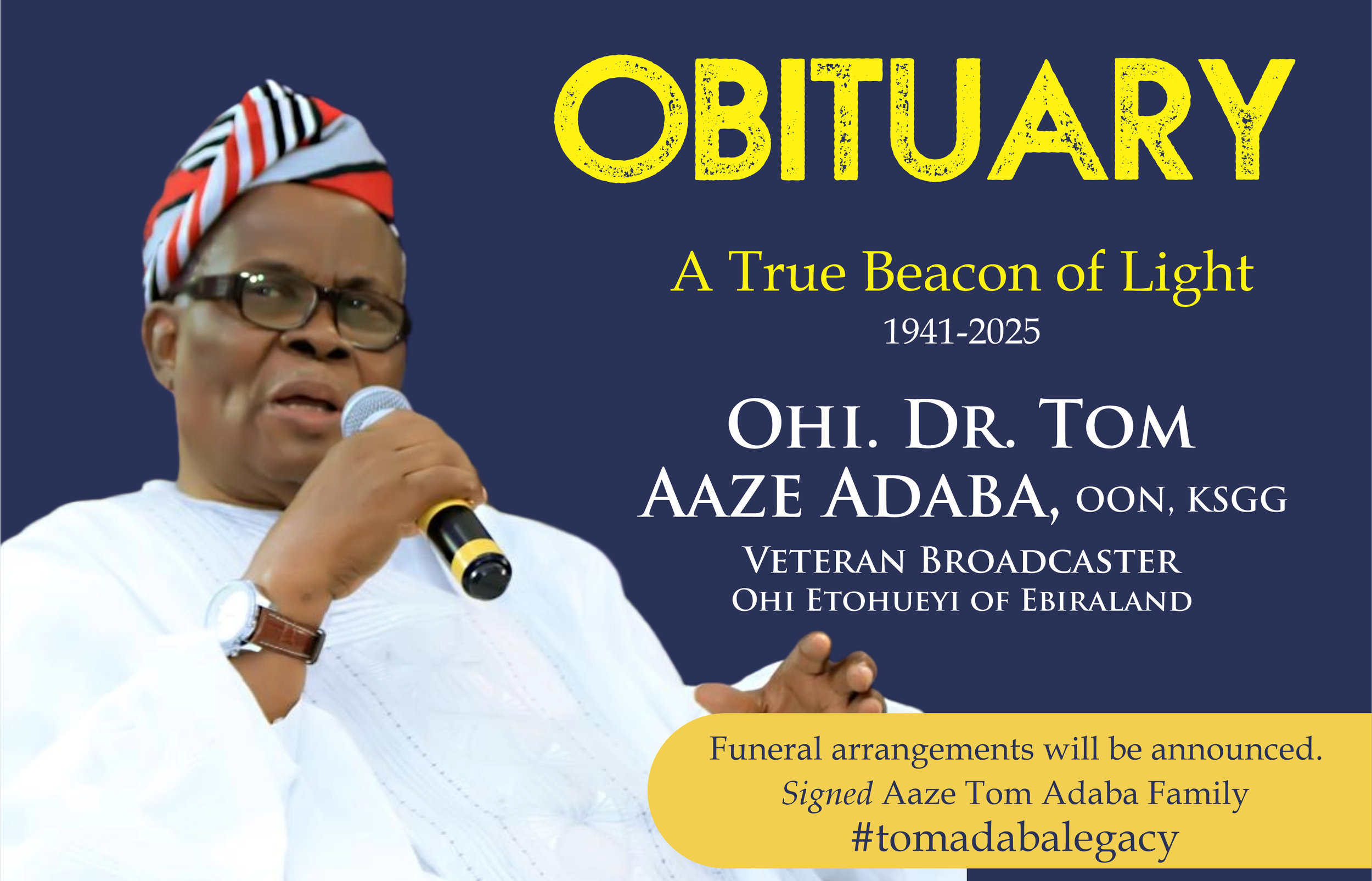
AAZE THOMAS ADABA, (OON, KSM, KSGG). Ohi Etohueyi of Ebiraland
Tributes | Life | Gallery | Stories
AAZE THOMAS ADABA, (OON, KSGG). Ohi Etohueyi of Ebiraland
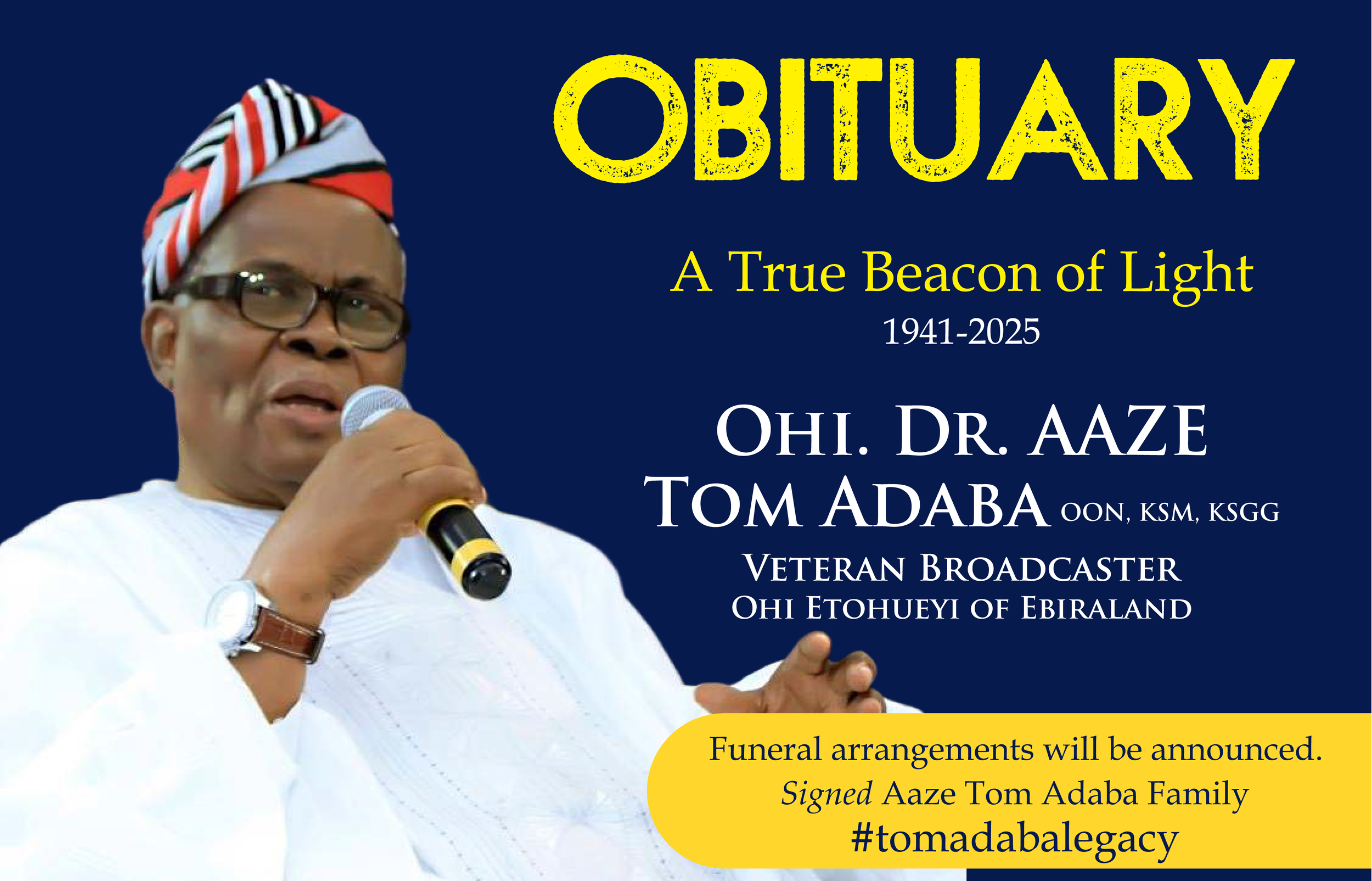
Obituary: Aaze Tom Adaba
AAZE THOMAS ADABA, (OON, KSM, KSGG).
Ohi Etohueyi of Ebiraland
1941-2025
...an undeniable legacy
FUNERAL PROGRAM
(W.A. Time)
Christian Wake/Night of Tribute:
Thursday, 6 March 2025
4:30 pm
Catholic Church of the Archangels, Durumi, Gaduwa Road, Abuja
Lying in State:
Friday, 7 March 2025
8:30 - 9:30 am
45 Constitution Avenue, off Democracy Crescent, Gaduwa Estate, Abuja
Funeral Mass:
Friday, 7 March 2025
10:00 am
- Catholic Church of the Archangels, Durumi, Gaduwa Road, Abuja
- Christ The King Catholic Church, Okene.
Interment:
Friday, 7 March 2025
Immediately after Mass
Gudu Cemetery - Christian Section, Opposite Defence HMO, Apo, Abuja
#tomadabalegacy
Tributes | Life | Gallery | Stories
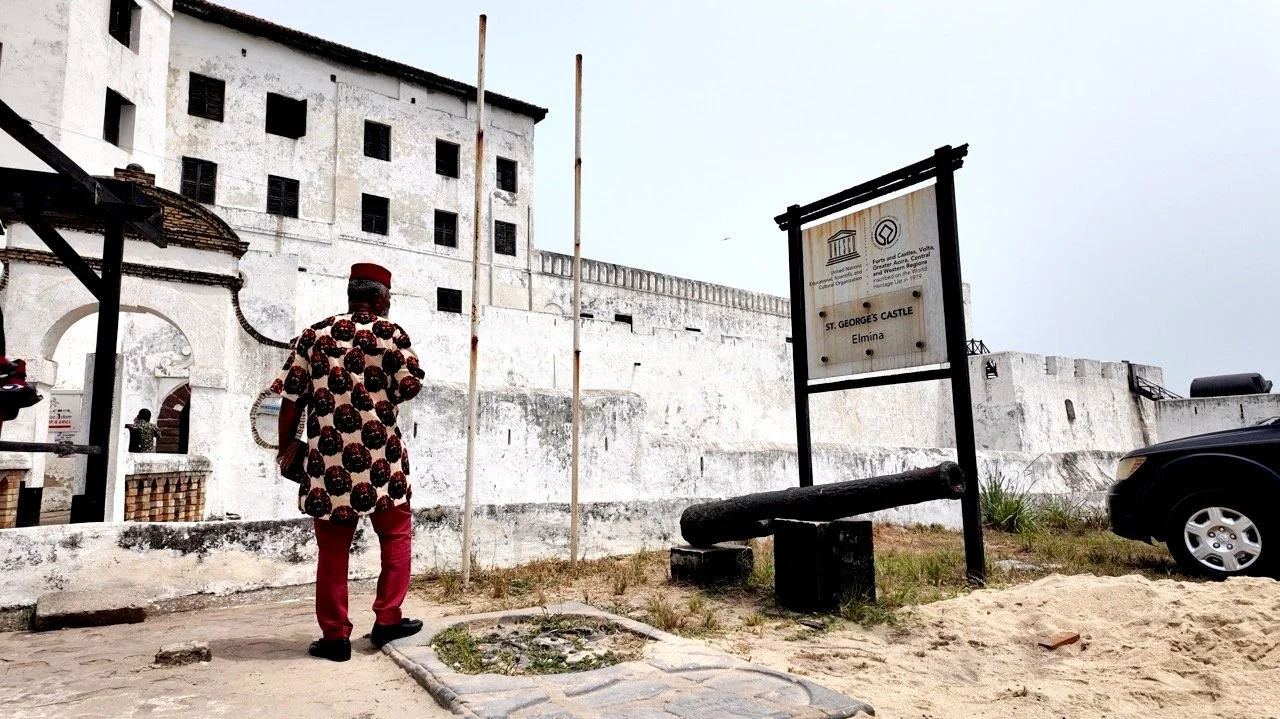
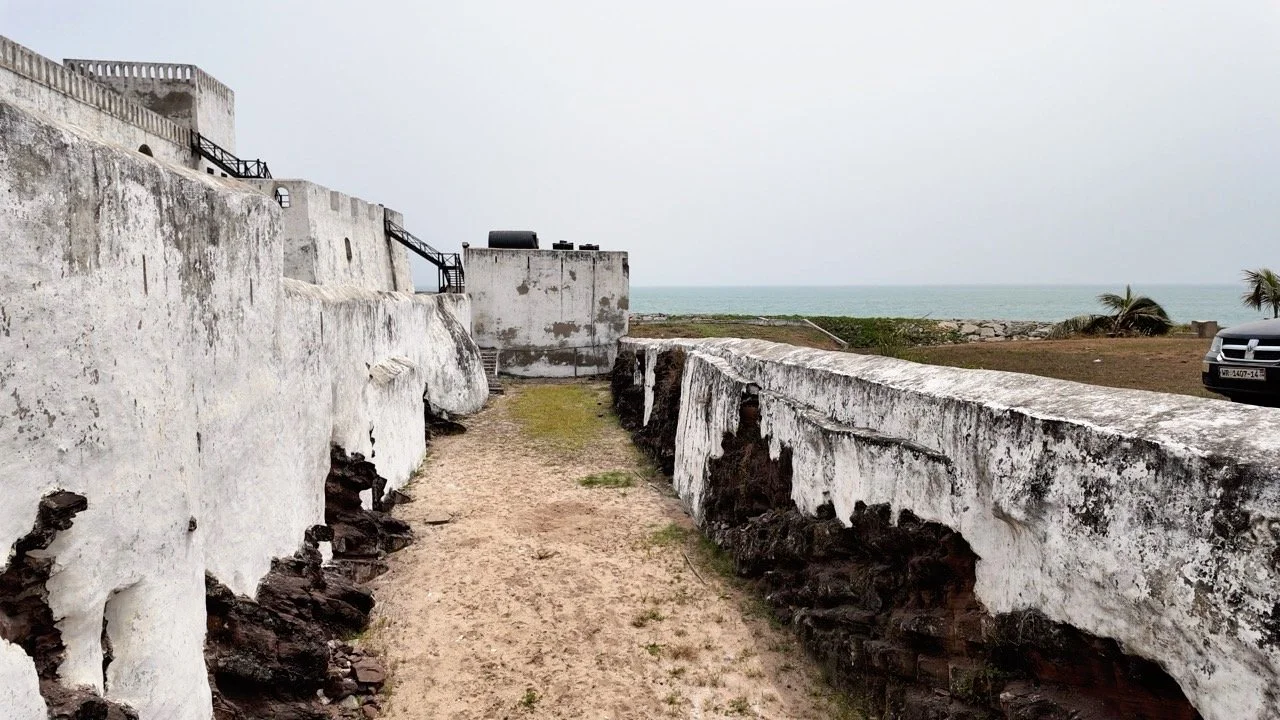
ELMINA: The Struggle Between Suffering and Healing
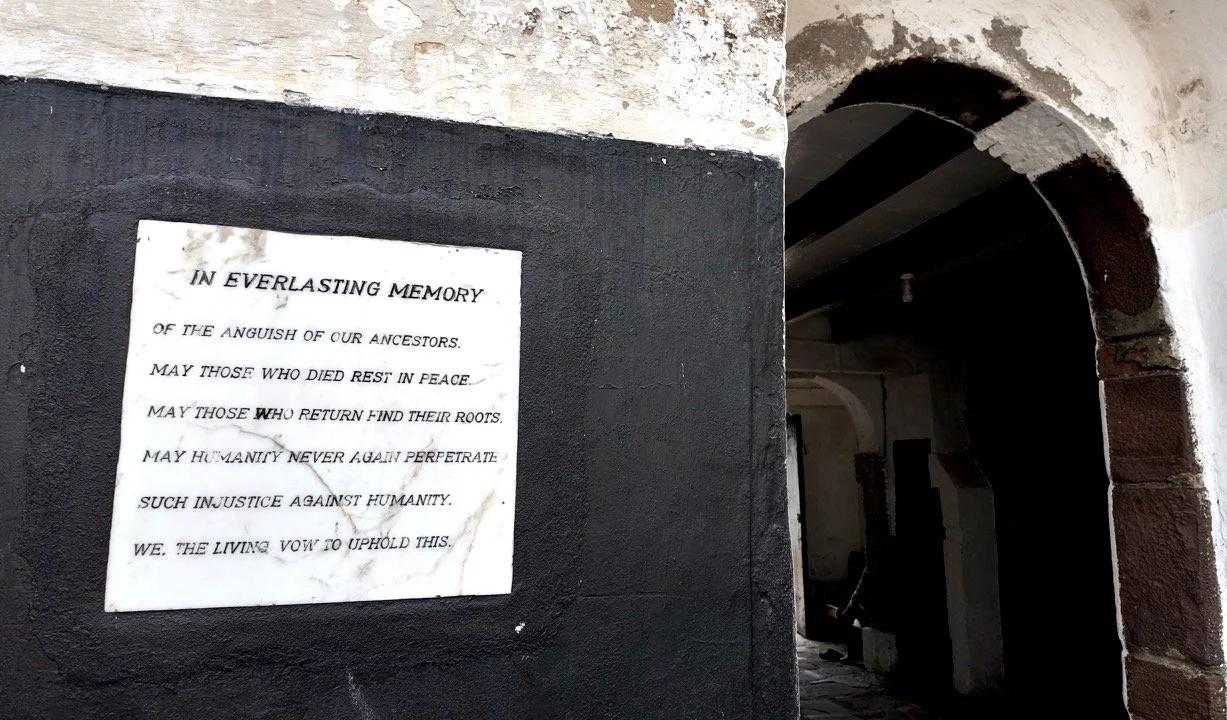
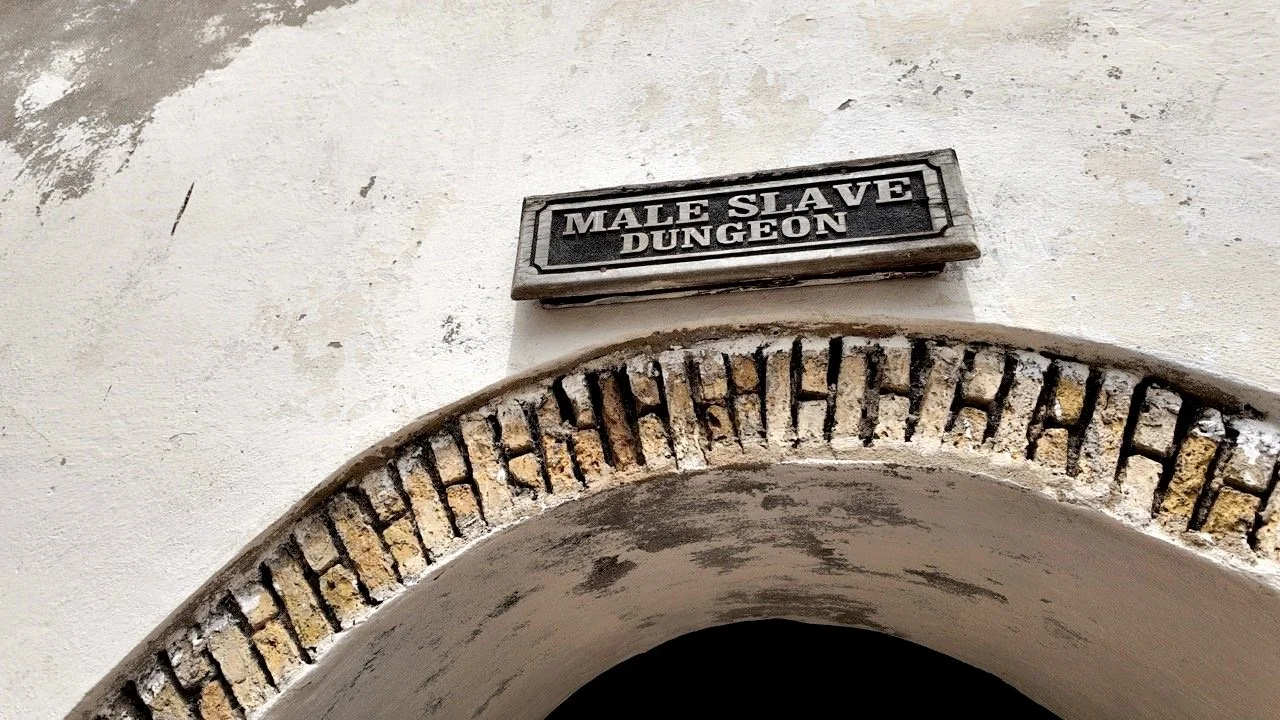
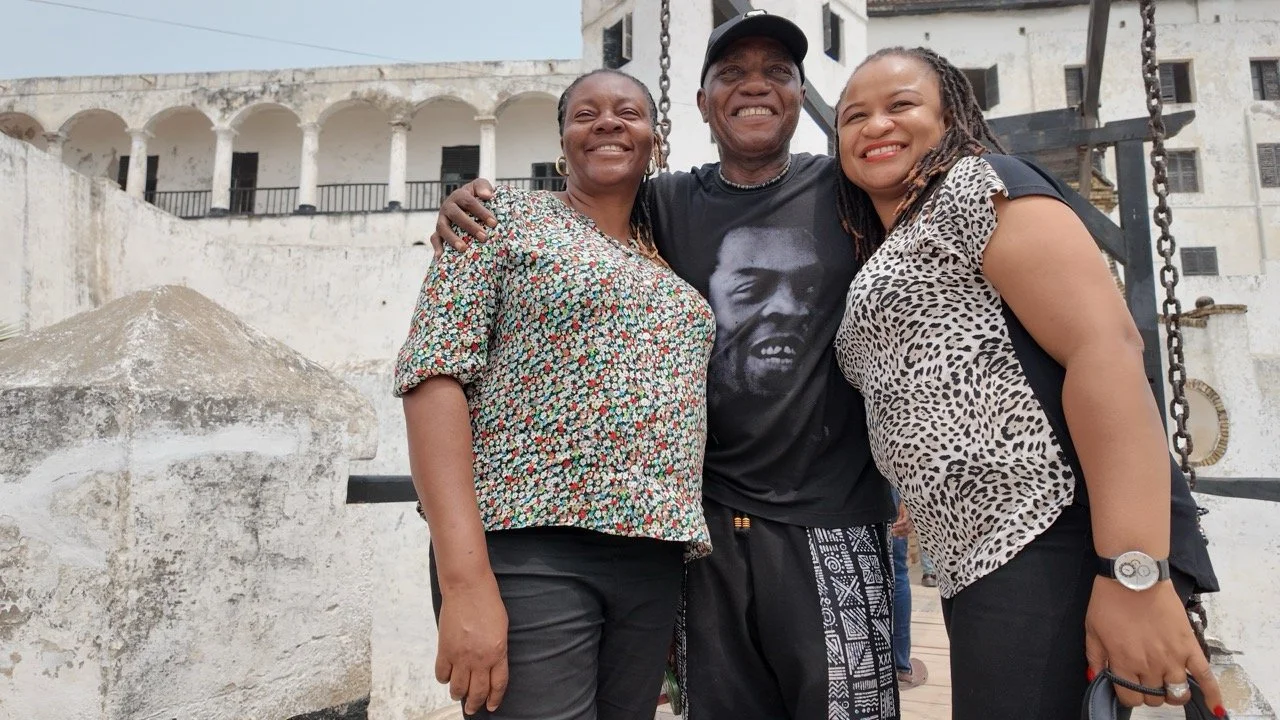
A visit to Elmina Castle, over three hours from Accra, Ghana, evokes strong feelings about our connection to the Transatlantic Slave Trade. As the 1992 Pan African Historical Theater Festival declared, “May we never allow such injustice again. We, the living, promise to uphold this.”
by Oyiza Adaba, New York
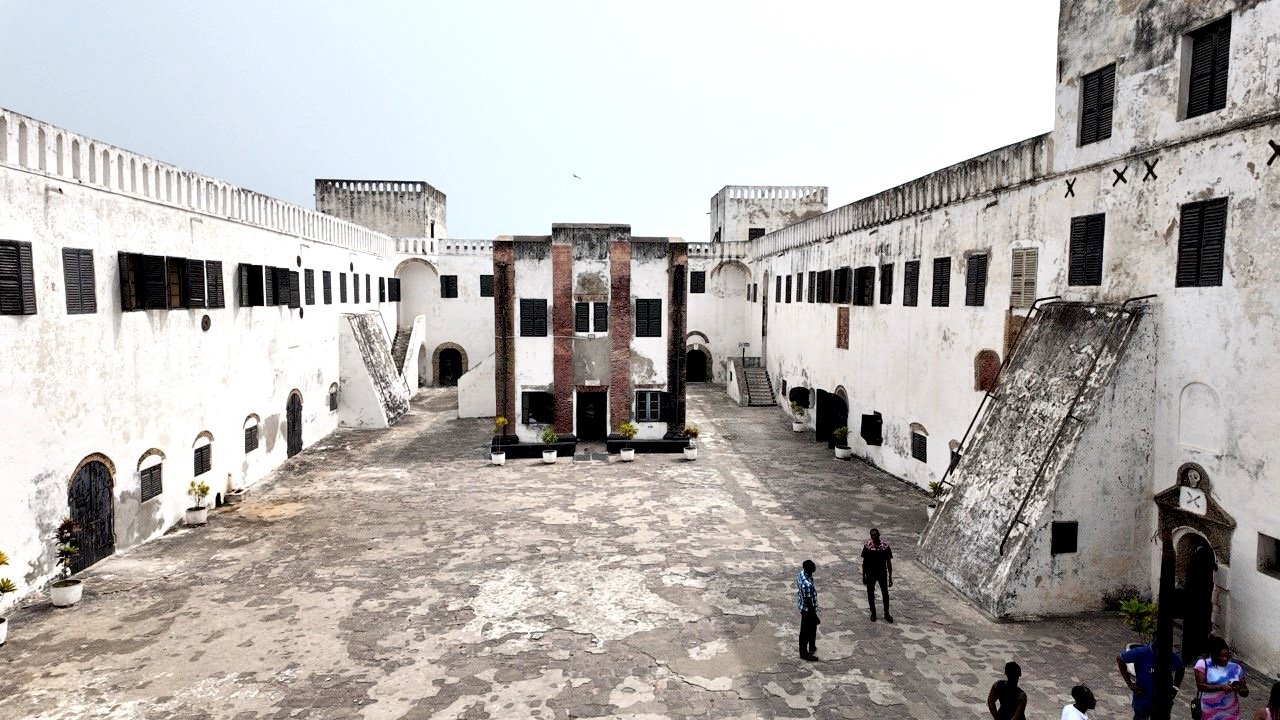
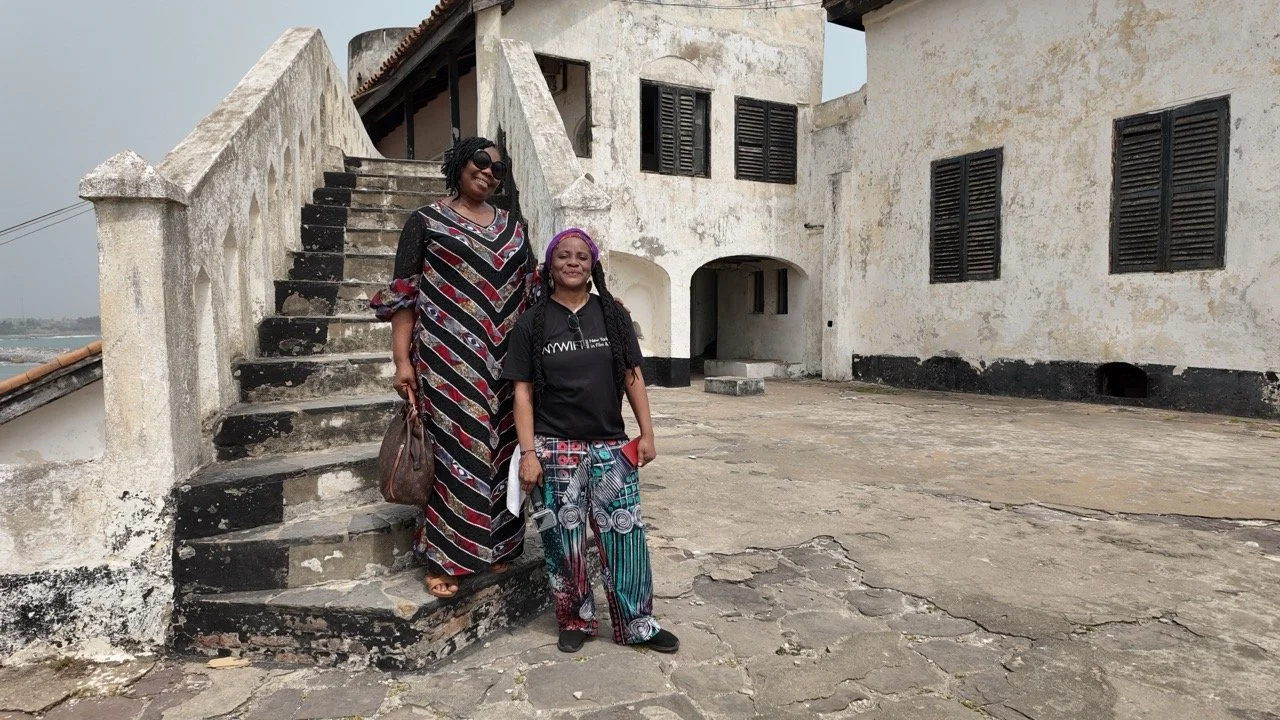
The main courtyard at Elmina Castle, Ghana. Built by the Dutch in 1482. (Photo:Africa-Related)
A SPECIAL REPORT
Made possible by Meridian Creative Center, Tema
A visit to Elmina Castle, over three hours from Accra, Ghana, evokes strong feelings about our collective connection to the Transatlantic Slave Trade. As the 1992 Pan African Historical Theater Festival declared, “May we never allow such injustice again. We, the living, promise to uphold this.”
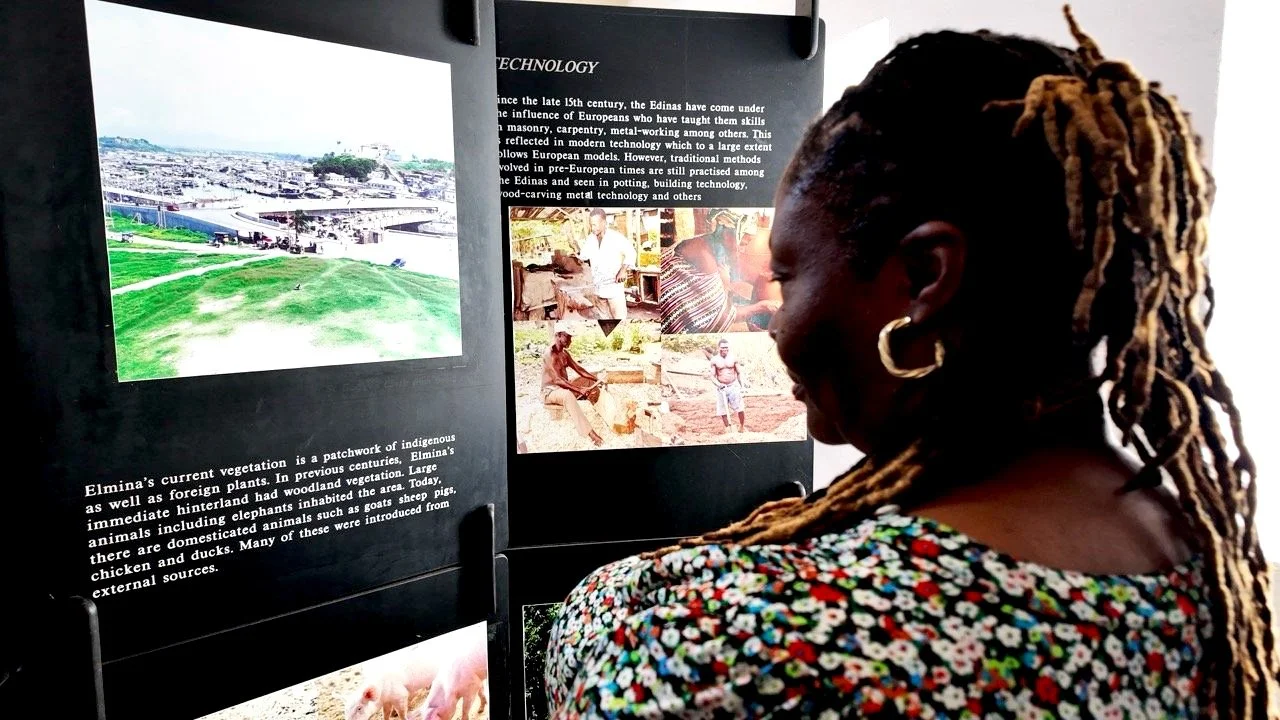
In the coastal town of Elmina, the ongoing struggle between reliving a horrific era and healing unfolds daily. Here, the remnants of a painful past clash with the hopeful emergence of transformation. Locals, guides and tourists alike navigate these intricate emotions, confronting the weight of their history while striving to cultivate a future filled with resilience and recovery. This delicate balance begins the journey toward healing that many individuals undergo.
“In everlasting memory of the anguish of our ancestors. May those who died, rest in peace. May those who return find their roots. May humanity never again, perpetuate such injustice against humanity. We, the living vow to uphold this
”
Video by Africa-Related for #El@80
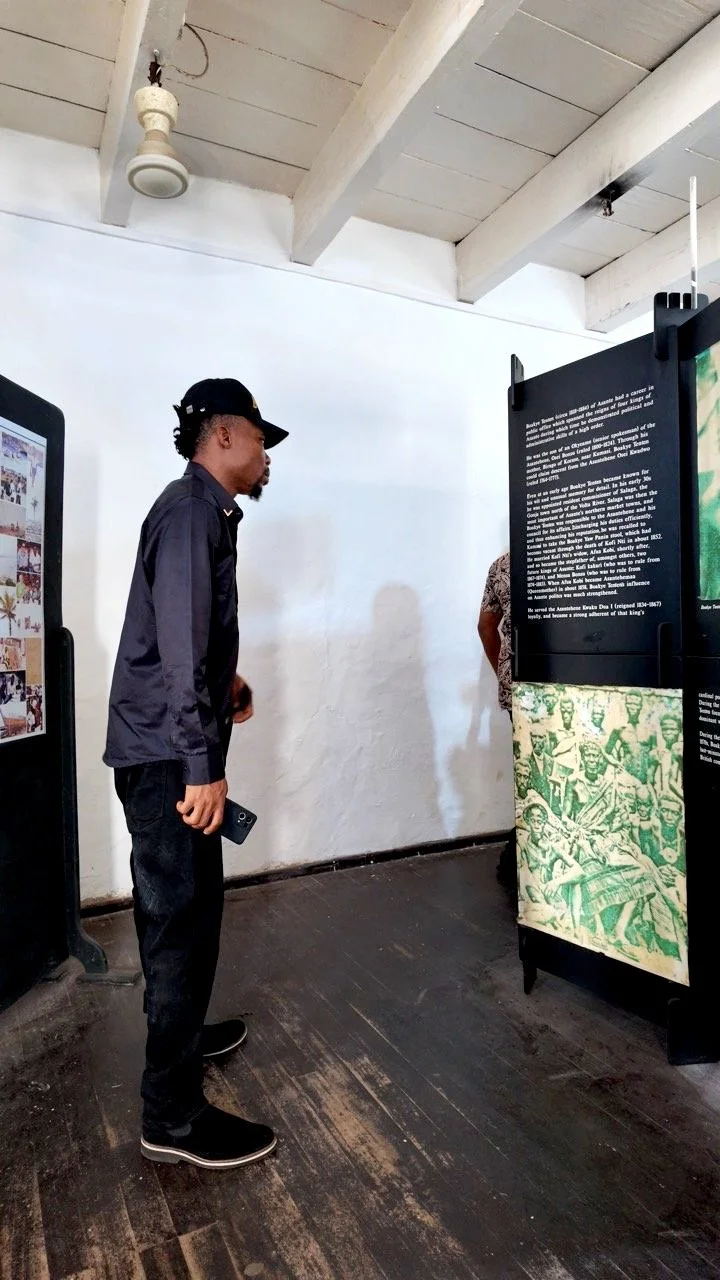
In February 2024, friends and colleagues of the globally recognized sculptor and Emeritus Professor of Art, El Anatsui, came together to celebrate his significant 80th birthday with a tour of the Elmina Slave Castle. This historical UNESCO World Heritage site is located in the picturesque town of Elmina, which lies approximately a three-hour drive from Ghana's vibrant capital, Accra.
According to Wikipedia, the castle was the very first trading post established on the Gulf of Guinea by the Portuguese back in 1482, originally called Castelo de São Jorge da Mina, but also known simply as Castelo da Mina or Mina, in what is now present-day Elmina, Ghana, which was formerly known as the Gold Coast.
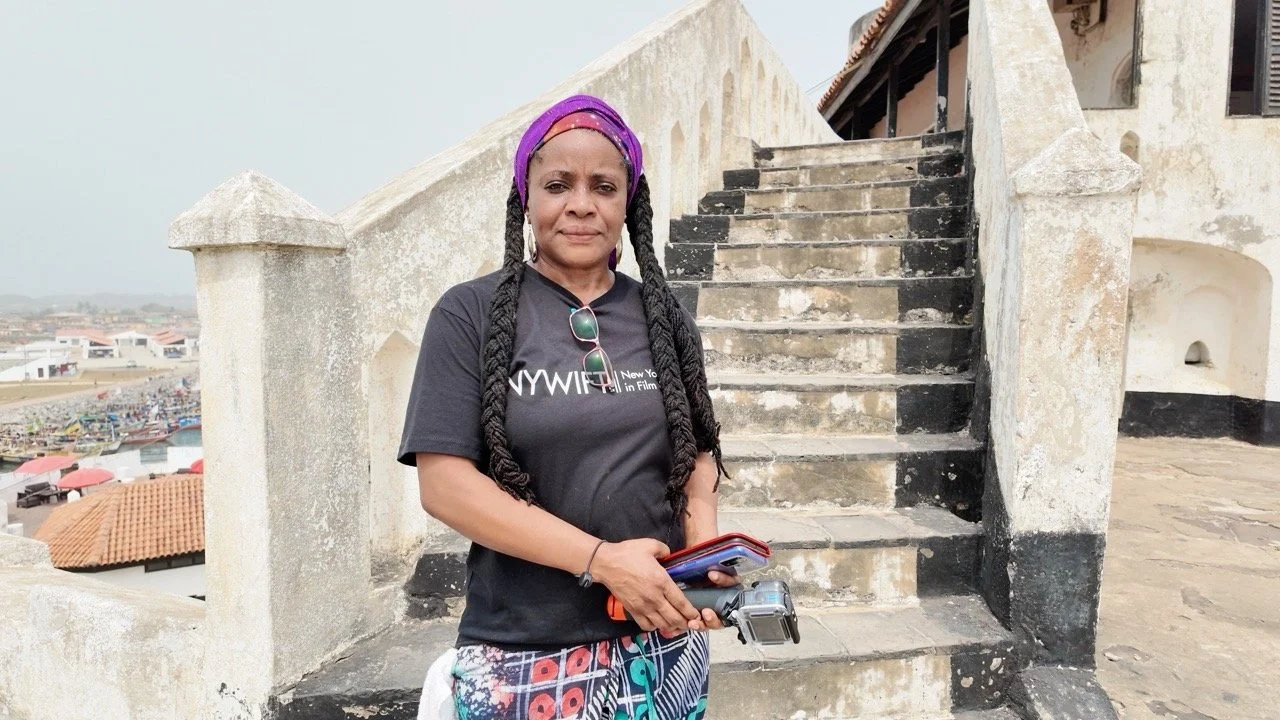
Journalist/Filmmaker Oyiza Adaba at Elmina Slave Castle, Ghana (Photo by Africa-Related)
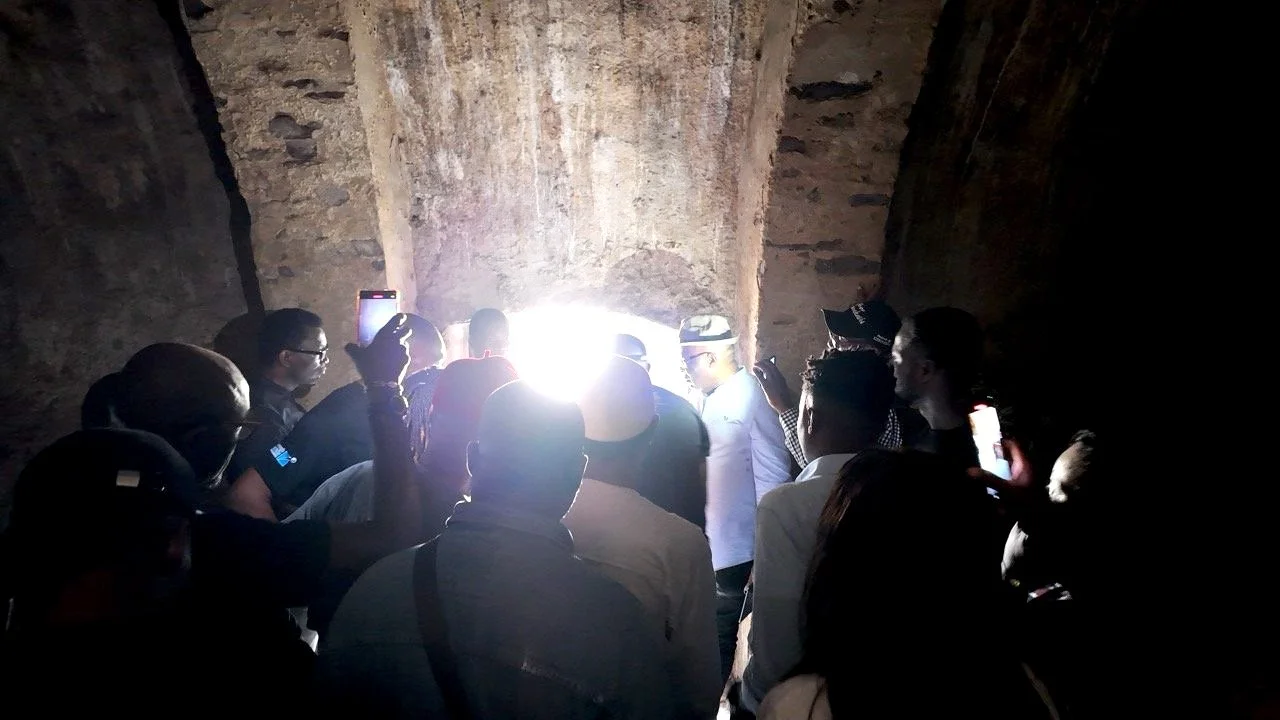
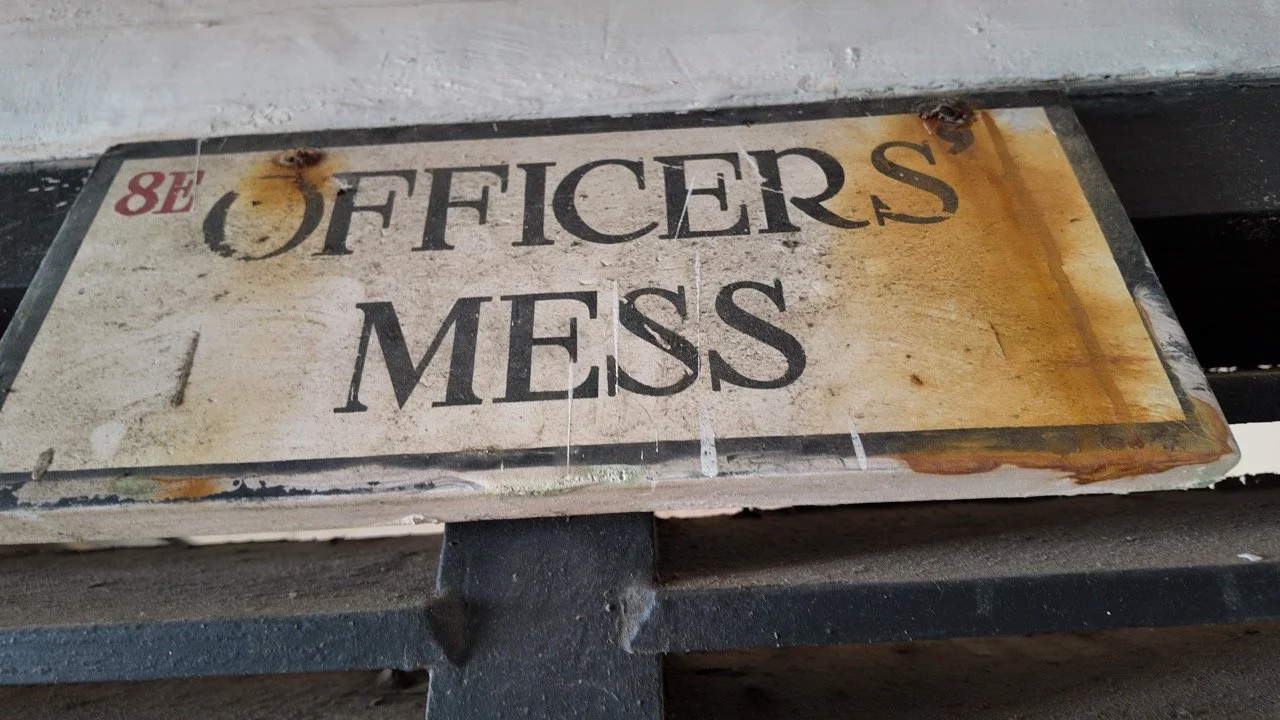
I have yet to encounter anyone who did not experience strong emotions following an Elmina tour, and this occasion was no different. Not everyone feels at ease when it comes to listening to accounts from what can only be described as a "barbaric" era, one that was paradoxically executed with The Bible in one hand and The Gun in the other, where chapels were ominously built directly above the grim chambers of torture.
Film director Katrina C. Browne thoughtfully tackles this complex subject concerning the church’s role in the Transatlantic Slave trade in her compelling film, Repairing The Breach: The Episcopal Church and Slavery Atonement. This documentary not only examines historical injustices but also seeks a deeper understanding of the implications of these actions within the context of today’s society.
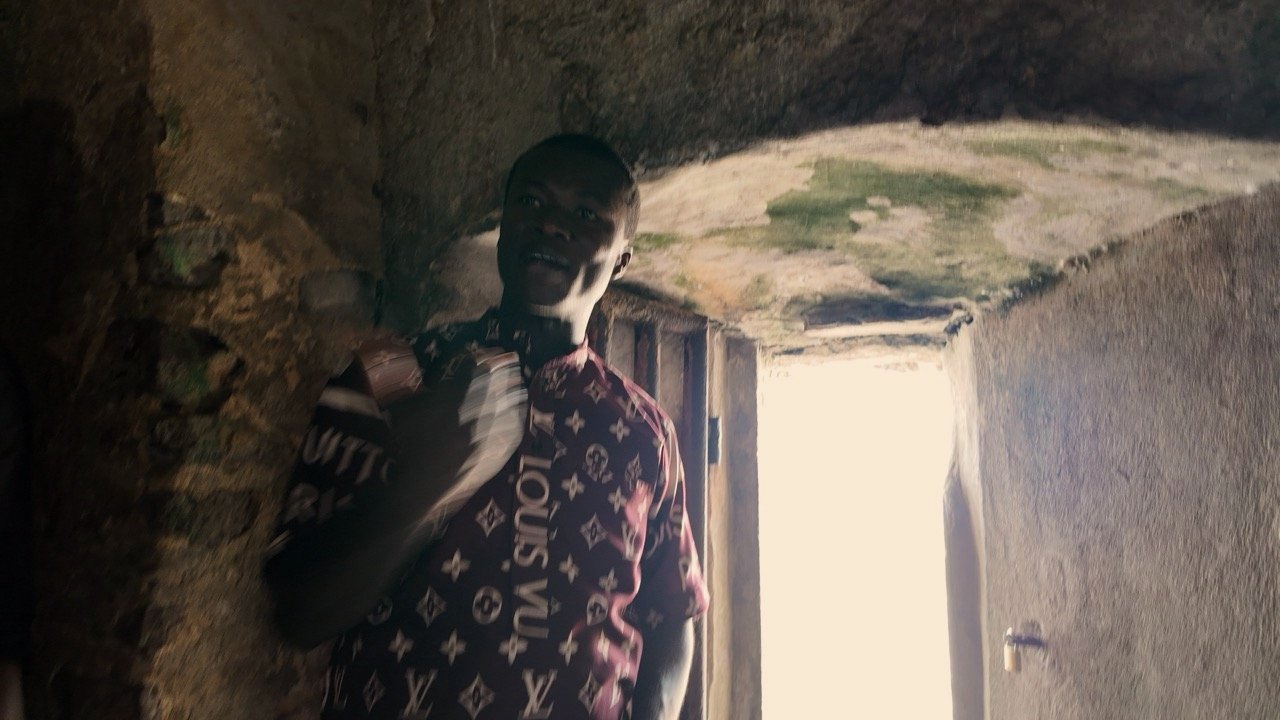
Tour guide at the infamous Door of No Return. (Africa-Related)
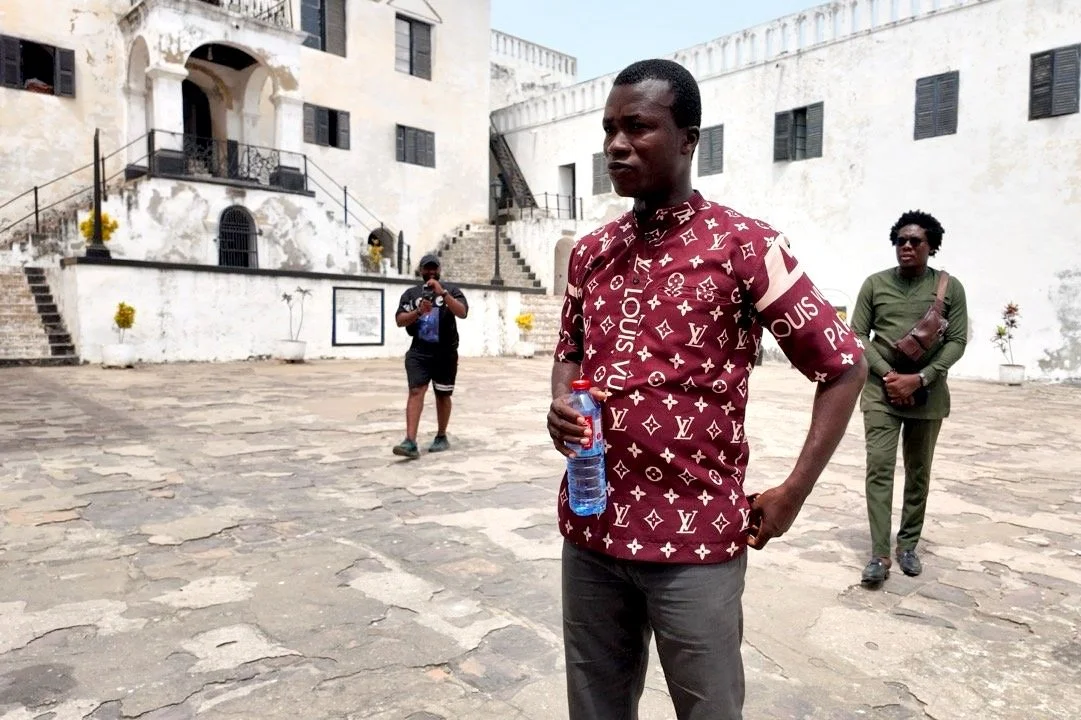
There is no doubt that the subject of slavery continues to be a challenging one to confront, affecting all levels of society and individuals from every race that participated. During the poignant tour, the small group, comprised of academics, artists, enthusiastic entrepreneurs, and members of the media, struggled just as deeply with the history and emotions evoked by the experience.
Slavery Theme in El Anatsui’s Works
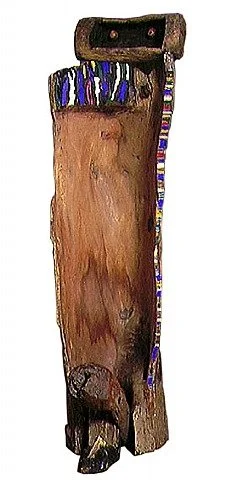
As an artist who single-handedly redefined comtmporary sculptor, El Anatsui uses bottle caps in his jaw dropping sculptures to highlight the history of alcoholic drinks tied to the European slave trade. His earlier works in wood and ceramics, along with his bottle cap pieces, reflect themes of slavery and the effects of globalization and consumerism in Africa. Some notable titles that evoke strong imagery and deep reflection on these historical realities and contemporary issues, include: Man Resplendent Pissing Around the World (1995), They Saw Us Through Puffs of Smoke; They Made It Happen, Watched It Happen, But Now With Disheveled Hair, Wonder What Happened (1986), and The Elements Threatened Immediately Above While We Still Milled Around in a Mass of Complacency'; Rising Sea (2019).


Additional Reading:
- A History of Indigenous Slavery in Ghana from the 15th to the 19th Century by Akosua Adoma Perbi
- A Cry & the Lamentations from the Ancestors: A Chronicle from the Trans-Atlantic Slave Trade: (Voices from the Captive Africans)
The various contrasts that Elmina presents to us is certainly not lost on our awareness and understanding. In its sordid history, accompanied by the distinct 'smell you never forget'‘, lies a magnificent, imposing beauty that serves to keep the memory of the past alive, thereby ensuring that history does not repeat itself ever again.
The whitewashed walls of this remarkable place hold significant historical dirt that tells a story of resilience and survival, yet Elmina has also become a hauntingly beautiful backdrop for an array of films, captivating books, and striking photo shoots. Renowned writer and historian Prof. Christopher L. Richards used Elimna as the cover of his book Cosmopolitanism and Women’s Fashion in Ghana History, Artistry and Nationalist Inspirations. He worked with the creative duo of photographer, Dean Zulich and Fashion Curator Beatrice ‘Bee’ Arthur, who recount their unique Elmina experiences on TV Series Messengers, all while diligently capturing the rich history and tapestry of Ghanaian fashion.
Cosmopolitanism and Women’s Fashion in Ghana
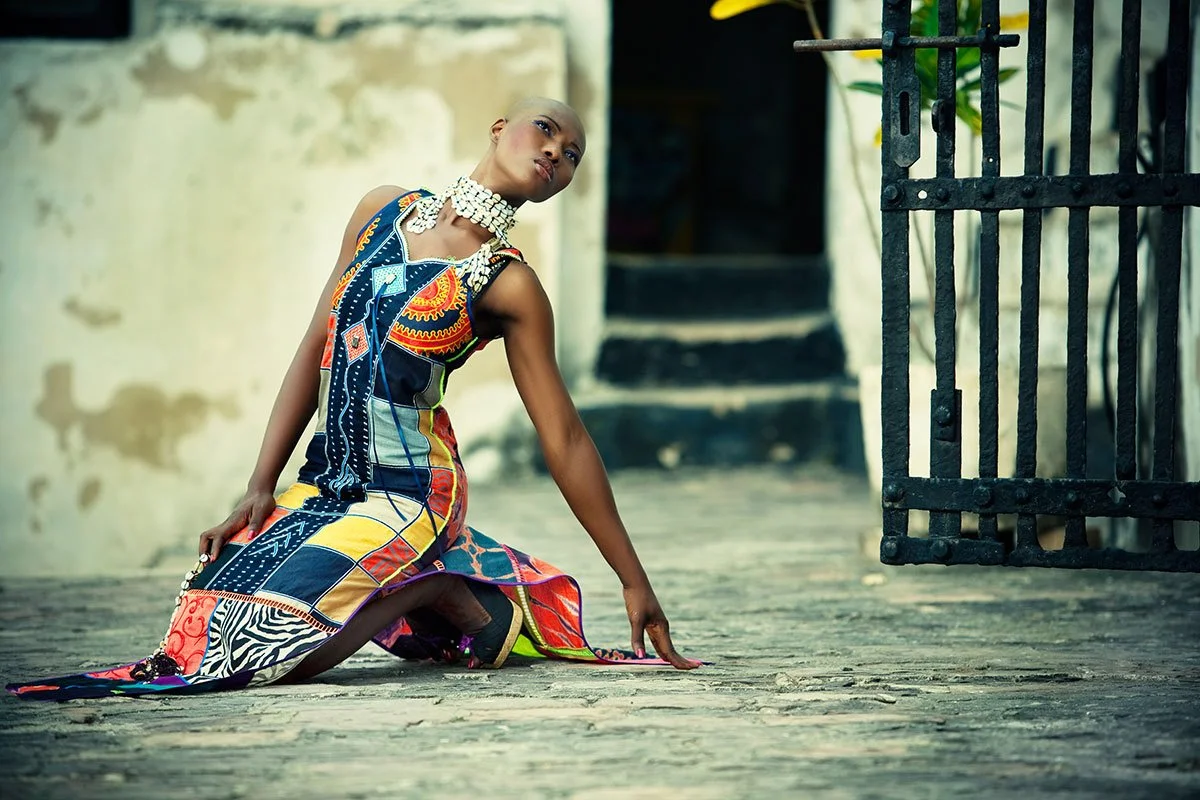
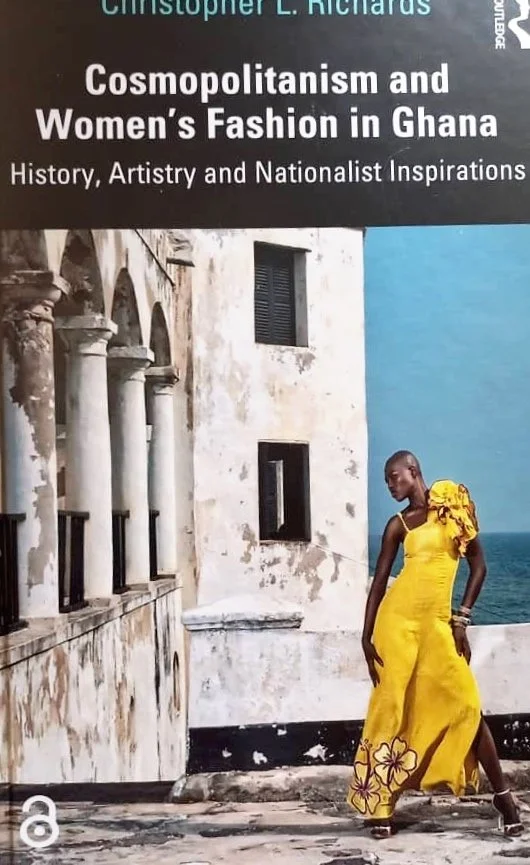
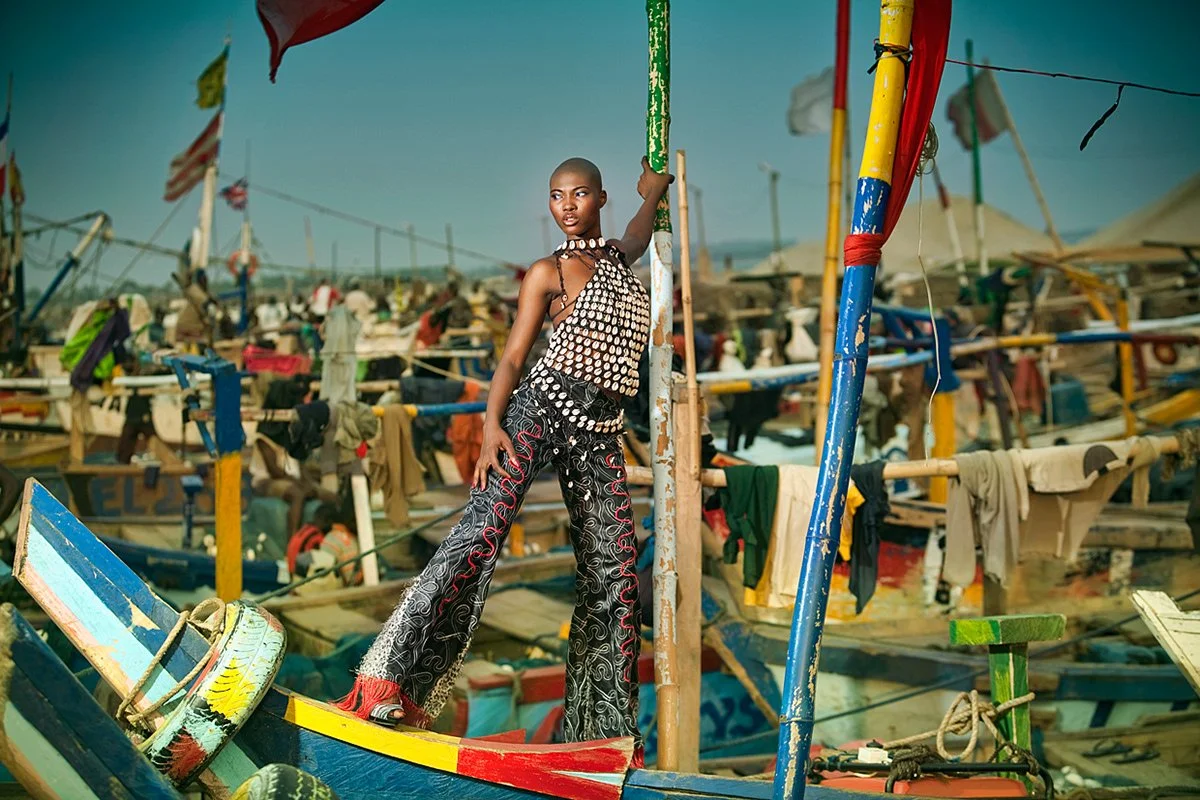
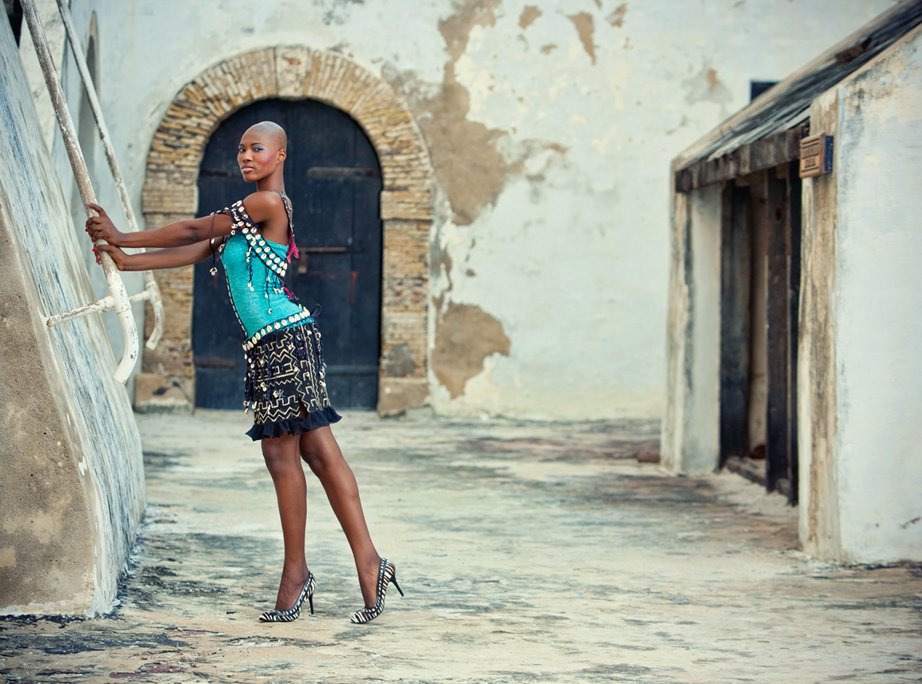
#El@80 elmina tour: PHOTOS BY AFRICA-RELATED
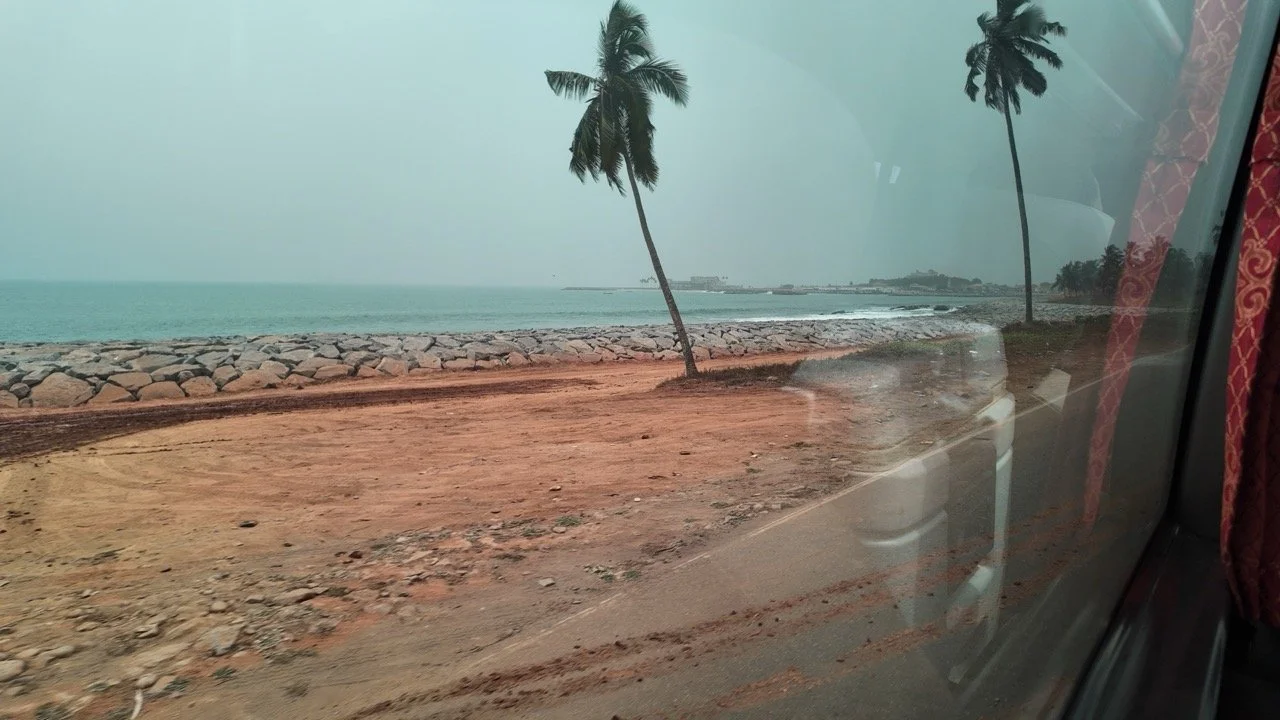
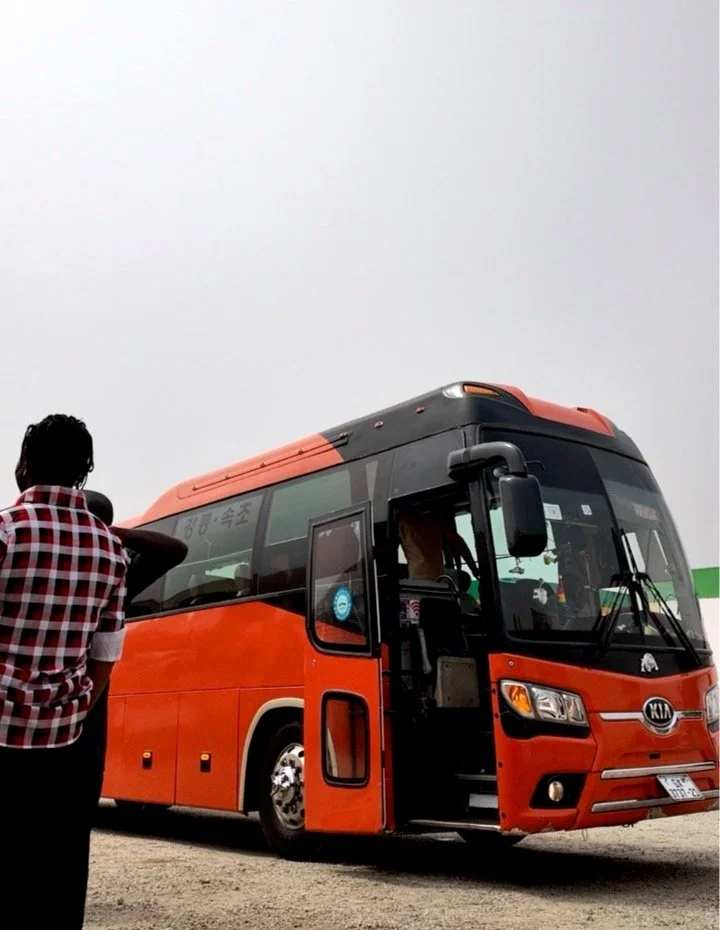
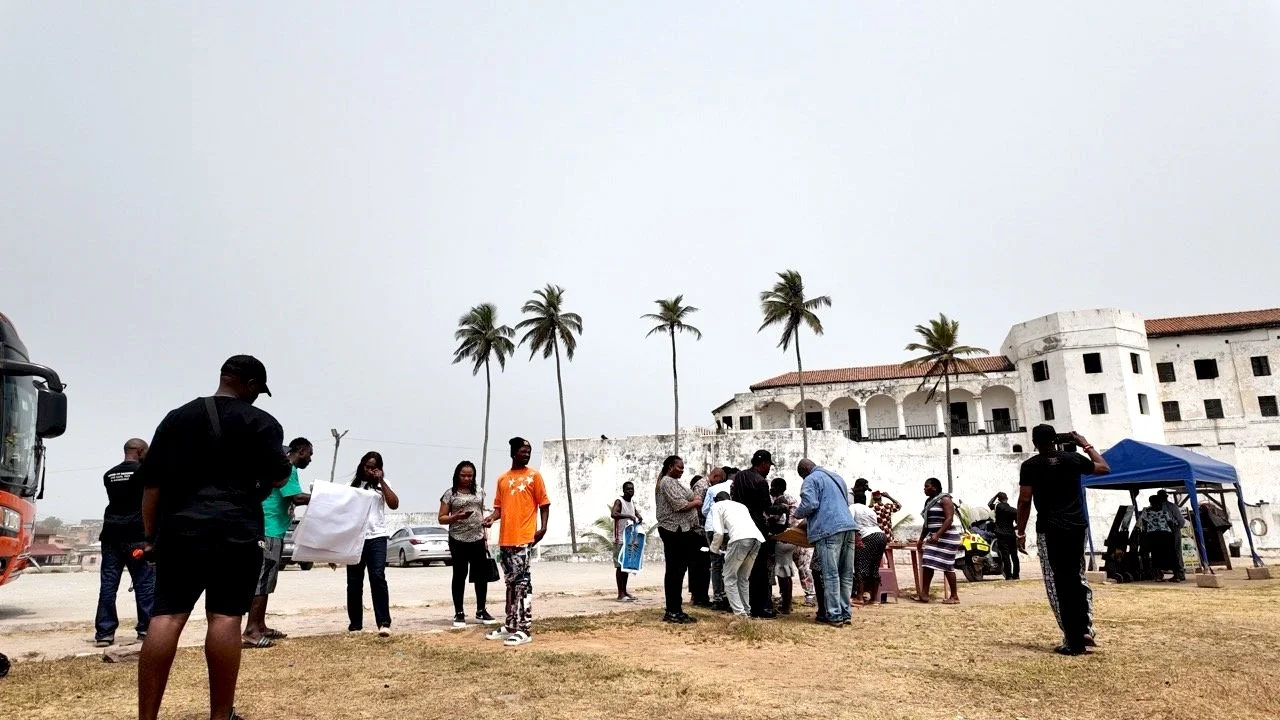
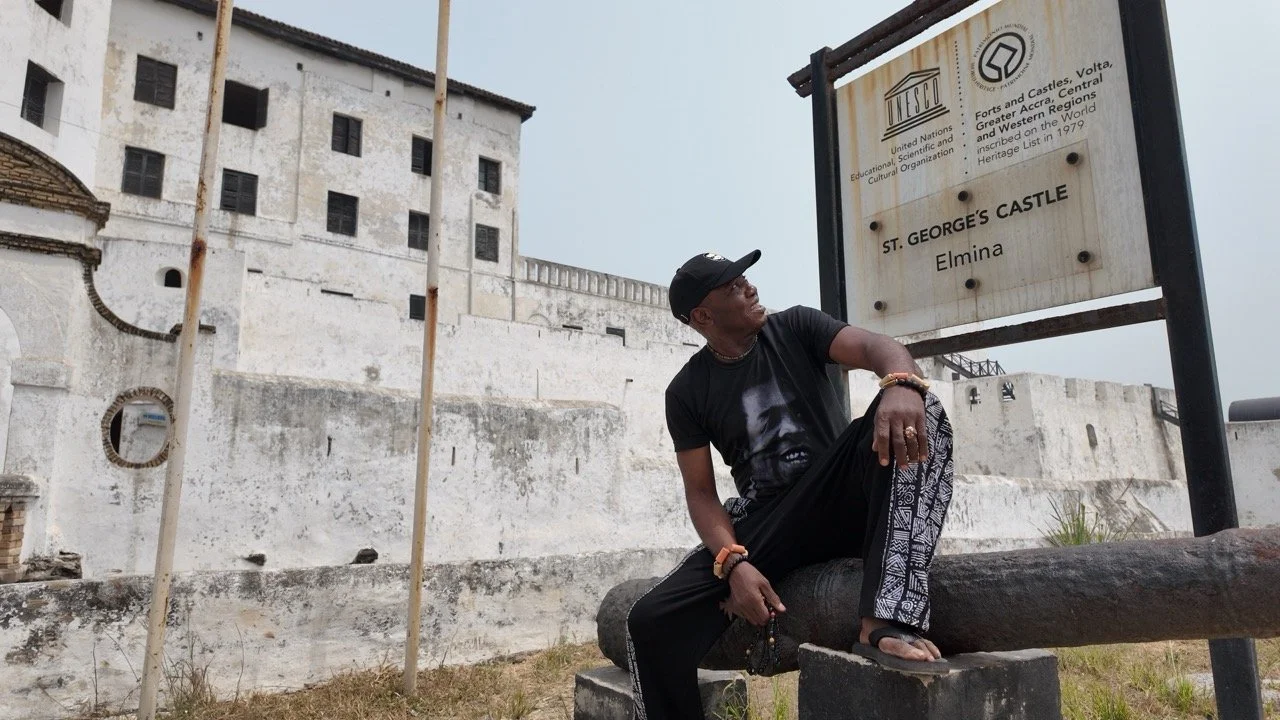

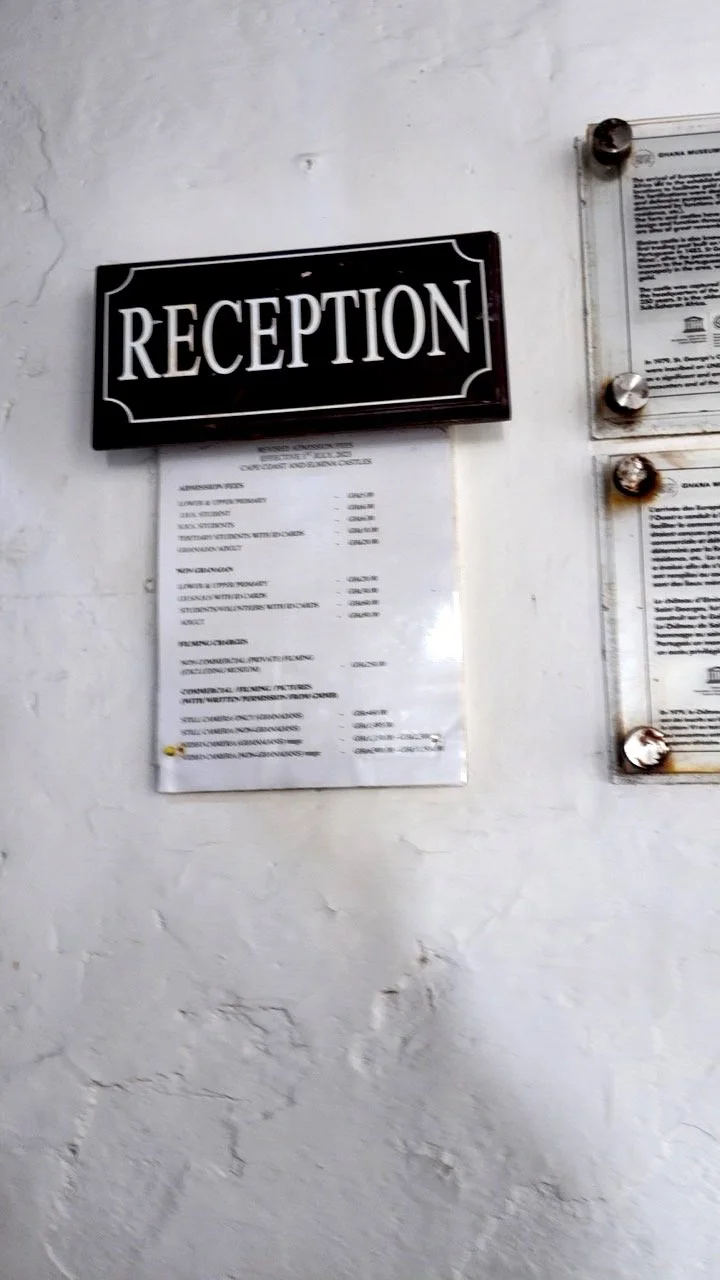
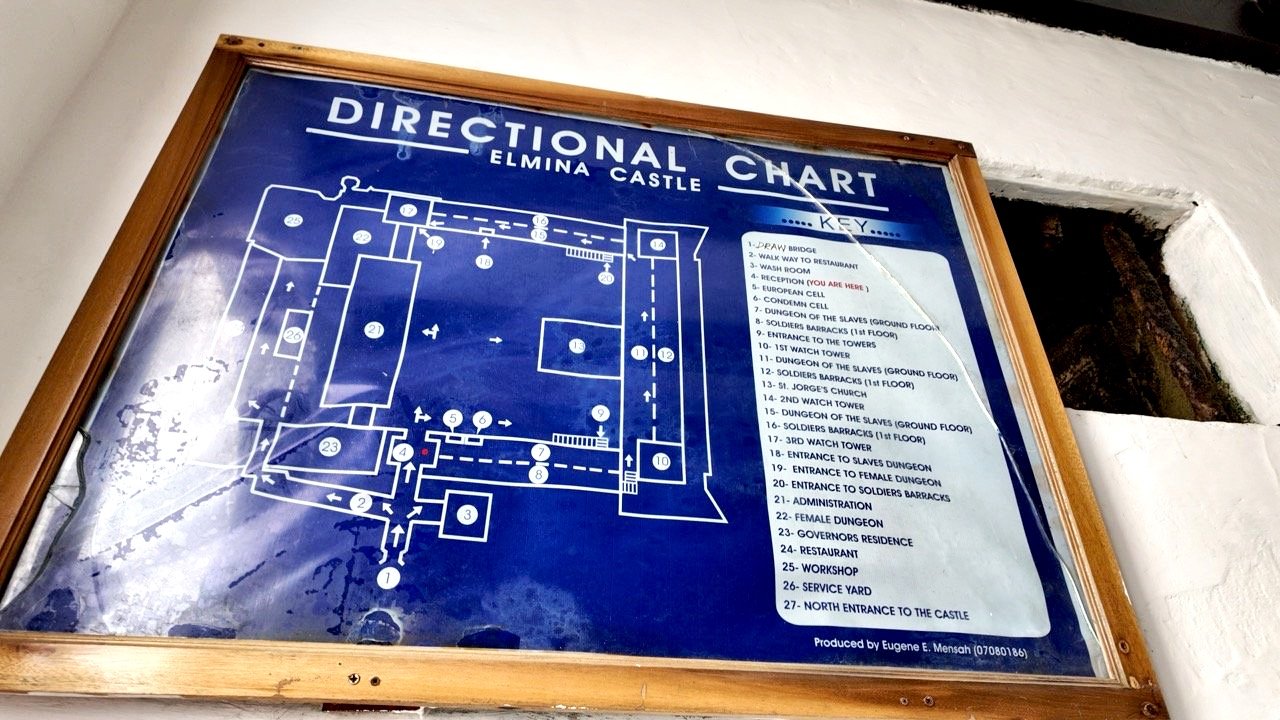

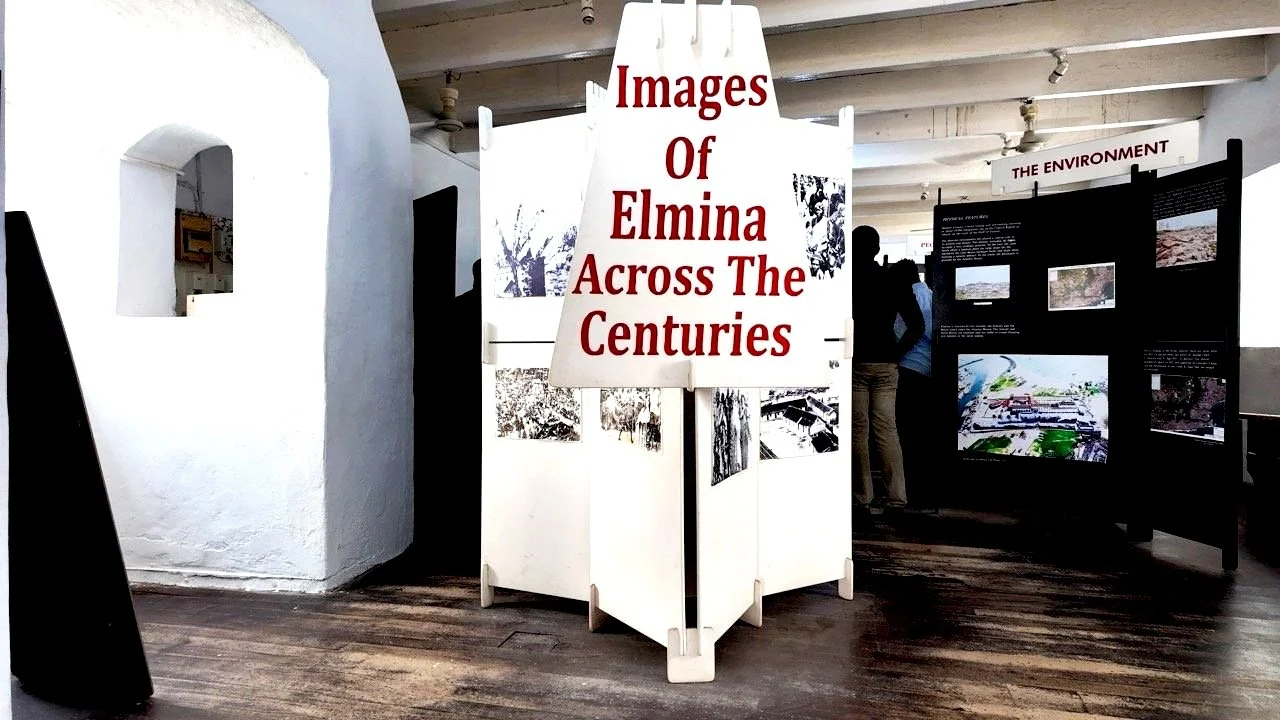

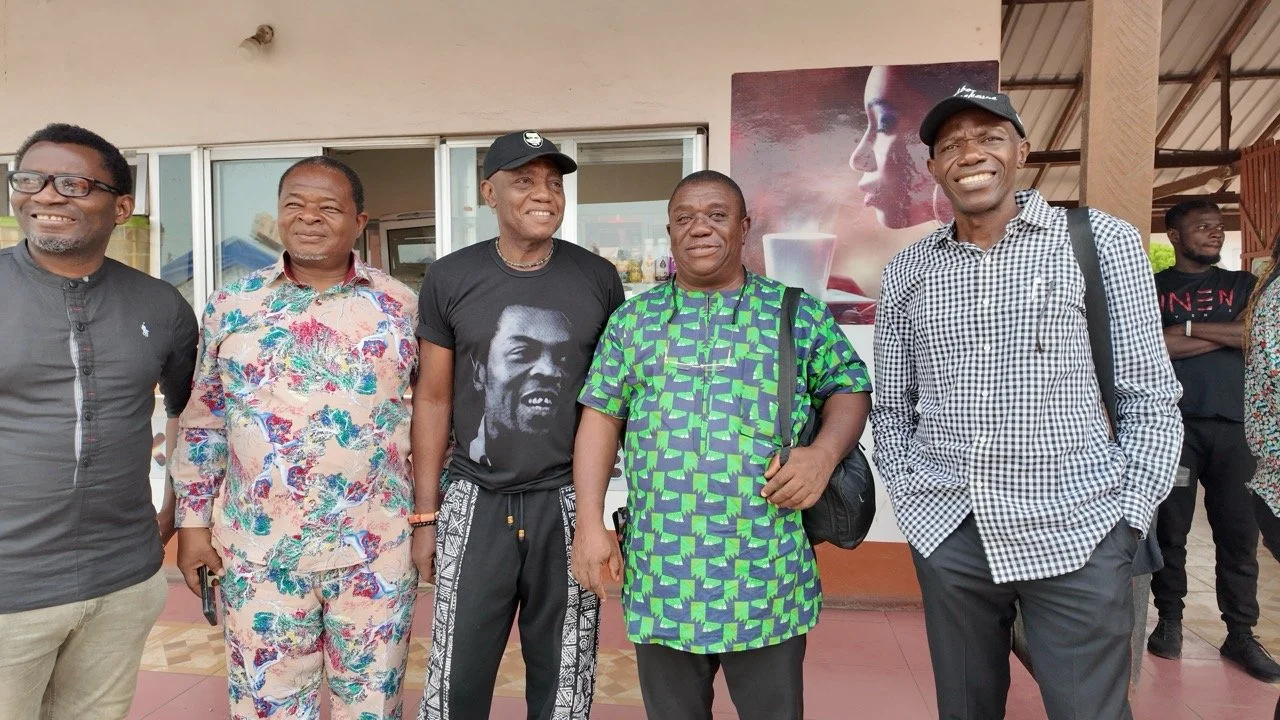
This report was made possible by Meridian Creative Center, Tema with additional images provided by elanatsuifilm.com, elanatsui.art, #el@80, Timothy Doh, Dean Zulich, and Moses Adeyemi.
Biden-Harris: Last-Minute Call To Protect Black Immigrants
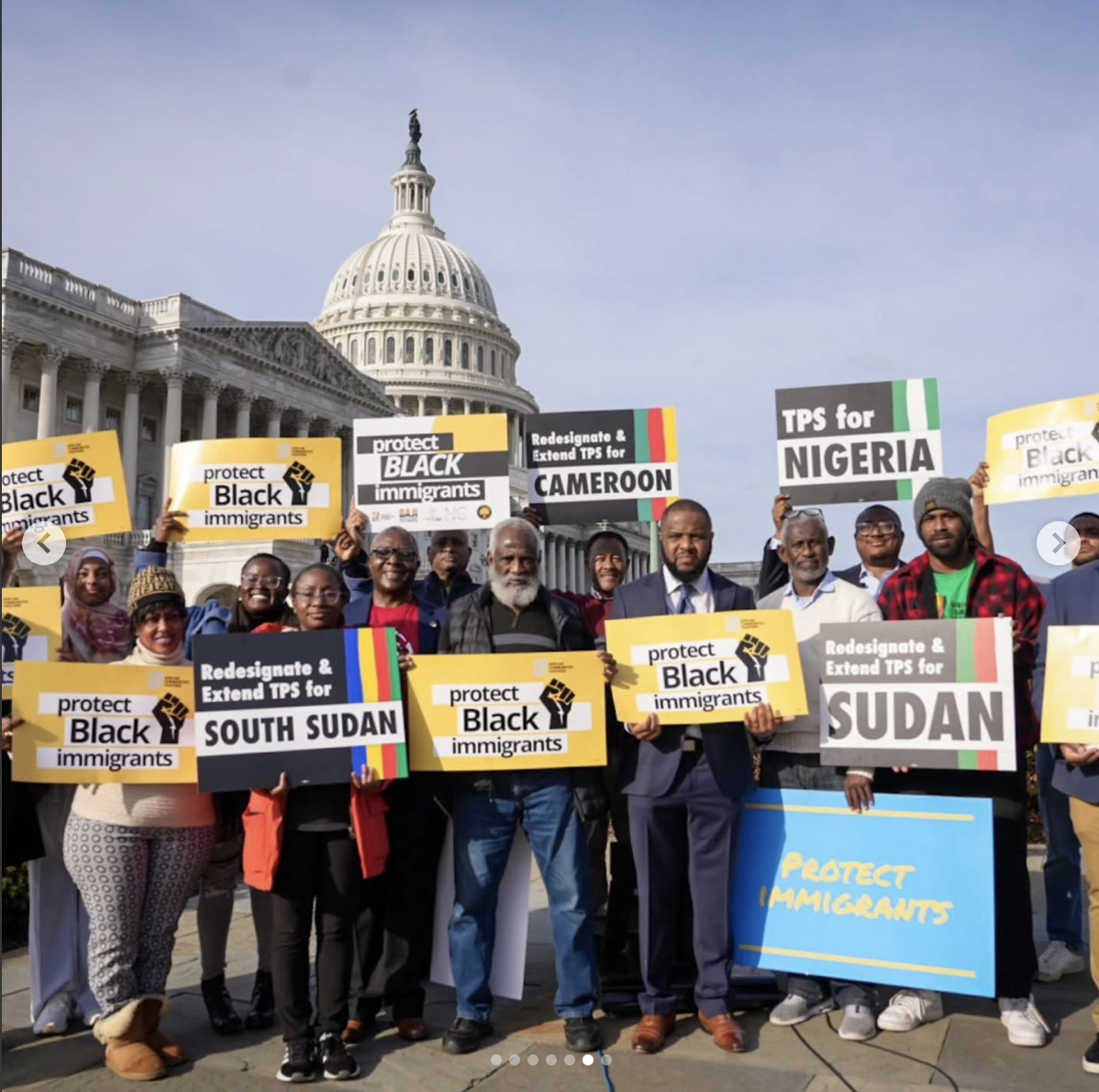
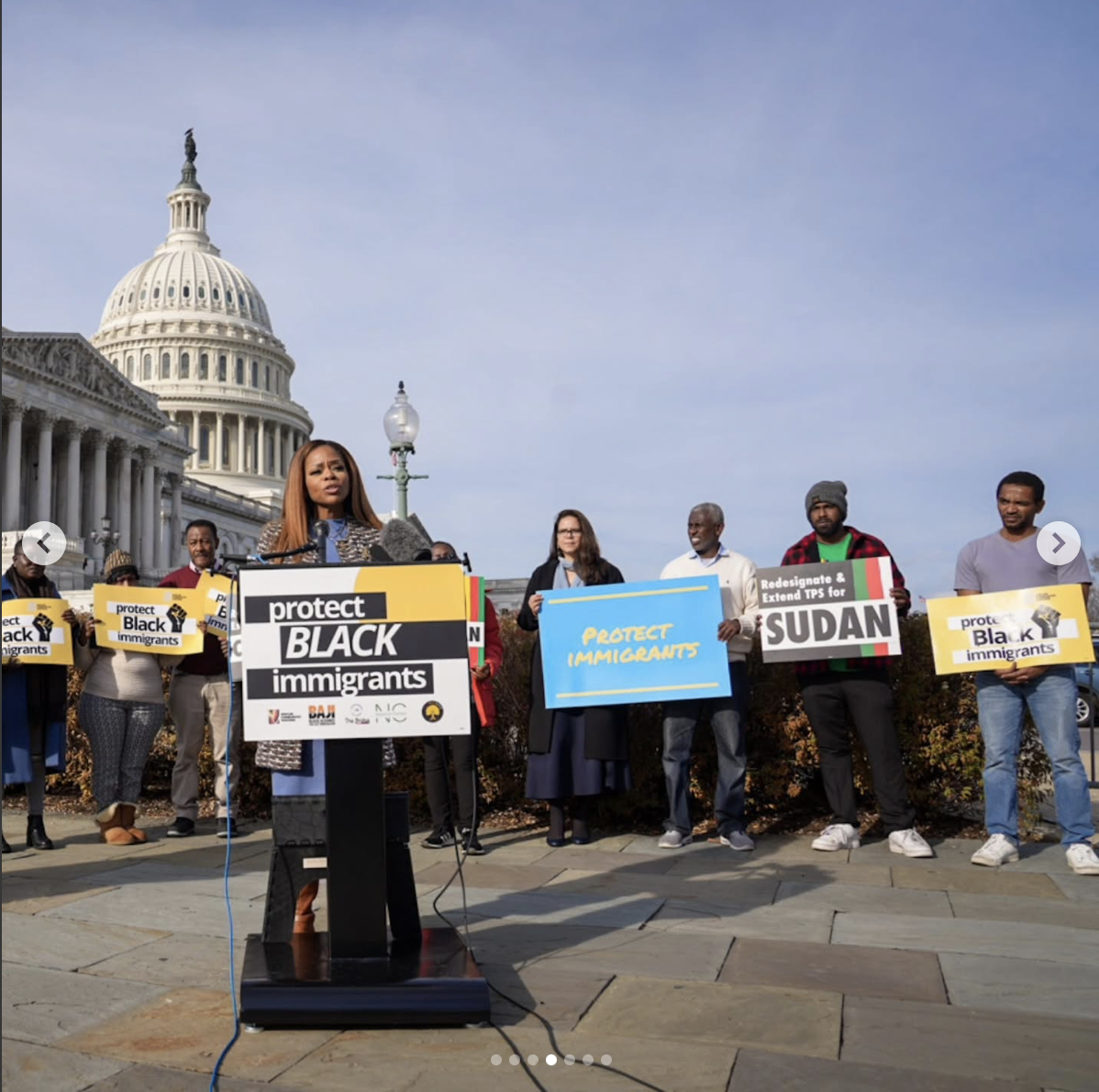
On December 17, 2024, the Nigerian Center joined Congresswoman Yvette D. Clarke (NY-09) and other leaders for a press conference on Capitol Hill, urging the Biden-Harris Administration to take urgent action to protect African immigrant communities during the lame-duck session.

Photo credits: @thornbaires
FOR IMMEDIATE RELEASE
“The U.S. Is All In on Africa’s Future” – Now Is the Time to Deliver for Black Immigrant Communities
On December 17, 2024, the Nigerian Center joined Congresswoman Yvette D. Clarke (NY-09) and other leaders for a press conference on Capitol Hill, urging the Biden-Harris Administration to take urgent action to protect immigrant communities during the lame-duck session.
The press conference followed a letter to the administration, signed by Rep. Clarke and over 40 members of Congress, calling for executive actions to extend TPS, clear processing backlogs, and protect vulnerable communities. Nigerian Center Executive Director Gbenga Ogunjimi highlighted President Biden’s promise that “the U.S. is all in on Africa’s future” during his recent visit to the continent.
“Earlier this month, President Biden made a bold commitment to the future of U.S.-Africa relations during his visit to the continent. He declared, and I quote, ‘The U.S. is all in on Africa’s future.’ Today, we are here to hold this administration to that promise. Granting immigration protections would align with the U.S. Strategy Toward Sub-Saharan Africa, affirming a commitment to human rights, economic opportunity, and global solidarity. Temporary Protected Status would offer a lifeline to vulnerable populations fleeing armed conflicts and humanitarian crises,” said Gbenga Ogunjimi.
Read the full press release [here] View the event photos [here]
##
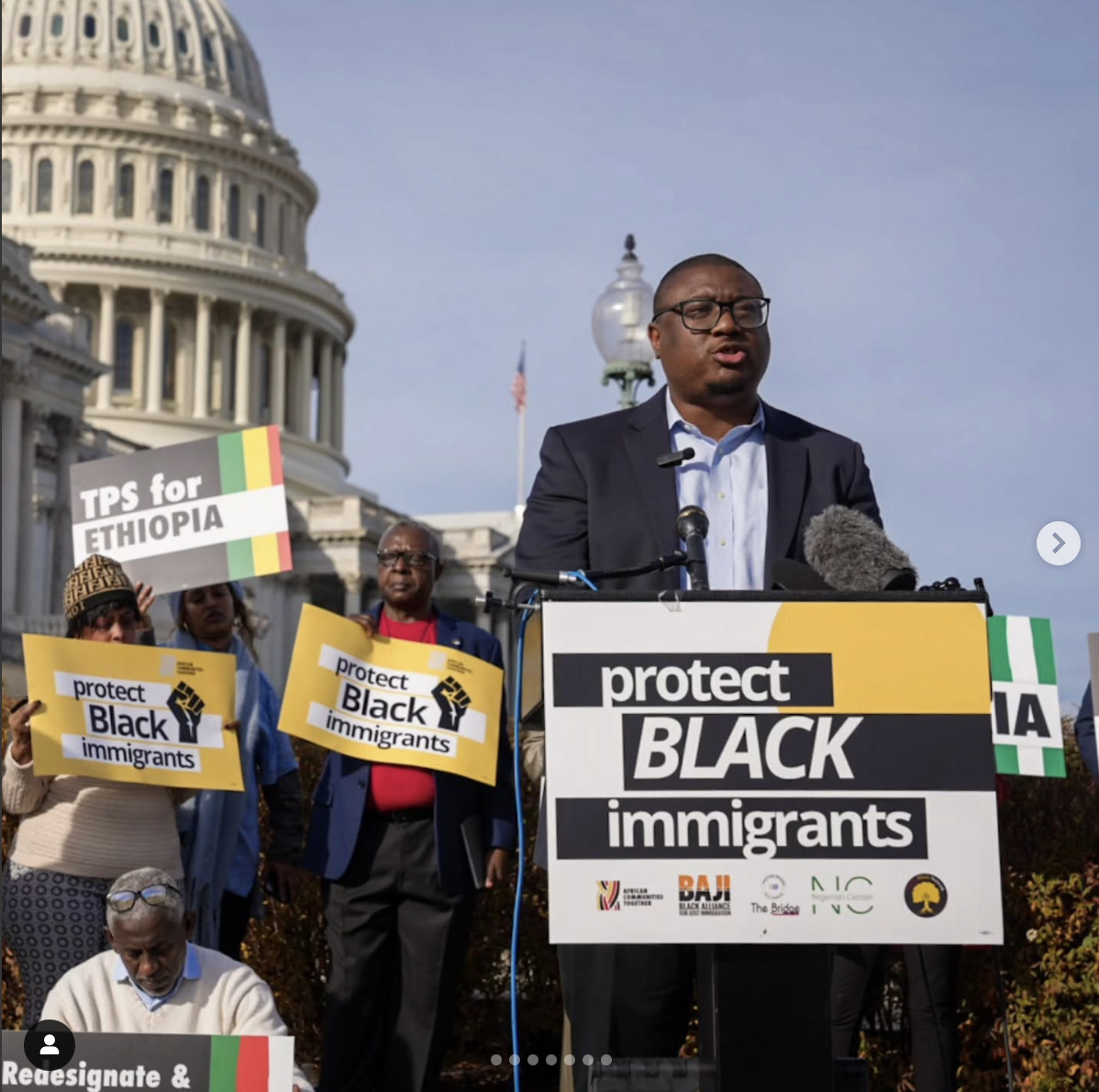
A statement on TNC Instagram account reads:
“Regardless of the outcome, we are proud of the relentless efforts and progress we've made with this administration and we look forward to continuing our advocacy with the incoming Trump administration. This campaign has been a two-year journey, and it has been a privilege to mobilize our community around a policy shift that once seemed unthinkable.”
If you or someone you know needs immigration assistance, please call The Nigerian Center immigration assistance hotline at 1-800-395-9272.
SHARE THIS STORY
Ominira
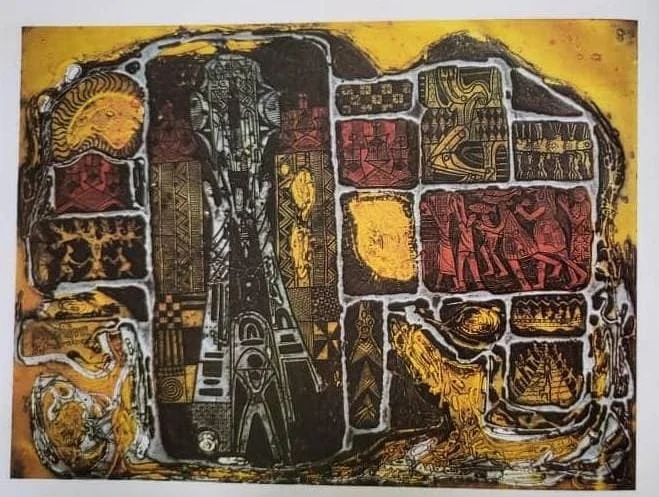
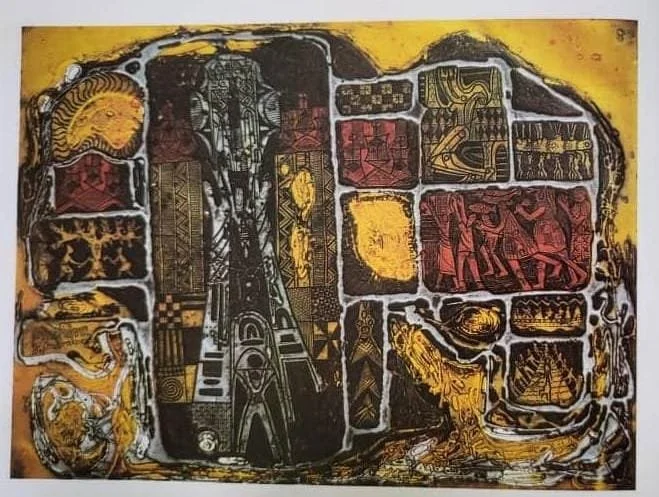
The title Ominira —meaning "Independence" in the Yoruba language—evokes a profound message in Bruce Onobrakpeya’s artwork. This powerful piece reflects the belief that Nigeria possesses the human resources, moral fortitude, and abundant natural wealth to thrive as a modern and prosperous nation.
Ominira
Medium: Plastograph
Dimensions: 45cm x 60cm
Artist: Bruce Onobrakpeya
The title Ominira —meaning "Independence" in the Yoruba language—evokes a profound message in Bruce Onobrakpeya’s artwork. This powerful piece reflects the belief that Nigeria possesses the human resources, moral fortitude, and abundant natural wealth to thrive as a modern and prosperous nation.
As we reflect on this artwork , we join Papa Bruce Onobrakpeya—a witness to Nigeria’s transformative journey since gaining independence in 1960—in prayer.
May the Divine bless Nigeria with enduring unity, wisdom, and peace. As we celebrate our nation’s independence, we ask for strength to uphold justice, fairness, and equity for all citizens.
On this special day of commemoration , let us remember that even in times of struggle and uncertainty, we are not without guidance. The courage of our ancestors, the rich heritage of our land, and the unyielding spirit of our people inspire us to move forward. Through the challenges we endure, we carry the hope and promise of a brighter future—one founded on resilience, unity, and collective progress.
Let this Independence Day remind us that , just as our nation's founders envisioned a prosperous Nigeria, we too must continue this journey to realize that dream for future generations. As we walk this path, let us remain steadfast in our commitment to the values of peace, love, and harmony that unite us as one nation under God.
Bruce Onobrakpeya, a UNESCO Living Human Treasure , celebrated his 92nd birthday this past August. For over five decades, he has resided in Mushin, Papa-Ajao, Lagos , continuing to be a beacon of Nigeria’s artistic and cultural legacy.
COLONEL VICTOR BANJO – APRIL 01, 1930 to SEPTEMBER 22, 1967
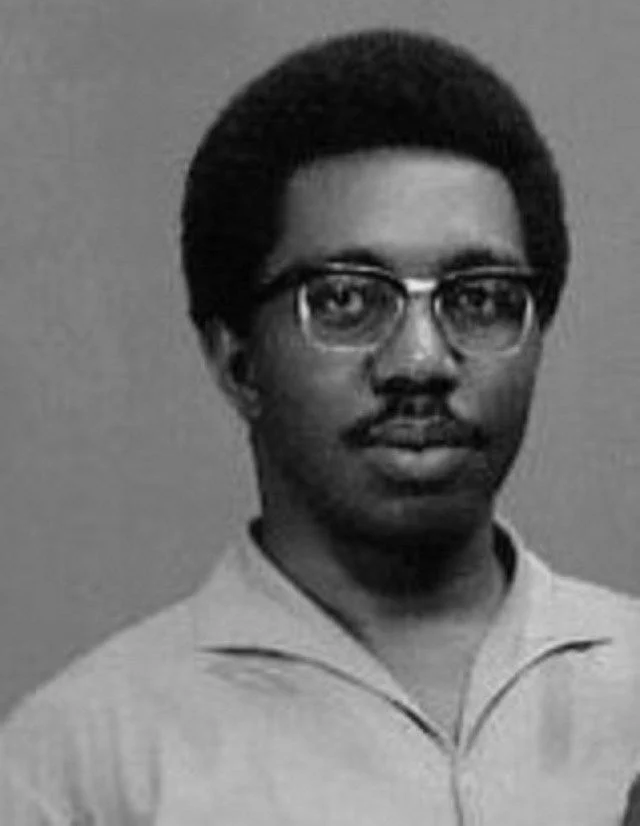
Today marks the 57th anniversary of execution of Col. Victor Banjo, a brilliant and revolutionary soldier.
Today marks the 57th anniversary of execution of Col. Victor Banjo, a brilliant and revolutionary soldier.
Excerpts from the book: COLONEL VICTOR BANJO - A REVOLUTIONARY BETRAYED - by Niyi Aborisade. Please visit here for your copy and other books of interest on Nigeria Political History.
Col. Victor Adebukunola Banjo was born on April 01, 1930 to the family of Mr. James Herbert Banjo and Chief Mrs. Sabina Banjo. He was the third child of his parents. Both of his parents hailed from Ijebu-Ode in today’s Ogun State.
His parents were fairly educated. His father was an officer of the British Crown in Nigeria, who had a distinguished career as a Lay Magistrate with co-extensive record of service all over Nigeria and parts of Cameroon. He was a self-taught legal officer who distinguished himself by an unusual understanding of the fundamentals and basic principles of the English law. His mother was a product of Girls Seminary Lagos, a School founded by the Church Missionary Society (CMS). Through her training and upbringing at home and in School, Chief Mrs. Sabina Banjo became a deeply spiritual and prayerful mother who groomed her children in the ways of God to love people unconditionally and work selflessly to uplift the downtrodden.
Col. Banjo’s siblings are all distinguished individuals in their own rights. His sister, the first child of his parent is Professor Felicia Adetoun Ogunsheye (nee Banjo). She is the first female Professor in Nigeria. She is a Professor of Library Science. She will be 98 years old on December 05, 2024. Next to her is Dr. Ademola Banjo, who attended the University College Ibadan, Manchester University, UK and Harvard University in USA. He became the first Nigeria to obtain a doctorate degree in Metallurgical Engineering. Col. Banjo immediate younger brother was Professor Adesegun Banjo. He was the first Nigerian to earn a doctorate degree in Ultra Structure and Electro-Microscopy. He was a surgeon and Professor of Human Anatomy in USA before he became involved in the struggle for the actualization of mandate given to MKO Abiola after the June 12, 1993 General Election. He plotted an armed struggle against the Government of General Sanni Abacha, unfortunately his plan was thwarted by overzealous port officials in Benin Republic who detected shipment of ammunition for the armed struggle. He was arrested and detained and later released in 1999. He died in 2019 due to debilitating cancer of the blood.
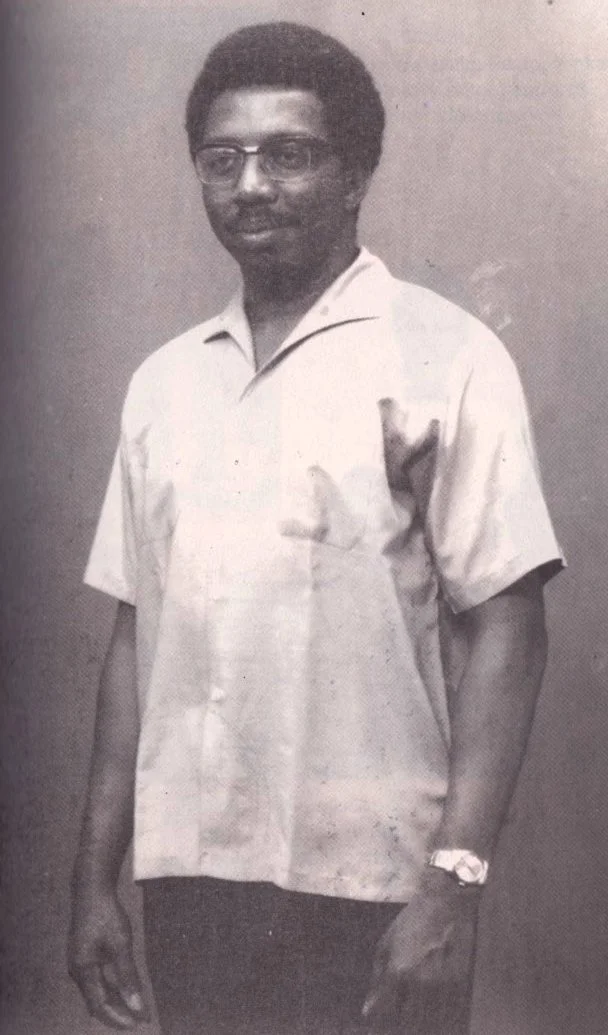
Col. Banjo was married to Mrs. Taiwo Joyce Lucretia Marion George, a Creole from Sierra Leone, but of Yoruba extraction. His children made success of their various careers. His first child, Funto Banjo Oyelese became a Director of Education with Lagos State Ministry of Education. Second child, Ayodele Banjo is a Civil Engineer from then University of Ife, now Obafemi Awolowo University. He is also a Chartered Accountant. His third child is Professor Olayinka Olusola Omigbodun. She is the first female Psychiatric Professor in Nigeria and the first female Provost of the College of Medicine, University of Ibadan. The fourth child is Adeyemi Banjo who was born in 1965 and was barely six month old when Col. Victor Banjo was taken into custody on the orders of the Military Head of State, General Aguiyi Ironsi. He barely recognized his father and could not have formed any impression about him beyond some snippets he must have formed from his mother and older siblings.
Col. Banjo attended CMS Grammar School. He joined the Army in November 1953 as a Warrant Officer II. He attended various Military Training Schools in Ghana and in the UK. While in England, he took London GCE A-Level examinations and passed with flying colours, a feat that positioned him for university admission into the University of London. Due to his brilliant performance, he was the 16th Nigerian to be commissioned as an officer, shortly after he joined the Army. In 1958, the Army sponsored him for a degree programme in UK. He obtained a degree in Mechanical Engineering from the University of London. General Olusegun Obasanjo, the former President of Nigeria described him as a brilliant officer and that he was the first Nigerian to be sponsored for a degree course by the Colonialists. He said, “For someone to be sponsored for a degree course in the Army at that time showed that he was more than the average person”. Up until 1960, there were about five graduates in the Nigerian Army and Major Adewale Ademoyega was the last graduate to be commissioned in 1961. The five graduates as of 1961 were Col. Odumegwu Ojukwu, Col. Victor Banjo, Major Olufemi Olutoye, Major Emmanuel Ifeajuna and Major Adewale Ademoyega.
After the failure of the January 15, 1966 coup, General Aguiyi Ironsi became the Head of State. Col. Banjo was never a party to the coup. According to Captain Ben Gbulie, Col. Banjo was unrestrained in the condemnation of the coup plotters and described them as being “blatantly destructive” and he boasted that he and his loyal colleagues in the Nigerian Army would crush the coup plotters. He was one of those who persuaded General Aguiyi Ironsi to take over the government when they had crushed the coup when it became apparent that the failed coup had taken many politicians, including the Prime Minister. He was the one who mobilized the troops and organized a meeting of loyal troops to cooperate with General Aguiyi Ironsi to preserve the established hierarchy of the Nigeria Army. He persuaded the Hausa officers to accept General Aguiyi Ironsi as the Head of State.
However, on January 17, 1966, barely three days when General Aguiyi Ironsi assumed office as Head of State and within such time, Col. Banjo was becoming too popular for some people’s liking and was arrested on flimsy excuse that he had his service pistol in his pocket while waiting to meet the head of State, which was contrary to the laid down regulation. They further alleged that he was among the January 15, 1966 coup plotters. He was actually waiting to see the Head of State when his comrades in the Army, Major PA. Anruwa and Lt. Col. GT Kurubo pretended to be admiring the latest weapon he was carrying. They both requested his permission for them to handle the sophisticated weapon, which he innocently handed over to them since he had no ulterior motive. He was then arrested on “account of planning a coup to topple General Aguiyi Ironsi in support of the January 15, 1966 coup plotters”.
To say the least, Col. Banjo was very surprised at the turn of event. He was initially detained in Lagos and later in the Eastern part of Nigeria. He was in the East until the outbreak of the civil war in 1967. He wrote to General Aguiyi Ironsi on June 01, 1966 proclaiming his innocence but this was to no avail.
On May 30, 1967, Col. Ojukwu declared the birth of the Republic of Biafra and this declaration was greeted with enthusiasm in the East as virtually everyone and groups in the East embraced it. The East had the most senior officers before the counter coup of July 1966 as many had been killed during the pogrom of July 29, 1966 in the North. Nevertheless, they still had higher numbers of senior military officers than the whole of Nigeria. It must however be said that Col. Ojukwu was not prepared in terms of weapons. Mere zeal and rhetoric were not synonymous with adequate weapons of war. On the day he declared secession, he had few weapons to face the mighty Nigerian Army.
Col. Banjo was released by the new Biafra Head of State; Col. Ojukwu and he Col. Banjo stayed with him in Enugu which was the capital city of the new Biafra. Col. Banjo later formed the 101st Brigade of the Biafra Army. A Brigade is a major tactical military formation that is typically made up of three to six battalions and other elements. A Brigade can be made of up to 3,000 to 5,000 soldiers. He formed this Brigade from scratch and transformed it into a standard fighting force. His position of authority and influence did not go down well with some Biafra military officers, among who was Alexandra Madiebo whose 51st Brigade was under Banjo’s sphere of authority and command. Banjo command covered Nsukka and Nkalagu operational areas. This was one of the first issues Banjo had in Biafra, a non-Biafra with such a large command. He built the Brigade from the scratch and transformed the erstwhile rustic soldiers with crude weapons into a formidable and positively motivated fighting force. He was far ahead of his colleagues in military tactics, operations and strategy. Whilst his colleagues such as Major General Philip Effiong and Major General Alexandra Madiebo concentrated on the defensive position as was in the military textbook, Banjo decided to launch an attack and take the fight to the enemies, sharing the Israeli belief that offence was the best form of defence.
When Banjo was promoted to the rank of Brigadier by General Ojukwu, he made it clear that it would be wrong to use the name ‘Biafra Army’ in the Midwest because that will give an impression that the Biafra Army was an Army of occupation. He said that Biafra still needed the cooperation, even if tacit, of Midwest and South West to push through in confronting the Northern dominated Army in Lagos. He said all efforts must be made to present the Biafra Army as one of liberation, with clear mandate to relieve their people of the burden imposed by the Northern dominated Nigeria State and Army. This was the core of the gentleman agreement between Banjo and Ojukwu. This was what informed Banjo decision to code name the 101st Brigade, “The Liberation Army of Nigeria”. He reorganized the 101st Brigade and chose disciplined officers to execute his plans. He made Lt. Col. Emmanuel Ifeajuna, one of the coup plotters of January 15, 1966 his Chief of Staff. Banjo turned the 101st Brigade into a brutally efficient war machine, recording lightning–speed successes one after the other.
On August 09, 1967, Brigadier Banjo led his Liberation Army into Mid-West in an operation code named “Torch”. He split up his army on reaching Agbor, with the 12th Battalion under Lt. Col. Akhaga moving West and capturing Benin and Ore. The 13th Battalion under Lt. Col. Mike Ivonso took Auchi, Agenebode and Okene. The 18th Battalion under Major Chukwuka took over Warri, Sapele and Ughelli. Within 12 hours, the Liberation Army of Nigeria had completely taken over the Mid-West. David Ejoor, the Nigeria Military Governor was lucky to escape the ambush set up secretly by Ojukwu. The plan to abduct Ejoor was hatched without the knowledge of Banjo and this might have been responsible for his escape.
Immediately after the Liberation Army of Nigeria over ran the Mid-West, serious disagreement arose between Banjo and Ojukwu. First, Ojukwu was advised by senior Igbo Military officers to take power out of Banjo’s hand, they said, afterall, all the ammunition and soldiers were from Biafra. Secondly, Ojukwu rebuffed Banjo’s advice that new Governor of Mid-West should be from the non-Igbo Mid-Westerners like Lt. Col. David Ejoor, Samuel Ogbemudia or Col. Trimnell. This advice was predicated on the need to make the Mid-Westerners feel at home and not think that they are being ruled by Biafra. Ojukwu ignore this advice and appointed Albert Okonkwo, an Igbo Mid-Westerner as the Governor of Mid-West or Republic of Benin as Ojokwu preferred to name it.
Despite the disagreement between Ojukwu and Banjo as to who should be Governor of the Mid-West, Ojukwu ordered Banjo to proceed to take Lagos at all cost despite inadequate ammunition and personnel to confront the almighty army on the Federal side. Even though Banjo had some good officers in the persons of Lt. Col. Emmanuel Ifeajuna, Lt. Col. Adewale Ademoyega who had also been released from prison by Ojukwu to fight on his side, Lt. Col. Mike Ivonso, Major Chukwuka, Lt. Oyewole and Lt. Adeleke. Both Lt. Oyewole and Lt. Adeleke were also released by Ojukwu from prison to fight on his side. Both were later promoted to captain. Notwithstanding the sterling qualities of these officers, they were no match to the officers on the Federal side that were better armed with good weapons. Such officers were Brigadier Benjamin Adekunle, popularly known as the Black Scorpion and Commander of the dreaded 3rd Marine Commando and one of the major heroes of the civil war. There were Col. Obasanjo who was Ibadan Garrison Commander, Col. Murtala Muhammed, Lt. Col Alani Akinrinade and Lt. Col. Alabi Isama. These were better equipped officers that Ojukwu commanded Banjo to take on with inadequate soldiers and ammunitions, things that the Federal side had in abundance.
Ojukwu gave Banjo three conditions via a letter dated August 22, 1967. The conditions are: First, Banjo should not have anything to do with Military Administrator of the Mid-West territory during his sojourn there before the invasion of the West. Second, during the period of Biafran troops’ presence in all territories subdued, all political measures, statements, or decrees shall be subject to approval in writing by Ojukwu or his authority. Third, should the Biafra troops arrive and liberate Lagos, the government of the Republic of Biafra reserves the right to appoint a Military Administrator for the territory. The last conditions exposed the inordinate ambition of Ojukwu. It is possible he would have nominated an Igbo Military Governor over Lagos and by extension the West just as he did in Mid-West.
Banjo realizing the enormity of casualty that will arise in the heart of Yorubaland if he is to fight his ways to Lagos with little ammunitions and soldiers, took advantage of the visitation of Wole Soyinka and send him (Soyinka) to Obasanjo for Obasanjo to allow him a free passage to Lagos through Ibadan and that Soyinka should let the West understand that the he is not leading a Biafra army but an Army of Liberation made up of other ethnic groups. For obvious reason, Obasanjo refused this plea. Obasanjo told Soyinka to tell Banjo that he can use alternative routes like waterways or air to reach Lagos and that he, Banjo need not come through Ibadan as he will not yield his ground for anybody. It was this errand that almost caused Soyinka his life, but was lucky to have a kind-hearted man in person of General Gowon who rather put him in prison than executing him. He spent more than 24 months in prison until his release in 1969. If he had done same to Ojukwu, he will not live to tell the story and he would have been promptly labelled saboteur which was the in-thing in the Republic of Biafra then. If Soyinka had succeeded in his mission and convinced Obasanjo, the story of the civil war could have been a different one.
Of all the civil war battles, the battle at Ore was the fiercest. It was so deadly that it was named “Oleku, ija Ore” in Yoruba language or simply ‘Deadly Battle at Ore” or “Mother of All Battles at Ore”.
The battle to recapture Mid-West started with the coordinated efforts of Benjamin Adekunle’s 3rd Marine Commandos who took over the towns of Koko, Sapele, Warri, Ughelli, Orerokpe, Umutu and Itaga in the Mid-West. He was also assisted by Lt. Col. Alani Akinrinade and Alabi Isama. On September 20, 1967, Benin fell into the hand of troops led by Col. Murtala Muhammed and that ended the Biafra Government in Mid-West.
During the stalemate when Banjo, by necessity due to lack of adequate weapons and heavy bombardment from the Federal side halted his advance to Lagos, he was quickly labelled a saboteur. This was not true, Banjo simply refused to commit mass murder and waste the lives of his soldiers in the face of a great odd and impossible situation.
During the war, Ojukwu had some spies whose duties were to visit Commanders at war fronts and secretly interview them on the State of things. Anyone who expressed himself against the Commander-in-Chief on his poor management of the war and tactics was penned down as a saboteurs. Col. Achuzia was Ojukwu favourite spies. According to Phillip Effiong, it got to a stage when even advice must be carefully given, otherwise one will be labelled a saboteur. He said “Ojukwu spies were everywhere”. In his book The Cage Bird Sang No More, Phillip Effiong maintained that Ojukwu’s “Military appreciation was amateurish ….. he indulged in debates and seminars while the collapse of Biafra was starring us in the face. No saboteurs could have been more effective”. Ojukwu was responsible for the fall of Biafra, unfortunately he needed a scapegoat and found one in some of his officers including Banjo who stood taller above all other officers and who was too independent for him.
Ojukwu invited Banjo to a meeting Enugu, and when Ojukwu was told of his arrival, Banjo was promptly disarmed and arrested on account of planning a coup against the Commander-in-Chief. Lt. Col. Emmanuel Ifeajuna, Major Phillip Alale and Major Sam Agbam had all earlier been arrested but unknown to Banjo. Banjo defended himself against two allegations levied against him. Contrary to the lies in some quarters that Ojukwu obtained his confession. There was no confession anywhere because there was nothing to confess about and no confession statement was tendered at his trial. The two allegation are; one, violation of law and maintenance decree, a charge of insubordination for retreating from Ore and turning back from capturing Lagos and two, subversion as an intention to cause public disorder aiming at capturing power in Biafra. These allegations were a total surprised for Banjo. If truly he wanted to overthrow Ojukwu, he would not have honoured the invite or he would not have gone with just his escort. He would have gone with his troops that would have taken over and shot his way out. After his arrest, he was replaced by another Yoruba man in the person of Lt. Col. Adewale Ademoyega was also released by Ojukwu. He too was later arrested and detained in the same building with Banjo but not the same cell, where Banjo, Ifeajuna, Phillip Alale and Sam Agbam were detained. Ademoyega was never tried and he survived the war. He was briefly 'freed' after the war but the Federal forces put him right back in detention for his participation as part of the Liberation Army.
He was finally released along with twenty others during the 1974 Independence Day amnesty.
Ojukwu constituted a Special Military Tribunal headed by Godwin Nzegwu, a lawyer from Onitsha. He was a great lawyer of impeccable character and sense of duty who was committed to upholding the rule of law. Ojukwu had ordered the Tribunal in advance to condemn Banjo and others as he had already adjudged them guilty. Having listened to the defendants and in the absence of any documentary evidence to establish a case against them, not even the purported confession was tendered, Godwin Nzegwu refused to participate in the murdering of innocent souls. For failing to find them guilty as was ordered, he too was arrested by Ojukwu and detained till the end of the war.
Having removed Lawyer Godwin Nzegwu as the Chairman of the Special Military Tribunal and had him detained, Ojukwu looked for a judge that will do his bidding and he found one in the person of Justice George Ekemena with a strict order that the accused must be found guilt. And that was exactly what the Judge did. Col. Banjo presented his evidence as a litigant in person and also spoke for other accused, i.e. Lt. Col. Emmanuel Ifeajuna, Major Phillip Alale and Major Sam Agbam. Ojukwu Special Military Tribunal found all the accused persons guilty and they were condemned to death by firing squad. The trial was conducted and concluded on September 20, 1967. Just a day trial!
Lt. Col. Adewale Ademoyega in his Book Why We Struck, said he saw the heads of the four condemned men last on September 21, 1967 from his cell, while they were being led out. He said Lt. Col. Emmanuel Ifeajuna last words to him were: “Wale, we have been condemned to death and unless a miracle happens, we could be shot any time, please take care of my wife and children”.
The condemned men were shot on September 22, 1967 and were buried in unmarked graves. It was reported that Col. Banjo was shot several times because he was shouting that he was not dead yet, which made the executioners combined and directed all their fire-power at him. They eventually silenced the great soldier, a great ideologue and a revolutionary. He was just 37 years old when he was killed in his prime not on the battlefield but by a friend turned fiend.
Ojukwu was later pardoned by the Federal Government and had all his benefits paid to him as a Nigerian soldier. This made Col. Achuzia to berate him and condemned what he was paid by the Federal Government as blood money because many of those who fought for him were not compensated and Ojukwu did not fight for them to receive their benefits.
Col. Banjo was not dismissed from the Nigerian Army, and neither was his gratuity paid to his family to date. Ojukwu did not release or mention the place where Banjo was buried to date. The Federal Government ought to have declared Banjo dead instead of declaring him Missing in Action. The war ended 54 years ago and they knew that he had been executed by Ojukwu.
May the soul of Colonel Victor Adebukunola Banjo, Lt. Col. Emmanuel Ifeajuna, Major Phillip Alale and Major Sam Agbam rest in peace, amen.
Excerpts from the book: COLONEL VICTOR BANJO - A REVOLUTIONARY BETRAYED- by Niyi Aborisade. Please visit https://sunshinebookseller.com for your copy and other books of interest on Nigeria Political History.
COPIED.
FINAL DAYS TO APPLY
NEW YORK — Black Public Media (BPM) has issued its 2024 open call for projects that center Black culture, characters, communities and concerns. A total of $175,000 will be awarded this year to U.S. documentary projects currently in pre-production, production or post-production, and intended for public media distribution. The 2024 submission portal (https://blackpublicmedia.org/for-media-makers/bpm-open-call/) is now open and closes on Monday, September 30, at 11:59 p.m. ET. Since its inception, BPM has invested more than $17 million toward iconic documentaries and emerging media projects about the global Black experience.
Black Public Media 2024 Open Call offers $175,000 in funding for Black stories

FOR IMMEDIATE RELEASE
BLACK PUBLIC MEDIA ISSUES OPEN CALL FOR BLACK STORIES
BPM to award a total of $175,000 in current round of funding
NEW YORK — Black Public Media (BPM) has issued its 2024 open call for projects that center Black culture, characters, communities and concerns. A total of $175,000 will be awarded this year to U.S. documentary projects currently in pre-production, production or post-production, and intended for public media distribution. The 2024 submission portal (https://blackpublicmedia.org/for-media-makers/bpm-open-call/) is now open and closes on Monday, September 30, at 11:59 p.m. ET. Since its inception, BPM has invested more than $17 million toward iconic documentaries and emerging media projects about the global Black experience.
This year BPM — a Harlem-based national media arts nonprofit that trains talented storytellers and funds and distributes their works — welcomes feature-length documentary projects in a range of formats, styles, subject matter and genres, including those that target specific viewers such as children and teen audiences. The projects should be compelling, nuanced stories that add the point of view, experiences and concerns of the Black communities to the larger public discourse.
Applicants must be the producer or director of the project with at least three years of professional producing and/or directing experience (or must have a senior producer attached to the project). The applicant must be able to complete the project within 18 months. Additional requirements can be found at: https://blackpublicmedia.org/for-media-makers/bpm-open-call/.
This fall, a panel of media professionals across the industry will evaluate the proposals in a two-tier review process that assesses the project idea and story, production readiness, production team, project budget and work sample. And in December, BPM will announce the five applicants who will receive a $5,000 stipend, an invitation to its talent development program and the opportunity to participate in PitchBLACK, the largest pitch competition for independent filmmakers and creative technologists developing new projects about the global Black experience. One of these projects will win a $150,000 PitchBLACK Award for a broadcast-length or feature project.
“Each year we are amazed to see the myriad, layered stories which are bubbling up from all corners of this country from such gifted creatives,” said BPM Executive Director Leslie Fields-Cruz. “We look forward to helping these makers bring their important work to American viewers.”
Prospective applicants may watch BPM’s virtual information session here: https://blackpublicmedia.org/for-media-makers/bpm-open-call/.
BPM’s 2024 Open Call is supported by the Corporation for Public Broadcasting, Netflix, the MacArthur Foundation, the Tarver Walls Foundation, Paramount+, the New York Community Trust, the Jerome Foundation, the Tides Foundation, Acton Family Giving and Gimlet.
For more information on Black Public Media, visit www.blackpublicmedia.org, or follow it on X (@BLKPublicMedia), Facebook (@BlackPublicMedia), Instagram (@blackpublicmedia) or TikTok (@black-public-media).
ABOUT BLACK PUBLIC MEDIA:
Black Public Media (BPM) supports the development of visionary content creators and distributes stories about the global Black experience to inspire a more equitable and inclusive future. For 45 years, BPM has addressed the needs of unserved and underserved audiences. BPM-supported programs have won five Emmys, 10 Peabodys, three Anthem Awards, 14 Emmy nominations and an Oscar nomination. BPM continues to address historical, contemporary, and systemic challenges that traditionally impede the development and distribution of Black stories. For more information, visit blackpublicmedia.org and follow BPM on Instagram and Facebook and @BLKPublicMedia on X.
# # #
For interview and media inquiries, contact:
Cheryl L. Duncan
Cheryl Duncan & Company Inc.
201-552-9239 (O)
DELA Premieres In GHANA
DELA: The Making of El Anatsui Premieres at Black Star International Film Festival in Ghana to rave reviews.
DELA: The Making of El Anatsui Premieres at Black Star International Film Festival in Ghana to rave reviews.
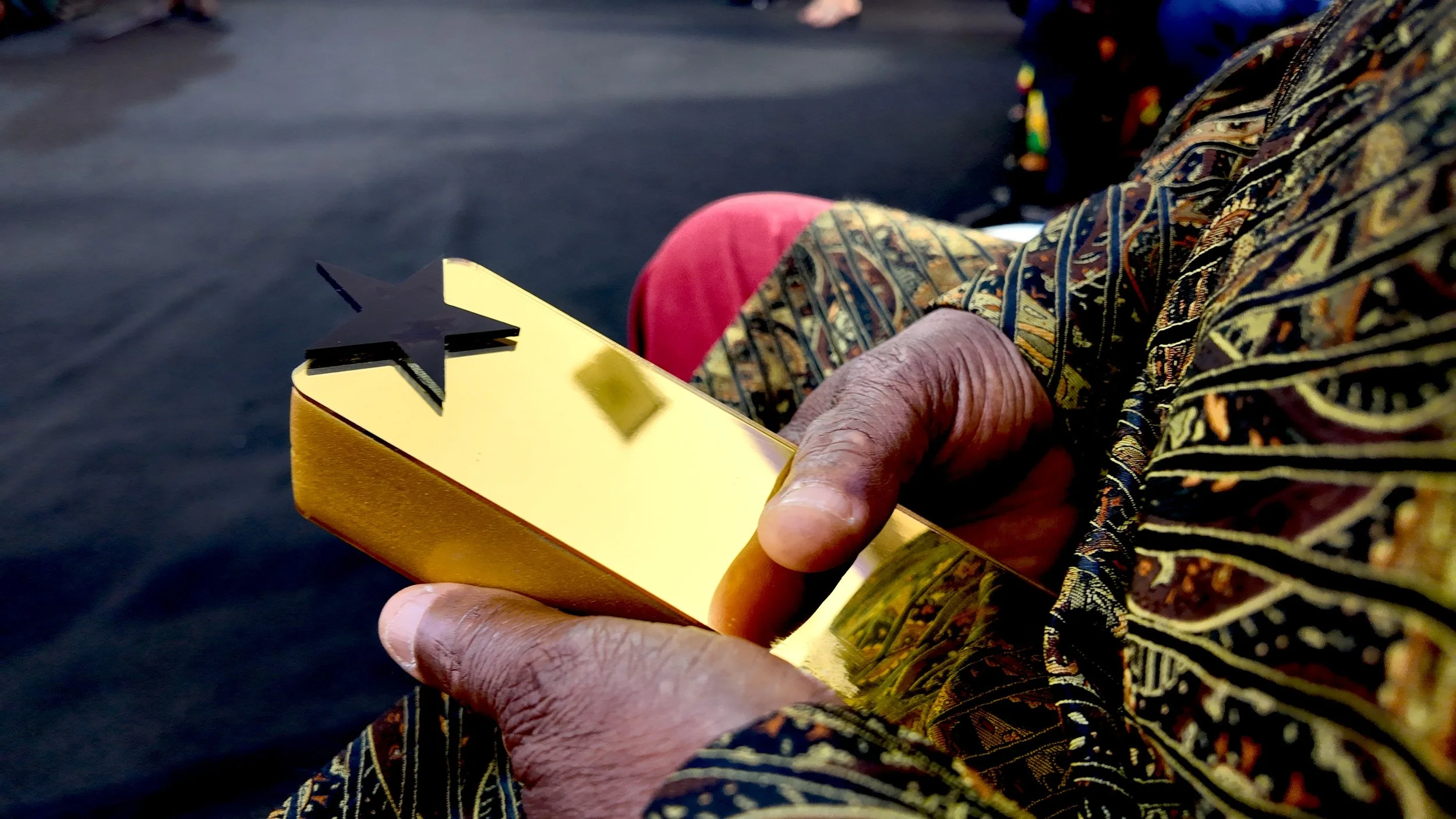
Prof. El Anatsui holds his Achievement Award - a gold bar with a black star /Photo by Africa-Related
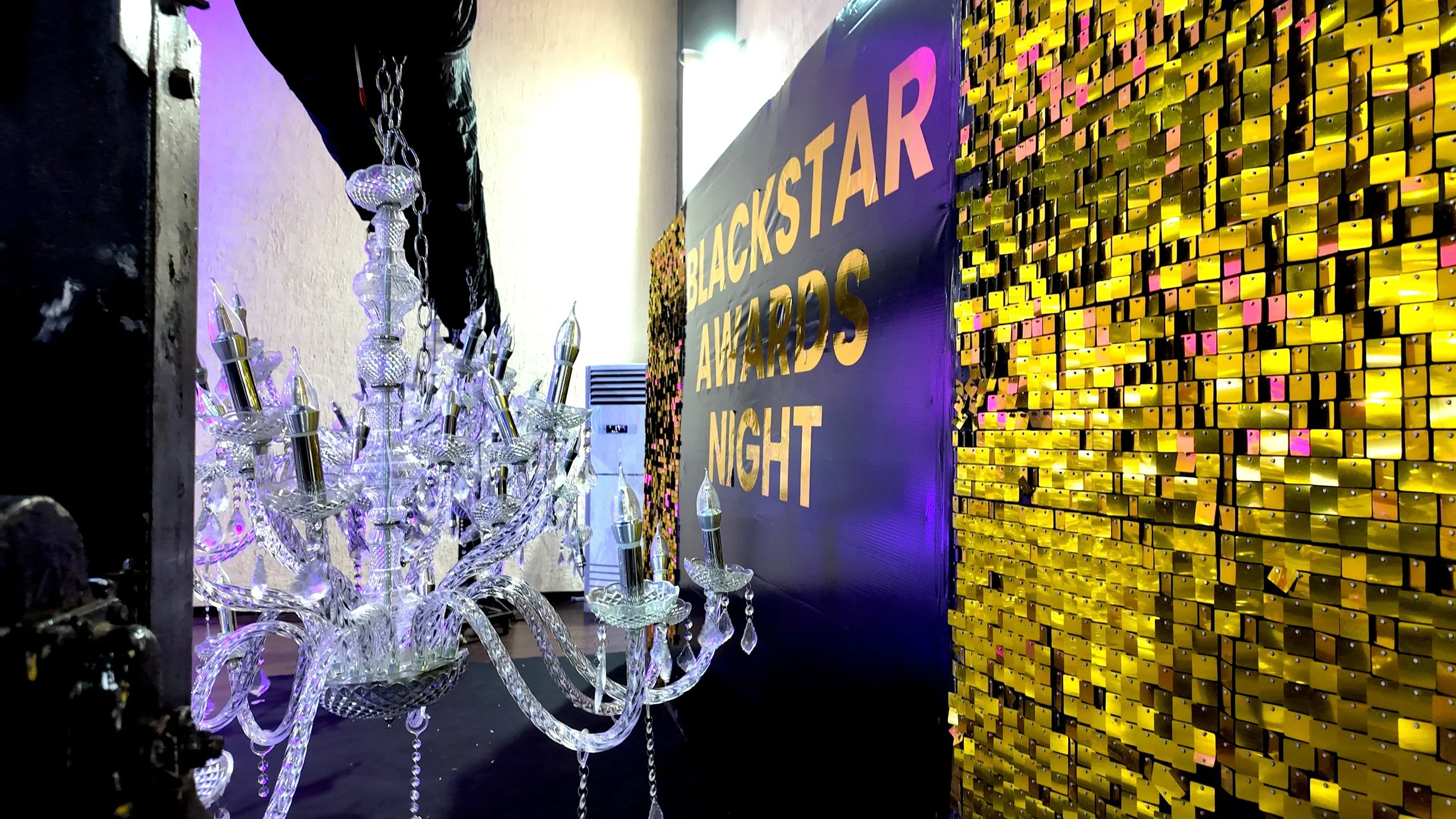
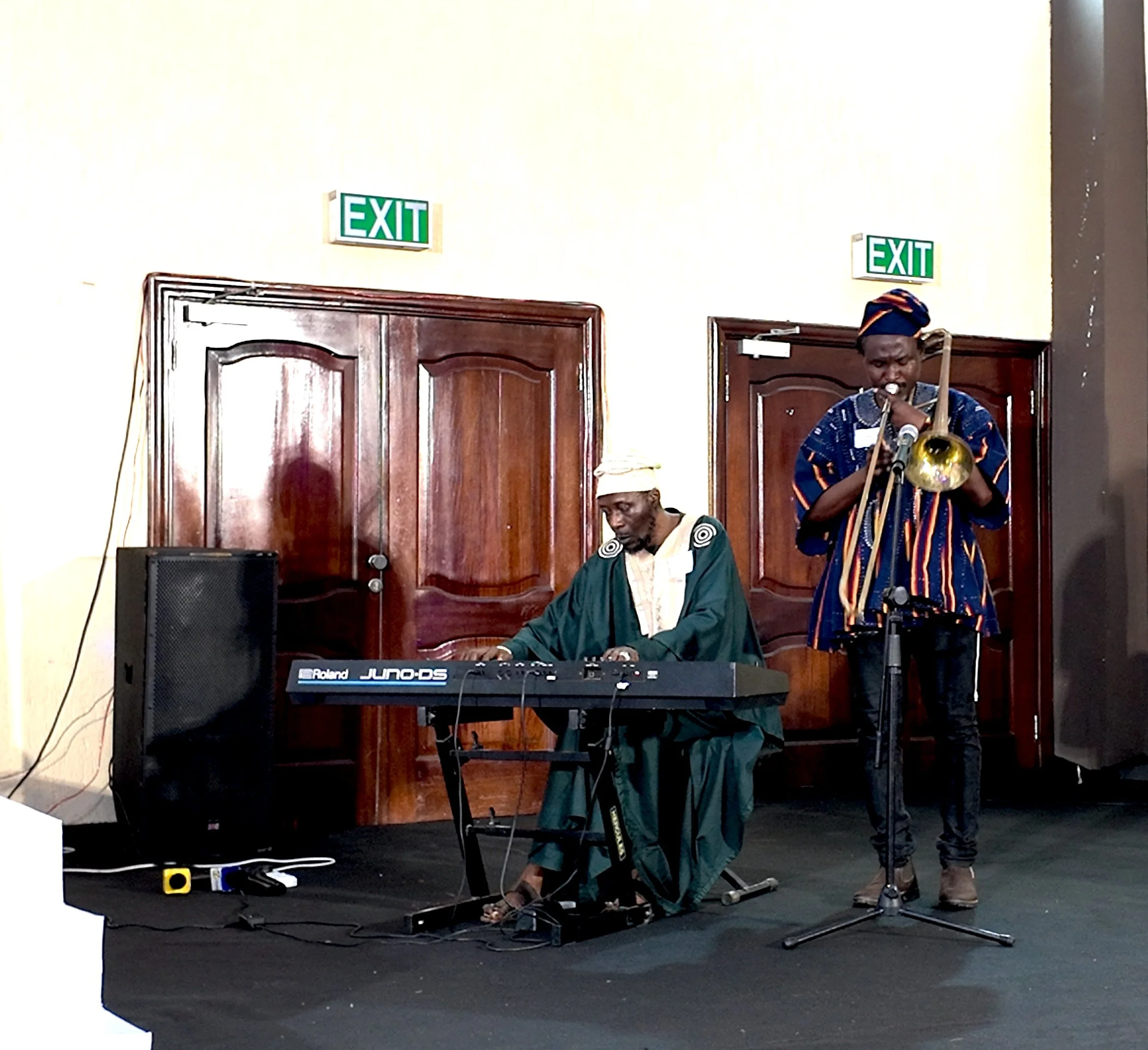
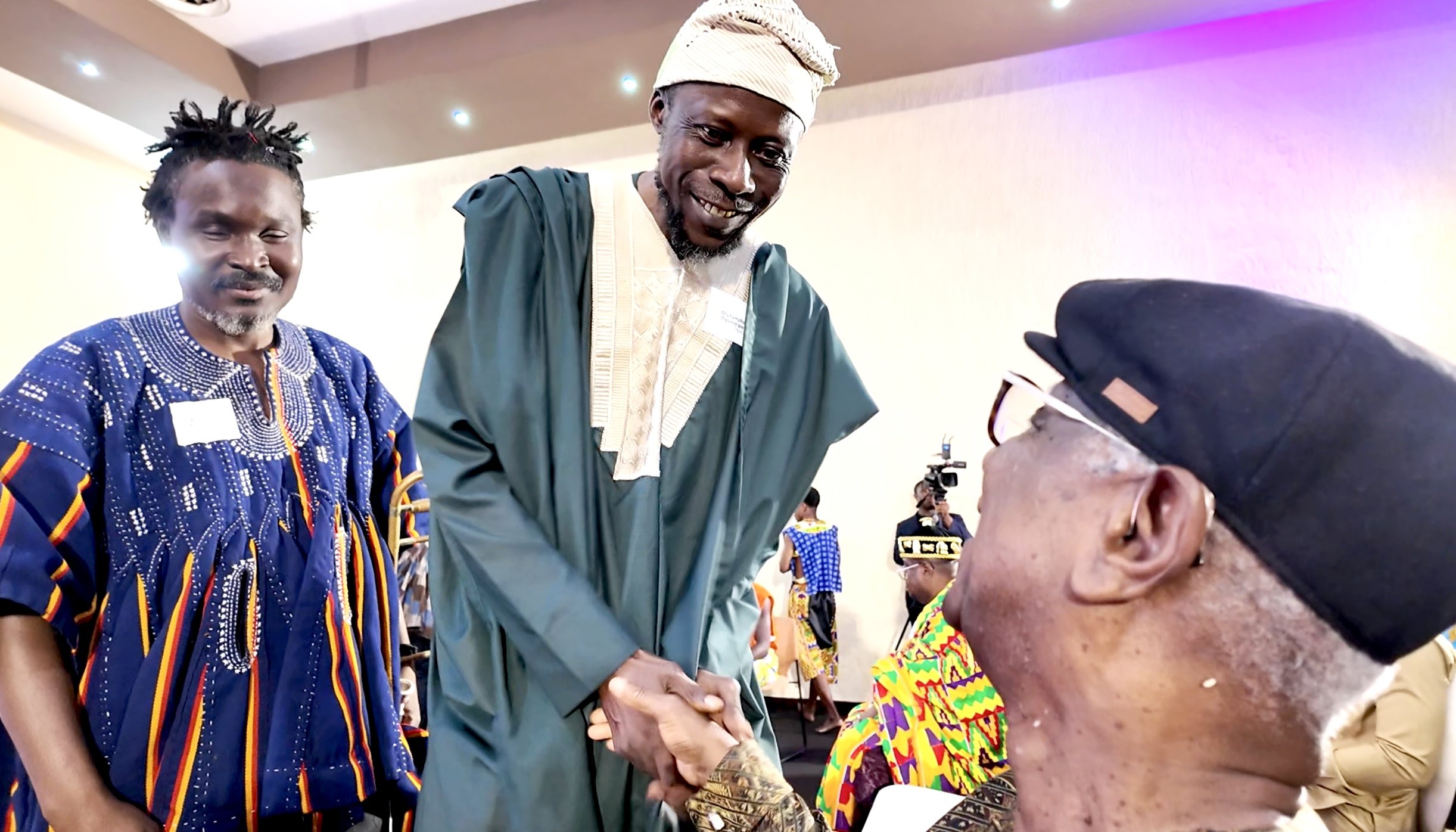
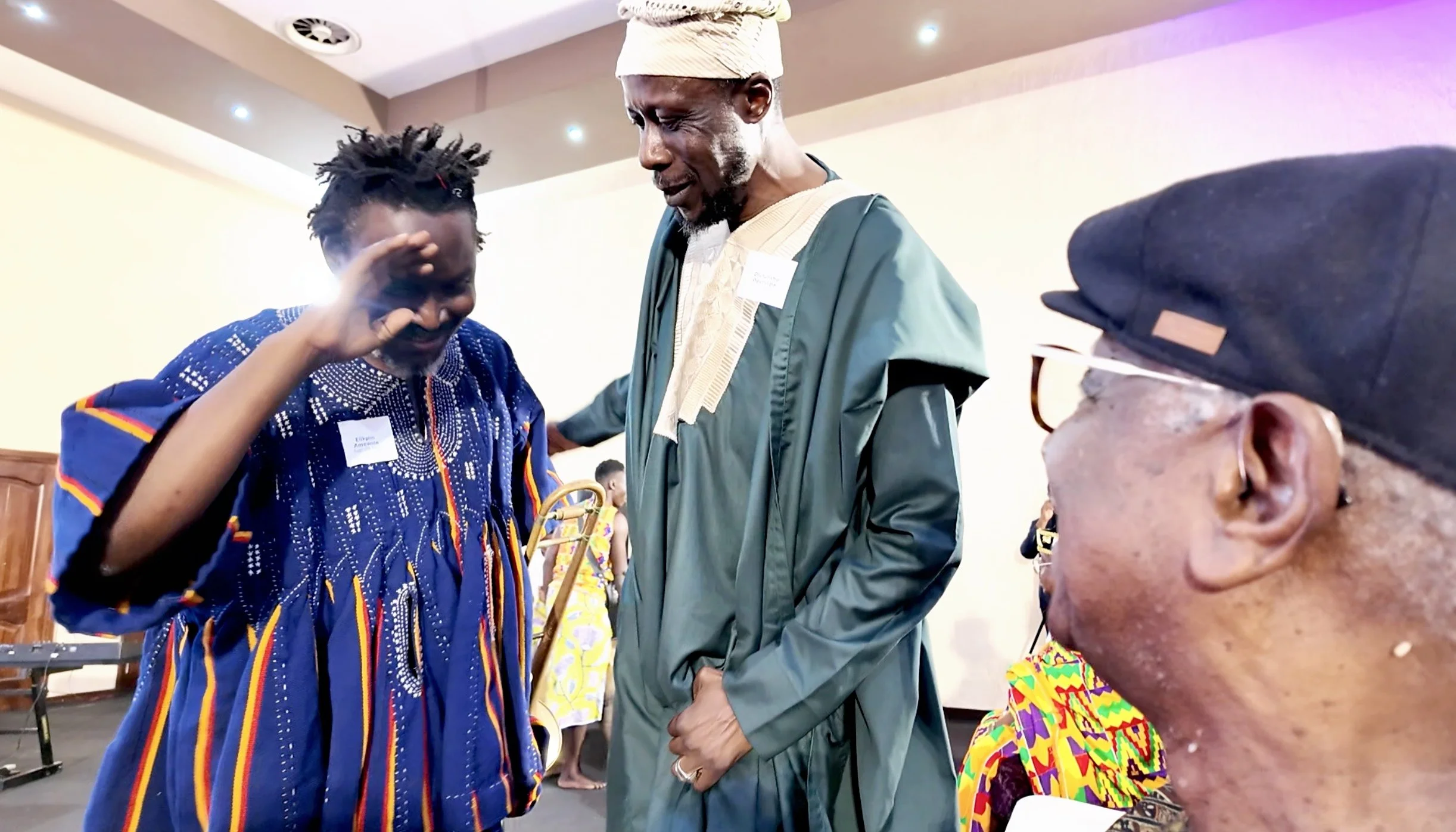
The evening of September 22 marked the first screening of the biographical documentary at the World Trade Center in Accra, Ghana. The film’s subject, Professor El Anatsui was ushered into the decorated venue by The Anyako Cultural Troupe, while piano genius Funsho Ogundipe of AYETORO performed alongside Trombonist Elikplim Amewode after the screening. There was a brief Q & A with film Director Oyiza Adaba, followed by a citation presentation, done by Dr. Odoi Oddoye. The film was well received by the audience made up of dignitaries that included diplomats, family, friends, artists and colleagues.
Acceptance Speech
Professor El Anatsui opened his acceptance speech with the challenges faced with continuous camera exposure in over 10 years of filming. He also advised the organisers on the use of the term "lifetime achievement," emphasizing it should be ongoing for living individuals.
He reflected on the global perspective of art and suggested that there are still aspects of art that have not been addressed. He also referenced the "art is life" slogan by KNUST, highlighting the complexity of life and its integration into art.
Cultural Influences and Artistic Journey
The Emeritus Professor recounted his early career beginning post-school, influenced by Western teachings with little emphasis on local culture. He noted how the discovery of Adinkra signs excited him as a young man growing up in the rural Volta region.
He also compared the Renaissance period in Europe with the abstract Adinkra signs, emphasizing their cultural significance and citing his influence by abstract art originating from the cultural center in Kumasi. He touched briefly on the challenges and contributions in Art, noting the ease of following but the difficulty of extraction.
For a moment the globally celebrated sculptor reflected on the balance between family and societal influences on his artistic journey, and dedicated the award to society, highlighting its significant role in his development.
He ended by thanking the Black Star International Film Festival organizers for their honor and acknowledged the societal contributions to his growth.
Citation
Black Star International's Tribute honors Professor Anatsui for his transformative works that have changed global perceptions of African art.The citation highlights Professor Anatsui's innovative use of local organic materials and education in his art. We emphasize Professor Natri's contributions to African art on the world stage, showcasing African artistry globally. The tribute acknowledges Professor Anatsui's extraordinary contributions to art and culture in Africa and beyond.
About Black Star International Film Festival
BSIFF IS A CULTURAL ORGANIZATION COMMITTED TO NURTURING, EDUCATING AND INSPIRING LOVE FOR THE BUSINESS OF FILM IN AFRICA.
BSIFF provides a platform that inspires love for film and cinema; supporting independent African filmmakers to reach distribution opportunities, the right network, worldwide audience, film education, acquire relevant skills and that push their creative boundaries beyond limit.
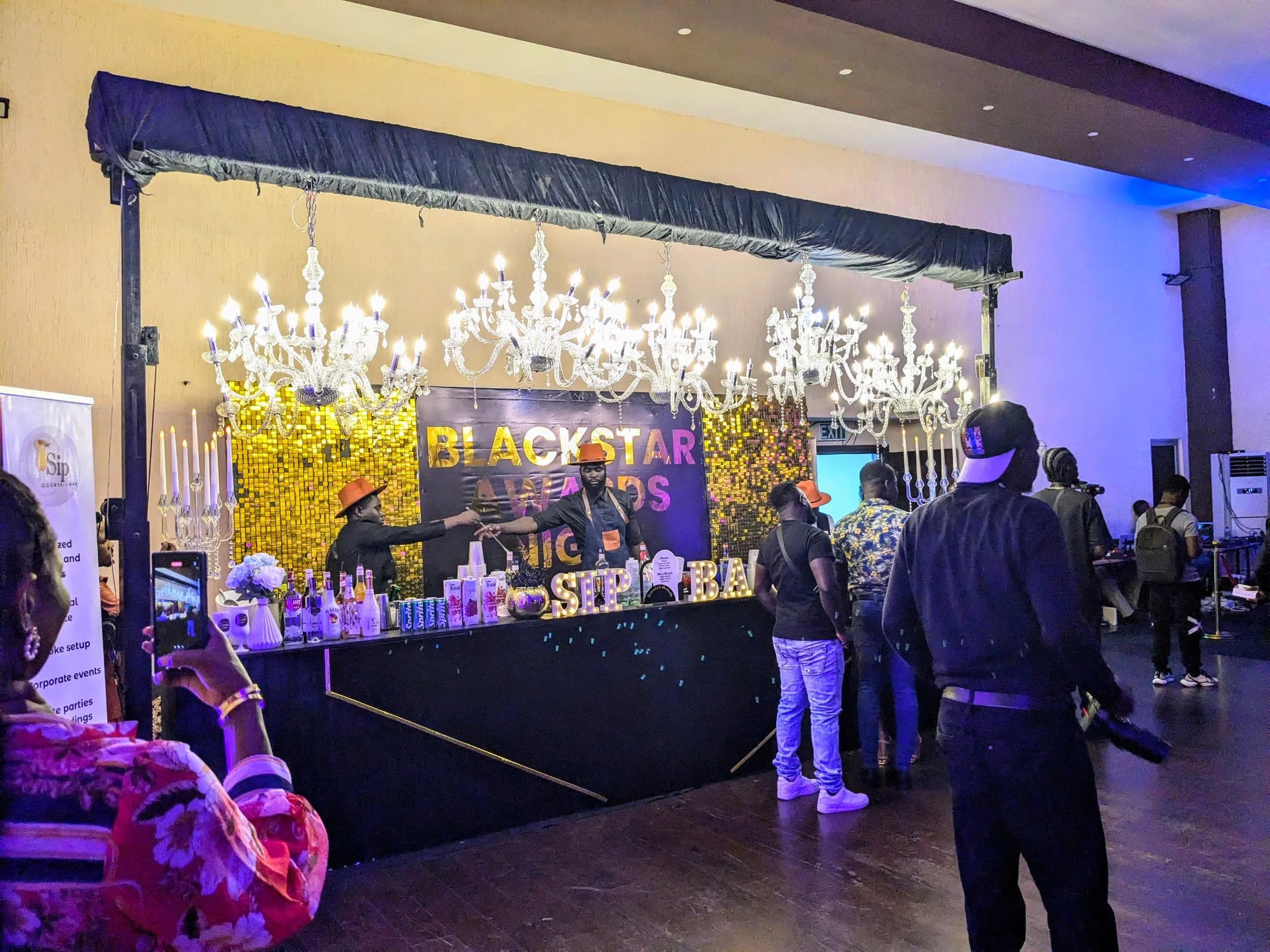
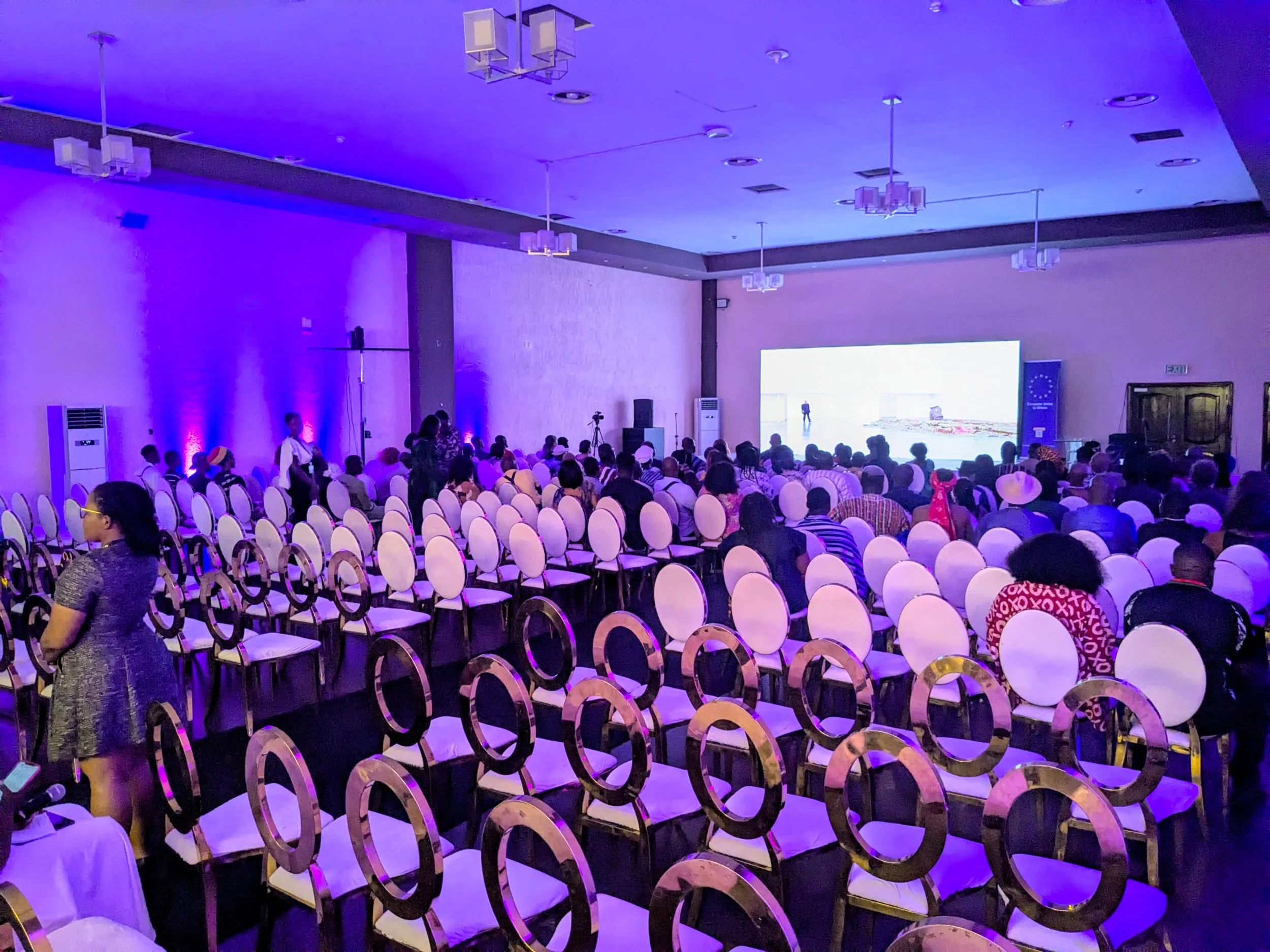
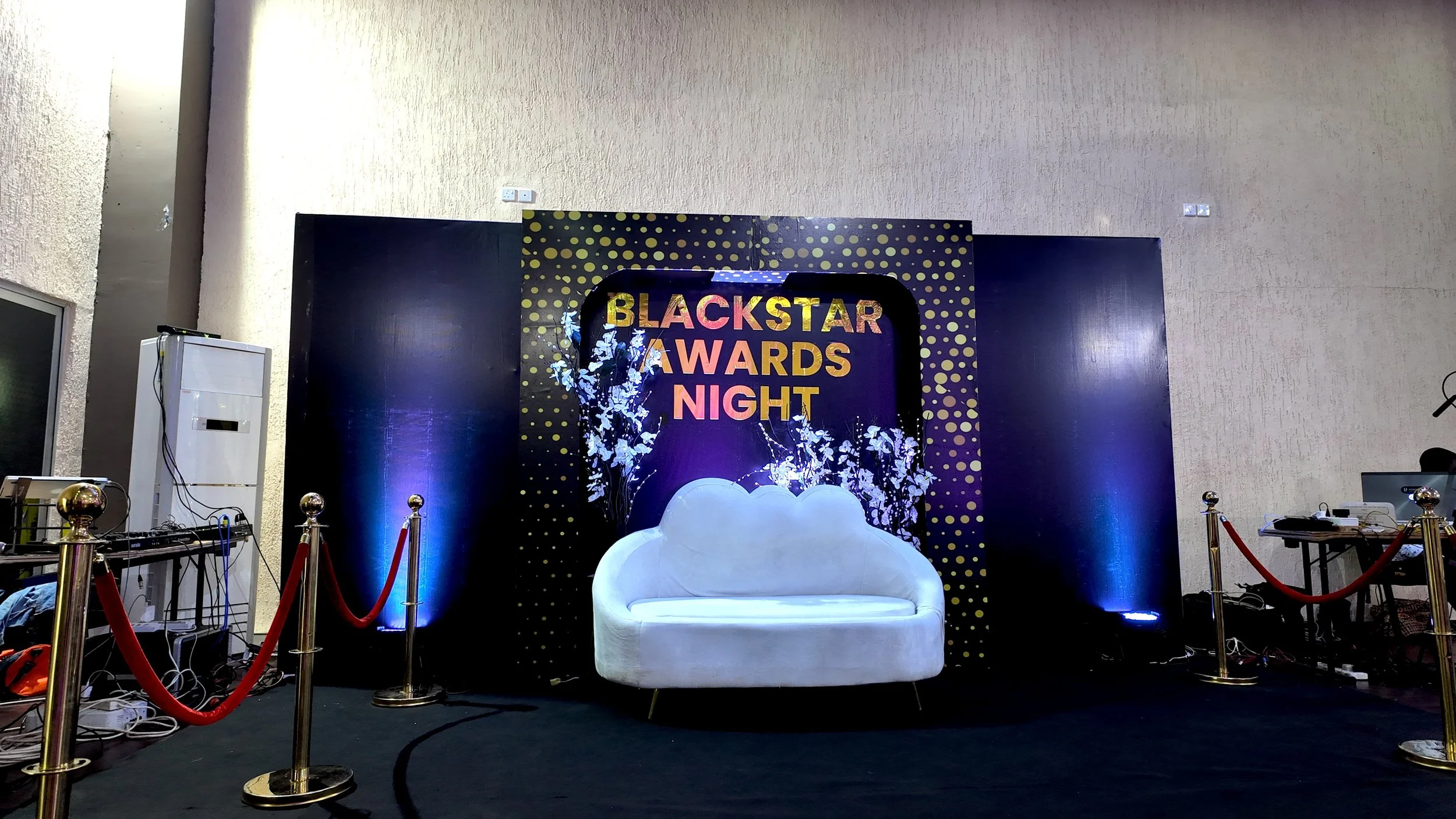
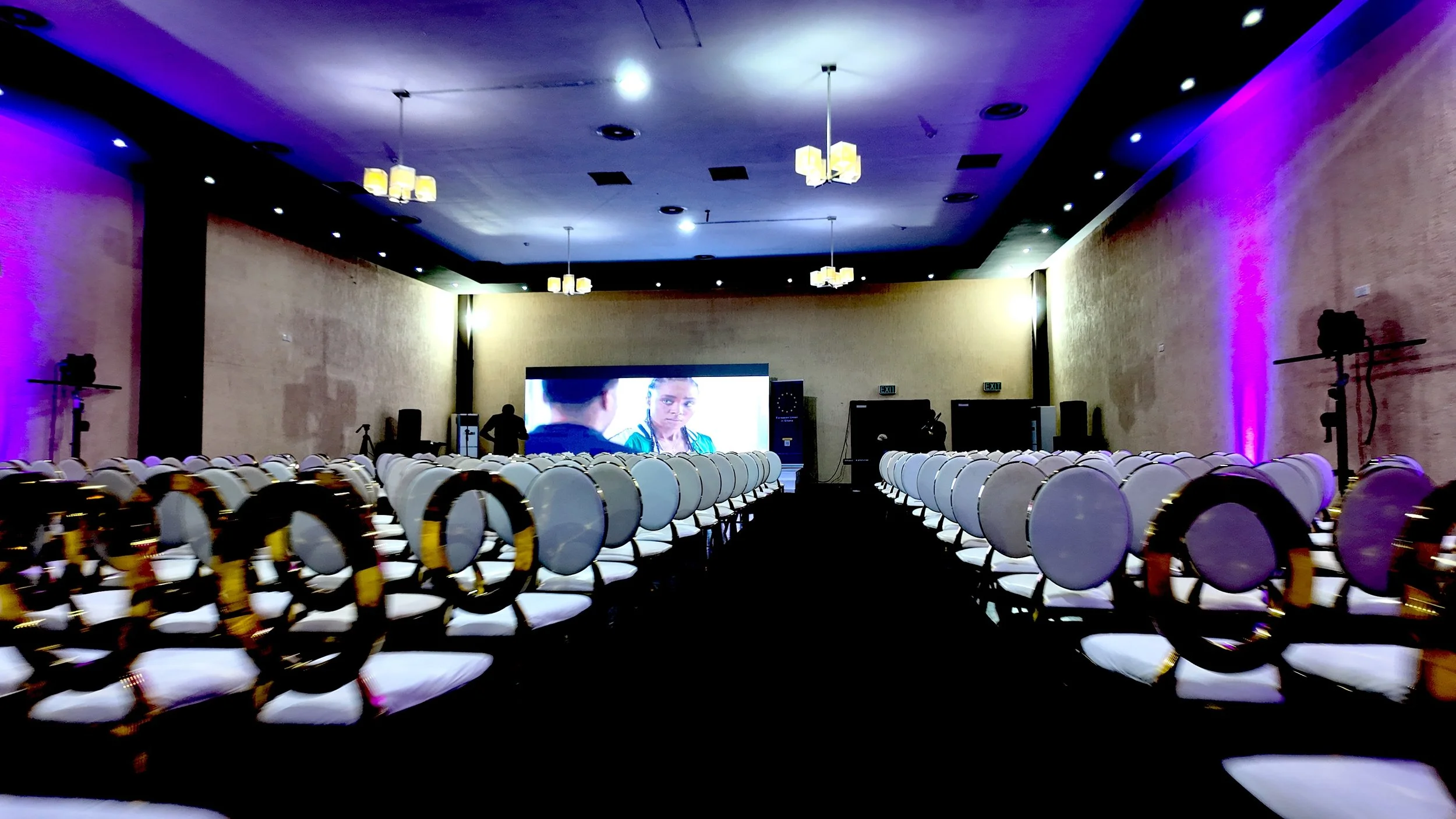
PHOTOS FROM DELA SCREENING

Bruce Onobrakpeya Foundation
Bruce Onobrakpeya was born on August 30th 1932, in Agbarha-Otor in what is today known as the Niger Delta region of Nigeria. He is reputed to be Africa's greatest printmaker and one of the finest in the world.
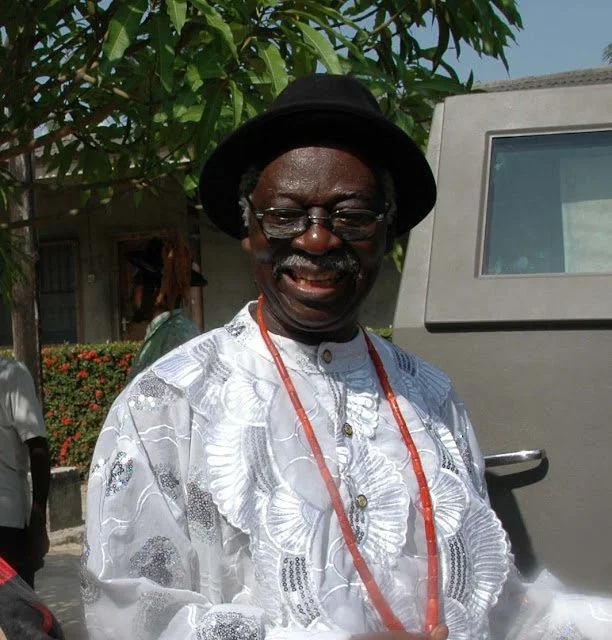
Bruce Onobrakpeya
Birthday of the month of August
Bruce Onobrakpeya was born on August 30th 1932, in Agbarha-Otor in what is today known as the Niger Delta region of Nigeria. He is reputed to be Africa's greatest printmaker and one of the finest in the world.
Bruce Onobrakpeya would have very few rivals in innovative and experimentalist print making in our time. Not only is he a great draughtsman, master printmaker - in the professional sense of the word, he is also noted for his paintings and mixed media installation art. Since 1966, he has discovered, innovated and perfected several techniques both in printmaking and relief sculpture. In addition to his experiments in mixed media and his reputation as a book illustrator, art teacher, author and folklorist, he is also one of the pioneers of modem Nigerian art and a leading member of the Zaria Art Society (renamed by the Emir of Zaria, to The Zaria Art Ambassadors). This important and now famous Zaria group, has been credited with laying the theoretical foundations for contemporary Nigerian art, in the late 1950s. According to the critic Olu Oguibe in 1991 “Onobrakpeya has not only proved himself an artist of unassailable worth, he has also strode the expanses of internationalism, exhibiting and executing commissions all over Africa, Europe and America and several parts of the World”
Onobrakpeya is a gifted teacher and mentor of several generations of successful artists. In 1999, for instance, he initiated The Harmattan Workshop Series, with a vision to empower artists. This annual retreat and gathering for artists now in its 13th edition, has become a new Mecca for visual artists. It is the longest running non-formal education for visual artists in West Africa. The workshop has been described as lofty, noble and life transforming because it brings in artists from all over the world to share their experiences in an atmosphere of brotherhood and camaraderie. This is perhaps his greatest legacy and contribution to the contemporary arts of Africa.
Bruce Onobrakpeya is not without honour, he was jointly designated by UNESCO and the Federal government of the Republic of Nigeria with the honour of “LIVING HUMAN TREASURE” a befitting tribute to a man whose whole life has been ruled by one passion: The Celebration of the arts of our motherland, and by extension our humanity as a people.