The 2024 Economic Report of the President
Today, the Council of Economic Advisers under the leadership of Chair Jared Bernstein released the 2024 Economic Report of the President, the 78th report since the establishment of CEA in 1946. The 2024 Report brings economic evidence and data to bear on many of today’s most significant issues and questions in domestic and international economic policy:
FOR IMMEDIATE RELEASE
March 21, 2024
The 2024 Economic Report of the President
Today, the Council of Economic Advisers under the leadership of Chair Jared Bernstein released the 2024 Economic Report of the President, the 78th report since the establishment of CEA in 1946. The 2024 Report brings economic evidence and data to bear on many of today’s most significant issues and questions in domestic and international economic policy:
Chapter 1, The Benefits of Full Employment, which is dedicated to the late Dr. William Spriggs, examines the labor market, distributional, and macroeconomic impacts of full employment, with a particular focus on the benefits for economically vulnerable groups of workers who are much more likely to be left behind in periods of weak labor markets.
Chapter 2, The Year in Review and the Years Ahead, describes macroeconomic and financial market trends in 2023 and presents the Federal government’s FY 2024 macroeconomic forecast.
Chapter 3, Population, Aging, and the Economy, explains how long-run trends in fertility and mortality are shaping the U.S. population and labor force.
Chapter 4, Increasing the Supply of Affordable Housing, explores the causes and consequences of the nation’s longstanding housing shortage and how the Biden-Harris administration’s policy agenda can significantly increase the production of more affordable housing.
Chapter 5, International Trade and Investment Flows, presents key facts about long-term trends in U.S. international trade and investment flows, including the role of global supply chains, and highlights the benefits and costs of global integration for American workers.
Chapter 6, Accelerating the Clean Energy Transition, applies a structural change framework to explain the factors that can accelerate the transition towards a clean energy economy.
Chapter 7, An Economic Framework for Understanding Artificial Intelligence, uses an economic framework to explore when, how, and why AI may be adopted, adapting standard economic models to explore AI’s potential effects on labor markets, while examining policy decisions that will affect social and macroeconomic outcomes.
###
SHARE THIS STORY
Africa-Related is a media content production house

FPC TRANSCRIPT: Negotiating A Global Agreement on Plastic Pollution
Foreign press center briefing with Margaret Spring, Chief Conservation and Science Officer at Monterey Bay Aquarium
Video of this briefing for download can be found here:
https://vimeo.com/925080592/d50871bbe0
Photos of this briefing for use in reporting can be found here:
https://www.flickr.com/photos/foreignpressctr/albums/72177720315554048
FOREIGN PRESS CENTER BRIEFING WITH MARGARET SPRING, CHIEF CONSERVATION AND SCIENCE OFFICER AT MONTEREY BAY AQUARIUM
MODERATOR: Good morning, and welcome to the Washington Foreign Press Center. My name is Leah Knobel, and I’m the moderator for today’s briefing. Today, it is my pleasure to introduce Margaret Spring, chief conservation and science pfficer at the Monterey Bay Aquarium in Monterey, California.
Today, Ms. Spring will be discussing the next session of UN negotiations taking place in Ottawa, Canada next month to adopt a global resolution on plastic pollution. This discussion is on-the-record, and we will post a transcript and a video of the briefing on our website, fpc.state.gov, later today. And a reminder that remarks for today’s briefing do not represent the views of the United States Government.
For the journalists joining us on Zoom, please take a moment now to rename yourself in the chat window with your name, outlet, and country. And I would now like to invite Ms. Spring to share some opening remarks.
MS SPRING: Thank you, Leah. And good morning. I hope everybody’s well today. I’m really pleased to be here. I’m Margaret Spring. I’m the chief conservation and science officer at the Monterey Bay Aquarium, and I’ve also spent most of my career here in Washington, so it’s lovely to be back, especially during the cherry blossom time.
Today I’m here to talk about plastic pollution. Though the aquarium is engaged in a range of ocean actions, from advancing the global sustainability of fisheries and aquaculture to the recovery of the iconic and threatened sea otters that we see off our shores, I want to take – point your attention to this picture that’s on this title slide. Benjamin Von Wong, a Canadian artist, created this sculpture called Turn Off The Plastic Tap. It was first set up on the grounds of the UN Headquarters in Nairobi, in Kenya in 2021. At that time, the United Nations Environment Assembly, also referred to as UNEA, was considering a resolution to develop a treaty to address plastic pollution. Since then, a lot has happened, and I’ll give a quick overview of the situation and action to date at an upcoming meeting in this artist’s home country, Canada.
So between 1950 and 2019, global plastic production has ballooned from an estimated 2.2 million tons per year to 460 million – metric tons per year – excuse me – million tons per year. And if industry has their way, it’ll be more like 1.5 billion by 2050, and estimates are that there’ll be a tripling of plastic use by 2060, according to the OECD.
One thing you should know is that almost all plastic right now is made from fossil-based petrochemical feedstocks, oil, and natural gas. If people curb their demand for fossil fuel energy as a result of responding to the climate crisis, the industry is really looking to plastic to keep their profits afloat. Plastic production leads to plastic waste and inevitably plastic pollution. We can work on fixing waste management, which right now isn’t able to handle the volume of plastic waste, even in the U.S. But if we don’t slow plastic production, we can’t expect to keep up.
And we have an updated number for plastic waste that goes into the ocean, which is something of great concern to the aquarium – which is still an estimate; it’s based on modeling. But we’ve been using a conservative estimate of 9 million tons per year, and now it’s up to 12 million, and it’s just going to keep growing. So this is a problem that every minute that ticks away it gets worse.
So it’s an ocean problem, of course. Plastic waste is present in almost every marine habitat on Earth, from the ocean surface to deep-sea sediments to the ocean’s vast midwater region. It’s just not at the surface. It’s everywhere, including on the bottom, and there’s new scientific information coming out, including from the aquarium on that point. Sea turtles, marine mammals, seabirds, fish, and other marine life are impacted by plastic by becoming entangled in it or eating it, and there’s a large body of evidence that ingested plastic travels through the food web and ultimately to humans.
But of course, it’s becoming clearer that plastic pollution is also an issue of environmental equity. Low-income communities and communities of color in the U.S. and around the world bear the brunt of plastic pollution from production, waste disposal, use, and incineration. Plastic pollution also disproportionally impacts people in poorer in countries, communities in the United States, where more plastic waste leaks out into the environment due to insufficient waste collection and management systems, which exacerbates the impacts of climate and other major crises around the world.
So just to recap – oops, okay. Most plastic is from fossil sources, as I said, and this has impact not only the environment from extraction all the way through the life cycle of plastic, but on society and the costs that are associated with that – the cleanup cost but also the health cost. And then the climate impacts, there’s growing evidence that the production of plastic is increasing the greenhouse gas emissions and, of course, that climate impacts are exacerbating the impacts of plastic in these countries that are affected by sea-level rise and other challenges. And of course, the economy is not going to be able to withstand this. The cost of cleaning up for governments and for prevention is going to increase the longer we wait.
So it’s everyone’s problem, which is why there is a treaty discussion going on right now. We basically have to start from the beginning to the end, and there’s a couple of studies that I was involved in that will elucidate this. Human health and equity, as I said before, is a major issue. Human health hazards are now taking center stage. There have been a number of reports on that, which I’ll talk about. And there’s really a lot more scrutiny on toxic chemicals within plastic that is coming to the fore.
And just to center ourselves where we are, the United States is a part of this problem. It produces plastic. We actually generate a lot of waste – probably the most plastic waste. We actually have probably a more advanced waste management system, but in the end there is still leakage into the environment, which is of concern, and our recycling and disposal infrastructure is not going to be able to bear this. And of course, we do export waste too and that has changed a little bit because of some changes in China, but essentially we still – there’s just too much for us to manage at this point.
So in 2022 and 2023, I was involved in two expert reports. So one was at the U.S. scale and one was at the global scale, which it will explain how we are approaching the treaty. In December 2021, the National Academies of Sciences, Engineering, and Medicine released a report on the U.S. role in the global ocean plastic waste crisis, and it was requested by Congress in legislation established in 2020. I chaired the committee that came out with this report, and it’s made up of experts from all sorts of disciplines. We spent a year and a half researching this. What our conclusion was – oops, sorry. Well, this is one of our conclusions that the U.S. plays a significant role. Just so you know, it came from that report. I’m having trouble here, Leah. Okay.
Our top – there was – we found there was no one solution. Everyone was looking for one solution. Everyone sees the plastic problem from their perspective. If you’re a fisherman, you think that we need to clean it up. If you see it in your neighborhood, you want to have a – have this dealt with and you’re concerned about use of plastic products that are leaching chemicals and what the impacts on your children, you’re going to see it in a different part of this. But our finding was that there’s no one solution. Action needs to be made at every stage of the plastic life cycle from production all the way through disposal or leakage into the ocean, which is the ultimate sink for all of this plastic.
Our recommendation was as the U.S. as a key player needed to come up with a systemic federal policy and research strategy quickly. And so just – and we need to have to address the front end of the problem, which is that’s circled. What we found was that there was more action at the far end, which was the cleanup which is, of course, the natural reaction, and then we needed look farther up the chain. We identified also waste reduction as a critical policy, and part of those – and also reduction of plastic products and plastic production.
After that – one of the things that this report did not do was look at actual health impacts. And so we – I also was a member of the Minderoo-Monaco Commission on Plastics and Human Health, which was chaired by Phil Landrigan, a pediatrician, and a number of doctors and health exports were part of it. And the major finding of that report, which was geared towards the UN treaty, was to look at what was the impact of plastics on human health across the life cycle.
Taking a step back, in 2022, 175 countries adopted a resolution at the UN Environment Assembly, UNEA, and just after released the U.S. report and before we issued the Minderoo report. The nations agreed to negotiate this binding agreement, which is very exciting, to end plastic pollution, setting a goal of completing the text by the end of this year.
And so when we entered the space of the treaty, I’ve been at all of the meetings so far representing the scientific community through the International Science Council, and we – what was brought to the attention of the negotiators at that first meeting, their findings of the Minderoo-Monaco Commission Report, which were plastic harms human health and the environment; plastic itself causes disease, impairment, and premature mortality at every stage of its life cycle; toxic chemicals added to plastic, routinely detected in people, increases the risk of miscarriage, obesity, cardiovascular disease, and cancers; and health repercussions disproportionately affect vulnerable, low-income, minority communities, particularly children; and the annual costs are astounding. And I won’t go too far into that, but you can read the report. Also, plastic production has fueled climate change, so that is another issue of concern in that report.
And so the solutions offered were to address plastic production, establish health protective standards, improve production practices, improve the recycling and other mechanism, have regulations on hazardous chemicals, and prioritize the protection of human health and the environment, especially the protection of vulnerable and at-risk people. So at this treaty, all those issues are on the table. Primary plastic polymers are part of an – a zero draft of the text. Chemicals and polymers of concern, problematic and avoidable plastics, product design – all of those elements are in the framework for a treaty.
And so at our last meeting in Nairobi, there was a delay in taking action to further develop the text. The text was made longer, and so much – a bit more complicated. So looking ahead at our next meeting, which is kicking off on April 22nd – we’ll be welcomed by the Canadian Government on Earth Day, and then the negotiations start on the 23rd – there’ll be a lot of attention to the text and trying to get to agreement, because we have that meeting and then one more meeting.
And all of these issues are critically important. The question that will be ahead of us is what can we come to agreement with – on within this time period to be sure we address the whole life cycle of plastic, to address human health and the environment, and make sure the marine environment is protected, and also have a just transition and have enough financing to get this done. So – and there’s a lot of need for data transparency, tracking, and monitoring.
So those are all issues on the table, and there’s a lot of attention being paid to preparing for country positions, and all of us in the civil society and as observers are doing the same. And so we’re looking forward to seeing how far we can get in this meeting. And the last meeting will be in Seoul, Korea in the fall, and then ideally the treaty would be signed at an event, the plenipotentiaries meeting next year in 2025.
So that’s probably the fastest international treaty agreement timeline I’ve even seen, and so we’re all mobilizing quickly. So I just wanted to give you a sense of how important this issue is to people here in the United States as well as around the world. I’ve spoken to many people, and as a representative of the International Science Council we have given presentations to many delegations at this treaty and to answer questions about science, which is so critical.
So thank you for your time. Happy to answer any further questions, knowing that I’m not a scientist but I represent them and their interests in this treaty process. Thank you.
MODERATOR: Thank you. We will now take some questions. For those of you in the room, if you have a question, please raise your hand and wait to be called on. Please also state your name and media outlet before your question and project so we can hear you well. A reminder for journalists joining us on Zoom: Please be sure your screen name includes your name, outlet, and country; click on the raised hand icon to indicate that you have a question; and please turn on your video if you like. We will start by taking any questions from journalists in the room. Go ahead.
QUESTION: It’s okay? Yes?
MODERATOR: Yeah. Go ahead, please.
QUESTION: I’m Roku Goda for Japanese national newspaper, Asahi Shimbun. Let me ask three question questions regarding the INC process. First, what made the delay in Nairobi to improve the draft text? This is the first question.
MS SPRING: Say that again? I’m sorry. I didn’t catch it.
QUESTION: So what made the delay you said the – regarding the draft text?
MS SPRING: Okay. I think, so I don’t know what was going on behind the scenes and among the delegates, but what occurred was that there was expressed a concern by a group of countries saying that they felt that their views were not reflected in the text that was shared and developed by the secretariat of the treaty. And so each of them had to – brought up a lot of questions about what was in there, and so there was a lot of time spent adding more text and options to each part of the treaty. So while it started as a – maybe a 30-page document, it’s now a 70-page document, which makes it a bit more complex. It’s – and so there is – that’s one reason.
But also there was not agreement on doing – on performing intercessional work. Many of the scientific groups and other delegates, who were very concerned that they needed to understand the issues better wanted to proceed with intercessional work, which means special, topical work that would go between that meeting and this coming meeting to help tee up some issues in an official way as part of the official process, and no agreement was made. So that has left us a little bit behind in developing the information that the delegates need to make decisions.
And so that doesn’t mean work isn’t going on, but it’s not going on in the same way that had been anticipated. And there were contact groups created that were developing those lists of topics that people wanted to understand, like polymers of concern, or problematic plastics, or financing. All those issues are all being discussed among observers as well as some of – and the delegations, but not as an official stream of work. So that will put – that’s delaying things a bit.
QUESTION: Thank you. And number two, what outcomes is the INC for in Ottawa? What do you expect the result?
MS SPRING: Ah. I’m not a magician; I can’t predict everything. I predict it’ll be very hard work. It’s going to be a much longer meeting. It’s going to go from the 23rd to the 30th, which is far longer than the Paris meeting, which was before the Nairobi meeting. And so there’ll be some earnest efforts.
The other thing that’s changed is there is a new chair of the INC process. He’s from Ecuador. His name is Luis Vayas Valdivieso; he’s an ambassador. And he is taking stock; he’s taken stock of this. I think there was – a number of delegates met at the stock-taking meeting in Nairobi around UNEA-6, which is the sixth meeting of UNEA, to take stock of how things were going. And so I don’t know. We look forward to hearing from him about how he wants to proceed in that process. But I believe the focus will be on the text itself, and I assume that countries will share their views based on the work they’ve done during the intercessional with their own experts. But it will – that’s why it’s going to be longer, I think.
I’m hoping that there will be more opportunity for side – continuing to develop more information. The scientific community is very concerned about making sure that their voice is heard. So we will continue to try and do that with other groups. And so I feel like it will be very heavy work. However, Canada is probably going to welcome us to and ask us to move quickly with an effort to get a very strong treaty – at least a framework done – by the end of the year.
QUESTION: Thank you very much. And this is the last question. So when it comes to – right in November, right? Yes?
MS SPRING: Yeah. The dates aren’t quite set, but –
QUESTION: Okay.
MS SPRING: Yes, they are. Maybe before Thanksgiving.
QUESTION: Do you believe – so they can finalize their texts? And what is their biggest obstacle at this time?
MS SPRING: Probably our biggest obstacle is time, as you can imagine. I know there is a commitment by leadership from UNEP all the way to the secretariat to complete the task, certainly to have the text done and ready for signature by next year. I feel like the question is how much detail will be in the text that’s concluded by the end of this year, and which – what will be left to future meetings. The goal will be to make sure that the entire lifecycle of plastic, at least from our perspective, the scientific perspective, and also many of the countries, including members of the High Ambition Coalition, which is a very large group, to make sure production is included. That doesn’t mean there’s going to be agreement on that.
And so the question is what can be done. But there are many ways to reduce production, and there are many concerned about not reducing production. There’s a lot of modeling of impact of changes in policies that should be informative. I’m hoping that will help elucidate it. But I think it’s going to be some text will be done; we don’t know how detailed it will be yet. And judging from how other international agreements have proceeded, there will probably be some follow-on work.
MODERATOR: Go ahead, please, in the back.
QUESTION: Yusuke Tomiyana, Yomiuri Shimbun, Japanese daily. So I have two questions. The (inaudible) – let me know the U.S. plastic industry’s attitude or reaction for this treaty?
MS SPRING: What’s their reaction to the treaty? Well, they’re attending. (Laughter.) There’s a lot of attendance by industry, and lots of different industries. So there’s oil and gas production, there is plastic production, which is usually connected, and then there are – then there’s the many other industries that use plastic in their products. And there is – so their reaction to the treaty is they’re taking it seriously, and I think that they would like to see more emphasis – at least the plastic production industry would like to see more emphasis on recycling, which we have – many experts have concluded is not going to solve the problem. So there is a difference of opinion.
However, there is a business coalition for an effective plastic treaty that is moving for – is asking for global standards so they can compete, and – because this is a globally traded commodity. So in terms of U.S. business and other global scale businesses, they’re very concerned that this treaty must be done and establish global standards to help set the stage and set a level playing field for innovation and change. And so there’s different views all along the spectrum, and the scientific community has expressed very strong opinions that I think would not be in line with the plastic industry, but there may be areas that we can come together.
One of the things we’ve heard from the plastic industry is they’re willing to be more transparent about what they’re putting in the plastic. We have yet to see that, but we’re interested in seeing that, because that will help us understand what is in them and how we can start removing – detoxifying plastic if we can. That’s a very tall order. Safety is very important, but we’ve proliferated plastic to the extent that it’s hard to roll it back, so there will have to be some new standards set. So that is how we’re setting it up. I do – I can’t speak for them, though, because I think that they’re evolving in their position. I am hoping they are, because this is also undermining – plastic production is also undermining our greenhouse gas goals.
QUESTION: What is the most (inaudible) point for U.S., also global plastic industries are regulated by this treaty?
MS SPRING: What would be the most effective? Well, of course, if you take your lesson from previous treaties – whether it’s the ozone treaty, Minamata Convention, or even the climate convention – we need to have targets for reduction in everywhere we can measure it, and also timelines. Many countries have done this. And we can – it’s hard to say which is the most – you can’t say which is the most effective. As we said in the National Academies report, you have to address every step.
If we don’t, we will never fix the problem, because we’ve created a system that’s not working. The production cannot be managed at the end of life, and so unless you work in it all – but I think what we’ve found is that years of experience here in the United States is that trying to clean it up is not working. Trying to manage the waste is not working alone. We have got to get at the upper end and the production, and so how many different levers are there to do that?
Another thing that we have been experimenting with here in the United States and elsewhere is to have – is to reverse the burden so that polluters pay for and are responsible for the production of waste from plastic and the harms associated with it. Because right now, that’s borne by everybody else, and the cheap cost of plastic is just making it worse. So if you change the financial responsibility, that helps a lot, and that will be critical.
The other thing is – that’s going to be happening is that as the health information becomes more public and the science advances, the health risks and the liability to these companies will rise. So I used to work for industry, and I will say that they do respond to risk. So there are multiple issues, and a level playing field is what I think everyone needs to do is – how is this whole system going to work together? And it will require not only fighting but cooperation; you need both. So that’s what I would say.
QUESTION: I’m afraid to ask you such – so basic point, but let me know: Why plastics affect the global warming or climate change?
MS SPRING: So to produce – so there are many places in which – and the estimates are still being made. So first of all, there’s the production of fossil fuels and the – and that actually emits greenhouse gases, and the use of energy in the plastic production process creates greenhouse gases, and so all those things plus their development of products. So they’re being compartmentalized. There is a new study that’s going to be coming out soon, I think, but essentially we think it’s – right now it’s about four – I think the OECD said it was about 4 percent of greenhouse gas budget, and it’s expected to double, which actually starts to change the trajectory over time.
And so those are – and there are emissions – there’s other science that says there are emissions from the actual plastic products themselves as they degrade in the ocean or in the environment. Also, more plastic waste and badly mixed plastic waste creates greenhouse gases from landfills. So it’s – they’re starting to catalogue it. I’m very interested to see – there’s a project that’s looking at it, but it’s not going to help us in the long run because it’s starting from the same place. And so even if it’s made from another product, it’s possible it will still increase but not as fast.
QUESTION: Reducing plastic production mean that reducing greenhouse gas?
MS SPRING: Uses?
QUESTION: The reducing – reduce – lower plastic production means lower greenhouse gas?
MS SPRING: Yes. That’s what the estimates say so far.
QUESTION: Thank you.
MS SPRING: Thank you.
MODERATOR: We’ll now take a question from zoom. Alex, would you go ahead and unmute yourself and turn on your video, please?
QUESTION: Yes. Good afternoon. I’m sorry, I’m having issue with my camera. I hope it’s okay.
MODERATOR: That’s fine.
QUESTION: This is Alex Raufoglu from news agency Turan. Thank you so much for doing this, and welcome back to D.C. Sorry I couldn’t be there in person. I have two questions, just to build off on what you just said. Can you please speak a little bit on other urgent climate implications of plastics? We do need healthy ocean, of course, the costal ecosystem, to store carbon and build resilience to climate change. Azerbaijan will be hosting COP29. It has its own issues with Caspian Sea is being subject to that as well. Look, do you think – can there be an adaptation in a sea of plastic? I think that’s my question on that part.
And second part of my question – you mentioned the 2022 resolution, which were agreed by over a hundred countries. The ugly truth is that they say when push comes to shove, with issues like plastic pollution, the problem is that some nations benefit from increased plastic production while others bear a disproportionate burden, if you want, and consensus can be difficult. So what do you expect from the upcoming COP29? What role will the private sector play here, and how should the governments respond? Thank you so much.
MS SPRING: Very good question. So on the first, I think we’re still learning about the different ways that climate and plastic are connected, because they’re mutually reinforcing, of course. And the number one issue is they’re both carbon, right. So what we don’t know is even if – if you add more carbon to the ocean, what is the impact, for example, if it starts to degrade? But there’s also feedback loops and warming.
So I do think that – that adaptation is going to be harder with plastic in the ocean for sure. What we’ve seen in the countries – for example, low-lying countries – is that if plastic is clogging drainage areas, if you see in places in Africa and Southeast Asia, you will see that – areas that are already impacted by flooding are just becoming more impacted because of these – this – this clogging of these areas, and also it’s undermining the ability of countries who are already suffering from climate change to feed themselves from the ocean, et cetera. And with – and that includes dumping of waste from vessels, but also lost fishing gear and aquaculture gear. So there’s lots of ways this is happening; it’s going to be made much worse.
I do look forward to seeing more information on those feedback loops, particularly the impact on our carbon cycle in the ocean and how that happens. There’s a – there’s some research, if you read the National Academies report, we identify a few early research projects. There’s also a project called – it’s called the Plastic Climate Project. It’s starting up to sort of pull all that information together. But Antonio Guterres, the secretary of the UN, has been speaking about this issue a lot. So it is – it’s a question of how do we manage our transition to decarbonization, essentially. We have to decarbonize for many reasons, and it’s a major challenge for the Earth.
And plastic – and you’ll see that the EU has made plastic part of their green new deal. It’s all part of a strategy to move forward on climate. So it is connected. But you can address them separately, and the solutions are similar. But essentially we have – it’s pollution, like we deal with every pollution. Too much of something that’s not good for the planet and good for people should be reduced.
The second question, which is a very good one, is yes, there is going to be conflict about whether – what should be – where does the life cycle of plastic start. I think scientifically and technically and factually, it does start with extraction and production. There are a number of countries that do think that really this is a waste problem, and it’s not a production problem. But if you do the math, it’s very clear that production cannot be managed by waste management.
So the business community does play a role, and particularly in seeing the future. Where is this leading us? Just like in sustainable seafood, companies are thinking, where am I going to get my fish? Well, I can’t overfish because – so at some point, some companies have come together and said, well, we’re going to be supporting sustainable seafood. Similarly, you will see some companies seeing that their profit margins over time will erode because consumer confidence declines, concerns about the plastic health impacts rise. And you’ve seen a number of other studies that just come out recently from the New England Journal of Medicine that have indicated very strong correlations with heart disease. So this starts getting people very worried.
Now, a long-range-thinking company who depends on a consumer audience will be thinking very strongly about what the future looks like for them. And a number of them have made public-facing pledges.
So I think those voices have to be stronger than the voices that are saying that we want to stay for – with business as usual. And so I think that that’s – and also having these collaborations of solutions have been something that I’ve seen emerging more and more. And so the concern with civil society is that – is this greenwashing, or is this real progress? And I think the more we get to know each other in this negotiating process and the more we see the results, the more we’ll build trust. But right now it’s very – there’s a lot of concern.
So I do think building trust from – between industry and the civil society is important. And I’m not sure how – if that happens at a treaty or between treaty meetings, but that is very important because of the health issues as well as the existential issues around our food systems. This isn’t just an ocean issue. I’m focusing in the ocean, but there’s – there’s microplastics in the air, there’s microplastics in your food, in your drink, in your water. The state of California is the first state to monitor microplastics in drinking water. That’s – I can’t believe it, that that’s the first state that’s ever done that. So we don’t know so much about what is happening, though it is a – there’s a mountain of evidence about to be growing, and it’s important to get ahead of it. And that would be the important role of people who think about the future in the longer term, not in the short term.
QUESTION: Thanks so much.
MODERATOR: This ends the Q&A portion of today’s briefing. Ms. Spring, do you have any final remarks you’d like to share?
MS SPRING: Well, I’d just like to say thank you for having an interest in this issue. I do think that this next meeting deserves coverage and attention, because it is a critical moment. It’s not only Earth Day, global Earth Day, but – which is the theme of it, is global – is planet or plastic. And they see a lot of that concern being raised, so this is a pivotal meeting. I think shining a light on what countries are willing to do and telling stories about where the concerns are and where the solutions are are all important, because I do think that this process, it’s moved so quickly, the public does not know much about it. And I think that they would be interested in knowing that there’s potential solutions at a global scale as we work at the national scale.
And we have not – we are focusing here in the United States on moving our U.S. national plan too, and we’ve been doing some research that would help support faster progress on a U.S. plan of action that would be very forward leaning. The U.S. has said that their goal is to eliminate the release of plastic in – plastic pollution into the environment by 2040, which is indeed the goal of the High Ambition Coalition. But how do we get there, and what’s the pathway for getting there? How can science play a role?
So I do think that there’s a lot more to be done here, in every country, and we’re very supportive of hearing how other countries are speaking at these treaty meetings. So learn what your country is doing, how they are advancing and showing that it’s possible. We at the Monterey Bay Aquarium have eliminated single-use plastic from our front of house, from our – and we actually still make money. So – at those – not us, but our vendor makes money. And so we can – you can actually have profits and have no single-use plastic, for example. Those are the easiest things to remove from your life.
And just ask yourself: Do you need it? I find that until you raise this question with your public or with your family or your friends, they don’t even see the plastic. And I’m not saying plastic doesn’t have beneficial uses. It certainly does. But we’ve overdone it. That’s my view personally and probably of the Monterey Bay Aquarium. So – and many of my colleagues. So I hope you personally take action. I hope you pay attention to what’s happening in your country and reflect what people think, because this is really about people. Thank you.
MODERATOR: This concludes our briefing. I want to give a special thanks to our briefer for sharing her time with us today and to the journalists who joined us. Thank you.
For more information or to find more FPC programs, visit our website. Follow us on Twitter/X @ForeignPressCtr
Washington Foreign Press Center
National Press Building
529 14th Street NW, Suite 800
Washington, DC 20045
Phone: (202) 504-6301

Art21 Partners with EXPO CHICAGO 2024
Chicago, Illinois – Art21 is thrilled to announce a partnership with EXPO CHICAGO, the city’s premier showcase of contemporary and modern art galleries. Returning April 11-14, 2024, to Navy Pier's Festival Hall, EXPO CHICAGO 2024: “A Fusion of Art, Dialogue, and Inspiration” is a dynamic convergence of artistic expression, thought-provoking discussions, and interactive initiatives celebrating the city's rich cultural heritage while spotlighting the vibrant contemporary arts community.
Media Contact
Hannah DeGarmo
Senior Manager of Communications
hannah@art21.org

Art21 Partners with EXPO CHICAGO 2024
Chicago, Illinois – Art21 is thrilled to announce a partnership with EXPO CHICAGO, the city’s premier showcase of contemporary and modern art galleries. Returning April 11-14, 2024, to Navy Pier's Festival Hall, EXPO CHICAGO 2024: “A Fusion of Art, Dialogue, and Inspiration” is a dynamic convergence of artistic expression, thought-provoking discussions, and interactive initiatives celebrating the city's rich cultural heritage while spotlighting the vibrant contemporary arts community.
Art21 will present two programs featuring several award-winning films as part of EXPO CHICAGO’s /Dialogues program as well as a public program at Gene Siskel Film Center featuring the artist Michael Rakowitz. Hosted in collaboration with the School of the Art Institute of Chicago (SAIC), /Dialogues offers engaging panel discussions featuring leading curators, artists, and arts professionals. From exploring the artist's civic responsibilities to addressing the role of art in times of crisis, this year's lineup will delve into pressing topics shaping the contemporary art landscape. Attendees can also look forward to the Soho House Snug, a designated space within the /Dialogues area, where they can connect with fellow art enthusiasts and enjoy stimulating discussions, book signings, and video presentations by Art21.
"Art21 is proud to partner with EXPO CHICAGO in bringing our films to the city, Art21’s largest audience in the Midwest,” says Tina Kukielski, Susan Sollins Executive Director and Chief Curator. “We’re also excited that celebrated artist Michael Rakowitz will be joining us in Chicago for a special screening of his Art21 film.”
Art21’s /Dialogues program at EXPO CHICAGO include:
“Award-Winning Art21 Films”
Friday, April 12th, Noon-1pm
Soho House Snug, EXPO's /Dialogues area
Experience a curated selection of acclaimed Art21 films from 2023, featuring artists such as Miranda July, Christine Sun Kim, and Kerry James Marshall. Jurrell Lewis, Art21 Assistant Curator, will lead a Q&A session following the screening.
“Art21 Presents Artists in Chicago”
Friday, April 12th, Noon-1pm
Soho House Snug, EXPO's /Dialogues area
Discover the creative voices shaping Chicago's artistic landscape through films showcasing artists like Nick Cave, Theaster Gates, and Jessica Stockholder. Emma Nordin, Art21 Director of Education, will host a post-screening Q&A session.
Art21 is also offering a public program at Gene Siskel Film Center:
“Art21 Presents Artist Michael Rakowitz in Conversation”
Saturday, April 13th, 1-2pm
Gene Siskel Film Center
Delve into the artistic journey of Michael Rakowitz with a screening of the Art21 Extended Play film "Michael Rakowitz: Haunting the West," followed by an insightful conversation with the artist. Tickets to this event are available to the general public (ie, guests don’t need a pass to EXPO CHICAGO to attend).
EXPO CHICAGO showcases leading contemporary and modern art galleries each April at Navy Pier’s Festival Hall, alongside a diverse and inventive program of talks, on-site installations, and public art initiatives. Inaugurated in 2012, EXPO CHICAGO draws upon the city’s rich history as a vibrant international cultural destination, while highlighting the region’s contemporary arts community. In 2023, EXPO CHICAGO was acquired by Frieze, the world’s leading platform for modern and contemporary art. Learn more at www.expochicago.com.
Art21 is the world’s leading source to learn directly from the artists of our time. A nonprofit organization, the mission of Art21 is to educate and expand access to contemporary art, producing documentary films, resources, and public programs. Learn more at Art21.org.
IMAGE: Michael Rakowitz in the New York Close Up film, “Michael Rakowitz: Haunting the West.” © Art21, 2021.

Art21 is a 501(c)3 non-profit organization; all donations are tax-deductible to the fullest extent of the law. Donations to Art21 support the production of Art21's films, education initiatives, digital resources, film archive, and other Art21 projects.
Art21
231 W 29th St Rm 706
New York, NY 10001-5484
Africa-Related is a media content production house
Share this story

68th Session of the Commission on the Status of Women
On March 13, on the margins of the 68th session of the Commission on the Status of Women, the Government of the United States alongside the Governments of Canada, Colombia, and the United Kingdom, co-sponsored a high-level meeting at the U.S. Mission to the United Nations to discuss shared priorities for advancing women’s political participation and leadership, including by tackling new threats, such as technology-facilitated gender-based violence. Participants included senior leaders from governments, civil society, philanthropy, multilateral organizations, and the private sector.

U.S. DEPARTMENT OF STATE
Office of the Spokesperson
For Immediate Release
MEDIA NOTE
March 15, 2024
68th Session of the Commission on the Status of Women - High-Level Meeting To Advance Women’s Political Participation and Leadership in the Digital Age
On March 13, on the margins of the 68th session of the Commission on the Status of Women, the Government of the United States alongside the Governments of Canada, Colombia, and the United Kingdom, co-sponsored a high-level meeting at the U.S. Mission to the United Nations to discuss shared priorities for advancing women’s political participation and leadership, including by tackling new threats, such as technology-facilitated gender-based violence. Participants included senior leaders from governments, civil society, philanthropy, multilateral organizations, and the private sector.
This high-level meeting focused on opportunities for collaboration to address the consistent underrepresentation of women at all levels of public life, politics and government, including peace and security decision-making processes. Women leaders, researchers, and experts from civil society highlighted how longstanding barriers to women’s political participation and leadership—including lack of access to political networks and resources as well as gender-based violence both online and offline—continue to undermine their inclusion and advancement in democratic processes. Several participants noted that threats to women leaders have proliferated with the increased adoption of digital technologies and are likely to continue to grow with new and emerging technologies, including artificial intelligence.Participants noted the urgency of addressing these systemic barriers to ensure a level playing field for elections set to take place around the world this year.
To address these issues, senior leaders from the Biden-Harris Administration invited partners to join a new multistakeholder initiative to advance women’s political participation and leadership in the digital age. This initiative, which the United States intends to launch on the margins of the 75th NATO Summit, will convene governments, philanthropy, civil society, private sector, and multilateral organizations to develop commitments focused on closing the gender gap in leadership, including through programs that address threats to women leaders on and offline. It will build shared commitments and priorities, including the U.S. Strategy and National Action Plan on Women, Peace and Security, the U.S. Presidential Initiative for Democratic Renewal, the Global Partnership for Action on Gender-Based Online Harassment and Abuse, the Summit for Democracy Gender Cohort, and the Network for Gender Inclusive Democracy.
For more information, please contact StateGWI@state.gov.
Stay connected with the Office of Press Relations:


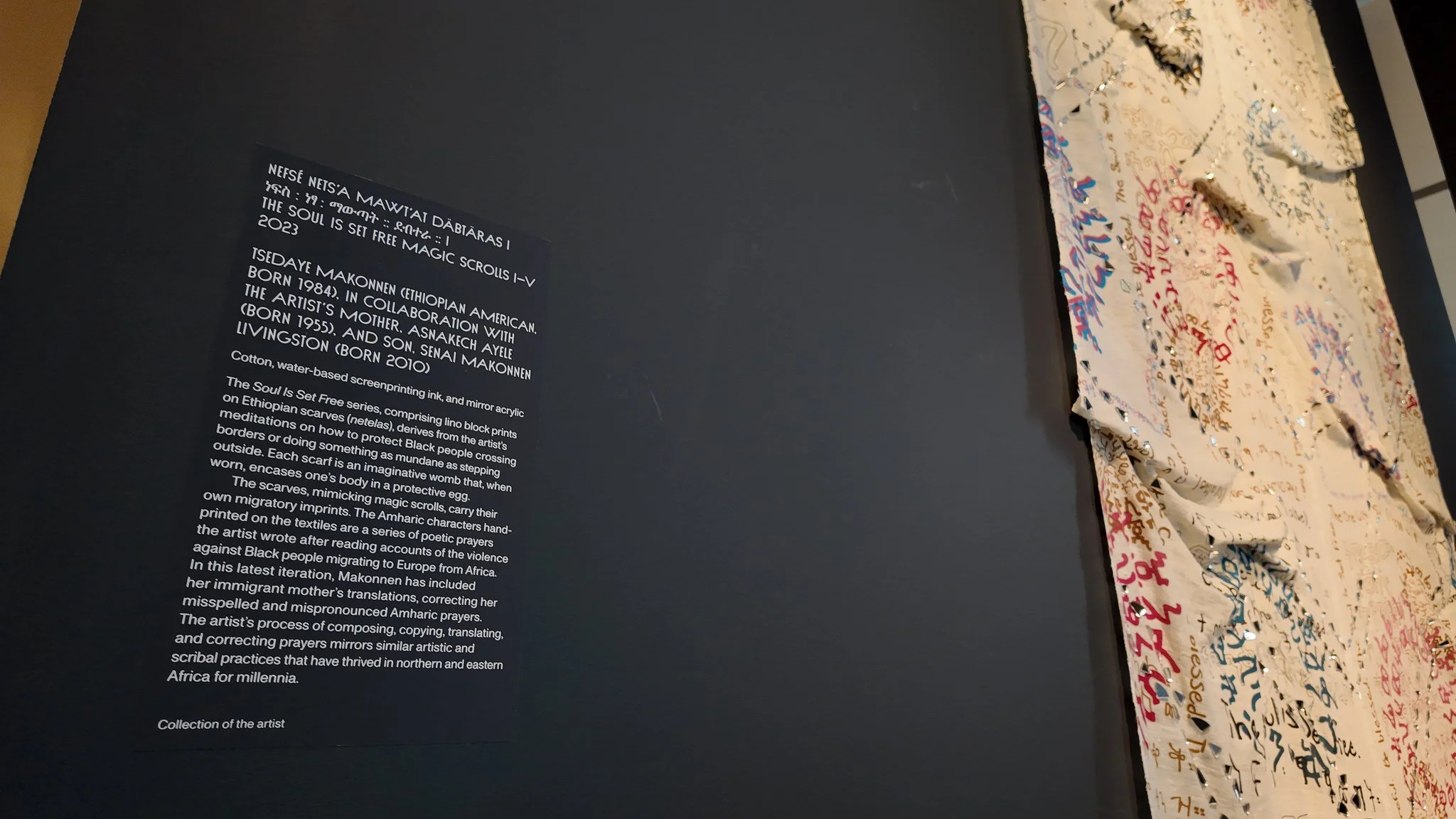
Tsedaye Makonnen's ASTRAL SEA Speaks To The Need for Collective Refuge
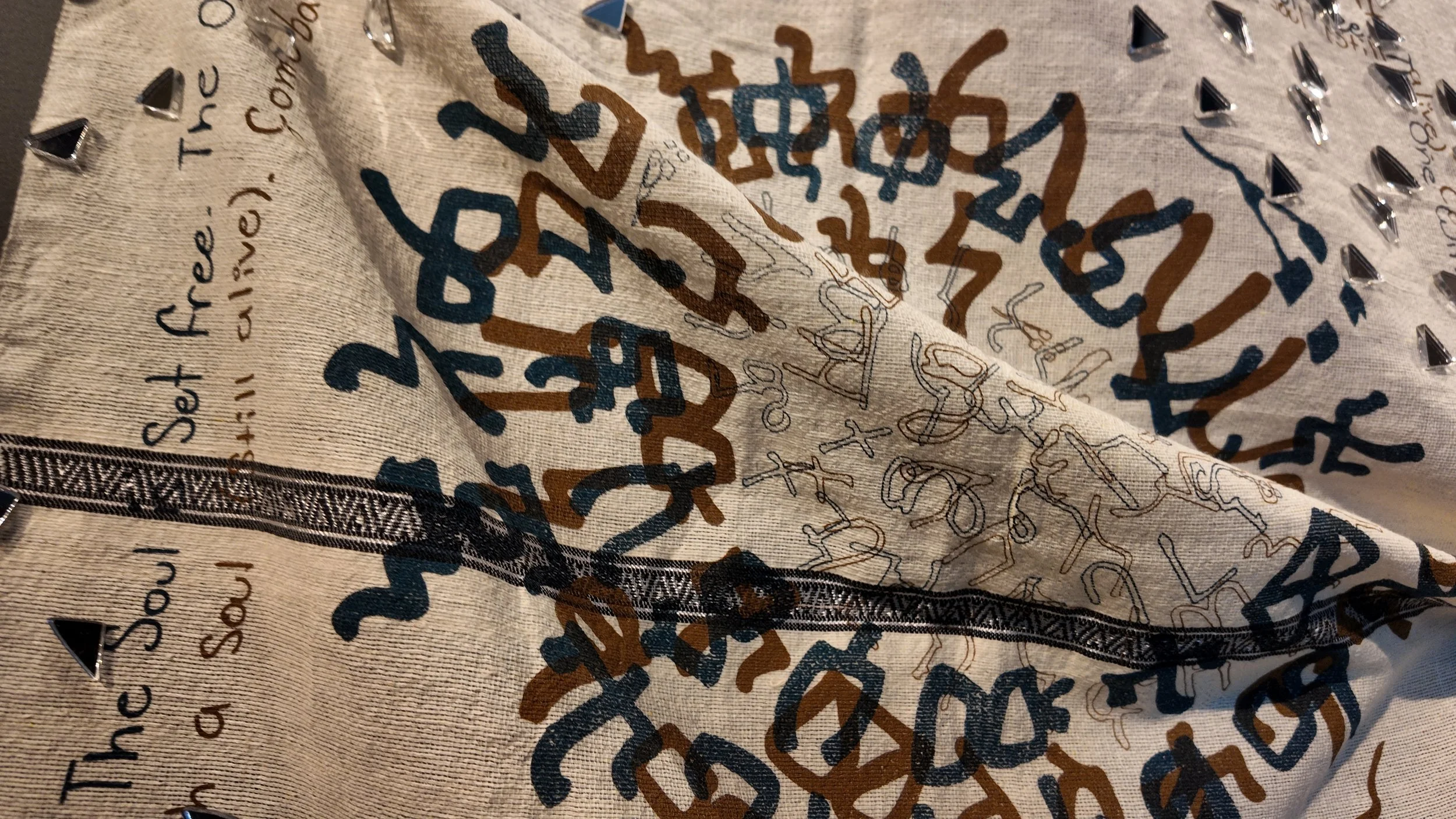
Contemporary Ethiopian/American Artist Tsedaye Makonnen was commissioned by MetLiveArts and featured as one of the two living artists in the Africa and Byzantium exhibition. The result is ASTRAL SEA, which speaks to themes of Slavery, Textiles and History
Oyiza Adaba, New York
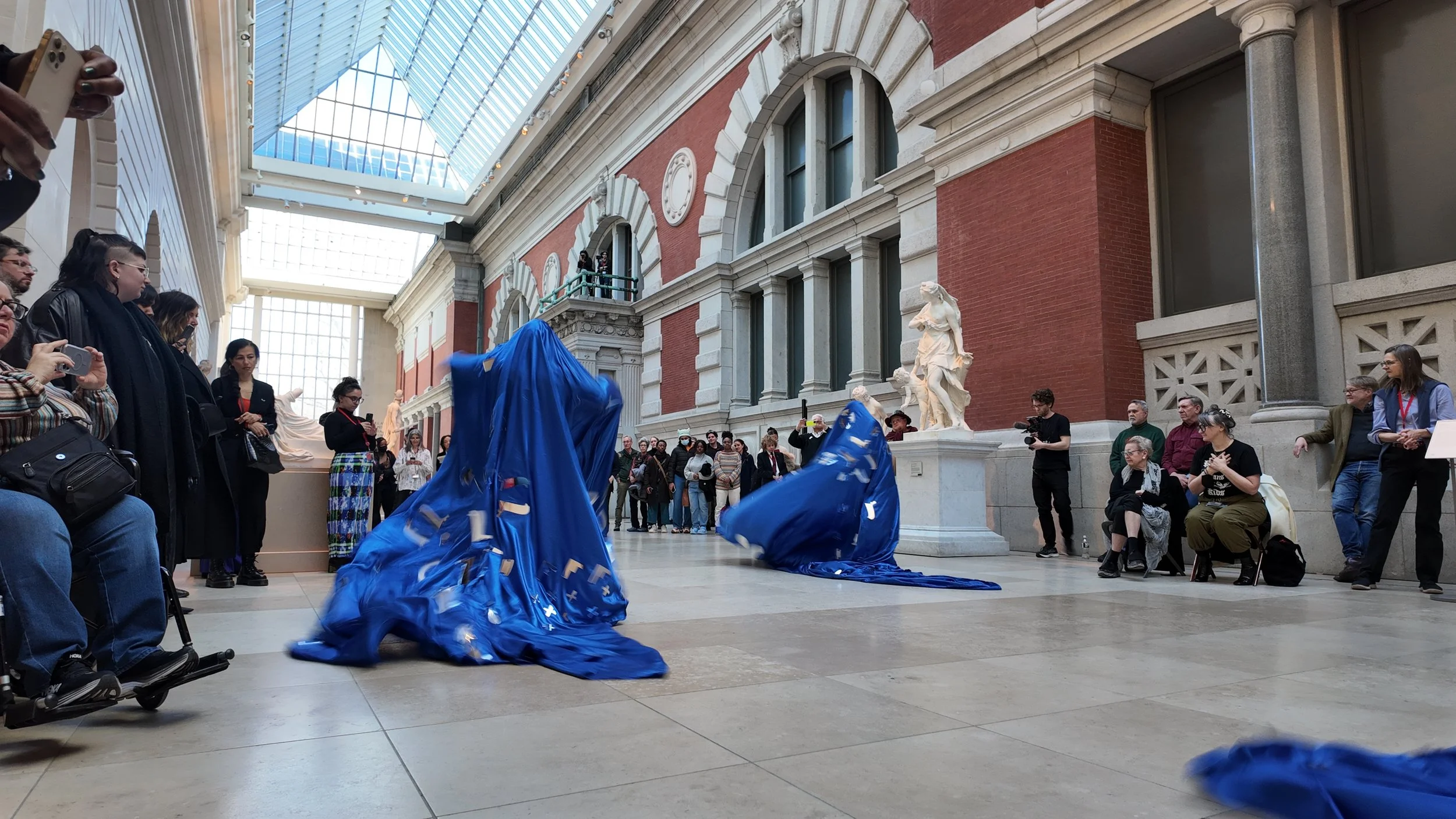
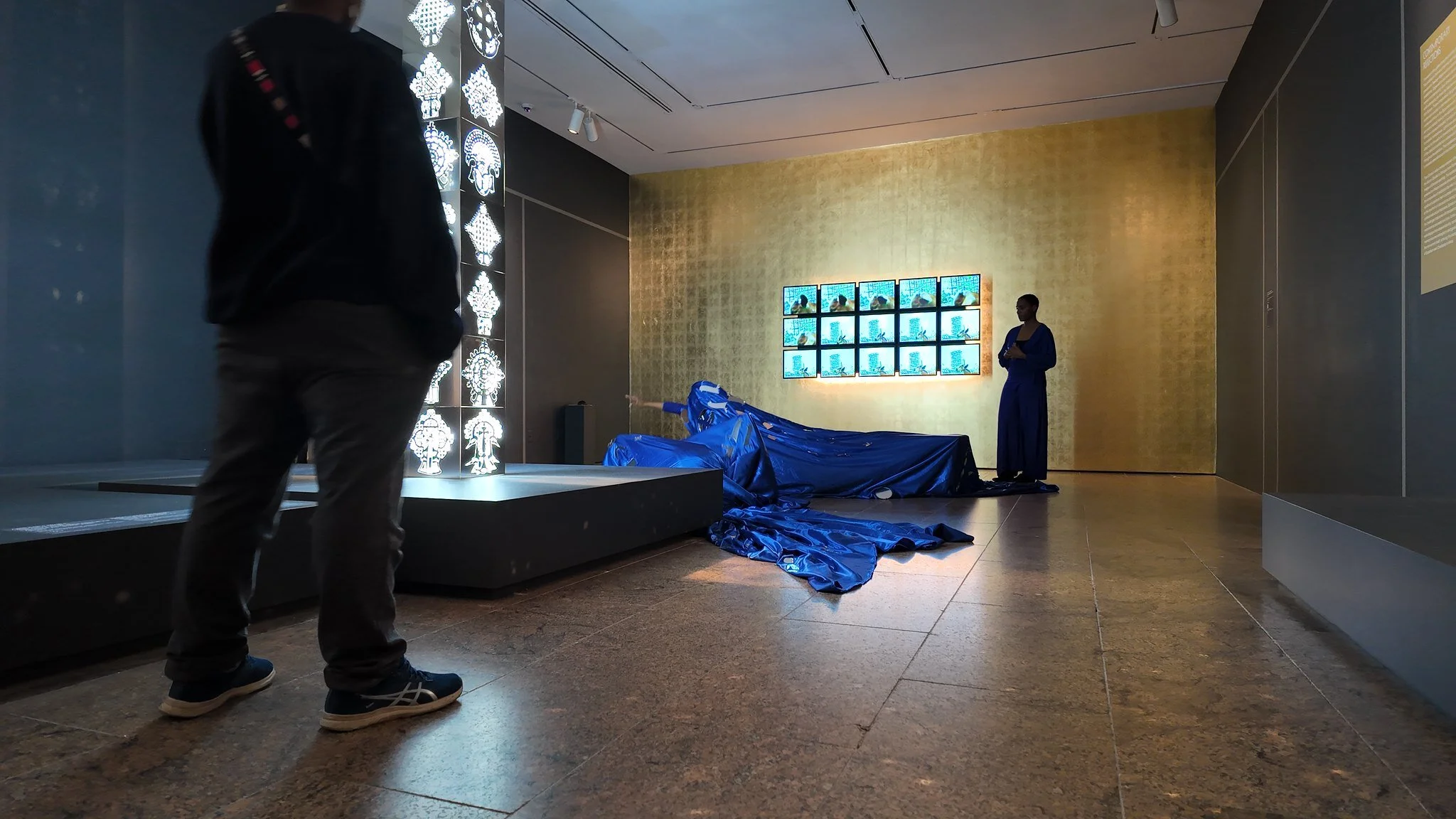
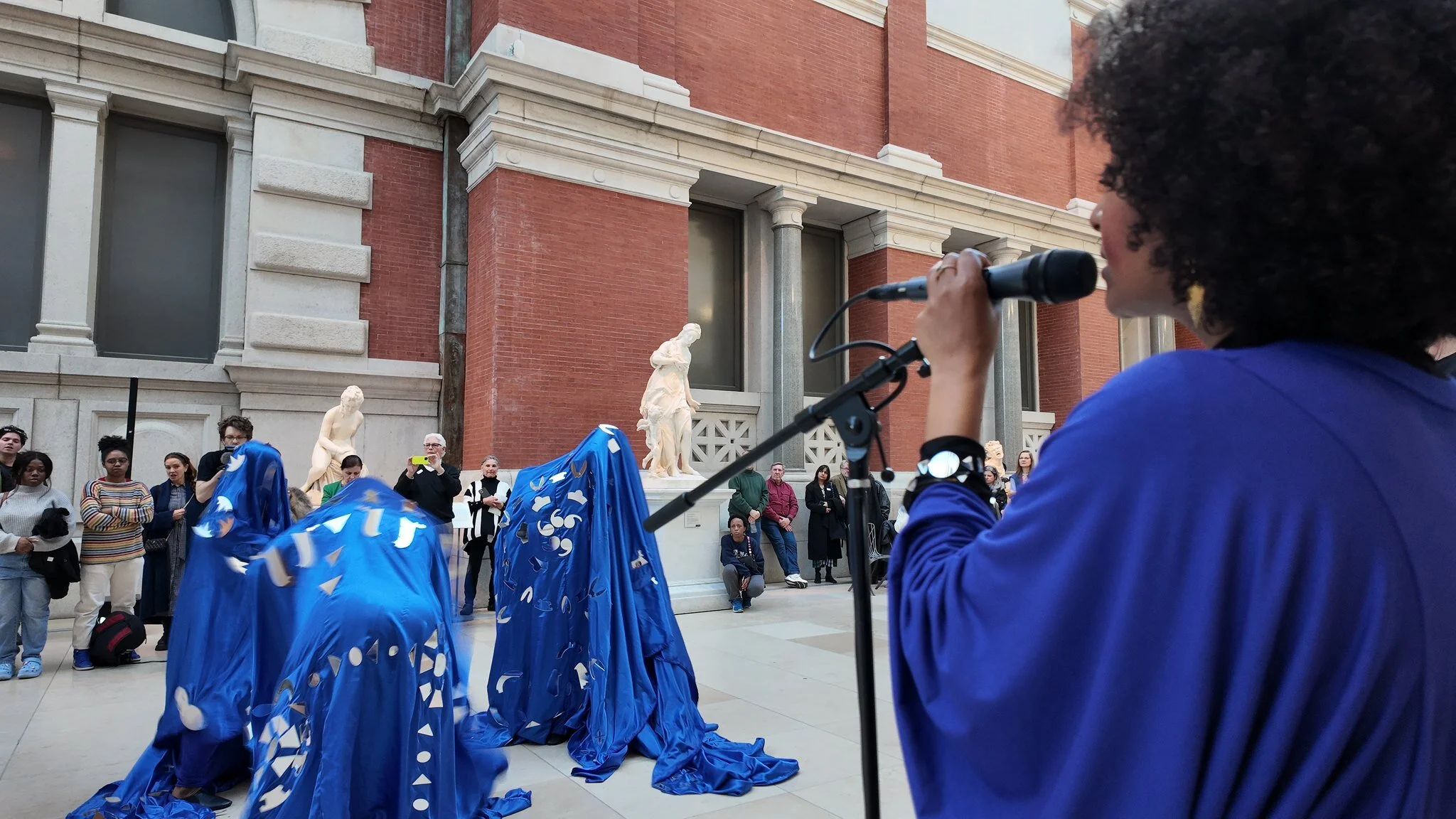
Contemporary Ethiopian/American Artist Tsedaye Makonnen was commissioned by MetLiveArts and featured as one of the two living artists in the Africa and Byzantium exhibition. The result is ASTRAL SEA, which speaks to themes of Slavery, Textiles and History
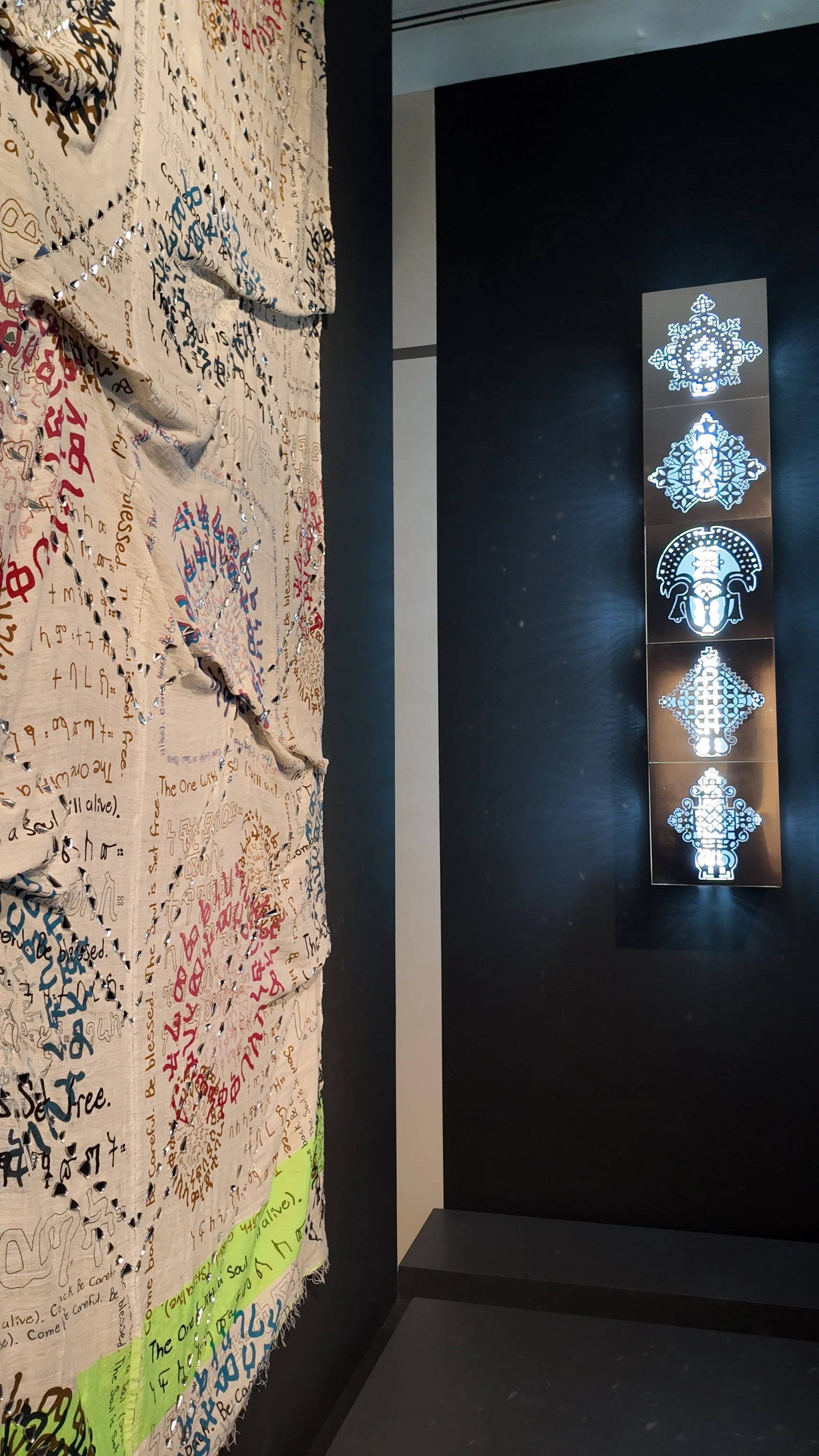
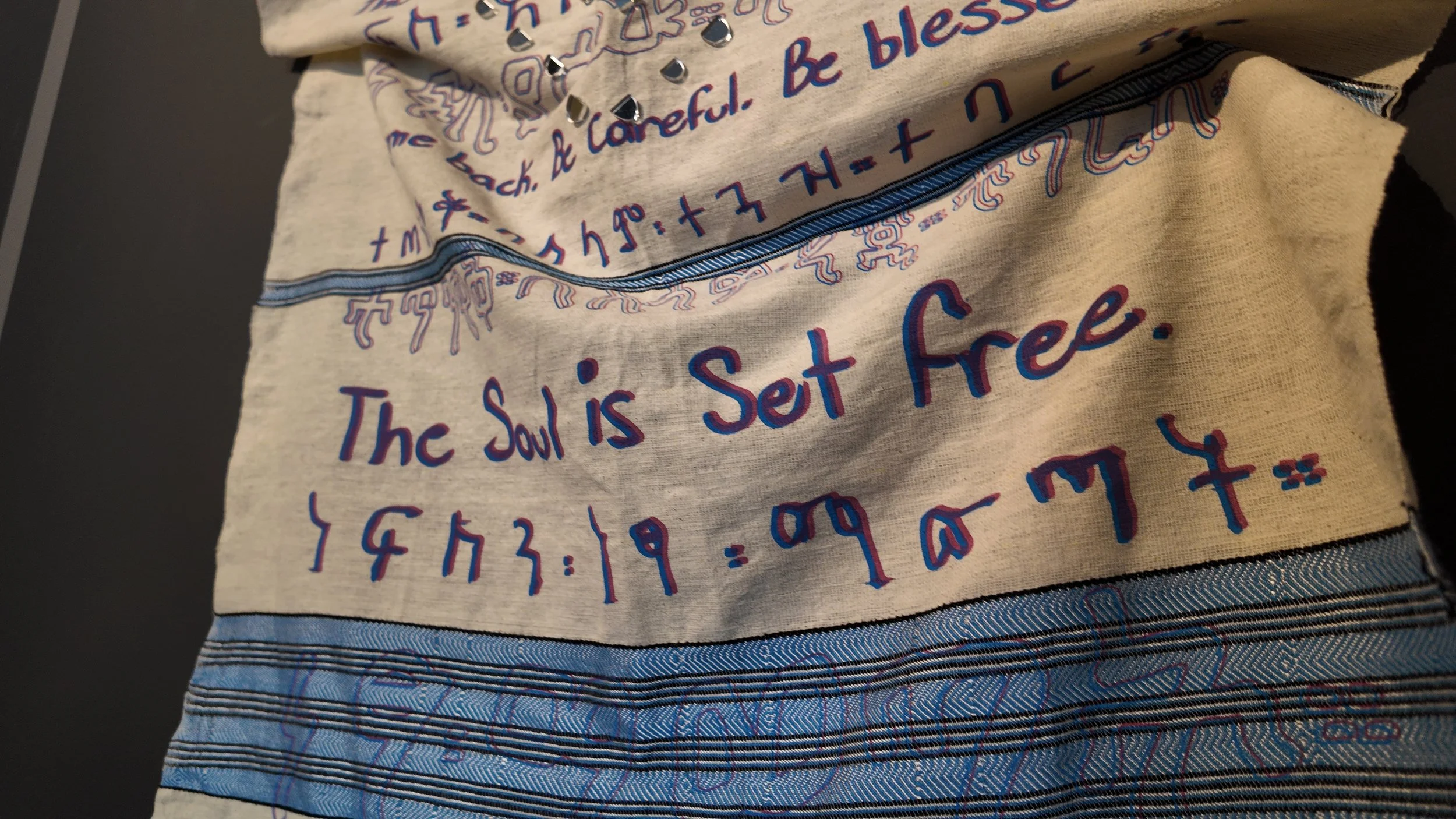
Contemporary Artist Tsedaye Makonnen, currently featured as one of the two living artists in the Africa and Byzantium exhibition, has been commissioned by MetLiveArts and supported by Franklin Furnace to produce a new iteration from her performance and textile series Astral Sea to be featured at The Metropolitan Museum of Art.
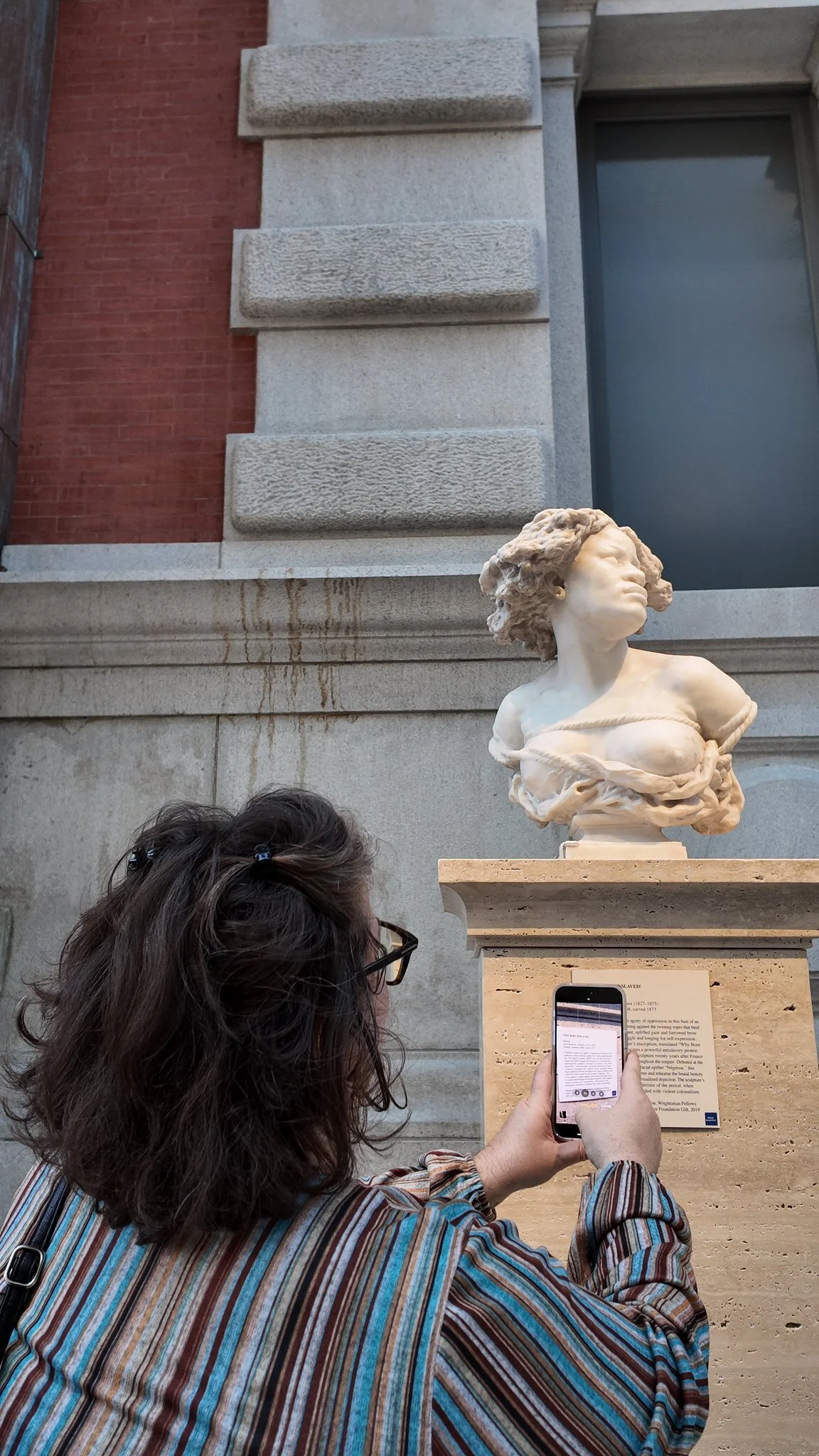
The exhibition explores the cultural interconnections between the African continent and Byzantium from the 4th to the 15th century. The Met has commissioned 7 new works from Tsedaye alongside this new performance piece.
Performers Jasmine Hearn and Adia will be adorned by Astral Sea mirrored textiles created by the artist Tsedaye moving through the exhibit and Petrie Court. Their abstracted gestures will emulate water, land and the cosmos becoming a conduit of those who the work honors.
The performance will highlight themes of healing, protection, hope, resilience, and the power of collective action, drawing connections between the rich histories of Africa and the African diaspora. It will be accompanied by a special live soundscape created by world renowned Sudanese musician Alsarah from Alsarah and the Nubatones.
Astral Sea: The Need for Collective Refuge Performance
Date: February 29th, 2024
Location: The Metropolitan Museum of Art
Africa & Byzantium exhibit and Petrie Court
Performers: Jasmine Hearn, Adia and musician Alsarah
Artist: Tsedaye Makonnen








Share this story
Africa-Related is a media content production house

USAID and IFRC to Host First Global Summit on Extreme Heat
The United States Agency for International Development (USAID) and the International Federation of Red Cross and Red Crescent Societies (IFRC) will host the first Global Summit on Extreme Heat on March 28, 2024 at 8:30 AM ET. This virtual summit will bring together global leaders and changemakers to discuss solutions and strategies to protect communities and workers from extreme heat.
UNITED STATES AGENCY FOR INTERNATIONAL DEVELOPMENT
Office of Press Relations
For Immediate Release
March 8, 2024
PRESS RELEASE
USAID and IFRC to Host First Global Summit on Extreme Heat
The United States Agency for International Development (USAID) and the International Federation of Red Cross and Red Crescent Societies (IFRC) will host the first Global Summit on Extreme Heat on March 28, 2024 at 8:30 AM ET. This virtual summit will bring together global leaders and changemakers to discuss solutions and strategies to protect communities and workers from extreme heat.
USAID Administrator Samantha Power and IFRC Secretary General Jagan Chapagain will be joined by government and private sector leaders from across the globe, including NOAA Administrator Rick Spinrad and the Mayor of Freetown, Sierra Leone, Yvonne Aki-Sawyerr, who are developing innovative solutions to reduce the impacts of extreme heat events and increase climate preparedness plans for all, saving lives and livelihoods.
Extreme heat is a growing threat. 2023 marked the hottest year on record, coinciding with deadly heat waves on nearly every continent, from Pakistan to Tunisia to Texas. The 10 hottest years on record have all come in the past decade (2014-2023) and scientists expect temperatures to continue to rise. Extreme heat events are becoming more frequent and intense, resulting in more deaths and exacerbating other climate disasters such as drought and wildfires.
The virtual summit will take place online and will be livestreamed and open to the public. You can register and find additional information at www.USAID.gov/HeatSummit. The Summit is in coordination with the Biden-Harris Administration’s PREPARE initiative.
share this story
Africa-Related is a media content production house


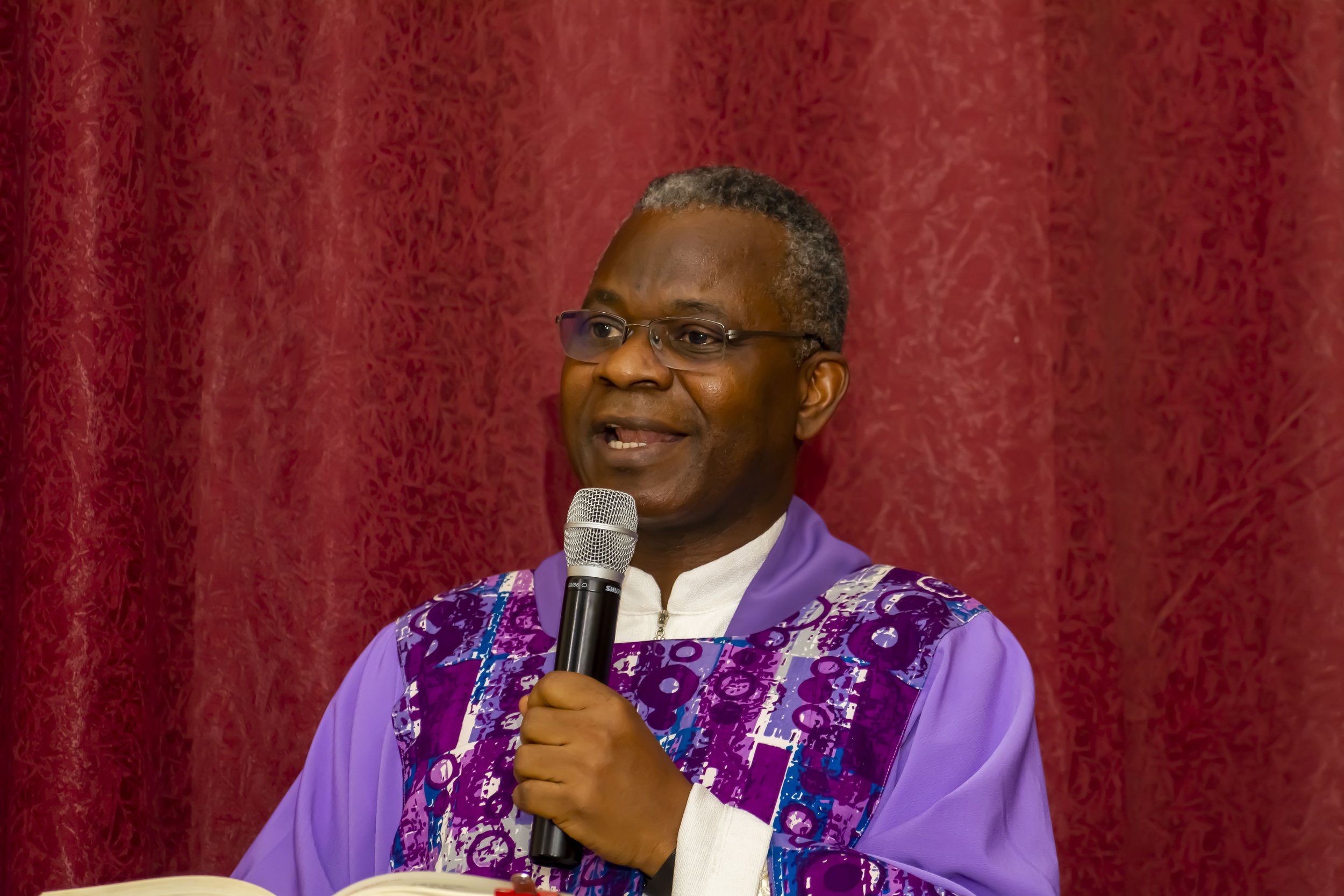

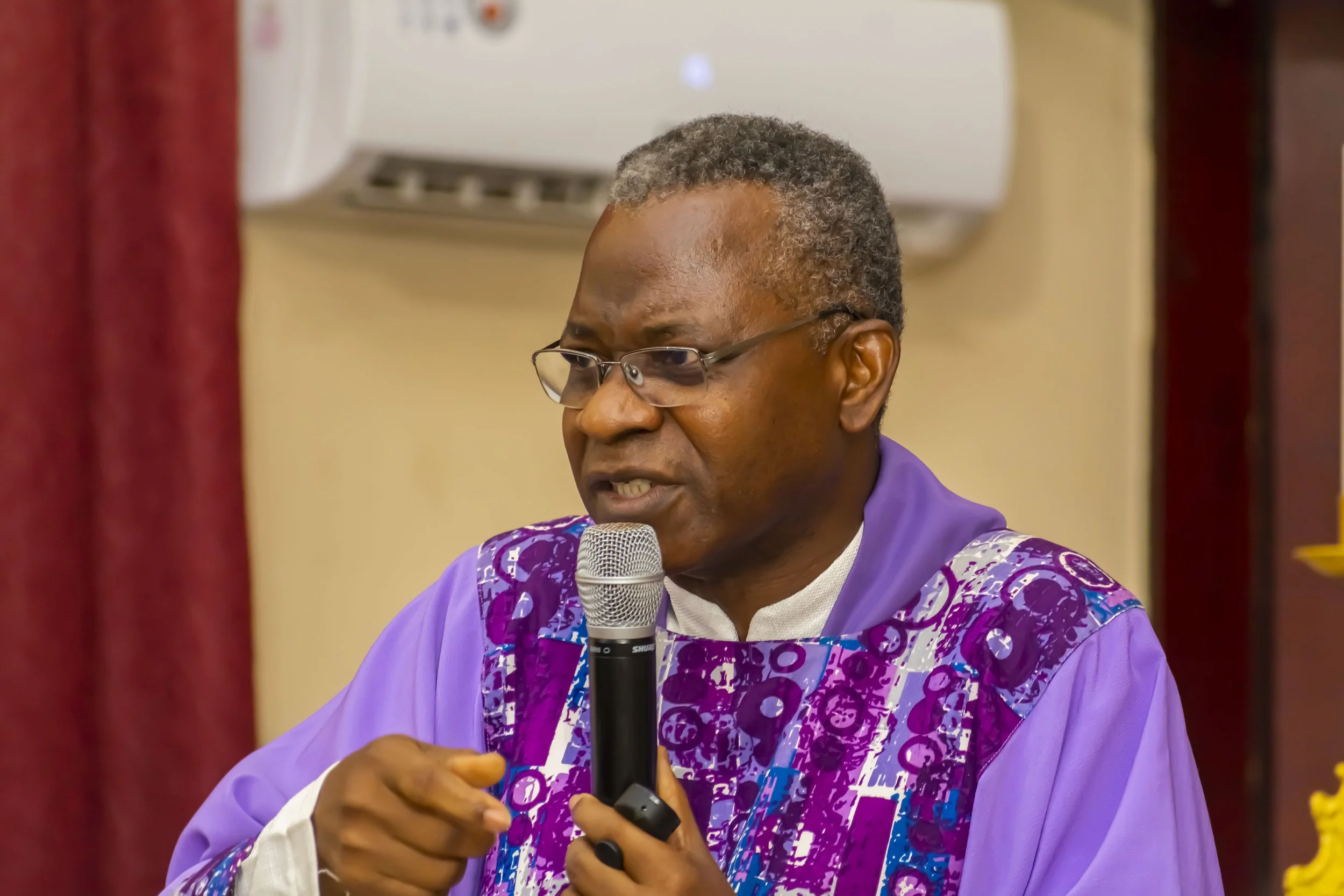
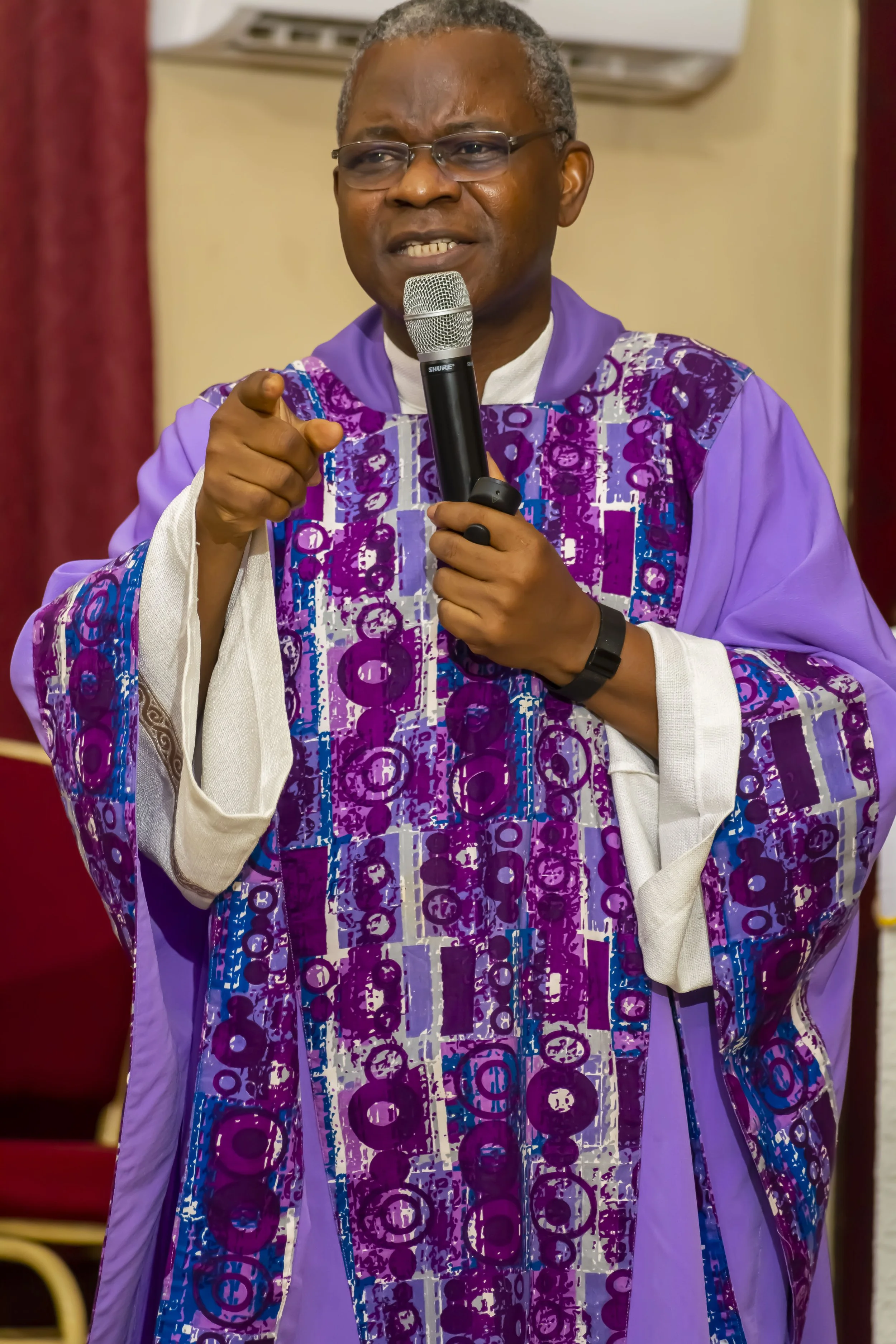








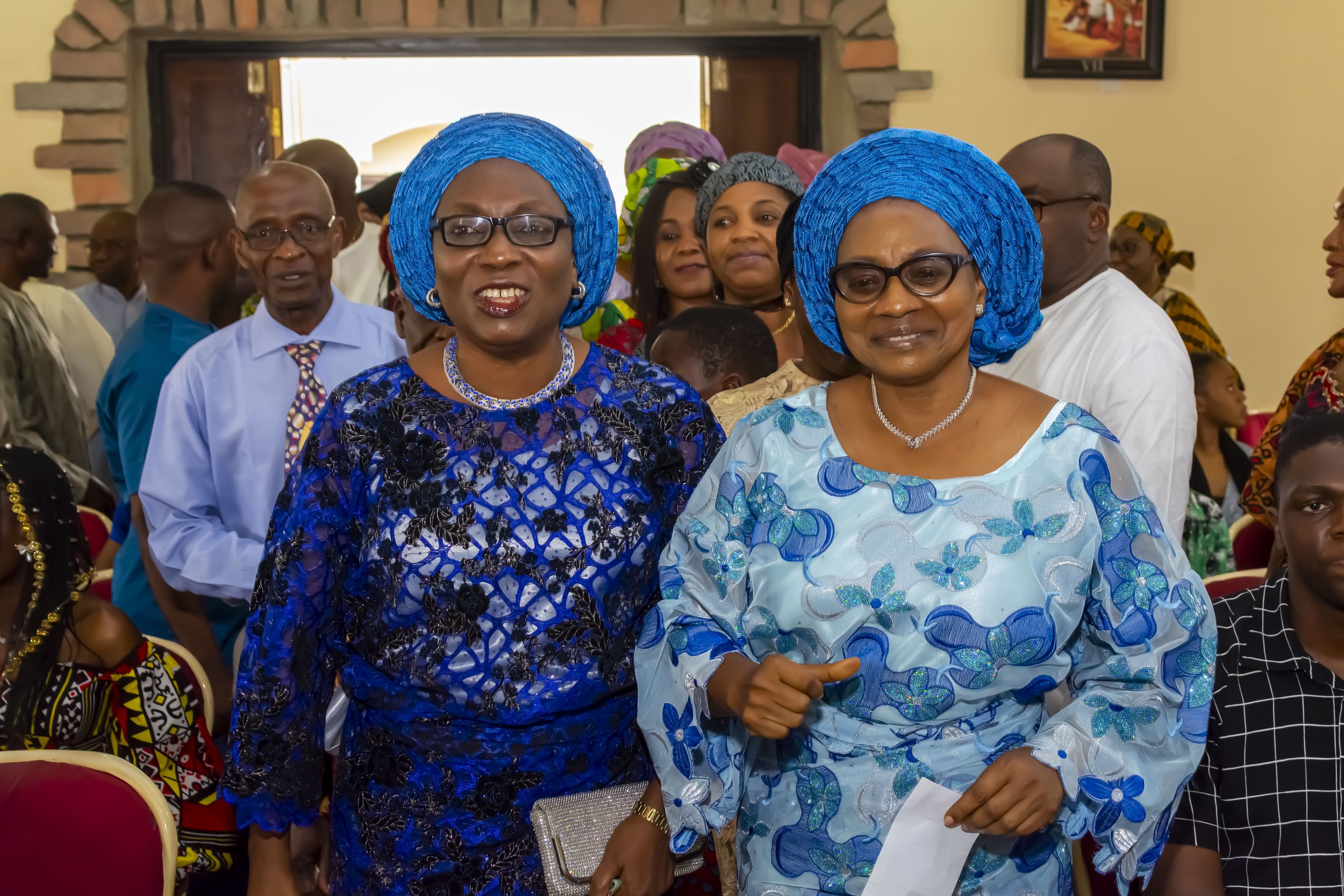
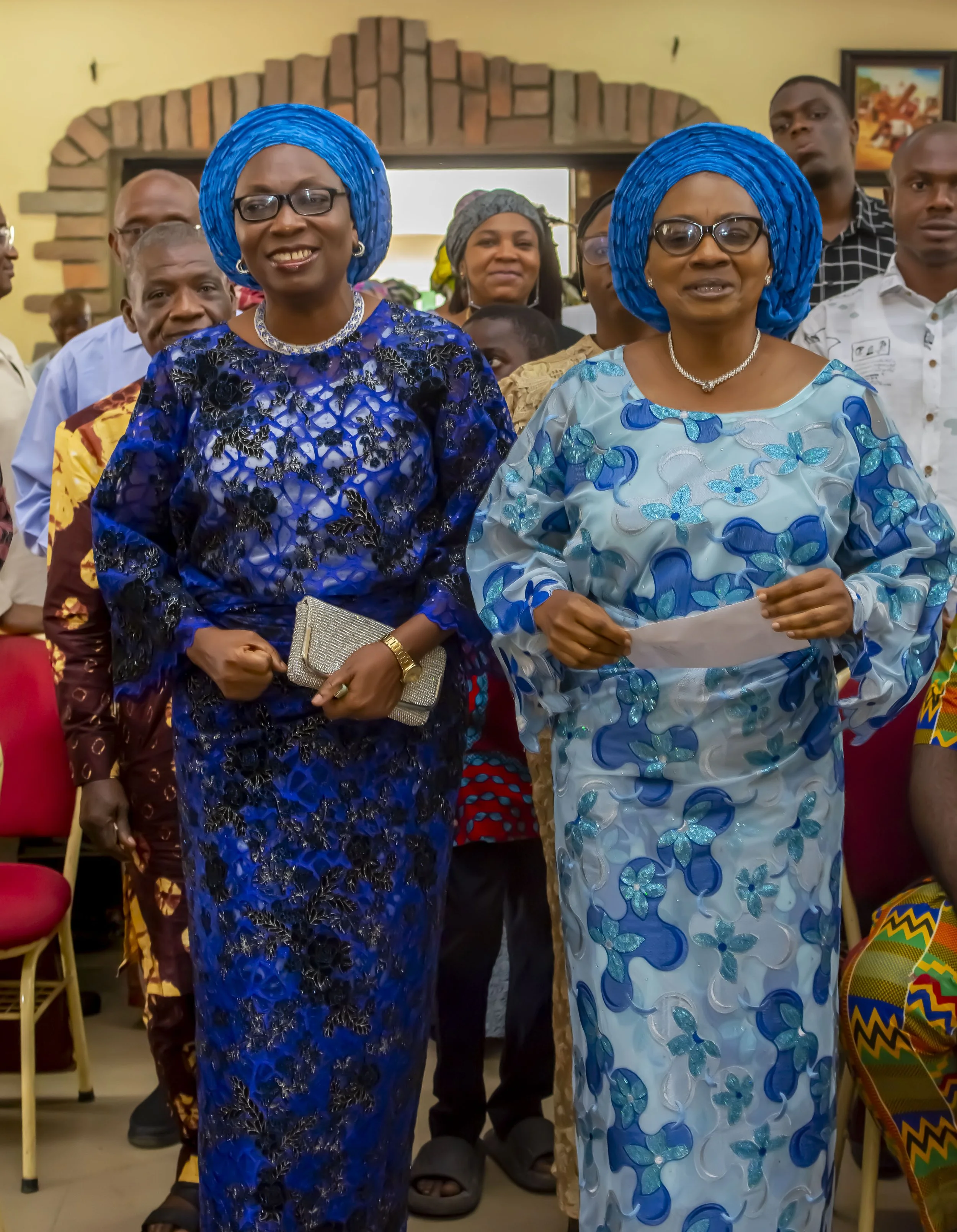

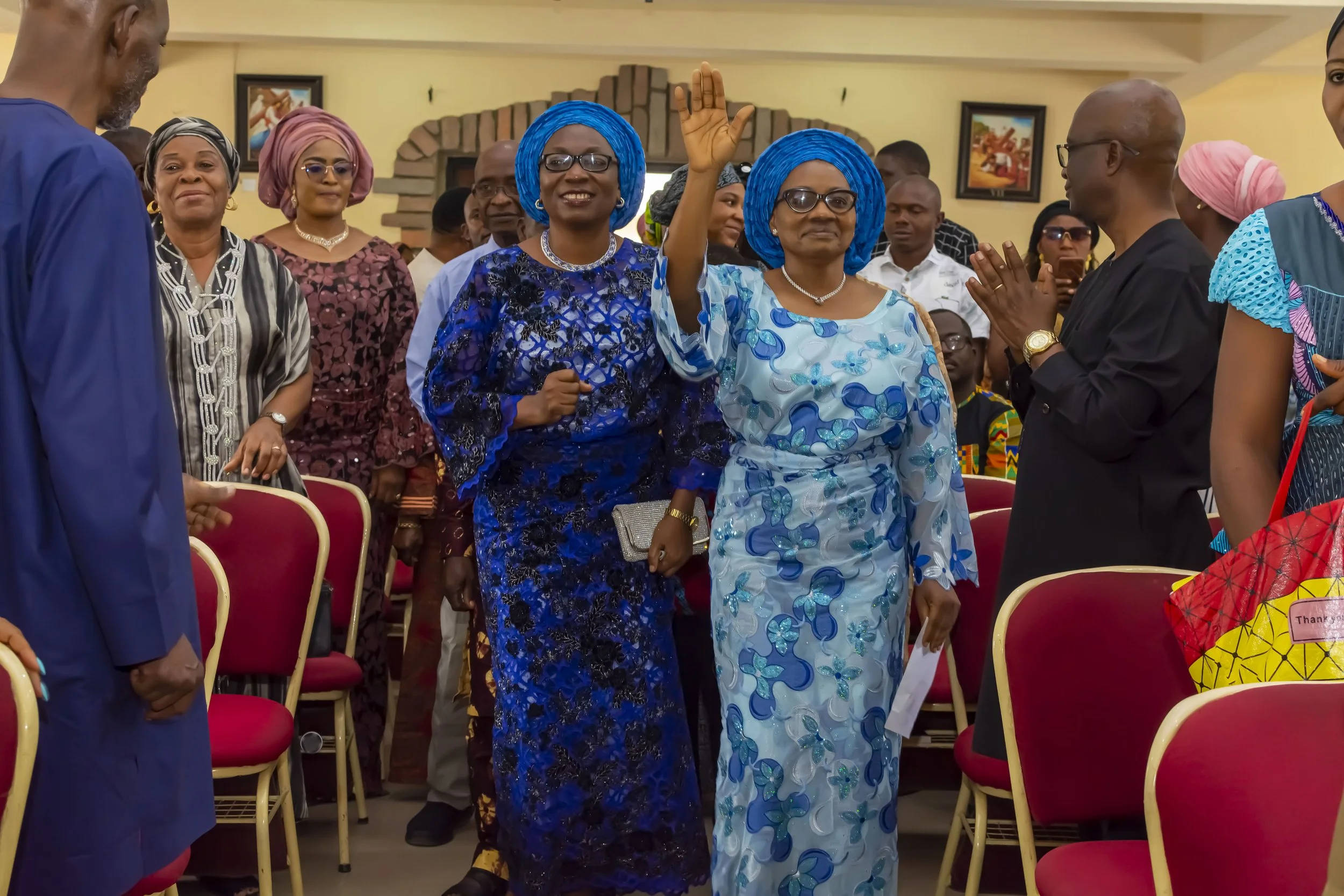


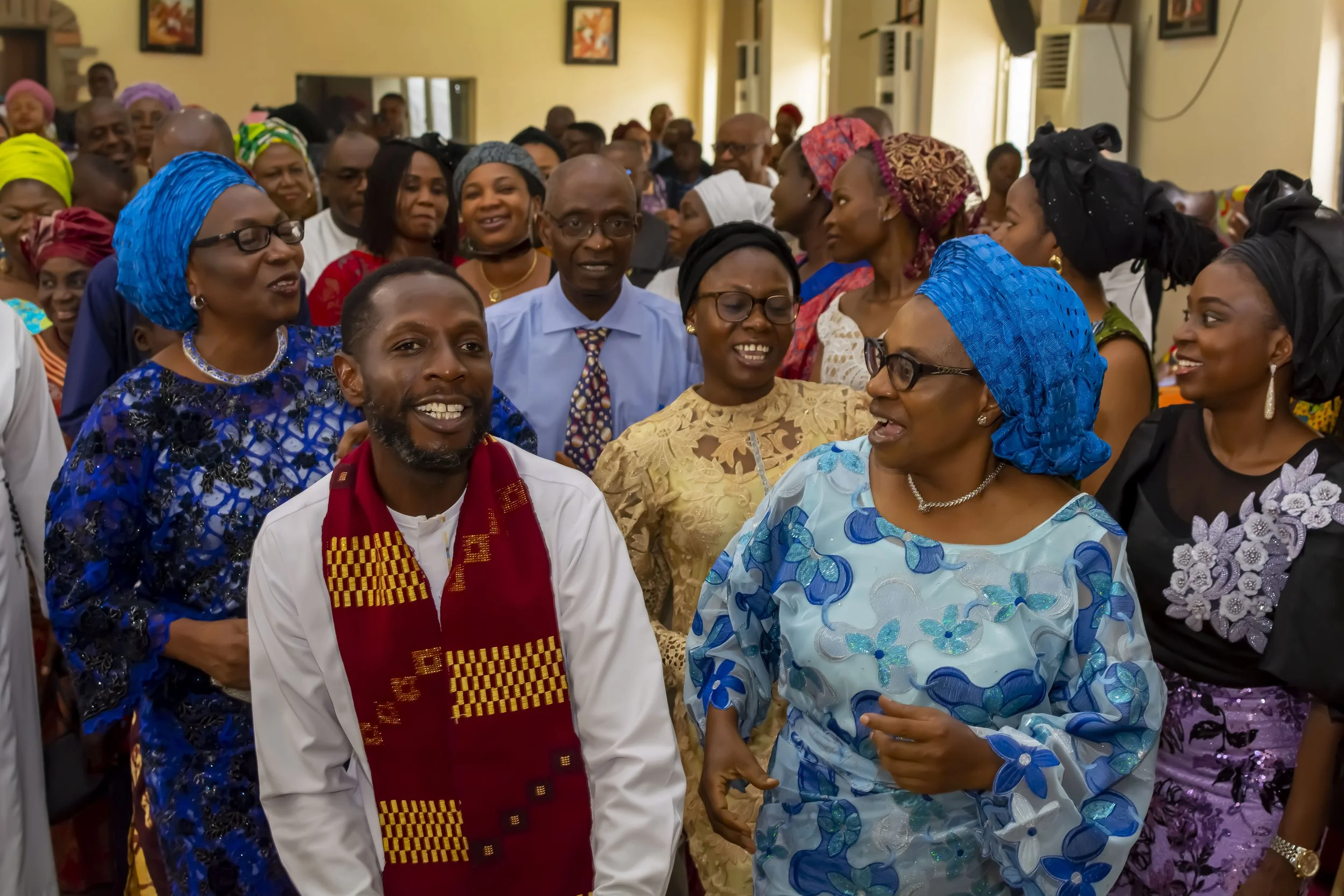
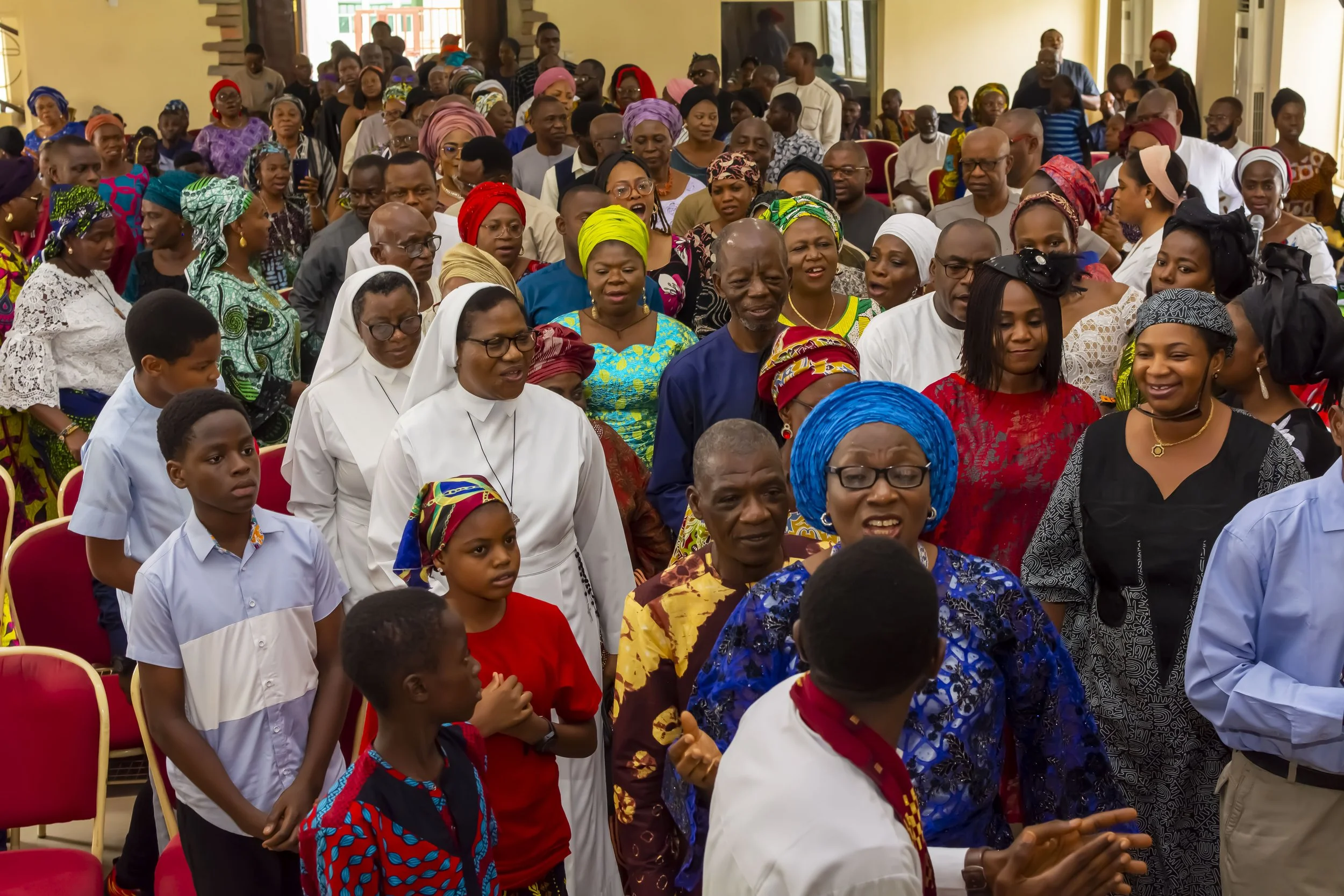




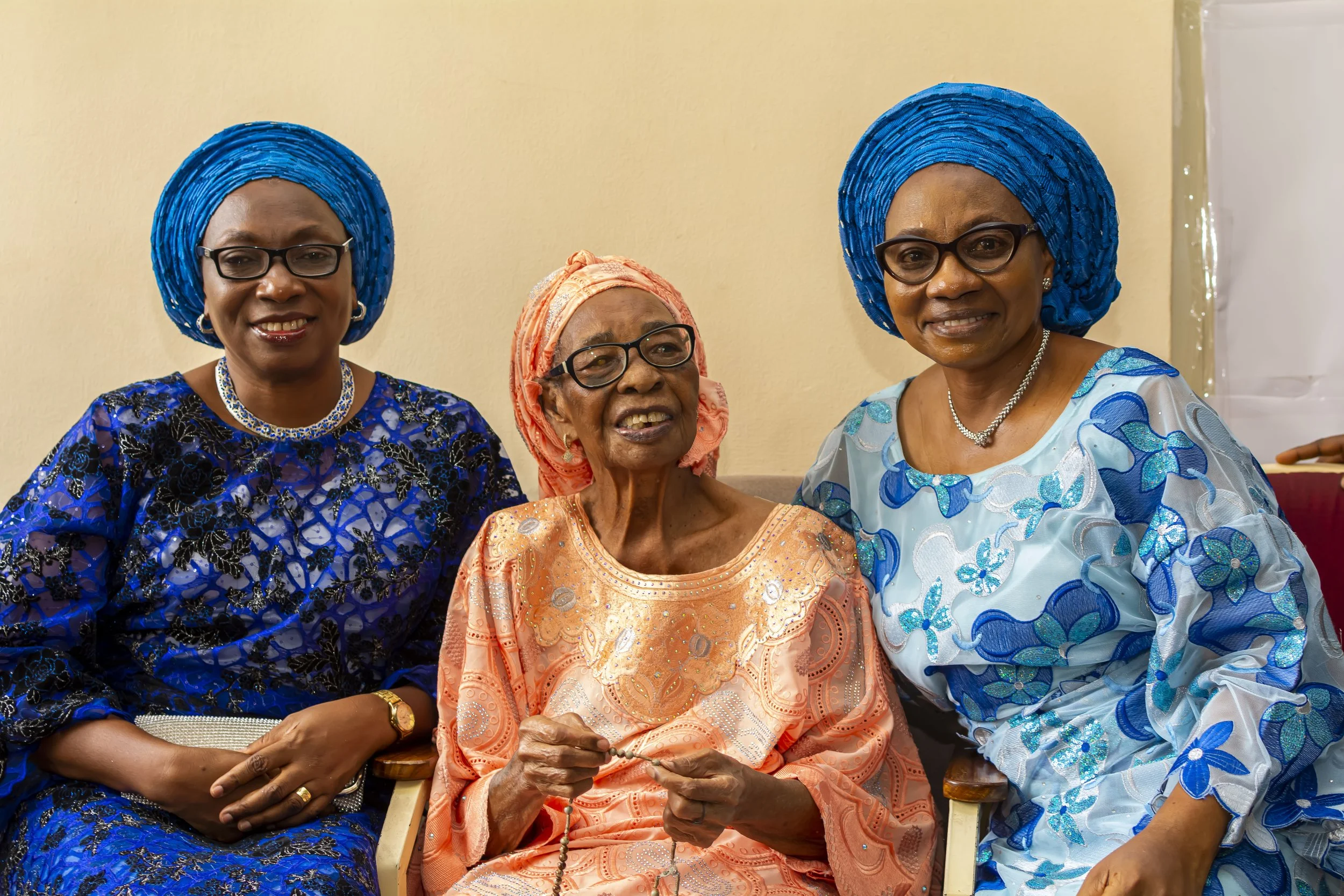









Omoyele Sowore Returns To A Rousing Welcome In The U.S
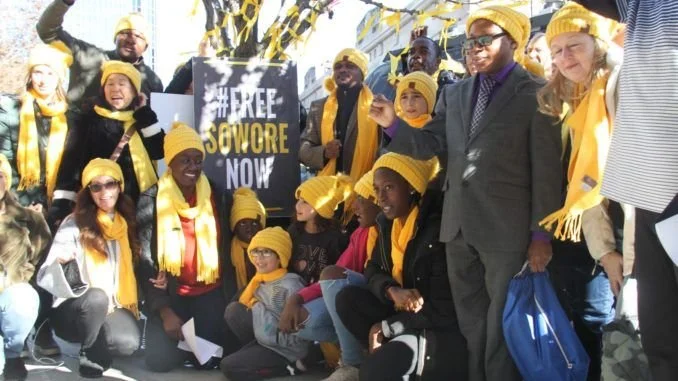
After five long years away from the U.S, where his family primarily resides, Omoyele Sowore, the presidential aspirant that was held by The Muhammadu Buhari administration - returned to a rousing welcome in New York.
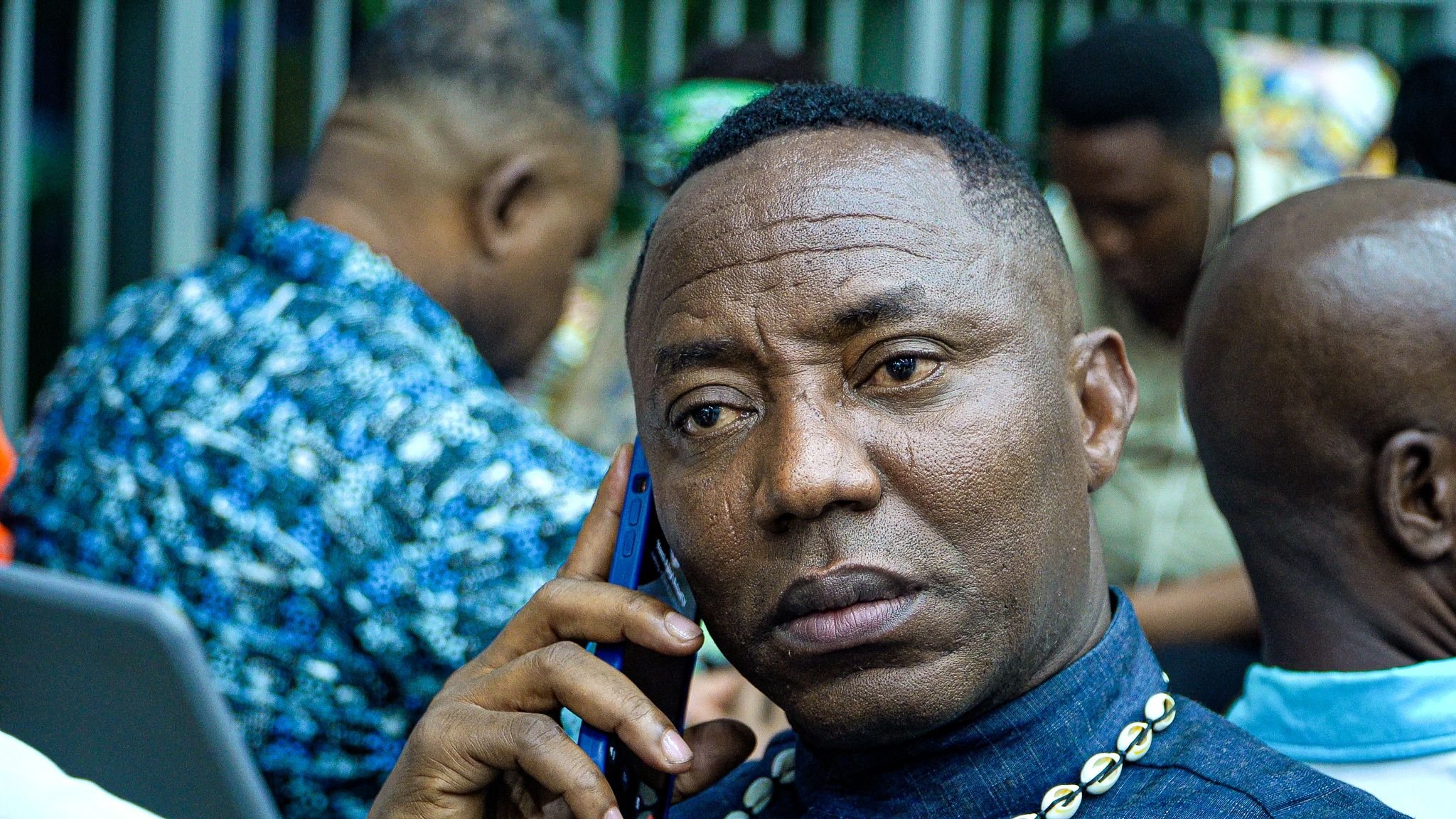
Omoyele Sowore Returns To A Rousing Welcome in the U.S
After five long years away from the U.S, where his family primarily resides, Omoyele Sowore, the Presidential aspirant and journalist that was held by The Muhammadu Buhari administration - returned to a rousing welcome in New York.
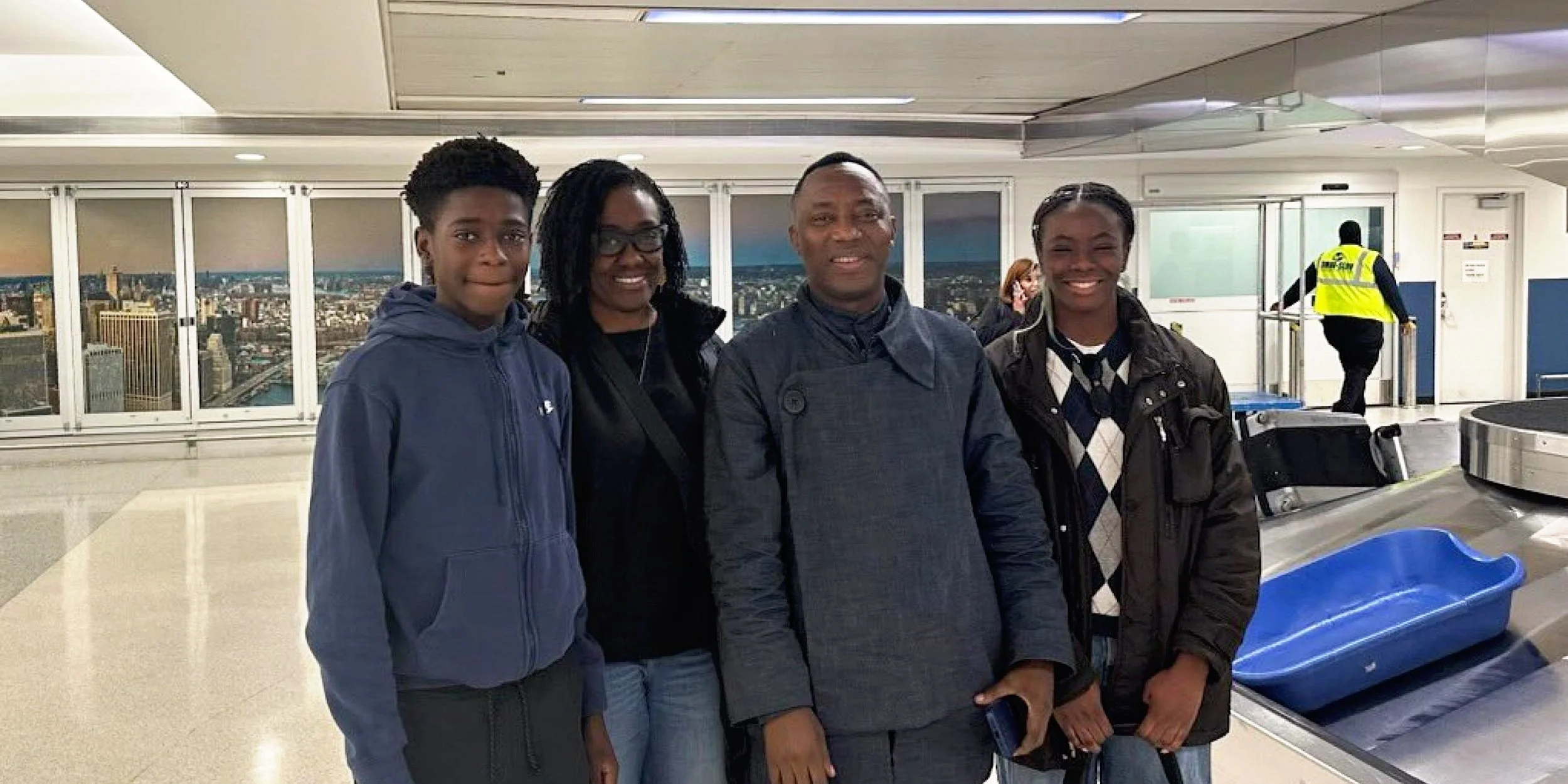
Omoyele Sowore and his family. Photo by Saharareporters
#RevolutionNow convener Omoyele Sowore, on Saturday, arrived in the United States of America after five years to reunite with his family.
SaharaReporters earlier reported that the activists would be traveling to the US Friday night (tonight) to reunite with his family.
This comes after a Federal High Court in Abuja ordered the release of his passport following the decision of the Nigerian government to withdraw its treasonable felony case against the #RevolutionNow convener, four years after it was seized and he was barred from leaving Nigeria.
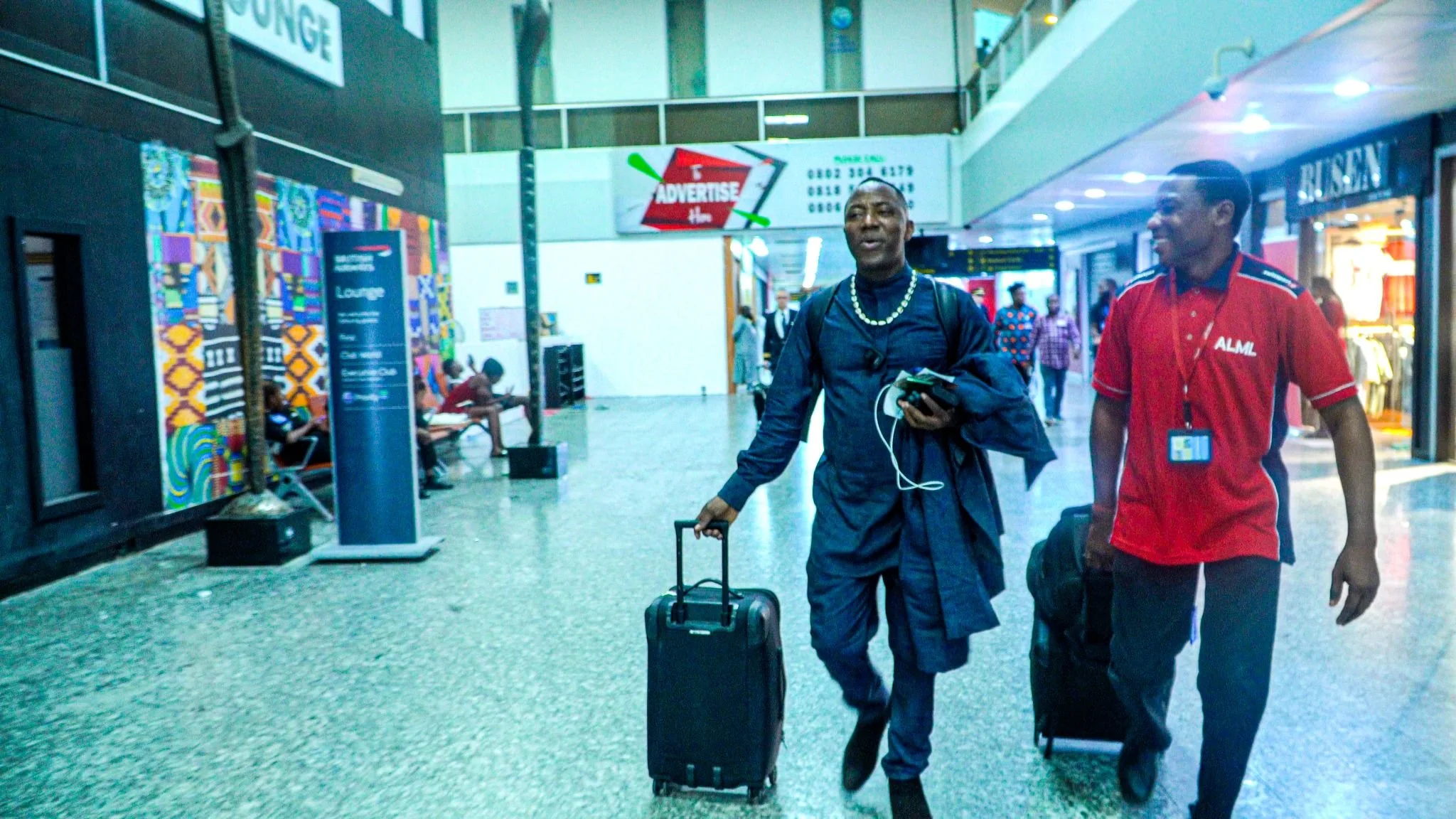
The human rights activist and two-time presidential candidate was warmly welcomed by friends and family on Saturday. Sowore, who departed the Murtala Muhammed International Airport in Lagos late Friday night on a United Airlines flight to DC Washington Dulles International Airport, was accompanied by his supporters to the airport.
After some tense confrontations with some Air Force and immigration officers upon his arrival at the Lagos airport over their refusal to allow his supporters and media crew to film his departure, Sowore left and arrived in Washington, D.C., according to his live stream upon arrival.
After U.S. immigration protocols, Sowore took a second leg of his trip to Newark International Airport, where his family and friends met him upon arrival at about 10 AM U.S. Eastern Time.
His friends, led by a member of the TakeItBack Movement, Kayode Ojo, a New York-based tax consultant, later met Sowore’s obviously excited family – his wife, Opeyemi, and his two kids.
Pius Omoregha, Adebayo Niyi, Seun Akinfolarin, also present at the airport were Friday Valentine Offo, Odinma Anaedo social Club USA, Engineer Victor and many others.
The activist said in a press invitation sent to SaharaReporters on Friday that his trip would be for a short while since he was "bound to return to Nigeria not only to continue my struggle for the total liberation of our people but also to face the myriad of bogus criminal and civil cases thrown at me since my detention began."
Sowore drove home and later attended a reception organized by the City of Haworth. The packed event, organized by the Mayor, Heather Wasser, had in attendance US Congressman Josh Gottheimer, whom Sowore acknowledged as facilitating his return to the U.S.
Sowore’s in-laws, Dr. Soji and Tolu Oluwole, also attended.
Other attendees included members of the Diaspora community led by a former President of the University of Lagos students union and now a foremost chemical engineer in the US, Dr. Malcolm Fabiyi, Bukola Oreofe, Deacon Dele Alade, Ademola Bello, American writer and journalist Lisa Vives, and Nigerian cuisine chef and owner of Brooklyn-based Buka restaurant, Lookman Afolayan.
The event, in which Sowore gave a heartfelt speech, also featured his wife, Opeyemi, appreciating the women who led the campaign for the activist’s release in Haworth, New Jersey.
The healthcare marketing consultant said the “friendship and unbreakable bonds” she forged with other women in Haworth helped her cope with the lonely days of wondering if her husband was safe.
“I’m so overwhelmed by the love that surrounds me and my family,” she said.
According to a video of the event posted by northjersey.com, Sowore said in his speech, “I can’t explain how I feel to be here with you today.
“Before I was arrested, nobody knew much about me in this city. I would just occasionally get on the street and run because I do long-distance running. I participated in the city’s runs once in a while. But something is very similar to where I come from; my hometown is as small as what you have here.
“And I remember growing up and saying that I would change the world through my hometown of 3,000 people when it was invaded by the police in 1980. Fast-forward to years later, and I found myself in this small town. Just the way my hometown shook the Nigerian government through me, you shook our government and the world through me again. I became one of the most popular faces throughout my five-year stay in Nigeria. Everybody knew how to spell this place.”
At the reception, Sowore’s daughter read a poem describing her father as “a man with a big heart.”
One of the leading voices was a council member, Alanna Zahn Davis, who spoke passionately about the strong bond Sowore’s incarceration brought to bear on the Haworth community in New Jersey.
To end the event, The Mayor of Haworth, Heather Wasser delivered a proclamation to honour Sowore and his family for their resilience and struggle for the emancipation of their homeland Nigeria.
SaharaReporters on February 15 reported that the President Bola Tinubu-led government had discontinued the treasonable felony case instituted against Sowore.
The development was made known in a document issued by the Attorney General of the Federation and Minister of Justice, Lateef Fagbemi.
The document dated February 15, 2024, was addressed to the Federal High Court of Nigeria, Abuja Division.
In the document, the government disclosed its intention to also discontinue the case against Sowore’s co-defendant, Olawale Bakare, aka Mandate.
Sowore was arrested by the Department of State Services on August 3, 2019, in Lagos, Nigeria.
He was subsequently detained and charged with treason for calling for nationwide protests as part of the #RevolutionNow movement he started.
Following the notice of withdrawal of the case, which was issued by the government through the Attorney General of the Federation, Justice Emeka Nwite of the Federal High Court in Abuja ordered the release of his passport and other items seized from him.
Source: Sahara Reporters


SHARE THIS STORY
Africa-Related is a media content production house
Abandoned And Forgotten - Pilgrimage to Leah Sharibu’s School on 6th Anniversary
Leah, the world’s youngest prisoner of conscience designated by the US Commission on International Religious Freedom (she was 14 on Feb 19, 2018) may be world famous but it hasn’t helped her school.

Abandoned and forgotten - pilgrimage to Leah Sharibu’s school on 6th anniversary
MEDIA ADVISORY
Please find below U.S. Nigeria Law Group’s Fact-finding report on Leah Sharibu’s 6th abduction anniversary specially released for International Women’s Day 2024.
USNLG IWD 2024 SPECIAL FACT-FINDING REPORT:
Abandoned and forgotten - pilgrimage to Leah Sharibu’s school on 6th year abduction anniversary - Part 1
On the sixth anniversary of heroine Christian teenager Leah’s abduction, a visit to her school in Yobe State, Nigeria shows abject neglect just like her.
Leah, the world’s youngest prisoner of conscience designated by the US Commission on International Religious Freedom (she was 14 on Feb 19, 2018) may be world famous but it hasn’t helped her school.
The Government Girls Science School Dapchi is a shadow of its former self, decrepit and overgrown with weeds since that fateful day, as discovered on our recent fact finding mission.
Below is the school dormitory where Leah Sharibu was tending a sick student just before she was abducted
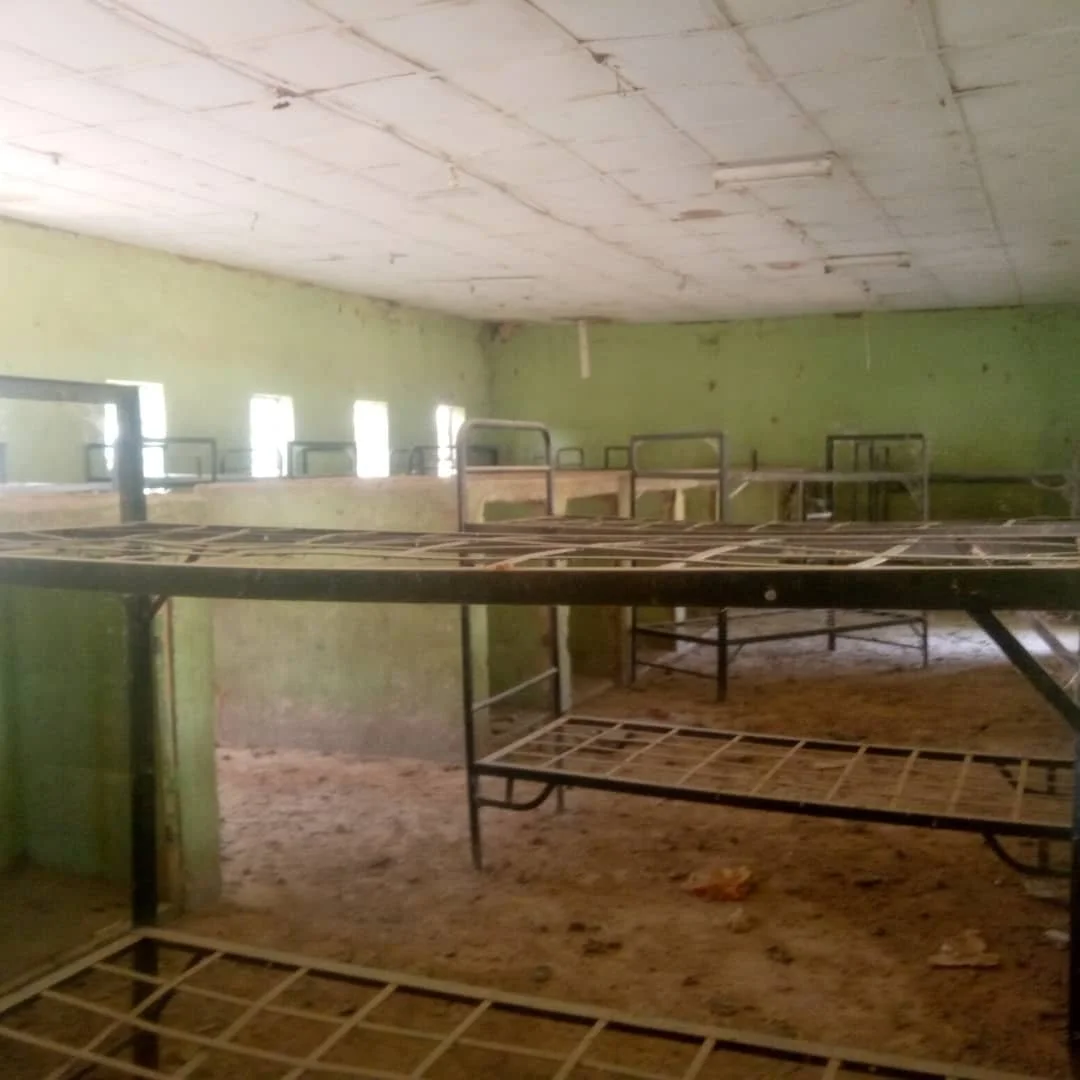
School dormitory
Below is the classroom drawing board still showing the last thing written on February 18, 2018 - the eve of the terror attack
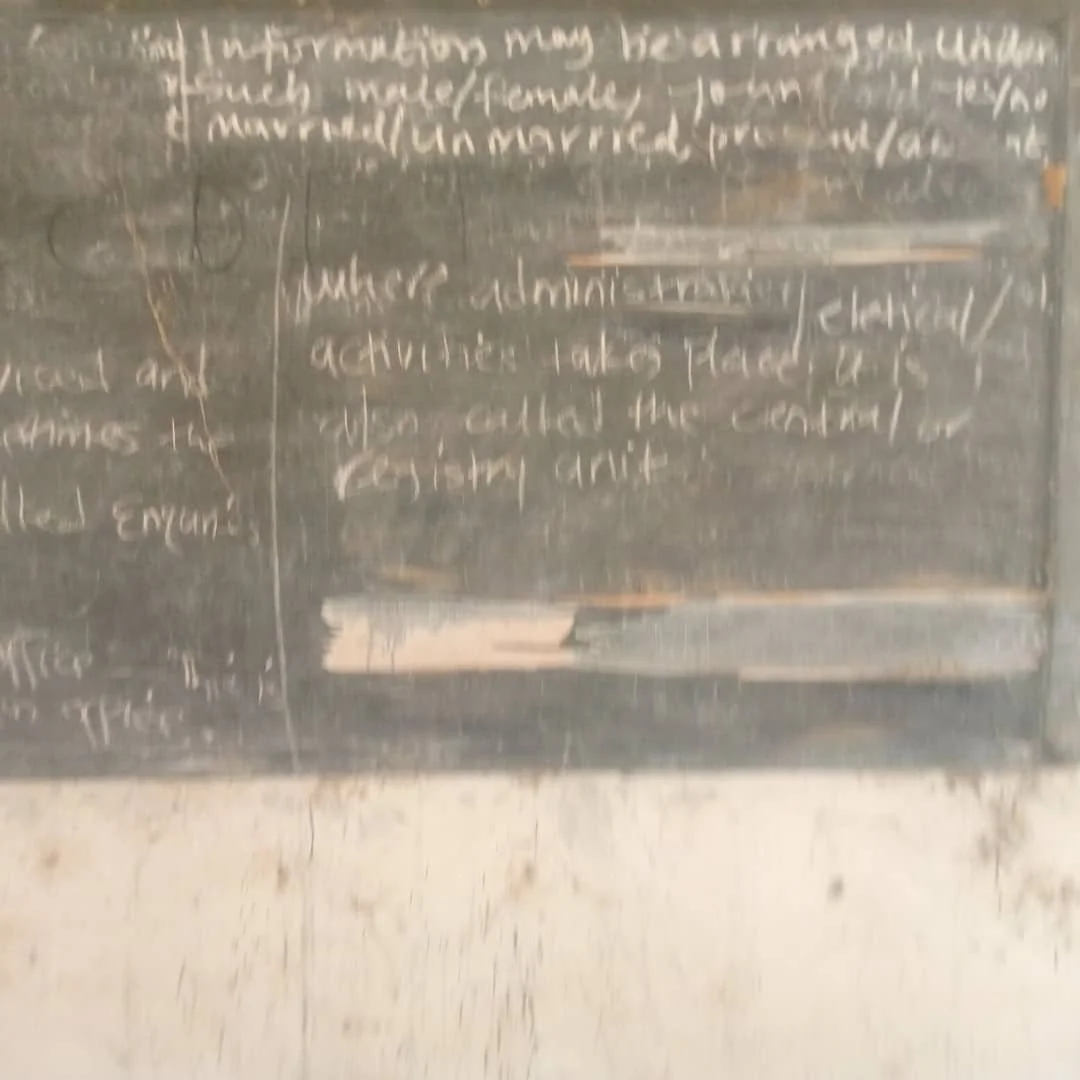
Classroom drawing board
Below is the computer lab of the Govt Girls Science Sch Dapchi
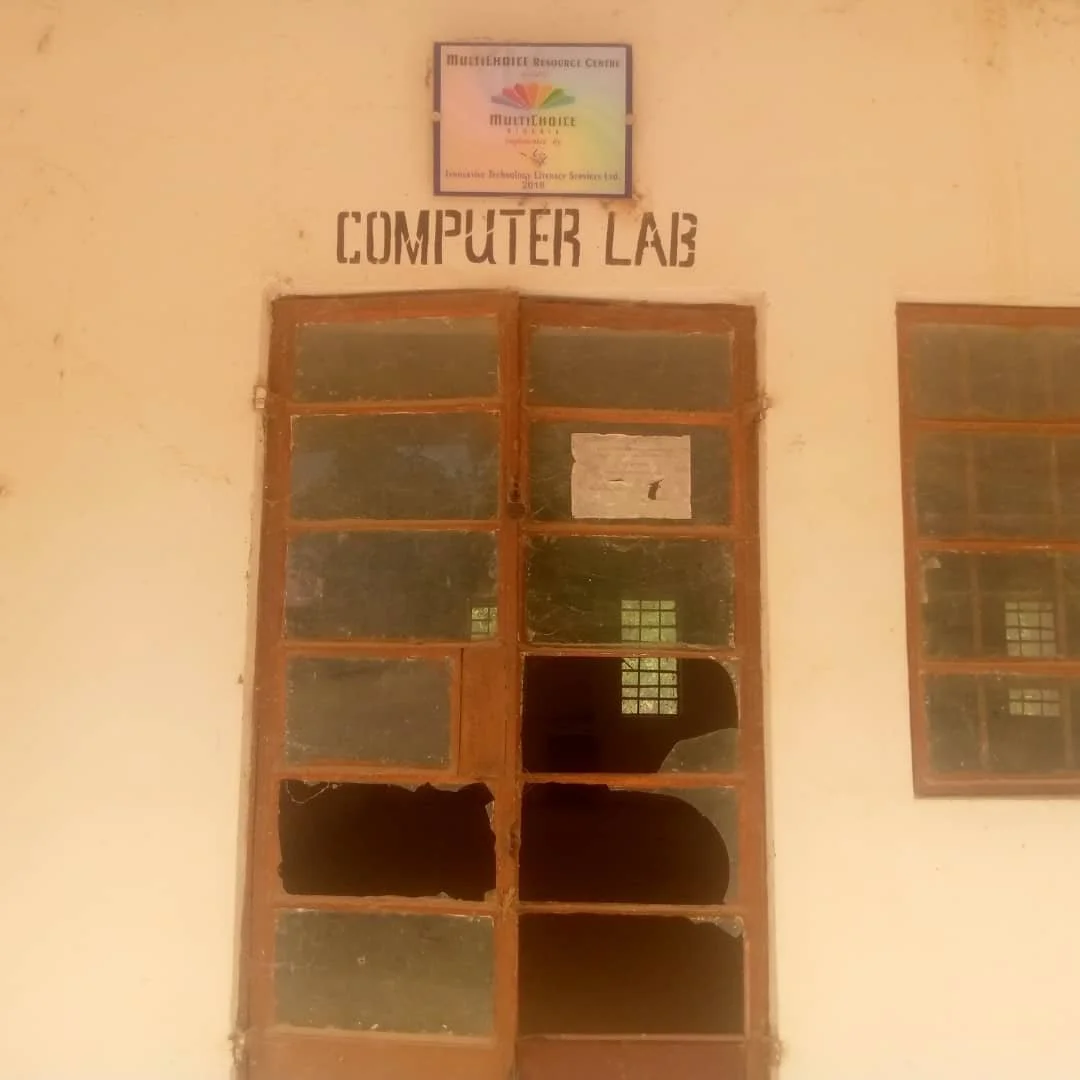
Computer lab of the Govt Girls Science School
Below is Leah’s classroom
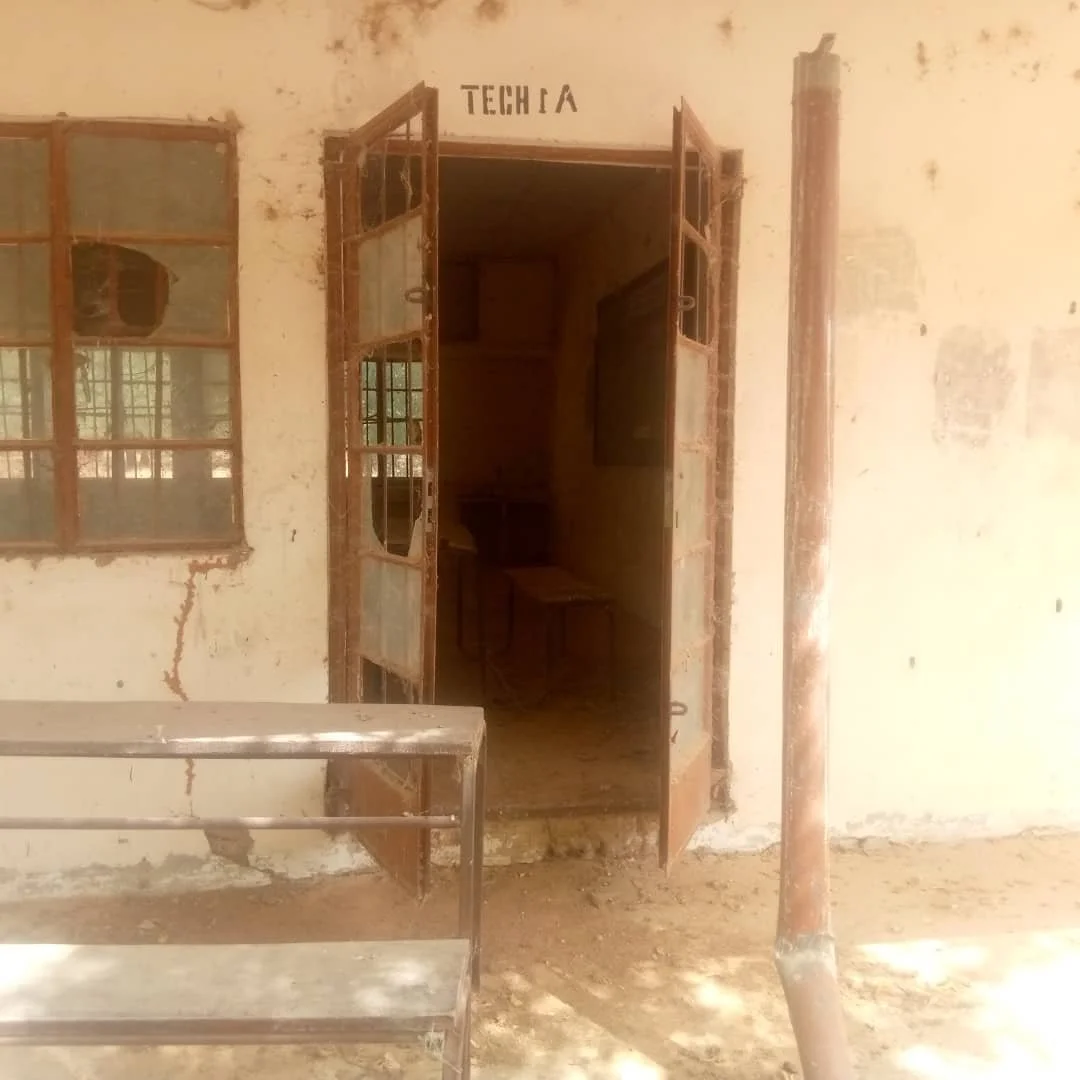
Leah’s classroom
Birds now occupy the staff room as goats and other animals roam free where schoolgirls used to be.
But it is not just infrastructural decay that devastated the school after the terror attack.
Many of the girls have been unable to complete or continue their education.
Several were displaced during subsequent attacks by Boko Haram on Dapchi leading to our intervention.
One of Leah’s schoolmates who went to school in Bauchi was abducted, forcefully converted and wedded by one of her lecturers leading to our intervention last year.
Another schoolmate was impregnated by a military personnel on security deployment to Dapchi who refused to take responsibility for the baby leading to our intervention last year.
Ironically as for Leah herself who was impregnated twice by her abductors, her children are being catered for by the terrorists but a Nigerian soldier abandoned responsibility for his daughter from impregnating Leah’s classmate.
Leah’s widowed birthmom and blood siblings in the village close to Sambisa forest have experienced displacement too from continuing terror attacks leading to our intervention.
Leah’s eldest sister has also had two children while Leah was in captivity which she remains unaware of. Incidentally Leah birthed a boy and a girl in captivity and her sister also birthed a boy and a girl as well.
Sadly despite the infamous Dapchi and Chibok school mass abductions six and years ago, over 600 women and schoolchildren were kidnapped this IWD week in just two incidents in Borno and Kaduna. Each atrocity exceeds the Chibok mass abductions of 276 students a decade ago
To be continued
Emmanuel Ogebe
US NIGERIA LAW GROUP
Washington
SHARE THIS STORY
Africa-Related is a media content production house

HARLEM HOSTS GLOBAL AFRICAN WOMEN’S DAY
On March 16, a special Pan-African gala will take place in Harlem to celebrate Global African Women’s Day with African women and women of African descent from around the world, spanning; Africa, Latin America, Europe and the Caribbean.

If you're in New York and looking for a striking statement piece or a versatile staple, international culture and entertainment, the Global African Women’s Day gala is the place to be.
PRESS RELEASE
New York, New York: February 20, 2024
On March 16, a special Pan-African gala will take place in Harlem to celebrate Global African Women’s Day with African women and women of African descent from around the world, spanning; Africa, Latin America, Europe and the Caribbean.
The cultural gala will be held at historic Alhambra Ballroom in Harlem during the annual two-week UN Women’s Conference, Commission on the Status of Women, when New York city streets will swell with parliamentarians, activists, and NGO delegates representing their countries from around the world.
The keynote speaker and honoree for the afternoon will be Her Excellency Verónica Nathaniel Macamo Dlhovo - Minister of Foreign Affairs and Cooperation of the Republic of Mozambique. Also being honored are: Chief Mrs. Nike Okundaye, a renowned Nigerian textile artist and gallery owner / Dr. Gina Paige, Co-Founder & President, African Ancestry, Inc. Pioneer, Entrepreneur, Black Identity Influencer / and special recognition to a soul-fusion performing artist and founding fellow of the Teaching Artist Institute, Ms. Kim Poole.
Distinguished guests include Dr. Epsy Campbell, the former Vice President of Costa Rica and Minister of Foreign Affairs. and current member of the United Nations Permanent Forum on People of African Descent who will deliver a special message.
Also, on hand will be live performances by the incomparable Red Sahara and others. As well as, products for sale by Shayee Textiles which produces a range of wearable art, from intricately designed clothing to statement-making accessories. If you're looking for a striking statement piece or a versatile staple, international culture and entertainment, the Global African Women’s Day gala is the place to be.
A portion of the proceeds will support travel grants for women living in rural areas and distressed communities to participate in forums where their issues can be represented.
Registration is $90 For sponsorship and ticket information, Eventbrite: https://bit.ly/3vYoW3q or, contact Deborah C. Nelson at GlobalAWD@gmail.com Message line only 646-535-0755. Global African Women's Day is an activity supporting the UN Decade for People of African Descent (2015-2024)
##

Share this story
Africa-Related is a media content production house

Judith Pam-Tok Speaks on Plateau Killings
Abuja-based designer and founder of 2fafii clothing line Mrs Judith Pam-Tok speaks on how fashion is fueling her humanitarian mission in her home state of Plateau.
Abuja-based designer and founder of 2fafii clothing line Mrs Judith Pam-Tok speaks on how fashion is fueling her humanitarian mission in her home state of Plateau.
Judith Yop Pam-Tok is an Abuja based Fashion Designer who is very passionate about adding value to her local community of Heipang, Barakin Ladi LGA, of Plateau state. On most occasions, she can be found here, miles away from the comfort of her nuclear family and her business in Nigeria's capital, but she is not complaining as she is passionate about what she does. Her mission in this rural area is purely humanitarian. Her non-profit, Garlyn Foundation's work is mainly with the indigent people of her home community and victims/survivors of herdsmen attacks in that community
Here is how you can help


+234Art Fair Holds First Edition In Lagos
There is a brand-new Nigerian art fair dedicated to supporting emerging artists that is coming up in Lagos from 22nd to 31st March, 2024. +234Art Fair is dedicated to nurturing and uplifting the burgeoning art industry in Nigeria by providing a platform that supports emerging artists and encourages art acquisition.

+234Art Fair is dedicated to nurturing and uplifting the burgeoning art industry
There is a brand-new Nigerian art fair dedicated to supporting emerging artists that is coming up in Lagos. It’s called the +234 Art Fair and will run from 22nd to 31st March, 2024.
+234Art Fair is dedicated to nurturing and uplifting the burgeoning art industry in Nigeria by providing a platform that supports emerging artists and encourages increased interest in art acquisition, thereby contributing to the growth and prosperity of the local art sector as well as its international recognition.
The 2024 theme for the +234 Art Fair is “Heritage”, aimed at young artists to explore ways in which they can build practices that tie to the past but also create new futures. The fair seeks to explore the development of young artists in order to give inspiration and insight on how the creation of an indigenous style contributes to global reach and success.
The Venue for the Fair is the new Ecobank Pan-African Centre, Ozumba Mbadiwe Avenue, Victoria Island, Lagos. The programme of events include Masterclasses that will treat subjects such as African Art in the Global Art Market, The Business of Photography, Bridging Time: Connecting Heritage and Modernity in Nigerian Art, How to Navigate the International Art Scene as a Local Artist, Artistic Research, Grant Writing, Navigating Biennales and Museums in Contemporary Art
Panelists include Florence Lynch, a New York-based art dealer, Alain Ngann a photographer artist, Kelechi Amadi-Obi, a Nigerian creative photographer, Oluwatoyin Sogbesan an architect, a cultural historian, Jess Castellote, the Director of the Yemisi Shyllon Museum of Art; and many more
The exhibition’s title, “+234Art,” cleverly merges Nigeria’s country calling code (+234) with the encompassing term “Art,” serving as an all-encompassing representation of the contemporary Nigerian art scene and its interconnectedness with the broader African and global art community. This free-entry fair offers an immersive showcase of painting, photography, and sculpture, providing the public with an upclose look at the latest creative endeavours of emerging artists and photographers in Nigeria.
For more info on +234 Art Fair


Share this story

Adinkra Craft Village Ntonso Benefits From U.S. Sorority
A tale of two communities - Adinkra Village, Ntonso is home to Ghana’s ancient tradition of weaving, dying, stamping, stitching and symbols. Over the Christmas holidays, an Indianapolis Sorority stopped by to fulfill their own developmental pledge.
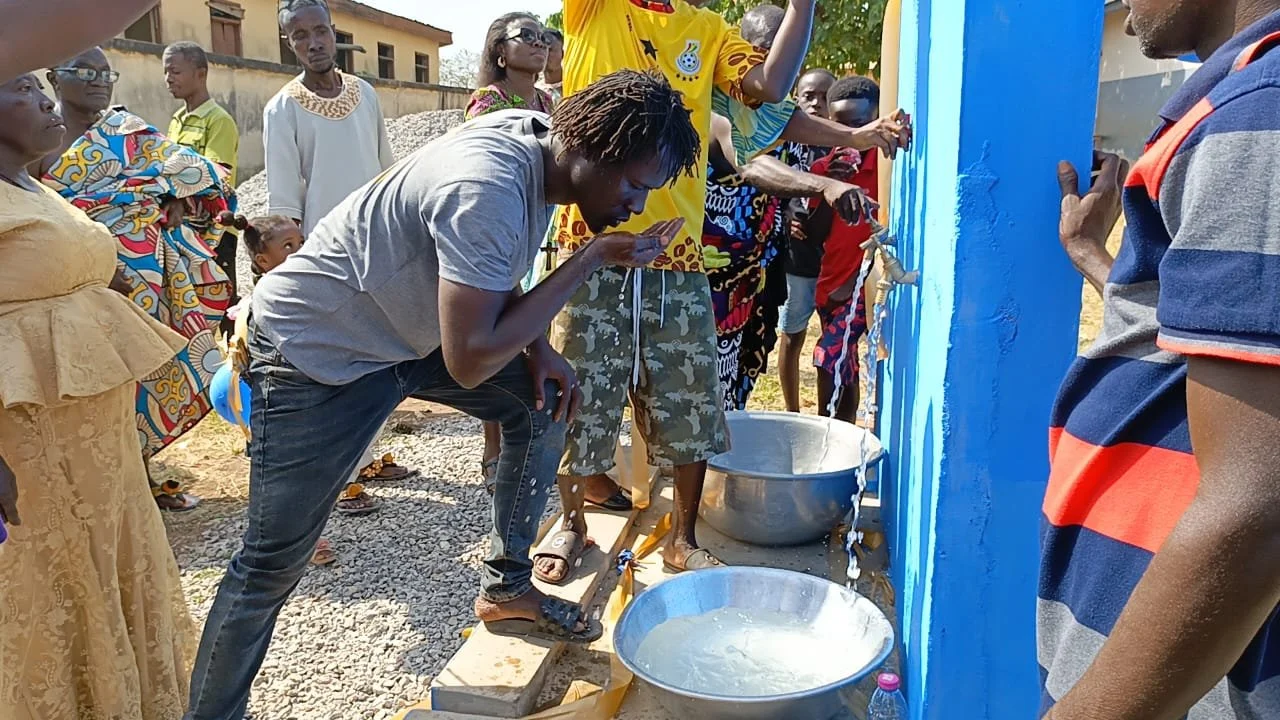
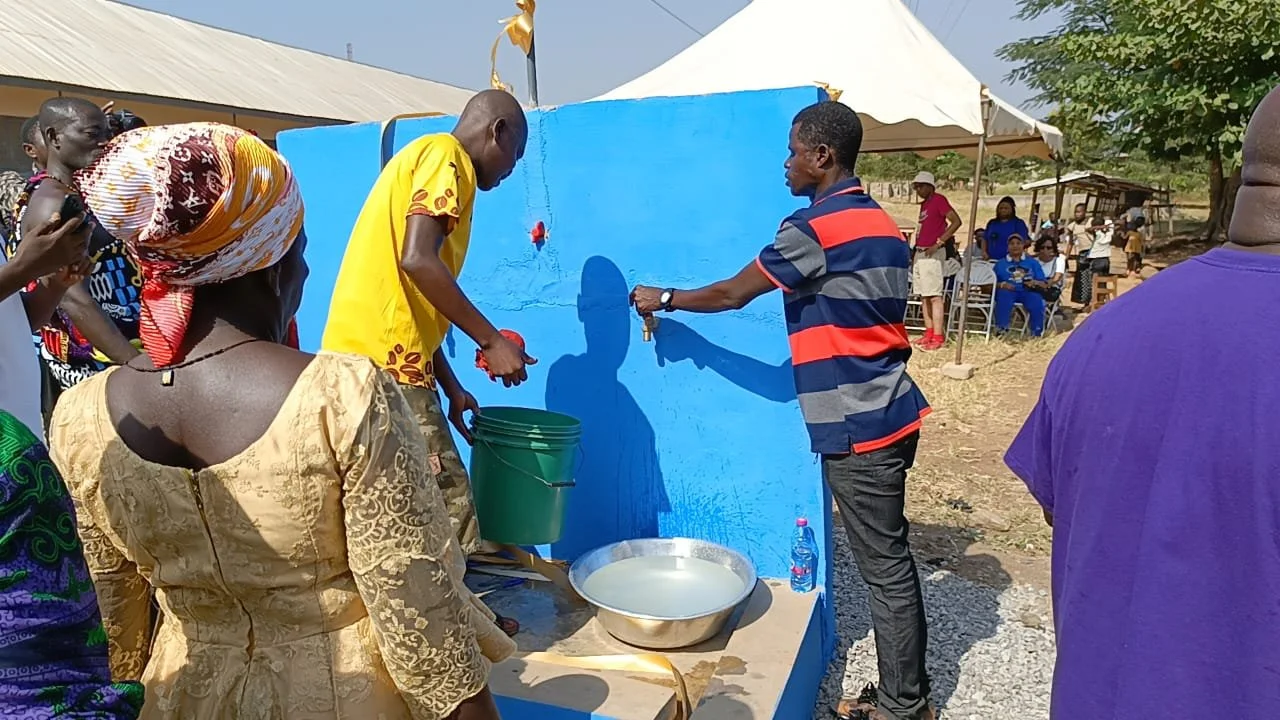
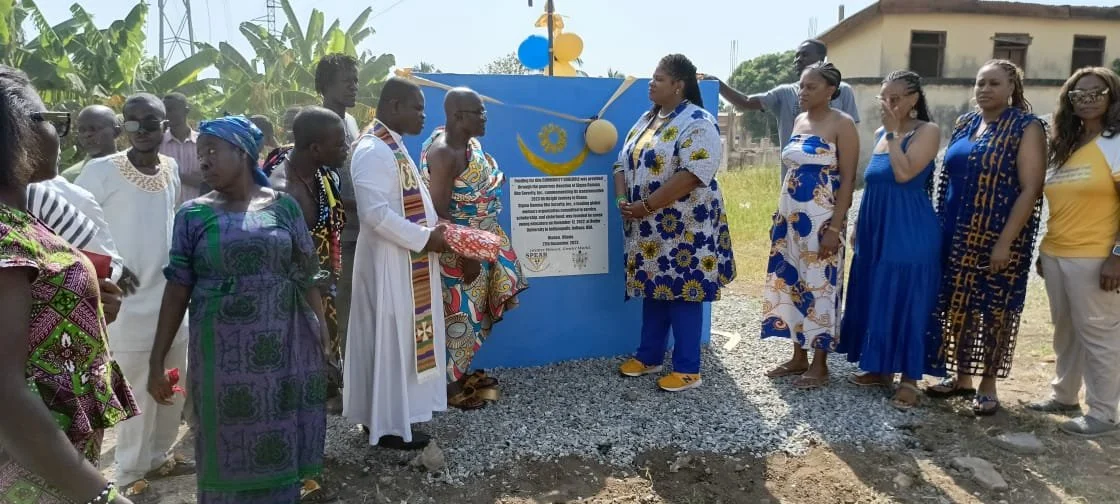
Head of Family Peter “Alhaji” Boakye drinks from the new water pump facility shortly after commissioning, donated by Sigma Gamma Rho Sorority. Photo by Adinkra Village, Ntonso
Oyiza adaba
fortune ehiwayAs
December 27, 2023
A tale of two communities - Adinkra Village, Ntonso is home to Ghana’s ancient tradition of weaving, dying, stamping, stitching and symbols. Over the Christmas holidays, an Indianapolis Sorority stopped by to fulfill their own developmental pledge.
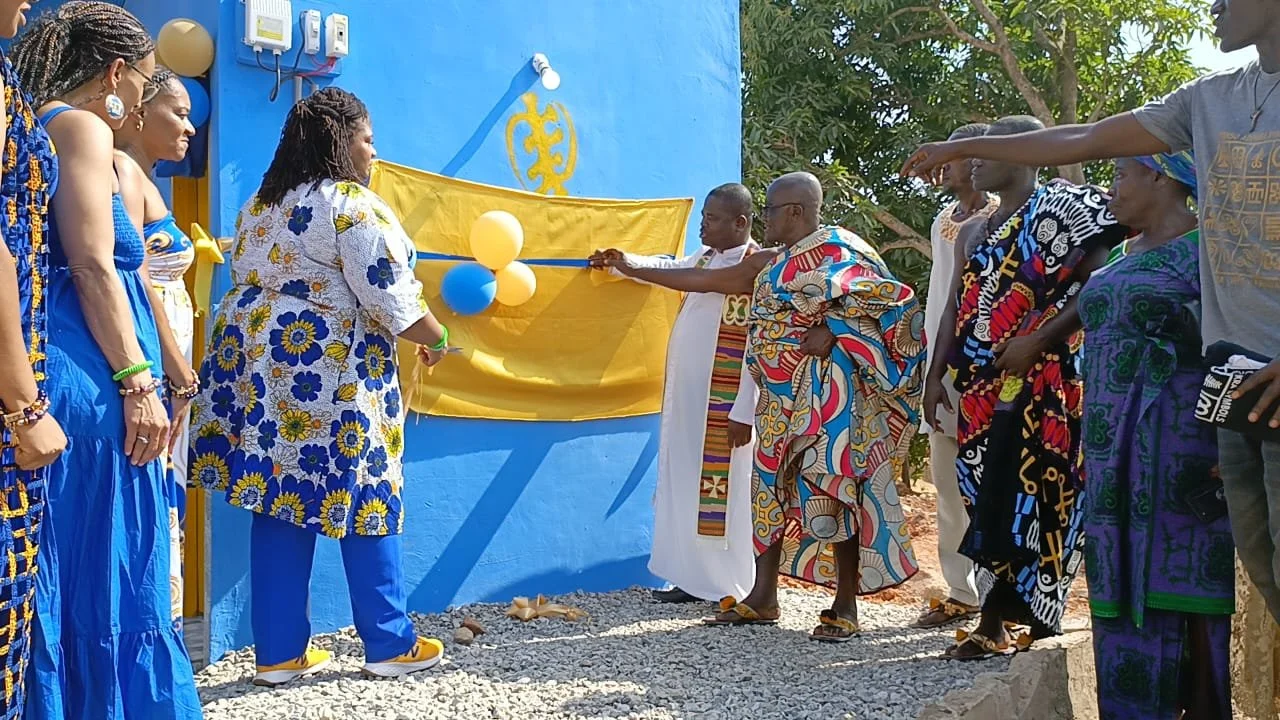

Infrastructure funding in Ghana by Sigma Gamma Rho Sorority
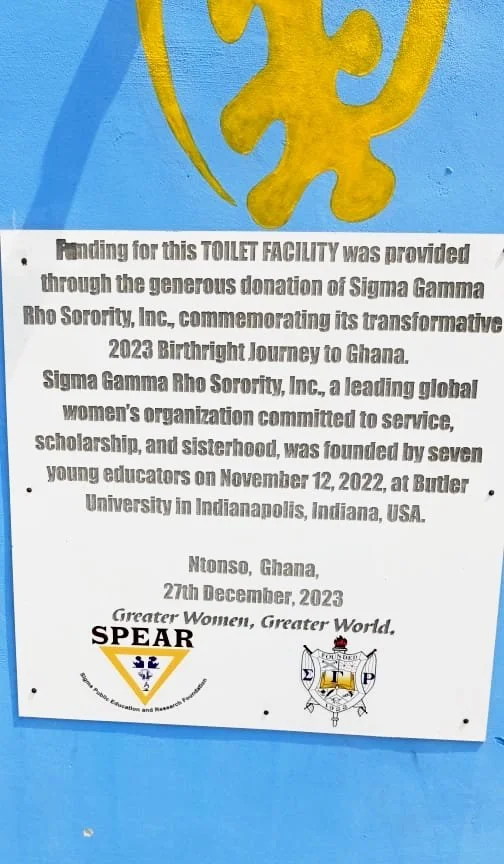
December 2023 was when the Sigma Gamma Rho Sorority Inc embarked on a “journey of transformation” to the West African country of Ghana. Their aim was to mark their second anniversary by donating funds to the growth and development of some select parts of Ghana. The Sorority founded by seven African-American women from Butler University Indianapolis and led by the international President, Rasheeda S. Liberty undertook this as a philanthropic mission, by tagging the experience, “Transformative 2023 Birthright Journey to Ghana”.
This commissioning ceremony was held on December 27, 2023 in the village center. The Abusuapayin (Elders from the Royal family of Ntonso) - Nana Yaw Poku, family members, along with some dignitaries and resident Catholic Priest, Rev. Fr. Matthias Korankye hosted the sorority President and members.
The non-profit women's organization, committed to service, sisterhood, scholarships and sisterhood, has mentorships and development initiatives at its core. They had visited various areas in Ghana, and funded the toilet and water plumbing facility in Ntonso, near Kumasi, with a renewed gaze set on promoting a healthy and hygienic environment for its habitants. The community was delighted to host the Sorority, as they had done many times in the past with its constant stream of tourists.
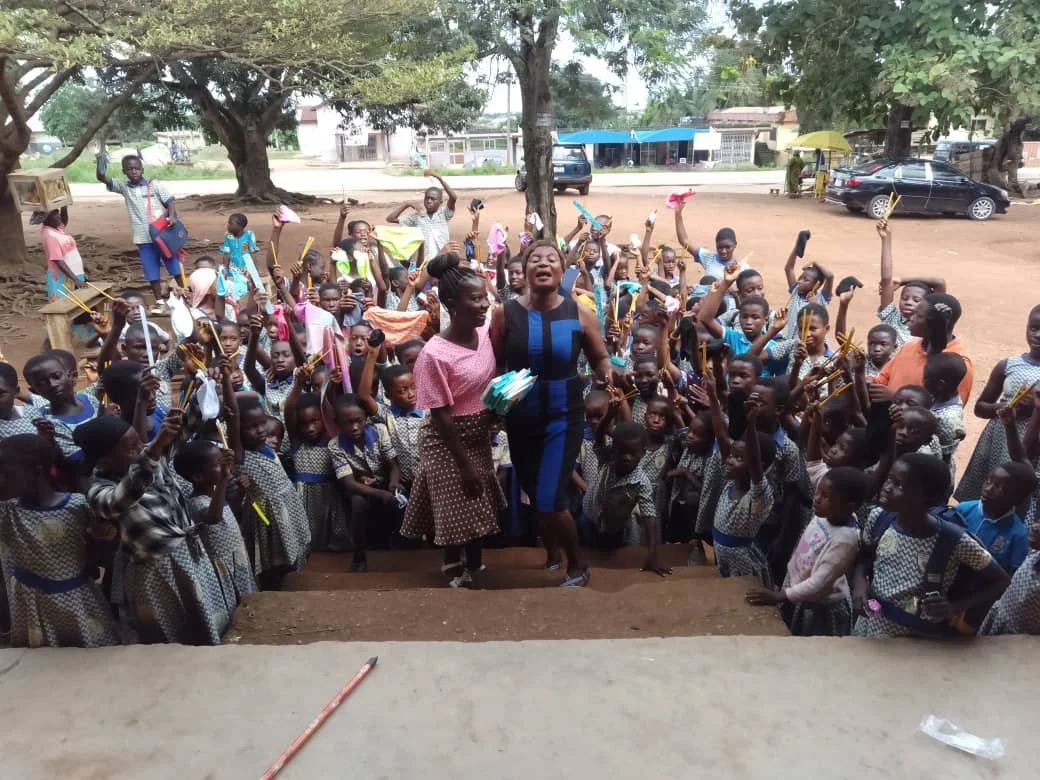
School children in attendance of the commissioning. Photo by Adinkra Craft Village, Ntonso
In her speech Sorority President Rasheeda S. Liberty cited the group's interest in the development of the communities and fostering a lasting and meaningful relationship as a testament to their commitment to service.
The event marked a historical moment in Ntonso, Ghana, that brought out the entire community, including school children.

about Adinkra CRAFT Village Ntonso
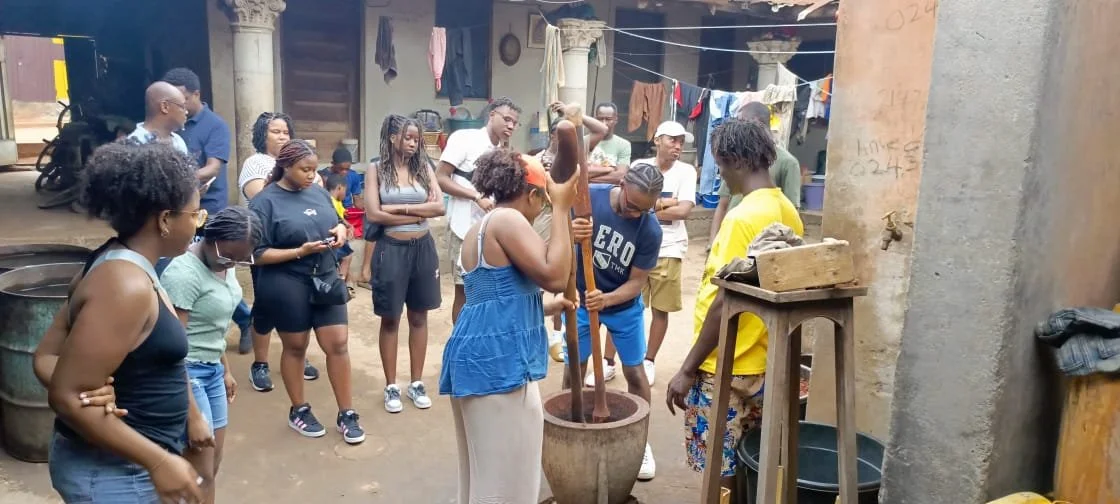
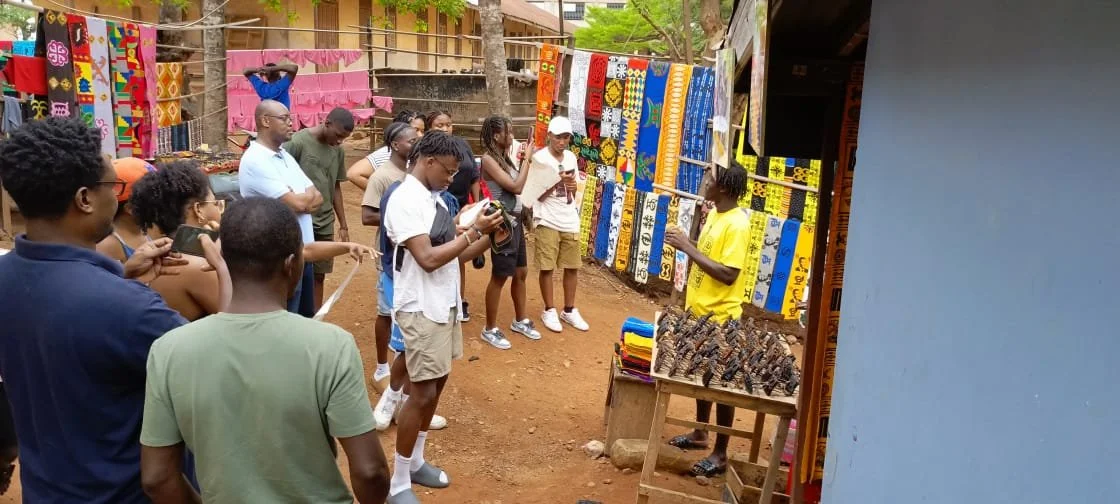
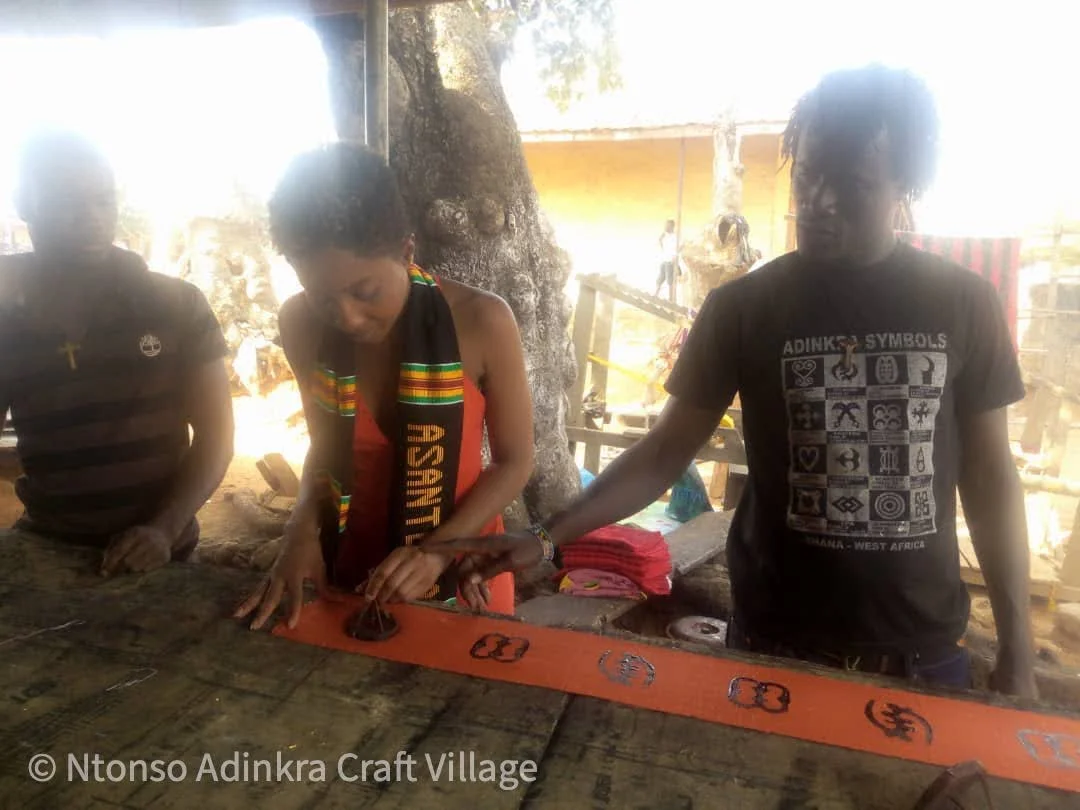
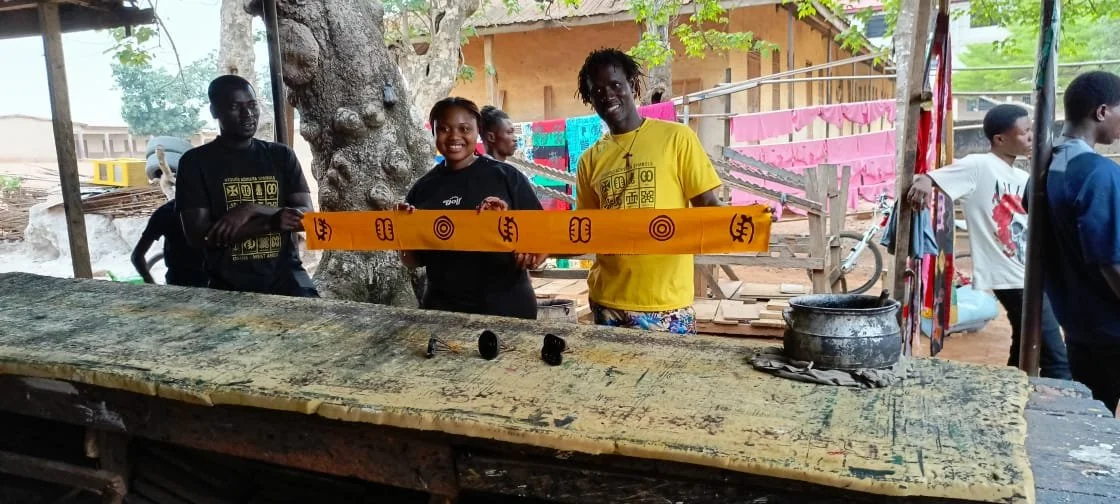
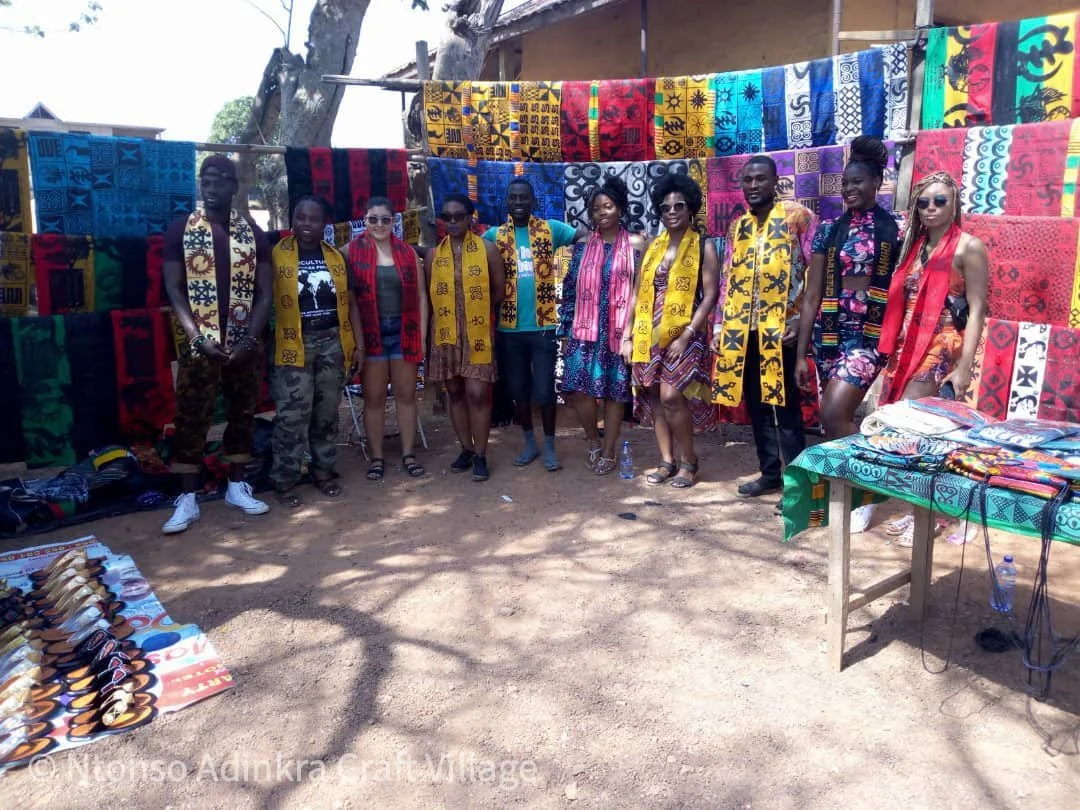
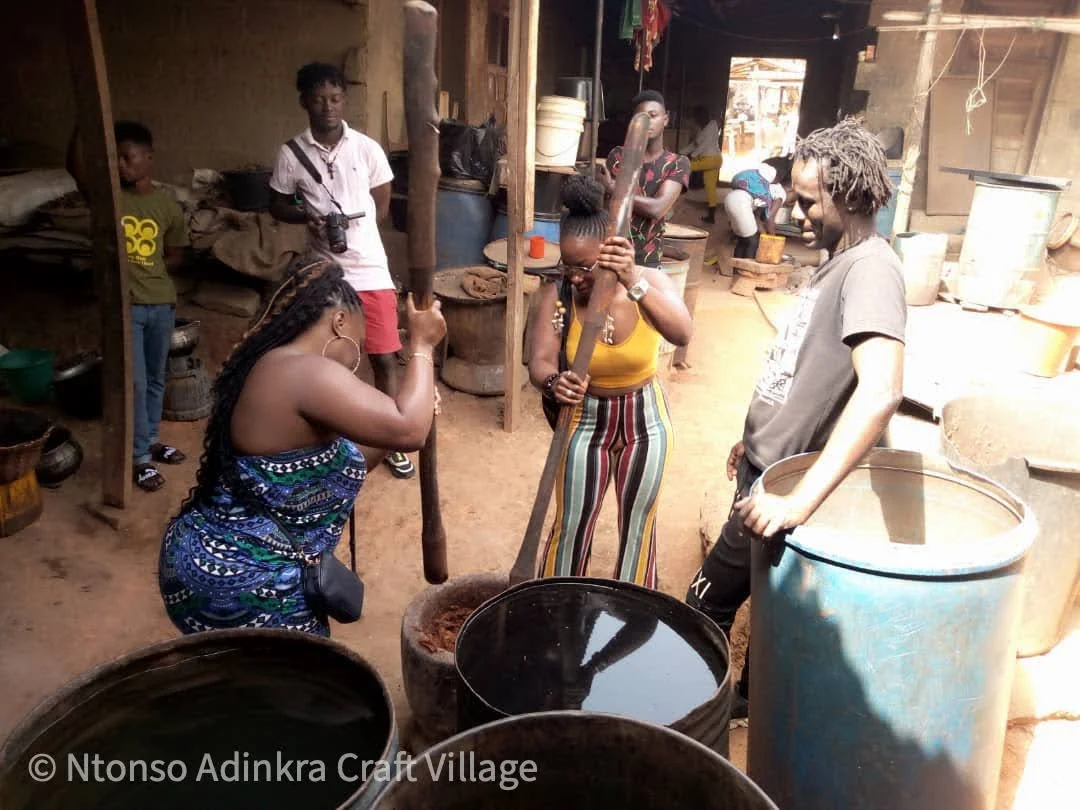
Located near Kumasi, Ntonso is known as the homeland of the hand dying and stamping of Adinkra symbols on Ghana’s most popular cloth - the Kente. It is also regarded as a beautiful tourist site, that yearly hosts hundreds of thousands of tourists from across the world. The community spirit is felt by visitors, both old and young under the leadership of Peter Boakye, popularly known as Alhaji.
In his inherited role as the current Head of Family, since taking the reins from his Uncle who passed away in 2016 Boakye says he doesn't take it for granted. He does his best in continuing in the tradition handed down by his forebears - to build an organized community structure with attention to duties and details. Ntonso remains a tourist haven that takes time to teach and offer classes about the origins and techniques of Ghana’s ancient symbols. In Ntonso tradition, the men continue to weave, while the women do the dye jobs.
Adinkra Craft Village, Ntonso is featured in the biographical documentary DELA, as one of the early influences in the art of El Anatsui - the globally reconignized Sculptor.
Photo/Video by Adinkra Craft Village Ntonso






Share this story

EL ANATSUI Marks His Undeniable Legacy At 80
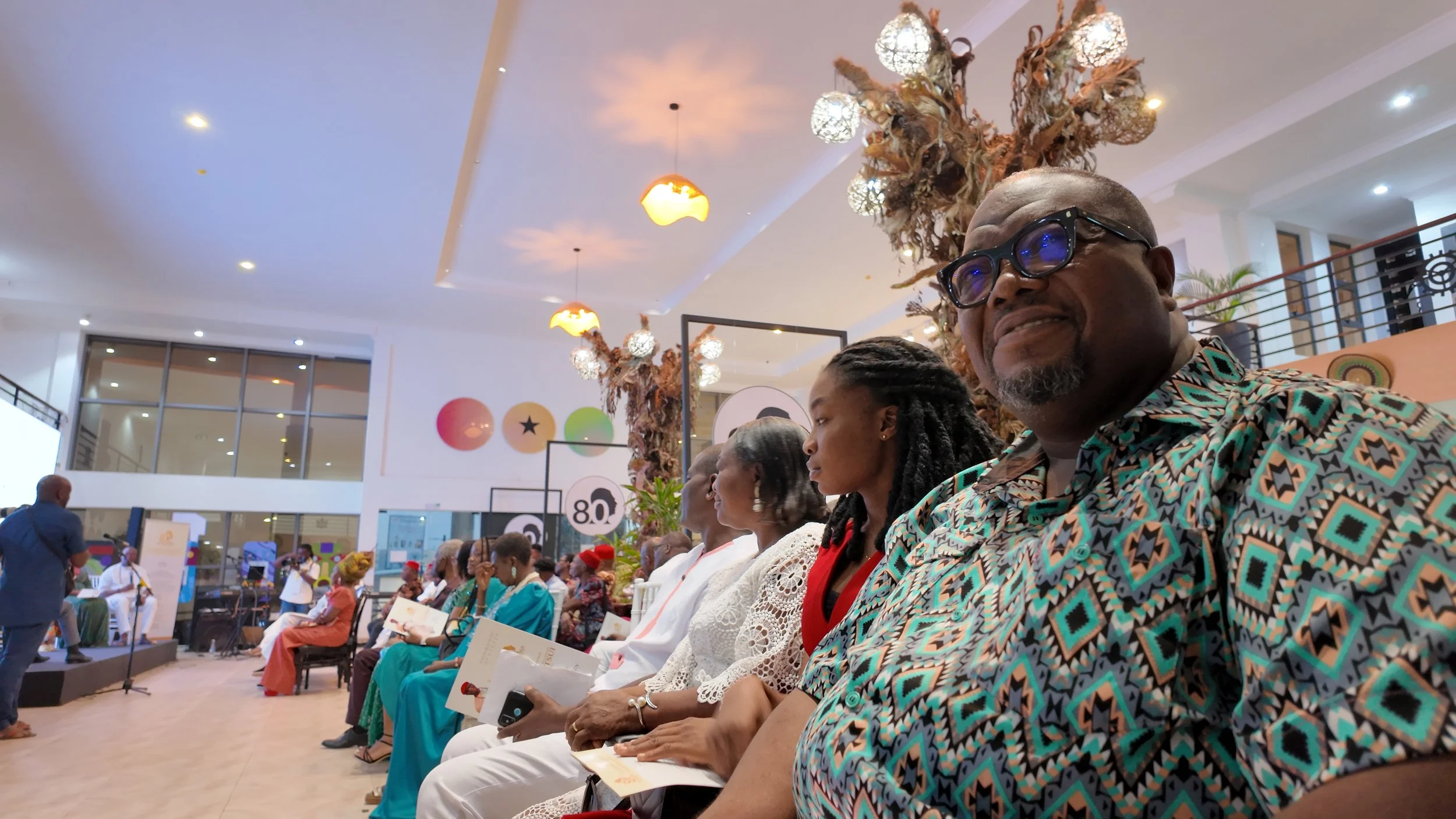
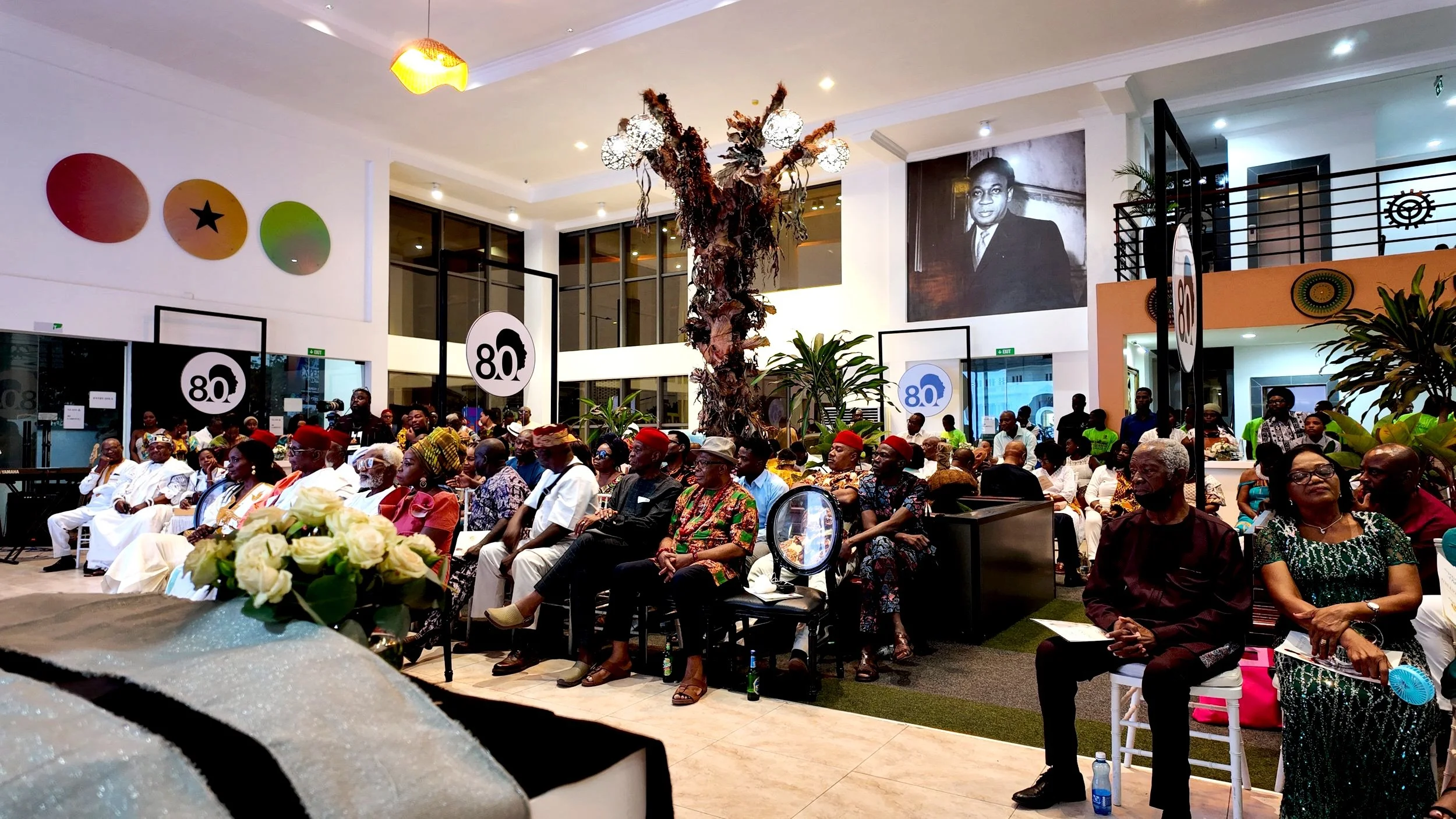
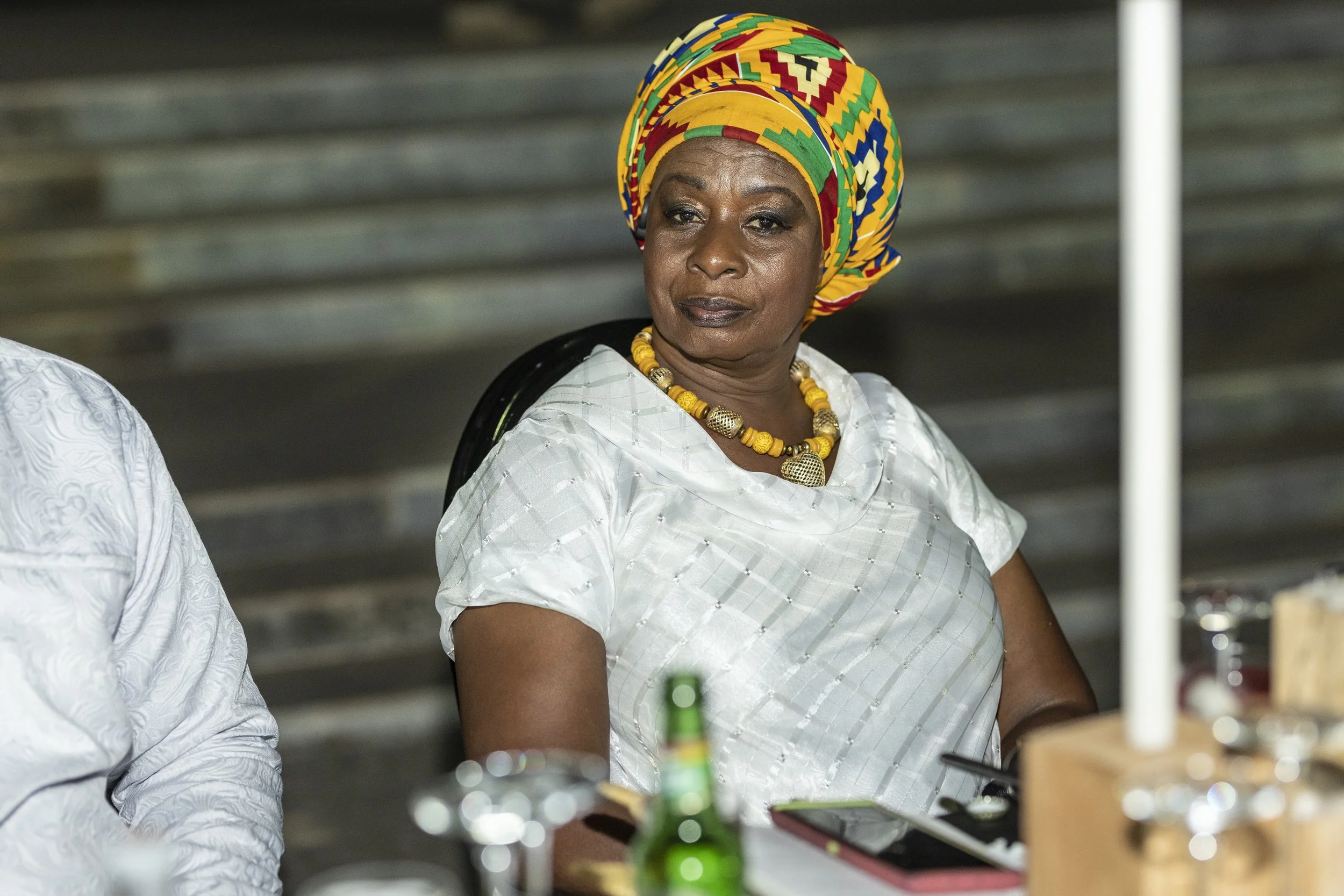
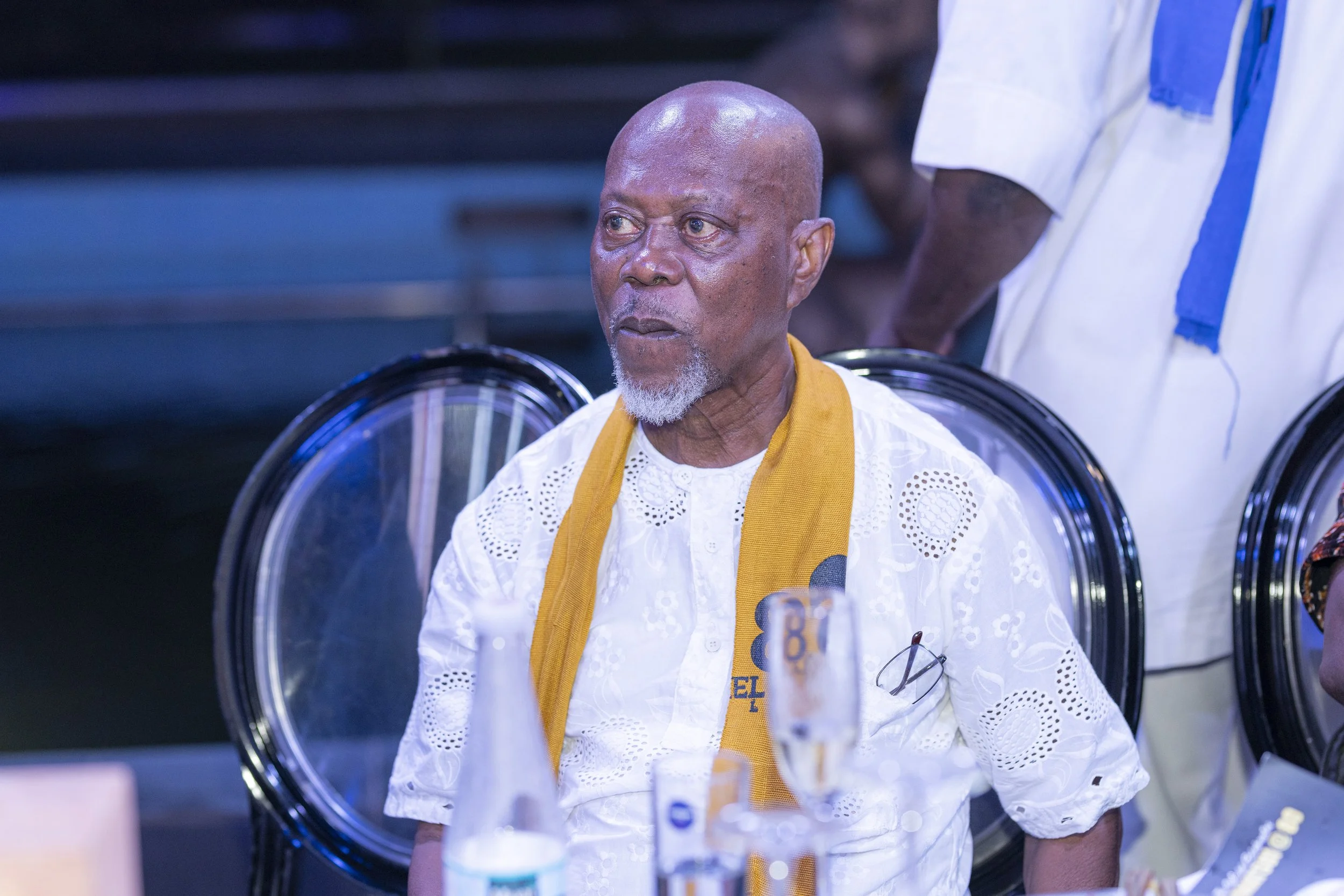
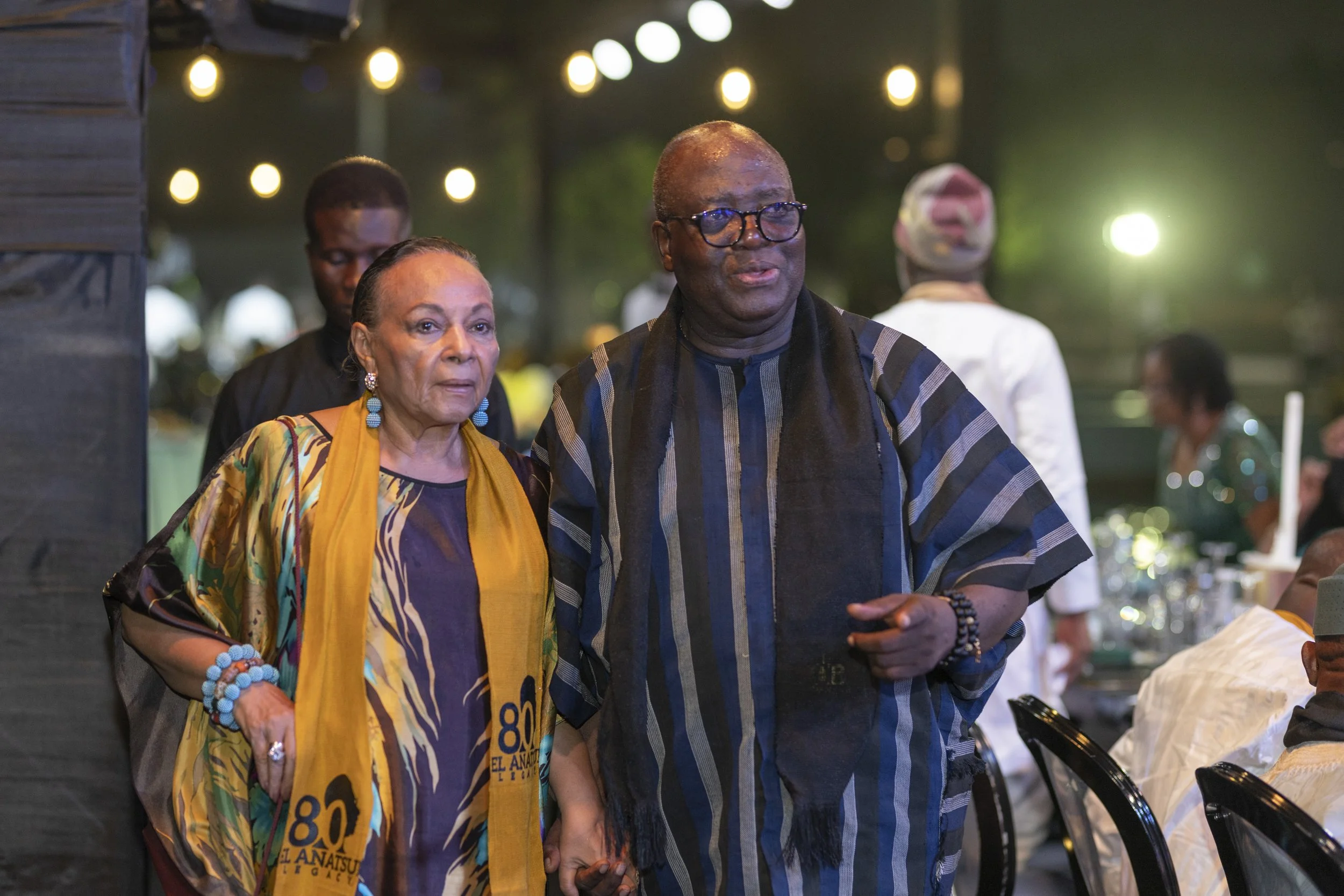
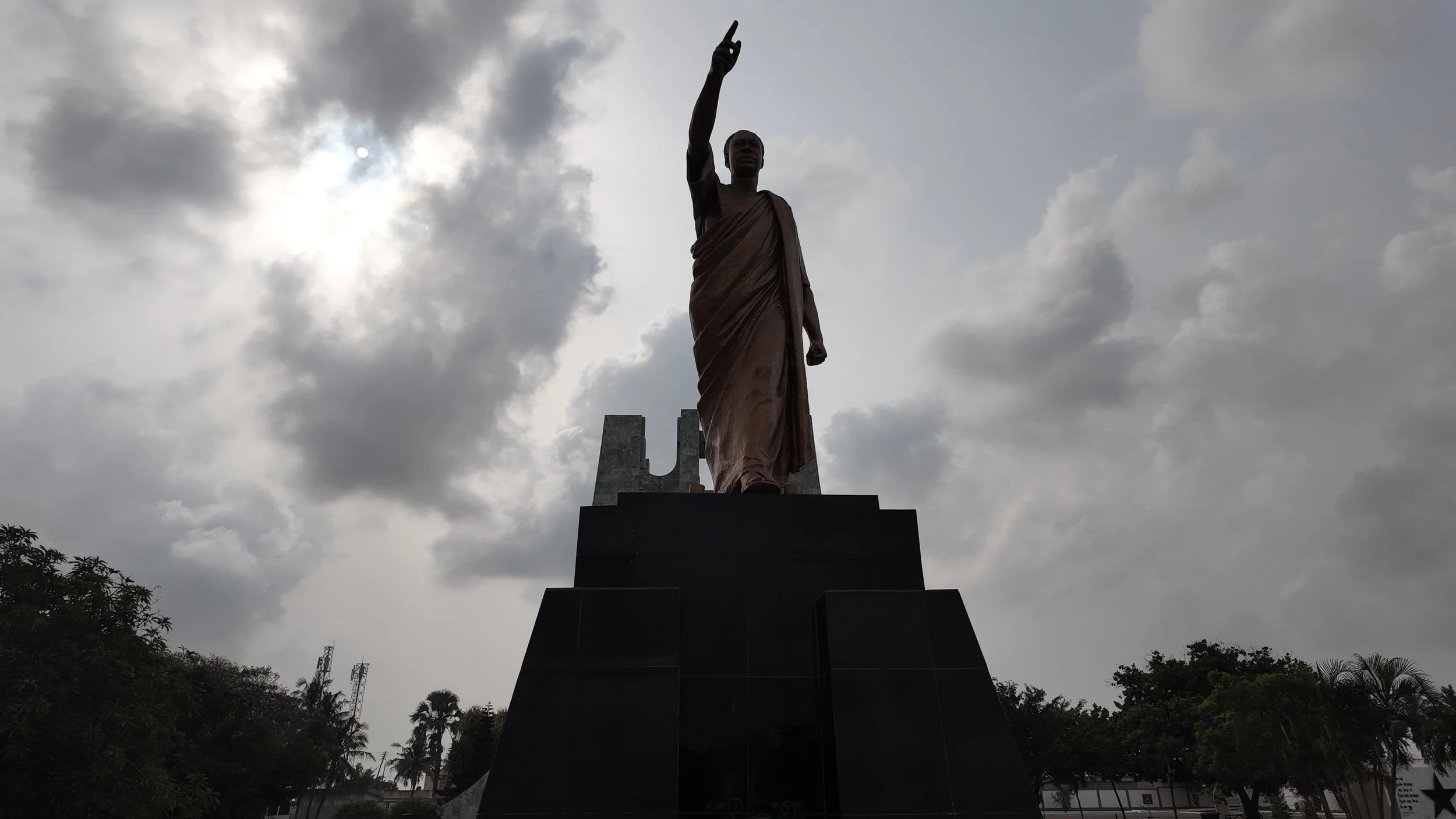
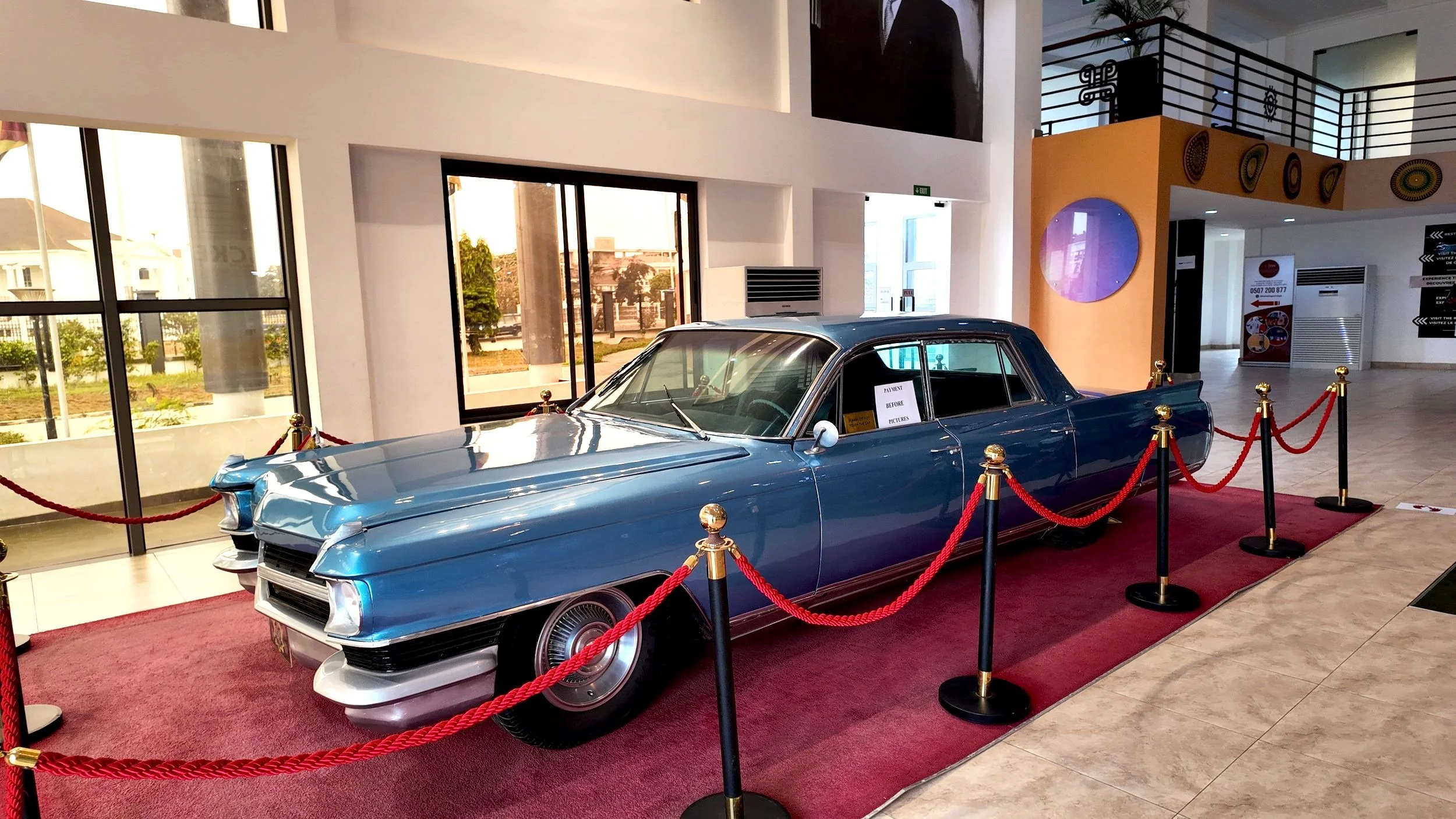
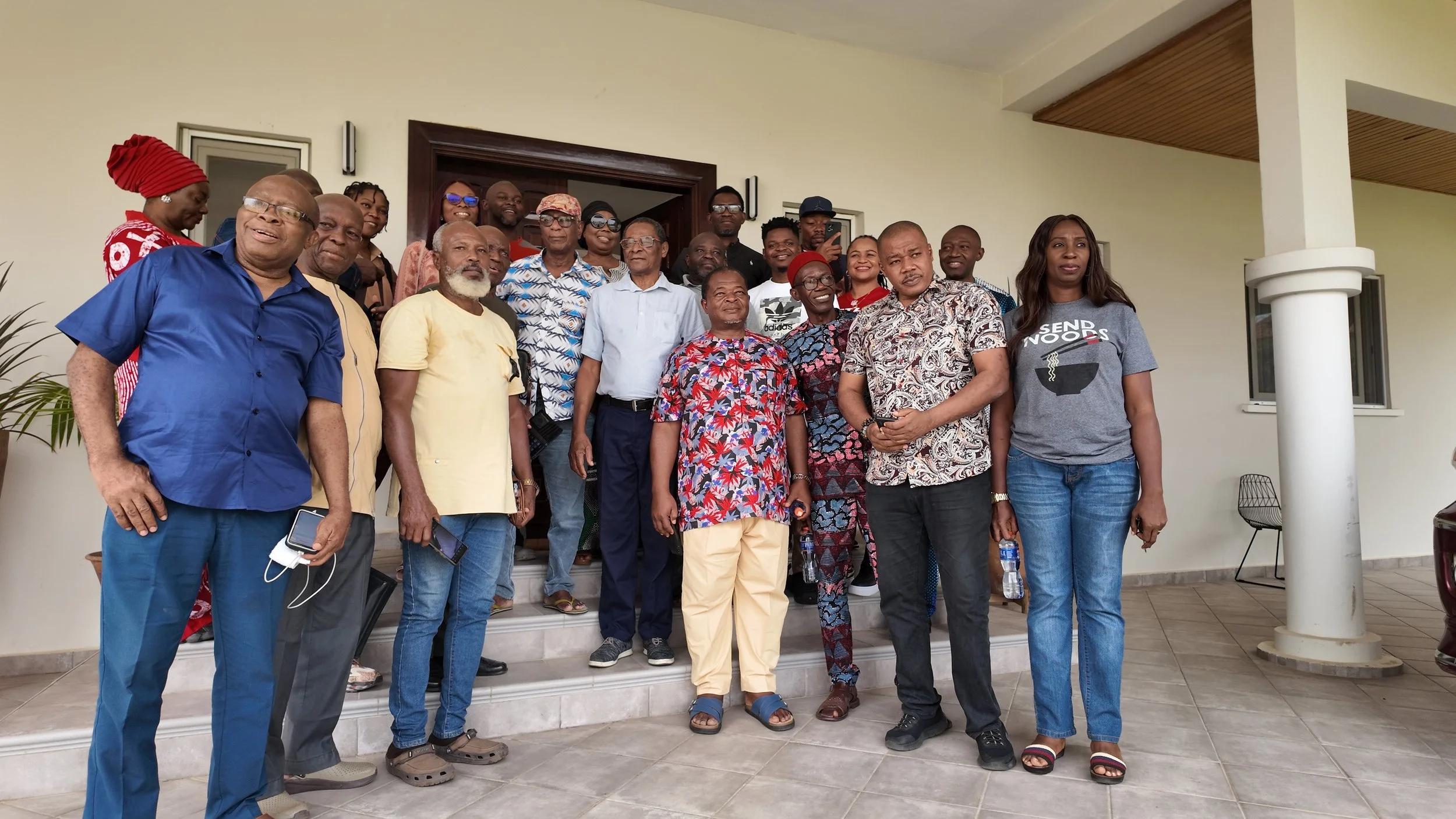
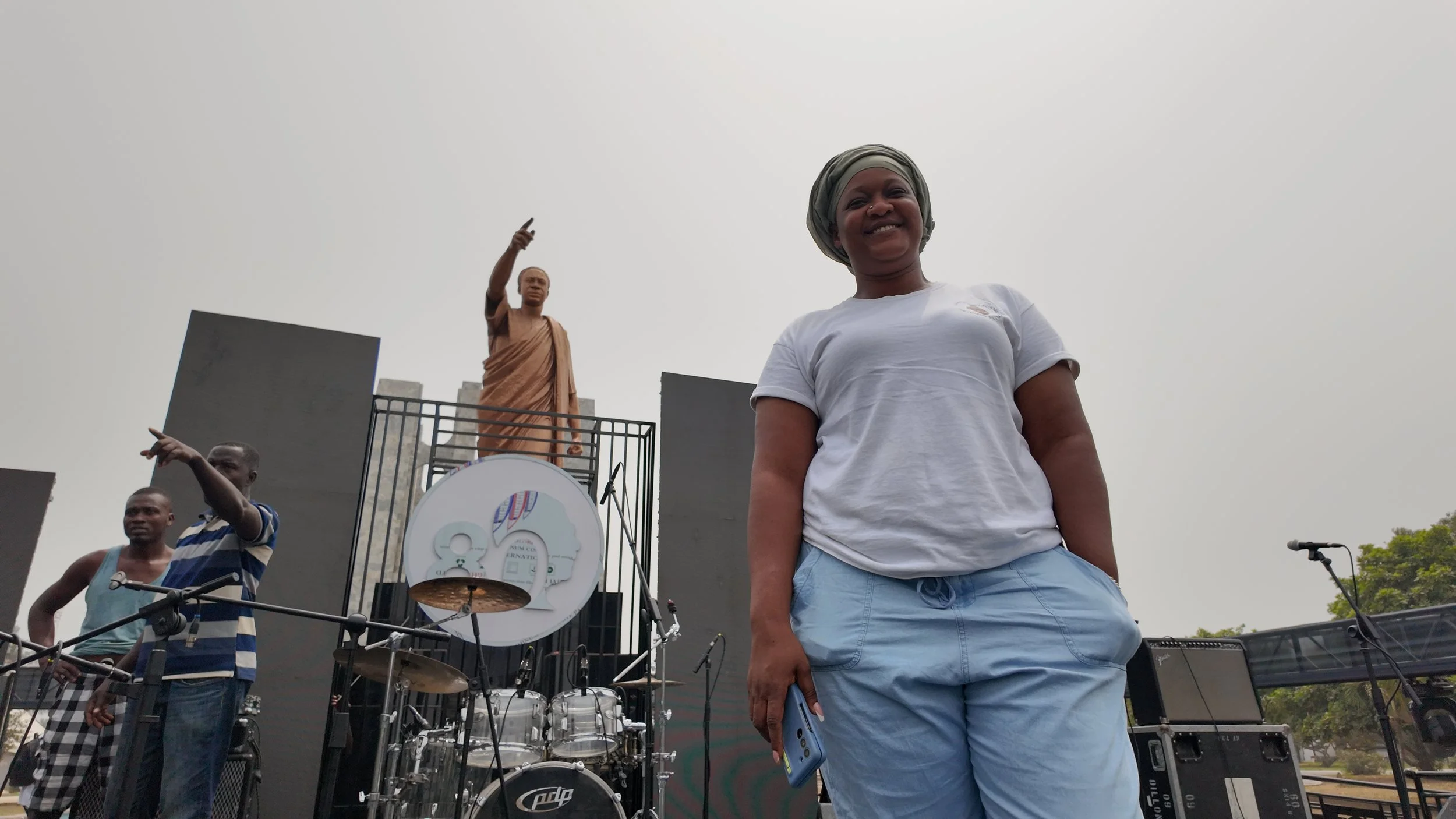
Family Patriarch, Global Icon, Sculptor Extraordinaire, son of Ghana and a most Remarkable Human Being, Emeritus Prof. El Anatsui, marked eighty years of his lifetime on earth on Sunday, 4th February 2024 at Kwame Nkrumah Museum Accra, Ghana.
By oyiza adaba
Africa-related, accra ghana

EL@80 Logo
EL ANATSUI LEGACY 80
An Exclusive Evening of
Discourse Dinner Music
February 4, 2024
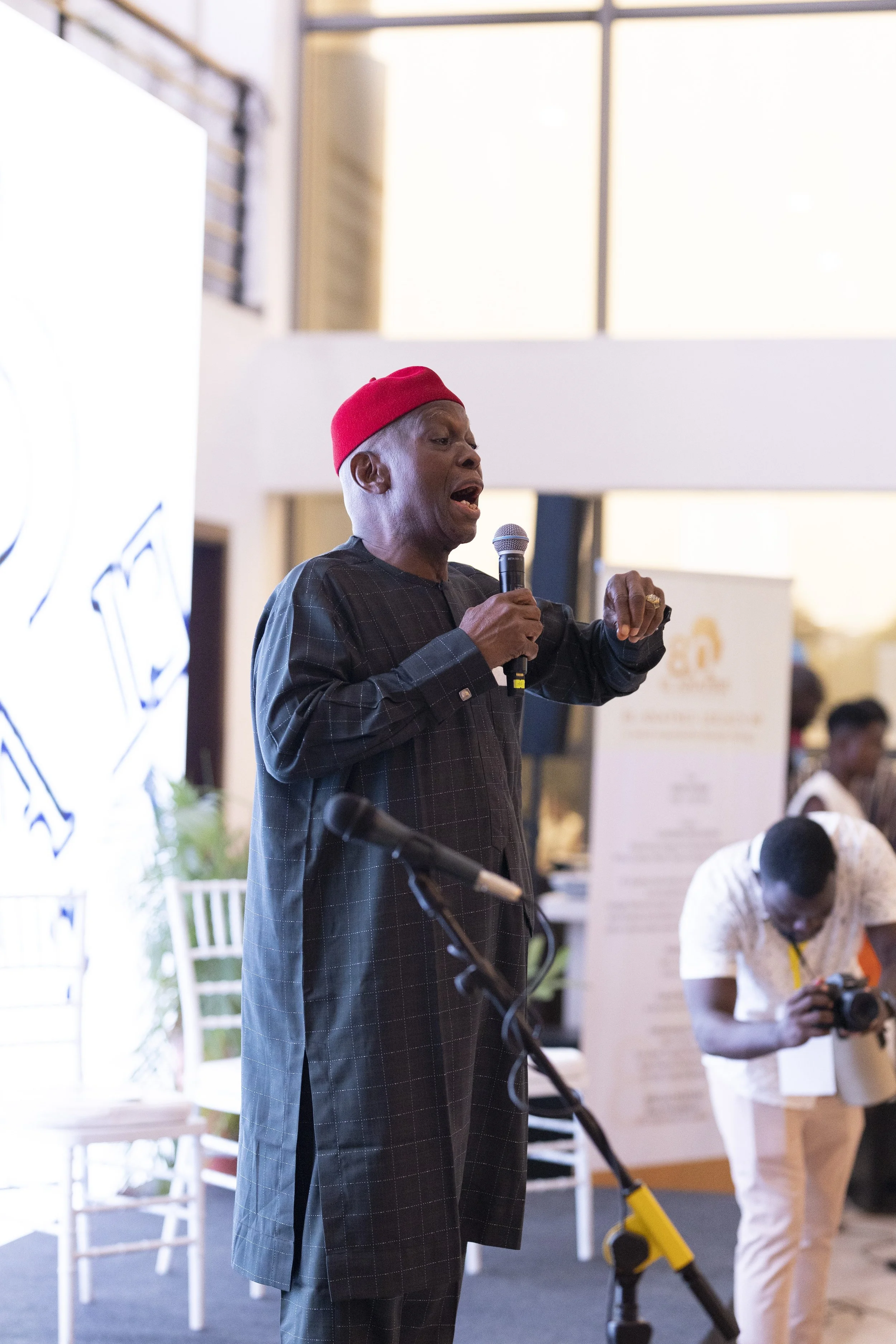
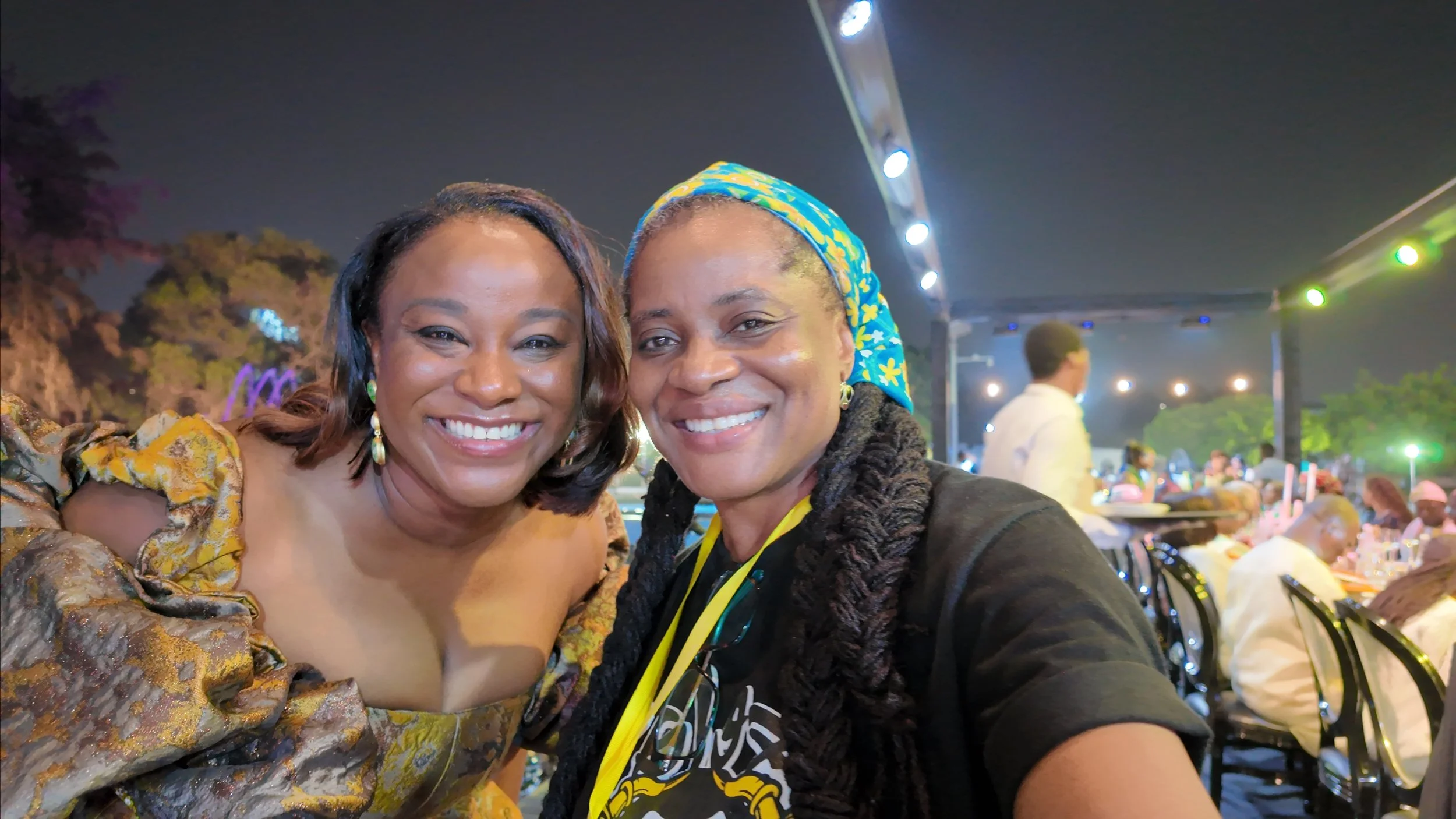
Family Patriarch, Global Icon, Sculptor Extraordinaire, son of Ghana and a most Remarkable Human Being, Emeritus Prof. El Anatsui, marked eighty years of his lifetime on earth on Sunday, 4th February 2024 at Kwame Nkrumah Museum Accra, Ghana.
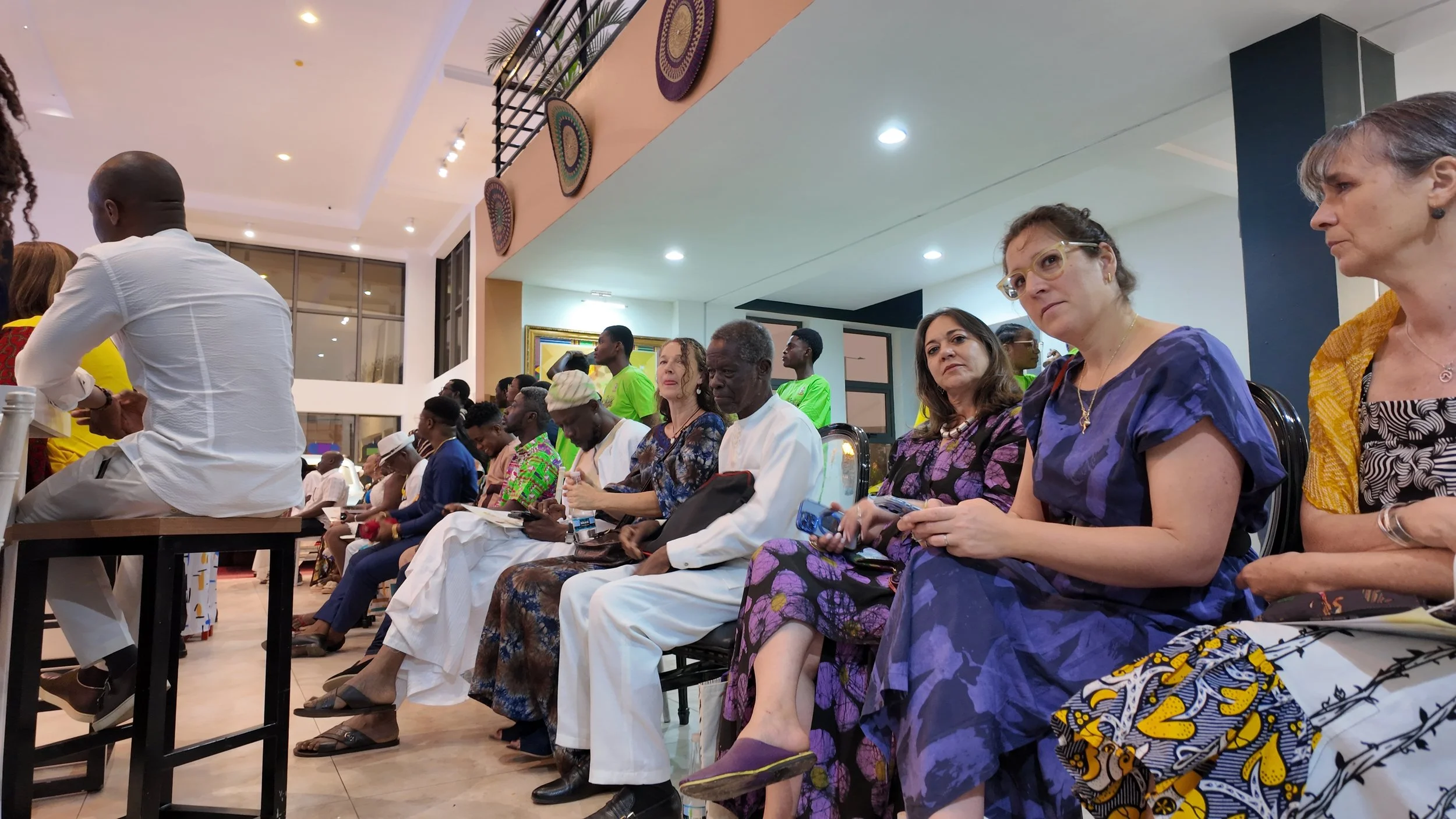
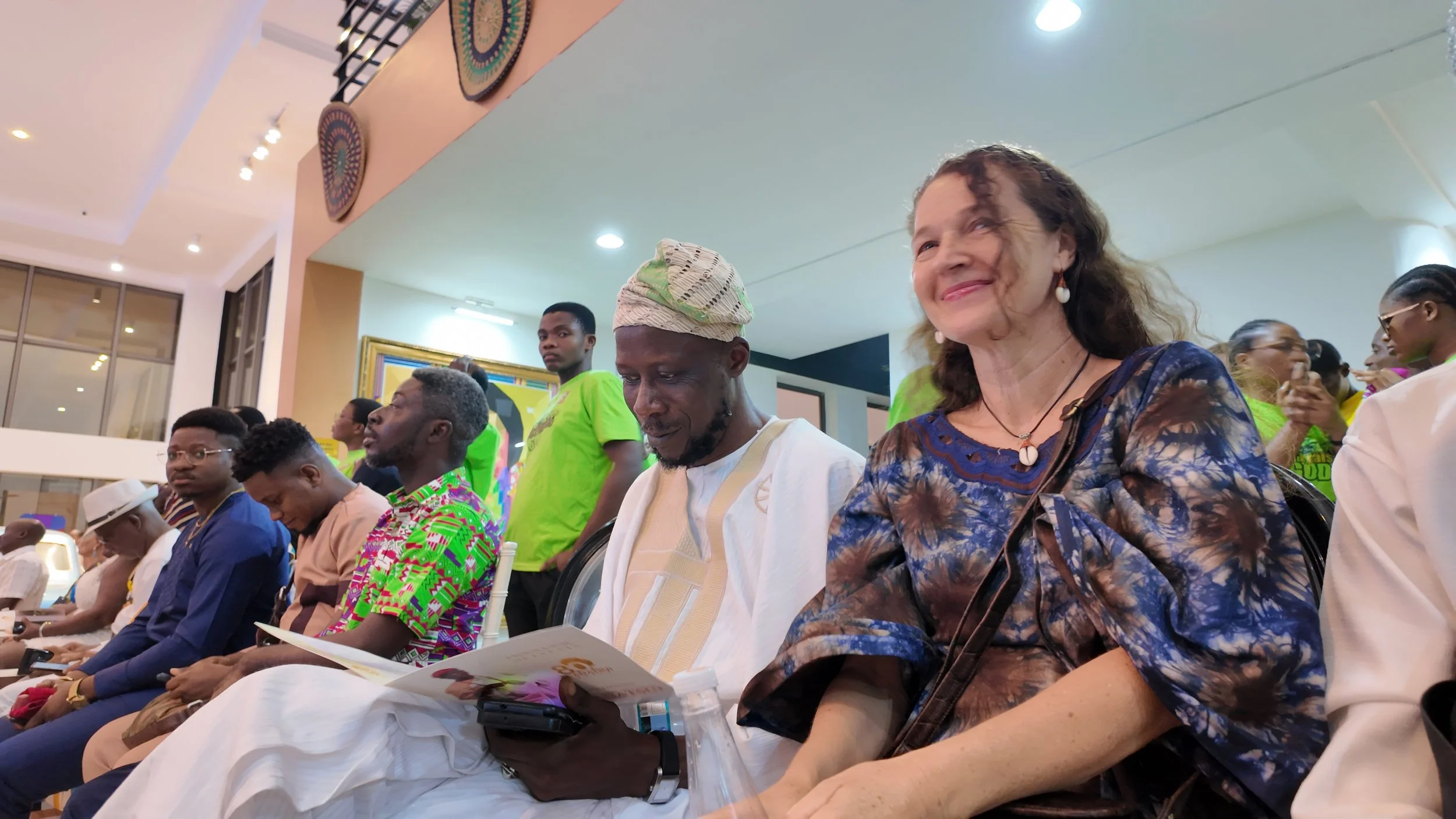
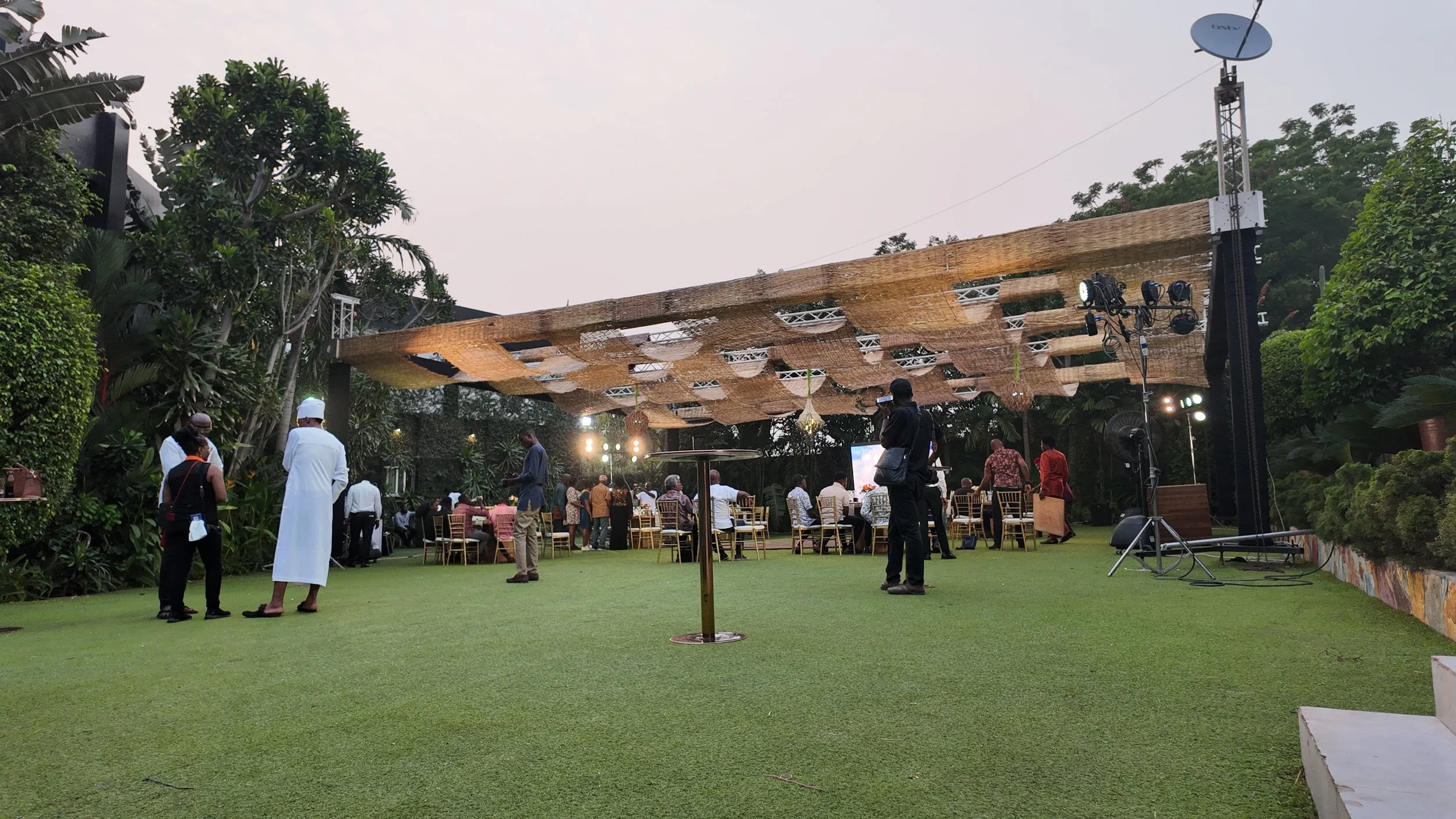
El Anatsui’s Legacy is all about what he stands for, and the milestone was celebrated in a two-part series of events that included an interactive discourse with an engaging panel titled, “Exploring Nigeria/Ghana Relations and What Unites More Than Divides Us As A People”. Having, stood at this same crossroads, El Anatsui has remained a formidable bridge between these two counties for eight decades.
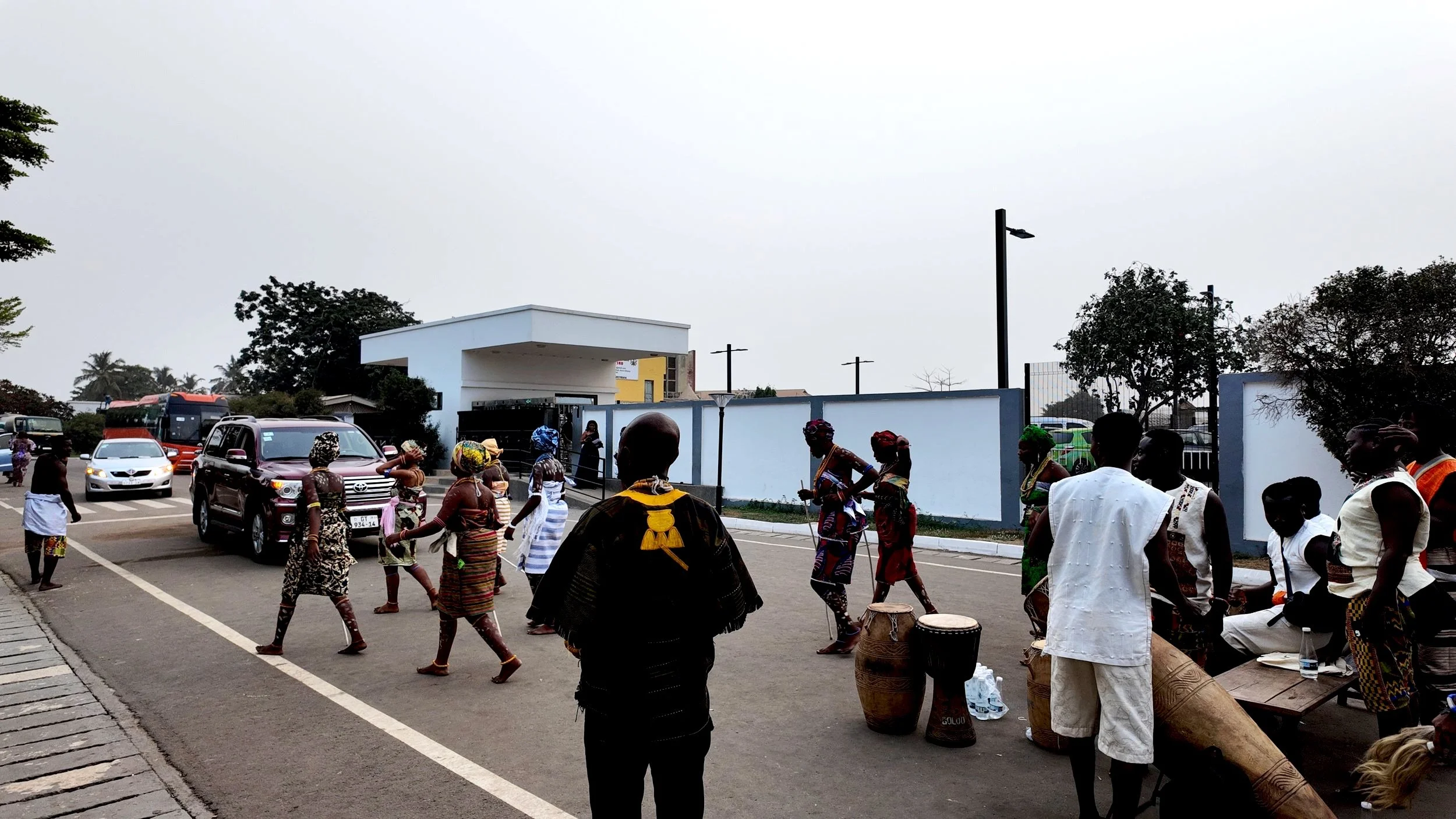
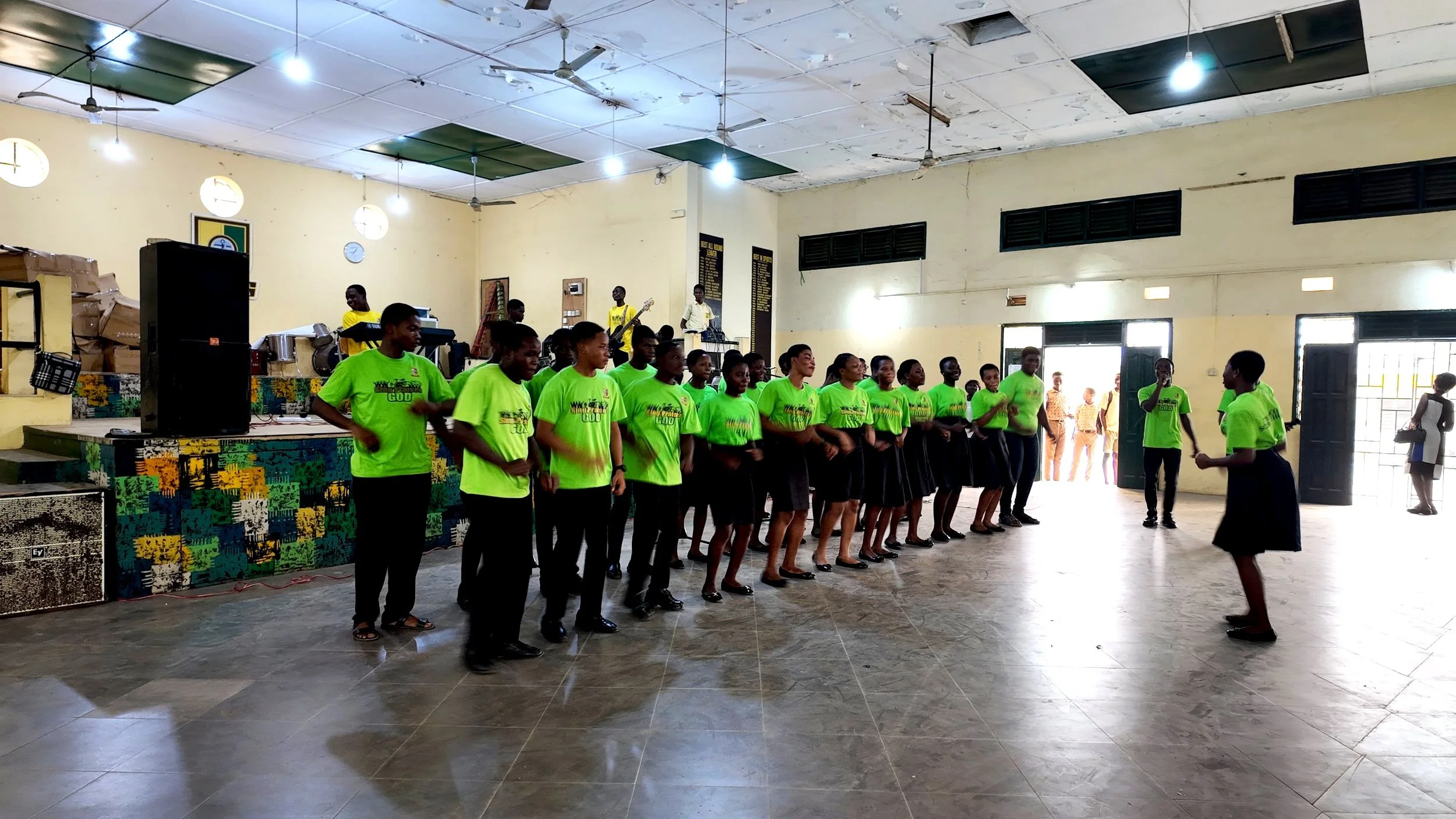
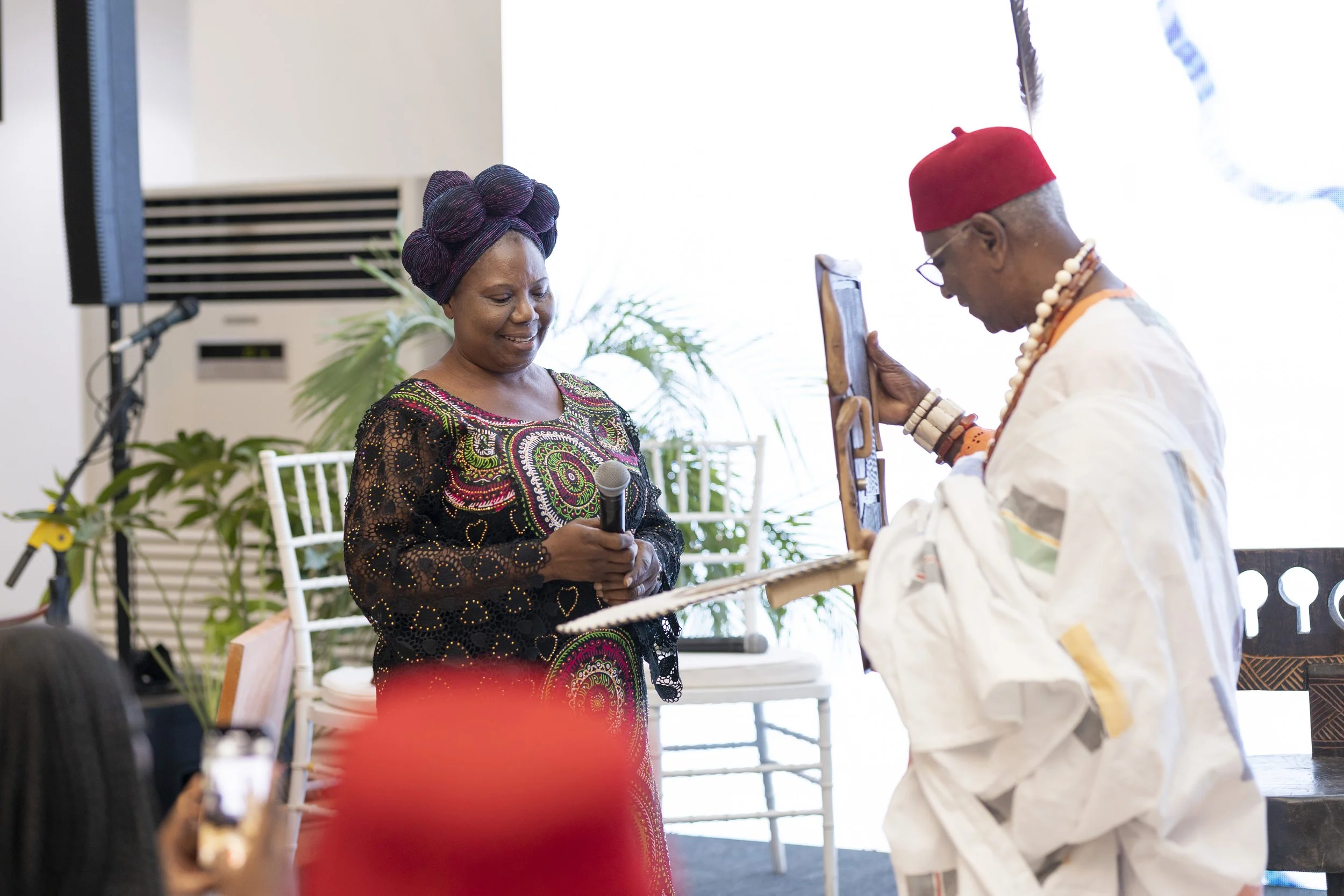
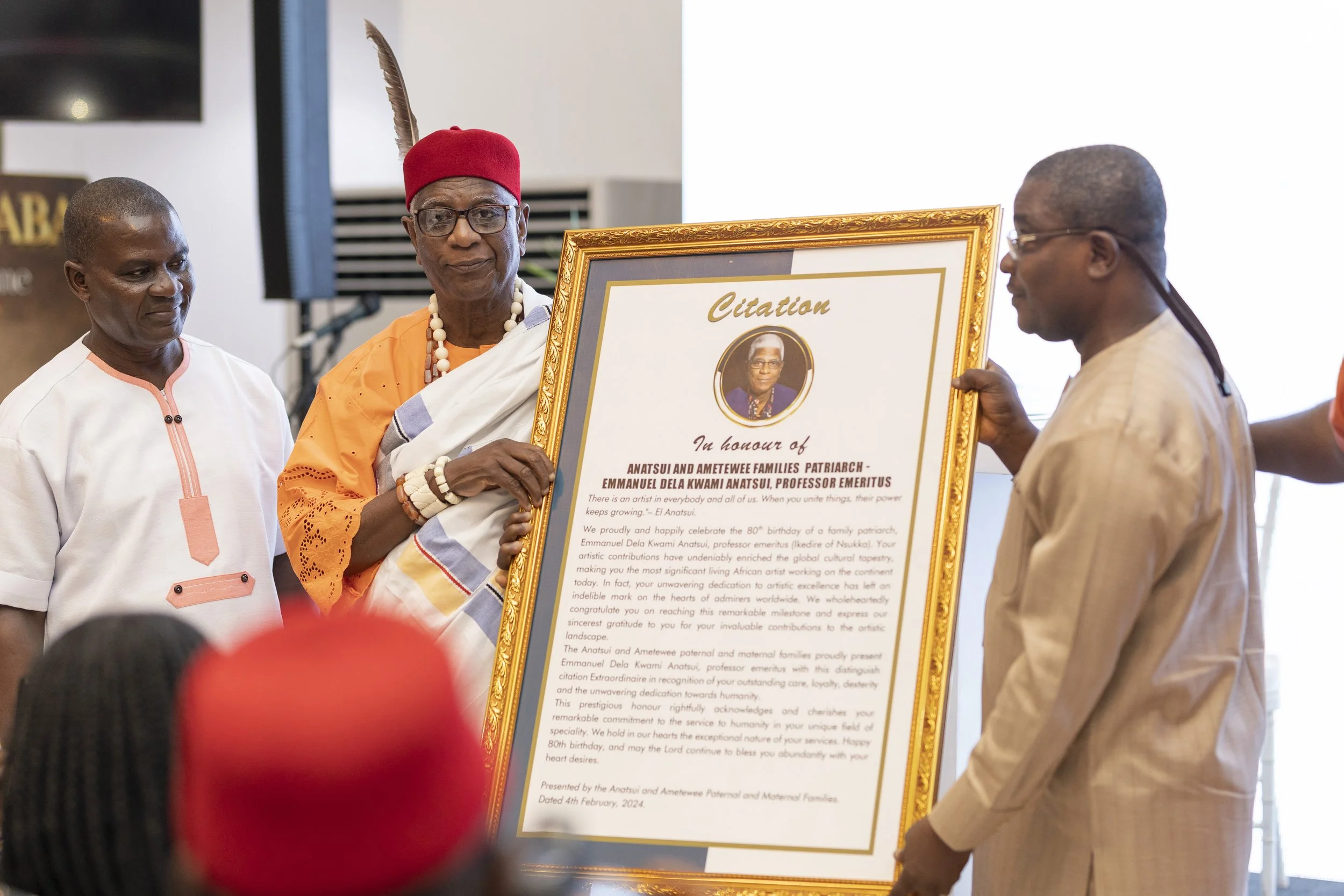
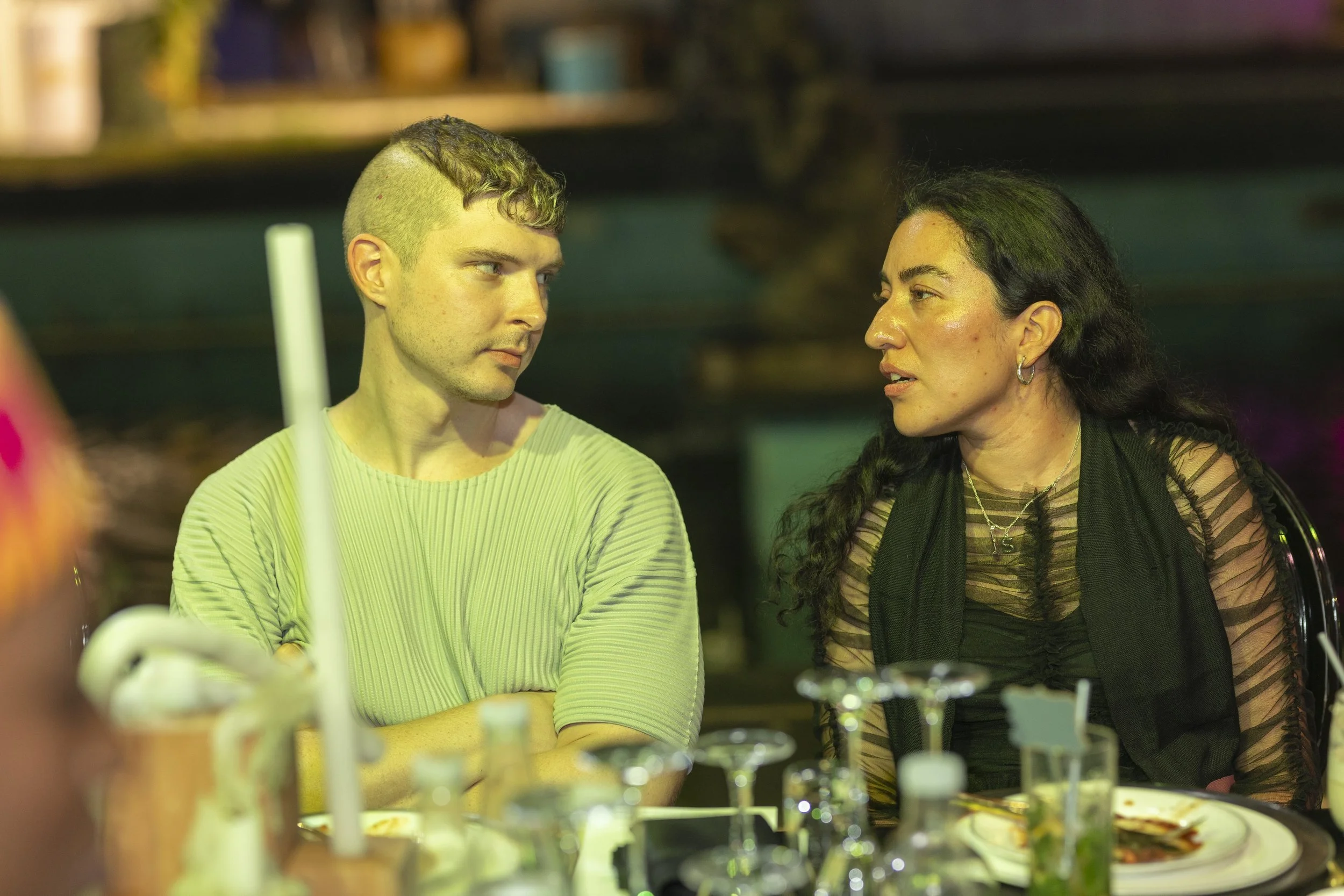
Following this, friends, colleagues and family from near and wide attended the invitation-only exclusive dinner and live music performance, that featured a mouth-watering dinner, gift presentations of many kinds, and performances by select artists including Ghana’s female Jazz ensemble The Lipstik Queens, Tema Senior High School Choir and Anyako Cultural Troupe, and Afrobeat Sensation Dede Mabiaku & Kalafika Band.
The evening’s highlight was when the celebrant was conferred upon, the title of Torgbui Kekeli I of Anyako Woeto (‘beacon of light’), by the paramount chief Torgbui Tenge Dzokoto Gligui VII. This makes it Anatsui’s second traditional title since his 2017 conferment as the Ikedire of Nsukka ('power which is effective').
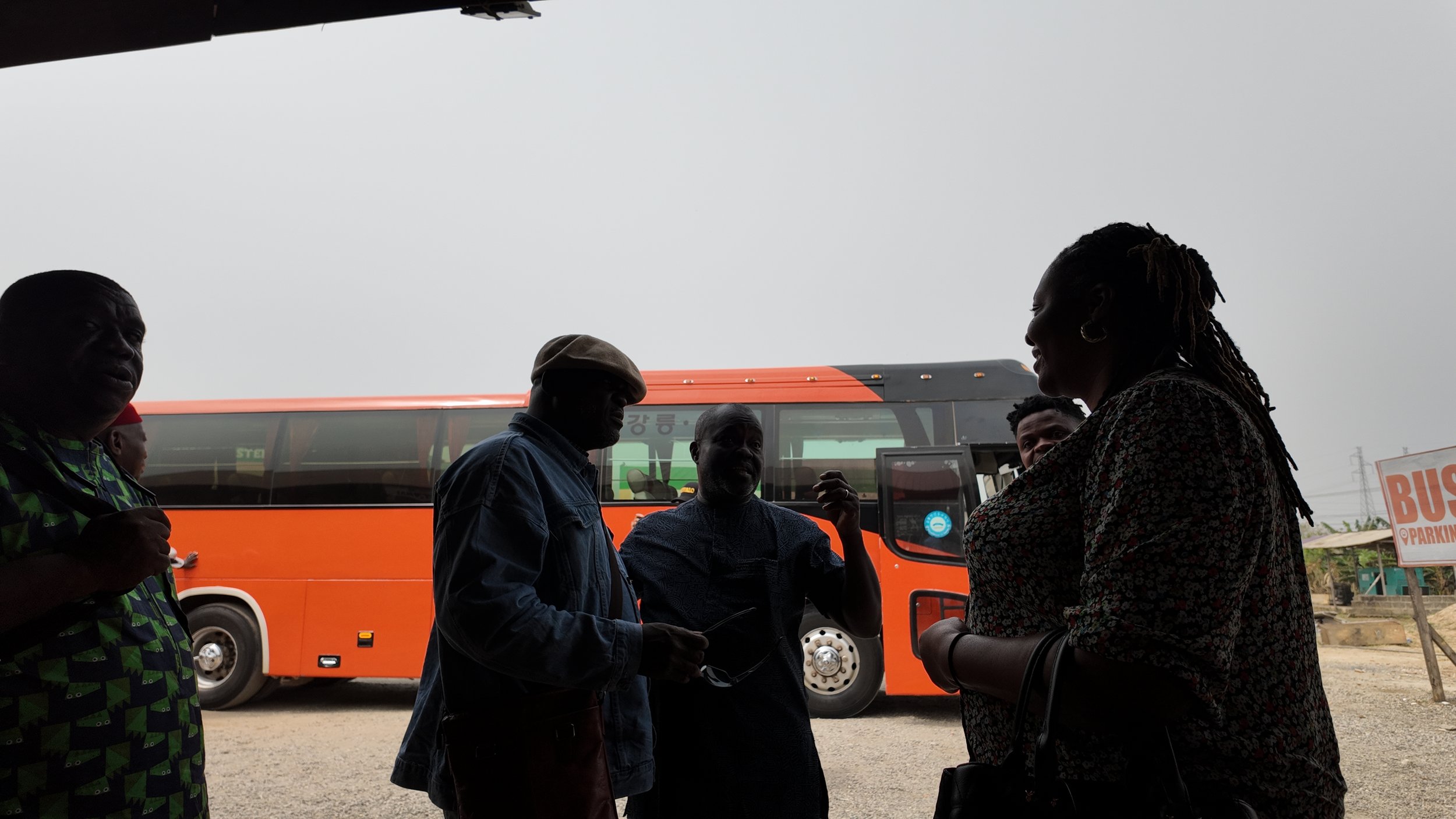
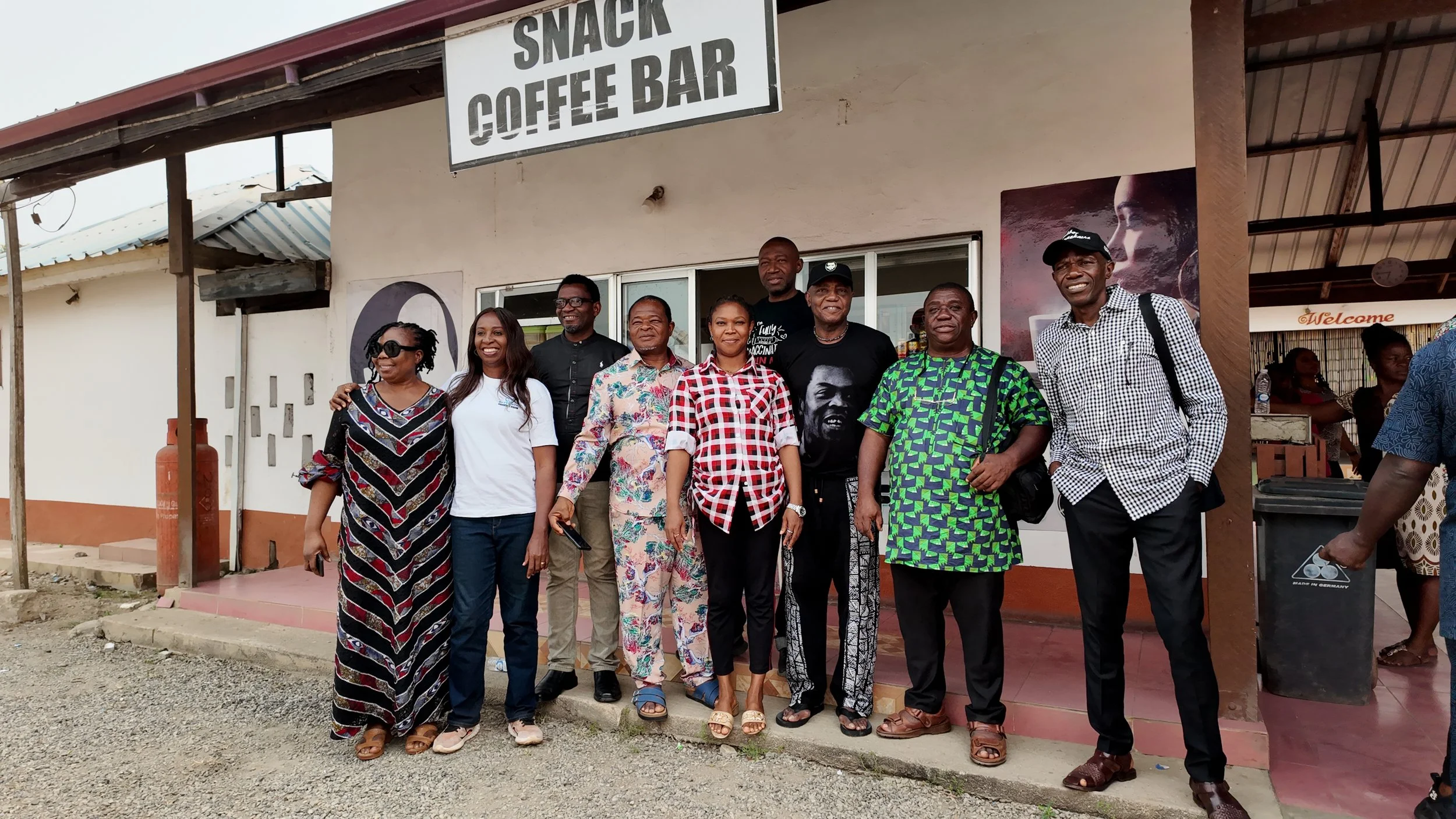
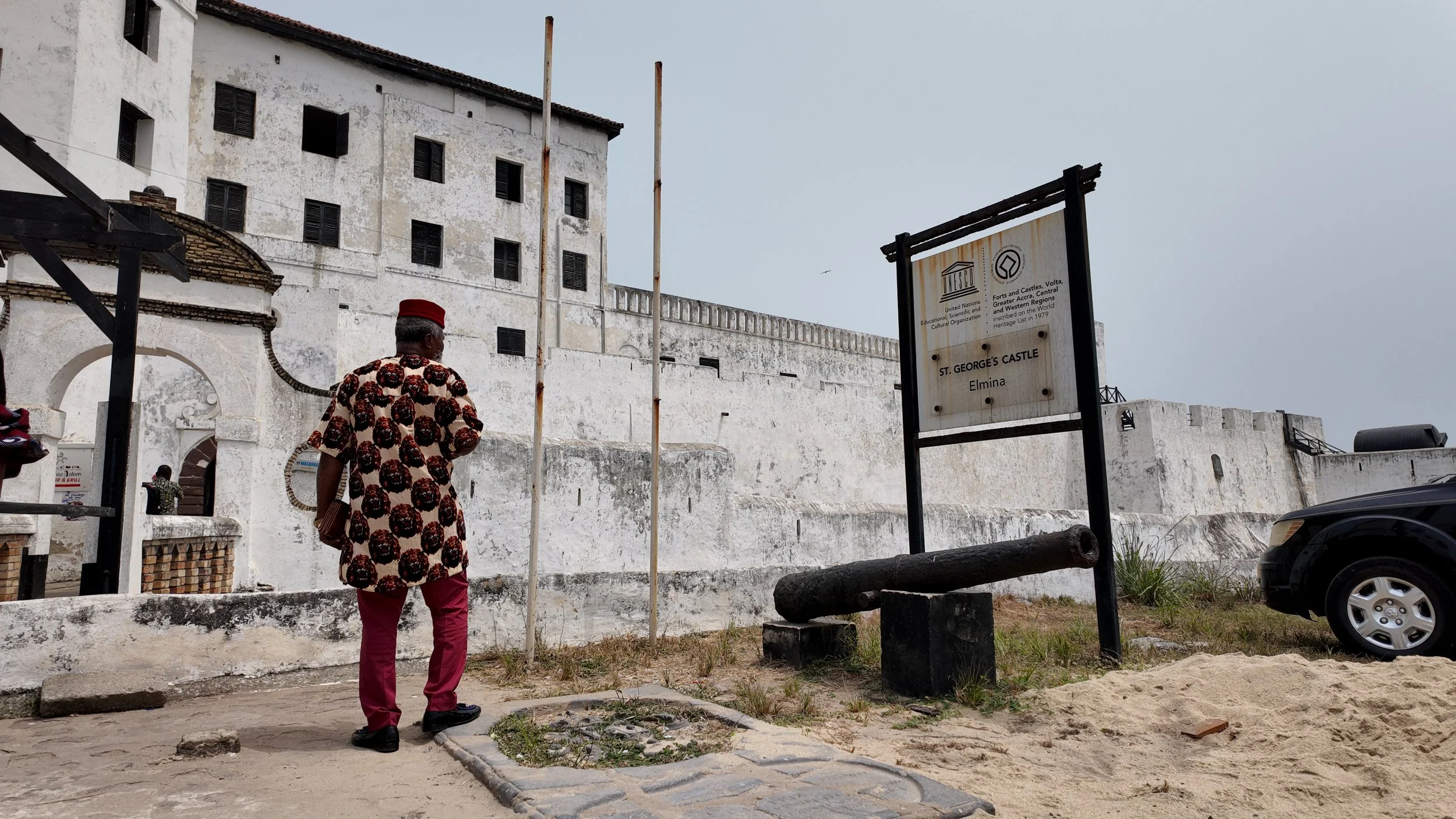
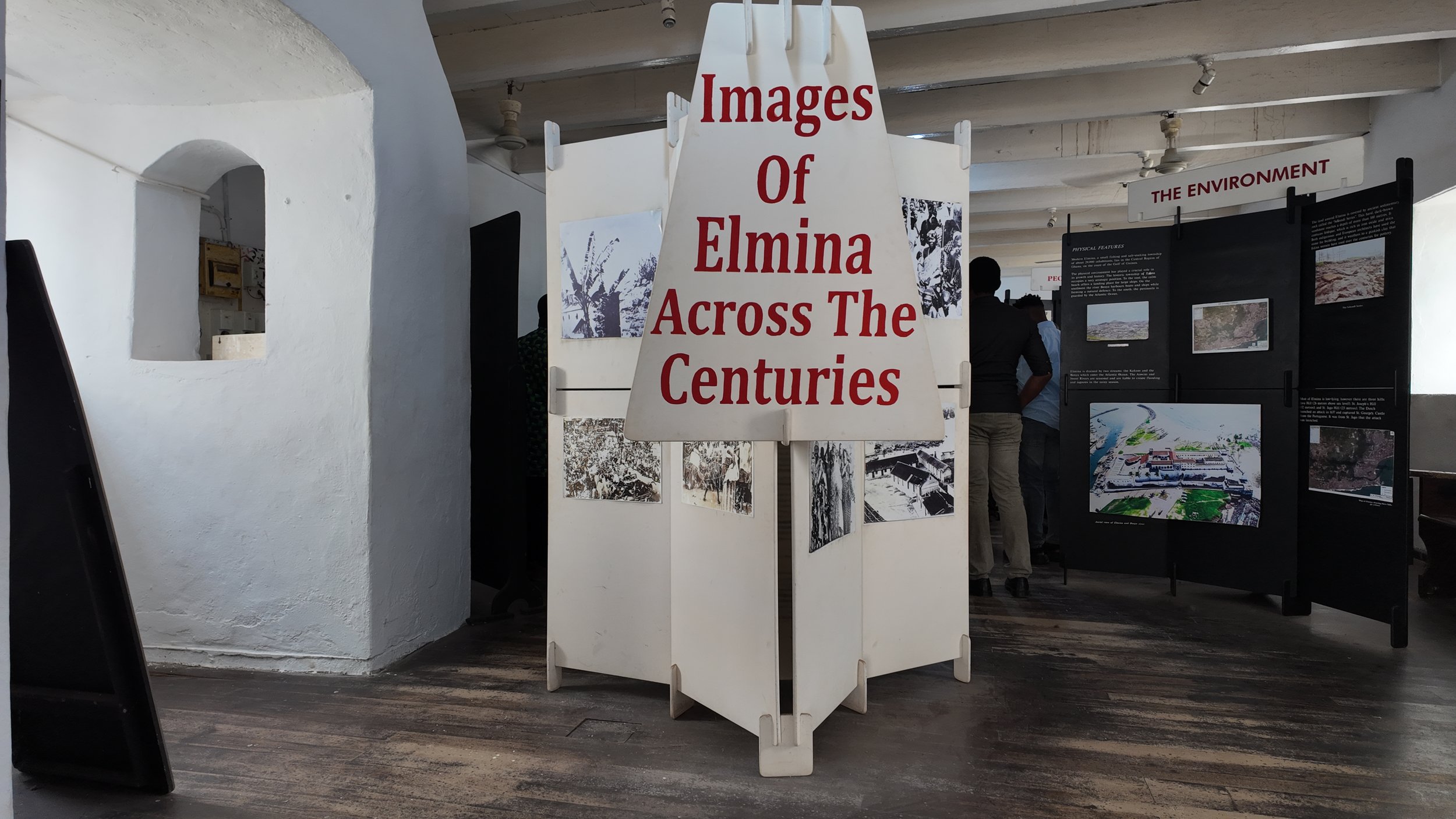
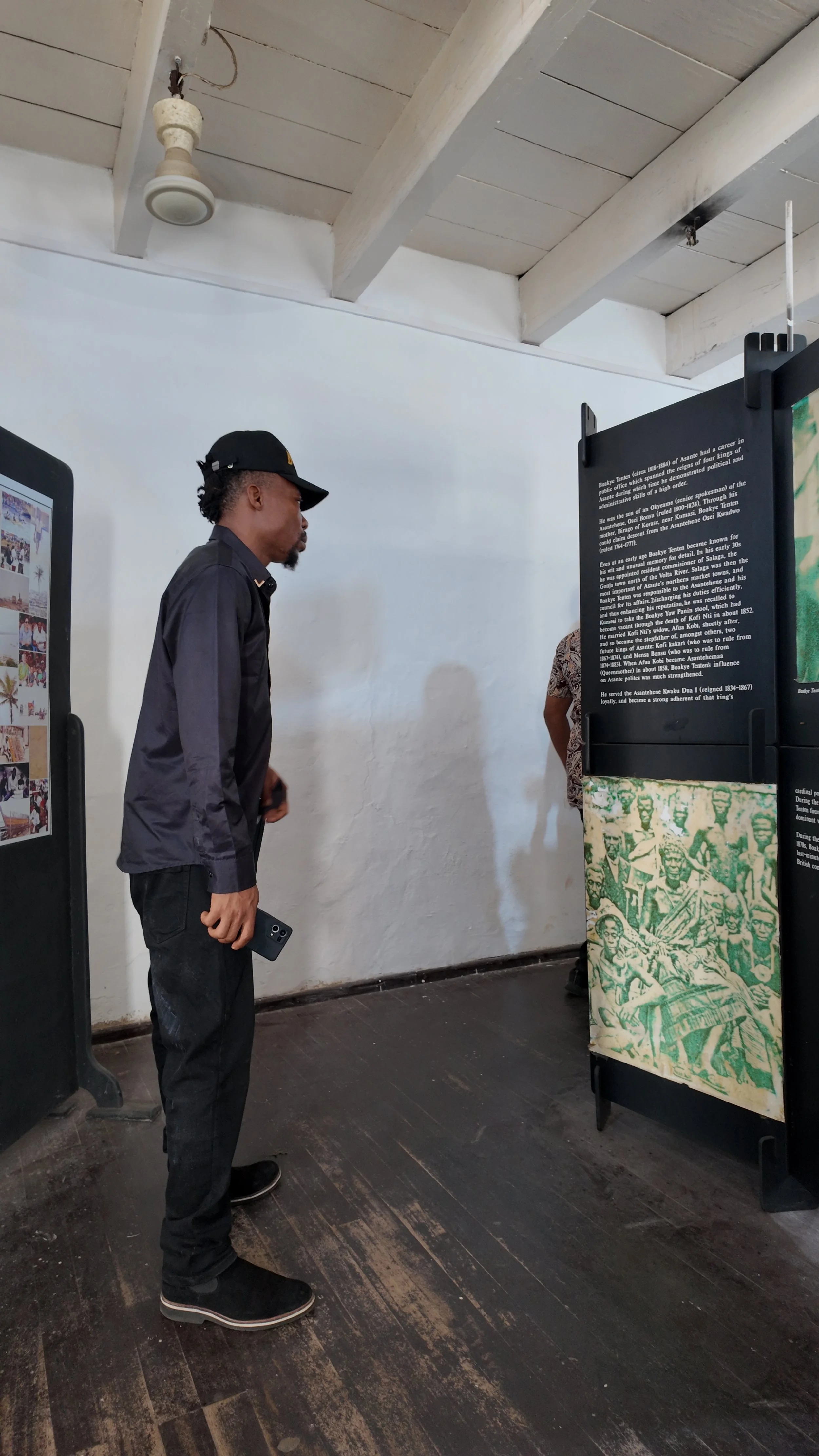
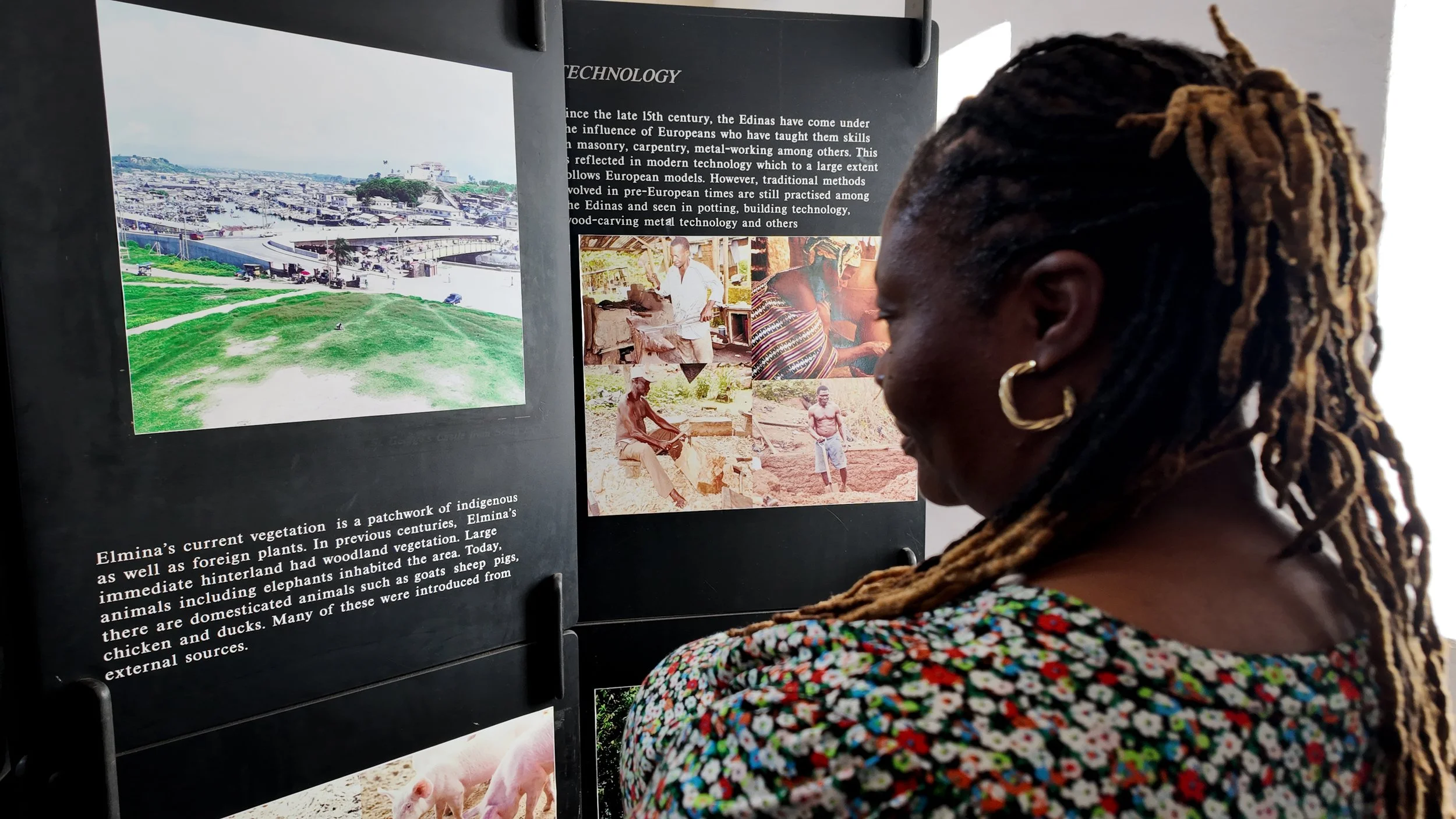
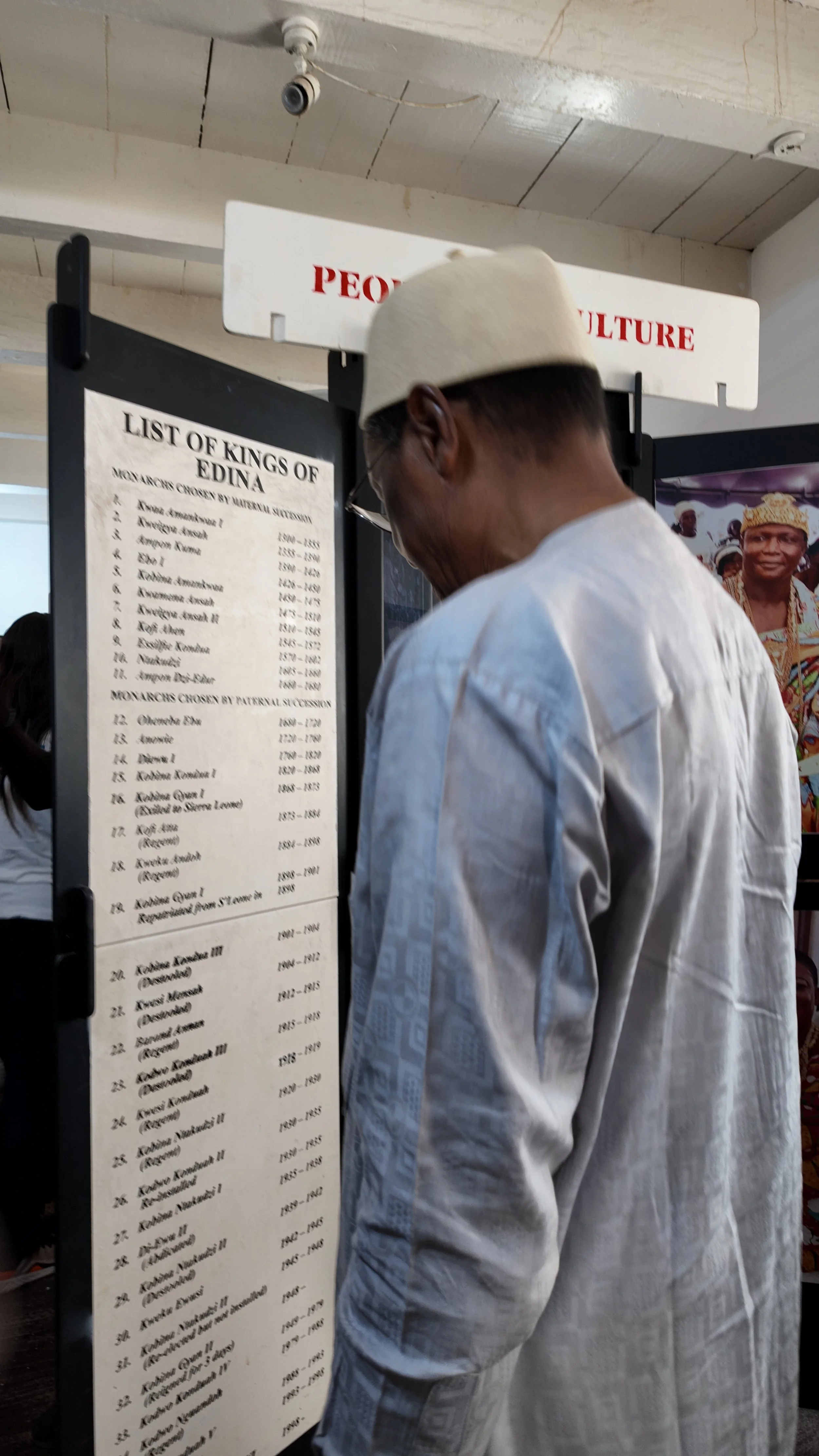
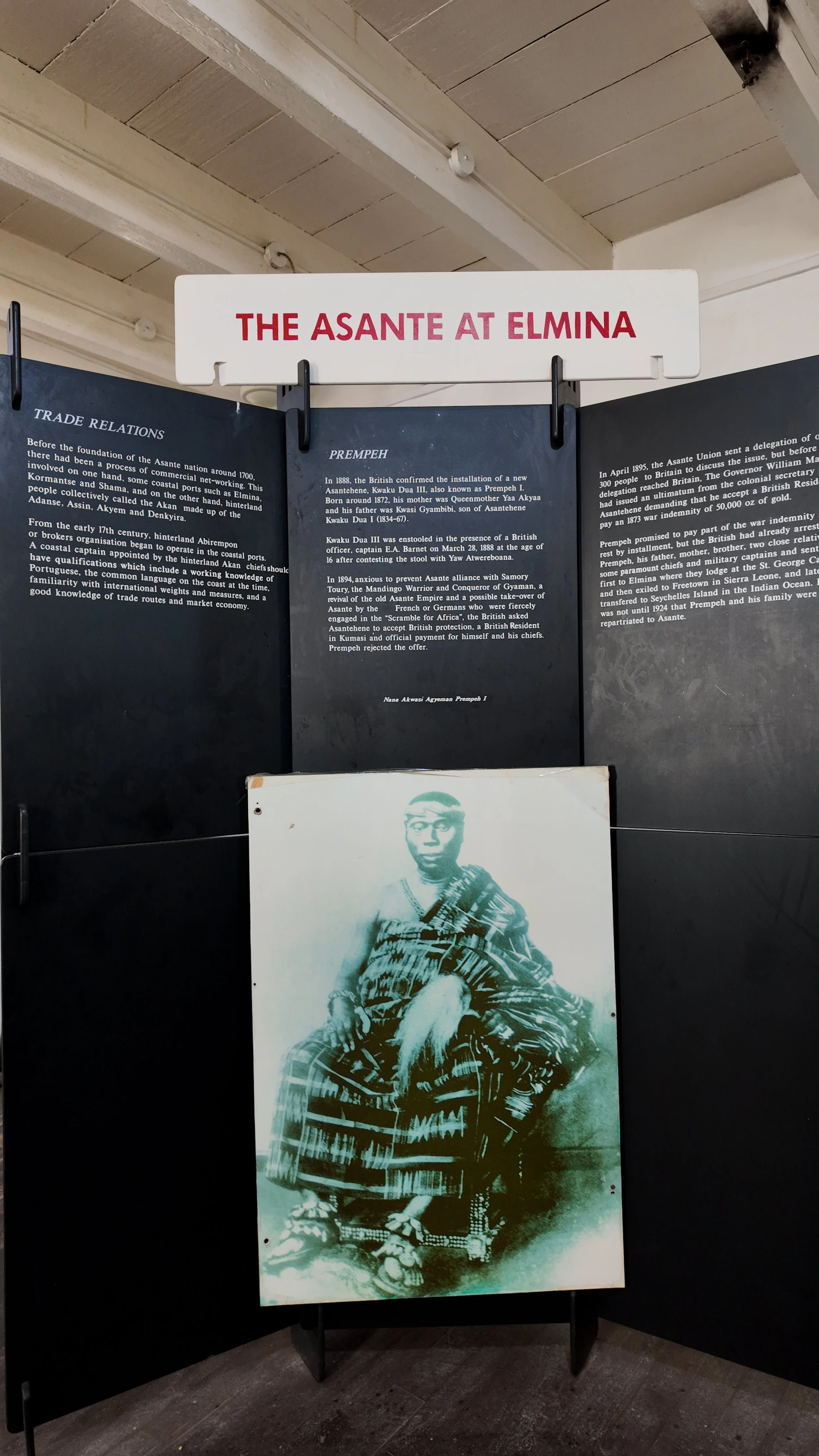
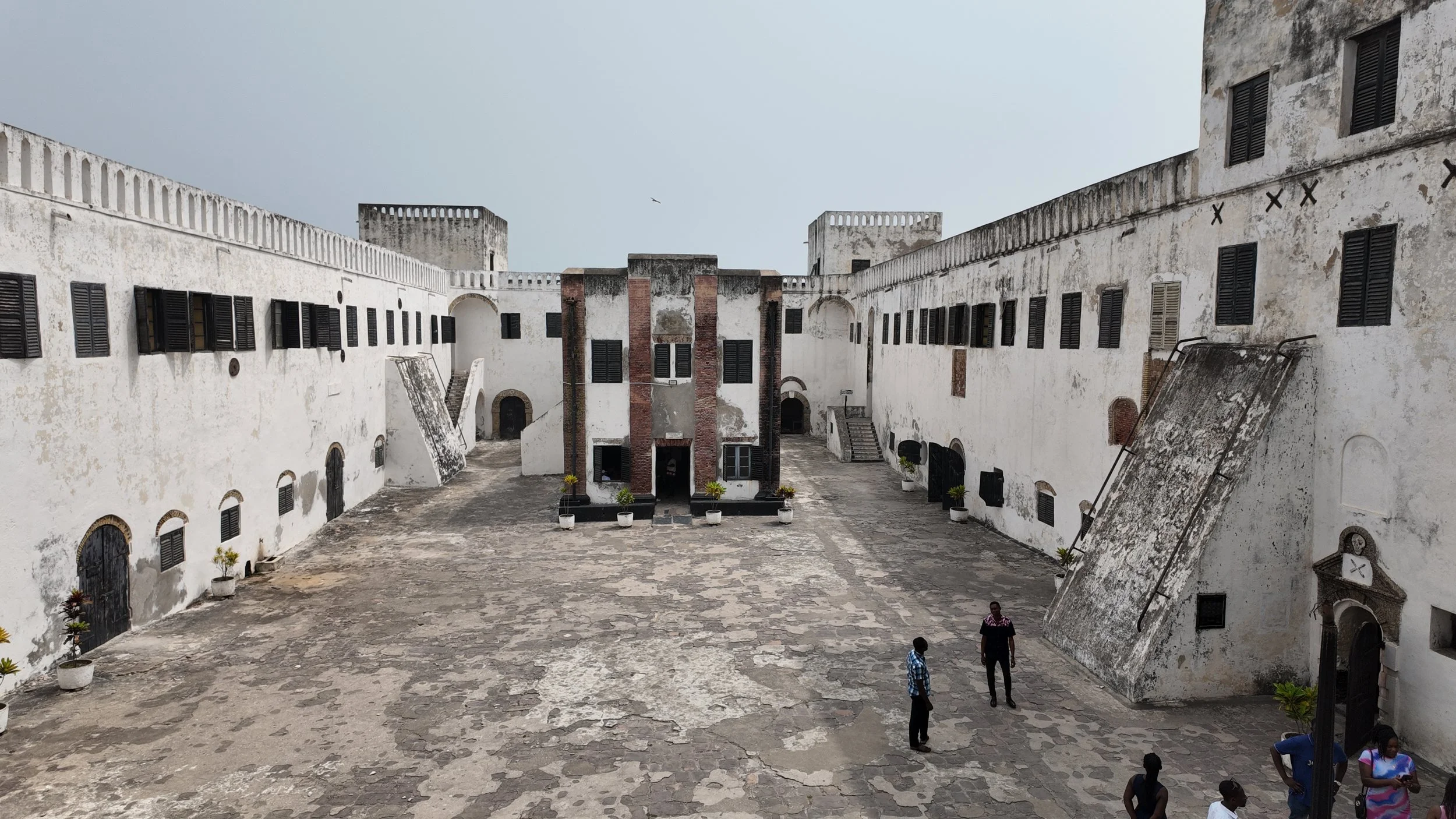
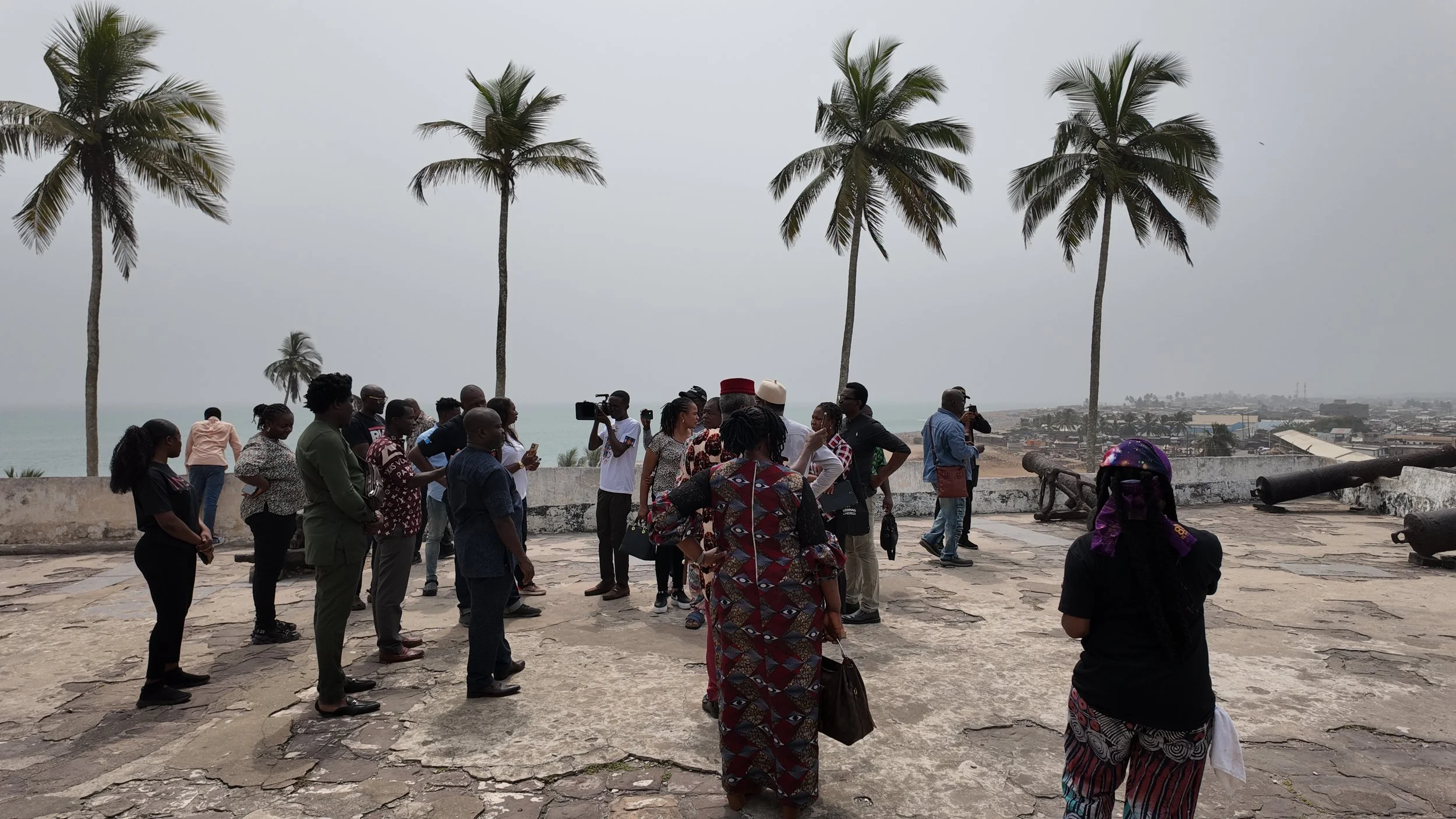
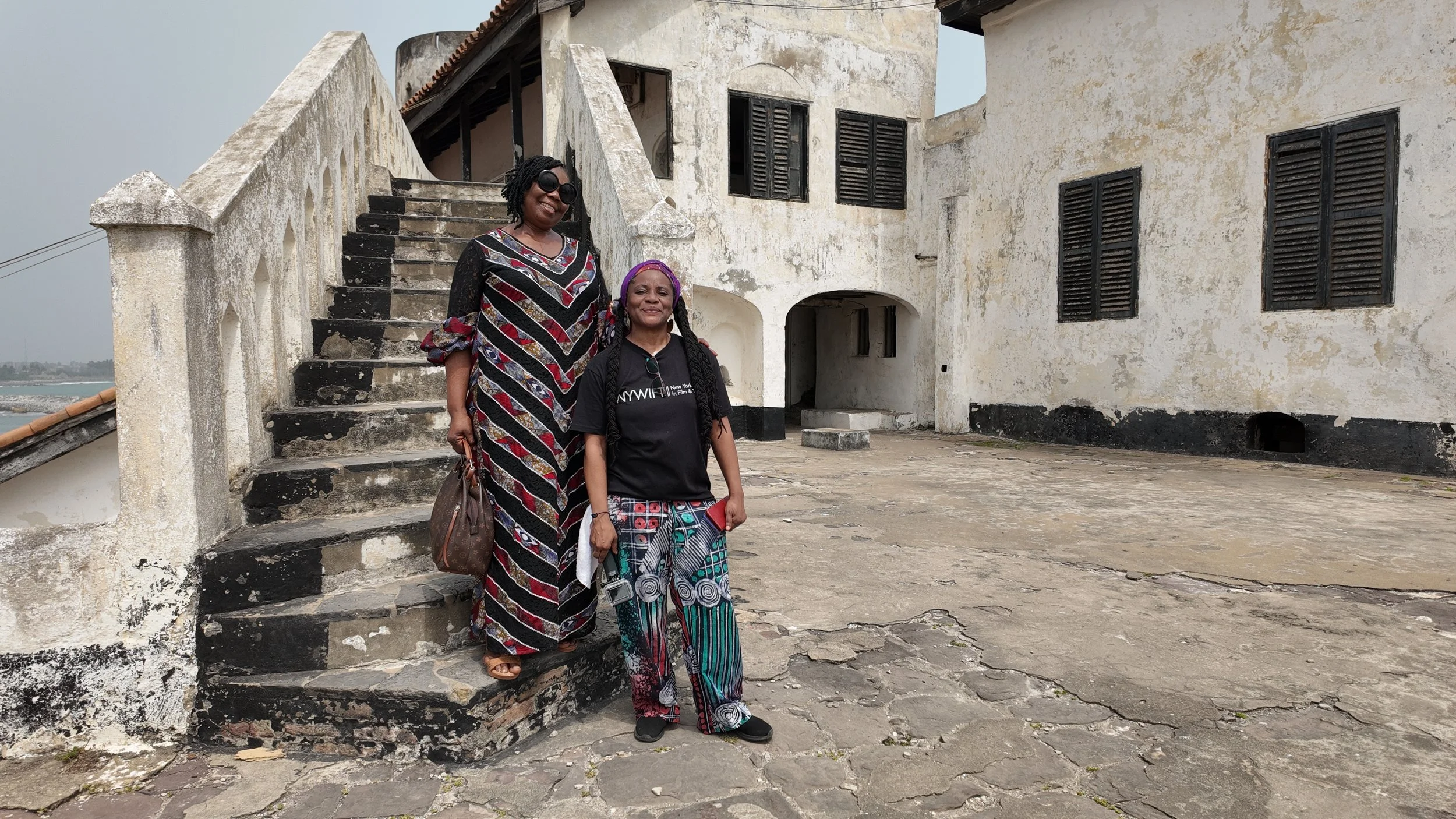
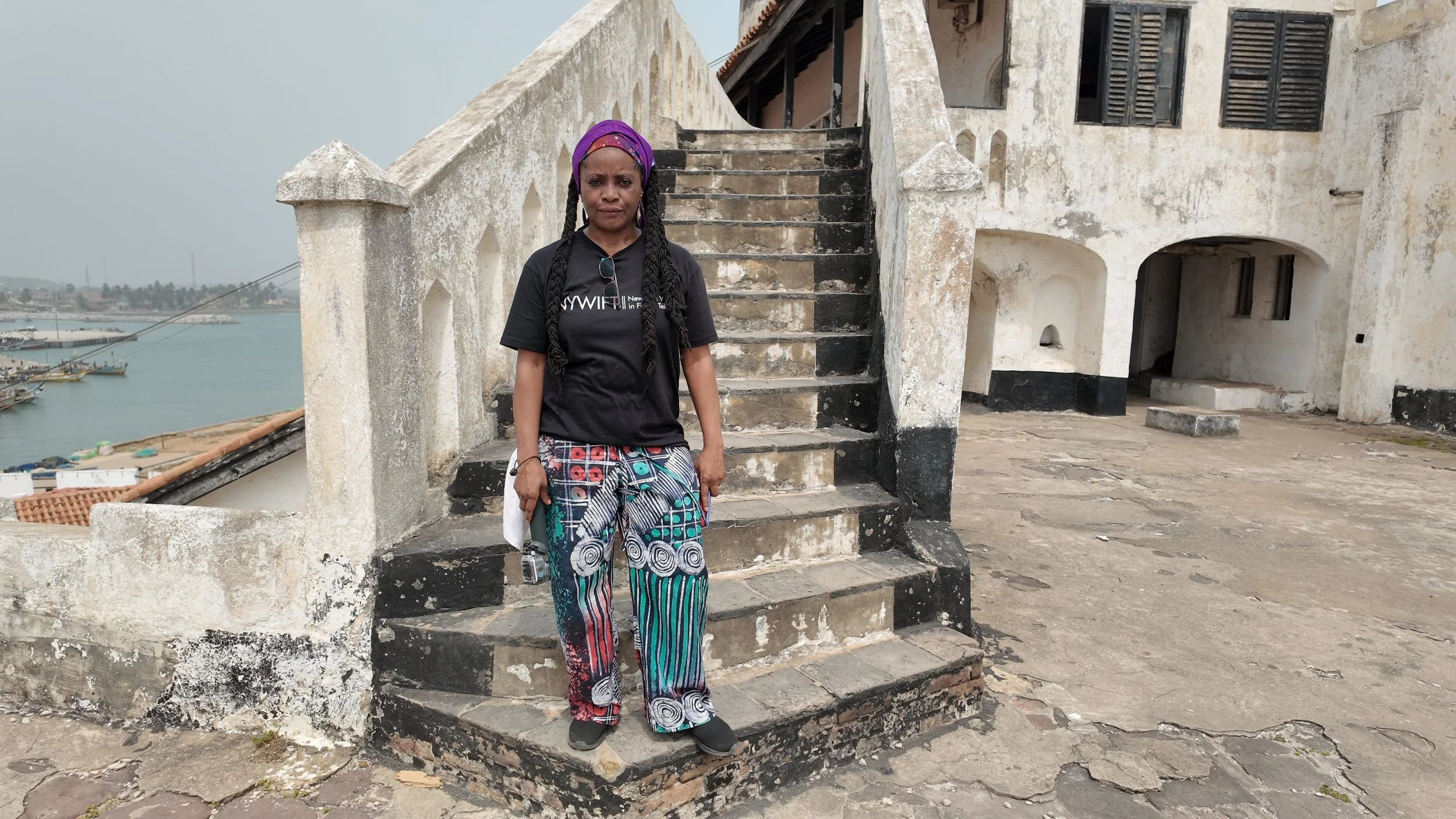
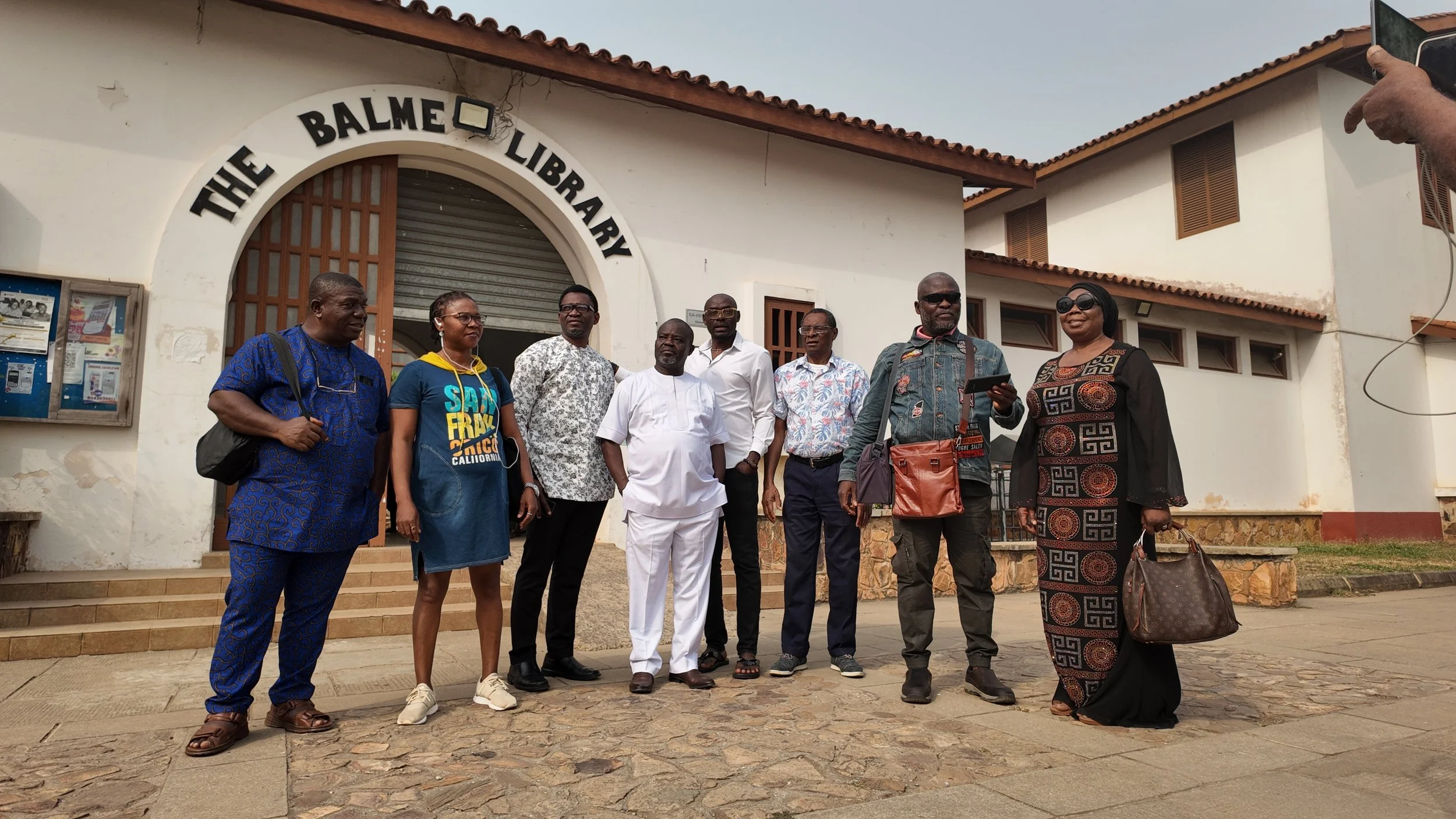
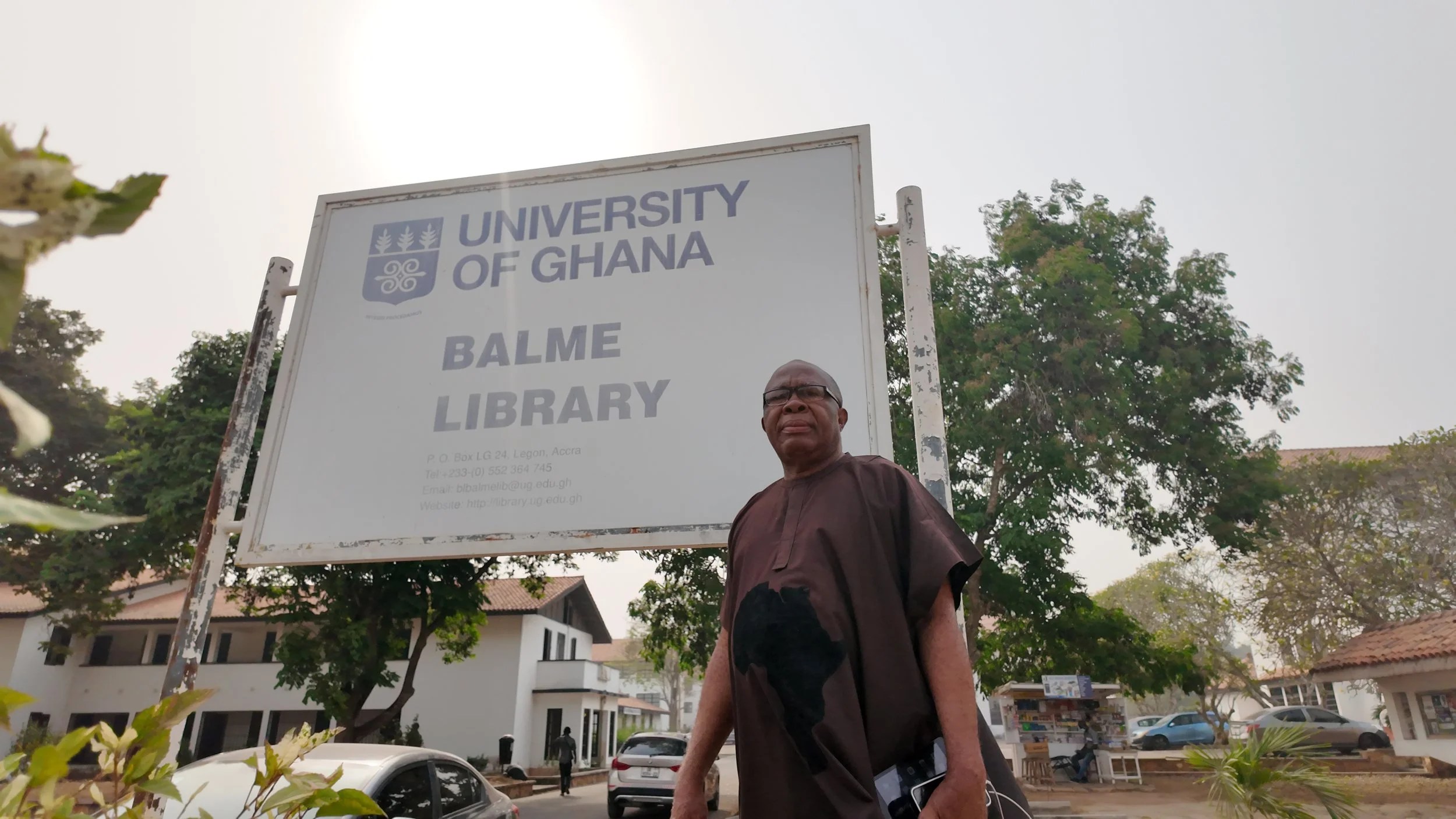
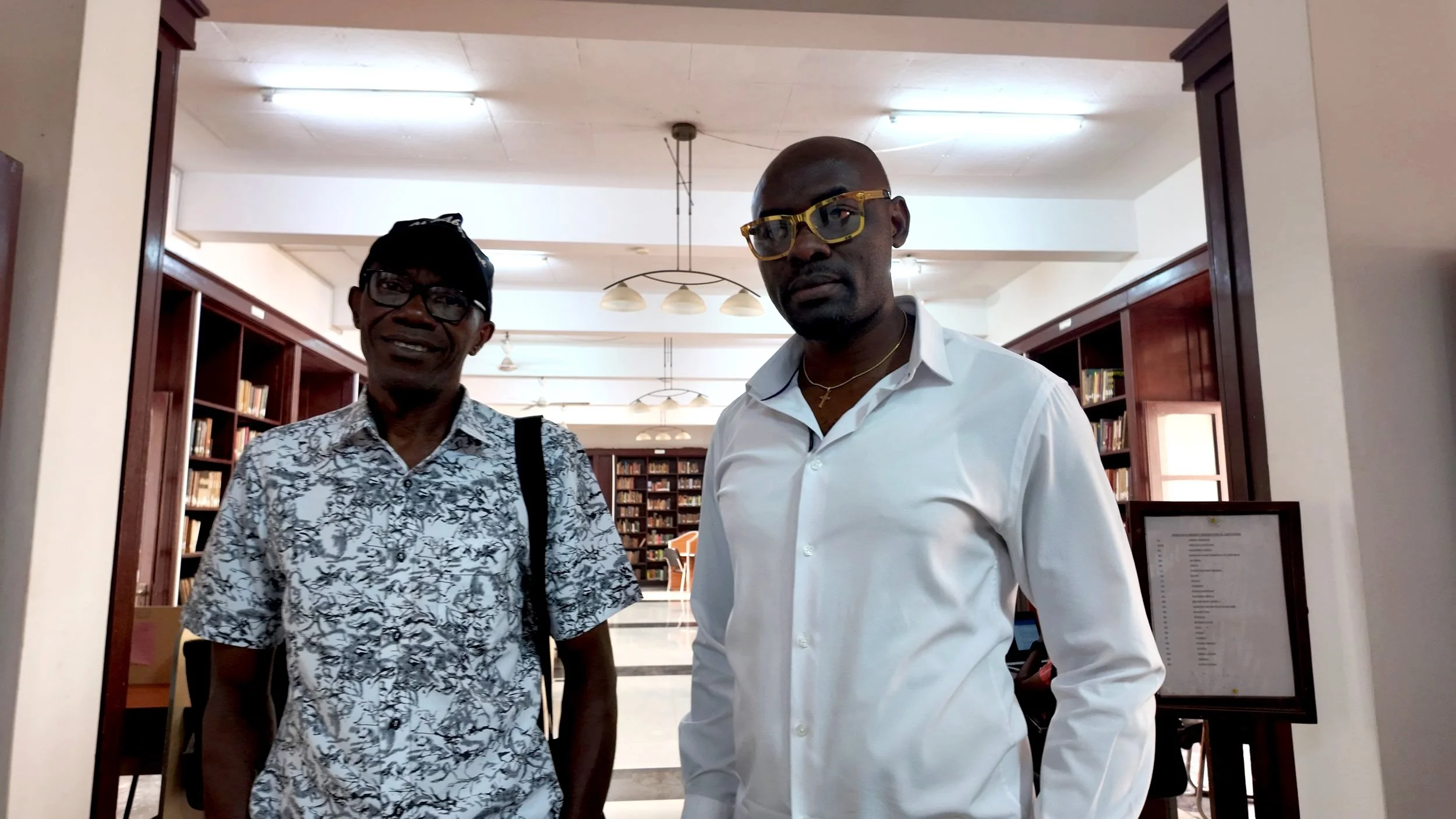
Other activities included a book unveiling titled “The World Celebrates El Anatsui @80” by a collective of esteemed academics from the University of Nigeria, Nsukka (UNN); with guided tours to Ghana’s educational and tourism landmarks such as Elmina Castle, the Kwame Nkrumah Museum, and University of Ghana.
El Anatsui is a contemporary artist from Ghana who singlehandedly redefined the meaning of sculptor and created a global art movement, from his four-decade stay in Nsukka, Nigeria. His works have graced prestigious art spaces worldwide, like the ongoing Hyundai Commission at Tate Modern. Learn more about a most remarkable human being from his upcoming biographical documentary DELA: The Making of El Anatsui.
El@80 Video Highlights
Photos by Africa-Related

















































































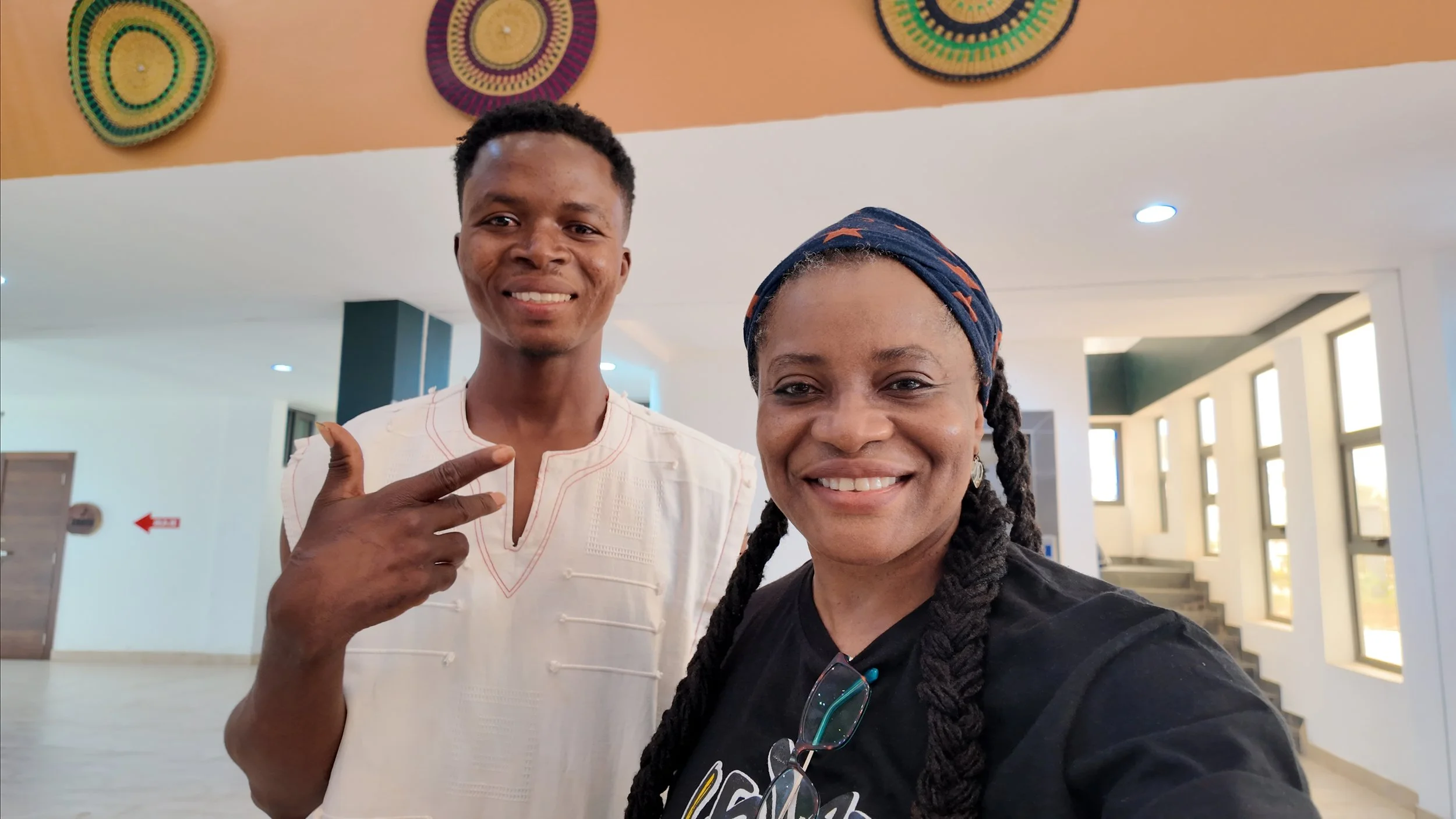
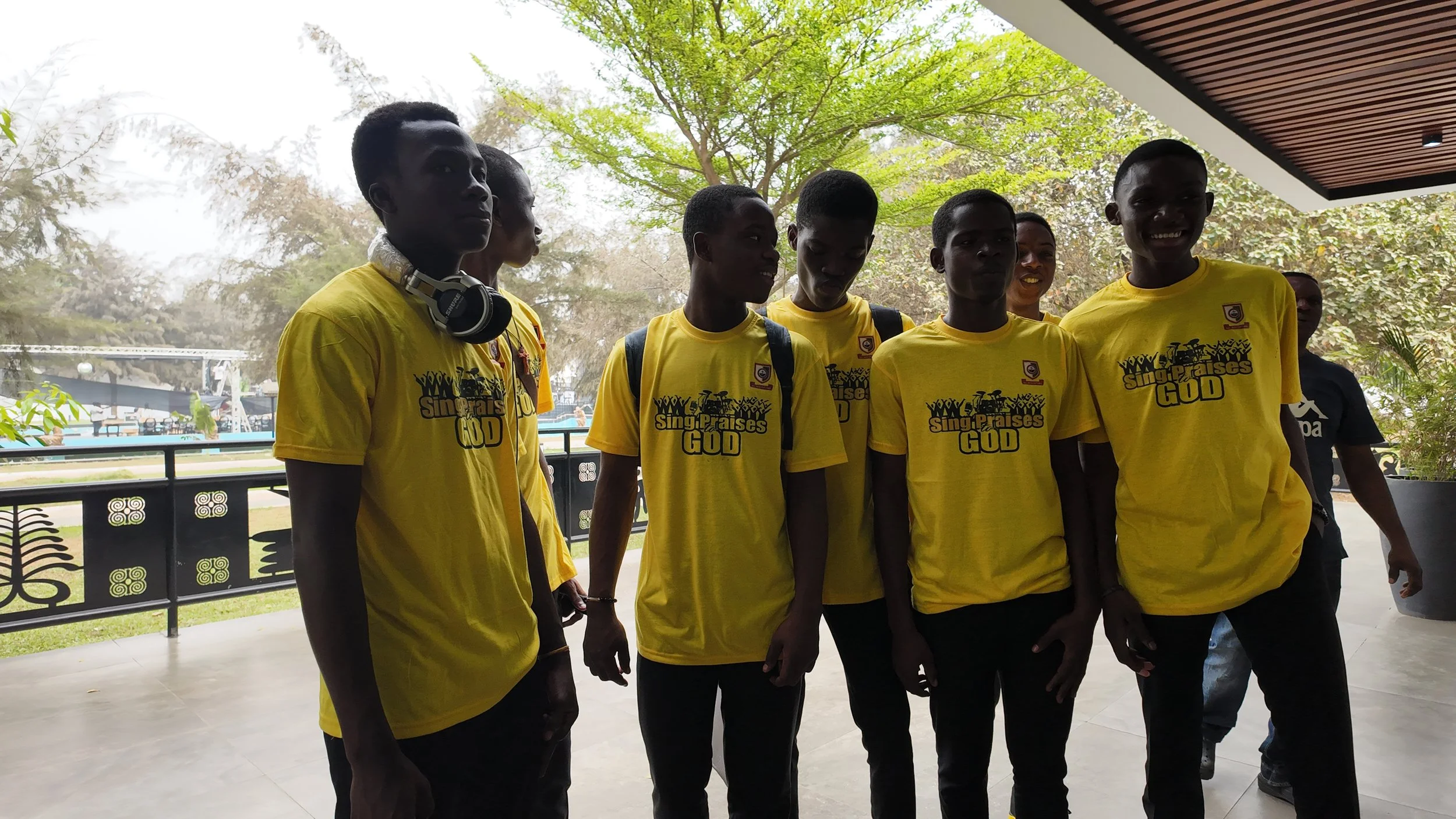

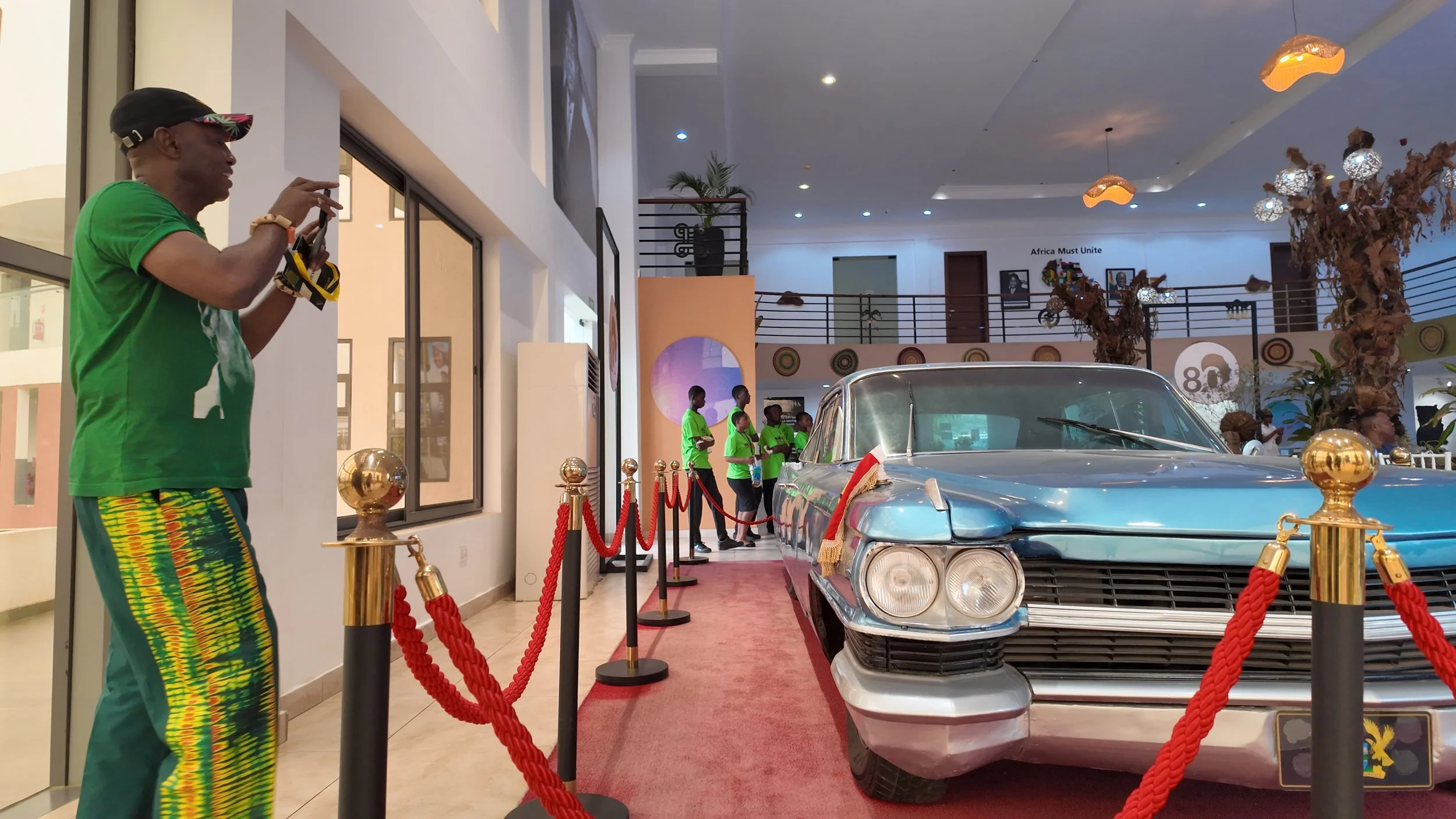

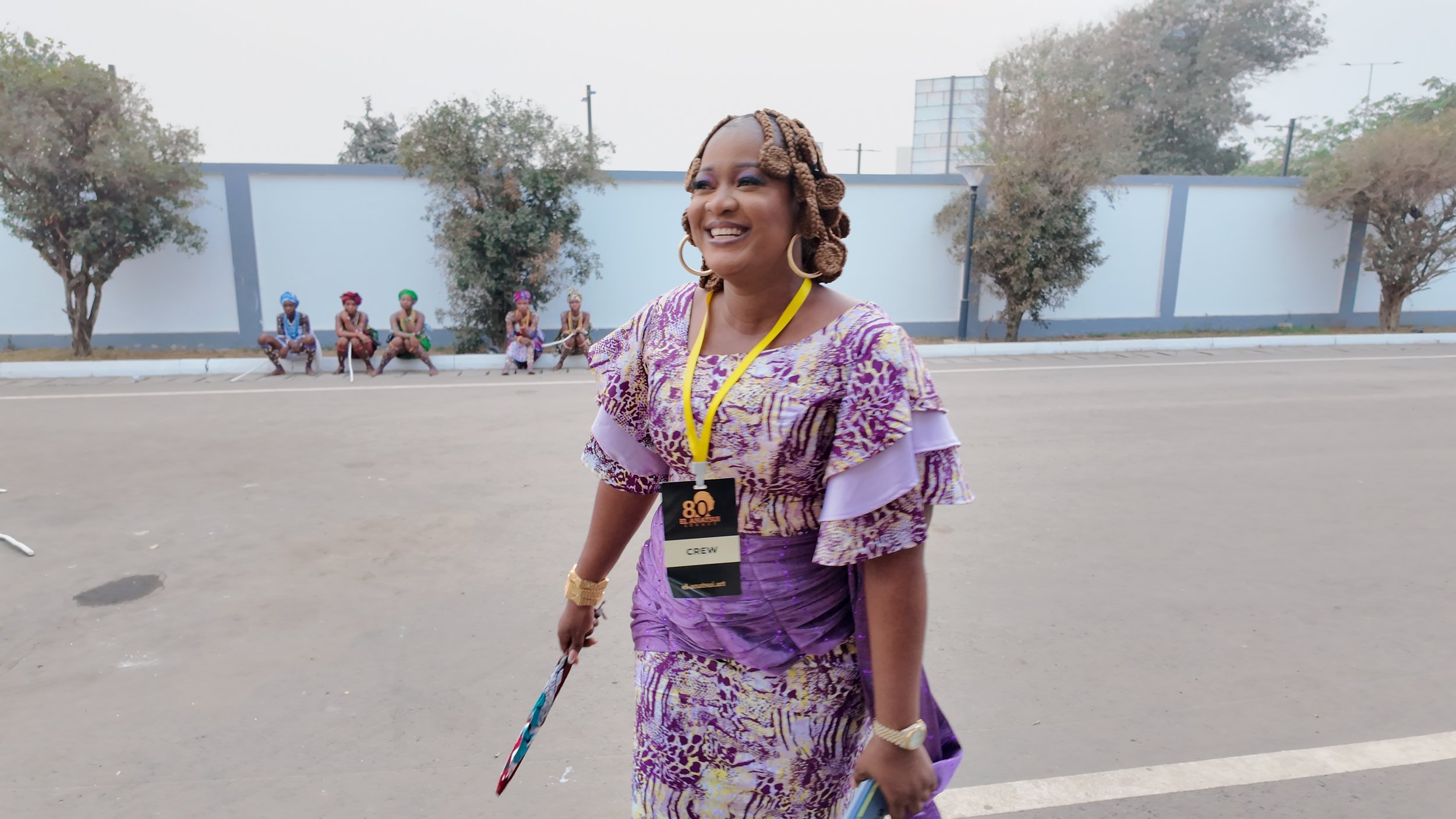















Share this story

WELCOME CORPS Celebrate One Year Anniversary
Welcome Corps is a new program that empowers everyday Americans to welcome refugees arriving through the U.S. Refugee Admissions Program.

Photo courtesy of Welcome Corps
Africa-Related New York
Welcome Corps is a new program that empowers everyday Americans to welcome refugees arriving through the U.S. Refugee Admissions Program.
U.S. Secretary of State Anthony Blinken announces Welcome Corps
In January 2023, the U.S. Department of State, in coordination with the U.S. Department of Health and Human Services, launched the Welcome Corps, a new program that empowers everyday Americans to welcome refugees arriving through the U.S. Refugee Admissions Program (USRAP). In July 2023, the Department of State introduced the Welcome Corps on Campus, a new targeted education sponsorship initiative that enables U.S. colleges and universities to play a leading role in resettling refugee students.
The boldest innovation in the United States’ approach to refugee resettlement in four decades, the Welcome Corps builds upon our country’s long tradition of providing refuge to people forced to flee their homes. The launch of the program is widely popular among the American public and even more popular among those who personally know someone who is a refugee. In the first weeks following the launch, tens of thousands of people registered to learn more about the program and how they can join the Welcome Corps.
For more than 40 years, the Department of State has partnered primarily with non-profit resettlement agencies to provide initial resettlement assistance to newly arriving refugees. The Welcome Corps creates new opportunities for Americans in communities across the United States to engage directly in refugee resettlement, building on existing opportunities to volunteer with resettlement agencies.
Share this story

NYWIFT - Photos From First In-Person Gathering in 2024
JANUARY 22, 2024
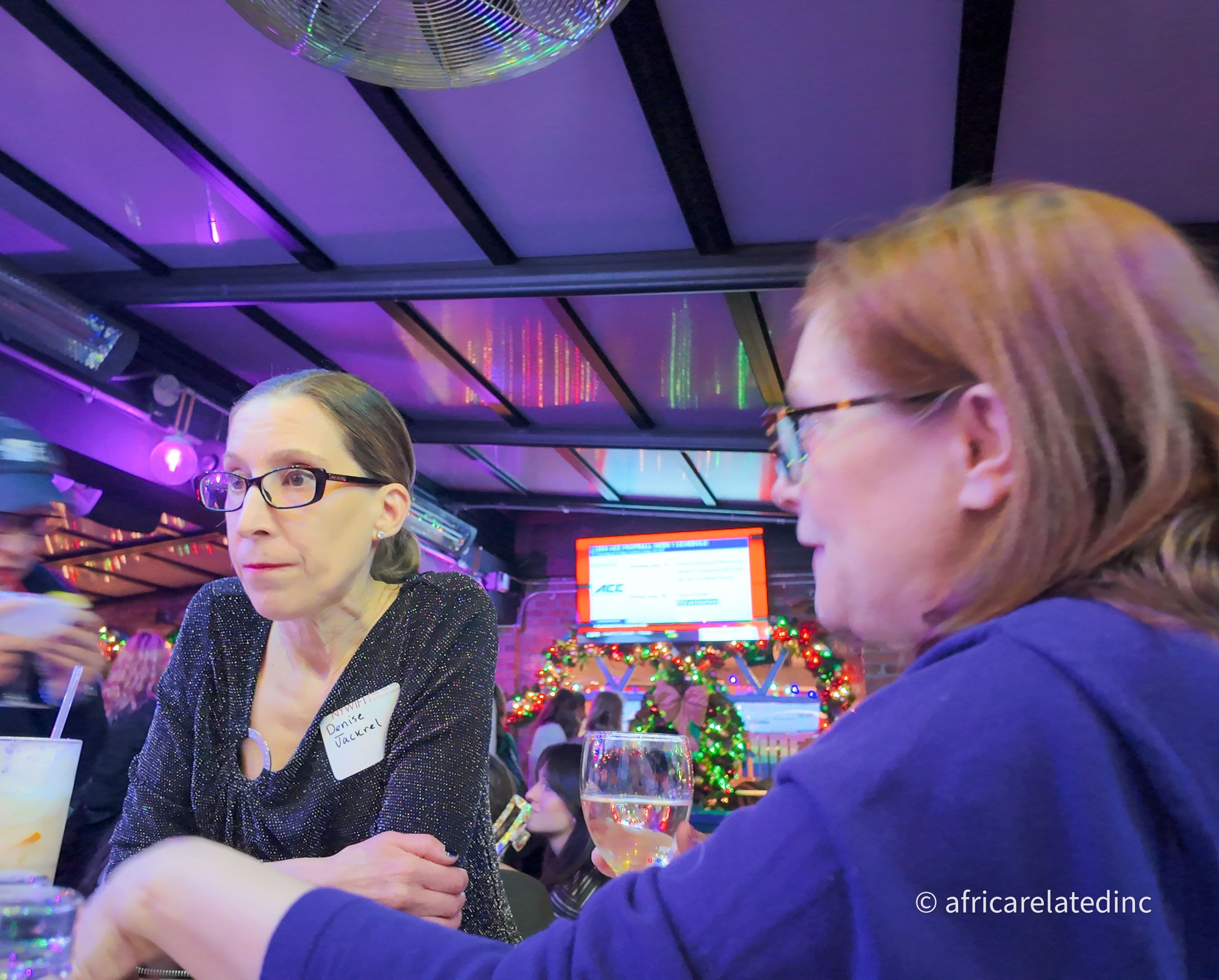
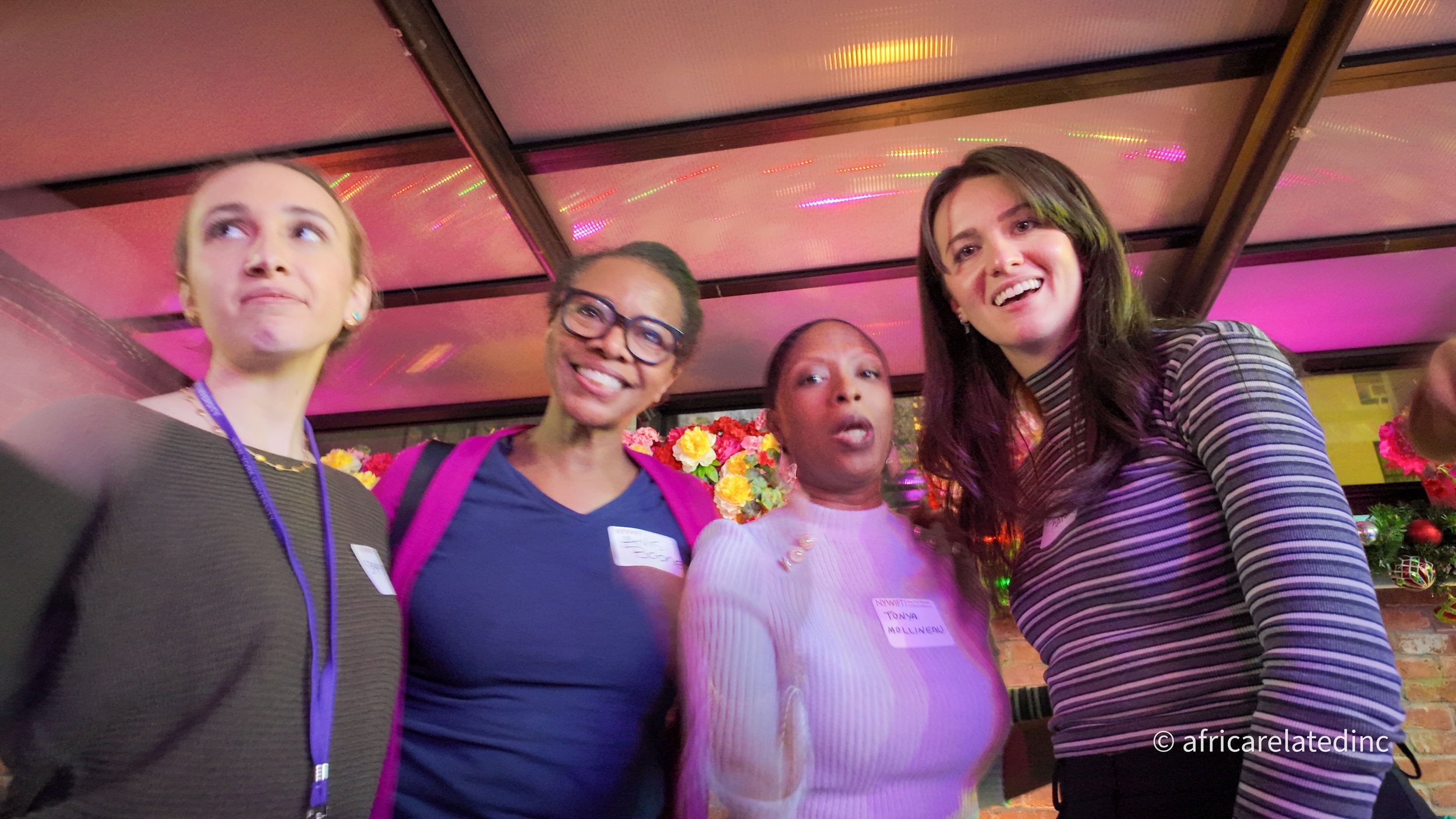
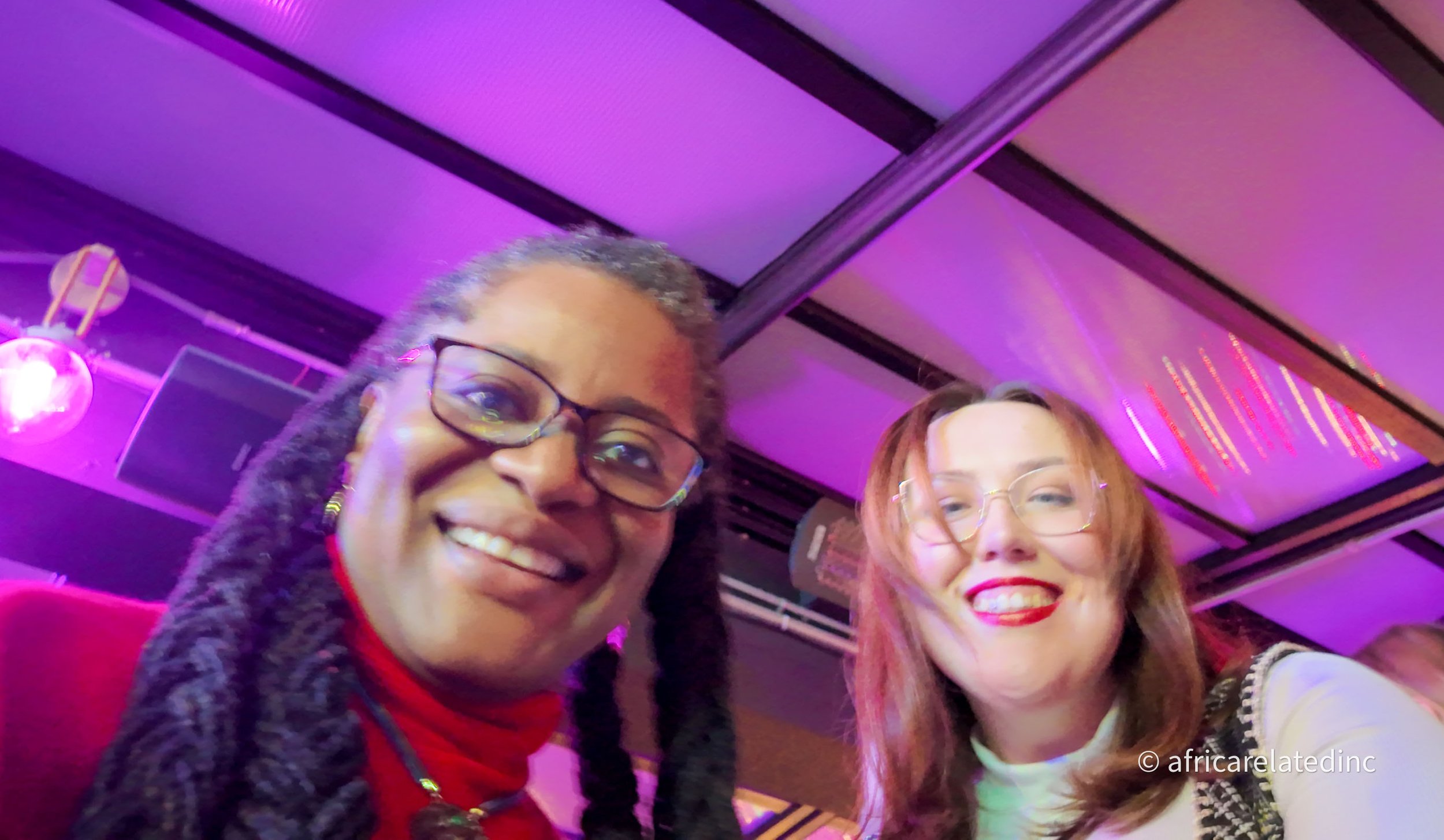
Members of New York Women in Film & Television (NYWIFT), an advocacy and support organization for equality in the moving image industry, recently met at Tito Murphy's NYC, for a “Night Out” of cocktails, networking and laughs.
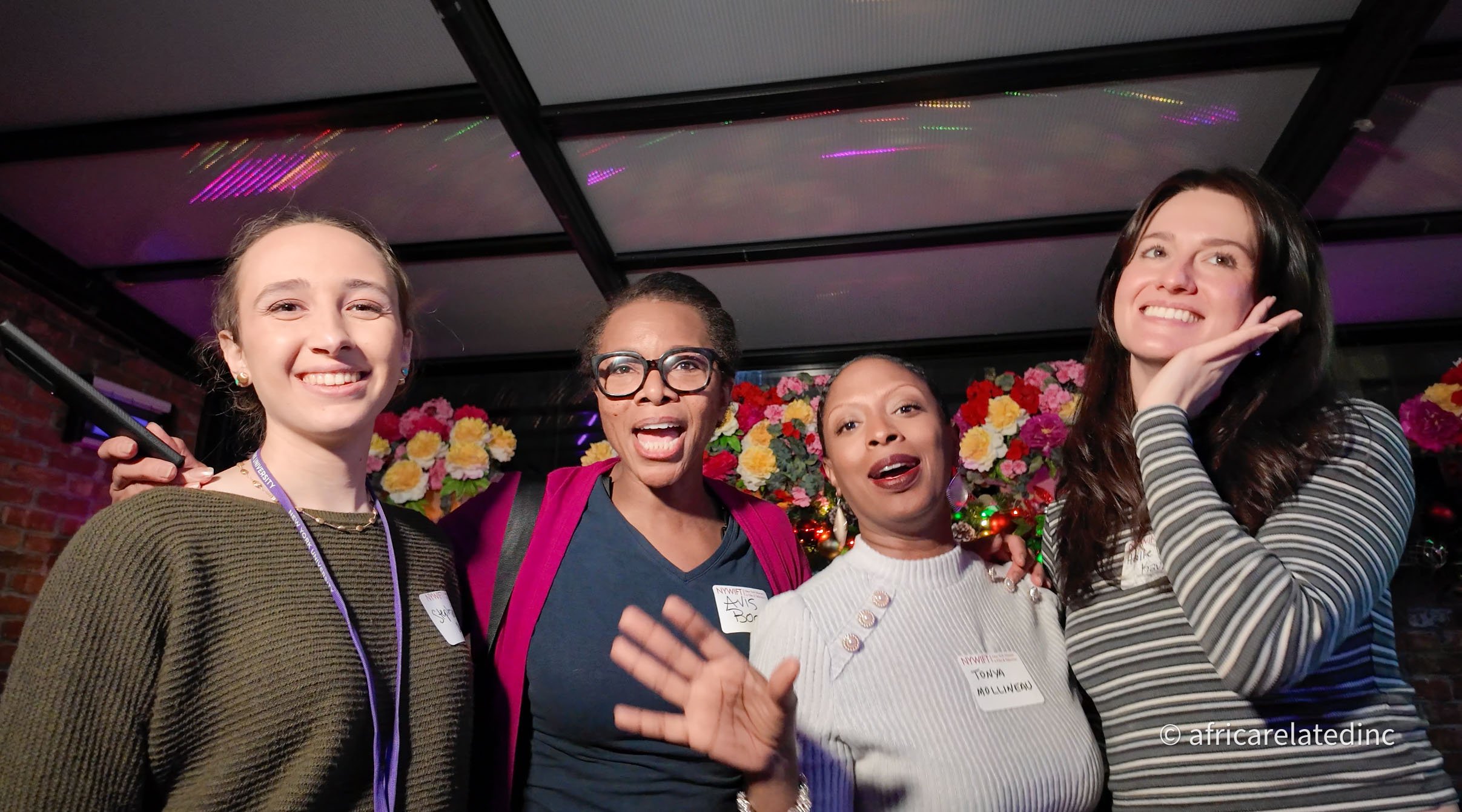
Members of the New York Women In Film & Television (NYWIFT) Night Out at Tito Murphy's NYC. Photo by Africa-Related
BY Oyiza Adaba, New York
JANUARY 22, 2024
Members of New York Women in Film & Television (NYWIFT), an advocacy and support organization for equality in the moving image industry, recently met at Tito Murphy's NYC, for a “Night Out” of cocktails, networking and laughs.


Jamire Bell & Toni Israel of REALEMN Productions
Membership is open to this incredible, vibrant, supportive community, with a discounted offer for new applications. Download it here and email to membership@nywift.org to get started.




New York Women in Film & Television (NYWIFT) advocates for equality in the moving image industry and supports women in every stage of their careers. As the preeminent entertainment industry association for women in New York, NYWIFT energizes women by illuminating their achievements, presenting training and professional development programs, awarding scholarships and grants, and providing access to a supportive community of peers.
Photos by @africarelated
Share this story

Where Should Africa Turn? BOOKINGS Publishes Foresight Africa 2024
The Brookings Institution in Washington, D.C. will launch its 2024 “Foresight Africa” report on January 26, 2024. The report contains top priorities and recommendations for Africa on where Africa should turn its attention in the year ahead.

Foresight Africa 2024. Photo courtesy of Bookings
BY Oyiza Adaba, New York
The Brookings Institution in Washington, D.C. will launch its 2024 “Foresight Africa” report on January 26, 2024 during a hybrid event. The report contains top priorities and recommendations for Africa on where Africa should turn its attention in the year ahead.
In this latest edition, experts offer their insights on key policy issues, including development finance, climate change, gender, entrepreneurship, governance, and more.
Foresight Africa is an annual report that captures top regional priorities for the year ahead published by The Brookings Institution, a nonprofit organization based in Washington, D.C.. Their mission to conduct in-depth, nonpartisan research to improve policy and governance at local, national, and global levels.
Download this year's chapters here and register to watch the launch event on January 26.
Share this story

U.S. Secretary Blinken’s to Visit Cabo Verde, Cote d’Ivoire, Nigeria, and Angola
Secretary Antony J. Blinken will travel to Cabo Verde, Cote d’Ivoire, Nigeria, and Angola on January 21-26, 2024 to highlight U.S.-Africa partnership since the U.S.-Africa Leaders Summit, climate, food, health security, future-focused economic partnership, and infrastructure investments in Africa.
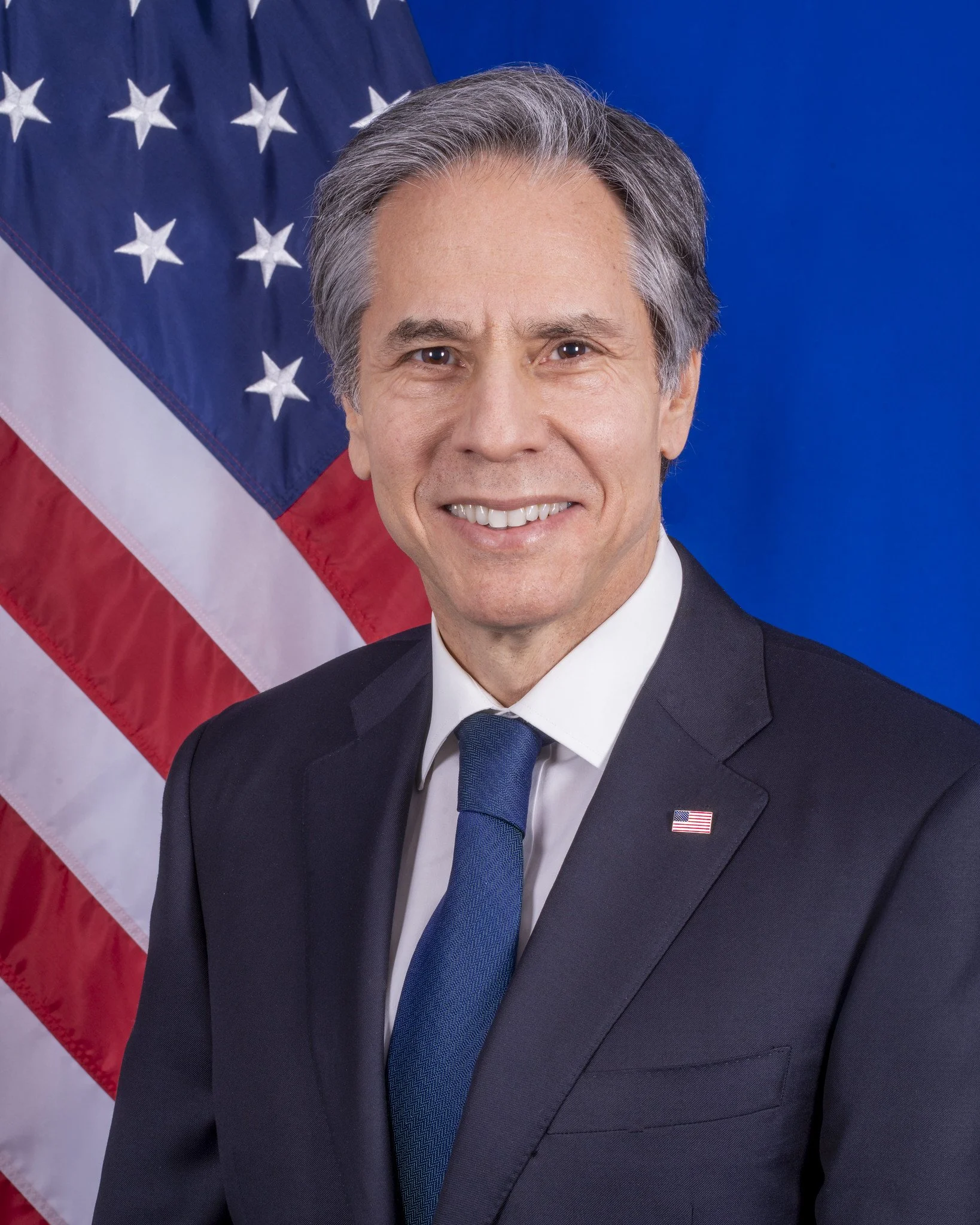
Photo by U.S Department of State
U.S. DEPARTMENT OF STATE
STATEMENT BY MATTHEW MILLER, SPOKESPERSON
JANUARY 18, 2024
Secretary Antony J. Blinken will travel to Cabo Verde, Cote d’Ivoire, Nigeria, and Angola January 21-26, 2024.
Throughout the trip, the Secretary will highlight how the United States has accelerated the U.S.-Africa partnership since the U.S.-Africa Leaders Summit, including in areas such as climate, food, and health security. He will also emphasize our future-focused economic partnership, and how the United States is investing in infrastructure in Africa to boost two-way trade, create jobs at home and on the continent, and help Africa compete in the global marketplace.
Additionally, the Secretary will advance security partnerships based on shared values such as respect for human rights, promotion of democracy, and expansion of the rule of law. He will reaffirm U.S. commitment to our coastal West African partners through the Strategy to Prevent Conflict and Promote Stability, U.S. partnership with the Economic Community of West African States (ECOWAS) to address regional challenges, and U.S. efforts to support African leadership in de-escalating tensions and adopting diplomatic solutions to the conflict in the eastern Democratic Republic of the Congo.
The United States reaffirms its sustained commitment to high-level U.S. engagement with Africa.
Share this story

U.S. Migration Policy Overview
FOREIGN PRESS CENTER BRIEFING WITH KATIE TOBIN, DEPUTY ASSISTANT TO PRESIDENT BIDEN AND COORDINATOR FOR THE LOS ANGELES DECLARATION, BLAS NUÑEZ-NETO, ASSISTANT SECRETARY OF HOMELAND SECURITY FOR BORDER AND IMMIGRATION POLICY, AND ERIC JACOBSTEIN, DEPUTY ASSISTANT SECRETARY OF STATE FOR CENTRAL AMERICA, CUBA AND MIGRATION.
U.S. DEPARTMENT OF STATE
Bureau of Global Public Affairs
JANUARY 11, 2024
FPC TRANSCRIPT: U.S. Migration Policy Overview
FOREIGN PRESS CENTER BRIEFING WITH KATIE TOBIN, DEPUTY ASSISTANT TO PRESIDENT BIDEN AND COORDINATOR FOR THE LOS ANGELES DECLARATION, BLAS NUÑEZ-NETO, ASSISTANT SECRETARY OF HOMELAND SECURITY FOR BORDER AND IMMIGRATION POLICY, AND ERIC JACOBSTEIN, DEPUTY ASSISTANT SECRETARY OF STATE FOR CENTRAL AMERICA, CUBA AND MIGRATION.
Cover Photo: Metin Ozer @metinozer
Share this story

South Bronx's JOE HALL Appointed New President & CEO Manhattan Neighborhood Network
Manhattan Neighborhood Network (MNN) announced JOE HALL as Incoming President & CEO, taking over Dan Coughlin’s 18 years of service at the long-standing community television station. Who better to take the reins, than someone from the community-driven South Bronx and visionary behind the powerful “Ghetto Film School” (GFS)…
Oyiza Adaba, New York

Inside MNN El Bario, Harlem Studio. Photo: Africarelated
Appointment
Manhattan Neighborhood Network (MNN) announced JOE HALL as Incoming President & CEO, taking over Dan Coughlin’s 18 years of service at the long-standing community television station. Who better to take the reins, than someone from the community-driven South Bronx and visionary behind the powerful Ghetto Film School (GFS)…
PRESS RELEASE
January 4, 2024

Joe HALL, New MNN CEO & President. (Photo: MNN)
Manhattan Neighborhood Network Ushers in New Era with Joe Hall as Incoming President & CEO
New York, NY, Jan 4, 2023 - MNN announced today the appointment of Joe Hall as the new President & CEO of Manhattan Neighborhood Network (MNN), an award-winning cultural organization and the largest community media center in the country.
Operating from two state-of-the-art facilities in Hudson Yards and East Harlem, MNN offers digital media education, training, production and distribution services to 400+ creators annually, reaching more than 400,000 cable TV subscribers, online and live event audiences.
Damian Benders, MNN’s board chair emphasized, "Joe's appointment is not just a new chapter; it's a commitment to our roots of community empowerment and innovative storytelling. His track record speaks not just to his capability but to his deep resonance with our mission."
Joe Hall stated, “MNN is a super smart, best practice organization with strong board leadership that has a bold vision of a more expansive creative offering moving forward. For someone like me, this is the perfect moment to bring my relationships and passion to this dynamic mix – I’m genuinely honored to be part of MNN, and can’t wait to get working with all our stakeholders and community to impact the culture in new and exciting ways.”
Outgoing President & CEO Dan Coughlin added, “I'm proud of what the team has accomplished at MNN and confident that Joe is the right person to take the helm. His experience and creativity are exactly what MNN needs to move forward."

MNN Board Chair Damian Benders, Mayor of the City of New York Eric Adams, and MNN President & CEO Dan Coughlin. Photo by Rowena Husbands.
“I and the board believe his vision aligns beautifully with MNN's mission and that his innovative approach will lead us into a new era of growth and creativity.” - MNN Board Chair Damian Benders
In 2000 Joe Hall founded Ghetto Film School (GFS) a nonprofit academy training 8,000+ underrepresented talent annually through its South Bronx, MacArthur Park (LA), and Tower Hamlets (London) operation hubs. GFS projects have been produced on five continents, with thousands of graduates now working in the film, television, and advertising industries. In 2009 Hall founded The Cinema School as the nation’s first film high school, raising $10M towards the school’s capital build-out and operations.
In 1992 Hall moved to the South Bronx as a social worker leading homeless relocation, job training, youth development, education, and health projects benefiting thousands of neighbors annually. He has been featured in The New Yorker, NY Times, CNN, Wall Street Journal, NPR, and PBS, and is a widely sought-after public speaker including AdColor, foundation conference keynotes, and the Metropolitan Museum’s Kerry James Marshall retrospective closing ceremony.
Hall’s numerous professional awards include the 2005 NYC Mayor’s Award for Arts & Culture, and a Rockefeller Foundation Fellow residency in Bellagio, Italy. He has written OpEds and articles for multiple publications, contributed chapters for books on youth development and education, produced a documentary film for Sundance Channel, and sits on the board of WOCstar Fund investing in tech innovation by women of color-led startups.
Hall completed undergraduate studies at Curry College, and a Master of Social Administration from Columbia University.
About Manhattan Neighborhood Network:
Established in 1992, Manhattan Neighborhood Network is a media learning, production, and distribution hub that promotes creative expression, independent voices and community engagement, empowering local voices & diverse views.
Learn more about MNN and its programs, how to become a community producer, or to register for a class.
Photos: Inside MNN TRAINING