
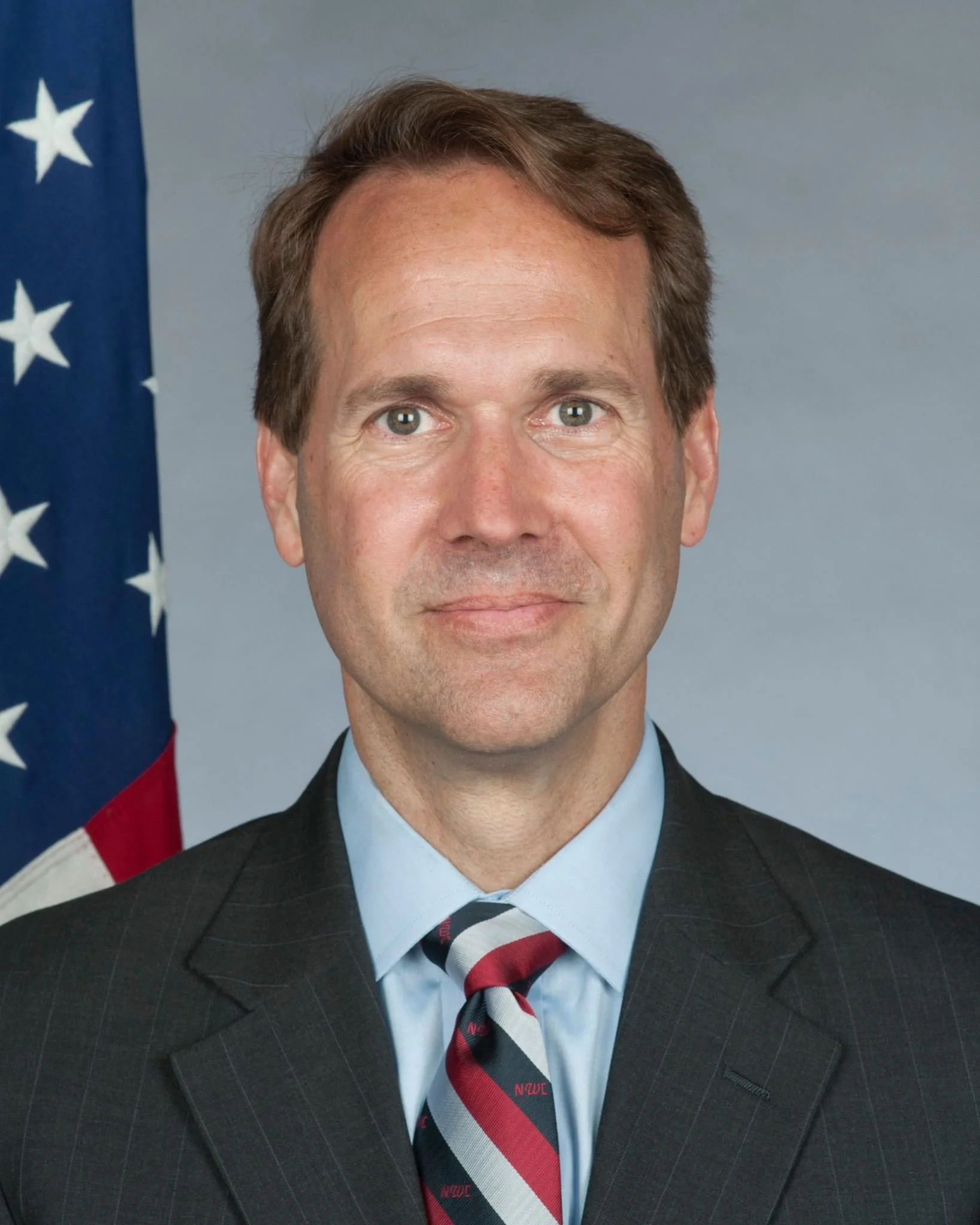
Steps Toward Investment-led Strategy In U.S-Africa Relations
The Senior Bureau Official for the Department of State’s Bureau of African Affairs, Ambassador Troy Fitrell and U.S. Ambassador to Cote D'Ivoire, Ambassador Jessica Davis Ba reviewed commercial diplomacy trip to West Africa and outlined the State Department’s new commercial diplomacy strategy for Sub-Saharan Africa.
Senior Bureau Official Troy Fitrell’s Commercial Diplomacy Trip to West Africa
Digital Press Briefing
The Senior Bureau Official for the Department of State’s Bureau of African Affairs, Ambassador Troy Fitrell and U.S. Ambassador to Cote D'Ivoire, Ambassador Jessica Davis Ba. Ambassador Fitrell reviewed his commercial diplomacy trip to West Africa and outlined the State Department’s new commercial diplomacy strategy for Sub-Saharan Africa.
You can find the full transcript of the briefing here:
FACT SHEET: Designation of International Cartels
The United States remains committed to protecting our nation, the American people, and our hemisphere by stopping the campaigns of violence and terror committed by international cartels and transnational organizations.
Today, the Department of State announces the designation of Tren de Aragua (TdA), Mara Salvatrucha (MS-13), Cártel de Sinaloa, Cártel de Jalisco Nueva Generación (CJNG), Cártel del Noreste (CDN), La Nueva Familia Michoacana (LNFM), Cártel de Golfo (CDG), and Cárteles Unidos (CU) as Foreign Terrorist Organizations (FTOs) and Specially Designated Global Terrorists (SDGTs).
U.S. DEPARTMENT OF STATE
Office of the Spokesperson
For Immediate Release
FACT SHEET
February 20, 2025
Designation of International Cartels
The United States remains committed to protecting our nation, the American people, and our hemisphere by stopping the campaigns of violence and terror committed by international cartels and transnational organizations.
Today, the Department of State announces the designation of Tren de Aragua (TdA), Mara Salvatrucha (MS-13), Cártel de Sinaloa, Cártel de Jalisco Nueva Generación (CJNG), Cártel del Noreste (CDN), La Nueva Familia Michoacana (LNFM), Cártel de Golfo (CDG), and Cárteles Unidos (CU) as Foreign Terrorist Organizations (FTOs) and Specially Designated Global Terrorists (SDGTs).
TdA is a transnational organization that originated in Venezuela with cells in Colombia, Peru, and Chile, with further reports of sporadic presence in Ecuador, Bolivia, and Brazil. This brutal criminal group has conducted kidnappings, extorted businesses, bribed public officials, authorized its members to attack and kill U.S. law enforcement, and assassinated a Venezuelan opposition figure.
MS-13 is a transnational organization that originated in Los Angeles but shifted to Central America as individuals were deported there from the United States. MS-13 actively recruits, organizes, and spreads violence in several countries, primarily in Central America and North America, including El Salvador, Honduras, Guatemala, Mexico, and the United States. MS-13 has conducted numerous violent attacks, including assassination and the use of IEDs and drones, against El Salvador government officials and facilities. Additionally, MS-13 uses public displays of violence to intimidate civilian populations to obtain and control territory and manipulate the electoral process in El Salvador.
Cártel de Sinaloa is a transnational organization based in Sinaloa, Mexico. It is one of the world’s most powerful drug cartels and is one of the largest producers and traffickers of fentanyl and other illicit drugs to the United States. Cártel de Sinaloa has used violence to murder, kidnap, and intimidate civilians, government officials, and journalists.
CJNG is a transnational organization with a presence in nearly every part of Mexico. In addition to trafficking fentanyl, the group engages in extortion, migrant smuggling, oil and mineral theft, as well as weapons trade. The group has contacts across the Americas, as well as in Australia, China, and Southeast Asia. CJNG has conducted intimidating acts of violence, including attacks on Mexican military and police with military grade weaponry, the use of drones to drop explosives on Mexican law enforcement, and assassinations or attempted assassinations of Mexican officials.
CDN, formerly known as Los Zetas, is a transnational organization based in northeastern Mexico involved in drug trafficking, kidnapping, extortion, human smuggling, and other illicit activities. CDN uses violence to exert its criminal control, including attacks against government officials in Mexico.
LNFM is the successor of the La Familia Michoacana, a violent transnational organization based in the Pacific coast state of Michoacan with operations in the Mexican states Guerrero, Morelos, and Mexico. In addition to drug trafficking, kidnapping, and extortion, LNFM attacks government officials and uses violence, including drone attacks and explosives, to exert its criminal control and terrorize communities.
CDG is a violent transnational organization based in northeast Mexico involved in drug trafficking, kidnapping, extortion, human smuggling, and other illicit activities. CDG employs violence, including assassinations of civilians and government officials to intimidate the public and control territory.
CU is a violent transnational organization that formed from an alliance of multiple cartels and other groups in Michoacán, Mexico. Since its formation, CU has engaged in violent activities which have resulted in numerous civilian, military, and law enforcement casualties.
Terrorist designations expose and isolate entities and individuals, denying them access to the U.S. financial system and the resources they need to carry out attacks. As a result of actions taken today, all property and interests in property of those designated today that are in the United States or that are in possession or control of a U.S. person are blocked, and U.S. persons are generally prohibited from engaging in transactions with them. Moreover, designations can assist law enforcement actions of other U.S. agencies and governments.
Today’s actions are taken pursuant to section 219 of the Immigration and Nationality Act, as amended, and Executive Order 13224, as amended. FTO designations go into effect upon publication in the Federal Register.
Petitioners requesting removal of those designated today from the Specially Designated Nationals and Blocked Persons List should refer to the Department of State’s Delisting Guidance page.
# # #
share this story
Ambassador Beth Van Schaack on U.S. efforts to advance transitional justice in Africa
Ambassador-at-Large for Global Criminal Justice Office of Global Criminal Justice, Beth Van Schaack
Ambassador Beth Van Schaack on U.S. efforts to advance transitional justice in Africa
Press Briefing with the Ambassador-at-Large for Global Criminal Justice Office of Global Criminal Justice, Beth Van Schaack. Ambassador Van Schaack discusses her recent travel to East Africa and provides an update on U.S. government efforts to advance transitional justice.
MODERATOR: Good afternoon to everyone from the U.S. Department of State’s Africa Regional Media Hub. I welcome our participants logging in from across the continent and thank all of you for joining us. Today, we are very pleased to be joined by Ambassador-at-Large for Global Criminal Justice in the Office of Global Criminal Justice, Ambassador Beth Van Schaack. Ambassador Van Schaack will discuss her recent travel to East Africa and provide an update on U.S. Government efforts to advance transitional justice.
We will begin with today’s – today’s briefing with opening remarks from Ambassador Van Schaack, then we will turn to your questions. We will try to get to as many of your questions as we can during this briefing.
And so with that, I will turn it over to Ambassador Beth Van Schaack for opening remarks.
AMBASSADOR VAN SCHAACK: Great. Wonderful, Johann. Thank you so much, and thank you to everyone for joining. I really appreciate your interest in the incredible innovations in justice that are happening across the African continent, and I’m really pleased to have the opportunity to talk about some of the newest developments, including my recent trip. So I just wrapped up a trip to Addis Ababa, in Ethiopia, where I met with a number of governmental actors, civil society groups, other individuals, members of the diplomatic community who are really interested in promoting and contributing to the transitional justice process that’s underway within Ethiopia. We’re also – I also engaged with principals at the African Union on transitional justice efforts that are happening across the continent.
So supporting these types of justice efforts has been a real priority for the Biden-Harris administration. Earlier in December you may have seen that President Biden became the first U.S. president to visit Angola and to deliver a speech at the Angolan National Museum of Slavery. And it was an incredibly poignant speech; I really commend it to you. I hope you’ll pull it up. He discussed in it the United States’ unfinished reckoning with racial injustice in our own country and how it is our duty to face our own history – the good, the bad, and the ugly – and basically to accept the whole truth of that history. This, I think, is a really powerful message for all justice advocates across the world who are fighting every day for truth and accountability.
The field of transitional justice emerged and developed to help societies affected by atrocities move forward towards lasting peace, stability, et cetera. And it’s really essential that such processes be victim-centered and to ultimately hold those most responsible for atrocities to account. How exactly this looks like and the balance of different transitional justice mechanisms and responses is really specific to each circumstances – to each circumstance or society. And this was really brought into stark relief as I’ve traveled across the globe, meeting with transitional justice experts, practitioners, government entities that are implementing these measures all over the world and all over the continent of Africa.
Every survivor and every community has different needs, which is why it’s really essential that their voices be a part of the process. We need to understand what survivors expect, what their preferences are, what their vision for holistic justice is. And the United States has always sought to support and provide technical and other forms of assistance to credible, transparent, and inclusive transitional justice processes that are responsive to these individual community needs.
In Addis Ababa I was really honored to speak at a conference at the African Union that convened youth leaders from across the continent who are vital voices in these processes. They were from West Africa, Southern Africa, really – north of the Sahara – the whole continent was represented by these incredible young people who are really going to be vital in their efforts within their own countries. I also participated in an Ethiopia-focused gathering of experts that was convened by the ministry of justice to discuss emerging transitional justice legislation in Ethiopia. Participants addressed a number of really compelling questions, both specific and profound: So what are the different ways in which a country can deliver justice post-conflict? How do we compensate victims equitably where resources are limited and so many have suffered? How do we hold wrongdoers to account while also facilitating some form of forgiveness if the victims are so inclined to forgive? And how do we memorialize atrocities so that they are not forgotten and so that a shared history can emerge?
We heard from participants working in The Gambia who provided really compelling insights from their own ongoing efforts to address the catastrophic harm caused by the Jammeh regime. They spoke about the importance of their Truth, Reconciliation and Reparations Commission shining a light on atrocities while also issuing compelling recommendations for justice and for institutional reform. Now, while that effort is underway, the nation turned to radio broadcasts that carried the testimony of individuals who had committed horribly violent acts, and the broadcasts also amplified the voices of victims who expressed the deep and lasting pain that they continue to experience. And sometimes these hearings of the TRRC even shared intimate moments of forgiveness between victims and perpetrators.
The Gambians, however, have decided that this open conversation is not enough to address the harms of the past, and the United States is now working to support The Gambia’s efforts to create a hybrid court – in other words, a court that has international and national elements – to prosecute human rights violations committed during the Jammeh regime. And I was thrilled to see this week that the ECOWAS heads of state and government have decided to help establish this special tribunal for The Gambia. This is a landmark achievement and will be an agreement between ECOWAS and The Gambia, one of the first regional or even subregional internationalized institutions, and this offers another example of African innovations in transitional justice that builds on the Habre tribunal, builds on the Special Criminal Court in the Central African Republic, and builds on the Rwanda tribunal.
So we really look forward to continuing to work with our Gambian partners to ensure accountability. We also hope that the process will bring additional evidence to light, including in terms of who is responsible, where bodies may be buried so that they can be returned to their loved ones, and ensure that wrongdoers do not enjoy impunity.
While The Gambia’s process is still ongoing, Liberia’s is more at a beginning stage. Liberian participants at this event in Addis Ababa reflected on justice delayed for more than 20 years after the country’s concurrent civil wars, and also the current efforts to create a war and economic crimes court of their own. The office has been established; a director has been identified, drawn from the legal academy within Monrovia. This is also a remarkable, new, and innovative endeavor, and I was really pleased to meet with the new head of the office to create the war and economic crimes court while I was in Addis.
It was wonderful to see so many African justice actors coming together to learn from each other, to build on the knowledge that is developing across the continent, and to build on the experiences of those who came before. For example, there were a number of South African participants who shared the lessons learned from their groundbreaking Truth and Reconciliation Commission, which was really one of the first of its kind. And they also noted that their process remains ongoing even now, years later. South Africa’s efforts to heal the wounds caused by decades of brutal apartheid still carry lessons for others today.
So I’ll just end here with my – a little more detail about my recent visit to Ethiopia. The international community is really eager to support Ethiopia’s transitional justice process. The inclusion in this gathering of – and a series of previous gatherings – of external international experts from all over the world, including this recent workshop, will only strengthen the process. It will build trust among the populus, many of whom remain understandably skeptical of state institutions, and it will also validate the efforts of the ministry of justice and other ministries within Ethiopia.
It was really interesting to hear from a participant in Colombia who has an ongoing transitional justice – which has an ongoing transitional justice process that involves a truth-telling component, it involves accountability, it involves reconciliation, it involves reparation. It’s an interesting model to the situation in Ethiopia just given the size of the country and the various dynamics of violence during the multiple conflicts across Ethiopia.
We’re really encouraged by the process so far in Ethiopia, but we’re also cognizant of closing civic space and ongoing reports of atrocities, particularly in Amhara and in Oromia. This, of course, will make comprehensive transitional justice now difficult if not, frankly, impossible. We know that people cannot participate in justice processes if they do not feel free to speak out, to tell their truth, and the ongoing conflicts in these other regions must be resolved through political dialogue. We are waiting to hear from the government about what actions are being taken to lay the work – to lay the groundwork for a more comprehensive transitional justice that can address a long history of atrocities and also the contemporary conflicts we’re seeing today.
One meaningful measure that should be considered would be to remove those implicated in abuses from positions of power – namely, putting members of the military, for example, who are accused of crimes on administrative leave pending a fuller investigation. And another step would be a public acknowledgment from the federal government for the abuses that occurred. We stand ready to be a partner if these processes are transparent, inclusive, and victim-centered going forward. But we’re really pleased to see the emergence of five pieces of legislation that are very solid starts, and we commend the government for being willing to open their draft bills to criticism, to suggestions, to input from experts within the international community.
And finally, on another subject, the United States is committed to fighting impunity for perpetrators. To that end, last week the Department of State designated four nationals from the Democratic Republic of Congo under the Global Criminal Justice Rewards Program that my office administers. These four individuals are wanted by the DRC High Military Court for the war crime of murder. They are – stand accused of being involved in the 2017 killings of a U.S. citizen and United Nations expert Michael Sharp, his UN colleague, and three Democratic Republic of Congo nationals who were assisting these UN experts in their work.
This program offers a reward for up to $5 million for information that leads to the arrest, transfer, or conviction of certain individuals who are wanted for war crimes, genocide, or crimes against humanity by either a national, hybrid, or international court. This program is one of our foremost tools in fighting impunity for atrocity crimes worldwide and for supporting justice efforts and institutions around the world. This program has contributed to more than 20 cases and has already paid out more than $8 million over its lifetime, and so we really encourage those in the region that might have information about the killings of these individuals to come forward with information. And if you go to our website, there’s a WhatsApp number and also an intake form that you can take and additional information about the program.
So with that, I will end my opening remarks, and I really look forward to our conversation. Thank you so much for joining me this morning.
MODERATOR: Thank you, Ambassador, for those opening remarks. So we’ll now proceed to the Q&A, the questions-and-answers portion of the briefing.
All right. So we do have a question from Mr. Abel Tsgabu from Tigrai Television in Ethiopia: “Ambassador, given your recent visit to East Africa, what specific measures is the U.S. Government taking to support transitional justice mechanisms in the region, particularly in conflict-affected areas like Ethiopia and Sudan? Additionally, how does the U.S. plan to balance accountability for atrocity crimes with ongoing peacebuilding efforts after the signing of the Pretoria Agreement?”
Ambassador.
AMBASSADOR VAN SCHAACK: Yeah, terrific. Abel, thank you so much. It’s really a great question. I’ll try and touch on all elements of it. As you will have seen from the beginning of the conflict in northern Ethiopia, the United States Government has advocated for comprehensive, victim-centered, transitional justice. The Secretary did an atrocity determination and determined that war crimes were being committed by all parties to the conflict, and we were also seeing crimes against humanity and ethnic cleansing on the part of certain actors within that conflict. My team and I have taken several trips to Ethiopia over the last four years to provide technical advice and expertise on this process. Obviously, the United States Government was extremely active in the Cessation of Hostilities Agreement, which very importantly includes a specific provision whereby the parties agree to submit to a comprehensive transitional justice process.
We’re also continuing to explore other ways that we can provide support, including in partnership with other members of the diplomatic and donor community. And all of this, of course, is contingent upon this process being credible, genuine, inclusive, participatory. Transitional justice was a central part of the Pretoria Agreement, and the government is taking these very concrete steps, as I mentioned, including the issuance of five pieces of new legislation. All of this will be essential to peacebuilding and to long-term stability, to ensuring that that Cessation of Hostilities Agreement holds. Over the history of Ethiopia, there’s never been a fully comprehensive or credible transitional justice process, and the cycles of impunity continue to fuel ongoing insecurity.
With respect to other situations around the continent – you mentioned Sudan in particular – obviously the situation there is extremely worrisome. It’s one of the worst, if not the worst, humanitarian crisis in the globe. We’re continuing to really push the parties to contribute to and to commit to a genuine resolution of that conflict, knowing that there is no military solution to that conflict. In the meantime, we can work with justice advocates and with documenters to help gather information for future accountability efforts.
MODERATOR: Thank you very much, Ambassador. Abel had a follow-up question, which is: “How does the U.S. approach the atrocities committed in Tigray, particularly considering the Ethiopian Government and Eritrean forces being accused of international crimes during the war? Is it realistic to pursue justice and accountability with the Ethiopian Government, which is itself implicated in these allegations?”
AMBASSADOR VAN SCHAACK: Yeah, thanks. I think I partially answered that. But to put a finer point on it, as I mentioned, the Cessation of Hostilities Agreement committed all parties to transitional justice, and that includes, of course, the government, which is implicated in abuses. As I mentioned, the Secretary determined in March 2023 that all parties to the conflict had committed atrocity crimes, including Ethiopian forces, also, of course, Eritrean forces, and then the Tigrayan forces and related militia.
I’m really encouraged at this stage by the Ethiopian Government’s commitment to transitional justice, and it is manifest in these five pieces of comprehensive legislation that think about accountability and the creation of a special prosecutor’s office, that think about some kind of a truth-telling process, that think about deep institutional reforms, and also a process of vetting individuals who were associated with previous abuses. The legislation is generally well-drafted, but I do think it benefited from all of the expert input from Colombia, from other parts of Africa, South Africa, from experts from the United States and Europe, who really dug in line by line and examined that legislation and are putting together a comprehensive collection of feedback. There’s really hope that this process, when it’s implemented in the comprehensive fashion, will bring some peace, justice, reconciliation to victims.
However, of course it will be essential for the government to be honest about its past and to take real measures to hold those responsible in its own ranks accountable. And we, of course, as a member of the international community, will continue to push them to do so. There have been some trials and proceedings, disciplinary proceedings, before military courts, but they’re very non-transparent. We don’t have any visibility into who was prosecuted for what crimes, what the resulting sentences were, and so for it to be part of a comprehensive process, there needs to be some visibility into how that process has played out.
MODERATOR: Thank you, Ambassador. So you mentioned before collection of data. We do have a question from Martin Plaut of Fair Observer in the UK. His question is: “What can you do to encourage the collection of data from Africa’s most repressive regimes, including Eritrea, Rwanda, and Equatorial Guinea?”
AMBASSADOR VAN SCHAACK: Yes, thanks so much, Martin. We don’t – my particular office does not work directly on those particular countries, in part because there isn’t a justice process underway. The International Criminal Tribunal for Rwanda has essentially shut its doors at this point. All of the individuals whom it indicted for genocide, complicity in genocide, conspiracy to commit genocide, they’ve all been accounted for. They’ve either been brought to justice before the tribunal itself, they’ve been referred to national courts – including within Rwanda – or it has been conclusively determined that they are dead and so the cases against them have been closed.
But what I can say more broadly is the United States Government and other donor states have invested heavily in documentation, in ensuring that information about atrocities, as they’re being committed, can be collected and safely stored to an international standard. And even when human rights organizations don’t have access to the territory itself, they’re able to use increasingly sophisticated open-source methodologies to collect information from open sources like Facebook posts, Instagram posts. The metadata of those posts can be mined in order to determine where the individual is located, who they may be connected with, when the image was taken, where the image was taken, and those can be saved for future accountability efforts.
And so documentation is really essential to a whole range of transitional justice measures that might be employed once a society reaches a point in which it’s ready and able to carry out transitional justice. Of course, the situation in Eritrea is not at that point yet, but if and when there is a political transformation in repressive states around the world, inevitably a conversation begins about transitional justice. And having that documentation will be really critical to ensure that those processes are comprehensive, and they really reflect the experience of victims and survivors.
MODERATOR: Thank you, Ambassador. We have a couple of questions now which will take us a little but farther afield. The first one comes from Mr. Charbel Barakat of Aljarida newspaper in Kuwait. His question is: “Drawing on your extensive experience in advancing transitional justice, what key lessons or recommendations would you offer to the Syrian people as they navigate the challenges of establishing a safe, inclusive, and effective transitional justice process in the aftermath of the Assad regime, considering the profound and widespread violations committed by all sides during the protracted civil war?”
AMBASSADOR VAN SCHAACK: Yes. Thank you so much, Charbel. Obviously, this does not involve Africa, but here’s an opportunity to think about what comprehensive transitional justice looks like. And I personally kind of appreciate the question because I wrote my PhD thesis on that exact question, so I do have some ideas in this regard.
The Syrian people have experienced a vast array of atrocity at the hands of the Assad regime, but also other armed actors that have been active in that conflict, including, of course, the Islamic State, which at one point attempted to establish a truly repressive caliphate in parts of northern Syria. And so, over the course of this conflict – which, of course, now has ended so dramatically, as we hope – the Syrian people have been engaged in a whole range of documentation efforts. There have been conversations amongst the free Syrian lawyers and others about what justice might look like. There have been population-based surveys that have been undertaken. And the real takeaway from all of this preparatory work is that no true political transition can take place without some measure of accountability. Because individuals have experienced some of the most harrowing human rights abuses known to humankind over the past 13 years, they deserve a measure of justice, they deserve a truth-telling process that reveals the causes and consequences of these harms.
There are many different mechanisms that exist to be able to deliver this form of comprehensive justice to the people. And so now it turn – it comes to this interim government to establish an inclusive process that must include ethnic minorities, women, young people, the whole range of different segments of Syrian society that were impacted by these abuses, and to look for ways to deliver a measure of justice in this regard. And this would complement what’s already been happening around the world in courts in Europe and now in the United States as well. You may have seen that our Department of Justice has issued indictments against individuals involved in abuses within Syria as well. And so we’re seeing these national courts around the world respond to this endemic impunity, and now it really falls to the new government to create a victim-centered, inclusive, participatory process.
Sadly, there are still over a hundred thousand individuals who remain missing and unaccounted for. That has to be a primary responsibility now. But this needs to be done in a way that is organized, that is measured, that is participatory. I’m a little concerned by what we’re seeing on the ground. It’s a bit – it’s very chaotic. Survivors are looking through documents themselves, trying to find some final news of where their loved ones may have been held in detention. Recently released detainees and prisoners need immediate assistance in terms of psychosocial rehabilitation, psychological first aid, and then long-term counselling to deal with what will be extreme trauma that they would have experienced within detention, knowing what we know about how endemic torture was within the Assad regime’s detention centers. They’ll have medical needs, they’ll have economic needs. Of course, you have millions who remain displaced internal to the country, and also in neighboring countries who want to return. But they need to return home in a way that is dignified and not chaotic and they have access back to their property again, some of which was taken by the Assad regime.
We also see an immediate and acute need to preserve the millions of documents that were previously stored in prisons, detention and military facilities, and other government buildings. These documents will be really essential and instrumental for future accountability efforts, and for the search for the missing and disappeared.
We also need to secure mass and clandestine graves until such time as that forensic experts can properly document, excavate, identify the remains, and return them to their loved ones for a proper burial. And also importantly, we need to be tracking the movement of fugitives. Obviously, the understanding is that the Assad immediate family has been given safe haven in Russia, the former – their former protector before the UN Security Council and elsewhere in multilateral gatherings, but Russia is not going to take every perpetrator and those guys are going to need to find a place to be. And so we need to be tracking their movements, understanding whether they’re traveling under their own names or a new identity that they may try and develop for themselves.
And fortunately, as I mentioned, the international community has really stepped up in terms of delivering accountability when perpetrators are found within their midst. So already we have vast files on the architecture of atrocity within the Assad regime, and so prosecutors and investigators around the world are ready and survivors will inevitably recognize their former tormentors when they show up at the local Arab market or when gossip emerges that somebody may have arrived within a particular community in Germany or elsewhere where there’s a large Syrian diaspora. And so those prosecutors and investigators have developed fruitful relationships with diaspora communities, and the presence of those perpetrators will come to light.
So this is where we are in the immediate future. We need a much longer-term participatory process to really think about what justice looks like for 13 years of terrible atrocities which includes the use of chemical weapons against Assad’s own – against Assad’s own compatriots. So thank you so much for that question.
MODERATOR: Thank you, Ambassador. So, I know your time is limited; I hope that we have enough time for maybe one more quick question.
AMBASSADOR VAN SCHAACK: Sure.
MODERATOR: Okay. So, there’s a lot of interest on the call about eastern DRC and Rwanda. And so let me just pose the question from Bill Muamba of B-One TV in the DRC. His question is: “The announcement of an award for information of perpetrators of abuses in the Kasai region DRC is a strong signal. Would you take similar action regarding perpetrators of other human rights violations in eastern Congo, namely M23 combatants and Rwandan military officers?”
AMBASSADOR VAN SCHAACK: Yeah, thank you for that question. Really appreciate it, Bill. So, our – the way our program works is the individual has to be accused of war crimes, crimes against humanity, or genocide – so one of the three core international crimes. We cannot issue a reward for either unnamed or even identified bad actors unless there are charges pending against those individuals.
So, as I mentioned, the International Criminal Tribunal for the former – for Rwanda, pardon me – has closed its doors at this point. There are no outstanding arrest warrants. In fact, the last individual who was at large – Fulgence Kayishema – was recently identified in South Africa. We had a reward for his identification and capture, and was finally found and now is fighting extradition essentially back to Rwanda where he will ultimately stand trial after making a pit stop in Arusha to transfer the file to Rwanda itself. So obviously the situation in the DRC is really troubling to see the re-emergence of the M23 after we had thought that it was – it had concluded its work and had been routed in that region. That’s obviously extremely troubling. And we’re also extremely troubled by external efforts to foment violence within that particular region. But until there are charges leveled against individuals, I can’t utilize this particular tool. That’s just the way it’s been designed.
We have, however, issued rewards for other bad actors. So for example, we have rewards issued for individuals who stand accused by the International Criminal Court of committing abuses within Darfur, and that is a matter that’s before the ICC investigation – that’s before the ICC now and subject to an active, open investigation. So it’s another example of how I can use this tool.
But thanks for your question, and thanks everybody for being a part of this conversation.
MODERATOR: Thank you very much for your time, Ambassador. Just do you have any final words to wrap up? I know your time is very limited, but anything we didn’t get to?
AMBASSADOR VAN SCHAACK: No, it’s just to say that Africa is now the source of some of the most creative and innovative thinking around transitional justice. We are seeing a whole range of new models emerge, and I really encourage everyone assembled here to continue to follow those efforts. These will be the models that then will serve as the basis for new efforts in Syria and elsewhere that may experience a political transition, where there’s a space open to think about justice and accountability.
So we should all be supporting and following and ensuring really accurate coverage of what’s happening in Liberia with the war and economic crimes court, what’s happening in The Gambia now with this new, exciting hybrid model with ECOWAS, what’s happening in the Central African Republic with the Special Criminal Court that just had another case come to finality even in very insecure operating conditions, and then future efforts that are happening within Ethiopia with these new pieces of legislation and really encouraging the full implementation of those new statutes to ensure a comprehensive transitional justice process for the people of Ethiopia. So really exciting time to be doing this work in the continent, and I really appreciate your interest and willingness to cover these issues. So thank you.
MODERATOR: All right. Fantastic. Thank you so much, Ambassador. So that concludes today’s briefing. I want to thank Ambassador Beth Van Schaack, Ambassador-at-Large for criminal – Global Criminal Justice, for joining us today, and thanks very much also to all the journalists who join us today. We will be producing a recording and a transcript of today’s briefing, and we will distribute it to participating journalists as soon as they’re ready. If you have any questions about today’s briefing, please contact the Africa Regional Media Hub at afmediahub@state.gov. That’s afmediahub@state.gov. And please also follow us on Twitter or X at our handle @AfricaMediaHub. So once again, thank you very much and great day to everybody.
# # #
BIOGRAPHY:
Ambassador-at-Large for Global Criminal Justice Office of Global Criminal Justice, Beth Van Schaack
Dr. Beth Van Schaack was sworn in as the Department’s sixth Ambassador-at-Large for Global Criminal Justice (GCJ) on March 17, 2022. In this role, she advises the Secretary of State and other Department leadership on issues related to the prevention of and response to atrocity crimes, including war crimes, crimes against humanity, and genocide. Ambassador Van Schaack served as Deputy to the Ambassador-at-Large in GCJ from 2012 to 2013. Prior to returning to public service in 2022, Ambassador Van Schaack was the Leah Kaplan Visiting Professor in Human Rights at Stanford Law School, where she taught international criminal law, human rights, human trafficking, and a policy lab on Legal & Policy Tools for Preventing Atrocities. In addition, she directed Stanford’s International Human Rights & Conflict Resolution Clinic.Ambassador Van Schaack began her academic career at Santa Clara University School of Law, where, in addition to teaching and writing on international human rights issues, she served as the Academic Adviser to the United States interagency delegation to the International Criminal Court Review Conference in Kampala, Uganda. Earlier in her career, she practiced law at Morrison & Foerster, LLP; the Center for Justice & Accountability, a human rights law firm; and the Office of the Prosecutor of the International Criminal Tribunals for Rwanda and the Former Yugoslavia in The Hague.
Ambassador Van Schaack has published numerous articles and papers on international human rights and justice issues, including her 2020 thesis, Imagining Justice for Syria (Oxford University Press). From 2014 to 2022, she served as Executive Editor for Just Security, an online forum for the analysis of national security, foreign policy, and rights. She is a graduate of Stanford (BA), Yale (JD) and Leiden (PhD) Universities.
Twitter/X: Join the conversation at #AFHubPress and follow us on @AfricaMediaHub.
Call for Side events: UNESCO-Guillermo Cano Prize - World Press Freedom Day Global Conference 2025
The World Press Freedom Day global conference to be held in Bucharest on 5 - 7 May 2025 will address the intersection of freedom of expression and artificial intelligence. The announcement was made during an official formal handover ceremony at UNESCO Headquarters in Paris.
World Press Freedom Day Global Conference 2025 to focus on Artificial Intelligence, Press Freedom and the Media
The World Press Freedom Day global conference to be held in Bucharest on 5 - 7 May 2025 will address the intersection of freedom of expression and artificial intelligence. The announcement was made during an official formal handover ceremony at UNESCO Headquarters in Paris.
Titled "Reporting in the Brave New World: The Impact of Artificial Intelligence on Press Freedom and the Media," the conference will highlight the risks and challenges to the right to information; advocate for an improved AI governance, and ensure AI is designed, used, and deployed in accordance with international human rights standards.
With Romania as a host, World Press Freedom Day global conference returns to Eastern Europe after a decade since the event took place in 2015 in Riga, Latvia.
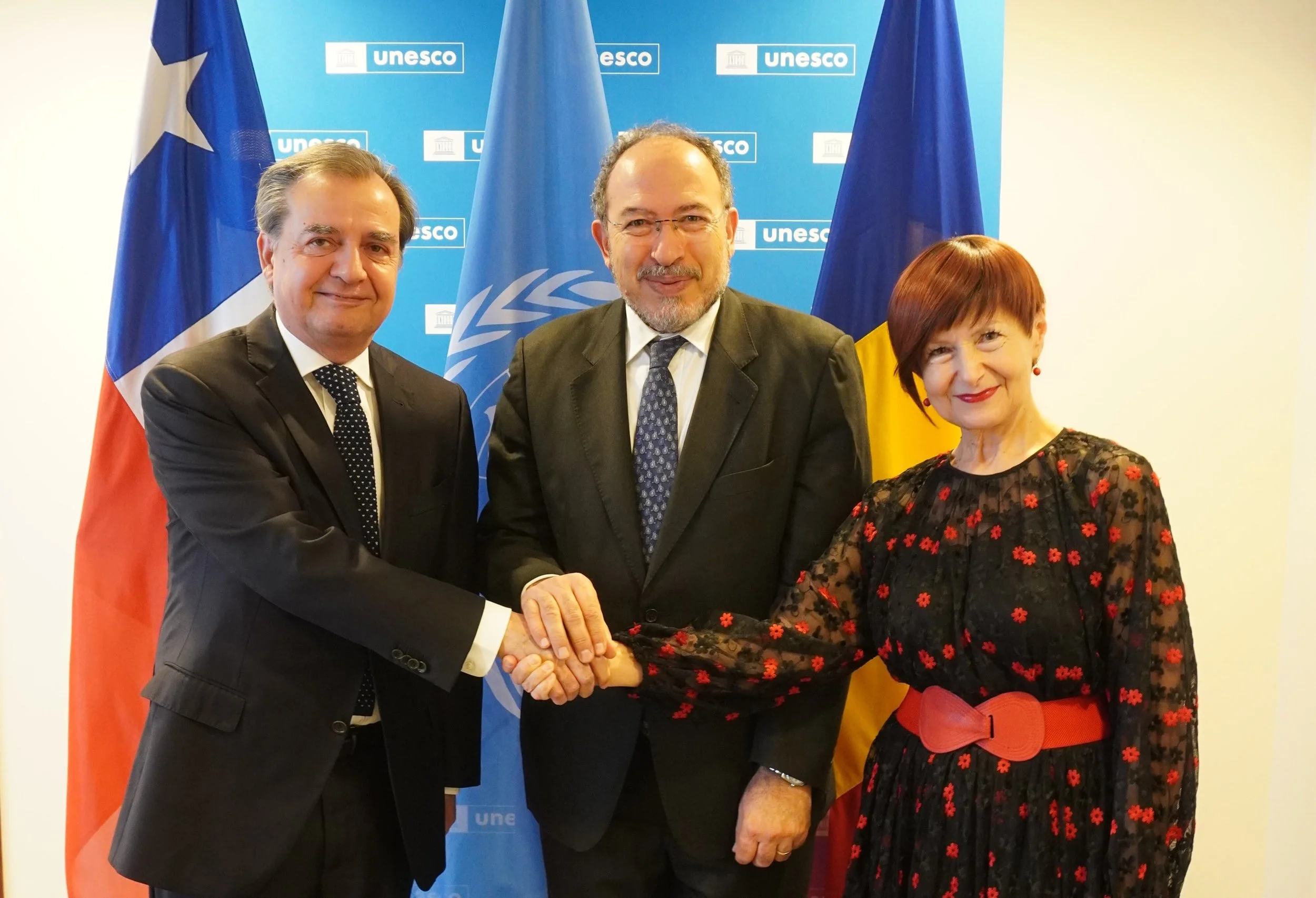
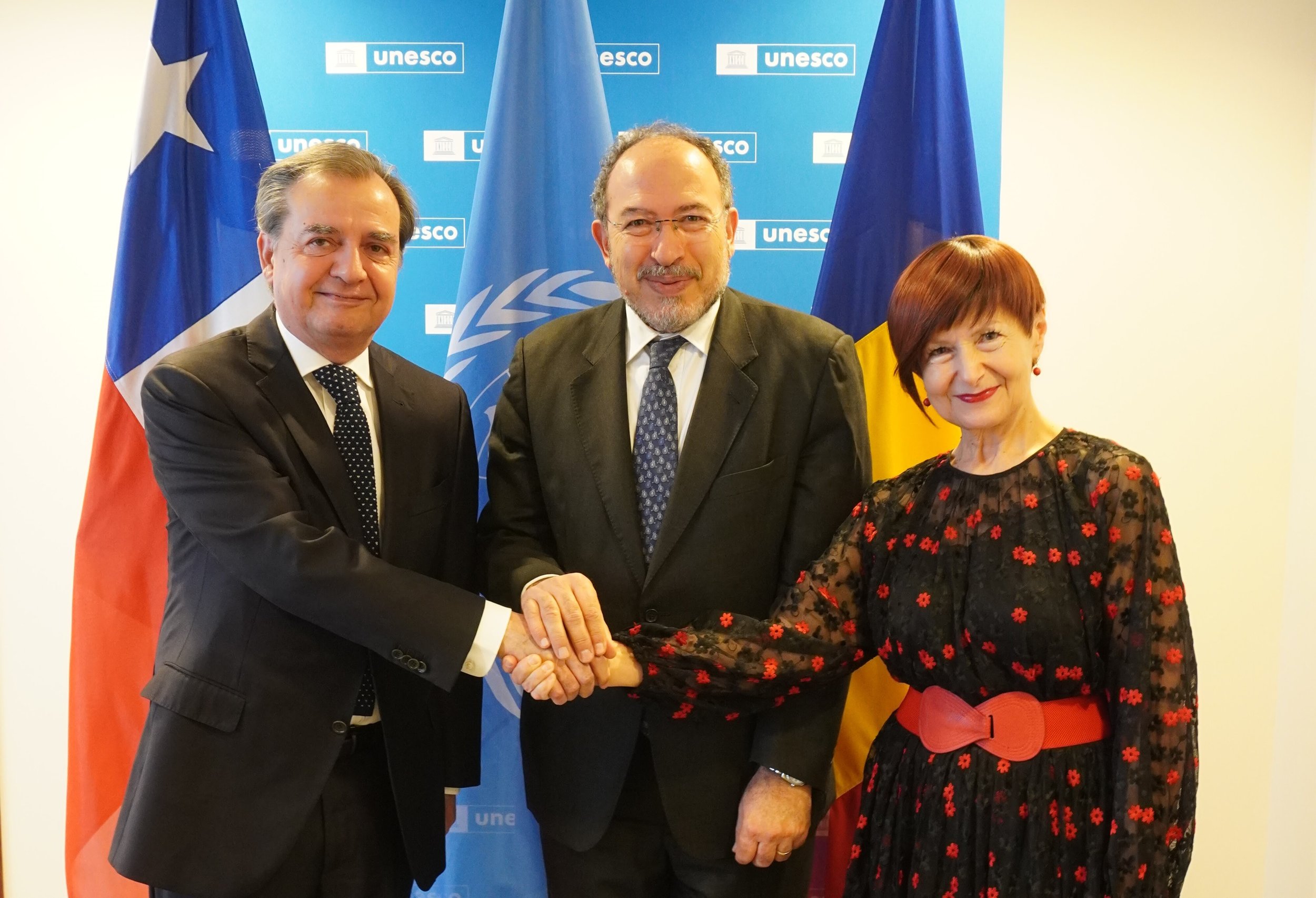
The ceremony was led by H.E. Ms. Simona Mirela Miculescu, in the presence of Ambassador Extraordinary and Plenipotentiary Permanent Delegate of Romania to UNESCO; H.E. Mr. Raúl Fernández Daza, Ambassador Extraordinary and Plenipotentiary to France and Permanent Delegate of the Republic of Chile to UNESCO, host country of the 2024 Conference; and Mr. Tawfik Jelassi, Assistant Director-General for Communication and Information Sector, UNESCO.

Registration is now open
You can now register to attend World Press Freedom Day Conference in Romania ! We are thrilled to invite you to join us for an exciting global celebration that promises to inspire and engage.
Don't miss this opportunity to be part of an incredible event dedicated to press freedom and the vital role of journalism in our societies.
Save your seat and register now. Stay tuned for more details coming your way soon! We look forward to seeing you there.
Call for Proposals for Side-Events
Are you interested in organizing a side-event in Bucharest? UNESCO is calling for proposals for side events on the occasion of World Press Freedom Day Global Conference in Bucharest. Side events will take place on the "Day of Action" on May 5.
The Conference will spread over three thematic tracks:
Challenging the Future of Journalism in the Era of AI
The Struggle to Seek and Receive Reliable and Accurate Information in the Era of AI
Old and Emerging Challenges and Opportunities for Freedom of Expression and Freedom of the Press
Each of these three thematic tracks will cover multiple sub-themes, offering a platform for participants to share experiences, success stories, good practices, and innovative ideas. UNESCO recommends organizing side events around the themes of these tracks. The organization of these side-events does not fall under UNESCO’s purview. UNESCO’s role only involves the selection of the side-events proposals.
Submit your application before January 30.
Please note that:
The selection of side events will depend on the availability of the rooms, the relevance, creativity, innovation, diversity and inclusion of the event proposed.
Side events are a direct responsibility for the organizers. Travel costs and accommodations have to be covered by side event organizers themselves.
Call for Nominations: UNESCO/Guillermo Cano World Press Freedom Prize 2025
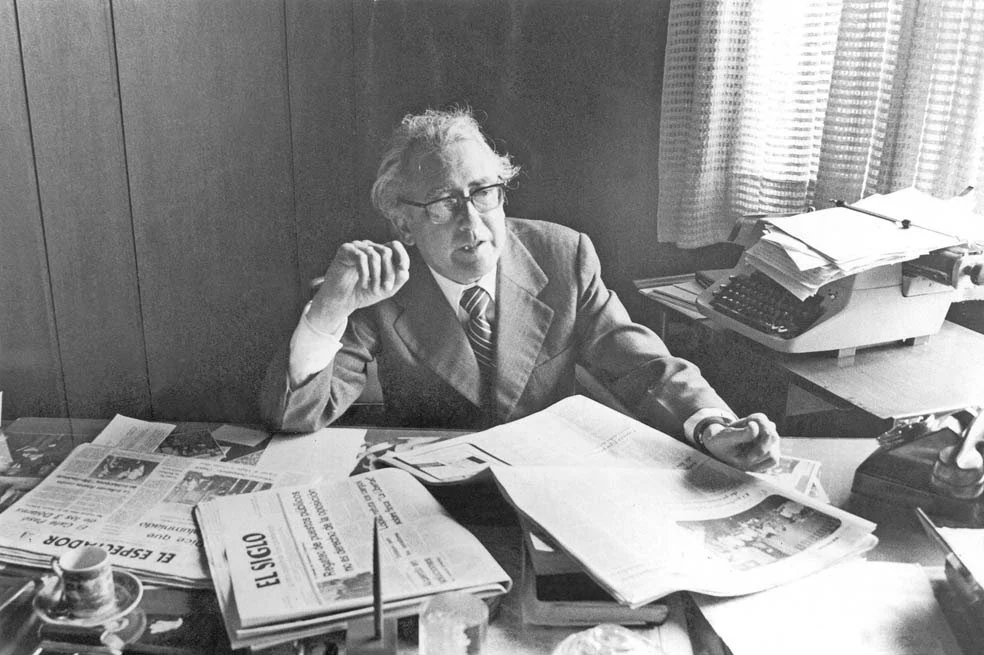
UNESCO is pleased to announce the call for nominations for the 2025 edition of the prestigious UNESCO/Guillermo Cano World Press Freedom Prize. Established in 1997, this annual award honors individuals, organizations, or institutions that have made remarkable contributions to defending and promoting press freedom globally, especially when achieved in the face of danger.
Member States, as well as international and regional professional and non-governmental organizations working in journalism and freedom of expression, are invited to nominate up to three candidates for the Prize.
To submit nominations, complete the form and send it before February 15, 2025.
The Prize is supported by the Guillermo Cano Isaza Foundation, the Namibia Media Trust, and Democracy and Media Foundation.
For more information, visit UNESCO's website.
For more information, contact
Guilherme Canela, Chief of Section,
Freedom of Expression and Safety of Journalists.
g.godoi@unesco.org
SHARE THIS STORY
Africa Regional Media Hub | Refugee Admissions for FY2025;
President Biden today signed the Presidential Determination on Refugee Admissions for Fiscal Year 2025, again setting the refugee admissions target at 125,000 for the upcoming fiscal year—as we have for each year of this Administration.
Africa Regional Media Hub | Refugee Admissions for FY2025; Global Coalition to Defeat ISIS; Counter Ransomware Initiative Summit; UNGA - Global Humanitarian Assistance; DRC; Mali; UNSC: International Peace and Security
The Presidential Determination on Refugee Admissions for Fiscal Year 2025
Secretary Antony J. Blinken at the Opening of the D-ISIS Ministerial
Joint Communiqué by Ministers of the Global Coalition to Defeat ISIS
Readout of Ambassador Linda Thomas-Greenfield’s Meeting with Malian Foreign Minister Abdoulaye Diop
Remarks at a UN Security Council Meeting on Maintenance of International Peace and Security
The Presidential Determination on Refugee Admissions for Fiscal Year 2025
Press Statement
Antony J. Blinken, Secretary of State
September 30, 2024
President Biden today signed the Presidential Determination on Refugee Admissions for Fiscal Year 2025, again setting the refugee admissions target at 125,000 for the upcoming fiscal year—as we have for each year of this Administration.
Refugee resettlement exemplifies the generosity that has always been at the core of the American spirit and reflects the critical role of the United States as a global leader in providing refuge to people fleeing persecution overseas. In Fiscal Year 2024, we resettled 100,000 refugees, the largest annual number in three decades. This is a testament to our successful work to rebuild the U.S. Refugee Admissions Program with help from partners around the world and thousands of Americans across the country who have stepped up to sponsor refugees through the Welcome Corps.
Refugee resettlement is orderly, subject to rigorous vetting, and benefits and enriches American communities. In cities and towns throughout America, refugees contribute to urban revitalization, add to the vibrancy of local communities, and drive America’s competitiveness and innovation on the global stage. Over a 15-year period, refugees contributed almost $124 billion to the U.S. economy. And resettlement offers the unique opportunity of a better life to some of the world’s most vulnerable people, at a time of historic global levels of displacement.
Building on the Administration’s efforts to strengthen refugee resettlement and the generous support from Americans across the country, the refugee admissions target of 125,000 ensures the United States will continue to be a global leader in providing safety and opportunity for those facing persecution around the world.
Secretary Antony J. Blinken at the Opening of the D-ISIS Ministerial
Remarks
Antony J. Blinken, Secretary of State
Loy Henderson Auditorium
Washington, D.C.
September 30, 2024
SECRETARY BLINKEN: Ambassador, thank you very much. Colleagues, good morning and welcome. For those of you who are in New York, I know you just wanted to keep the High-Level Week going, so we’re glad to be able to accommodate that here in Washington.
But in all seriousness, before we get going, let me just say a few quick words about the events of the past week. Hassan Nasrallah was a brutal terrorist, whose many victims included Americans, Israelis, civilians in Lebanon, civilians in Syria, and many others as well. During his leadership of Hizballah, the group terrorized people across the region and prevented Lebanon from fully moving forward as a country. Lebanon, the region, the world are safer without him.
The United States will continue to work with our partners in the region and around the world to advance a diplomatic resolution that provides real security to Israel, to Lebanon, and allows citizens on both sides of the border to return to their homes. We likewise will continue working to secure a ceasefire deal in Gaza that brings the hostages home, eases the suffering of people in Gaza, preserves the possibility of a more lasting, secure peace for the entire region.
Diplomacy remains the best and only path to achieving greater stability in the Middle East. The United States remains committed to urgently driving these efforts forward.
Now, turning to the subject of this ministerial, 10 years ago the United States mobilized a global coalition to confront ISIS – or Daesh – a nihilist terror group that over the course of a few months had occupied territory comprising a third of both Iraq and Syria, which it used to conduct a horrific campaign of violence and brutality.
Over the following decade, this coalition grew from 12 to 87 countries. And together, we’ve made significant progress. In 2017, coalition partners dismantled the last ISIS stronghold in Iraq. Two years later, we did the same in Syria – effectively ending ISIS’s efforts to establish a geographic caliphate. We imposed coordinated sanctions on ISIS-controlled assets to hinder the group’s recruitment and expansion. And in the last five years, we have collectively invested billions of dollars to help restore security and public infrastructure in some of the communities devastated by ISIS.
These were vital, hard-won achievements. But we know that our work is not done. As ISIS aims to reconstitute itself in the Middle East and makes territorial gains in Asia and Africa, our coalition must remain clear-eyed about the evolving challenge that we face. As we were reminded last week, this is a moment of enormous volatility in the Middle East. It’s more important than ever that we enhance our efforts to strengthen security and stability, including in Iraq and Syria, and prevent extremists like ISIS from exploiting conflict in the region for their own benefit.
To that end, let me briefly outline the three core areas where we will focus our conversations today.
First, the United States and Iraq will discuss – and with our other coalition partners as well – our plans for a phased transition of Operation Inherent Resolve. This military mission, established in response to Iraq’s 2014 request for support in its campaign against ISIS, will conclude in Iraq by September 2025. Over this period, the United States will work with Baghdad on bilateral security arrangements that will allow us to sustain and build our security partnership and cooperation.
In turn, our Iraqi partners will assume greater responsibility for ensuring that ISIS cannot retake territory within Iraq’s borders. We’re immensely grateful to Iraq and the Iraqi Security Forces for all of the sacrifices that they’ve made in this effort, and for their steadfast leadership in combating ISIS.
As we shift into this new phase of our collaboration, we hope to continue working with our coalition partners – including the NATO Mission in Iraq, which intends to continue its own security relationship with Iraq.
The United States will also maintain our counterterrorism efforts from outside of Iraq – including in Syria – for as long as needed. Just this month, U.S. special forces successfully targeted multiple senior ISIS leaders in Syria, demonstrating our own resolve to degrade and dismantle the group and its affiliates.
Second, our coalition will discuss today the repatriation of foreign fighters and their families – which remains the only durable solution to the humanitarian and security crisis in northeast Syria.
More than 43,000 displaced persons from over 60 countries reside in northeast Syria. Most are children who have never known another home.
Meanwhile, roughly 9,000 fighters remain in detention facilities across northeast Syria – this is the single largest concentration in the world. Even from confinement, these extremists are attempting to grow their ranks.
Increasingly, coalition partners are stepping up to meet this challenge. Since 2021, the Iraqi Government has repatriated more than 10,400 citizens. In the last year, the Kyrgyz Republic repatriated more than 432 of its nationals. Partners like Kuwait have also helped facilitate repatriations, permitting planes departing from Syria to refuel at their airbases.
Now, we know repatriation remains a complicated, difficult issue. But if we fail to act, security conditions on the ground will only get worse. We could see fighters once again take up arms and threaten communities that we fought so hard to protect and support. This is not the time to let up. It’s a moment to continue our efforts.
We have to urgently accelerate our work to repatriate, reintegrate, and – where appropriate – prosecute detained and displaced persons from northeast Syria. The United States stands ready to provide support – logistically, diplomatically – to advance this effort.
Finally, we will strengthen our cooperation against ISIS branches outside of the Middle East.
In sub-Saharan Africa, ISIS affiliates have gained ground, compounding the threat already present from existing militant groups.
To tackle this growing threat, the United States, Italy, Morocco formed the coalition’s Africa Focus Group in 2021. Last year in Riyadh, we welcomed Saudi Arabia as a co-lead of this effort. Already, we’ve helped African partners better align and coordinate to support civilian-led counterterrorism operations.
ISIS-Khorasan — based out of Central and South Asia – also poses a distinctive challenge. While waging a low-level insurgency in Central and South Asia, this group uses online recruitment to mount attacks around the world, including earlier this year in Iran and Russia.
Through the coalition’s Communications Working Group – led by the United States, the United Arab Emirates, and the United Kingdom – we’re working with journalists, civil society groups, and activists to push back against the hollow promises that ISIS propaganda seeks to promote.
In the coming year, we have to continue to drive these key efforts forward.
In that spirit, this morning, I can announce that the United States will provide $148 million to enhance civilian-led border security and counterterrorism operations across sub-Saharan Africa and Central Asia.
Separately, we’ll contribute $168 million to the coalition’s annual Stabilization Pledge Drive for Iraq and Syria. This assistance will enable critical demining operations, restore essential services like water and electricity, invest in education, and promote economic opportunity.
This commitment follows the United States’ announcement last week, in New York, of $535 million in additional humanitarian assistance to the Syrian people, as well as displaced communities residing in the country.
A decade into this fight, we can take pride in all that we’ve accomplished. But as the challenge evolves, so must this coalition.
And as I said, this is not the time to let up. It’s a moment to recommit – to recommit to our common mission, to decisively defeat ISIS, and ensure greater security and stability for all of our people.
I thank everyone for being here today, but more important I thank you for what you’re doing every day to keep this coalition together, moving forward in the mission that we share.
Thank you very much. Thank you. (Applause.)
Joint Communiqué by Ministers of the Global Coalition to Defeat ISIS
Media Note
Office of the Spokesperson
September 30, 2024
Ten years after the formation of the Global Coalition to Defeat Daesh/ISIS, Deputy Prime Ministers, Foreign Ministers, and Senior Officials convened in Washington, D.C, today at the invitation of Secretary of State Antony J. Blinken. The Global Coalition to Defeat Daesh/ISIS is the largest international coalition in history and remains committed to defeating Daesh/ISIS anywhere it operates.
In 2014, the United States led an international response to the Iraqi government’s request for assistance against Daesh/ISIS, resulting in the formation of the Global Coalition. In 2024, five years after the Global Coalition’s defeat of Daesh/ISIS in Iraq and Syria, Coalition members honor the sacrifices made by those who fought and died in Iraq and Syria to liberate territories from Daesh/ISIS and commend Iraq for its leadership in the Coalition.
Global Coalition Ministers commit to supporting the Government of Iraq’s efforts to safeguard the security, peace, and development of the Iraqi people. The planned transition of the Coalition’s military mission in Iraq to bilateral security partnerships reflects a reduction of the Daesh/ISIS threat. Ministers commend Iraq’s continuing cooperation in countering Daesh/ISIS in the region, and its ongoing leadership in broader Coalition lines of effort, including stabilization, counter financing, disruption of foreign terrorist travel, and prevention of recruitment to ensure there is no Daesh/ISIS resurgence.
Ministers endorse the priorities of the Coalition Stabilization Working Group, with a goal of raising and implementing $394 million for areas liberated from Daesh/ISIS in Iraq and Syria – toward which members have already announced commitments totaling more than $200 million. The Ministers emphasize the importance of durable solutions for remaining populations in northeast Syria, including bringing to justice detained terrorists, ensuring accountability for crimes including gender-based violence, ensuring detainee populations are housed securely and humanely, and improving conditions for the populations residing in al-Hol and Roj displaced persons camps. Ministers urge support to reconciliation and reintegration efforts in Iraq and Syria and to foster conditions conducive to a Syria-wide political resolution to the conflict consistent with UN Security Council Resolution 2254. Ministers commend Iraq’s progress in repatriating over 10,000 of its nationals from northeast Syria and Iraqi efforts to apply accountability where appropriate and in assisting the displaced to reintegrate into their communities of origin.
Ministers commit to counter the continued spread of Daesh/ISIS globally, including across parts of Africa and Central and Southeast Asia. Ministers reaffirm their commitment to mobilize members and legitimate partners and pursue whole-of-government approaches to disrupt Daesh/ISIS global networks by sharing information via trusted and secured systems, to deny their freedom of movement, and to restrict their access to financing and other resources in line with UN Security Council Resolution 2178, 2396, and 2462. Ministers underscore the need to enhance comprehensive counterterrorism efforts, ensure that our policies and practices are appropriately human-rights-based, block terrorist access to resources and financing, disrupt cross-border movements of Daesh/ISIS, and protect and assist victims who suffered under Daesh/ISIS misrule.
Ministers condemn ISIS-K’s indiscriminate attacks in Asia and Europe and commit to deterring and disrupting future attacks. To this end, Ministers endorse the Coalition-aligned ISKP Diplomatic Grouping, highlighting the need to improve coordination and to partner with regional counterterrorism and strategic communication initiatives. Ministers also commend the work of the Global Coalition’s Africa Focus Group in promoting an active role of African partners and highlighted the imperative to counter malign and non-state armed actors whose actions undercut counterterrorism cooperation and destabilize regions in which they operate. Coalition Ministers welcome the participation of observers from Central Asian states and Africa at the Ministerial and affirm their intent to strengthen counterterrorism cooperation with them.
Ministers applaud the significant work of Global Coalition members in countering Daesh/ISIS propaganda in the ever evolving and challenging information environment, including successful campaigns to expose and discredit the deceptions propagated by Daesh/ISIS. Ministers note ongoing initiatives to prevent terrorists from dominating public narratives across traditional media, social media, and encrypted messaging applications, and underscore the importance of artificial intelligence to combat terrorist propaganda and recruitment. Ministers emphasize that terrorism, in any form or manifestation, should not be associated with any faith, religion, or ethnic group.
Welcoming the Maldives as the newest member of the Global Coalition, bringing the total number of members to 87, Ministers especially recognize the participation of Uzbekistan, Tajikistan, Senegal, Pakistan, Kyrgyz Republic, and Kazakhstan as observers and committed the Coalition to increase engagement in these regions to enhance counterterrorism capacities and coordination. Ministers support the Global Coalition adjusting its processes, structures, and instruments to ensure it continues to be fit for purpose to defeat the current Daesh/ISIS threat and to deter and defeat future threats.
On the 10th anniversary of its establishment, with continued affirmation that individual members bear the primary responsibility for the security of their homelands, the members of the Global Coalition recommit to mobilizing and coordinating efforts to defeat Daesh/ISIS in accordance with international law, including the Charter of the United Nations, applicable international human rights law, and all relevant UN Security Council resolutions. Members of the Global Coalition will stand together until Daesh/ISIS is defeated.
Secretary Blinken to Deliver Remarks at the Fourth International Counter Ransomware Initiative Summit
Notice to the Press
Office of the Spokesperson
September 30, 2024
Secretary of State Antony J. Blinken will deliver remarks at the Fourth International Counter Ransomware Initiative (CRI) Summit on Tuesday, October 1, at 12:45 p.m. EDT at the Foreign Service Institute in Arlington, Virginia.
CRI is the largest international cyber partnership, consisting of 68 members committed to building collective resilience to ransomware and disrupting the ransomware ecosystem. Members cooperate across all elements of the ransomware threat, including by undercutting the viability of ransomware and pursuing the actors responsible, countering illicit finance that underpins the ransomware ecosystem, and working with the private sector to defend against ransomware attacks. CRI is a key pillar of the United States’ commitment to working closely with partners across the globe to counter ransomware and other cyber criminal actors, as detailed in the United States International Cyberspace and Digital Policy Strategy launched by Secretary Blinken in May.
The Secretary’s remarks will be replayed on the Department homepage and the Department YouTube channel. Press coverage of the remarks will be open to pre-registered media. Media who would like to cover in person must RSVP by emailing CDP-Press@state.gov by 8:00 p.m. today, September 30, 2024.
United States Announces Nearly $2.1 Billion in Humanitarian Assistance at the 79th UN General Assembly
Fact Sheet
Office of the Spokesperson
September 30, 2024
At the 79th UN General Assembly, the United States announced nearly $2.1 billion in humanitarian assistance to address the unprecedented level of humanitarian needs globally. This funding supports critical and life-saving humanitarian assistance to those impacted by crises, including displaced persons and the receptive host communities supporting displaced persons in their time of need. This generous life-saving assistance from the American people includes more than $873 million through the Department of State’s Bureau of Population, Refugees, and Migration and more than $1.2 billion through the United States Agency for International Development’s Bureau for Humanitarian Assistance. We call on other international donors to also make every effort to increase humanitarian funding to respond to the extreme level of need impacting people globally.
Humanitarian assistance announced at the 79th UN General Assembly includes:
Nearly $424 million for the Sudan regional response: This includes assistance in Sudan and neighboring countries to respond to needs stemming from the crisis that began in April 2023 and has become one of the most severe global challenges. It will provide food, health, nutrition, protection, and other critical assistance to people across Sudan and neighboring countries who have been devastated by the ongoing conflict.
Nearly $336 million to support Palestinians in Gaza and the West Bank : This assistance provides life-saving humanitarian aid, including expanded support in emergency health care, food, nutrition, psychosocial services, and increased access to safe drinking water, hygiene products, and sanitation services for Palestinian civilians in Gaza and the West Bank affected by the ongoing conflict. It also supports logistics and emergency shelter assistance to displaced Gazans to help them prepare for the upcoming winter months.
Nearly $535 million for the Syria response: This assistance will help meet the needs of the most vulnerable refugees, internally displaced persons, and host communities in Syria and neighboring countries. This includes emergency shelter; food assistance; access to health care and education; water, sanitation, and hygiene supplies; support for livelihoods; and protection for those in situations of vulnerability.
Nearly $199 million for Rohingya refugees and their host communities: This assistance supports the needs of Rohingya refugees and communities hosting them in Bangladesh and the region. It will provide protection, shelter, and food for those forced to flee violence and persecution. It will also support disaster preparedness and protection for refugees and host communities, bolster access to education and skills training, and prepare refugees for their potential return home when conditions allow.
$597 million for migration efforts in the Western Hemisphere: This assistance responds to the needs of refugees, vulnerable migrants, as well as other displaced and stateless persons across the region, including life-saving assistance such as emergency food assistance, shelter, access to emergency health care, improvements to local infrastructure for potable water and sanitation facilities, access to protection services, and support to local schools. It also supports the Safe Mobility Initiative and advances the goals of the Los Angeles Declaration on Migration and Protection to foster responsibility sharing, stability, and assistance for affected communities.
The United States is proud to be the largest single donor of humanitarian assistance globally, providing more than $54 billion in humanitarian assistance since 2021. The United States is leading efforts to respond to global humanitarian needs, working with partners to transform humanitarian response for the 21st century, and making humanitarian assistance more resilient to climate impacts.
For further information, please follow @StatePRM and @USAIDSavesLives.
Remarks by Ambassador Linda Thomas-Greenfield at a UN Security Council Briefing on the Democratic Republic of the Congo
Ambassador Linda Thomas-Greenfield
U.S. Representative to the United Nations
New York, New York
September 30, 2024
AS DELIVERED
Thank you, Mr. President. Before I give my remarks, I just want to share that I was just informed that Dikembe Mutombo, a very renowned humanitarian, former NBA star, Congolese-American, who worked to contribute to the well being of the Congolese people, just died at the age of [58]. So, may his soul rest in peace.
Thank you SRSG Keita for your briefing today, and for the dedicated efforts of the entire UN and MONUSCO teams in the Democratic Republic of Congo. I want to thank our civil society briefer, Ms. Nzale-Kove, for your briefing. And I want to thank Sierra Leone for your briefing.
The United States offers its full support to the ongoing ceasefire in eastern DRC, and to Angola’s leadership of both the Luanda process and the Ad Hoc Verification Mechanism.
We call on all parties to honor the ceasefire, and direct their aligned armed groups to do the same. The parties’ willingness to come to the table is a positive first step, but there is still far more work to be done. They must also deliver on their commitments and bring peace to the people of this region.
Rwanda must immediately withdraw its more than 4,000 troops from DRC territory and cease its support for M23. M23 must immediately withdraw to its November 2023 positions. And the DRC must take immediate actions against FDLR and cease its support to the group.
In addition, the United States appreciates the strong collaboration between the DRC government and MONUSCO on both the mission’s drawdown and its ongoing, essential activities including to reinforce the current ceasefire and protect displaced civilians.
We also welcome the DRC’s efforts at the local and national levels to consolidate MONUSCO’s drawdown from South Kivu.
That being said, MONUSCO’s departure from South Kivu has left critical gaps that cannot go unfilled.
For example, five of six child protection advisors who monitored and reported on violations against children have left the province.
Their absence underscores the urgency of effectively transitioning MONUSCO’s wide ranging tasks to entities, particularly the DRC government, that are properly mandated and well-resourced.
We encourage MONUSCO, the UN, and the DRC government to ensure these capacities are urgently filled. And we reiterate our position that this Council should not authorize a further drawdown of MONUSCO without a clear plan to mitigate against these gaps.
To that end, we appreciate the frank efforts by MONUSCO and DRC authorities to reflect on the disengagement process, and ensure a sequenced, orderly, and coordinated approach. Because ultimately, sustainable transitions take place.
We support the technical discussions already underway between MONUSCO, and the DRC government, and international partners to take advantage of significant lead time in the mission’s departure from North Kivu and Ituri. Especially because significant challenges remain in these provinces.
In North Kivu, M23 continues to obstruct the movements of MONUSCO and humanitarian actors, while threatening violence against UN peacekeepers and positions. Demands that MONUSCO vacate its positions so that M23 can consolidate or further expand its territorial control are wholly unacceptable. We offer our firmest support to the MONUSCO personnel stationed in these areas, who have demonstrated great professionalism and resolve.
In Ituri, we remain deeply concerned by the increasingly lethal operations perpetrated against civilians by the armed group CODECO and the terrorist organization ISIS-DRC, or ADF.
MONUSCO’s role in protecting civilians, including those in vulnerable internally displaced person camps, is absolutely essential, especially in areas with scant government security presence.
Finally, the United States urges improved communications between MONUSCO and SAMIDRC to ensure the collaboration as authorized under UN Security Council Resolution 2746 does not inflame regional tensions at a fragile moment.
We look forward to a detailed Secretary-General report on the implementation of that resolution.
In closing, we strongly urge the parties to take advantage of this unique opportunity to deliver peace to the region by fully committing to diplomatic processes and taking courageous steps to end this conflict.
For the sake of the people of the Great Lakes region, we must not let this chance escape us.
Thank you, Mr. President.
###
Readout of Ambassador Linda Thomas-Greenfield’s Meeting with Malian Foreign Minister Abdoulaye Diop
United States Mission to the United Nations
Office of Press and Public Diplomacy
FOR IMMEDIATE RELEASE
September 30, 2024
The below is attributable to U.S. Mission to the United Nations Acting Spokesperson Lauren French:
Ambassador Linda Thomas-Greenfield, the U.S. Representative to the United Nations, met today with Malian Foreign Minister Abdoulaye Diop. Ambassador Thomas-Greenfield condemned the al-Qaeda-linked terrorist attack in Mali on September 17, and offered condolences to the families and loved ones of the killed and injured. The Ambassador affirmed the United States’ commitment to engaging with Mali and the broader region to combat terrorism, as well as to continue longstanding U.S. support to the people of Mali. Ambassador Thomas-Greenfield urged the transitional government to schedule and hold elections to deliver on its pledge to the Malian people.
###
Remarks at a UN Security Council Meeting on Maintenance of International Peace and Security
Ambassador Robert Wood
Alternative Representative for Special Political Affairs
New York, New York
September 30, 2024
Thank you, Mr. President. I would like to thank the directors of UNHCR and IOM for their briefings. We appreciate the role of IOM and the High Commissioner for Refugees to help ensure migrants and refugees are treated in accordance with international law.
The United States acknowledges the decision of the penholders of resolution 2240 not to seek renewal of its authorizations for Member States to inspect vessels on the high seas off Libya’s coast suspected of being used for migrant smuggling and human trafficking from that country, and to seize those vessels confirmed as being used for those purposes.
We do, however, remain deeply concerned about migrant smuggling and human trafficking.
Since 2015, Operation Irini has been a key component of international efforts to alleviate the human tragedy of migrant deaths on the high seas off Libya’s coast and in the Mediterranean.
The European Union demonstrated through Operation Irini its steadfast commitment to rescuing refugees, migrants, and victims of trafficking.
The reality is that irregular migration is a challenge that is bigger than just Operation Irini could address. We all share responsibility for managing migration on our respective borders and a commitment to promoting safe, orderly, humane, and regular migration management.
We believe that prioritizing both access to international protection for those who need it, and humane border management measures, are essential to addressing forced displacement and the challenges of irregular migration.
To that end, the United States welcomed UNSMIL’s statements about the Trans-Mediterranean Migration Forum in Tripoli this past July as an important opportunity to advance an approach to migration governance that respects human rights.
The international community can do more to help vulnerable migrants by supporting the Secretary-General’s call for a holistic approach to address the root causes of irregular migration. We must recommit to ending the conflicts and reducing the extreme poverty that are driving many individuals to leave their homes in the first place.
The United States stands ready to work constructively with others in this regard. Thank you.
###
The U.S. Department of State French Language Spokesperson Johann Schmonsees is based in Johannesburg, South Africa. Please direct interview requests or questions to AFMediaHub@state.gov.
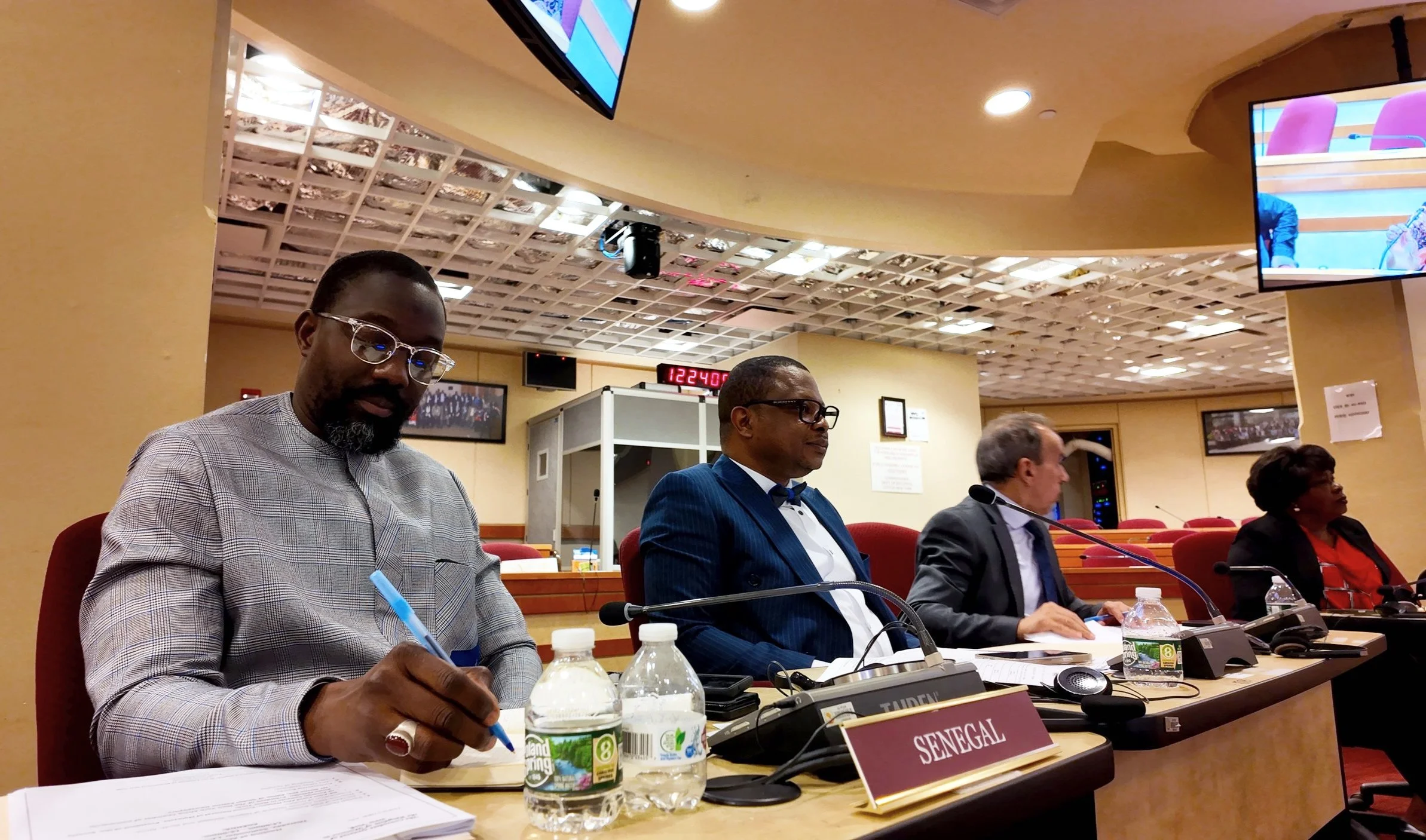
African Consuls General Meet in New York
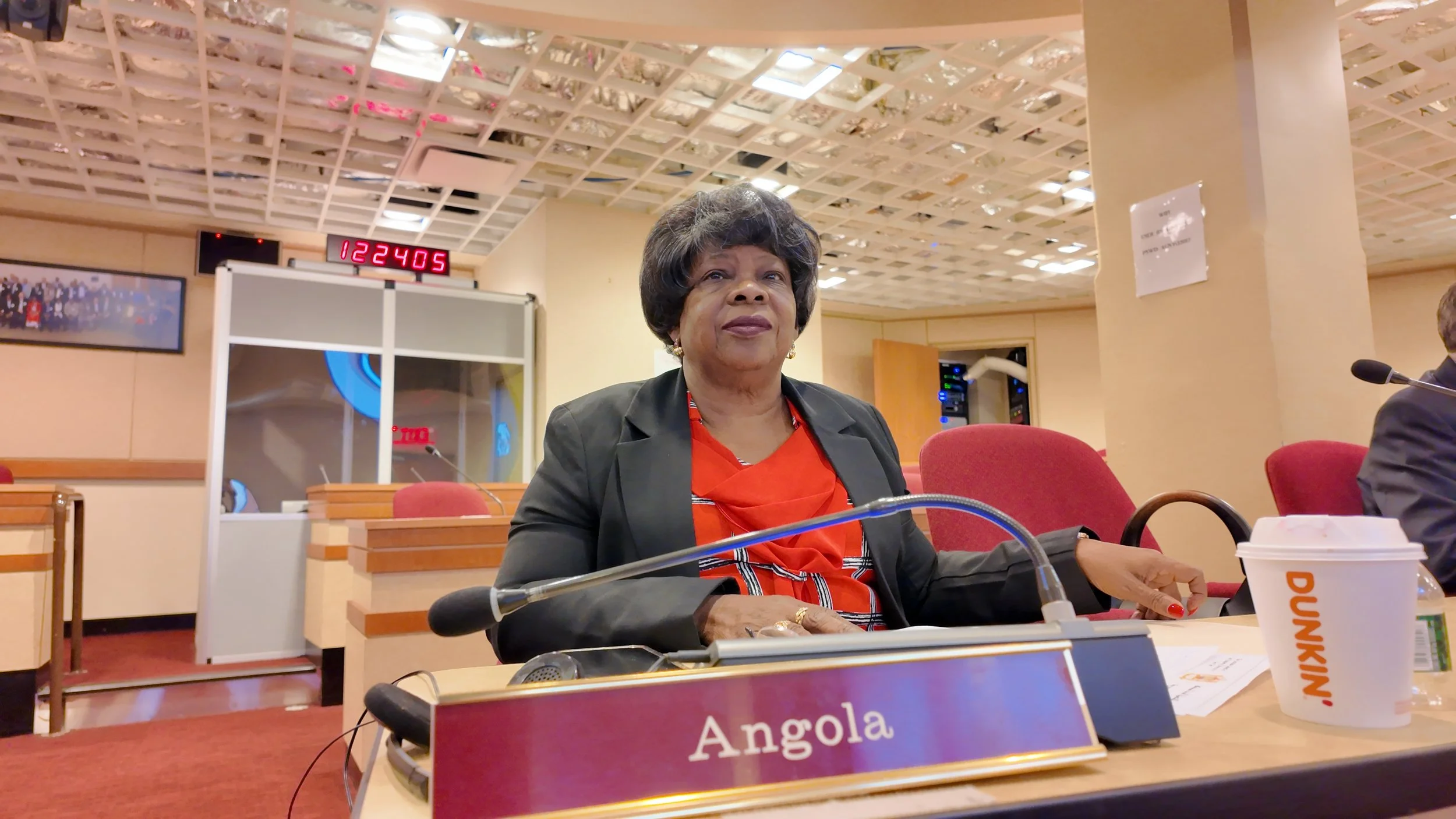
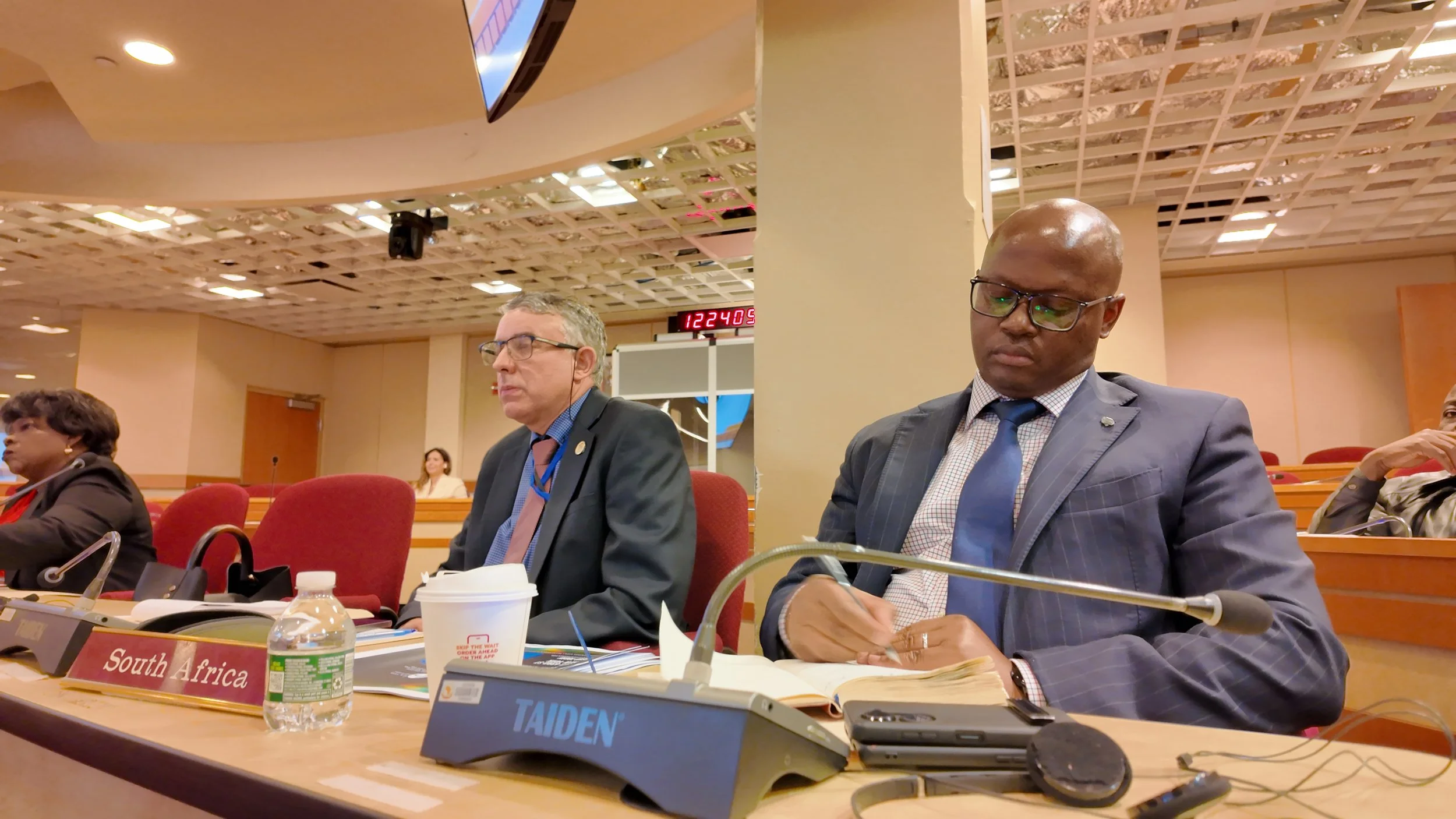
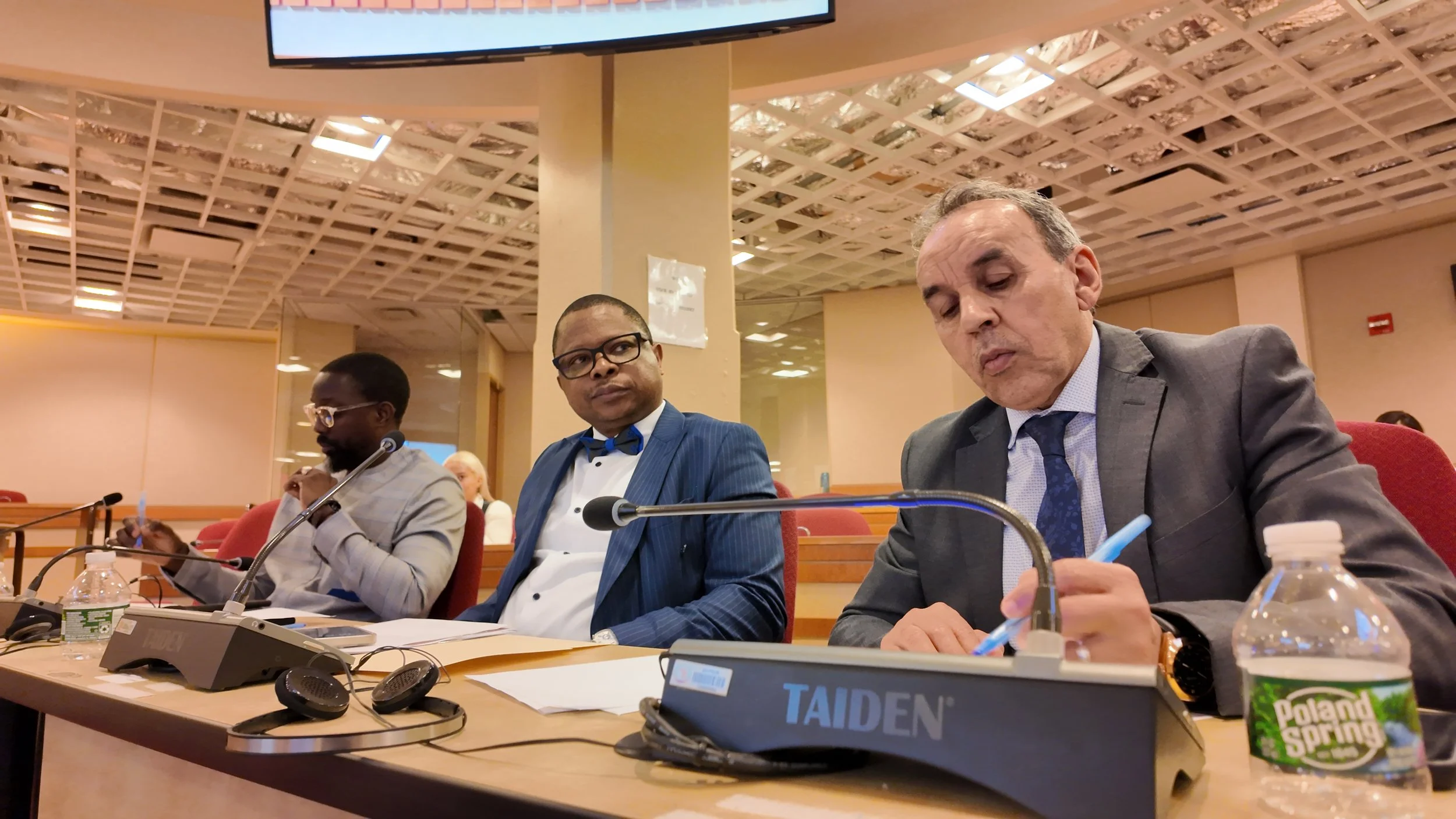
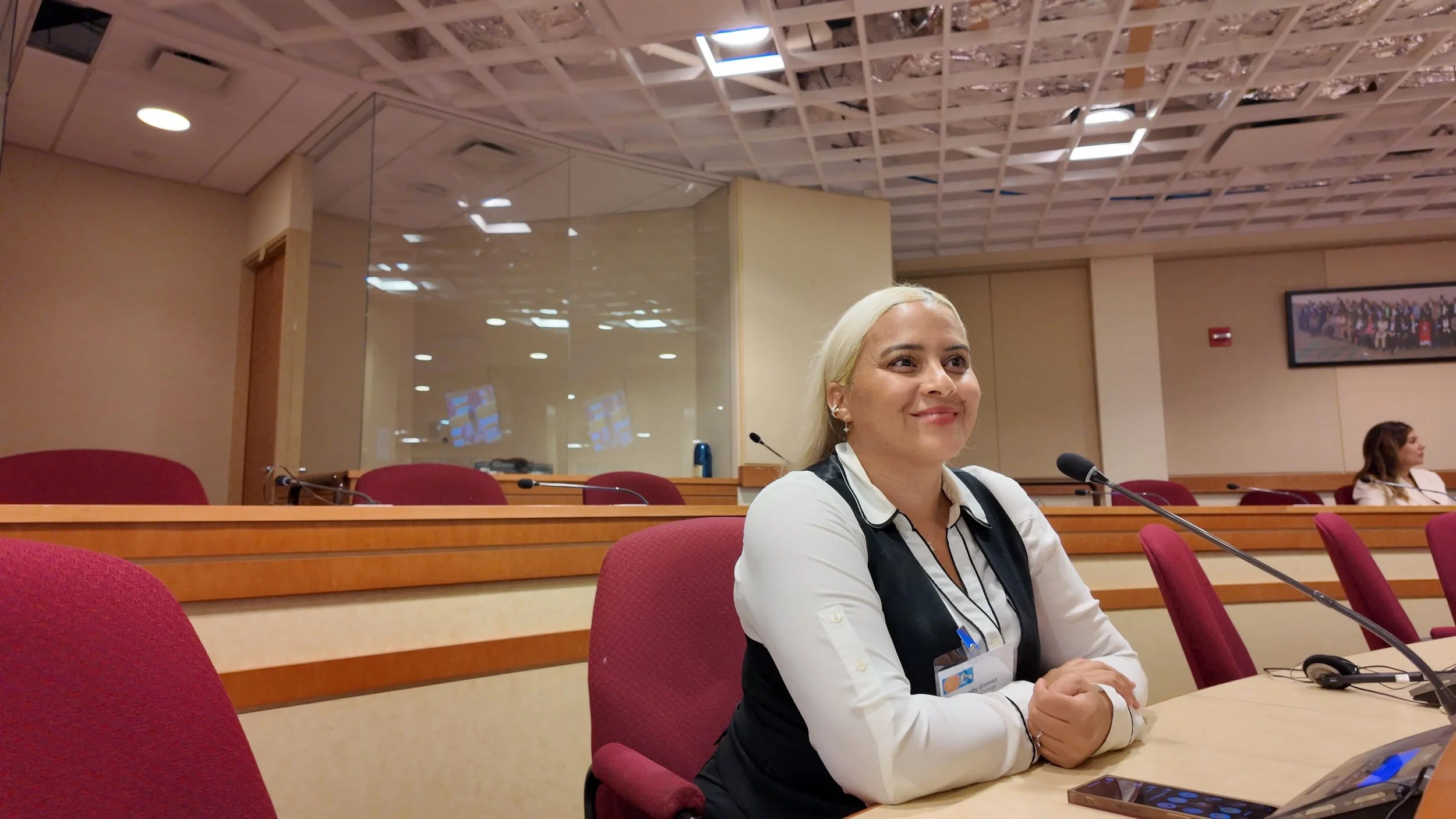
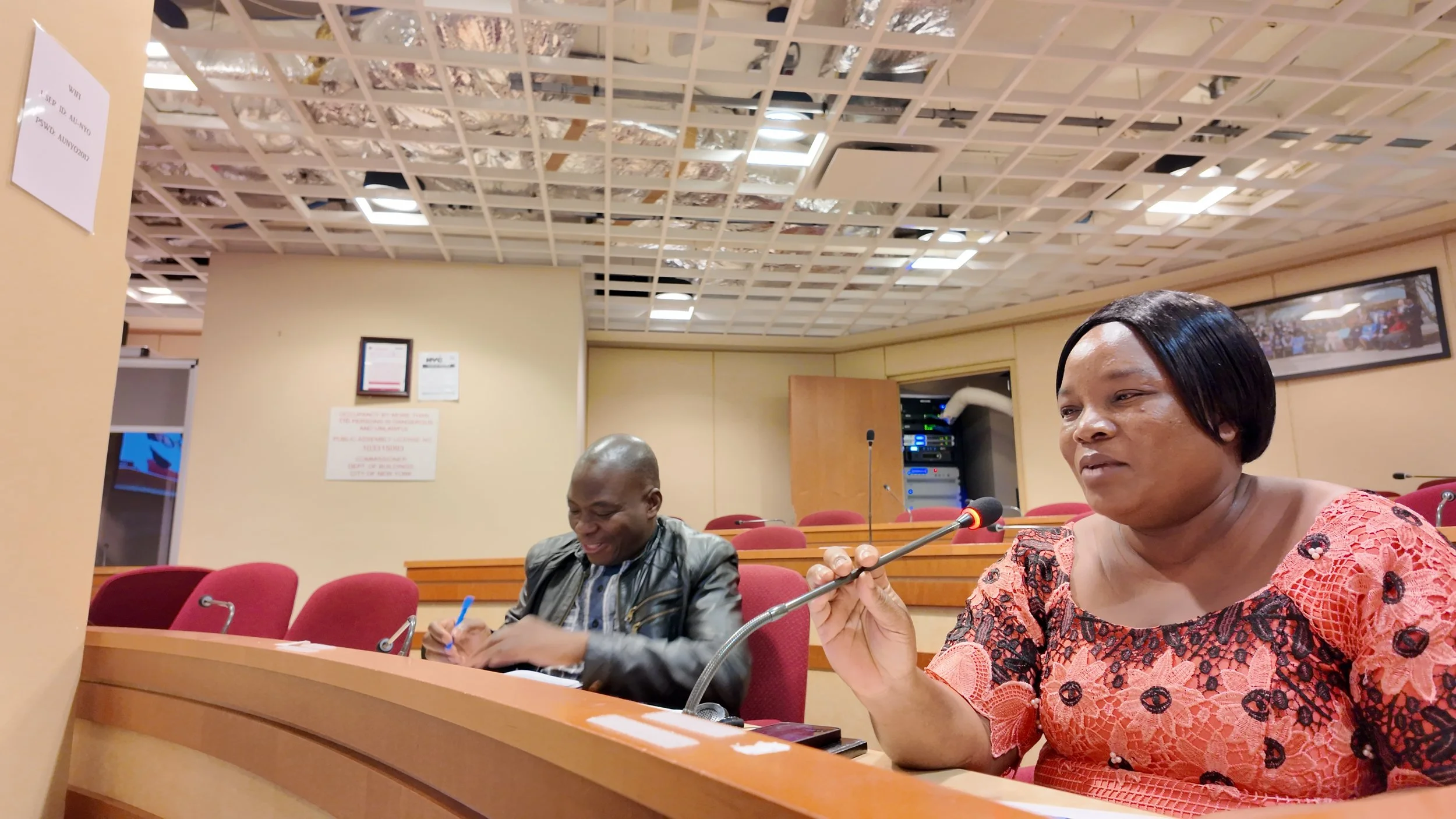
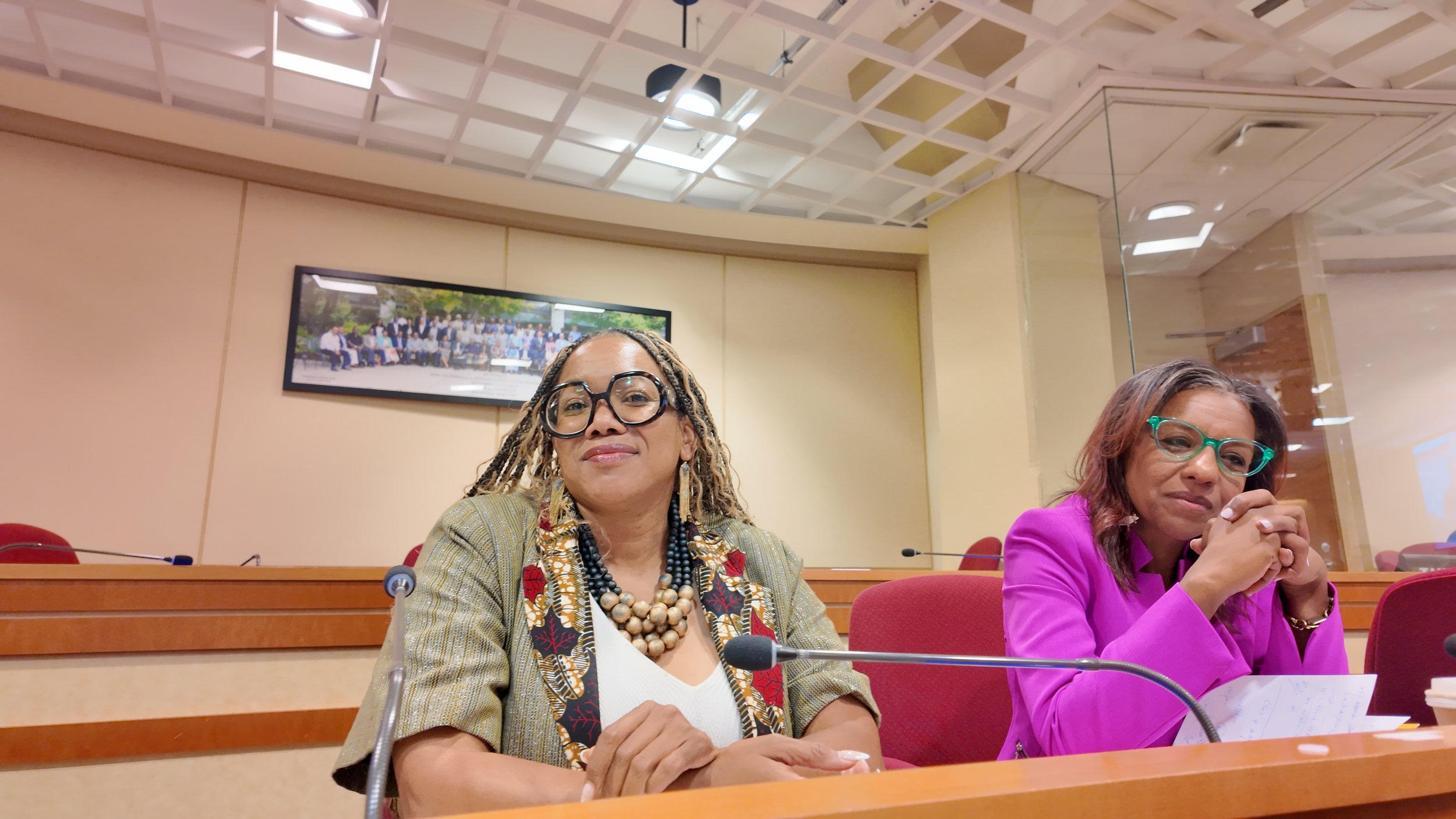
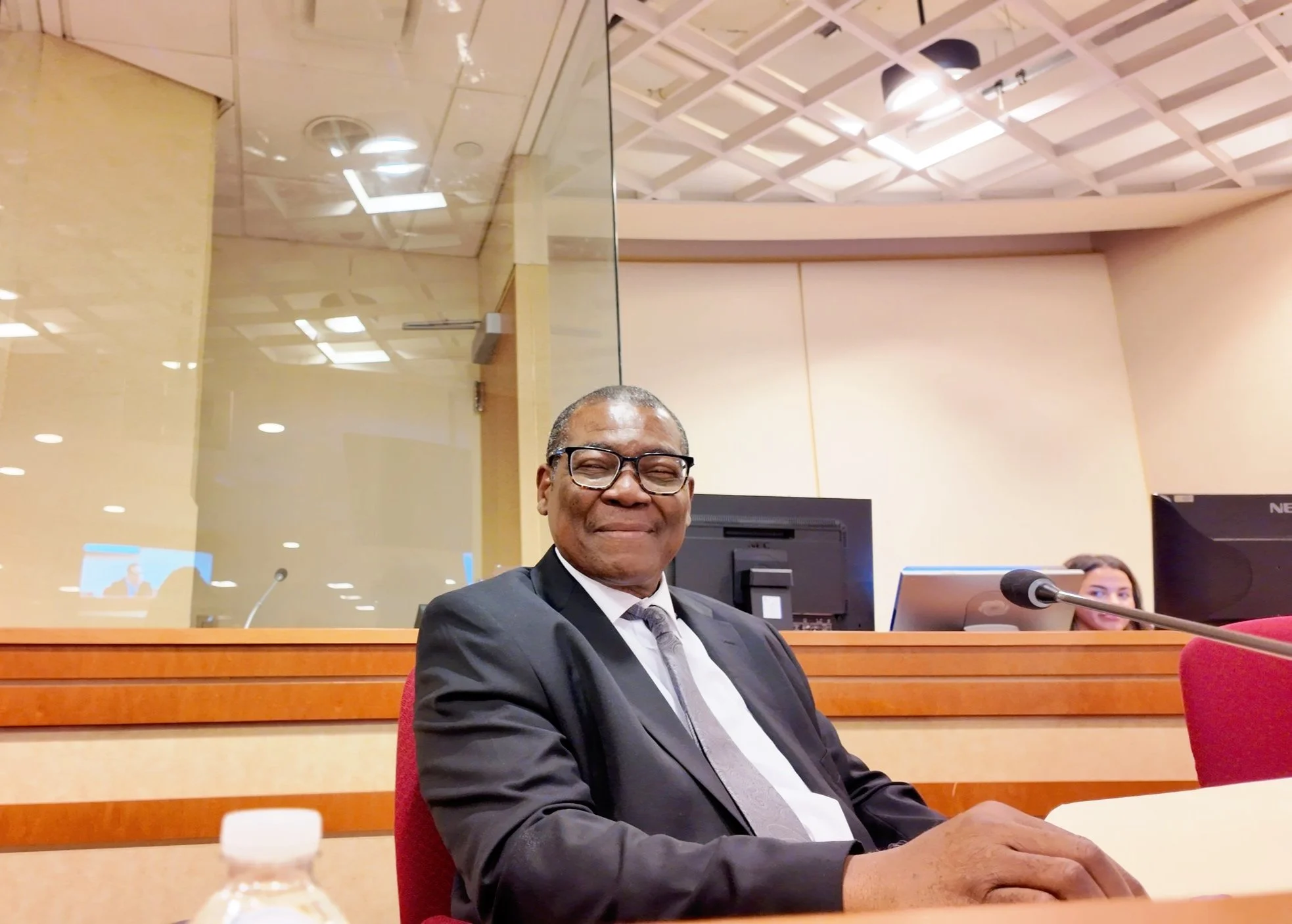
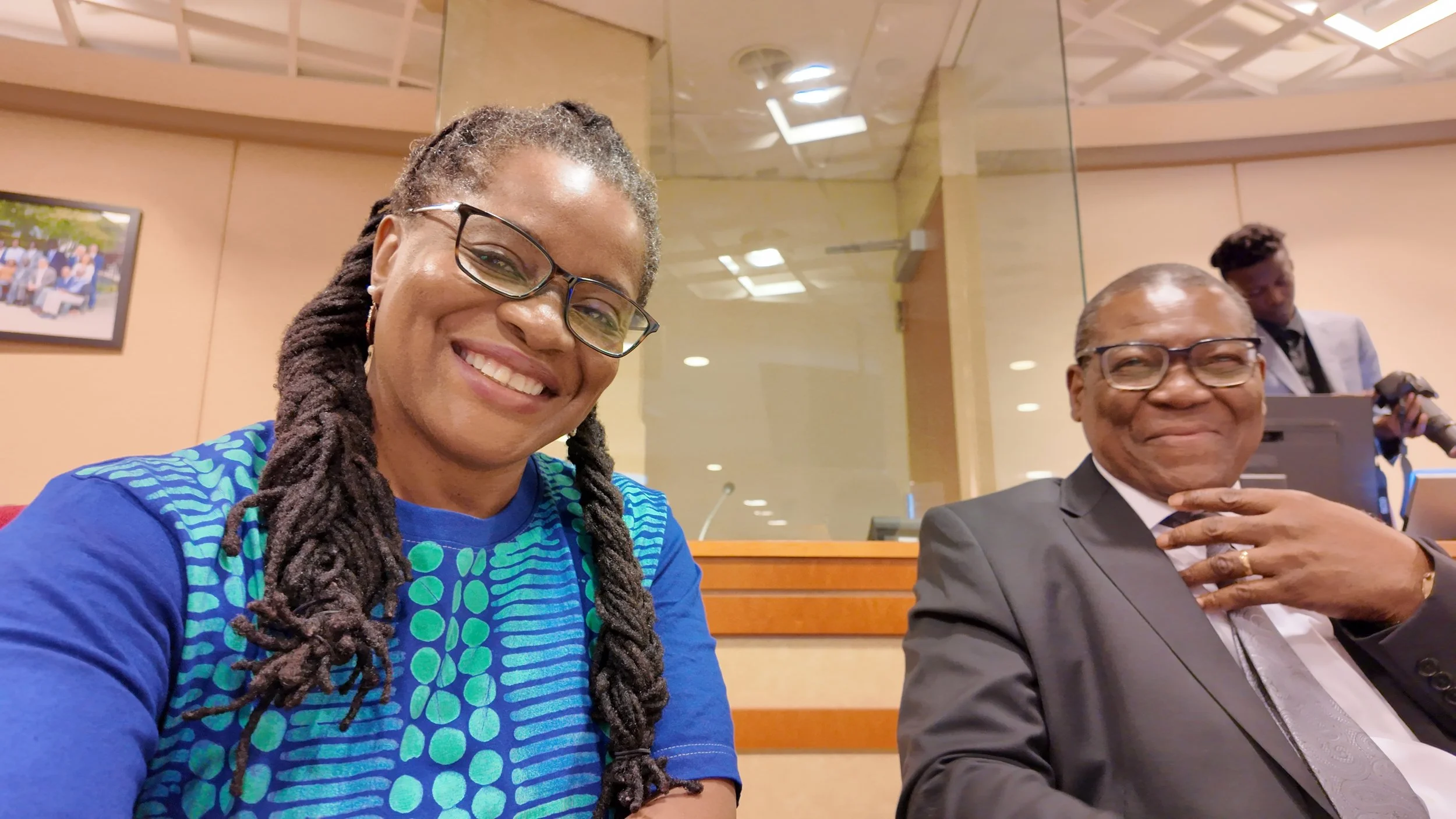
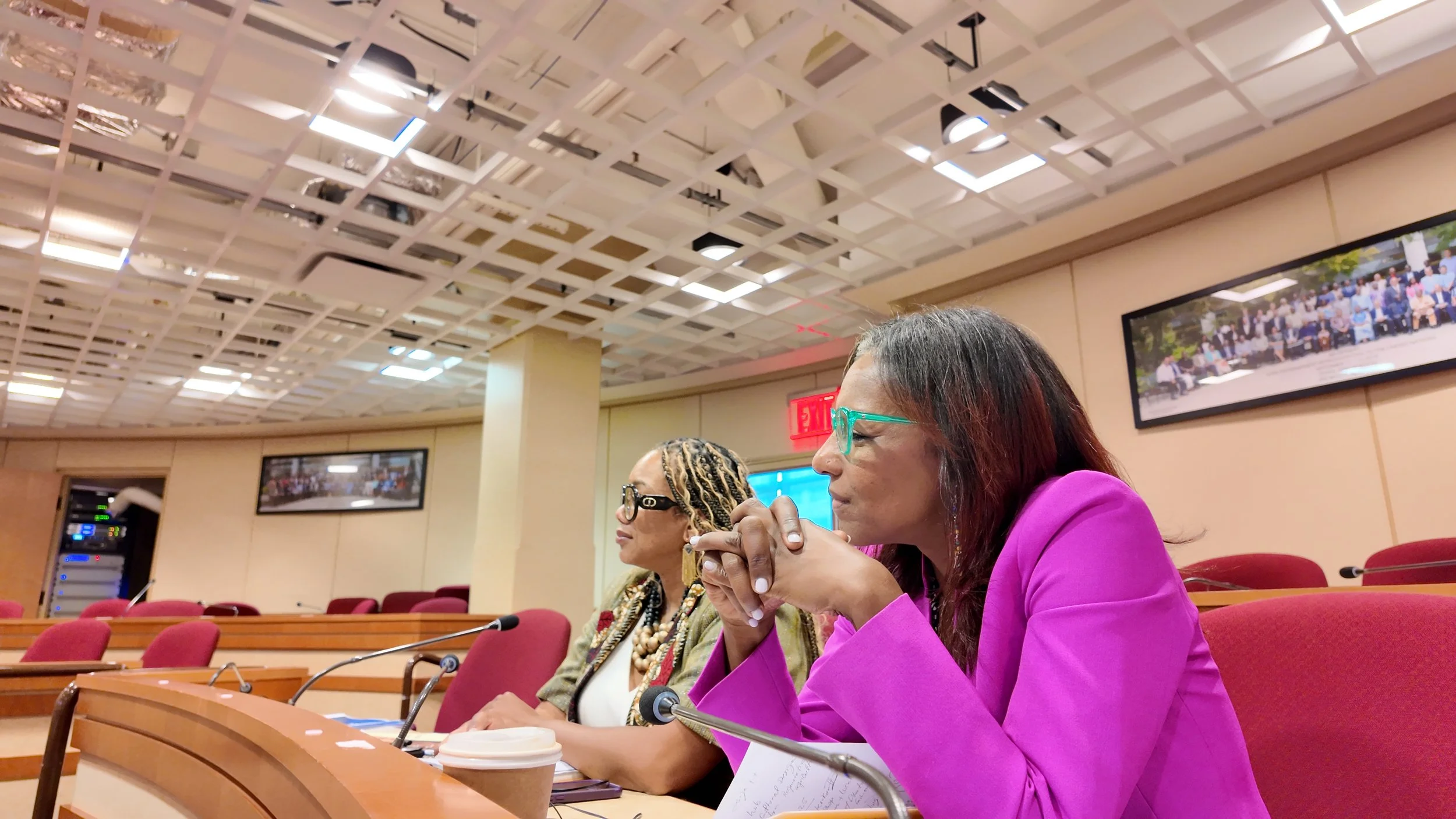
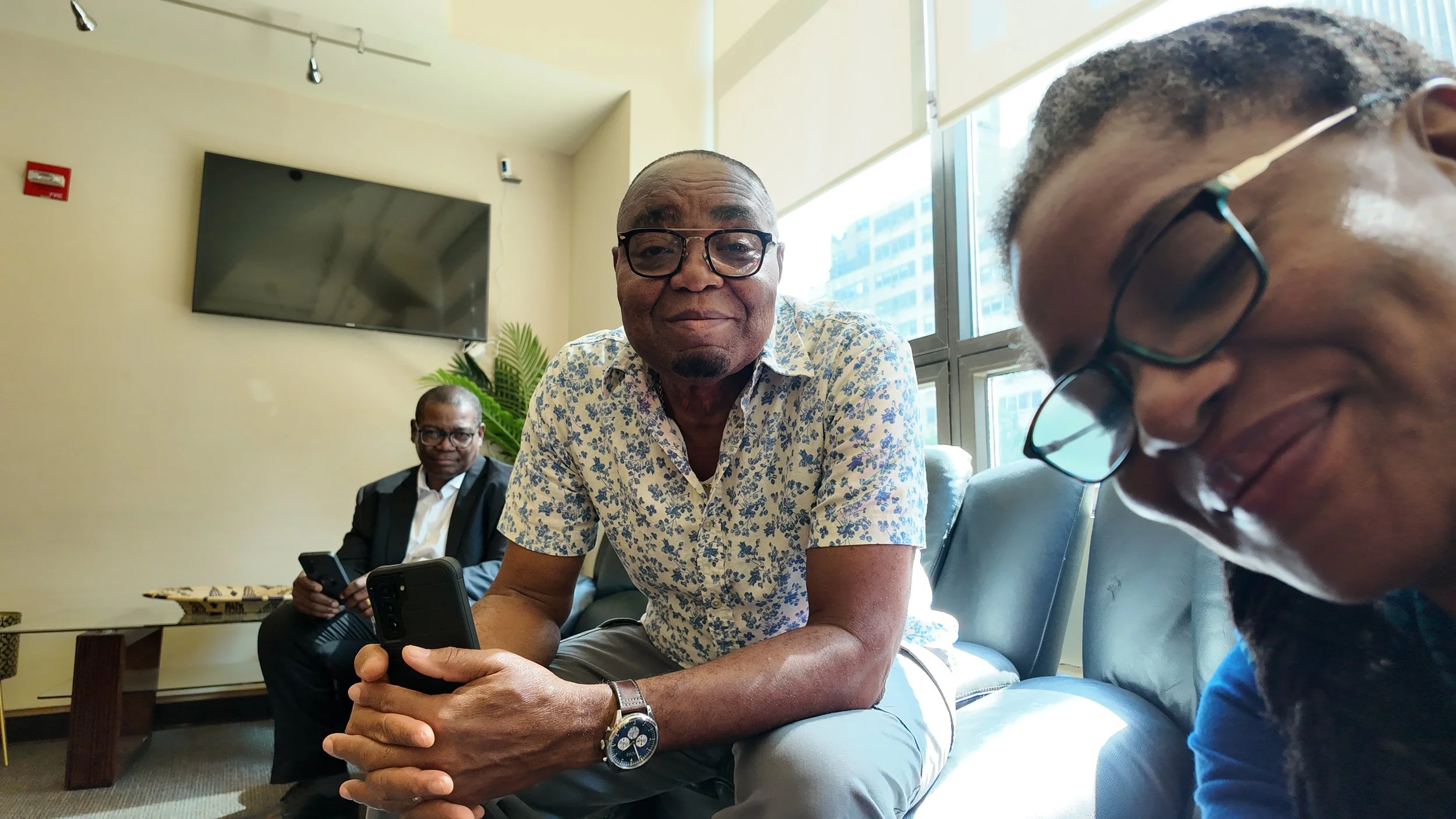
The meeting welcomed new members and discussed past and upcoming activities with focus on creating ways to engage their various communities.
Africa-Related, New York
The African Consuls General Group Recently Met at the Africa Union Permanent Observer Office in New York
Hosted by the Consulate General of the Kingdom of Morocco in New York under the leadership of Hon. Mohammed Benabdeljalil, the meeting welcomed new members and discussed past and upcoming activities with focus on creating ways to engage their various communities.
A presentation on the Society of Foreign Consuls in New York was delivered by the Consul General of Malaysia HE Amir Farid Abu Hassan.
Mr Simon Ibe of Global Patriot Newspapers and Mrs. Oyiza Adaba of Africa-Related Inc. both spoke on the need for the group to engage the African Diaspora media outlets in order to reach their nationals. Ice informed the group that the gap in how the media operates in the West and how it operates among people of African descent, is the basis for a webinar that will will be held on September 20th 2024 from 1.00 pm to 2.30 pm (EST), during the United Nations General Assembly (UNGA) Week, and is part of the UN Summit of the Future..
Ms. Busi Matsiko, President of the newly instituted New York Chamber of Commerce also addressed the group, harping on the powerful location New York City offers, and on the economic viability of engaging with Wall Street and other financial institutions that encourage and support Diasporta Africans. She cited that six African designers participated in the the recently concluded New York Fashion Week.
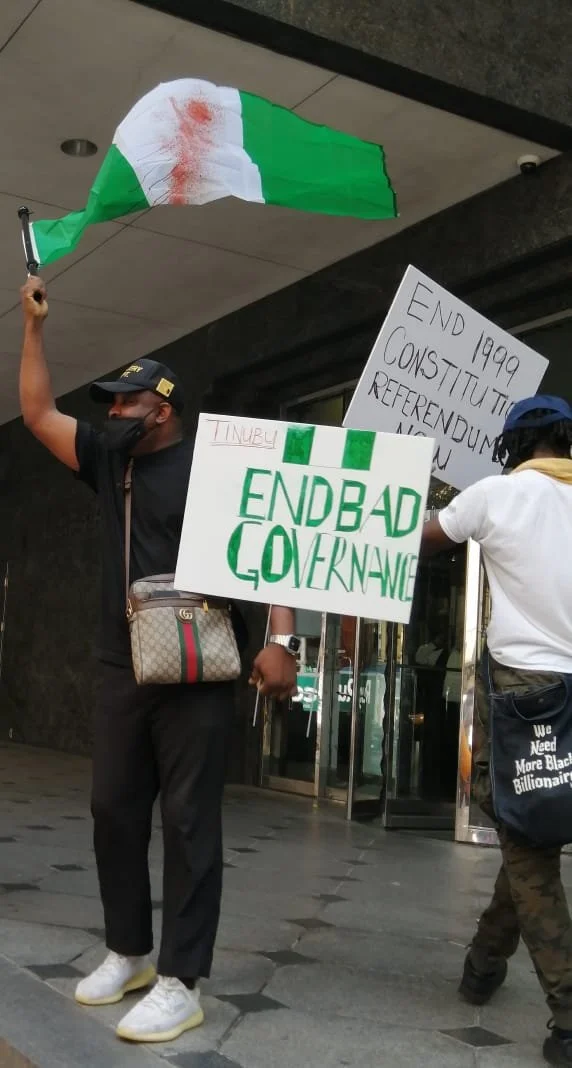
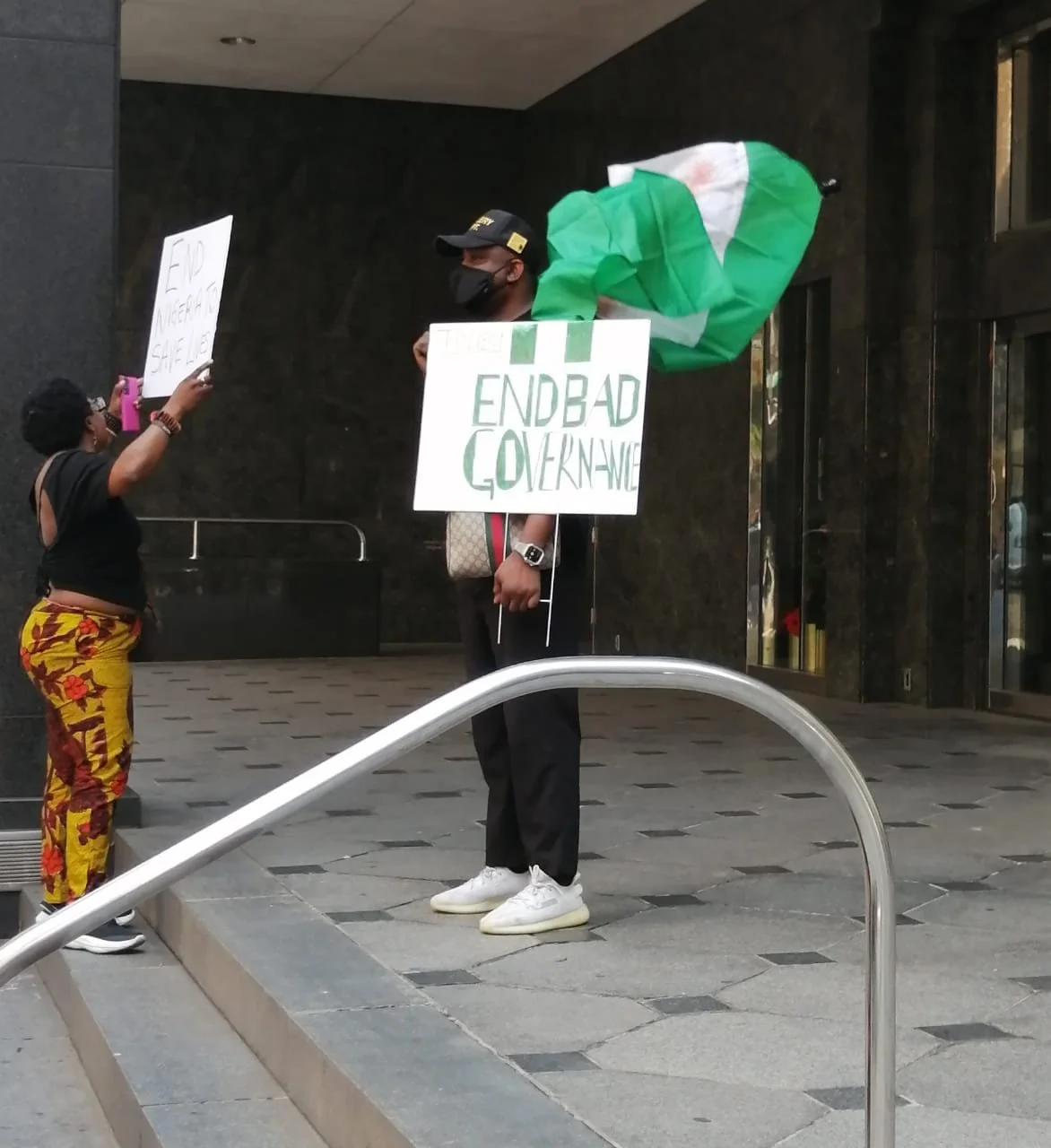
The #endbadgovernance Protest in New York
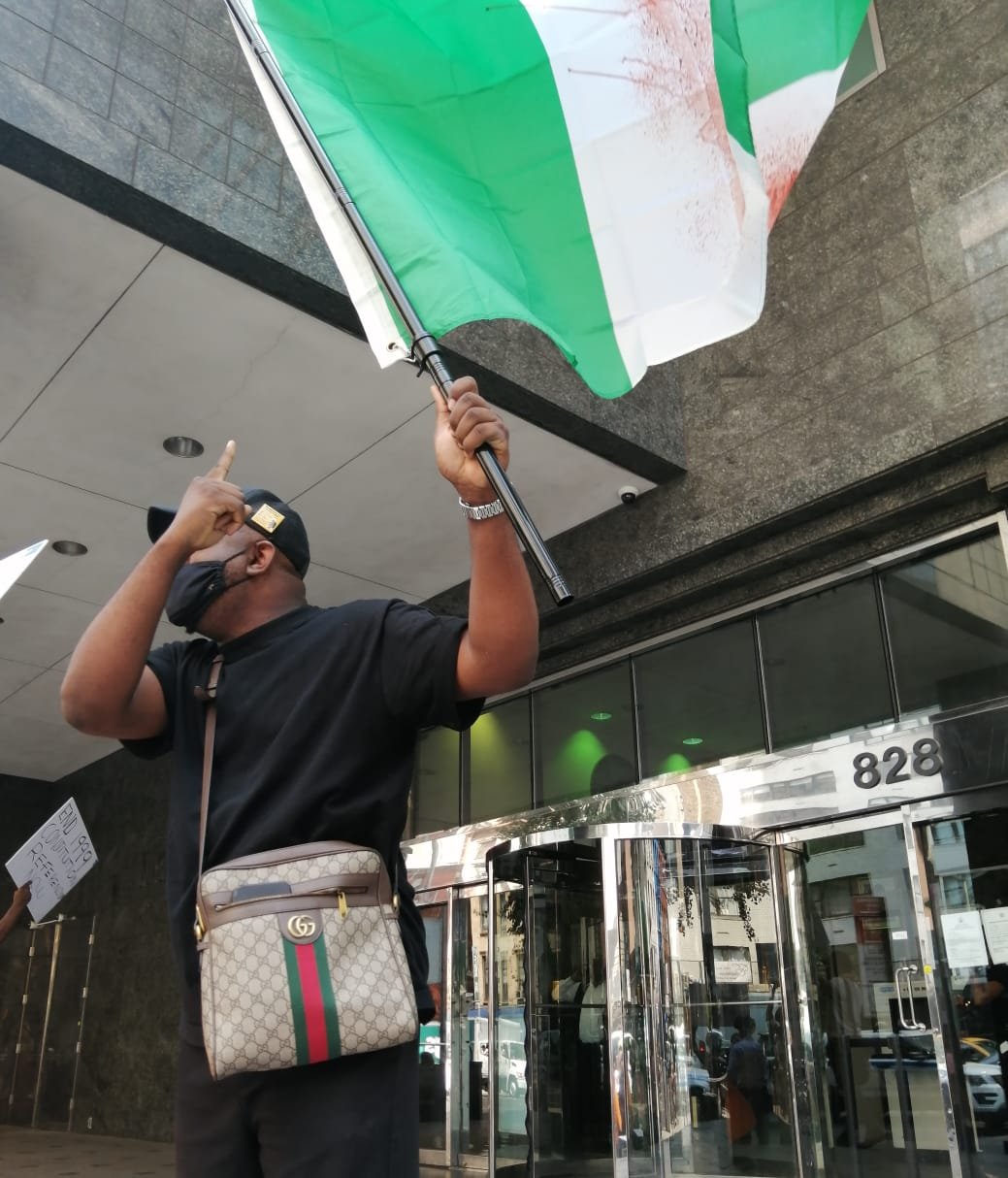
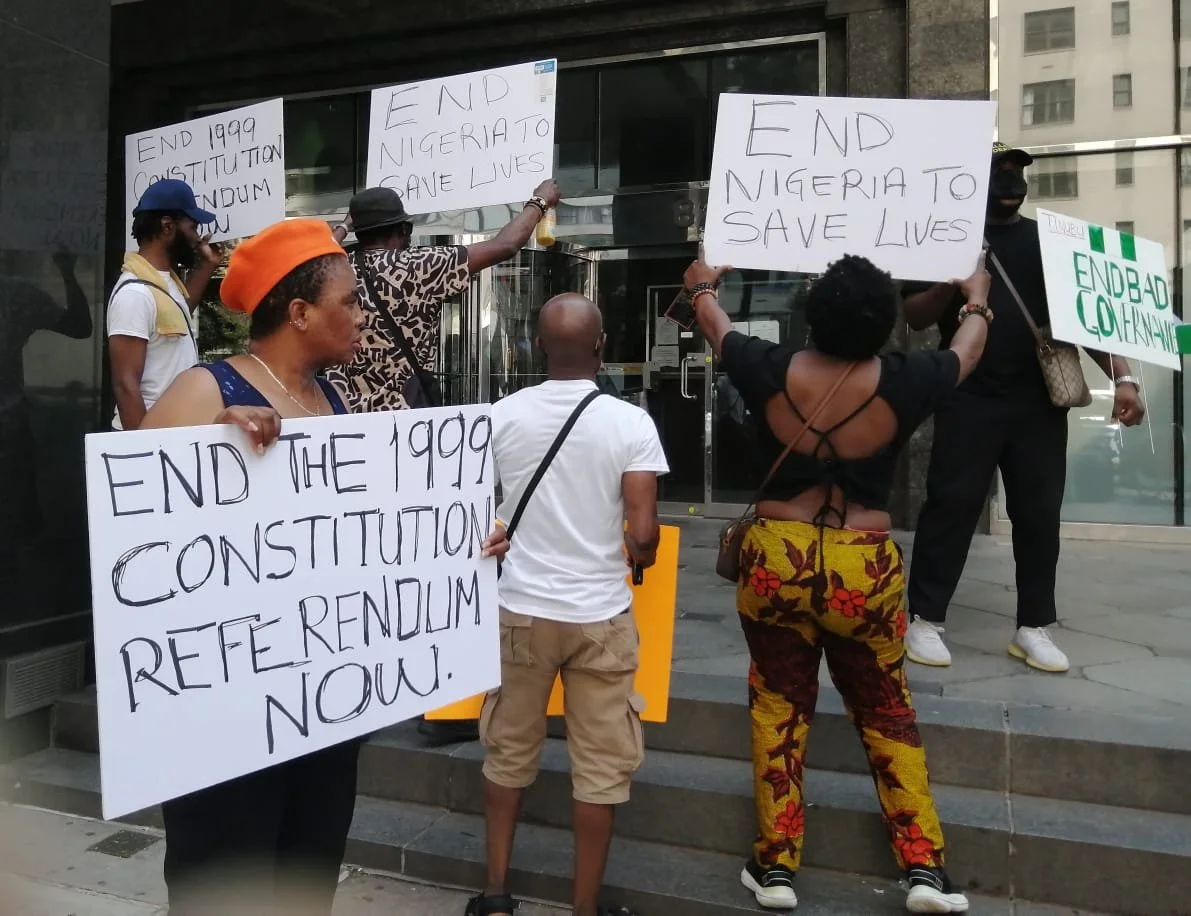
The #endbadgovernance protest in front of Nigeria House on 2nd Avenue New York, where only a handful of protesters showed up. They however made their demands clear under the watchful eye of the NYPD.

New York, NY
August 1, 2024
The #endbadgovernance
protest in front of Nigeria House on 2nd Avenue New York, where only a handful of protesters showed up. They however made their demands clear under the watchful eye of the NYPD. Their demands include a review of the country's 1999 constitution.
SHARE THIS STORY
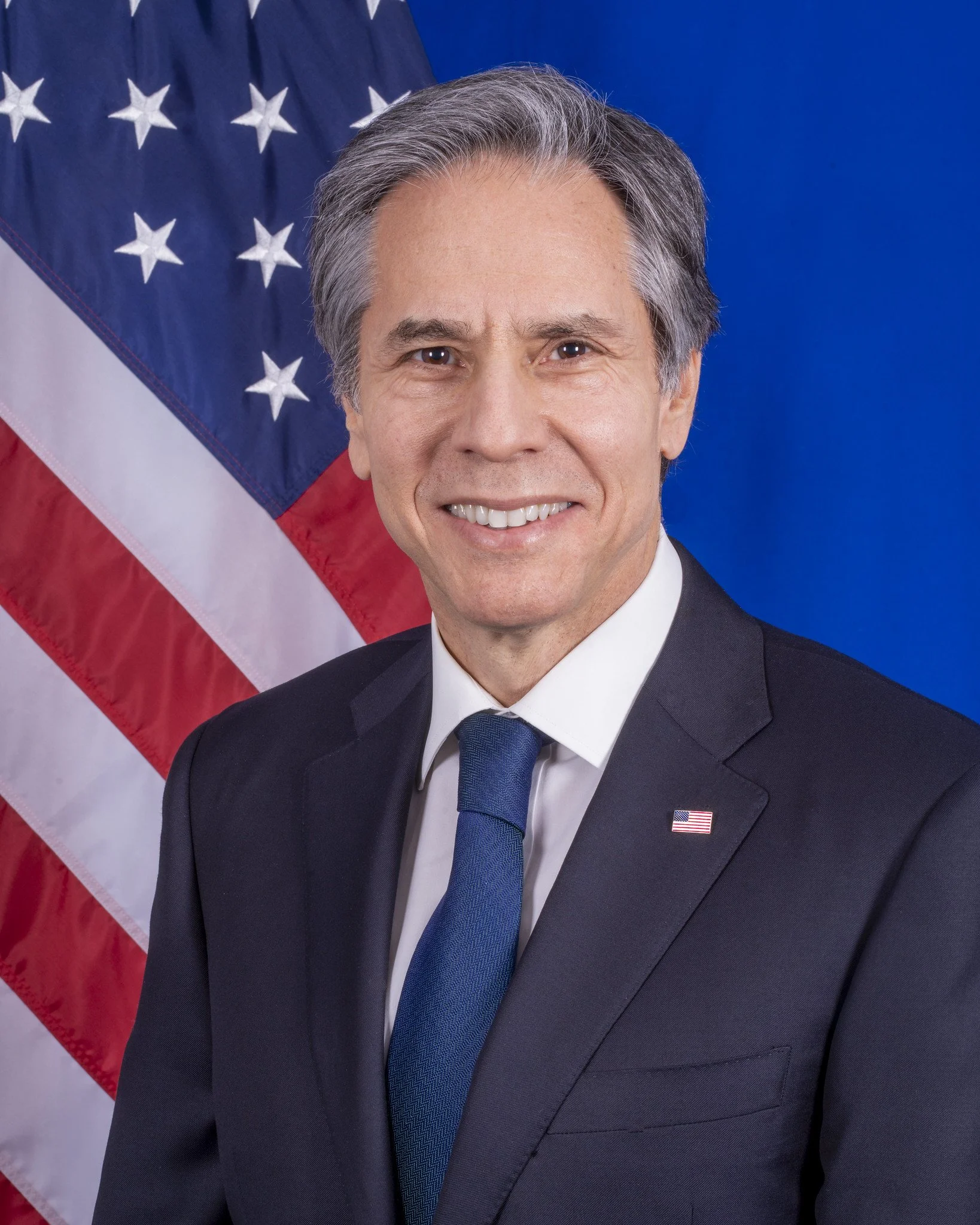
U.S. Secretary Blinken’s to Visit Cabo Verde, Cote d’Ivoire, Nigeria, and Angola
Secretary Antony J. Blinken will travel to Cabo Verde, Cote d’Ivoire, Nigeria, and Angola on January 21-26, 2024 to highlight U.S.-Africa partnership since the U.S.-Africa Leaders Summit, climate, food, health security, future-focused economic partnership, and infrastructure investments in Africa.
Photo by U.S Department of State
U.S. DEPARTMENT OF STATE
STATEMENT BY MATTHEW MILLER, SPOKESPERSON
JANUARY 18, 2024
Secretary Antony J. Blinken will travel to Cabo Verde, Cote d’Ivoire, Nigeria, and Angola January 21-26, 2024.
Throughout the trip, the Secretary will highlight how the United States has accelerated the U.S.-Africa partnership since the U.S.-Africa Leaders Summit, including in areas such as climate, food, and health security. He will also emphasize our future-focused economic partnership, and how the United States is investing in infrastructure in Africa to boost two-way trade, create jobs at home and on the continent, and help Africa compete in the global marketplace.
Additionally, the Secretary will advance security partnerships based on shared values such as respect for human rights, promotion of democracy, and expansion of the rule of law. He will reaffirm U.S. commitment to our coastal West African partners through the Strategy to Prevent Conflict and Promote Stability, U.S. partnership with the Economic Community of West African States (ECOWAS) to address regional challenges, and U.S. efforts to support African leadership in de-escalating tensions and adopting diplomatic solutions to the conflict in the eastern Democratic Republic of the Congo.
The United States reaffirms its sustained commitment to high-level U.S. engagement with Africa.
Share this story
U.S. Migration Policy Overview
FOREIGN PRESS CENTER BRIEFING WITH KATIE TOBIN, DEPUTY ASSISTANT TO PRESIDENT BIDEN AND COORDINATOR FOR THE LOS ANGELES DECLARATION, BLAS NUÑEZ-NETO, ASSISTANT SECRETARY OF HOMELAND SECURITY FOR BORDER AND IMMIGRATION POLICY, AND ERIC JACOBSTEIN, DEPUTY ASSISTANT SECRETARY OF STATE FOR CENTRAL AMERICA, CUBA AND MIGRATION.
U.S. DEPARTMENT OF STATE
Bureau of Global Public Affairs
JANUARY 11, 2024
FPC TRANSCRIPT: U.S. Migration Policy Overview
FOREIGN PRESS CENTER BRIEFING WITH KATIE TOBIN, DEPUTY ASSISTANT TO PRESIDENT BIDEN AND COORDINATOR FOR THE LOS ANGELES DECLARATION, BLAS NUÑEZ-NETO, ASSISTANT SECRETARY OF HOMELAND SECURITY FOR BORDER AND IMMIGRATION POLICY, AND ERIC JACOBSTEIN, DEPUTY ASSISTANT SECRETARY OF STATE FOR CENTRAL AMERICA, CUBA AND MIGRATION.
Cover Photo: Metin Ozer @metinozer