
Lux Terra Graduates 32 Psycho-spiritual Trauma Healers
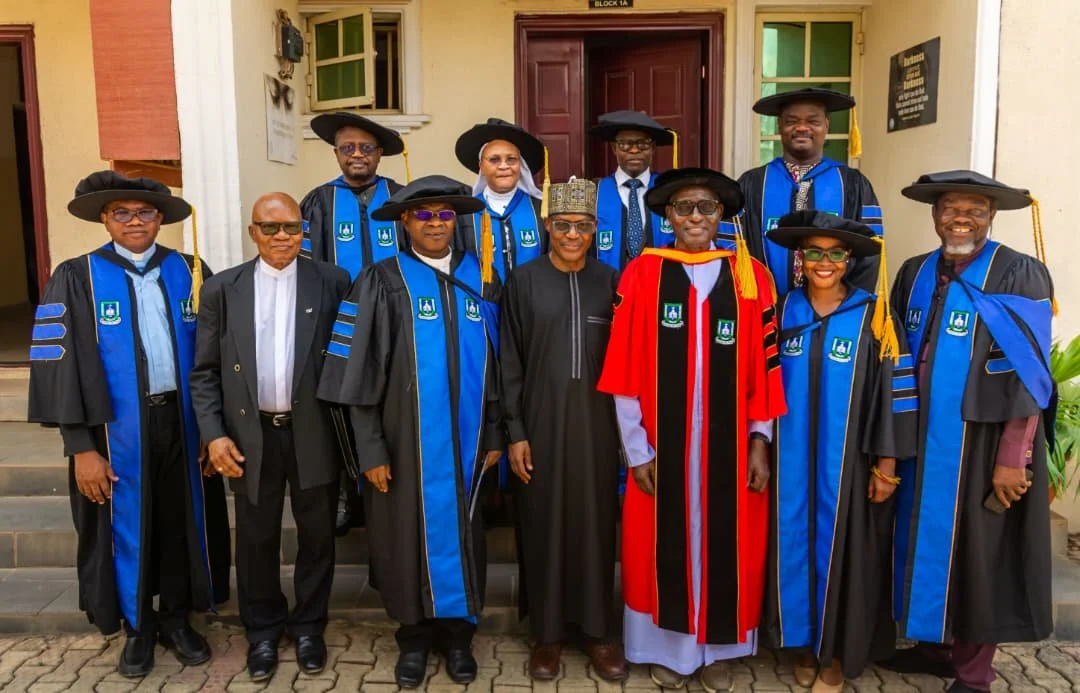
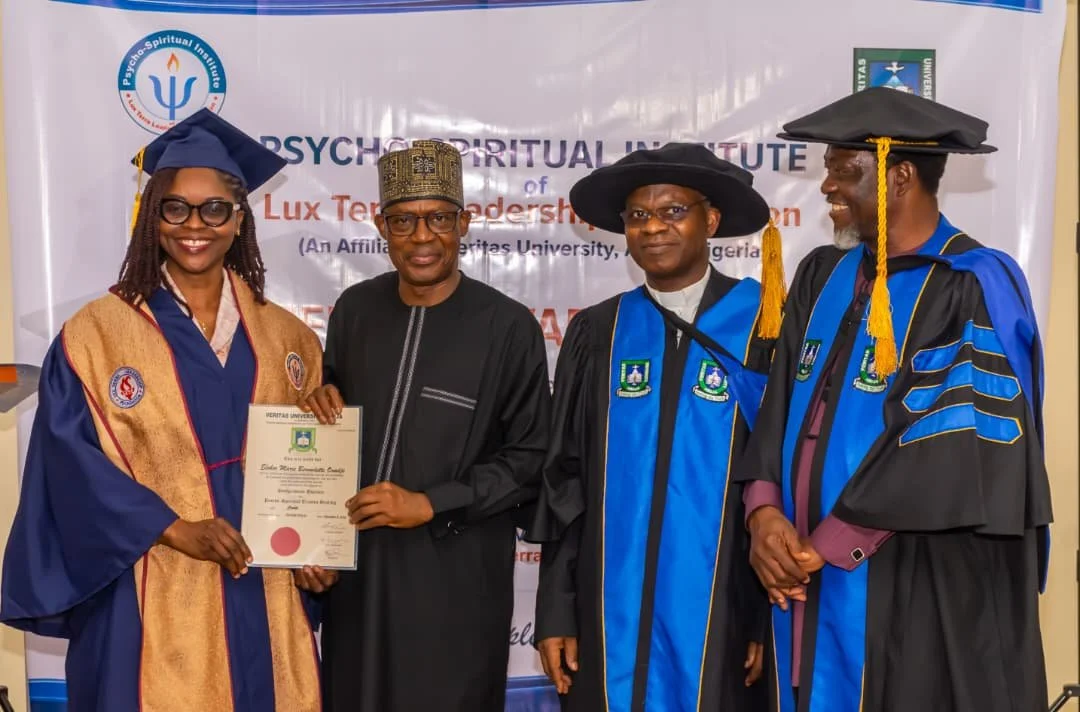
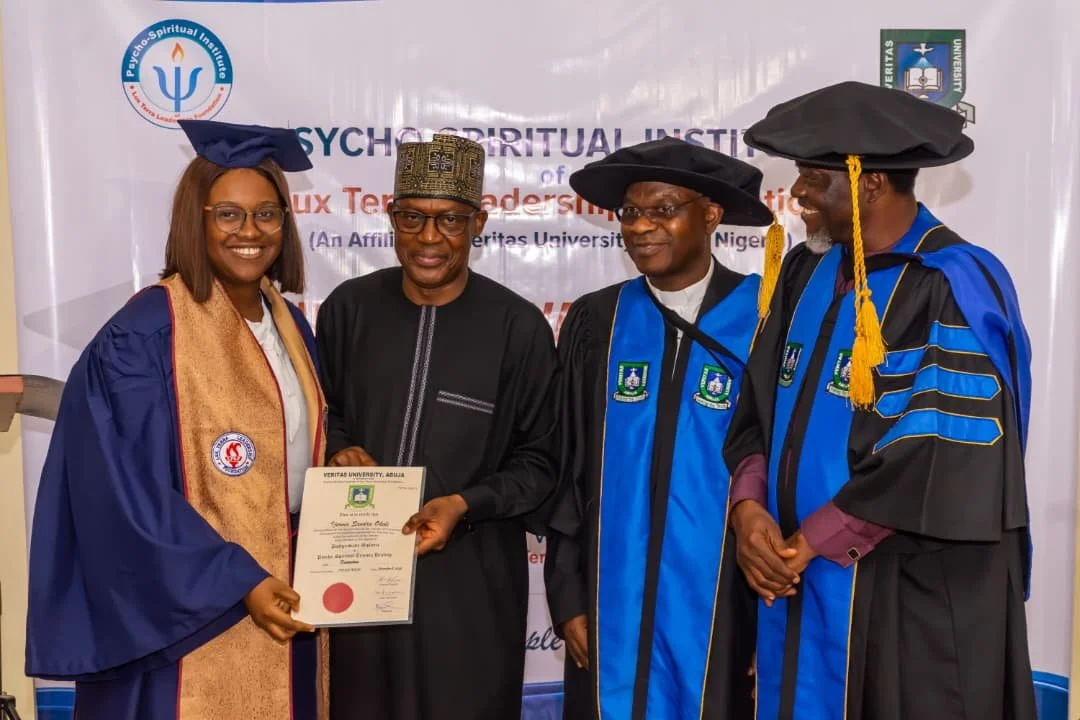
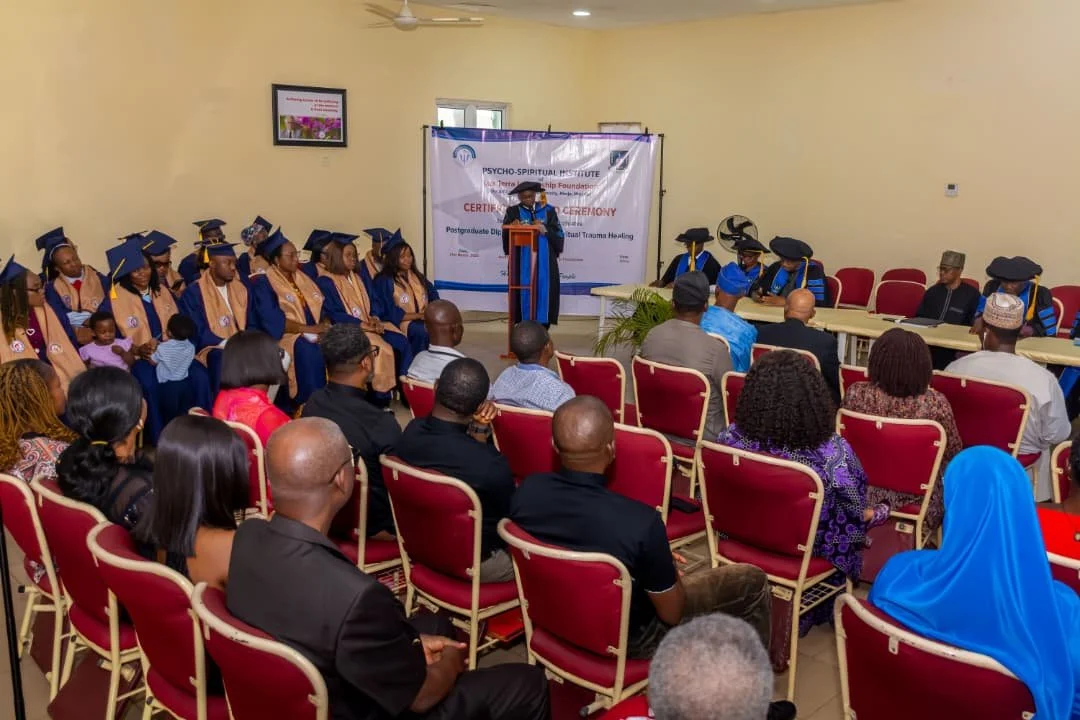
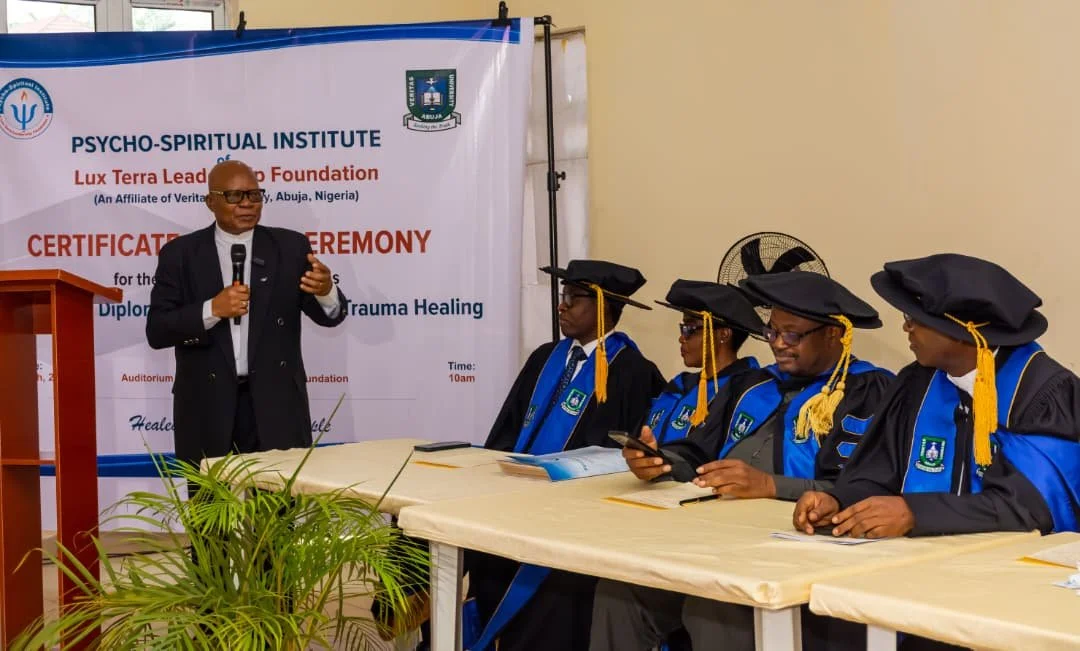
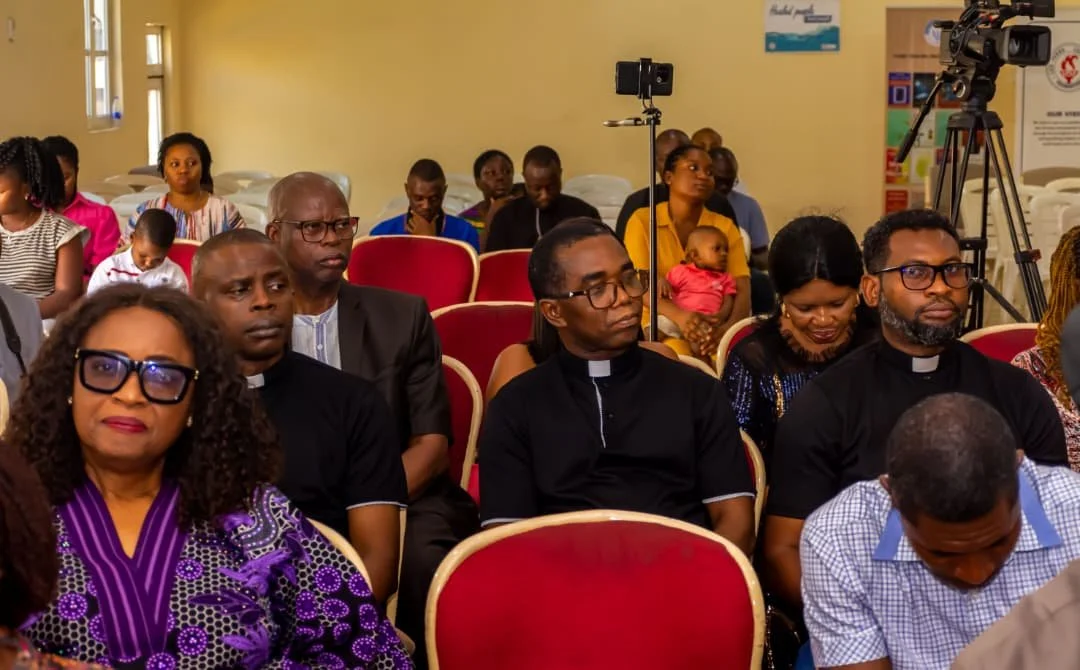
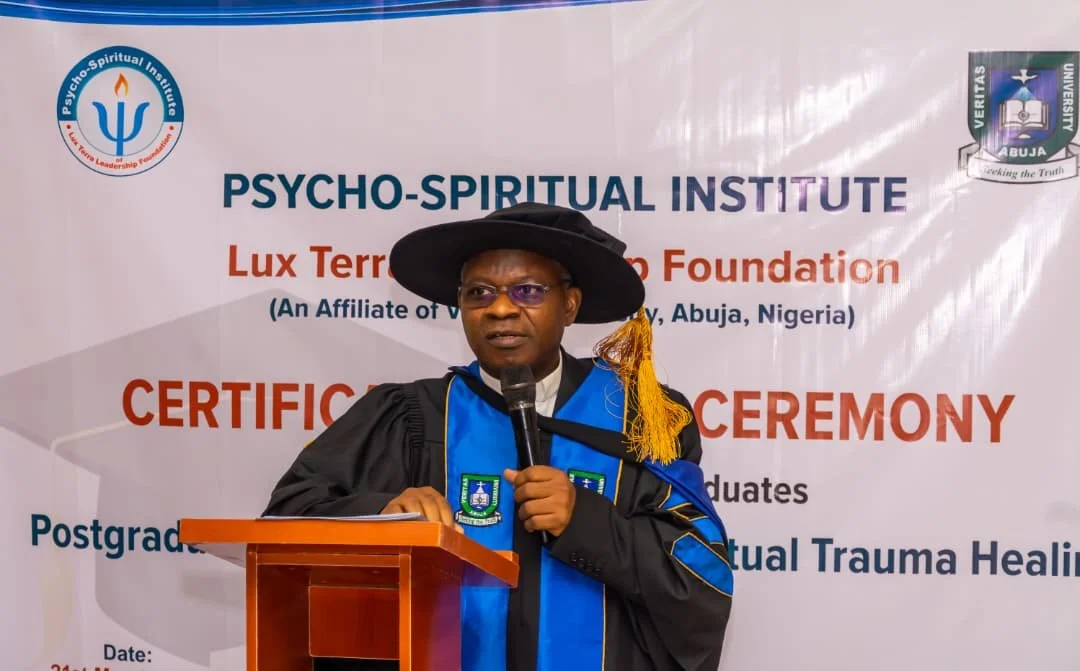
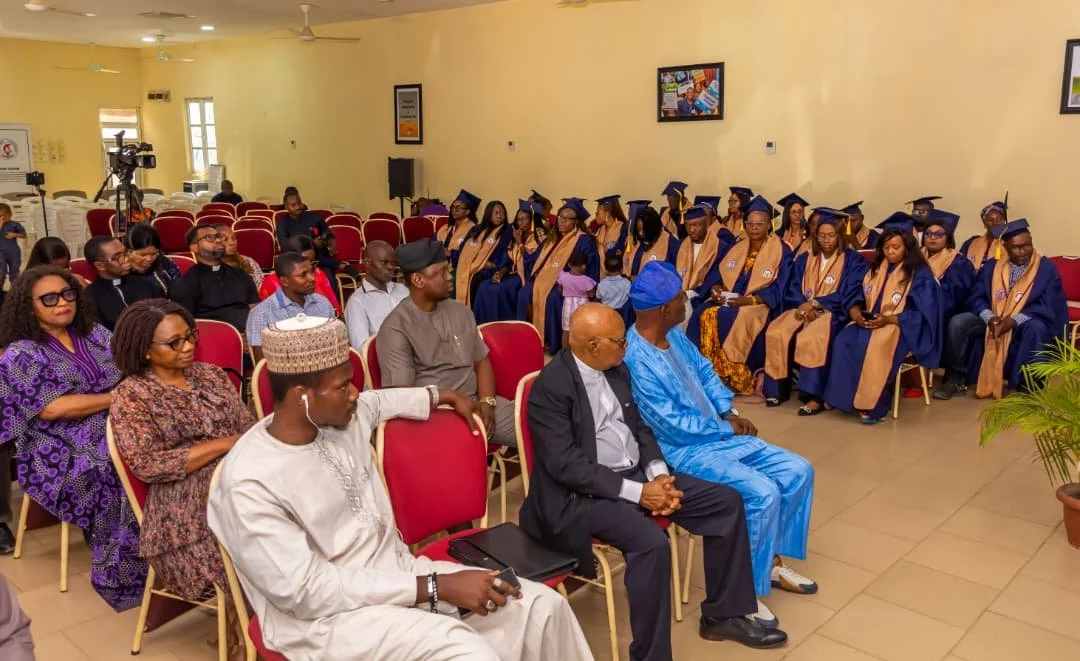
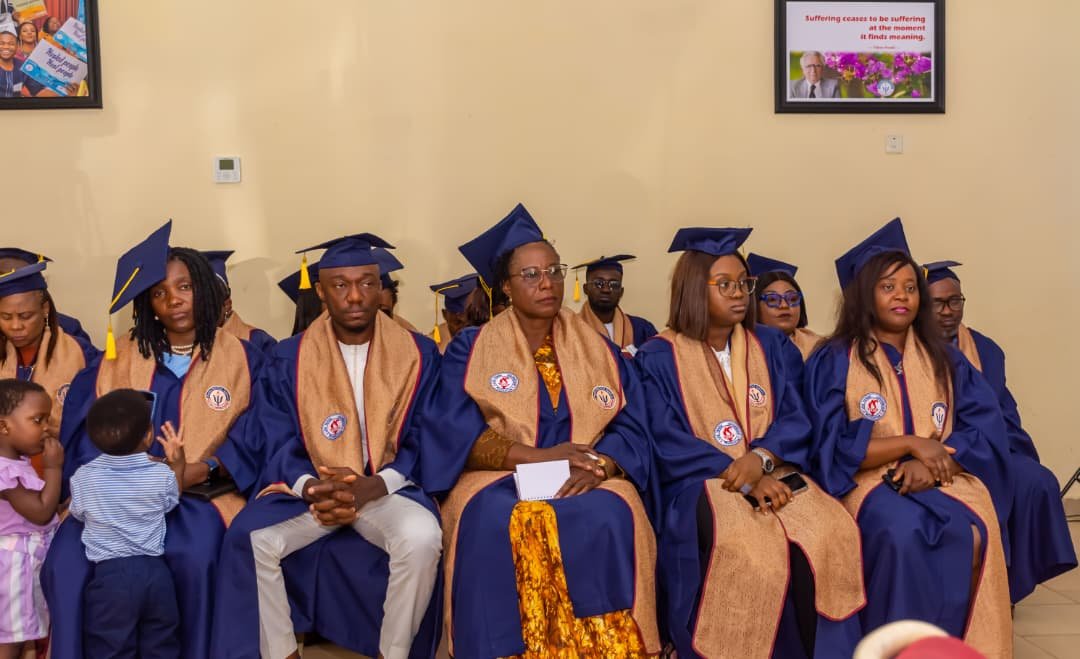
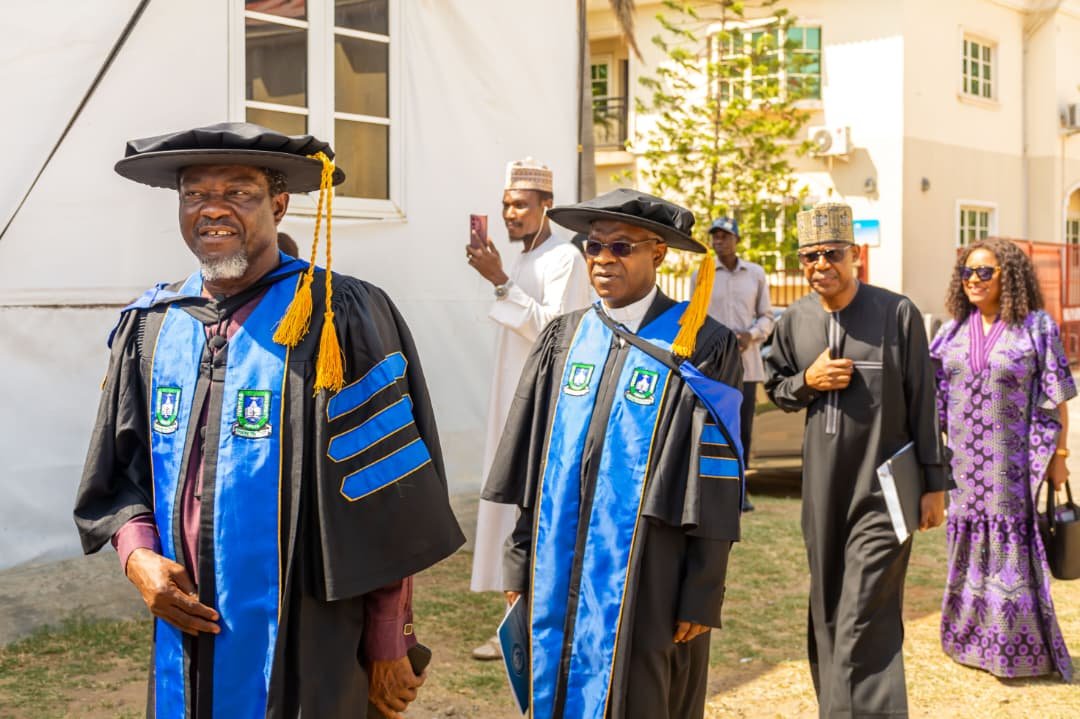
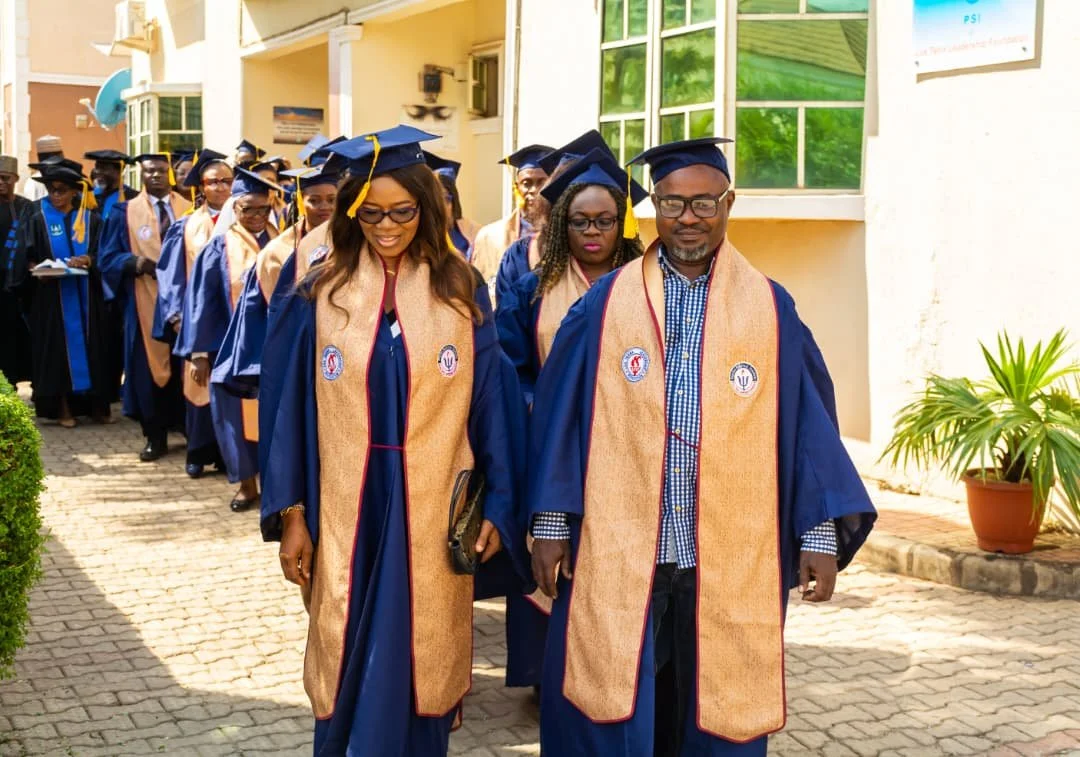
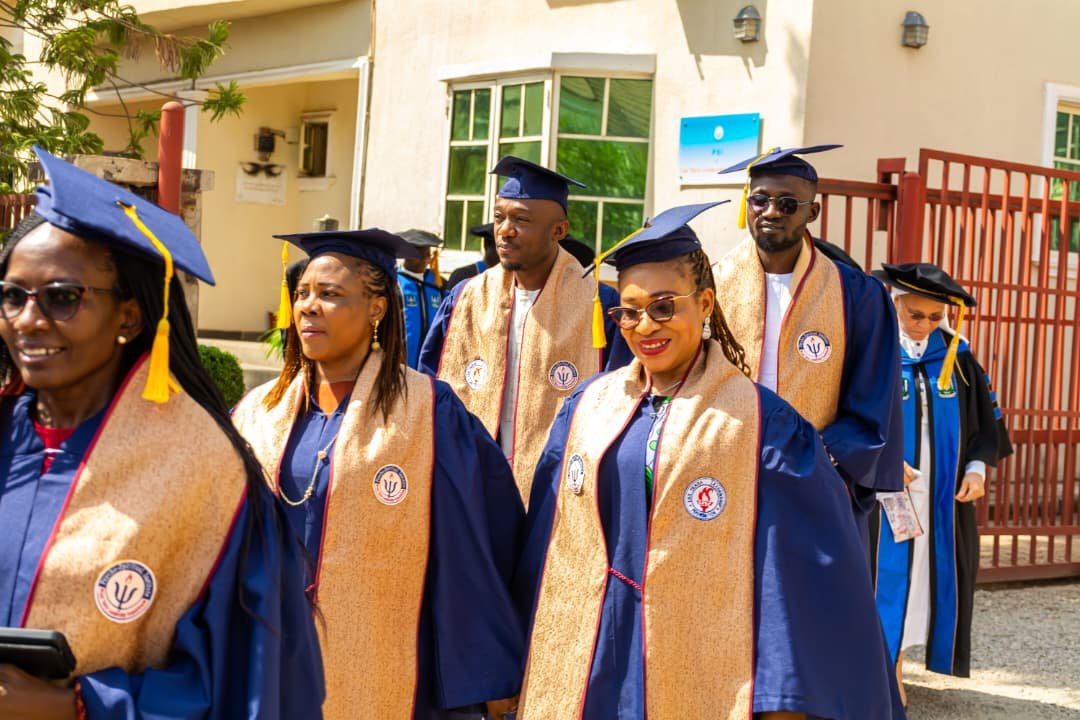
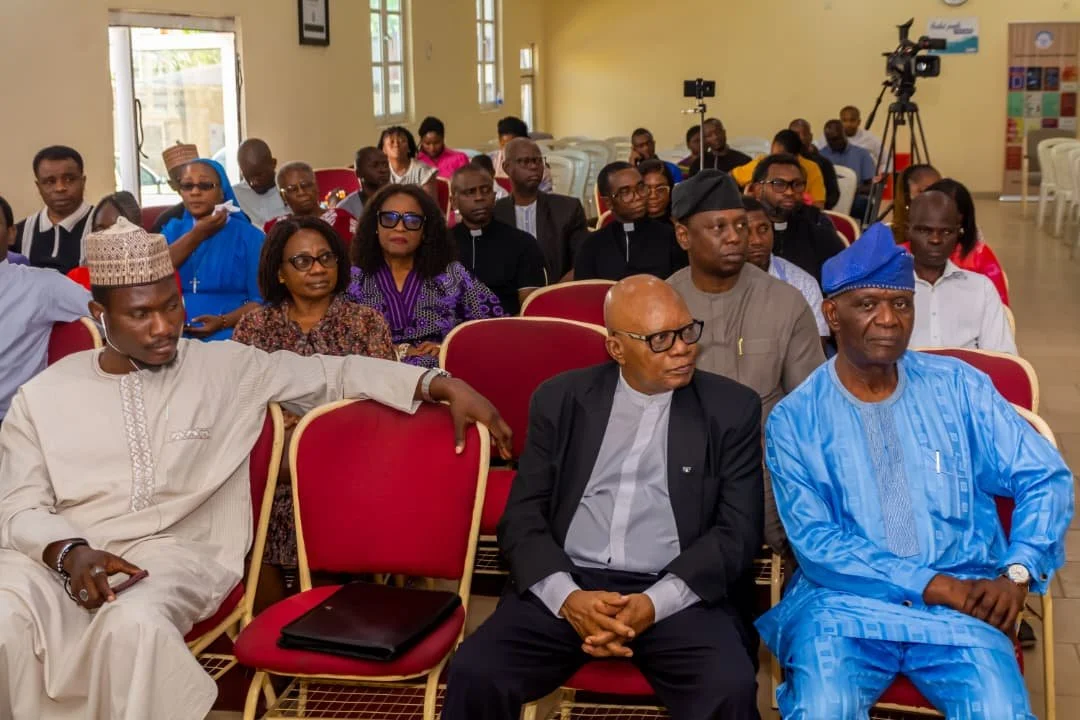
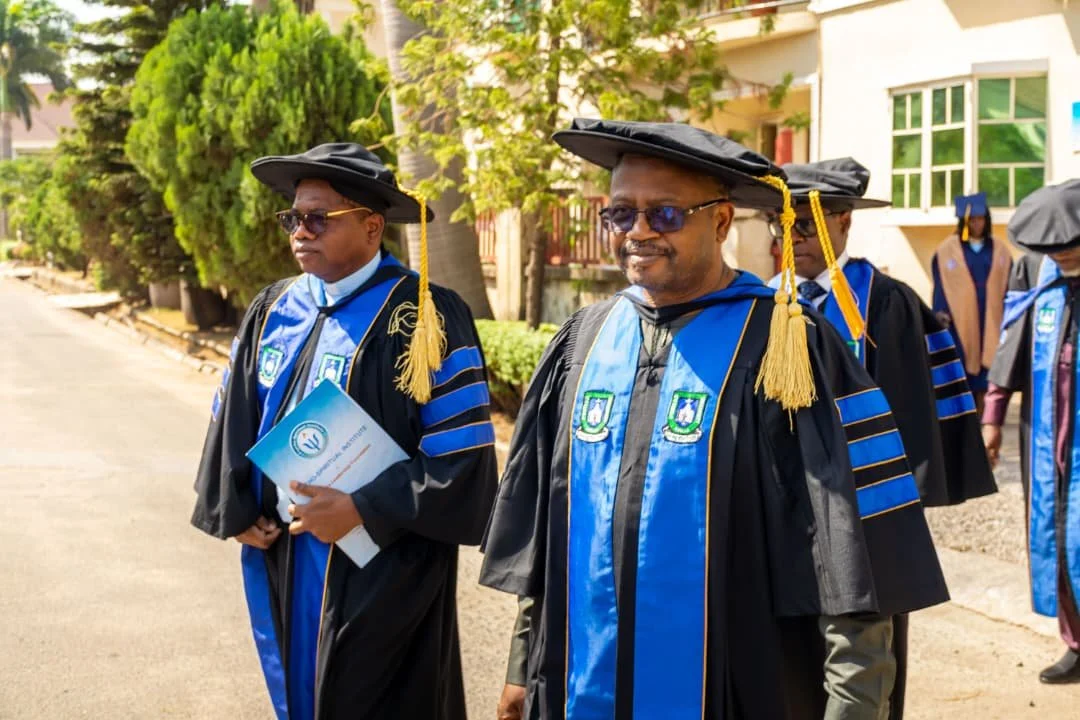
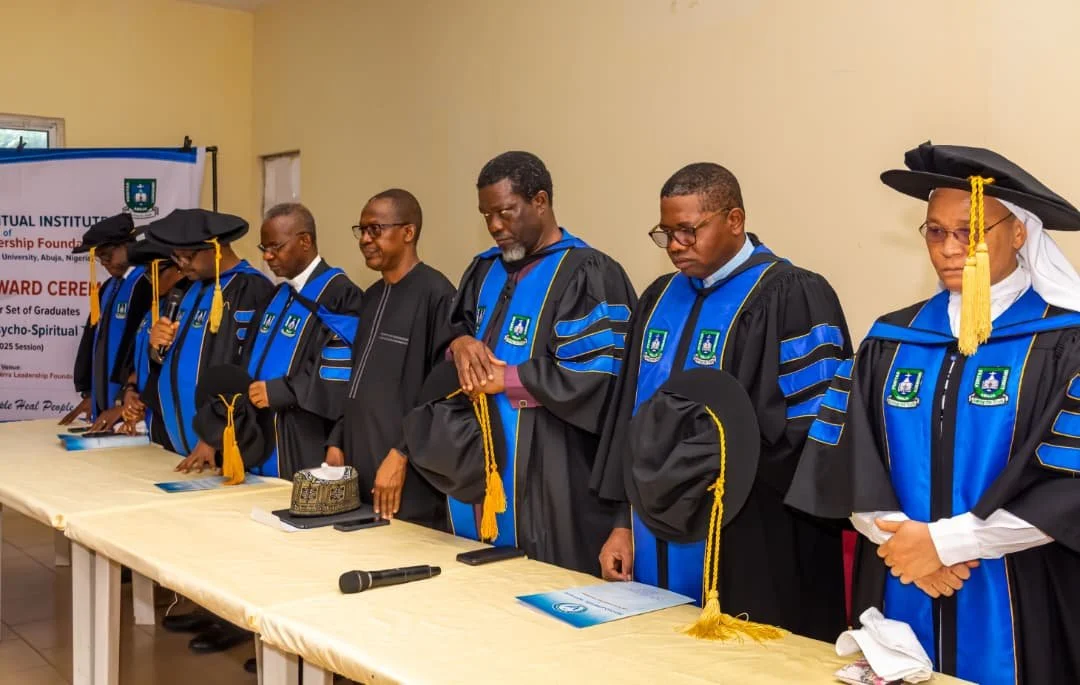
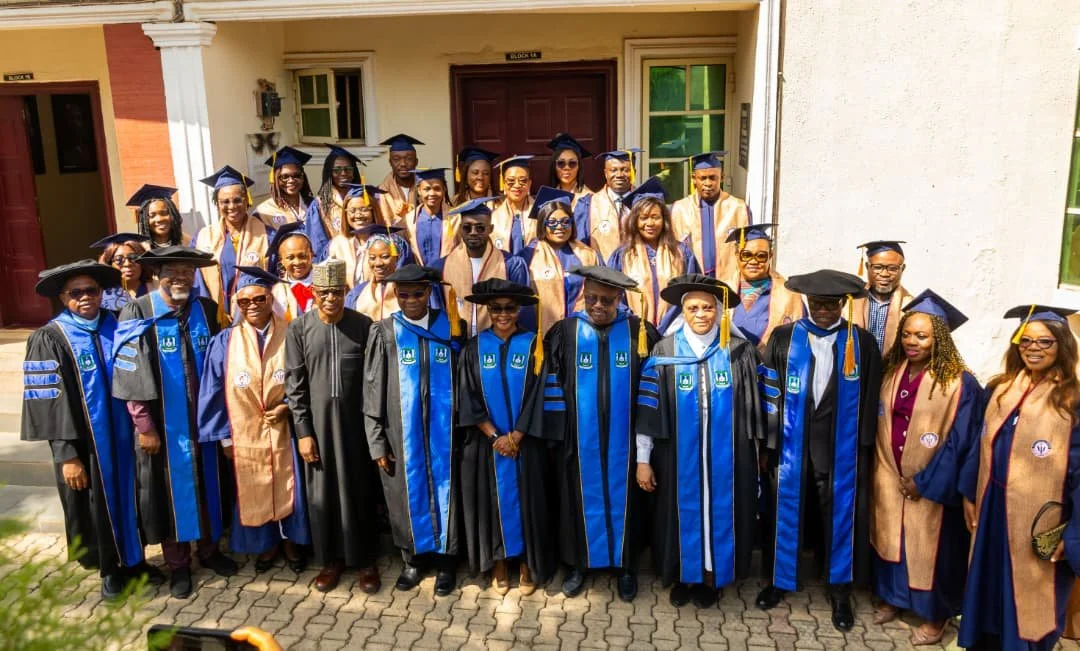
The Psycho-Spiritual Institute of Lux Terra Leadership Foundation, an affiliate of Veritas University, Abuja, has on Saturday March 21st, 2026 in Abuja, graduated 32 pioneer students of its Postgraduate Diploma in Psycho-Spiritual Trauma Healing.
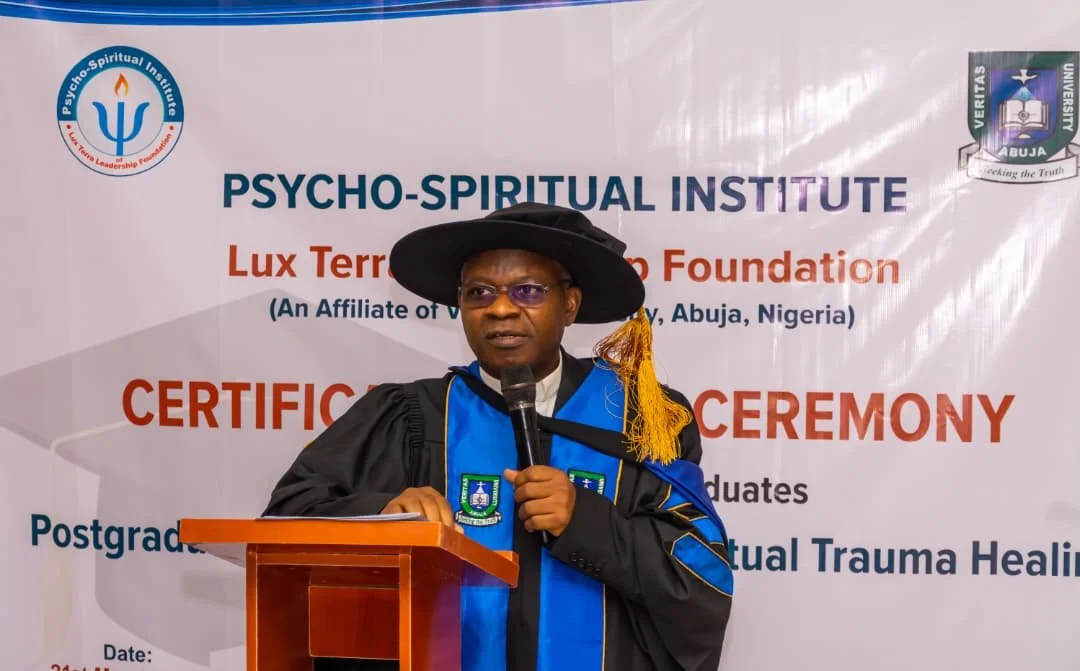
The Psycho-Spiritual Institute of Lux Terra Leadership Foundation, an affiliate of Veritas University, Abuja, has on Saturday March 21st, 2026 in Abuja, graduated 32 pioneer students of its Postgraduate Diploma in Psycho-Spiritual Trauma Healing.
Speaking during the graduation event, the institute’s Executive Director, Rev. Fr. George Ehusani, said the programme was intentionally designed to produce not just professionals, but transformed individuals equipped to heal others.
He said the institute’s training model integrated academic rigour with deep personal formation, ensuring that graduates emerged with both competence and lived experience of healing.
Ehusani explained that beyond lectures and research, the programme immersed students in practical and reflective processes such as prayer sessions, one-on-one counselling, spiritual direction, group therapy engagements and retreats, among others.
According to him, these activities are critical in helping participants confront their inner realities, embrace growth and experience transformation.
“Along with the more academic content, these exercises are aimed at their personal healing, psycho-spiritual growth and ongoing transformation.
“The idea is that after two years of this PSI training encounter and experience, the candidates would have, by the grace of God, sufficiently discovered themselves,” he said.
According to him, their class assignments, group discussions and term papers, among others, should reflect their understanding of this psycho-spiritual and cultural integration, which is PSI’s unique approach.
“I must end by emphasising that the dimension of personal psycho-spiritual healing, growth and transformation should always be considered a very critical element of the entire PSI training experience,” he said.
He urged the graduates to uphold the values of self-awareness, empathy and continuous transformation as they step into professional practice.
In his remarks, the Vice-Chancellor of Veritas University, Prof. Hyacinth Ichoku, commended the vision and dynamism of the founder of the initiative. Represented by the Dean, Faculty of Humanities, Prof. Gabriel Egbe, Ichoku said he was convinced that the graduates would bear abundant fruit and their impact would be felt.
He charged the graduates to put the knowledge acquired into practice, noting that many individuals and society at large are in need of healing.
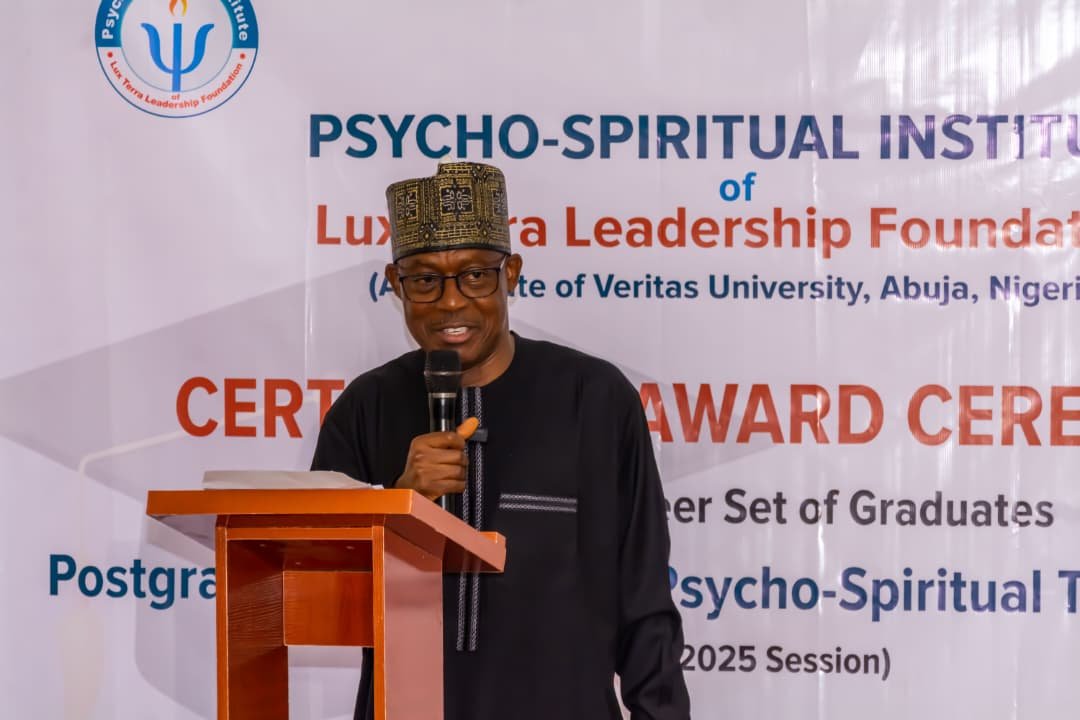
In his remarks, the Special Guest of Honour, Dr Chris Maiyaki, urged the graduates to stay true to the mission and never stop dreaming big.
He said the strong foundation of faith and service of the institute was a springboard for the graduates to excel. Maiyaki, a former Acting Executive Secretary of the National Universities Commission (NUC), urged the graduates to collaborate effectively and prioritise investment in people.
“I would like to say that we are here to rejoice, and it is with pride and a deep sense of fulfilment that I celebrate your success.
“We must look ahead with renewed vigour and commitment. From what we have seen, the future of this institute looks very bright. “I urge the institute to adhere strictly to all regulatory requirements of the NUC to deepen the culture of quality, ensuring that staffing, delivery and curriculum are properly aligned,” he said.
Responding on behalf of the graduates, the Class Representative, Dr Alex Nnadozie, thanked God for the grace to be healed healers. He commended the institute and the faculty for their dedication to bringing out the best in all graduating students.
Nnadozie also commended the graduates for their resilience and commitment to the vision despite the challenges faced. He said the graduates were already collaborating and making impact in various fields such as media, law and internally displaced persons (IDPs) NGOs, among others.
INTERVIEW: Nigeria's Security Situation - Actors and Players
INTERVIEW: Nigeria's Security Situation - Actors and Players. “Inside Sources” host, Laolu Akande discusses Nigeria’s security situation with four global analysts.
By Africa-Related, New York
Stock Photo: Filip Andrejevic @fandrejevic
Video Courtesy of Channels News
“Inside Sources” host, Laolu Akande discusses Nigeria’s security situation with four global analysts - Mallam Baba Yusuf (Strategy Analyst), Ismail Omibinoh (Deputy Editor Sun Newspaper), Emmanuel Ogebe (Human Rights Lawyer)
Key Highlights
Impunity: Chad has executed Boko Haram terrorists but Nigeria has not.
America doesn’t need Nigeria’s resources. With $460 billion networth, Elon Musk alone can buy Nigeria with $200 Billion GDP and still be the world’s richest man.
Tinubu appointed fugitive with case file in America for attacking congressional witnesses as ambassador who will be blocked
America has conducted multiple covert ops to rescue its citizens in Nigeria because the state failed to rescue them
“It is not correct to say that only particular tribes are terrorists. Let us identify these people as criminals without profiling them.”
share this story
Nigeria Killings: U.S Congressional Hearing on Alleged Genocide of Christians
U.S. Congress shed light on alleged Christian genocide in Nigeria
By Africa-Related, New York
Stock Photo: Louis Velazquez @angelvela
U.S Congressional Hearing on Alleged Genocide of Christians
“We are tired of counting our dead. We are tired of mass graves and burned sanctuaries. We are tired of condolence statements that cost nothing and change nothing.”
Video Courtesy of TVC News
share this story
Nigerian American Clergy visit the U.S. Congress
Gain insights from experts on persecution in Nigeria and the response of Nigerian Christians/Clergy in America to the CPC designation. A global coalition of religious freedom stakeholders propose pathway to National Assembly post-CPC designation as Nigerian American Clergy visit the U.S. Congress
By Africa-Related, New York
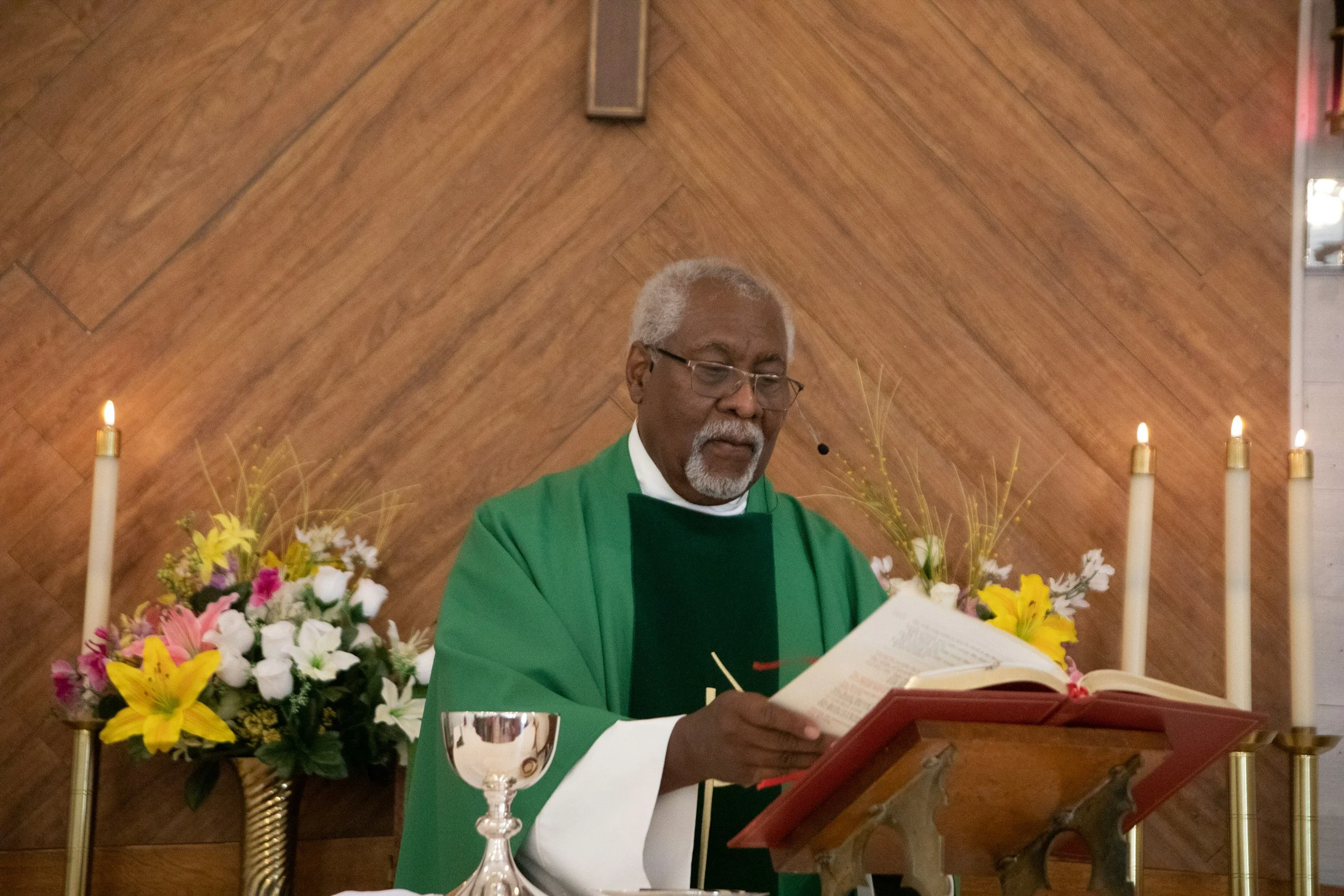
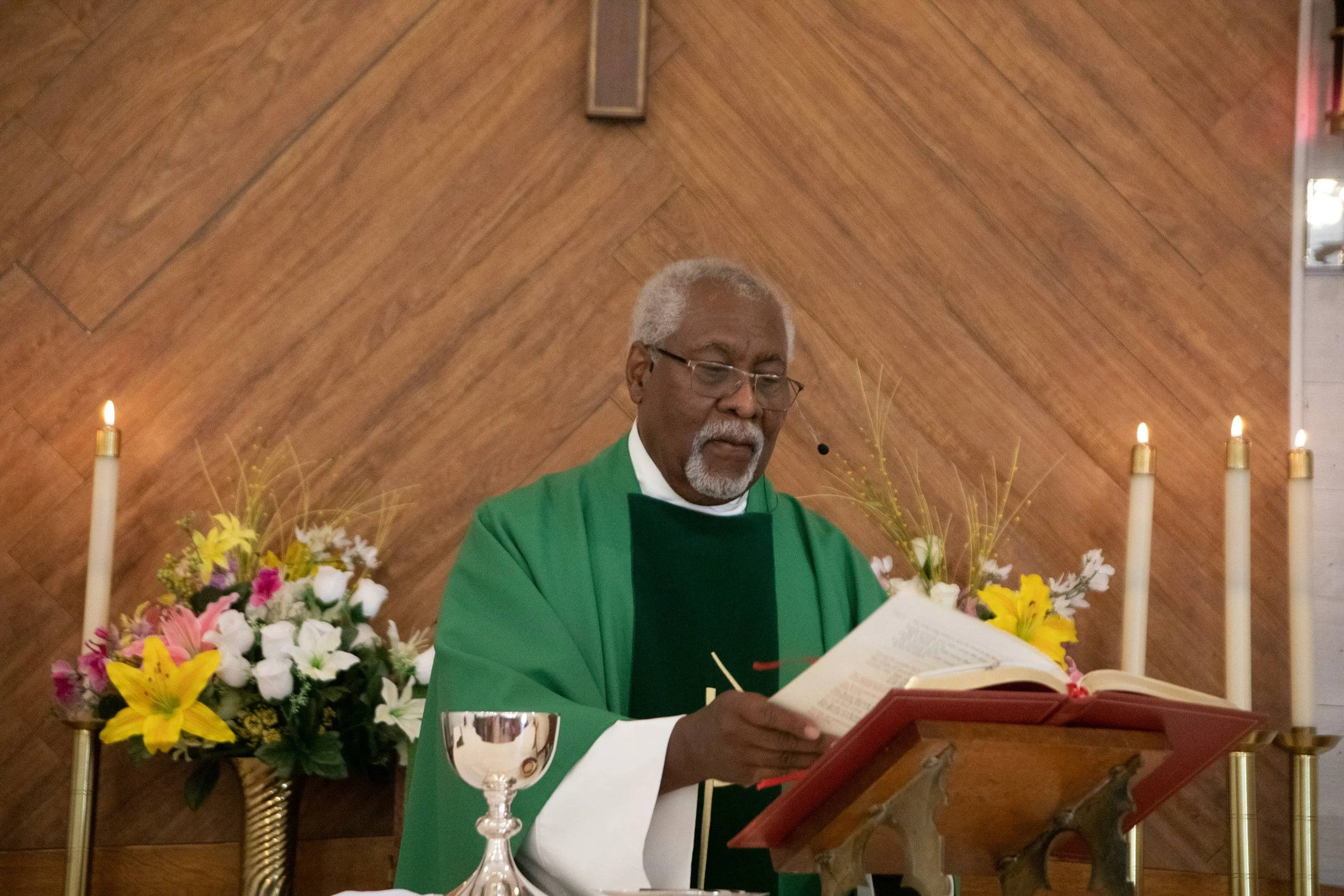
Photo: Dawn McDonald @dpreacherdawn
MEDIA ADVISORY
Please find below:
1. A letter by a global coalition of religious freedom stakeholders to the National Assembly providing a pathway post-CPC designation of Nigeria by the U.S.
2. A Capitol hill briefing by Nigerian American clergy on the recent developments.
A Capitol hill briefing by Nigerian American clergy on the recent developments:
Hill Briefing on Genocide against Christians in Nigeria
Theme: Nigerian American Pastors speak on CPC Designation of Nigeria and House Res 860
Date: November 20, 2025
Time: 1:00 PM (EST)
House Cannon Bldg.
Room 454
US Congress
Capitol Hill
Panelists:
Dr James Fadel, Chairman, Christian Association of Nigerian Americans (CANAN USA) who worked on the 2013 Boko Haram FTO designation
Emmanuel Ogebe, ESQ, Award-winning International human rights Advocate and Lead Campaigner for the 2013 FTO designation
Ex Mayor Mike Arnold - CEO of Arise Africa, filmmaker and humanitarian who’s documented the genocide
Key note speaker: Pastor Charles Ikutiminu CrossPassion Ministries International presenting findings of his recent trip to Nigeria
Dr William Devlin - Volunteer CEO of Widows and Orphans working in 21 conflict countries including Nigeria
Event partners
- Widows and Orphans
- CANAN USA
- Save Nigeria Group
- Justice for Jos Project
Gain insights from experts on persecution in Nigeria and the response of Nigerian Christians/Clergy in America to the CPC designation.
The briefing follows immediately after a congressional public hearing on Thursday, November 20, 2025, at the Rayburn House Office Building in Washington, D.C., chaired by Rep. Chris Smith (R-NJ) Chairman Africa Subcommittee
share this story
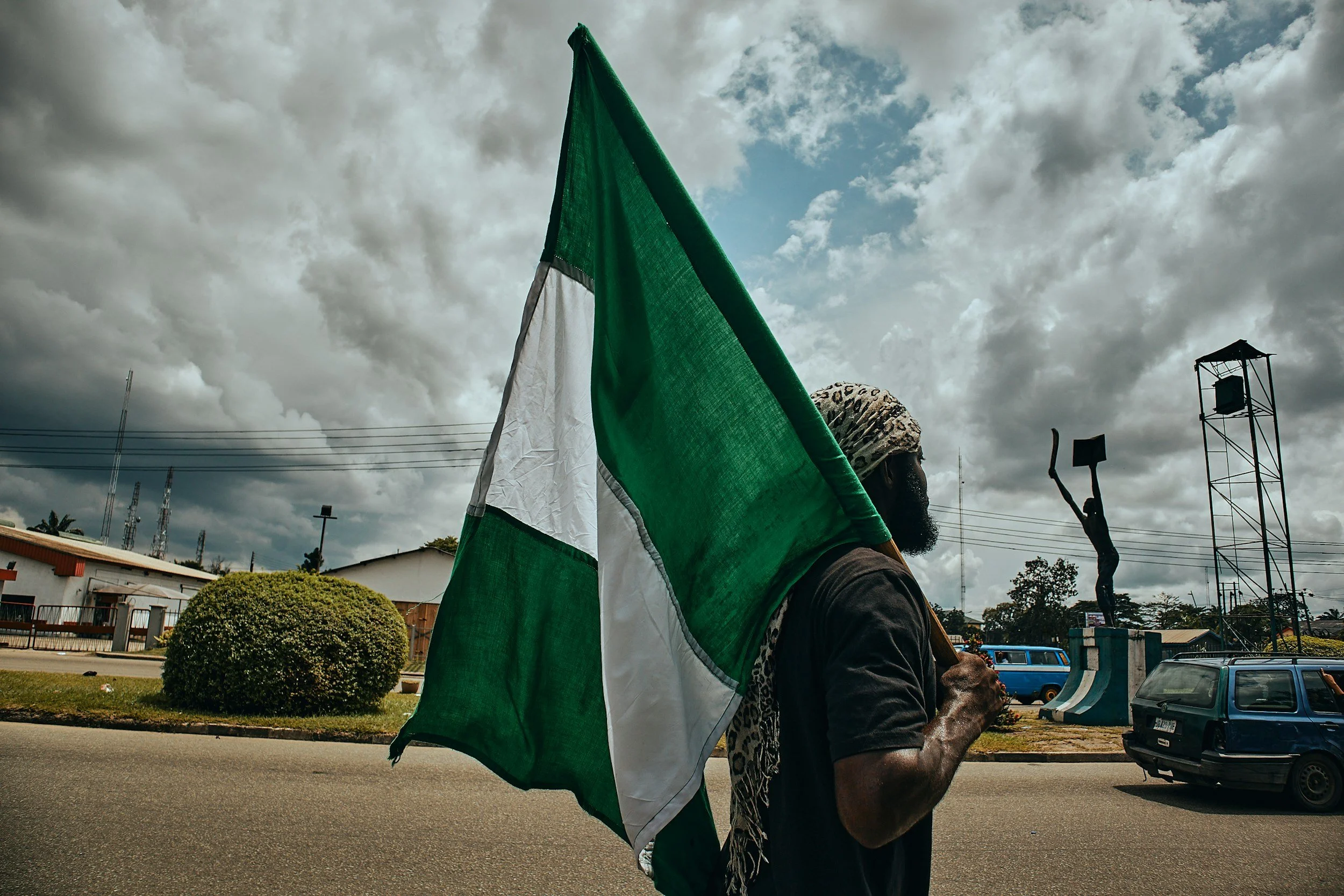
Should a state of emergency be declared in Nigeria?
At this point, it hardly feels like a question. Calamities are mounting week after week in Nigeria. The West African giant is experiencing one of its darkest periods of insecurity in recent history.
By melody-Esther soyemi - Africa-Related, Nigeria
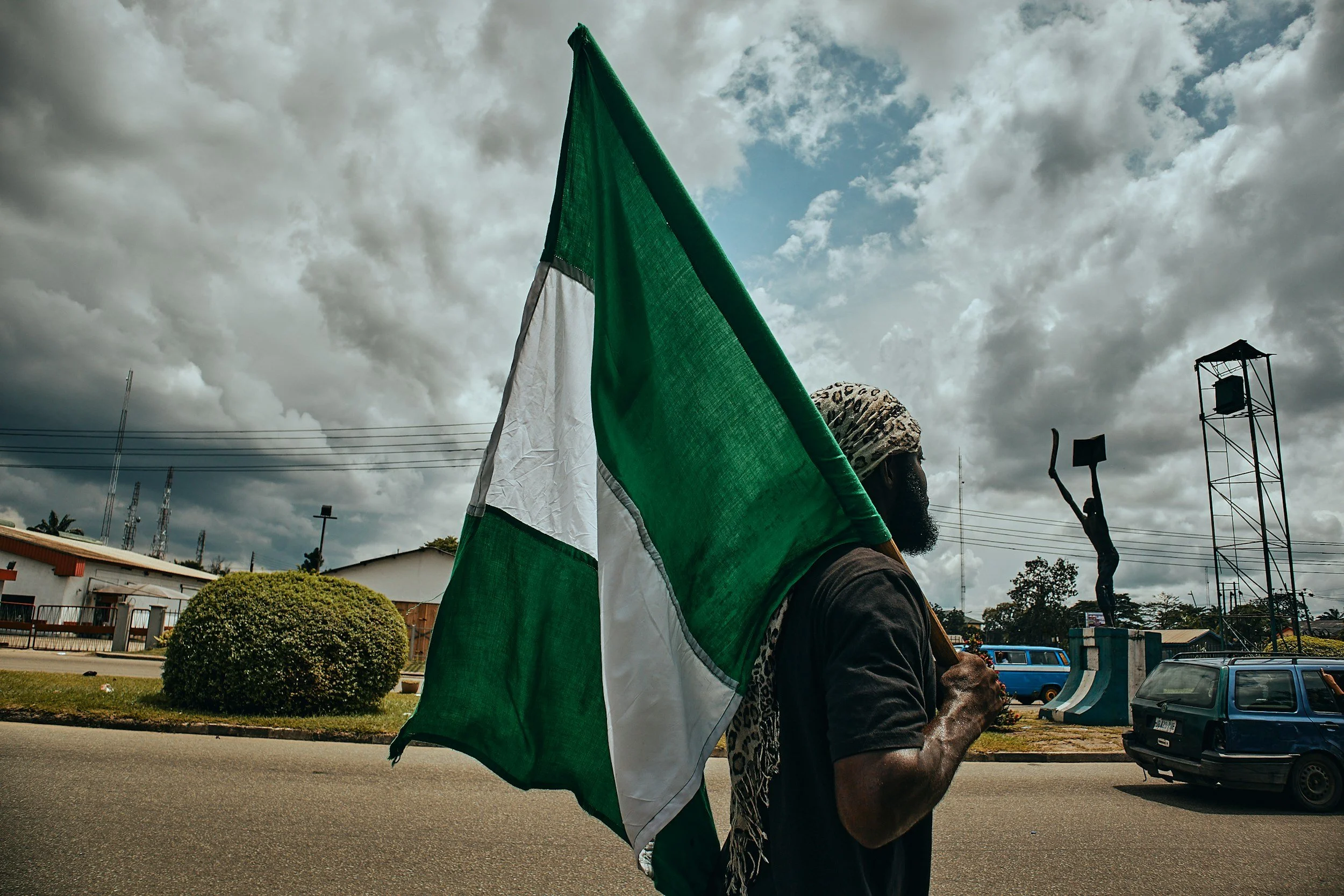
A man carrying the Nigerian flag. Photo: Emmanuel Ikwuegbu @emmages
At this point, it hardly feels like a question. Calamities are mounting week after week in Nigeria. The West African giant is experiencing one of its darkest periods of insecurity in recent history.
Calamities are mounting week after week, mass kidnappings, church attacks, the assassination of senior military officers, yet the national response has been slow, quiet, and disturbingly understated. Nigerians are left wondering: what is the President saying? What are state governors and security operatives doing? Where is the leadership, the urgency, and the decisive action that the moment demands?
On Monday, November 17, 2025, armed ‘bandits’ stormed the Government Girls Comprehensive Senior Secondary School (GGCSS) in Maga, in the Danko/Wasagu Local Government Area of Kebbi State a state in in North Eastern Nigeria. About 25 schoolgirls were abducted and the vice-principal, Malam Hassan Yakubu Makuku, was shot dead while trying to protect his students.
Security forces say a joint rescue operation involving the military, police, and local vigilantes is underway, combing forests and escape routes. But the horror remains: this is yet another Chibok-style tragedy. Another group of young girls torn from their classrooms, families plunged into fear, and a violent reminder that schools, the very places where the future of a nation is trained and shaped, are no longer safe. This is not just another abduction, it is a reminder of Chibok,. How many more “Chiboks” will Nigeria suffer before something truly shifts? The world is watchingg how very little has changed in Nigeria.
“Nigerians are not just grieving; they are tired of mourning without seeing change.”
A day after this incident, worshippers at a Christ Apostolic Church in the Eruku community of Kwara State - Central Nigeria - experienced a nightmare in real time on Tuesday evening, . Gunmen opened fire during a service that was being live-streamed online. Viewers across Nigeria watched in horror as shots rang out, people tried to hide behind the altar, attackers rounded up bodies, valuables. Several worshippers were shot, at least three people died, while others, including the pastor, were abducted.
One particular scene that was the most heartbreaking was when an old woman who could barely walk tried to hide behind the altar, it sparked an outrage and outcry that someone’s mother, grandmother or even a great grandmother was struggling for safety in the Church. How is one to process this thought? It raises the question of where can Nigerians actually feel secure, if even a house of worship - a space for peace, prayer, and refuge is now threatened.
The insecurity is not limited to civilians. Nigeria’s military forces have also suffered a devastating blow with the killing of Brigadier-General M. Uba at the hands of ISWAP militants. Reports suggest that his location may have been compromised shortly after a joint air and ground operation. His capture and execution by terrorists show that even high-ranking officers are not shielded from the worsening security breakdown. It’s also shows that a breached military has severe implications for national stability.
Weeks prior to these incidents U.S. President Donald Trump issued strong and controversial statements, claiming that Christianity in Nigeria is facing an “existential threat.” He accused “radical Islamists” of killing Christians and said he had instructed the U.S. Department of Defense to prepare for possible action should Nigeria fail to protect its citizens. He went as far as threatening military intervention and the suspension of U.S. aid, declaring on Truth Social that the U.S. may have to go into Nigeria “guns-a-blazing” if the situation continues.
Investigative journalist Jude Bela explains the complex factors behind Nigeria’s security challenges
The Nigerian government pushed back, insisting that Nigeria is not a nation divided by religion and that the portrayal of genocidal targeting of Christians does not reflect the country’s complex reality. Many analysts have echoed this, arguing that while Christians have undoubtedly suffered violence as have Muslims, the core drivers of instability in this case include terrorism, banditry, poverty, corruption, weak intelligence, and community conflicts, environmental changes; not a single religious agenda. Still, the very fact that a foreign leader is threatening intervention over Nigeria’s internal security crisis shows how badly the situation has deteriorated and how visible the failures of state response have become on the global stage.
Even American rapper Nicki Minaj raised global attention to the Christian persecution in Nigeria, calling for urgent international action during a U.S Mission to the United Nations event hosted by United States Ambassador to Nigeria, Mike Waltz, on Tuesday, she stated that In Nigeria, Christians are being targeted, driven from their homes and killed. Churches have been burned, families have been torn apart and entire communities live in fear constantly simply because of how they pray, stressing that the crisis demands urgent action.She insisted her position was not political or divisive. “I want to be clear, protecting Christians in Nigeria is not about taking sides or dividing people. It is about uniting humanity.”
So where does this leave Nigerians? Schools are no longer secure. Places of worship are coming under fire. Senior military officers are being hunted. Families are burying their loved ones while whole communities remain paralyzed by fear. Farmers have abandoned their farmlands. Yet policies remain slow, government statements vague, full of sympathy with concrete action limited. Nigerians are not just grieving; they are tired of mourning without seeing change.
This is why asking whether a state of emergency should be declared is not enough. One could argue that it should already have been declared. The country is facing a coordinated and escalating threat that demands more than routine security deployments or press statements. A nationwide emergency would only matter, however, if it comes with real reforms: stronger intelligence systems, better coordination, genuine investment in community security, and full transparency and accountability in how power and resources are used.
If not, a state of emergency risks becoming another symbolic gesture with no lasting impact. But without decisive action soon, Nigeria risks more kidnappings, more church and mosque massacres, more military losses and possibly even the loss of control over its own security narrative; as foreign actors begin shaping the global response.
The question, therefore, is no longer “should” a state of emergency be declared but why it has not been declared already.
share this story
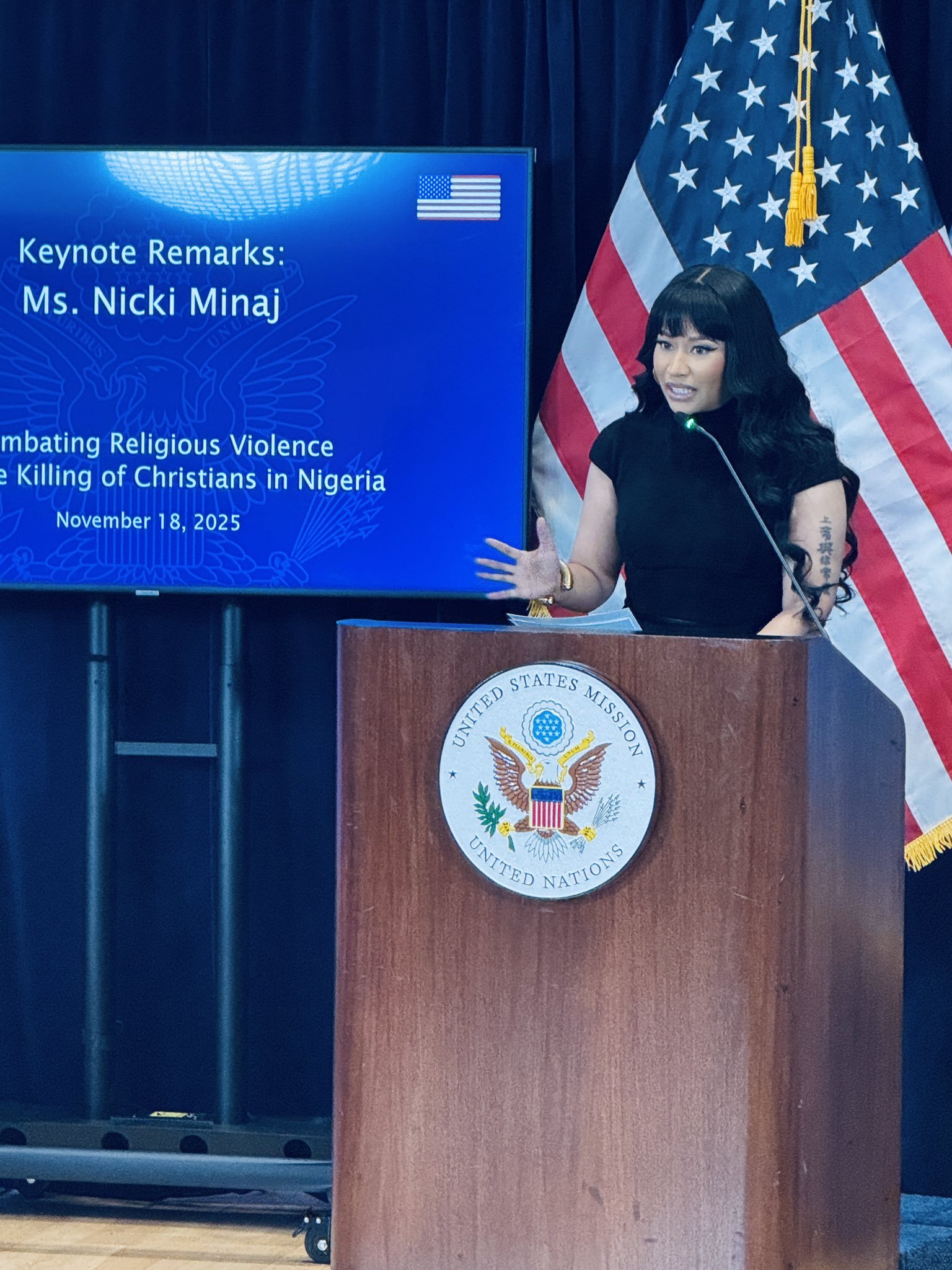
Nicki Minaj Speaks on Persecution of Christians in Nigeria
Nicki Minaj Speaks on Persecution of Christians in Nigeria
By Africa-Related, New York
"I would like to thank @POTUS for prioritizing this issue and for his leadership on the global stage in calling for urgent action to defend Christians in Nigeria." - @NICKIMINAJpic.twitter.com/gi8bLtF1Qt — @USUN November 18, 2025
TOPIC: Persecution of Christians in Nigeria
BRIEFER: U.S. Ambassador to the UN Mike Waltz
WHEN: Tuesday, November 18; 3:00 p.m. ET
BACKGROUND: On Tuesday, November 18, Ambassador Mike Waltz, U.S. Representative to the United Nations, hosted an event alongside grammy-winning rapper Ms. Nicki Minaj, faith leaders, and other prominent figures to address the critical issue of protecting religious freedom and the rising violence against Christians, particularly in Nigeria.
The event was live-streamed, and the link shared through USUN's X account: https://x.com/USUN?lang=en
Remarks at a U.S. Hosted Event on “Combatting Religious Violence and the Killing of Christians in Nigeria”
United States Mission to the United Nations
November 18, 2025
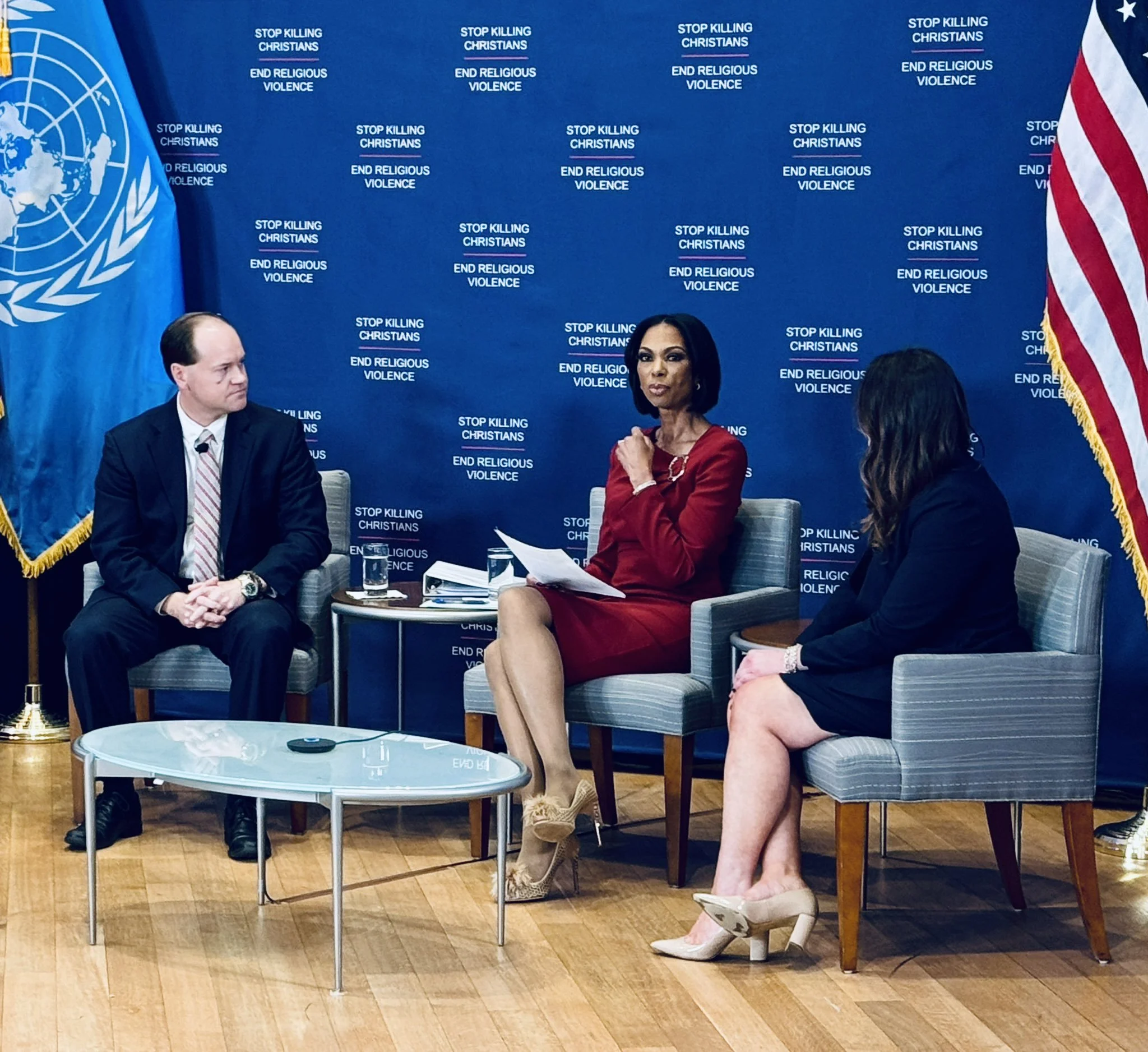
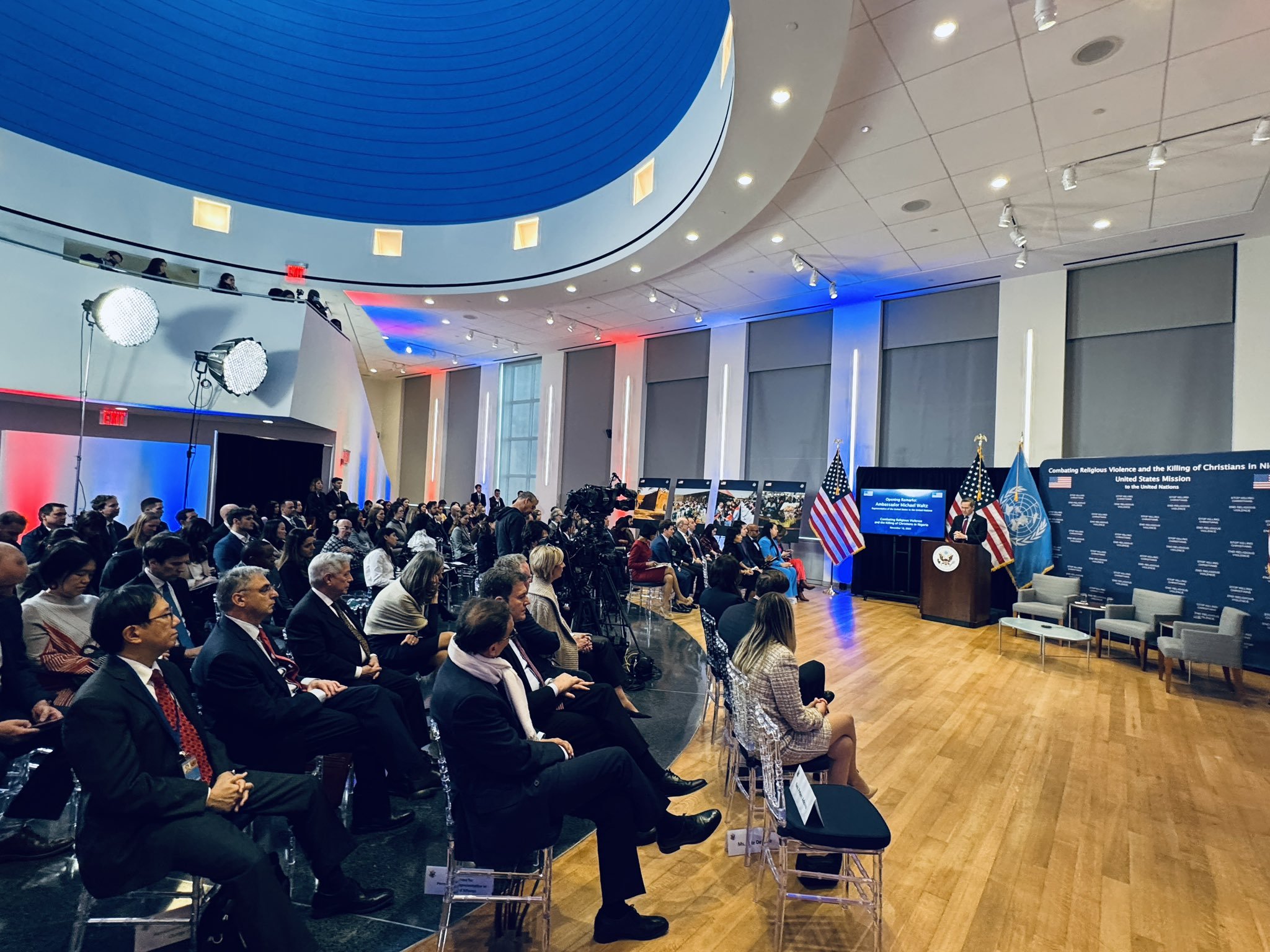
AMBASSADOR MIKE WALTZ: Oh my goodness. Thank you so much for everyone who has joined us today. And for a number of our ambassadors and delegates who have joined us, thank you for coming. To our faith leaders, survivors of some of these atrocities, and what I would call everyone here a friend of freedom, welcome to the United States Mission to the United Nations.
And today we speak of blood. We speak of the blood that still cries from Nigerian soil. This is deeply personal for me, as I know it is for Ms. Minaj and her pastor here, Peters Adonu, and others. I had the opportunity to serve in Nigeria in 2015, if you remember when then 300 little girls were kidnapped from their schools, ripped out of their homes and schools in the middle of the day, and in the middle of the night.
We sent a small team over there, and we trained – Nigeria’s equivalent of their Navy SEALs – to go get those girls back. It was righteous work. We didn’t get them all back, unfortunately, but we got some. Some will be lost forever. And if you remember the infamous save the girls campaign, that was 10 years ago. Folks, it’s still happening. It just happened yesterday. 25 little girls were ripped out of their school. I pray that we get them back. But what often happens is they’re sold into sex slavery. They’re forced to renounce their religion. They never see their homes or families again, and they literally disappear to the dark underbelly of extremism and sex slavery.
Look, 10 years later, the horror continues in the middle belt and in the north. Churches burn mothers, bury their children for the crime of singing Amazing Grace. Pastors have been beheaded. Pastors have been beheaded for preaching the Sermon on the Mountain, entire villages wake up to gunfire, because they dare to commit the crime, the crime of calling Jesus their Lord. People go to jail under blasphemy laws for simply wearing a cross. This is not random violence. This is genocide, wearing the mask of chaos.
Nigeria is Africa’s most populous nation and a vibrant mosaic of cultures and faiths, but it is under siege. And in the northern region, you have 12 Muslim majority states that are enforcing Sharia law and have enforced it since 1999. Jihadi groups like Boko Haram and the Fulani militias continue to unleash targeted violence. It is targeted. It is specific, on these Christian communities.
This year alone, the NGO, the nonprofit Open Doors, reports a very sharp rise in attacks. They’re reporting 80%, 80% of the violence against Christians worldwide is occurring in Nigeria. Thousands are displaced, are killed in faith based reprisals.
So weeks ago, a few weeks ago, the United States designated Nigeria a Country of Particular Concern for severe violations of religious freedom, spotlighting what can only be described as the government’s failure to curb these atrocities. And while Nigerian officials maintain that terrorism strikes all faiths indiscriminately, and they do. There is a body of evidence, and you are going to hear that from our experts today that paints a very grim picture of disproportionate suffering among Christians, where, again, families are torn apart. Clergy is repeatedly assassinated in entire congregations. Church congregations – you’re seeing, you see some of the images here – are driven into hiding.
Folks, we have an entire faith that is being erased, one bullet at a time, one torched Bible at a time. Yet, in the face of this evil one leader has refused to look away. President Trump has made the persecuted church his priority like no other president before him in American history. He was the first U.S. president to convene world leaders right here at the United Nations in 2019 to draw attention, draw the world’s attention to what is happening. He created the Religious Liberty Commission to fight for believers everywhere. And while Nigeria’s Christians cried out. He answered, and he has answered loudly. He has reminded the world that protecting Christians is not about politics. It is a moral duty.
So inspiration alone is not enough. We need voices that pierce the silence that we’ve heard from the international community, that humanizes the statistics that we keep hearing, and that demands accountability, and that’s why we’re here today to hear from a pastor that will dial in through our embassy in Nigeria, and we’re going to hear his first hand accounts of the suffering. We’re also going to hear from experts who have dedicated their lives to religious liberty.
I especially want to thank my friend Harris Faulkner, who, in addition to just being an amazing person, is also the daughter of a U.S. Army Colonel – so that makes her extra special in my heart – and she has spent much of her career protecting this most basic – folks this is the most basic of liberties: to worship as one sees fit.
But we are especially thrilled that we’re going to hear from an especially powerful voice, a fearless advocate whose passion for justice transcends borders, and she uses her voice to defend the voiceless. Hers are not empty words. They are a clarion call echoing the UN’s, the United Nations own Universal Declaration of Human Rights, which proclaims that, quote, everyone has the right to freedom of thought, to freedom of conscience and to freedom of religion. She steps onto this world stage, not as a celebrity, but as a witness. She uses and has used her influence to spotlight Nigeria’s persecuted church, reaching out to her 28 million followers, her Barbz, as I now have learned, and she uses this, and as she steps on this global stage to fund emergency relief and to demand action.
Nicki, I can’t tell you how much I admire you. You’re stepping up, you’re leaning into this issue. You’ve enjoyed amazing success, and you could be sitting back and just enjoying it. You could be just living the good life, but you’re willing to come here today and roll up your sleeves and let’s try to solve this. Let’s try to save these people. So everyone, please join me in welcoming a daughter of the Caribbean, a champion of the oppressed and a sister in Christ Nicki, Minaj.
###
MS. NICKI MINAJ: Hello everyone. I must say, I am very nervous, so please – Well, thank you, Ambassador Waltz for this invitation. It is an honor to stand on this stage with you and the other distinguished speakers here today to shine a spotlight on the deadly threat faced by thousands of Christians in Nigeria.
I would like to thank President Trump for prioritizing this issue and for his leadership on the global stage and calling for urgent action to defend Christians in Nigeria to combat extremism and to bring a stop to violence against those who simply want to exercise their natural right to freedom of religion or belief.
I stand here as a proud New Yorker with a deep sense of gratitude that we live in a country where we can freely and safely worship God, regardless of one’s creed, background, or politic. No group should ever be persecuted for practicing their religion, like I recently stated on social media, and we don’t have to share the same beliefs in order for us to respect each other. We’re way beyond thinking or expecting or assuming for you know, the person sitting next to you to have the exact same beliefs. We’re beyond that. That’s ridiculous, but that shouldn’t make one person feel less safe than anyone in any room.
Music has taken me around the globe. I have seen how people, no matter their language, culture, or religion, come alive when they hear a song that touches their soul. Religious Freedom means we all can sing our faith, regardless of who we are, where we live, and what we believe.
But today, faith is under attack in way too many places. In Nigeria, Christians are being targeted, driven from their homes and killed. Churches have been burned, families have been torn apart, and entire communities live in fear constantly, simply because of how they pray.
Sadly, this problem is not only a growing problem in Nigeria, but also in so many other countries across the world, and it demands urgent action. And I want to be clear, protecting Christians in Nigeria is not about taking sides or dividing people. It is about uniting humanity.
Nigeria is a beautiful nation with deep faith traditions and lots of beautiful Barbz that I can’t wait to see. When one’s church, mosque, or place of worship is destroyed. Everyone’s heart should break just a little bit, and the foundation of the United Nations, with its core mandate to ensure peace and security, should shake.
I am joined here today by peace builders, by faith leaders, by those who saw violence, saw rising intolerance, saw the threats clearly before us, and chose not to look the other way. I am inspired by their work to build interfaith ties, to see the humanity across the lines which might divide us, and to fight for security and liberty for all those who pray.
I look forward to our discussion today, and I hope it will encourage deepened solidarity for us to urgently work together to ensure every person can enjoy the right to believe, to worship, and to live in peace.
Barbz, I know you’re somewhere listening. I love you so very much. You have been the ultimate light in my life and career for so long. I appreciate you, and I want to make it very clear once again, that this isn’t about taking sides. This is about standing up in the face of injustice. It’s about what I’ve always done for my entire career, and I will continue to stand for that for the rest of my life. I will care if anyone anywhere is being persecuted for their beliefs.
Thank you.
###
share this story
Press Conference by Nigerian-American Community Organizations on the U.S. Designation of Nigeria as a Country of Particular Concern
A coalition of leading Nigerian American organizations will hold a joint virtual press conference to address the recent U.S. government designation of Nigeria as a Country of Particular Concern (CPC) by President Donald J. Trump.
By Africa-Related, New York
The Nigerian Center, Washington D.C
Written By Nigerian Center
*MEDIA ADVISORY*
JOINT VIRTUAL PRESS CONFERENCE BY NIGERIAN-AMERICAN COMMUNITY ORGANIZATIONS ON THE U.S. DESIGNATION OF NIGERIA AS A COUNTRY OF PARTICULAR CONCERN
WHO:
The Nigerian Center, the Nigerian American Public Affairs Committee (NAPAC), the Nigerians in Diaspora Organization, Americas (NIDOA), and the Nigerian Physicians Advocacy Group (NPAG).
WHAT:
A coalition of leading Nigerian American organizations will hold a joint virtual press conference to address the recent U.S. government designation of Nigeria as a Country of Particular Concern (CPC) by President Donald J. Trump.
The leaders will discuss the implications of this designation, its potential impact on Nigeria and the Nigerian American community, and present a united call for dialogue and collaboration. Together, they will advocate for a constructive approach that reinforces the historic friendship and strategic partnership between the United States and Nigeria. Speakers will offer a live question and answer session with journalists.
SPEAKERS:
Gbenga Ogunjimi, Executive Director, Nigerian Center
Susan Edionwe MD, FACS, DipABLM, President, Nigerian Physicians Advocacy Group (NPAG)
Bukola Olaoye, Chairman, Nigerians in Diaspora Organization, Americas (NIDOA)
Prince Maduka Nkuku, President, Nigerian American Public Affairs Committee (NAPAC)
Dr. Malcolm Fabiyi, President,Governance Advancement Initiative for Nigeria (GAIN)
WHEN: Friday, November 14, 2025 | 11:00 AM EST
WHERE: Virtual (Zoom Login)
WHY: Following their joint statement, the organizations will outline recommendations for strengthening collaboration between U.S. and Nigerian policymakers, diaspora leaders, and civil society groups to ensure that the designation fosters a more secure, just, and prosperous Nigeria.
Please RSVP to Liz Voyles at liz@brassrc.com. This event is open to credentialed journalists only, and all remarks are on the record. An emailed RSVP is required for admission.
***
About Coalition:
Nigerian Center
The Nigerian Center is a Washington, DC–based nonprofit organization dedicated to advancing immigrant justice, financial empowerment, and cultural visibility. Through legal services, advocacy, and education, the Center amplifies Nigerian and African immigrant voices and fosters systemic inclusion in American society.
Nigerian American Public Affairs Committee USA (NAPAC USA)
The Nigerian American Public Affairs Committee (NAPAC USA) is a national nonpartisan organization that promotes civic engagement, public policy advocacy,voter registration/education, and leadership development within the Nigerian American community.
Nigerians in Diaspora Organization, Americas (NIDOA)
The Nigerians in Diaspora Organization, Americas (NIDOA) is the umbrella body for Nigerians living in North and South America. NIDOA mobilizes the Nigerian diaspora to contribute to national development, promote unity and collaboration among Nigerians abroad, and strengthen partnerships that advance Nigeria’s progress and global image.
Nigerian Physicians Advocacy Group (NPAG)
The Nigerian Physicians Advocacy Group (NPAG) is a 501(c)(4) affiliate of the Association of Nigerian Physicians in the Americas, created to advance good governance in Nigeria, the United States, and beyond. NPAG is a coalition of Nigerian-American medical professionals committed to advancing health equity, public policy, and community well-being, promoting collaboration between U.S. and Nigerian health institutions to improve access, quality, and outcomes.
share this story

Press Release: Nigerian Center and Upwardly Global Partner to Expand Job Readiness Opportunities for Immigrants
Washington, DC — The Nigerian Center is proud to announce a new collaboration with Upwardly Global, a leading national nonprofit organization that helps skilled immigrants and refugees rebuild their careers in the United States. Together, the two organizations will host a virtual information session on Tuesday, May 28th at 6:30 p.m. EST, to introduce job readiness and employment resources for immigrants and offer referrals to the Nigerian Center’s legal and social services.

FOR IMMEDIATE RELEASE
April 11, 2025
Nigerian Center and Upwardly Global Partner to Expand Job Readiness Opportunities for Immigrants
Washington, DC — The Nigerian Center is proud to announce a new collaboration with Upwardly Global, a leading national nonprofit organization that helps skilled immigrants and refugees rebuild their careers in the United States. Together, the two organizations will host a virtual information session on Tuesday, May 28th at 6:30 p.m. EST, to introduce job readiness and employment resources for immigrants and offer referrals to the Nigerian Center’s legal and social services.
This partnership aims to provide immigrant professionals with tools and guidance to re-enter their fields of expertise, navigate the U.S. job market, and access wraparound legal services, including support with work authorization, immigration, and family-related matters.
“Our partnership with Upwardly Global comes at a critical time when many of our community members are seeking not just survival, but the opportunity to thrive. Through this collaboration, we’re bridging the gap between legal support and economic mobility by helping skilled immigrants take meaningful steps toward professional stability and long-term success.”
said Adejumoke Ojo, Program Director at the Nigerian Center.
During the virtual information session, participants will learn about Upwardly Global’s free job coaching, resume assistance, interview prep, and access to employer networks. The Nigerian Center will also provide information on legal aid services, including support with immigration cases, and related services that help to eliminate legal barriers to gainful employment.
“Upwardly Global’s free Career Coaching Program provides critical resources that empower immigrant and refugee job seekers as they navigate the U.S. job market. Through the coaching program, Upwardly Global works to bridge the gap between recently arrived newcomers (those who have been in the country for ten years or less) restarting their careers and employers in need of talent. Our access to these job seekers is enhanced through partnership with establishments like the Nigerian Center."
said Dr. Lillian Agbeyegbe, Program Director, Eastern Region at Upwardly Global.
To register, visit www.nigeriancenter.org/events/jobreadiness2025
For media inquiries, please contact: info@nigeriancenter.org
###
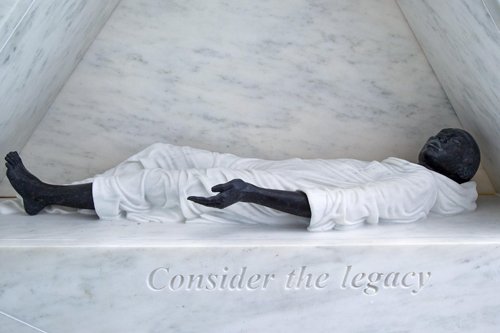
International Day of Remembrance of the Victims of Slavery and the Transatlantic Slave Trade
Beginning in 2008, 25 March was designated as the annual International Day of Remembrance of the Victims of Slavery and the Transatlantic Slave Trade.
New York
International Day of Remembrance of the Victims of Slavery and the Transatlantic Slave Trade
In 2006, the United Nations General Assembly, through resolution 61/19, recognized that “the slave trade and slavery are among the worst violations of human rights in the history of humanity, bearing in mind particularly their scale and duration” and designated 25 March 2007 as the International Day for the Commemoration of the Two-hundredth Anniversary of the Abolition of the Transatlantic Slave Trade. The following year, through resolution 62/122, it designated 25 March as an annual International Day of Remembrance of the Victims of Slavery and the Transatlantic Slave Trade, beginning in 2008.
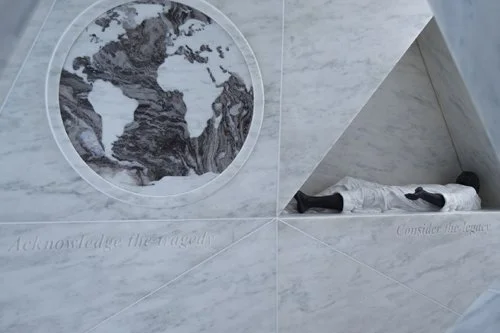
The Ark of Return – The Permanent Memorial to Honour the Victims of Slavery
and the Transatlantic Slave Trade at the United Nations

KIDNAPPED In NIGERIA
A mother’s heart-wrenching story powerfully demonstrates why nowhere in Nigeria is truly safe from the pervasive menace of kidnappers and criminal gangs, least of all the nation’s capital, Abuja. This unfortunate reality underscores the growing fears and concerns among Nigerians, as they grapple with the constant threat that looms over their daily lives.
by oyiza adaba, New york
A SPECIAL REPORT
Deborah Sanni (RIP) was last seen in Area 1 on March 3, 2024. (Photo: Sanni Family)
On March 3, 2024, 29-year old Deborah Sanni, an Area 1 resident of Abuja, stepped out of their family home around 8:00 PM to pick some supplies from a nearby shop. Then the unthinkable happened.
"Every day I wake up with her thoughts on my mind. I sleep with her thoughts on my mind, because it's just like a dream - a nightmare." - Mrs. Matilda. Sanni
Her grieving, yet strong mother, Mrs. Matilda Sanni recalls the heart-wrenching incident, which powerfully explains why nowhere in Nigeria is truly safe from kidnappers - least of all the nation’s capital, Abuja. This unfortunate reality reflects the growing fears and concerns among Nigerians, as they grapple with the constant threat that looms over their daily lives.
In Deborah Sanni's case, her family paid a ransom on the same night, which her captors withdrew before dawn on March 4, 2024. Then they went silent. After a difficult week of searching, her family learned that her body had been found a week earlier and sent to a mortuary in another part of Abuja. This raises concerns about communication between the Nigerian Police, other security agencies, and hospitals.
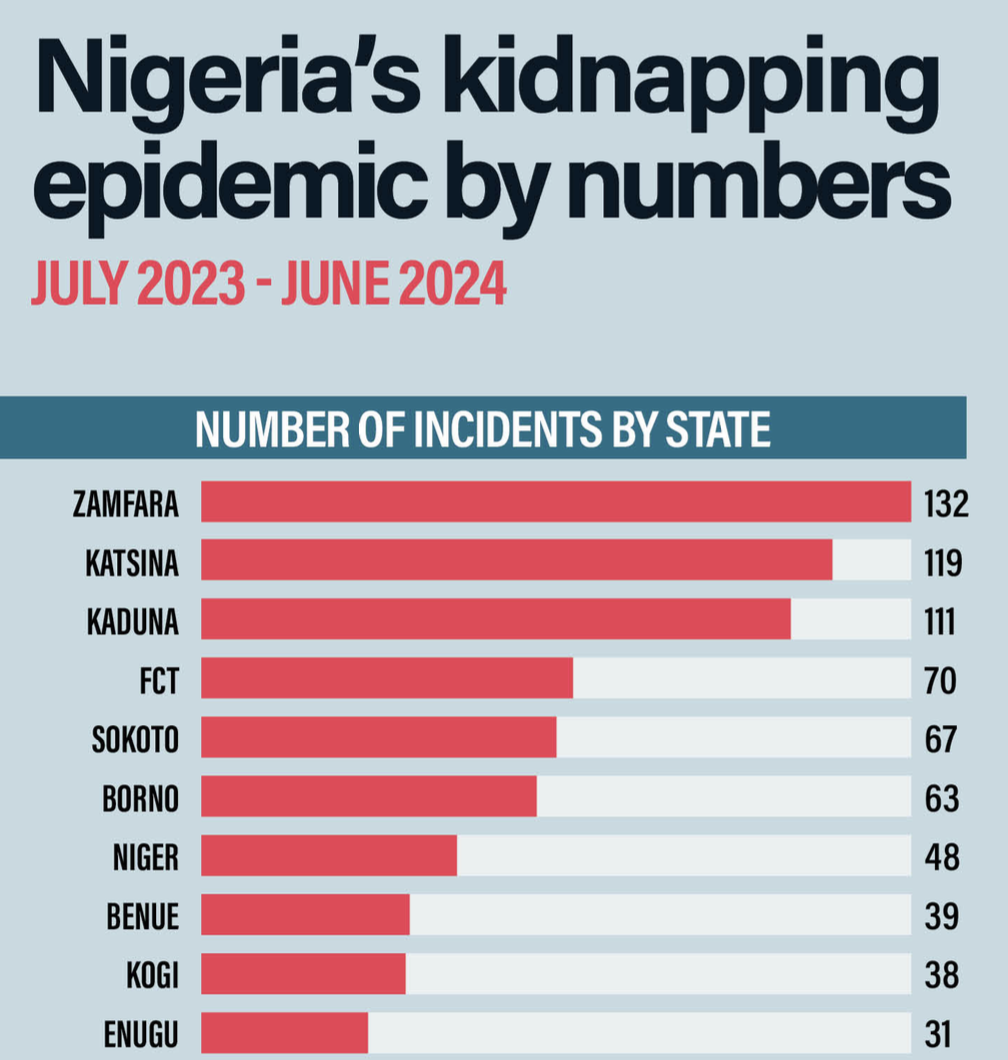
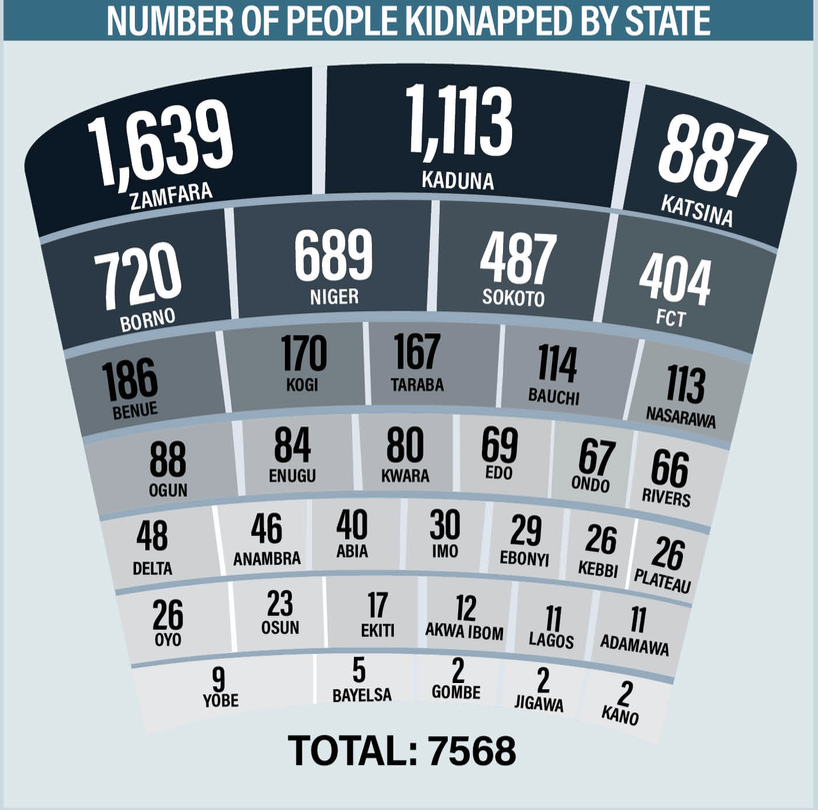
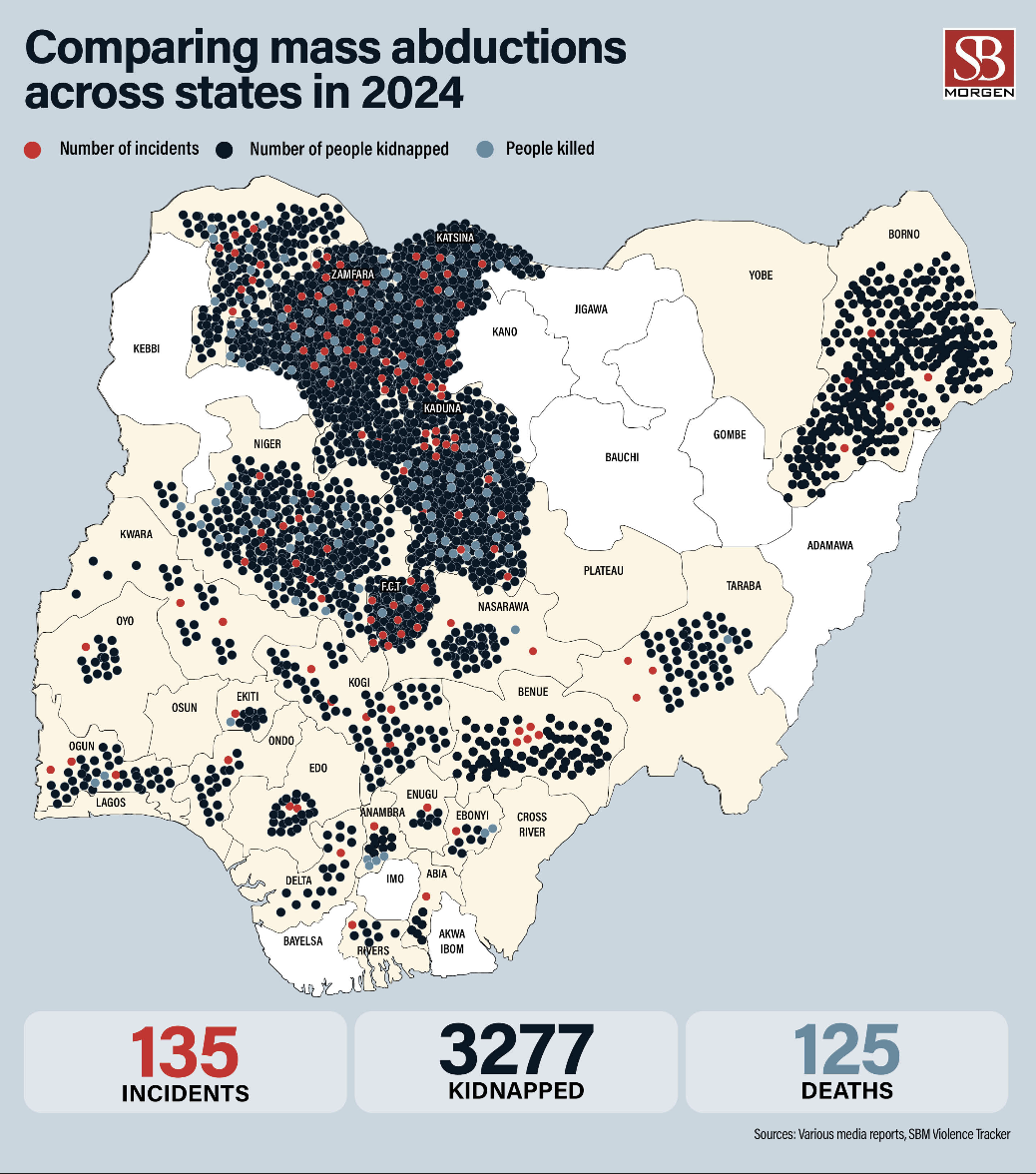
As we close out our year in 2024, we take a moment to remember all the victims of kidnapping in Nigeria, along with their families who continue to suffer. It is a sobering experience to review these statistics that reflect the plight of individuals who, tragically, will not be spending the upcoming year with their loved ones. The emotional toll this takes on families and communities is profound and deserves our attention and compassion.
SBM IntelLIGENCE 2024 Report
Nigeria’s security crisis has become increasingly complex, with armed groups and non-state actors exploiting the state’s weakened influence. This includes Boko Haram’s resurgence in the Northeast, armed gangs in the Northcentral and Northwest, secessionist violence in the Southeast, and gang-related issues in the Southwest. Amid these diverse security threats, widespread kidnap for ransom has emerged as a common thread.
Grim Reaping: Economics of Nigeria’s Kidnap Industry – A 2024 Update
- SBM INTELLIGENCE -
kidnapping statistics: SBM Intel 2024 Report
SHARE THIS STORY
Two UN Exhibitions Shed Light On Human Rights & Gender-Based Violence
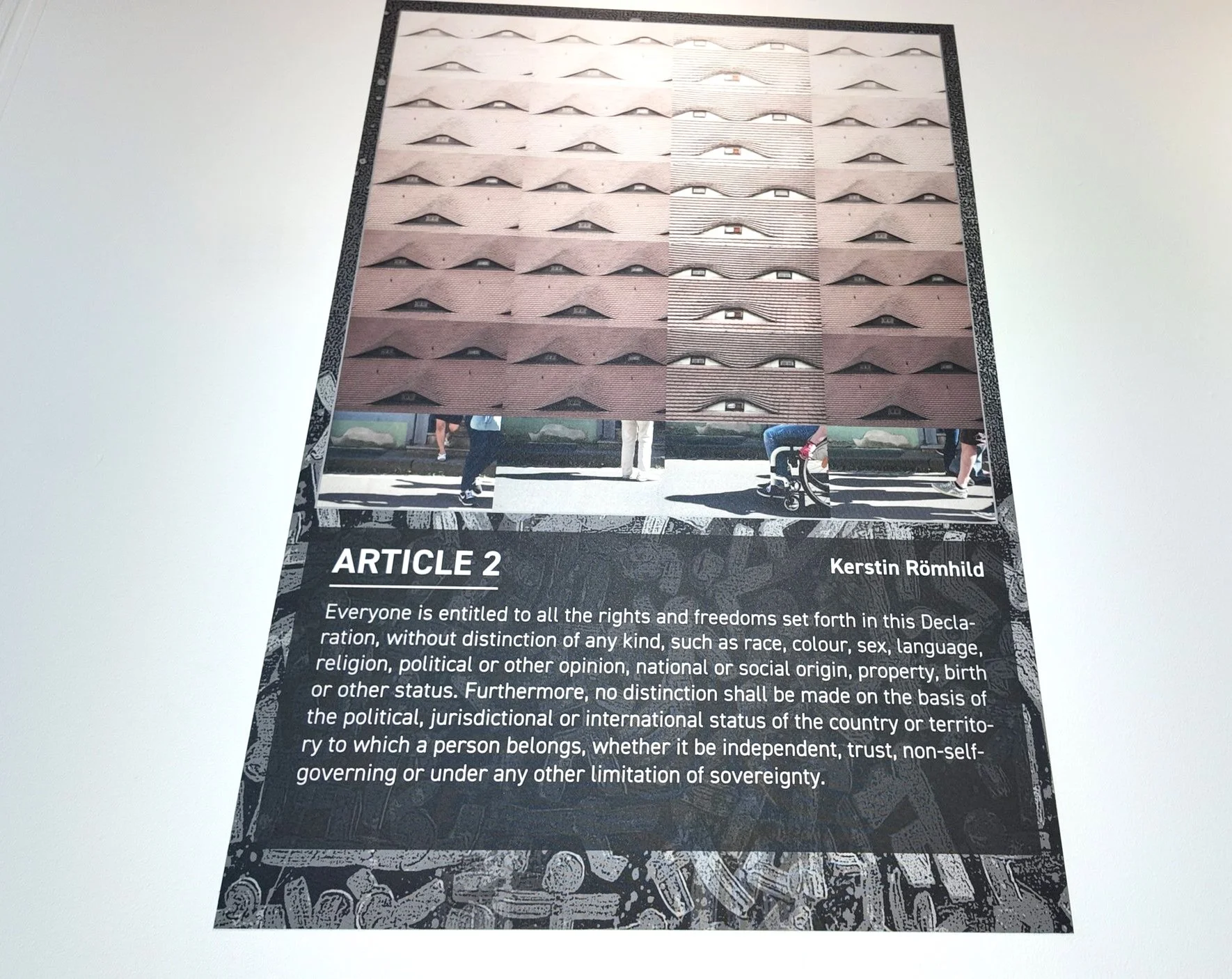
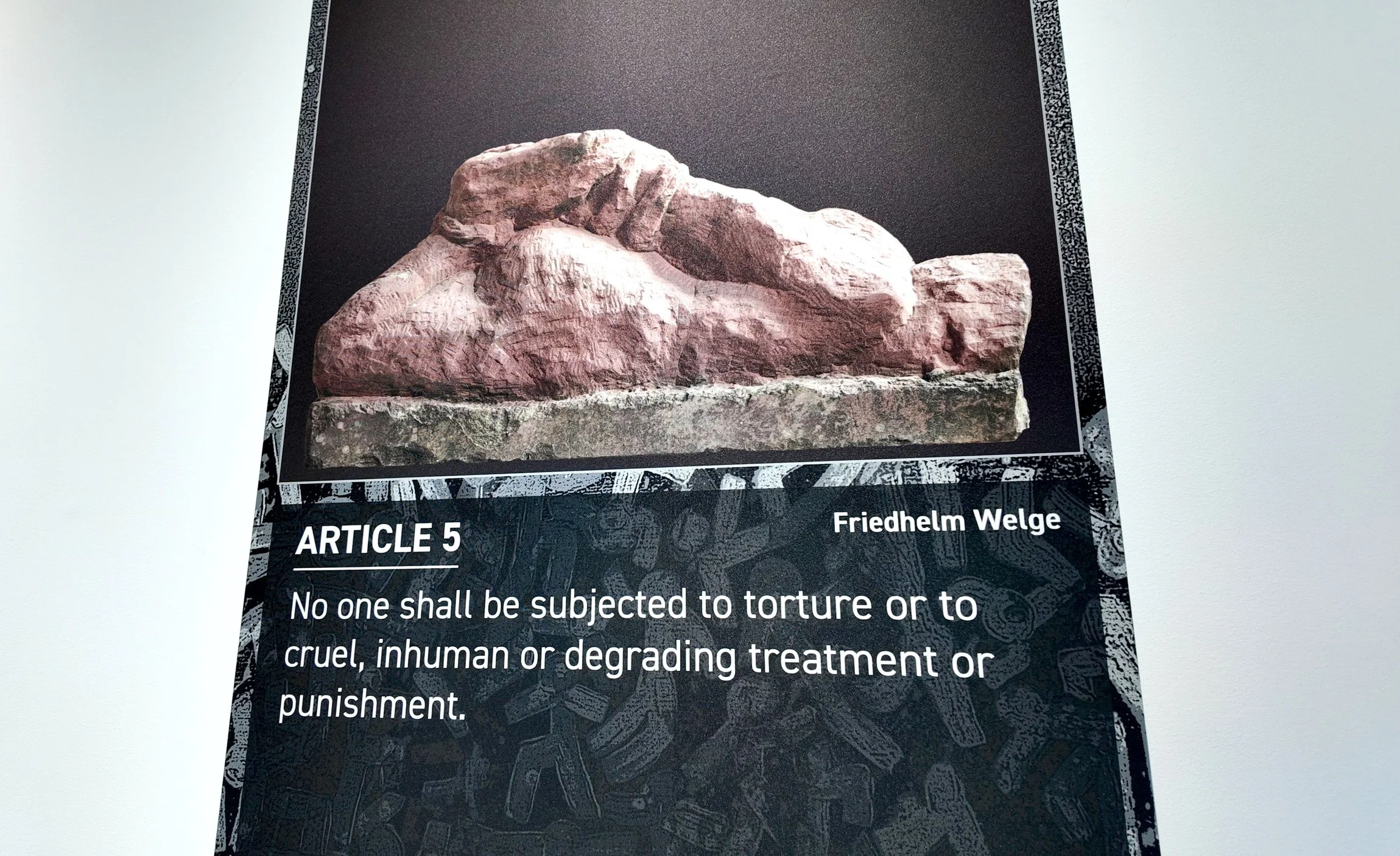
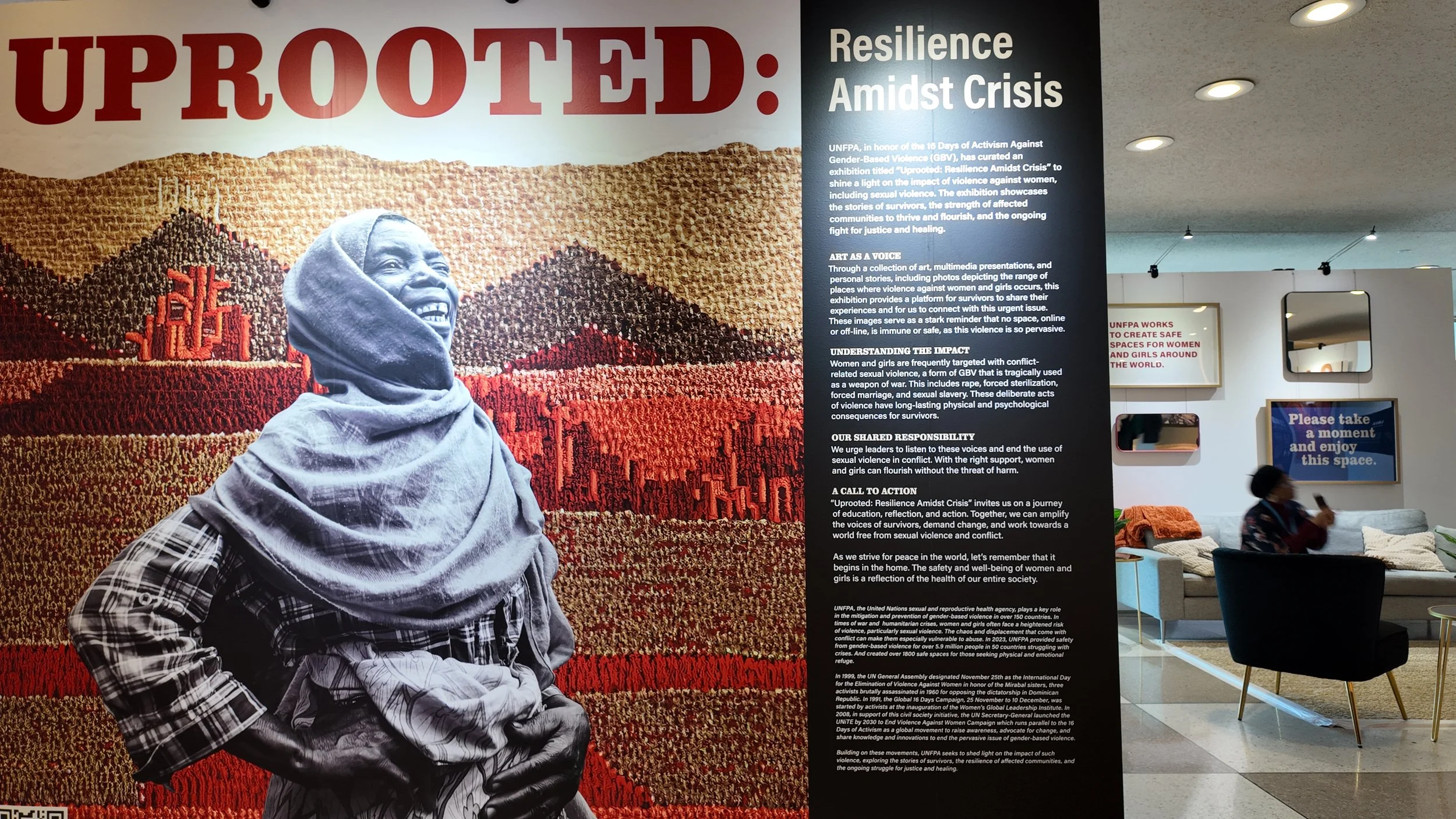
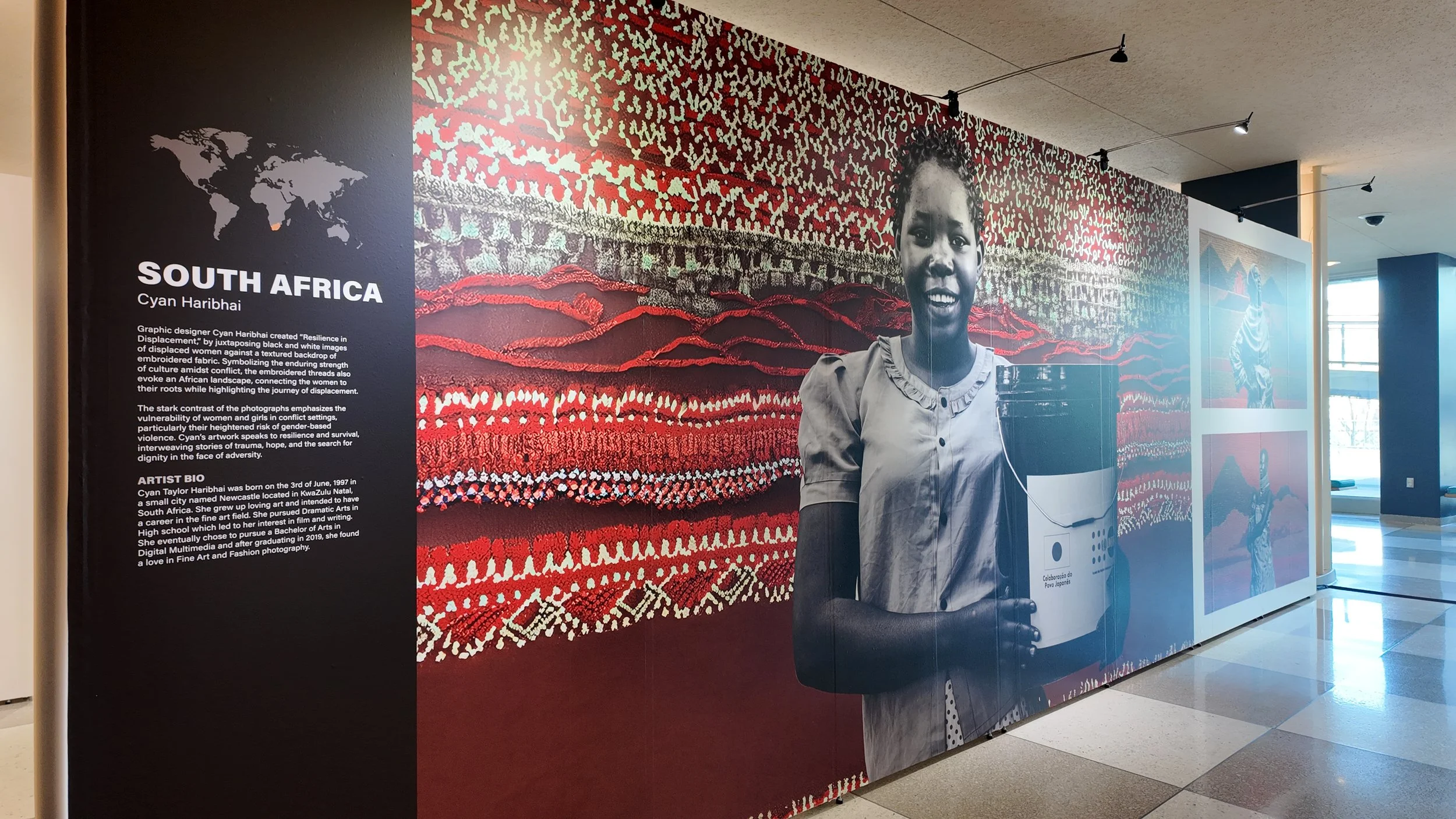
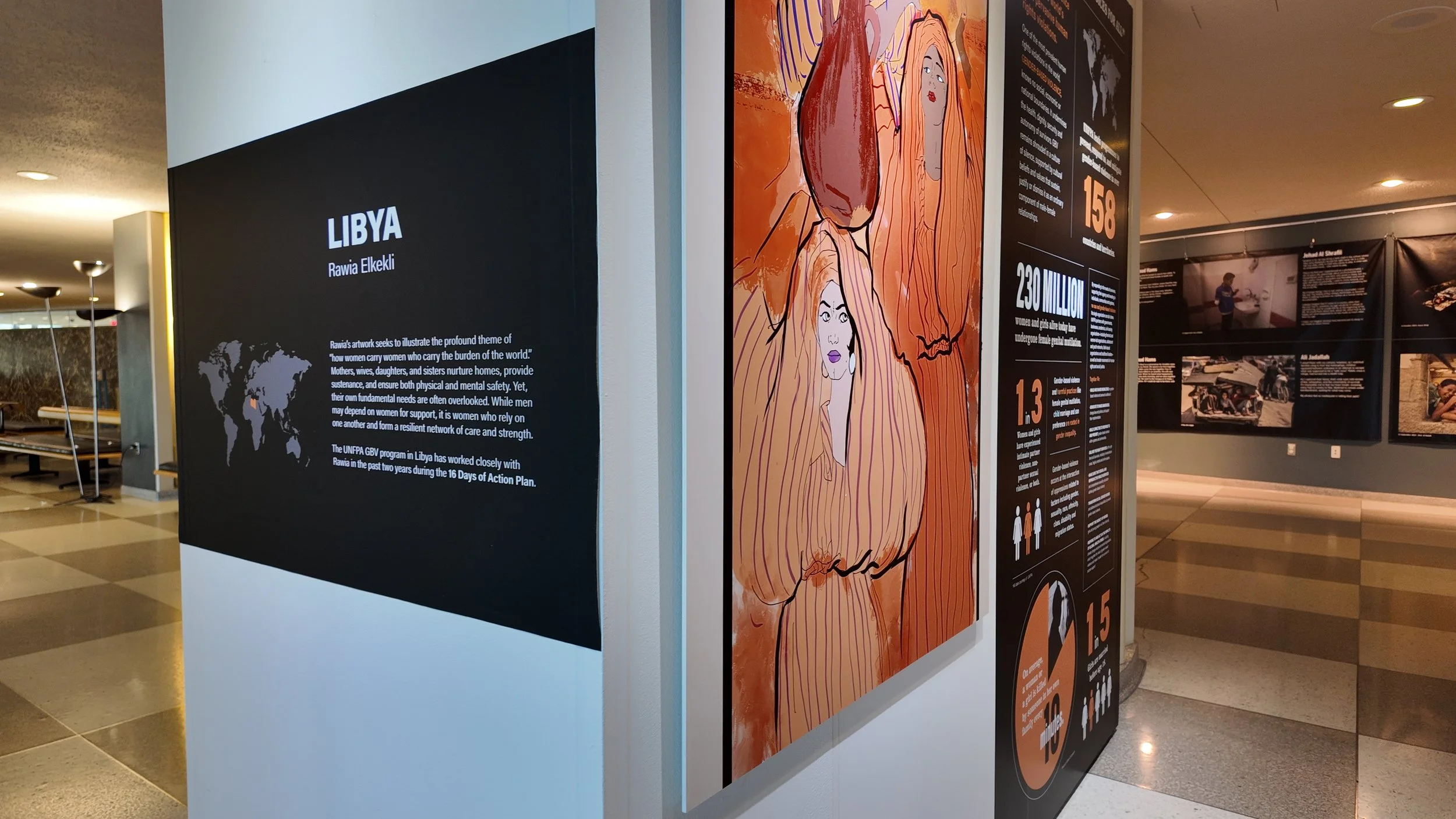
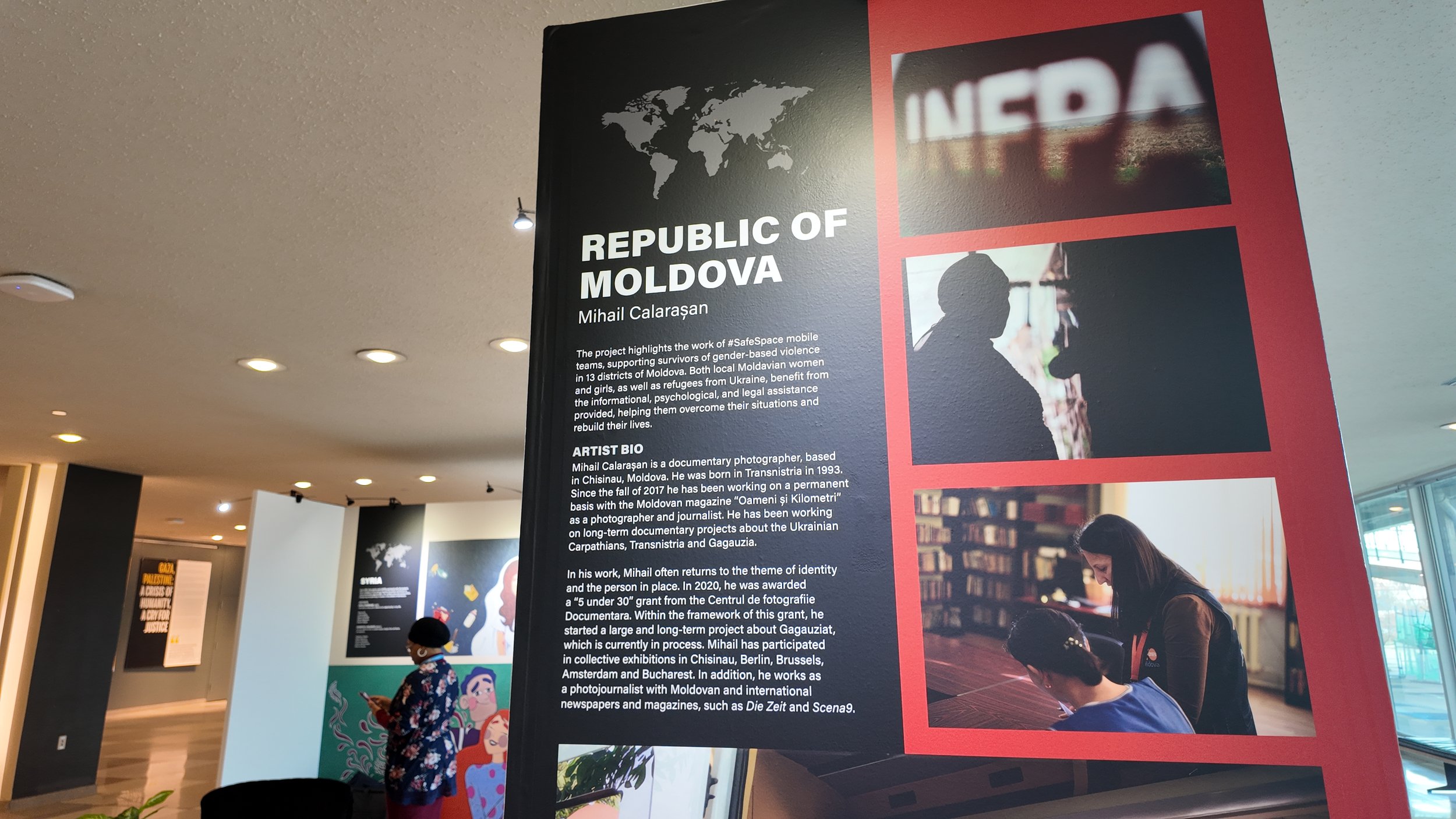
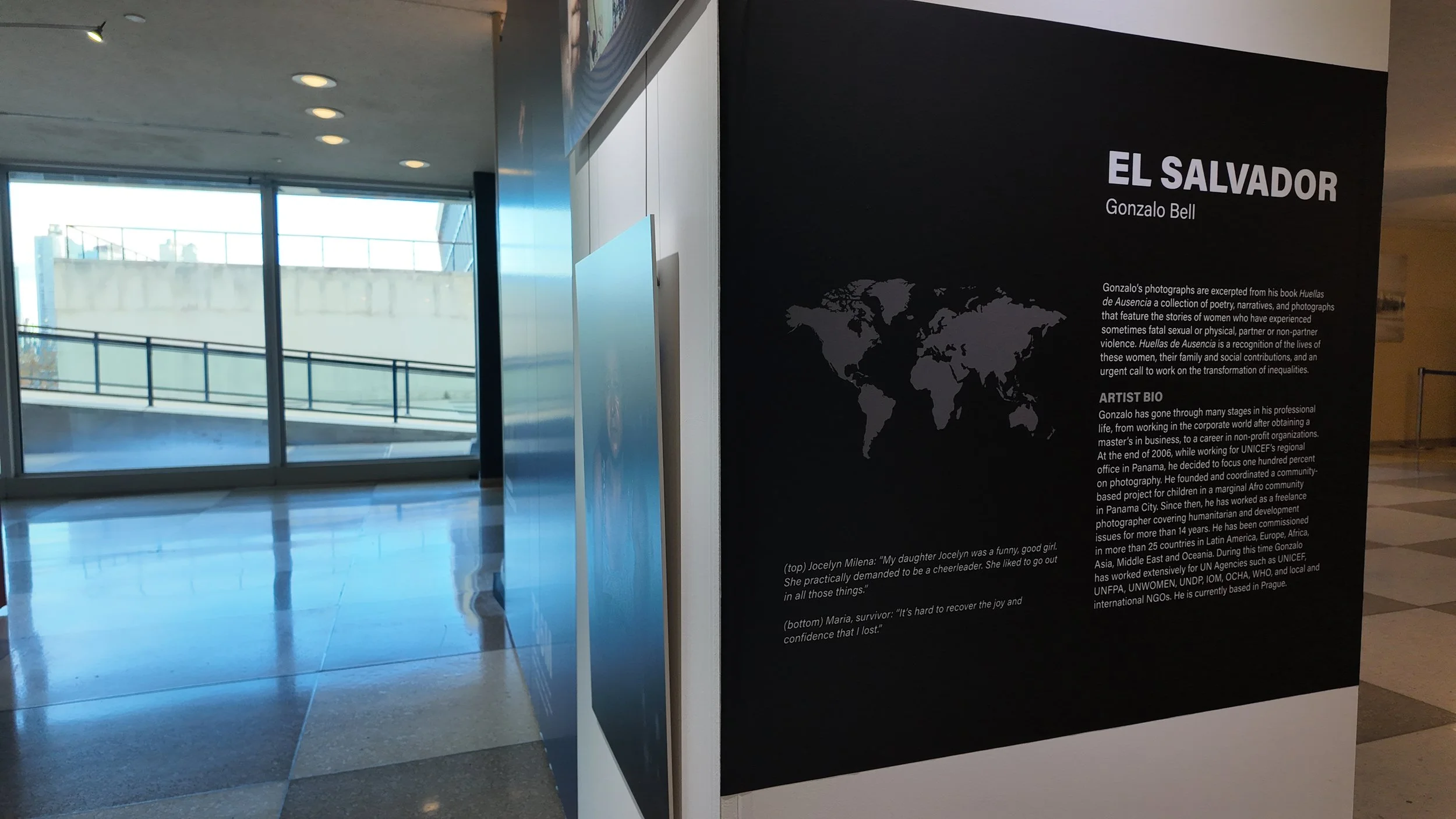
Two exhibition are showing at the lobby of the United Nations HQ in New York - Pictures for the Human Rights features 30 pictures by 30 artists of 30 articles of the Universal Declaration of Human Rights; while Uprooted: Resilience in Crisis sheds light on the impact of gender-based violence, exploring the resilience of survivors.
by Oyiza Adaba
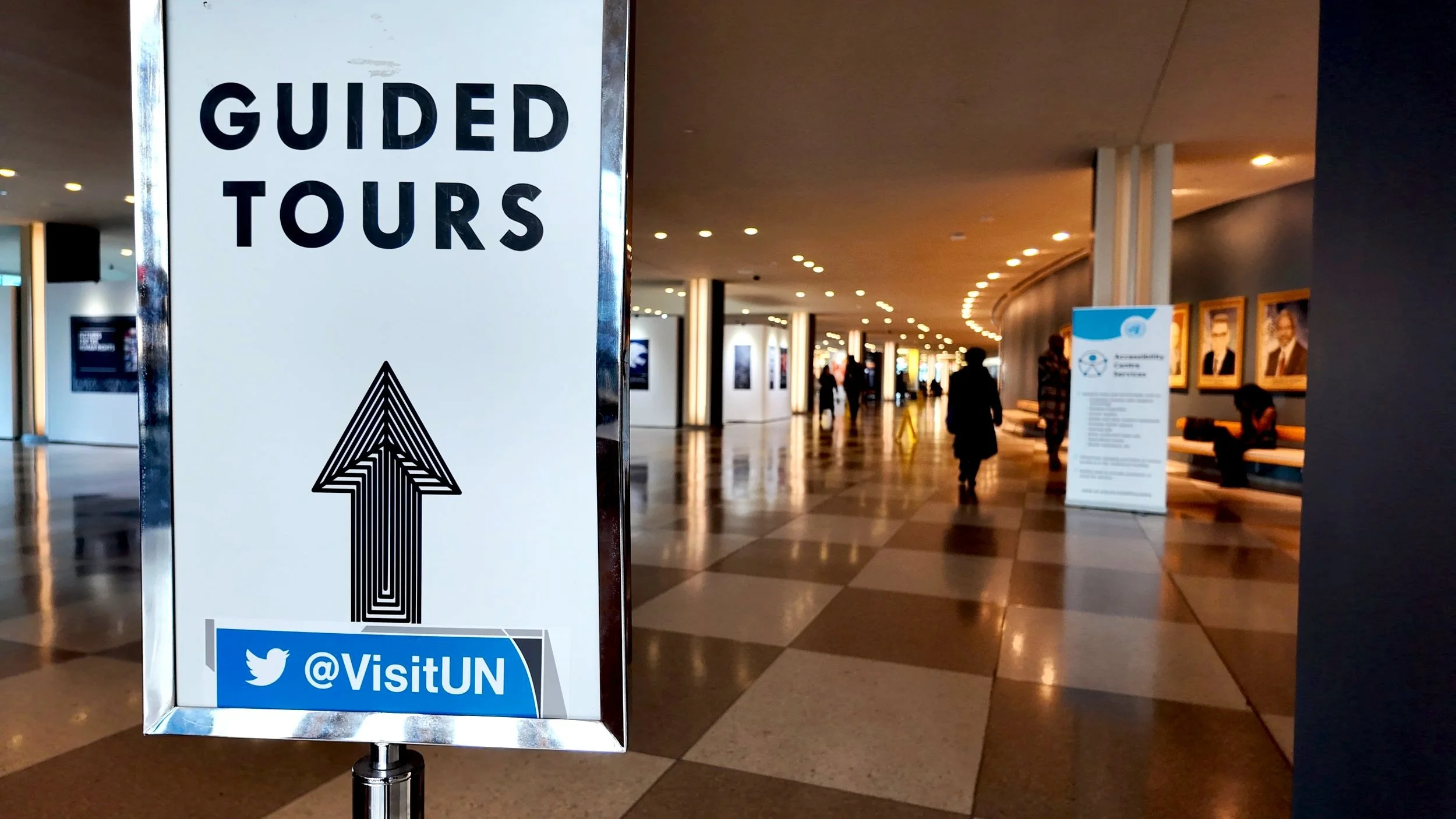
Free guided tours at the United Nations Headquarters in New York. (Africa-Related)
Exhibition
UN Exhibits
United Nations HQ, New York
Two exhibitions are showing at the lobby of the United Nations HQ in New York - Pictures for the Human Rights features 30 pictures by 30 artists of 30 articles of the Universal Declaration of Human Rights; while Uprooted: Resilience in Crisis sheds light on the impact of gender-based violence, exploring the resilience of survivors.
Pictures for the Human Rights
According to UN Exhibits, this exhibition features 30 pictures in which artists from many countries have interpreted the 30 articles of the Universal Declaration of Human Rights in their own visual language. These images make human rights easier to understand in words and pictures, inspiring visitors to defend and promote Human Rights for everyone everywhere. The exhibit is in connection with Human Rights Day (10 December).
This exhibit is organized by the Pictures for the Human Rights e.V and endorsed by the Permanent Mission of the Federal Republic of Germany to the United Nations.
This exhibition is on display until 10 January 2025





Uprooted: Resilience in Crisis (Photos by Africa-Related)
According to Un Exhibits, this exhibit seeks to shed light on the impact of gender-based violence, exploring the stories of survivors, the resilience of affected communities, and the ongoing struggle for justice and healing. Through a diverse array of art forms, it offers a platform for survivors to share their experiences and for audiences to engage with this urgent issue. This exhibit is organized and endorsed by the UN Population Fund (UNFPA).
This exhibition is on display until 7 February 2025
Photos by Africa-Related



share this story

United Nations Women's Guild Annual Bazaar
Highlights from United Nations Women's Guild Annual Bazaar
by Oyiza Adaba
UN Women’s Guild Bazaar 2024
Highlights
United Nations Women's Guild Holiday Bazaar
Date: December 5, 2024.
Time: 2.30pm
Venue: UN HQ Lobby, New York
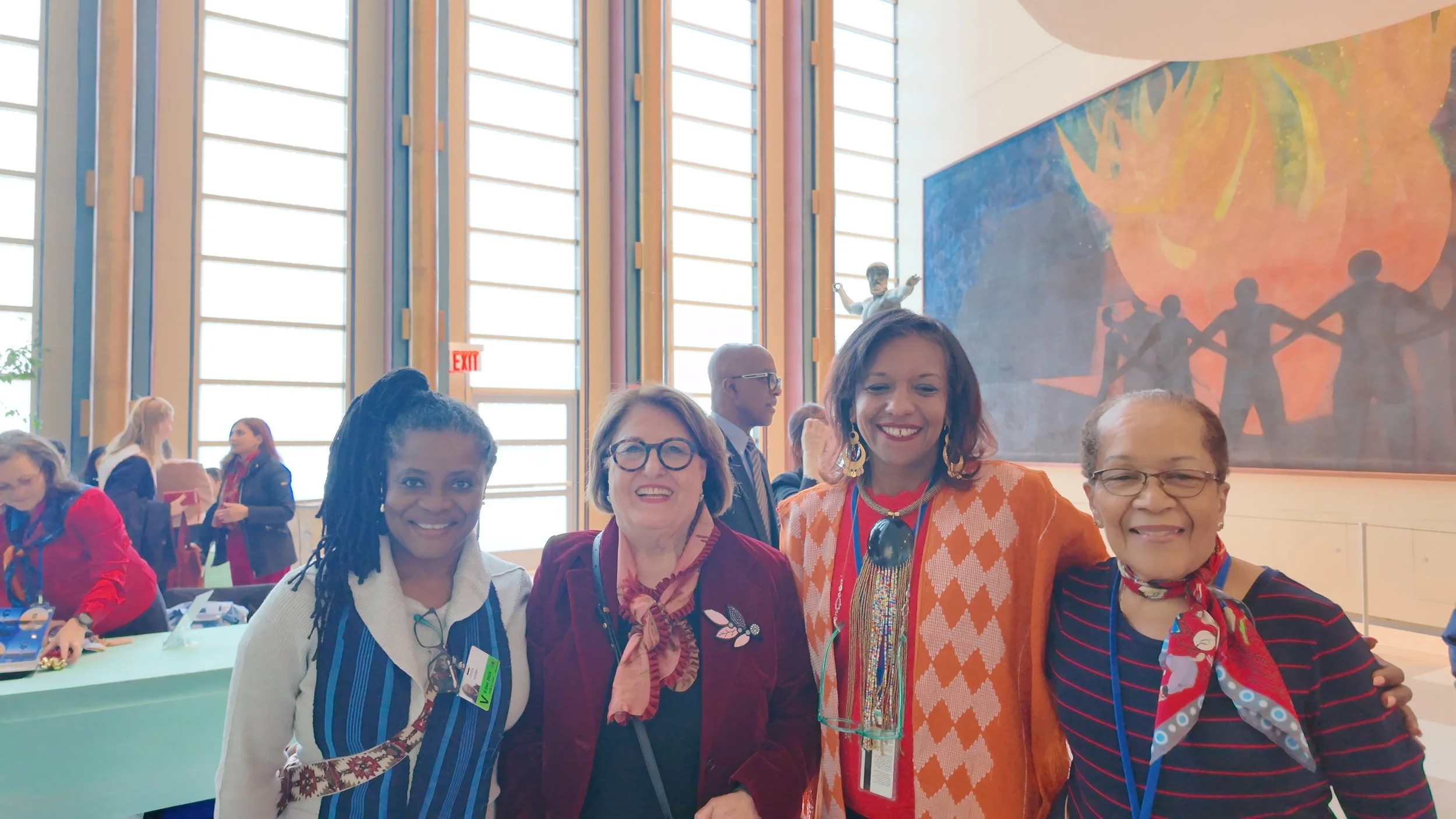
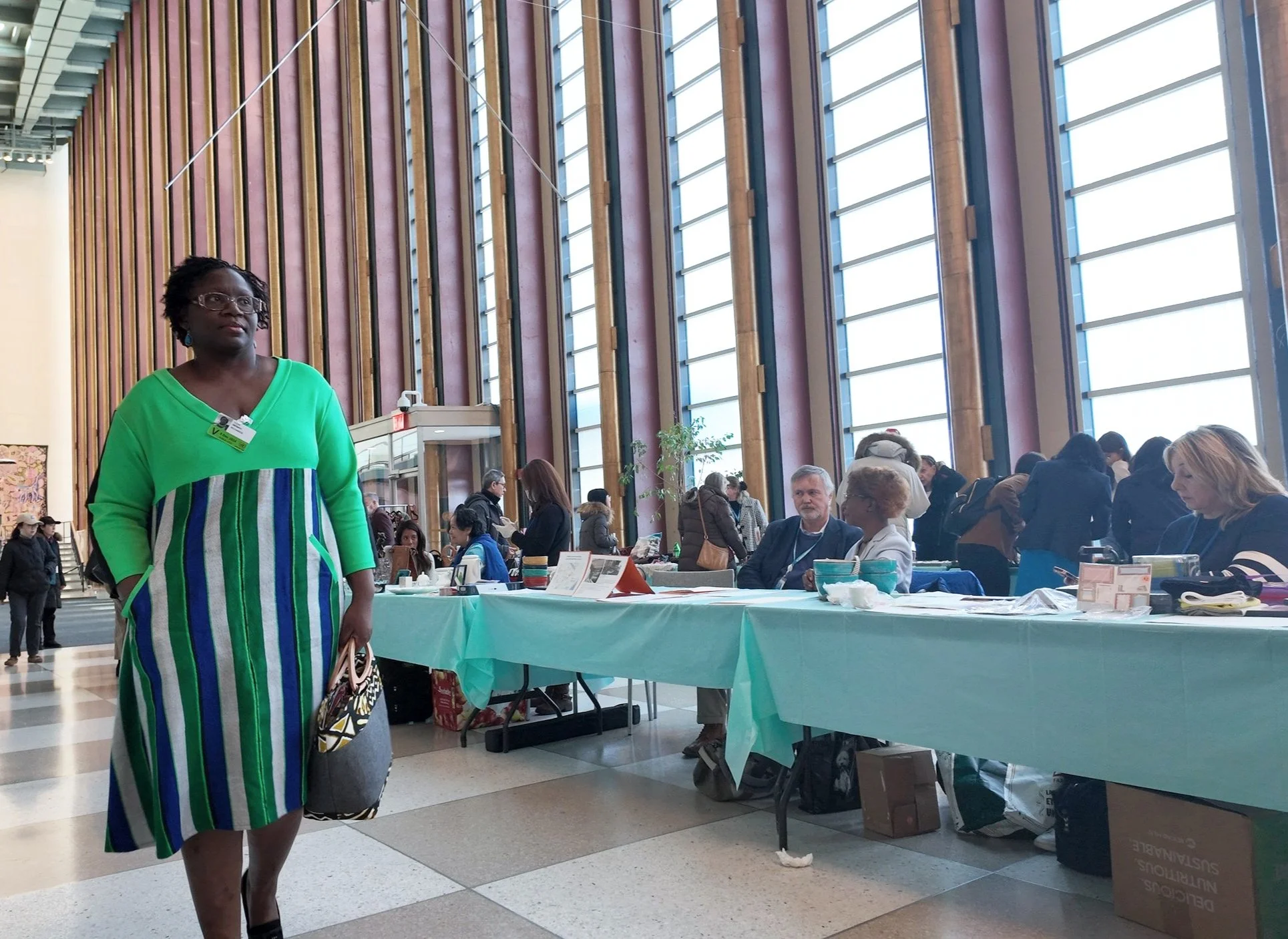
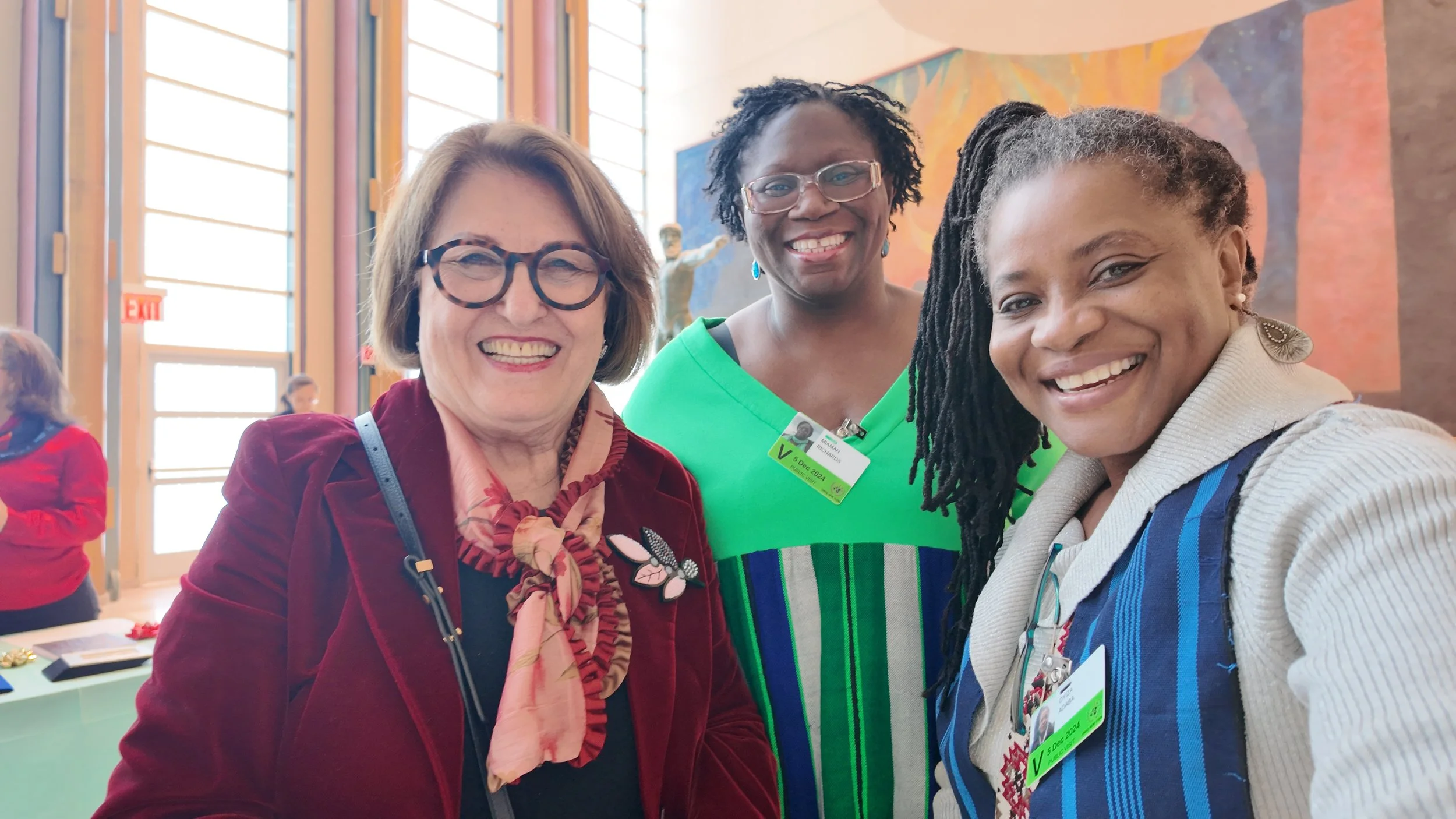
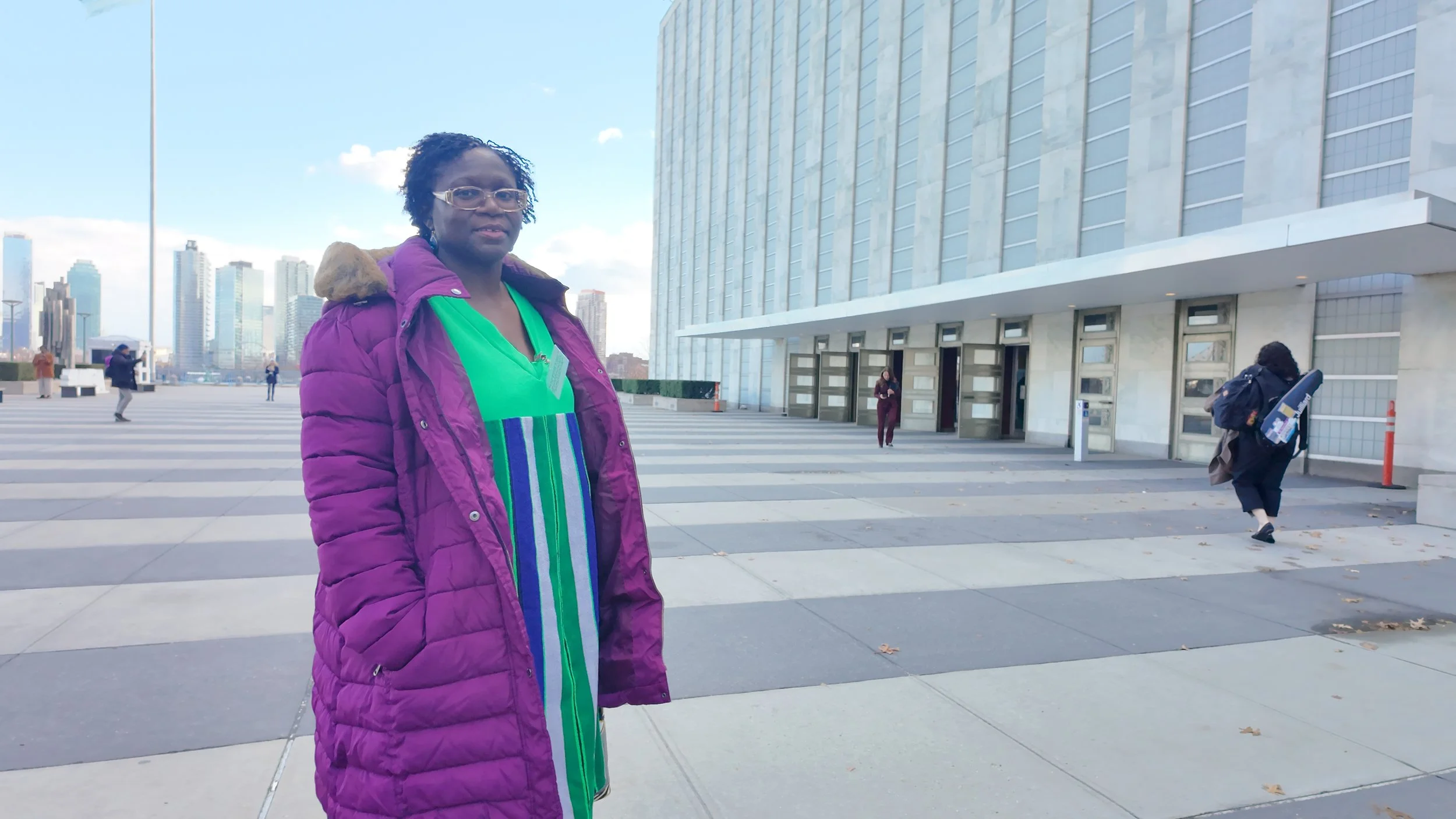
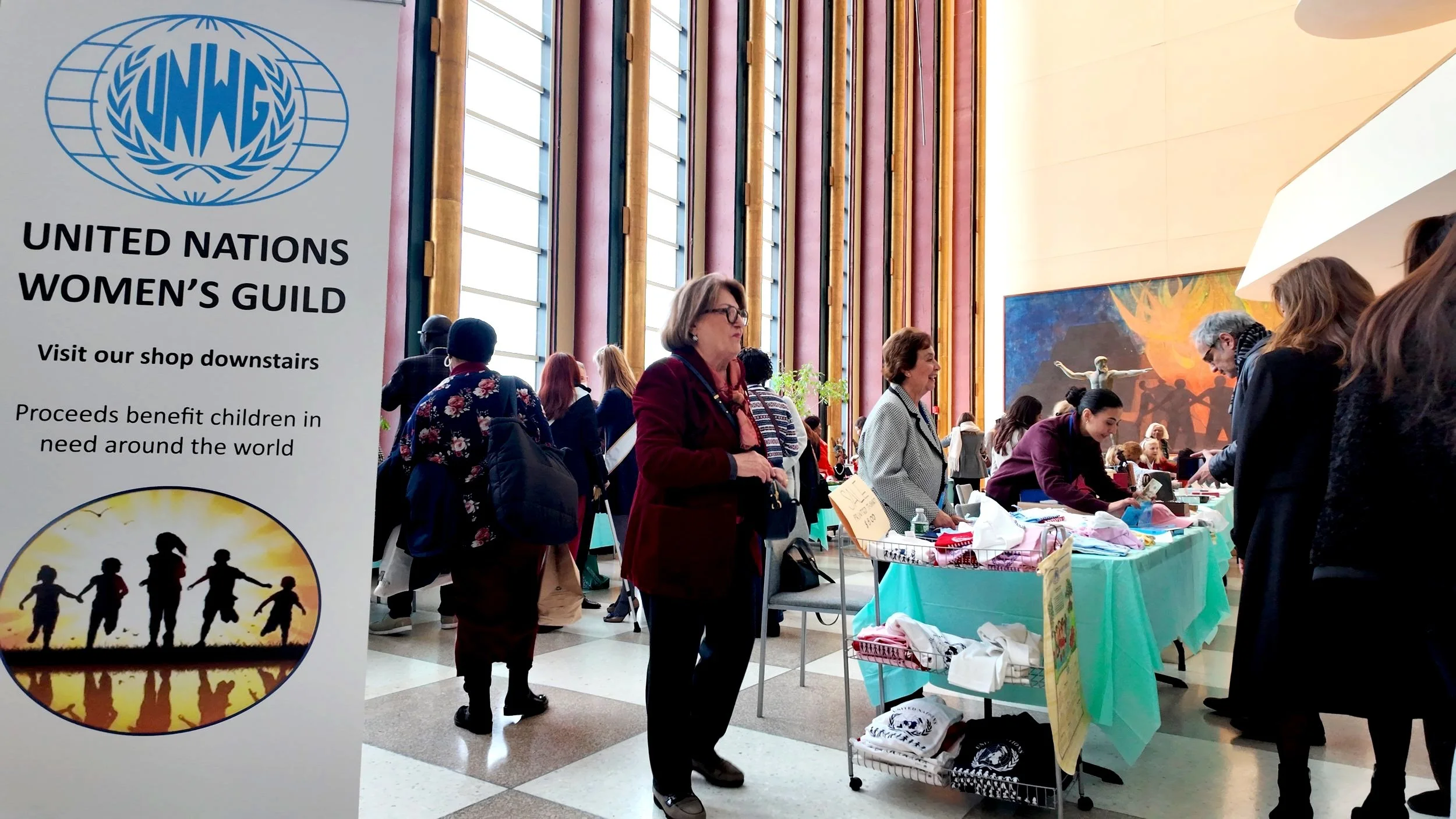
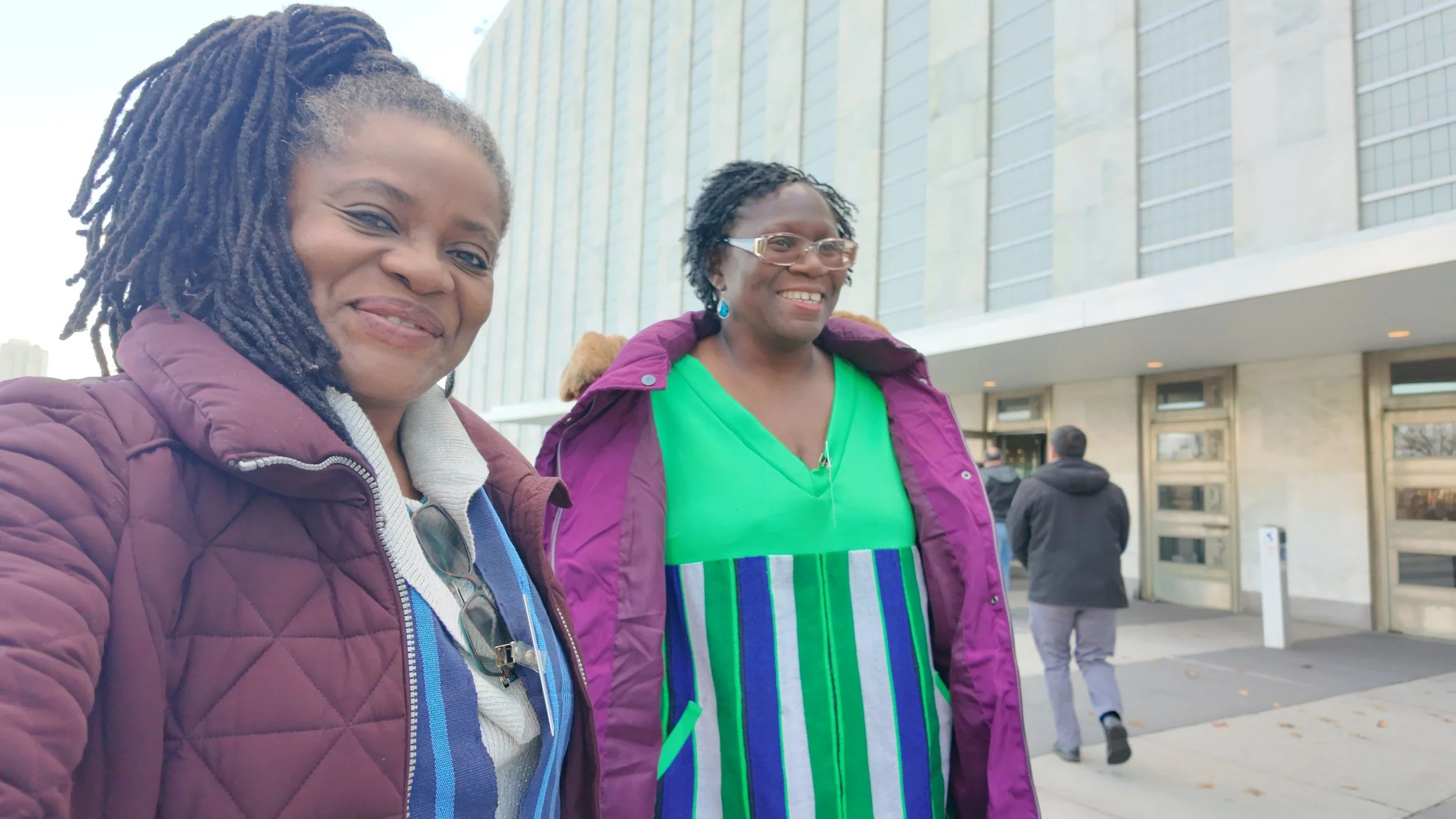
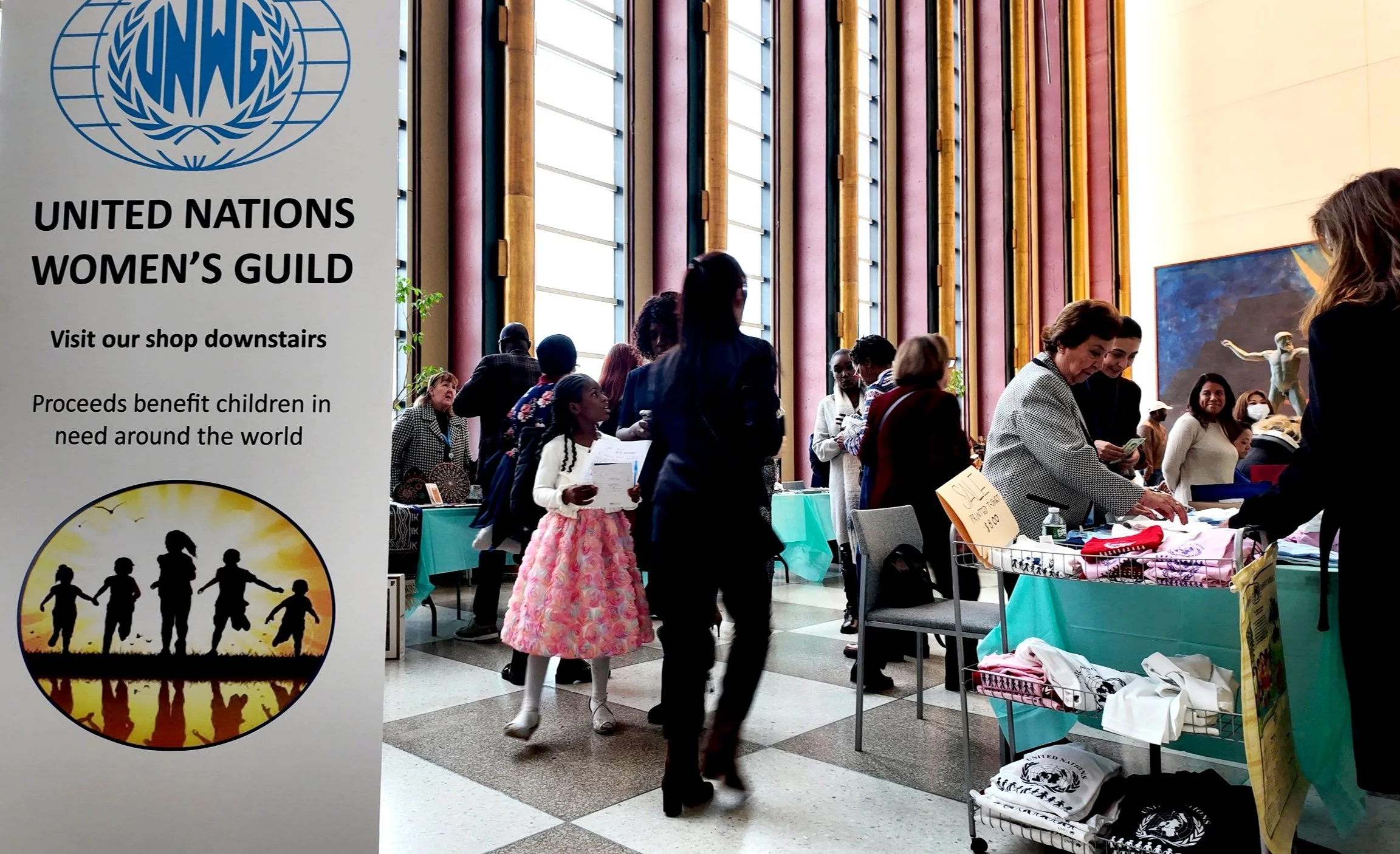
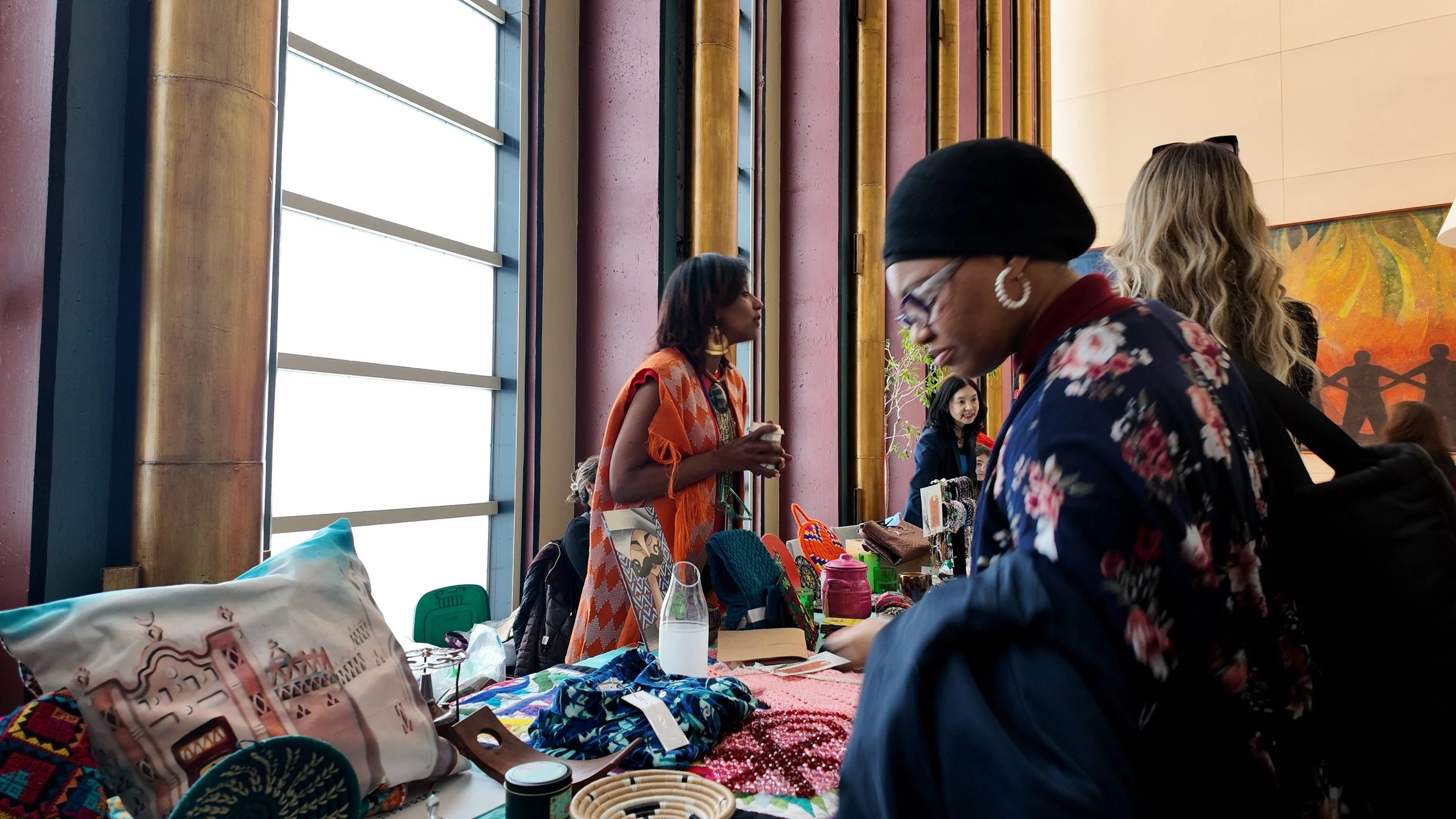
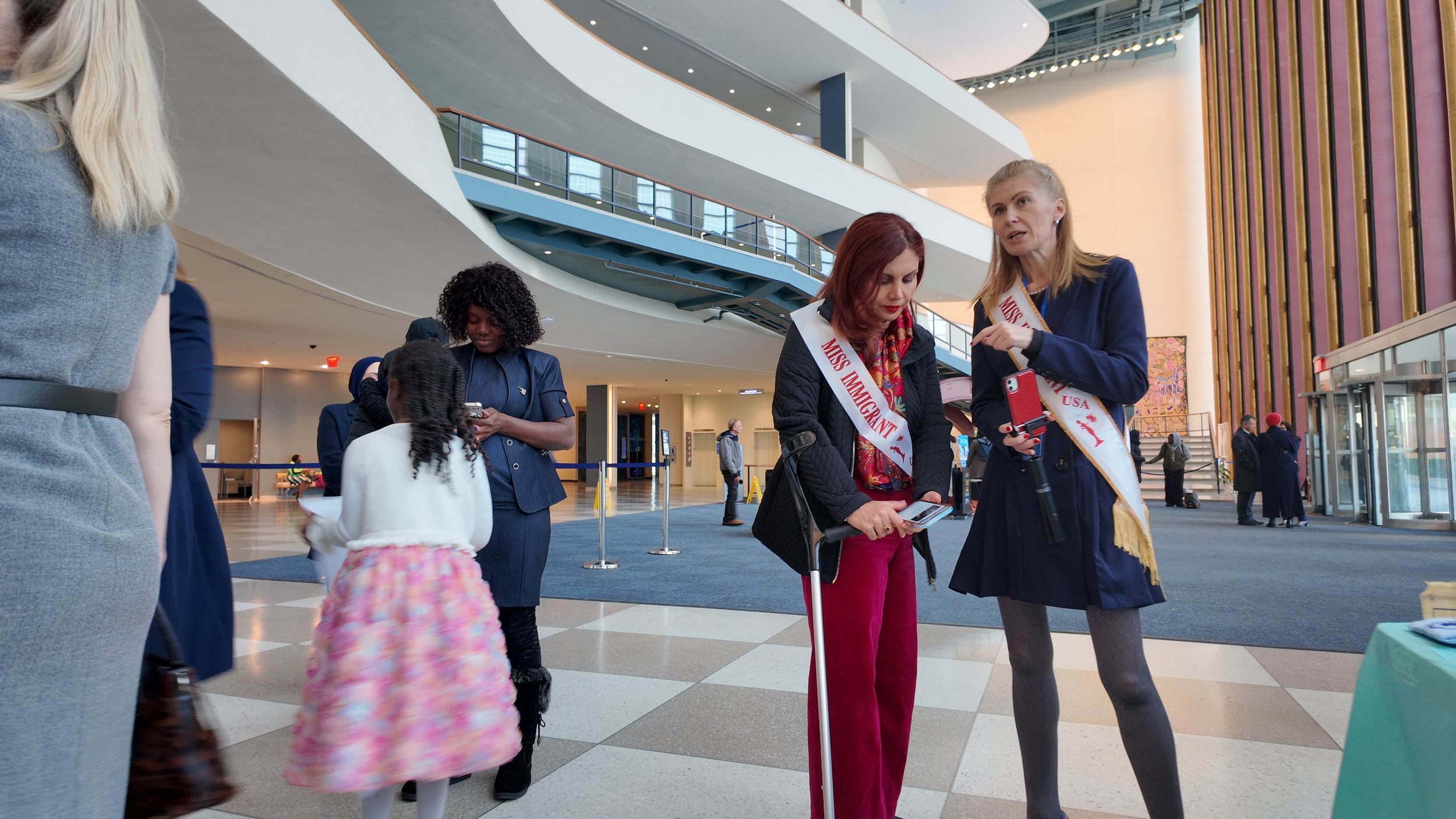
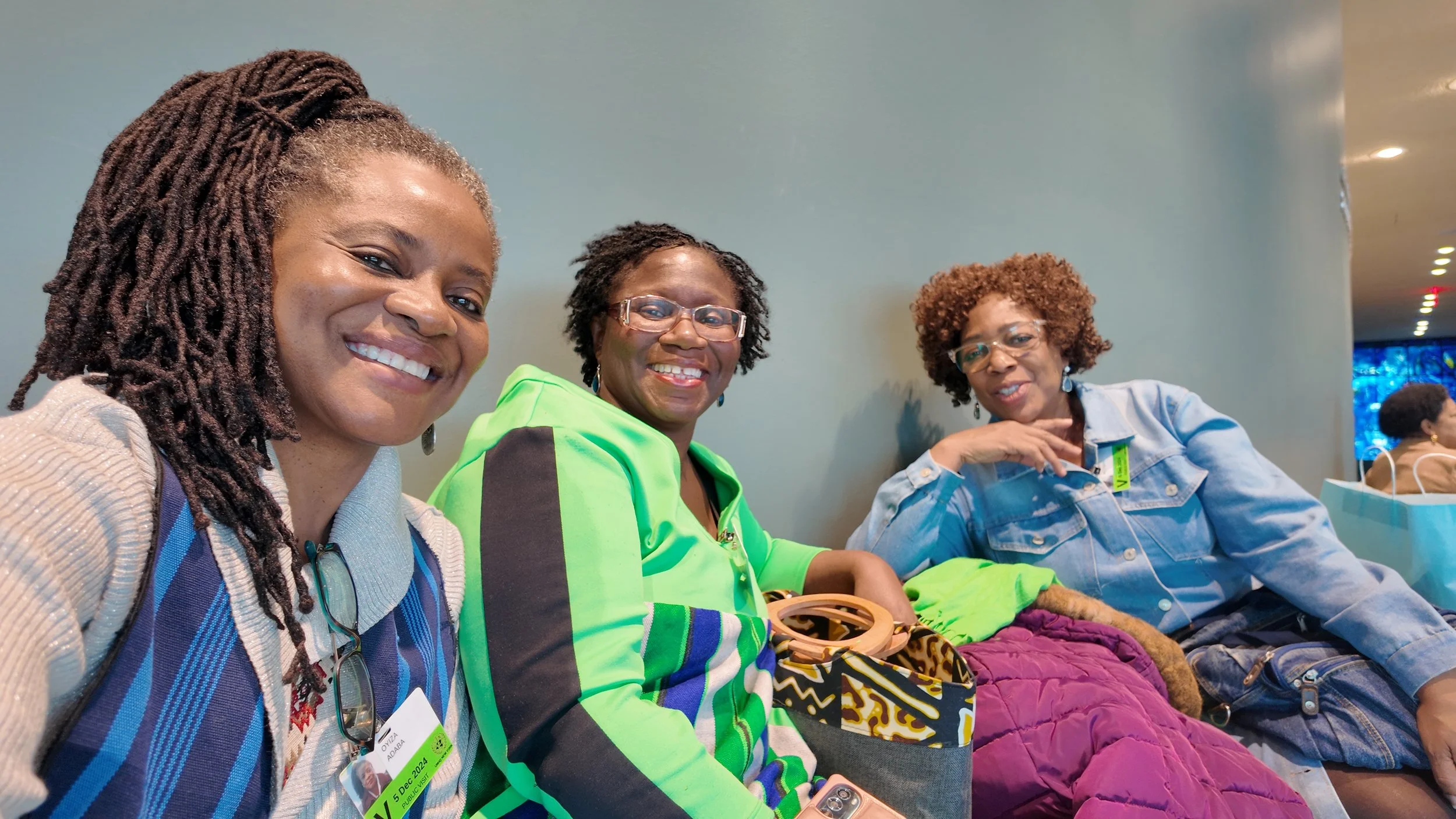
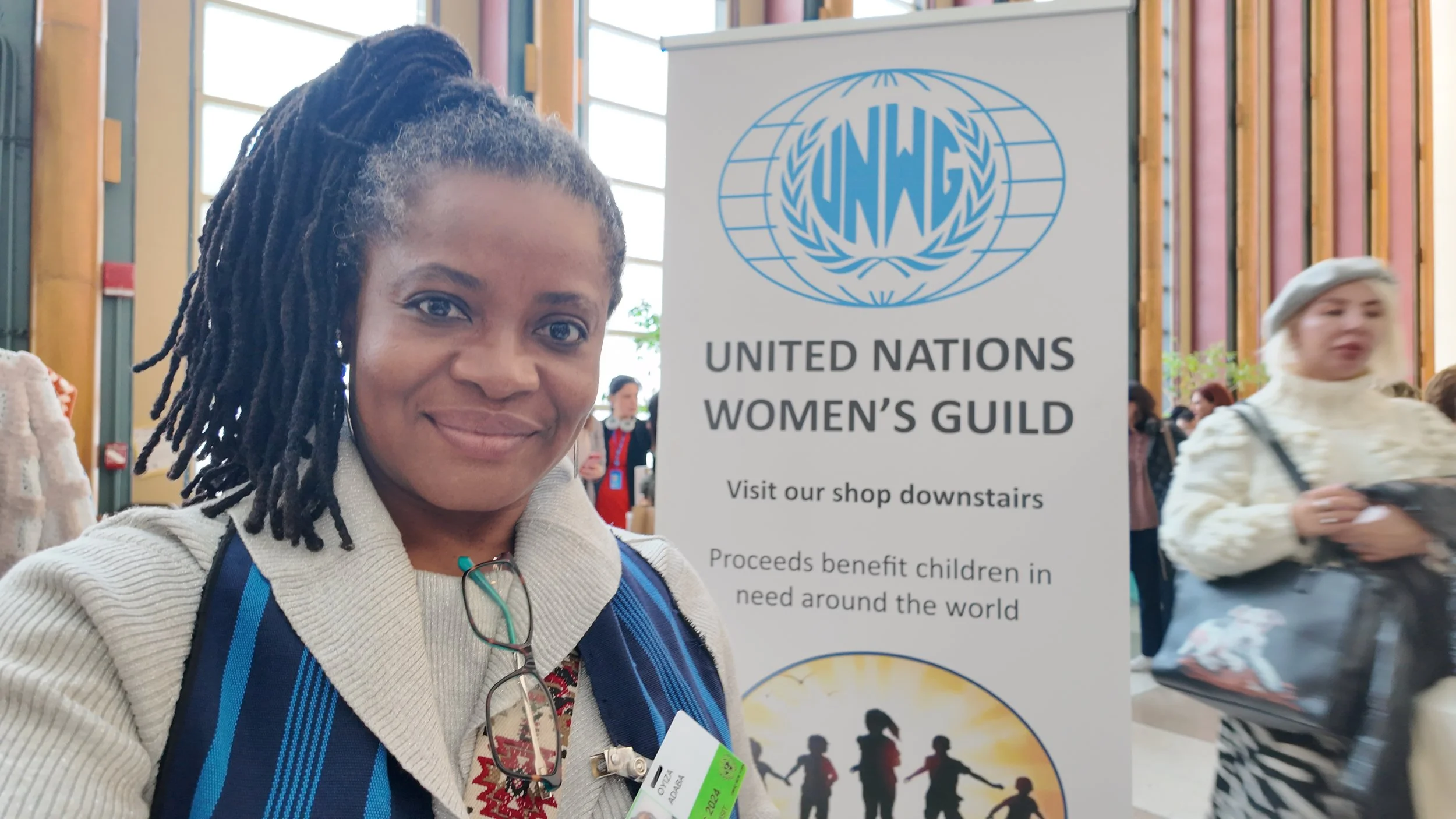
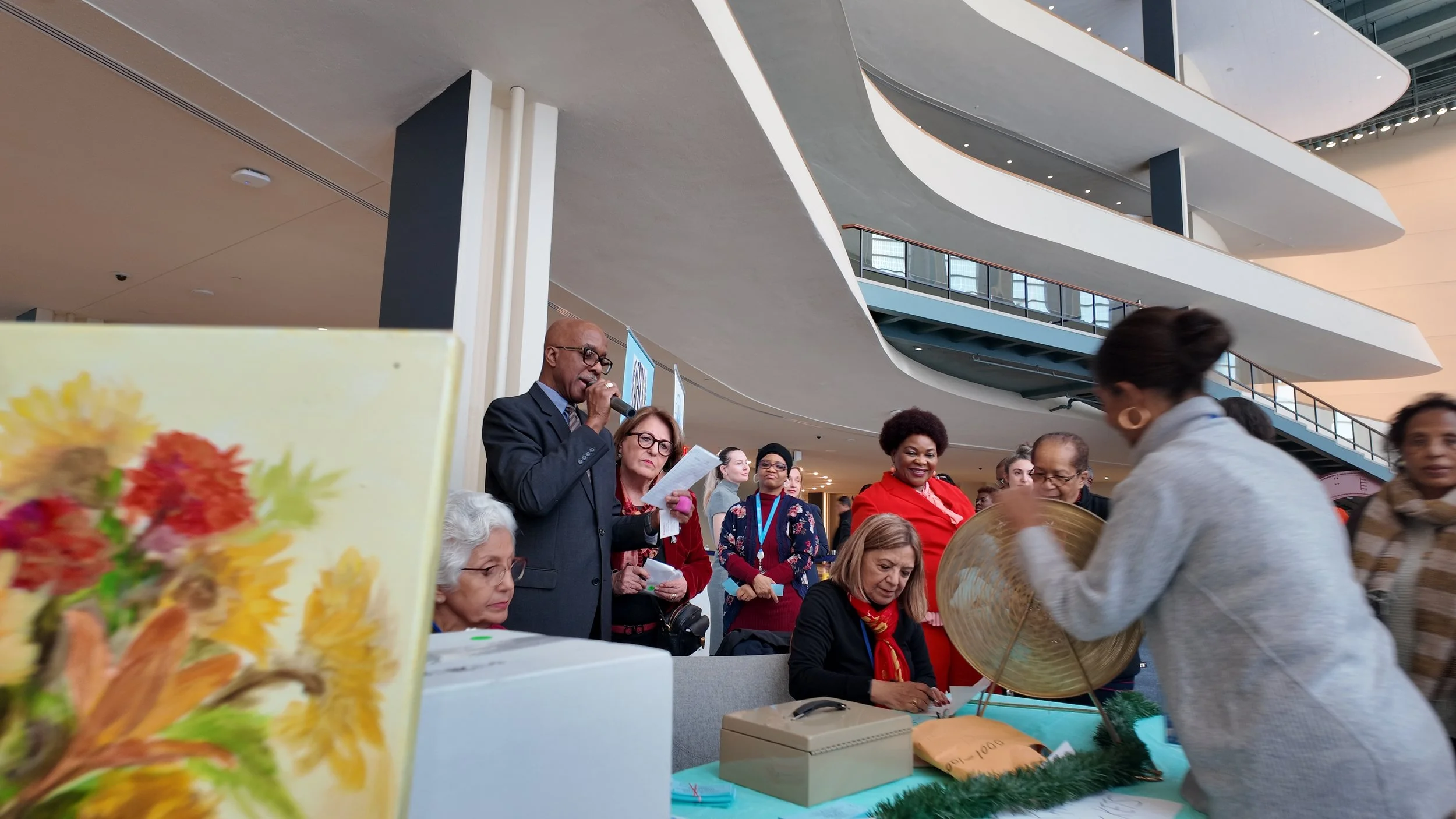
Women and artisans from around the world gathered to showcase and sell their products at this annual bazaar. There were outstanding raffle draw prizes including @kenyaairways tickets, apparels from @itaiourcloth and exclusive designs from @nubaarts. The Hansol Music Group provided the entertainment.
UN Women’s Guild Event Organizers
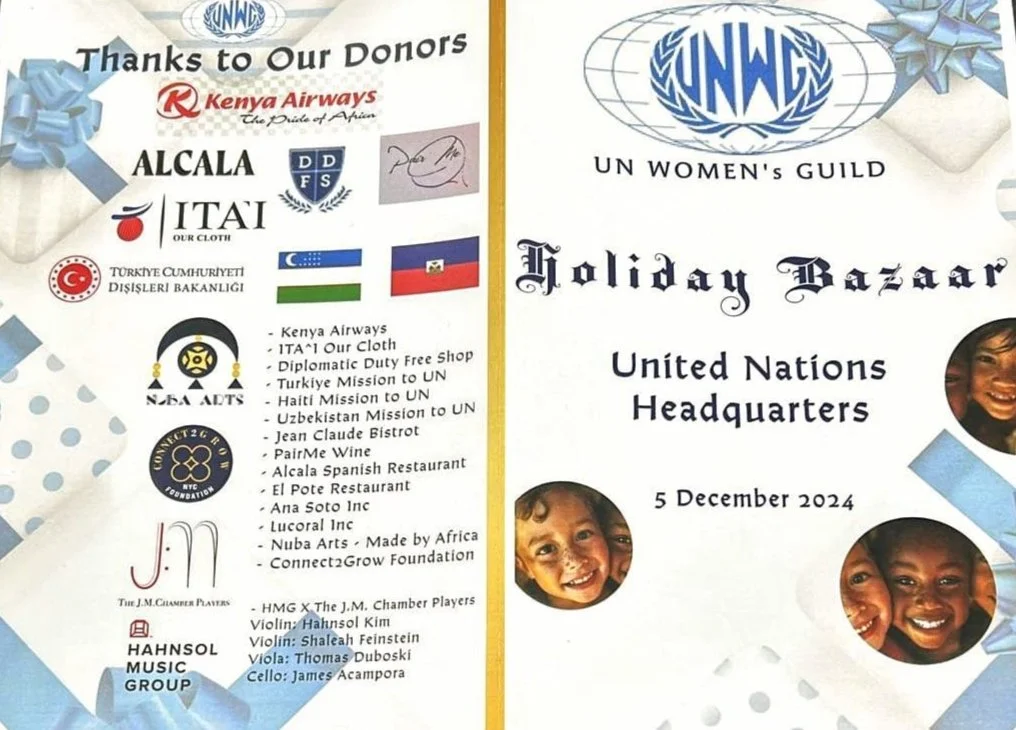
Event Flyer
All proceeds benefit women and children around the world.
Photos by Africa-Related






share this story
Examining the Vote: Unpacking Top Issues in the US Elections
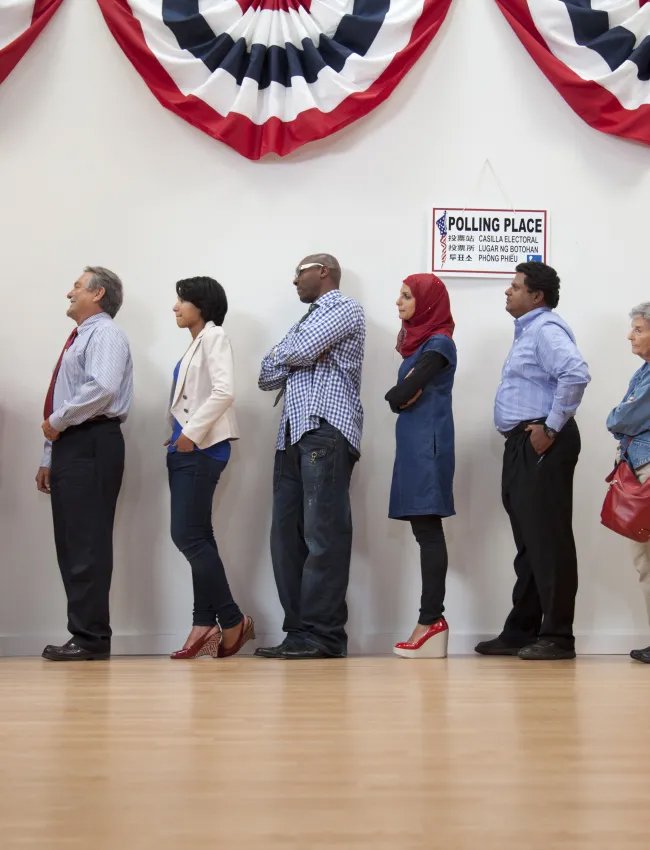
Recent ballot initiatives in states appear to show that reproductive rights are increasing turnout for women voters, as the conflict in the Middle East and student deft relief animate young voters. Meanwhile, the economy and inflation remain top issues for voters across demographic groups. But this is just a fraction of what is on voters’ minds heading into the 2024 presidential election. On October 23, ASD at GMF will convene top political analysts to attempt to decipher, for both US and European audiences, what issues are driving voters to the polls.
Examining the Vote: Unpacking Top Issues in the US Elections
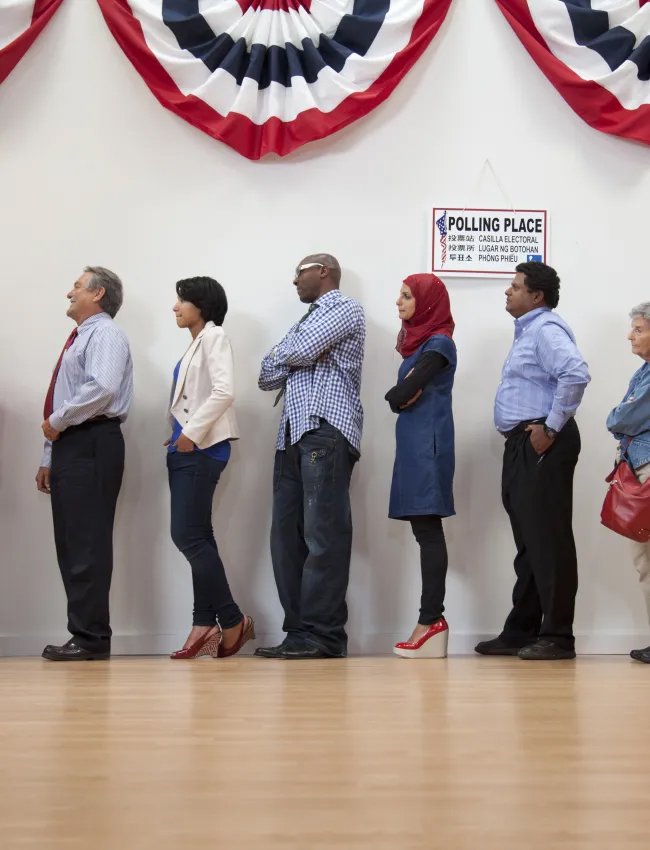
Recent ballot initiatives in states appear to show that reproductive rights are increasing turnout for women voters, as the conflict in the Middle East and student deft relief animate young voters. Meanwhile, the economy and inflation remain top issues for voters across demographic groups. But this is just a fraction of what is on voters’ minds heading into the 2024 presidential election. On October 23, ASD at GMF will convene top political analysts to attempt to decipher, for both US and European audiences, what issues are driving voters to the polls.
Africa Regional Media Hub | Refugee Admissions for FY2025;
President Biden today signed the Presidential Determination on Refugee Admissions for Fiscal Year 2025, again setting the refugee admissions target at 125,000 for the upcoming fiscal year—as we have for each year of this Administration.
Africa Regional Media Hub | Refugee Admissions for FY2025; Global Coalition to Defeat ISIS; Counter Ransomware Initiative Summit; UNGA - Global Humanitarian Assistance; DRC; Mali; UNSC: International Peace and Security
The Presidential Determination on Refugee Admissions for Fiscal Year 2025
Secretary Antony J. Blinken at the Opening of the D-ISIS Ministerial
Joint Communiqué by Ministers of the Global Coalition to Defeat ISIS
Readout of Ambassador Linda Thomas-Greenfield’s Meeting with Malian Foreign Minister Abdoulaye Diop
Remarks at a UN Security Council Meeting on Maintenance of International Peace and Security
The Presidential Determination on Refugee Admissions for Fiscal Year 2025
Press Statement
Antony J. Blinken, Secretary of State
September 30, 2024
President Biden today signed the Presidential Determination on Refugee Admissions for Fiscal Year 2025, again setting the refugee admissions target at 125,000 for the upcoming fiscal year—as we have for each year of this Administration.
Refugee resettlement exemplifies the generosity that has always been at the core of the American spirit and reflects the critical role of the United States as a global leader in providing refuge to people fleeing persecution overseas. In Fiscal Year 2024, we resettled 100,000 refugees, the largest annual number in three decades. This is a testament to our successful work to rebuild the U.S. Refugee Admissions Program with help from partners around the world and thousands of Americans across the country who have stepped up to sponsor refugees through the Welcome Corps.
Refugee resettlement is orderly, subject to rigorous vetting, and benefits and enriches American communities. In cities and towns throughout America, refugees contribute to urban revitalization, add to the vibrancy of local communities, and drive America’s competitiveness and innovation on the global stage. Over a 15-year period, refugees contributed almost $124 billion to the U.S. economy. And resettlement offers the unique opportunity of a better life to some of the world’s most vulnerable people, at a time of historic global levels of displacement.
Building on the Administration’s efforts to strengthen refugee resettlement and the generous support from Americans across the country, the refugee admissions target of 125,000 ensures the United States will continue to be a global leader in providing safety and opportunity for those facing persecution around the world.
Secretary Antony J. Blinken at the Opening of the D-ISIS Ministerial
Remarks
Antony J. Blinken, Secretary of State
Loy Henderson Auditorium
Washington, D.C.
September 30, 2024
SECRETARY BLINKEN: Ambassador, thank you very much. Colleagues, good morning and welcome. For those of you who are in New York, I know you just wanted to keep the High-Level Week going, so we’re glad to be able to accommodate that here in Washington.
But in all seriousness, before we get going, let me just say a few quick words about the events of the past week. Hassan Nasrallah was a brutal terrorist, whose many victims included Americans, Israelis, civilians in Lebanon, civilians in Syria, and many others as well. During his leadership of Hizballah, the group terrorized people across the region and prevented Lebanon from fully moving forward as a country. Lebanon, the region, the world are safer without him.
The United States will continue to work with our partners in the region and around the world to advance a diplomatic resolution that provides real security to Israel, to Lebanon, and allows citizens on both sides of the border to return to their homes. We likewise will continue working to secure a ceasefire deal in Gaza that brings the hostages home, eases the suffering of people in Gaza, preserves the possibility of a more lasting, secure peace for the entire region.
Diplomacy remains the best and only path to achieving greater stability in the Middle East. The United States remains committed to urgently driving these efforts forward.
Now, turning to the subject of this ministerial, 10 years ago the United States mobilized a global coalition to confront ISIS – or Daesh – a nihilist terror group that over the course of a few months had occupied territory comprising a third of both Iraq and Syria, which it used to conduct a horrific campaign of violence and brutality.
Over the following decade, this coalition grew from 12 to 87 countries. And together, we’ve made significant progress. In 2017, coalition partners dismantled the last ISIS stronghold in Iraq. Two years later, we did the same in Syria – effectively ending ISIS’s efforts to establish a geographic caliphate. We imposed coordinated sanctions on ISIS-controlled assets to hinder the group’s recruitment and expansion. And in the last five years, we have collectively invested billions of dollars to help restore security and public infrastructure in some of the communities devastated by ISIS.
These were vital, hard-won achievements. But we know that our work is not done. As ISIS aims to reconstitute itself in the Middle East and makes territorial gains in Asia and Africa, our coalition must remain clear-eyed about the evolving challenge that we face. As we were reminded last week, this is a moment of enormous volatility in the Middle East. It’s more important than ever that we enhance our efforts to strengthen security and stability, including in Iraq and Syria, and prevent extremists like ISIS from exploiting conflict in the region for their own benefit.
To that end, let me briefly outline the three core areas where we will focus our conversations today.
First, the United States and Iraq will discuss – and with our other coalition partners as well – our plans for a phased transition of Operation Inherent Resolve. This military mission, established in response to Iraq’s 2014 request for support in its campaign against ISIS, will conclude in Iraq by September 2025. Over this period, the United States will work with Baghdad on bilateral security arrangements that will allow us to sustain and build our security partnership and cooperation.
In turn, our Iraqi partners will assume greater responsibility for ensuring that ISIS cannot retake territory within Iraq’s borders. We’re immensely grateful to Iraq and the Iraqi Security Forces for all of the sacrifices that they’ve made in this effort, and for their steadfast leadership in combating ISIS.
As we shift into this new phase of our collaboration, we hope to continue working with our coalition partners – including the NATO Mission in Iraq, which intends to continue its own security relationship with Iraq.
The United States will also maintain our counterterrorism efforts from outside of Iraq – including in Syria – for as long as needed. Just this month, U.S. special forces successfully targeted multiple senior ISIS leaders in Syria, demonstrating our own resolve to degrade and dismantle the group and its affiliates.
Second, our coalition will discuss today the repatriation of foreign fighters and their families – which remains the only durable solution to the humanitarian and security crisis in northeast Syria.
More than 43,000 displaced persons from over 60 countries reside in northeast Syria. Most are children who have never known another home.
Meanwhile, roughly 9,000 fighters remain in detention facilities across northeast Syria – this is the single largest concentration in the world. Even from confinement, these extremists are attempting to grow their ranks.
Increasingly, coalition partners are stepping up to meet this challenge. Since 2021, the Iraqi Government has repatriated more than 10,400 citizens. In the last year, the Kyrgyz Republic repatriated more than 432 of its nationals. Partners like Kuwait have also helped facilitate repatriations, permitting planes departing from Syria to refuel at their airbases.
Now, we know repatriation remains a complicated, difficult issue. But if we fail to act, security conditions on the ground will only get worse. We could see fighters once again take up arms and threaten communities that we fought so hard to protect and support. This is not the time to let up. It’s a moment to continue our efforts.
We have to urgently accelerate our work to repatriate, reintegrate, and – where appropriate – prosecute detained and displaced persons from northeast Syria. The United States stands ready to provide support – logistically, diplomatically – to advance this effort.
Finally, we will strengthen our cooperation against ISIS branches outside of the Middle East.
In sub-Saharan Africa, ISIS affiliates have gained ground, compounding the threat already present from existing militant groups.
To tackle this growing threat, the United States, Italy, Morocco formed the coalition’s Africa Focus Group in 2021. Last year in Riyadh, we welcomed Saudi Arabia as a co-lead of this effort. Already, we’ve helped African partners better align and coordinate to support civilian-led counterterrorism operations.
ISIS-Khorasan — based out of Central and South Asia – also poses a distinctive challenge. While waging a low-level insurgency in Central and South Asia, this group uses online recruitment to mount attacks around the world, including earlier this year in Iran and Russia.
Through the coalition’s Communications Working Group – led by the United States, the United Arab Emirates, and the United Kingdom – we’re working with journalists, civil society groups, and activists to push back against the hollow promises that ISIS propaganda seeks to promote.
In the coming year, we have to continue to drive these key efforts forward.
In that spirit, this morning, I can announce that the United States will provide $148 million to enhance civilian-led border security and counterterrorism operations across sub-Saharan Africa and Central Asia.
Separately, we’ll contribute $168 million to the coalition’s annual Stabilization Pledge Drive for Iraq and Syria. This assistance will enable critical demining operations, restore essential services like water and electricity, invest in education, and promote economic opportunity.
This commitment follows the United States’ announcement last week, in New York, of $535 million in additional humanitarian assistance to the Syrian people, as well as displaced communities residing in the country.
A decade into this fight, we can take pride in all that we’ve accomplished. But as the challenge evolves, so must this coalition.
And as I said, this is not the time to let up. It’s a moment to recommit – to recommit to our common mission, to decisively defeat ISIS, and ensure greater security and stability for all of our people.
I thank everyone for being here today, but more important I thank you for what you’re doing every day to keep this coalition together, moving forward in the mission that we share.
Thank you very much. Thank you. (Applause.)
Joint Communiqué by Ministers of the Global Coalition to Defeat ISIS
Media Note
Office of the Spokesperson
September 30, 2024
Ten years after the formation of the Global Coalition to Defeat Daesh/ISIS, Deputy Prime Ministers, Foreign Ministers, and Senior Officials convened in Washington, D.C, today at the invitation of Secretary of State Antony J. Blinken. The Global Coalition to Defeat Daesh/ISIS is the largest international coalition in history and remains committed to defeating Daesh/ISIS anywhere it operates.
In 2014, the United States led an international response to the Iraqi government’s request for assistance against Daesh/ISIS, resulting in the formation of the Global Coalition. In 2024, five years after the Global Coalition’s defeat of Daesh/ISIS in Iraq and Syria, Coalition members honor the sacrifices made by those who fought and died in Iraq and Syria to liberate territories from Daesh/ISIS and commend Iraq for its leadership in the Coalition.
Global Coalition Ministers commit to supporting the Government of Iraq’s efforts to safeguard the security, peace, and development of the Iraqi people. The planned transition of the Coalition’s military mission in Iraq to bilateral security partnerships reflects a reduction of the Daesh/ISIS threat. Ministers commend Iraq’s continuing cooperation in countering Daesh/ISIS in the region, and its ongoing leadership in broader Coalition lines of effort, including stabilization, counter financing, disruption of foreign terrorist travel, and prevention of recruitment to ensure there is no Daesh/ISIS resurgence.
Ministers endorse the priorities of the Coalition Stabilization Working Group, with a goal of raising and implementing $394 million for areas liberated from Daesh/ISIS in Iraq and Syria – toward which members have already announced commitments totaling more than $200 million. The Ministers emphasize the importance of durable solutions for remaining populations in northeast Syria, including bringing to justice detained terrorists, ensuring accountability for crimes including gender-based violence, ensuring detainee populations are housed securely and humanely, and improving conditions for the populations residing in al-Hol and Roj displaced persons camps. Ministers urge support to reconciliation and reintegration efforts in Iraq and Syria and to foster conditions conducive to a Syria-wide political resolution to the conflict consistent with UN Security Council Resolution 2254. Ministers commend Iraq’s progress in repatriating over 10,000 of its nationals from northeast Syria and Iraqi efforts to apply accountability where appropriate and in assisting the displaced to reintegrate into their communities of origin.
Ministers commit to counter the continued spread of Daesh/ISIS globally, including across parts of Africa and Central and Southeast Asia. Ministers reaffirm their commitment to mobilize members and legitimate partners and pursue whole-of-government approaches to disrupt Daesh/ISIS global networks by sharing information via trusted and secured systems, to deny their freedom of movement, and to restrict their access to financing and other resources in line with UN Security Council Resolution 2178, 2396, and 2462. Ministers underscore the need to enhance comprehensive counterterrorism efforts, ensure that our policies and practices are appropriately human-rights-based, block terrorist access to resources and financing, disrupt cross-border movements of Daesh/ISIS, and protect and assist victims who suffered under Daesh/ISIS misrule.
Ministers condemn ISIS-K’s indiscriminate attacks in Asia and Europe and commit to deterring and disrupting future attacks. To this end, Ministers endorse the Coalition-aligned ISKP Diplomatic Grouping, highlighting the need to improve coordination and to partner with regional counterterrorism and strategic communication initiatives. Ministers also commend the work of the Global Coalition’s Africa Focus Group in promoting an active role of African partners and highlighted the imperative to counter malign and non-state armed actors whose actions undercut counterterrorism cooperation and destabilize regions in which they operate. Coalition Ministers welcome the participation of observers from Central Asian states and Africa at the Ministerial and affirm their intent to strengthen counterterrorism cooperation with them.
Ministers applaud the significant work of Global Coalition members in countering Daesh/ISIS propaganda in the ever evolving and challenging information environment, including successful campaigns to expose and discredit the deceptions propagated by Daesh/ISIS. Ministers note ongoing initiatives to prevent terrorists from dominating public narratives across traditional media, social media, and encrypted messaging applications, and underscore the importance of artificial intelligence to combat terrorist propaganda and recruitment. Ministers emphasize that terrorism, in any form or manifestation, should not be associated with any faith, religion, or ethnic group.
Welcoming the Maldives as the newest member of the Global Coalition, bringing the total number of members to 87, Ministers especially recognize the participation of Uzbekistan, Tajikistan, Senegal, Pakistan, Kyrgyz Republic, and Kazakhstan as observers and committed the Coalition to increase engagement in these regions to enhance counterterrorism capacities and coordination. Ministers support the Global Coalition adjusting its processes, structures, and instruments to ensure it continues to be fit for purpose to defeat the current Daesh/ISIS threat and to deter and defeat future threats.
On the 10th anniversary of its establishment, with continued affirmation that individual members bear the primary responsibility for the security of their homelands, the members of the Global Coalition recommit to mobilizing and coordinating efforts to defeat Daesh/ISIS in accordance with international law, including the Charter of the United Nations, applicable international human rights law, and all relevant UN Security Council resolutions. Members of the Global Coalition will stand together until Daesh/ISIS is defeated.
Secretary Blinken to Deliver Remarks at the Fourth International Counter Ransomware Initiative Summit
Notice to the Press
Office of the Spokesperson
September 30, 2024
Secretary of State Antony J. Blinken will deliver remarks at the Fourth International Counter Ransomware Initiative (CRI) Summit on Tuesday, October 1, at 12:45 p.m. EDT at the Foreign Service Institute in Arlington, Virginia.
CRI is the largest international cyber partnership, consisting of 68 members committed to building collective resilience to ransomware and disrupting the ransomware ecosystem. Members cooperate across all elements of the ransomware threat, including by undercutting the viability of ransomware and pursuing the actors responsible, countering illicit finance that underpins the ransomware ecosystem, and working with the private sector to defend against ransomware attacks. CRI is a key pillar of the United States’ commitment to working closely with partners across the globe to counter ransomware and other cyber criminal actors, as detailed in the United States International Cyberspace and Digital Policy Strategy launched by Secretary Blinken in May.
The Secretary’s remarks will be replayed on the Department homepage and the Department YouTube channel. Press coverage of the remarks will be open to pre-registered media. Media who would like to cover in person must RSVP by emailing CDP-Press@state.gov by 8:00 p.m. today, September 30, 2024.
United States Announces Nearly $2.1 Billion in Humanitarian Assistance at the 79th UN General Assembly
Fact Sheet
Office of the Spokesperson
September 30, 2024
At the 79th UN General Assembly, the United States announced nearly $2.1 billion in humanitarian assistance to address the unprecedented level of humanitarian needs globally. This funding supports critical and life-saving humanitarian assistance to those impacted by crises, including displaced persons and the receptive host communities supporting displaced persons in their time of need. This generous life-saving assistance from the American people includes more than $873 million through the Department of State’s Bureau of Population, Refugees, and Migration and more than $1.2 billion through the United States Agency for International Development’s Bureau for Humanitarian Assistance. We call on other international donors to also make every effort to increase humanitarian funding to respond to the extreme level of need impacting people globally.
Humanitarian assistance announced at the 79th UN General Assembly includes:
Nearly $424 million for the Sudan regional response: This includes assistance in Sudan and neighboring countries to respond to needs stemming from the crisis that began in April 2023 and has become one of the most severe global challenges. It will provide food, health, nutrition, protection, and other critical assistance to people across Sudan and neighboring countries who have been devastated by the ongoing conflict.
Nearly $336 million to support Palestinians in Gaza and the West Bank : This assistance provides life-saving humanitarian aid, including expanded support in emergency health care, food, nutrition, psychosocial services, and increased access to safe drinking water, hygiene products, and sanitation services for Palestinian civilians in Gaza and the West Bank affected by the ongoing conflict. It also supports logistics and emergency shelter assistance to displaced Gazans to help them prepare for the upcoming winter months.
Nearly $535 million for the Syria response: This assistance will help meet the needs of the most vulnerable refugees, internally displaced persons, and host communities in Syria and neighboring countries. This includes emergency shelter; food assistance; access to health care and education; water, sanitation, and hygiene supplies; support for livelihoods; and protection for those in situations of vulnerability.
Nearly $199 million for Rohingya refugees and their host communities: This assistance supports the needs of Rohingya refugees and communities hosting them in Bangladesh and the region. It will provide protection, shelter, and food for those forced to flee violence and persecution. It will also support disaster preparedness and protection for refugees and host communities, bolster access to education and skills training, and prepare refugees for their potential return home when conditions allow.
$597 million for migration efforts in the Western Hemisphere: This assistance responds to the needs of refugees, vulnerable migrants, as well as other displaced and stateless persons across the region, including life-saving assistance such as emergency food assistance, shelter, access to emergency health care, improvements to local infrastructure for potable water and sanitation facilities, access to protection services, and support to local schools. It also supports the Safe Mobility Initiative and advances the goals of the Los Angeles Declaration on Migration and Protection to foster responsibility sharing, stability, and assistance for affected communities.
The United States is proud to be the largest single donor of humanitarian assistance globally, providing more than $54 billion in humanitarian assistance since 2021. The United States is leading efforts to respond to global humanitarian needs, working with partners to transform humanitarian response for the 21st century, and making humanitarian assistance more resilient to climate impacts.
For further information, please follow @StatePRM and @USAIDSavesLives.
Remarks by Ambassador Linda Thomas-Greenfield at a UN Security Council Briefing on the Democratic Republic of the Congo
Ambassador Linda Thomas-Greenfield
U.S. Representative to the United Nations
New York, New York
September 30, 2024
AS DELIVERED
Thank you, Mr. President. Before I give my remarks, I just want to share that I was just informed that Dikembe Mutombo, a very renowned humanitarian, former NBA star, Congolese-American, who worked to contribute to the well being of the Congolese people, just died at the age of [58]. So, may his soul rest in peace.
Thank you SRSG Keita for your briefing today, and for the dedicated efforts of the entire UN and MONUSCO teams in the Democratic Republic of Congo. I want to thank our civil society briefer, Ms. Nzale-Kove, for your briefing. And I want to thank Sierra Leone for your briefing.
The United States offers its full support to the ongoing ceasefire in eastern DRC, and to Angola’s leadership of both the Luanda process and the Ad Hoc Verification Mechanism.
We call on all parties to honor the ceasefire, and direct their aligned armed groups to do the same. The parties’ willingness to come to the table is a positive first step, but there is still far more work to be done. They must also deliver on their commitments and bring peace to the people of this region.
Rwanda must immediately withdraw its more than 4,000 troops from DRC territory and cease its support for M23. M23 must immediately withdraw to its November 2023 positions. And the DRC must take immediate actions against FDLR and cease its support to the group.
In addition, the United States appreciates the strong collaboration between the DRC government and MONUSCO on both the mission’s drawdown and its ongoing, essential activities including to reinforce the current ceasefire and protect displaced civilians.
We also welcome the DRC’s efforts at the local and national levels to consolidate MONUSCO’s drawdown from South Kivu.
That being said, MONUSCO’s departure from South Kivu has left critical gaps that cannot go unfilled.
For example, five of six child protection advisors who monitored and reported on violations against children have left the province.
Their absence underscores the urgency of effectively transitioning MONUSCO’s wide ranging tasks to entities, particularly the DRC government, that are properly mandated and well-resourced.
We encourage MONUSCO, the UN, and the DRC government to ensure these capacities are urgently filled. And we reiterate our position that this Council should not authorize a further drawdown of MONUSCO without a clear plan to mitigate against these gaps.
To that end, we appreciate the frank efforts by MONUSCO and DRC authorities to reflect on the disengagement process, and ensure a sequenced, orderly, and coordinated approach. Because ultimately, sustainable transitions take place.
We support the technical discussions already underway between MONUSCO, and the DRC government, and international partners to take advantage of significant lead time in the mission’s departure from North Kivu and Ituri. Especially because significant challenges remain in these provinces.
In North Kivu, M23 continues to obstruct the movements of MONUSCO and humanitarian actors, while threatening violence against UN peacekeepers and positions. Demands that MONUSCO vacate its positions so that M23 can consolidate or further expand its territorial control are wholly unacceptable. We offer our firmest support to the MONUSCO personnel stationed in these areas, who have demonstrated great professionalism and resolve.
In Ituri, we remain deeply concerned by the increasingly lethal operations perpetrated against civilians by the armed group CODECO and the terrorist organization ISIS-DRC, or ADF.
MONUSCO’s role in protecting civilians, including those in vulnerable internally displaced person camps, is absolutely essential, especially in areas with scant government security presence.
Finally, the United States urges improved communications between MONUSCO and SAMIDRC to ensure the collaboration as authorized under UN Security Council Resolution 2746 does not inflame regional tensions at a fragile moment.
We look forward to a detailed Secretary-General report on the implementation of that resolution.
In closing, we strongly urge the parties to take advantage of this unique opportunity to deliver peace to the region by fully committing to diplomatic processes and taking courageous steps to end this conflict.
For the sake of the people of the Great Lakes region, we must not let this chance escape us.
Thank you, Mr. President.
###
Readout of Ambassador Linda Thomas-Greenfield’s Meeting with Malian Foreign Minister Abdoulaye Diop
United States Mission to the United Nations
Office of Press and Public Diplomacy
FOR IMMEDIATE RELEASE
September 30, 2024
The below is attributable to U.S. Mission to the United Nations Acting Spokesperson Lauren French:
Ambassador Linda Thomas-Greenfield, the U.S. Representative to the United Nations, met today with Malian Foreign Minister Abdoulaye Diop. Ambassador Thomas-Greenfield condemned the al-Qaeda-linked terrorist attack in Mali on September 17, and offered condolences to the families and loved ones of the killed and injured. The Ambassador affirmed the United States’ commitment to engaging with Mali and the broader region to combat terrorism, as well as to continue longstanding U.S. support to the people of Mali. Ambassador Thomas-Greenfield urged the transitional government to schedule and hold elections to deliver on its pledge to the Malian people.
###
Remarks at a UN Security Council Meeting on Maintenance of International Peace and Security
Ambassador Robert Wood
Alternative Representative for Special Political Affairs
New York, New York
September 30, 2024
Thank you, Mr. President. I would like to thank the directors of UNHCR and IOM for their briefings. We appreciate the role of IOM and the High Commissioner for Refugees to help ensure migrants and refugees are treated in accordance with international law.
The United States acknowledges the decision of the penholders of resolution 2240 not to seek renewal of its authorizations for Member States to inspect vessels on the high seas off Libya’s coast suspected of being used for migrant smuggling and human trafficking from that country, and to seize those vessels confirmed as being used for those purposes.
We do, however, remain deeply concerned about migrant smuggling and human trafficking.
Since 2015, Operation Irini has been a key component of international efforts to alleviate the human tragedy of migrant deaths on the high seas off Libya’s coast and in the Mediterranean.
The European Union demonstrated through Operation Irini its steadfast commitment to rescuing refugees, migrants, and victims of trafficking.
The reality is that irregular migration is a challenge that is bigger than just Operation Irini could address. We all share responsibility for managing migration on our respective borders and a commitment to promoting safe, orderly, humane, and regular migration management.
We believe that prioritizing both access to international protection for those who need it, and humane border management measures, are essential to addressing forced displacement and the challenges of irregular migration.
To that end, the United States welcomed UNSMIL’s statements about the Trans-Mediterranean Migration Forum in Tripoli this past July as an important opportunity to advance an approach to migration governance that respects human rights.
The international community can do more to help vulnerable migrants by supporting the Secretary-General’s call for a holistic approach to address the root causes of irregular migration. We must recommit to ending the conflicts and reducing the extreme poverty that are driving many individuals to leave their homes in the first place.
The United States stands ready to work constructively with others in this regard. Thank you.
###
The U.S. Department of State French Language Spokesperson Johann Schmonsees is based in Johannesburg, South Africa. Please direct interview requests or questions to AFMediaHub@state.gov.
FPC TRANSCRIPT: Reforming the UN Security Council with Ambassador Linda Thomas-Greenfield
FOREIGN PRESS CENTER BRIEFING WITH LINDA THOMAS-GREENFIELD, U.S. AMBASSADOR TO THE UNITED NATIONS
Downloadable video and photos of this briefing for use in reporting can be found here:
FOREIGN PRESS CENTER BRIEFING WITH LINDA THOMAS-GREENFIELD, U.S. AMBASSADOR TO THE UNITED NATIONS
LINK/TOPIC: REFORMING THE UNITED NATIONS SECURITY COUNCIL
WEDNESDAY, SEPTEMBER 18, 2024, 2:00 P.M. EDT
THE WASHINGTON FOREIGN PRESS CENTER, WASHINGTON, D.C.
MODERATOR: Good afternoon, all, and thank you for joining us here at the Washington Foreign Press Center. My name is Leah Knobel and I’ll be the moderator for today’s briefing. It’s my pleasure to introduce Ambassador Linda Thomas-Greenfield, United States Ambassador to the United Nations. A reminder that this briefing is on the record and the transcript, video, and photos will be posted to our website later today.
And with that, I will invite the Ambassador to begin with her opening remarks.
AMBASSADOR THOMAS-GREENFIELD: Good afternoon, everyone. One week ago I had the opportunity to deliver a keynote address at the Council on Foreign Relations in New York City. In it I discussed the progress the Biden-Harris administration has made and will continue to make to create a UN that is fit for purpose, ready to meet the challenges and the opportunities of the 21st century. I walked through some of the efforts we’ve championed to reform the multilateral system, from how we finance and deploy peacekeeping operations to how we ensure our humanitarian and our developments efforts are effective and efficient.
And I announced our support for key changes to the composition of the United Nations Security Council. This is a process that began two years ago when President Biden shared that the United States supports expanding the council to include permanent representation for countries from Africa as well as Latin America and the Caribbean. That’s in addition to the countries we’ve long supported for permanent seats: India, Japan, and Germany. In the months following the President’s announcement, I met with dozens of countries in New York in what I like to call a listening tour. I listened to their ideas and their aspirations for a more inclusive, representative Security Council.
And now we head into the final High-Level Week of the Biden-Harris administration with three new commitments for Council reform. First, that the United States supports creating two permanent seats for Africans on the council. Second, that the United States supports creating a new elected seat on the Security Council for Small Island Developing States. And third, the United States is ready to take actions on these reforms and pursue a text-based negotiation; in other words, to put our principles to paper and begin the process of amending the United Nations Charter.
Over the past week, I’ve heard from so many leaders across the United Nations and in fact from across the world and the multilateral system more broadly. One partner called these proposals “seismic” and others have expressed strong support for our announcement. And even those who don’t agree with every aspect of our proposal understand that the United States putting our stake in the ground is a big, big deal. So there’s a sense of genuine excitement that meaningful progress really is possible, and there’s a renewed sense of purpose to make it happen. It’s a testament to the power of the United States’ leadership and it’s a reminder that while diplomacy is hard and diplomacy about diplomacy is even harder, we can do hard things. We can think beyond what has been, push ourselves to create a system that meets this moment and the opportunities of the future.
So with that, I am ready to take a few questions. Thank you.
MODERATOR: Thank you, Ambassador. We’ll now take questions. Please introduce yourself and your outlet when I call on you. We’ll start with Dmytro in front, and also we’re using microphones today, so please wait to ask your question.
QUESTION: Thank you very much, Ambassador. Thank you very much, Foreign Press Center, for organizing this. It’s priceless. Ma’am, on Ukraine if I may. Firstly, the High-Level Week is always about Ukraine. I know it will be the Security Council on the 24th. Yesterday speaking to journalists in New York, you told you do have some hope to make some progress on Ukraine. So can you give us an understanding about the Ukrainian dimension of those days? And secondly if I may, the – Ukraine is asking the United Nations to verify the situation in the areas of Russia’s Kursk region controlled by Kyiv to prove adherence to international humanitarian law. Do you – do you have any comment on this? What is the position of the United States? Thanks so very much.
AMBASSADOR THOMAS-GREENFIELD: On next week, we do intend to focus attention on the situation in Ukraine. We’ve called for the special meeting of the Security Council on the 24th. And as you know, President Zelenskyy will be in town and there will be a number of side meetings on Ukraine. Our goal is to keep Ukraine on the front burner of the agenda. Russia’s unprovoked war on Ukraine continues. They are not making any efforts to end this war. And it’s in their – it’s really in their power to end this war by withdrawing from Ukraine.
So we intend to keep the pressure on Russia during next week’s Security Council. And we do know that Russia is committing violations, and we’ve called upon the UN and others to investigate those violations. I don’t have any additional information on the plans of the United Nations.
MODERATOR: Okay, I’ll go to Diyar – second row, gray jacket.
QUESTION: Thank you so much. Thank you so much, Ambassador, for doing this. My name is Diyar Kurda. I’m working for Rudaw TV; it’s a Kurdish TV. The first question, speaking of the Middle East and recent incidents in Lebanon: While the U.S. are trying to minimize and also trying to calm down the situation and reaching a ceasefire deal, but on the other side we see these incidents that we saw yesterday in Lebanon and today as well, which a dozen people killed and also a dozen other – dozen peoples were injured. Do you have any fear that this will jeopardize the U.S.’s position in the Middle East and also jeopardize all the efforts that have been taken to calm down the situation? And I have another question.
AMBASSADOR THOMAS-GREENFIELD: Well, certainly we are not trying to minimize the situation that occurred in Lebanon. We know that the situation is still under investigation, but in no way are we minimizing that. And as the Secretary said in his remarks yesterday, we discourage any escalation of the situation on the ground. We want both sides to try to keep us from moving into another conflict, spreading this conflict beyond the – beyond where it is now. And we’re still working on trying to get through the negotiations on the cessation of hostilities in Gaza. We want the hostages released. We want calm in Gaza so additional humanitarian assistance can be delivered to the suffering people in Gaza.
QUESTION: And second question: Talking about the threats coming from terrorism, especially ISIS, we saw in the recent days and weeks they increased their attacks in Syria, in Kurdistan, and also in Iraq. But while we see these incidents, we see the U.S. and Iraq are talking about ending the coalition forces in Iraq, and the Iraqi Government – which the Iraqi prime minister said that we are going to announce by the end of this month. Does the U.S. support the end of the coalition forces in Iraq and the U.S. withdrawal in the current situation that we see ISIS still poses a threat on your interests and also on your allies and also on your friends in the region?
AMBASSADOR THOMAS-GREENFIELD: Look, discussions are still taking place with the Iraqi Government on that issue in particular, but we will always continue to defend our interests until we’re – we’ve pulled out of Iraq. And so the attacks that we are experiencing will be a source of concern for us, and certainly we will respond.
MODERATOR: We have limited time with the ambassador today, so please keep your questions brief and only ask one question. We’ll go to this side of the room now – white buttoned-up shirt. Thank you.
QUESTION: Hi. Thank you, Ambassador. My name is Johanna Roth. I’m with Zeit Online from Germany. You just spoke of the potential for escalation in that conflict, and what do you make of the recent statement by the Israeli administration that this is a new era, quote/unquote, “new era” of this conflict focusing more on the north, and how might that affect the meeting next week in --
AMBASSADOR THOMAS-GREENFIELD: I mean, I think I have to refer you to the Israelis to explain what they meant by that statement. But certainly over the course of next week, we will be engaging on intense discussions with all of our allies, our partners, as well as others on how to de-escalate and bring an end to this conflict.
MODERATOR: Okay, we’ll go to Alex in the front.
QUESTION: Thank you so much, Ambassador. Alex Raufoglu from news agency Turan. Two very quick questions. Let me get your fresh reaction to Finland’s request to remove Russia from UN Security Council? And --
AMBASSADOR THOMAS-GREENFIELD: I’m sorry, whose?
QUESTION: Finland requested to remove Russia from UN Security Council and to take away Russia’s voting right. Your fresh reaction to that?
And second question: Given this – the fact that this is going to be the last UNGA for this administration, and given the fact that you have been championing democracy summits, how much democracy – decline in democracy in Eastern Europe and some other regions will be a part of this summit? Georgia is in my mind, but just (inaudible) other countries as well.
AMBASSADOR THOMAS-GREENFIELD: Well, I hadn’t heard, to be honest, about Finland’s request to have Russia removed from the Security Council. This is a subject that the Ukrainians have brought up on a regular basis as well. Russia is a permanent member of the Security Council who has attacked its neighbor and really attacked all the values of the UN Charter. So having committed those actions, I could see why countries might question why Russia should be on the Security Council.
And I’m not sure I understood your question on democracy, the democracy summit.
QUESTION: (Off-mike.)
AMBASSADOR THOMAS-GREENFIELD: Well, I mean, I think for us democracy anywhere is going to be a part of any discussions we have in the summit. We think the Summit of* Democracy has been extraordinarily successful. We want to continue to encourage those countries who are still standing strong as democracies and build – help boost those countries where we start to see backsliding. And there are some countries that we have seen backsliding.
MODERATOR: Okay. We’ll go to David Smith.
QUESTION: Hi, David Smith of the Guardian. Just wondered if you could talk a bit about the proposal for two African seats on the UN Security Council. Is it possible sometimes those would be non-democratic countries, and does that concern you?
And then a second question: Just generally interested in your reflections on the U.S.’s relationship with African countries, and is there still a perceived struggle there with China for influence?
AMBASSADOR THOMAS-GREENFIELD: Look, Africa – the Africans will choose their two seats on the Security Council. It’s not for us to make that choice. And then they have to be voted on in the General Assembly and supported by – broadly by the Security Council. We have countries on the Security Council that are sometimes not democracies, but I would hope that in making its choices for the Security Council that African countries will choose countries that will be able to represent their – broadly their interest.
And I’m sorry, the second question?
QUESTION: Just your reflections more generally on U.S. influence in Africa, and many people talk about a big competition there with China.
AMBASSADOR THOMAS-GREENFIELD: Look, I have been working on Africa for almost 40 years. I served as the assistant secretary for Africa during the Obama administration. And our relationships across Africa are good. And while there’s always this sense that we’re competing with China on Africa, we have been actively working with Africans on the continent since the beginning. We were one of the first countries to – I think we were even the first country to recognize Ghana. And we continue to have close relationships across the board with African countries. We’re not telling African countries that they can’t choose to have relations with China. That’s a choice that they have to make. What we have to do is be able to give them a choice.
MODERATOR: We’re going to do fourth row, gray jacket, white shirt. Okay.
QUESTION: Thank you. Aziz Rami for the Moroccan press agency. I want to go back to the U.S. relations with African countries. Recently you and the Kingdom of Morocco have co-sponsored a resolution on AI for development. We see today that AI is being used for entertainment, but also for lethal goals. Do you – can you just tell us where your – this – the implementation of this resolution is, and do you think that really AI can – and how can it be used for sustainable development? Thank you.
MODERATOR: Did you introduce yourself?
AMBASSADOR THOMAS-GREENFIELD: Thank you so much for asking that question, because AI is really a very high priority for us. We will be doing several events over the course of High-Level Week and leading up to our presidency in the Security Council in December. We co-sponsored – in fact, drafted a resolution on AI that got wide support across the board in the General Assembly. Our goal is for AI to be used for good, is for AI to support the Sustainable Development Goals, and we think that AI can support those goals. And we want to work to bridge the digital divide so that the technology around AI can be used to support countries that are not as developed as others, so that people across the world can use and benefit from the use of AI.
MODERATOR: We’re going to take one more question in the room. We’ll go up front here, the striped tie.
QUESTION: Thank you so very much, Ambassador. Deeply appreciate it. And thank you so very much, Foreign Press Center, for this opportunity. My name is Aref Yaqubi from Afghanistan International. As you may know, today the Security Council had a meeting on Afghanistan. And it seems that the permanent members of Security Council, including United States, has deep and serious differences or disagreements with China and Russia over Afghanistan. And the situation in Afghanistan is quite dire, as you know much better. So what are the main challenges? And when the permanent members of Security Council may agree upon some things that had promised before, like introducing a special representative for Afghanistan, and the situation of women and girls in Afghanistan? Thank you.
AMBASSADOR THOMAS-GREENFIELD: Well, you basically laid out the differences – one, the last comment you made on the treatment of women and girls. We have seen the situation for women and girls in Afghanistan continue to worsen under the Taliban. And we think we need to do more to hold them accountable, but also to push them to change. They cannot continue to live in a world where women are being sidelined in society, 50 percent of their population not contributing to their countries. And this is certainly a huge difference that we have with China and Russia, raising issues of human rights before we recognize a Taliban government.
And then the issue of the special envoy, we are very supportive of there being a special envoy, and we have encouraged the UN to move forward in appointing that person so that there is direct engagement inside of Afghanistan with the powers that need to encourage them to move in the direction that they can be accepted by the rest of the world. And at this point, they’re not there.
MODERATOR: Thank you. We’re going to take one question online before ending today. Andrés Fidanza, can you please unmute yourself, turn on your microphone, and introduce yourself and your question?
QUESTION: Hi, thank you very much. I’m Andrés Fidanza from El Observador, an outlet from Argentina and Uruguay. My question is about Venezuela. I want a reflection about the crisis there that seems paralyzed – it’s like the sanction on the Maduro government – and if the issue is going to be discussed at the summit and what are your expectation about it? Thank you very much.
AMBASSADOR THOMAS-GREENFIELD: Thank you so much for that question. You may be aware that a little over a week ago, we stood at the podium with the foreign minister of Panama to support their expression – and in fact there were probably 30 or 40 countries, if not more, standing there with him – our concerns about the situation in Venezuela: what is happening with the opposition; the fact that Maduro stole the election from the opposition, and that is the view that is held across the board. And we do want to engage on this in New York during High-Level Week, and I know that there are countries who will be raising this as a concern, and we will have meetings related to that.
MODERATOR: Thank you. This concludes our briefing today. Thank you, Madam Ambassador, and to you all for joining us. Thank you.
AMBASSADOR THOMAS-GREENFIELD: Thank you very much.
For more information or to find more FPC programs, visit our website. Follow us on Twitter/X @ForeignPressCtr
Washington Foreign Press Center
National Press Building
Phone: (202) 504-6301
Elections 2024: Day 1 Videos/Photos at the DNC
The Democratic National Convention (DNC) is ongoing in Chicago, where Vice President Kamala Harris is expected to accept the nomination for President of the United States. Here are some images and Briefings from Day 1
Monday, August 19, 2024
The Democratic National Convention (DNC) is ongoing in Chicago, where Vice President Kamala Harris is expected to accept the nomination for President of the United States. Here are some images and Briefings from Day 1
All photos and videos are courtesy of The Foreign Press Center.
BRIEFERS
Richard Gamble of Choose Chicago and Christy George of 2024 DNC Chicago Host Committee
Suzi LeVine, former United States Ambassador to Switzerland and Liechtenstein-
Patrick Iber, Editor of Dissent Magazine and Associate Professor of History, University of Wisconsin–Madison-
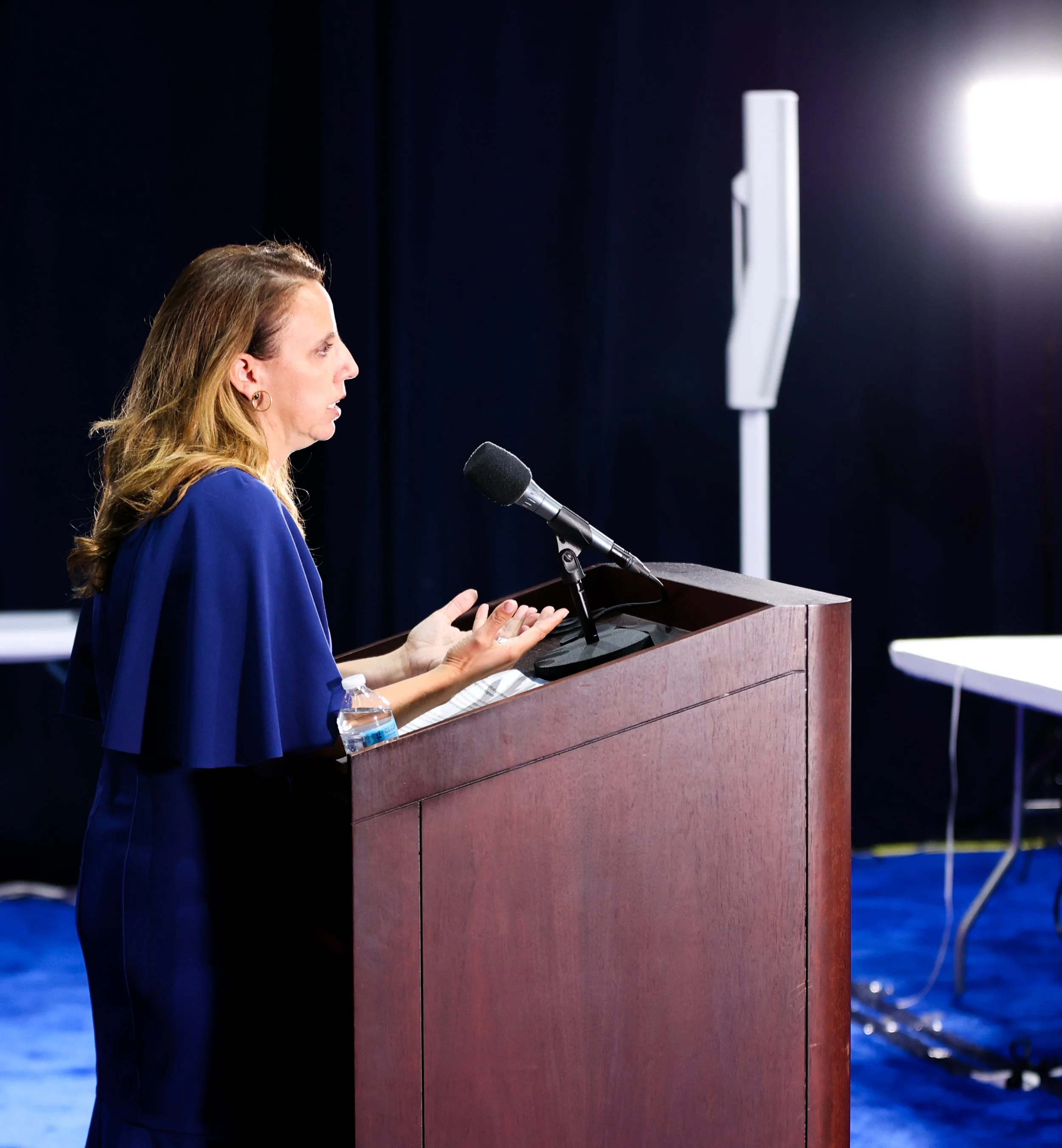
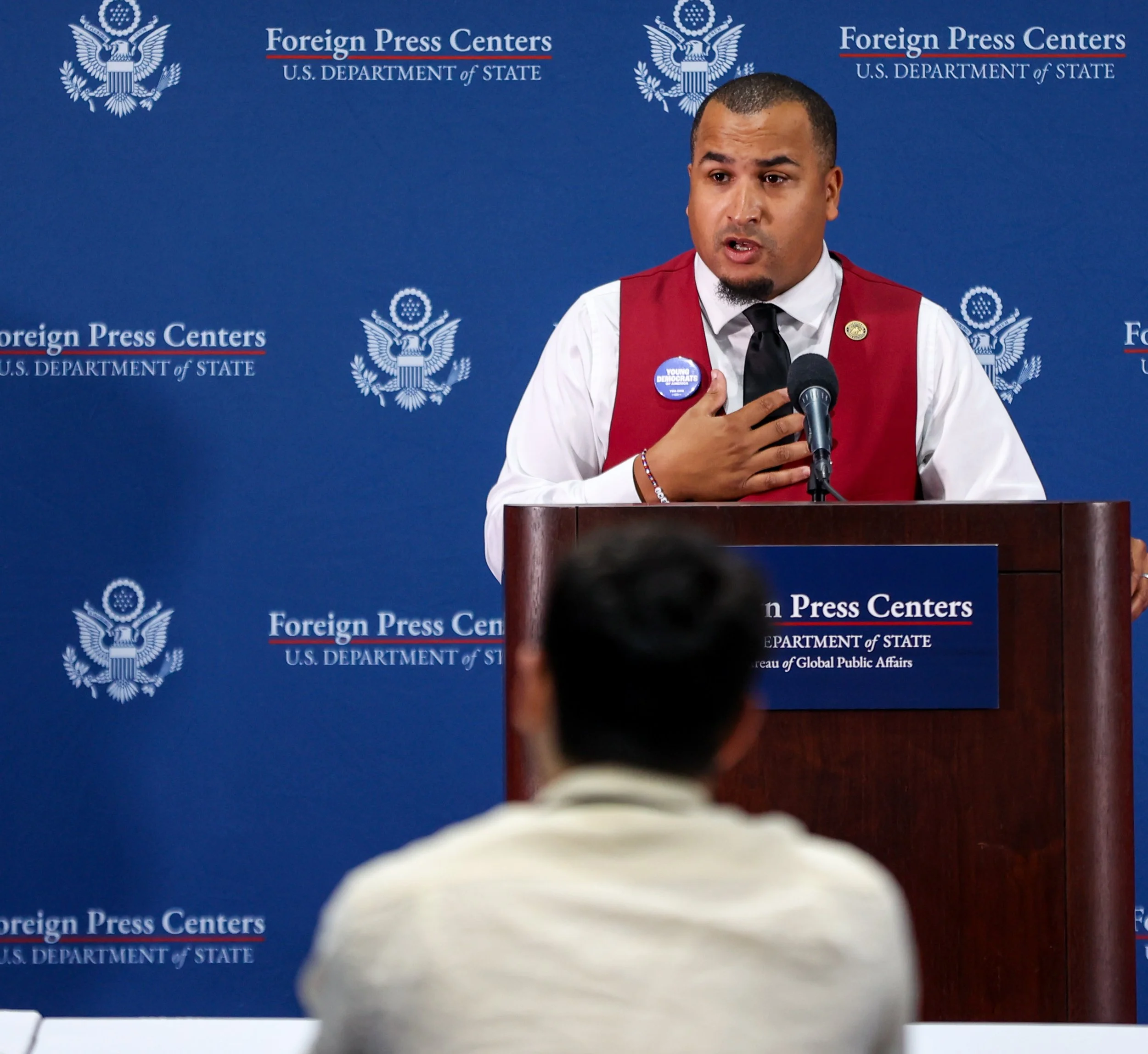
share this story
Remarks by APNSA Jake Sullivan at the African Growth and Opportunity Act (AGOA) Forum
MR. SULLIVAN: Well, thank you, Joy. I will not tell you that story tonight. I need, like, two or three drinks before I tell it. So -- (laughter) --
And now I'm the one standing between you and the refreshments, so I will not try to speak for too long.
But I really did want to come over from the White House, on behalf of the President, to say: Thank you all for being here. It's really great to be surrounded by so many longtime supporters of the U.S.-Africa partnership, from ministers to ambassadors, to colleagues from Congress who have come through over the course of the day, the private sector, and of course, civil society.
FOR IMMEDIATE RELEASE
July 26, 2024
REMARKS BY NATIONAL SECURITY ADVISOR JAKE SULLIVAN
AT THE AFRICAN GROWTH AND OPPORTUNITY ACT (AGOA) FORUM
U.S. State Department
Washington, D.C.
(July 25, 2024)
“Seize this opportunity...”
MR. SULLIVAN: Well, thank you, Joy. I will not tell you that story tonight. I need, like, two or three drinks before I tell it. So -- (laughter) --
And now I'm the one standing between you and the refreshments, so I will not try to speak for too long.
But I really did want to come over from the White House, on behalf of the President, to say: Thank you all for being here. It's really great to be surrounded by so many longtime supporters of the U.S.-Africa partnership, from ministers to ambassadors, to colleagues from Congress who have come through over the course of the day, the private sector, and of course, civil society.
And, you know, I just want to start by taking us back to almost exactly 25 years ago. At that time, President Clinton was urging our nation to adopt AGOA, the African Growth and Opportunity Act. And his argument was powerful. It was persuasive. It was, really, pretty simple. He said, “Congress has a chance to pass a bill that can transform our relationship… for the better…based on mutual respect and mutual responsibility.”
And there was a senator at the time named Joe Biden, who seized on that chance. And as Vice President, he continued to transform and grow our partnership for the betterment of all of our people. And as President, he's tried to ensure that that partnership is grounded not only in mutual respect and responsibility, but also in mutual values and a common vision for the world. And the impact has been considerable.
At the U.S.-Africa Leaders Summit, the Biden-Harris administration committed to invest over $55 billion in Africa over three years, helping to elevate our partnership beyond development and security, to address global challenges together.
And I'm proud to say, oftentimes you put out these big numbers and you kind of walk away from the summit. We are 80 percent of the way there, well ahead of schedule, and Joe Biden intends to do what he has said he was going to do -- and not just hit that 80 billion [sic] -- $55 billion mark over three years, but go far beyond it.
We've also helped close more than 500 new private sector deals, which have led to over $14 billion in two-way trade investment between the U.S. and African countries.
And with the President's Emergency Plan for Adaptation and Resilience, or PREPARE, we've provided over $3 billion annually to help countries strengthen their resilience, especially to climate shocks. And this has had a profound impact because the lion's share of this money is going to African countries who are suffering the worst effects of these climate shocks.
And, of course, these resources matter. But representation also matters. So we pushed, before many others did, for the African Union to become a permanent member of the G20. Got that done. We're now pushing for African representation on the U.N. Security Council, and we intend to get that done too.
We've launched the first-ever President's Advisory Council on Diaspora Engagement to ensure that we're shaping our policies in a way that both reflects, reinforces, and leverages the deep ties that we have with the African continent.
And the President has sent an unprecedented number of leaders from his Cabinet and administration, including Vice President Harris, to visit more than 20 countries across Africa.
Earlier this summer, President Biden stood side by side with President Ruto at the White House to launch a vision document about debt relief that will be a game changer for African countries. And we will carry forward at the G20 Summit this fall -- working with Brazil, South Africa, the current and next chairs of the G20 -- to try to take that vision to the next level so that we have a framework for debt relief that really works and delivers for countries that have been suffering under debt for too long, compounded by the post-COVID overhang.
So when you take what we are trying to lay out, especially in this debt relief space, we know that there is so much more unfinished business that we have to do. And President Biden has told us: Run through the tape, get it done over the course of the next six months, and then continue to support Vice President Harris in her future efforts to continue delivering for the African continent.
So the opportunity that we see sitting before us to really think about the relationship between the public sector and the private sector and civil society may be best exemplified in the concept of corridors that lies at the heart of the President's initiative, the PGI, the Partnership for Global Infrastructure and Investment. And we're especially proud of the Lobito Corridor.
Already, we've mobilized more than a billion dollars for railway lines that will extend from Angola to Zambia to the DRC and, ultimately, to the Indian Ocean, connecting the continent from east to west. It's the biggest American rail investment in Africa ever.
And it's not just about physical infrastructure.
On digital infrastructure, we're building fiber optic cables across the region to connect communities and businesses.
On energy infrastructure, we've mobilized almost $3 billion in clean energy projects, from solar energy plants to battery energy storage -- battery energy storage systems.
Now, I want to be clear: There's more that we have to do, more partnerships to form, more challenges to overcome, more potential to seize. But over the past three and a half years, that's just some of the progress that we've made together.
And that's in no small part because of AGOA -- and not the direct impact of AGOA, though it has been profound, but because AGOA has really been the platform, the foundation upon which we have built so much of our other economic partnership work.
And I want to pause here for a moment. I know you've heard this a few times over the last couple of days, maybe not just over the last couple of days, but the last couple of months, even the last couple of years. But it bears repeating and we mean it: The President, myself, the entire Biden-Harris administration is committed to working with our Congress to reauthorize the law.
And in line with the theme of this forum, we're also committed to reimagining it, modernizing it, and ensuring the legislation promotes resilient supply chains, high-standard investments; ensuring that it supports our efforts to confront a range of emerging challenges and opportunities, whether it's artificial intelligence or the clean energy transition; ensuring that it incorporates voices across industry, including small businesses and entrepreneurs; and ensuring that it reflects the dynamism of our economies and the diversity of our peoples.
Because at its core, that is what the U.S.-Africa Partnership is all about, what this forum is all about. It's our people. The ones who stand up decade after decade, generation after generation, for the things that we hold dear: our country’s shared values of liberty, democracy, freedom, prosperity, innovation. The ones who brought our nations together in fields like technology, medicine, education, and trade. And the ones who have transformed what is a geopolitical partnership into an unbreakable friendship between peoples, because that really is what should and can define the future of the relationship between the United States and the nations of Africa.
And we're going to keep that friendship strong by coming together in communities all across Africa and America to exchange ideas and innovations.
So I said I would be brief. I was a little longer than brief, but let me close with this.
Twenty-five years ago, when President Clinton urged Congress to enact AGOA, he ended his statement with a call to action: “Seize this opportunity.” That's what he said. “Seize this opportunity.”
The United States will continue to answer that call to action. We will seize this opportunity now to reauthorize, modernize AGOA, and reinforce the foundation it provides to all of the other work that we do together.
We'll continue to work with nations across Africa to build a world worthy of our people, one that is more free, more secure, and more prosperous for all.
And we will continue to stand with you, everyone in this room, in partnership and friendship, to seize all of these opportunities in the years ahead. Because as President Biden often says, there is nothing beyond our capacity if we do it together.
So, thank you for giving me the opportunity to be here tonight. I hope you have a wonderful evening. I'm
so grateful to you for all that you've done and contributed here so far. And let's get to work.
Thank you very much. (Applause.)
END
SHARE THIS STORY

FACT SHEET: Outcomes of the 56th Session of the UN Human Rights Council
During the 56th session of the UN Human Rights Council, the United States worked closely with UN Member States to highlight and address pressing human rights concerns and to uphold the universal values, aspirations, and principles that have underpinned the UN system since its founding. Our statements and positions underscored the U.S. commitment to promoting the universality of human rights, including by addressing discrimination, inequity, and inequality in multiple contexts.
U.S. DEPARTMENT OF STATE
Office of the Spokesperson
For Immediate Release
FACT SHEET
July 12, 2024
Outcomes of the 56th Session of the UN Human Rights Council
During the 56th session of the UN Human Rights Council, the United States worked closely with UN Member States to highlight and address pressing human rights concerns and to uphold the universal values, aspirations, and principles that have underpinned the UN system since its founding. Our statements and positions underscored the U.S. commitment to promoting the universality of human rights, including by addressing discrimination, inequity, and inequality in multiple contexts.
This session, the United States advanced our priorities on a broad range of human rights and fundamental freedoms, including economic, social, and cultural rights, including:
Renewing the mandate of the Special Rapporteur (SR) on the situation of human rights in Eritrea
The United States worked with the EU and other partners to renew the mandate of the SR. This mandate is particularly important given Eritrea's ongoing human rights violations and abuses, including its arbitrary detention of individuals for exercising their freedoms of expression, peaceful assembly, or religion or belief, and its repression of those who conscientiously object to Eritrea’s compulsory, indefinite national service.
Renewing the mandate of the Expert Mechanism to Advance Racial Equity and Justice in Law Enforcement (EMLER)
The United States strongly supports the renewal of the EMLER mandate and cosponsored the resolution that passed by consensus. The mechanism is part of a global effort to advance the rights of members of marginalized racial, ethnic, and Indigenous communities. The United States was proud to host an official country visit from EMLER in April 2023.
Advancing Gender Equality and the Empowerment of All Women and Girls
As part of our longstanding work to address the human rights of all women and girls, we reaffirmed support for eliminating discriminatory laws and practices. We strongly advocated that the human rights, health, and welfare of all women and girls be protected in several key resolutions, including Elimination of all forms of discrimination against women and girls, Technology facilitated gender-based violence, Menstrual hygiene management, and Accelerating progress towards preventing adolescent girls’ pregnancy. Additionally, as an active member of the Group of Friends on Sexual Orientation and Gender Identity, the United States worked with our partners across the session to highlight the importance of protecting the human rights of LGBTQI+ persons.
Other Priorities:
The United States joined consensus on the resolution to continue reporting on the human rights of Rohingya Muslims and other minorities in Myanmar, the resolution providing human rights technical assistance and capacity-building in Libya, and the text renewing the work of international expert Antonia Urrejola in identifying obstacles to carrying out the 2016 peace agreement in Colombia.
The United States also co-sponsored resolutions on thematic issues including the independence of the judiciary, jurors, and assessors and the promotion and protection of human rights in the context of peaceful protests. We joined consensus on resolutions on freedom of expression, the human rights of seafarers, safety of the child in a digital environment, and the importance of free secondary education.
Joint Statements:
Reflecting our core value of championing policies and practices that provide equal opportunities and protections for everyone, no matter their gender, the United States was proud to lead a joint statement cosponsored by states from all regions that condemns conflict-related sexual and gender-based violence. We continued our efforts to shine a light on the use of transnational repression by leading a joint statement condemning the actions of countries to silence critics beyond their borders through intimidation, surveillance, or violence. The United States also led a joint statement on athletes as human rights defenders.
We also joined statements on Georgia, Ukraine, Sri Lanka, Sudan, Syria, the Special Rapporteur on freedom of peaceful assembly and of association, and the Olympic ideal. To advance gender equality, we signed statements on Women's Economic Empowerment; Women, Diplomacy, and Human Rights; Women's and Girls’ Human Rights; and Sexual Orientation and Gender Identity.
Side Events:
A central highlight of this session was the side event the United States co-hosted with the EU on our joint U.S.-EU guidance for online platforms on protecting human rights defenders online. Panelists discussed growing online threats faced by human rights defenders (HRDs), underscored the need for online platforms to allocate sufficient resources to address the threats faced by HRDs, and the critical need for cross-platform collaboration.
The United States co-sponsored several additional side events, including events on Arbitrary detention, Decriminalization of homelessness, LGBTQI+ issues, Belarus, and Building a roadmap towards a disability-inclusive post-2030 agenda, among others.
# # #
Stay connected with the Office of Press Relations:
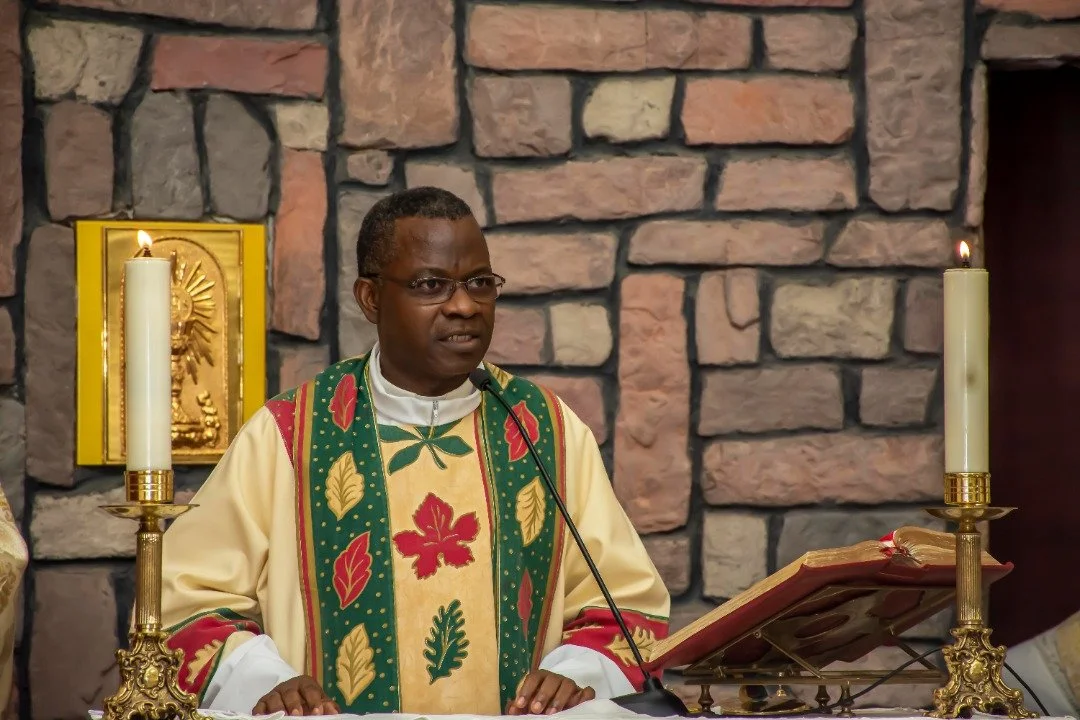
George Ehusani on Nigeria's Minimum Wage Debate
How can anyone who earns 200,000 300,000 400,500 thousand, not to talk of people who earn 1 million 2 million how can they go to sleep in good conscience? How can they go to sleep in good conscience and come out to sit down in a boardroom to discuss the sustainability or otherwise of paying 60,000 to the poorest of workers?
Excerpts from Rev Fr George Ehusani. Sermon on Nigeria's Minimum Wage Debate.
Lux Terra Leadership Center Abuja, June 2024.
I have been sick of this controversy over living wage or minimum wage, and I believe that something is seriously wrong with the heads of many of our leaders.How can anyone who earns 200,000 300,000 400,500 thousand, not to talk of people who earn 1 million 2 million how can they go to sleep in good conscience? How can they go to sleep in good conscience and come out to sit down in a boardroom to discuss the sustainability or otherwise of paying 60,000 to the poorest of workers?
I watch people on TV experts, economic experts, corporate executives, government officials who are taking home more than a million and the amount and they are debating 60,000 or over will destroy the economy and is not sustainable. How wicked.
How can we give 60,000 to a poor worker for his poor worker who may have a family of two or three or four for his feeding, for his accommodation, for his house rent for his medical care for his children's school fees? How can we be blind? How can we do that? And we think that God will bless our country?
We think that it is by bringing a new national anthem for God to bless our country. How can you commit this crime against humanity? For me this is a crime against humanity.
Because the poor people who cannot afford to buy Garri, I'm saying poor people who cannot buy Gary, I'm not talking of meat or fish. People are dying because they have no money to cure malaria. How can you go to sleep in good conscience, those of us who belong to the elite? How can we go to sleep with good conscience?
I see this as a new form of apartheid. Nigeria is one of the most unequal societies in the entire world. A society where it's like the Animal Farm, a society where we have conspicuously rich people, people who are living in conspicuous consumption and others who are in deplorable, dehumanizing poverty.
If you have somebody in this country that takes home, 1 million naira, I mean 1 million I'm not talking about 30 million naira 1 million naira in the month and he can open his mouth. I say anyone who earns up to 1 million should keep his or her mouth shut when he hears them debating about paying 60,000 for the poor.
More than 60 years after independence, we are running an apartheid society. This time is not racial apartheid, iis economic apartheid.
We are running an apartheid society of people of conspicuous consumption flying in private jets around at government expense. People who are riding four or 567 SUVs with pilot vehicles chasing the poor out of the road.
You insulted the poor by saying 30,000, and later you say 48,000, and now you say 60,000. Actually you will pay more than 60,000. You come out with 62,000. You insult poor Nigerians.
There is hardly any society I know that is as divided as the Nigerian society and a society that is so divided is just sitting on a keg of gunpowder. I have warned here before that the revenge of the poor is at the corner. The revenge of the poor is at the corner. I am not calling for it, but it will happen as night follows the day.
Because when you reduce people to this dehumanizing level, nature does not allow a situation of islands of affluence amidst a sea of poverty. Nature does not allow it.
Let me warn those in the elites. Let me warn those in the apartheid committee of government. Let me warn that it is in the course of nature that when a predator continues to devour the various resources that the predator needs more for his sustenance, nature will take out the predator in order to have a measure of equilibrium. Nature is about balance, you know.
When a predator continues to devour the various resources that the predator needs more for its sustenance, nature will take out the predator in order to have an equilibrium in order to have a measure of equilibrium. Nature is about balance, you know. All of nature is about balance and human beings are part of nature. And Nigerians are part of nature
If the predator who needs the animals in the kingdom to survive is recklessly devouring the very animals for its own survival, nature will step in and remove the predictor so that there can be balance in the system in the ecosystem.
Let me one that all those who are in government, I hear I have not confirmed that there are people taking home almost 30 million naira in the month and you have the guts and you have the temerity. Your conscience allows you to sit down to discuss about 60,000 Naira for a poor worker for the whole month, and you are the one that has all the opportunities of excess.
You sit down to discuss about 60,000 and come out and say this is not sustainable. How is that 30 million Naira sustainable economy? How is this sustainable that a leader has 100 SUVs going with him to the airport? How is this sustainable? How is it sustainable that leaders merely junket around the world? How is that sustainable?
I say we are committing a crime against humanity. And if we do not repent and retrace our steps immediately Revenge of the poor is at the corner. Do not hold me responsible because while the devastation was on, I did not keep quiet. Do not hold me responsible. Because while the madness was on, I did not sit on the fence. I kept on shouting, that the revenge of the poor is at the corner unless we change our course. And if we do not change our course we will end up where we are headed. And where we are headed is devastation, disruption, violent revolution.
I rest my case.
share this story
LEAH SHARIBU 21st BIRTHDAY: SETTING CAPTIVES FREE AND RECORDS STRAIGHT
On her 21st birthday, we were concerned to read media reports about captive Christian heroine schoolgirl Leah Sharibu. While most of the facts reported in the story is old news, including our world exclusive report on her birth of a second child in captivity, we’re troubled by the claim that Leah converted to Islam and was married, “According to a "repentant" terrorist, Sharibu first married Abdulrahman after converting to Islam and had a son with him.”
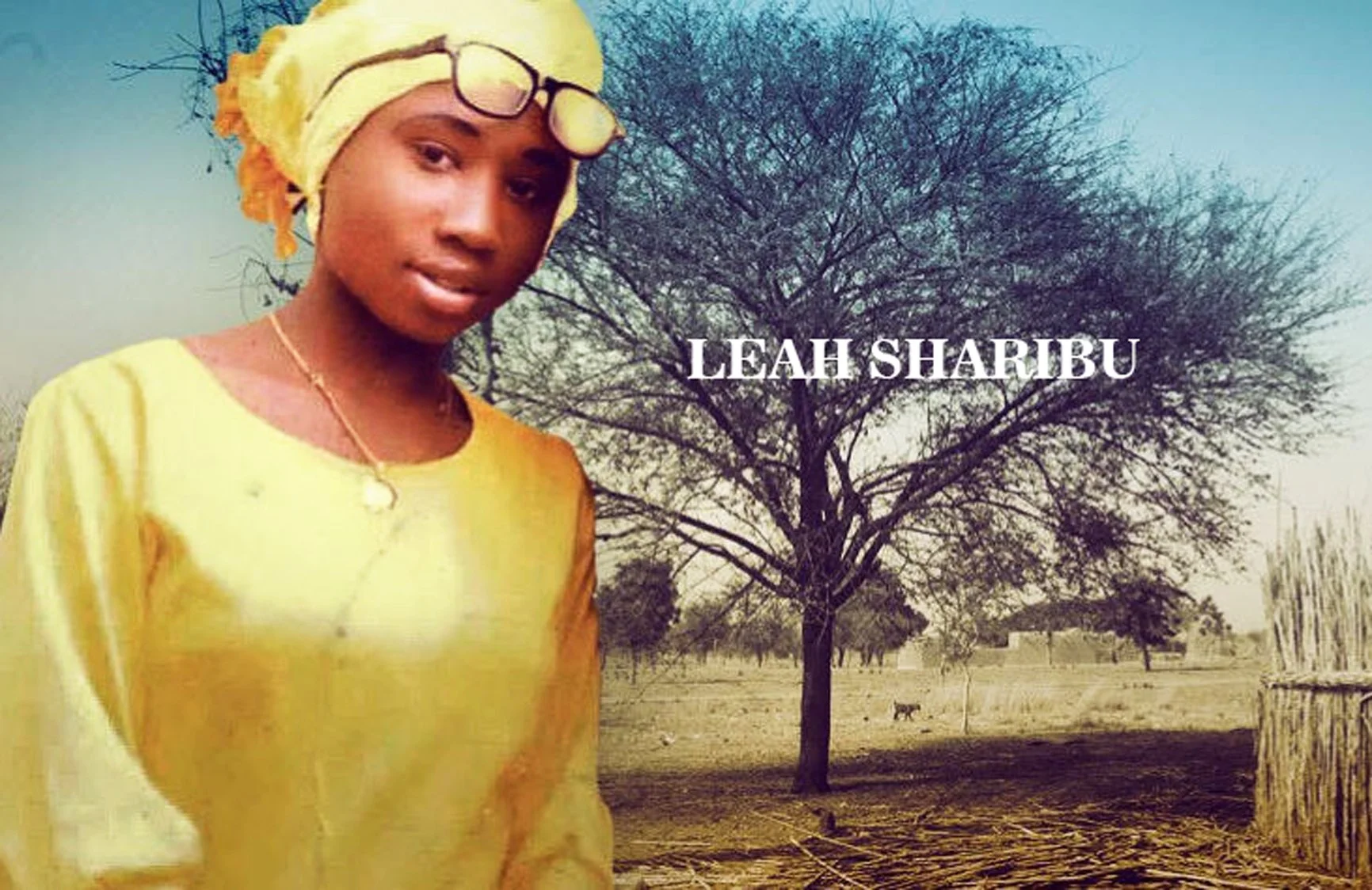
By Emmanuel Ogebe
US Nigeria Law Group Washington
How Leah exercised her legal rights in captivity
On her 21st birthday, we were concerned to read media reports about captive Christian heroine schoolgirl Leah Sharibu. While most of the facts reported in the story is old news, including our world exclusive report on her birth of a second child in captivity, we’re troubled by the claim that Leah converted to Islam and was married, “According to a "repentant" terrorist, Sharibu first married Abdulrahman after converting to Islam and had a son with him.”
Our sources which include women who were fellow captives with Leah however said
“When she first arrived their camp, they gave her out to a certain commander who took her as his slave, but later on went ahead to free her and marry her.
After taking in for him, she asked for a divorce, because she was always fighting with his wives
She then married her second husband had a baby girl for him in May 2021.
But heard he passed sometime last year Abu Farahi Aka Ali Abdallah.”
The fact of the matter is that Leah was enslaved due to her refusal to convert to Islam and served a particular commander.
He was so impressed with her that he on his own volition decided to emancipate her from serfdom and then married her.
However bitter conflict arose between her and his other wives who still looked down on her as an infidel even if she was now supposed to be their co-wife. Just like the biblical story of Joseph who found favor as a slave in Pharaoh’s commander’s house but got into trouble with his wife, Leah had a similar predicament.
Seizing on her coequal status as a wife and her matrimonial rights under the law, Leah who is a highly intelligent girl applied for divorce and therefore escaped from that toxic environment.
It was a short lived victory because she was immediately taken by a high ranking commander as his wife in view of her status as a high value captive but at least her circumstances changed dramatically henceforth.
The military recently rescued Chibok girl Lydia Simon with three children after 10 years in captivity. it is feasible that the military can rescue this global Nigerian icon too. We commend the military for their gallantry.
In addition to seeking her release by the Tinubu regime to show greater concern for Leah Sharibu, we ask for protection and relocation for her birth mother and siblings who were recently displaced during Easter by terror attacks near Sambisa.
We call on FGN to reunite all rescued Chibok girls to their families and to provide full details of and access to information on total numbers of those rescued to resolve the needless and scandalous controversy of figures of those still missing.
We call on Kano state government to release the Du Merci orphans kidnapped over four years ago by the APC government who have still not been released till date despite full and total exoneration of the wrongfully persecuted humanitarian professor Solomon Tarfa.
Kano state cannot afford to be a running mate to Boko Haram terrorists in kidnapping schoolchildren like its predecessor.
We call on Nigeria to clear the air on false narratives that the CIA rescued 30 Chibok girls as published in a recent book “The Sisterhood: The Secret History of Women at the CIA” by Liza Mundy (Crown Books, October 2023).
Emmanuel Ogebe
US Nigeria Law Group
Washington