
Lux Terra Graduates 32 Psycho-spiritual Trauma Healers
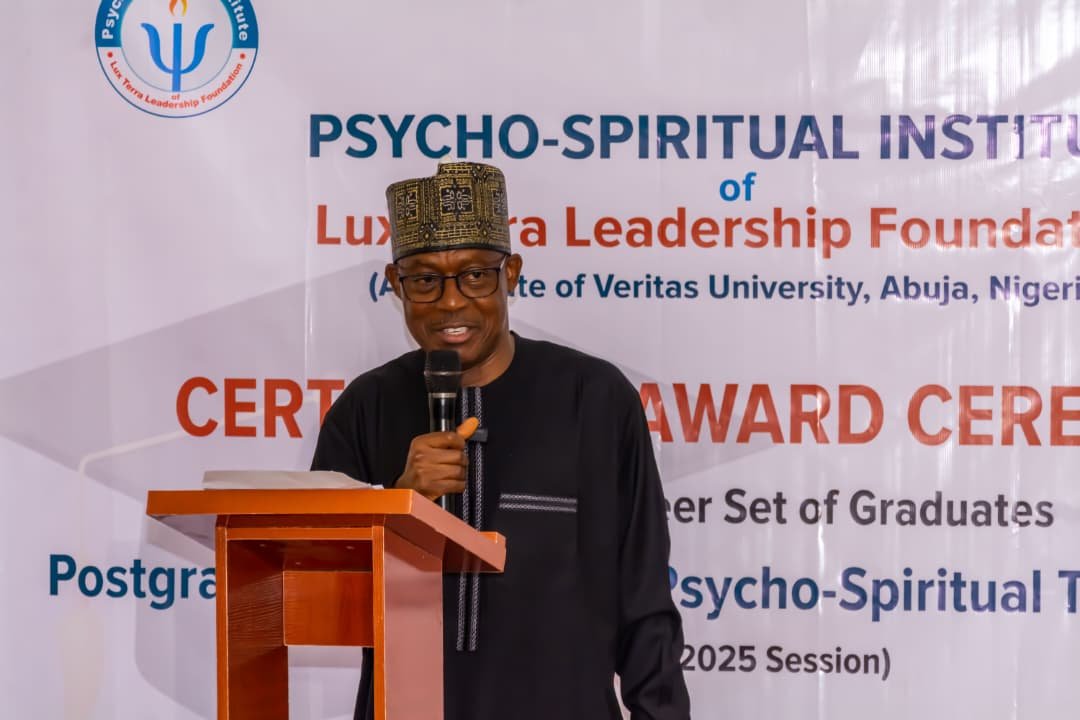
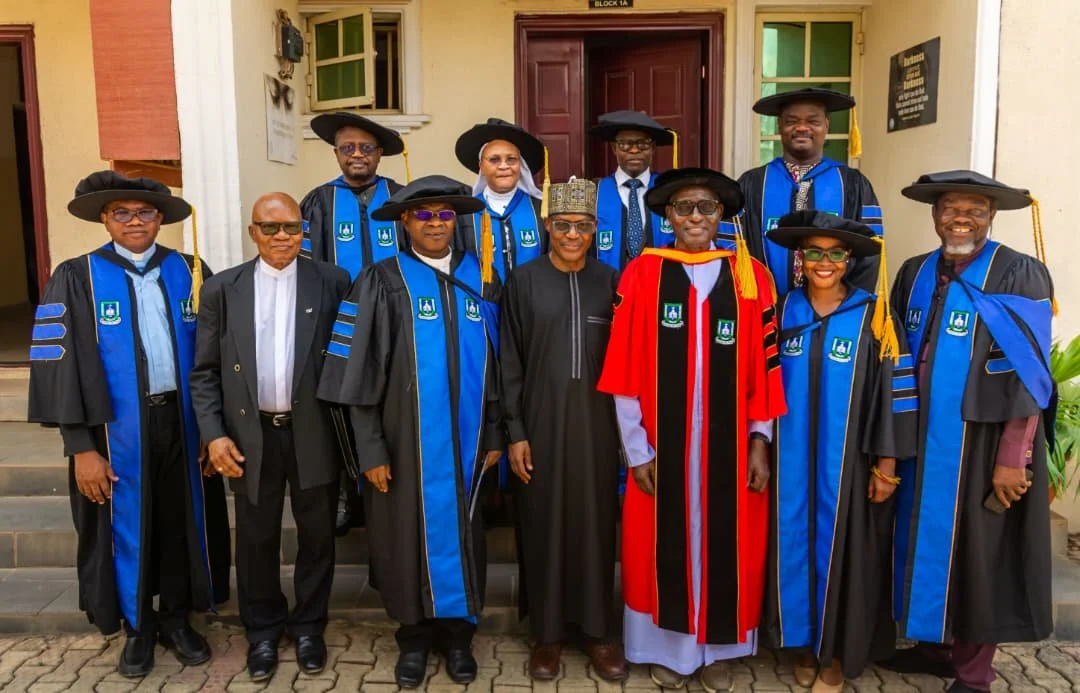
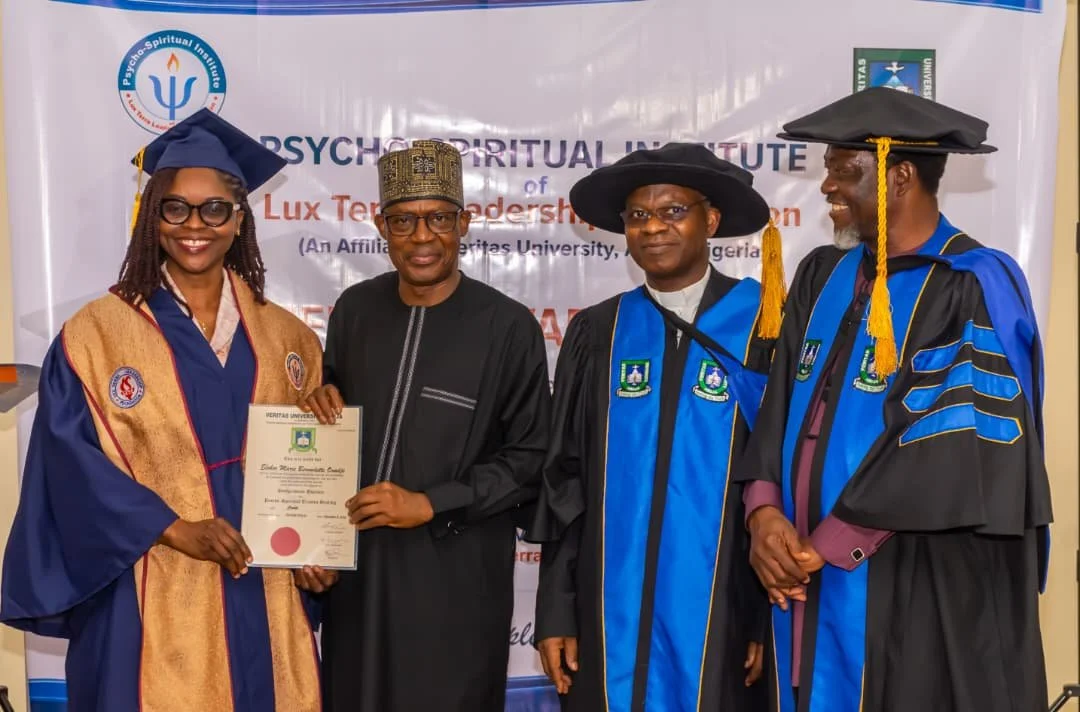
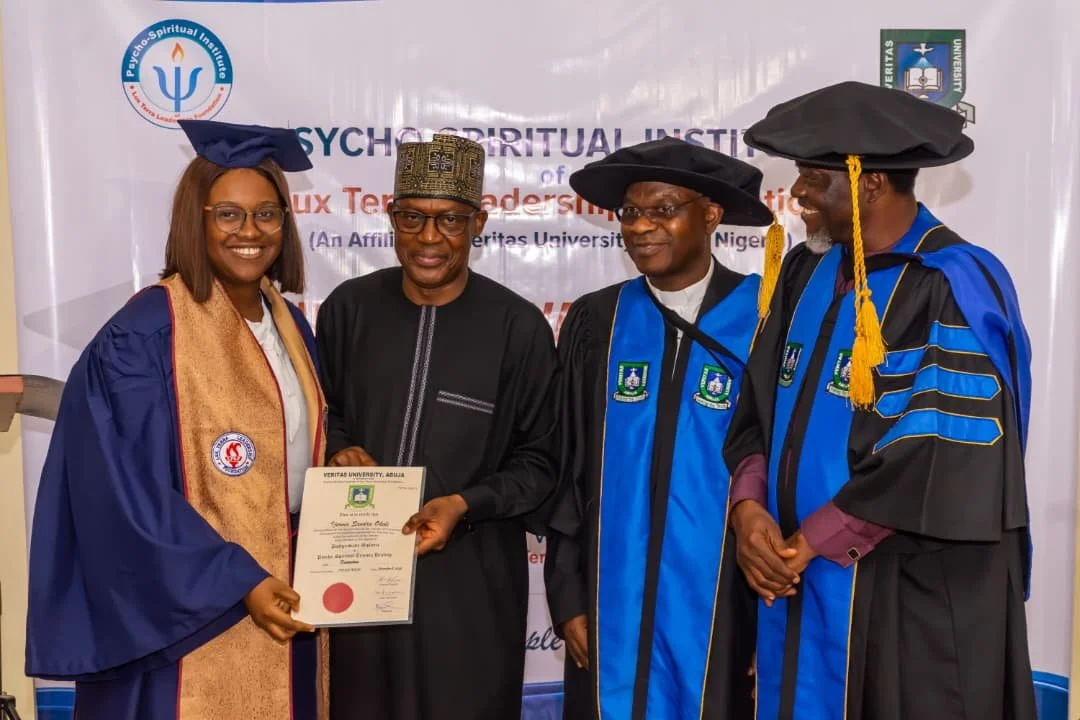
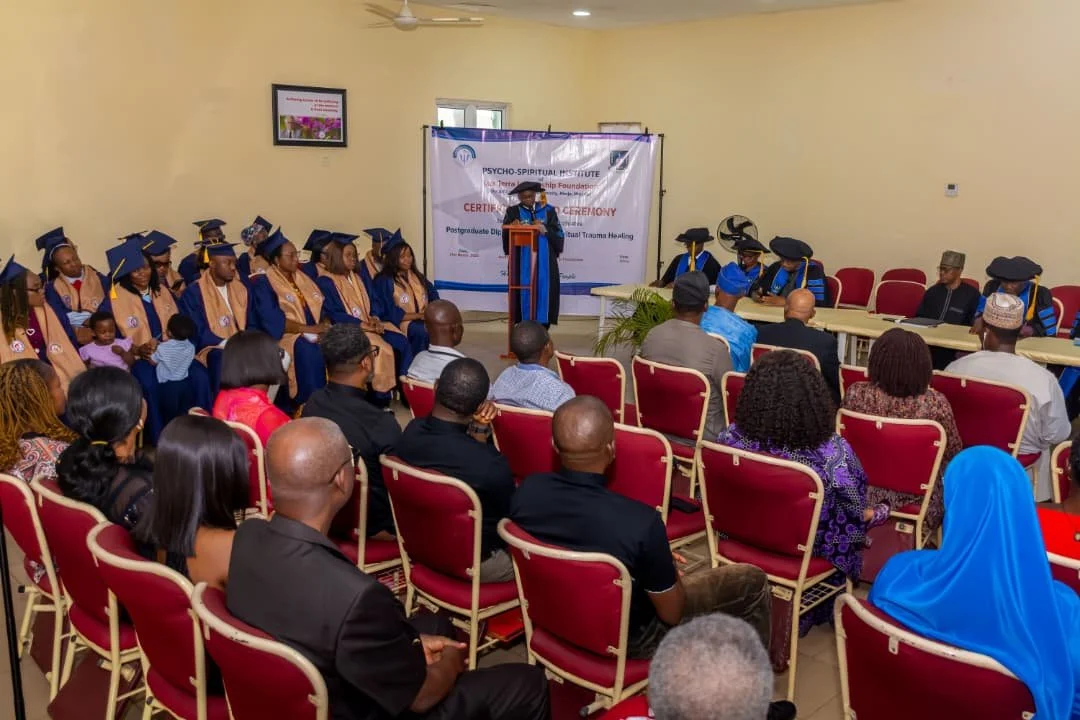
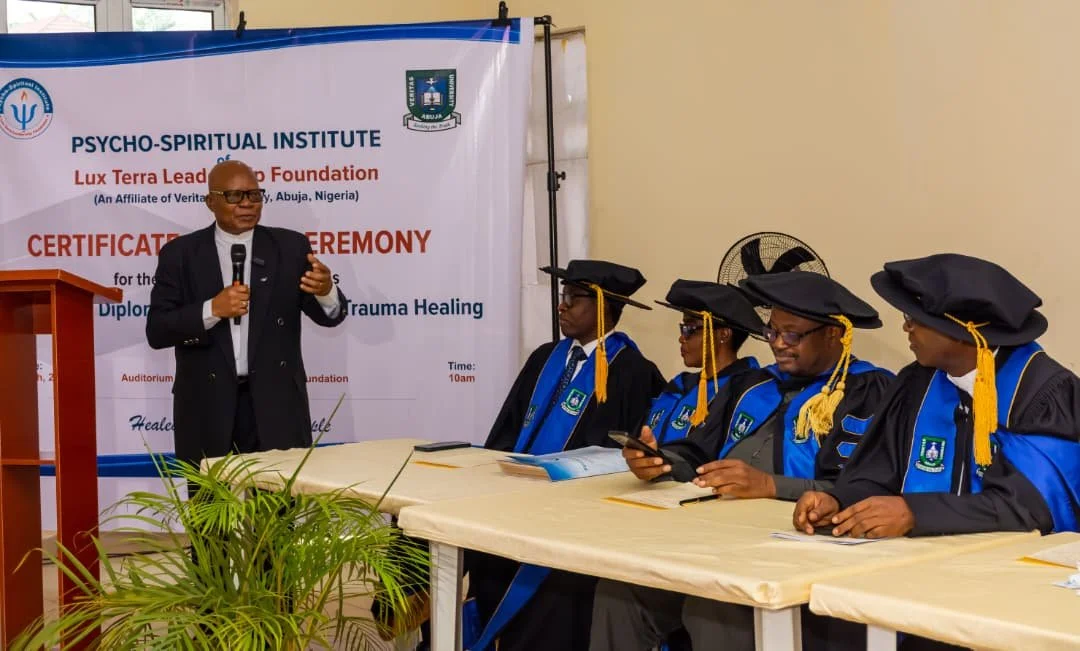
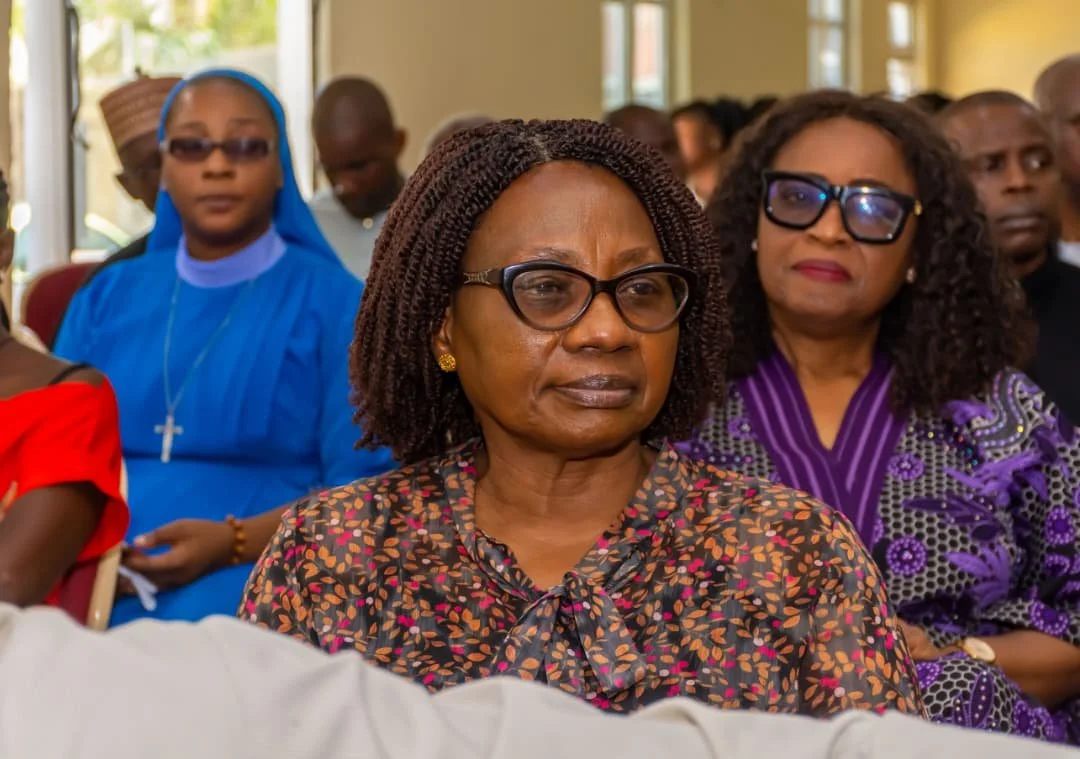
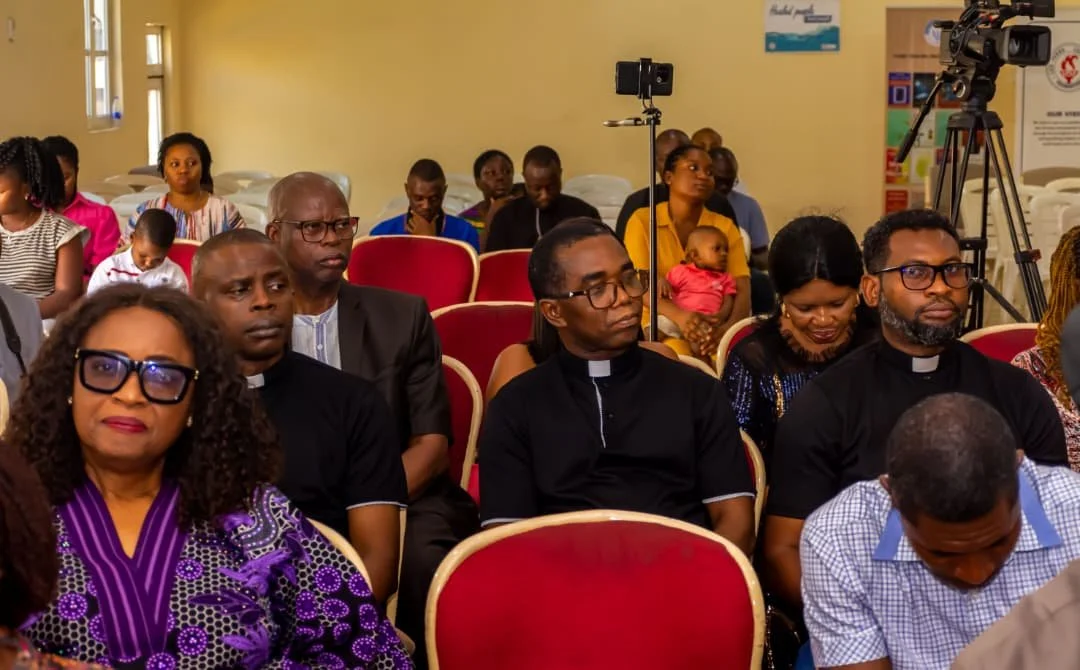
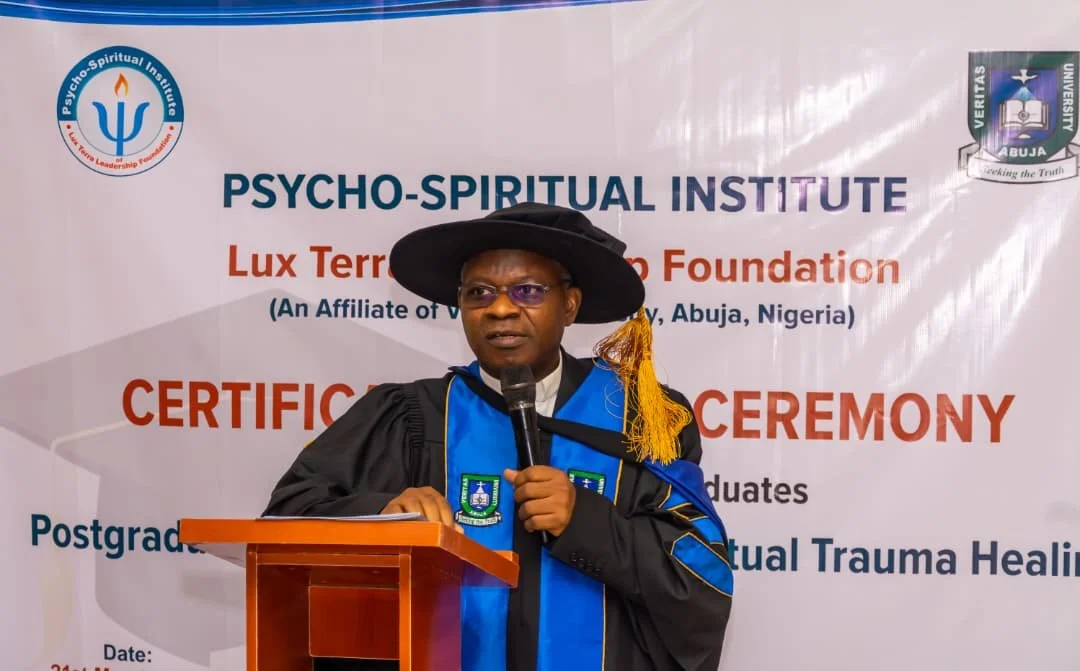
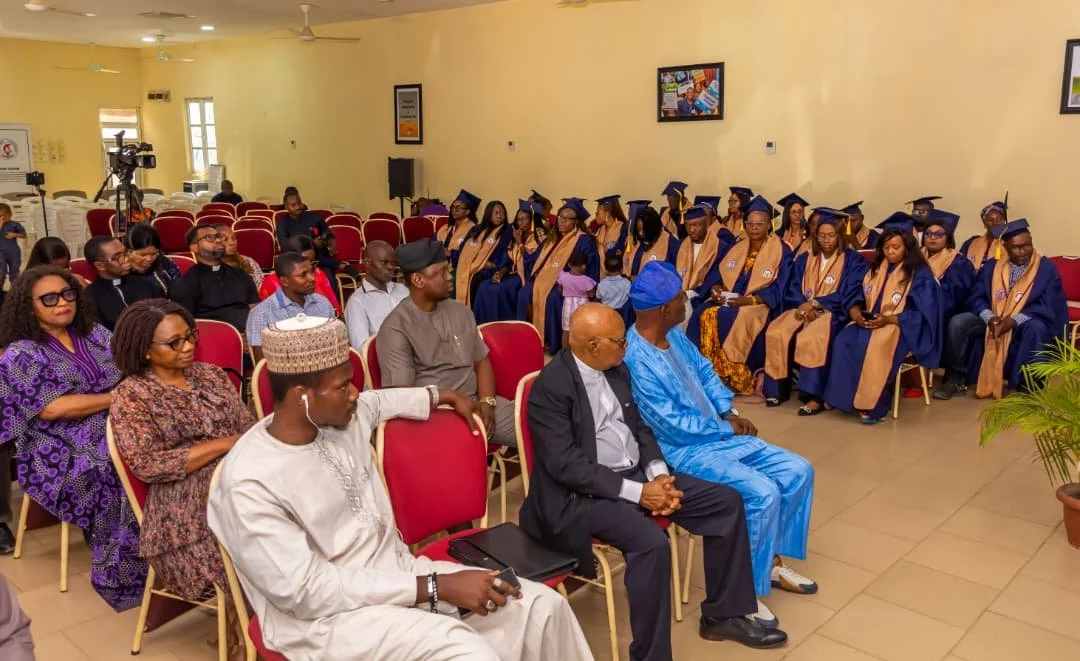
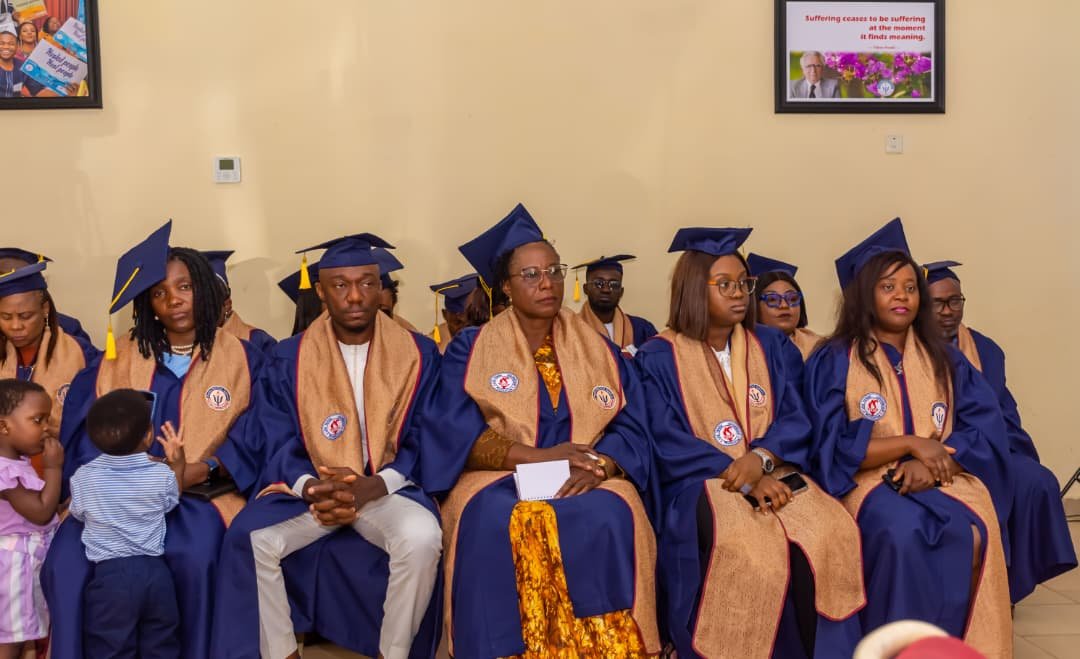
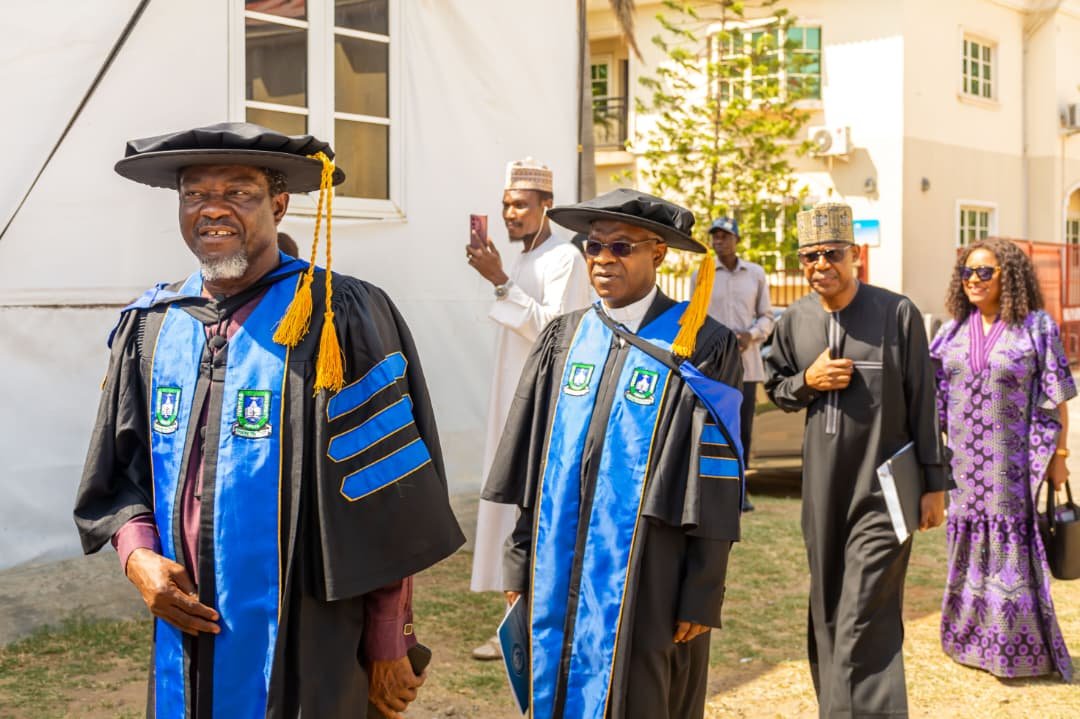
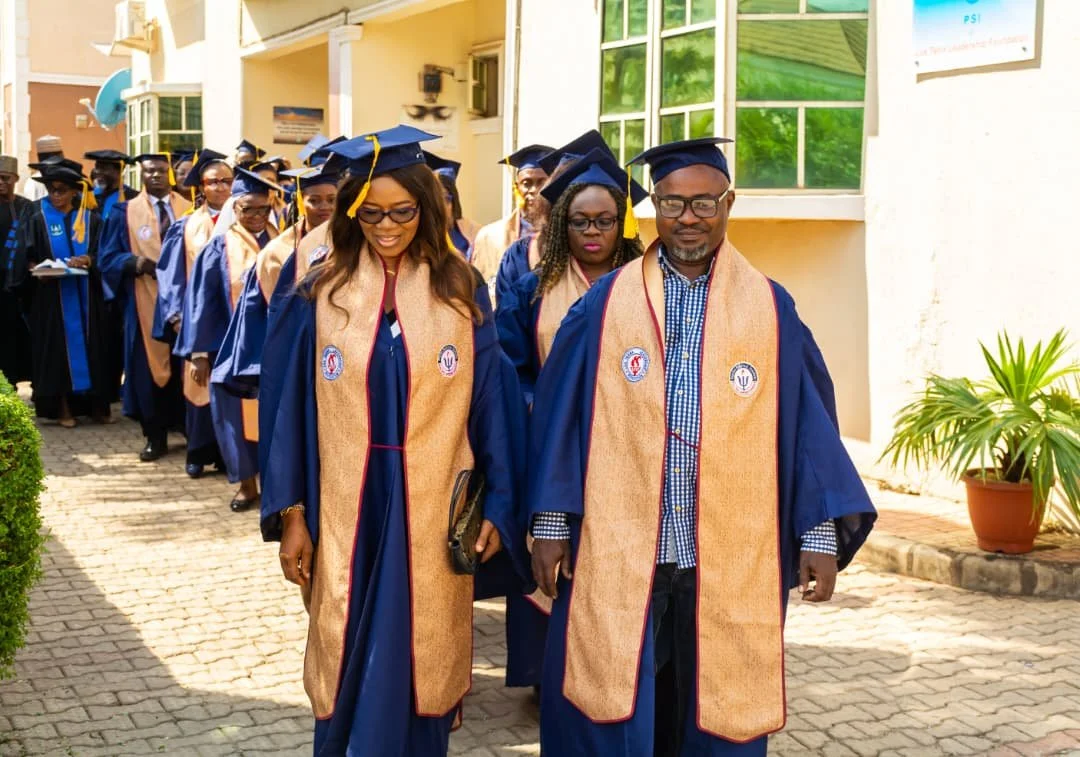
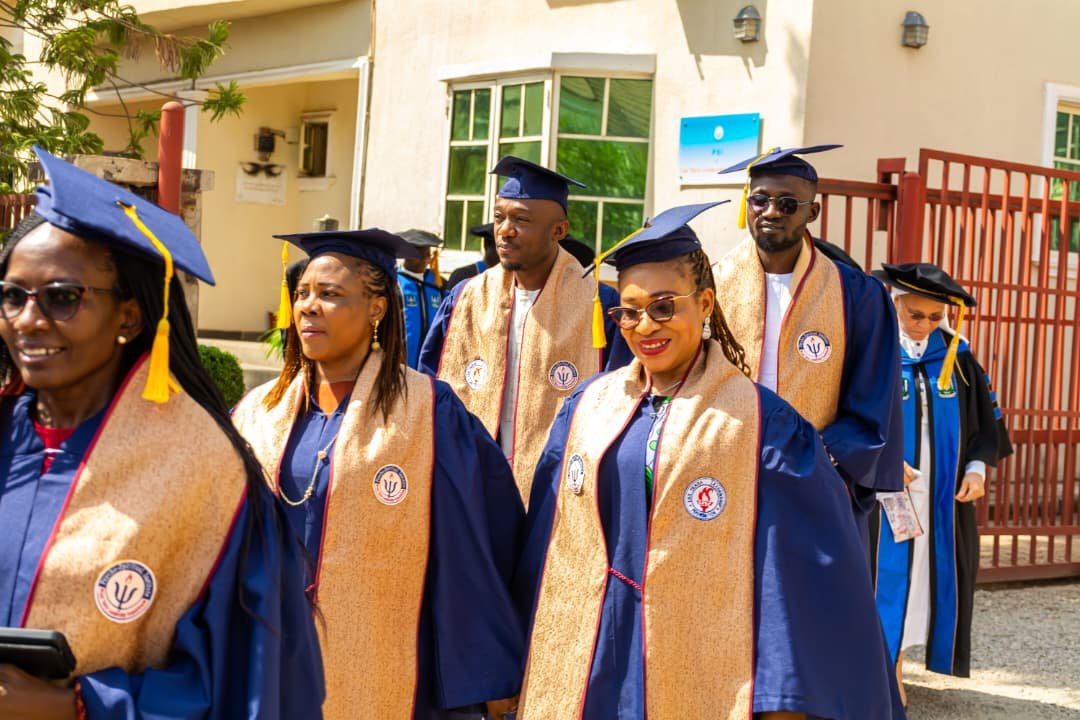
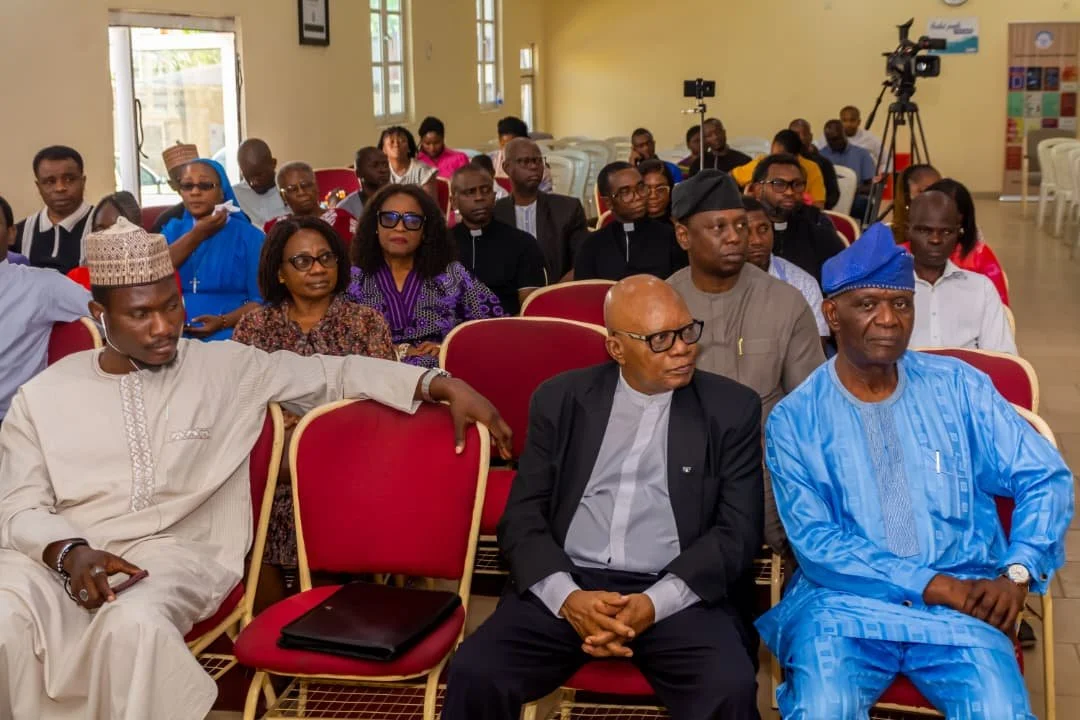
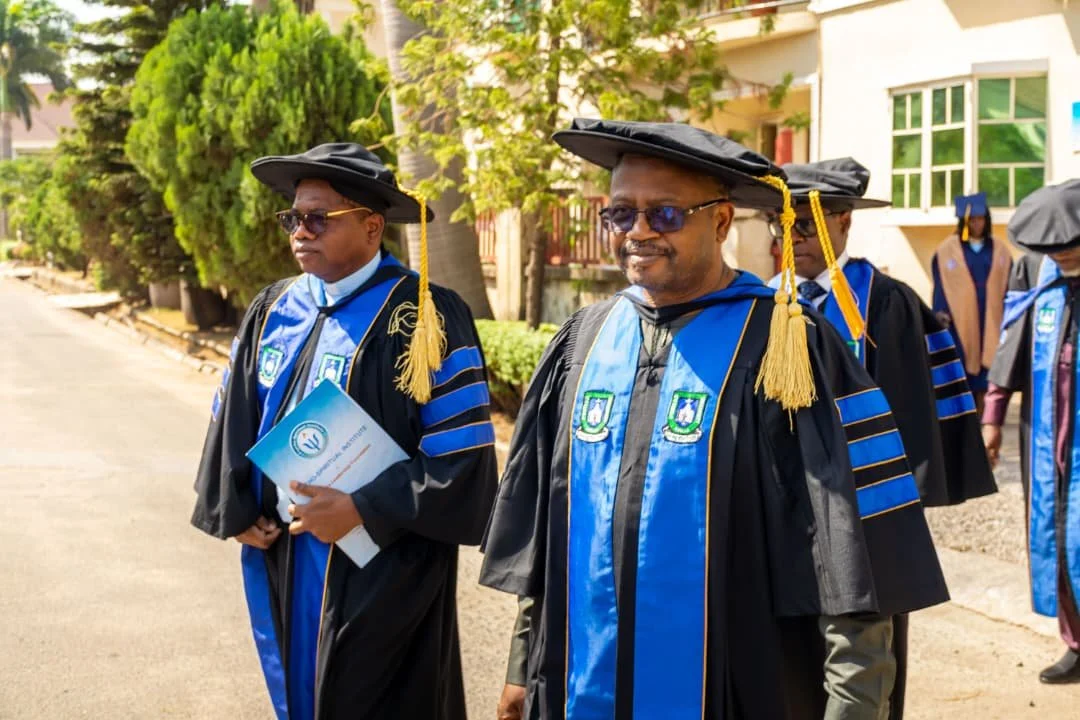
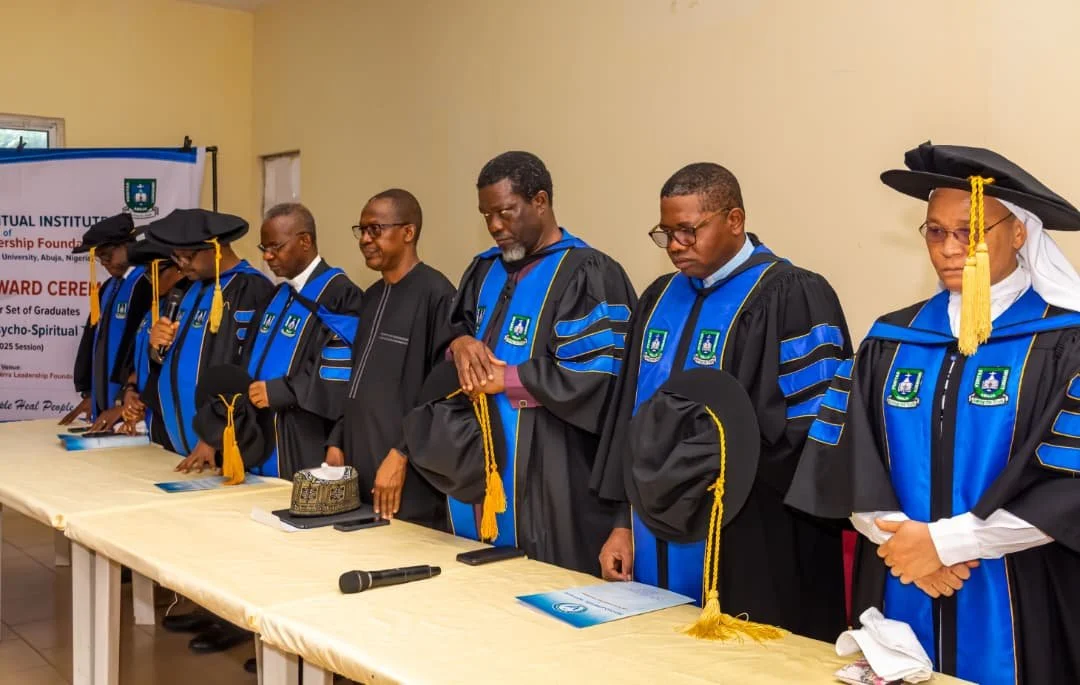
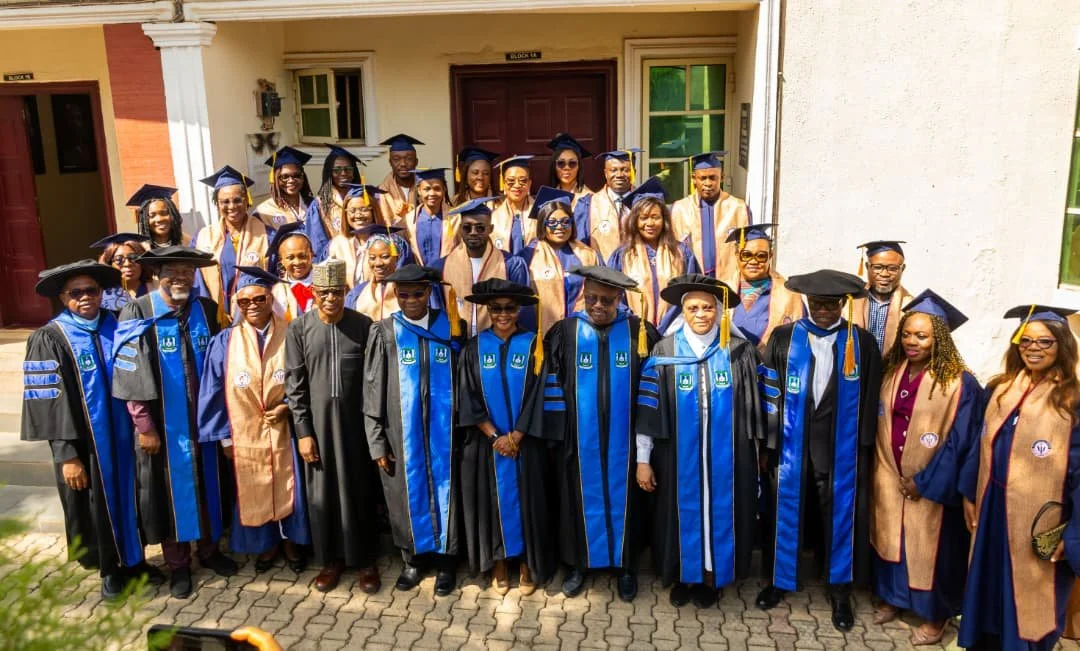
The Psycho-Spiritual Institute of Lux Terra Leadership Foundation, an affiliate of Veritas University, Abuja, has on Saturday March 21st, 2026 in Abuja, graduated 32 pioneer students of its Postgraduate Diploma in Psycho-Spiritual Trauma Healing.
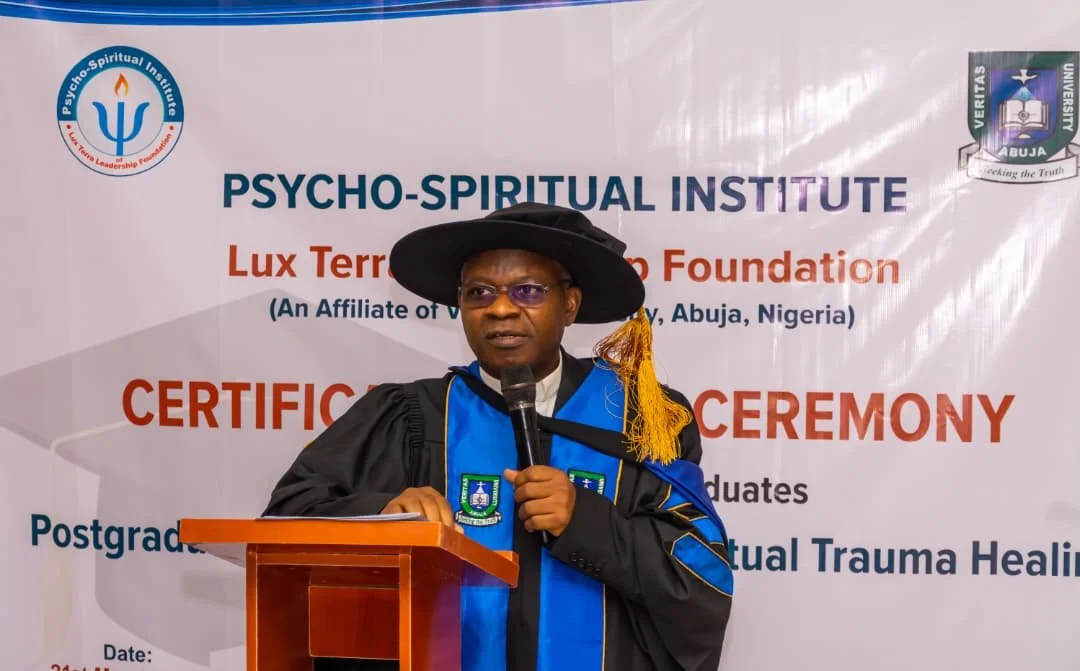
The Psycho-Spiritual Institute of Lux Terra Leadership Foundation, an affiliate of Veritas University, Abuja, has on Saturday March 21st, 2026 in Abuja, graduated 32 pioneer students of its Postgraduate Diploma in Psycho-Spiritual Trauma Healing.
Speaking during the graduation event, the institute’s Executive Director, Rev. Fr. George Ehusani, said the programme was intentionally designed to produce not just professionals, but transformed individuals equipped to heal others.
He said the institute’s training model integrated academic rigour with deep personal formation, ensuring that graduates emerged with both competence and lived experience of healing.
Ehusani explained that beyond lectures and research, the programme immersed students in practical and reflective processes such as prayer sessions, one-on-one counselling, spiritual direction, group therapy engagements and retreats, among others.
According to him, these activities are critical in helping participants confront their inner realities, embrace growth and experience transformation.
“Along with the more academic content, these exercises are aimed at their personal healing, psycho-spiritual growth and ongoing transformation.
“The idea is that after two years of this PSI training encounter and experience, the candidates would have, by the grace of God, sufficiently discovered themselves,” he said.
According to him, their class assignments, group discussions and term papers, among others, should reflect their understanding of this psycho-spiritual and cultural integration, which is PSI’s unique approach.
“I must end by emphasising that the dimension of personal psycho-spiritual healing, growth and transformation should always be considered a very critical element of the entire PSI training experience,” he said.
He urged the graduates to uphold the values of self-awareness, empathy and continuous transformation as they step into professional practice.
In his remarks, the Vice-Chancellor of Veritas University, Prof. Hyacinth Ichoku, commended the vision and dynamism of the founder of the initiative. Represented by the Dean, Faculty of Humanities, Prof. Gabriel Egbe, Ichoku said he was convinced that the graduates would bear abundant fruit and their impact would be felt.
He charged the graduates to put the knowledge acquired into practice, noting that many individuals and society at large are in need of healing.
In his remarks, the Special Guest of Honour, Dr Chris Maiyaki, urged the graduates to stay true to the mission and never stop dreaming big.
He said the strong foundation of faith and service of the institute was a springboard for the graduates to excel. Maiyaki, a former Acting Executive Secretary of the National Universities Commission (NUC), urged the graduates to collaborate effectively and prioritise investment in people.
“I would like to say that we are here to rejoice, and it is with pride and a deep sense of fulfilment that I celebrate your success.
“We must look ahead with renewed vigour and commitment. From what we have seen, the future of this institute looks very bright. “I urge the institute to adhere strictly to all regulatory requirements of the NUC to deepen the culture of quality, ensuring that staffing, delivery and curriculum are properly aligned,” he said.
Responding on behalf of the graduates, the Class Representative, Dr Alex Nnadozie, thanked God for the grace to be healed healers. He commended the institute and the faculty for their dedication to bringing out the best in all graduating students.
Nnadozie also commended the graduates for their resilience and commitment to the vision despite the challenges faced. He said the graduates were already collaborating and making impact in various fields such as media, law and internally displaced persons (IDPs) NGOs, among others.
Textile Artist And Teacher Gasali Adeyemo Features on 'Messengers
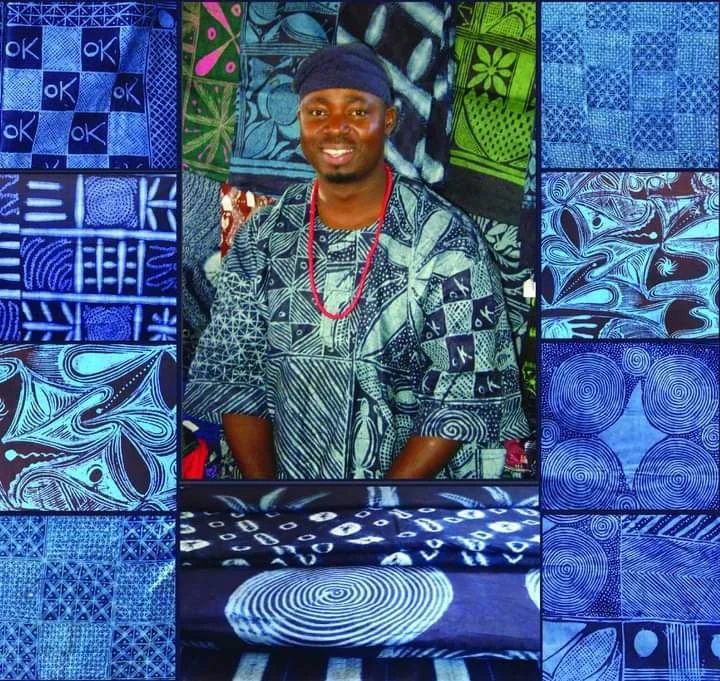
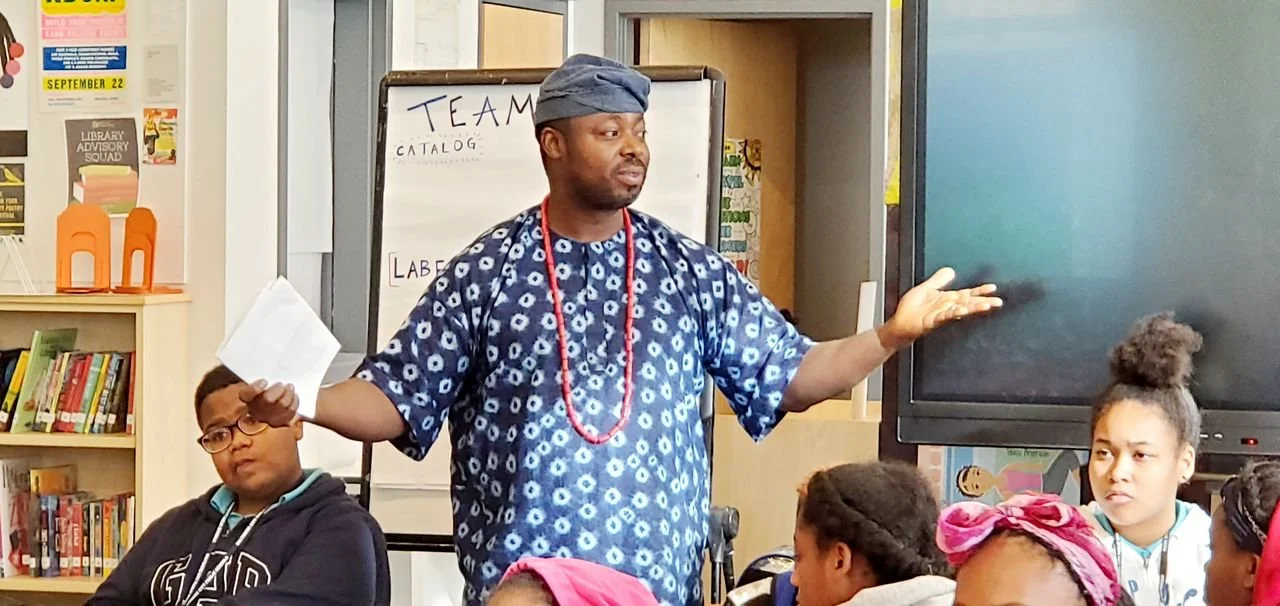
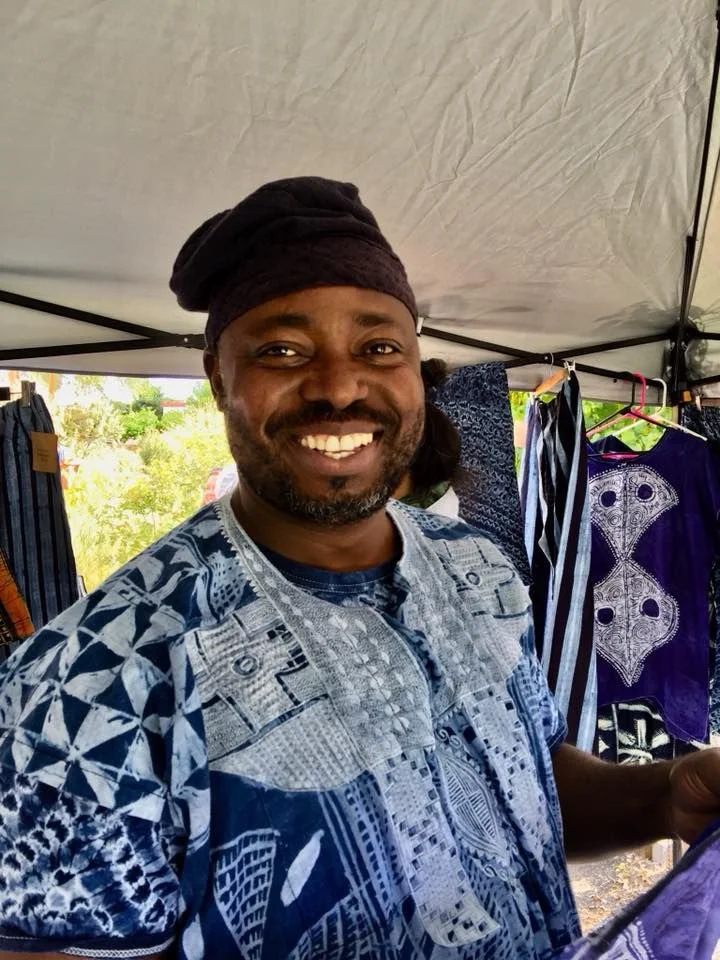
Textile artist and teacher Gasali Adeyemo talks about preserving Nigeria’s traditional textiles -like batik, adire, itinochi, and akwocha -his humble childhood, his biggest influences, and the next generation.
Africa-Related New York
Textile Artist Gasali Adeyemo dicusses the Yoruba art of Adire (tye-dye) making.
From modest beginnings to becoming a leading voice in textile preservation, Gasali Adeyemo shares a journey rooted in craft, culture, and continuity.
In this episode of Messengers with Oyiza, Gasali explores the rich history and cultural significance of traditional Nigerian textiles from Adire and Batik to Itinochi and Akwocha and the urgent need to preserve these indigenous techniques for future generations.
He shares his experience styling Viola Davis in the film "The Woman King". He also reflects on his early influences like Nike Art Gallery (@nikeartgallery), the discipline behind mastering textile artistry, and the responsibility of passing down knowledge in a rapidly changing world.
This is a conversation about heritage, identity, and the role of artists as custodians of culture.
Follow Gasali @yoruba_indigo. Watch now on Spotify.
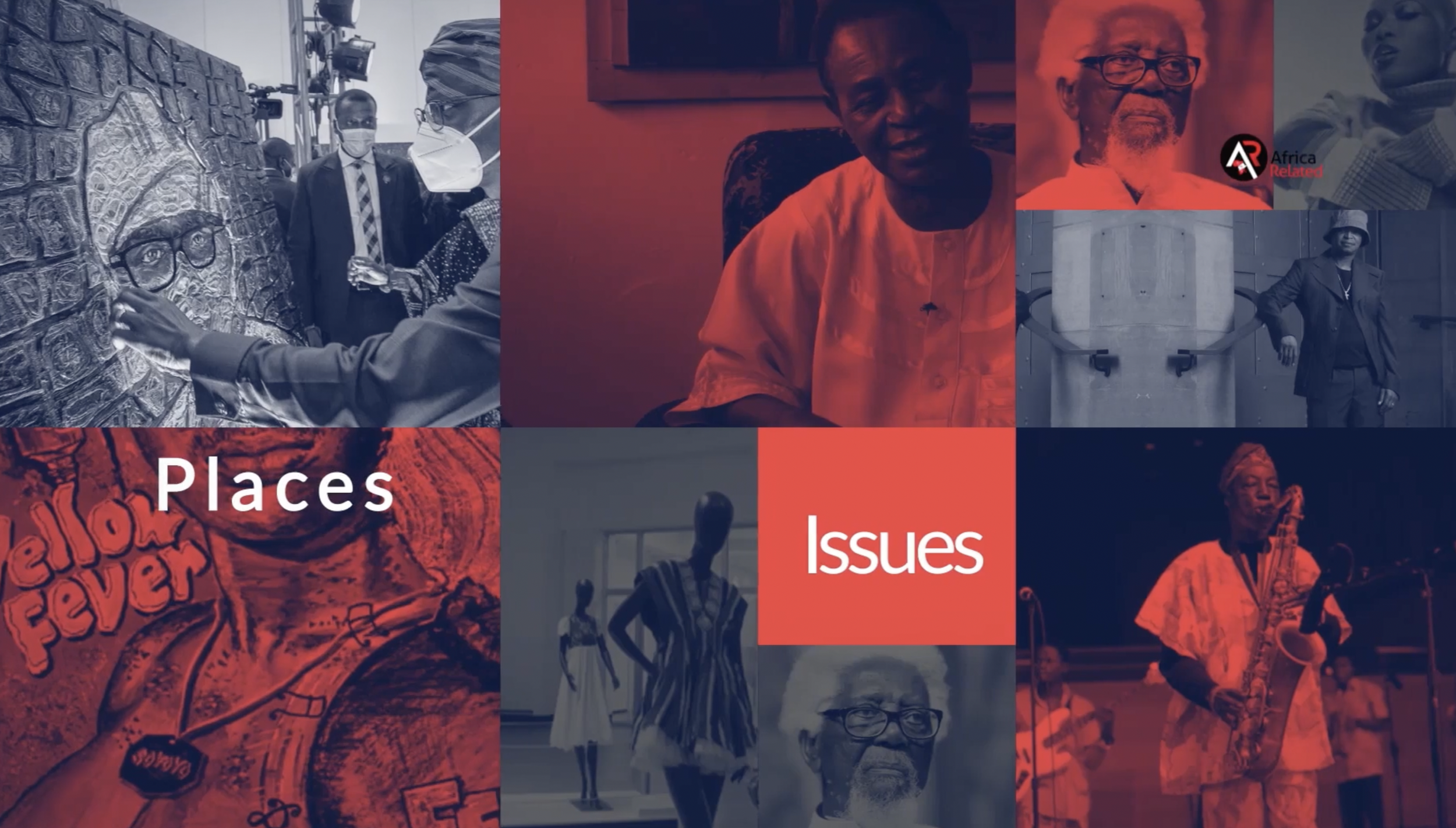
‘MESSENGERS with Oyiza’ is an engaging interview TV/podcast series hosted by Nigerian journalist and producer Oyiza Adaba. Produced by Africa-Related and recorded remotely from New York and on location, the show blends relaxed conversations with interviews of selected guests who discuss topics about Africa for a global audience. The conversations aim to bridge divides, correct misconceptions, and spark positive discussion about Africa and its people. Each 30-minute episode features inspiring stories, creative graphics, video clips, and background reports. The series focuses on Africa's People, Places and Issues.
For more stories told from an African perspective, follow us at africarelatedinc
#AfricaRelated #AfricanArt #art #podcast #conversation #artist #messengerswithoyiza #Messengers #AfricaRelated #TextileArt #adire #batik #CulturalHeritage #TheWomanKing #oyizaadaba
SHARE THIS STORY
Now on SPOTIFY: Podcast Series 'MESSENGERS with OYIZA' Season 3
Don't miss MESSENGERS: with Oyiza - Season 3 on SPOTIFY! Bringing together the rich flavors of Africa's peoples, places and issues.
Africa-Related, New York
MESSENGERS: Bringing together the rich flavors of Africa's peoples, places and issues.
Podcast Series ‘Messengers with Oyiza’ on Spotify
‘MESSENGERS with Oyiza’ is an engaging interview TV/podcast series hosted by Nigerian journalist and producer Oyiza Adaba. Produced by Africa-Related and recorded remotely from New York and on location, the show blends relaxed conversations with interviews of selected guests who discuss topics about Africa for a global audience. The conversations aim to bridge divides, correct misconceptions, and spark positive discussion about Africa and its people. Each 30-minute episode features inspiring stories, creative graphics, video clips, and background reports. The series focuses on Africa's People, Places and Issues.
Season 3 Episodes:
EP 1: Beatrice Bee, Arthur, and Felivian - January 12, 2026
EP 2: Christopher Richards and Dean - January 19, 2026
EP 3: Nmadili Okwumabua - January 26, 2026
EP 4: Demas Nwoko - February 2, 2026
EP 5: Nnamdi Okonkwo - February 9, 2026
EP 6: Enos Nhlane Manthata - February 16, 2026
EP 7: Baba Ani - February 23, 2026
EP 8: Eedris Abdulkareem - March 2, 2026
EP 9: Amarachi Okafor - March 9, 2026
EP 10: Gasali Adeyemo - March 16, 2026
EP 11: Dede Mabiaku - March 23, 2026
EP 12: Lemi Ghariokwu - March 30, 2026
EP 13: Kofo Wonder - April 6, 2026
EP 14: Gogo Anyanwu - April 13, 2026
Produced by Africa-Related
Hosted by Oyiza Adaba
Sponsorship
Africa-Related Contact:
info@africarelatedinc.com
africarelatedinc.com/messengers
@africarelatedinc
Produced by Oyiza Adaba
Music: @thewordsbymoe
© An Africa-Related Production
#messengerswithoyiza #africarelated #africarelatedinc #art #music #textiles #film #africa #artfilms #podcast #museum #nigeria #demasnwoko #architecture #design #fashion #authors #history
SHARE THIS STORY
Democracy on Trial: A Canadian Court’s Wake-Up Call for Nigeria
On June 17, 2025, far from Abuja, a Federal Court in Ontario, Canada, delivered a ruling that should shake every Nigerian who still believes in democracy. The case was not about a coup, an insurgency, or a terrorist cell in the usual sense. It was about our politics—our political parties—and the shocking conclusion of a court with no partisan interest in our affairs: Nigeria’s two dominant parties, the People’s Democratic Party (PDP) and the All Progressives Congress (APC), have, through systemic violence and democratic sabotage, operated in ways tantamount to terrorism under Canadian law.
Democracy on Trial: A Canadian Court’s Wake-Up Call for Nigeria
By Bolaji O. Akinyemi
On June 17, 2025, far from Abuja, a Federal Court in Ontario, Canada, delivered a ruling that should shake every Nigerian who still believes in democracy. The case was not about a coup, an insurgency, or a terrorist cell in the usual sense. It was about our politics—our political parties—and the shocking conclusion of a court with no partisan interest in our affairs: Nigeria’s two dominant parties, the People’s Democratic Party (PDP) and the All Progressives Congress (APC), have, through systemic violence and democratic sabotage, operated in ways tantamount to terrorism under Canadian law.
The case arose from an asylum application by Douglas Egharevba, a Nigerian politician who once belonged to the PDP. He sought refuge in Canada, citing political persecution. But Madam Justice Phuong T.V. Ngo upheld earlier findings that both PDP and APC have histories of political violence so entrenched that mere membership in either is grounds for inadmissibility under Canada’s Immigration and Refugee Protection Act. The evidence laid before the court was damning: ballot stuffing, voter intimidation, violent suppression of opposition, and a culture of impunity stretching from the PDP’s early years in 2003 and 2004, through the APC’s more recent reigns.
The judge rejected the lazy excuse that “this is just how politics works in Nigeria,” calling it “circular and paradoxical.” In other words: if corruption and violence are the rules of the game, then the game is not democracy.
Why Nigerians Must Pay Attention
This was not a judgment written by an opposition politician, an activist blogger, or an NGO desperate for donor funding. This was a neutral, foreign court assessing our democracy through cold, legal reasoning—and finding it diseased at its core.
We can dismiss it as foreign meddling. We can wave it off as ignorance of our “complex realities.” But to do so would be to miss the point entirely. This ruling is a mirror, held up from afar, reflecting the ugly truth many Nigerians already know but are too fatigued, fearful, or compromised to confront: since 1999, our political system has been managed, not by political parties in the true sense of the word, but by political cartels.
What a Political Party Is Meant to Be
The word party suggests a gathering where everyone present has a voice, a stake, and a role. In political science, a party is an organized group bound by an ideology—shared beliefs about how society should be governed. It has rules that bind both leaders and members. It educates its members. It disciplines those who betray its values. It exists to serve the nation, not the personal ambitions of a clique.
By this definition, no political party in Nigeria today qualifies as a true party. We have electoral machines, not ideological movements. We have platforms for power capture, not schools of democratic thought. We have cults of personality, not communities of purpose.
This is why elections feel like recycling—moving from PDP’s failures to APC’s failures and back again—because the rot is not in the logo or the colours, but in the structure and culture.
The Two Choices Before 2027
This Canadian ruling leaves Nigerians with two stark choices:
1. Revolution from Within: Citizens—especially youths—must enter these parties en masse and fight for internal democracy. Demand charters of principles. Demand transparent primaries. Demand that violence and vote buying attract swift expulsion. Demand that ideology—not godfatherism—determines who leads.
2. Look Beyond the Cartels: Support smaller, disciplined parties that stand on clear principles and refuse to rent themselves out to power brokers. Build movements around ideas, not personalities. Yes, it will be hard. Yes, they may lose at first. But democracy is not a one-election project—it’s a culture we must build brick by brick.
We Must Redefine “Party” Before We Can Rebuild Nigeria
Until we fix how parties are structured, Nigeria cannot be fixed. You cannot have a functional nation without functional political parties. The party is the factory where leaders are produced, tested, and refined. If the factory is broken, every product will be defective—no matter the packaging.
Our failure to build ideological parties is why the same recycled elite move from platform to platform without shame. It is why parties have no policies beyond slogans. It is why governance feels the same no matter who wins.
The Path Forward
We must:
Demand legislation that ties party registration to internal democratic standards.
Push INEC to audit party constitutions and enforce compliance.
Build civic education campaigns that teach citizens what a political party truly is and why it matters.
Organize—not just to vote—but to shape the platforms we vote for.
Conclusion: A Foreign Court Has Done What Our Own Will Not
That a Canadian court could declare our ruling parties as violent actors should embarrass our judiciary, our electoral bodies, and our political elite. But embarrassment alone will change nothing. The question is: Will Nigerians use this as a turning point?
2027 will not save us if we walk into it with the same mindset that brought us here. Whether we reform the APC and PDP from within, or build credible alternatives from without, one truth remains: until Nigerians reclaim the ideology and structure of the political party, democracy will remain an empty ritual, and our nation a mismanaged project.
We can keep dancing at this masquerade of democracy—or we can crash the party, rewrite the rules, and host a new one worthy of Nigeria’s future.
Dr. Bolaji O. Akinyemi is an Apostle and Nation Builder. He’s also President Voice of His Word Ministries and Convener Apostolic Round Table. BoT Chairman, Project Victory Call Initiative, AKA PVC Naija. He is a strategic Communicator and the C.E.O, Masterbuilder Communications.
Email:bolajiakinyemi66@gmail.com
Facebook:Bolaji Akinyemi.
X:Bolaji O Akinyemi
Instagram:bolajioakinyemi
Phone:+2348033041236
Pitch Your Script – Next Narrative Africa Fund
The Next Narrative Africa Fund is a $40 million mission driven content and media fund to invest in commercially viable audio-visual content made on the Continent by African and African-diaspora storytellers.
The Next Narrative Africa Fund aims to change the narrative about Africa and people of African descent by telling African stories for global impact. It will also fuel the growth of the creative industries in Africa, empower artists by promoting business and intellectual property ownership, and contribute to sustainable livelihoods across Africa and its diaspora.
Powering Africa’s Next Narrative
The Next Narrative Africa Fund is a $40 million mission driven content and media fund to invest in commercially viable audio-visual content made on the Continent by African and African-diaspora storytellers.
The Next Narrative Africa Fund aims to change the narrative about Africa and people of African descent by
telling African stories for global impact. It will also fuel the growth of the creative industries in Africa, empower
artists by promoting business and intellectual property ownership, and contribute to sustainable livelihoods across Africa and its diaspora.
Goals of the Inaugural Development Grant
Submissions Process
1. Narrative Change
• NNA Fund is looking for projects that allow for new and different stories about and images of Africa to be seen by the world
• We want to defy and challenge stereotypes about Africa and Africans while we entertain
• We are looking for projects and filmmakers who have something interesting to say about the impact areas we identified and, as a result, the world and the time we are living in
• We are especially interested in projects that have applied a gender lens, whether that be confronting gender tropes/stereotypes or showcasing healthy masculinity.
Ultimately, we want to positively influence norms in ways that benefit young people around the world, but especially women and girls.
In short, we want to support the kinds of projects that the world
should see about Africa and Africans
Goals of the Submissions Process
2. Pipeline Building for Equity Fund
• NNA Fund is looking for projects that will potentially enter the commercial equity fund’s pipeline.
• We want stories and projects that can travel; stories that an audience around the world can relate to it while maintaining the authenticity of the storyteller(s) and the time and place in which the story is told.
• We want to select projects from a cohort of filmmakers and production companies that can be great ambassadors for the brand—we can depend on them to deliver and be great partners to the Fund now and in the future.
• We manage reputational risk by working with partners who align with our values.
In short, we want projects that will make money and win awards

Submission Open: One World Media Awards 2025
One World Media is looking for impactful journalism in print, digital media, audio, film and broadcast mediums, as well as feature and short documentaries that raise awareness of global and local issues, covering underreported topics or offering new approaches to more familiar stories. Additionally, since last year we opened the “Innovative Storytelling” category for media using new technologies and platforms, such as TikTok, gaming, data, VR, AR, XR or AI.

Celebrating underreported stories from around the world
One World Media is looking for impactful journalism in print, digital media, audio, film and broadcast mediums, as well as feature and short documentaries that raise awareness of global and local issues, covering underreported topics or offering new approaches to more familiar stories. Additionally, since last year we opened the “Innovative Storytelling” category for media using new technologies and platforms, such as TikTok, gaming, data, VR, AR, XR or AI.
Free entries are available for students who are from and based in the global south and for organisations interested in entering the “Press Freedom” category. Discounts are available for those in the global south for all categories, please see the website for details.
You can read all about the application process and enter a submission here.
The deadline for entries is 6 February 2025 at 17:00 GMT+1.
https://oneworldmedia.org.uk/awards/
Please help us spread the word
SHARE THIS STORY

KIDNAPPED In NIGERIA
A mother’s heart-wrenching story powerfully demonstrates why nowhere in Nigeria is truly safe from the pervasive menace of kidnappers and criminal gangs, least of all the nation’s capital, Abuja. This unfortunate reality underscores the growing fears and concerns among Nigerians, as they grapple with the constant threat that looms over their daily lives.
by oyiza adaba, New york
A SPECIAL REPORT
Deborah Sanni (RIP) was last seen in Area 1 on March 3, 2024. (Photo: Sanni Family)
On March 3, 2024, 29-year old Deborah Sanni, an Area 1 resident of Abuja, stepped out of their family home around 8:00 PM to pick some supplies from a nearby shop. Then the unthinkable happened.
"Every day I wake up with her thoughts on my mind. I sleep with her thoughts on my mind, because it's just like a dream - a nightmare." - Mrs. Matilda. Sanni
Her grieving, yet strong mother, Mrs. Matilda Sanni recalls the heart-wrenching incident, which powerfully explains why nowhere in Nigeria is truly safe from kidnappers - least of all the nation’s capital, Abuja. This unfortunate reality reflects the growing fears and concerns among Nigerians, as they grapple with the constant threat that looms over their daily lives.
In Deborah Sanni's case, her family paid a ransom on the same night, which her captors withdrew before dawn on March 4, 2024. Then they went silent. After a difficult week of searching, her family learned that her body had been found a week earlier and sent to a mortuary in another part of Abuja. This raises concerns about communication between the Nigerian Police, other security agencies, and hospitals.
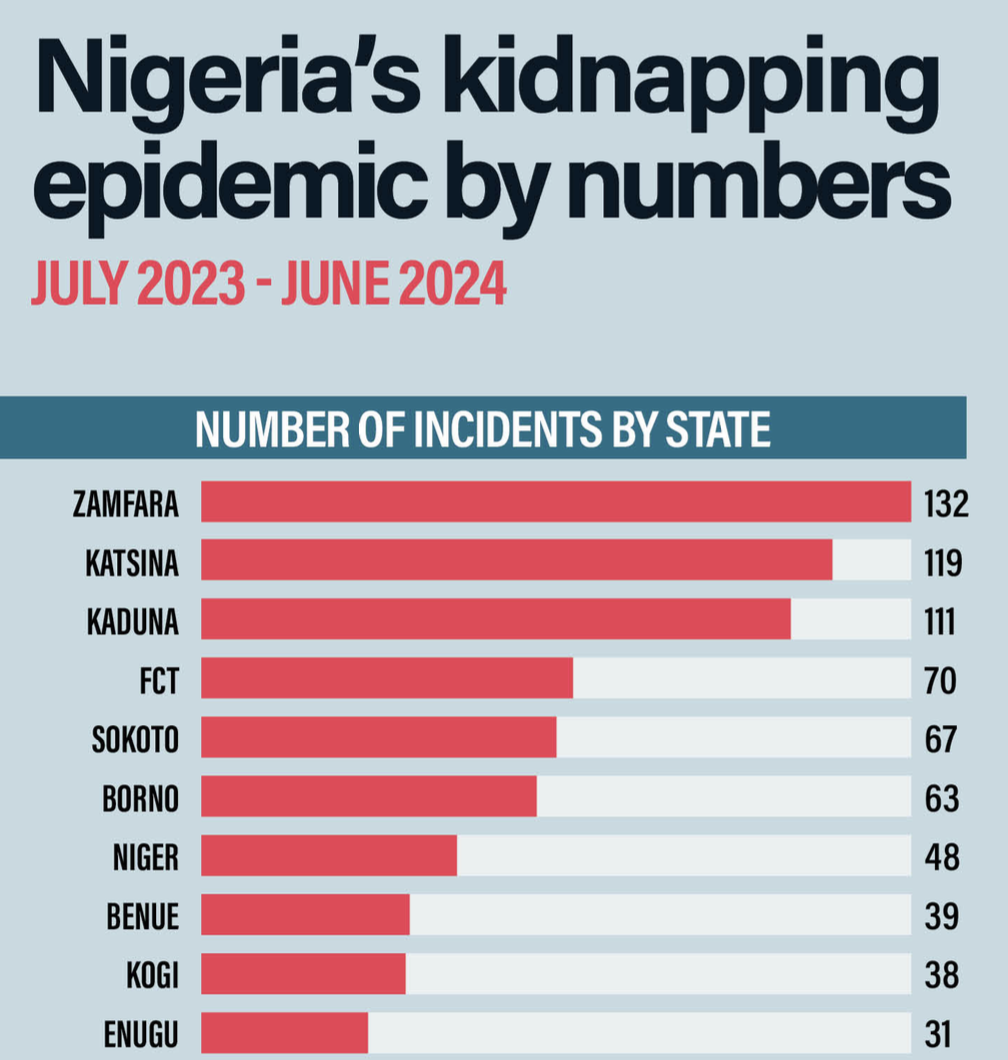
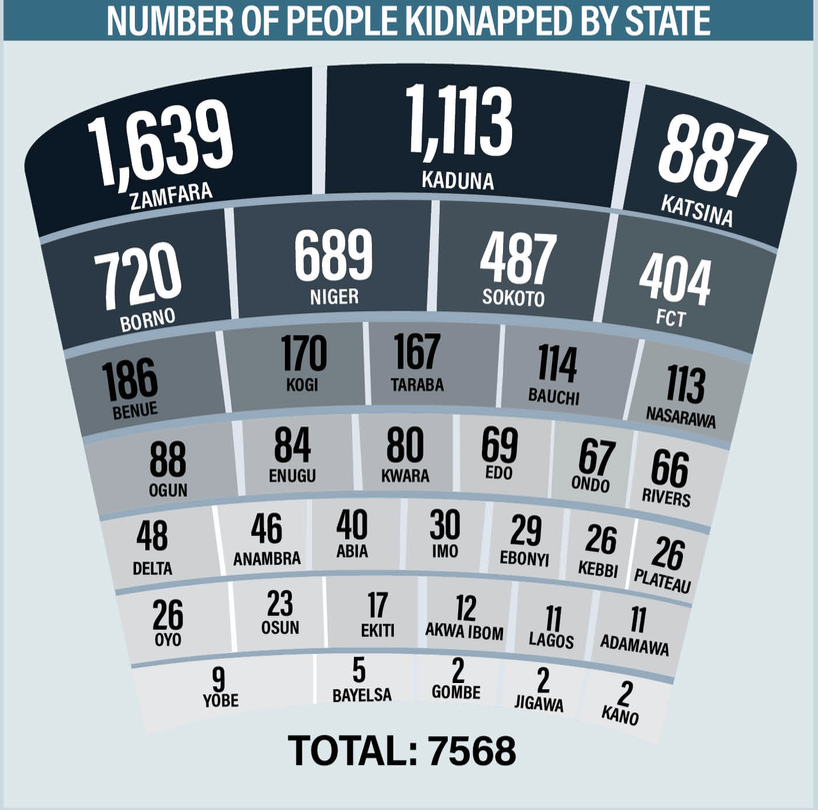
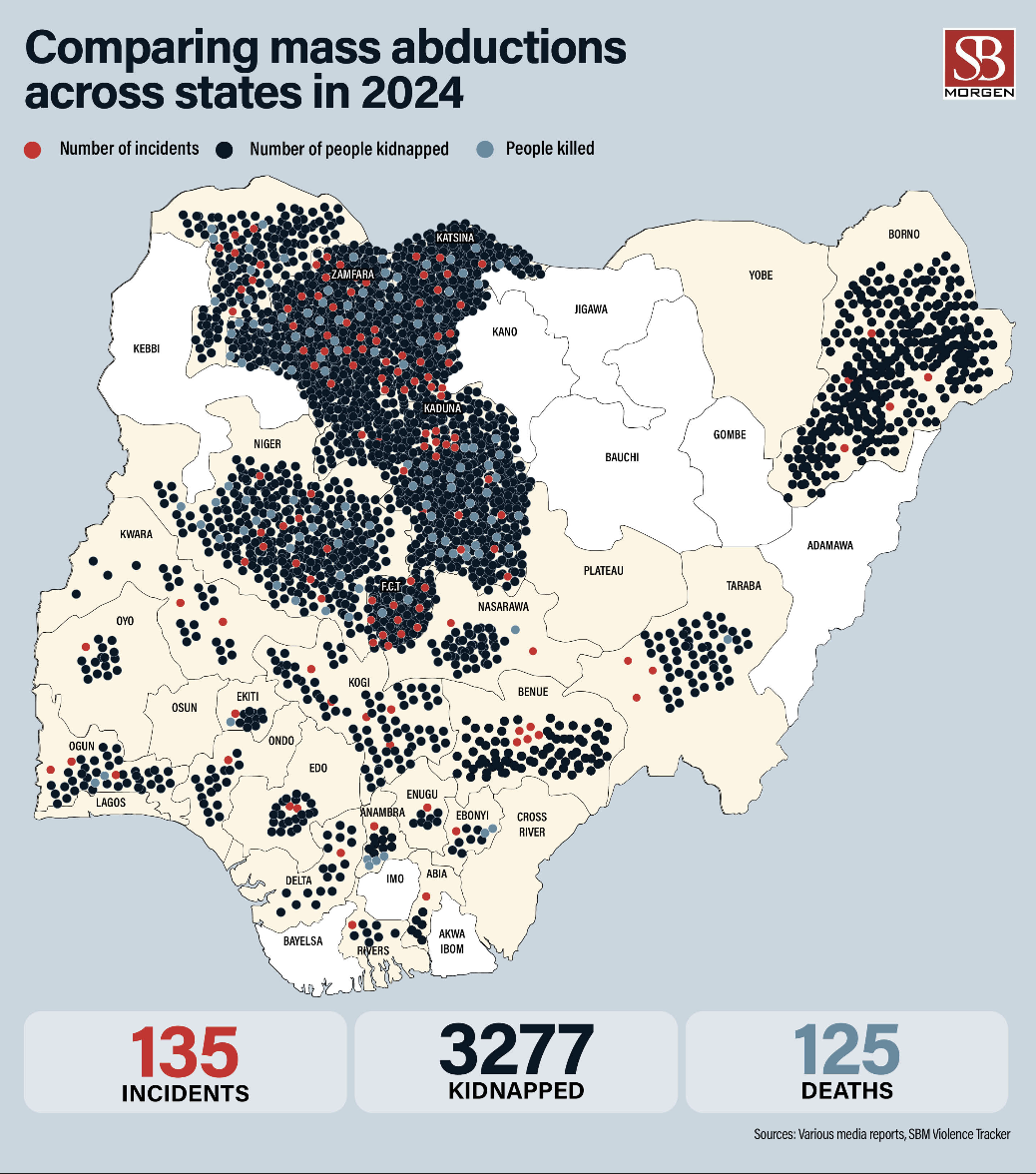
As we close out our year in 2024, we take a moment to remember all the victims of kidnapping in Nigeria, along with their families who continue to suffer. It is a sobering experience to review these statistics that reflect the plight of individuals who, tragically, will not be spending the upcoming year with their loved ones. The emotional toll this takes on families and communities is profound and deserves our attention and compassion.
SBM IntelLIGENCE 2024 Report
Nigeria’s security crisis has become increasingly complex, with armed groups and non-state actors exploiting the state’s weakened influence. This includes Boko Haram’s resurgence in the Northeast, armed gangs in the Northcentral and Northwest, secessionist violence in the Southeast, and gang-related issues in the Southwest. Amid these diverse security threats, widespread kidnap for ransom has emerged as a common thread.
Grim Reaping: Economics of Nigeria’s Kidnap Industry – A 2024 Update
- SBM INTELLIGENCE -
kidnapping statistics: SBM Intel 2024 Report
SHARE THIS STORY
Ambassador Beth Van Schaack on U.S. efforts to advance transitional justice in Africa
Ambassador-at-Large for Global Criminal Justice Office of Global Criminal Justice, Beth Van Schaack
Ambassador Beth Van Schaack on U.S. efforts to advance transitional justice in Africa
Press Briefing with the Ambassador-at-Large for Global Criminal Justice Office of Global Criminal Justice, Beth Van Schaack. Ambassador Van Schaack discusses her recent travel to East Africa and provides an update on U.S. government efforts to advance transitional justice.
MODERATOR: Good afternoon to everyone from the U.S. Department of State’s Africa Regional Media Hub. I welcome our participants logging in from across the continent and thank all of you for joining us. Today, we are very pleased to be joined by Ambassador-at-Large for Global Criminal Justice in the Office of Global Criminal Justice, Ambassador Beth Van Schaack. Ambassador Van Schaack will discuss her recent travel to East Africa and provide an update on U.S. Government efforts to advance transitional justice.
We will begin with today’s – today’s briefing with opening remarks from Ambassador Van Schaack, then we will turn to your questions. We will try to get to as many of your questions as we can during this briefing.
And so with that, I will turn it over to Ambassador Beth Van Schaack for opening remarks.
AMBASSADOR VAN SCHAACK: Great. Wonderful, Johann. Thank you so much, and thank you to everyone for joining. I really appreciate your interest in the incredible innovations in justice that are happening across the African continent, and I’m really pleased to have the opportunity to talk about some of the newest developments, including my recent trip. So I just wrapped up a trip to Addis Ababa, in Ethiopia, where I met with a number of governmental actors, civil society groups, other individuals, members of the diplomatic community who are really interested in promoting and contributing to the transitional justice process that’s underway within Ethiopia. We’re also – I also engaged with principals at the African Union on transitional justice efforts that are happening across the continent.
So supporting these types of justice efforts has been a real priority for the Biden-Harris administration. Earlier in December you may have seen that President Biden became the first U.S. president to visit Angola and to deliver a speech at the Angolan National Museum of Slavery. And it was an incredibly poignant speech; I really commend it to you. I hope you’ll pull it up. He discussed in it the United States’ unfinished reckoning with racial injustice in our own country and how it is our duty to face our own history – the good, the bad, and the ugly – and basically to accept the whole truth of that history. This, I think, is a really powerful message for all justice advocates across the world who are fighting every day for truth and accountability.
The field of transitional justice emerged and developed to help societies affected by atrocities move forward towards lasting peace, stability, et cetera. And it’s really essential that such processes be victim-centered and to ultimately hold those most responsible for atrocities to account. How exactly this looks like and the balance of different transitional justice mechanisms and responses is really specific to each circumstances – to each circumstance or society. And this was really brought into stark relief as I’ve traveled across the globe, meeting with transitional justice experts, practitioners, government entities that are implementing these measures all over the world and all over the continent of Africa.
Every survivor and every community has different needs, which is why it’s really essential that their voices be a part of the process. We need to understand what survivors expect, what their preferences are, what their vision for holistic justice is. And the United States has always sought to support and provide technical and other forms of assistance to credible, transparent, and inclusive transitional justice processes that are responsive to these individual community needs.
In Addis Ababa I was really honored to speak at a conference at the African Union that convened youth leaders from across the continent who are vital voices in these processes. They were from West Africa, Southern Africa, really – north of the Sahara – the whole continent was represented by these incredible young people who are really going to be vital in their efforts within their own countries. I also participated in an Ethiopia-focused gathering of experts that was convened by the ministry of justice to discuss emerging transitional justice legislation in Ethiopia. Participants addressed a number of really compelling questions, both specific and profound: So what are the different ways in which a country can deliver justice post-conflict? How do we compensate victims equitably where resources are limited and so many have suffered? How do we hold wrongdoers to account while also facilitating some form of forgiveness if the victims are so inclined to forgive? And how do we memorialize atrocities so that they are not forgotten and so that a shared history can emerge?
We heard from participants working in The Gambia who provided really compelling insights from their own ongoing efforts to address the catastrophic harm caused by the Jammeh regime. They spoke about the importance of their Truth, Reconciliation and Reparations Commission shining a light on atrocities while also issuing compelling recommendations for justice and for institutional reform. Now, while that effort is underway, the nation turned to radio broadcasts that carried the testimony of individuals who had committed horribly violent acts, and the broadcasts also amplified the voices of victims who expressed the deep and lasting pain that they continue to experience. And sometimes these hearings of the TRRC even shared intimate moments of forgiveness between victims and perpetrators.
The Gambians, however, have decided that this open conversation is not enough to address the harms of the past, and the United States is now working to support The Gambia’s efforts to create a hybrid court – in other words, a court that has international and national elements – to prosecute human rights violations committed during the Jammeh regime. And I was thrilled to see this week that the ECOWAS heads of state and government have decided to help establish this special tribunal for The Gambia. This is a landmark achievement and will be an agreement between ECOWAS and The Gambia, one of the first regional or even subregional internationalized institutions, and this offers another example of African innovations in transitional justice that builds on the Habre tribunal, builds on the Special Criminal Court in the Central African Republic, and builds on the Rwanda tribunal.
So we really look forward to continuing to work with our Gambian partners to ensure accountability. We also hope that the process will bring additional evidence to light, including in terms of who is responsible, where bodies may be buried so that they can be returned to their loved ones, and ensure that wrongdoers do not enjoy impunity.
While The Gambia’s process is still ongoing, Liberia’s is more at a beginning stage. Liberian participants at this event in Addis Ababa reflected on justice delayed for more than 20 years after the country’s concurrent civil wars, and also the current efforts to create a war and economic crimes court of their own. The office has been established; a director has been identified, drawn from the legal academy within Monrovia. This is also a remarkable, new, and innovative endeavor, and I was really pleased to meet with the new head of the office to create the war and economic crimes court while I was in Addis.
It was wonderful to see so many African justice actors coming together to learn from each other, to build on the knowledge that is developing across the continent, and to build on the experiences of those who came before. For example, there were a number of South African participants who shared the lessons learned from their groundbreaking Truth and Reconciliation Commission, which was really one of the first of its kind. And they also noted that their process remains ongoing even now, years later. South Africa’s efforts to heal the wounds caused by decades of brutal apartheid still carry lessons for others today.
So I’ll just end here with my – a little more detail about my recent visit to Ethiopia. The international community is really eager to support Ethiopia’s transitional justice process. The inclusion in this gathering of – and a series of previous gatherings – of external international experts from all over the world, including this recent workshop, will only strengthen the process. It will build trust among the populus, many of whom remain understandably skeptical of state institutions, and it will also validate the efforts of the ministry of justice and other ministries within Ethiopia.
It was really interesting to hear from a participant in Colombia who has an ongoing transitional justice – which has an ongoing transitional justice process that involves a truth-telling component, it involves accountability, it involves reconciliation, it involves reparation. It’s an interesting model to the situation in Ethiopia just given the size of the country and the various dynamics of violence during the multiple conflicts across Ethiopia.
We’re really encouraged by the process so far in Ethiopia, but we’re also cognizant of closing civic space and ongoing reports of atrocities, particularly in Amhara and in Oromia. This, of course, will make comprehensive transitional justice now difficult if not, frankly, impossible. We know that people cannot participate in justice processes if they do not feel free to speak out, to tell their truth, and the ongoing conflicts in these other regions must be resolved through political dialogue. We are waiting to hear from the government about what actions are being taken to lay the work – to lay the groundwork for a more comprehensive transitional justice that can address a long history of atrocities and also the contemporary conflicts we’re seeing today.
One meaningful measure that should be considered would be to remove those implicated in abuses from positions of power – namely, putting members of the military, for example, who are accused of crimes on administrative leave pending a fuller investigation. And another step would be a public acknowledgment from the federal government for the abuses that occurred. We stand ready to be a partner if these processes are transparent, inclusive, and victim-centered going forward. But we’re really pleased to see the emergence of five pieces of legislation that are very solid starts, and we commend the government for being willing to open their draft bills to criticism, to suggestions, to input from experts within the international community.
And finally, on another subject, the United States is committed to fighting impunity for perpetrators. To that end, last week the Department of State designated four nationals from the Democratic Republic of Congo under the Global Criminal Justice Rewards Program that my office administers. These four individuals are wanted by the DRC High Military Court for the war crime of murder. They are – stand accused of being involved in the 2017 killings of a U.S. citizen and United Nations expert Michael Sharp, his UN colleague, and three Democratic Republic of Congo nationals who were assisting these UN experts in their work.
This program offers a reward for up to $5 million for information that leads to the arrest, transfer, or conviction of certain individuals who are wanted for war crimes, genocide, or crimes against humanity by either a national, hybrid, or international court. This program is one of our foremost tools in fighting impunity for atrocity crimes worldwide and for supporting justice efforts and institutions around the world. This program has contributed to more than 20 cases and has already paid out more than $8 million over its lifetime, and so we really encourage those in the region that might have information about the killings of these individuals to come forward with information. And if you go to our website, there’s a WhatsApp number and also an intake form that you can take and additional information about the program.
So with that, I will end my opening remarks, and I really look forward to our conversation. Thank you so much for joining me this morning.
MODERATOR: Thank you, Ambassador, for those opening remarks. So we’ll now proceed to the Q&A, the questions-and-answers portion of the briefing.
All right. So we do have a question from Mr. Abel Tsgabu from Tigrai Television in Ethiopia: “Ambassador, given your recent visit to East Africa, what specific measures is the U.S. Government taking to support transitional justice mechanisms in the region, particularly in conflict-affected areas like Ethiopia and Sudan? Additionally, how does the U.S. plan to balance accountability for atrocity crimes with ongoing peacebuilding efforts after the signing of the Pretoria Agreement?”
Ambassador.
AMBASSADOR VAN SCHAACK: Yeah, terrific. Abel, thank you so much. It’s really a great question. I’ll try and touch on all elements of it. As you will have seen from the beginning of the conflict in northern Ethiopia, the United States Government has advocated for comprehensive, victim-centered, transitional justice. The Secretary did an atrocity determination and determined that war crimes were being committed by all parties to the conflict, and we were also seeing crimes against humanity and ethnic cleansing on the part of certain actors within that conflict. My team and I have taken several trips to Ethiopia over the last four years to provide technical advice and expertise on this process. Obviously, the United States Government was extremely active in the Cessation of Hostilities Agreement, which very importantly includes a specific provision whereby the parties agree to submit to a comprehensive transitional justice process.
We’re also continuing to explore other ways that we can provide support, including in partnership with other members of the diplomatic and donor community. And all of this, of course, is contingent upon this process being credible, genuine, inclusive, participatory. Transitional justice was a central part of the Pretoria Agreement, and the government is taking these very concrete steps, as I mentioned, including the issuance of five pieces of new legislation. All of this will be essential to peacebuilding and to long-term stability, to ensuring that that Cessation of Hostilities Agreement holds. Over the history of Ethiopia, there’s never been a fully comprehensive or credible transitional justice process, and the cycles of impunity continue to fuel ongoing insecurity.
With respect to other situations around the continent – you mentioned Sudan in particular – obviously the situation there is extremely worrisome. It’s one of the worst, if not the worst, humanitarian crisis in the globe. We’re continuing to really push the parties to contribute to and to commit to a genuine resolution of that conflict, knowing that there is no military solution to that conflict. In the meantime, we can work with justice advocates and with documenters to help gather information for future accountability efforts.
MODERATOR: Thank you very much, Ambassador. Abel had a follow-up question, which is: “How does the U.S. approach the atrocities committed in Tigray, particularly considering the Ethiopian Government and Eritrean forces being accused of international crimes during the war? Is it realistic to pursue justice and accountability with the Ethiopian Government, which is itself implicated in these allegations?”
AMBASSADOR VAN SCHAACK: Yeah, thanks. I think I partially answered that. But to put a finer point on it, as I mentioned, the Cessation of Hostilities Agreement committed all parties to transitional justice, and that includes, of course, the government, which is implicated in abuses. As I mentioned, the Secretary determined in March 2023 that all parties to the conflict had committed atrocity crimes, including Ethiopian forces, also, of course, Eritrean forces, and then the Tigrayan forces and related militia.
I’m really encouraged at this stage by the Ethiopian Government’s commitment to transitional justice, and it is manifest in these five pieces of comprehensive legislation that think about accountability and the creation of a special prosecutor’s office, that think about some kind of a truth-telling process, that think about deep institutional reforms, and also a process of vetting individuals who were associated with previous abuses. The legislation is generally well-drafted, but I do think it benefited from all of the expert input from Colombia, from other parts of Africa, South Africa, from experts from the United States and Europe, who really dug in line by line and examined that legislation and are putting together a comprehensive collection of feedback. There’s really hope that this process, when it’s implemented in the comprehensive fashion, will bring some peace, justice, reconciliation to victims.
However, of course it will be essential for the government to be honest about its past and to take real measures to hold those responsible in its own ranks accountable. And we, of course, as a member of the international community, will continue to push them to do so. There have been some trials and proceedings, disciplinary proceedings, before military courts, but they’re very non-transparent. We don’t have any visibility into who was prosecuted for what crimes, what the resulting sentences were, and so for it to be part of a comprehensive process, there needs to be some visibility into how that process has played out.
MODERATOR: Thank you, Ambassador. So you mentioned before collection of data. We do have a question from Martin Plaut of Fair Observer in the UK. His question is: “What can you do to encourage the collection of data from Africa’s most repressive regimes, including Eritrea, Rwanda, and Equatorial Guinea?”
AMBASSADOR VAN SCHAACK: Yes, thanks so much, Martin. We don’t – my particular office does not work directly on those particular countries, in part because there isn’t a justice process underway. The International Criminal Tribunal for Rwanda has essentially shut its doors at this point. All of the individuals whom it indicted for genocide, complicity in genocide, conspiracy to commit genocide, they’ve all been accounted for. They’ve either been brought to justice before the tribunal itself, they’ve been referred to national courts – including within Rwanda – or it has been conclusively determined that they are dead and so the cases against them have been closed.
But what I can say more broadly is the United States Government and other donor states have invested heavily in documentation, in ensuring that information about atrocities, as they’re being committed, can be collected and safely stored to an international standard. And even when human rights organizations don’t have access to the territory itself, they’re able to use increasingly sophisticated open-source methodologies to collect information from open sources like Facebook posts, Instagram posts. The metadata of those posts can be mined in order to determine where the individual is located, who they may be connected with, when the image was taken, where the image was taken, and those can be saved for future accountability efforts.
And so documentation is really essential to a whole range of transitional justice measures that might be employed once a society reaches a point in which it’s ready and able to carry out transitional justice. Of course, the situation in Eritrea is not at that point yet, but if and when there is a political transformation in repressive states around the world, inevitably a conversation begins about transitional justice. And having that documentation will be really critical to ensure that those processes are comprehensive, and they really reflect the experience of victims and survivors.
MODERATOR: Thank you, Ambassador. We have a couple of questions now which will take us a little but farther afield. The first one comes from Mr. Charbel Barakat of Aljarida newspaper in Kuwait. His question is: “Drawing on your extensive experience in advancing transitional justice, what key lessons or recommendations would you offer to the Syrian people as they navigate the challenges of establishing a safe, inclusive, and effective transitional justice process in the aftermath of the Assad regime, considering the profound and widespread violations committed by all sides during the protracted civil war?”
AMBASSADOR VAN SCHAACK: Yes. Thank you so much, Charbel. Obviously, this does not involve Africa, but here’s an opportunity to think about what comprehensive transitional justice looks like. And I personally kind of appreciate the question because I wrote my PhD thesis on that exact question, so I do have some ideas in this regard.
The Syrian people have experienced a vast array of atrocity at the hands of the Assad regime, but also other armed actors that have been active in that conflict, including, of course, the Islamic State, which at one point attempted to establish a truly repressive caliphate in parts of northern Syria. And so, over the course of this conflict – which, of course, now has ended so dramatically, as we hope – the Syrian people have been engaged in a whole range of documentation efforts. There have been conversations amongst the free Syrian lawyers and others about what justice might look like. There have been population-based surveys that have been undertaken. And the real takeaway from all of this preparatory work is that no true political transition can take place without some measure of accountability. Because individuals have experienced some of the most harrowing human rights abuses known to humankind over the past 13 years, they deserve a measure of justice, they deserve a truth-telling process that reveals the causes and consequences of these harms.
There are many different mechanisms that exist to be able to deliver this form of comprehensive justice to the people. And so now it turn – it comes to this interim government to establish an inclusive process that must include ethnic minorities, women, young people, the whole range of different segments of Syrian society that were impacted by these abuses, and to look for ways to deliver a measure of justice in this regard. And this would complement what’s already been happening around the world in courts in Europe and now in the United States as well. You may have seen that our Department of Justice has issued indictments against individuals involved in abuses within Syria as well. And so we’re seeing these national courts around the world respond to this endemic impunity, and now it really falls to the new government to create a victim-centered, inclusive, participatory process.
Sadly, there are still over a hundred thousand individuals who remain missing and unaccounted for. That has to be a primary responsibility now. But this needs to be done in a way that is organized, that is measured, that is participatory. I’m a little concerned by what we’re seeing on the ground. It’s a bit – it’s very chaotic. Survivors are looking through documents themselves, trying to find some final news of where their loved ones may have been held in detention. Recently released detainees and prisoners need immediate assistance in terms of psychosocial rehabilitation, psychological first aid, and then long-term counselling to deal with what will be extreme trauma that they would have experienced within detention, knowing what we know about how endemic torture was within the Assad regime’s detention centers. They’ll have medical needs, they’ll have economic needs. Of course, you have millions who remain displaced internal to the country, and also in neighboring countries who want to return. But they need to return home in a way that is dignified and not chaotic and they have access back to their property again, some of which was taken by the Assad regime.
We also see an immediate and acute need to preserve the millions of documents that were previously stored in prisons, detention and military facilities, and other government buildings. These documents will be really essential and instrumental for future accountability efforts, and for the search for the missing and disappeared.
We also need to secure mass and clandestine graves until such time as that forensic experts can properly document, excavate, identify the remains, and return them to their loved ones for a proper burial. And also importantly, we need to be tracking the movement of fugitives. Obviously, the understanding is that the Assad immediate family has been given safe haven in Russia, the former – their former protector before the UN Security Council and elsewhere in multilateral gatherings, but Russia is not going to take every perpetrator and those guys are going to need to find a place to be. And so we need to be tracking their movements, understanding whether they’re traveling under their own names or a new identity that they may try and develop for themselves.
And fortunately, as I mentioned, the international community has really stepped up in terms of delivering accountability when perpetrators are found within their midst. So already we have vast files on the architecture of atrocity within the Assad regime, and so prosecutors and investigators around the world are ready and survivors will inevitably recognize their former tormentors when they show up at the local Arab market or when gossip emerges that somebody may have arrived within a particular community in Germany or elsewhere where there’s a large Syrian diaspora. And so those prosecutors and investigators have developed fruitful relationships with diaspora communities, and the presence of those perpetrators will come to light.
So this is where we are in the immediate future. We need a much longer-term participatory process to really think about what justice looks like for 13 years of terrible atrocities which includes the use of chemical weapons against Assad’s own – against Assad’s own compatriots. So thank you so much for that question.
MODERATOR: Thank you, Ambassador. So, I know your time is limited; I hope that we have enough time for maybe one more quick question.
AMBASSADOR VAN SCHAACK: Sure.
MODERATOR: Okay. So, there’s a lot of interest on the call about eastern DRC and Rwanda. And so let me just pose the question from Bill Muamba of B-One TV in the DRC. His question is: “The announcement of an award for information of perpetrators of abuses in the Kasai region DRC is a strong signal. Would you take similar action regarding perpetrators of other human rights violations in eastern Congo, namely M23 combatants and Rwandan military officers?”
AMBASSADOR VAN SCHAACK: Yeah, thank you for that question. Really appreciate it, Bill. So, our – the way our program works is the individual has to be accused of war crimes, crimes against humanity, or genocide – so one of the three core international crimes. We cannot issue a reward for either unnamed or even identified bad actors unless there are charges pending against those individuals.
So, as I mentioned, the International Criminal Tribunal for the former – for Rwanda, pardon me – has closed its doors at this point. There are no outstanding arrest warrants. In fact, the last individual who was at large – Fulgence Kayishema – was recently identified in South Africa. We had a reward for his identification and capture, and was finally found and now is fighting extradition essentially back to Rwanda where he will ultimately stand trial after making a pit stop in Arusha to transfer the file to Rwanda itself. So obviously the situation in the DRC is really troubling to see the re-emergence of the M23 after we had thought that it was – it had concluded its work and had been routed in that region. That’s obviously extremely troubling. And we’re also extremely troubled by external efforts to foment violence within that particular region. But until there are charges leveled against individuals, I can’t utilize this particular tool. That’s just the way it’s been designed.
We have, however, issued rewards for other bad actors. So for example, we have rewards issued for individuals who stand accused by the International Criminal Court of committing abuses within Darfur, and that is a matter that’s before the ICC investigation – that’s before the ICC now and subject to an active, open investigation. So it’s another example of how I can use this tool.
But thanks for your question, and thanks everybody for being a part of this conversation.
MODERATOR: Thank you very much for your time, Ambassador. Just do you have any final words to wrap up? I know your time is very limited, but anything we didn’t get to?
AMBASSADOR VAN SCHAACK: No, it’s just to say that Africa is now the source of some of the most creative and innovative thinking around transitional justice. We are seeing a whole range of new models emerge, and I really encourage everyone assembled here to continue to follow those efforts. These will be the models that then will serve as the basis for new efforts in Syria and elsewhere that may experience a political transition, where there’s a space open to think about justice and accountability.
So we should all be supporting and following and ensuring really accurate coverage of what’s happening in Liberia with the war and economic crimes court, what’s happening in The Gambia now with this new, exciting hybrid model with ECOWAS, what’s happening in the Central African Republic with the Special Criminal Court that just had another case come to finality even in very insecure operating conditions, and then future efforts that are happening within Ethiopia with these new pieces of legislation and really encouraging the full implementation of those new statutes to ensure a comprehensive transitional justice process for the people of Ethiopia. So really exciting time to be doing this work in the continent, and I really appreciate your interest and willingness to cover these issues. So thank you.
MODERATOR: All right. Fantastic. Thank you so much, Ambassador. So that concludes today’s briefing. I want to thank Ambassador Beth Van Schaack, Ambassador-at-Large for criminal – Global Criminal Justice, for joining us today, and thanks very much also to all the journalists who join us today. We will be producing a recording and a transcript of today’s briefing, and we will distribute it to participating journalists as soon as they’re ready. If you have any questions about today’s briefing, please contact the Africa Regional Media Hub at afmediahub@state.gov. That’s afmediahub@state.gov. And please also follow us on Twitter or X at our handle @AfricaMediaHub. So once again, thank you very much and great day to everybody.
# # #
BIOGRAPHY:
Ambassador-at-Large for Global Criminal Justice Office of Global Criminal Justice, Beth Van Schaack
Dr. Beth Van Schaack was sworn in as the Department’s sixth Ambassador-at-Large for Global Criminal Justice (GCJ) on March 17, 2022. In this role, she advises the Secretary of State and other Department leadership on issues related to the prevention of and response to atrocity crimes, including war crimes, crimes against humanity, and genocide. Ambassador Van Schaack served as Deputy to the Ambassador-at-Large in GCJ from 2012 to 2013. Prior to returning to public service in 2022, Ambassador Van Schaack was the Leah Kaplan Visiting Professor in Human Rights at Stanford Law School, where she taught international criminal law, human rights, human trafficking, and a policy lab on Legal & Policy Tools for Preventing Atrocities. In addition, she directed Stanford’s International Human Rights & Conflict Resolution Clinic.Ambassador Van Schaack began her academic career at Santa Clara University School of Law, where, in addition to teaching and writing on international human rights issues, she served as the Academic Adviser to the United States interagency delegation to the International Criminal Court Review Conference in Kampala, Uganda. Earlier in her career, she practiced law at Morrison & Foerster, LLP; the Center for Justice & Accountability, a human rights law firm; and the Office of the Prosecutor of the International Criminal Tribunals for Rwanda and the Former Yugoslavia in The Hague.
Ambassador Van Schaack has published numerous articles and papers on international human rights and justice issues, including her 2020 thesis, Imagining Justice for Syria (Oxford University Press). From 2014 to 2022, she served as Executive Editor for Just Security, an online forum for the analysis of national security, foreign policy, and rights. She is a graduate of Stanford (BA), Yale (JD) and Leiden (PhD) Universities.
Twitter/X: Join the conversation at #AFHubPress and follow us on @AfricaMediaHub.
FPC TRANSCRIPT: Reforming the UN Security Council with Ambassador Linda Thomas-Greenfield
FOREIGN PRESS CENTER BRIEFING WITH LINDA THOMAS-GREENFIELD, U.S. AMBASSADOR TO THE UNITED NATIONS
Downloadable video and photos of this briefing for use in reporting can be found here:
FOREIGN PRESS CENTER BRIEFING WITH LINDA THOMAS-GREENFIELD, U.S. AMBASSADOR TO THE UNITED NATIONS
LINK/TOPIC: REFORMING THE UNITED NATIONS SECURITY COUNCIL
WEDNESDAY, SEPTEMBER 18, 2024, 2:00 P.M. EDT
THE WASHINGTON FOREIGN PRESS CENTER, WASHINGTON, D.C.
MODERATOR: Good afternoon, all, and thank you for joining us here at the Washington Foreign Press Center. My name is Leah Knobel and I’ll be the moderator for today’s briefing. It’s my pleasure to introduce Ambassador Linda Thomas-Greenfield, United States Ambassador to the United Nations. A reminder that this briefing is on the record and the transcript, video, and photos will be posted to our website later today.
And with that, I will invite the Ambassador to begin with her opening remarks.
AMBASSADOR THOMAS-GREENFIELD: Good afternoon, everyone. One week ago I had the opportunity to deliver a keynote address at the Council on Foreign Relations in New York City. In it I discussed the progress the Biden-Harris administration has made and will continue to make to create a UN that is fit for purpose, ready to meet the challenges and the opportunities of the 21st century. I walked through some of the efforts we’ve championed to reform the multilateral system, from how we finance and deploy peacekeeping operations to how we ensure our humanitarian and our developments efforts are effective and efficient.
And I announced our support for key changes to the composition of the United Nations Security Council. This is a process that began two years ago when President Biden shared that the United States supports expanding the council to include permanent representation for countries from Africa as well as Latin America and the Caribbean. That’s in addition to the countries we’ve long supported for permanent seats: India, Japan, and Germany. In the months following the President’s announcement, I met with dozens of countries in New York in what I like to call a listening tour. I listened to their ideas and their aspirations for a more inclusive, representative Security Council.
And now we head into the final High-Level Week of the Biden-Harris administration with three new commitments for Council reform. First, that the United States supports creating two permanent seats for Africans on the council. Second, that the United States supports creating a new elected seat on the Security Council for Small Island Developing States. And third, the United States is ready to take actions on these reforms and pursue a text-based negotiation; in other words, to put our principles to paper and begin the process of amending the United Nations Charter.
Over the past week, I’ve heard from so many leaders across the United Nations and in fact from across the world and the multilateral system more broadly. One partner called these proposals “seismic” and others have expressed strong support for our announcement. And even those who don’t agree with every aspect of our proposal understand that the United States putting our stake in the ground is a big, big deal. So there’s a sense of genuine excitement that meaningful progress really is possible, and there’s a renewed sense of purpose to make it happen. It’s a testament to the power of the United States’ leadership and it’s a reminder that while diplomacy is hard and diplomacy about diplomacy is even harder, we can do hard things. We can think beyond what has been, push ourselves to create a system that meets this moment and the opportunities of the future.
So with that, I am ready to take a few questions. Thank you.
MODERATOR: Thank you, Ambassador. We’ll now take questions. Please introduce yourself and your outlet when I call on you. We’ll start with Dmytro in front, and also we’re using microphones today, so please wait to ask your question.
QUESTION: Thank you very much, Ambassador. Thank you very much, Foreign Press Center, for organizing this. It’s priceless. Ma’am, on Ukraine if I may. Firstly, the High-Level Week is always about Ukraine. I know it will be the Security Council on the 24th. Yesterday speaking to journalists in New York, you told you do have some hope to make some progress on Ukraine. So can you give us an understanding about the Ukrainian dimension of those days? And secondly if I may, the – Ukraine is asking the United Nations to verify the situation in the areas of Russia’s Kursk region controlled by Kyiv to prove adherence to international humanitarian law. Do you – do you have any comment on this? What is the position of the United States? Thanks so very much.
AMBASSADOR THOMAS-GREENFIELD: On next week, we do intend to focus attention on the situation in Ukraine. We’ve called for the special meeting of the Security Council on the 24th. And as you know, President Zelenskyy will be in town and there will be a number of side meetings on Ukraine. Our goal is to keep Ukraine on the front burner of the agenda. Russia’s unprovoked war on Ukraine continues. They are not making any efforts to end this war. And it’s in their – it’s really in their power to end this war by withdrawing from Ukraine.
So we intend to keep the pressure on Russia during next week’s Security Council. And we do know that Russia is committing violations, and we’ve called upon the UN and others to investigate those violations. I don’t have any additional information on the plans of the United Nations.
MODERATOR: Okay, I’ll go to Diyar – second row, gray jacket.
QUESTION: Thank you so much. Thank you so much, Ambassador, for doing this. My name is Diyar Kurda. I’m working for Rudaw TV; it’s a Kurdish TV. The first question, speaking of the Middle East and recent incidents in Lebanon: While the U.S. are trying to minimize and also trying to calm down the situation and reaching a ceasefire deal, but on the other side we see these incidents that we saw yesterday in Lebanon and today as well, which a dozen people killed and also a dozen other – dozen peoples were injured. Do you have any fear that this will jeopardize the U.S.’s position in the Middle East and also jeopardize all the efforts that have been taken to calm down the situation? And I have another question.
AMBASSADOR THOMAS-GREENFIELD: Well, certainly we are not trying to minimize the situation that occurred in Lebanon. We know that the situation is still under investigation, but in no way are we minimizing that. And as the Secretary said in his remarks yesterday, we discourage any escalation of the situation on the ground. We want both sides to try to keep us from moving into another conflict, spreading this conflict beyond the – beyond where it is now. And we’re still working on trying to get through the negotiations on the cessation of hostilities in Gaza. We want the hostages released. We want calm in Gaza so additional humanitarian assistance can be delivered to the suffering people in Gaza.
QUESTION: And second question: Talking about the threats coming from terrorism, especially ISIS, we saw in the recent days and weeks they increased their attacks in Syria, in Kurdistan, and also in Iraq. But while we see these incidents, we see the U.S. and Iraq are talking about ending the coalition forces in Iraq, and the Iraqi Government – which the Iraqi prime minister said that we are going to announce by the end of this month. Does the U.S. support the end of the coalition forces in Iraq and the U.S. withdrawal in the current situation that we see ISIS still poses a threat on your interests and also on your allies and also on your friends in the region?
AMBASSADOR THOMAS-GREENFIELD: Look, discussions are still taking place with the Iraqi Government on that issue in particular, but we will always continue to defend our interests until we’re – we’ve pulled out of Iraq. And so the attacks that we are experiencing will be a source of concern for us, and certainly we will respond.
MODERATOR: We have limited time with the ambassador today, so please keep your questions brief and only ask one question. We’ll go to this side of the room now – white buttoned-up shirt. Thank you.
QUESTION: Hi. Thank you, Ambassador. My name is Johanna Roth. I’m with Zeit Online from Germany. You just spoke of the potential for escalation in that conflict, and what do you make of the recent statement by the Israeli administration that this is a new era, quote/unquote, “new era” of this conflict focusing more on the north, and how might that affect the meeting next week in --
AMBASSADOR THOMAS-GREENFIELD: I mean, I think I have to refer you to the Israelis to explain what they meant by that statement. But certainly over the course of next week, we will be engaging on intense discussions with all of our allies, our partners, as well as others on how to de-escalate and bring an end to this conflict.
MODERATOR: Okay, we’ll go to Alex in the front.
QUESTION: Thank you so much, Ambassador. Alex Raufoglu from news agency Turan. Two very quick questions. Let me get your fresh reaction to Finland’s request to remove Russia from UN Security Council? And --
AMBASSADOR THOMAS-GREENFIELD: I’m sorry, whose?
QUESTION: Finland requested to remove Russia from UN Security Council and to take away Russia’s voting right. Your fresh reaction to that?
And second question: Given this – the fact that this is going to be the last UNGA for this administration, and given the fact that you have been championing democracy summits, how much democracy – decline in democracy in Eastern Europe and some other regions will be a part of this summit? Georgia is in my mind, but just (inaudible) other countries as well.
AMBASSADOR THOMAS-GREENFIELD: Well, I hadn’t heard, to be honest, about Finland’s request to have Russia removed from the Security Council. This is a subject that the Ukrainians have brought up on a regular basis as well. Russia is a permanent member of the Security Council who has attacked its neighbor and really attacked all the values of the UN Charter. So having committed those actions, I could see why countries might question why Russia should be on the Security Council.
And I’m not sure I understood your question on democracy, the democracy summit.
QUESTION: (Off-mike.)
AMBASSADOR THOMAS-GREENFIELD: Well, I mean, I think for us democracy anywhere is going to be a part of any discussions we have in the summit. We think the Summit of* Democracy has been extraordinarily successful. We want to continue to encourage those countries who are still standing strong as democracies and build – help boost those countries where we start to see backsliding. And there are some countries that we have seen backsliding.
MODERATOR: Okay. We’ll go to David Smith.
QUESTION: Hi, David Smith of the Guardian. Just wondered if you could talk a bit about the proposal for two African seats on the UN Security Council. Is it possible sometimes those would be non-democratic countries, and does that concern you?
And then a second question: Just generally interested in your reflections on the U.S.’s relationship with African countries, and is there still a perceived struggle there with China for influence?
AMBASSADOR THOMAS-GREENFIELD: Look, Africa – the Africans will choose their two seats on the Security Council. It’s not for us to make that choice. And then they have to be voted on in the General Assembly and supported by – broadly by the Security Council. We have countries on the Security Council that are sometimes not democracies, but I would hope that in making its choices for the Security Council that African countries will choose countries that will be able to represent their – broadly their interest.
And I’m sorry, the second question?
QUESTION: Just your reflections more generally on U.S. influence in Africa, and many people talk about a big competition there with China.
AMBASSADOR THOMAS-GREENFIELD: Look, I have been working on Africa for almost 40 years. I served as the assistant secretary for Africa during the Obama administration. And our relationships across Africa are good. And while there’s always this sense that we’re competing with China on Africa, we have been actively working with Africans on the continent since the beginning. We were one of the first countries to – I think we were even the first country to recognize Ghana. And we continue to have close relationships across the board with African countries. We’re not telling African countries that they can’t choose to have relations with China. That’s a choice that they have to make. What we have to do is be able to give them a choice.
MODERATOR: We’re going to do fourth row, gray jacket, white shirt. Okay.
QUESTION: Thank you. Aziz Rami for the Moroccan press agency. I want to go back to the U.S. relations with African countries. Recently you and the Kingdom of Morocco have co-sponsored a resolution on AI for development. We see today that AI is being used for entertainment, but also for lethal goals. Do you – can you just tell us where your – this – the implementation of this resolution is, and do you think that really AI can – and how can it be used for sustainable development? Thank you.
MODERATOR: Did you introduce yourself?
AMBASSADOR THOMAS-GREENFIELD: Thank you so much for asking that question, because AI is really a very high priority for us. We will be doing several events over the course of High-Level Week and leading up to our presidency in the Security Council in December. We co-sponsored – in fact, drafted a resolution on AI that got wide support across the board in the General Assembly. Our goal is for AI to be used for good, is for AI to support the Sustainable Development Goals, and we think that AI can support those goals. And we want to work to bridge the digital divide so that the technology around AI can be used to support countries that are not as developed as others, so that people across the world can use and benefit from the use of AI.
MODERATOR: We’re going to take one more question in the room. We’ll go up front here, the striped tie.
QUESTION: Thank you so very much, Ambassador. Deeply appreciate it. And thank you so very much, Foreign Press Center, for this opportunity. My name is Aref Yaqubi from Afghanistan International. As you may know, today the Security Council had a meeting on Afghanistan. And it seems that the permanent members of Security Council, including United States, has deep and serious differences or disagreements with China and Russia over Afghanistan. And the situation in Afghanistan is quite dire, as you know much better. So what are the main challenges? And when the permanent members of Security Council may agree upon some things that had promised before, like introducing a special representative for Afghanistan, and the situation of women and girls in Afghanistan? Thank you.
AMBASSADOR THOMAS-GREENFIELD: Well, you basically laid out the differences – one, the last comment you made on the treatment of women and girls. We have seen the situation for women and girls in Afghanistan continue to worsen under the Taliban. And we think we need to do more to hold them accountable, but also to push them to change. They cannot continue to live in a world where women are being sidelined in society, 50 percent of their population not contributing to their countries. And this is certainly a huge difference that we have with China and Russia, raising issues of human rights before we recognize a Taliban government.
And then the issue of the special envoy, we are very supportive of there being a special envoy, and we have encouraged the UN to move forward in appointing that person so that there is direct engagement inside of Afghanistan with the powers that need to encourage them to move in the direction that they can be accepted by the rest of the world. And at this point, they’re not there.
MODERATOR: Thank you. We’re going to take one question online before ending today. Andrés Fidanza, can you please unmute yourself, turn on your microphone, and introduce yourself and your question?
QUESTION: Hi, thank you very much. I’m Andrés Fidanza from El Observador, an outlet from Argentina and Uruguay. My question is about Venezuela. I want a reflection about the crisis there that seems paralyzed – it’s like the sanction on the Maduro government – and if the issue is going to be discussed at the summit and what are your expectation about it? Thank you very much.
AMBASSADOR THOMAS-GREENFIELD: Thank you so much for that question. You may be aware that a little over a week ago, we stood at the podium with the foreign minister of Panama to support their expression – and in fact there were probably 30 or 40 countries, if not more, standing there with him – our concerns about the situation in Venezuela: what is happening with the opposition; the fact that Maduro stole the election from the opposition, and that is the view that is held across the board. And we do want to engage on this in New York during High-Level Week, and I know that there are countries who will be raising this as a concern, and we will have meetings related to that.
MODERATOR: Thank you. This concludes our briefing today. Thank you, Madam Ambassador, and to you all for joining us. Thank you.
AMBASSADOR THOMAS-GREENFIELD: Thank you very much.
For more information or to find more FPC programs, visit our website. Follow us on Twitter/X @ForeignPressCtr
Washington Foreign Press Center
National Press Building
Phone: (202) 504-6301

Two Years On: Remembering Ijeoma Uche-Okeke
Video Interview with Ijeoma Loren Uche-Okeke. Up until her passing on September 1, 2022, she was the Chief Executive Officer of the Asele Institute, a cultural institution founded by her late father, master artist and scholar, Uche Okeke, in Nimo, Anambra state, Nigeria in 1958.
INTERVIEW by africa-related
Ijeoma Loren Uche-Okeke
1972-1922
Up until her passing on September 1, 2022, Ijeoma Loren Uche-Okeke was the Chief Executive Officer of the Asele Institute, a cultural institution founded by her late father, master artist and scholar, Uche Okeke, in Nimo, Anambra state, Nigeria in 1958.
In this interview conducted in January 2022 for the biographical documentary DELA: The Making of El Anatsui directed by Oyiza Adaba, Ijeoma spoke of Uche Okeke's distinguished legacy as the father of Nigeria's modernist art movement, as well as their relationship.
share this story
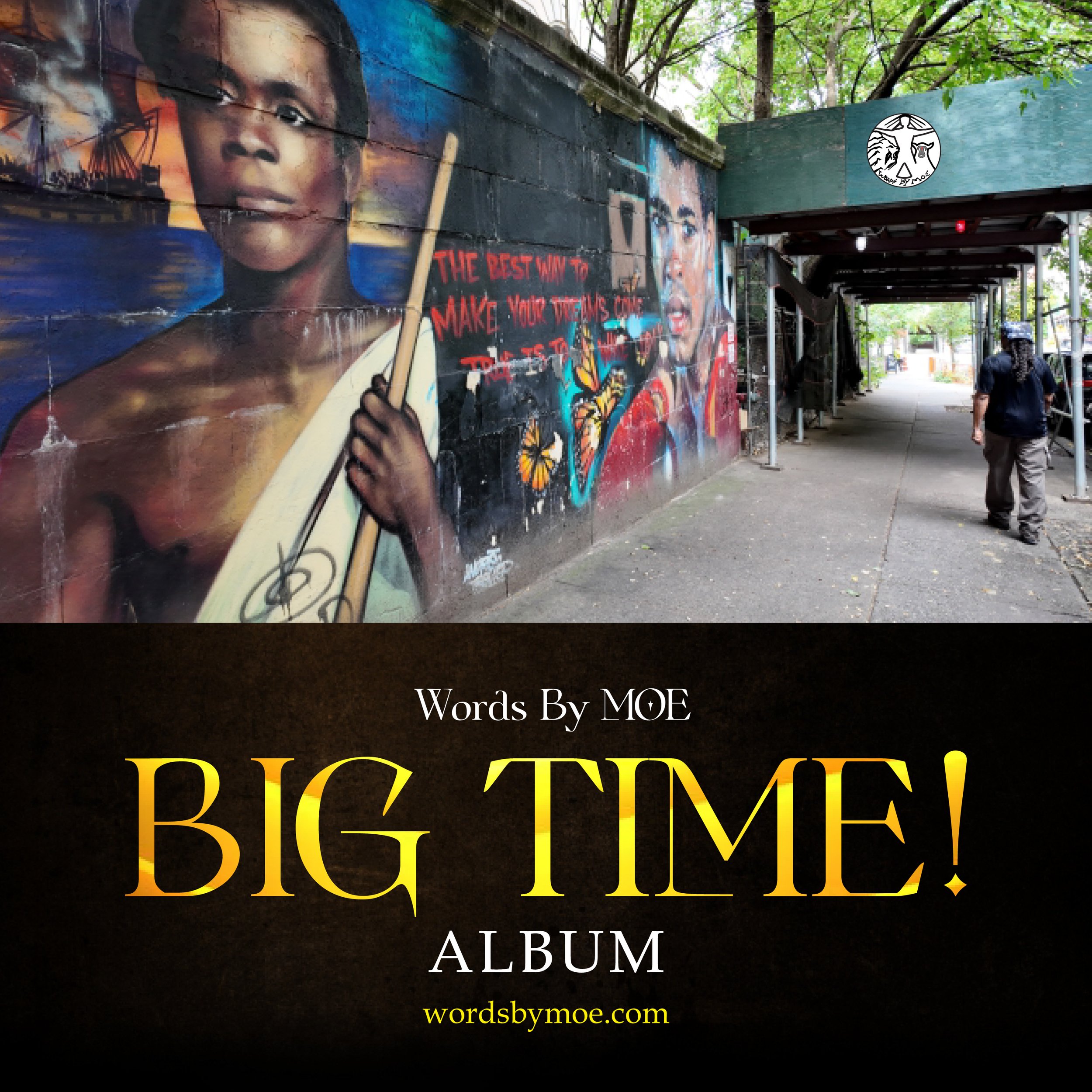
Q&A With WORDS BY MOE On New Album BiG TIME!
INTERVIEW with WORDS BY MOE BY Africa-Related
Words By MOE
est. 1999
“Words are still powerful, and the right word at the right time is still very valuable”
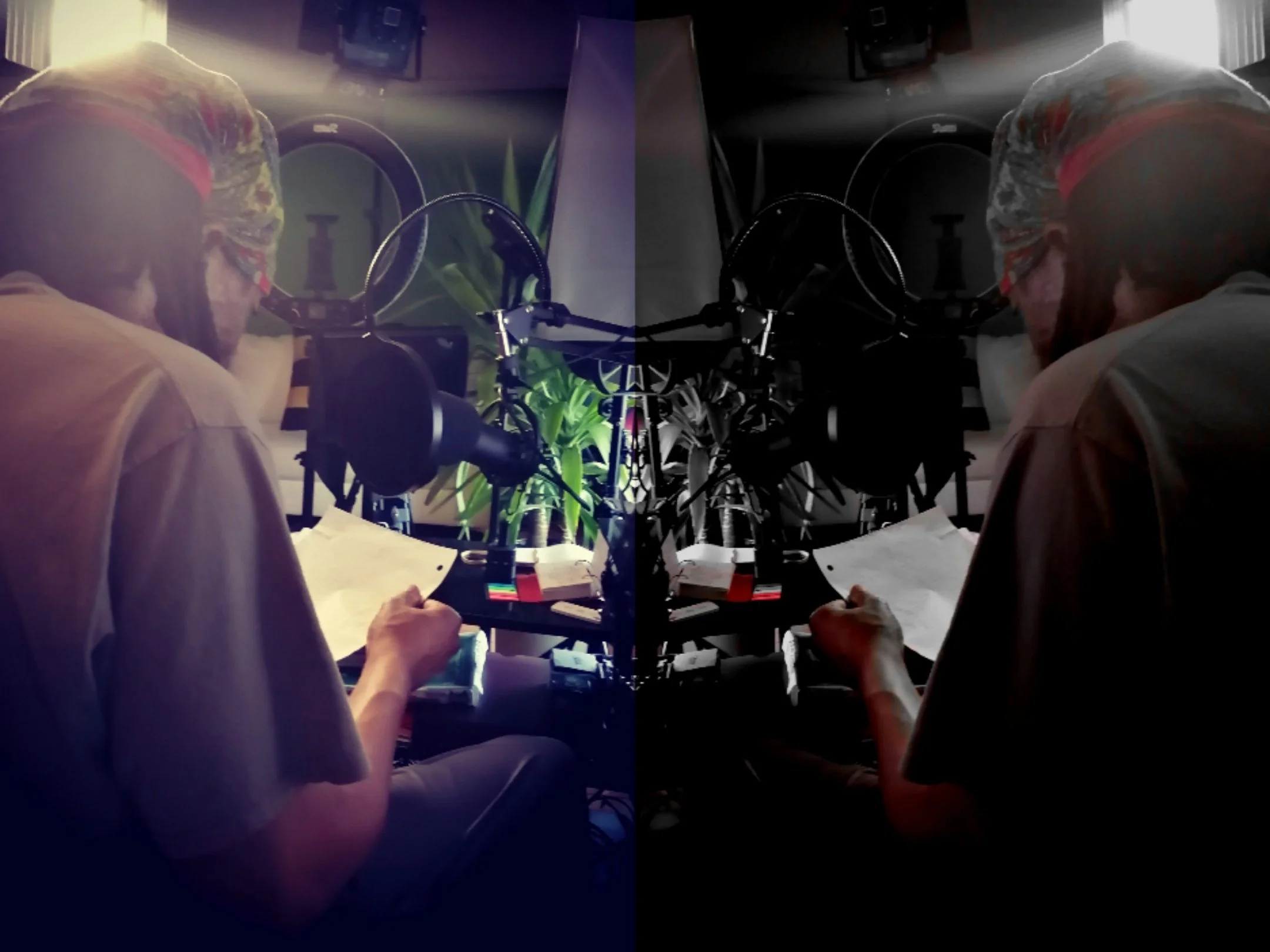
This week, we share the work of Words By MOE, a self-styled inspirational writer and Spoken Word artist whose writings are reminiscent of scribes of old. His mastery of language, expert use of words, not to mention captivating delivery; have resulted in his 23-track debut album, titled BiG TIME!
Words play a central theme on the album, touching on various subject matters from life to faith and love. The sound is crisp and fresh, backed by multiple genres of music - from Hip Hop, Reggae to traditional African flute and drums. BiG Time delivers an array of richly blended sounds that drive home the lyrically-endowed artist's thought-provoking messages.
The album was jointly produced in New York and Jos, Nigeria by Africa-Related and Deep Waters Studios. It includes some collaborative work like ‘Bringing Back The Mic', a tribute to the late Gospel Hip Hop icon B-Elect featuring Minista Busta.
“The purpose is to encourage, build up and inspire others on this journey of Life.”
Q: You have two back-to-back projects coming up in August and September 2024. Could you speak to them individually on the inspiration and purpose behind Big Time Album and book, Spiritually Intact vol 1?
A: Honestly, this whole thing with the music is my wife’s idea.. so projects wise she’s the visionary. As for inspiration, all I do is write, and the motivation behind my expression stems from my love for the Word of Truth. The purpose is to encourage, build up and inspire others on this journey of Life.
Q: Which of the tracks in Big Time stands out to you the most and why?
A: The title track, Big Time.. It’s a piece that makes plain what’s required on our part to recognize what is past, so that we can realize our future; in order to be able to truly put things in perspective as far as priorities go, in our lives.
Q: The album contains 23 tracks backed by various music genres. Could you elaborate on your musical influences?
A: While I do appreciate a variety of musical sounds, I grew up influenced mainly by the ‘boom bap’, there’s something about that baseline that just got me as a kid, listening to a lot of hip hop, plus all the color, the styles and creativity, it was amazing at the time, not to mention ‘fresh’.
Q: SI volume one shows the beginnings of your writing? How would you say it has since evolved?
A: Honestly, I'm not so sure how much evolution there’s been, other than a sense of refinement perhaps and maybe more directness when it comes to elaborating on a particular subject. Both of which I attribute to maturity, as a student of the WORD.
Q: What is the importance of words, as a means of expression in today's world?
A: Still very important, as far as communicating goes; even though the way we relate these days is slightly different from last century. Words are still powerful, and the right word at the right time is still very valuable.
Q: You have been writing since 1999, and only just sharing your materials with the world. What would you attribute to this gap?
A: Time and chance, situation and circumstance. Up till now, I suppose I was okay sharing with a few people, until my wife decided it was time to share with the rest of the world.
Q: Your faith plays a key role in your overall outlook. How have you managed to sustain that since 1995, and what would you say to anyone who has lost faith.
A: Honestly, it’s the grace of The Almighty, abiding in the WORD, and learning a whole lot about Love. I might not be in a position to console a person who’s turned away, but I do believe that He doesn’t turn us away from coming to Him. So no matter what, never give up.
Q: What are thoughts to share about your connection to these two countries - Nigeria and the United States?
A: Just grateful for the opportunity to experience what life is like in different cultural contexts. Very interesting indeed, despite challenges on both sides.
Q: What future plans for your writing?
A: Same as always, just keep writing.
Q: What influences have shaped your writings over the years.
A: The Scriptures primarily, but also C.S. Lewis, Martin Luther King Jr., Frederick Douglass, J. B. Phillips… to name a few.
Q: You did some collaborative work on this album, and your love for Hip Hop is evident with the track Bringing Back The Mic (BBTM), which is a tribute to the iconic artist B-Elect. Could you speak on this?
A: Actually BBTM was written as a tribute to B on Jan 25, 2011. So when I was called upon to contribute to His memorial earlier this year, the piece instantly came to mind; thus the input.
Q: Your work was featured in the biographical documentary DELA:The Making of El Anatsui. What did you take out of working on that project?
A: Knowledge is what I took out, and gained a lot of it. I was fortunate to have a behind the scenes perspective and learn a thing or two about film making, which is no light task, plus the amount of patience, foresight and dedication required. So grateful for the exposure and experience.
Q: Do you have any closing thoughts?
A: None other than expressing my gratitude to GOD for making all this possible.
Thank you for your time.
Previous work by the artist
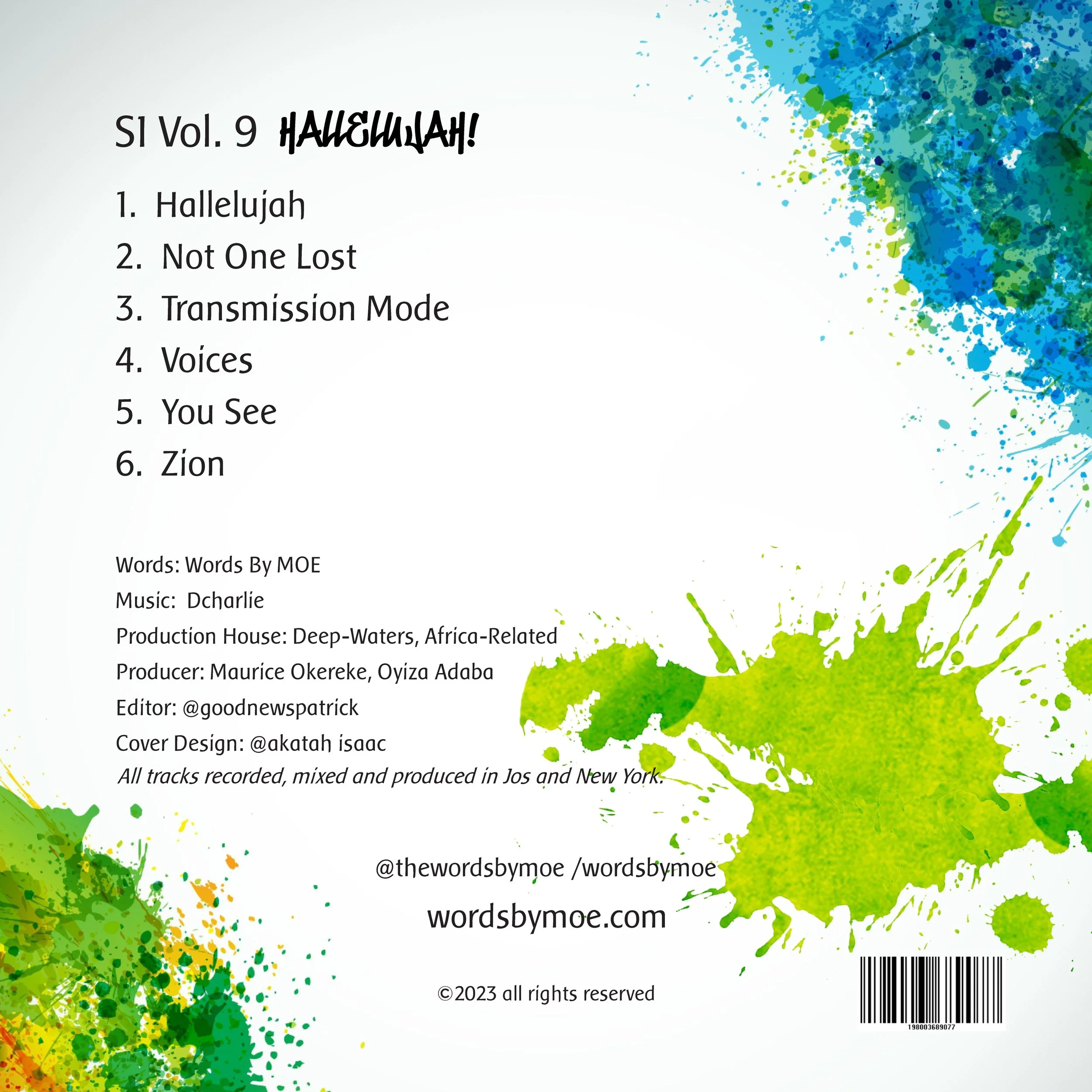
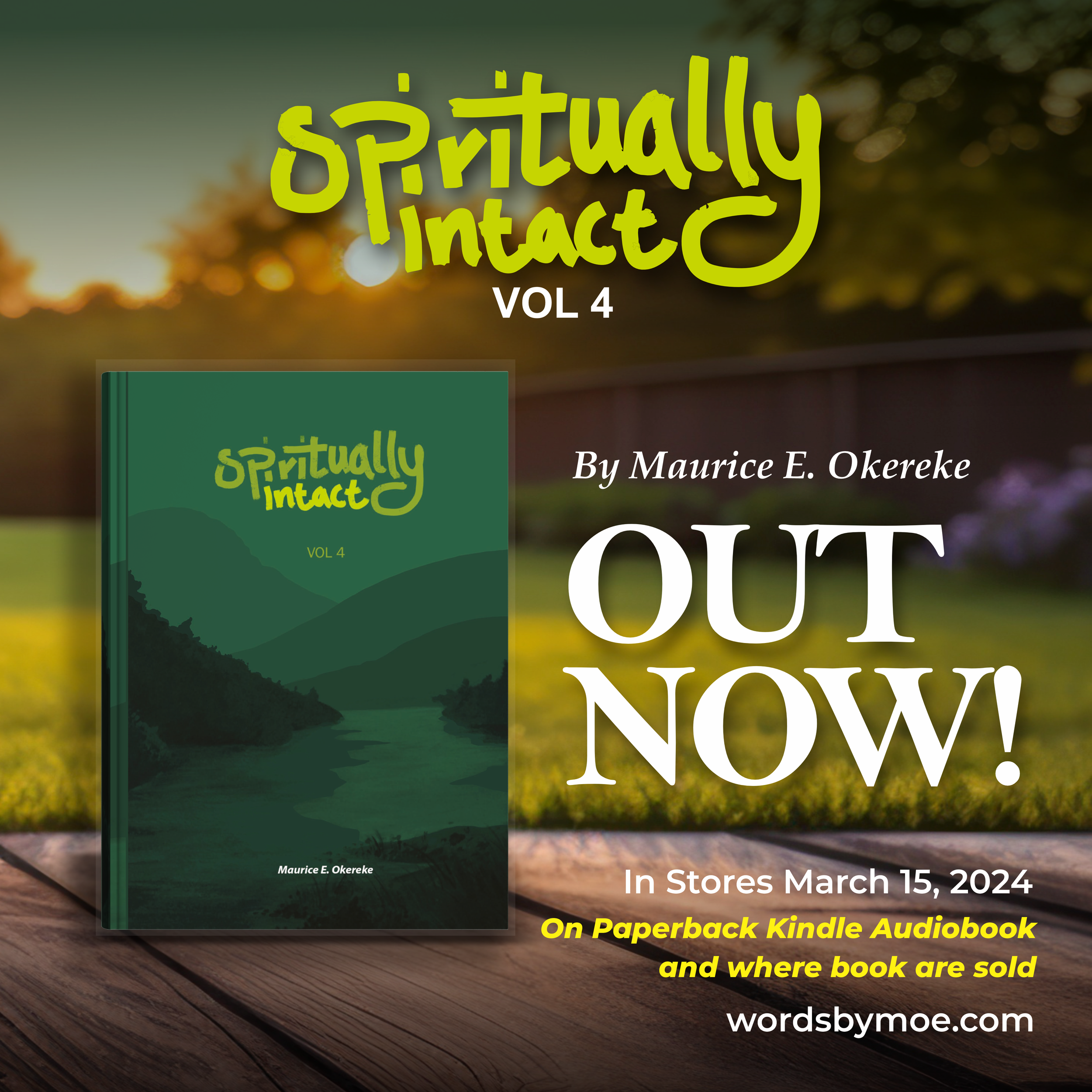
“I might not be in a position to console a person who’s turned away, but I do believe that He doesn’t turn us away from coming to Him. So no matter what, never give up.”
Follow the artist

Collaborators include Charles “DCharlie” Dapwadta, Uchenna “Minista Busta” Ohagwu, Inya, Raymond Noel “RayN” Ehusani, Esther Nyam, Suberu Mathew, Alex Raphael. Deep-Waters Production, Africa-Related Inc., Maurice E. Okereke, Oyiza Adaba, @akatah Isaac and Bonx muralist André Trenier @andre.trenier.