
SUDAN: SAF & RSF GUILTY of War Crimes and Ethnic Cleansing, Says U.S
Africa Regional Media Hub held a digital press briefing with the U.S. Department of State’s Ambassador-at-Large for Global Criminal Justice, Beth Van Schaack, to discuss war crimes, crimes against humanity, and ethnic cleansing in the “needless and unconscionable conflict” in Sudan.
Oyiza Adaba, New York
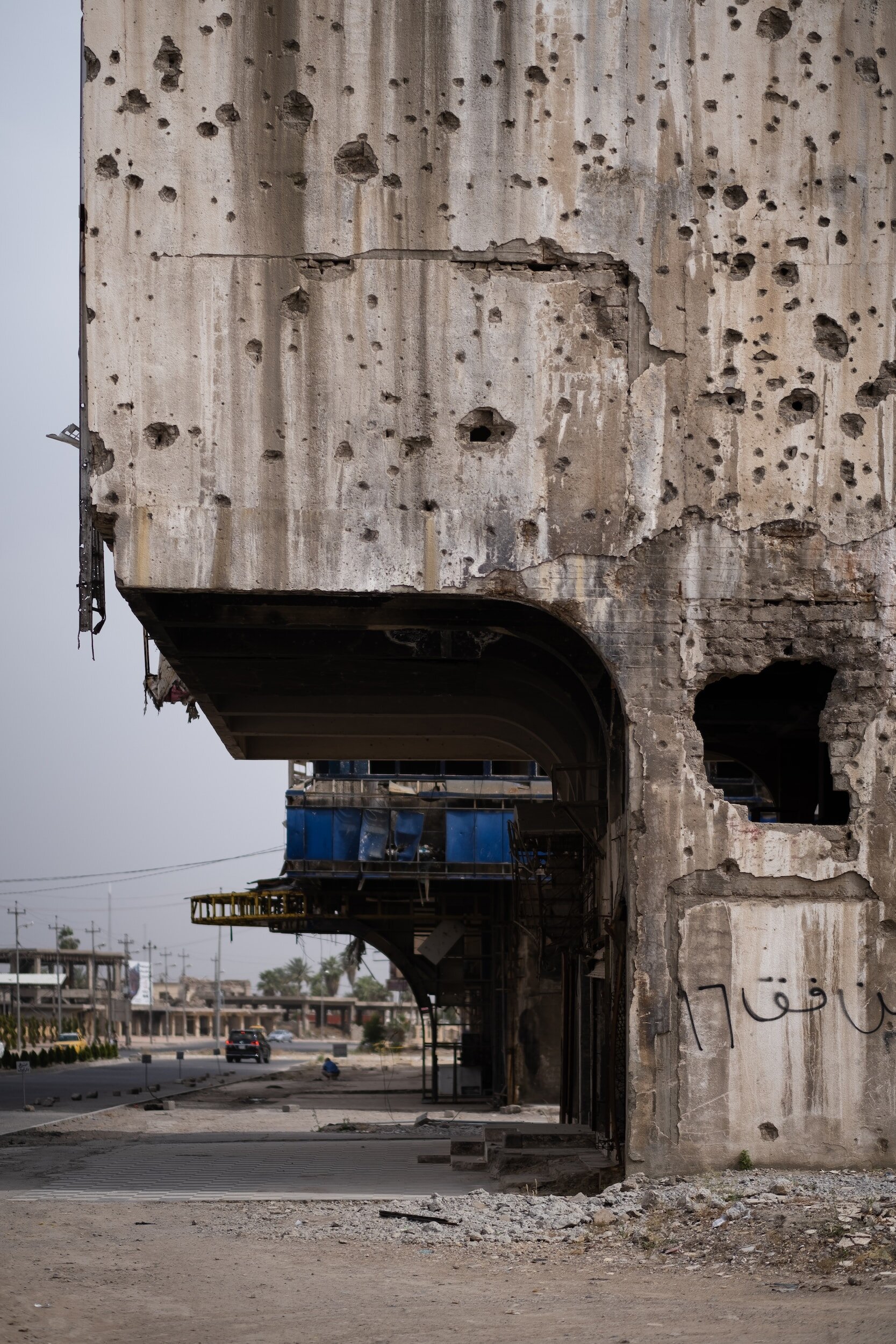
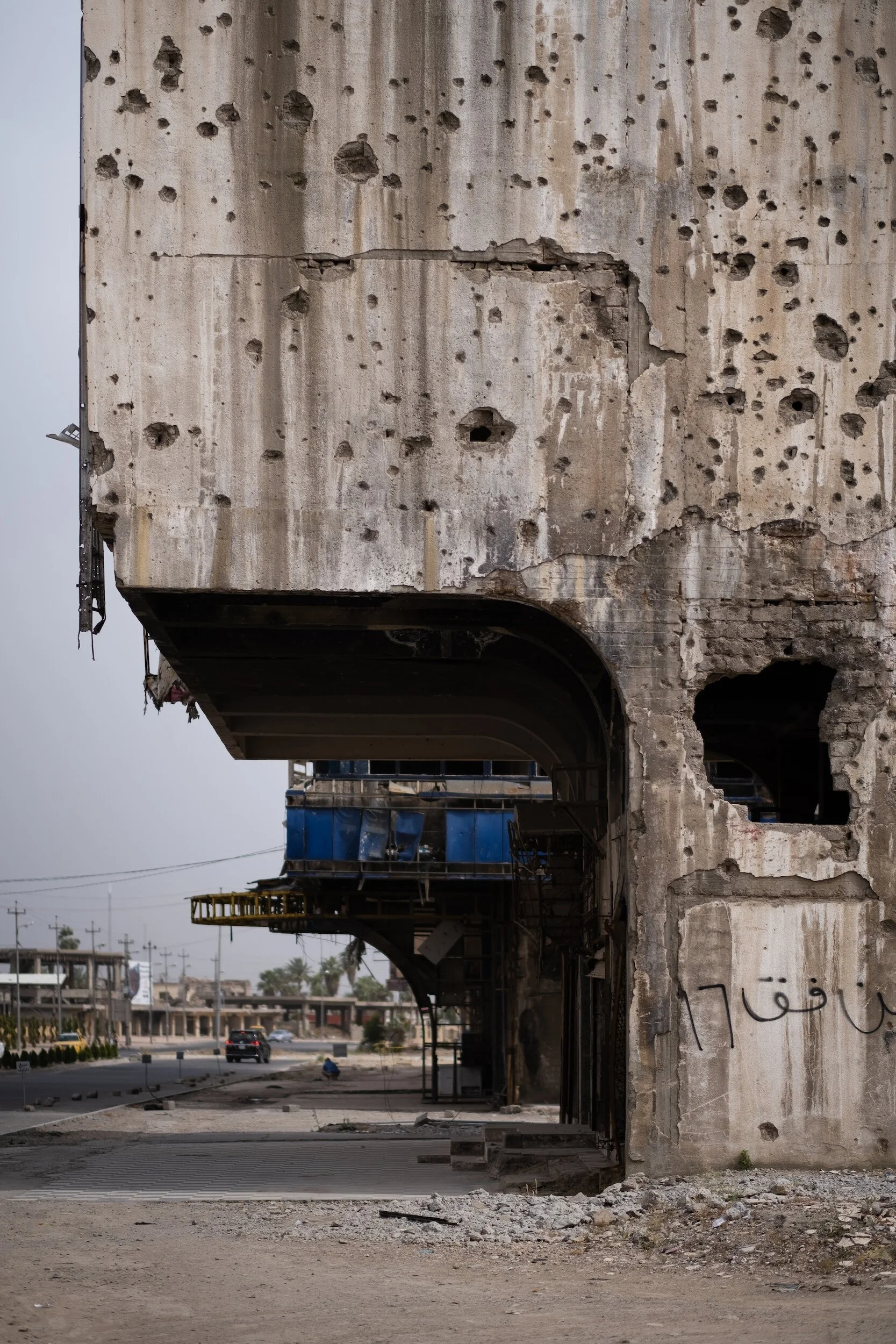
Effects and devastation of war. File Photo:Levi Meir Clancy @levimeirclancy
SUDAN
“10,000 Killed
Over 6.8 million Displaced”
December 14, 2023
Africa Regional Media Hub held a digital press briefing with the U.S. Department of State’s Ambassador-at-Large for Global Criminal Justice, Beth Van Schaack, to discuss war crimes, crimes against humanity, and ethnic cleansing in the “needless and unconscionable conflict” in Sudan.
Last week, U.S Secretary of State Antony Blinken made the determination that members of the fighting groups Sudanese Armed Forces (SAF) and the Rapid Support Forces (RSF) “have unleashed horrific violence, death, and destruction across Sudan. Civilians have borne the brunt of this needless conflict.” Below are the links to the audio and video recordings of the briefing.
“The atrocities today are an ominous reminder of the prior genocide ”
Highlights
A needless and unconscionable conflict by the same perpetrators, the same communities being targeted in the same patterns of criminality
Human Rights Concerns and abuses:
Gender-based Violence: The war has also been waged on the bodies of women and girls who have been terrorized by deliberate systemic sexual violence
U.S has provided nearly $895 million in total humanitarian assistance in fiscal year 2023 through USAID, the Department of State's Bureau of Population Refugees and Migration and other sources;
U.S to rally the international community to help in the violence, address the humanitarian crisis, and promote justice for survivors and victims
The Human Rights Council in Geneva planned an independent investigation committee that was rejected by the Sudanese government
ICC does not have a mandate to work in the current conflict
Audio/Soundcloud Link
Watch full video here
Share this story
A "Record-Setting" One Year After U.S. Africa Leaders Summit
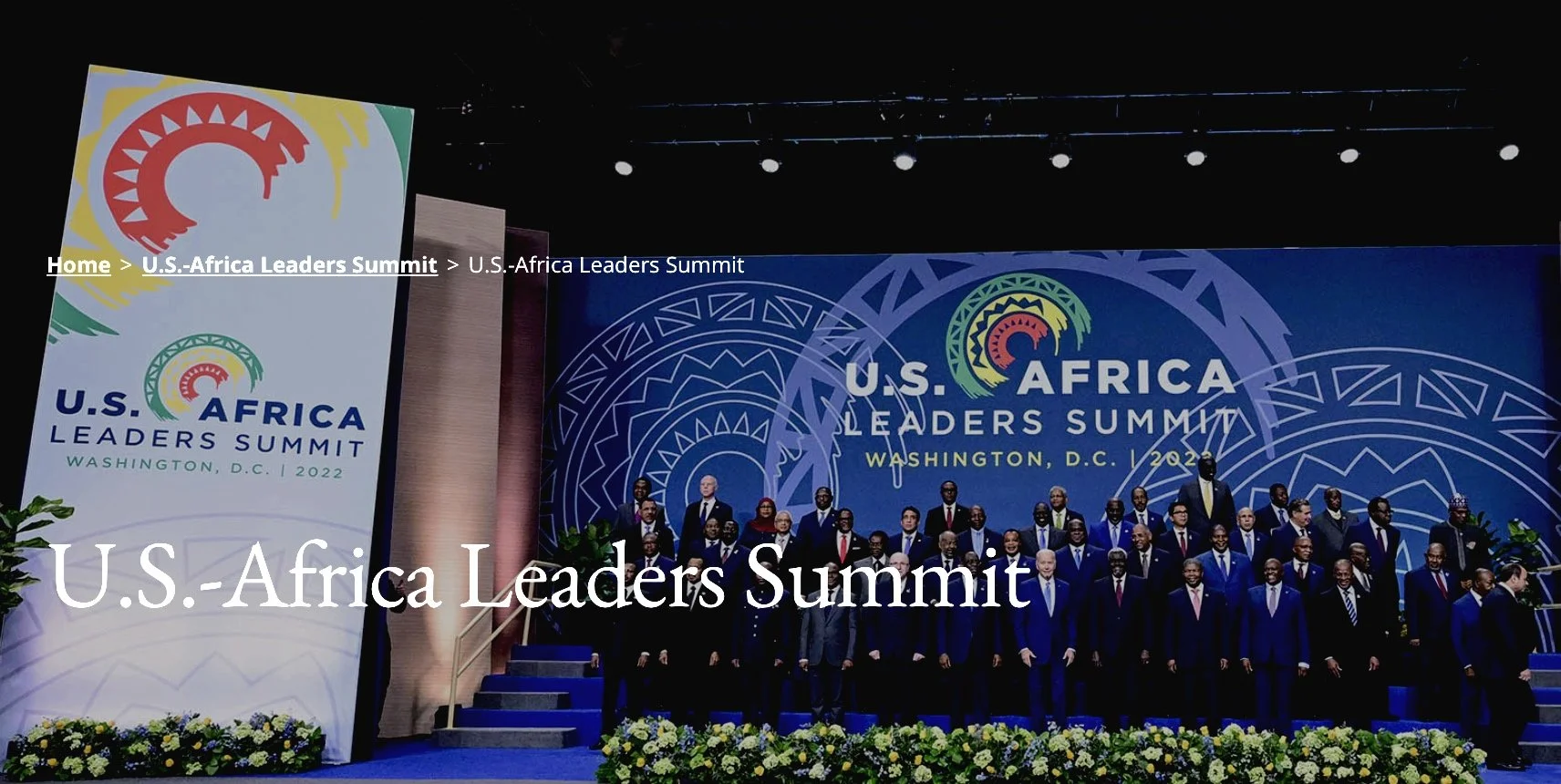
The progress made over the last year in implementing the achievements of the U.S.-Africa Leaders Summit and how these efforts highlight the U.S. commitment to the African continent, were discussed at this briefing.
Oyiza Adaba, New York
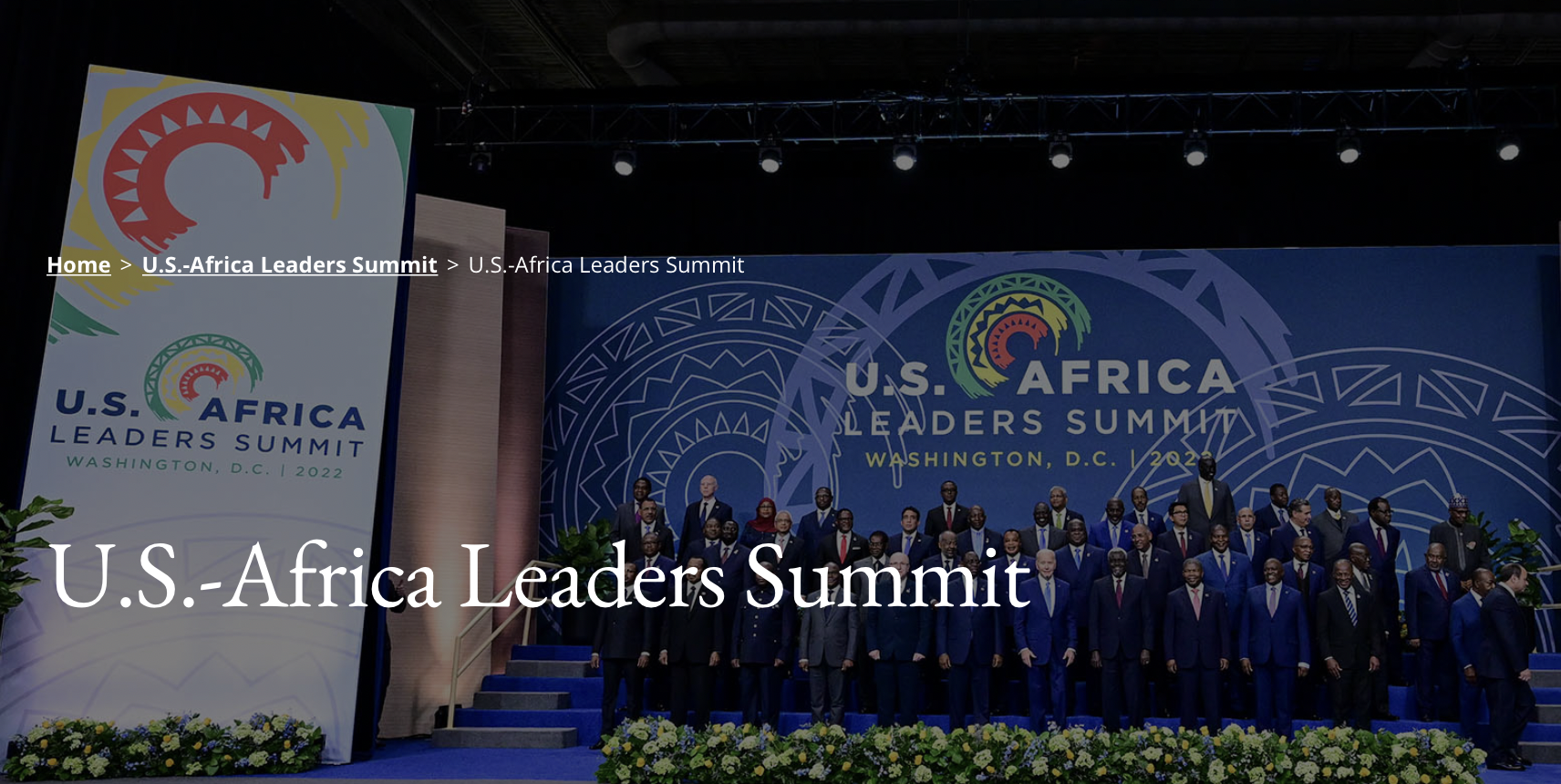
Screen-grab U.S Dept of State Photo.
“President Biden has been clear that African voices belong at the table in every forum where global challenges are discussed”
UPDATE
DECEMBER 12, 2023
The progress made over the last year in implementing the achievements of the U.S.-Africa Leaders Summit and how these efforts highlight the U.S. commitment to the African continent, were discussed at this briefing.
The digital press briefing with the U.S. Department of State’s Bureau of African Affairs Principal Deputy Assistant Secretary of State, Jonathan Pratt, National Security Council Senior Director for African Affairs, Judd Devermont, and Prosper Africa Coordinator, British Robinson, to discuss the progress made over the last year in implementing the achievements of the U.S.-Africa Leaders Summit and how these efforts highlight the U.S. commitment to the African continent. Q&A with participating journalists followed.
HIGHLIGHTS
Commitment: $55 billion to Africa over three years and over 40 percent achievement in year one;
The mobilization of more than $8 billion in public and private sector investments in climate and food security, women’s empowerment, and digital inclusion across Africa;
An “unprecedented pace” of Africa Visits: All together, 17 senior U.S. Government officials have visited 26 countries in Africa.
Advocating for a third seat for sub-Saharan Africa on the IMF board, and for permanent representation for Africa at the UN Security Council.
$600 billion for a flagship economic corridor called Partnership for Global Infrastructure and Investment, PGII, initiative.
White House meeting with President Lourenço of Angola in November and the investment of more than $1.5 billion in the Lobito Corridor for transportation, digital access, agriculture, and clean energy infrastructure projects like solar projects and the bridge infrastructure in Angola and commercial aircraft in Ethiopia.
Digital Transformation with Africa initiative is a flagship effort to expand digital access in Africa is aligned with the priorities outlined in the African Union’s digital transformation strategy;
Rally private sector interest in supporting DTA - a $350 million target
with $82 million already invested;
USTDA has funded 12 digital infrastructure activities across Africa and launched the Africa Data Centers in Ghana and Kenya';
Vice President Harris in March launched the Women in Digital Economy Fund to accelerate the closing of the gender gap with $30 million of initial funding from USAID and the Bill and Melinda Gates.
Share this story
UGANDA: U.S Takes Steps to Impose Visa Restrictions for Undermining Democracy
Following the “flawed” 2021 elections. the United States has taken steps to impose visa restrictions on some citizens of Uganda for Repression and for Undermining Democracy And for Repression in Uganda
Africa-related, New York
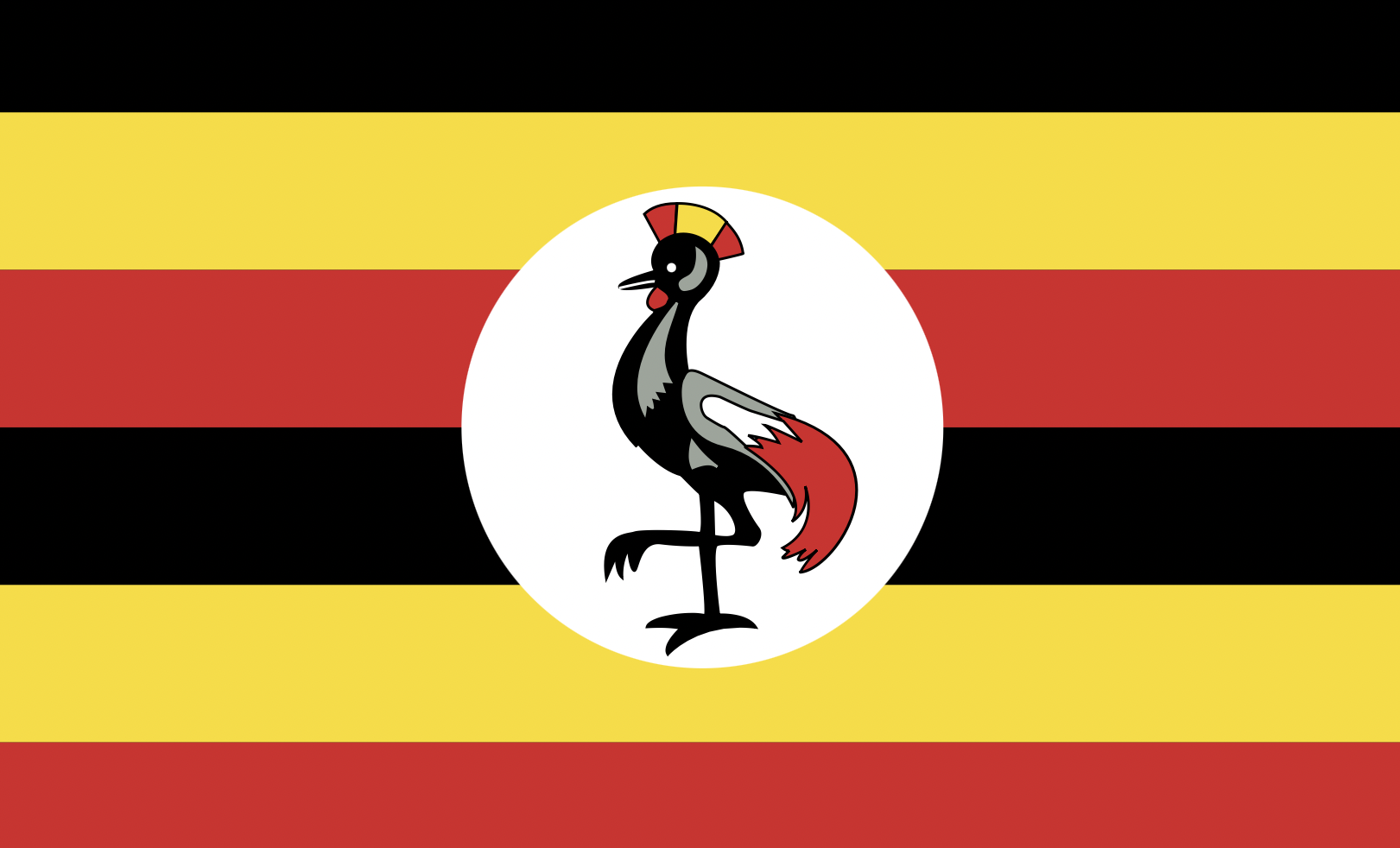
Flag of The Federal Republic of Uganda
PRESS STATEMENT
ANTONY J. BLINKEN, SECRETARY OF STATE
December 4, 2023
Following the “flawed” 2021 elections. the United States has taken steps to impose visa restrictions on some citizens of Uganda for Repression and for Undermining Democracy And for Repression in Uganda
After Uganda’s flawed 2021 presidential elections, I announced a visa restriction policy targeting those believed to be responsible for, or complicit in, undermining the democratic process in Uganda. At that time, I implored the Government of Uganda to significantly improve its record and hold accountable those responsible for flawed electoral processes, violence, and intimidation.
Today, I am announcing the expansion of the visa restriction policy to include current or former Ugandan officials or others who are believed to be responsible for, or complicit in, undermining the democratic process in Uganda or for policies or actions aimed at repressing members of marginalized or vulnerable populations. These groups include, but are not limited to, environmental activists, human rights defenders, journalists, LGBTQI+ persons, and civil society organizers. The immediate family members of such persons may also be subject to these restrictions.
The United States stands by the Ugandan people and remains committed to working together to advance democracy, human rights, public health, and mutual prosperity. I once again strongly encourage the Government of Uganda to make concerted efforts to uphold democracy and to respect and protect human rights so that we may sustain the decades-long partnership between our countries that has benefited Americans and Ugandans alike.
This visa restriction policy is pursuant to Section 212(a)(3)(C) of the Immigration and Nationality Act and expands upon the policy Secretary Blinken approved in 2021.
Share this story
PAPERLESS VISA: U.S. Announces 2024 Visa Improvements
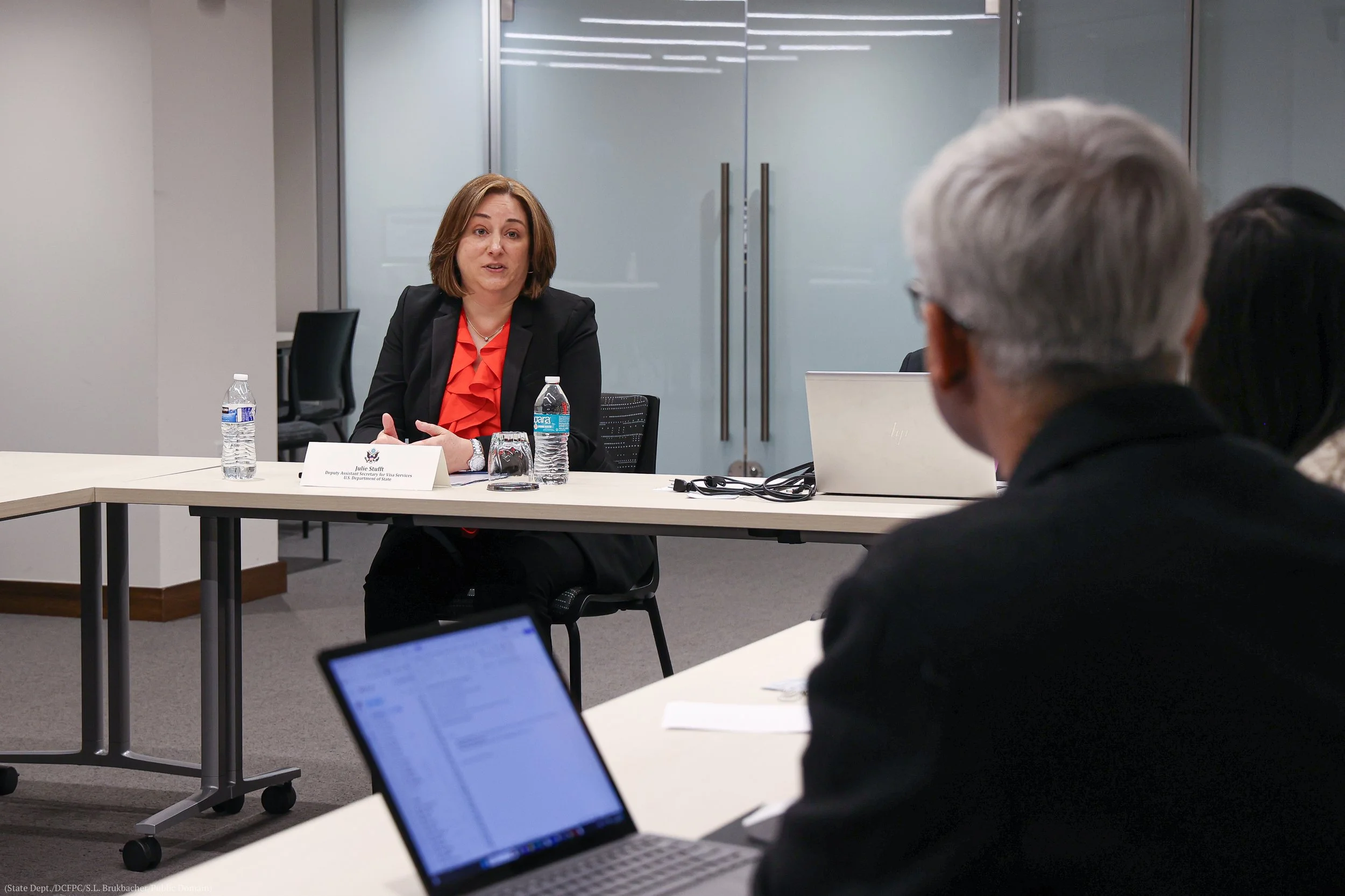
Julie Stufft, Deputy Assistant Secretary of State for Visa Services, Consular Affairs, discusses updates in visa processing worldwide that include state-side visa renewals, paperless visas, and record-setting wait times.
Oyiza Adaba, New York
Julie Stufft, DAS for Visa Services, Consular Affairs, discusses updates in visa processing worldwide. This briefing is in-person and on-the-record. Nov. 28, 2023. Photo by State Dept./FPC/Sherry L Brukbacher.
UPDATE
NOVEMBER 28, 2023
Update on U.S. Visa Processing Worldwide by Julie Stufft, Deputy Assistant Secretary of State for Visa Services, Consular Affairs, discusses updates in visa processing worldwide.
U.S Visas Worldwide Issue
2019 Pre-pandemic processing - 8.5 million U.S. visas issued
2023 Fiscal Year - 10.5 million U.S. visas issued
The press briefing gave updates on the U.S. visa processing at overseas posts for the 2023 Fiscal Year, ending in October. The 10.5 million visas issued at overseas missions is said to have almost hit the highest level ever done in any year.
According to Stufft, “More people who are seeking to visit the United States today can visit the United States immediately than ever before in the past; that is, there are more people who hold U.S. visas that are valid or can travel without visa status to the U.S. tomorrow if they board a flight than at any time in our history.”
The department is still working on reducing wait time, at a '“handful” of countries that still have very high wait times, some exceeding a year still for one category of visa - first-time visitors. All other categories are said to have reduced long wait times globally.
US Visa Wait Time
2022 - 200 Days
2023 - Close to 140 Days
2024 will introduce the option of domestic renewal of visas to applicants starting with a pilot run in January. This means that people who are living and working in the United States on a long-term work visa do not have to leave the United States to apply for their next visa or to renew their visa. They would be able to send their applications to Washington and have it renewed without leaving the country.
This state-side option which was discontinued after the 9/11 terrorist attacks, will start with small with a pilot of 20,000 visas to be issued between December and February, with more categories of workers living in the United States in the rest of 2024.
Visa interviews specifically for prior travelers are out and Paperless visas are in. This means that the visa application process is the same, but there is a – there’s no physical visa in someone’s passport. These changes may take up to 18 months to have widespread use.
Readers are invited to share their U.S. experience with a comment below.
Share this story
PASSPORT WOES: Nigerians Abroad Call For Better Consular Services
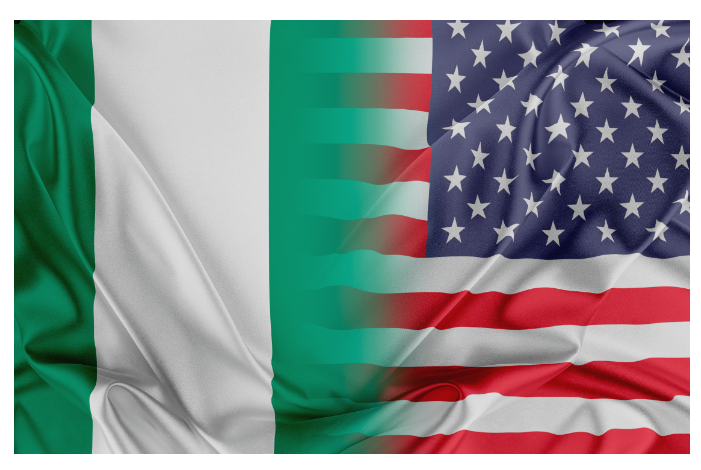
Nigerians living in the United States, who have suffered harrowing expreinces at each of the four consular offices in the country, unite under The Nigerian Center to call out their Government.
20 Nigerian American Community Organizations Advocate for the Improvement of Services at the Nigerian Embassy in the United States
by The Nigerian Centre, Washington DC
Washington, D.C., November 17, 2023
A coalition of 20 prominent Nigerian American community organizations has come together to call on the administration of President Bola Tinubu to improve consular and passport services at the Nigerian Embassy in the United States through a collaborative effort. This appeal is directed to Honorable Dr. Olubunmi Tunji-Ojo of the Ministry of Interior and Ambassador Dr. Uzoma E. Emenike of the Embassy of the Federal Republic of Nigeria in the United States.
In a joint letter, the coalition underscored the urgent need for immediate improvements across various aspects of embassy operations, highlighting critical concerns adversely affecting the Nigerian diaspora community in the United States. These concerns include delays in passport processing, challenges in acquiring National IDs, issues with embassy infrastructure, communication, and customer service, complications in visa processing and community relations.
In addition to highlighting key concerns, the letter provided specific solutions that take advantage of the expansive capabilities of local Nigerian American community organizations as a resource for addressing these issues.
Madam Lara Okunubi, Chairperson and CEO of the Nigerian American Public Affairs Committee, emphasized the opportunity to embrace a collaborative approach with local Nigerian American community organizations stating, "When support improves, outcomes will increase."
Gbenga Ogunjimi, Executive Director of the Nigerian Center, acknowledged the ongoing improvement in consular services while asserting, “The coalition's voice represents an opportunity to enhance our home country’s image in the United States.”
Sunday Bitrus, President of Zumunta Association Inc., highlighted the absence of a permanent Nigerian Consulate on the entire West Coast, Midwest, and South Coast of the United States. He emphasized, “There is a need for additional consular services in areas with significant Nigerian populations, such as Los Angeles, Houston, San Francisco, and Chicago.”
The coalition's letter outlining these concerns is available below.
About The Nigerian Center
Nigerian Center is the first immigrant and cultural center that serves the Nigerian American community in the United States. The center's mission is to foster financial inclusion and social justice opportunities for its community members. Additionally, the center champions policy advocacy efforts and, to that end, is leading a coalition of community organizations whose goal is to elevate the community as a policy priority in the United States.
###
What has been your expense at any Nigerian Embassy or Consular Office abroad? Readers are encouraged to leave their comments
Fela Kuti And His Politics
Fela Kuti was one of the most significant musical icons in the history of black music. Born on September 21, 1938, Fela grew up during a time of change in Africa. After colonial rule by European nations ended and independence was achieved, the country’s new leaders began asserting a socialist economic system that critics claim caused widespread poverty and corruption.
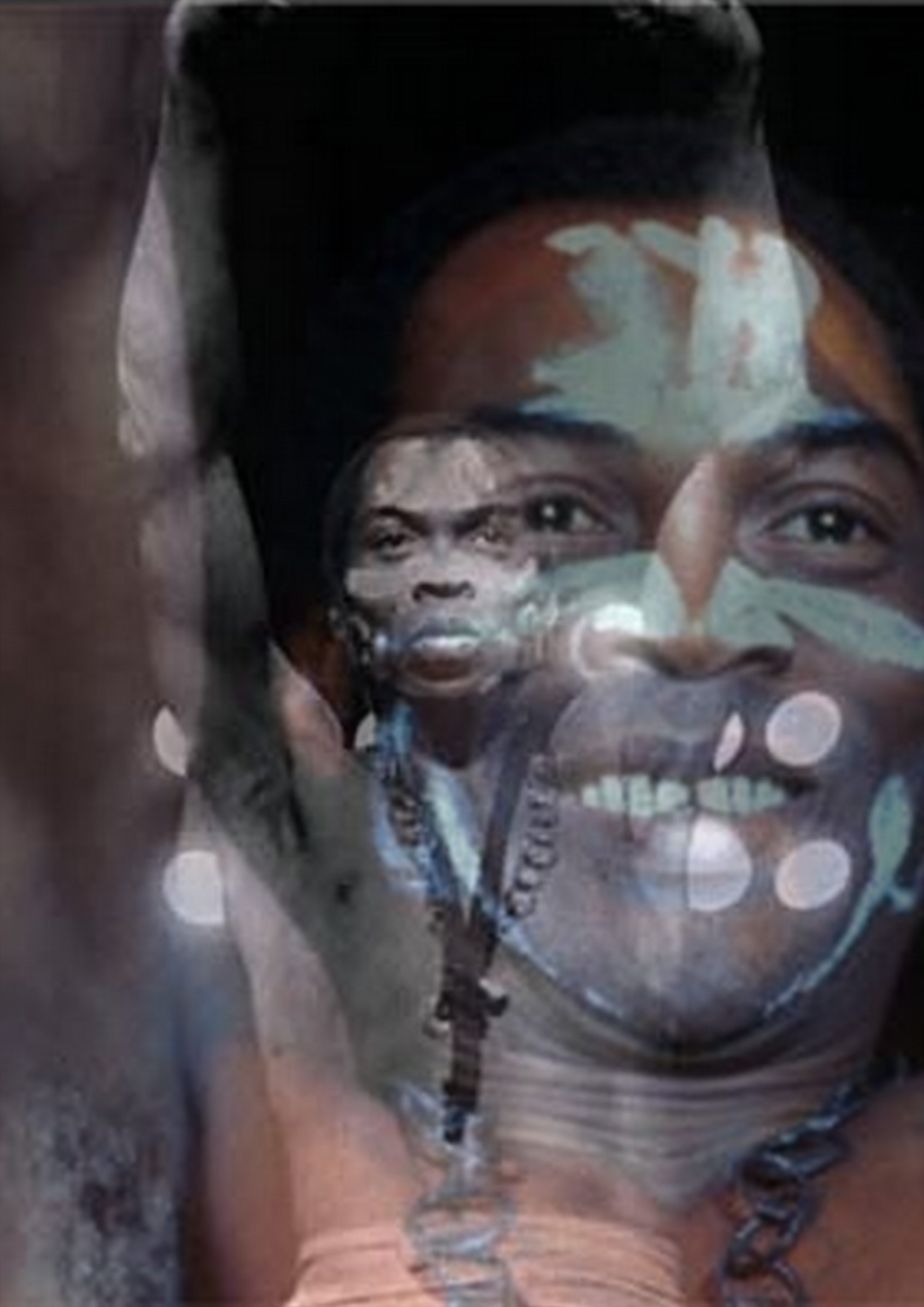
FELA: The Funky Jazz Man
He created Afrobeat by fusing traditional West African talking drums with American funk, jazz, and soul.
By Fortune Ehiwayas
FELA: The Funky Jazz Man
Fela Kuti was one of the most significant musical icons in the history of black music. Born on September 21, 1938, Fela grew up during a time of change in Africa. After colonial rule by European nations ended and independence was achieved, the country’s new leaders began asserting a socialist economic system that critics claim caused widespread poverty and corruption.
Such injustices inspired Fela to speak out against his native country’s government and provide hope for Africans who felt despair at social ills like famine, poverty, and a lack of education. Although many know about his political activism, few are aware of his prodigious musical talent as well as his innovative contributions to Afrobeat music that have influenced international musicians such as Michael Jackson and Bob Marley.
Fela was born in Abeokuta, Nigeria, where his father was a famous Nigerian barrister and champion for human rights. As a child, Fela took great interest in both his mother’s speeches and his father’s legal work. Although he received a degree in accounting, Fela began playing music at night while working during the day. He formed The Koola Lobitos before founding an Afrobeat band that came to be known as The Africa 70, which also included his wife at the time, Remi (Remigius) Cardoso, whom he met when she was traveling back to Nigeria from abroad.
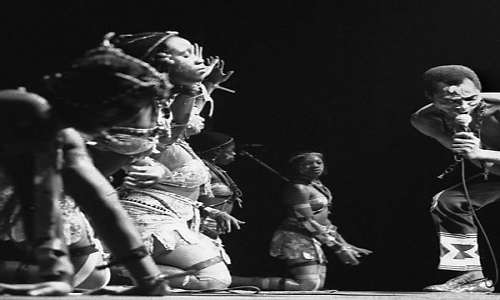
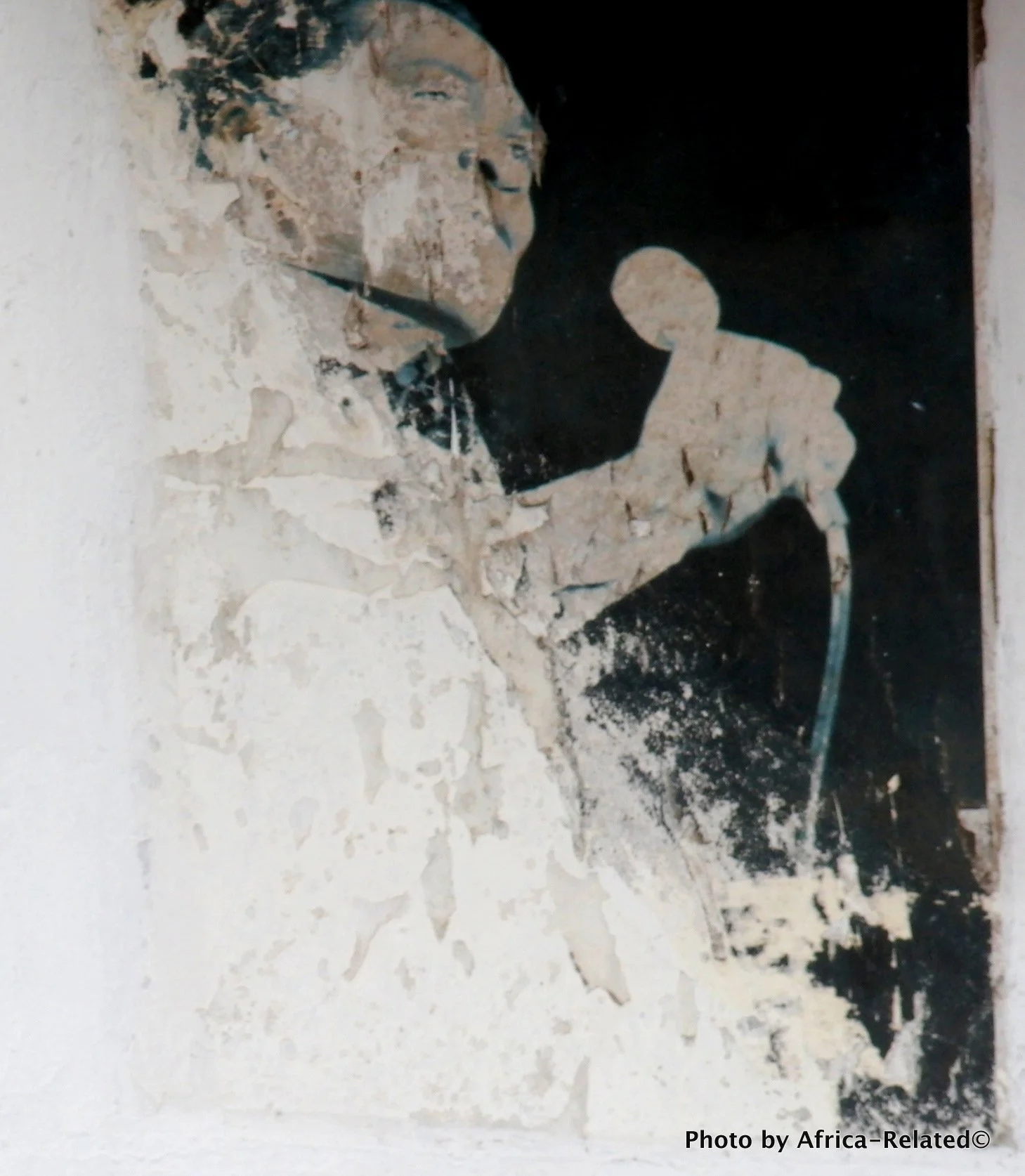


Although Fela was not the first African musician to incorporate jazz into his music, he was one of the first to create a new sound called Afrobeat by fusing traditional West African talking drums with American funk, jazz, and soul. His version of Afrobeat music provided hope for Africans struggling under their government’s corruption, as he openly criticized officials in many of his songs.
Fela Kuti & Africa 70 - Pansa Pansa 1/2 (Berlin 1978)
He strongly believed that the politicians and military leaders in Africa were taking advantage of low-income families, and their hope for political change led to his involvement with the Koola Lobitos, a group that played jazz at nightclubs around Nigeria.
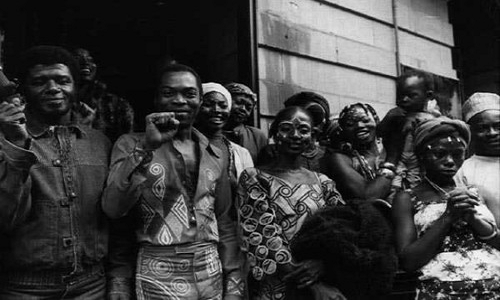
In 1960, Fela and his group The Koola Lobitos began playing a mixture of indigenous rhythms and jazz with heavy influence from American soul music in Lagos nightclubs. They were also involved in extracurricular activities like union organizing against the Nigerian police force as well as organizing food drives for students and poor citizens. He was arrested once for performing "Alagbon Close" ("Agbon Close") in 1962 about government corruption.

FELA! on Broadway was a theatrical musical biopic that successfully toured globally
Fela Ransome-Kuti And Africa ’70 with Ginger Baker - Live! (1971) full Album
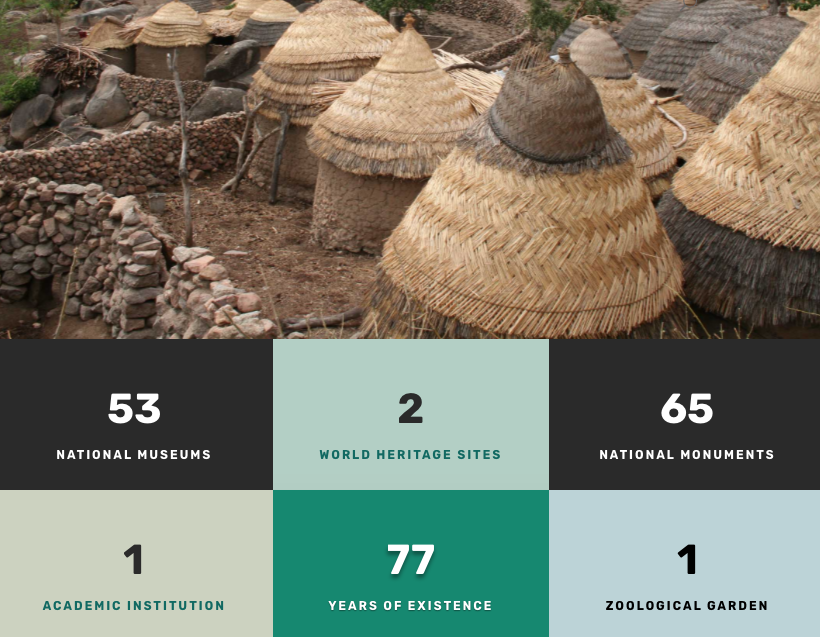
List of National Museums in Nigeria
The National Commission for Museums and Monuments (NCMM) is an offshoot of a department in the then Federal Ministry of Works that was established in 1953. It was transferred to the Federal Ministry of information as the Department of Antiquities by ordinance 17 of the Colonial Government of 1953.
The National Commission for Museums and Monuments (NCMM) is Nigeria’s governing body that was “stablished to manage the collection, documentation, conservation and presentation of the National cultural properties to the public for the purposes of education, enlightenment and entertainment”.
By AFRICA-RELATED
List of National Museums in Nigeria
How many have you visited?
1
National Commission for Museums and Monuments, Abuja
Office of Head of Service,
Federal Secretariat Complex,
Block C, First Floor, Shehu Shagari Way, Abuja FCT.
PMB, 171, Garki – Abuja
2
National Museum of Colonial History, Aba
No. 6 Ikot Ekpene Road
P.M.B. 7116 Aba,
Abia State.
3
National Museum, Abakaliki
No. 6 St. Patrick Road,
Kiriri, Abakaliki
Ebonyi State.
4
National Museum,
Abeokuta
Baptist Girls College, Idi-Aba, P.M.B. 2004 Abeokuta
Ogun State
5
National Museum,
Akure
Opposite Post Office
Oba Adesida Road, P.M.B 444
Akure, Ondo
6
National Museum,
Asaba
Mungo House Park,
P.M.B 95071
Asaba, Delta State.
7
Abubakar Tafawa Balewa Mausoleum, Bauchi
Kofar Ran Road
Bauchi, Bauchi State
8
National Museum, Benin
Ring Road, Benin City
P.M.B. 1115, Benin City
Edo State
9
Rock Art Interpretive Centre, Birnin- Kudu
Kano-Bauchi Road
Birnin Kudu, Jigawa State
10
National Museum,
Calabar
Ekpo Eyo Drive, P.M.B. 1180, Calabar, Cross River State
11
Slave History Museum, Calabar
Marina Resort,
P.M.B. 1180 Calabar, CRS
12
National Museum, Damaturu
Opposite Ben Kadio Housing Estate, Behind Cultural Centre, Maiduguri Road
Damaturu, Yobe State
13
National Museum of Unity, Enugu
65 Abakaliki Road
P.M.B. 1285, G.R.A, Enugu
14
National Museum,
Esie
P.M.B. 301, Esie
Kwara State
15
National Museum Gombe
Gombe Federal Secretariat Complex,
Room 289-294 2nd Floor,
Gombe City Centre, Gombe State.
16
National Museum,
Hong
Local Govt. Secretariat Complex, P.M.B. 2262,
Hong, Adamawa State
17
Institute of Archaeology & Museum Studies (I.A.M.S)
Opposite Central Bank Parking Space,
P.M.B 2031
Jos, Plateau State.
18
National Museum of Unity, Ibadan
Alesinloye Area, P.M.B. 5524,
Ibadan, Oyo State
19
National Museum ICT Centre, Oko Surulere
National Museum, Oko Surulere, Oko
P.O.Box 1706
Oko, Ogbomosho
Oyo State.
20
National Museum,
Igbo-Ukwu
Km. 4, Umudege Ezinifite Road,
Igbo-Ukwu, Aguata LGA, Anambra
21
National Museum,
Ile-Ife
Enuwa Square, P.M.B. 5515,
Enuwa Ile-Ife, Osun State
22
National Museum,
Ilorin
14 Abdulkadri Road, P.M.B. 1549,
GRA Ilorin, Kwara State
23
National Museum, Jalingo
Besides Taraba State Ministry of Culture and Tourism,
Opposite Governor’s Office, Jalingo
24
National Museum,
Jos
P.M.B. 2013,
Jos, Plateau State
25
National Museum, Kanta
Kanta Museum
P.M.B. 1001
Argungu
Kebbi State.
26
Museum of Traditional Nigerian Architecture (MOTNA), Jos
Opposite High Court
P.M.B. 2931, JosPlateau State
27
Zoological Garden, Jos
Opposite Jos Museum,
P.M.B. 2013, Jos Plateau State
28
Centre for Earth Construction Technology (CECTECH)
Opposite Jos Museum,
P.M.B. 2013 Jos, Plateau State
29
National Museum, Kaduna
No. 33, Ali Akilu Road
P.M.B. 2127, Kaduna, Kaduna State
30
Gidan Makama, Museum, Kano
Opposite Emir’s Palace, Kano city,
P.M.B. 2023, Kano State.
31
National Museum, Katsina
Kofa Uku, along Mohamadu Dikko Road,
P.M.B. 409, Katsina State.
32
National Museum, Koko
Nana Living Spring Museum,
Koko, Delta State
33
National Museum, Lafia
Behind Deputy Governor’s Office, Shendam Road,
P.M.B. 127, Lafia, Nasarawa State
34
National Museum, Lagos
King George V. Road, Onikan,
P.M.B. 12556, Lagos State.
35
National Museum of Colonial History, Lokoja
P.M.B. 1022, Lokoja,
Kogi State.
36
National Museum, Maiduguri
Custom Area, Maiduguri, P.M.B. 1029,
Maiduguri, Borno State
37
National Museum, Makurdi
GP 4, Ahmadu Bello, Opp. Deputy Governor’s Office,
P.M.B. 102294,
Makurdi,
Benue State.
38
National Museum, Minna
Federal Secretariat Complex, Minna,
P.M.B. 538, Minna, Niger State
39
National Museum, Nok
Kwoi-Jaba LGA, Kwoi,
P.M.B. 0006,
Kaduna State.
40
National Museum, Ogbomosho
No. 3 Museum Street
Off, Sunsun Road
P. O. Box 1602, Ogbomoso
Oyo State.
41
National Museum, Oron
P.M.B. 1004, Oron,
Akwa Ibom State
42
National Museum, Oshogbo
Ataoja’s Palace, P.M.B. 4376, Oshogbo
Osun State.
43
National Museum, Owerri
B65 Shell Camp, Off Orlu Road,
P.M.B. 1585, Owerri Imo State.
44
National Museum, Owo
Olowo’s Palace, Owo,
P.M.B. 1003, Owo,
Ondo State
45
National Museum, Oyo
No.1 Palace Road,
Aafin Oyo,
Oyo State
46
National Museum, Port Harcourt
Near No. 2 Hairle Street, Old GRA, Opp Delta Hotel,
P.M.B. 5766, Port Harcourt,
Rivers State.
47
National Museum, Sokoto
Federal Secretariat Complex, Sokoto,
P.M.B. 2367, Sokoto, Sokoto State.
48
Interpretation Centre, Sukur
Mubi-Maiduguri Road, Sukur,
P.M.B. 06, Madagali Local Government,
Adamawa State.
49
National War Museum, Umuahia
War Museum Road, Ebite-Amafor, Isingwu by Ugwunchara,
P.M.B. 7074, Umuahia, Abia State.
50
National Museum, Uyo
Ring Road II, Aka Offot (Behind Ibom Hall), P.M.B. 1109,
Uyo,
Akwa Ibom State.
51
National Museum, Yenagoa
Ijaw House
Sani Abacha Express Way,
Yenagoa, Bayelsa State.
52
National Museum, Yola
No. 2 Mohammed, Tukur Road, Off Ahmadu Bello Way (Opposite Army Command Primary School), Jimeta, P.M.B. 2262, Jimeta-Yola, Adamawa State.
Share this story

U.S VP Harris holds BiLat w/Ghana President, Visits Recording Studio and Attends State Banquet
On Monday, March 26th, Vice President Harris will have her first full day in Ghana, which will include a bilateral meeting with President Akufo-Addo. She will then visit Vibrate studio, a community recording studio for young creatives in Accra. And finally, she will attend a State Banquet hosted by President Akufo-Addo and First Lady Rebecca Akufo-Addo.
U.S. OFFICE OF THE VICE PRESIDENT
By Oyiza Adaba
On Monday, March 26th, Vice President Harris will have her first full day in Ghana, which will include a bilateral meeting with President Akufo-Addo. She will then visit Vibrate studio, a community recording studio for young creatives in Accra. And finally, she will attend a State Banquet hosted by President Akufo-Addo and First Lady Rebecca Akufo-Addo.
BILATERAL MEETING WITH PRESIDENT AKUFO-ADDO OF GHANA
Vice President Kamala Harris will meet with President Nana Akufo-Addo of Ghana at Jubilee House and affirm the strength of our bilateral relationship, and the long-standing ties between the American and Ghanaian people.
The Vice President and President Akufo-Addo will discuss a range of global and regional issues including: democracy, good governance, and human rights; regional security; long-term economic growth and macroeconomic stability; and our work together on the UN Security Council.
On democracy, good governance, and human rights, they will discuss efforts to stand up for democratic principles on the continent and our shared opposition to recent democratic backsliding.
On regional security, they will discuss the Sahel and efforts to promote stability, including through new U.S. funding for stabilization efforts.
On debt, the Vice President will re-affirm the U.S. position that all bilateral creditors should provide meaningful debt reduction and express support for Ghana’s engagement with the IMF. They will also discuss efforts to support long term economic growth and increase U.S. private sector investment.
The Vice President will thank President Akufo-Addo for his leadership in strengthening ties between Africa and the African Diaspora.
VISIT TO VIBRATE SPACE
Vice President Harris will visit Vibrate Space, a community recording studio for young creatives located at Freedom Skatepark in Accra, as part of her effort to engage directly with young people and highlight the dynamism and creativity taking place across the continent. There, she will tour the facility and meet with a group of musicians including up-and-coming artists that represent the new generation of Ghanaian and Ghanaian-American entertainers. Her visit will spotlight the growing creative economy and underscore the strong links between our nation’s artistic and diaspora communities. The Vice President will be joined by Actors Idris Elba and Sheryl Lee Ralph.
Vibrate opened in 2022 in partnership with Kendrick Lamar’s company pgLang, Spotify, and local sports NGO Surf Ghana. Vibrate aims to empower young people by equipping aspiring music entrepreneurs with the necessary tools to compete in the global music market.
Additional background on Vibrate Space and Ghanian music industry:
Vibrate runs a music business educational program that includes public workshops (called “masterclasses”) dedicated to acquiring hands-on skills like recording, mixing, mastering, and DJing to cater to the diverse needs of Ghana’s dynamic music industry. Previous masterclasses have attracted more than 200 people at each session to learn about live performances, songwriting, and producing from musicians from Nigeria, South Africa, and other parts of the continent.
Vibrate is located at Freedom Skatepark, Ghana’s first fully functioning skateboard park, which uses action sports as a driver for creative self-expression, social inclusion, and female empowerment.
Accra has developed a reputation as a music destination after attracting huge crowds to the Global Citizen Festival, Afronation, Afrochella, and the Black Star Line Festival between September 2022 and January 2023.
Kendrick Lamar chose to release his latest album in May 2022 while in Accra. Freedom Skatepark has drawn visits from well-known American artists traveling to Ghana, including Kendrick Lamar, Chance the Rapper, and Pharrell Williams, as well as partnerships with the late fashion designer Virgil Abloh and Vans.
STATE BANQUET
President Akufo-Addo will be a hosting a State Banquet in honor of the Vice President and Second Gentleman’s visit to Accra, Ghana. Approximately 300 guests, invited by the Ghanian government, will attend, including several dozen prominent members of the African Diaspora in the United States. Additional information on the guest list will be forthcoming.
____________________
Ernesto ‘Ernie’ Apreza
Office of the Vice President
Deputy Press Secretary
c: 202.881.8800 | e: ernesto.apreza@ovp.eop.gov
Share this story
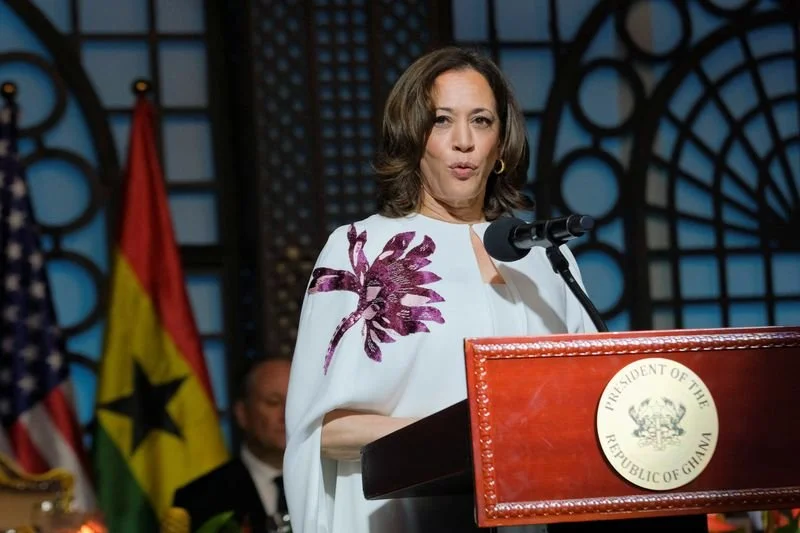
US VP Kamala Harris Delivers Speech at Blackstar Gate in Accra, Ghana
Information about the Vice President’s speech at Blackstar Gate tomorrow, including excerpts, are below.
U.S. OFFICE OF THE VICE PRESIDENT
africa-related new york
Information about the Vice President’s speech at Blackstar Gate, including excerpts, are below.
On background attributed to a White House Official:
Vice President Kamala Harris will deliver remarks to thousands of young people at Blackstar Gate in Accra, Ghana on Tuesday, March 27.
The Vice President will express her optimism about the future of Africa, and by extension, the world, because of the ingenuity, and creativity that is prevalent across the continent, especially in young people.
The speech centers around the theme of innovation—and she will argue that alongside our African partners, we all must invest in innovation on the continent, which will unlock growth and opportunity and provide global benefits.
She will highlight innovative developments taking place across the continent and make clear that they are benefitting the entire world—from tech, agriculture, clean energy, and science. The Vice President is using her platform to call more global attention to the dynamism and entrepreneurship across the continent.
The Vice President will also outline three areas in particular that are a focus for her trip and moving forward—areas where she believes we must make progress to unlock even more innovation: the empowerment of women, digital inclusion, and good governance and democracy.
On the empowerment of women, the Vice President will argue that women around the world must be able to full participate in economic, political, and social life, that they must be able to participate equally, including in leadership roles. She will make the case that this is key to maximizing global growth and opportunity, and will call for progress in addressing gender disparities.
On digital inclusion, the Vice President will make clear that digital services are essential to 21st century economies, and while there are places on the continent of Africa that lead the world in digital solutions, other parts of the continent lag behind. She will make the case that we must expand access to the internet and ensure African people fully benefit from connectivity, whether that is access to education, access to information, or access to financial services. She will commit to work the private sector to unleash growth and opportunity and increase digital inclusion on the continent.
On good governance and democracy, the Vice President will argue that alongside our African partners, we must support and invest in good governance and democracy. She will outline the benefits of good governance for investments. She will underscore the desires of African people for democracy, which we share, and outline the benefits, including freedom and opportunity.
In addition, the Vice President will outline our approach to partnership with African nations and African people, building on President Biden’s statement at the U.S.-Africa Leaders Summit in December 2022 that “we’re all in on Africa.”
The Vice President will make clear that our Administration will strengthen partnerships across the continent—with governments, the private sector, civil society, and young people.
Excerpts
Quotes Attributed to Vice President Kamala Harris:
“So, then what does it mean that the United States of America is All In.
“That means the United States is committed to strengthen our partnerships across the continent of Africa—partnerships with governments, the private sector, civil society and all of you, partnerships based on openness, inclusiveness, candor, shared interests, and mutual benefits.
“And to be clear, America will be guided not by what we can do FOR our African partners, but what we can do WITH our African partners.
“Together, we will address the challenges we face, and the opportunities ahead. And today I will speak about one particular area of opportunity: Investment in innovation.
“Together, we will address the challenges we face, and the opportunities ahead. And today I will speak about one particular area of opportunity: Investment in innovation.
“Innovation is the pursuit of what can be, unburdened by what has been.
“Innovation results in one’s ability not only to see but do things differently: new methods, new products, new approaches, new ideas.
“We innovate to be more effective and to solve problems. From the invention of new technology,
to the origin of social movements, innovation has come about by challenging the premise, questioning the status quo, and bold thinking.
“And to the young leaders here today, you by your very nature are dreamers and innovators. And to you I say, it is your spark, your creativity, and your determination that will drive the future.
“And with that African ideas and innovations will shape the future of the world, and so we must invest
in African ingenuity and creativity, which will unlock incredible economic growth and opportunities-- not only for the people of the 54 countries that make up this diverse continent, but also for the American people and people around the world.
“So, the Biden-Harris Administration and the American people stand ready to partner with you to help accelerate the innovation and entrepreneurship that is already underway.”
Share this story
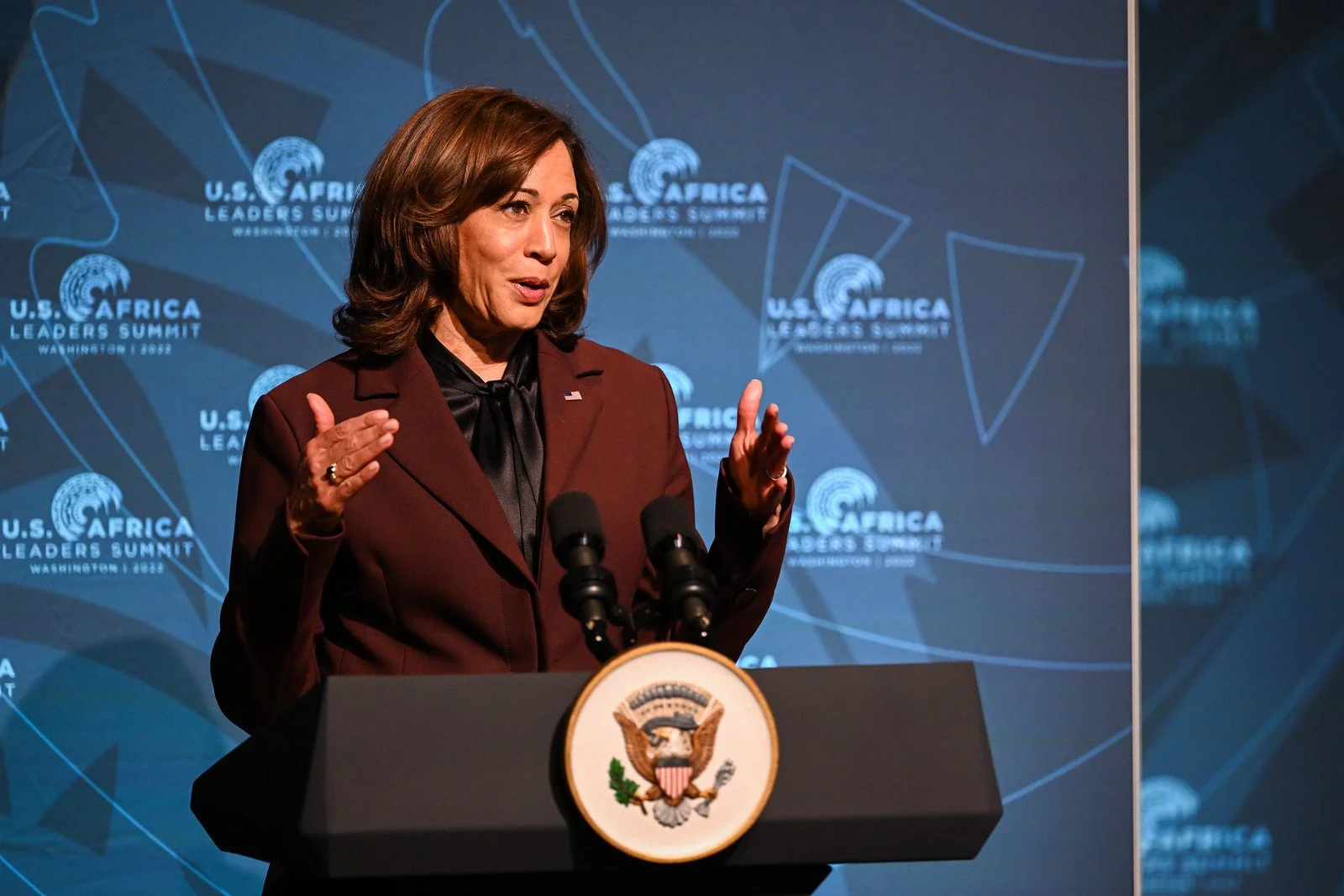
U.S Vice President Kamala Harris To Visit Three African Countries
U.S Vice President Kamala Harris plans a week-long visit to three African countries Ghana, Tanzania and Zambia with technology, economic development, security and government partnerships as its main concerns.
V=U.S Vice President Kamala Harris
U.S. OFFICE OF THE VICE PRESIDENT
By Oyiza Adaba, New York
March 24, 2023
The week-long visit to three African countries Ghana, Tanzania and Zambia has technology, economic development, security and government partnerships as its main concerns.
Share this story
NIGERIA'S RANKING - 2022 HUMAN RIGHTS REPORT
According to the Bureau of Democracy, Human Rights and Labor, the U.S. Department of State submits a human rights report on all countries receiving assistance and all United Nations member states to the U.S. Congress in accordance with the Foreign Assistance Act of 1961 and the Trade Act of 1974.
Photo by Markus Spiske @markusspiske

U.S. DEPARTMENT OF STATE
Office of the Secretary of State
This is the Executive Summary of Nigeria’s perforance and practice of Human Rights. Is this accurately presented or has it missed the mark in some areas? Does the report reflect the Nigerian citizen's collective and individual experiences? These conversations are ongoing.
According to the Bureau of Democracy, Human Rights and Labor, the U.S. Department of State submits a human rights report on all countries receiving assistance and all United Nations member states to the U.S. Congress in accordance with the Foreign Assistance Act of 1961 and the Trade Act of 1974.
EXECUTIVE SUMMARY
Nigeria is a federal republic composed of 36 states and the Federal Capital Territory. In 2019, citizens re-elected President Muhammadu Buhari of the All Progressives Congress party to a second four-year term. Legislative elections were also held in 2019. Most independent observers agreed the elections were credible despite logistical challenges, localized violence, and some irregularities.
The Nigeria Police Force, which reports to the Ministry of Police and is overseen by the Police Service Commission, is the primary civilian law enforcement agency and enjoys broad jurisdiction throughout the country. The Ministry of Interior also conducts security and law enforcement activities. The Department of State Services, which reports to the national security advisor in the Office of the President, is responsible for counterintelligence, internal security, counterterrorism, and surveillance, as well as protection of senior government officials. The Nigerian Armed Forces, which reports to the minister of defense, also shares domestic security responsibilities in the case of insufficient capacity and staffing of domestic law enforcement agencies or as ordered by the president. Many states, in response to increased violence, insecurity, and criminality that exceeded the response capacity of government security forces, utilized local “security” vigilante forces. These local forces usually reported to the state governor. Civilian authorities did not always maintain effective control over the security services. There were reports members of the security forces committed numerous abuses.
The insurgency in the North East region by the militant terrorist groups Boko Haram and the Islamic State in West Africa continued. The terrorist groups conducted numerous attacks on government and civilian targets, resulting as of year’s end in thousands of deaths and injuries, numerous human rights abuses, widespread destruction, the internal displacement of more than two million persons, and the external displacement of an estimated 332,000 refugees to neighboring countries.
Significant human rights issues included credible reports of: unlawful and arbitrary killings; forced disappearances; torture and cases of cruel, inhuman, or degrading treatment or punishment by the government; harsh and life-threatening prison conditions; arbitrary arrest or detention; serious problems with the independence of the judiciary; arbitrary or unlawful interference with privacy; serious abuses in a conflict, including reportedly unlawful or widespread civilian deaths or harm, enforced disappearances or abductions, torture, and physical abuses or punishment; serious restrictions on free expression and media, including violence or threats against journalists, and enforcement of criminal libel and blasphemy laws to limit expression; serious government corruption; lack of investigation and accountability for gender-based violence, including domestic or intimate partner violence, sexual violence, child, early and forced marriage, female genital mutilation/cutting, and other forms of such violence; instances of coerced abortion or forced sterilization; enforcement of laws criminalizing consensual same-sex sexual conduct between adults; and the existence of the worst forms of child labor.
The government took steps to investigate, punish, and prosecute alleged human rights abuses and corruption by officials, but impunity for such abuses and corruption remained a problem.
Nonstate actors committed arbitrary and unlawful killings, disappearances, physical abuse, and other mistreatment. Boko Haram-inspired terrorist groups and the Islamic State in West Africa continued attacks on civilians, military, police, humanitarian, and religious targets; recruited and forcefully conscripted child soldiers; and carried out scores of attacks on population centers in the North East region and in Cameroon, Chad, and Niger. Abductions by Boko Haram and the Islamic State in West Africa continued. Both groups subjected many women and girls to gender-based violence, including forced marriages, sexual slavery, and rape. The government investigated attacks by Boko Haram and the Islamic State in West Africa and took steps to counter the growth of the insurgency. Individuals believed to be associated with the Eastern Security Network, the armed wing of the separatist group the Indigenous People of Biafra, staged attacks on security personnel, civilians, and government offices, including police stations in the South East region. Criminal gangs killed civilians and conducted mass kidnappings that particularly targeted school-age children in the North West region.
How does your country rank on the human rights indices? Learn more here:
Share this story

SEC BLINKEN BREAKS DOWN 2022 HUMAN RIGHTS REPORT
According to the Bureau of Democracy, Human Rights and Labor, the U.S. Department of State submits a human rights report on all countries receiving assistance and all United Nations member states to the U.S. Congress in accordance with the Foreign Assistance Act of 1961 and the Trade Act of 1974.
U.S. DEPARTMENT OF STATE
Office of the Secretary of State
This is the Executive Summary of Nigeria’s perforance and practice of Human Rights. Is this accurately presented or has it missed the mark in some areas? Does the report reflect the Nigerian citizen's collective and individual experiences? These conversations are ongoing.
According to the Bureau of Democracy, Human Rights and Labor, the U.S. Department of State submits a human rights report on all countries receiving assistance and all United Nations member states to the U.S. Congress in accordance with the Foreign Assistance Act of 1961 and the Trade Act of 1974.
EXECUTIVE SUMMARY
Nigeria is a federal republic composed of 36 states and the Federal Capital Territory. In 2019, citizens re-elected President Muhammadu Buhari of the All Progressives Congress party to a second four-year term. Legislative elections were also held in 2019. Most independent observers agreed the elections were credible despite logistical challenges, localized violence, and some irregularities.
The Nigeria Police Force, which reports to the Ministry of Police and is overseen by the Police Service Commission, is the primary civilian law enforcement agency and enjoys broad jurisdiction throughout the country. The Ministry of Interior also conducts security and law enforcement activities. The Department of State Services, which reports to the national security advisor in the Office of the President, is responsible for counterintelligence, internal security, counterterrorism, and surveillance, as well as protection of senior government officials. The Nigerian Armed Forces, which reports to the minister of defense, also shares domestic security responsibilities in the case of insufficient capacity and staffing of domestic law enforcement agencies or as ordered by the president. Many states, in response to increased violence, insecurity, and criminality that exceeded the response capacity of government security forces, utilized local “security” vigilante forces. These local forces usually reported to the state governor. Civilian authorities did not always maintain effective control over the security services. There were reports members of the security forces committed numerous abuses.
The insurgency in the North East region by the militant terrorist groups Boko Haram and the Islamic State in West Africa continued. The terrorist groups conducted numerous attacks on government and civilian targets, resulting as of year’s end in thousands of deaths and injuries, numerous human rights abuses, widespread destruction, the internal displacement of more than two million persons, and the external displacement of an estimated 332,000 refugees to neighboring countries.
Significant human rights issues included credible reports of: unlawful and arbitrary killings; forced disappearances; torture and cases of cruel, inhuman, or degrading treatment or punishment by the government; harsh and life-threatening prison conditions; arbitrary arrest or detention; serious problems with the independence of the judiciary; arbitrary or unlawful interference with privacy; serious abuses in a conflict, including reportedly unlawful or widespread civilian deaths or harm, enforced disappearances or abductions, torture, and physical abuses or punishment; serious restrictions on free expression and media, including violence or threats against journalists, and enforcement of criminal libel and blasphemy laws to limit expression; serious government corruption; lack of investigation and accountability for gender-based violence, including domestic or intimate partner violence, sexual violence, child, early and forced marriage, female genital mutilation/cutting, and other forms of such violence; instances of coerced abortion or forced sterilization; enforcement of laws criminalizing consensual same-sex sexual conduct between adults; and the existence of the worst forms of child labor.
The government took steps to investigate, punish, and prosecute alleged human rights abuses and corruption by officials, but impunity for such abuses and corruption remained a problem.
Nonstate actors committed arbitrary and unlawful killings, disappearances, physical abuse, and other mistreatment. Boko Haram-inspired terrorist groups and the Islamic State in West Africa continued attacks on civilians, military, police, humanitarian, and religious targets; recruited and forcefully conscripted child soldiers; and carried out scores of attacks on population centers in the North East region and in Cameroon, Chad, and Niger. Abductions by Boko Haram and the Islamic State in West Africa continued. Both groups subjected many women and girls to gender-based violence, including forced marriages, sexual slavery, and rape. The government investigated attacks by Boko Haram and the Islamic State in West Africa and took steps to counter the growth of the insurgency. Individuals believed to be associated with the Eastern Security Network, the armed wing of the separatist group the Indigenous People of Biafra, staged attacks on security personnel, civilians, and government offices, including police stations in the South East region. Criminal gangs killed civilians and conducted mass kidnappings that particularly targeted school-age children in the North West region.
How does your country rank on the human rights indices? Learn more here:
Share this story
U.S. MID-TERM ELECTIONS: Press Conference By Int’l Observers
International observers will hold a press conference on November 9th at 2:30PM (EST) in Washington D.C, to present their preliminary conclusions following the mid-term elections in the United States.
Oyiza Adaba | AFRICA-RELATED NEW YORK

Photo credit: Arnaud Jaeger @ajaegers
International observers from the OSCE Parliamentary Assembly (OSCE PA) will hold a press conference on November 9th at 2:30PM (EST) 8:30PM (WAT) in Washington D.C, to present their preliminary conclusions following the mid-term elections in the United States.
According to its website, the OSCE Parliamentary Assembly is a non-profit body that brings together 323 parliamentarians from across the 57-nation OSCE region, including Europe, Asia and North America. It provides a forum for parliamentary dialogue, leads election observation missions, and strengthens international co-operation to uphold commitments on political, security, economic, environmental and human rights issues.
The U.S. mid-term elections will hold on Tuesday November 8, 2022. Eligible voters are encouraged to go out and vote.
WATCH HERE! https://www.oscepa.org/en/news-a-media/press-releases/2022/international-election-observers-for-united-states-mid-term-elections-to-hold-press-conference-on-wednesday
What:
A press conference of the international election observation mission for the mid-term elections in the United States;
The press conference can be attended in person or via Zoom (details below);
You can also follow the livestream on www.facebook.com/osce.odihr and www.oscepa.org.
Who:
Margareta Cederfelt, Special Co-ordinator and leader of the short-term observers from the OSCE Parliamentary Assembly (OSCE PA);
Pere Joan Pons, Head of the delegation from the OSCE Parliamentary Assembly (OSCE PA);
Tana de Zulueta, Head of the limited election observation mission from the OSCE Office for Democratic Institutions and Human Rights (ODIHR).
When:
14:30 local time (EST, GMT -5) on November 9, 2022
Where:
Washington Plaza Hotel, 10 Thomas Circle, Washington D.C.
Registration:
No registration is necessary if you are attending the press conference in person, but questions will only be taken from journalists;
To take part via Zoom, please register with Thomas Rymer, ODIHR limited election observation mission press adviser, thomas.rymer@odihr.us, and Ivan Godarsky, media analyst, Ivan Godarsky@odihr.us, by 11:00 local time on 9 November.
Contacts
OSCE Office for Democratic Institutions and Human Rights Public Affairs UnitOffice: +48 22 520 06 00Fax: +48 22 520 06 05 PublicAffairs@odihr.pl
Katya Andrusz Spokesperson OSCE Office for Democratic Institutions and Human Rights (ODIHR)Ul. Miodowa 1000-251 Warsaw Poland Office: +48 22 520 0640Mobile: +48 609 522 266 Katya.Andrusz@odihr.pl
Share this story
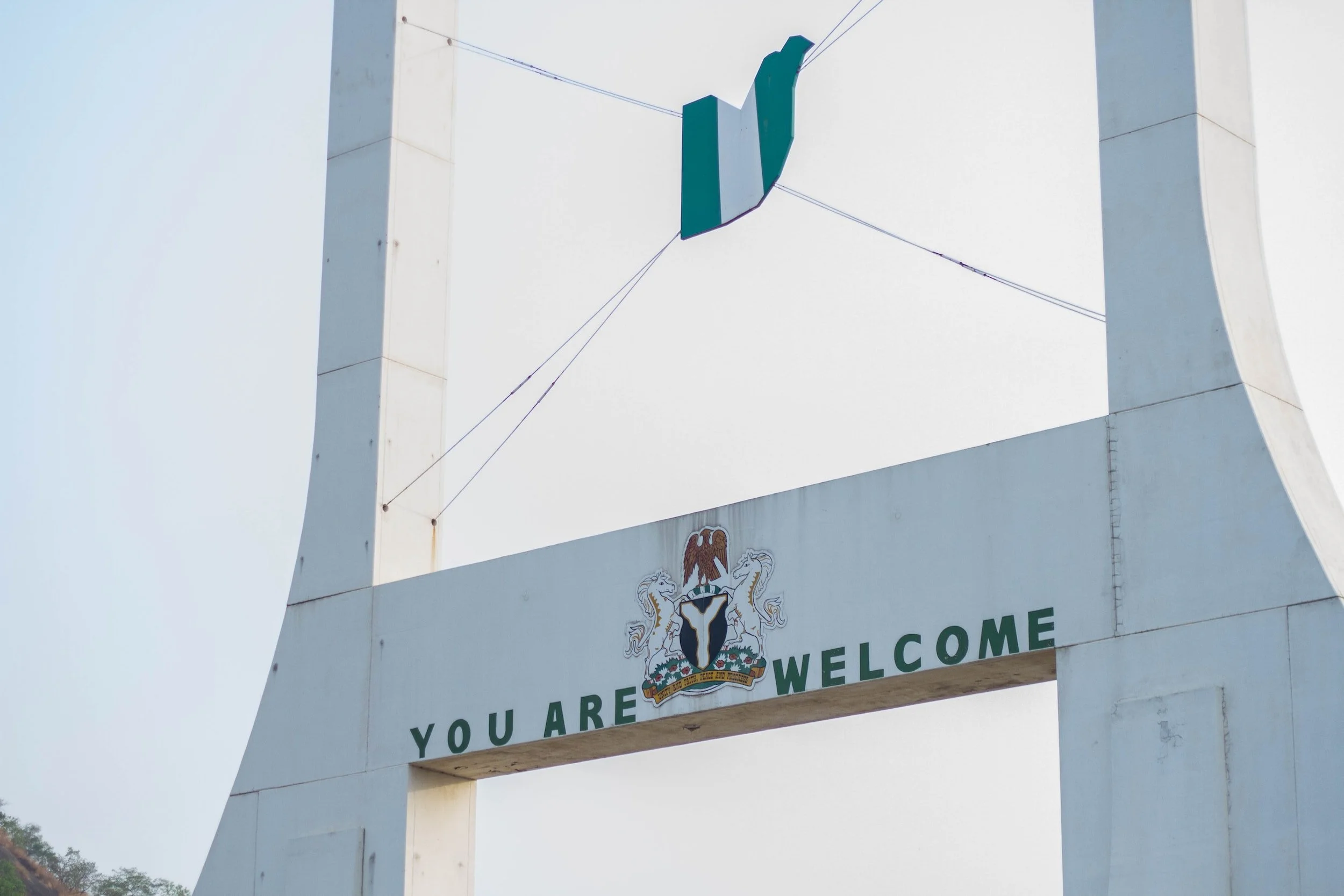
ANALYSIS - The U.S Terror Threat Report And Mass Evacuation from Nigeria
Washington D.C-based Human Rights lawyer, Emmanuel Ogebe provides analysis of the rcent U.S Travel advisory to Nigeria, in what he describes as ‘The Afghanistanization of Nigeria’.
Emmanuel OGEBE | US Nigeria Law Group, Washington D.C
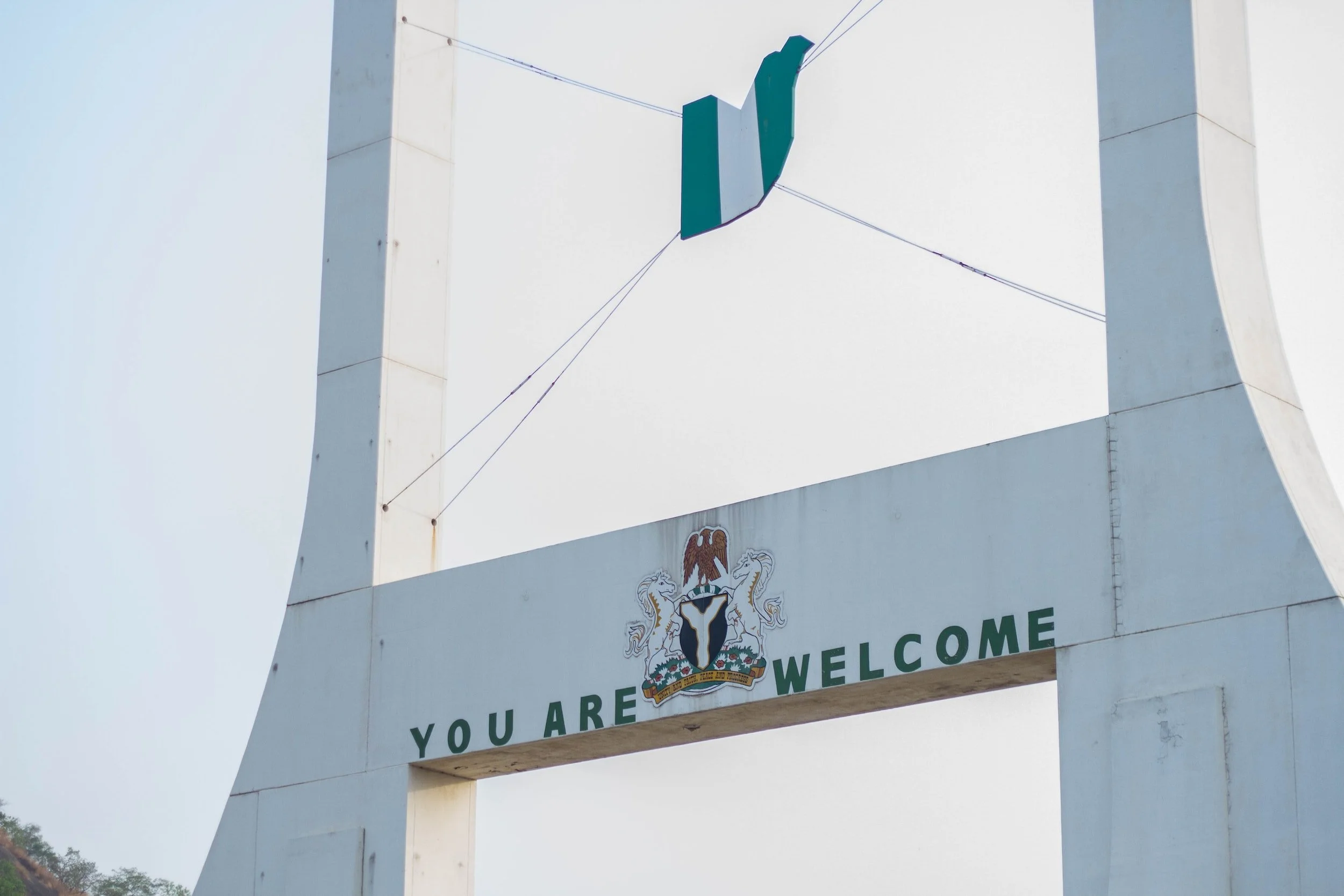
Insecurity in Nigeria
The U.S. Embassy in Nigeria recently elevated terror threat warning and ordered departure directives to its citizens. The following is an analysis of this incident.
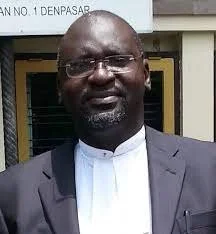
Emmanuel Ogebe/Photo credit: Facebook
Washington D.C-based Human Rights lawyer, Emmanuel Ogebe provides analysis of U/S Travel advisory to Nigeria below, in what he describes as ‘The Afghanistanization of Nigeria’.
FACT-FINDING REPORT ON U.S. TERROR THREAT AND MASS EVACUATION FROM ABUJA - THE AFGHANISTANIZATION OF NIGERIA
During our recent humanitarian mission to Nigeria, our trip was prematurely truncated by the US embassy’s elevated terror threat warning and ordered departure directive.
The following is our report on this incident for purposes of sufficiently informing the general public to take appropriate care.
A. Immediate Causes of the terror alert: Failed and Foiled attacks
There were at least two immediate incidents that triggered the post-haste departure of Americans from the largest US embassy in Africa.
1.1 Failed attack - the first incident was the detection of an IED (Incendiary Explosive Device) which had been successfully deployed at a US diplomatic compound. Fortunately for the occupants, the bomb failed to detonate and so there was no casualty.
However there was sufficient alarm raised firstly that the terrorists were able to actually identify an unmarked US diplomatic compound and tactically deliver a bomb thereto.
The US alerted the Nigerian government, while forensic evaluation was in progress, to take serious action.
2. Foiled attack - subsequently Nigerian authorities busted a terror cell proximate to yet another larger US diplomatic compound in Abuja.
That terror cell had reportedly stockpiled bombs in readiness for the destruction of four churches also within its radius.
By this time, the forensic experts had concluded that the first IED recovered was lethal and that only poor construction had kept it from exploding.
Given this finding, the US authorities determined they could not rely on luck next time and having urged Nigeria to take stronger action as they did not want to pull out of the country, and not seeing a robust crackdown, ordered mass evacuation.
As an intelligence official said, “We have to be secure 100% of the time but the terrorists only need 1%.”
B. Remote Causes
1. Recent Fulani attacks on Westerners
Immediately prior to the bomb discovery incident, an American missionary was kidnapped by Fulani Herdsmen in the middlebelt.
According to our local partners who helped with hostage negotiations, her Fulani kidnappers said they were offered $20,000 to abduct a white person.
While this was not specific to Americans, Americans remain the highest number of western expatriates in most locations thus the statistical probability of getting an American is high.
Diplomatic security sources briefed us that on average an American is kidnapped every month. However this was taken to mean Nigerian American dual citizens. Thus the abduction of a white American female was unusual and especially alarming in north central Nigeria.
This is because of the international footprint of the Fulani kidnap franchise.
It will be recalled that an American missionary was kidnapped in the neighboring country of Niger only to be rescued later by American forces in Nigeria.
As Nigerian American professionals noted in a February 2021 letter to the US government:
“Secretary Blinken, the existential threat that the situation in Nigeria presents, of which the vicious Herdsmen militia’s atrocities are just a part, cannot be overemphasized.
It goes far beyond threats to the subregion.
SECURITY NOTICE – ELEVATED RISK OF TERROR ATTACKS – OCTOBER 23, 2022
Below are just a few instances of direct threats posed by Fulani militia to American and western allies:
1. In 2017, the first US military casualties in West Africa were caused by a Fulani terrorist who killed four US Green Berets in the nation of Niger in an ambush using cows. They were Staff Sgt. Bryan Black, 35; Staff Sgt. Jeremiah Johnson, 39; Staff Sgt. Dustin Wright, 29 and Sgt. La David Johnson, 25.
2. Also in 2017, two German Archeologists were abducted by Fulani Herdsmen in Kaduna state, Nigeria.
3. In 2018, four American and Canadian citizens were abducted in Nigeria’s Kaduna state by a Fulani group…
4. In 2019, A British Aidworker Faye Mooney who worked for American Humanitarian organization Mercy Corp was killed in Kaduna State as a Fulani group attempted to abduct her.
5. In 2020, barely three months ago, US Navy Seals rescued missionary Philip Walton from Nigeria where he was hidden by the Fulani group who abducted him in Niger.
6. In 2021 already, Nigerian American Dennis Abuda was killed the same week three Chinesemen were also abducted in southern Nigeria…
Hordes of Fulani militia from across the region, crisscross international borders at will, descending on innocent Christian communities in north central and southern Nigeria and against non-Fulani Muslims and Christians in northwest Nigeria leaving a trail of death, destruction, rape, mass displacement and food shortage.”
It is believed that Philip Walton was brought from Niger to be resold to ISWA in Nigeria pursuant to the existing operational collaboration between the Fulanis and Boko Haram jihadists. This likely occasioned the prompt military intervention of the US to rescue him before he landed in ISWA’s hands.
Ex-captives of ISWA confirmed to us that among their fellow hostages in the terror camps were women kidnapped in Chad and sold to Nigerian terrorists.
The recent killing of the Alqaeda kingpin Al-Zawahiri by a U.S. drone in Afghanistan has likely increased the threat to Americans abroad.
It will be recalled that ISWA executed 11 Nigerian Christians at Christmas 2019 to avenge America’s killing of ISIS leader al-Baghdadi.
It is noteworthy that Boko Haram was affiliated with Alqaeda before Alqaeda‘s condemnation of its 2014 Chibok schoolgirl mass abductions caused a realignment to ISIS.
2. Historical terror attacks on Americans
It is notable that American diplomats were present at both of the first suicide bombings by Boko Haram in the nation’s capital Abuja.
Given the entirety of the threat matrix, especially the fact that the terrorists were able to rescue their members from Kuje prison in the FCT, including the leader of the Ansaru terror sect that specializes in abduction and killing of westerners, it was inevitable that the US would have to take drastic measures to secure its citizens.
ANALYSIS
The mass evacuation of US Diplomats and family members by all available commercial flights and chartered flight was precipitous and unprecedented in Nigeria’s history.
It will be recalled that even during the Biafra civil war in the ‘60s, Americans remained in country including Peace Corp members until the Nigerian government ordered them out. Many of them are still living and hold reunion events in the US regularly.
It should be made clear that the current evacuation was not meant to embarrass Nigeria as is being claimed in some quarters.
The US gave Nigeria adequate notice to remedy the situation before embarking on the costly option of extracting American personnel and families out of Abuja. To underscore how serious the situation was, even pets of American personnel were evacuated. These included dogs and cats.
Secondly the US does not undertake such a massive logistical operation for the purpose of embarrassing a nation.
It is to be emphasized that even in the US right now, the government has issued an elevated security threat around next week’s midterm elections. Responsible nations prioritize security of their citizens and pets over propaganda.
The Afghanistan-style evacuation is to be taken seriously as an indicator that rather than secure the nation, the Buhari administration has brought Nigeria to the verge of Talibanization.
It is instructive that the two times in recent history that the Americans came close to evacuation both involved Gen. Buhari.
In 2015, American diplomats were on standby for evacuation over concerns of a repeat of the 2011 Post-Election Violence orchestrated by Buhari’s supporters if he lost the election. The concession by President Jonathan defused the tension.
This time, rather than remain in the country to give a vote of confidence in his security apparatchik, Buhari absconded from Nigeria ostensibly to attend a vaccine conference in Korea, returned and then promptly departed on a two-week holiday to England.
Finally even the COVID pandemic evacuation of all US embassies worldwide was not as sudden as last week’s evacuation. Even then some diplomats who elected to remain in Nigeria were permitted to do so.
CONCLUSION
We urge Gen. Buhari to return home and cancel all further overseas trips so he can frontally face the insecurity at home. It is unconscionable that he departed without having the decency to empower Vice President Osinbajo as acting president. Even the terror command structure is better organized.
We urge the US government to take seriously our repeated concerns about religious extremism and persecution in Nigeria that has metastasized to the point that American diplomats have now become Internationally Displaced Persons and to reinstate Nigeria’s CPC status. This evacuation is the unfortunate destination point of years of deceptive policy positioning. It is not too late to reverse course.
We commend humanitarians such as the ransomed American missionary who declined our offer of evacuation to the US due to her lifelong commitment to Nigeria.
We urge the Nigerian public to be vigilant and defend themselves as those for peace significantly outnumber those for terror.
Emmanuel OGEBE is a Human Right Lawyer with US Nigeria Law Group in Washington D.C
Share this story
Impunity for Crimes against Journalists is 'Unacceptably High' at 86% - UNESCO
According to UNESCO observatory of killed journalists, Impunity for killings of Journalists remains unacceptably high at 86%. Between 2006 and 2020, over 1,200 journalists have been killed around the world, with close to 9 out of 10 cases of these killings remaining judicially unresolved, according to the UNESCO.
By Oyiza Adaba | Africa-Related New York
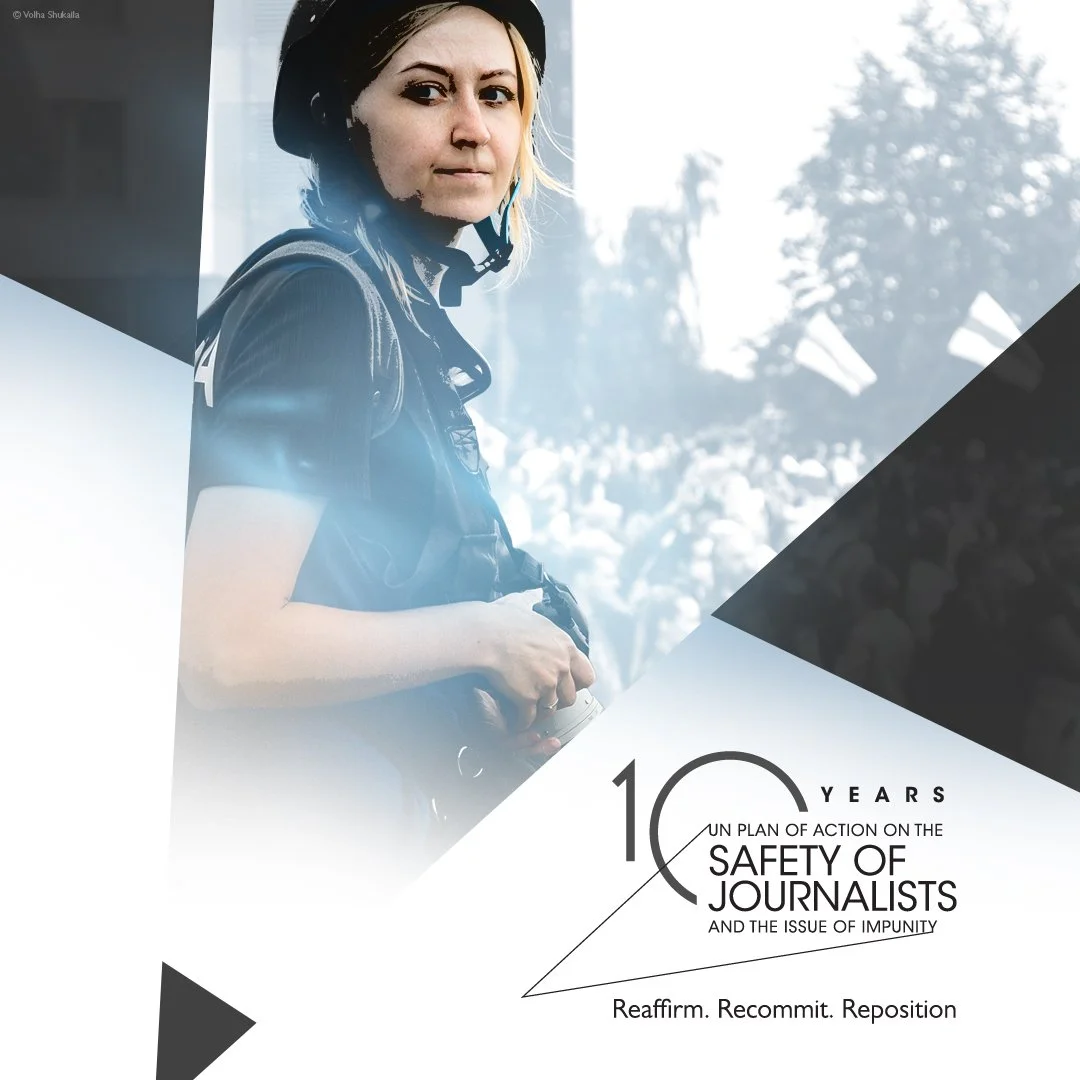
Between 2006 and 2020, over 1,200 journalists have been killed around the world, with close to 9 out of 10 cases of these killings remaining judicially unresolved, according to the UNESCO observatory of killed journalists.
On the 10th Anniversary of the UN Plan of Action on the safety of Journalists and the issue of impunity, the U.S. State department issed the below statement
U.S. DEPARTMENT OF STATE
Office of the Spokesperson
STATEMENT BY NED PRICE, SPOKESPERSON
The International Day to End Impunity for Crimes against Journalists
A free and independent press plays a critical role in promoting democracy and shining a light on developments around the world – whether daunting or hopeful. Journalists are the bedrock of an independent press, providing the public with facts and holding governments to account, often while facing danger and adversity. On International Day to End Impunity for Crimes against Journalists, we reiterate our calls for justice for brave journalists across the globe.
Since 1992, over 1,500 journalists and media workers have been killed in pursuit of information, with most of these cases remaining judicially unresolved. According to the Committee to Protect Journalists, 294 journalists were languishing in jail for doing their work as of last December. Increasingly, journalists face threats and attacks online, where identifying and holding to account the perpetrator can be difficult. Women journalists are disproportionately targeted by online harassment and abuse, which compounds the forms of violence they experience offline. Per a UNESCO survey, 73 percent of women journalists have been harassed online due to their work. We have also seen an increase in governments reaching beyond their borders through misuse of digital surveillance tools that track journalists’ communications and whereabouts. Digital surveillance and online threats can fuel offline threats and violence, ultimately constraining journalists’ ability to report accurate information.
The UN Plan of Action on the Safety of Journalists was established 10 years ago as a multi-stakeholder approach to protect journalists through legislation, mechanisms, and guides aimed at creating a secure and just environment for media. Despite these efforts, the international community must continue to take a stand against physical attacks, intimidation lawsuits, transnational repression, and regulatory pressures that silence media—online and offline.
Today, the United States renews our commitment to an open and free press around the world. We call on other governments to join us in condemning crimes against journalists and holding accountable those who attack press freedom.
###
Photo credit: UNESCO
Share this story
NIGERIA SECURITY ALERT - TRAVEL NOT RECOMMENDED FOR U.S CITIZENS
The Travel Advisory for Nigeria has been updated due to a heightened risk of terrorist attacks in Abuja, and travel to Abuja is NOT recommended for U.S. citizens at this time.
Africa-Related | New York
Threats Of Terrorism
The Travel Advisory for Nigeria has been updated due to a heightened risk of terrorist attacks in Abuja, and travel to Abuja is NOT recommended for U.S. citizens at this time.
The United States Mission in Nigeria issued a security alert to its citizens against travel to Nigeria. Here is what you need to know:
Location: Abuja Federal Capital Territory (FCT), Nigeria
Event: The Travel Advisory for Nigeria has been updated due to a heightened risk of terrorist attacks in Abuja. We recommend U.S. citizens do not travel to Abuja at this time. In addition, on October 27, 2022, the Department ordered the departure of family members of U.S. government employees from Abuja due to heightened risk of terrorist attacks, following on the October 25 authorization of departure of non-emergency U.S. government employees and family members from Abuja due to heightened risk of terrorist attacks.
U.S. citizens should consider departing Abuja using available commercial options. U.S. citizens who wish to depart but are unable to secure commercial options to do so can contact the U.S. Consulate in Lagos at LagosFM@state.gov for assistance.
The U.S. Embassy Abuja is only able to provide emergency assistance to U.S. citizens in Abuja. The U.S. Consulate General in Lagos is providing all routine and emergency services to U.S. citizens in Nigeria. U.S. Citizens in Nigeria who require assistance should contact LagosACS@state.gov or +234 1 460 3410.
If you decide to travel to Nigeria:
Carry proper identification, including a U.S. passport with a current Nigerian visa, if needed.
Use caution when walking or driving at night.
Keep a low profile.
Review travel routes and times to vary your predictability.
Monitor local media for breaking events and be prepared to adjust your plans.
Be aware of your surroundings.
Stay alert in locations frequented by Westerners.
Avoid demonstrations and large political gatherings.
Review your personal security plans.
Have evacuation plans that do not rely on U.S. government assistance.
Establish a “proof of life” protocol with your loved ones, so that if you are taken hostage, your loved ones know specific questions (and answers) to ask the hostage-takers to be sure that you are alive (and to rule out a hoax).
Enroll in the Smart Traveler Enrollment Program (STEP) to receive alerts and make it easier to locate you in an emergency.
Obtain comprehensive medical insurance that includes medical evacuation.
Follow the Department of State on Facebook and Twitter.
Review the Country Security Report for Nigeria.
Prepare a contingency plan for emergency situations. Review the Traveler’s Checklist .
Visit the CDC page for the latest Travel Health Information related to your travel.
Read the Department of State’s COVID-19 page before you plan any international travel, and read the Embassy COVID-19 page for country-specific COVID-19 information.
Assistance:
U.S. Embassy Abuja, Nigeria
Plot 1075 Diplomatic Drive, Central District Area
+234 (9) 461-4328 and after hours +234 (9) 461-4000 press zero
AbujaACS@state.gov
U.S. Consulate General Lagos
2 Walter Carrington Crescent, Victoria Island
+234 (1) 460-3400 during business hours and after-hours
LagosACS@state.gov
State Department – Consular Affairs
888-407-4747 or 202-501-4444
Enroll in the Smart Traveler Enrollment Program (STEP ) to receive Alerts.
Follow USinNigeria on Twitter and Facebook
Main Photo: Anthony Formin @aginbrook
US in Nigeria Twitter Photo
Share this story

U.S. COMMITS $1 MILLION TO FLOOD VICTIMS IN NIGERIA
The United States has pledged $1 million in immediate humanitarian assistance to support the 2.8 million people across the Nigeria affected by unprecedented flooding.
Oyiza Adaba | Africa-Related New York
Flood Victims
The United States has pledged $1 million in immediate humanitarian assistance to support the 2.8 million people across the Nigeria affected by unprecedented flooding.
Abuja – The United States, through the U.S. Agency for International Development (USAID), is providing $1 million in immediate humanitarian assistance to support the people affected by unprecedented flooding in Nigeria. The unusually heavy rainfall and resulting flooding has affected nearly 2.8 million people across the country. In addition, many homes have been damaged or completely destroyed, displacing millions of people.
The floods have exacerbated an already critical humanitarian situation in Nigeria, where ongoing conflict, especially in the northern region, has driven millions of people from their homes. In the same region, more than 4 million people are projected to continue experiencing acute food insecurity amid the worsening global food crisis. We are also concerned that standing floodwaters could increase the risk of cholera and other waterborne diseases in Adamawa, Borno, and Yobe states, where cholera outbreaks were declared in August and September and at least 7,750 cases were recorded. In 2022, 31 out of 36 states reported cholera cases.
“We are filled with grief for the flood victims who have lost so much – livelihoods, homes, and even loved ones,” said U.S. Ambassador to Nigeria, Mary Beth Leonard. “The United States continues to stand with the people of Nigeria during this extremely difficult time,” Ambassador Leonard added.
The $1 million in new USAID support will allow local partners on the ground to provide emergency shelter assistance, relief commodities, and hygiene kits to promote safe and healthy practices amid the ongoing cholera outbreak, and multipurpose cash assistance for people impacted by the devastating floods.
As experts expect heavy rainfall and flooding to continue through November, due in part to climate change and insufficient drainage infrastructure, USAID disaster experts will continue monitoring the situation in close coordination with humanitarian partners and the Government of Nigeria to assess needs and determine if additional assistance is required.
The United States maintains a long history of providing humanitarian assistance across the country. In 2022, USAID provided more than $356 million in humanitarian assistance to people most affected by conflict and food insecurity in Nigeria. This life-saving assistance is in addition to USAID’s annual $539 million development budget for Nigeria that supports economic growth, health, democratic governance, and education.
Follow USinNigeria on Twitter and Facebook
###
Share this story
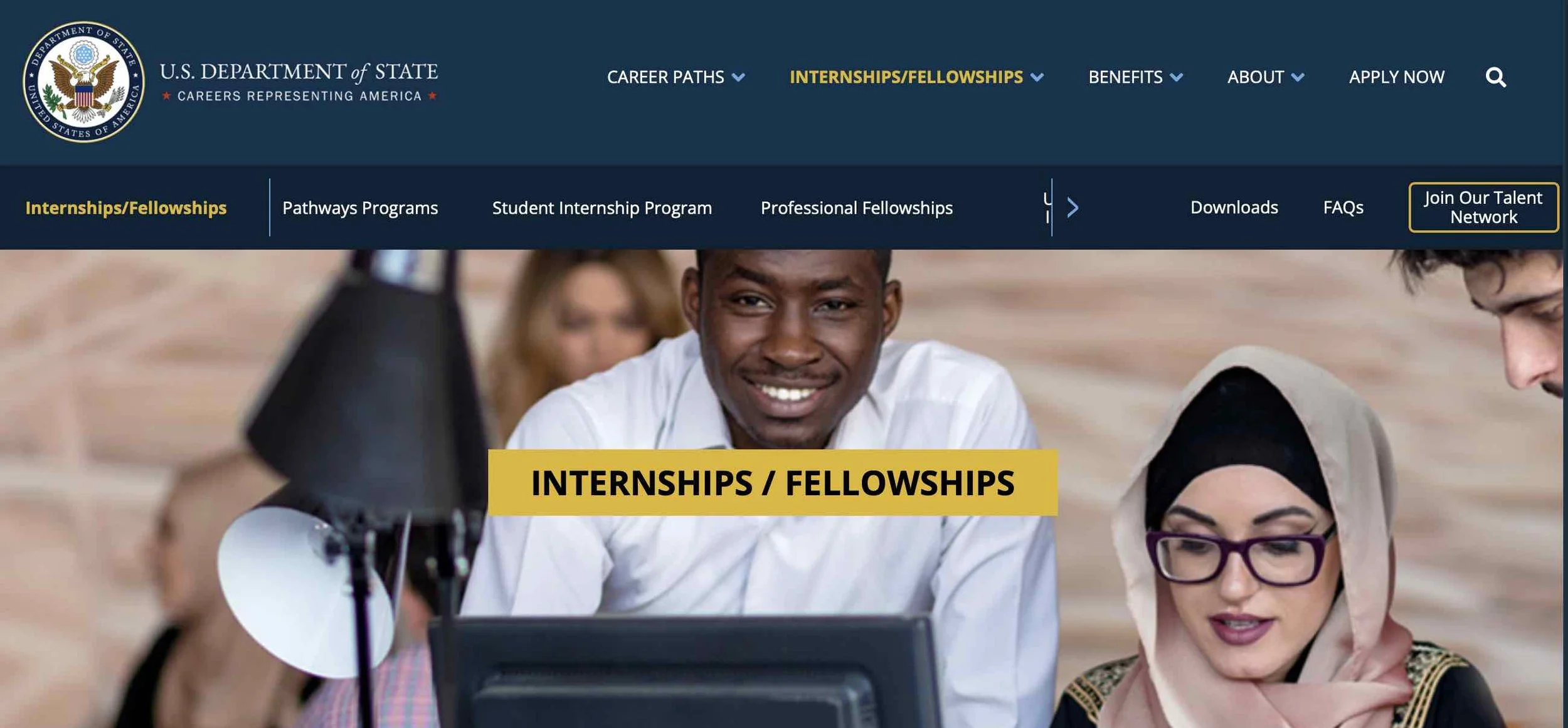
U.S STATE DEPT ANNOUNCES COLIN POWELL LEADERSHIP PROGRAM
The Colin Powell Leadership Program will provide paid fellowships to recent college graduates and paid internships to students who are enrolled at accredited institutions of higher education.
Africa-Related New York
“diversity is a source of strength, it is a source of our success”
Photo: U.S State Dept website
In support of the Secretary’s modernization agenda, the U.S. Department of States announced the new Colin Powell Leadership Program to further advance the Department’s commitment and efforts to hire a workforce representative of all segments of society. The program will provide individuals the opportunity to pursue careers at the Department of State.
Colin Powell understood that diversity “is a source of strength, it is a source of our success,” and exemplified his leadership values—both as a general and as Secretary of State — by putting people first. The Colin Powell Leadership Program recruits highly motivated candidates from a variety of backgrounds who aspire to and possess the potential to become future civil service leaders at the U.S. Department of State.
This program will provide paid fellowships to recent college graduates and paid internships to students who are enrolled at accredited institutions of higher education. Both paths may lead to full-time employment opportunities at the Department and are focused on developing future leaders through training, mentoring, and on-the-job experience to provide them with the skills, tools, and resources needed for long-term success at the Department.
Internship opportunities will be in the Social Science Student Trainee (0199) and Administration and Office Support Student Trainee (0399) series. Fellowship opportunities will be in the Foreign Affairs (0130) and Management Analysis (0343) series. Applicants will apply via USAJobs and the first vacancy announcement is tentatively scheduled for mid to late September 2022. Subsequent announcements will be held annually in the spring. All applicants must be U.S. citizens and able to obtain and retain a secret or top-secret clearance. All positions will be located in the Washington, D.C. area.
To be eligible for the Colin Powell Leadership Internship Program, applicants must either be an enrolled or current student, on a part-time or full-time basis, pursuing their bachelor’s degree in a qualifying post-secondary educational program. A cumulative GPA of at least 3.2 out of 4.0 is required. The duration of the internship program will be determined by the participant’s anticipated graduation date and may not exceed four years from the initial appointment to the program.
Applicants for the Colin Powell Leadership Fellowship Program must have received a baccalaureate or graduate degree within the last two years with a cumulative GPA of at least 3.2 out of 4.0. The fellowship program is a one-year paid developmental program.
For more information about this opportunity, please visit here
Share this story

US VISAS: State Department Gives Post-Pandemic Update
The US State Department briefed journalists on recent measures taken to combat post-pandemic visa backlog at consular posts overseas. Some of the measures include the global visa approach, whereby applicants can apply for U.S visas anywhere in the world.
By Oyiza Adaba | Africa-Related New York
“Applicants can apply anywhere in the world where there’s an appointment available.”

The Deputy Assistant Secretary for Visa Services, Julie Stufft provided an update to members of the foreign press on the current status of visa processing and services at the U.S Consular sections overseas. The pandemic, no doubt impacted the world’s travel
“Right now the wait time for routine visa appointments at half of our overseas posts is less than four months and at some posts is actually far, far shorter than that.
- Julie Stufft, Deputy Assistant Secretary for Visa Services -
She however stressed that the State department is viewing the visa workload globally, and that Consular posts worldwide are experiencing a faster recovery than initially expected. She highlighted some of the measures taken to meet visa demands and reduce the backlog. They include:
Waiving in-person interviews;
Upgraded Staffing and ‘doubled consular hiring’;
Remote/Virtual Adjudication processes leading to more visa adjudications ‘this year than in the past six years’;
Expedited visa appointment for business travel, urgent humanitarian or medical travel;
Increased number of visas to Temporary Workers (including agricultural workers) and Student categories;
Global Visa approach where applicants can apply in any U.S consulate, and not necessarily in their country of origin.
“… if an applicant is in a country with a long wait time, that applicant go to another post… and this has really been successful for thousands of visa applicants this year.
- Julie Stufft, Deputy Assistant Secretary for Visa Services -
What has been your post-pandemic experience at the U.S Consulate in your country?
See transcript here
Share this story
FOREIGN AID IN AFRICA: Did It Work?
Dr. Mo Ibrahim, Prof. Bill Easterly of New York University, Prof. Celestin Monga,and Ms. Tanaka Chiimba discuss The Impact of Foreign Aid in Africa
By Africa-Related New York
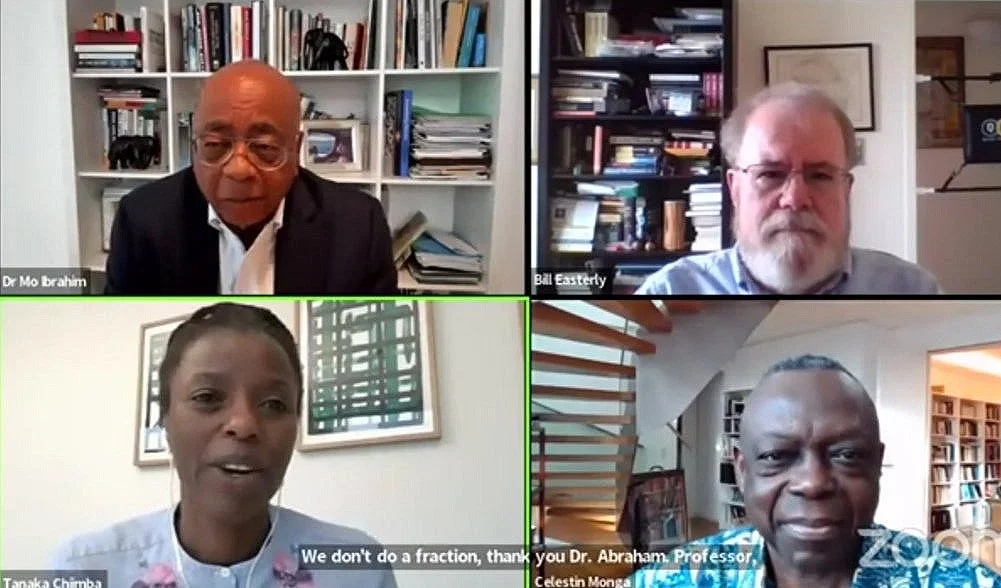
Dr. Mo Ibrahim, Prof. Bill Easterly of New York University, Prof. Celestin Monga and Ms. Tanaka Chiimba discuss The Impact of Foreign Aid in Africa. (Screeshot from: Wheeler Institute)
The Wheeler Institute for Business & Development and the London Business School organized a 10-week open access course titled, African History through the Lens of Economics. This plenary session on the 10th week hosted Prof. William (Bill) Easterly of New York University, Prof. Celestin Monga of Harvard’s Kennedy School of Government, and Dr. Mo Ibrahim of the Mo Ibrahim Foundation. The plenary session, which examined The Impact of Foreign Aid was moderated by Tanaka Chiimba, a Senior Advisor at McKinsey & Company in South Africa.
- Did foreign Aid work in Africa
- Africa's approach to Aid
- Governance of Aid in Africa
- China in Africa
The 10-week course was attended by over 50,000 participants with over 28,000 certification awarded. The initiative is the brainchild of the main teaching faculty made up of Elias Papaioannou, Leonard Wantchekon, Nathan Nunn and Stelios Michalopoulos. The ideas and lessons from such programs can no doubt germinate into seeds of change for Africa.
If you missed it, you can still take the classes at your leisure. All course materials and lectures are free and can be found here:
Background on Speakers
Bill Easterly, Professor of Economics at New York University and Director of its Development Research Institute, is a leading scholar and authority on foreign aid and development. His books 'The Tyranny of Experts', 'The White Man’s Burden', and 'The Elusive Quest for Growth' have had a profound impact on policy making and our thinking on these issues.
Celestin Monga, Visiting Professor of Public Policy at Harvard’s Kennedy School of Government, Former Chief Economist and Vice-President of the Africa Development Bank Group, has done important research and policy work across the continent.
Mo Ibrahim has been one of Africa’s most successful entrepreneurs, whose business journey continues to inspire millions of Africans. Through the Mo Ibrahim Foundation, he and his team have focused their philanthropic work stressing the importance and promoting good governance and leadership.
Tanaka Chiimba is a Senior Advisor at McKinsey & Company in South Africa and a graduate of Sloan Fellow of London Business School (2019)