
NWU Report on Retaliation Against Media Workers During the War on Gaza
For the last 6 months, members of NWU's Digital Media Division have been investigating retaliation in the media industry during the war on Gaza.
Dear members,
For the last 6 months, members of NWU's Digital Media Division have been investigating retaliation in the media industry during the war on Gaza.
A team of two dozen FSP-NWU members collaborated to research and produce the report, which is now live at redlines.nwu.org.
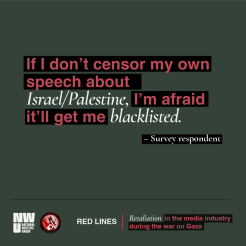
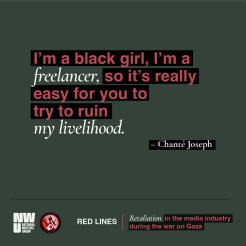
This is a first-of-its-kind effort to document a pattern which many of our industry colleagues have informally observed for several months: the workplace repression and punishment of media workers who have voiced criticism of Israel or support for Palestine. The report tallies 44 cases of workplace retaliation occurring between October 7, 2023, and February 1, 2024, impacting more than 100 people. It draws on data compiled from two surveys distributed by NWU as well as news reports and social media posts.
The testimony gathered highlights how retaliation is affecting coverage of what might be the most important geopolitical event in at least a decade. It also highlights the ways in which retaliation is a labor rights issue. If there is any bright spot in this bleak landscape, it's the power of the union. Unions have been able, in some cases, to prevent retaliation from occurring or seek justice when it does.
As our president Larry Goldbetter said, "As a member of the International Federation of Journalists, the National Writers Union has stood for press freedom and against political targeting of media workers since the union’s founding in 1981. Now, we are witnessing how a coercive and retaliatory environment within the media industry can give way to the arbitrary and violent repression of the press, even in a U.S. context. It has never been more urgent to stand in solidarity with our Palestinian journalist colleagues who have been targeted with extreme violence simply for doing their jobs."
We will continue to stand in that solidarity and use our collective power to fight against repression and censorship, both for ourselves and for our fellow media workers, including the many student journalists at universities across the country.
Share the report widely!
With pride in our union,
Elena Novak
NWU Comms Manager
comms@nwu.org
SHARE THIS STORY
THE IAS-UNN 2024 INTERNATIONAL CONFERENCE
The Institute of African Studies, University of Nigeria, Nsukka, in collaboration with the Pearson Institute for the Study and Resolution of Conflict, University of Chicago, The Transatlantic Research Group, and the Whelan Research Academy for Religion, Culture and Society, Owerri, Imo State, Nigeria, invites scholars and graduate students to an international conference entitled Continuity and Change: Rethinking African European Encounters. The conference is scheduled for 18-20 July 2024, with a pre conference workshop on Research and Fieldwork Methodology for graduate students on 17 July 2024 at the University of Nigeria, Nsukka Campus.
CALL FOR PAPERS:
THE IAS-UNN 2024 INTERNATIONAL CONFERENCE
The Institute of African Studies, University of Nigeria, Nsukka, in collaboration with the Pearson Institute for the Study and Resolution of Conflict, University of Chicago, The Transatlantic Research Group, and the Whelan Research Academy for Religion, Culture and Society, Owerri, Imo State, Nigeria, invites scholars and graduate students to an international conference entitled Continuity and Change: Rethinking African European Encounters. The conference is scheduled for 18-20 July 2024, with a pre conference workshop on Research and Fieldwork Methodology for graduate students on 17 July 2024 at the University of Nigeria, Nsukka Campus.
Continuity and Change: Rethinking African-European Encounters
Institute of African Studies
University of Nigeria, Nsukka
July 18-20, 2024
In recent decades, there have been intense debates on and around the role of European encounters in transforming African societies. Scholars of the African colonial experience agree that the historic arrival of Europeans in Africa, especially during the colonial period, produced an unprecedented change and transformation in African societies. What happened when Europeans encountered and mingled with African societies and people? What role did Europeans (Missionaries, Traders, Administrators, and Scholars) play in facilitating these encounters? In what ways did Africans respond and react to these encounters? In what specific ways have Africans improved (or discarded) the systems introduced (or imposed) by the Europeans? How is the current global power balance reflected in the unfolding continuity or change within Africa? How can one speak to the present by engaging with the history of these encounters? We will explore these questions at the Rethinking African-European Encounters Conference, a three day-long scholars meeting at the Institute of African Studies, University of Nigeria, Nsukka. Sub-themes will include, but not limited to, the following:
Control, restriction, and colonial hegemony
Colonial ethnography and representation of Africa
Construction of identity and difference
Christianity, Islam and spirituality in Africa
Decolonial thinkers and critique of Eurocentrism
Colonial economic models and their aftermath
Indigenous forms of slavery
Neo-slavery and other forms of servitude
European languages and language ideologies
Labour and production relations
Reproducing colonial political economy
The nation-state and loss of indigenous autonomy
Texts, images, and colonial representation
Otherness and Othering in the colonial context
African resistance and colonial Institution
Modern bordering and migration encounters
Reinterpretations of cultural encounters
Intersections of race and gender biases
Women, motherhood and colonial ideology
Mapping gender in the colonial context
Pre-and post-colonial social organisations
Elections and liberal democracy in the post-colonial era
Art, education, literature, music, theatre, film and society in postcolonial Africa
Art and art markets as playgrounds of European fancy in Africa?
The arts as a platform/tool for the unbalanced Europe-Africa encounter
The conference honours the life and work of Professor Felix Ekechi (1934-2023), whose illustrious historic career as a teacher and scholar centred on Africa’s engagement with Europeans. Ekechi’s most influential works include Missionary Enterprise and Rivalry in Igboland, 1857-1914 (nominated for the African Studies Association Herskovit’s Award); Tradition and Transformation in Eastern Nigeria: A Sociopolitical History of Owerri and Its Hinterland, 1902-1947; and Pioneer, Patriot, and Nigerian Nationalist: A Biography of the Reverend M.D. Opara, 1915-1965. These groundbreaking works show how European encounters with Africa shaped history, indigenous responses, and identities.
Abstracts of 200 words or less should be sent as attached Microsoft Word files to ias.conference@unn.edu.ng on or before 20 May 2024. The author’s name, institutional affiliation, email address, and contact phone number should be provided under the proposed paper title before the abstract. Successful abstracts will be announced by May 27, 2024. Completed papers are required no later than 30 June 2024.
THE CONFERENCE PRESENTATION FORMAT SHALL BE IN-PERSON AND VIRTUAL.
Conference Fees
Participants from outside Africa: $100
Africa-based scholars and researchers: N15,000
Africa-based student participants: N5,000
All inquiries regarding submissions should be directed to ias.conference@unn.edu.ng Prospective participants whose papers or panel proposals are accepted will receive further registration and payment details.
Contact Info:
Prof. Chima Korieh
Institute of African Studies
University of Nigeria, Nsukka
Contact Email: ias.conference@unn.edu.ng
Chief Host:
Professor Charles Arizechukwu Igwe
Vice-Chancellor, University of Nigeria, Nsukka
Host:
Professor Ozioma Onuzulike
Director, Institute of African Studies,
University of Nigeria, Nsukka.
Tel/Whatsapp: +234-8064566346
IG: @ozioma.onuzulike
SHARE THIS STORY
May 17: Junior Pope Burial Announced
…Burial poster and arrangements to be released soon
The Central Planning Committee that will plan and execute the burial of late Nollywood star, John Paul Obumneme Odonwodo better known by his stage name Junior Pope has been announced.

Press Release.
May 17: Junior Pope Burial Announced
…Burial poster and arrangements to be released soon
The Central Planning Committee that will plan and execute the burial of late Nollywood star, John Paul Obumneme Odonwodo better known by his stage name Junior Pope has been announced.
In the statement containing the list of the members of the committee which was made available to Journalist101, a Director in the state Civil Service, Mr. Chijoke Ngwu is the chairman of the committee while Enugu State government is represented by the Commissioner for Information and Communication, Hon. Aka Eze Aka.
Also, tye family of the late movie star is represented in the committee by his elder brother, Mr. Ivor Luke Odonwodo while Dr. Amuche Nnabueze will take charge of the Media and Publicity Subcommittee.
Furthermore, the statement stated that “the tentative date of burial for our fallen hero is Friday, 17th May, 2024. The programme of events around his farewell is being finalised with the family and the Funeral Poster encapsulating these events will be shared by the CPC with the general public shortly.”

Plastic Present/Fluorescent Future
"Plastic Present/Fluorescent Future: An Artistic Exploration of Plastic Pollution and the Impact of Abandoned, Damaged and Lost Fishing Gear ( ADLFG) on Marine Life" by Beatrice Bee Arthur
BY OYIZA ADABA, NEW YORK

"Plastic Present/Fluorescent Future: An Artistic Exploration of Plastic Pollution and the Impact of Abandoned, Damaged and Lost Fishing Gear ( ADLFG) on Marine Life" by Beatrice Bee Arthur
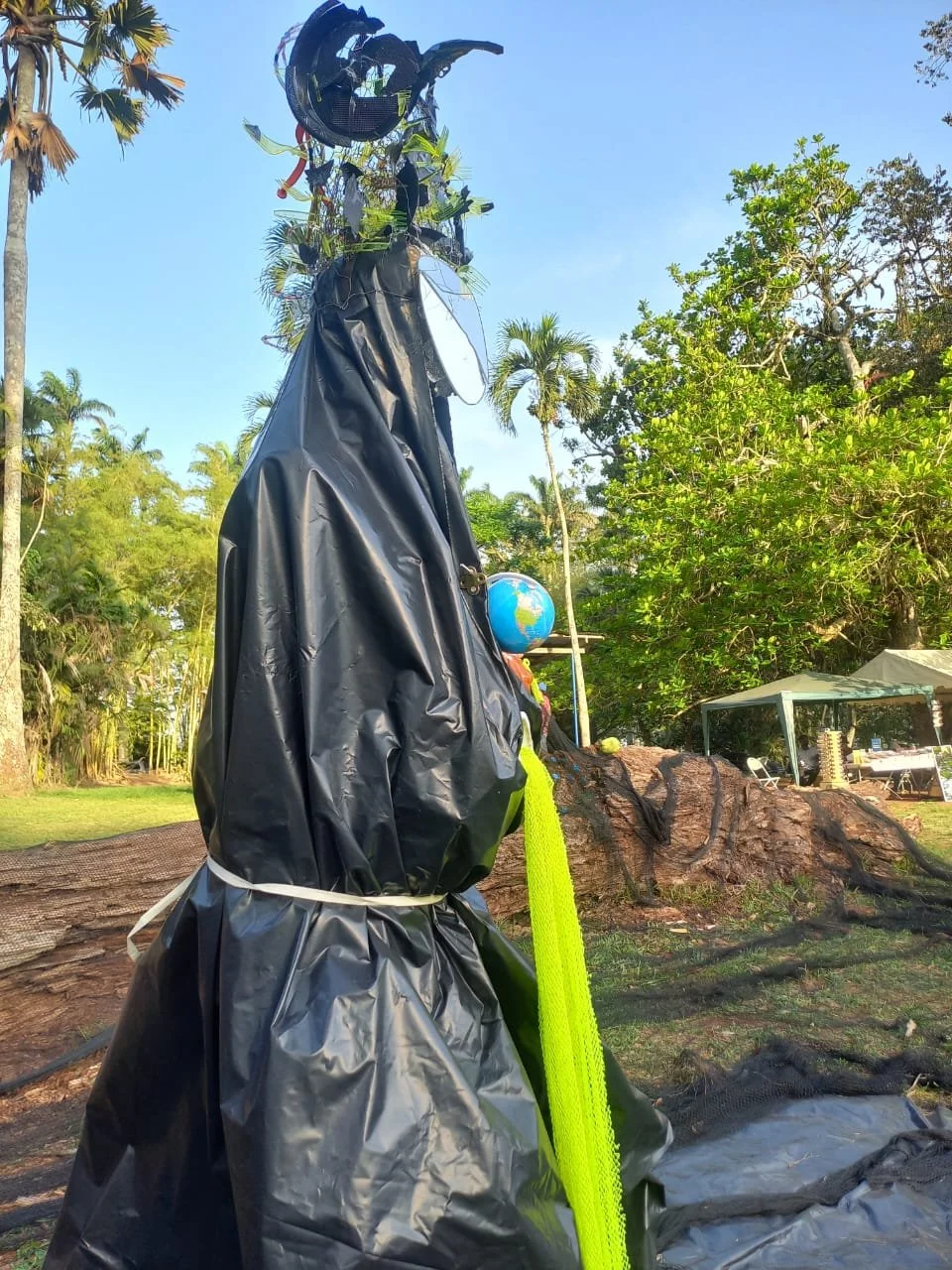
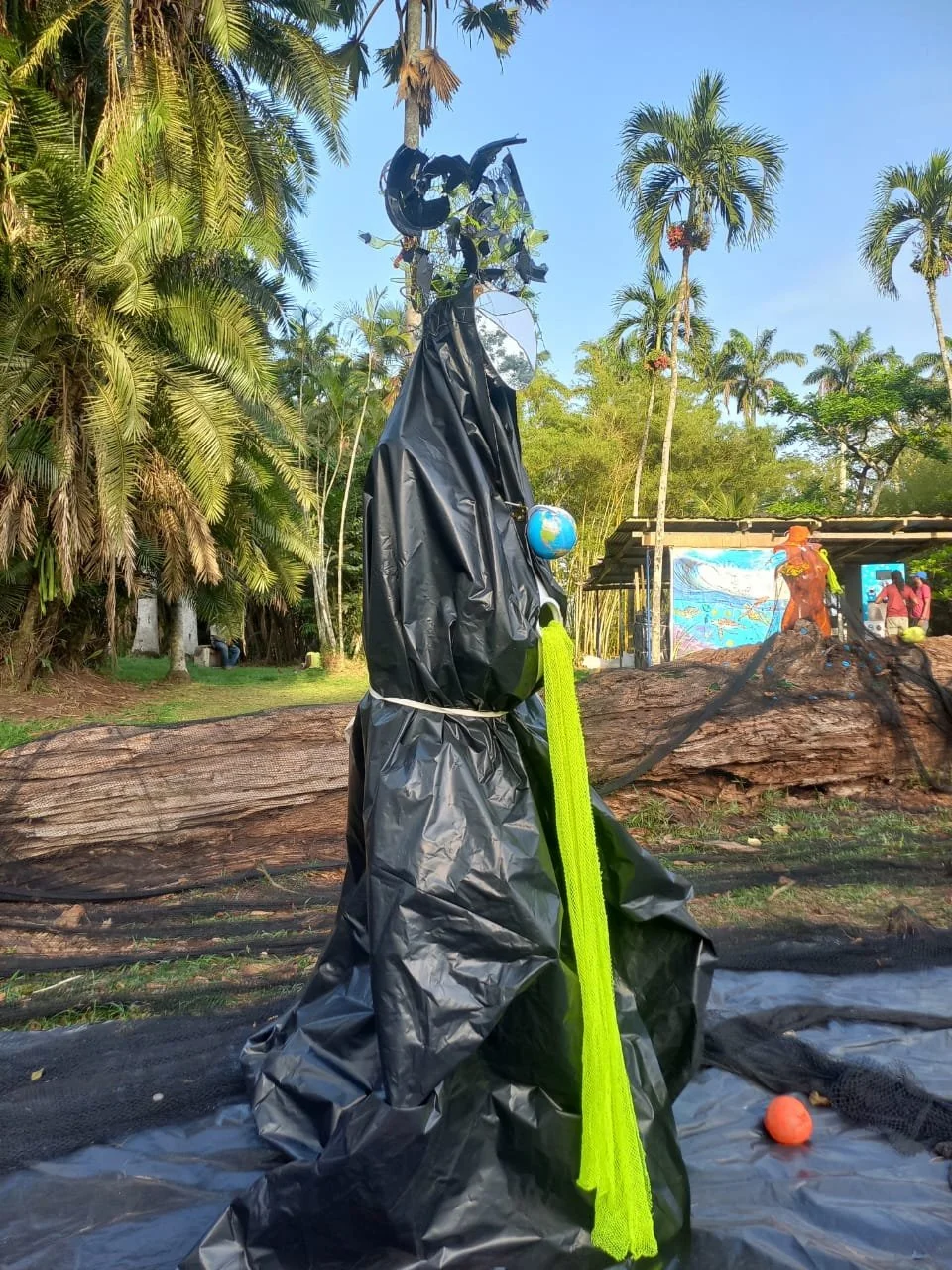
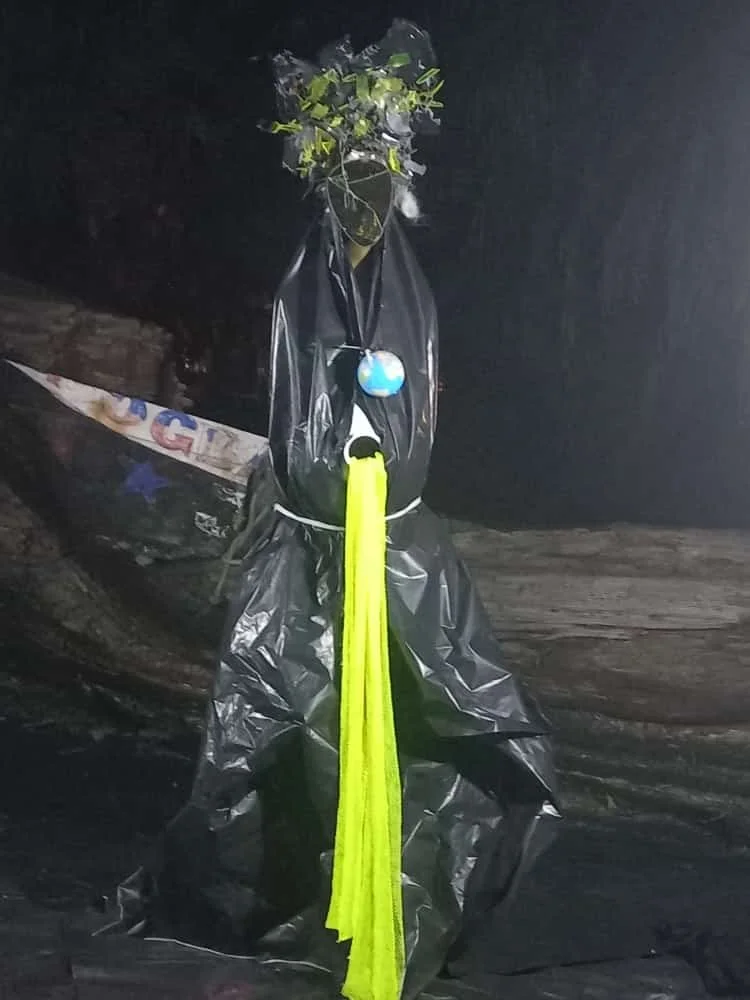
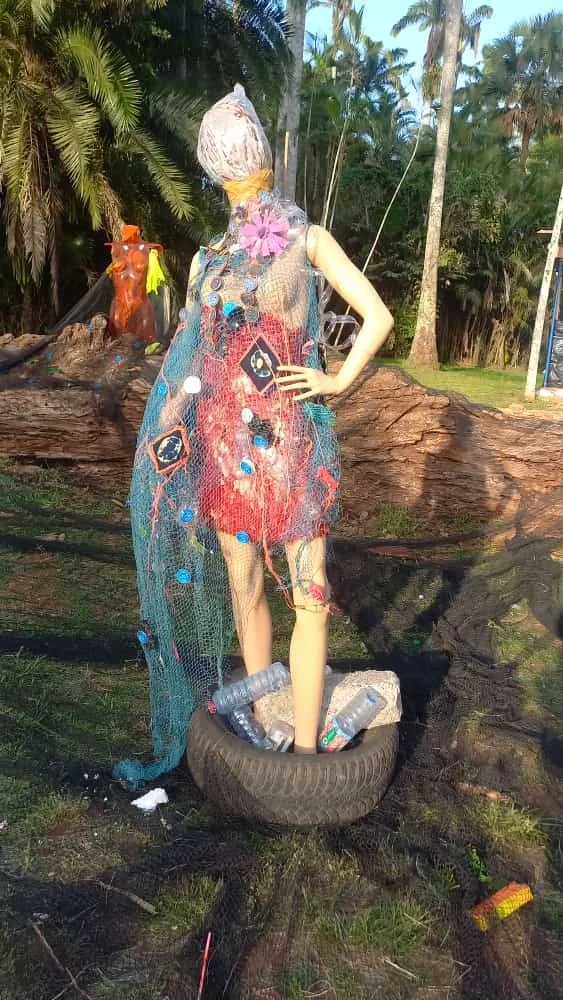
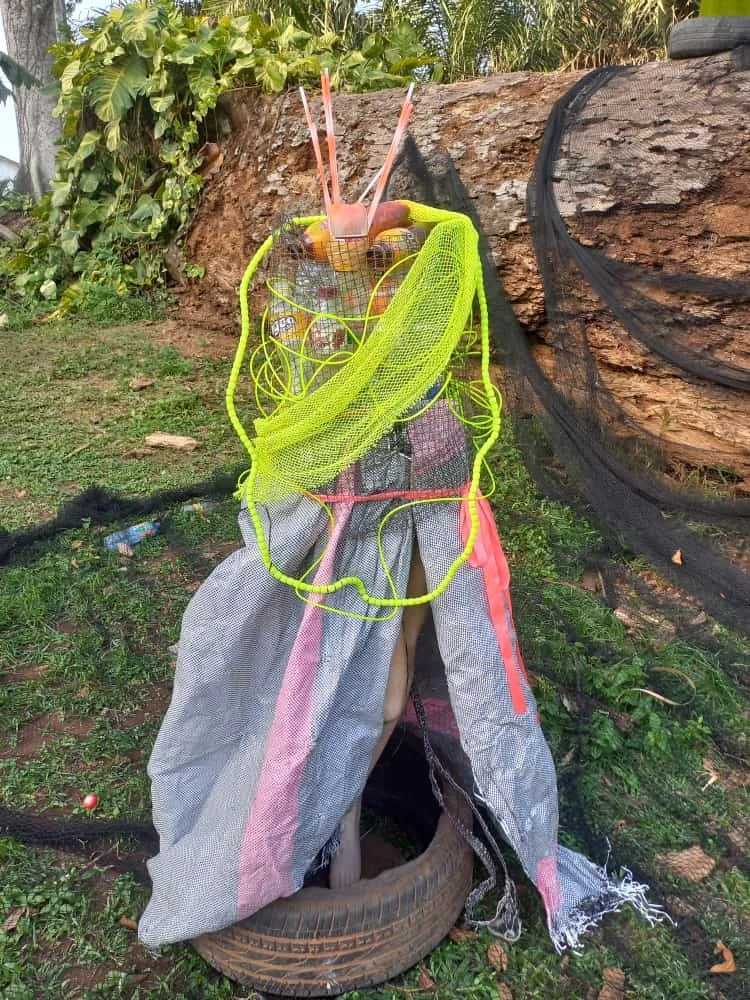
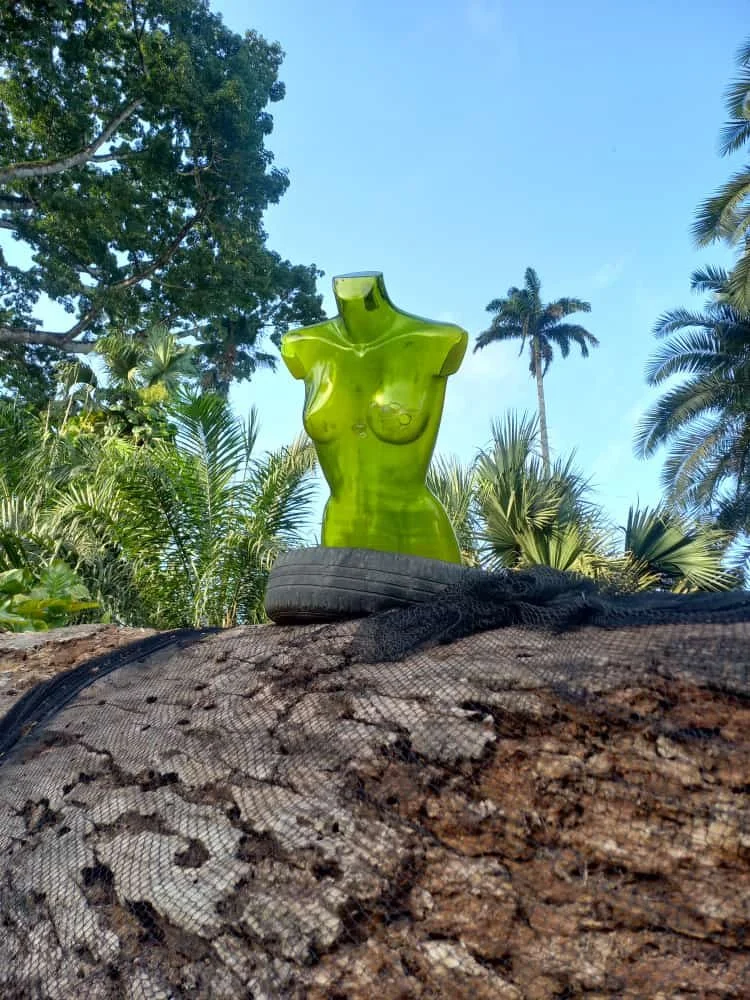
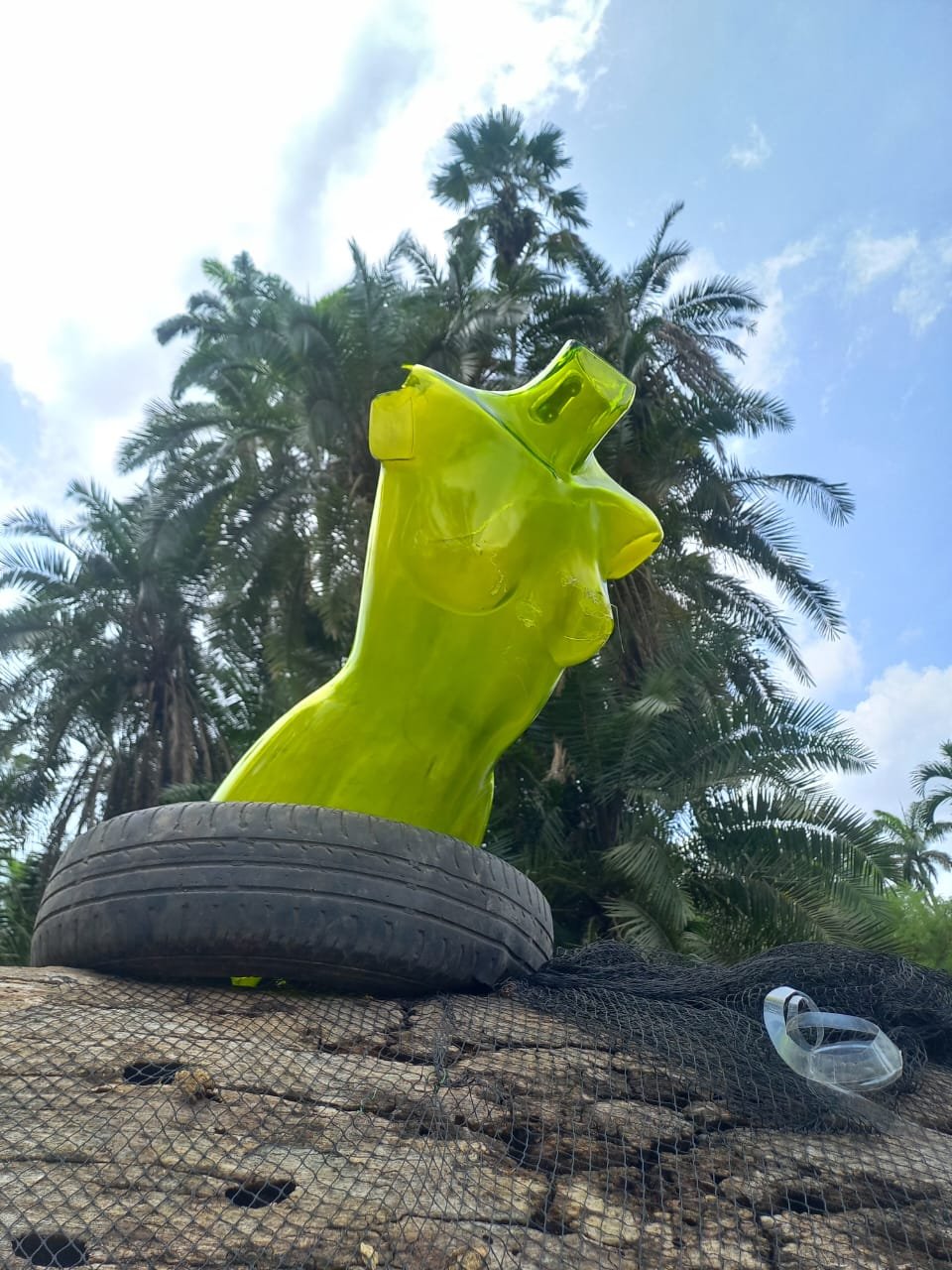
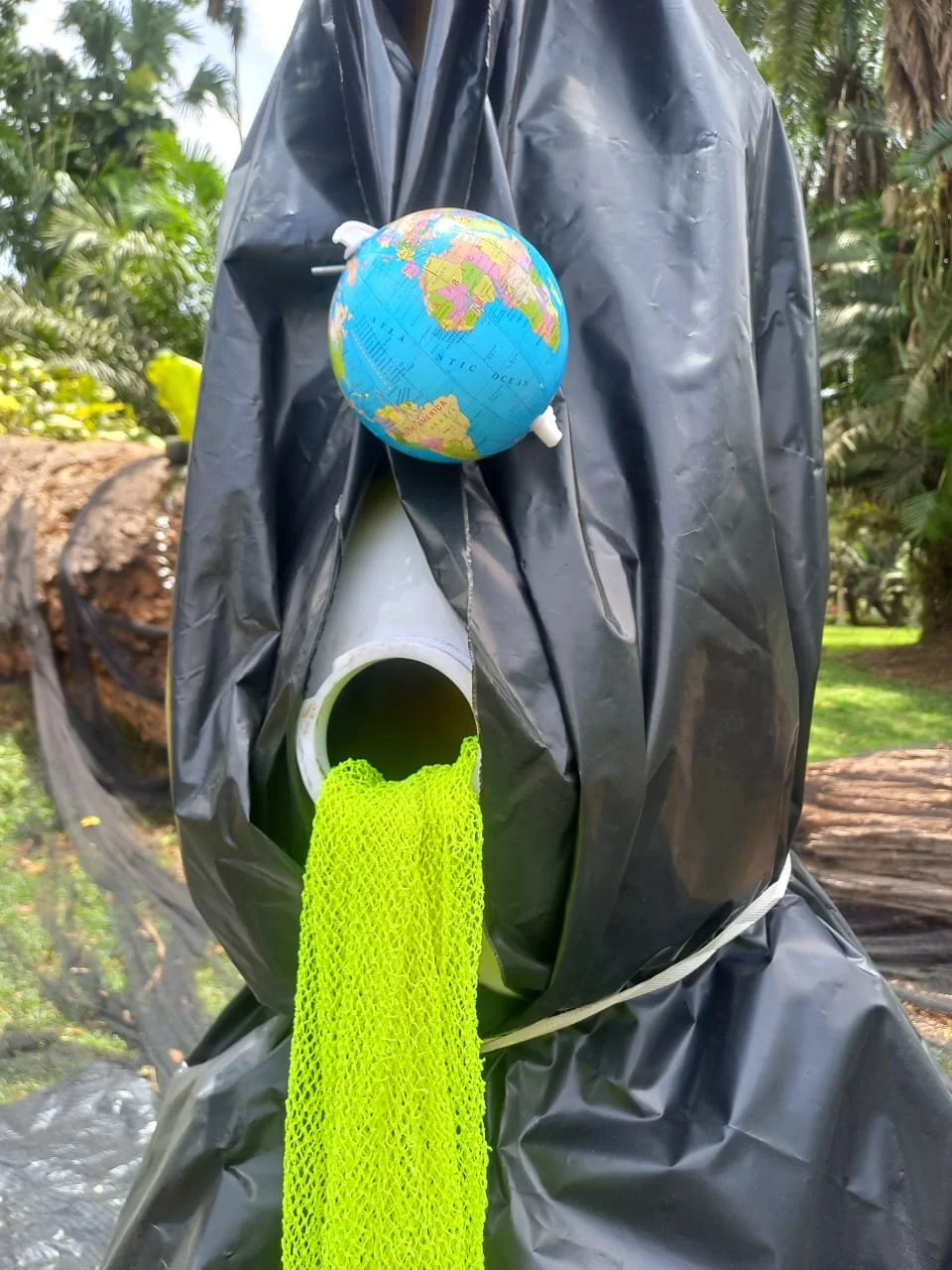
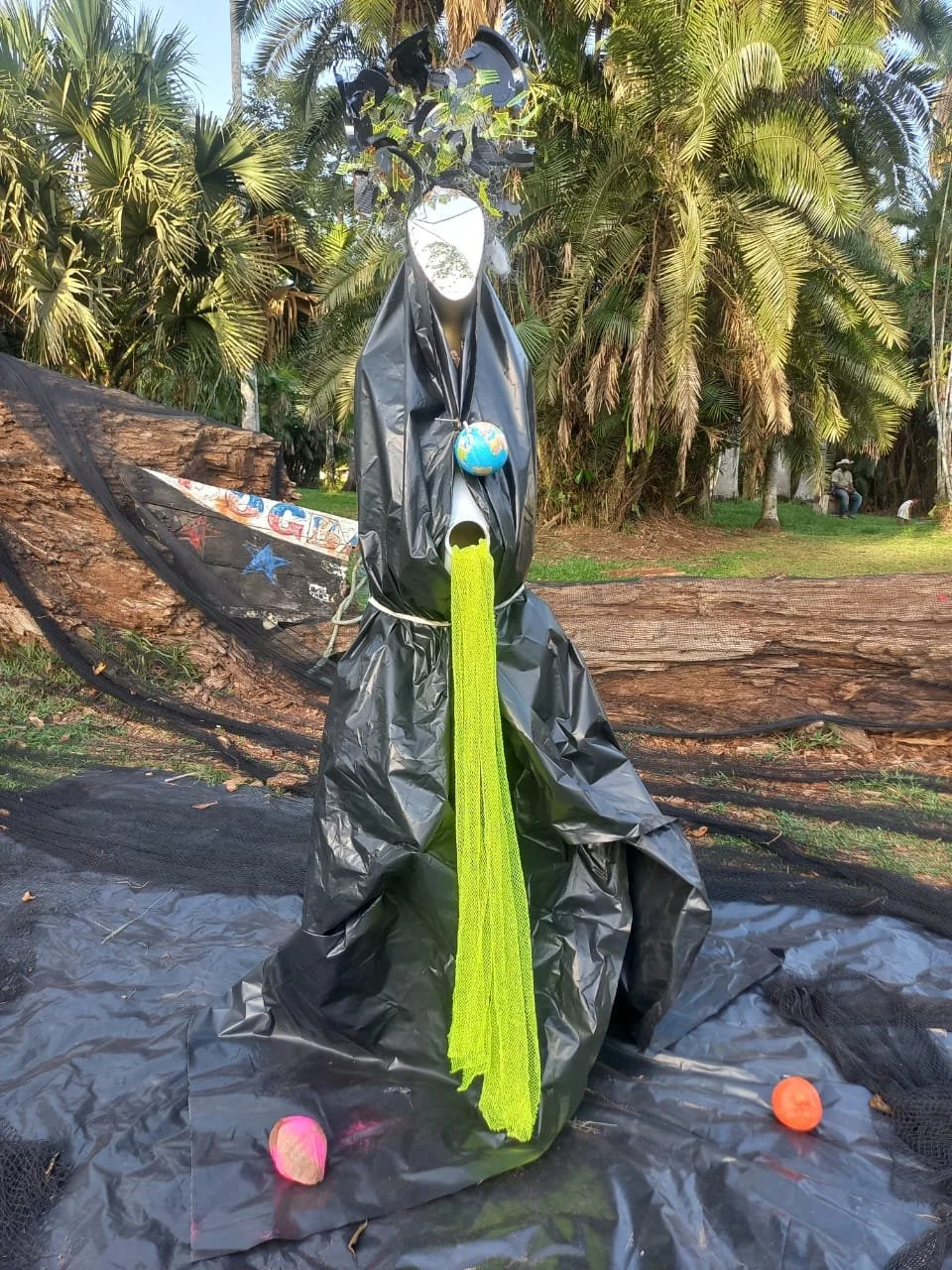
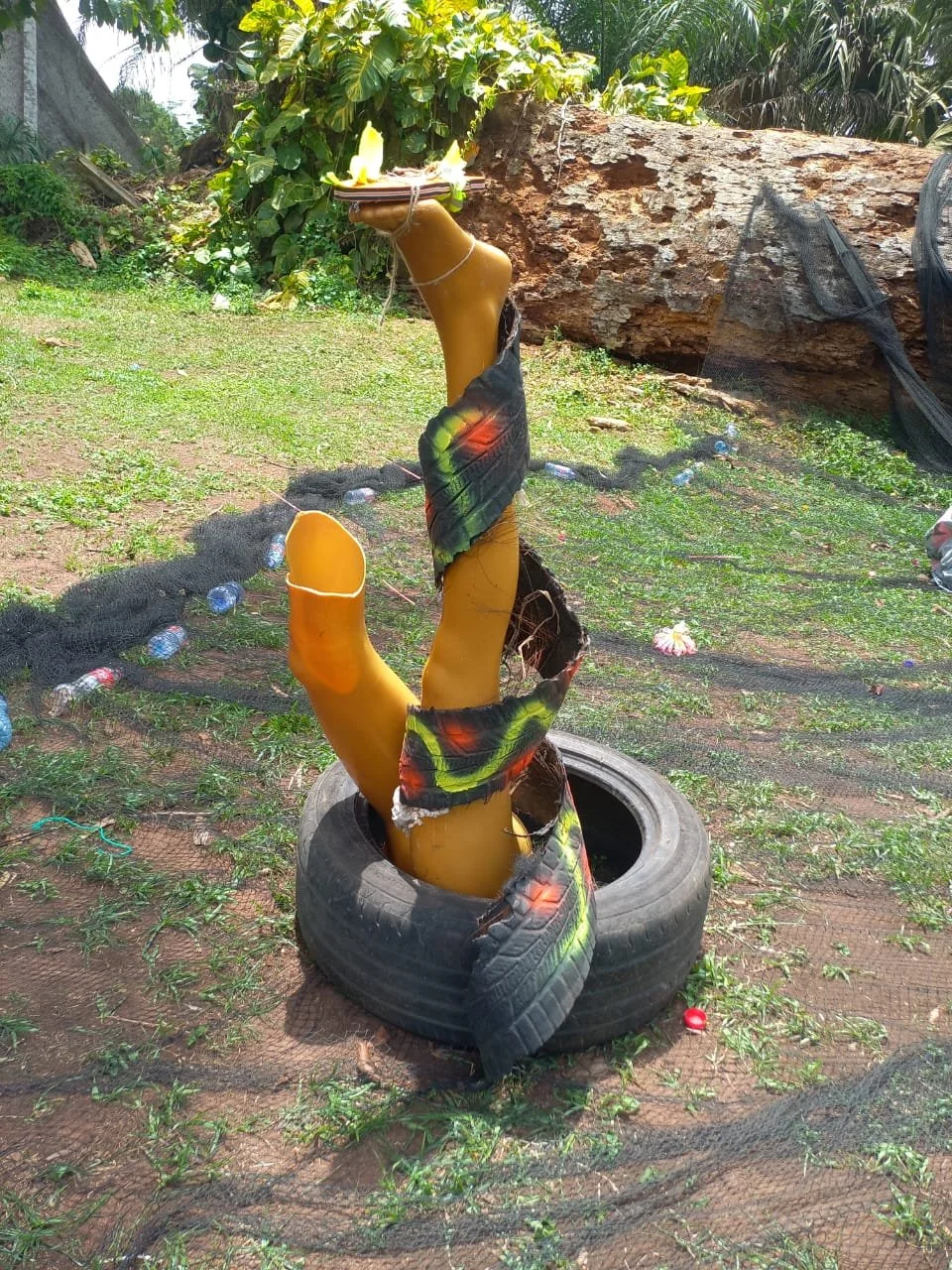
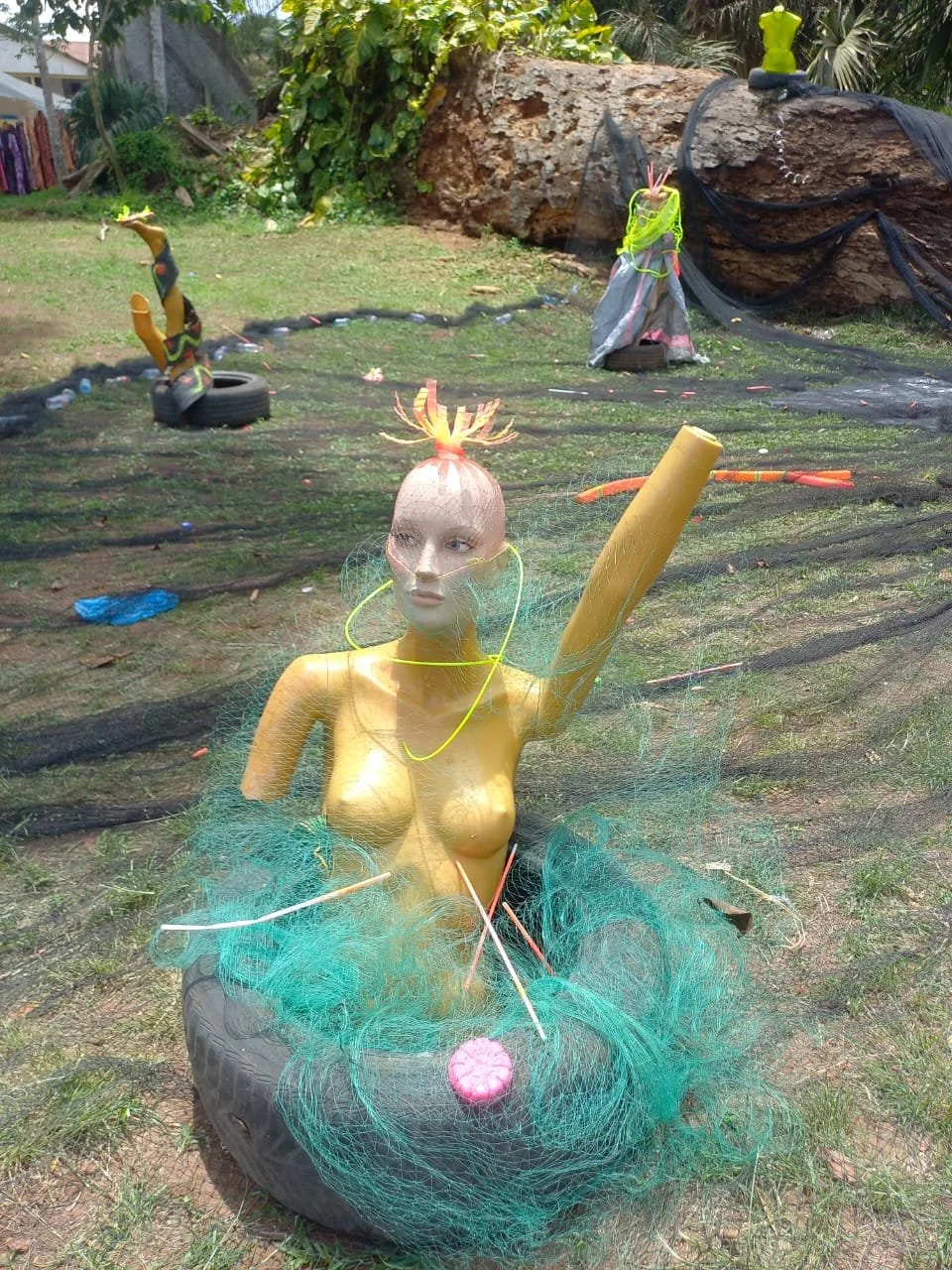
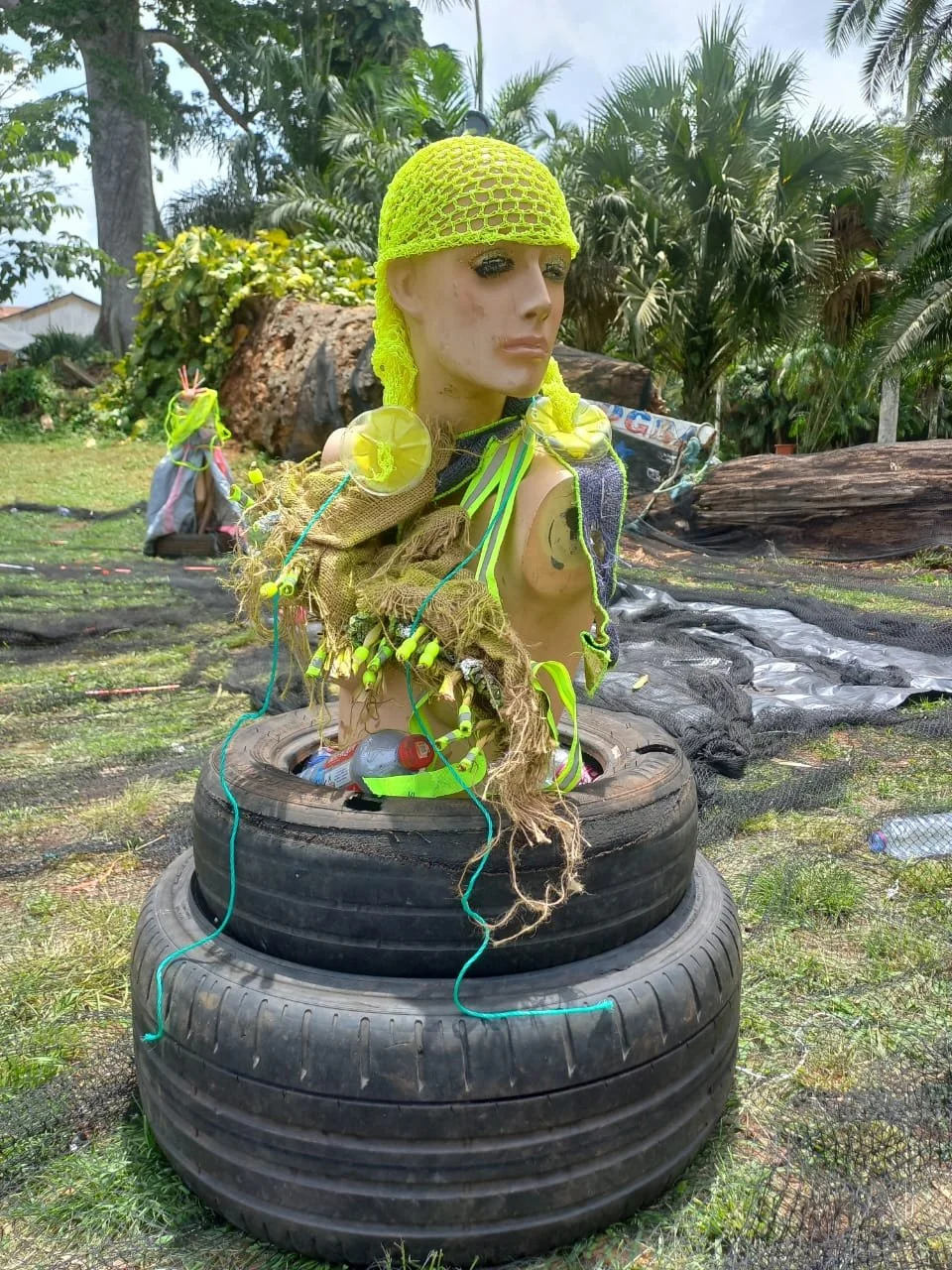
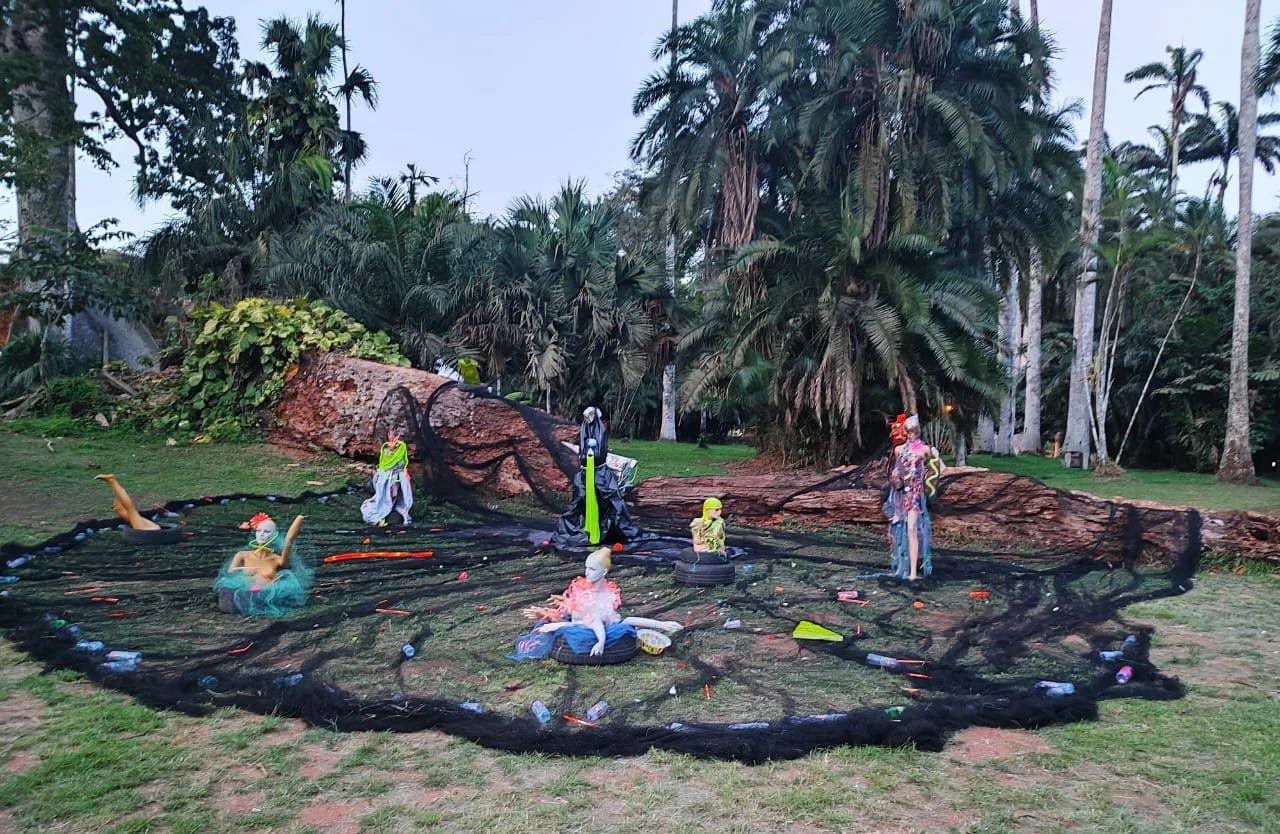
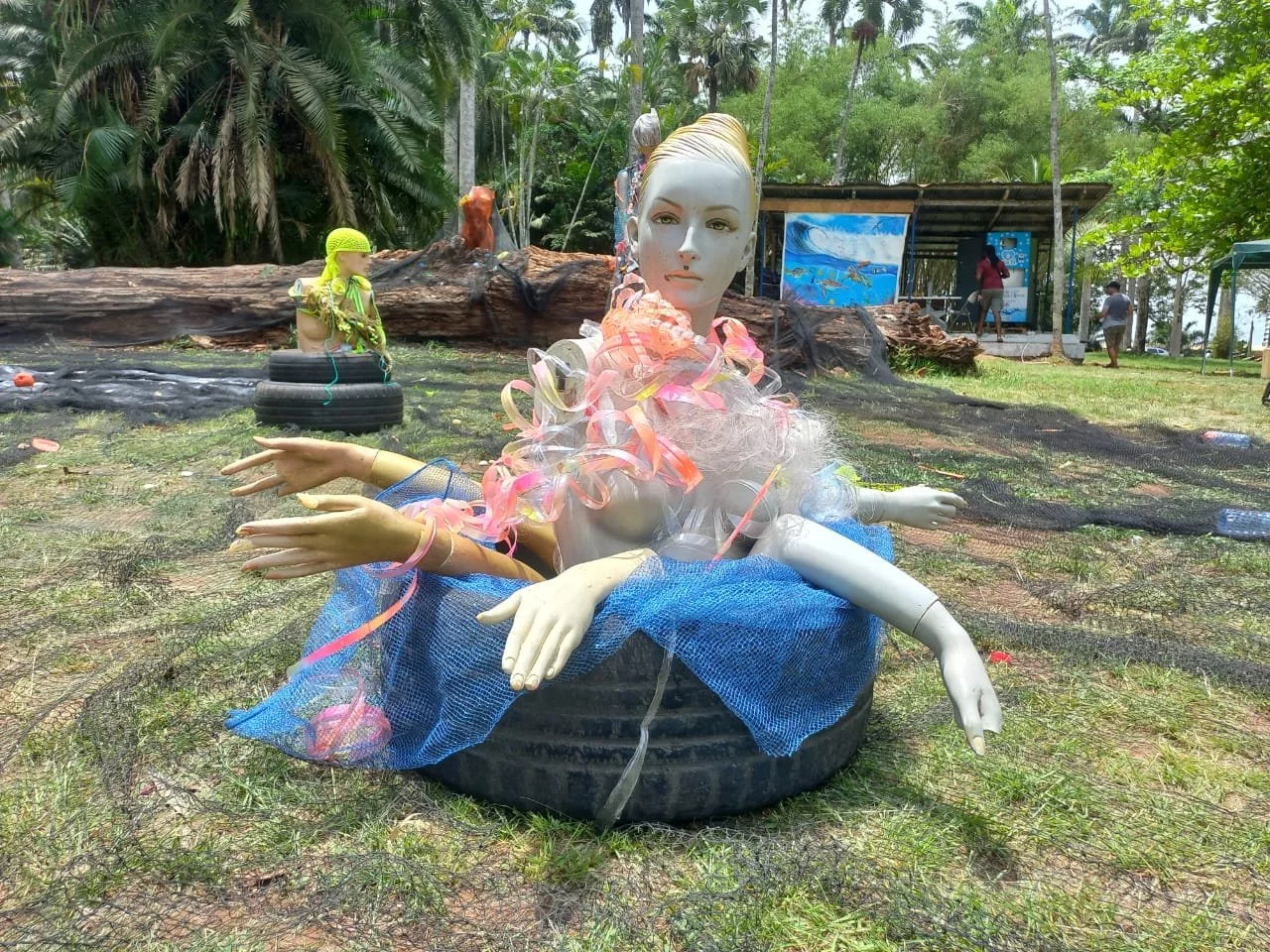
In a violently thought-provoking exhibition, Beatrice Bee Arthur joins the many artistic voices which seek to hold up a mirror to society and shed more light on one of the darkest and greatest environmental challenges of our time: plastic pollution and the deadly impact of nylon fishing nets on marine life.
Dubbed "Plastic Presence of a Fluorescent Future" this expo serves as a poignant reminder of the urgent need to address the pervasive issue of oceanic degradation and ubiquitous presence of plastic bottles. Through the medium of a spectacular installation comprised of nylon fishing nets, broken mannequins, plastic forks ,straws, plates, dried coconuts, shells, plastic bottles, polyethylene sheets, a wooden board from a broken canoe, flattened aluminium coffee capsules and a broken mirror, Bee Arthur offers a unique perspective on the detrimental effects of human activity and plastic pollution on marine ecosystems and the planet as a whole.
Visitors to the Mother Earth Festival 2024 on the grounds of Aburi Botanical Gardens are confronted with powerful imagery depicting the stark reality of plastic waste choking our oceans, destroying our marine life and the devastating consequences for our environment. The mannequins, draped in discarded plastics, nylon nets and upcycled plastic products, serve as tangible reminders of the sheer volume of debris that finds its way into our lives and seas each day, and the extent to which we have become indifferently accustomed to its omnipresence.
Yet, amidst the somber portrayal of our plastic-laden present, Arthur offers glimpses of hope and resilience as she juxtaposes black nylon fishing nets with a vision of a fluorescent future where innovation and collective action lead to sustainable solutions and a brighter future. Through this captivating fashion and multimedia installation Bee Arthur explores innovative approaches to waste management, recycling, upcycling and eco-friendly alternatives.
The “Plastic Presence of a Fluorescent Future” expo not only serves as a platform for artistic expression through fashion but also sparks crucial conversations about consumer habits, corporate responsibility, and the importance of conservation efforts. Arthur hopes that visitors who engage with the installation will have discussions about the issues raised and explore actionable steps towards a more sustainable future.
"Plastic Present/Fluorescent Future" challenges us to confront the reality of our impact on the oceans while inspiring us to envision a brighter, more environmentally conscious tomorrow. It is a call to action for individuals, communities, and policymakers to take decisive steps towards preserving our planet's precious marine ecosystems for generations to come.
Plastic Present/ Fluorescent Future Expo is will last through the 27th and 28th of April 2024 as part of Mother Earth Festival organised by Green Butterfly Market. It is supported by Chaint Afrique/NetCycle & Creation Africa Ghana
SHARE THIS STORY

The 31st New York African Film Festival lineup announced
NEW YORK — Film at Lincoln Center (FLC) and African Film Festival, Inc. (AFF) will celebrate the 31st edition of the New York African Film Festival (NYAFF) from May 8 to May 14. Since its inception in 1993, the festival has been at the forefront of showcasing African and diaspora filmmakers’ unique storytelling through the moving image. This year’s theme, “Convergence of Time,” explores the intersection of historical and contemporary roles played by individuals representing Africa and its diaspora in art. With more than 50 films from more than 25 countries, the festival invites audiences to delve into the convergence of archival and modern experimentalism, transcending both space and time.
FOR IMMEDIATE RELEASE
FILM AT LINCOLN CENTER AND AFRICAN FILM FESTIVAL ANNOUNCE THE COMPLETE LINEUP FOR THE 31ST NEW YORK AFRICAN FILM FESTIVAL, MAY 8–14
Featuring the North American premiere of Tolu Ajayi’s Over the Bridge
and the New York premiere of Dibakar Das Roy’s Dilli Dark
Harold George’s short Making Men
to be accompanied by the director’s dance troupe, a first-time event for NYAFF
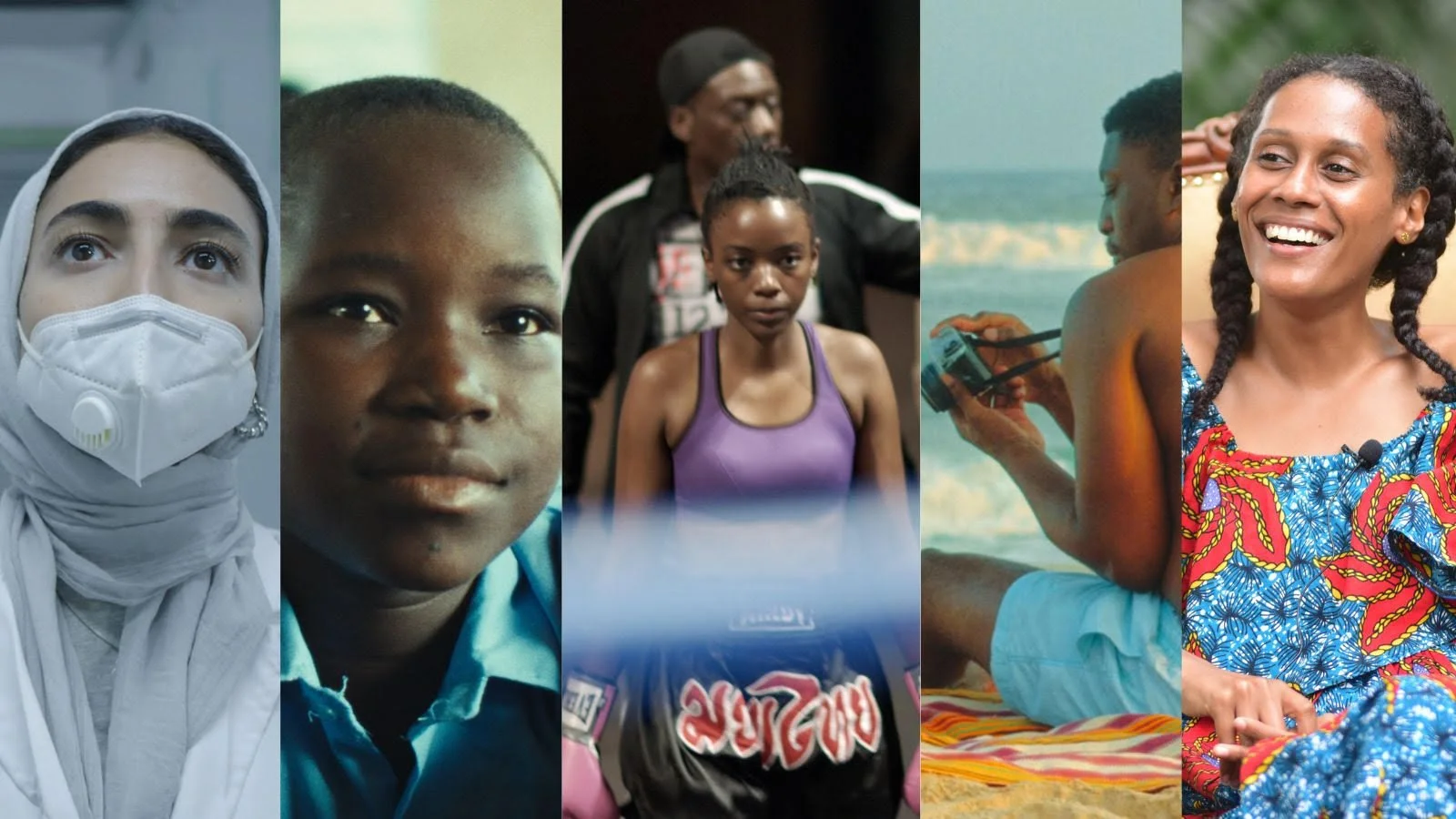
Mirah, After the Long Rains, Fight Like a Girl, Dynamite, and Teacher Don’t Teach Me Nonsense
NEW YORK — Film at Lincoln Center (FLC) and African Film Festival, Inc. (AFF) will celebrate the 31st edition of the New York African Film Festival (NYAFF) from May 8 to May 14. Since its inception in 1993, the festival has been at the forefront of showcasing African and diaspora filmmakers’ unique storytelling through the moving image. This year’s theme, “Convergence of Time,” explores the intersection of historical and contemporary roles played by individuals representing Africa and its diaspora in art. With more than 50 films from more than 25 countries, the festival invites audiences to delve into the convergence of archival and modern experimentalism, transcending both space and time.
“The 31st New York African Film Festival has so much to offer in terms of honoring the origins of homegrown, beloved African and diaspora film industry, as well as celebrating their references in modern masterpieces,” said Mahen Bonetti, NYAFF Founder and AFF Executive Director.
The Opening Night selection is the North American premiere of Over the Bridge, Tolu Ajayi’s feature about corruption in Lagos as Folarin, a successful investment banker whose company is contracted by the government to oversee a high-profile project, searches for answers when the project goes awry, which leads him to a remote fishing village to put the pieces of the mystery together.
The Closing Night selection features the New York premiere of Dibakar Das Roy’s riveting and uproarious Dilli Dark, which shows the boundaries Nigerian MBA candidate Michael Okeke will push to succeed as he lives a double life as a student and drug dealer amidst the backdrop of India’s history of colonialism, racism, and xenophobia.
The festival will also host the North American premieres of Matthew Leutwyler’s Fight Like a Girl, depicting the true story of a young Congolese woman (Ama Qamata from the hit Netflix series Blood and Water) who finds liberation after joining an all-women’s boxing club in Goma, led by an ex-child-soldier coach; and Oyiza Adaba’s biographical documentary DELA: The Making of El Anatsui, which delves into the life of El Anatsui, the world-renowned sculptor from Ghana, and triumphantly acknowledges the importance of Africa’s rich artistic and cultural heritage.
Three festival features are U.S. premieres: Yajaira De La Espada’s documentary Teacher Don’t Teach Me Nonsense, showcasing the life and empowering legacy of the founding father of Tanzania, Mwalimu Julius Nyerere, and the recent presidency of Dr. John Pombe Magufuli; Clive Will’s Time Spent with Cats Is Never Wasted, a stark piece of slow-burning cinema featuring a small-town worker who finds success after selling a helicopter he made out of scrap and found objects, while having to fight off the local townsfolk who insist on a cut of the profits; and Perivi Katjavivi’s Under the Hanging Tree, a hard-boiled crime thriller following police officer Christina, as she seeks to uncover details of a murder on a German-owned farm in present-day Namibia, set against echoes of the country’s history of genocide.
Five features making their New York debut are: Damien Hauser’s After the Long Rains, a touching account of 10-year-old Aisha, who longs to become a fisher so she can travel to Europe, and befriends an alcoholic fisherman who promises to teach her; Uche Aguh’s musical romance Dynamite, which finds musician Kiki in an unhappy marriage with her husband/manager and beginning a whirlwind romance with a replacement bassist in her band; Osvalde Lewat’s documentary MK: Mandela’s Secret Army, the little-known story of the military avant-garde founded by global icon Nelson Mandela, screening for the 30th anniversary of South African Freedom Day; This Is Lagos, Kenneth Gyang’s dark comedy featuring aspiring rapper Stevo navigating the dangers of his criminal past after an escape from a heist goes wrong; and The Rhythm and the Blues, the true-life story of legendary bluesman Eddie Taylor and his fight against obscurity, industry corruption, and cultural appropriation, starring actor and musician Leon.
An exciting addition to this year’s festival is La Chapelle, Jean-Michel Tchissoukou’s surreal take on the relationship between Africa, Christianity, and colonialism. A classic feature shot in 1980s Congo, this enchantingly bizarre and bitingly funny satire leaves one questioning the relevance of space and time.
Among many shorts premiering at NYAFF, not to be missed is Harold George’s Making Men. In a first for NYAFF, the screening of George’s film will be accompanied by a live dance performance from George and members of his dance troupe, as well as a discussion afterwards. A brilliant question of masculinity, visually probed via imagery of traditional customs, the film supplies modern questions with ancestral answers. Another, Love Taps, directed by Derrick Woodyard and executive produced by Spike Lee, offers another comment on masculinity, secrets, and family ties.
NYAFF will present an “Art & Activism” Town Hall at The Africa Center on Thursday, May 2, at 6:00pm, featuring artists Christian Nyampeta, Adama Delphine Fawundu, and Taiwo Aloba, moderated by cultural anthropologist, curator, and scholar Paulette Young.
This year’s Master Class presented by AFF will feature veteran independent filmmaker Ngozi Onwurah, who will discuss the craft of utilizing cinema as a tool for unmasking the dynamics of the socioeconomic status quo. The event takes place in the Amphitheater at the Elinor Bunin Munroe Film Center with tickets available through africanfilmny.org.
“A litany for past suns labeled rituals / A star lit any and all possible futures,” a digital art exhibit of the work of Zainab Aliyu, will run in the Amphitheater at the Elinor Bunin Munroe Film Center May 9–14 beginning 30 minutes before the first NYAFF screening of the day. The exhibit is inspired by Nikki Giovanni’s “A Litany for Peppe” (1970) and Audre Lorde’s “A Litany for Survival” (1978), two poems written years apart, yet converging thematically through time. As the title suggests, the piece is structured as a litany, a repetitive and rhythmic form often used in ceremonial settings. In this context, Aliyu’s litany serves as a call to action for her communities to alchemize their shared histories toward shared futures.
Tickets go on sale Thursday, April 11 at noon ET. Ticket prices are $17 for the general public; $14 for students, seniors, and persons with disabilities; and $12 for FLC Members. See more and save with a 3+ Film Package ($15 for general public; $12 for students, seniors (62+), and persons with disabilities; and $10 for FLC Members), the $99 All-Access Pass, or the $79 Student All-Access Pass. Contact info@africanfilmny.org for information about attending the Opening Night Party.
The festival continues at Maysles Documentary Center in Harlem from May 17 to 19 and culminates at Brooklyn Academy of Music under the name Film Africa from May 24 to May 30 during Dance Africa.
The programs of AFF are made possible by the generous support of the National Endowment for the Arts, New York State Council on the Arts, New York Community Trust, NYC Department of Cultural Affairs, Bradley Family Foundation, Domenico Paulon Foundation, NYC & Company, French Cultural Services, Manhattan Portage, Black Hawk Imports, Essentia Water, South African Consulate General, National Film and Video Foundation, and Motion Picture Enterprises.
FILMS & DESCRIPTIONS
The Opening Night premiere of Over the Bridge will take place at
the Walter Reade Theater (165 W. 65th Street).
All other films will screen at the Elinor Bunin Munroe Film Center (144 W. 65th Street).
Opening Night
Over the Bridge
Tolu Ajayi, 2023, Nigeria, 99m
English and Yoruba with English subtitles
North American Premiere
Folarin is an accomplished investment banker with a beautiful wife and a life most people can only dream of. When a high-profile government project his company was hired to manage goes awry, he starts to question everything he’s ever known to be true. After going missing, he discovers himself in a remote fishing village and starts to put together the missing pieces—but will he ever find his way back home?
Wednesday, May 8 at 6:30pm – Q&A with Tolu Ajayi
Thursday, May 9 at 2:00pm
Closing Night
Dilli Dark
Dibakar Das Roy, 2023, India, 100m
English, Hindi, Yoruba, Pidgin, Bengali, and Gujarati with English subtitles
New York Premiere
New Delhi is not as “new” as the name might suggest. It is an ancient, cosmopolitan city that has seen many rulers, invaders, and settlers over the centuries. It is a city that is multicultural, yet hostile—forever playing out the battle between insider and outsider. But though Delhi has seen many kings, one can say that the city is the only true monarch, a god in itself. Michael Okeke is one of the many Nigerians living in the city, part of a larger African diaspora that is often looked down upon by the locals and accused of being criminals, cannibals, and more. He is studying for his MBA and dreams of joining the booming corporate sector in India, but in the meantime works as a small-time drug delivery guy to make ends meet. Living on the fringes of society, the only person who takes him in is a sketchy woman by the name of Maansi, someone who does not discriminate between black and white—but also seems to find no difference between right and wrong, a sentiment being echoed in every aspect of the city’s DNA. As Michael navigates this tricky landscape and tries to please the god that is Delhi, we are taken on a journey into Indian society’s tricky relationship with race, color, and identity.
Tuesday, May 14 at 8:15pm – Q&A with Dibakar Das Roy
After the Long Rains
Damien Hauser, 2023, Switzerland/Kenya, 90m
Swahili with English subtitles
New York Premiere
Ten-year-old Aisha is given a school assignment to figure out what she wants to be when she grows up. She soon realizes that everyone is taking over their parents’ businesses and professions, but she has bigger dreams: She wants to go to Europe and become an actress. Her plan is to become a fisher so that she can sail to Europe, but her mother thinks that fishing should be left to men. Despite all this, she meets an alcoholic fisherman named Hassan, who promises to teach her how to fish.
Preceded by
Timis / Dusk
Awa Moctar Gueye, 2023, Senegal, 16m
Wolof with English subtitles
New York Premiere
Pa Kong-Kong is a mysterious man who lives alone in a deserted, gloomy market in the suburbs of Kajar. Rumor has it he tortures little thieves, runaways, and naughty children. Binta, a curious and courageous girl, decides to confront Pa Kong-Kong in the middle of the night, determined to prove to her friends that girls have the bravery to lead.
Sunday, May 12 at 1:00pm – Q&A with Damien Hauser
Monday, May 13 at 2:30pm
La Chapelle
Jean-Michel Tchissoukou, 1980, Congo, 80m
Lingala and French with English subtitles
Set in 1930s Congo, director Jean-Michel Tchissoukou’s comedy La Chapelle humorously portrays the conflicts between African traditions and the Catholic Church during the construction of a chapel. Tensions rise as the village priest clashes with a young teacher, while the villagers navigate the establishment of a school and chapel, frustrating the parish priest.
Preceded by
Jabari
Francis Y. Brown, 2023, Ghana, 6m
English
New York Premiere
Jabari, an orphan raised by seer Hem-Netjer, grows to uncover the mystery behind his birth and the demise of his parents. He takes on mystical giants summoned from the dark realms of the underworld in the course of fulfilling his discovered purpose and saving the innocent people of Aksum.
Thursday, May 9 at 5:30pm
Friday, May 10 at 3:00pm
DELA: The Making of El Anatsui
Oyiza Adaba, 2023, Nigeria, 120m
English, French, and Ewe with English subtitles
North American Premiere
DELA: The Making of El Anatsui is a biographical documentary delving into the life of an extraordinary artist, El Anatsui, the world-renowned sculptor from Ghana. His inner musings find vivid expression in art that defies borders and limitations, reshaping the very concept of sculpture. Oyiza Adaba’s directorial debut triumphantly acknowledges and emphasizes the importance of Africa’s rich artistic and cultural heritage in the pantheon of global contemporary art.
Sunday, May 12 at 3:30pm – Q&A with Oyiza Adaba
Dynamite
Uche Aguh, 2023, Ghana, 60m
English
New York Premiere
Kiki, a songstress managed by her controlling and strong-willed husband Mark, is set to release her latest album when a replacement bassist, Kofi, comes in for a rehearsal with Kiki and her band. Sparks immediately fly, and Kiki is forced to make a difficult decision when she finds herself thrust into this new love affair.
Preceded by
Last Night
Peter Oti Asamoah, 2023, Ghana, 17m
No dialogue
World Premiere
A man’s desire for a beautiful stranger leads him down a dark and dangerous path, where he discovers a terrifying secret lurking beneath the surface. As he searches for the woman who stole his heart, a battle for survival ensues, and the man’s fate hangs in the balance as he fights to uncover the truth about the woman and her secrets. This gripping tale will keep you on the edge of your seat until the shocking finale.
Friday, May 10 at 5:45pm – Q&A with Uche Aguh
Tuesday, May 14 at 2:00pm
Fight Like a Girl
Matthew Leutwyler, 2023, Rwanda/Democratic Republic of the Congo, 118m
English and Swahili with English subtitles
North American Premiere
A young Congolese woman (Ama Qamata from the hit Netflix series Blood and Water) forced to work in an illegal mineral mine escapes her captors and finds a new life for herself after joining a renowned all-women’s boxing club in the border city of Goma. Based on the true story of an East Congo all-women’s boxing club and their ex-child-soldier coach, Fight Like a Girl was shot on location in the Democratic Republic of the Congo and Rwanda.
Friday, May 10 at 8:15pm – Q&A with Ama Qamata
Making Men with Discussion + Dance Performance
Antoine Panier, 2019, Belgium/Zimbabwe, 60m
English
New York Premiere
Examining the question of masculinity, this dance film zooms in on four individuals in the process of becoming men. As is expected, they proceed unquestioningly into manhood through various stages of their lives, adopting the clearly coded characteristics dictated by society. However, they’re oppressed by a feeling of unease in the very depths of their being, feeling uncertainty but also something else, harder to define…. Shot in the breathtaking landscape of Zimbabwe, Making Men features strong and rhythmical choreography but also special camerawork that intensifies emotions inspired by the movement. This special hour-long event will feature the New York premiere of the 24-minute film Making Men, followed by a discussion and a special dance performance by Harold George and Berrette Macaulay.
Saturday, May 11 at 1:30pm at Elinor Bunin Munroe Film Center Amphitheater – Q&A and live dance performance by Harold George and Berette Macaulay
MK: Mandela’s Secret Army
Osvalde Lewat, 2022, South Africa/France, 57m
English, German, and French with English subtitles
New York Premiere
MK: Mandela’s Secret Army chronicles the lives of former members of uMkhonto we Sizwe (MK), the armed wing of the African National Congress. The documentary is an intergenerational reflection on the all-consuming call to take up arms for South Africa’s liberation, heeded by young men and women—some barely in their teens—who gave up their lives and any future to risk death for the dream of a free South Africa. The young guerilla fighters of yesteryear are now aging veterans. How will history remember them? Where are they now, and how have they reconciled a past committed to liberation with a present-day reality that their contribution to a free South Africa has almost been forgotten?
Preceded by
Neighborhood Alert
Ngozi Onwurah, 2024, U.S., 30m
English
North American Premiere
Inspired by a true story, Neighborhood Alert tells the story of a Black mother that is forced to take extraordinary action in order to ensure the safety of her teenage son.
Monday, May 13 at 5:30pm – Q&A with MK: Mandela’s Secret Army producer Zola Maseko and Ngozi Onwurah
The Rhythm and The Blues
Darryl Pitts, 2024, U.S., 59m
English
New York Premiere
A tale of passion, struggle, and the enduring power of music in an ever-changing world, The Rhythm and The Blues is the true-life story of legendary bluesman Eddie Taylor and his fight for recognition against obscurity, industry corruption, and the British Invasion’s cultural appropriation. Portrayed by actor and musician Leon, Taylor’s battles extend to his family, where an ambitious young wife and idolizing stepson complicate his quest for musical respect.
Preceded by
Funmi!
Siji Awoyinka, 2024, U.S., 12m
English
World Premiere
Funmi! is a visual praise song for a radiant soul on the occasion of his transcendence from man to melody, from brother to memory.
Saturday, May 11 at 5:30pm – Q&A with Darryl Pitts, Leon Robinson, Adesiji Awoyinka and Funmi Ononaiye's mom
Teacher Don’t Teach Me Nonsense
Yajaira De La Espada, 2023, U.S./Tanzania, 75m
English and Swahili with English subtitles
U.S. Premiere
Teacher Don’t Teach Me Nonsense is a documentary that gives voice to the growing trend of Afro-descendants moving back to the continent of Africa to live. It highlights the life of a professional educator and their journey through the Texas school system to find freedom amid issues surrounding school equity, racism, and miseducation. This is juxtaposed against the life and legacy of the founding father of Tanzania, Mwalimu Julius Nyerere, who enacted empowering policies such as Ujamaa and Education for Self-Reliance, and the life and times of Dr. John Pombe Magufuli, the president who denounced COVID-19. While the American education system has left more to be desired in teaching about African leaders such as Nyerere and Magufuli, this documentary dissects the issues of culturally unresponsive curricula and harmful teaching practices in the U.S., providing solutions centered on the history of independence and contemporary political policies of Tanzania. Teacher Don’t Teach Me Nonsense helps viewers to imagine a society governed by teachers and the positive impact they bring.
Co-presented by Cinema Tropical
Saturday, May 11 at 3:00pm – Q&A with Yajaira De La Espada
This Is Lagos
Kenneth Gyang, 2023, Nigeria, 91m
Pidgin and English with English subtitles
New York Premiere
Needing quick cash for studio time, aspiring rapper Stevo works for the psychotic Kojack and his “shoot-rob-run” gang. When their escape from a heist goes wrong, Stevo is separated from the gang. Luckily, he’s the one carrying the loot. In this dark comedy about a musician and his smart city girl, Stevo must navigate the dangers of his criminal past while pursuing his music dreams.
Sunday, May 12 at 9:00pm – Q&A with Kenneth Gyang
Time Spent with Cats Is Never Wasted
Clive Will, 2021, South Africa, 171m
Xhosa with English subtitles
U.S. Premiere
This stark piece of slow cinema captures one man’s battle with the world around him. Joe, a small-town abattoir worker, leads us on this allegorical journey. His dream to fly has impelled him to construct his own helicopter, a ramshackle assembly of scrap and found objects with no real practical capability aside from standing as a monument to his individuality. When an art buyer offers to purchase the flamboyant creation, it is a mixed blessing that causes a fracas among the people of his community, who unjustifiably demand a stake in the potential spoils. Joe is forced to fight off the avaricious townsfolk or lose all he has worked for.
Monday, May 13 at 8:15pm – Q&A with Clive Will
Under the Hanging Tree
Perivi Katjavivi, 2023, Namibia, 93m
English, German, Afrikaans, Otjiherero, and Khoekhoegowab with English subtitles
U.S. Premiere
In this first-of-its-kind film that dissects Namibia’s colonial past, Christina Mureti, a hard-boiled police officer from the city, is transferred to a small desert village in Namibia, where she uncovers a series of grisly animal sacrifices perhaps linked to the disappearance of the villagers’ children. Then a German farmer is found hung on the same tree where Christina’s ancestors were hung a century ago during Germany’s colonial war and genocide. It is only when Christina begins to learn about her people’s history and embraces some of its cultural wisdom that she will be able to solve the case.
Tuesday, May 14 at 5:30pm – Q&A with Perivi Katjavivi
NEW YORK AFRICAN FILM FESTIVAL SHORTS PROGRAMS:
ETERNAL SOULS, TRANSIENT BODIES (84m)
Sometimes It Was Beautiful
Christian Nyampeta, 2018, Sweden/Democratic Republic of the Congo, 3m
English and Swedish with English subtitles
A group of unlikely friends gather in a time-knot to watch and critique films made by Swedish cinematographer Sven Nykvist in the Congo between 1948 and 1952. Their discussion highlights enduring tensions surrounding social transformation, cultural property, and who has the right to representation.
Mångata
Maja Costa, 2023, Germany/Italy, 16m
English, Italian, and Yoruba with English subtitles
New York Premiere
As a child, little Alya is the only survivor of a tragic Mediterranean crossing from Africa to Europe. Many years later, as an astronaut on an important lunar mission, Alya loses communication with her base. She is confronted with her past trauma, and now Mångata—“the road to the moon,” which already saved her life once, will help her again.
For Those That Lived There
Shawn Antoine II, 2023, U.S., 6m
English
New York Premiere
For Those That Lived There weaves a visual tapestry, navigating the poignant impacts of gentrification, the displacement of Black legacies and the emergent migrant narratives.
The Prophecy
Rehanna Ngom, 2023, Senegal/U.S., 20m
English and Wolof with English subtitles
World Premiere
Tabara, a second-generation immigrant from Senegal living in America, suffers from the consequences of a rape, with her trauma manifested in nightmares where a monstrous creature, mutilated above recognition, mocks her. After unsuccessful therapy and advice from her traditional grandmother, Tabara decides to travel to Senegal for the first time to seek treatment from an unorthodox source—an African marabout, a holy man who is believed to have supernatural power.
The Last Bash
Diego de Jesus, 2023, Brazil, 24m
Portuguese with English subtitles
New York Premiere
Young people gather for a party before going into COVID-19 lockdown. They talk about music, arts, work, and the uncertain future, not knowing when they will be able to meet again.
The Wait
Imran Hamdulay, 2023, South Africa, 15m
English, Xhosa, and Afrikaans with English subtitles
World Premiere
After arriving at a Cape Town police station to report a crime, Mzu finds an elderly man has been overlooked while waiting at the back of the queue. The station is busy and the old man is confused with no one to assist him. Mzu takes it upon himself to see that this man is helped but quickly finds resistance from those ahead in line and the stifling bureaucratic system. The Wait is an allegory of South Africa’s complex society, where a sense of powerlessness and hope exist together at all times.
Thursday, May 9 at 8:30pm – Q&A with Rehanna Ngom and Christian Nyampeta
PERPETUAL CONNECTIONS (98m)
Love Taps
Derrick Woodyard, 2023, U.S., 14m
English
New York Premiere
A young boy trying to cope with his parents’ separation gains a new perspective of his father after discovering his affair with another man.
The Last Joint
Devin Powell, 2024, U.S., 7m
English
World Premiere
Iman indulges in a last joint before he takes a tolerance break. Once all of the herbs are gone, his phone starts to blow up. Texts from his supplier and from his love interest, Tori, pressure Iman to succumb to his environment and pursue more stress-relieving medicine. Through this journey Iman learns if the collapse of his discipline was worth it.
Jeanne
Antoine Paley, 2023, France, 12m
French with English subtitles
New York Premiere
Jeanne Duval, the mixed-race muse and partner of Charles Baudelaire has been forgotten by time and erased by history. But she refuses to remain silenced. In this short we see April 27, 1842: a day in the life of Duval and Baudelaire. As the day goes on, the weight of Charles’s words and needs becomes increasingly difficult for Jeanne to bear.
Mirah
Ahmed Samir, 2024, Egypt/Germany, 18m
English, Arabic, and German with English subtitles
World Premiere
Inspired by a true story, Mirah, an Egyptian immigrant living in Germany, finds a unique way to adapt to the fast life of Berlin. Through the fictional story of Mirah and her journey of self-discovery, the film invites audiences to question the social masks we wear to feel safe.
Papi
Ashley L. Canfield, 2024, U.S., 23m
English and Spanish with English subtitles
North American Premiere
Hector Jr. tries to navigate the complexities of reconciling his self-identity amidst his father’s COVID-19 crisis.
Addis, My Father
Kitoko Diva, 2023, France/U.S., 8m
Amharic and English with English subtitles
U.S. Premiere
A sense of the inevitable fills the silence between Addis and Rahel, a father and daughter, as they work tirelessly in their empty clock and antique repair shop.
Black Dreams
Chiemeka Offor, 2024, U.S., 16m
English
New York Premiere
In a realm of darkness, a young woman harnesses divine visions of God, light, and water to manifest her dreams, unlocking a mesmerizing inner universe of art, beauty, and movement beyond imagination. Black Dreams is a surreal, experimental documentary, an artistic testament to young, Black, queer artists in New York. As they peel back the layers, they unearth their own brilliance, discovering solace and kinship within their community, and a newfound sense that they are never truly alone. Black Dreams is evidence of our magic.
Saturday, May 11 at 8:00pm – Q&A with Ashley L. Canfield, Naima Hebrail Kidjo, Devin Powell, Ahmed Samir, and Derrick Woordward
VESSELS OF FORTITUDE (101m)
A Quiet Monday
Dika Ofoma, 2023, Nigeria, 22m
Igbo and English
U.S. Premiere
When the leader of a secessionist group in southeastern Nigeria is jailed, his loyalists mandate a compulsory “sit-at-home” on Mondays in protest. Siblings Kamnonu and Ogbonna face danger when they defy the Monday restrictions.
I Promise You Paradise
Morad Mostafa, 2023, Egypt, 25m
Arabic with English subtitles
New York Premiere
Following a violent incident, Eissa, a 17-year-old African migrant in Egypt is in a quest against time to save his loved ones—no matter what it takes.
Bege (Yearning)
Umar Turaki, 2023, Nigeria, 14m
Hausa with English subtitles
North American Premiere
When Sanda shows up at her front door years after their breakup, Amina plays the perfect host. As the conversation unfolds, they acknowledge the things that time has made plain. But do they have the courage to confront the elephant in the room? Bege (Yearning) shines a light on the oft-unspoken emotional toll that comes about when love falls out of bounds for medical reasons, and examines what happens when the body betrays the heart.
Cape Town Royalty Program
Max Fouchee, 2023, South Africa, 7m
English
New York Premiere
An ad presenter has to sell the dream of the South African city Cape Town as a luxurious yet cost-effective new home to wealthy Europeans. Once she realizes her script is problematic, she tries her best to let the prospective audience know about the daily reality of Cape Town’s citizens.
Wèrè
Dolapo Marinho, 2023, Nigeria, 24m
Pidgin and Yoruba with English subtitles
North American Premiere
A homeless woman relies on the kindness of a stranger to survive. When her lifeline disappears, she is forced to ensure her own survival in a perilous city with devastating consequences.
Where My Memory Began
Priscillia Kounkou Hoveyda, 2023, Sierra Leone, 9m
Krio with English subtitles
New York Premiere
Where My Memory Began follows elder Ballu as she tries to remember a 400-year-old cotton tree.
Sunday, May 12 at 6:30pm
Master Class: Ngozi Onwurah
Join AFF as veteran independent filmmaker Ngozi Onruwah discusses the craft of utilizing cinema as a tool for unmasking the dynamics of the socioeconomic status quo in an intimate conversation with Ashley Clark, Curatorial Director at the Criterion Collection, in the Amphitheater in the Elinor Bunin Munroe Film Center.
Thursday, May 11, at 11:30am at Elinor Bunin Munroe Film Center Amphitheater
FILM AT LINCOLN CENTER
Film at Lincoln Center (FLC) is a nonprofit organization that celebrates cinema as an essential art form and fosters a vibrant home for film culture to thrive. FLC presents premier film festivals, retrospectives, new releases, and restorations year-round in state-of-the-art theaters at New York’s Lincoln Center for the Performing Arts. FLC offers audiences the opportunity to discover works from established and emerging directors from around the world with a passionate community of film lovers at marquee events including the New York Film Festival and New Directors/New Films.
Founded in 1969, FLC is committed to preserving the excitement of the theatrical experience for all audiences, advancing high-quality film journalism through the publication of Film Comment, cultivating the next generation of film industry professionals through our FLC Academies, and enriching the lives of all who engage with our programs.
Film at Lincoln Center receives generous, year-round support from the National Endowment for the Arts and the New York State Council on the Arts with the support of the Office of the Governor and the New York State Legislature. American Airlines is the Official Airline of Film at Lincoln Center. For more information, visit filmlinc.org and follow @filmlinc on X and Instagram.
AFRICAN FILM FESTIVAL, INC.
Since 1990, African Film Festival, Inc. (AFF) has bridged the divide between postcolonial Africa and the American public through the powerful medium of film and video. AFF's unique place in the international arts community is distinguished not only by leadership in festival management, but also by a comprehensive approach to the advocacy of African film and culture. AFF established the New York African Film Festival (NYAFF) in 1993 with Film at Lincoln Center. The New York African Film Festival is presented annually by the African Film Festival, Inc. and Film at Lincoln Center, in association with Brooklyn Academy of Music and Maysles Cinema. AFF also produces a series of local, national, and international programs throughout the year. More information about AFF can be found on the Web at www.africanfilmny.org. You can follow AFF at @africanfilmfest on X and Instagram.
For press inquiries regarding Film at Lincoln Center, please contact:
John Kwiatkowski, Film at Lincoln Center, JKwiatkowski@filmlinc.org
Eva Tooley, Film at Lincoln Center, ETooley@filmlinc.org
For press inquiries regarding African Film Festival, Inc., please contact:
Cheryl Duncan, Cheryl Duncan & Company Inc., cheryl@cdcprnews.com
SHARE THIS STORY

Coalition of 50 Organizations call for Special Students Status (SSR) for Nigerian International Students
WASHINGTON, DC - April 3, 2024 Over 50 local, state, and national organizations, spearheaded by the Nigerian Center in Washington, D.C., are urgently urging Department of Homeland Security Secretary Alejandro Mayorkas and Secretary of State Antony Blinken to grant immediate designation of Special Student Relief (SSR) for Nigerian students.

FOR IMMEDIATE RELEASE
Contact :
Nkechi Ilechie,
Policy Director, Nigerian Center.
Coalition of 50 Organizations call for Special Students Status (SSR) for Nigerian International Students
WASHINGTON, DC - April 3, 2024 Over 50 local, state, and national organizations, spearheaded by the Nigerian Center in Washington, D.C., are urgently urging Department of Homeland Security Secretary Alejandro Mayorkas and Secretary of State Antony Blinken to grant immediate designation of Special Student Relief (SSR) for Nigerian students. This designation is crucial as Nigeria currently grapples with one of its most severe economic downturns in recent memory, ignited by soaring inflation rates exacerbated by monetary measures, resulting in a historic decline in the value of the national currency, the naira. As of April 1, 2024, the exchange rate stands at 1,304 to $1. Such currency fluctuations can significantly escalate the cost of education, rendering it challenging for students and their families to afford these expenses.
The Department of Homeland Security (DHS) possesses the authority to suspend certain regulatory requirements for F-1 students and issue Special Student Relief (SSR) benefits under emergent circumstances such as natural disasters, armed conflict, and financial crises. F-1 students from countries undergoing such conditions encounter substantial economic hardship. SSR permits students directly impacted by the crises to apply for employment authorization to work off-campus, exempt them from regular student employment requirements, and enable them to reduce their course loads if necessary.
Individuals seeking immigration assistance are encouraged to reach out to the Nigerian Center online or via phone at 202-330-0352.
"Nigeria, as one of Africa's most populous nations and a significant contributor to global academic endeavors, faces economic turmoil jeopardizing the educational aspirations of its youth. The plea for SSR designation underscores the urgent need for compassionate and pragmatic measures to support Nigeria," stated Nkechi Ilechie, Policy Director, Nigerian Center.
"During the recent visit to Nigeria, Secretary Antony Blinken reiterated the United States' commitment to Nigeria across various sectors, including economic, military assistance, and cultural exchanges. SSR presents an opportunity to actualize these commitments as it directly impacts Nigerian citizens studying and preparing for global leadership opportunities that strengthen US-Nigeria ties," remarked Gbenga Ogunjimi, Executive Director, Nigerian Center.
Letter signatories : African Communities Together (ACT) African Immigration Initiative Al Otro Lado American Friends Service Committee (AFSC) Asian Americans Advancing Justice | AAJC Asian Children's Educational Fellowship Capital Area Immigrants' Rights Coalition Catholic Legal Immigration Network, Inc. Chacón Center for Immigrant Justice Church Women United in New York State Coalition for Humane Immigrant Rights (CHIRLA) Communities United for Status & Protection (CUSP) Delaware Africa Coalition Deported Asylum Seekers Assistance Project DRUM - Desis Rising Up & Moving Estrella del Paso (Formerly DMRS) FAITH IN TEXAS Global African Business Association (GABA) Global Vision Foundation, inc Haitian Bridge Alliance Illinois Coalition for Immigrant and Refugee Rights Immigrant Legal Advocacy Project International Institute of New England Justice Action Center Louisiana Advocates for Immigrants in Detention NAPAC USA National Employment Law Project National Partnership for New Americans Nigerian American Lawyers Association (NALA) Nigerian Center Nigerian Economic Summit Group Omo Yoruba Association, Inc Poder Latinx RCCG - Jesus House, DC Rebirth Hub Africa Red Eagle Enterprises Sisters of St. Dominic of Blauvelt, New York Strangers No Longer (Michigan) The Campaign for Hong Kong The Coalition of African & Caribbean Communities-Philadelphia (AFRICOM) The Young Center for Immigrant Children’s Rights True Alliance Center Inc. Page | 4 UndocuBlack Network United African Organization United Nigerian Americans council-md Wilco Justice Alliance Wind of the Spirit Immigrant Resource Center Women Advancing Nutrition Dietetics and Agriculture Yoruba Unite of North Carolina Zumunta Association USA Inc
###
SHARE THIS STORY
STATEMENT BY SECRETARY ANTONY J. BLINKEN: U.S. Abstention from UN Security Council Resolution on Gaza
Today, the United States abstained on UN Security Council resolution 2728. This abstention, which comes on the heels of the Russian and Chinese veto of our comprehensive draft resolution in the Council, reaffirms the U.S. position that a ceasefire of any duration come as part of an agreement to release hostages in Gaza. While we do not agree with all provisions included in this text, adjustments made by the resolution’s sponsors over recent days are consistent with our principled position that any ceasefire text must be paired with text on the release of the hostages.
U.S. DEPARTMENT OF STATE
Office of the Spokesperson
For Immediate Release
STATEMENT BY SECRETARY ANTONY J. BLINKEN
March 25, 2024
U.S. Abstention from UN Security Council Resolution on Gaza
Today, the United States abstained on UN Security Council resolution 2728. This abstention, which comes on the heels of the Russian and Chinese veto of our comprehensive draft resolution in the Council, reaffirms the U.S. position that a ceasefire of any duration come as part of an agreement to release hostages in Gaza. While we do not agree with all provisions included in this text, adjustments made by the resolution’s sponsors over recent days are consistent with our principled position that any ceasefire text must be paired with text on the release of the hostages. This resolution further explicitly recognizes the painstaking, non-stop negotiations being conducted by the Governments of Egypt, Israel, Qatar, and the United States to achieve such a release in the context of a ceasefire, which would also create space to surge more lifesaving humanitarian assistance for Palestinian civilians, and to build something more enduring.
Because the final text does not have key language we view as essential, notably a condemnation of Hamas, we could not support it. This failure to condemn Hamas is particularly difficult to understand coming days after the world once again witnessed the horrific acts terrorist groups commit.
We reiterate the need to accelerate and sustain the provision of humanitarian assistance through all available routes – land, sea, and air. We continue to discuss with partners a pathway to the establishment of a Palestinian state with real security guarantees for Israel to establish long-term peace and security.
As reflected in my most recent travels to the region, we have been working very closely with our Arab partners to realize these important outcomes. We have also been working to with Israel to ensure October 7 can never be repeated, its security needs are met, and it is further integrated into a more secure and prosperous region. There is consensus on these priorities – a ceasefire, the release of hostages, a surge in humanitarian assistance, and a clear pathway planned for the future. And importantly, there is a growing consensus on the steps needed to achieve these priorities. We will continue our close collaboration with our regional partners to achieve these shared objectives.
Stay connected with the Office of Press Relations:

SHARE THIS STORY
Africa-Related is a media content production house
The 2024 Economic Report of the President
Today, the Council of Economic Advisers under the leadership of Chair Jared Bernstein released the 2024 Economic Report of the President, the 78th report since the establishment of CEA in 1946. The 2024 Report brings economic evidence and data to bear on many of today’s most significant issues and questions in domestic and international economic policy:
FOR IMMEDIATE RELEASE
March 21, 2024
The 2024 Economic Report of the President
Today, the Council of Economic Advisers under the leadership of Chair Jared Bernstein released the 2024 Economic Report of the President, the 78th report since the establishment of CEA in 1946. The 2024 Report brings economic evidence and data to bear on many of today’s most significant issues and questions in domestic and international economic policy:
Chapter 1, The Benefits of Full Employment, which is dedicated to the late Dr. William Spriggs, examines the labor market, distributional, and macroeconomic impacts of full employment, with a particular focus on the benefits for economically vulnerable groups of workers who are much more likely to be left behind in periods of weak labor markets.
Chapter 2, The Year in Review and the Years Ahead, describes macroeconomic and financial market trends in 2023 and presents the Federal government’s FY 2024 macroeconomic forecast.
Chapter 3, Population, Aging, and the Economy, explains how long-run trends in fertility and mortality are shaping the U.S. population and labor force.
Chapter 4, Increasing the Supply of Affordable Housing, explores the causes and consequences of the nation’s longstanding housing shortage and how the Biden-Harris administration’s policy agenda can significantly increase the production of more affordable housing.
Chapter 5, International Trade and Investment Flows, presents key facts about long-term trends in U.S. international trade and investment flows, including the role of global supply chains, and highlights the benefits and costs of global integration for American workers.
Chapter 6, Accelerating the Clean Energy Transition, applies a structural change framework to explain the factors that can accelerate the transition towards a clean energy economy.
Chapter 7, An Economic Framework for Understanding Artificial Intelligence, uses an economic framework to explore when, how, and why AI may be adopted, adapting standard economic models to explore AI’s potential effects on labor markets, while examining policy decisions that will affect social and macroeconomic outcomes.
###
SHARE THIS STORY
Africa-Related is a media content production house
FPC TRANSCRIPT: Negotiating A Global Agreement on Plastic Pollution
Foreign press center briefing with Margaret Spring, Chief Conservation and Science Officer at Monterey Bay Aquarium
Video of this briefing for download can be found here:
https://vimeo.com/925080592/d50871bbe0
Photos of this briefing for use in reporting can be found here:
https://www.flickr.com/photos/foreignpressctr/albums/72177720315554048
FOREIGN PRESS CENTER BRIEFING WITH MARGARET SPRING, CHIEF CONSERVATION AND SCIENCE OFFICER AT MONTEREY BAY AQUARIUM
MODERATOR: Good morning, and welcome to the Washington Foreign Press Center. My name is Leah Knobel, and I’m the moderator for today’s briefing. Today, it is my pleasure to introduce Margaret Spring, chief conservation and science pfficer at the Monterey Bay Aquarium in Monterey, California.
Today, Ms. Spring will be discussing the next session of UN negotiations taking place in Ottawa, Canada next month to adopt a global resolution on plastic pollution. This discussion is on-the-record, and we will post a transcript and a video of the briefing on our website, fpc.state.gov, later today. And a reminder that remarks for today’s briefing do not represent the views of the United States Government.
For the journalists joining us on Zoom, please take a moment now to rename yourself in the chat window with your name, outlet, and country. And I would now like to invite Ms. Spring to share some opening remarks.
MS SPRING: Thank you, Leah. And good morning. I hope everybody’s well today. I’m really pleased to be here. I’m Margaret Spring. I’m the chief conservation and science officer at the Monterey Bay Aquarium, and I’ve also spent most of my career here in Washington, so it’s lovely to be back, especially during the cherry blossom time.
Today I’m here to talk about plastic pollution. Though the aquarium is engaged in a range of ocean actions, from advancing the global sustainability of fisheries and aquaculture to the recovery of the iconic and threatened sea otters that we see off our shores, I want to take – point your attention to this picture that’s on this title slide. Benjamin Von Wong, a Canadian artist, created this sculpture called Turn Off The Plastic Tap. It was first set up on the grounds of the UN Headquarters in Nairobi, in Kenya in 2021. At that time, the United Nations Environment Assembly, also referred to as UNEA, was considering a resolution to develop a treaty to address plastic pollution. Since then, a lot has happened, and I’ll give a quick overview of the situation and action to date at an upcoming meeting in this artist’s home country, Canada.
So between 1950 and 2019, global plastic production has ballooned from an estimated 2.2 million tons per year to 460 million – metric tons per year – excuse me – million tons per year. And if industry has their way, it’ll be more like 1.5 billion by 2050, and estimates are that there’ll be a tripling of plastic use by 2060, according to the OECD.
One thing you should know is that almost all plastic right now is made from fossil-based petrochemical feedstocks, oil, and natural gas. If people curb their demand for fossil fuel energy as a result of responding to the climate crisis, the industry is really looking to plastic to keep their profits afloat. Plastic production leads to plastic waste and inevitably plastic pollution. We can work on fixing waste management, which right now isn’t able to handle the volume of plastic waste, even in the U.S. But if we don’t slow plastic production, we can’t expect to keep up.
And we have an updated number for plastic waste that goes into the ocean, which is something of great concern to the aquarium – which is still an estimate; it’s based on modeling. But we’ve been using a conservative estimate of 9 million tons per year, and now it’s up to 12 million, and it’s just going to keep growing. So this is a problem that every minute that ticks away it gets worse.
So it’s an ocean problem, of course. Plastic waste is present in almost every marine habitat on Earth, from the ocean surface to deep-sea sediments to the ocean’s vast midwater region. It’s just not at the surface. It’s everywhere, including on the bottom, and there’s new scientific information coming out, including from the aquarium on that point. Sea turtles, marine mammals, seabirds, fish, and other marine life are impacted by plastic by becoming entangled in it or eating it, and there’s a large body of evidence that ingested plastic travels through the food web and ultimately to humans.
But of course, it’s becoming clearer that plastic pollution is also an issue of environmental equity. Low-income communities and communities of color in the U.S. and around the world bear the brunt of plastic pollution from production, waste disposal, use, and incineration. Plastic pollution also disproportionally impacts people in poorer in countries, communities in the United States, where more plastic waste leaks out into the environment due to insufficient waste collection and management systems, which exacerbates the impacts of climate and other major crises around the world.
So just to recap – oops, okay. Most plastic is from fossil sources, as I said, and this has impact not only the environment from extraction all the way through the life cycle of plastic, but on society and the costs that are associated with that – the cleanup cost but also the health cost. And then the climate impacts, there’s growing evidence that the production of plastic is increasing the greenhouse gas emissions and, of course, that climate impacts are exacerbating the impacts of plastic in these countries that are affected by sea-level rise and other challenges. And of course, the economy is not going to be able to withstand this. The cost of cleaning up for governments and for prevention is going to increase the longer we wait.
So it’s everyone’s problem, which is why there is a treaty discussion going on right now. We basically have to start from the beginning to the end, and there’s a couple of studies that I was involved in that will elucidate this. Human health and equity, as I said before, is a major issue. Human health hazards are now taking center stage. There have been a number of reports on that, which I’ll talk about. And there’s really a lot more scrutiny on toxic chemicals within plastic that is coming to the fore.
And just to center ourselves where we are, the United States is a part of this problem. It produces plastic. We actually generate a lot of waste – probably the most plastic waste. We actually have probably a more advanced waste management system, but in the end there is still leakage into the environment, which is of concern, and our recycling and disposal infrastructure is not going to be able to bear this. And of course, we do export waste too and that has changed a little bit because of some changes in China, but essentially we still – there’s just too much for us to manage at this point.
So in 2022 and 2023, I was involved in two expert reports. So one was at the U.S. scale and one was at the global scale, which it will explain how we are approaching the treaty. In December 2021, the National Academies of Sciences, Engineering, and Medicine released a report on the U.S. role in the global ocean plastic waste crisis, and it was requested by Congress in legislation established in 2020. I chaired the committee that came out with this report, and it’s made up of experts from all sorts of disciplines. We spent a year and a half researching this. What our conclusion was – oops, sorry. Well, this is one of our conclusions that the U.S. plays a significant role. Just so you know, it came from that report. I’m having trouble here, Leah. Okay.
Our top – there was – we found there was no one solution. Everyone was looking for one solution. Everyone sees the plastic problem from their perspective. If you’re a fisherman, you think that we need to clean it up. If you see it in your neighborhood, you want to have a – have this dealt with and you’re concerned about use of plastic products that are leaching chemicals and what the impacts on your children, you’re going to see it in a different part of this. But our finding was that there’s no one solution. Action needs to be made at every stage of the plastic life cycle from production all the way through disposal or leakage into the ocean, which is the ultimate sink for all of this plastic.
Our recommendation was as the U.S. as a key player needed to come up with a systemic federal policy and research strategy quickly. And so just – and we need to have to address the front end of the problem, which is that’s circled. What we found was that there was more action at the far end, which was the cleanup which is, of course, the natural reaction, and then we needed look farther up the chain. We identified also waste reduction as a critical policy, and part of those – and also reduction of plastic products and plastic production.
After that – one of the things that this report did not do was look at actual health impacts. And so we – I also was a member of the Minderoo-Monaco Commission on Plastics and Human Health, which was chaired by Phil Landrigan, a pediatrician, and a number of doctors and health exports were part of it. And the major finding of that report, which was geared towards the UN treaty, was to look at what was the impact of plastics on human health across the life cycle.
Taking a step back, in 2022, 175 countries adopted a resolution at the UN Environment Assembly, UNEA, and just after released the U.S. report and before we issued the Minderoo report. The nations agreed to negotiate this binding agreement, which is very exciting, to end plastic pollution, setting a goal of completing the text by the end of this year.
And so when we entered the space of the treaty, I’ve been at all of the meetings so far representing the scientific community through the International Science Council, and we – what was brought to the attention of the negotiators at that first meeting, their findings of the Minderoo-Monaco Commission Report, which were plastic harms human health and the environment; plastic itself causes disease, impairment, and premature mortality at every stage of its life cycle; toxic chemicals added to plastic, routinely detected in people, increases the risk of miscarriage, obesity, cardiovascular disease, and cancers; and health repercussions disproportionately affect vulnerable, low-income, minority communities, particularly children; and the annual costs are astounding. And I won’t go too far into that, but you can read the report. Also, plastic production has fueled climate change, so that is another issue of concern in that report.
And so the solutions offered were to address plastic production, establish health protective standards, improve production practices, improve the recycling and other mechanism, have regulations on hazardous chemicals, and prioritize the protection of human health and the environment, especially the protection of vulnerable and at-risk people. So at this treaty, all those issues are on the table. Primary plastic polymers are part of an – a zero draft of the text. Chemicals and polymers of concern, problematic and avoidable plastics, product design – all of those elements are in the framework for a treaty.
And so at our last meeting in Nairobi, there was a delay in taking action to further develop the text. The text was made longer, and so much – a bit more complicated. So looking ahead at our next meeting, which is kicking off on April 22nd – we’ll be welcomed by the Canadian Government on Earth Day, and then the negotiations start on the 23rd – there’ll be a lot of attention to the text and trying to get to agreement, because we have that meeting and then one more meeting.
And all of these issues are critically important. The question that will be ahead of us is what can we come to agreement with – on within this time period to be sure we address the whole life cycle of plastic, to address human health and the environment, and make sure the marine environment is protected, and also have a just transition and have enough financing to get this done. So – and there’s a lot of need for data transparency, tracking, and monitoring.
So those are all issues on the table, and there’s a lot of attention being paid to preparing for country positions, and all of us in the civil society and as observers are doing the same. And so we’re looking forward to seeing how far we can get in this meeting. And the last meeting will be in Seoul, Korea in the fall, and then ideally the treaty would be signed at an event, the plenipotentiaries meeting next year in 2025.
So that’s probably the fastest international treaty agreement timeline I’ve even seen, and so we’re all mobilizing quickly. So I just wanted to give you a sense of how important this issue is to people here in the United States as well as around the world. I’ve spoken to many people, and as a representative of the International Science Council we have given presentations to many delegations at this treaty and to answer questions about science, which is so critical.
So thank you for your time. Happy to answer any further questions, knowing that I’m not a scientist but I represent them and their interests in this treaty process. Thank you.
MODERATOR: Thank you. We will now take some questions. For those of you in the room, if you have a question, please raise your hand and wait to be called on. Please also state your name and media outlet before your question and project so we can hear you well. A reminder for journalists joining us on Zoom: Please be sure your screen name includes your name, outlet, and country; click on the raised hand icon to indicate that you have a question; and please turn on your video if you like. We will start by taking any questions from journalists in the room. Go ahead.
QUESTION: It’s okay? Yes?
MODERATOR: Yeah. Go ahead, please.
QUESTION: I’m Roku Goda for Japanese national newspaper, Asahi Shimbun. Let me ask three question questions regarding the INC process. First, what made the delay in Nairobi to improve the draft text? This is the first question.
MS SPRING: Say that again? I’m sorry. I didn’t catch it.
QUESTION: So what made the delay you said the – regarding the draft text?
MS SPRING: Okay. I think, so I don’t know what was going on behind the scenes and among the delegates, but what occurred was that there was expressed a concern by a group of countries saying that they felt that their views were not reflected in the text that was shared and developed by the secretariat of the treaty. And so each of them had to – brought up a lot of questions about what was in there, and so there was a lot of time spent adding more text and options to each part of the treaty. So while it started as a – maybe a 30-page document, it’s now a 70-page document, which makes it a bit more complex. It’s – and so there is – that’s one reason.
But also there was not agreement on doing – on performing intercessional work. Many of the scientific groups and other delegates, who were very concerned that they needed to understand the issues better wanted to proceed with intercessional work, which means special, topical work that would go between that meeting and this coming meeting to help tee up some issues in an official way as part of the official process, and no agreement was made. So that has left us a little bit behind in developing the information that the delegates need to make decisions.
And so that doesn’t mean work isn’t going on, but it’s not going on in the same way that had been anticipated. And there were contact groups created that were developing those lists of topics that people wanted to understand, like polymers of concern, or problematic plastics, or financing. All those issues are all being discussed among observers as well as some of – and the delegations, but not as an official stream of work. So that will put – that’s delaying things a bit.
QUESTION: Thank you. And number two, what outcomes is the INC for in Ottawa? What do you expect the result?
MS SPRING: Ah. I’m not a magician; I can’t predict everything. I predict it’ll be very hard work. It’s going to be a much longer meeting. It’s going to go from the 23rd to the 30th, which is far longer than the Paris meeting, which was before the Nairobi meeting. And so there’ll be some earnest efforts.
The other thing that’s changed is there is a new chair of the INC process. He’s from Ecuador. His name is Luis Vayas Valdivieso; he’s an ambassador. And he is taking stock; he’s taken stock of this. I think there was – a number of delegates met at the stock-taking meeting in Nairobi around UNEA-6, which is the sixth meeting of UNEA, to take stock of how things were going. And so I don’t know. We look forward to hearing from him about how he wants to proceed in that process. But I believe the focus will be on the text itself, and I assume that countries will share their views based on the work they’ve done during the intercessional with their own experts. But it will – that’s why it’s going to be longer, I think.
I’m hoping that there will be more opportunity for side – continuing to develop more information. The scientific community is very concerned about making sure that their voice is heard. So we will continue to try and do that with other groups. And so I feel like it will be very heavy work. However, Canada is probably going to welcome us to and ask us to move quickly with an effort to get a very strong treaty – at least a framework done – by the end of the year.
QUESTION: Thank you very much. And this is the last question. So when it comes to – right in November, right? Yes?
MS SPRING: Yeah. The dates aren’t quite set, but –
QUESTION: Okay.
MS SPRING: Yes, they are. Maybe before Thanksgiving.
QUESTION: Do you believe – so they can finalize their texts? And what is their biggest obstacle at this time?
MS SPRING: Probably our biggest obstacle is time, as you can imagine. I know there is a commitment by leadership from UNEP all the way to the secretariat to complete the task, certainly to have the text done and ready for signature by next year. I feel like the question is how much detail will be in the text that’s concluded by the end of this year, and which – what will be left to future meetings. The goal will be to make sure that the entire lifecycle of plastic, at least from our perspective, the scientific perspective, and also many of the countries, including members of the High Ambition Coalition, which is a very large group, to make sure production is included. That doesn’t mean there’s going to be agreement on that.
And so the question is what can be done. But there are many ways to reduce production, and there are many concerned about not reducing production. There’s a lot of modeling of impact of changes in policies that should be informative. I’m hoping that will help elucidate it. But I think it’s going to be some text will be done; we don’t know how detailed it will be yet. And judging from how other international agreements have proceeded, there will probably be some follow-on work.
MODERATOR: Go ahead, please, in the back.
QUESTION: Yusuke Tomiyana, Yomiuri Shimbun, Japanese daily. So I have two questions. The (inaudible) – let me know the U.S. plastic industry’s attitude or reaction for this treaty?
MS SPRING: What’s their reaction to the treaty? Well, they’re attending. (Laughter.) There’s a lot of attendance by industry, and lots of different industries. So there’s oil and gas production, there is plastic production, which is usually connected, and then there are – then there’s the many other industries that use plastic in their products. And there is – so their reaction to the treaty is they’re taking it seriously, and I think that they would like to see more emphasis – at least the plastic production industry would like to see more emphasis on recycling, which we have – many experts have concluded is not going to solve the problem. So there is a difference of opinion.
However, there is a business coalition for an effective plastic treaty that is moving for – is asking for global standards so they can compete, and – because this is a globally traded commodity. So in terms of U.S. business and other global scale businesses, they’re very concerned that this treaty must be done and establish global standards to help set the stage and set a level playing field for innovation and change. And so there’s different views all along the spectrum, and the scientific community has expressed very strong opinions that I think would not be in line with the plastic industry, but there may be areas that we can come together.
One of the things we’ve heard from the plastic industry is they’re willing to be more transparent about what they’re putting in the plastic. We have yet to see that, but we’re interested in seeing that, because that will help us understand what is in them and how we can start removing – detoxifying plastic if we can. That’s a very tall order. Safety is very important, but we’ve proliferated plastic to the extent that it’s hard to roll it back, so there will have to be some new standards set. So that is how we’re setting it up. I do – I can’t speak for them, though, because I think that they’re evolving in their position. I am hoping they are, because this is also undermining – plastic production is also undermining our greenhouse gas goals.
QUESTION: What is the most (inaudible) point for U.S., also global plastic industries are regulated by this treaty?
MS SPRING: What would be the most effective? Well, of course, if you take your lesson from previous treaties – whether it’s the ozone treaty, Minamata Convention, or even the climate convention – we need to have targets for reduction in everywhere we can measure it, and also timelines. Many countries have done this. And we can – it’s hard to say which is the most – you can’t say which is the most effective. As we said in the National Academies report, you have to address every step.
If we don’t, we will never fix the problem, because we’ve created a system that’s not working. The production cannot be managed at the end of life, and so unless you work in it all – but I think what we’ve found is that years of experience here in the United States is that trying to clean it up is not working. Trying to manage the waste is not working alone. We have got to get at the upper end and the production, and so how many different levers are there to do that?
Another thing that we have been experimenting with here in the United States and elsewhere is to have – is to reverse the burden so that polluters pay for and are responsible for the production of waste from plastic and the harms associated with it. Because right now, that’s borne by everybody else, and the cheap cost of plastic is just making it worse. So if you change the financial responsibility, that helps a lot, and that will be critical.
The other thing is – that’s going to be happening is that as the health information becomes more public and the science advances, the health risks and the liability to these companies will rise. So I used to work for industry, and I will say that they do respond to risk. So there are multiple issues, and a level playing field is what I think everyone needs to do is – how is this whole system going to work together? And it will require not only fighting but cooperation; you need both. So that’s what I would say.
QUESTION: I’m afraid to ask you such – so basic point, but let me know: Why plastics affect the global warming or climate change?
MS SPRING: So to produce – so there are many places in which – and the estimates are still being made. So first of all, there’s the production of fossil fuels and the – and that actually emits greenhouse gases, and the use of energy in the plastic production process creates greenhouse gases, and so all those things plus their development of products. So they’re being compartmentalized. There is a new study that’s going to be coming out soon, I think, but essentially we think it’s – right now it’s about four – I think the OECD said it was about 4 percent of greenhouse gas budget, and it’s expected to double, which actually starts to change the trajectory over time.
And so those are – and there are emissions – there’s other science that says there are emissions from the actual plastic products themselves as they degrade in the ocean or in the environment. Also, more plastic waste and badly mixed plastic waste creates greenhouse gases from landfills. So it’s – they’re starting to catalogue it. I’m very interested to see – there’s a project that’s looking at it, but it’s not going to help us in the long run because it’s starting from the same place. And so even if it’s made from another product, it’s possible it will still increase but not as fast.
QUESTION: Reducing plastic production mean that reducing greenhouse gas?
MS SPRING: Uses?
QUESTION: The reducing – reduce – lower plastic production means lower greenhouse gas?
MS SPRING: Yes. That’s what the estimates say so far.
QUESTION: Thank you.
MS SPRING: Thank you.
MODERATOR: We’ll now take a question from zoom. Alex, would you go ahead and unmute yourself and turn on your video, please?
QUESTION: Yes. Good afternoon. I’m sorry, I’m having issue with my camera. I hope it’s okay.
MODERATOR: That’s fine.
QUESTION: This is Alex Raufoglu from news agency Turan. Thank you so much for doing this, and welcome back to D.C. Sorry I couldn’t be there in person. I have two questions, just to build off on what you just said. Can you please speak a little bit on other urgent climate implications of plastics? We do need healthy ocean, of course, the costal ecosystem, to store carbon and build resilience to climate change. Azerbaijan will be hosting COP29. It has its own issues with Caspian Sea is being subject to that as well. Look, do you think – can there be an adaptation in a sea of plastic? I think that’s my question on that part.
And second part of my question – you mentioned the 2022 resolution, which were agreed by over a hundred countries. The ugly truth is that they say when push comes to shove, with issues like plastic pollution, the problem is that some nations benefit from increased plastic production while others bear a disproportionate burden, if you want, and consensus can be difficult. So what do you expect from the upcoming COP29? What role will the private sector play here, and how should the governments respond? Thank you so much.
MS SPRING: Very good question. So on the first, I think we’re still learning about the different ways that climate and plastic are connected, because they’re mutually reinforcing, of course. And the number one issue is they’re both carbon, right. So what we don’t know is even if – if you add more carbon to the ocean, what is the impact, for example, if it starts to degrade? But there’s also feedback loops and warming.
So I do think that – that adaptation is going to be harder with plastic in the ocean for sure. What we’ve seen in the countries – for example, low-lying countries – is that if plastic is clogging drainage areas, if you see in places in Africa and Southeast Asia, you will see that – areas that are already impacted by flooding are just becoming more impacted because of these – this – this clogging of these areas, and also it’s undermining the ability of countries who are already suffering from climate change to feed themselves from the ocean, et cetera. And with – and that includes dumping of waste from vessels, but also lost fishing gear and aquaculture gear. So there’s lots of ways this is happening; it’s going to be made much worse.
I do look forward to seeing more information on those feedback loops, particularly the impact on our carbon cycle in the ocean and how that happens. There’s a – there’s some research, if you read the National Academies report, we identify a few early research projects. There’s also a project called – it’s called the Plastic Climate Project. It’s starting up to sort of pull all that information together. But Antonio Guterres, the secretary of the UN, has been speaking about this issue a lot. So it is – it’s a question of how do we manage our transition to decarbonization, essentially. We have to decarbonize for many reasons, and it’s a major challenge for the Earth.
And plastic – and you’ll see that the EU has made plastic part of their green new deal. It’s all part of a strategy to move forward on climate. So it is connected. But you can address them separately, and the solutions are similar. But essentially we have – it’s pollution, like we deal with every pollution. Too much of something that’s not good for the planet and good for people should be reduced.
The second question, which is a very good one, is yes, there is going to be conflict about whether – what should be – where does the life cycle of plastic start. I think scientifically and technically and factually, it does start with extraction and production. There are a number of countries that do think that really this is a waste problem, and it’s not a production problem. But if you do the math, it’s very clear that production cannot be managed by waste management.
So the business community does play a role, and particularly in seeing the future. Where is this leading us? Just like in sustainable seafood, companies are thinking, where am I going to get my fish? Well, I can’t overfish because – so at some point, some companies have come together and said, well, we’re going to be supporting sustainable seafood. Similarly, you will see some companies seeing that their profit margins over time will erode because consumer confidence declines, concerns about the plastic health impacts rise. And you’ve seen a number of other studies that just come out recently from the New England Journal of Medicine that have indicated very strong correlations with heart disease. So this starts getting people very worried.
Now, a long-range-thinking company who depends on a consumer audience will be thinking very strongly about what the future looks like for them. And a number of them have made public-facing pledges.
So I think those voices have to be stronger than the voices that are saying that we want to stay for – with business as usual. And so I think that that’s – and also having these collaborations of solutions have been something that I’ve seen emerging more and more. And so the concern with civil society is that – is this greenwashing, or is this real progress? And I think the more we get to know each other in this negotiating process and the more we see the results, the more we’ll build trust. But right now it’s very – there’s a lot of concern.
So I do think building trust from – between industry and the civil society is important. And I’m not sure how – if that happens at a treaty or between treaty meetings, but that is very important because of the health issues as well as the existential issues around our food systems. This isn’t just an ocean issue. I’m focusing in the ocean, but there’s – there’s microplastics in the air, there’s microplastics in your food, in your drink, in your water. The state of California is the first state to monitor microplastics in drinking water. That’s – I can’t believe it, that that’s the first state that’s ever done that. So we don’t know so much about what is happening, though it is a – there’s a mountain of evidence about to be growing, and it’s important to get ahead of it. And that would be the important role of people who think about the future in the longer term, not in the short term.
QUESTION: Thanks so much.
MODERATOR: This ends the Q&A portion of today’s briefing. Ms. Spring, do you have any final remarks you’d like to share?
MS SPRING: Well, I’d just like to say thank you for having an interest in this issue. I do think that this next meeting deserves coverage and attention, because it is a critical moment. It’s not only Earth Day, global Earth Day, but – which is the theme of it, is global – is planet or plastic. And they see a lot of that concern being raised, so this is a pivotal meeting. I think shining a light on what countries are willing to do and telling stories about where the concerns are and where the solutions are are all important, because I do think that this process, it’s moved so quickly, the public does not know much about it. And I think that they would be interested in knowing that there’s potential solutions at a global scale as we work at the national scale.
And we have not – we are focusing here in the United States on moving our U.S. national plan too, and we’ve been doing some research that would help support faster progress on a U.S. plan of action that would be very forward leaning. The U.S. has said that their goal is to eliminate the release of plastic in – plastic pollution into the environment by 2040, which is indeed the goal of the High Ambition Coalition. But how do we get there, and what’s the pathway for getting there? How can science play a role?
So I do think that there’s a lot more to be done here, in every country, and we’re very supportive of hearing how other countries are speaking at these treaty meetings. So learn what your country is doing, how they are advancing and showing that it’s possible. We at the Monterey Bay Aquarium have eliminated single-use plastic from our front of house, from our – and we actually still make money. So – at those – not us, but our vendor makes money. And so we can – you can actually have profits and have no single-use plastic, for example. Those are the easiest things to remove from your life.
And just ask yourself: Do you need it? I find that until you raise this question with your public or with your family or your friends, they don’t even see the plastic. And I’m not saying plastic doesn’t have beneficial uses. It certainly does. But we’ve overdone it. That’s my view personally and probably of the Monterey Bay Aquarium. So – and many of my colleagues. So I hope you personally take action. I hope you pay attention to what’s happening in your country and reflect what people think, because this is really about people. Thank you.
MODERATOR: This concludes our briefing. I want to give a special thanks to our briefer for sharing her time with us today and to the journalists who joined us. Thank you.
For more information or to find more FPC programs, visit our website. Follow us on Twitter/X @ForeignPressCtr
Washington Foreign Press Center
National Press Building
529 14th Street NW, Suite 800
Washington, DC 20045
Phone: (202) 504-6301
68th Session of the Commission on the Status of Women
On March 13, on the margins of the 68th session of the Commission on the Status of Women, the Government of the United States alongside the Governments of Canada, Colombia, and the United Kingdom, co-sponsored a high-level meeting at the U.S. Mission to the United Nations to discuss shared priorities for advancing women’s political participation and leadership, including by tackling new threats, such as technology-facilitated gender-based violence. Participants included senior leaders from governments, civil society, philanthropy, multilateral organizations, and the private sector.

U.S. DEPARTMENT OF STATE
Office of the Spokesperson
For Immediate Release
MEDIA NOTE
March 15, 2024
68th Session of the Commission on the Status of Women - High-Level Meeting To Advance Women’s Political Participation and Leadership in the Digital Age
On March 13, on the margins of the 68th session of the Commission on the Status of Women, the Government of the United States alongside the Governments of Canada, Colombia, and the United Kingdom, co-sponsored a high-level meeting at the U.S. Mission to the United Nations to discuss shared priorities for advancing women’s political participation and leadership, including by tackling new threats, such as technology-facilitated gender-based violence. Participants included senior leaders from governments, civil society, philanthropy, multilateral organizations, and the private sector.
This high-level meeting focused on opportunities for collaboration to address the consistent underrepresentation of women at all levels of public life, politics and government, including peace and security decision-making processes. Women leaders, researchers, and experts from civil society highlighted how longstanding barriers to women’s political participation and leadership—including lack of access to political networks and resources as well as gender-based violence both online and offline—continue to undermine their inclusion and advancement in democratic processes. Several participants noted that threats to women leaders have proliferated with the increased adoption of digital technologies and are likely to continue to grow with new and emerging technologies, including artificial intelligence.Participants noted the urgency of addressing these systemic barriers to ensure a level playing field for elections set to take place around the world this year.
To address these issues, senior leaders from the Biden-Harris Administration invited partners to join a new multistakeholder initiative to advance women’s political participation and leadership in the digital age. This initiative, which the United States intends to launch on the margins of the 75th NATO Summit, will convene governments, philanthropy, civil society, private sector, and multilateral organizations to develop commitments focused on closing the gender gap in leadership, including through programs that address threats to women leaders on and offline. It will build shared commitments and priorities, including the U.S. Strategy and National Action Plan on Women, Peace and Security, the U.S. Presidential Initiative for Democratic Renewal, the Global Partnership for Action on Gender-Based Online Harassment and Abuse, the Summit for Democracy Gender Cohort, and the Network for Gender Inclusive Democracy.
For more information, please contact StateGWI@state.gov.
Stay connected with the Office of Press Relations:

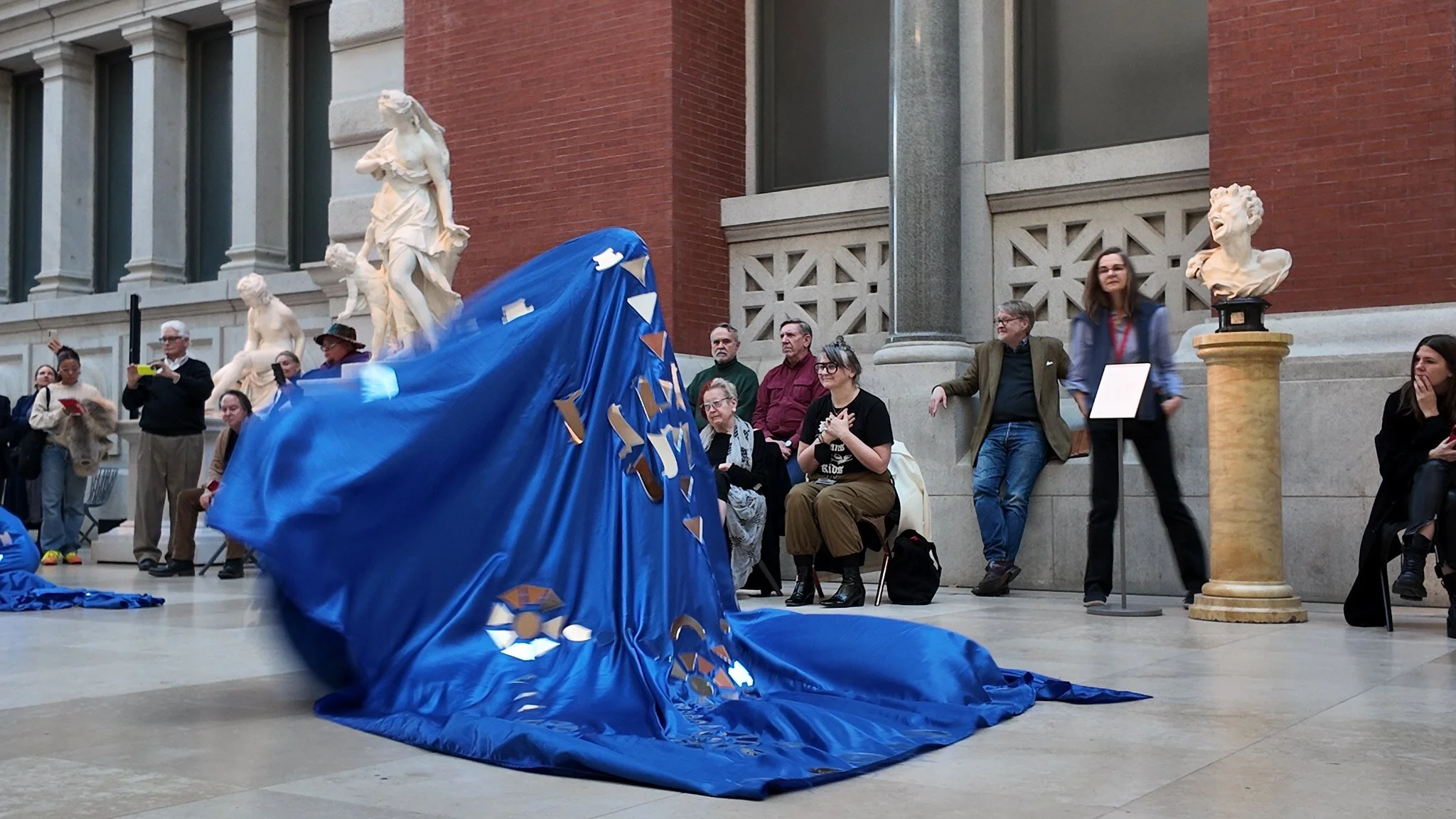
Tsedaye Makonnen's ASTRAL SEA Speaks To The Need for Collective Refuge
Contemporary Ethiopian/American Artist Tsedaye Makonnen was commissioned by MetLiveArts and featured as one of the two living artists in the Africa and Byzantium exhibition. The result is ASTRAL SEA, which speaks to themes of Slavery, Textiles and History
Oyiza Adaba, New York
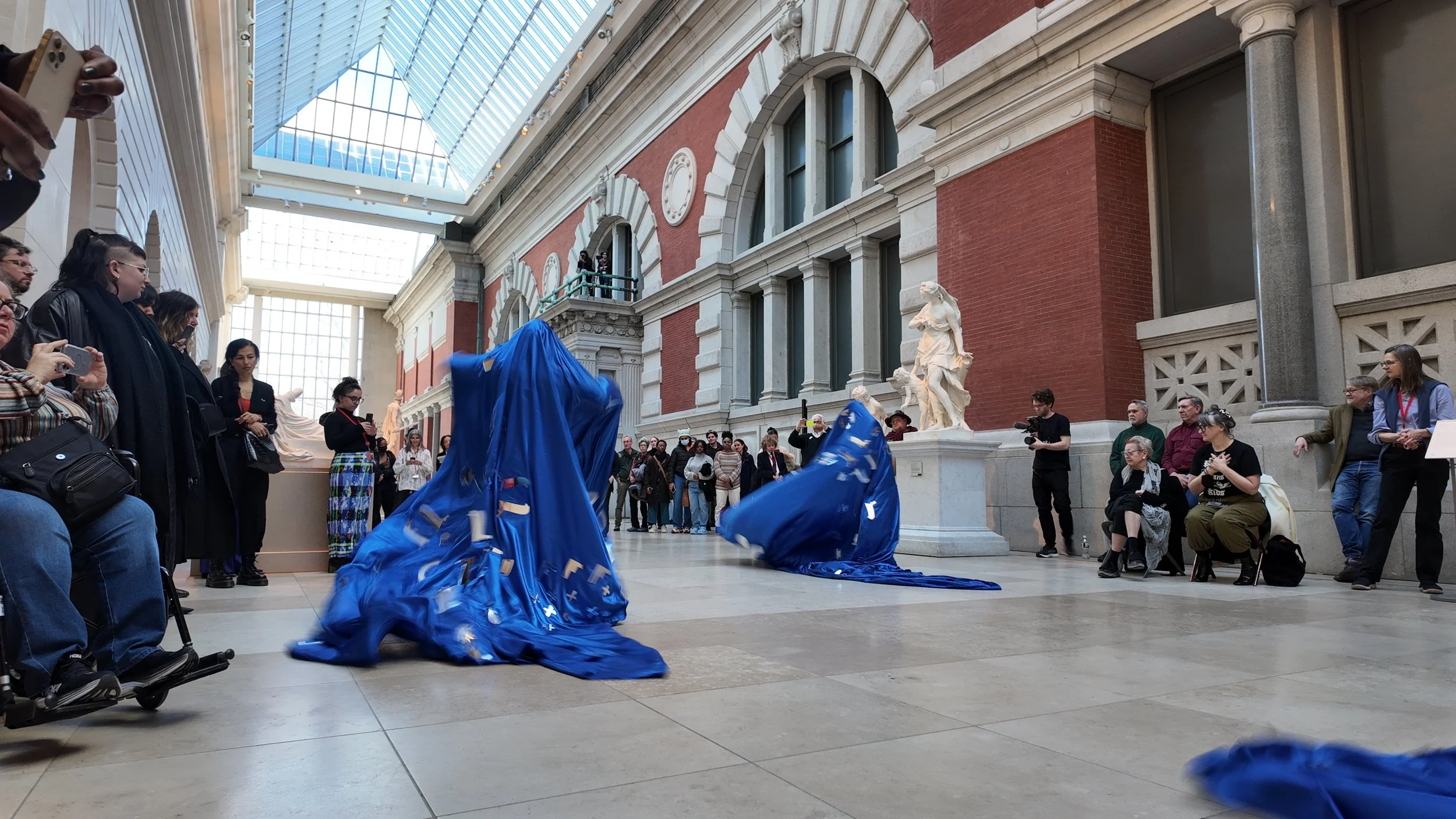
Contemporary Ethiopian/American Artist Tsedaye Makonnen was commissioned by MetLiveArts and featured as one of the two living artists in the Africa and Byzantium exhibition. The result is ASTRAL SEA, which speaks to themes of Slavery, Textiles and History
Contemporary Artist Tsedaye Makonnen, currently featured as one of the two living artists in the Africa and Byzantium exhibition, has been commissioned by MetLiveArts and supported by Franklin Furnace to produce a new iteration from her performance and textile series Astral Sea to be featured at The Metropolitan Museum of Art.
The exhibition explores the cultural interconnections between the African continent and Byzantium from the 4th to the 15th century. The Met has commissioned 7 new works from Tsedaye alongside this new performance piece.
Performers Jasmine Hearn and Adia will be adorned by Astral Sea mirrored textiles created by the artist Tsedaye moving through the exhibit and Petrie Court. Their abstracted gestures will emulate water, land and the cosmos becoming a conduit of those who the work honors.
The performance will highlight themes of healing, protection, hope, resilience, and the power of collective action, drawing connections between the rich histories of Africa and the African diaspora. It will be accompanied by a special live soundscape created by world renowned Sudanese musician Alsarah from Alsarah and the Nubatones.
Astral Sea: The Need for Collective Refuge Performance
Date: February 29th, 2024
Location: The Metropolitan Museum of Art
Africa & Byzantium exhibit and Petrie Court
Performers: Jasmine Hearn, Adia and musician Alsarah
Artist: Tsedaye Makonnen
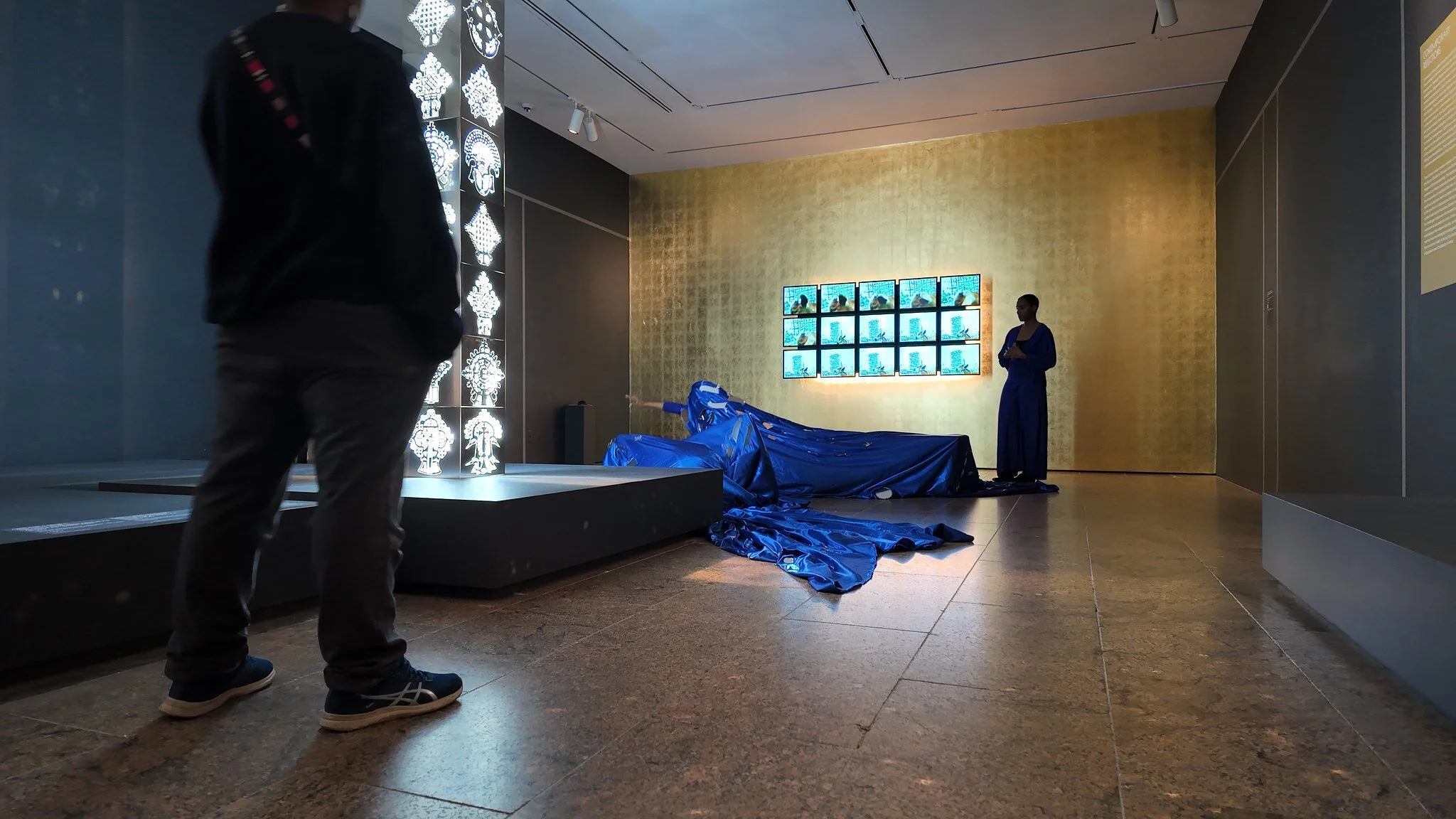
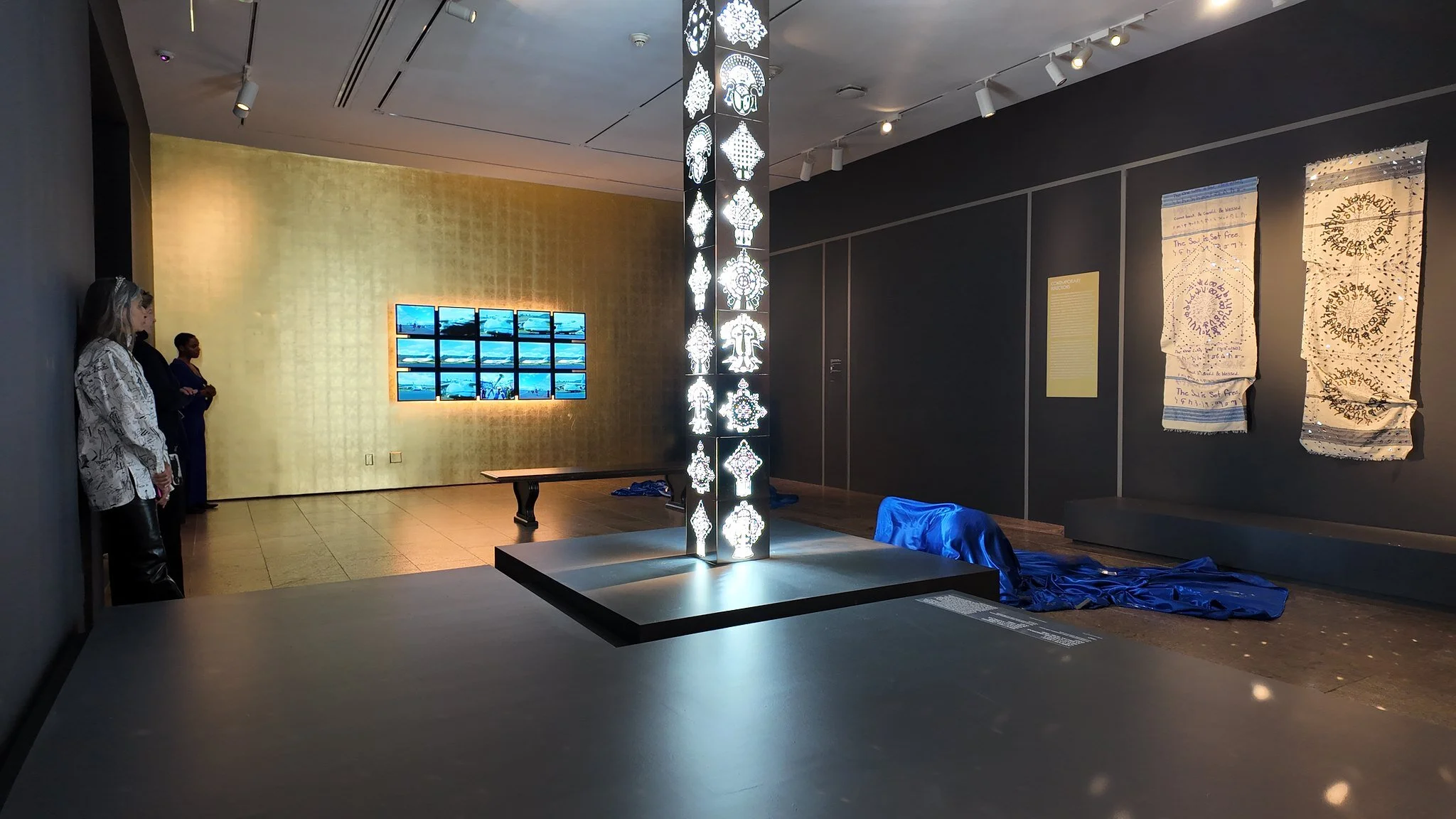

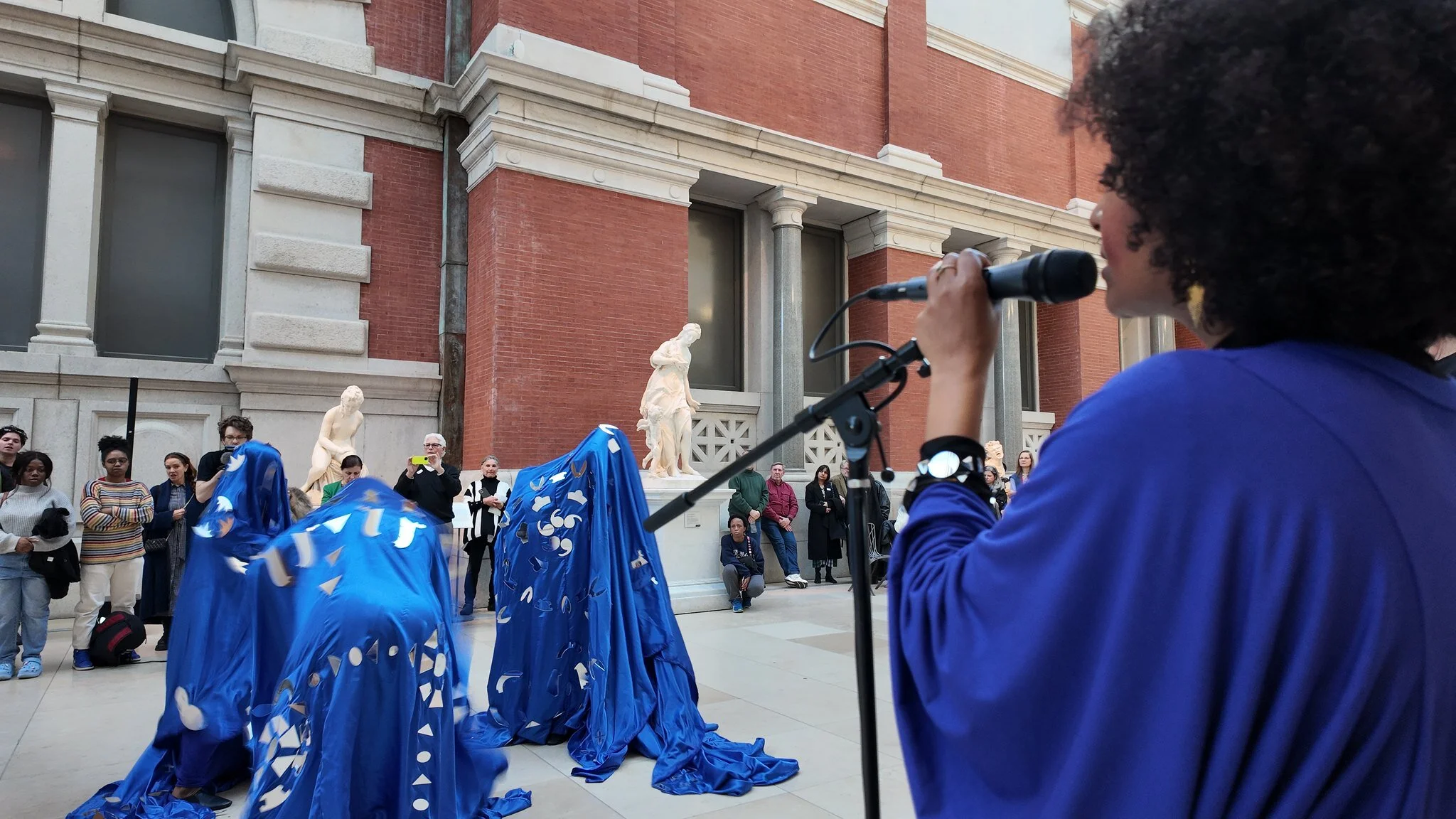

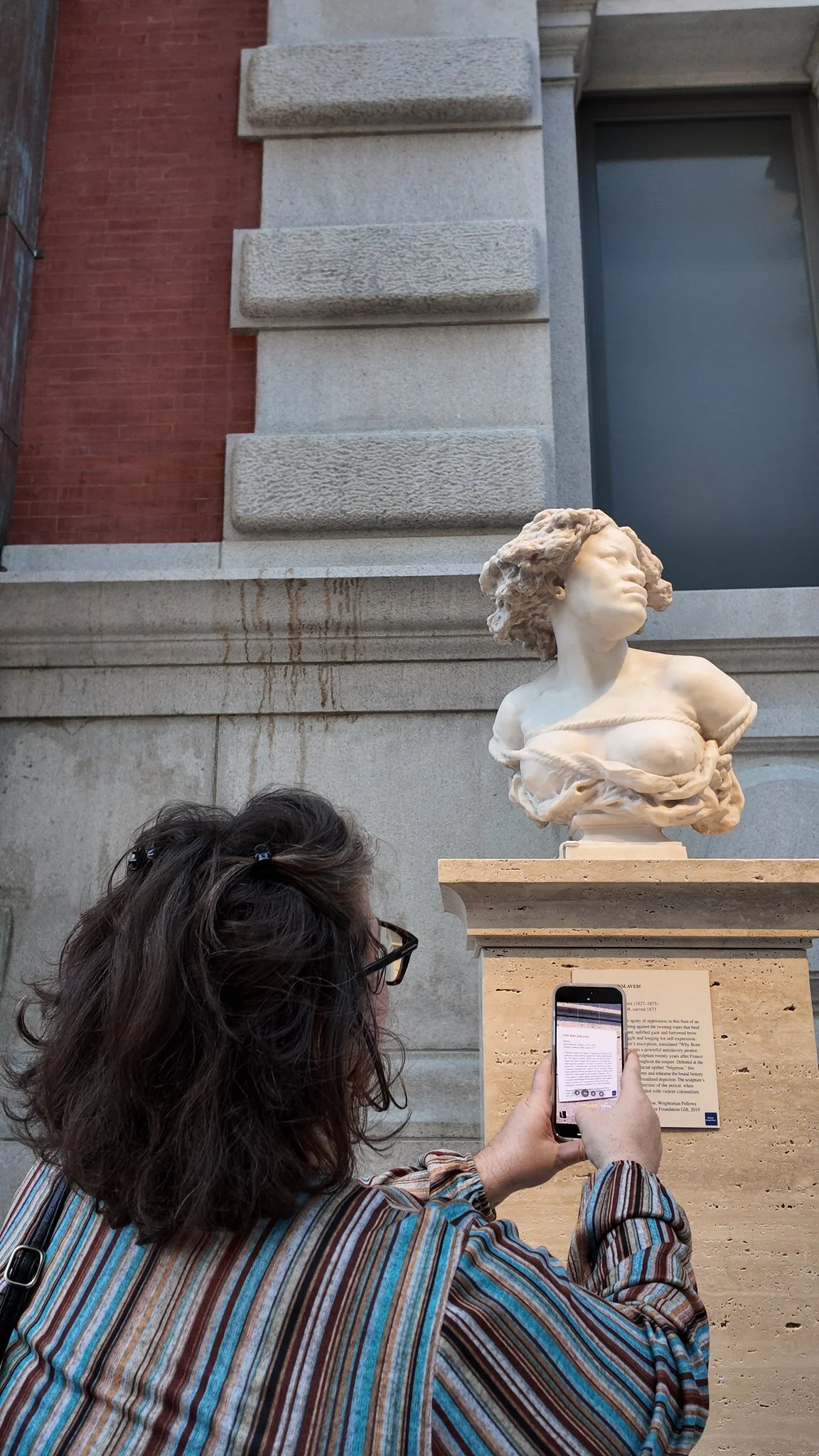
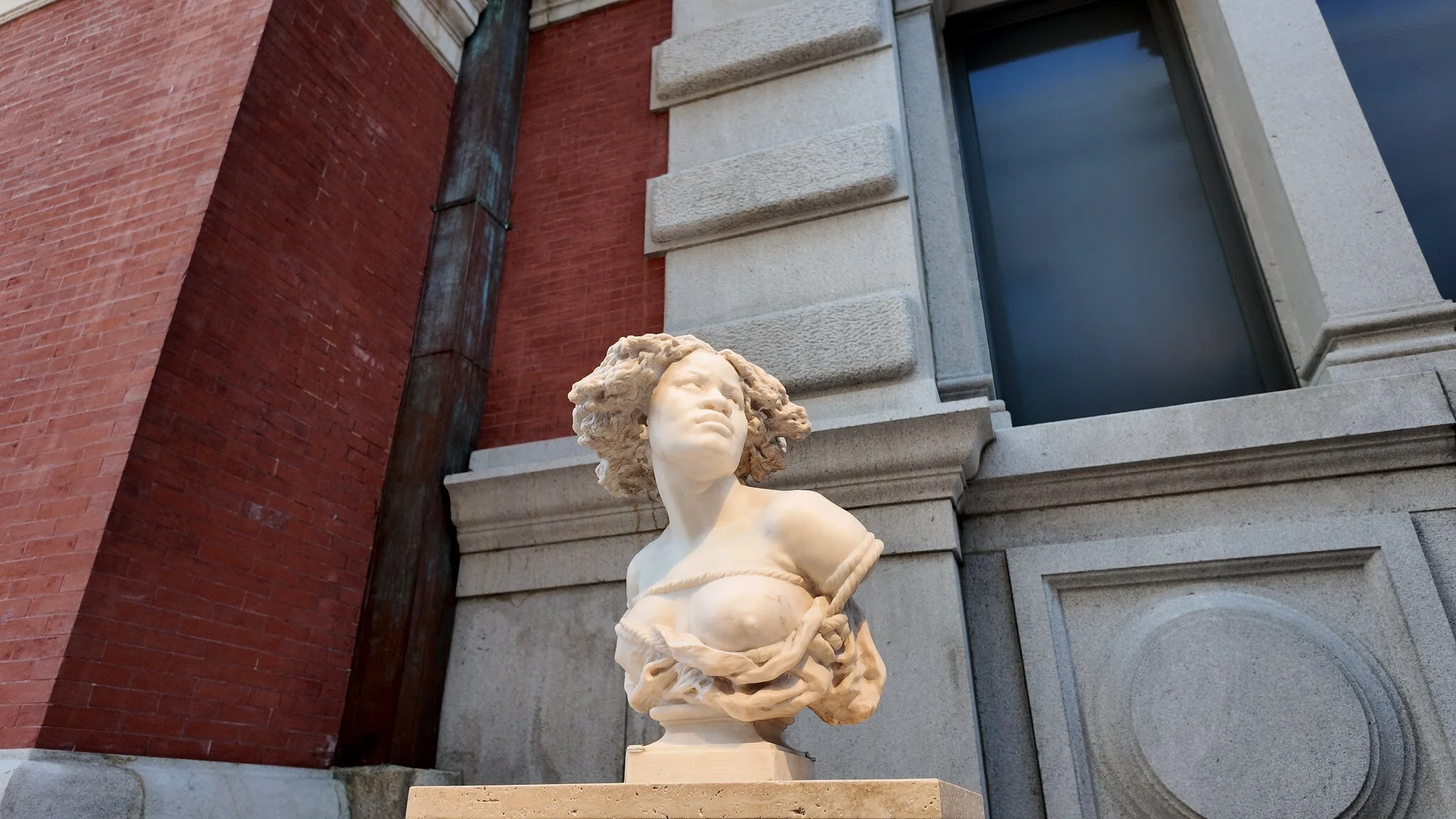
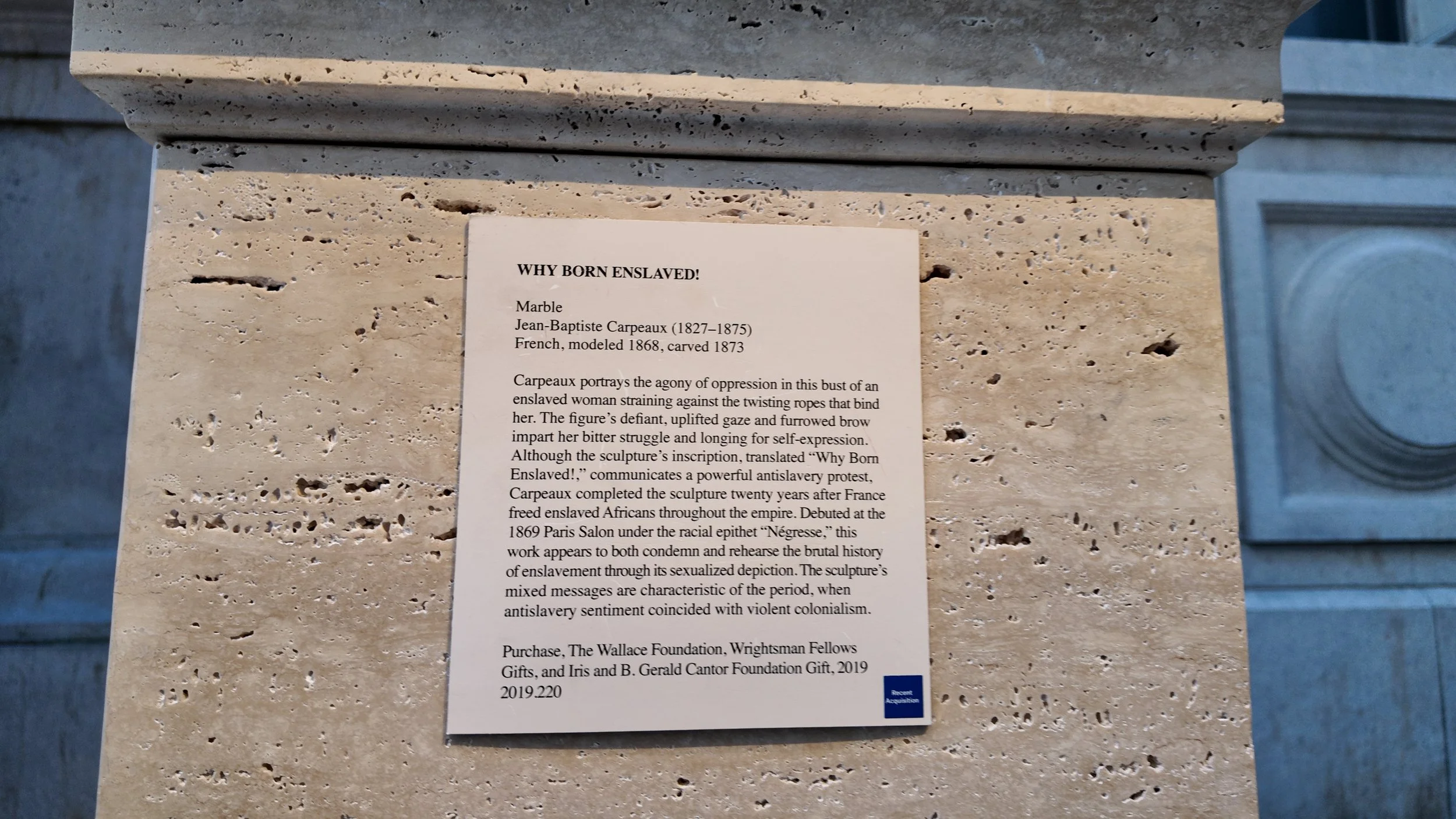
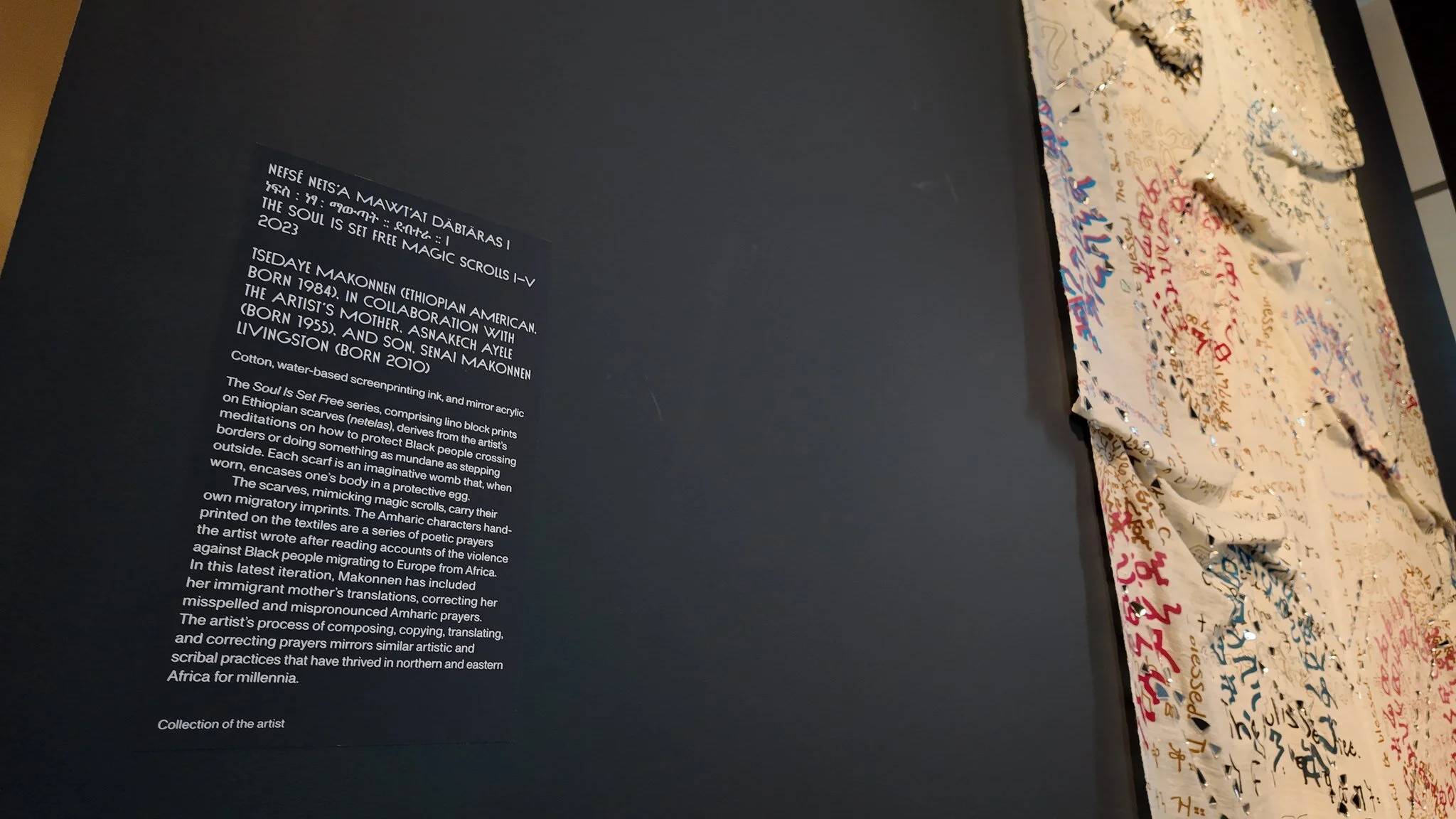



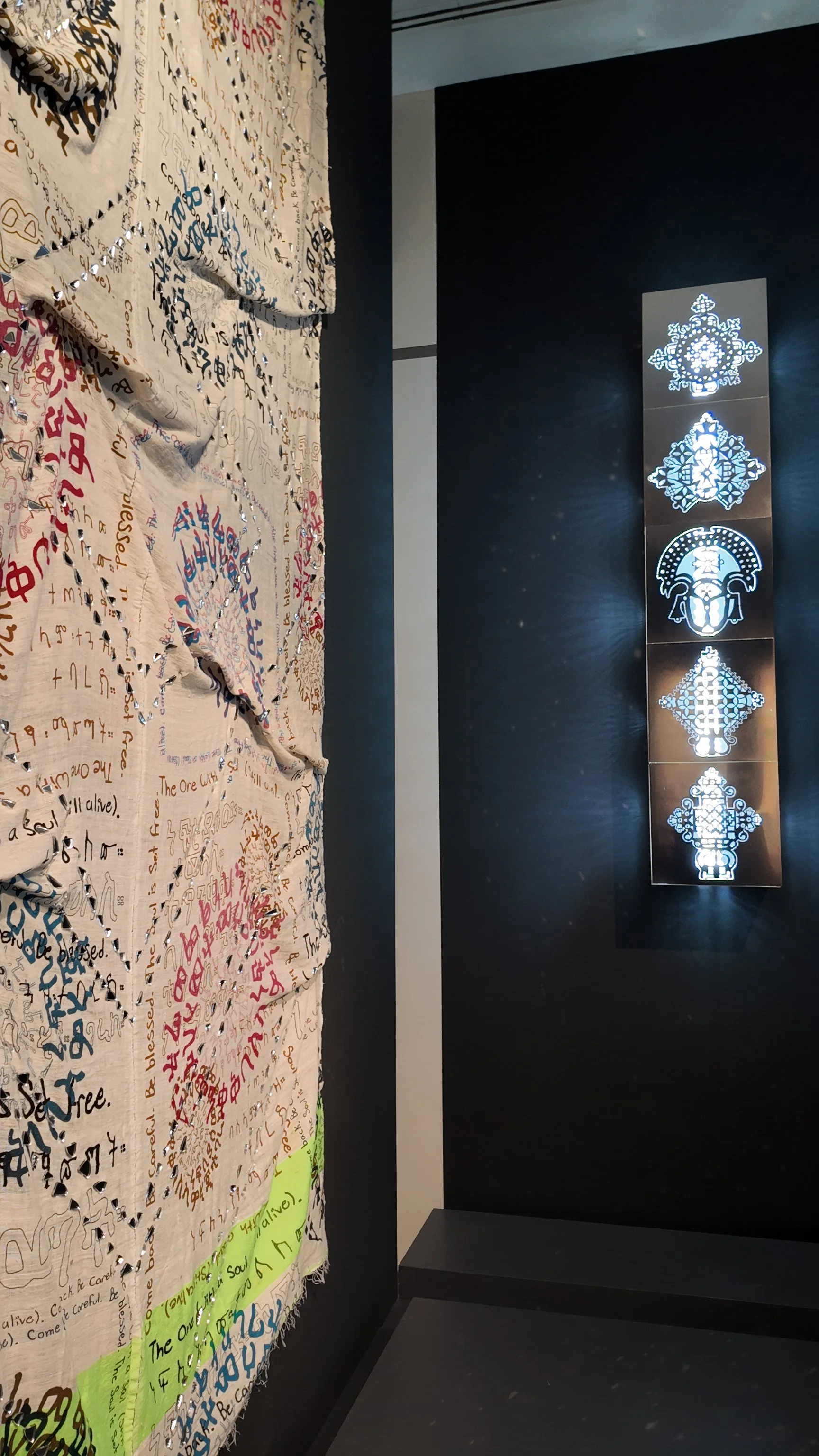
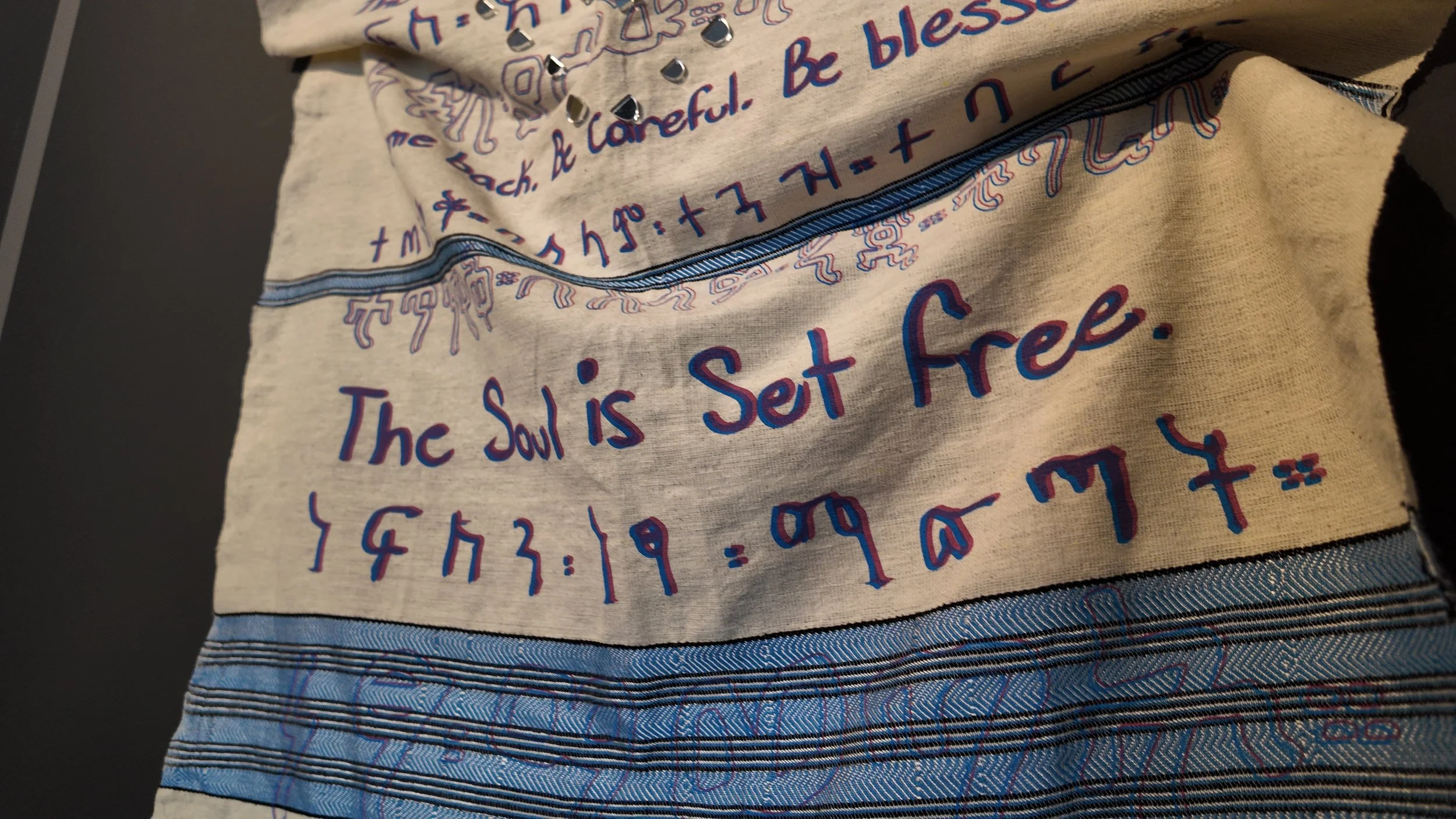
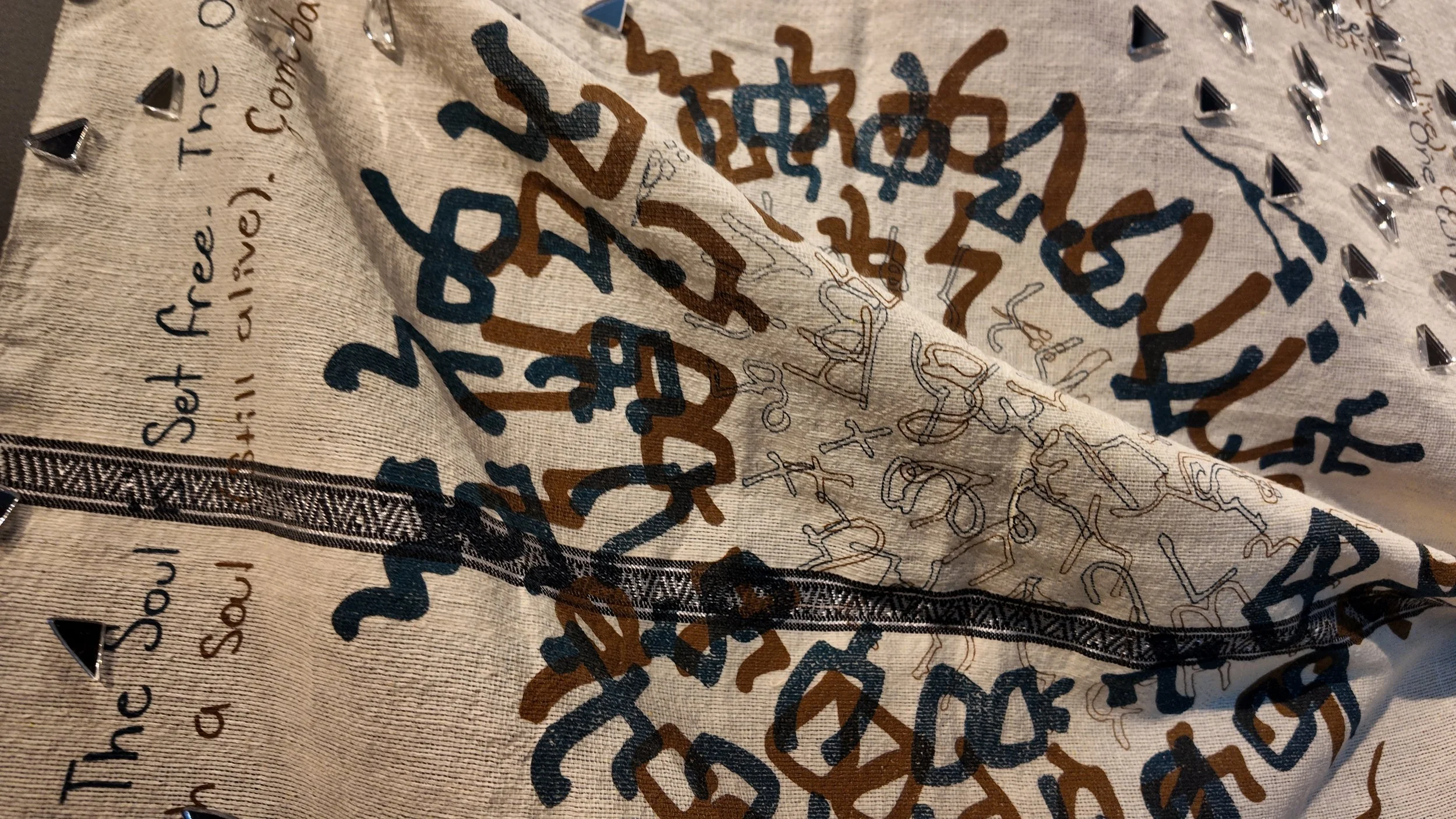
Share this story
Africa-Related is a media content production house
USAID and IFRC to Host First Global Summit on Extreme Heat
The United States Agency for International Development (USAID) and the International Federation of Red Cross and Red Crescent Societies (IFRC) will host the first Global Summit on Extreme Heat on March 28, 2024 at 8:30 AM ET. This virtual summit will bring together global leaders and changemakers to discuss solutions and strategies to protect communities and workers from extreme heat.
UNITED STATES AGENCY FOR INTERNATIONAL DEVELOPMENT
Office of Press Relations
For Immediate Release
March 8, 2024
PRESS RELEASE
USAID and IFRC to Host First Global Summit on Extreme Heat
The United States Agency for International Development (USAID) and the International Federation of Red Cross and Red Crescent Societies (IFRC) will host the first Global Summit on Extreme Heat on March 28, 2024 at 8:30 AM ET. This virtual summit will bring together global leaders and changemakers to discuss solutions and strategies to protect communities and workers from extreme heat.
USAID Administrator Samantha Power and IFRC Secretary General Jagan Chapagain will be joined by government and private sector leaders from across the globe, including NOAA Administrator Rick Spinrad and the Mayor of Freetown, Sierra Leone, Yvonne Aki-Sawyerr, who are developing innovative solutions to reduce the impacts of extreme heat events and increase climate preparedness plans for all, saving lives and livelihoods.
Extreme heat is a growing threat. 2023 marked the hottest year on record, coinciding with deadly heat waves on nearly every continent, from Pakistan to Tunisia to Texas. The 10 hottest years on record have all come in the past decade (2014-2023) and scientists expect temperatures to continue to rise. Extreme heat events are becoming more frequent and intense, resulting in more deaths and exacerbating other climate disasters such as drought and wildfires.
The virtual summit will take place online and will be livestreamed and open to the public. You can register and find additional information at www.USAID.gov/HeatSummit. The Summit is in coordination with the Biden-Harris Administration’s PREPARE initiative.
share this story
Africa-Related is a media content production house


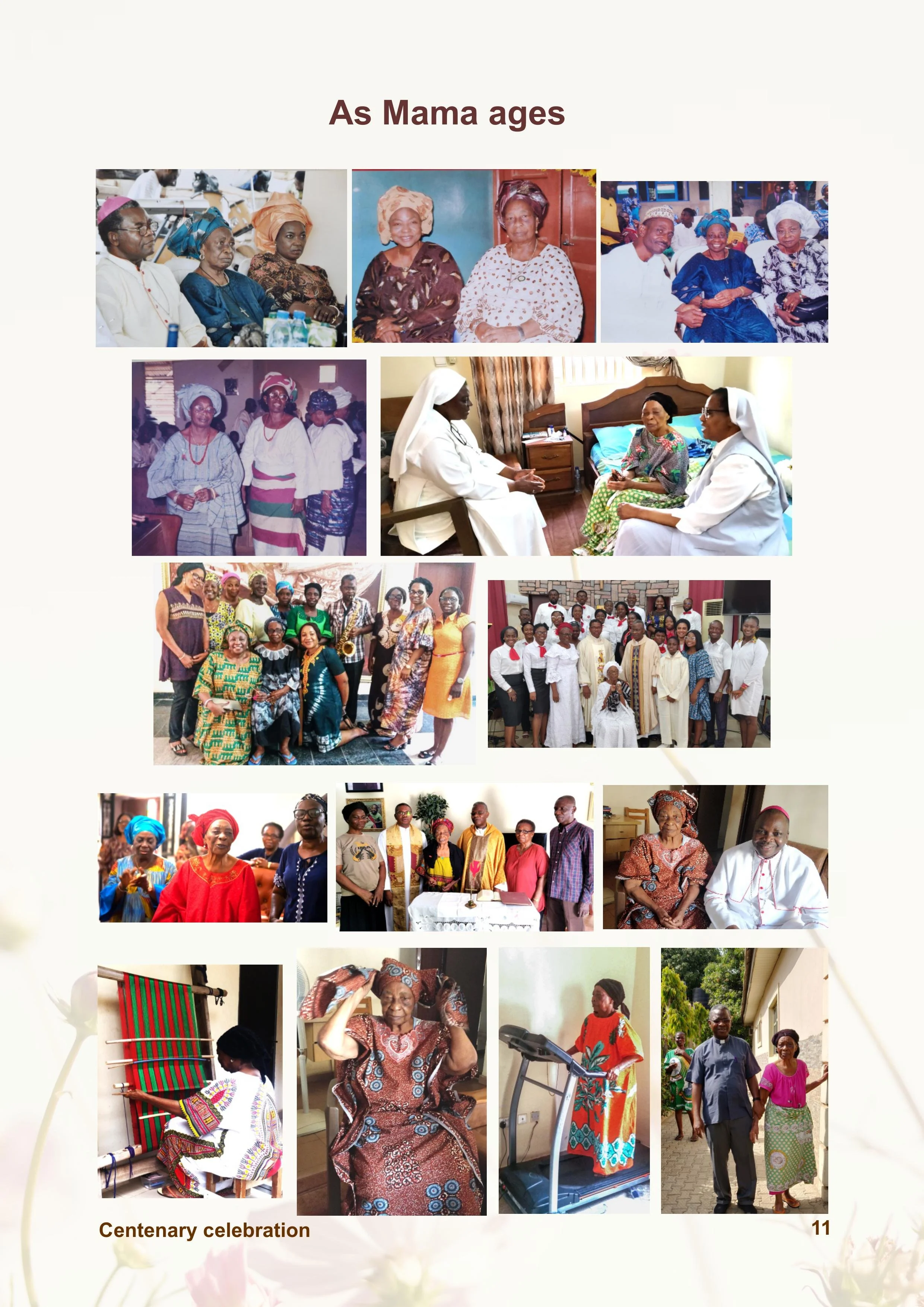
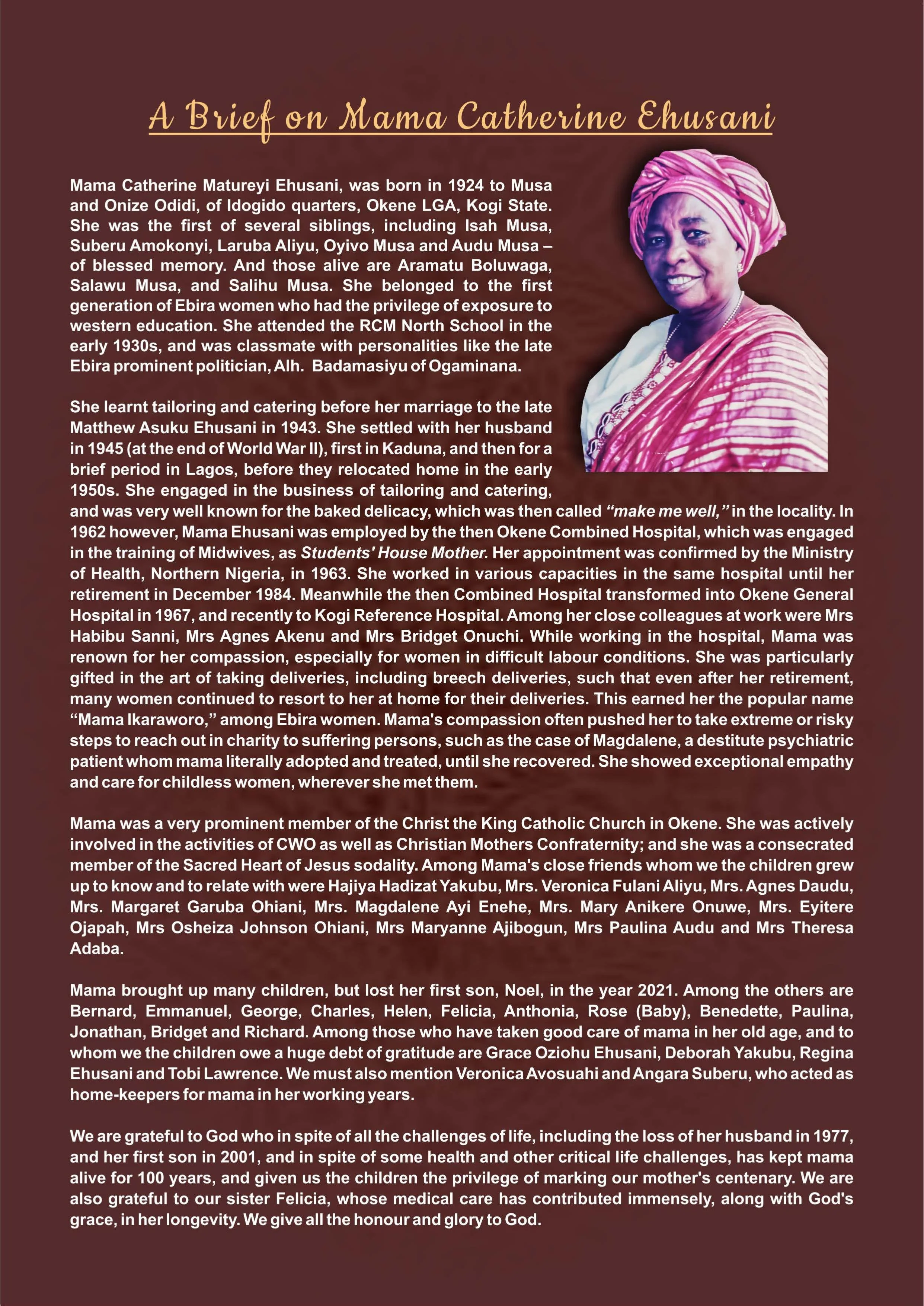
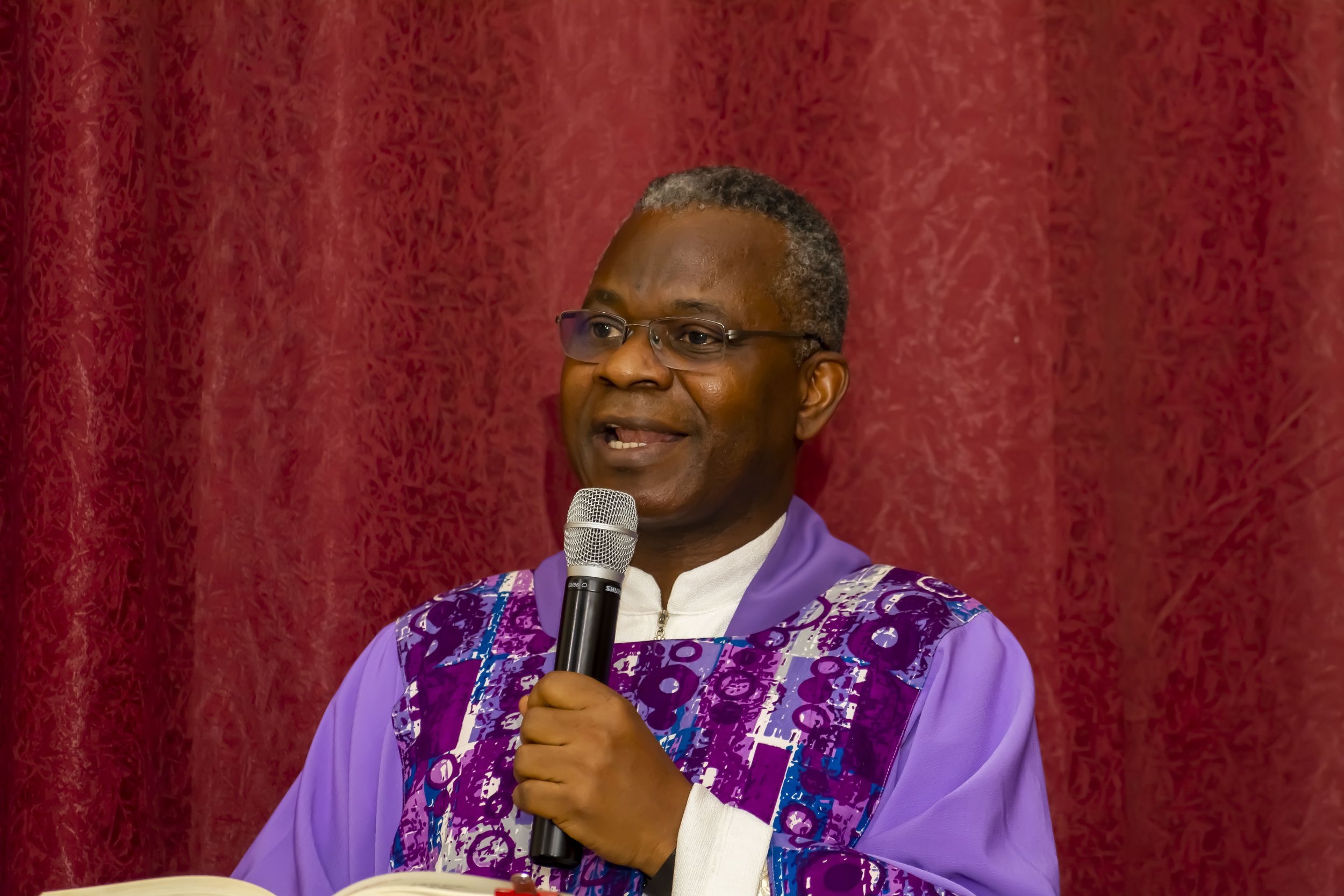














Omoyele Sowore Returns To A Rousing Welcome In The U.S
After five long years away from the U.S, where his family primarily resides, Omoyele Sowore, the presidential aspirant that was held by The Muhammadu Buhari administration - returned to a rousing welcome in New York.
Omoyele Sowore Returns To A Rousing Welcome in the U.S
After five long years away from the U.S, where his family primarily resides, Omoyele Sowore, the Presidential aspirant and journalist that was held by The Muhammadu Buhari administration - returned to a rousing welcome in New York.
Omoyele Sowore and his family. Photo by Saharareporters
#RevolutionNow convener Omoyele Sowore, on Saturday, arrived in the United States of America after five years to reunite with his family.
SaharaReporters earlier reported that the activists would be traveling to the US Friday night (tonight) to reunite with his family.
This comes after a Federal High Court in Abuja ordered the release of his passport following the decision of the Nigerian government to withdraw its treasonable felony case against the #RevolutionNow convener, four years after it was seized and he was barred from leaving Nigeria.
The human rights activist and two-time presidential candidate was warmly welcomed by friends and family on Saturday. Sowore, who departed the Murtala Muhammed International Airport in Lagos late Friday night on a United Airlines flight to DC Washington Dulles International Airport, was accompanied by his supporters to the airport.
After some tense confrontations with some Air Force and immigration officers upon his arrival at the Lagos airport over their refusal to allow his supporters and media crew to film his departure, Sowore left and arrived in Washington, D.C., according to his live stream upon arrival.
After U.S. immigration protocols, Sowore took a second leg of his trip to Newark International Airport, where his family and friends met him upon arrival at about 10 AM U.S. Eastern Time.
His friends, led by a member of the TakeItBack Movement, Kayode Ojo, a New York-based tax consultant, later met Sowore’s obviously excited family – his wife, Opeyemi, and his two kids.
Pius Omoregha, Adebayo Niyi, Seun Akinfolarin, also present at the airport were Friday Valentine Offo, Odinma Anaedo social Club USA, Engineer Victor and many others.
The activist said in a press invitation sent to SaharaReporters on Friday that his trip would be for a short while since he was "bound to return to Nigeria not only to continue my struggle for the total liberation of our people but also to face the myriad of bogus criminal and civil cases thrown at me since my detention began."
Sowore drove home and later attended a reception organized by the City of Haworth. The packed event, organized by the Mayor, Heather Wasser, had in attendance US Congressman Josh Gottheimer, whom Sowore acknowledged as facilitating his return to the U.S.
Sowore’s in-laws, Dr. Soji and Tolu Oluwole, also attended.
Other attendees included members of the Diaspora community led by a former President of the University of Lagos students union and now a foremost chemical engineer in the US, Dr. Malcolm Fabiyi, Bukola Oreofe, Deacon Dele Alade, Ademola Bello, American writer and journalist Lisa Vives, and Nigerian cuisine chef and owner of Brooklyn-based Buka restaurant, Lookman Afolayan.
The event, in which Sowore gave a heartfelt speech, also featured his wife, Opeyemi, appreciating the women who led the campaign for the activist’s release in Haworth, New Jersey.
The healthcare marketing consultant said the “friendship and unbreakable bonds” she forged with other women in Haworth helped her cope with the lonely days of wondering if her husband was safe.
“I’m so overwhelmed by the love that surrounds me and my family,” she said.
According to a video of the event posted by northjersey.com, Sowore said in his speech, “I can’t explain how I feel to be here with you today.
“Before I was arrested, nobody knew much about me in this city. I would just occasionally get on the street and run because I do long-distance running. I participated in the city’s runs once in a while. But something is very similar to where I come from; my hometown is as small as what you have here.
“And I remember growing up and saying that I would change the world through my hometown of 3,000 people when it was invaded by the police in 1980. Fast-forward to years later, and I found myself in this small town. Just the way my hometown shook the Nigerian government through me, you shook our government and the world through me again. I became one of the most popular faces throughout my five-year stay in Nigeria. Everybody knew how to spell this place.”
At the reception, Sowore’s daughter read a poem describing her father as “a man with a big heart.”
One of the leading voices was a council member, Alanna Zahn Davis, who spoke passionately about the strong bond Sowore’s incarceration brought to bear on the Haworth community in New Jersey.
To end the event, The Mayor of Haworth, Heather Wasser delivered a proclamation to honour Sowore and his family for their resilience and struggle for the emancipation of their homeland Nigeria.
SaharaReporters on February 15 reported that the President Bola Tinubu-led government had discontinued the treasonable felony case instituted against Sowore.
The development was made known in a document issued by the Attorney General of the Federation and Minister of Justice, Lateef Fagbemi.
The document dated February 15, 2024, was addressed to the Federal High Court of Nigeria, Abuja Division.
In the document, the government disclosed its intention to also discontinue the case against Sowore’s co-defendant, Olawale Bakare, aka Mandate.
Sowore was arrested by the Department of State Services on August 3, 2019, in Lagos, Nigeria.
He was subsequently detained and charged with treason for calling for nationwide protests as part of the #RevolutionNow movement he started.
Following the notice of withdrawal of the case, which was issued by the government through the Attorney General of the Federation, Justice Emeka Nwite of the Federal High Court in Abuja ordered the release of his passport and other items seized from him.
Source: Sahara Reporters

SHARE THIS STORY
Africa-Related is a media content production house

HARLEM HOSTS GLOBAL AFRICAN WOMEN’S DAY
On March 16, a special Pan-African gala will take place in Harlem to celebrate Global African Women’s Day with African women and women of African descent from around the world, spanning; Africa, Latin America, Europe and the Caribbean.
If you're in New York and looking for a striking statement piece or a versatile staple, international culture and entertainment, the Global African Women’s Day gala is the place to be.
PRESS RELEASE
New York, New York: February 20, 2024
On March 16, a special Pan-African gala will take place in Harlem to celebrate Global African Women’s Day with African women and women of African descent from around the world, spanning; Africa, Latin America, Europe and the Caribbean.
The cultural gala will be held at historic Alhambra Ballroom in Harlem during the annual two-week UN Women’s Conference, Commission on the Status of Women, when New York city streets will swell with parliamentarians, activists, and NGO delegates representing their countries from around the world.
The keynote speaker and honoree for the afternoon will be Her Excellency Verónica Nathaniel Macamo Dlhovo - Minister of Foreign Affairs and Cooperation of the Republic of Mozambique. Also being honored are: Chief Mrs. Nike Okundaye, a renowned Nigerian textile artist and gallery owner / Dr. Gina Paige, Co-Founder & President, African Ancestry, Inc. Pioneer, Entrepreneur, Black Identity Influencer / and special recognition to a soul-fusion performing artist and founding fellow of the Teaching Artist Institute, Ms. Kim Poole.
Distinguished guests include Dr. Epsy Campbell, the former Vice President of Costa Rica and Minister of Foreign Affairs. and current member of the United Nations Permanent Forum on People of African Descent who will deliver a special message.
Also, on hand will be live performances by the incomparable Red Sahara and others. As well as, products for sale by Shayee Textiles which produces a range of wearable art, from intricately designed clothing to statement-making accessories. If you're looking for a striking statement piece or a versatile staple, international culture and entertainment, the Global African Women’s Day gala is the place to be.
A portion of the proceeds will support travel grants for women living in rural areas and distressed communities to participate in forums where their issues can be represented.
Registration is $90 For sponsorship and ticket information, Eventbrite: https://bit.ly/3vYoW3q or, contact Deborah C. Nelson at GlobalAWD@gmail.com Message line only 646-535-0755. Global African Women's Day is an activity supporting the UN Decade for People of African Descent (2015-2024)
##

Share this story
Africa-Related is a media content production house
Adinkra Craft Village Ntonso Benefits From U.S. Sorority
A tale of two communities - Adinkra Village, Ntonso is home to Ghana’s ancient tradition of weaving, dying, stamping, stitching and symbols. Over the Christmas holidays, an Indianapolis Sorority stopped by to fulfill their own developmental pledge.
Head of Family Peter “Alhaji” Boakye drinks from the new water pump facility shortly after commissioning, donated by Sigma Gamma Rho Sorority. Photo by Adinkra Village, Ntonso
Oyiza adaba
fortune ehiwayAs
December 27, 2023
A tale of two communities - Adinkra Village, Ntonso is home to Ghana’s ancient tradition of weaving, dying, stamping, stitching and symbols. Over the Christmas holidays, an Indianapolis Sorority stopped by to fulfill their own developmental pledge.
Infrastructure funding in Ghana by Sigma Gamma Rho Sorority
December 2023 was when the Sigma Gamma Rho Sorority Inc embarked on a “journey of transformation” to the West African country of Ghana. Their aim was to mark their second anniversary by donating funds to the growth and development of some select parts of Ghana. The Sorority founded by seven African-American women from Butler University Indianapolis and led by the international President, Rasheeda S. Liberty undertook this as a philanthropic mission, by tagging the experience, “Transformative 2023 Birthright Journey to Ghana”.
This commissioning ceremony was held on December 27, 2023 in the village center. The Abusuapayin (Elders from the Royal family of Ntonso) - Nana Yaw Poku, family members, along with some dignitaries and resident Catholic Priest, Rev. Fr. Matthias Korankye hosted the sorority President and members.
The non-profit women's organization, committed to service, sisterhood, scholarships and sisterhood, has mentorships and development initiatives at its core. They had visited various areas in Ghana, and funded the toilet and water plumbing facility in Ntonso, near Kumasi, with a renewed gaze set on promoting a healthy and hygienic environment for its habitants. The community was delighted to host the Sorority, as they had done many times in the past with its constant stream of tourists.
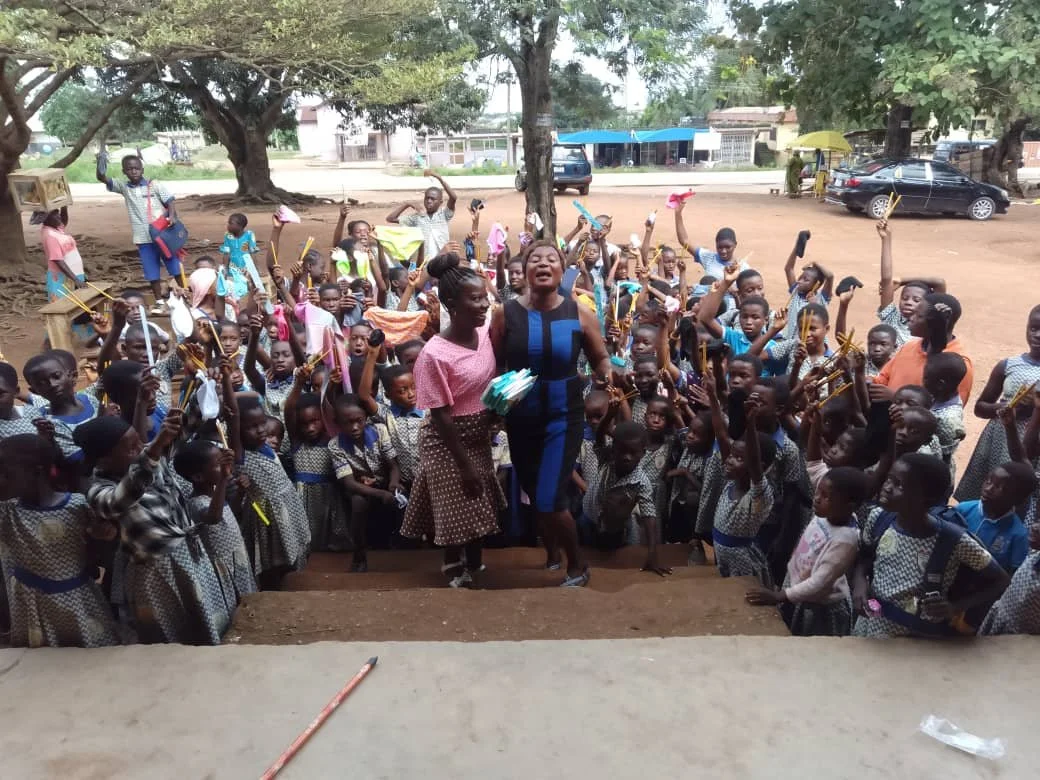
School children in attendance of the commissioning. Photo by Adinkra Craft Village, Ntonso
In her speech Sorority President Rasheeda S. Liberty cited the group's interest in the development of the communities and fostering a lasting and meaningful relationship as a testament to their commitment to service.
The event marked a historical moment in Ntonso, Ghana, that brought out the entire community, including school children.
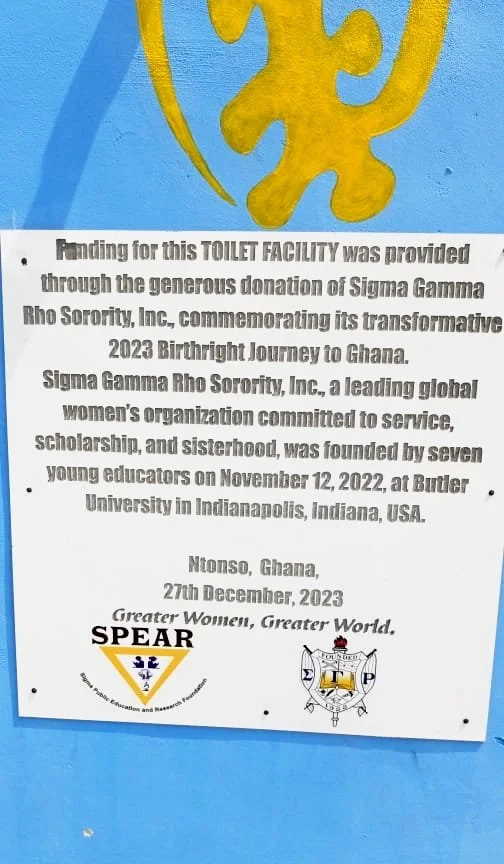
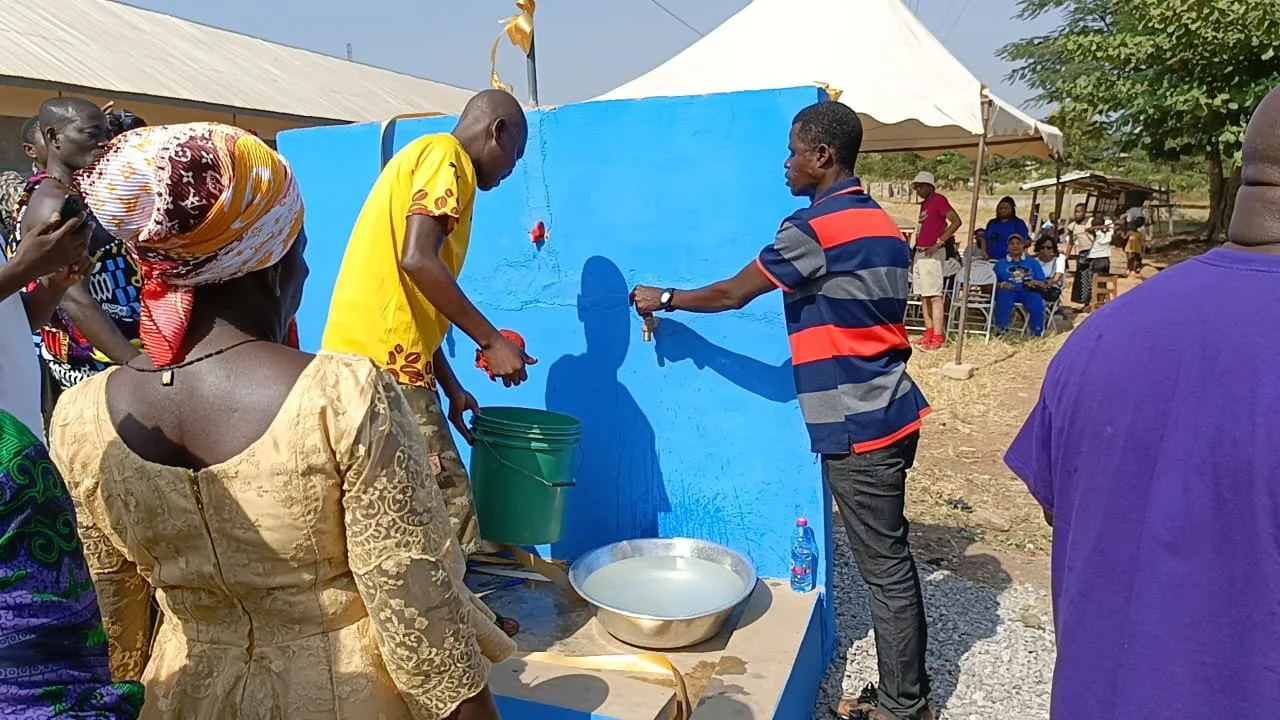
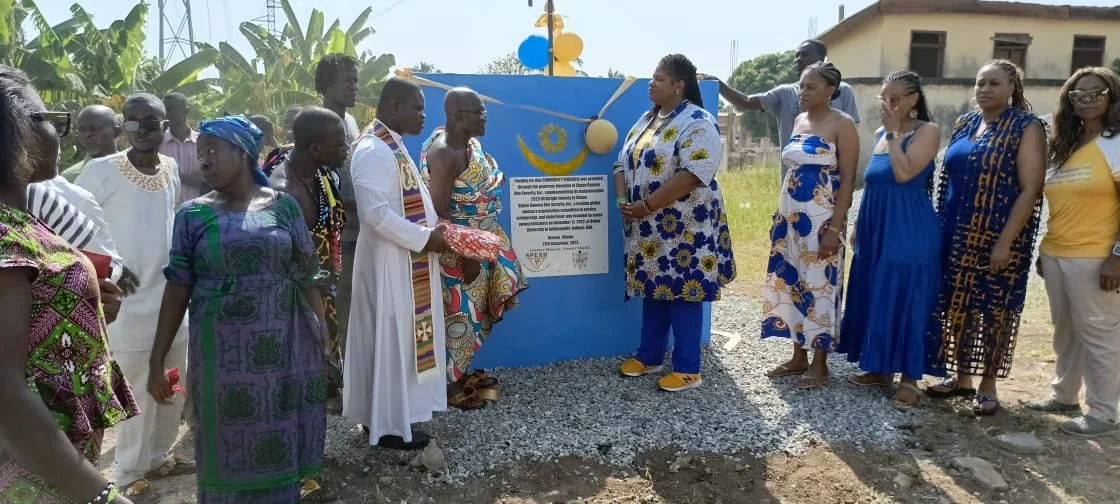
about Adinkra CRAFT Village Ntonso
Located near Kumasi, Ntonso is known as the homeland of the hand dying and stamping of Adinkra symbols on Ghana’s most popular cloth - the Kente. It is also regarded as a beautiful tourist site, that yearly hosts hundreds of thousands of tourists from across the world. The community spirit is felt by visitors, both old and young under the leadership of Peter Boakye, popularly known as Alhaji.
In his inherited role as the current Head of Family, since taking the reins from his Uncle who passed away in 2016 Boakye says he doesn't take it for granted. He does his best in continuing in the tradition handed down by his forebears - to build an organized community structure with attention to duties and details. Ntonso remains a tourist haven that takes time to teach and offer classes about the origins and techniques of Ghana’s ancient symbols. In Ntonso tradition, the men continue to weave, while the women do the dye jobs.
Adinkra Craft Village, Ntonso is featured in the biographical documentary DELA, as one of the early influences in the art of El Anatsui - the globally reconignized Sculptor.
Photo/Video by Adinkra Craft Village Ntonso






Share this story

EL ANATSUI Marks His Undeniable Legacy At 80
Family Patriarch, Global Icon, Sculptor Extraordinaire, son of Ghana and a most Remarkable Human Being, Emeritus Prof. El Anatsui, marked eighty years of his lifetime on earth on Sunday, 4th February 2024 at Kwame Nkrumah Museum Accra, Ghana.
By oyiza adaba
Africa-related, accra ghana

EL@80 Logo
EL ANATSUI LEGACY 80
An Exclusive Evening of
Discourse Dinner Music
February 4, 2024
Family Patriarch, Global Icon, Sculptor Extraordinaire, son of Ghana and a most Remarkable Human Being, Emeritus Prof. El Anatsui, marked eighty years of his lifetime on earth on Sunday, 4th February 2024 at Kwame Nkrumah Museum Accra, Ghana.
El Anatsui’s Legacy is all about what he stands for, and the milestone was celebrated in a two-part series of events that included an interactive discourse with an engaging panel titled, “Exploring Nigeria/Ghana Relations and What Unites More Than Divides Us As A People”. Having, stood at this same crossroads, El Anatsui has remained a formidable bridge between these two counties for eight decades.
Following this, friends, colleagues and family from near and wide attended the invitation-only exclusive dinner and live music performance, that featured a mouth-watering dinner, gift presentations of many kinds, and performances by select artists including Ghana’s female Jazz ensemble The Lipstik Queens, Tema Senior High School Choir and Anyako Cultural Troupe, and Afrobeat Sensation Dede Mabiaku & Kalafika Band.
The evening’s highlight was when the celebrant was conferred upon, the title of Torgbui Kekeli I of Anyako Woeto (‘beacon of light’), by the paramount chief Torgbui Tenge Dzokoto Gligui VII. This makes it Anatsui’s second traditional title since his 2017 conferment as the Ikedire of Nsukka ('power which is effective').
Other activities included a book unveiling titled “The World Celebrates El Anatsui @80” by a collective of esteemed academics from the University of Nigeria, Nsukka (UNN); with guided tours to Ghana’s educational and tourism landmarks such as Elmina Castle, the Kwame Nkrumah Museum, and University of Ghana.
El Anatsui is a contemporary artist from Ghana who singlehandedly redefined the meaning of sculptor and created a global art movement, from his four-decade stay in Nsukka, Nigeria. His works have graced prestigious art spaces worldwide, like the ongoing Hyundai Commission at Tate Modern. Learn more about a most remarkable human being from his upcoming biographical documentary DELA: The Making of El Anatsui.
El@80 Video Highlights
Photos by Africa-Related




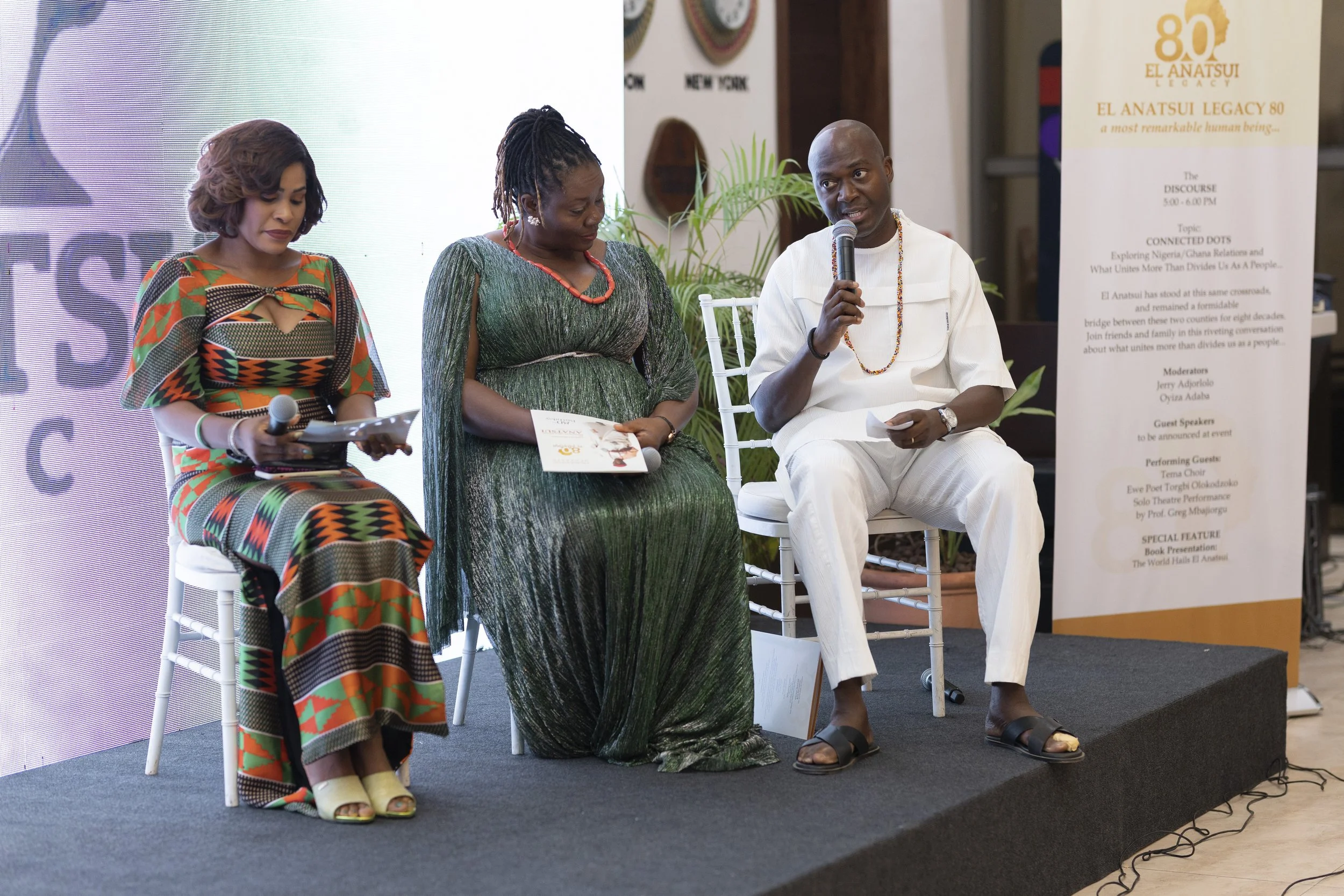
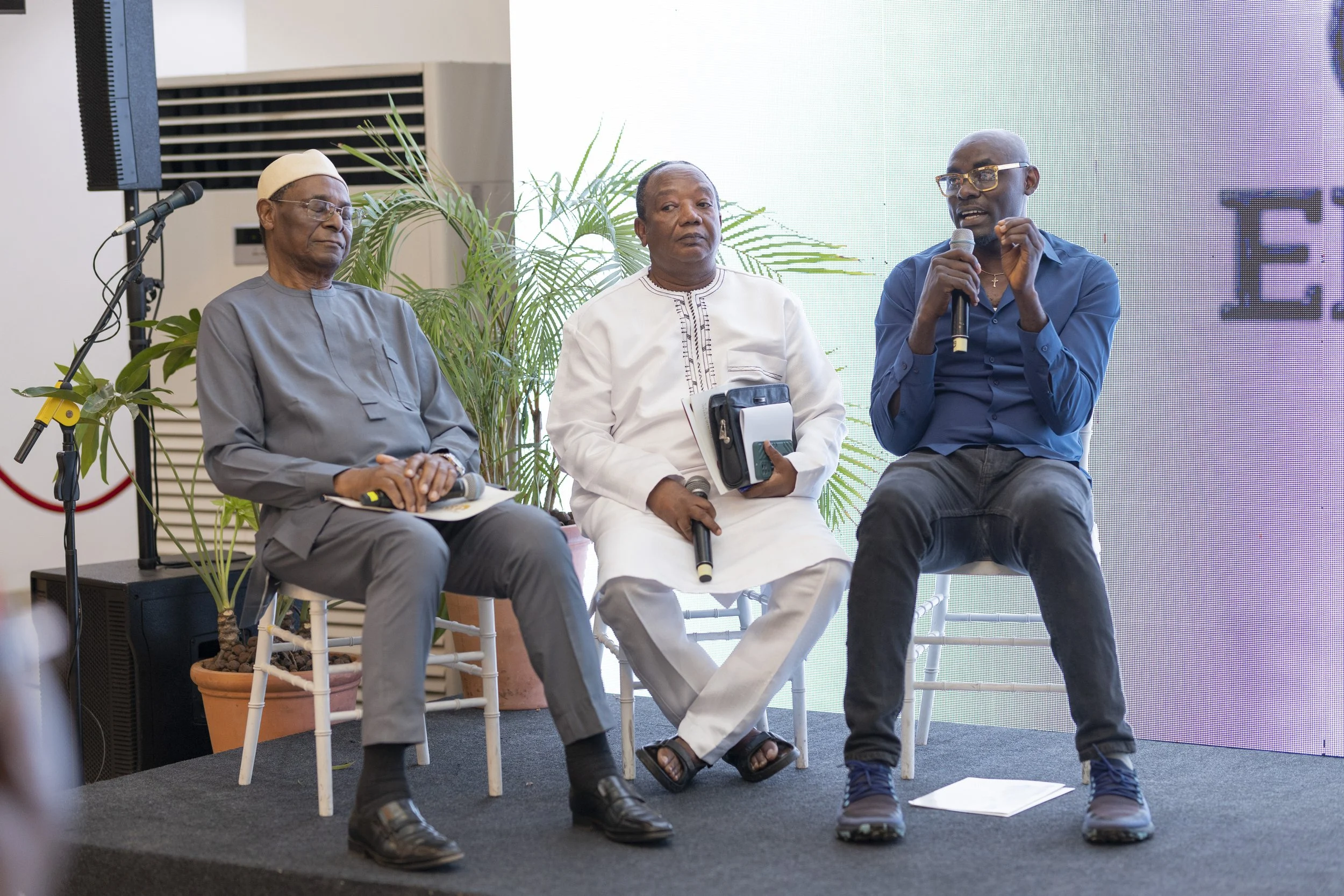








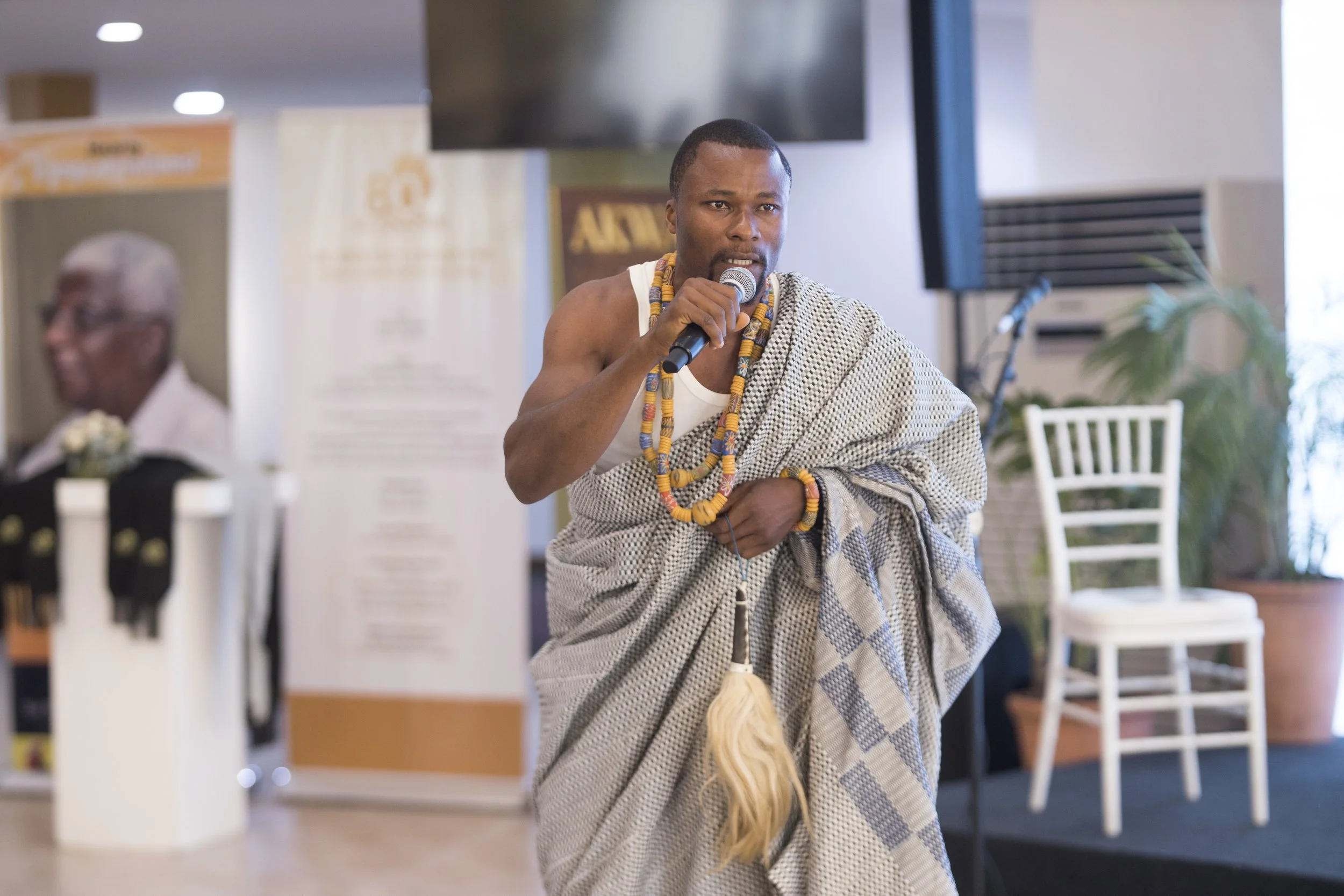
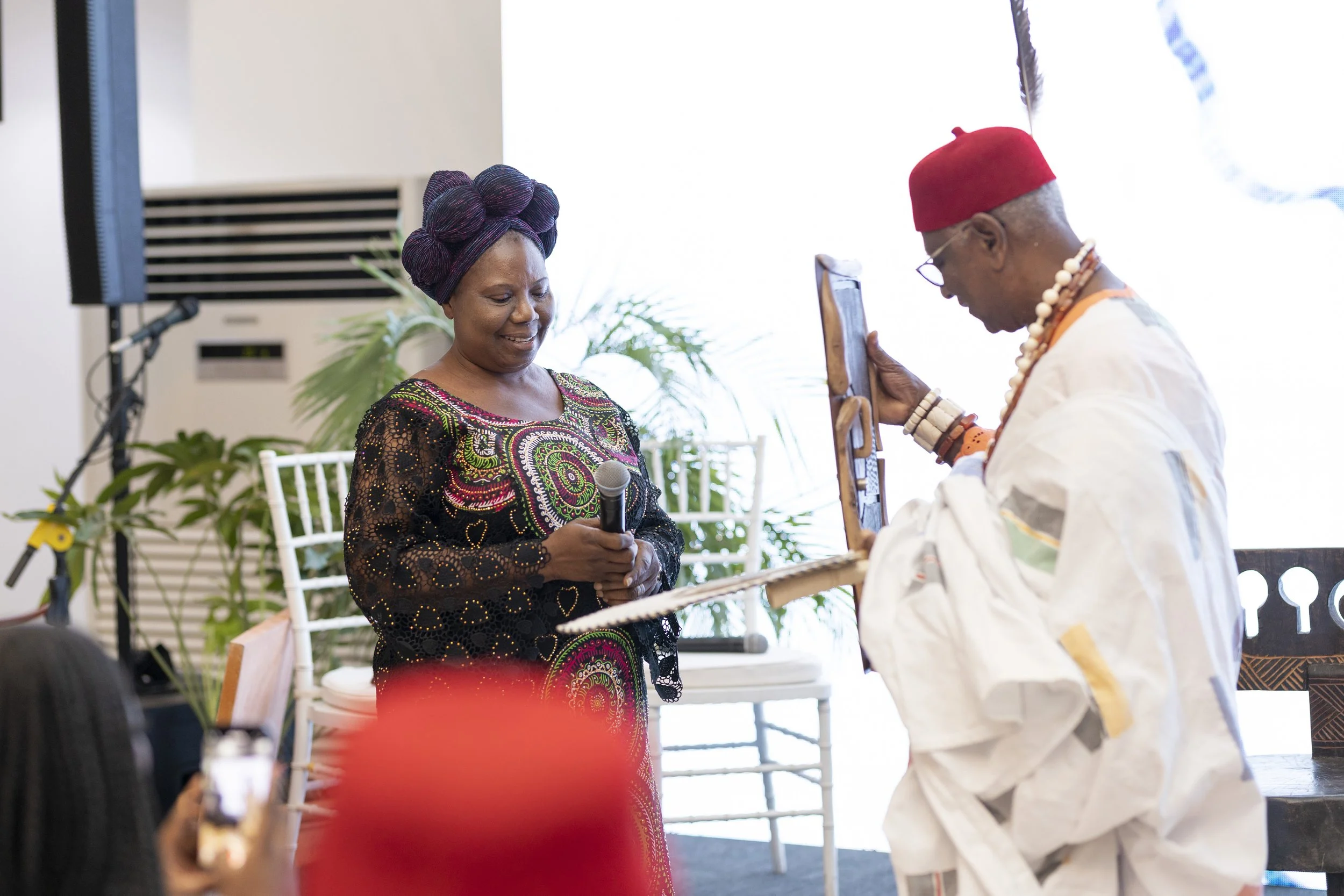


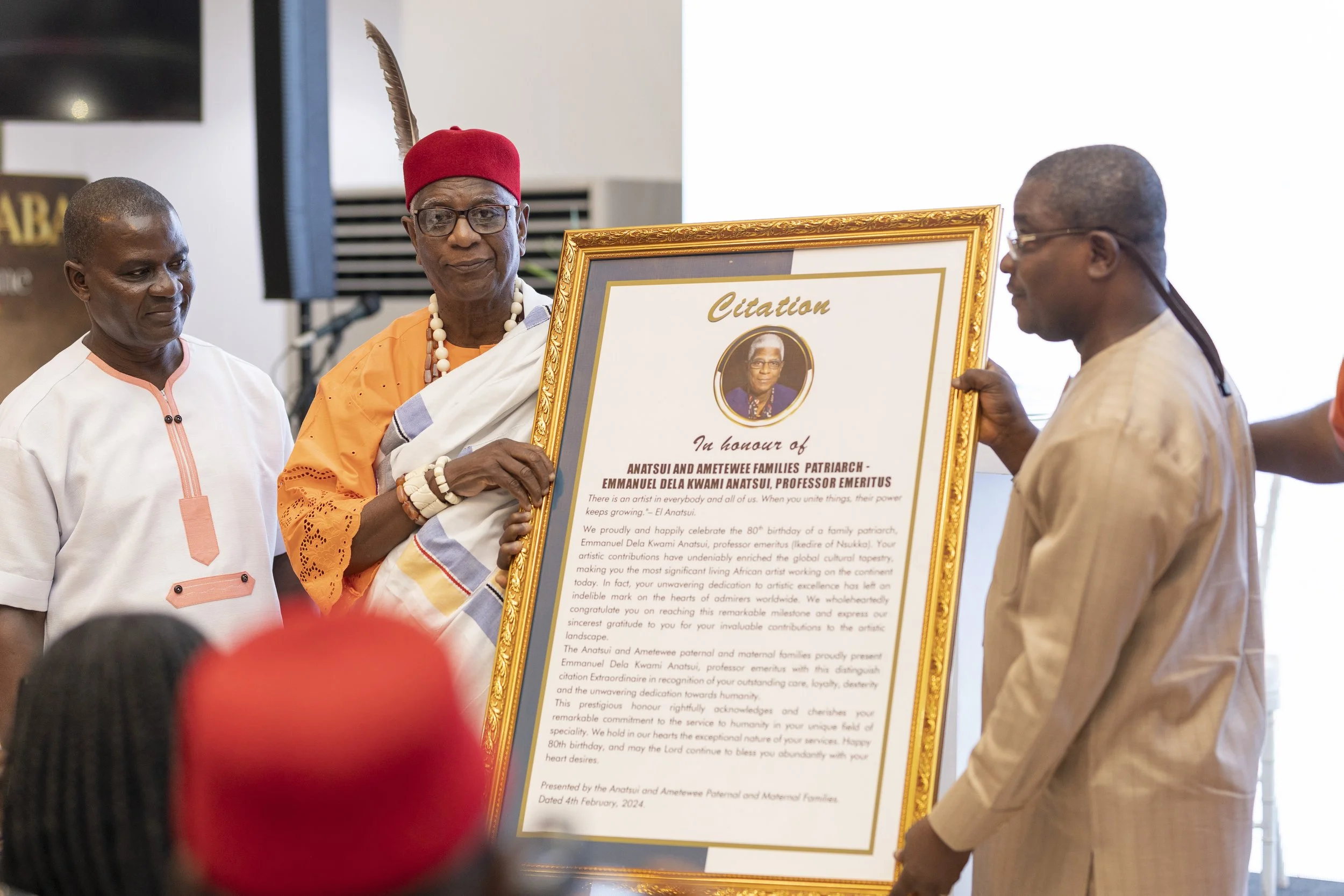

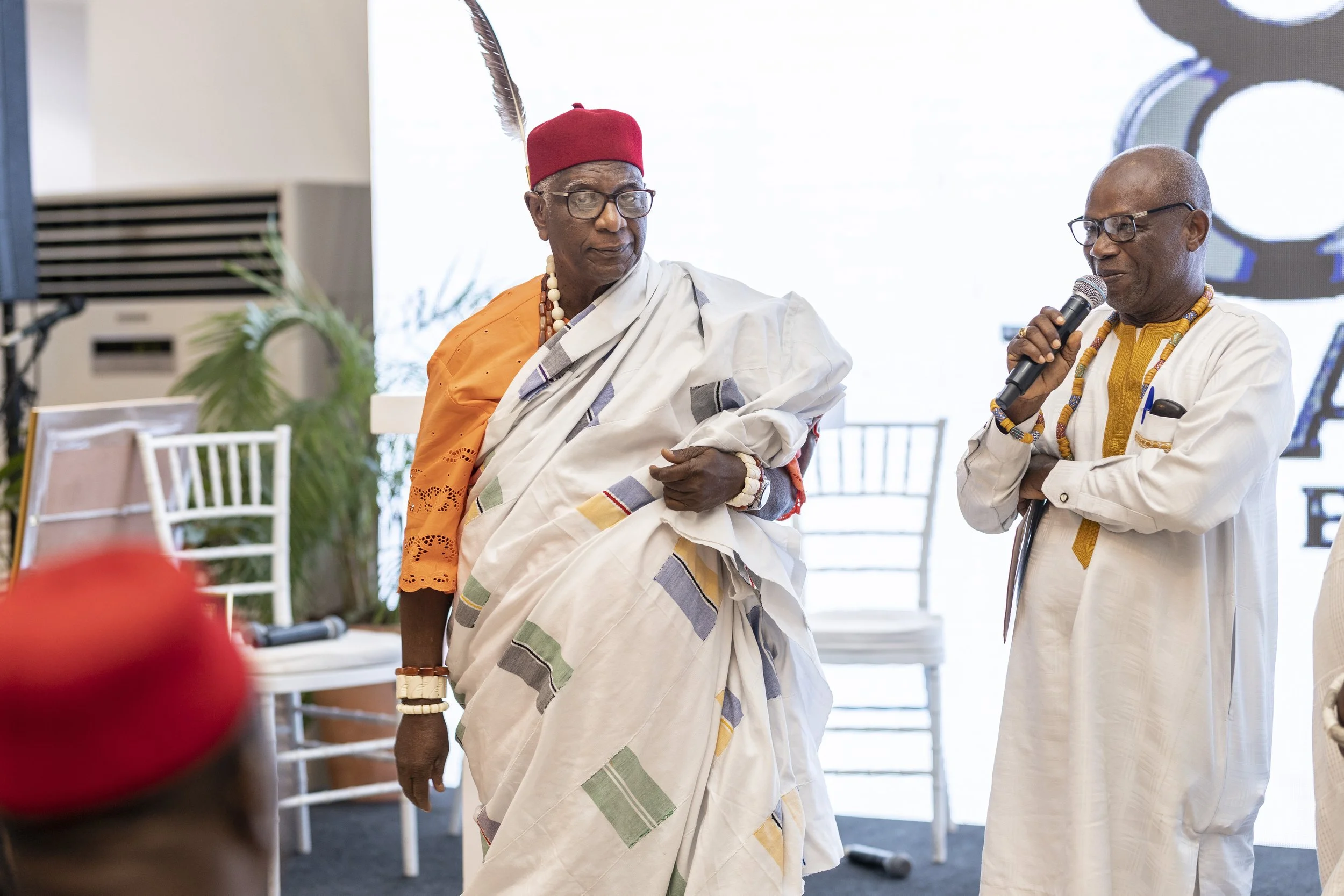



























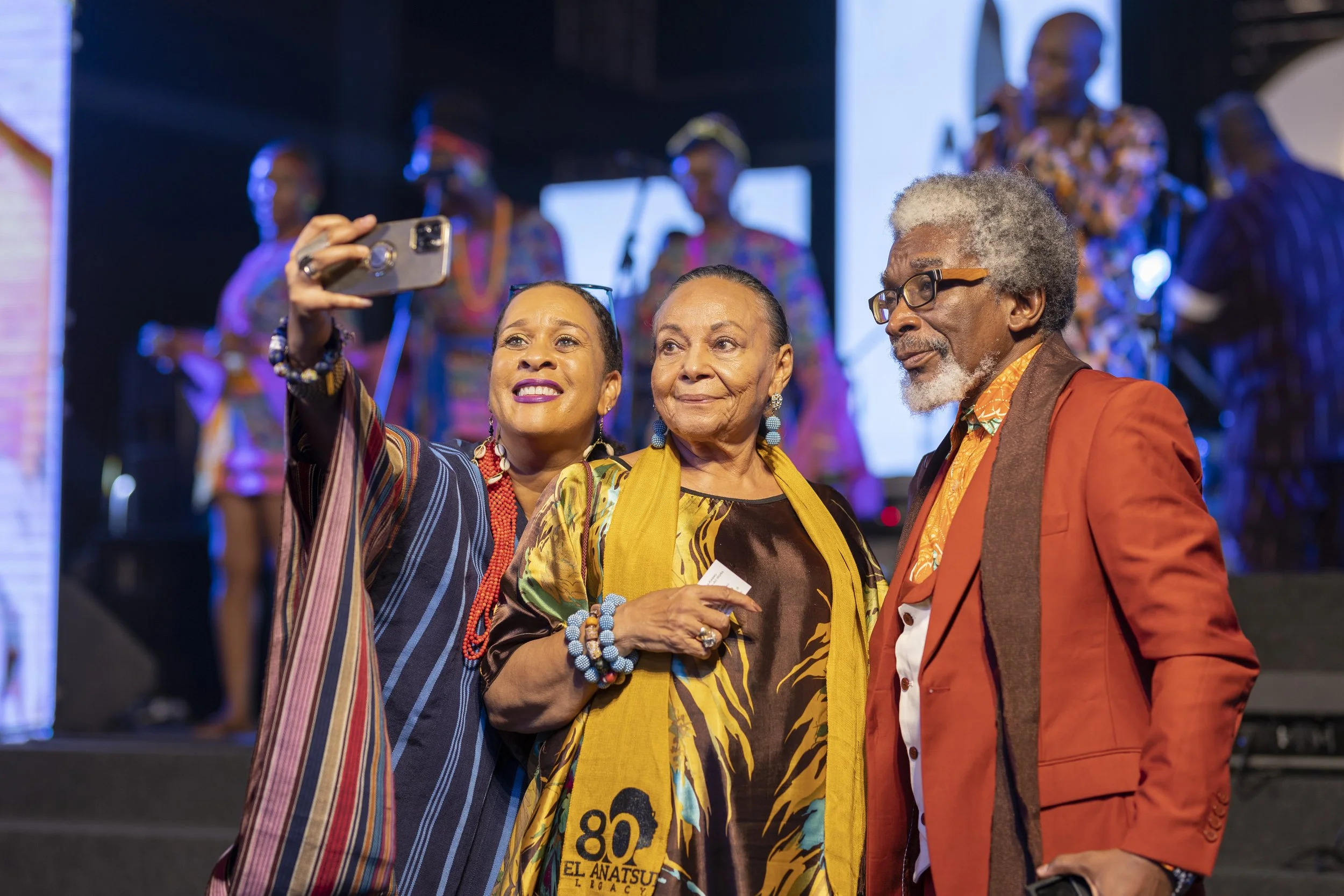











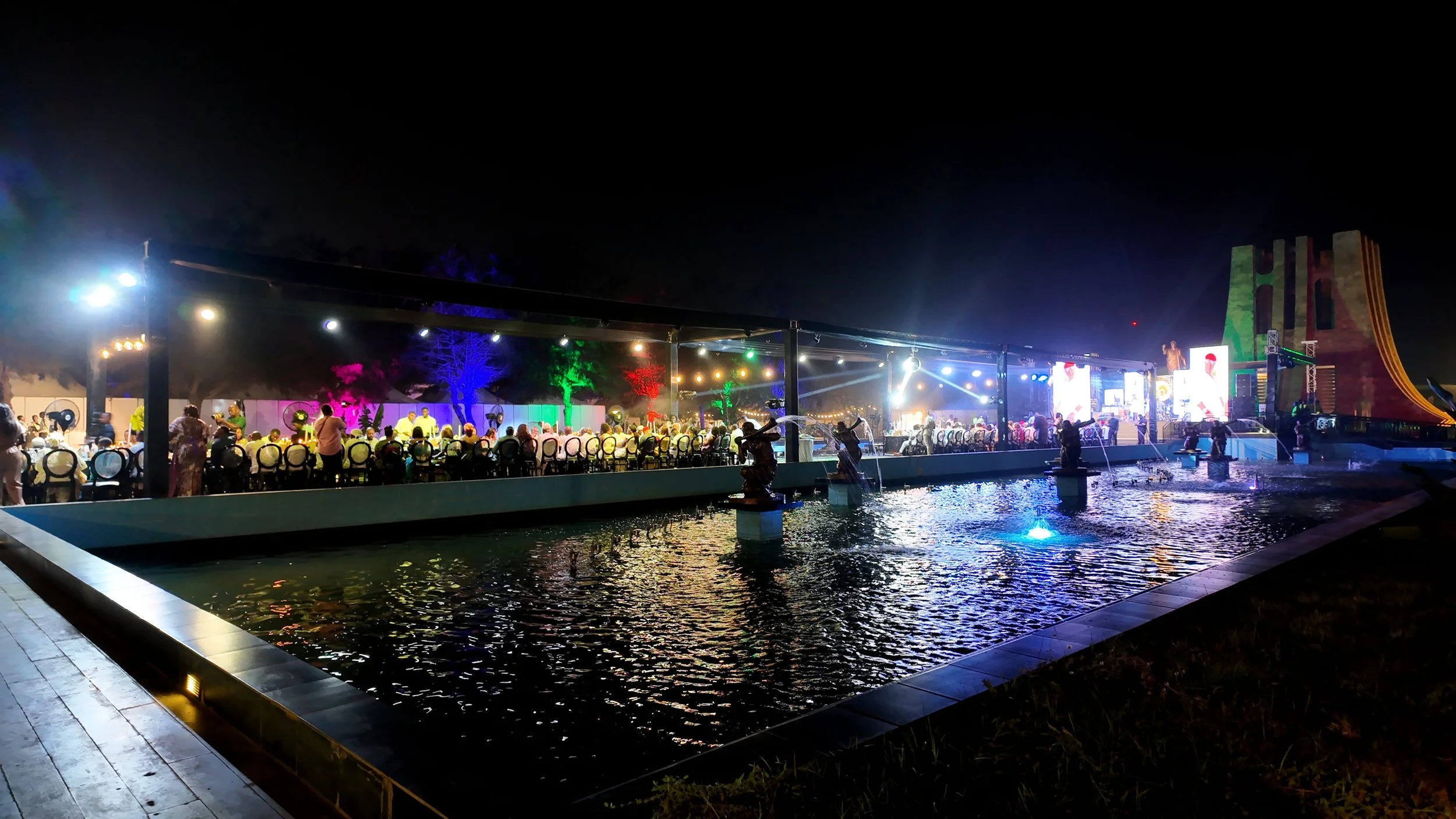
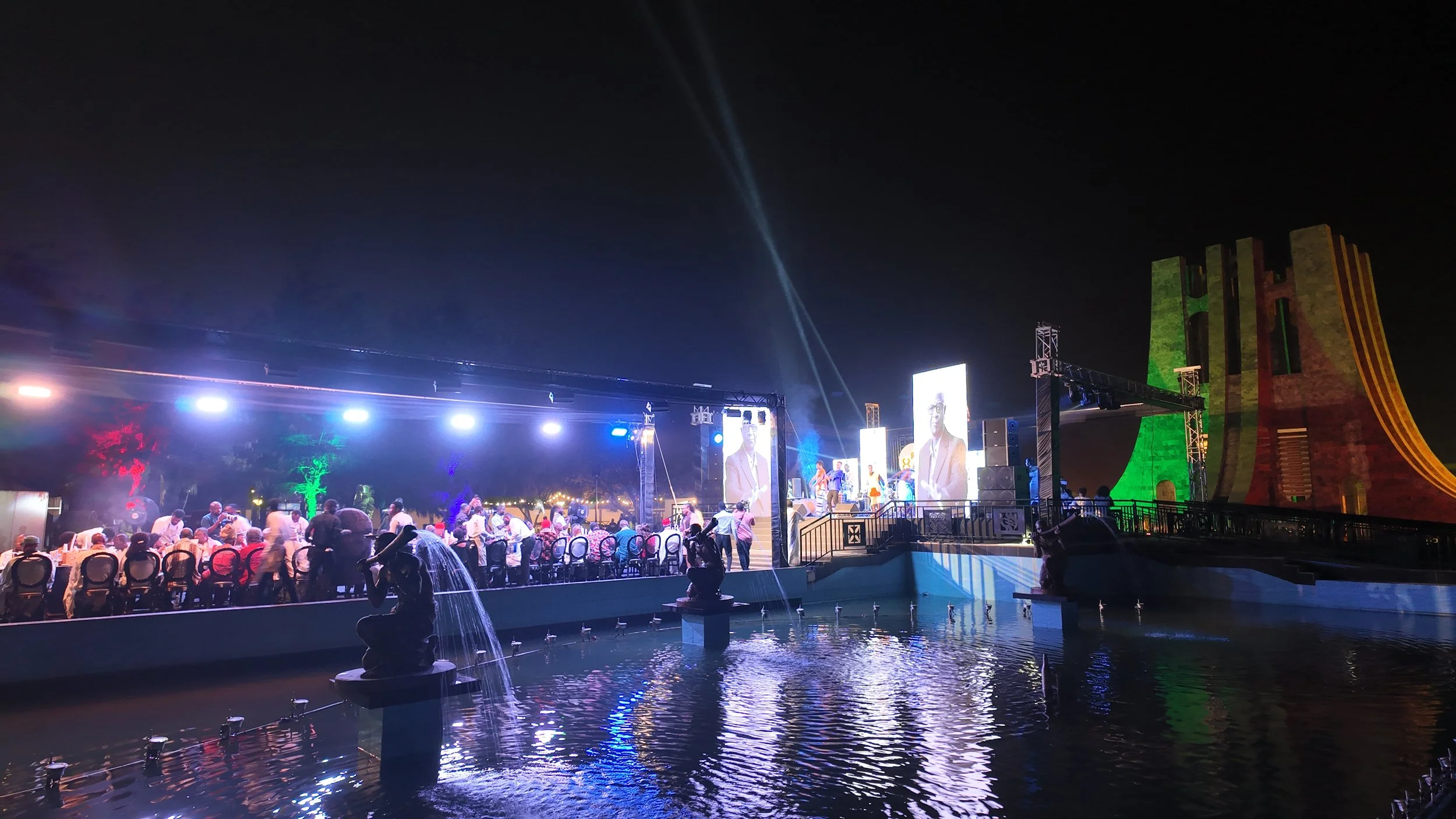


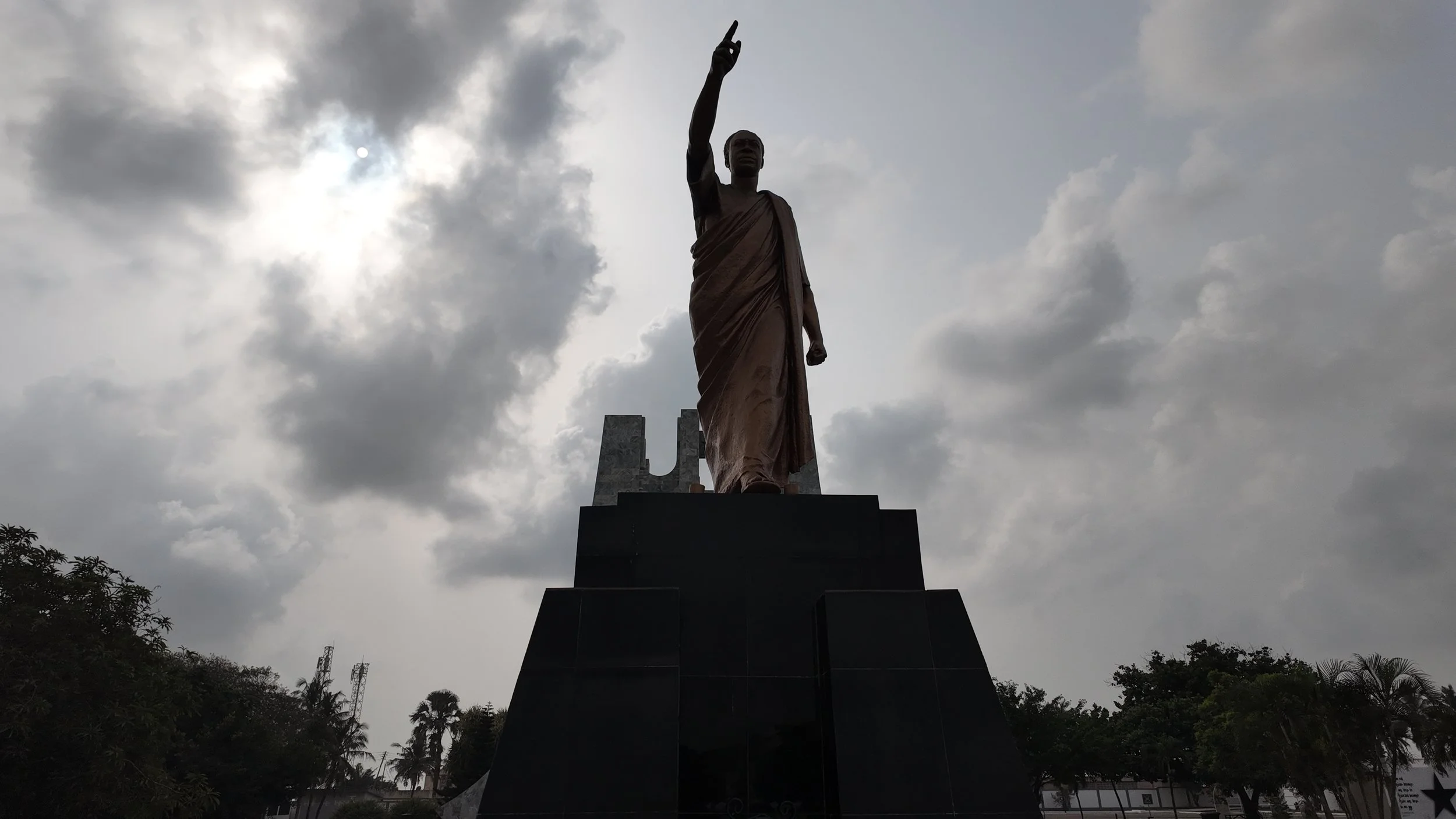

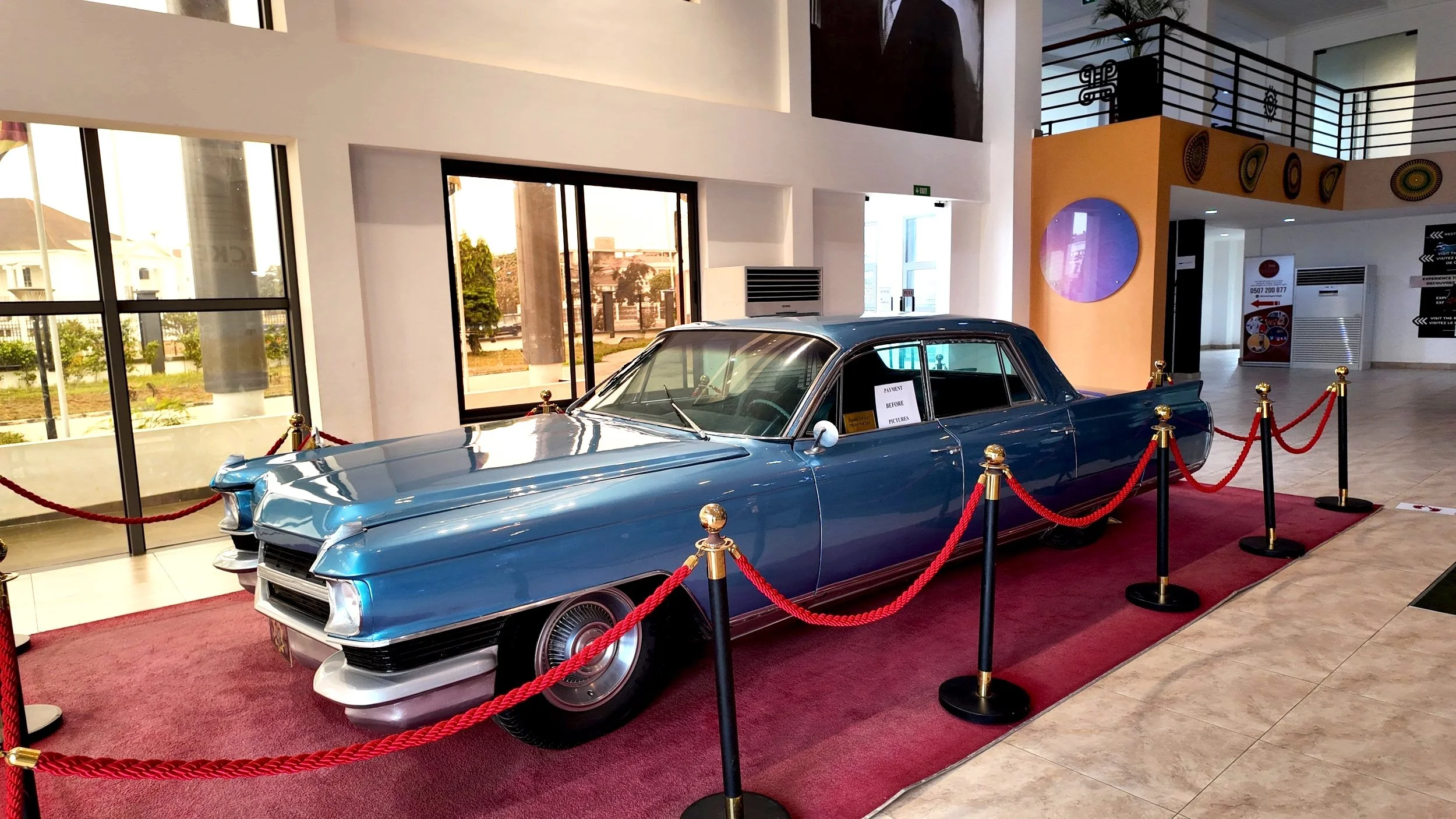
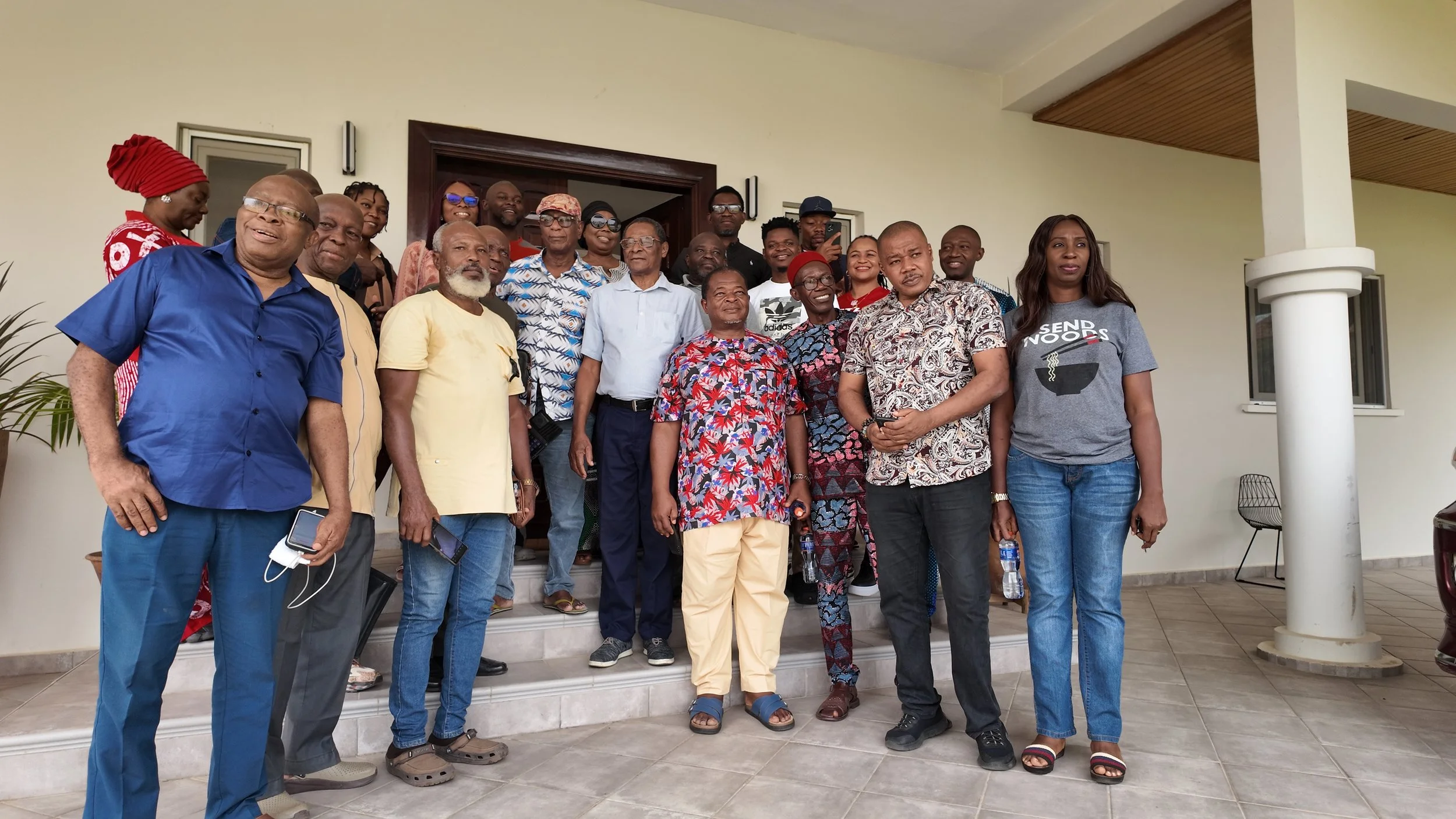
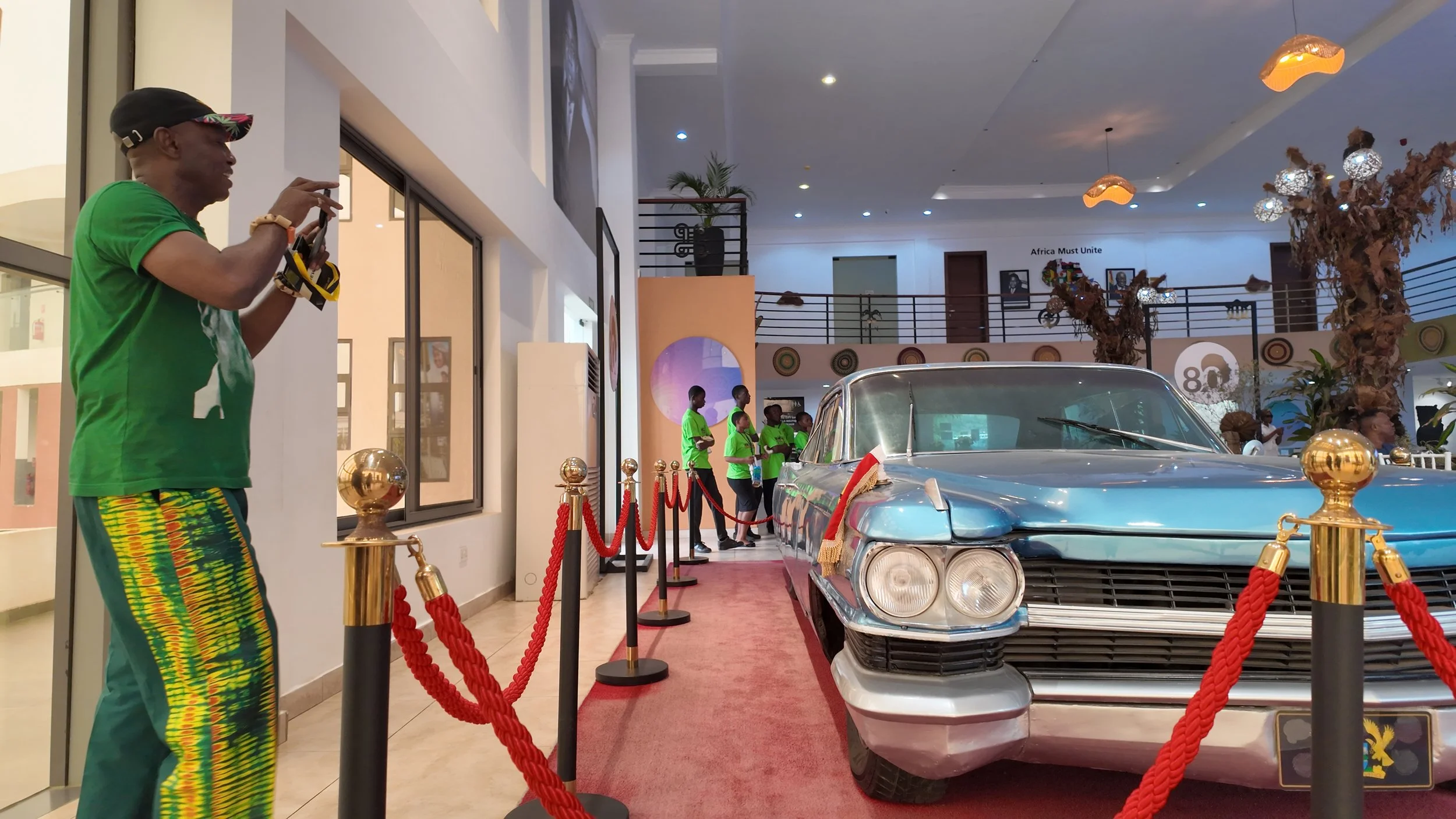
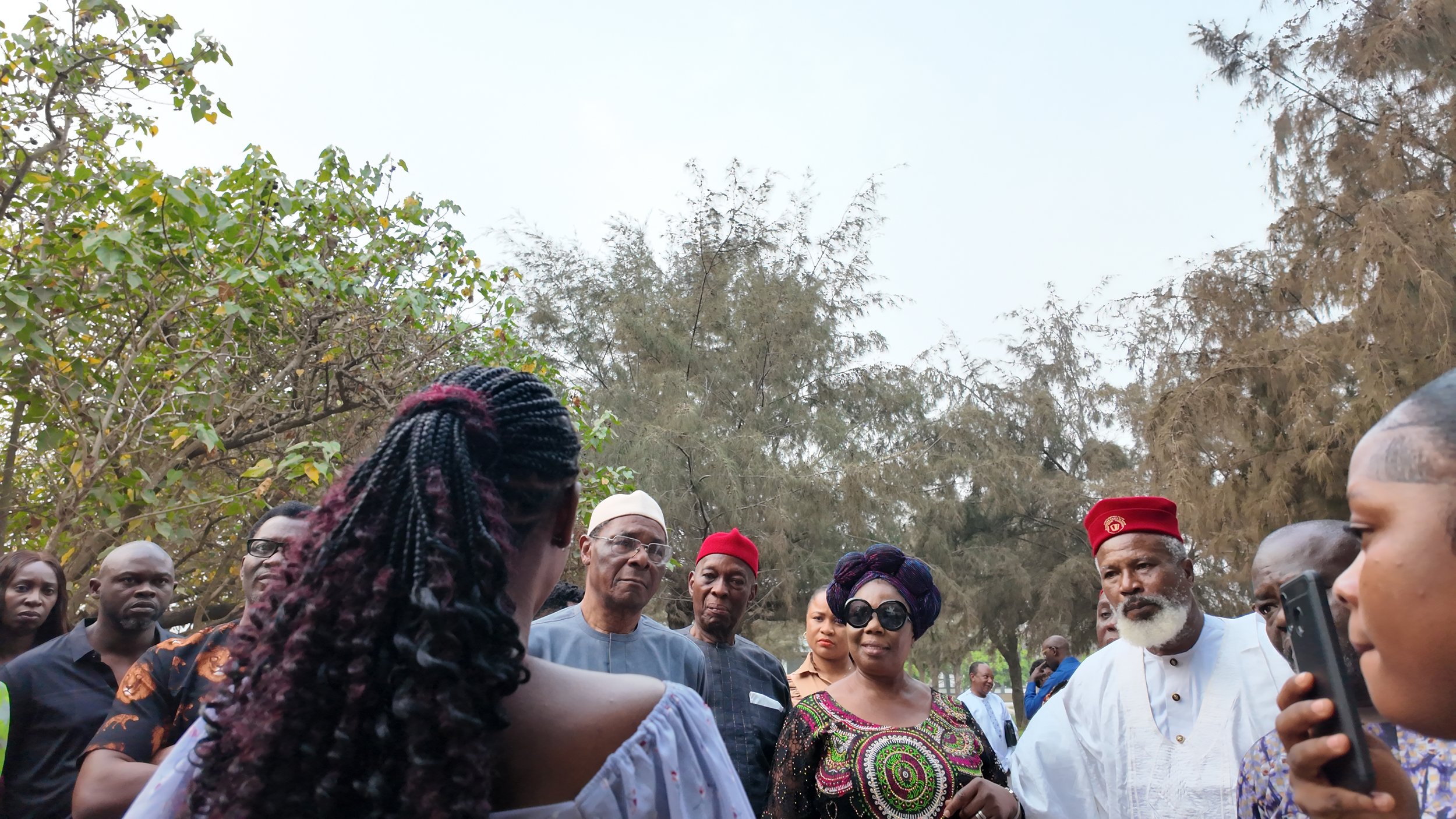
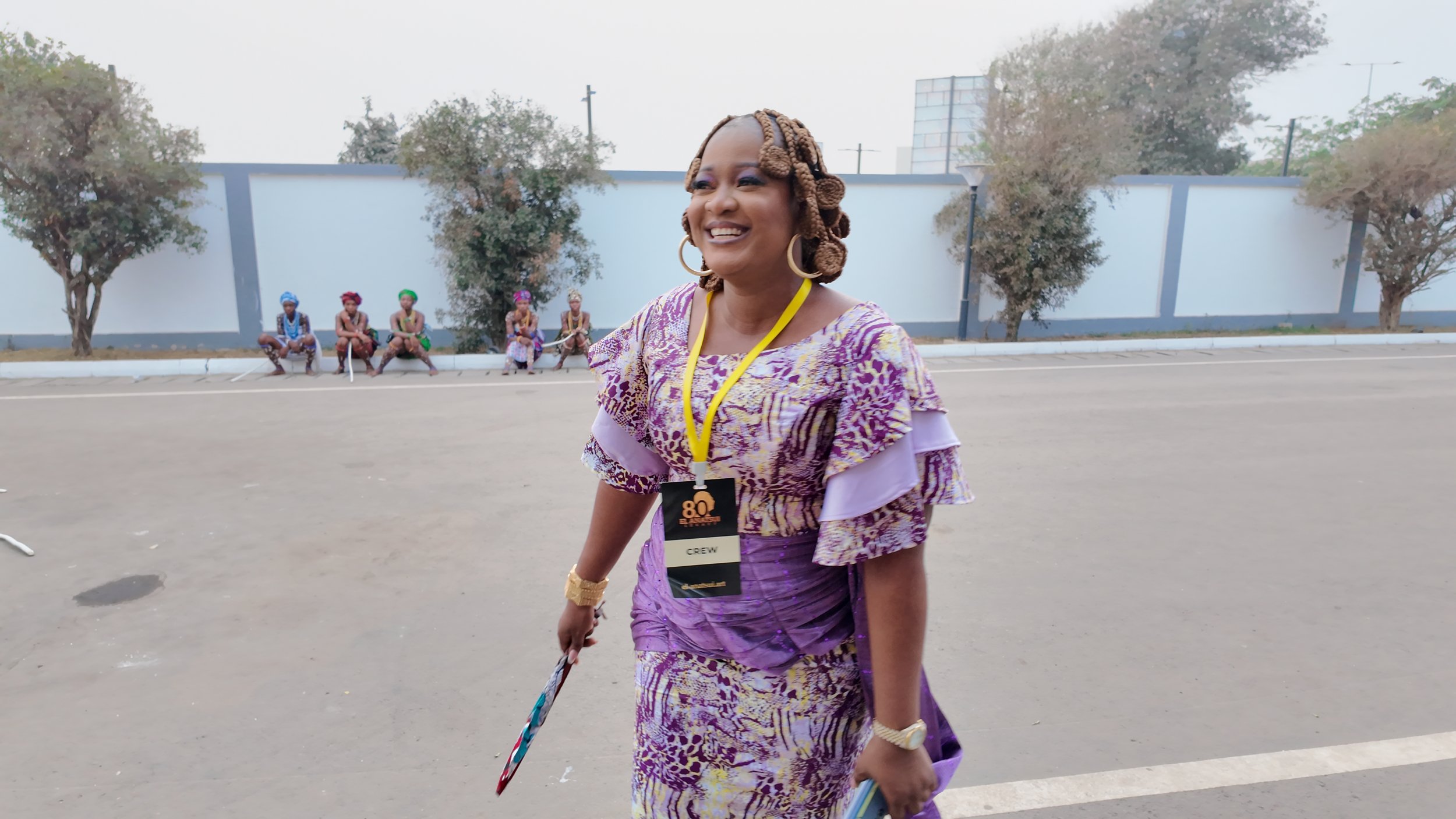


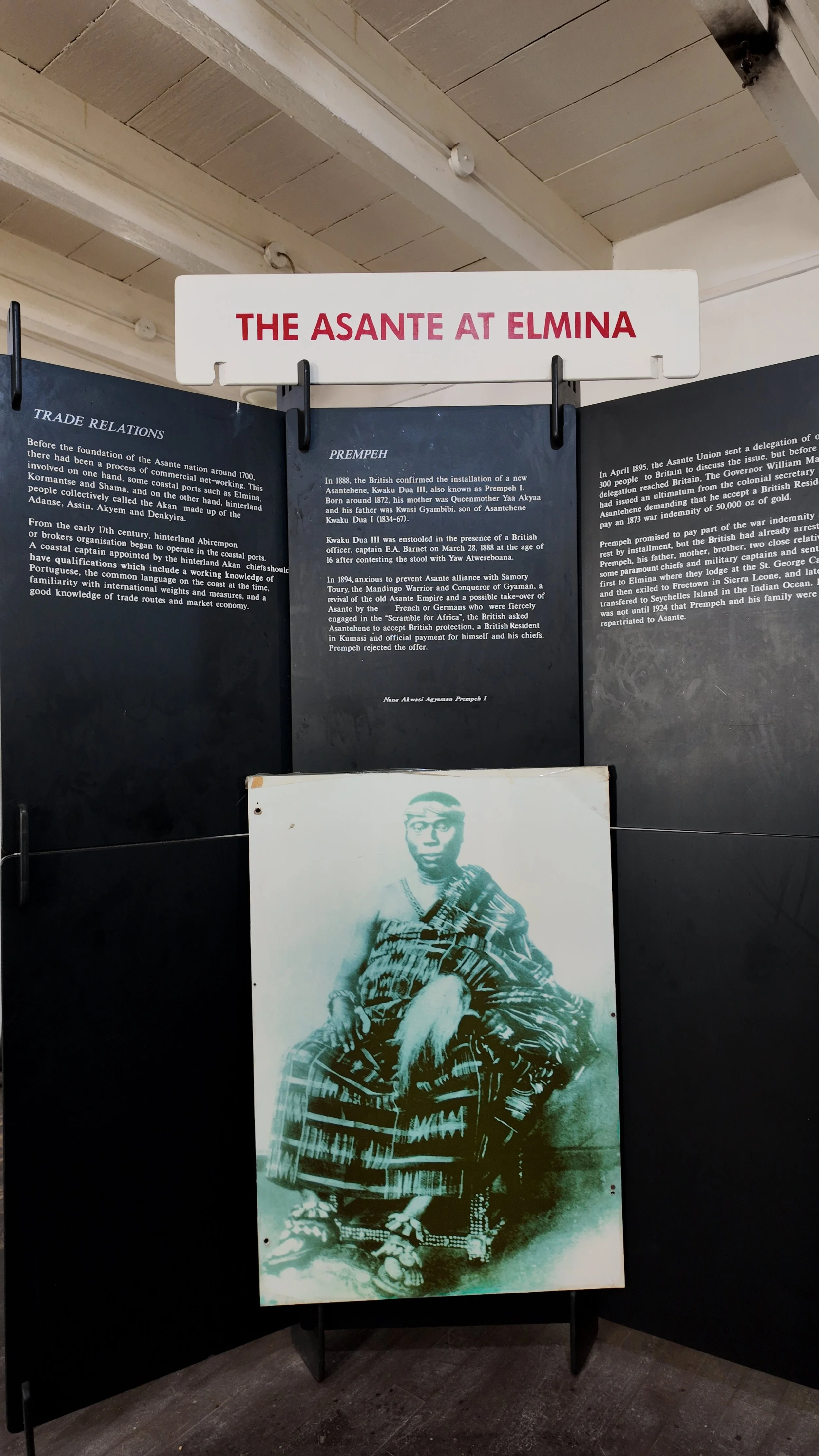
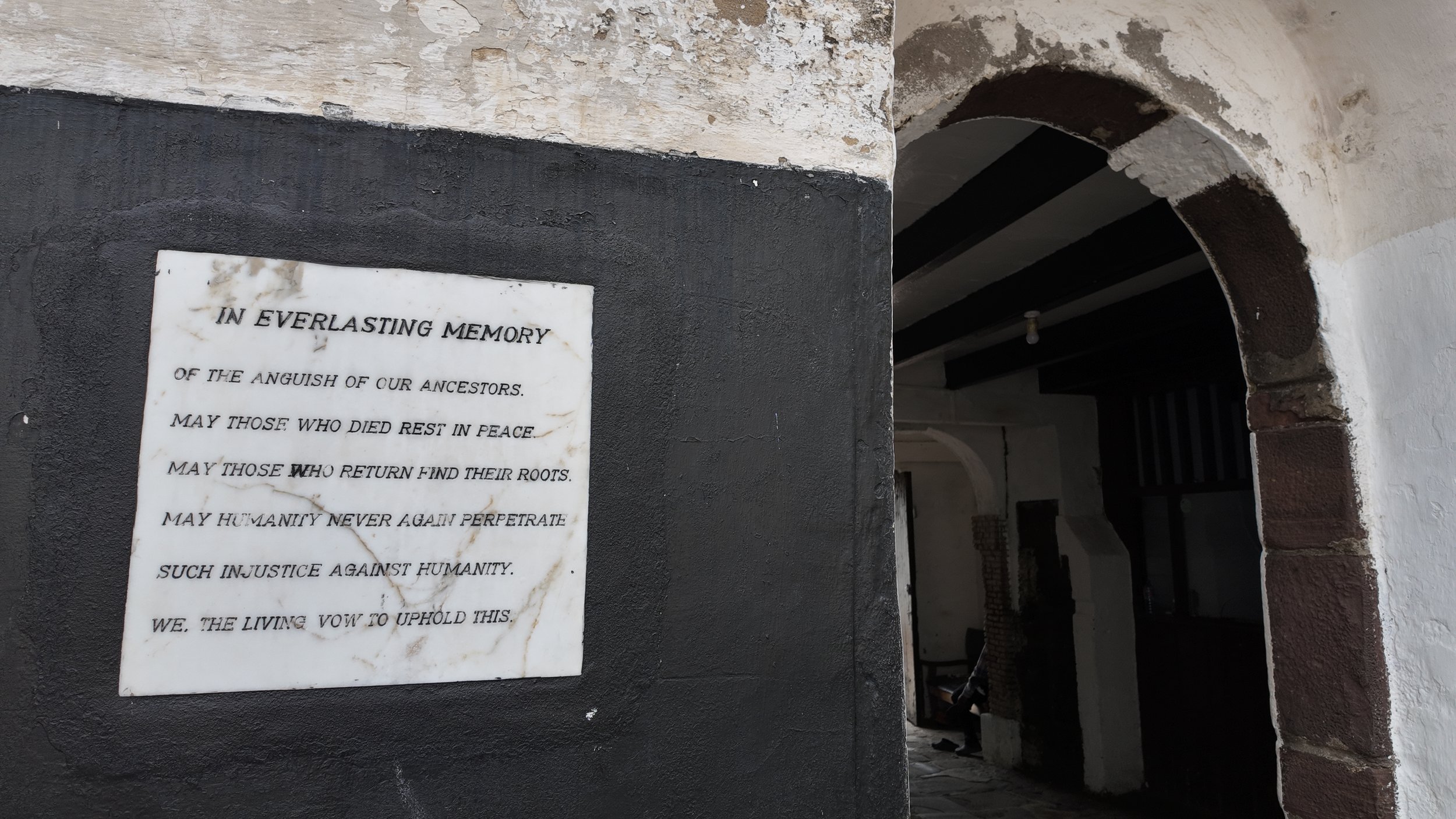


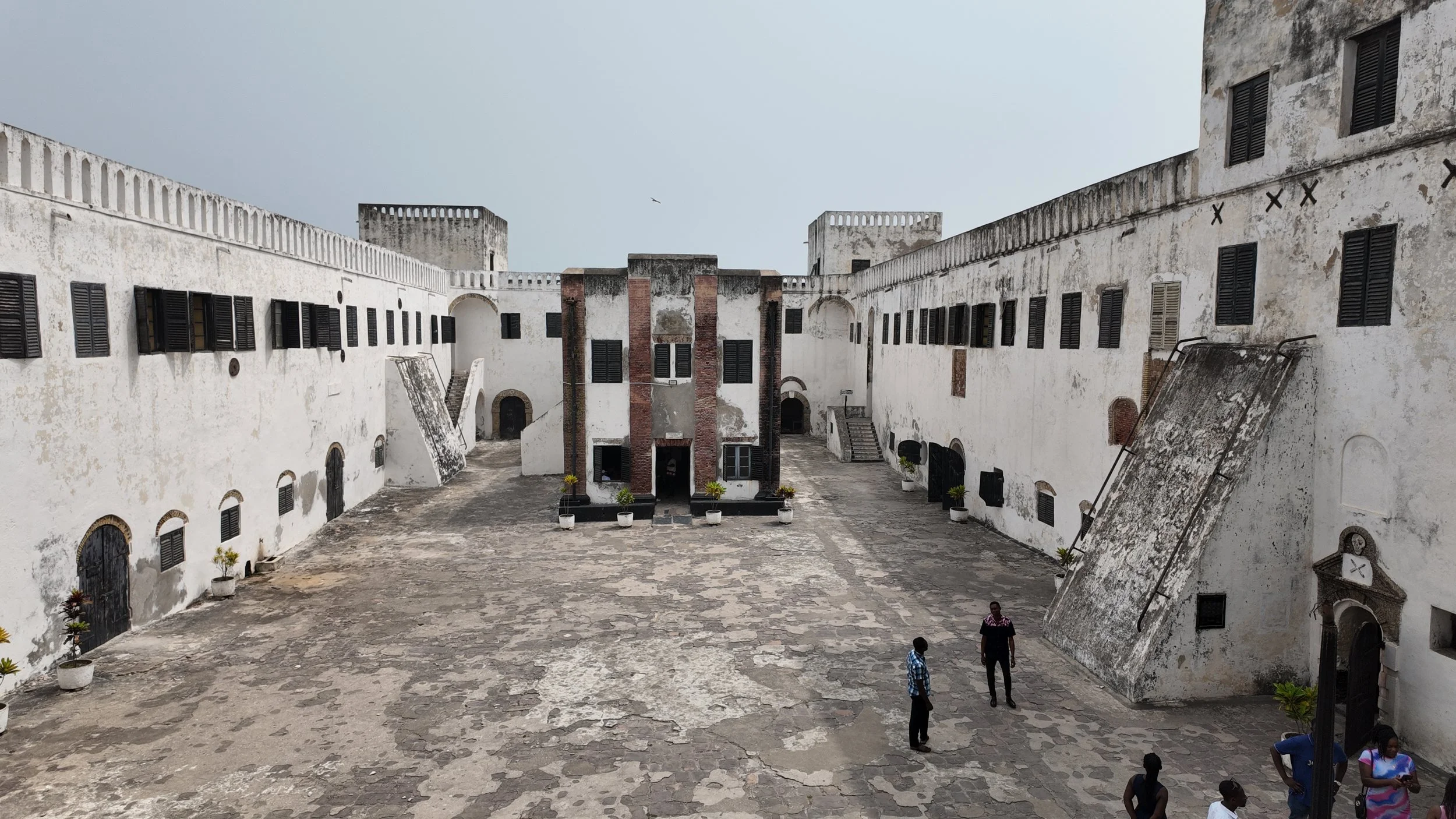
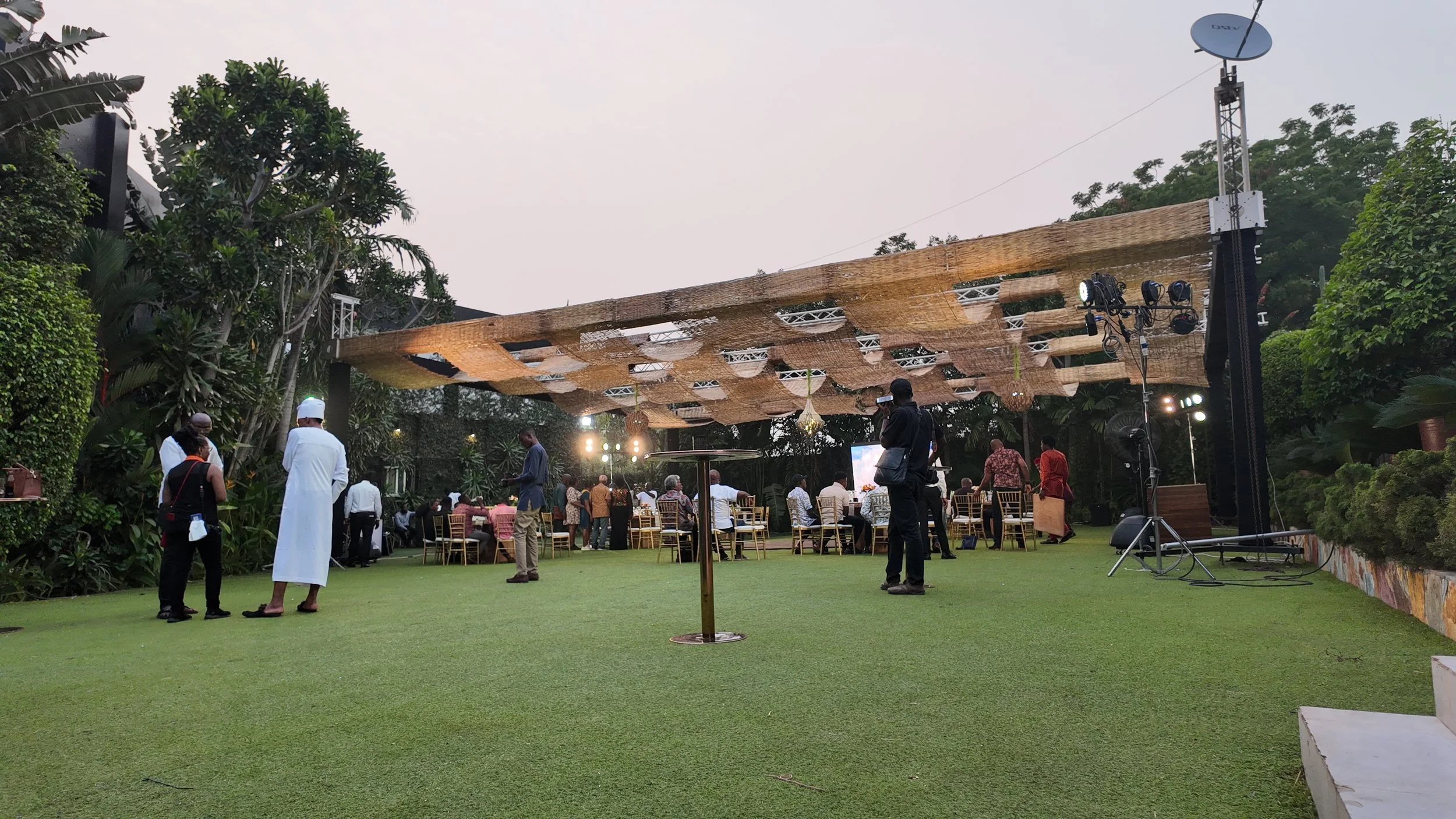






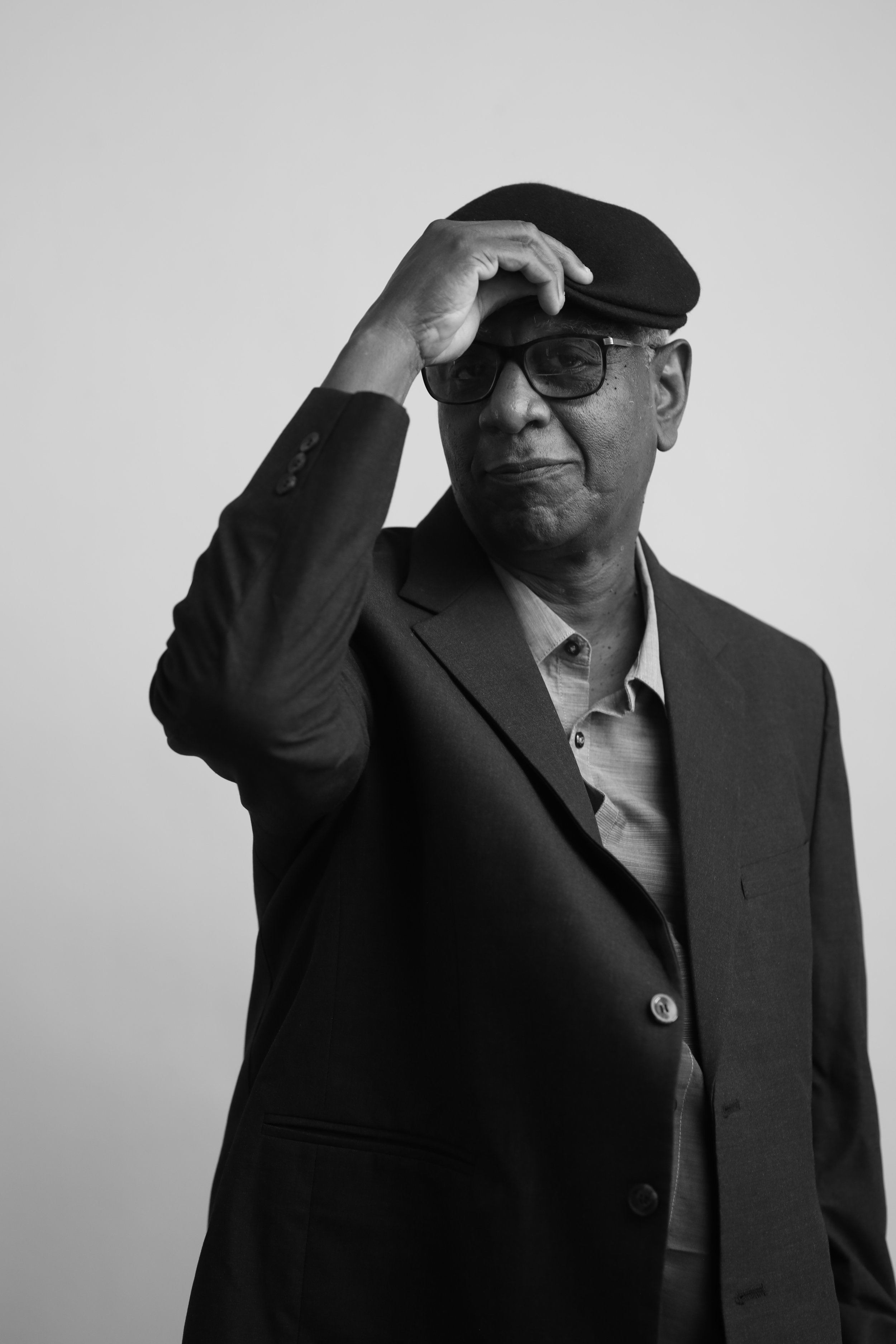

Share this story
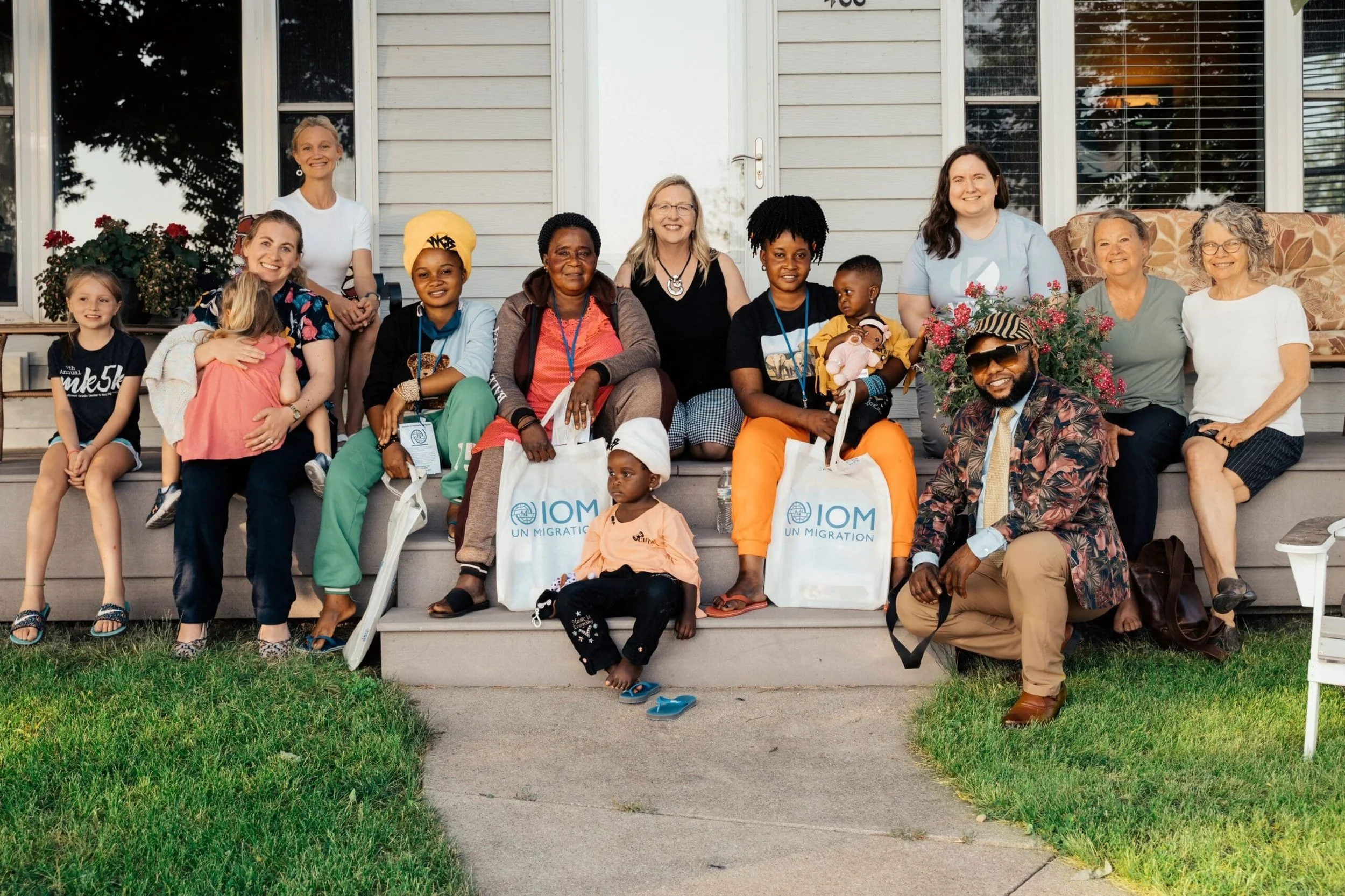
WELCOME CORPS Celebrate One Year Anniversary
Welcome Corps is a new program that empowers everyday Americans to welcome refugees arriving through the U.S. Refugee Admissions Program.
Photo courtesy of Welcome Corps
Africa-Related New York
Welcome Corps is a new program that empowers everyday Americans to welcome refugees arriving through the U.S. Refugee Admissions Program.
U.S. Secretary of State Anthony Blinken announces Welcome Corps
In January 2023, the U.S. Department of State, in coordination with the U.S. Department of Health and Human Services, launched the Welcome Corps, a new program that empowers everyday Americans to welcome refugees arriving through the U.S. Refugee Admissions Program (USRAP). In July 2023, the Department of State introduced the Welcome Corps on Campus, a new targeted education sponsorship initiative that enables U.S. colleges and universities to play a leading role in resettling refugee students.
The boldest innovation in the United States’ approach to refugee resettlement in four decades, the Welcome Corps builds upon our country’s long tradition of providing refuge to people forced to flee their homes. The launch of the program is widely popular among the American public and even more popular among those who personally know someone who is a refugee. In the first weeks following the launch, tens of thousands of people registered to learn more about the program and how they can join the Welcome Corps.
For more than 40 years, the Department of State has partnered primarily with non-profit resettlement agencies to provide initial resettlement assistance to newly arriving refugees. The Welcome Corps creates new opportunities for Americans in communities across the United States to engage directly in refugee resettlement, building on existing opportunities to volunteer with resettlement agencies.
Share this story
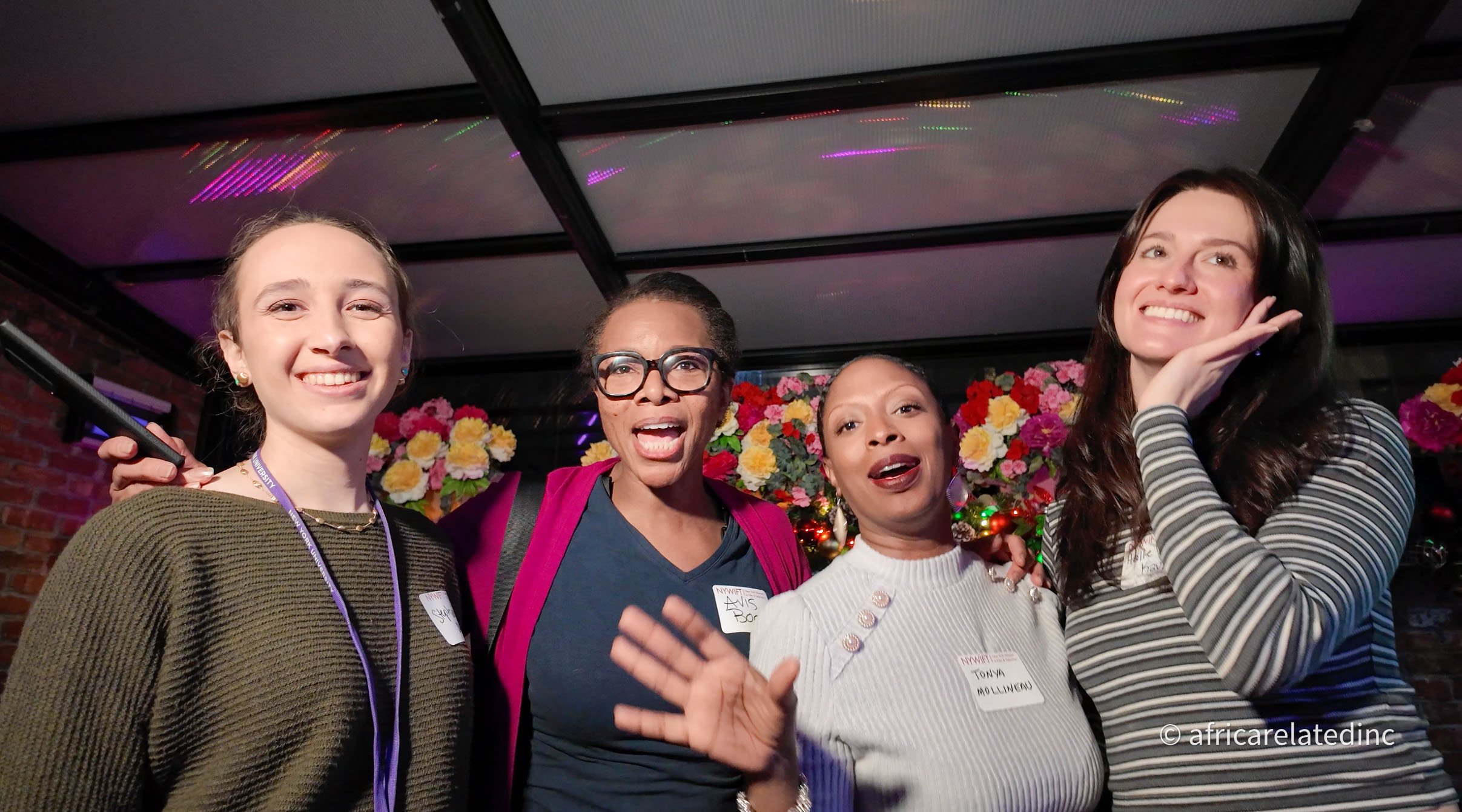
NYWIFT - Photos From First In-Person Gathering in 2024
JANUARY 22, 2024
Members of New York Women in Film & Television (NYWIFT), an advocacy and support organization for equality in the moving image industry, recently met at Tito Murphy's NYC, for a “Night Out” of cocktails, networking and laughs.
Members of the New York Women In Film & Television (NYWIFT) Night Out at Tito Murphy's NYC. Photo by Africa-Related
BY Oyiza Adaba, New York
JANUARY 22, 2024
Members of New York Women in Film & Television (NYWIFT), an advocacy and support organization for equality in the moving image industry, recently met at Tito Murphy's NYC, for a “Night Out” of cocktails, networking and laughs.


Jamire Bell & Toni Israel of REALEMN Productions
Membership is open to this incredible, vibrant, supportive community, with a discounted offer for new applications. Download it here and email to membership@nywift.org to get started.




New York Women in Film & Television (NYWIFT) advocates for equality in the moving image industry and supports women in every stage of their careers. As the preeminent entertainment industry association for women in New York, NYWIFT energizes women by illuminating their achievements, presenting training and professional development programs, awarding scholarships and grants, and providing access to a supportive community of peers.
Photos by @africarelated
Share this story

Where Should Africa Turn? BOOKINGS Publishes Foresight Africa 2024
The Brookings Institution in Washington, D.C. will launch its 2024 “Foresight Africa” report on January 26, 2024. The report contains top priorities and recommendations for Africa on where Africa should turn its attention in the year ahead.
Foresight Africa 2024. Photo courtesy of Bookings
BY Oyiza Adaba, New York
The Brookings Institution in Washington, D.C. will launch its 2024 “Foresight Africa” report on January 26, 2024 during a hybrid event. The report contains top priorities and recommendations for Africa on where Africa should turn its attention in the year ahead.
In this latest edition, experts offer their insights on key policy issues, including development finance, climate change, gender, entrepreneurship, governance, and more.
Foresight Africa is an annual report that captures top regional priorities for the year ahead published by The Brookings Institution, a nonprofit organization based in Washington, D.C.. Their mission to conduct in-depth, nonpartisan research to improve policy and governance at local, national, and global levels.
Download this year's chapters here and register to watch the launch event on January 26.