
ABUJA IS CUTTING DOWN ITS FUTURE - AND NO ONE SEEMS TO CARE
There are many reasons I fell in love with Abuja. One of them was its trees. Those trees are now disappearing.
Patrick O. Okigbo III - Abuja, Nigeria
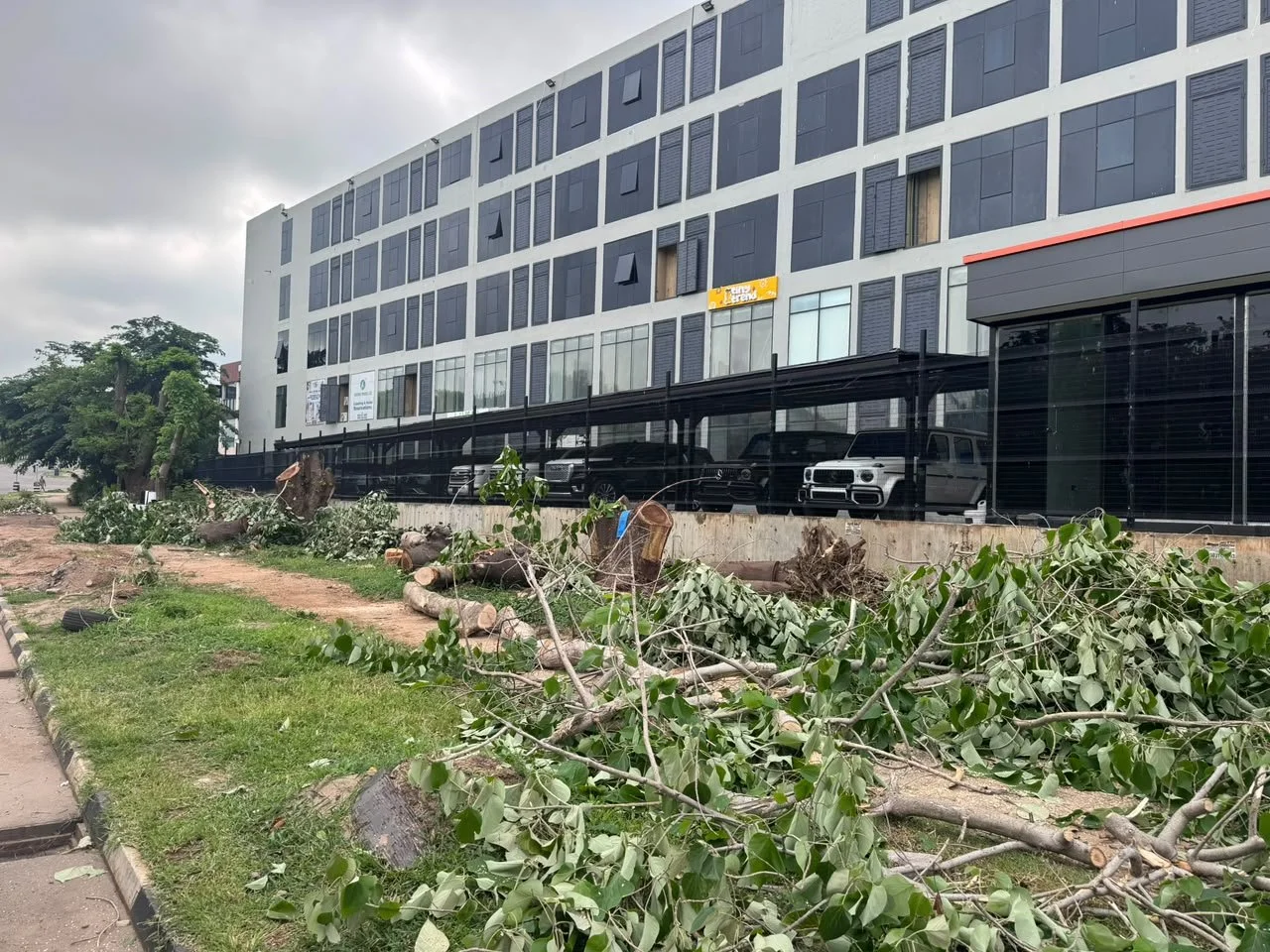
Image of trees felled in Abuja. Photo by Patrick Okigbo III
There are many reasons I fell in love with Abuja. One of them was its trees. Those trees are now disappearing.
After years in Lagos, where the air often felt as though it clasped its fingers around one’s windpipe, Abuja offered something altogether different. Its broad boulevards and generous sidewalks invited long morning walks. Later, when my wife and I took up cycling, those tree-lined avenues became part of our daily ritual. The freshness of the air was almost intoxicating.
The trees were more than landscaping. They gave the city identity. They softened its scale. They reminded you that Abuja had been imagined, not merely built—that someone had once tried to create a capital equal to Nigeria’s ambitions. I missed Lagos’s restaurants and bars, but Abuja’s serenity more than compensated.
Those trees are now disappearing.
Not because they have reached the end of their lives. Not because of disease. Municipal crews have been cutting them down in a methodical sweep, trunk by trunk, removing canopies that took decades to mature. I cannot say with certainty why this is happening. There is no public explanation. From what I can see, many are being sacrificed to make room for solar-powered street lights.
The loss feels larger than the trees themselves.
Abuja was conceived as a corrective to Lagos—a capital that would embody order instead of improvisation, foresight instead of congestion, aspiration instead of accumulation. Its boulevards were part of that vision. To remove mature trees without apparent hesitation suggests that somewhere along the way we have forgotten that a city’s greatest assets are not always the ones we have just built.
I do not blame the men operating the chainsaws, nor even those who signed the work orders. I doubt they act out of malice. If anything, the careful way the felled trunks are gathered suggests an appreciation of their commercial value.
The problem is deeper than bad intentions. It is a failure of imagination.
Development is not simply the accumulation of infrastructure. It is the stewardship of inheritance. Every generation receives assets it did not create and holds them in trust for those yet unborn. A mature tree is one of those assets. It cannot be replaced by a sapling any more than a century can be replaced by a promise.
Perhaps that is what saddens me most.
Within a generation, we have travelled from a society capable of imagining Abuja—a city designed to embody the future we believed Nigeria deserved—to one that no longer instinctively understands why mature trees matter. That distance cannot be measured in kilometres or years. It is measured in felled trunks.
A city is not improved every time something new is added. Sometimes progress lies in knowing what must not be removed.
This post, by itself, changes nothing. A tweet is not activism, and lament is not policy. But perhaps someone in or near my network can place this note before Minister Nyesom Wike.
I hope he receives it in the spirit in which it is is written. Many residents appreciate the investment his administration has made in Abuja’s roads, interchanges, and street lighting. Those improvements matter.
But so do the trees.
The choice was never meant to be between light and shade. A truly modern capital should know how to preserve both.
Because a hundred years from now, no one will remember who installed today’s street lights. But they will know whether we had the wisdom to leave them a city worth walking through.
Patrick O. Okigbo III is the Founder of Nextier, a public policy advisory firm and think-tank, focused on improving governance and development outcomes in Africa.
For more stories told from an African perspective, follow us at africarelatedinc
SHARE THIS STORY
The Dearth of Real Actors in Nollywood
Eliel Otote A is an author of many books and articles on Nollywood. In this article, he writes on the industry’s humble beginnings to its rapid global expansion lies, but has concern about the noticeable shortage of truly skilled, well-trained actors.
By Eliel Otote A

Actors Guild of Nigeria Logo
The Nigerian film industry, popularly known as Nollywood, has experienced tremendous growth over the past few decades. From humble beginnings marked by low-budget productions to a global entertainment force recognized on streaming platforms and international festivals, Nollywood has undoubtedly come a long way. However, beneath this rapid expansion lies a pressing concern-the noticeable shortage of truly skilled, well-trained actors.
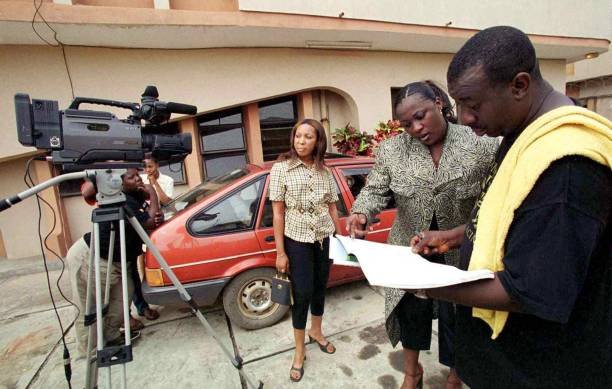
A Nollywood set. Photo: Free stock Getty Images
“A real actor is not just someone who appears on screen. A real actor understands character psychology, emotional truth, timing, body language, and the subtle art of storytelling. ”
Today, it is easier than ever to become an “actor” in Nollywood. Social media popularity, physical appearance, or mere connections often serve as entry tickets into the industry. While accessibility is not inherently a bad thing, it has led to a dilution of professional standards. Acting, a craft that demands discipline, emotional intelligence, and technical skill, is increasingly being reduced to mere line delivery and surface-level performance. Actors now exhibit themselves rather than interpret the character they are to play!
A real actor is not just someone who appears on screen. A real actor understands character psychology, emotional truth, timing, body language, and the subtle art of storytelling. They do not merely recite scripts-they live them. Unfortunately, many productions today suffer from performances that lack depth, authenticity, and emotional connection. This gap is what audiences feel when a story fails to resonate, regardless of how good the script or production quality may be.
One of the root causes of this problem is the absence of proper training. Unlike more established film industries where actors undergo rigorous preparation through drama schools, workshops, and continuous practice, many Nollywood actors skip this crucial phase. Some feel “too big” to learn. The result is a growing number of performers who have visibility but lack versatility and longevity. Watch five movies starring such lousy actors, you will think you’re watching five episodes of the same drama. No character differentiation! You only see the actor and not the role!
Another contributing factor to this dearth of good actors is the fast-paced nature of film production in Nollywood. Tight schedules often leave little room for rehearsals, character development, or actor coaching. Directors, under pressure to deliver quickly, sometimes settle for mediocrity rather than excellence. Over time, this cycle reinforces itself, creating an industry where quantity overshadows quality.
However, this narrative can change-and it begins with intentional training and skill development.
ArtsWORKSHOP
That is why you should attend ArtsWORKSHOP with my Friends and I on June 6th, 2026. If you are passionate about acting and truly want to stand out in Nollywood, then this workshop is not just an option-it is a necessity. Or, you can encourage others to participate in the workshop! It is designed to bridge the gap between aspiring performers and professional actors.
Here are the benefits:
Mastery of Acting Fundamentals
You will learn the core principles of acting-character analysis, emotional memory, improvisation, voice control, and stage/screen presence. These are the tools that separate amateurs from professionals. And as resource persons for the workshop, I carefully selected “Real Actors”…Yes, you heard me…not “models!”
2. Industry-Relevant Techniques
You will be exposed to techniques that are applicable both on stage and on camera, helping you adapt to different roles and production styles within Nollywood. And for references, material aids/e-books/audio/video etc will be given to all participants.
3. Confidence and Authenticity
Many actors struggle with confidence or overacting. This workshop will help you find your natural rhythm and deliver believable performances that connect with audiences.
4. Networking Opportunities
You will meet like-minded creatives, industry professionals, and potential collaborators who can influence your journey positively.
5. Position Yourself for Longevity
Fame without skill is temporary. Skill, however, builds a career.
This workshop equips you with the foundation needed to sustain long-term success in Nollywood.
The future of Nollywood depends not just on better cameras or bigger budgets, but on better actors-artists who respect the craft and are willing to grow. If you are serious about becoming one of them, then this workshop is your starting point.
Don’t just aim to be seen on screen. Aim to be remembered. Register now! Limited slots available!
Eliel Otote A
(Actor/Filmmaker/Author/Trainer)
Eliel is an author of many books and articles on Nollywood including “Getting Into Nollywood Professionally: The Actor’s Companion” And the Nolly-pedia and “Pioneering Nollywood: The Trials and the Errors (An Auto-ethnographic Account)”
For more stories told from an African perspective, follow us at africarelatedinc
SHARE THIS STORY
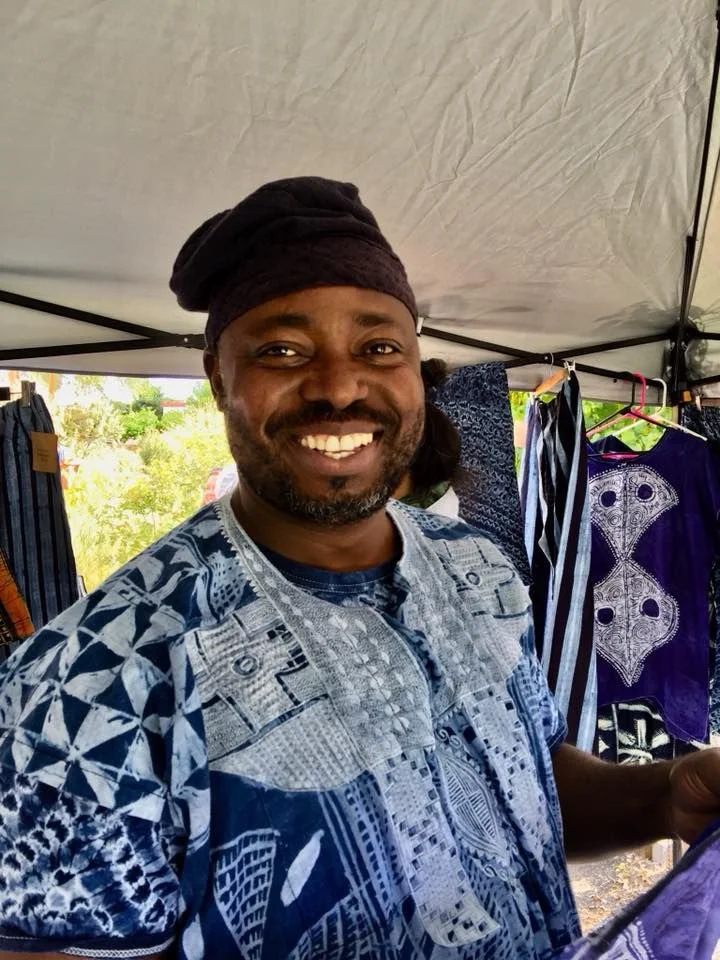
Textile Artist And Teacher Gasali Adeyemo Features on 'Messengers
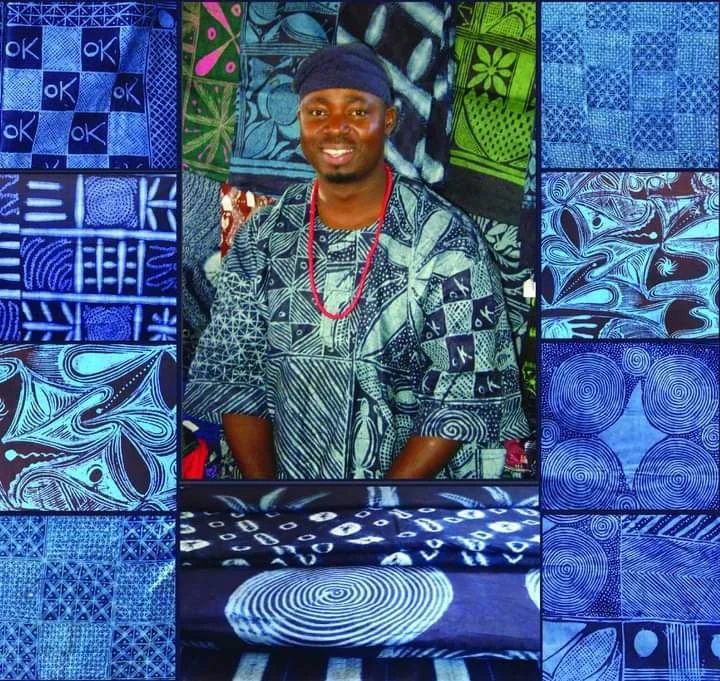
Textile artist and teacher Gasali Adeyemo talks about preserving Nigeria’s traditional textiles -like batik, adire, itinochi, and akwocha -his humble childhood, his biggest influences, and the next generation.
Africa-Related New York
Textile Artist Gasali Adeyemo dicusses the Yoruba art of Adire (tye-dye) making.
From modest beginnings to becoming a leading voice in textile preservation, Gasali Adeyemo shares a journey rooted in craft, culture, and continuity.
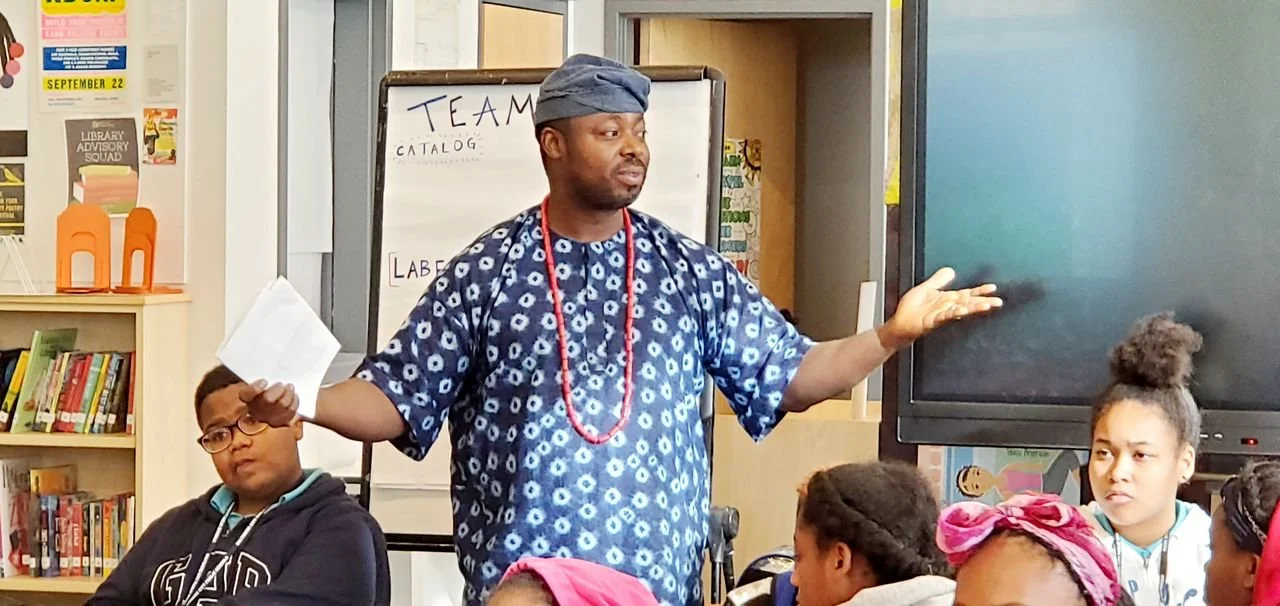
In this episode of Messengers with Oyiza, Gasali explores the rich history and cultural significance of traditional Nigerian textiles from Adire and Batik to Itinochi and Akwocha and the urgent need to preserve these indigenous techniques for future generations.
He shares his experience styling Viola Davis in the film "The Woman King". He also reflects on his early influences like Nike Art Gallery (@nikeartgallery), the discipline behind mastering textile artistry, and the responsibility of passing down knowledge in a rapidly changing world.
This is a conversation about heritage, identity, and the role of artists as custodians of culture.
Follow Gasali @yoruba_indigo. Watch now on Spotify.
‘MESSENGERS with Oyiza’ is an engaging interview TV/podcast series hosted by Nigerian journalist and producer Oyiza Adaba. Produced by Africa-Related and recorded remotely from New York and on location, the show blends relaxed conversations with interviews of selected guests who discuss topics about Africa for a global audience. The conversations aim to bridge divides, correct misconceptions, and spark positive discussion about Africa and its people. Each 30-minute episode features inspiring stories, creative graphics, video clips, and background reports. The series focuses on Africa's People, Places and Issues.
For more stories told from an African perspective, follow us at africarelatedinc
#AfricaRelated #AfricanArt #art #podcast #conversation #artist #messengerswithoyiza #Messengers #AfricaRelated #TextileArt #adire #batik #CulturalHeritage #TheWomanKing #oyizaadaba
SHARE THIS STORY
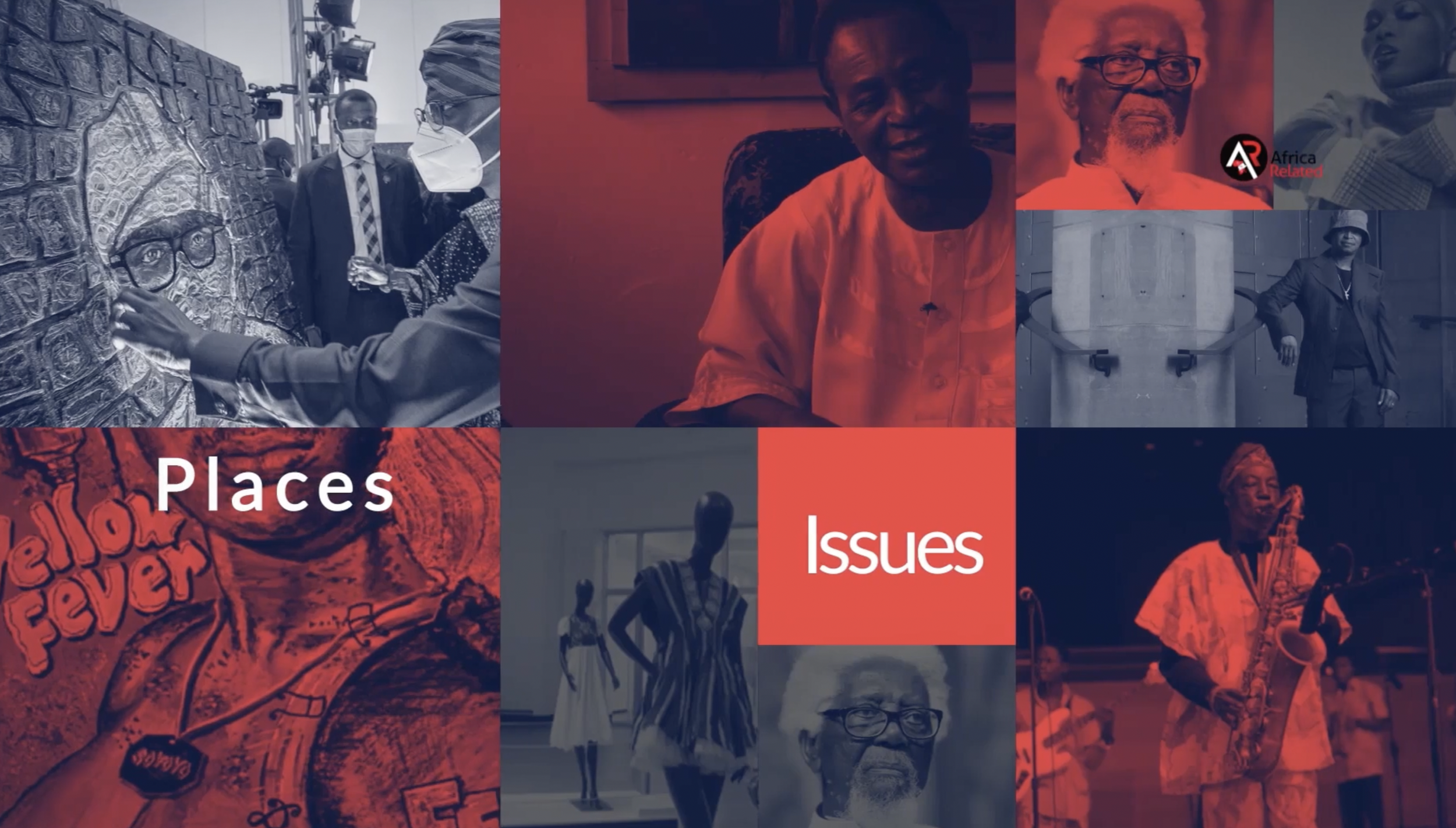
Now on SPOTIFY: Podcast Series 'MESSENGERS with OYIZA' Season 3
Don't miss MESSENGERS: with Oyiza - Season 3 on SPOTIFY! Bringing together the rich flavors of Africa's peoples, places and issues.
Africa-Related, New York
MESSENGERS: Bringing together the rich flavors of Africa's peoples, places and issues.
Podcast Series ‘Messengers with Oyiza’ on Spotify
‘MESSENGERS with Oyiza’ is an engaging interview TV/podcast series hosted by Nigerian journalist and producer Oyiza Adaba. Produced by Africa-Related and recorded remotely from New York and on location, the show blends relaxed conversations with interviews of selected guests who discuss topics about Africa for a global audience. The conversations aim to bridge divides, correct misconceptions, and spark positive discussion about Africa and its people. Each 30-minute episode features inspiring stories, creative graphics, video clips, and background reports. The series focuses on Africa's People, Places and Issues.
Season 3 Episodes:
EP 1: Beatrice Bee, Arthur, and Felivian - January 12, 2026
EP 2: Christopher Richards and Dean - January 19, 2026
EP 3: Nmadili Okwumabua - January 26, 2026
EP 4: Demas Nwoko - February 2, 2026
EP 5: Nnamdi Okonkwo - February 9, 2026
EP 6: Enos Nhlane Manthata - February 16, 2026
EP 7: Baba Ani - February 23, 2026
EP 8: Eedris Abdulkareem - March 2, 2026
EP 9: Amarachi Okafor - March 9, 2026
EP 10: Gasali Adeyemo - March 16, 2026
EP 11: Dede Mabiaku - March 23, 2026
EP 12: Lemi Ghariokwu - March 30, 2026
EP 13: Kofo Wonder - April 6, 2026
EP 14: Gogo Anyanwu - April 13, 2026
Produced by Africa-Related
Hosted by Oyiza Adaba
Sponsorship
Africa-Related Contact:
info@africarelatedinc.com
africarelatedinc.com/messengers
@africarelatedinc
Produced by Oyiza Adaba
Music: @thewordsbymoe
© An Africa-Related Production
#messengerswithoyiza #africarelated #africarelatedinc #art #music #textiles #film #africa #artfilms #podcast #museum #nigeria #demasnwoko #architecture #design #fashion #authors #history
SHARE THIS STORY
Should a state of emergency be declared in Nigeria?
At this point, it hardly feels like a question. Calamities are mounting week after week in Nigeria. The West African giant is experiencing one of its darkest periods of insecurity in recent history.
By melody-Esther soyemi - Africa-Related, Nigeria
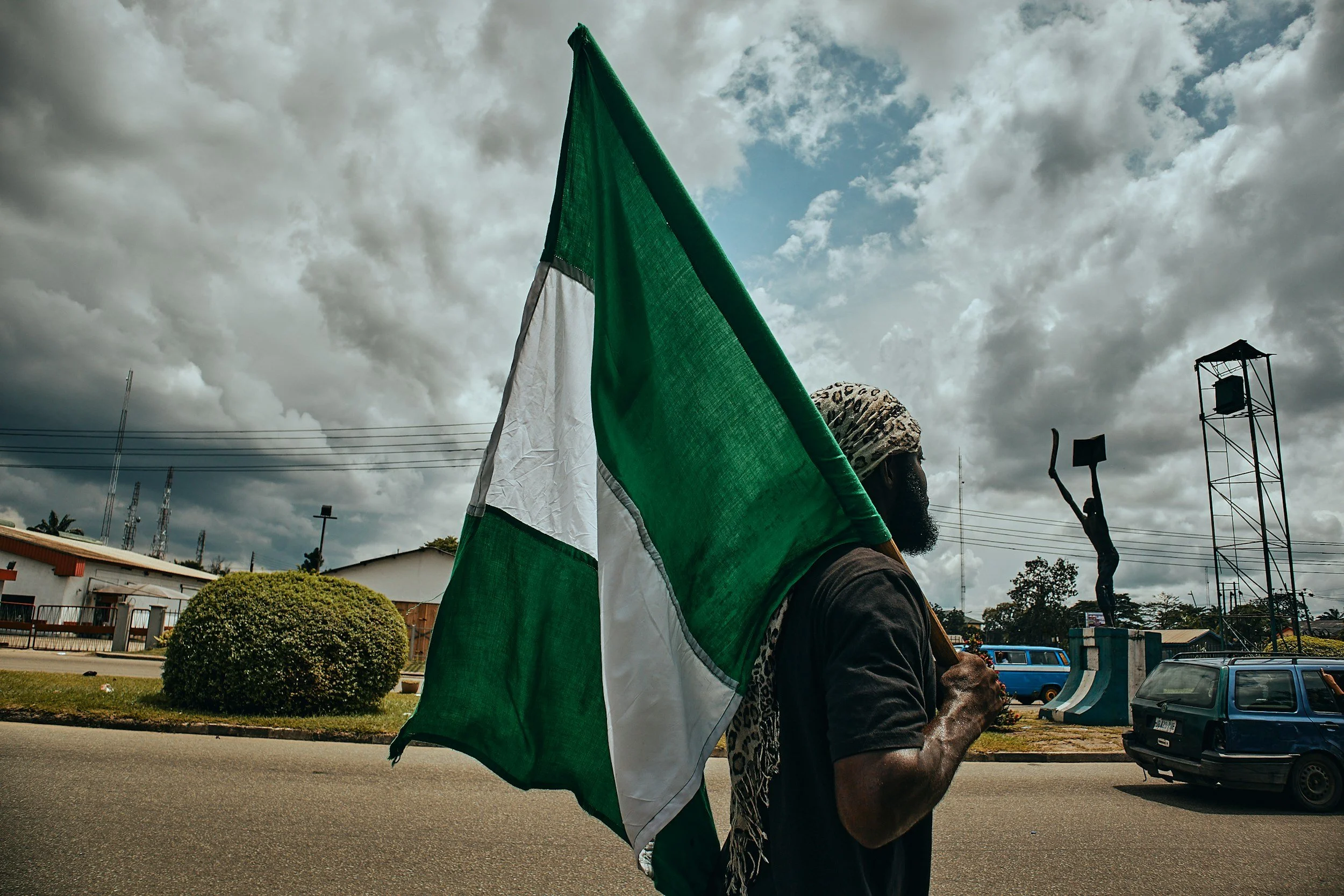
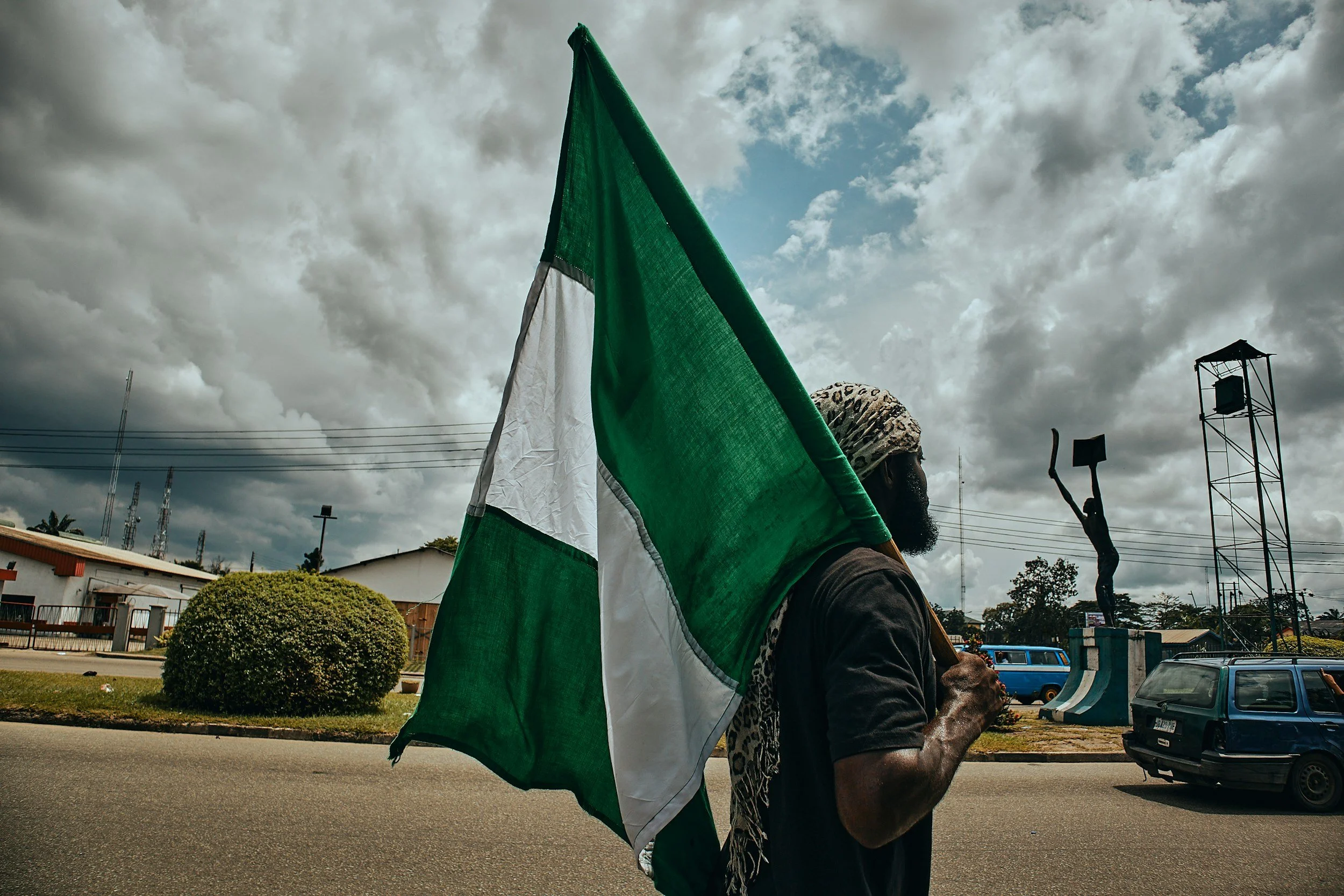
A man carrying the Nigerian flag. Photo: Emmanuel Ikwuegbu @emmages
At this point, it hardly feels like a question. Calamities are mounting week after week in Nigeria. The West African giant is experiencing one of its darkest periods of insecurity in recent history.
Calamities are mounting week after week, mass kidnappings, church attacks, the assassination of senior military officers, yet the national response has been slow, quiet, and disturbingly understated. Nigerians are left wondering: what is the President saying? What are state governors and security operatives doing? Where is the leadership, the urgency, and the decisive action that the moment demands?
On Monday, November 17, 2025, armed ‘bandits’ stormed the Government Girls Comprehensive Senior Secondary School (GGCSS) in Maga, in the Danko/Wasagu Local Government Area of Kebbi State a state in in North Eastern Nigeria. About 25 schoolgirls were abducted and the vice-principal, Malam Hassan Yakubu Makuku, was shot dead while trying to protect his students.
Security forces say a joint rescue operation involving the military, police, and local vigilantes is underway, combing forests and escape routes. But the horror remains: this is yet another Chibok-style tragedy. Another group of young girls torn from their classrooms, families plunged into fear, and a violent reminder that schools, the very places where the future of a nation is trained and shaped, are no longer safe. This is not just another abduction, it is a reminder of Chibok,. How many more “Chiboks” will Nigeria suffer before something truly shifts? The world is watchingg how very little has changed in Nigeria.
“Nigerians are not just grieving; they are tired of mourning without seeing change.”
A day after this incident, worshippers at a Christ Apostolic Church in the Eruku community of Kwara State - Central Nigeria - experienced a nightmare in real time on Tuesday evening, . Gunmen opened fire during a service that was being live-streamed online. Viewers across Nigeria watched in horror as shots rang out, people tried to hide behind the altar, attackers rounded up bodies, valuables. Several worshippers were shot, at least three people died, while others, including the pastor, were abducted.
One particular scene that was the most heartbreaking was when an old woman who could barely walk tried to hide behind the altar, it sparked an outrage and outcry that someone’s mother, grandmother or even a great grandmother was struggling for safety in the Church. How is one to process this thought? It raises the question of where can Nigerians actually feel secure, if even a house of worship - a space for peace, prayer, and refuge is now threatened.
The insecurity is not limited to civilians. Nigeria’s military forces have also suffered a devastating blow with the killing of Brigadier-General M. Uba at the hands of ISWAP militants. Reports suggest that his location may have been compromised shortly after a joint air and ground operation. His capture and execution by terrorists show that even high-ranking officers are not shielded from the worsening security breakdown. It’s also shows that a breached military has severe implications for national stability.
Weeks prior to these incidents U.S. President Donald Trump issued strong and controversial statements, claiming that Christianity in Nigeria is facing an “existential threat.” He accused “radical Islamists” of killing Christians and said he had instructed the U.S. Department of Defense to prepare for possible action should Nigeria fail to protect its citizens. He went as far as threatening military intervention and the suspension of U.S. aid, declaring on Truth Social that the U.S. may have to go into Nigeria “guns-a-blazing” if the situation continues.
Investigative journalist Jude Bela explains the complex factors behind Nigeria’s security challenges
The Nigerian government pushed back, insisting that Nigeria is not a nation divided by religion and that the portrayal of genocidal targeting of Christians does not reflect the country’s complex reality. Many analysts have echoed this, arguing that while Christians have undoubtedly suffered violence as have Muslims, the core drivers of instability in this case include terrorism, banditry, poverty, corruption, weak intelligence, and community conflicts, environmental changes; not a single religious agenda. Still, the very fact that a foreign leader is threatening intervention over Nigeria’s internal security crisis shows how badly the situation has deteriorated and how visible the failures of state response have become on the global stage.
Even American rapper Nicki Minaj raised global attention to the Christian persecution in Nigeria, calling for urgent international action during a U.S Mission to the United Nations event hosted by United States Ambassador to Nigeria, Mike Waltz, on Tuesday, she stated that In Nigeria, Christians are being targeted, driven from their homes and killed. Churches have been burned, families have been torn apart and entire communities live in fear constantly simply because of how they pray, stressing that the crisis demands urgent action.She insisted her position was not political or divisive. “I want to be clear, protecting Christians in Nigeria is not about taking sides or dividing people. It is about uniting humanity.”
So where does this leave Nigerians? Schools are no longer secure. Places of worship are coming under fire. Senior military officers are being hunted. Families are burying their loved ones while whole communities remain paralyzed by fear. Farmers have abandoned their farmlands. Yet policies remain slow, government statements vague, full of sympathy with concrete action limited. Nigerians are not just grieving; they are tired of mourning without seeing change.
This is why asking whether a state of emergency should be declared is not enough. One could argue that it should already have been declared. The country is facing a coordinated and escalating threat that demands more than routine security deployments or press statements. A nationwide emergency would only matter, however, if it comes with real reforms: stronger intelligence systems, better coordination, genuine investment in community security, and full transparency and accountability in how power and resources are used.
If not, a state of emergency risks becoming another symbolic gesture with no lasting impact. But without decisive action soon, Nigeria risks more kidnappings, more church and mosque massacres, more military losses and possibly even the loss of control over its own security narrative; as foreign actors begin shaping the global response.
The question, therefore, is no longer “should” a state of emergency be declared but why it has not been declared already.
share this story
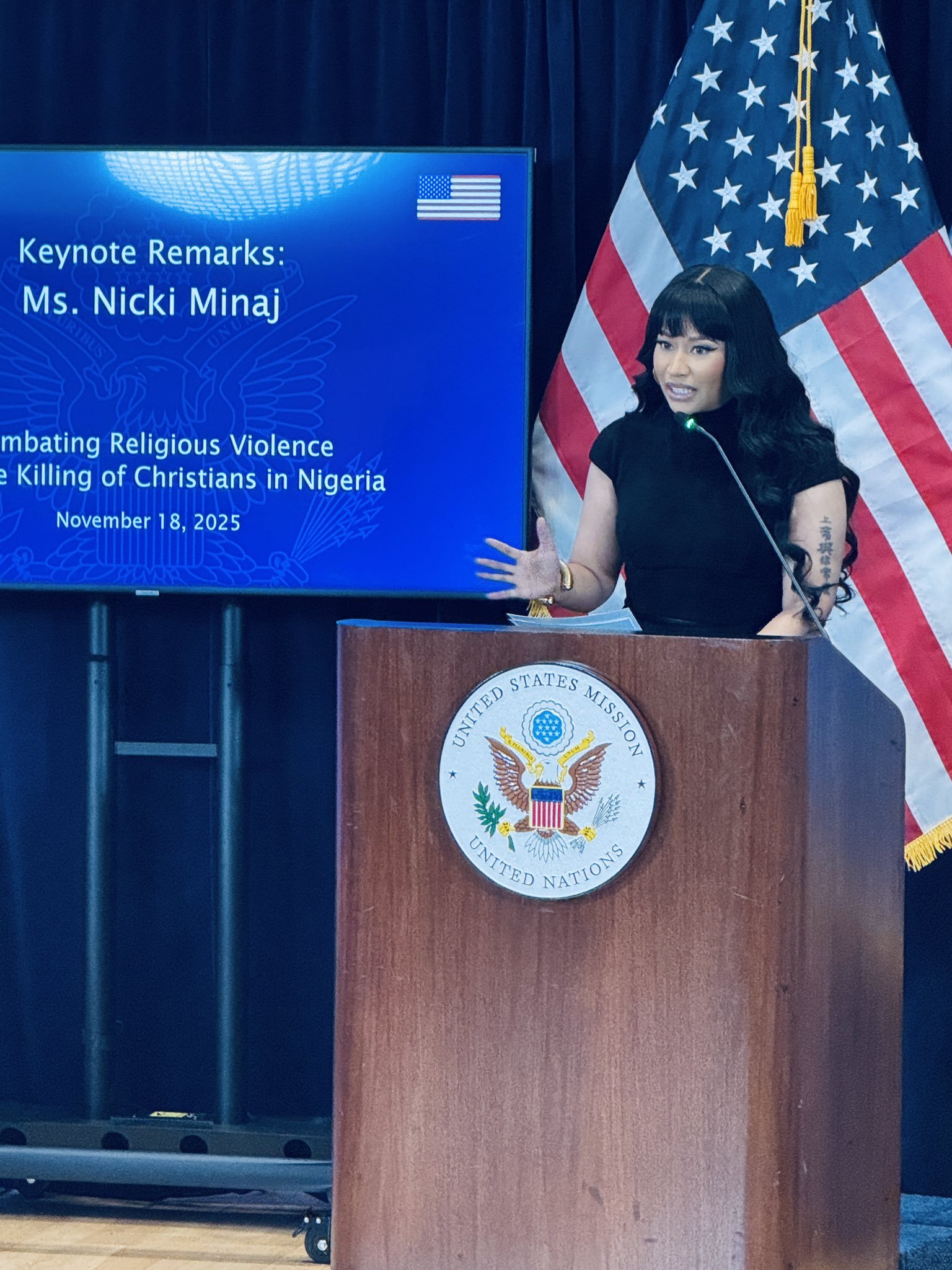
Nicki Minaj Speaks on Persecution of Christians in Nigeria
Nicki Minaj Speaks on Persecution of Christians in Nigeria
By Africa-Related, New York
"I would like to thank @POTUS for prioritizing this issue and for his leadership on the global stage in calling for urgent action to defend Christians in Nigeria." - @NICKIMINAJpic.twitter.com/gi8bLtF1Qt — @USUN November 18, 2025
TOPIC: Persecution of Christians in Nigeria
BRIEFER: U.S. Ambassador to the UN Mike Waltz
WHEN: Tuesday, November 18; 3:00 p.m. ET
BACKGROUND: On Tuesday, November 18, Ambassador Mike Waltz, U.S. Representative to the United Nations, hosted an event alongside grammy-winning rapper Ms. Nicki Minaj, faith leaders, and other prominent figures to address the critical issue of protecting religious freedom and the rising violence against Christians, particularly in Nigeria.
The event was live-streamed, and the link shared through USUN's X account: https://x.com/USUN?lang=en
Remarks at a U.S. Hosted Event on “Combatting Religious Violence and the Killing of Christians in Nigeria”
United States Mission to the United Nations
November 18, 2025
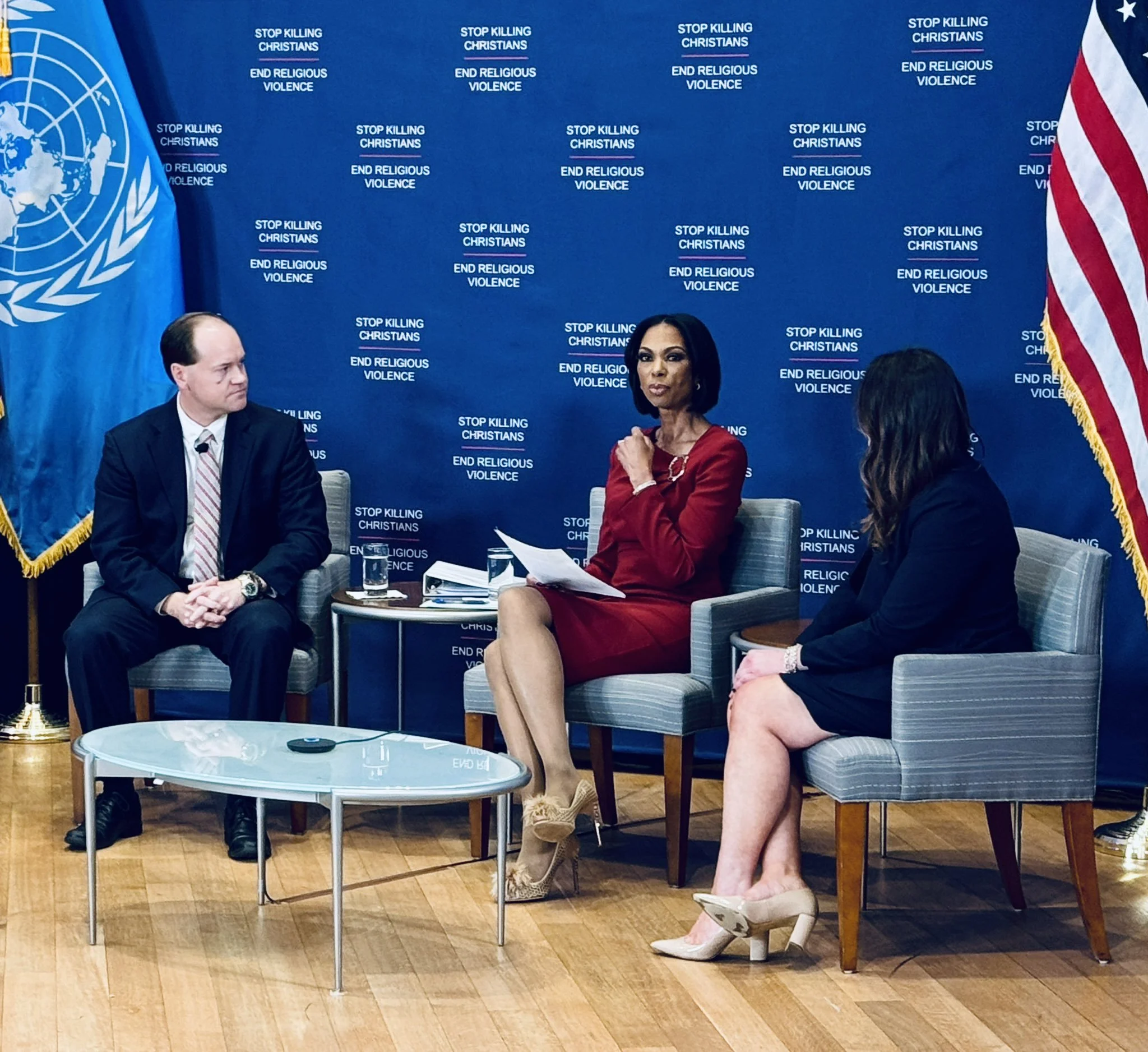
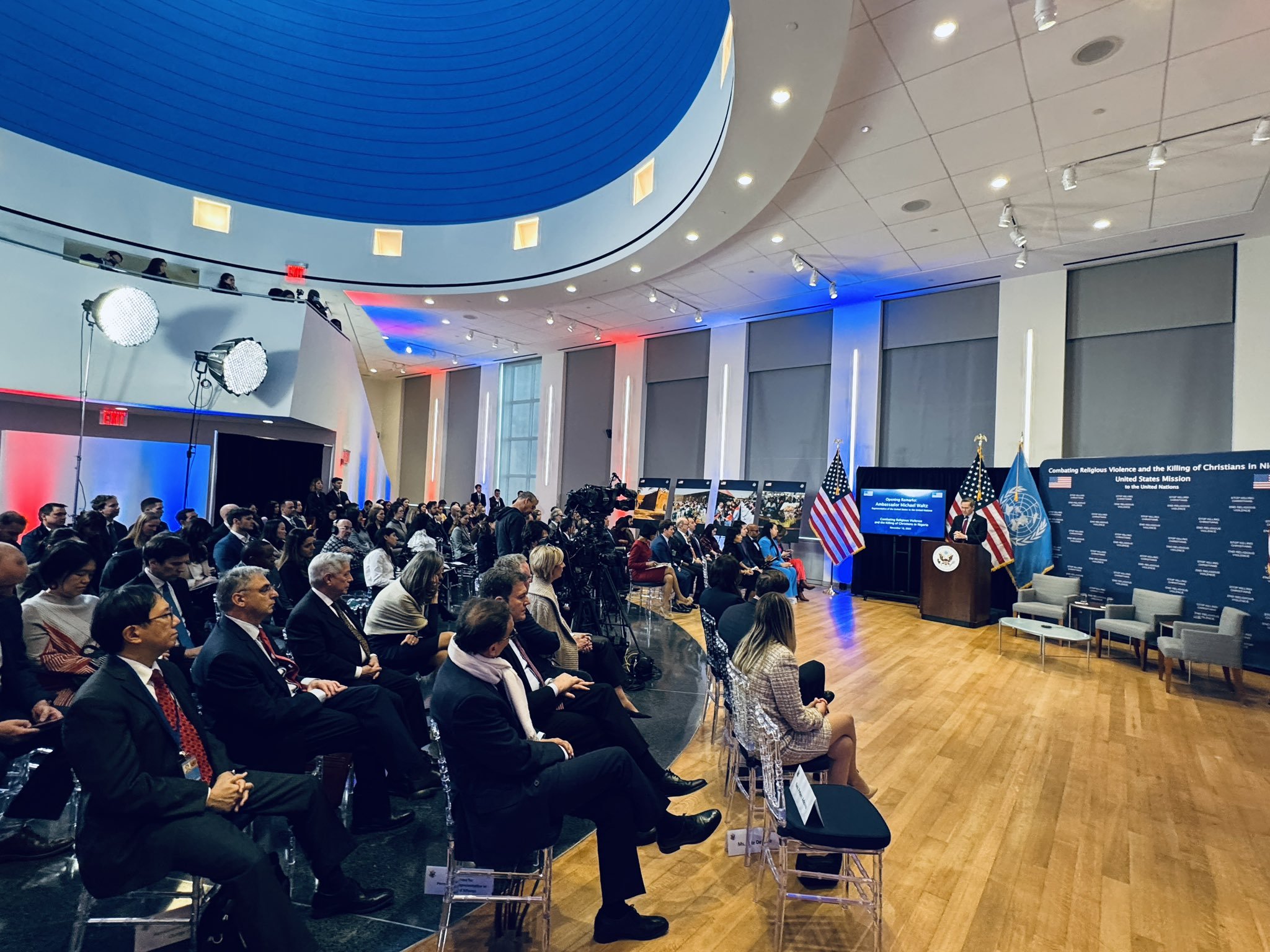
AMBASSADOR MIKE WALTZ: Oh my goodness. Thank you so much for everyone who has joined us today. And for a number of our ambassadors and delegates who have joined us, thank you for coming. To our faith leaders, survivors of some of these atrocities, and what I would call everyone here a friend of freedom, welcome to the United States Mission to the United Nations.
And today we speak of blood. We speak of the blood that still cries from Nigerian soil. This is deeply personal for me, as I know it is for Ms. Minaj and her pastor here, Peters Adonu, and others. I had the opportunity to serve in Nigeria in 2015, if you remember when then 300 little girls were kidnapped from their schools, ripped out of their homes and schools in the middle of the day, and in the middle of the night.
We sent a small team over there, and we trained – Nigeria’s equivalent of their Navy SEALs – to go get those girls back. It was righteous work. We didn’t get them all back, unfortunately, but we got some. Some will be lost forever. And if you remember the infamous save the girls campaign, that was 10 years ago. Folks, it’s still happening. It just happened yesterday. 25 little girls were ripped out of their school. I pray that we get them back. But what often happens is they’re sold into sex slavery. They’re forced to renounce their religion. They never see their homes or families again, and they literally disappear to the dark underbelly of extremism and sex slavery.
Look, 10 years later, the horror continues in the middle belt and in the north. Churches burn mothers, bury their children for the crime of singing Amazing Grace. Pastors have been beheaded. Pastors have been beheaded for preaching the Sermon on the Mountain, entire villages wake up to gunfire, because they dare to commit the crime, the crime of calling Jesus their Lord. People go to jail under blasphemy laws for simply wearing a cross. This is not random violence. This is genocide, wearing the mask of chaos.
Nigeria is Africa’s most populous nation and a vibrant mosaic of cultures and faiths, but it is under siege. And in the northern region, you have 12 Muslim majority states that are enforcing Sharia law and have enforced it since 1999. Jihadi groups like Boko Haram and the Fulani militias continue to unleash targeted violence. It is targeted. It is specific, on these Christian communities.
This year alone, the NGO, the nonprofit Open Doors, reports a very sharp rise in attacks. They’re reporting 80%, 80% of the violence against Christians worldwide is occurring in Nigeria. Thousands are displaced, are killed in faith based reprisals.
So weeks ago, a few weeks ago, the United States designated Nigeria a Country of Particular Concern for severe violations of religious freedom, spotlighting what can only be described as the government’s failure to curb these atrocities. And while Nigerian officials maintain that terrorism strikes all faiths indiscriminately, and they do. There is a body of evidence, and you are going to hear that from our experts today that paints a very grim picture of disproportionate suffering among Christians, where, again, families are torn apart. Clergy is repeatedly assassinated in entire congregations. Church congregations – you’re seeing, you see some of the images here – are driven into hiding.
Folks, we have an entire faith that is being erased, one bullet at a time, one torched Bible at a time. Yet, in the face of this evil one leader has refused to look away. President Trump has made the persecuted church his priority like no other president before him in American history. He was the first U.S. president to convene world leaders right here at the United Nations in 2019 to draw attention, draw the world’s attention to what is happening. He created the Religious Liberty Commission to fight for believers everywhere. And while Nigeria’s Christians cried out. He answered, and he has answered loudly. He has reminded the world that protecting Christians is not about politics. It is a moral duty.
So inspiration alone is not enough. We need voices that pierce the silence that we’ve heard from the international community, that humanizes the statistics that we keep hearing, and that demands accountability, and that’s why we’re here today to hear from a pastor that will dial in through our embassy in Nigeria, and we’re going to hear his first hand accounts of the suffering. We’re also going to hear from experts who have dedicated their lives to religious liberty.
I especially want to thank my friend Harris Faulkner, who, in addition to just being an amazing person, is also the daughter of a U.S. Army Colonel – so that makes her extra special in my heart – and she has spent much of her career protecting this most basic – folks this is the most basic of liberties: to worship as one sees fit.
But we are especially thrilled that we’re going to hear from an especially powerful voice, a fearless advocate whose passion for justice transcends borders, and she uses her voice to defend the voiceless. Hers are not empty words. They are a clarion call echoing the UN’s, the United Nations own Universal Declaration of Human Rights, which proclaims that, quote, everyone has the right to freedom of thought, to freedom of conscience and to freedom of religion. She steps onto this world stage, not as a celebrity, but as a witness. She uses and has used her influence to spotlight Nigeria’s persecuted church, reaching out to her 28 million followers, her Barbz, as I now have learned, and she uses this, and as she steps on this global stage to fund emergency relief and to demand action.
Nicki, I can’t tell you how much I admire you. You’re stepping up, you’re leaning into this issue. You’ve enjoyed amazing success, and you could be sitting back and just enjoying it. You could be just living the good life, but you’re willing to come here today and roll up your sleeves and let’s try to solve this. Let’s try to save these people. So everyone, please join me in welcoming a daughter of the Caribbean, a champion of the oppressed and a sister in Christ Nicki, Minaj.
###
MS. NICKI MINAJ: Hello everyone. I must say, I am very nervous, so please – Well, thank you, Ambassador Waltz for this invitation. It is an honor to stand on this stage with you and the other distinguished speakers here today to shine a spotlight on the deadly threat faced by thousands of Christians in Nigeria.
I would like to thank President Trump for prioritizing this issue and for his leadership on the global stage and calling for urgent action to defend Christians in Nigeria to combat extremism and to bring a stop to violence against those who simply want to exercise their natural right to freedom of religion or belief.
I stand here as a proud New Yorker with a deep sense of gratitude that we live in a country where we can freely and safely worship God, regardless of one’s creed, background, or politic. No group should ever be persecuted for practicing their religion, like I recently stated on social media, and we don’t have to share the same beliefs in order for us to respect each other. We’re way beyond thinking or expecting or assuming for you know, the person sitting next to you to have the exact same beliefs. We’re beyond that. That’s ridiculous, but that shouldn’t make one person feel less safe than anyone in any room.
Music has taken me around the globe. I have seen how people, no matter their language, culture, or religion, come alive when they hear a song that touches their soul. Religious Freedom means we all can sing our faith, regardless of who we are, where we live, and what we believe.
But today, faith is under attack in way too many places. In Nigeria, Christians are being targeted, driven from their homes and killed. Churches have been burned, families have been torn apart, and entire communities live in fear constantly, simply because of how they pray.
Sadly, this problem is not only a growing problem in Nigeria, but also in so many other countries across the world, and it demands urgent action. And I want to be clear, protecting Christians in Nigeria is not about taking sides or dividing people. It is about uniting humanity.
Nigeria is a beautiful nation with deep faith traditions and lots of beautiful Barbz that I can’t wait to see. When one’s church, mosque, or place of worship is destroyed. Everyone’s heart should break just a little bit, and the foundation of the United Nations, with its core mandate to ensure peace and security, should shake.
I am joined here today by peace builders, by faith leaders, by those who saw violence, saw rising intolerance, saw the threats clearly before us, and chose not to look the other way. I am inspired by their work to build interfaith ties, to see the humanity across the lines which might divide us, and to fight for security and liberty for all those who pray.
I look forward to our discussion today, and I hope it will encourage deepened solidarity for us to urgently work together to ensure every person can enjoy the right to believe, to worship, and to live in peace.
Barbz, I know you’re somewhere listening. I love you so very much. You have been the ultimate light in my life and career for so long. I appreciate you, and I want to make it very clear once again, that this isn’t about taking sides. This is about standing up in the face of injustice. It’s about what I’ve always done for my entire career, and I will continue to stand for that for the rest of my life. I will care if anyone anywhere is being persecuted for their beliefs.
Thank you.
###
share this story
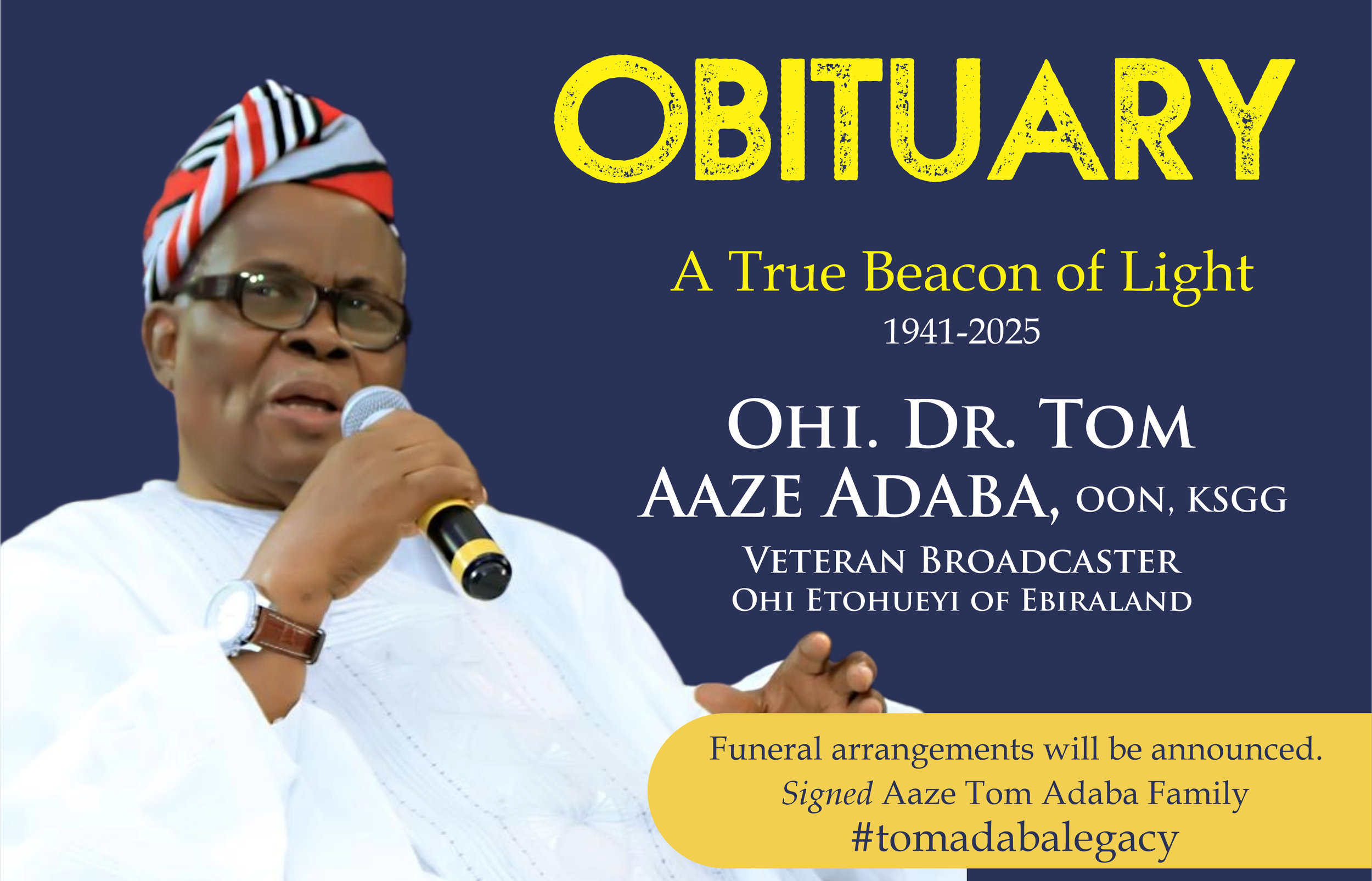
AAZE THOMAS ADABA, (OON, KSM, KSGG). Ohi Etohueyi of Ebiraland
Tributes | Life | Gallery | Stories
AAZE THOMAS ADABA, (OON, KSGG). Ohi Etohueyi of Ebiraland
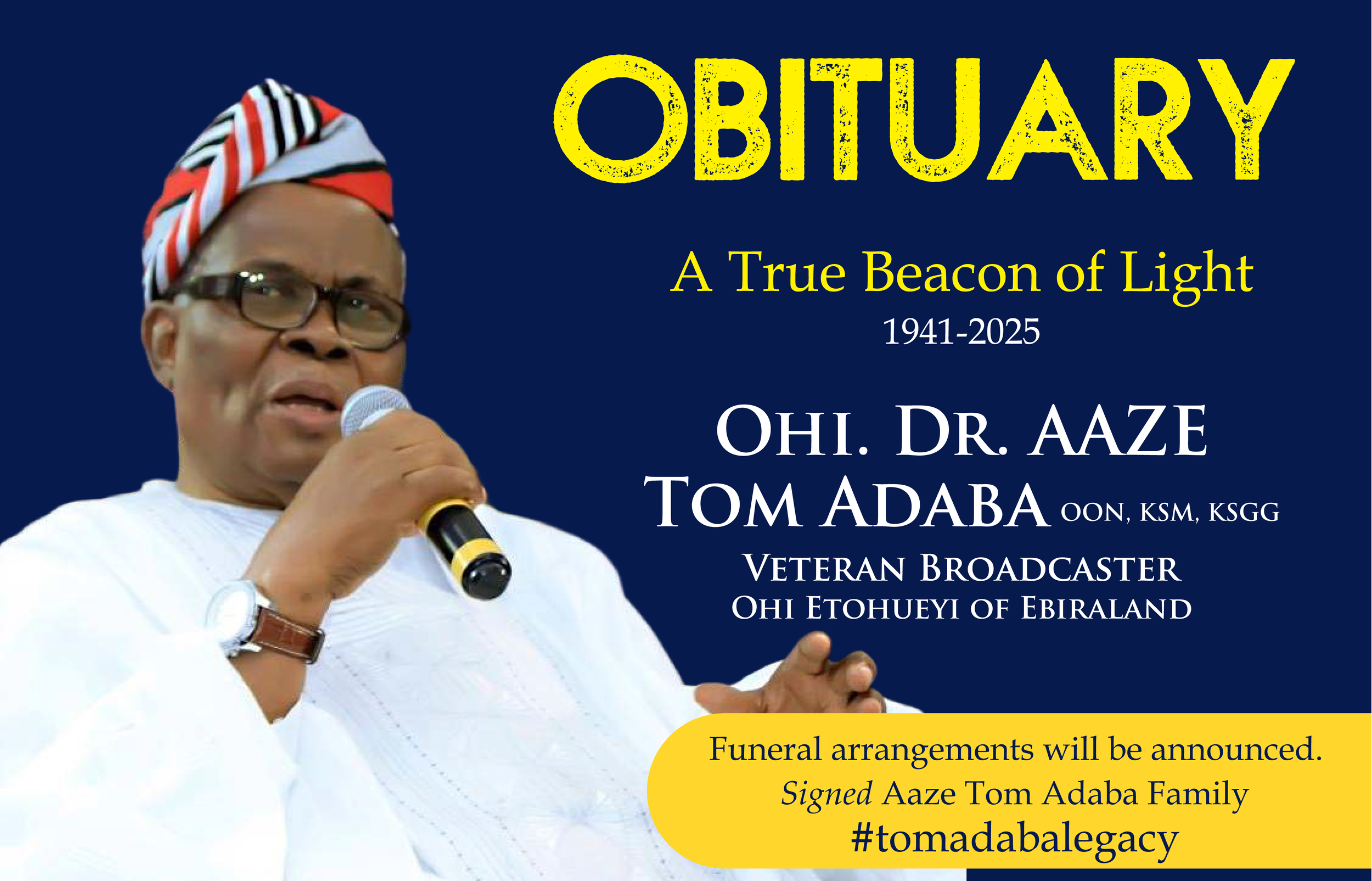
Obituary: Aaze Tom Adaba
AAZE THOMAS ADABA, (OON, KSM, KSGG).
Ohi Etohueyi of Ebiraland
1941-2025
...an undeniable legacy
FUNERAL PROGRAM
(W.A. Time)
Christian Wake/Night of Tribute:
Thursday, 6 March 2025
4:30 pm
Catholic Church of the Archangels, Durumi, Gaduwa Road, Abuja
Lying in State:
Friday, 7 March 2025
8:30 - 9:30 am
45 Constitution Avenue, off Democracy Crescent, Gaduwa Estate, Abuja
Funeral Mass:
Friday, 7 March 2025
10:00 am
- Catholic Church of the Archangels, Durumi, Gaduwa Road, Abuja
- Christ The King Catholic Church, Okene.
Interment:
Friday, 7 March 2025
Immediately after Mass
Gudu Cemetery - Christian Section, Opposite Defence HMO, Apo, Abuja
#tomadabalegacy
Tributes | Life | Gallery | Stories
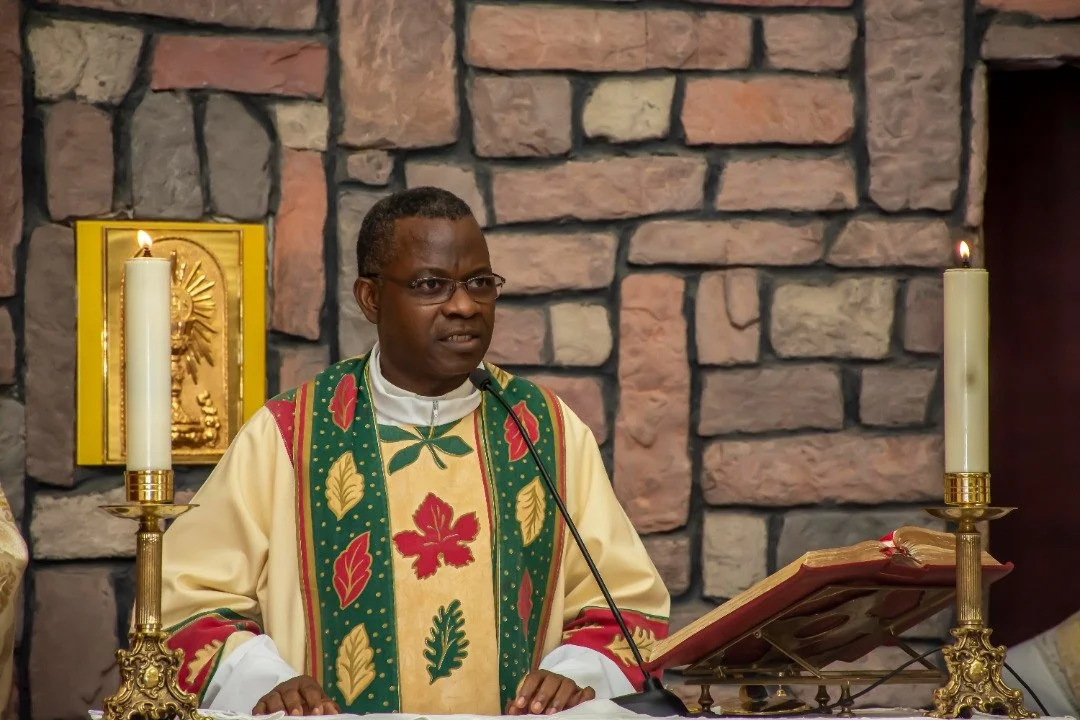
CHRISTIAN EVANGELISM IN OUR CHALLENGING 21ST CENTURY SOCIETY IT IS NOT PARTY TIME. INSTEAD, WE MAY BE BACK TO THE CATACOMBS
Dear friends, sisters and brothers, you are hosting this 2025 edition of your annual Pastors’ Conference in the context of a very vicious, aggressive, vengeful and vindictive form of secularism in the world, that is accompanied by practical atheism, which is openly demonstrated in the lives of many modern-day men and women, including even some of those who fill up our Churches on Sundays. Practical Atheism is the new way of life whereby many people, while not openly rejecting God and religion, are daily making choices and conducting their public and private affairs, as if God does not exit, and in total disregard for God’s commandments, and fragrant violation of critical values and virtues which have always been associated with persons with any measure of religious consciousness.
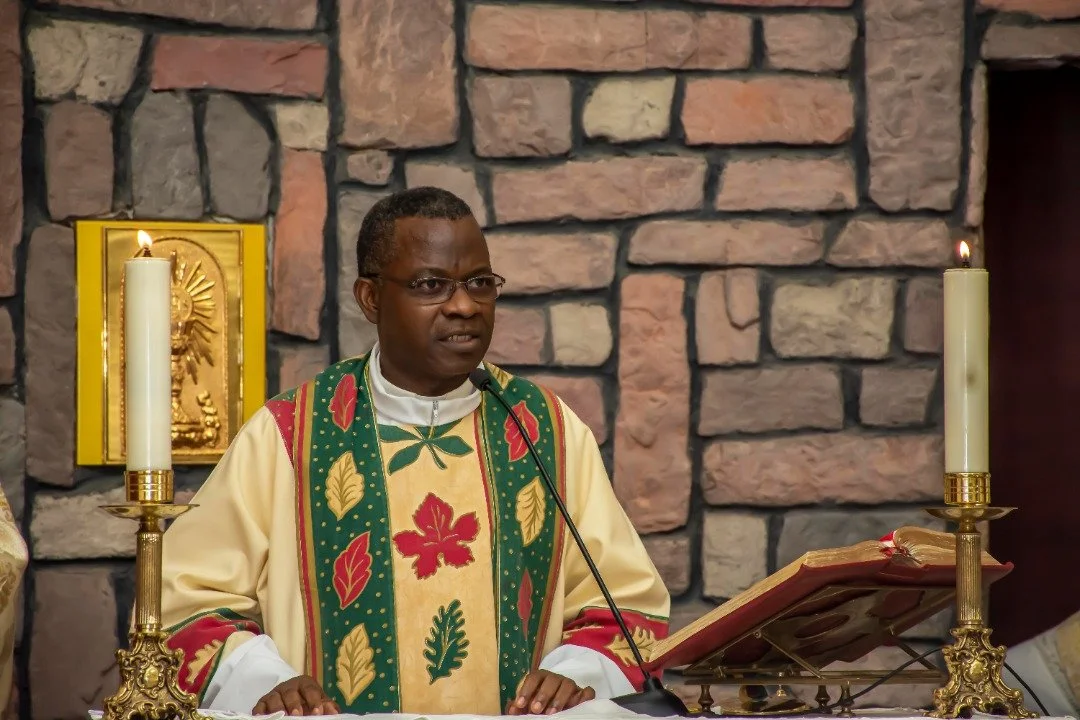
Paper Presented at the Annual Pastors’ Conference of the Realm of Glory International Churches Lagos, January 15, 2025 By Rev. Fr. George Ehusani Executive Director, Lux Terra Leadership Foundation
Dear friends, sisters and brothers, you are hosting this 2025 edition of your annual Pastors’ Conference in the context of a very vicious, aggressive, vengeful and vindictive form of secularism in the world, that is accompanied by practical atheism, which is openly demonstrated in the lives of many modern-day men and women, including even some of those who fill up our Churches on Sundays. Practical Atheism is the new way of life whereby many people, while not openly rejecting God and religion, are daily making choices and conducting their public and private affairs, as if God does not exit, and in total disregard for God’s commandments, and fragrant violation of critical values and virtues which have always been associated with persons with any measure of religious consciousness. Let me highlight the point with a few examples: In July 2024, the organisers of the opening ceremony of the Summer Olympic games in Paris, decided to desecrate a principal symbol of the Christian religion, by making a public mockery of the scene of the Last Supper in a shameless parody, that involved satanic images as well as homosexual, lesbian or LGBTQ++ symbols. Opinion leaders across the world (including Muslims and even people who are not known to have any religious affiliations), reacted with outrage at this public expression of blasphemy and disrespect for the religious sensitivities of the globlal population of Christians. Last week the news broke out that US Nigerian Professor Uju Anya, is now legally married to her lesbian lover, Dr. Sirry Alang, who is a Cameroonian American. In this country Nigeria, the LGBTQ+ madness is today spreading like wildfire. It is being aggressively promoted around the world by not only individual campaigners and NGOs, but also whole governments.
A number of those we call celebrities in Nigeria today, who have millions of young people following them, have often been recruited by powerful international organisations, as agents, to spread these new gender ideologies, by which strange and unnatural sexual behaviours, which the Christian Scriptures squarely condemns as abominable and damnable (See Romans 1:20- 32); the same behaviours that only a few decades ago used to be diagnosed as mental illness; are now defended and promoted as alternative lifestyles and fundamental human rights, such that those of us who express moral outrage at the normalization of these perversions, are blackmailed as homophobic, condemned as religious bigots, and sometimes subjected to persecuted for defending the traditional Christian position in these matters. In spite of the Same Sex Prohibition Act of 2014, we see homosexual practices being openly advertised in the social and regular media today, and viewed by some as progress. Among the many aggressive LGBTQ+ campaigners in Nigeria today, we even have one who calls himself a Christian pastor. He is Jide Macauly, founder of what he calls the House of Rainbow International Church, where homosexuals and transgender persons are not only warmly welcomed, but earnestly celebrated for their courage to come out openly to declare what they call their sexual orientation. And many of our young people appear fascinated by these horrifying developments. If you do a quick google search on the number of young people following Bobrisky, you would be utterly amazed. He has over 3 million followers on Facebook and almost 5 million followers on Instagram. He has almost the same number of followers on social media as Pastor Enoch Adegboye! Brothers and sisters, are you beginning to see what I am talking about?
Your 2025 Pastors’ Conference on the theme, The Cross and the Altar, is happening at a time of widespread loss of God-consciousness, or the rejection by many of any spiritual reference point for the human person and the human society. You are gathered here amid the growing scourge or epidemic that the famous 20th Century Psychologist, Viktor Frankl, identifies as existential nihilism, which is the widespread loss of any sense of meaning and purpose in human existence. Existential nihilism emanates from the loss of the consciousness of God, and any sense of transcendence in the contemporary society. We are confronted today with a much more serious problem than the fact that people are stealing, cheating, committing fornication or engaging in Yahoo-Yahoo. Many young people do not know why they are alive, and some are ready to end it any day, at the slightest provocation. The widespread rejection of any spiritual reference point by an ever-increasing number of men and women in our generation, gives rise to the existential frustration which Augustine of Hippo alludes to when he declares that “the Lord has created us for himself, and our hearts will remain restless, until they rest in him.” The Scriptures of our Judeo-Christian religion and the testimonies from all other major religious traditions sufficiently demonstrate that the more human beings move away from God, the more they move away from the consciousness of spiritual or supernatural realities, and the more they are motivated wholly and entirely by materialistic, this-worldly ultimate goals; the more confused, senseless, restless and violent they become. Yes, as the men and women of our generation move farther and farther away from God and the things of God, they gradually become disoriented and confused about their true identities, about the purpose of their lives, and about the meaning of the very physical bodies they carry around.
Is it not instructive that multiple psychopathologies, including widespread drug addiction, rampant cases of depression, suicide ideation, and actual suicides, appear to be increasing geometrically in the same age and among the same generation that has witnessed what is called the “sexual revolution,” when men and women are being told that they no longer need to exercise any restraints, and when all inhibitions in sexual expression, are gradually being seen as vestiges of a dying primitive era? The truth that stares modern humanity in the face, is the same one that dawned on Augustine in the 4th Century A.D., namely, that the human heart is either home-bound or death-bound; and there appears to be no resting place in between! Yet, a cursory survey of the dominant segments of our own youth culture in this country, Nigeria, especially as displayed in popular movies, comedy skits, music and dance, including some of what people call Gospel music today, will reveal that even though our Churches are often filled up on Sundays, and though the public practice of religion still appears to be thriving in our society, all is however not well with us. All is not well with us, because our youths are speedily abandoning the path of Christian virtues and values, and they are losing their souls to the social and moral decadence of the age.
Christian youth in this country and elsewhere these days, are often the ones with the least respect for religion and religious persons. They are often the ones denigrating the Church, blackmailing and insulting religious leaders, desecrating religious symbols, and recklessly engaging in acts that used to be identified as blasphemy and sacrilege. Most of the young Nigerians who are today addicted to pornography, and those engaged in internet fraud, Yahoo Yahoo and Yahoo+, or those allegedly engaged in ritual killing (of their mothers, their sisters and girlfriends, for quick money), are often youths brought up Christian homes, but who seem to have lost their way, and are now in the den of the devil. Traditional African religious rituals have suddenly become very attractive for many Nigerian youths, who are today not only enlisting as devotees of traditional deities and ancestral cults in their villages, but many are actually becoming priests and priestesses of some of these traditional African religious cults; the kind of cults that 3 their parents were never exposed to, because their grandparents had abandoned them to embrace Christianity!
Just last week, at the opening ceremony of the annual retreat in Anambra State, of all the Bishops of the Church of Nigeria, Anglican Communion, Governor Chukwuma Soludo raised an alarm over a frightening development that I am well aware of myself. He observed that this is a very trying moment in the history of Christianity in our society today. Though the Anglican Church claims to have up to 20 million Nigerians officially registered in their books, and though the Christian Church as a whole, boasts of more than a 100 million registered members in Nigeria, he wondered how many of these 100 million people, most of who were brought up in Christian homes, are still Christians. He said the question is even more pertinent in the Southeast, as in his view, the fastest growing religion in the Southeast is idolatry. He said from Anambra to Imo, and from Abia to Enugu and Ebonyi, there is a massive resurgence in idolatry, with traditional shrines springing up everywhere, and that they are recruiting young people massively, young people with names like Emmanuel, Joseph, and even some bearing the name Christian, but they are carrying their shrines. He said the leaders of the Church in Nigeria must now engage in a sober reflection, asking themselves the question: Why are the young y leaving Christianity in droves? He said the leaders must constantly re-examine their purpose, asking themselves, “Are we still serving the purpose? Are our ways in conflict with our purpose?” He wondered whether in the eyes of some people in Nigeria, religion has not become a business, where the transactions have gradually overwhelmed the transformation.
We are living through very challenging times, especially for truly religious people, as there is very little sense of spirituality and transcendence left in the popular culture, and sometimes even in some of our Churches that have been turned to theatres of endless entertainment. The powerful agents of the global culture have become increasingly secular, and aggressively anti-religious and vengefully anti-church. These are difficult times indeed. We are at the threshold of a new dark age, and a new era of Christian persecution, when truly committed agents of the Gospel of Jesus Christ will be challenged to embrace martyrdom that will come from different directions, including even from within the Church itself. Today, an increasing number of men and women who were raised in Christian homes and schools, are rejecting the true gospel of Christ, and instead they are choosing to dine with the devil and to give themselves over to the most reckless forms of debauchery, self-indulgence and moral depravity. The religion of many who flock to our churches on Sundays, often has no depth at all. It is often a transactional religion that is devoid of serious elements of Christian spirituality or the godly life, such as is exemplified in Jesus Christ himself and in those we celebrate as the saints of the Christian Church. We cannot see in the life of many who fill our Churches in Nigeria, evidence of people who have truly encountered the God of Jesus Christ and fallen in love with Him; people who have had the same experience of the all-consuming power of God's love, and now and again can exclaim like Prophet Jeremiah (in Jeremiah 20:7), “You have seduced me Lord and I have allowed myself to be seduced; you have overpowered me, and you have prevailed...” Instead, many of those we have in our Churches are still trapped at the infantile (transactional) level in their religiosity; that level at which prayer is not aimed at lifting the heart and mind to God, but aimed at appeasing, bribing, manipulating or twisting God's hands into doing our will; that level at which attempts are even made to coerce the God of love into destroying one's enemies, etc. This kind of religiosity is like a pack of cards that will come crashing down in the face of the enormous existential challenges that are ahead of us.
Our Churches and auditoriums are filled to capacity, yes, but many of our members have not been well formed in Christian spirituality and Christian morality. Yes, indeed, the harvest of the 4 Lord is plentiful but true labourers are few. The vineyard of the Lord today is made up of many ignorant but arrogant, fun-seeking, power hungry, enemies of God and enemies of Christ, who shamelessly display and audaciously promote abominably perverse behaviours that insult the sensibilities of god-fearing people of all times. In this kind of degenerate dispensation, we all must brace up for action, and assume our roles as born-again Christians - priests, pastors and evangelists, faithful witnesses of Christ, and courageous defenders of the Christian faith, not with swords and javelins as in the days of the Crusaders of the Middle Ages, but with the intellectual, spiritual and moral resources of our faith.
To function as faithful witnesses of Christ, and to answer the call to be pastors and agents of evangelism in the 21st Century, is going to be a very difficult and challenging spiritual, pastoral and social enterprise. To live our lives and discharge our duties effectively as witnesses and defenders of the Christian faith today, may be a via crucis – that is, the way of the cross, which may take some of us toward Calvary. When I consider the many forces that are mounting viciously and aggressively against the Christian message today, I feel compelled to go around warning my fellow priests, pastors, and evangelists, that “it is not party time;” that we are being called to thread the painful path towards Calvary. The challenging task before us will daily demand of us a high degree of faith commitment, for the radical witness to the Gospel of Christ which an age of widespread unbelief and debauchery such as ours requires of us.
The good Lord desires to save the people of every generation, but the appropriate character disposition, the depth of spirituality, and the degree of sacrifice required of the agents of the gospel who are to be sent to each generation, will be determined by the peculiarities of each generation. Those of us who embrace the call of Christ to minister in his vineyard today, are in for some very serious business. It is not party time all. These days, when I see Christian pastors and preachers, dressed in expensive clothes and designer jewelry, flying around in private jets or firstclass compartments of air planes, or driving around with motorcades, sometimes with police escorts and civilian bouncers, I often turn to those around me, and say, “Ewo o - awon eleyi o mo nkan nkan!” See, these ones don’t know anything. In other words, such priests, pastors and preachers that still carry themselves around at this point in time, with what we can describe as a high degree of ecclesiastical and clerical triumphalism; such church leaders are reveling in the past glories of medieval Christendom, when bishops, priests and pastors, lived like medieval feudal lords, monarchs and emperors. That era in European Christianity was brought to a brutal end by the violent French Revolution of 1789 to 1892. We in the Catholic Church have learnt a few lessons from the history of medieval Christianity in Europe. That is why you are not likely to see a Catholic Pope, Cardinal or Archbishop, anywhere in the world these days, living an openly flamboyantly lifestyle, no matter how rich his church or his diocese may be.
Now, as the world gets more and more engulfed in the darkness that manifests itself in new forms of paganism, such as we see in the radical Gender, Transgender and Non-Binary ideologies that aim to destroy traditional religious and family values; and as our own youth population are increasingly turning towards new forms of paganisms in Nigeria, Christian pastors, and the generality of Christians, are today called upon to stand up to be counted among the true followers of Christ, by disciplined lives of meaning and purpose. We are called upon to quickly get ourself educated in the complex dynamics of the times we live in, so we may courageously confront the neo-paganism of contemporary society, with the light of the Christian gospel which never dims.
Those the Lord requires as pastors, preachers, and evangelists in our society today, should be persons who daily submit themselves prayerfully as instruments in God’s hands for the salvation of souls. Those the Lord requires as agents of Christian evangelism today, should be persons of extraordinary courage and fortitude, who accept the call to shine the light of Christ amid the 5 darkness of contemporary society, and to constitute themselves into signs of contradiction to a world of ruthless and aggressive competition for wealth and power, and mindless devotion to the cult of sensual pleasure. Those the Lord requires as pastors, preachers and evangelists today, should be persons of faith, who can interpret the signs of the times, as well as offer gospel discernment on the socio-historical circumstances of their people.
Let me be very blunt with you: We are in the midnight hour, and the Ship of Peter (the Church), is battling amid very turbulent waters, as is sufficiently demonstrated in the spiritual and moral crisis to be found in our various Churches today. At this time of widespread mediocrity, hypocrisy and apostacy among many Christians, including even among high-ranking personalities in our Christian Churches, the Lord requires men and women of extraordinary commitment that would be part of his remnant few, who, with a heightened sense of sacrifice, would be holding the fort, standing in the gap, and putting on the whole armor of God against the wiles of the vicious enemies of God’s people. For as St. Paul reminds the Ephesians, “it is not against flesh and blood that we must contend, but against principalities and powers, against the cosmic powers of this present darkness, and against the spiritual forces in the heavenly places…” Therefore (he says), “take on the whole armor of God, so that you may be able to stand firm … and quench all the flaming arrows of the evil one” (See Ephesians 6:10-17).
The challenges I have outlined above are even more pressing for Christian pastors and Christians who are young parents, as we would have to practice our Christian faith and raise our children in a world that is becoming terribly hostile to any form of religiosity and spirituality, and particularly hostile to traditional Christian values; a world that is completely different from the one in which many of the older pastors here grew up in the 1960s and 1970s. When those of us in the older generation of today were growing up, the principal agents of socialisation included the Family, the Church, and the School, in that order. And those whom the children saw as heroes and mentors to be emulated, were from among their parents, their church leaders and their teachers. But all that has changed today. With the mobile phone in the hands of our children, the television in our homes, and the billboards littering our towns, villages, and highways, the more powerful influencers of our children’s values today, are often social media personalities, popular musicians, movie stars, comedians, and sundry entertainers. Many of these celebrities are school dropouts, products of broken homes or dysfunctional families. Many of them are drug and alcohol addicts, serial polygamists, and unrepentant sexual perverts. Some of them are known psychiatric cases. Others regularly display symptoms of one psychopathology or the other. But they are all rich and famous. They all have millions of young followers on social media. This is why they are called social influencers, and they are regularly recruited as “brand ambassadors” by unscrupulous agents of corporate organisations.
Thus, in the absence of good parenting; and in the absence of adequate and effective strategies for appropriate instructions in Christian values and morals for our children and youth, these celebrities who are themselves often in need of spiritual, psychological, and social rehabilitation, have unfortunately become the prime influencers, the principal inspirers, the key mentors, and the chief opinion molders of our vulnerable and gullible young people. So, I really do not envy those who happen to be young Christian parents today. Christian parenting today involves a lot more effort and investment than was required when many of in the older generation were growing up. Those who are still raising young children today should recognize that their children may not turn out to be good Christian children, simply because they pray at home and ensure that the children follow them to Church on Sundays.
Parents of young children will need to do a lot more, with the grace of God. They will need to be Christian parents in all truth and with all seriousness, making their homes domestic Churches, 6 giving loud witness to Christian values, and teaching their children from their earliest days, to become signs of contraction to the evil generation; to stand out and shine their light amid the surrounding darkness; and with all boldness, to defend the hope that is in them, as St. Peter urges believers in 1 Peter 3:15. This is by no means an easy task, but with God all things are possible. After all, the Lord has promised us that the powers of hell will not prevail against his Church. And we know that the One who called us to be Christians and to be ministers of the of the Gospel in season and out of season, will not abandon us in this critical season. May the certainty of his presence sustain, strengthen, and comfort us, as we renew today our commitment to defending the true faith that Jesus left us. Amen.
Before concluding, I would like to challenge all those who, like me, are senior citizens, to take responsibility for the future generation. Many of our young people are today behaving like sheep without shepherds. Many have lost their souls to debauchery and depravity as we noted above. So, we need experienced older people in their 60s, 70s, and 80s, to help these young people answer the most profound and critical question of life’s ultimate meaning and purpose; questions which the young people seem to be grappling with daily. In the face of the tragedies and frustrations of life, and especially in the face of the mess which successive generations of rogue leaders have made of our country Nigeria, we need a “remnant few” from among the experienced members of the Christian community, who have been sufficiently schooled by both the positive and negative experiences of their lives, and who have learnt some of the profound truths of their human existence, so they can now become teachers, inspirers and mentors of the younger generation in a life of discipline, virtue, meaning and purpose. I challenge those of the older generation, to take responsibility for the future, by using their time and resources, their skills and talents, their rich knowledge and privileged exposures, their successes and achievements, but also your failures and disappointments – from which hopefully they have learnt good lessons – to disseminate those values and principles, and promote those norms and habits, that will make for meaningful existence for future generations of humanity. It is in this way that those of us in the older generation today would live the rest of our lives purposefully, that we would age gracefully, and that at the end, when the Lord calls us, that we would have the honour of exiting this world, as it were, gallantly!
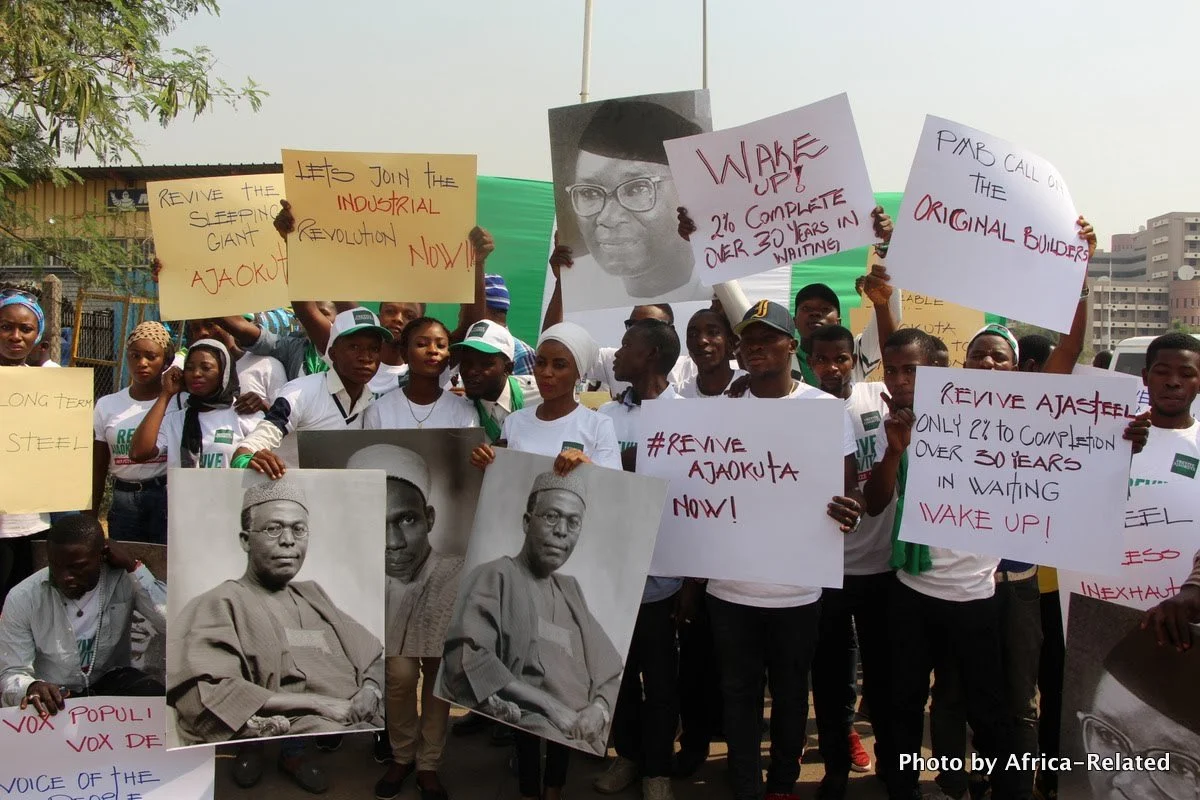
Revive Ajaokuta Awareness Walk
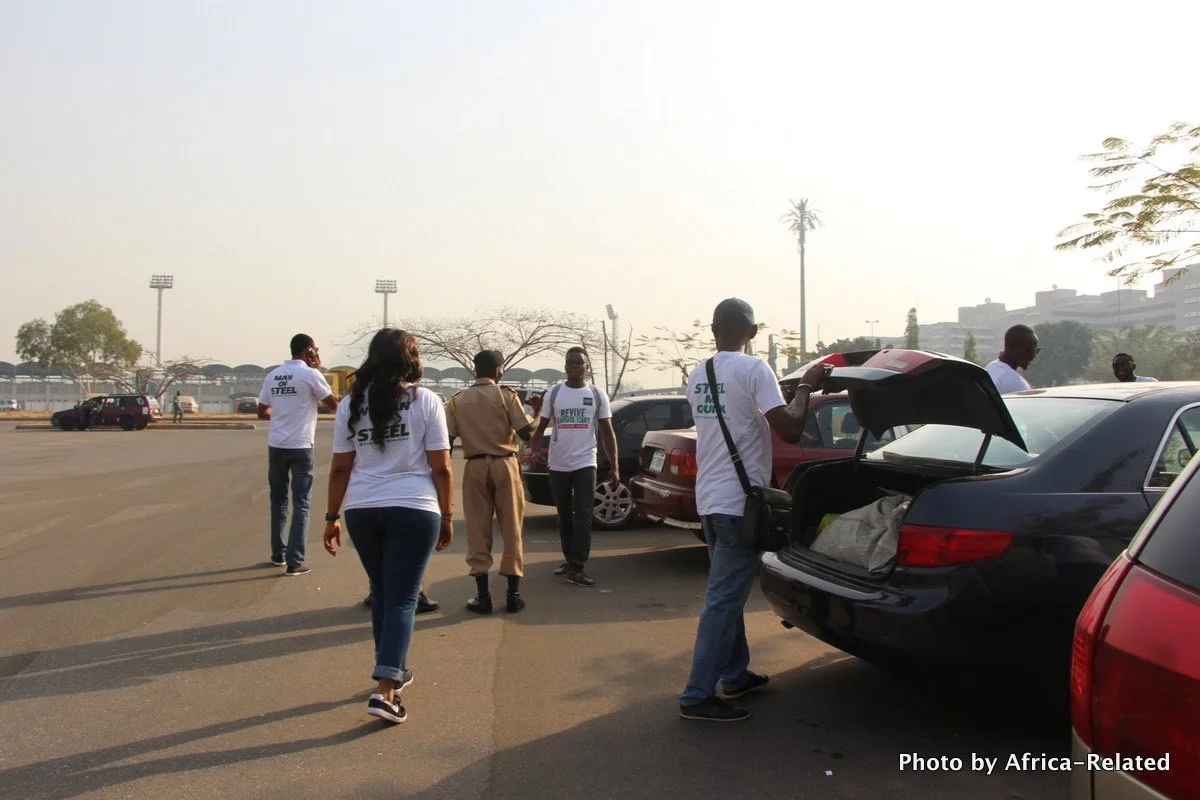
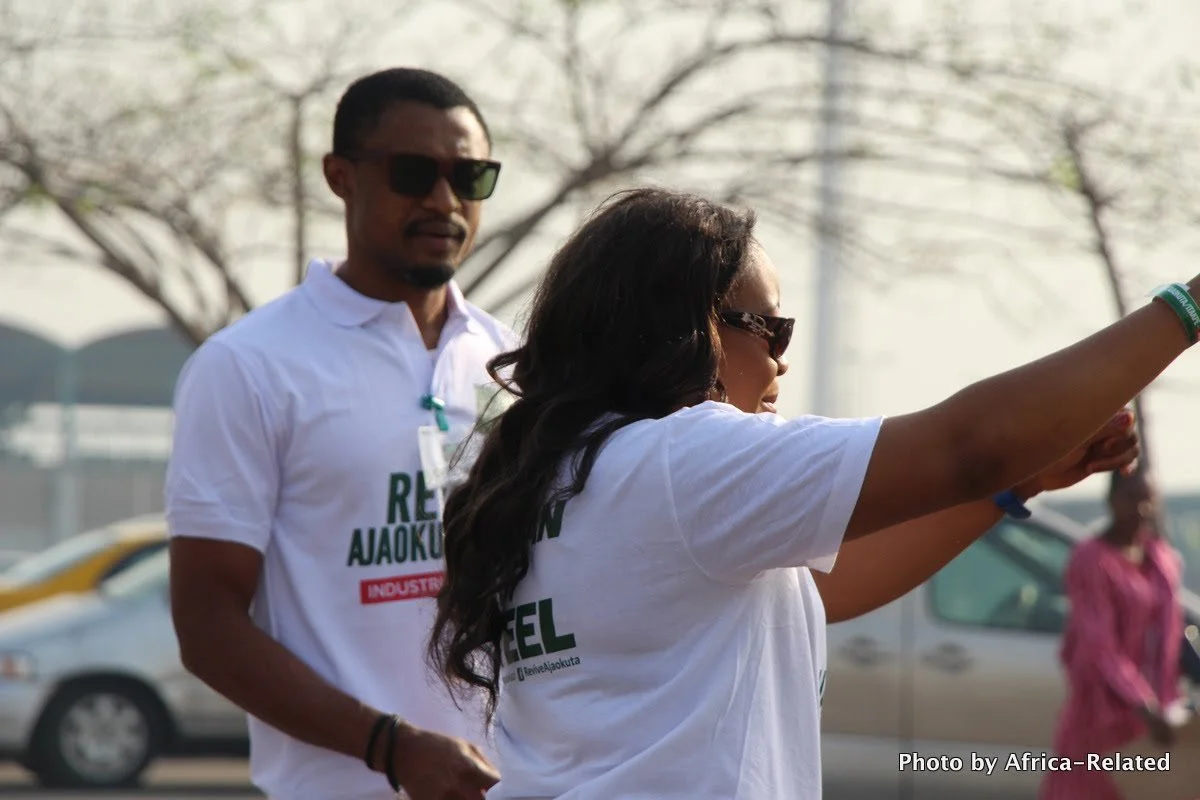
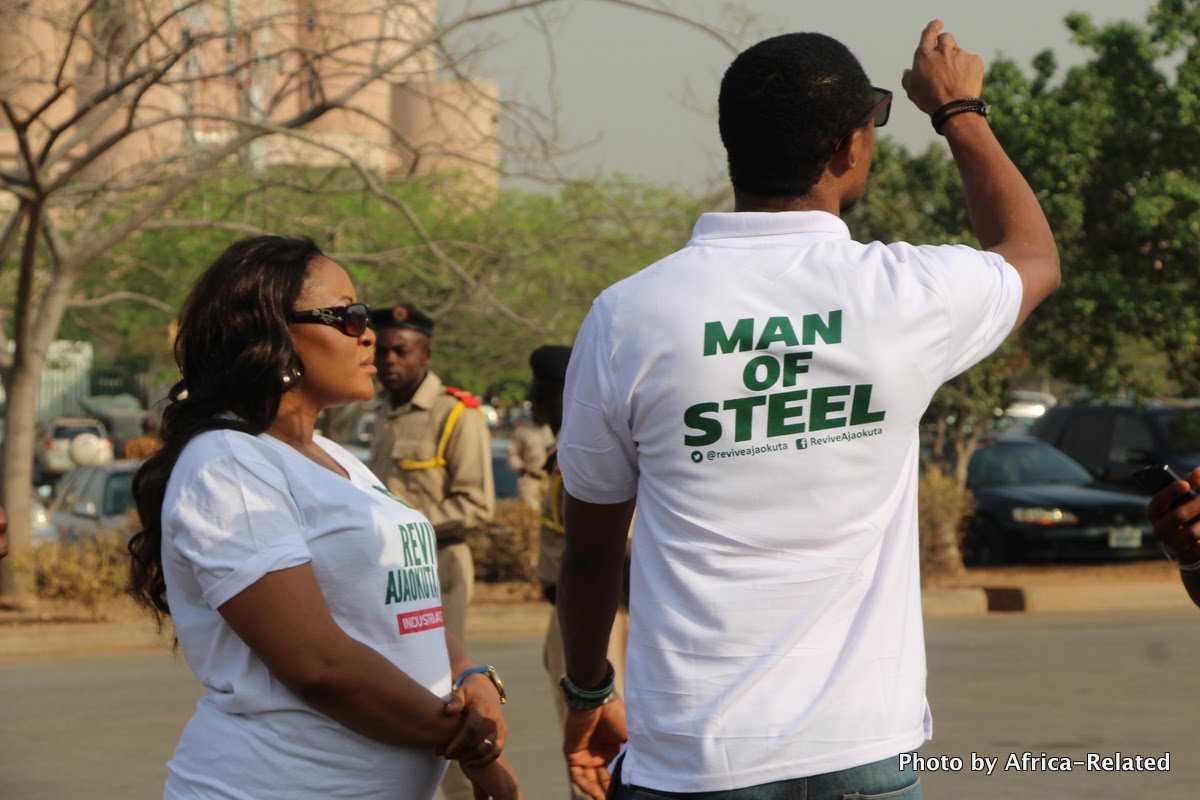
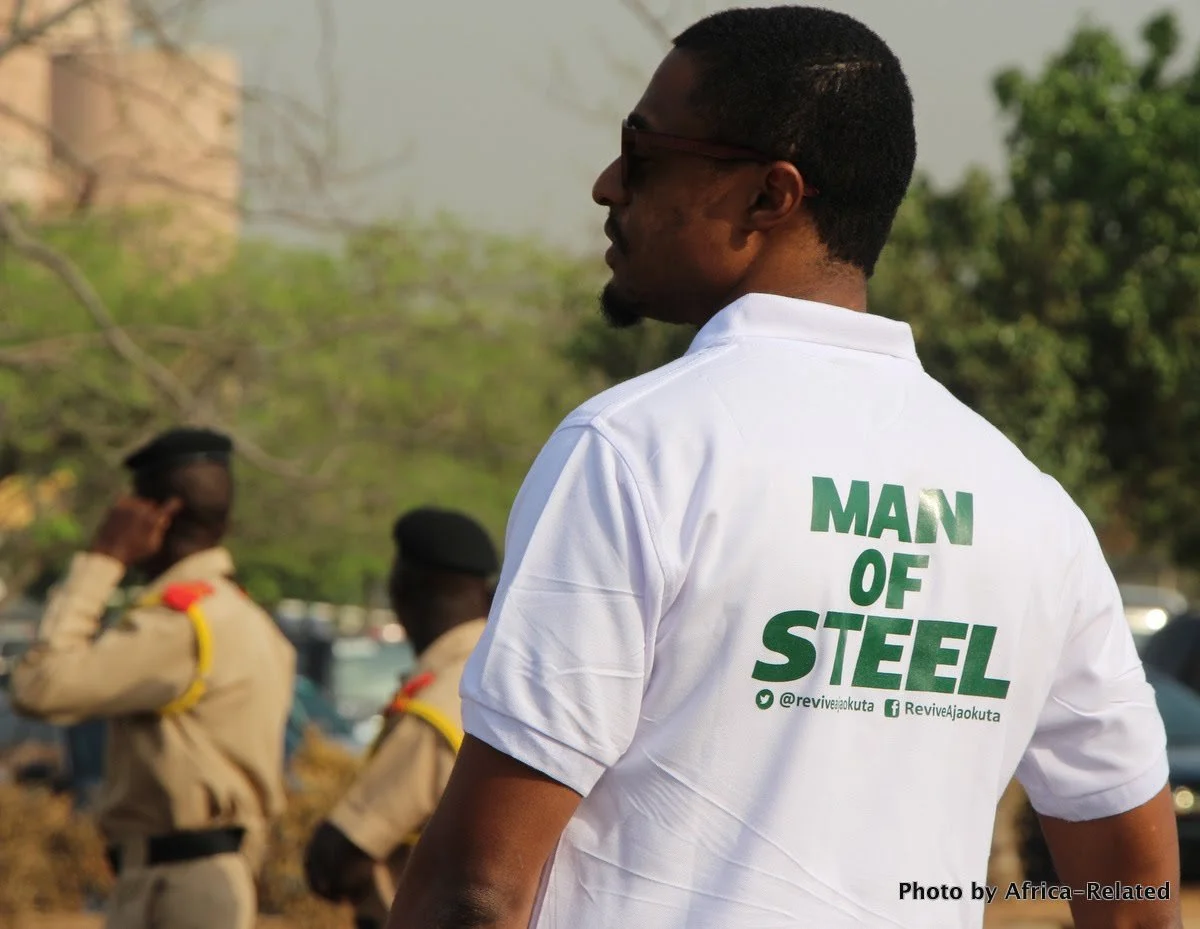
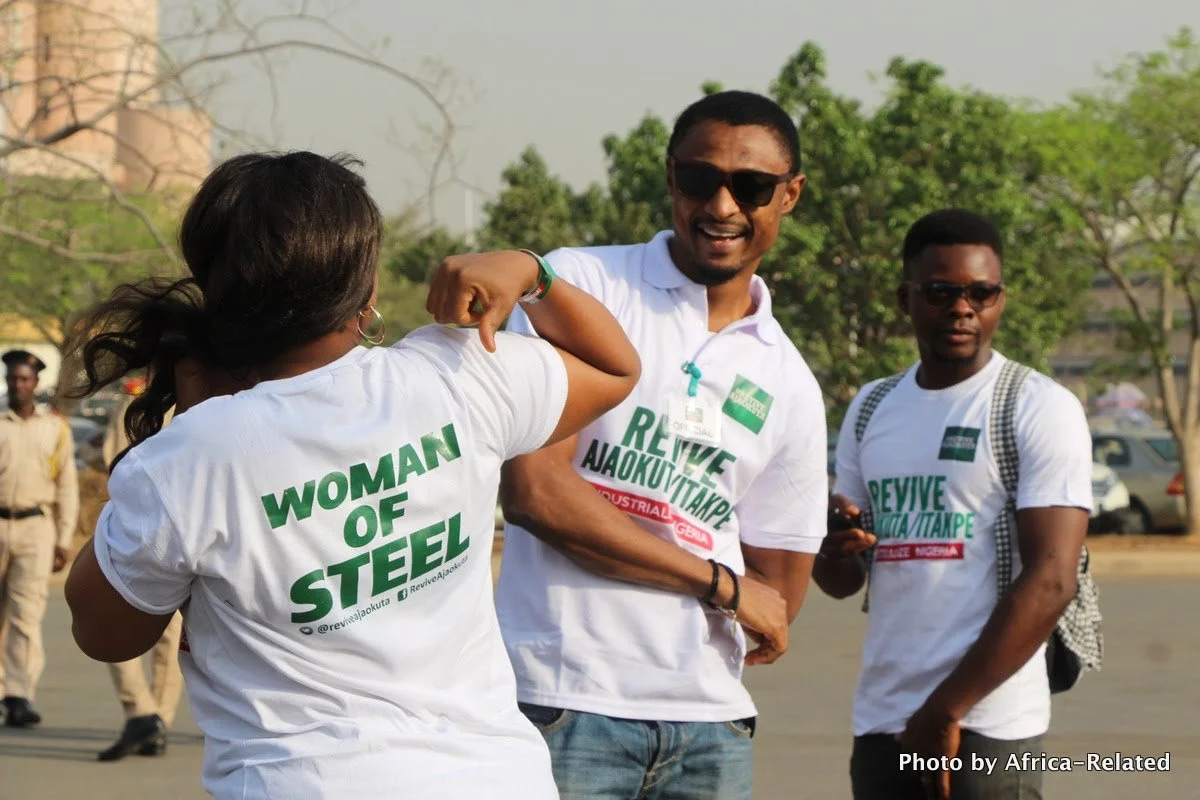
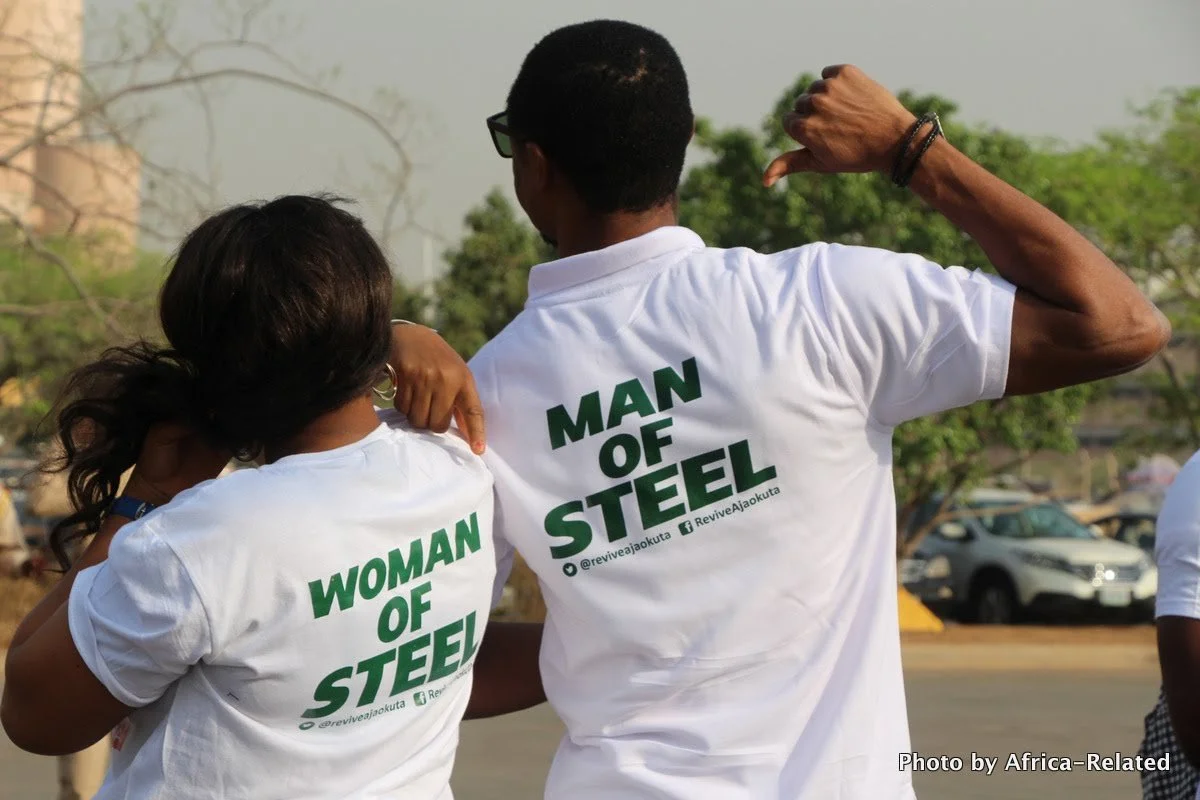
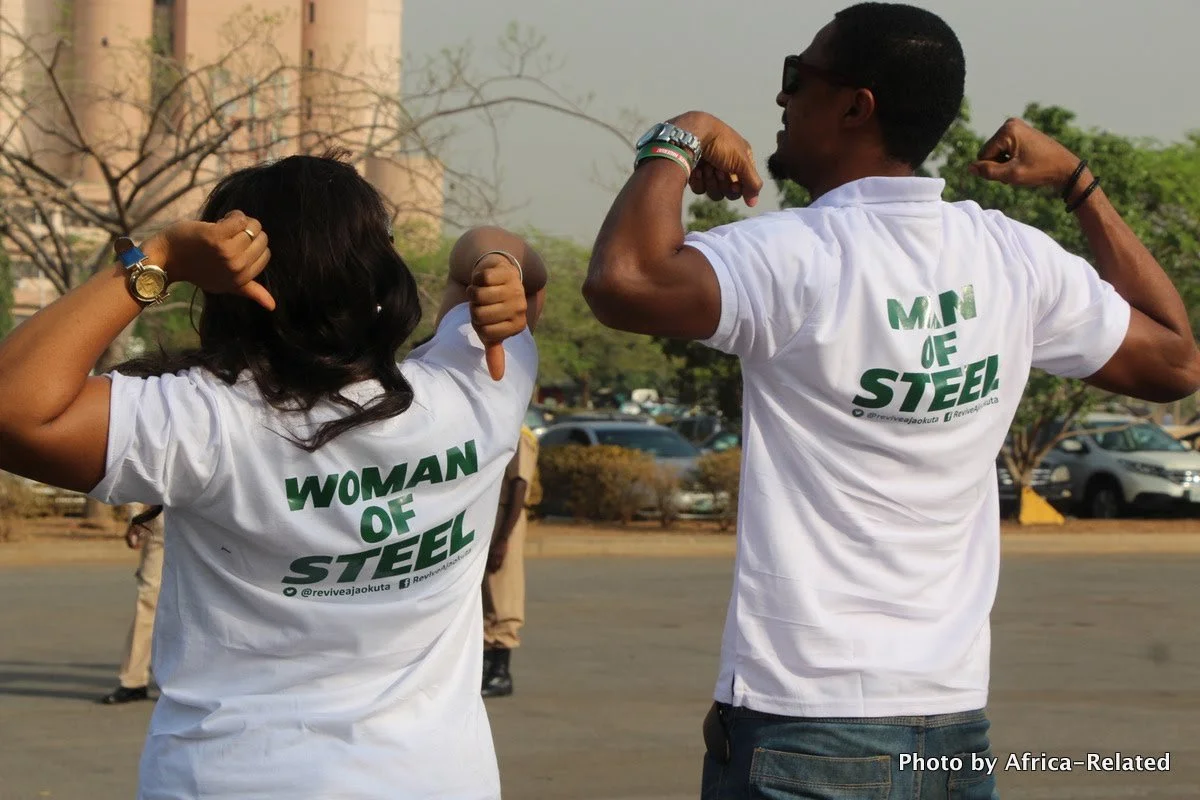
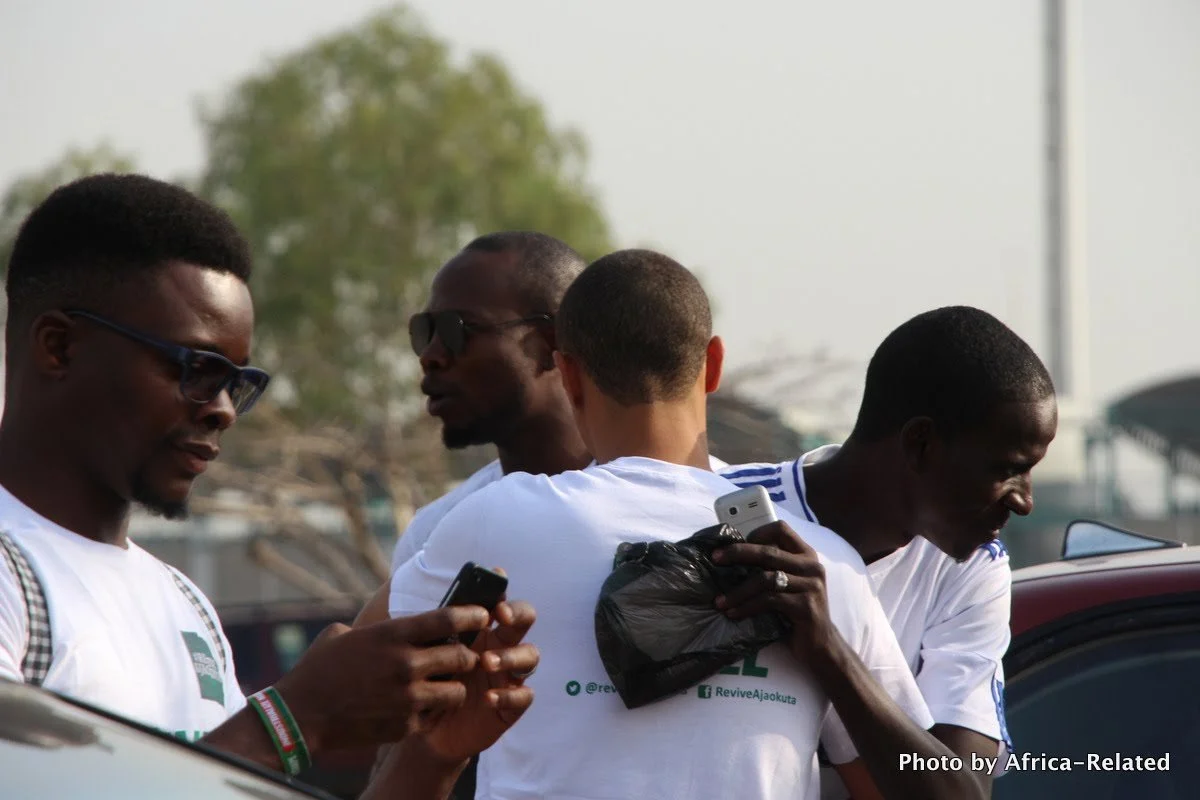
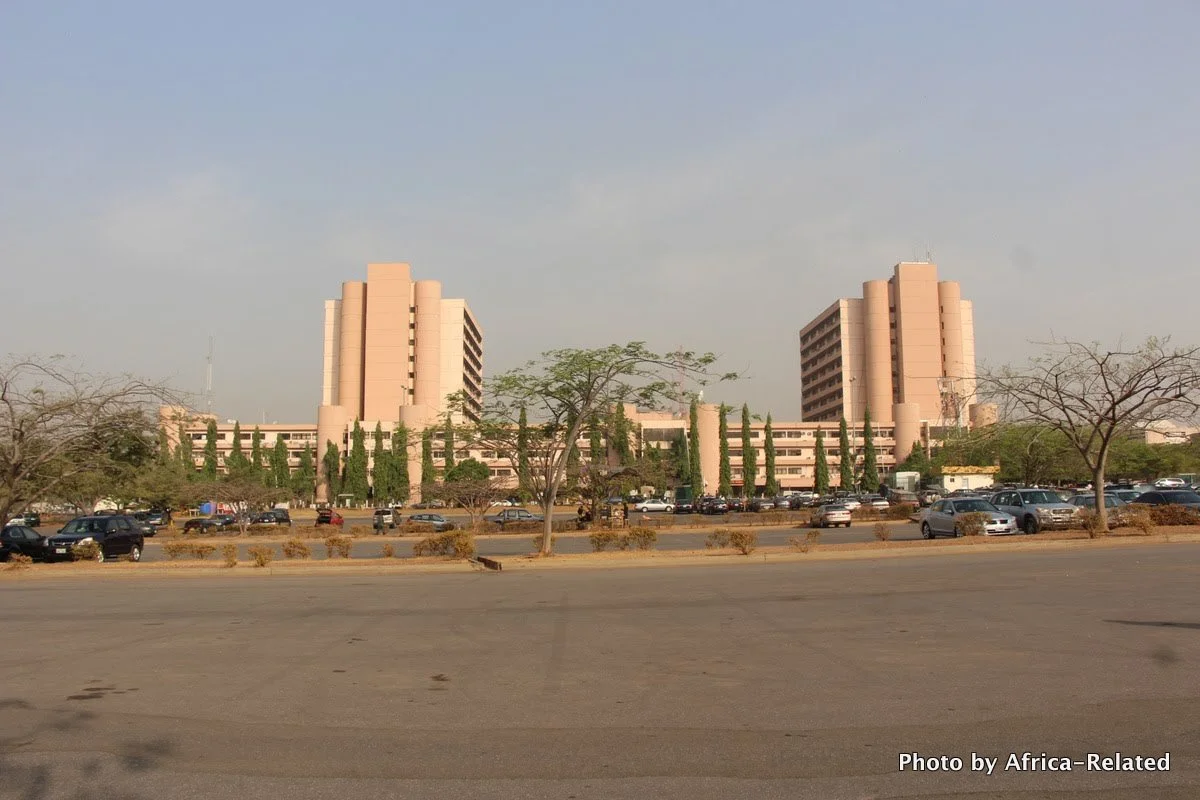
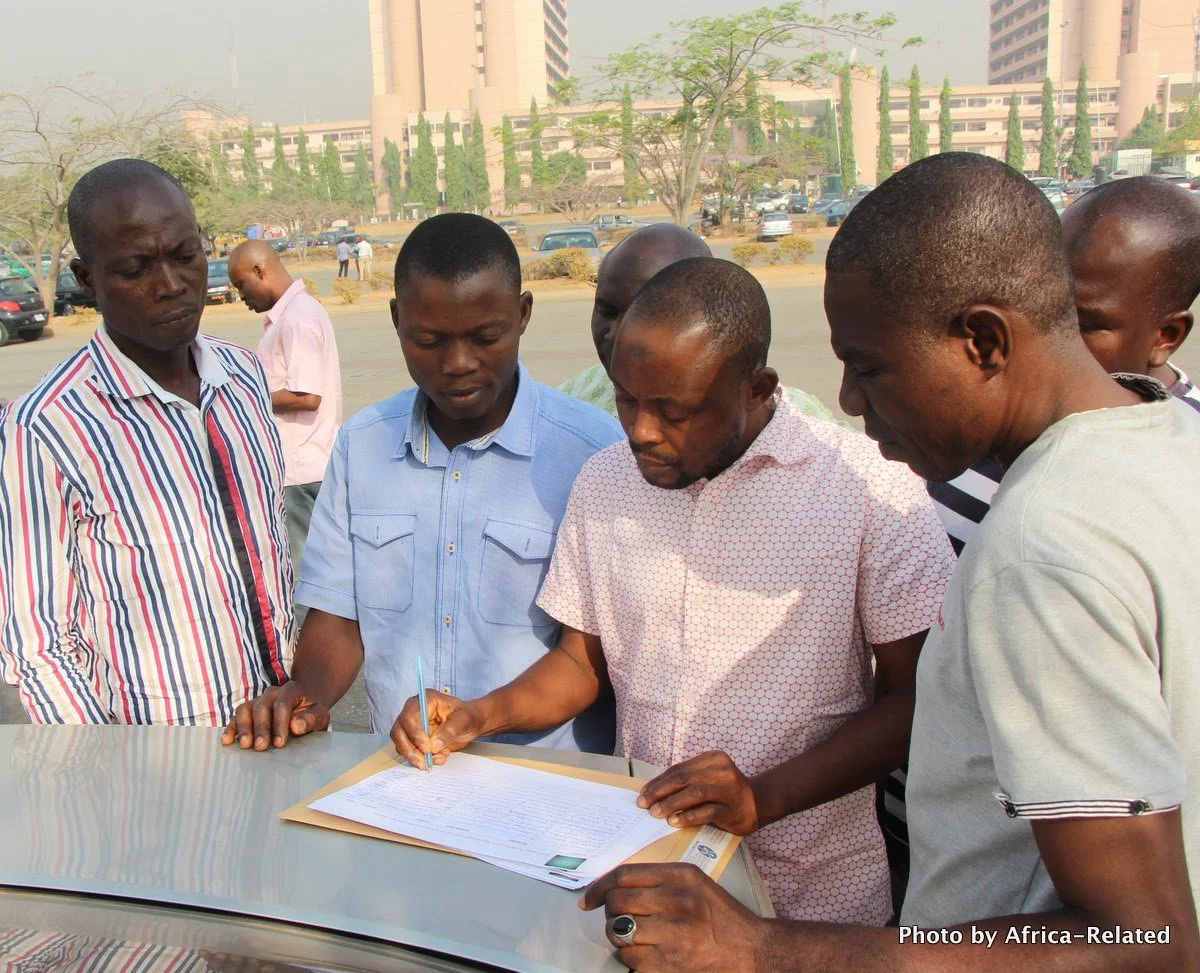
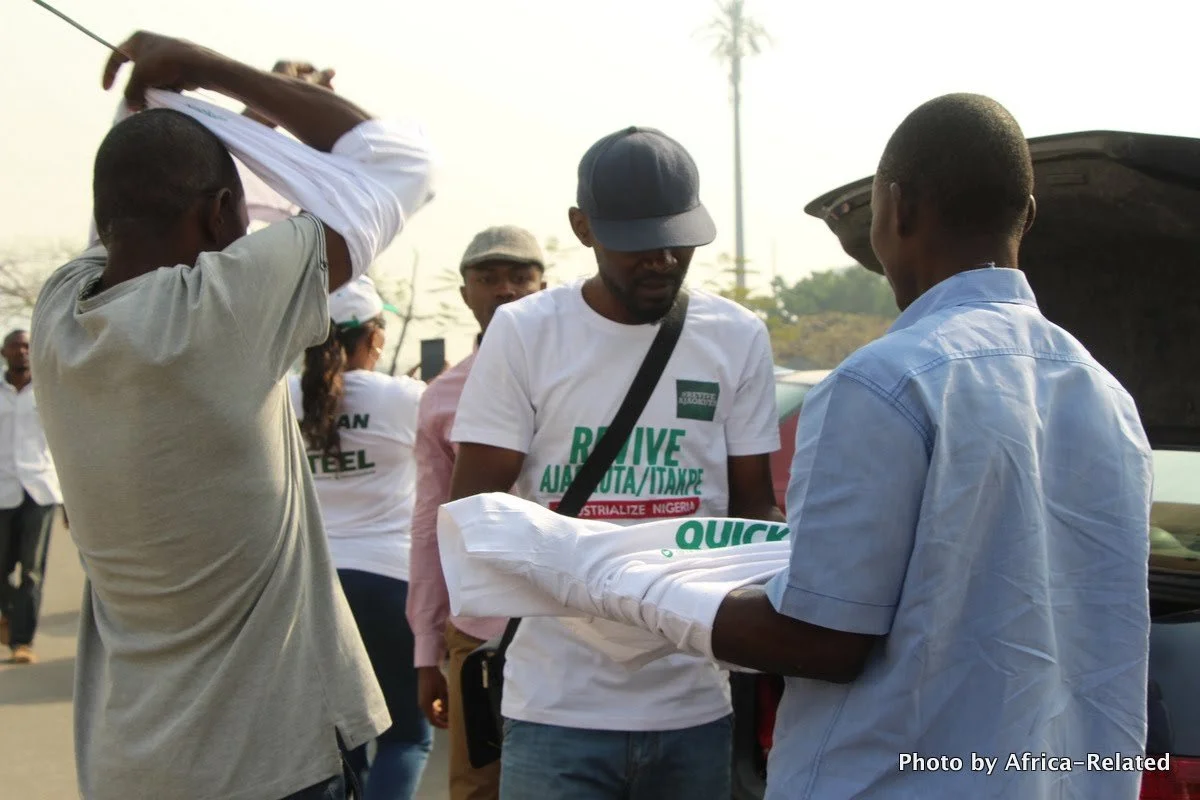
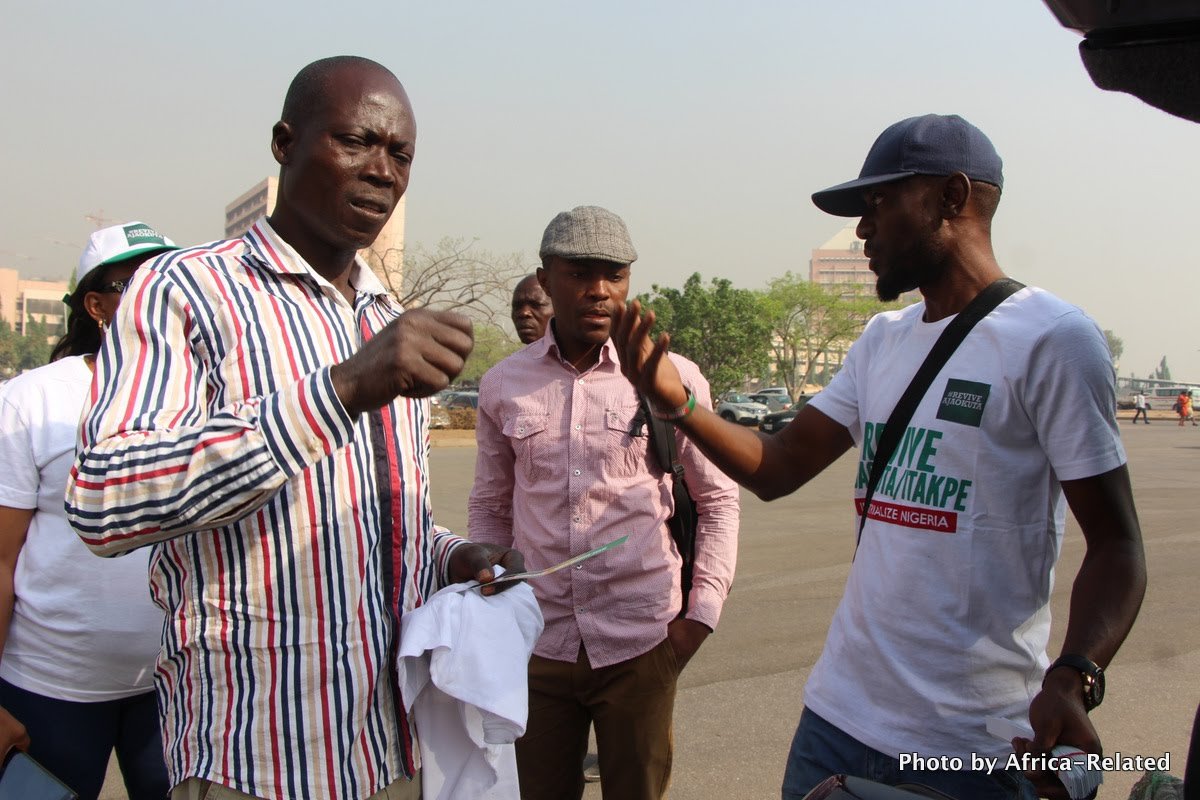
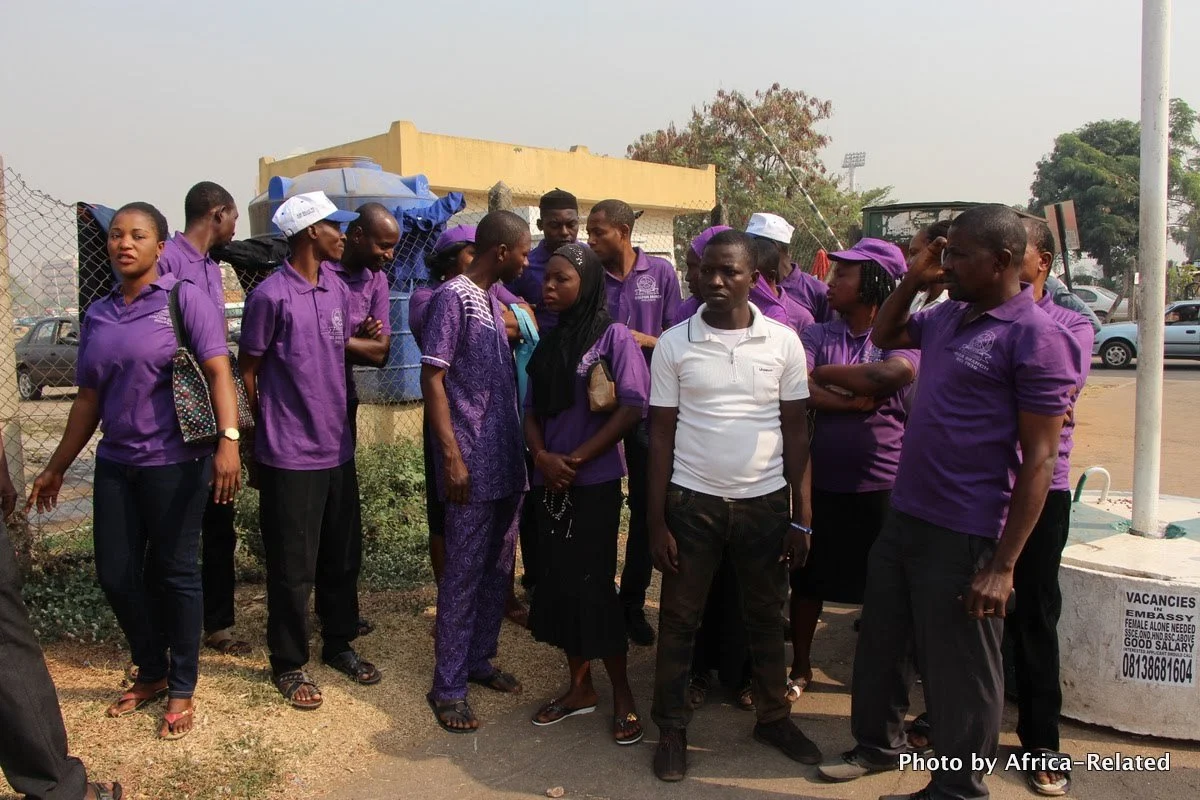
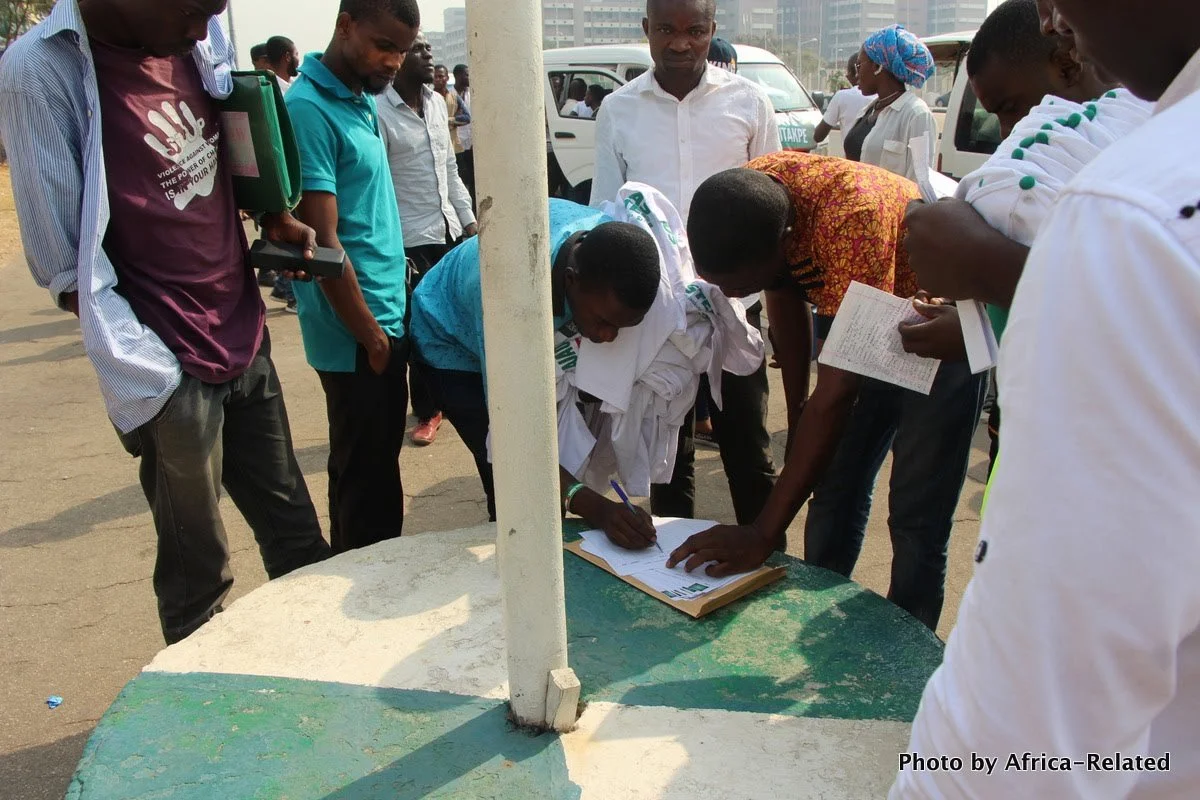
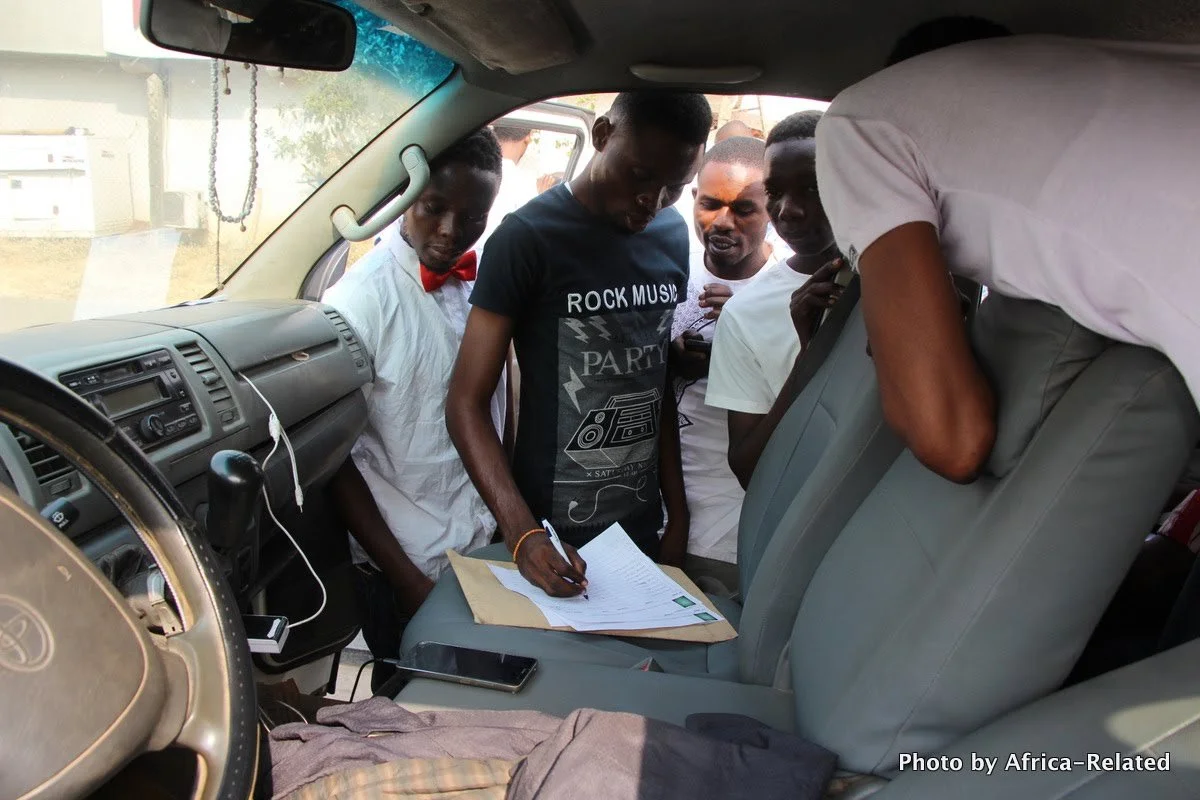
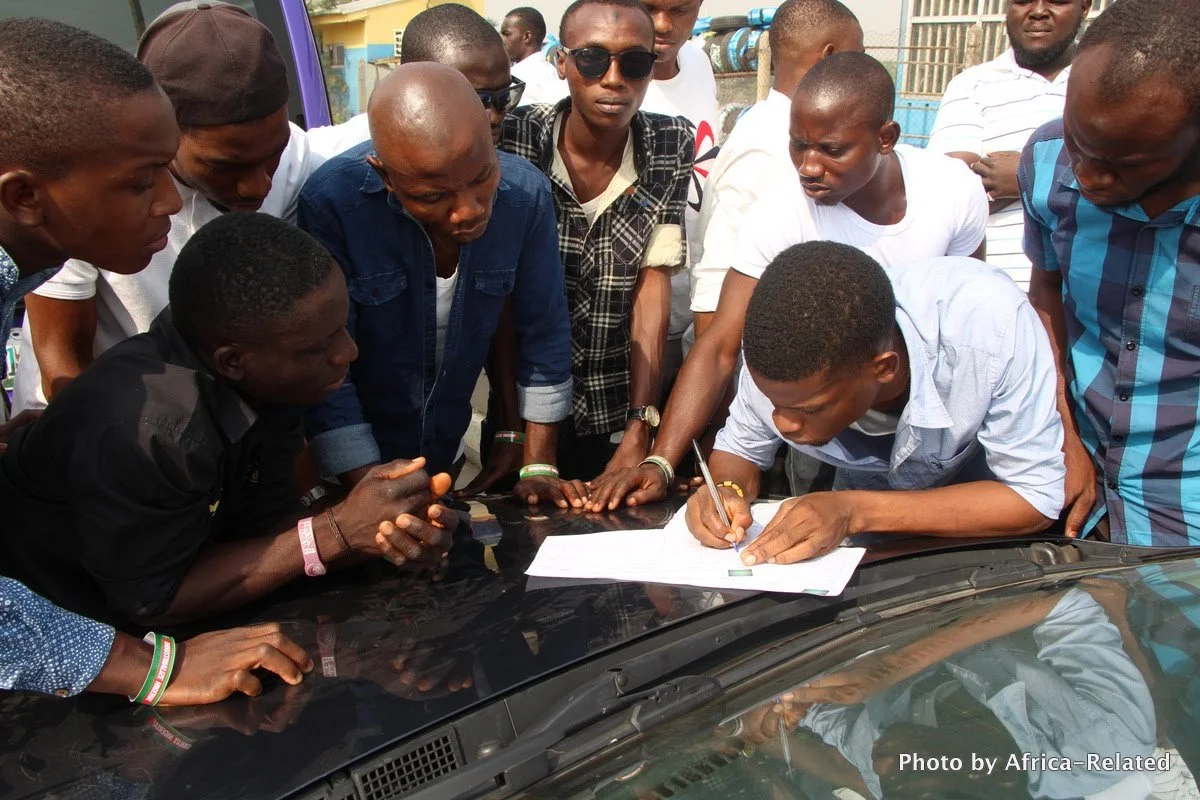
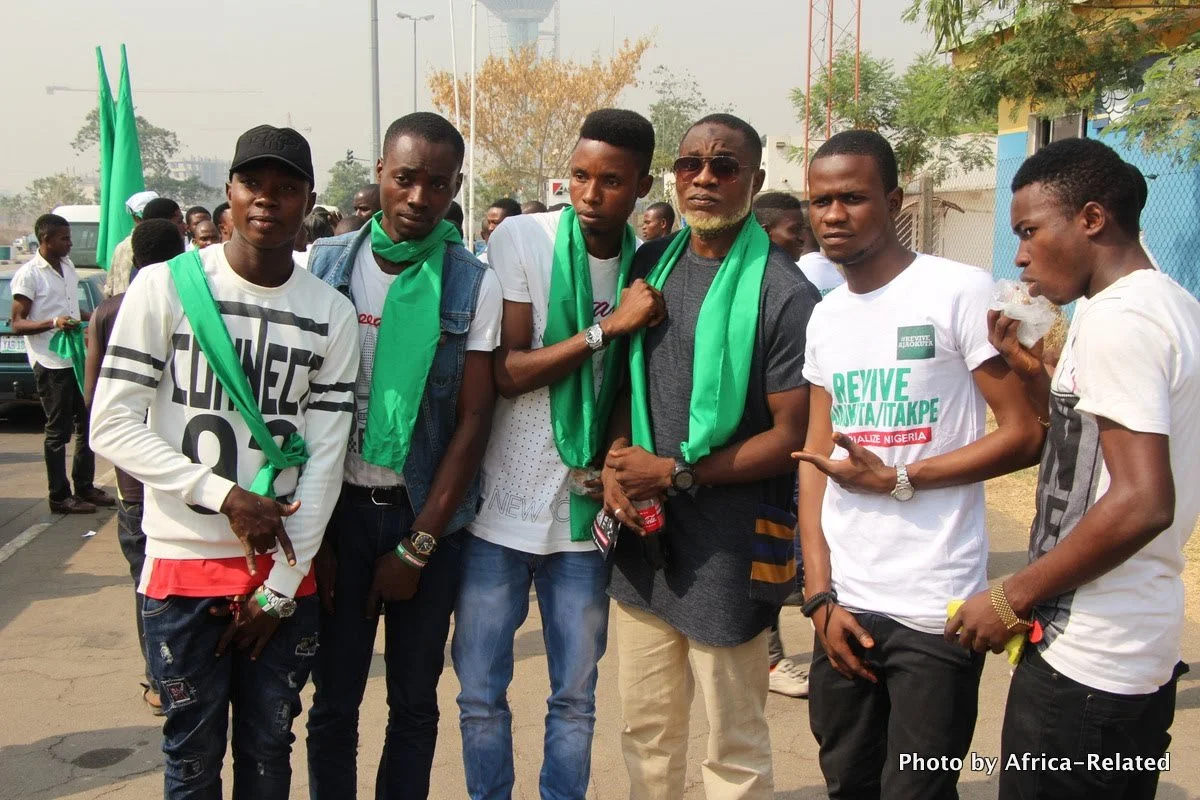
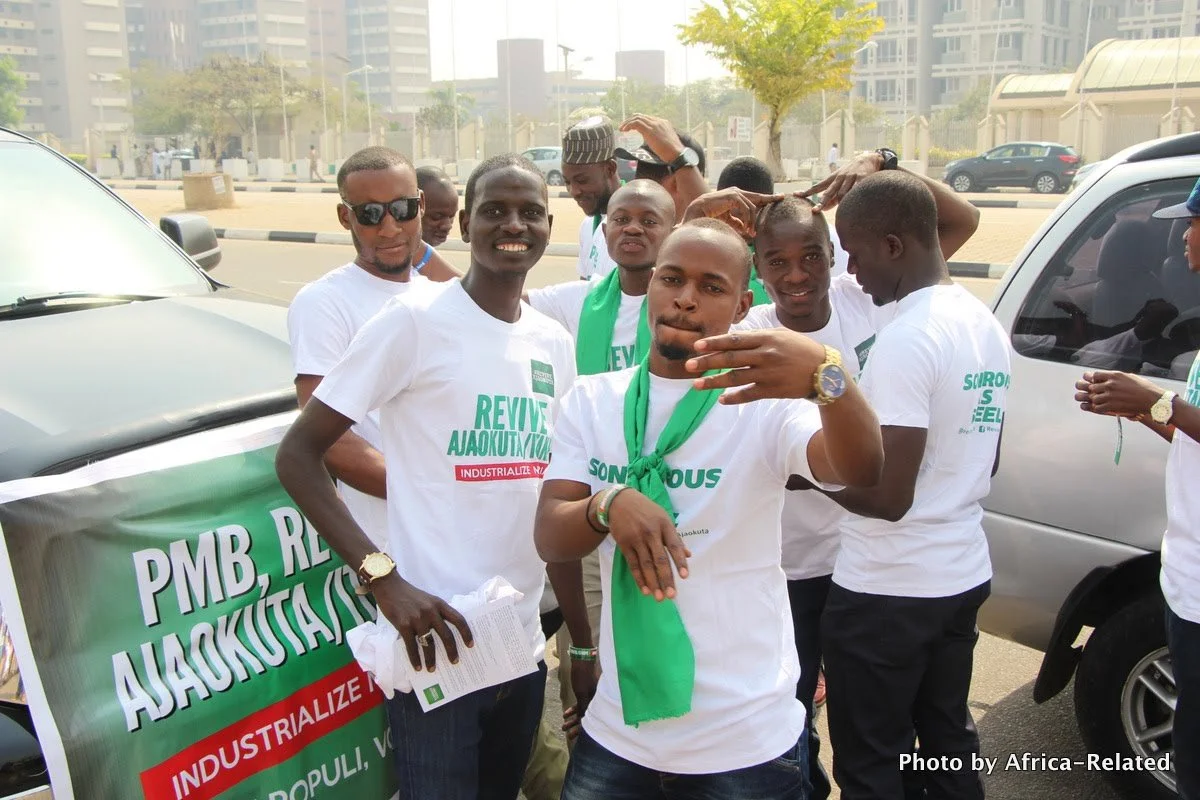
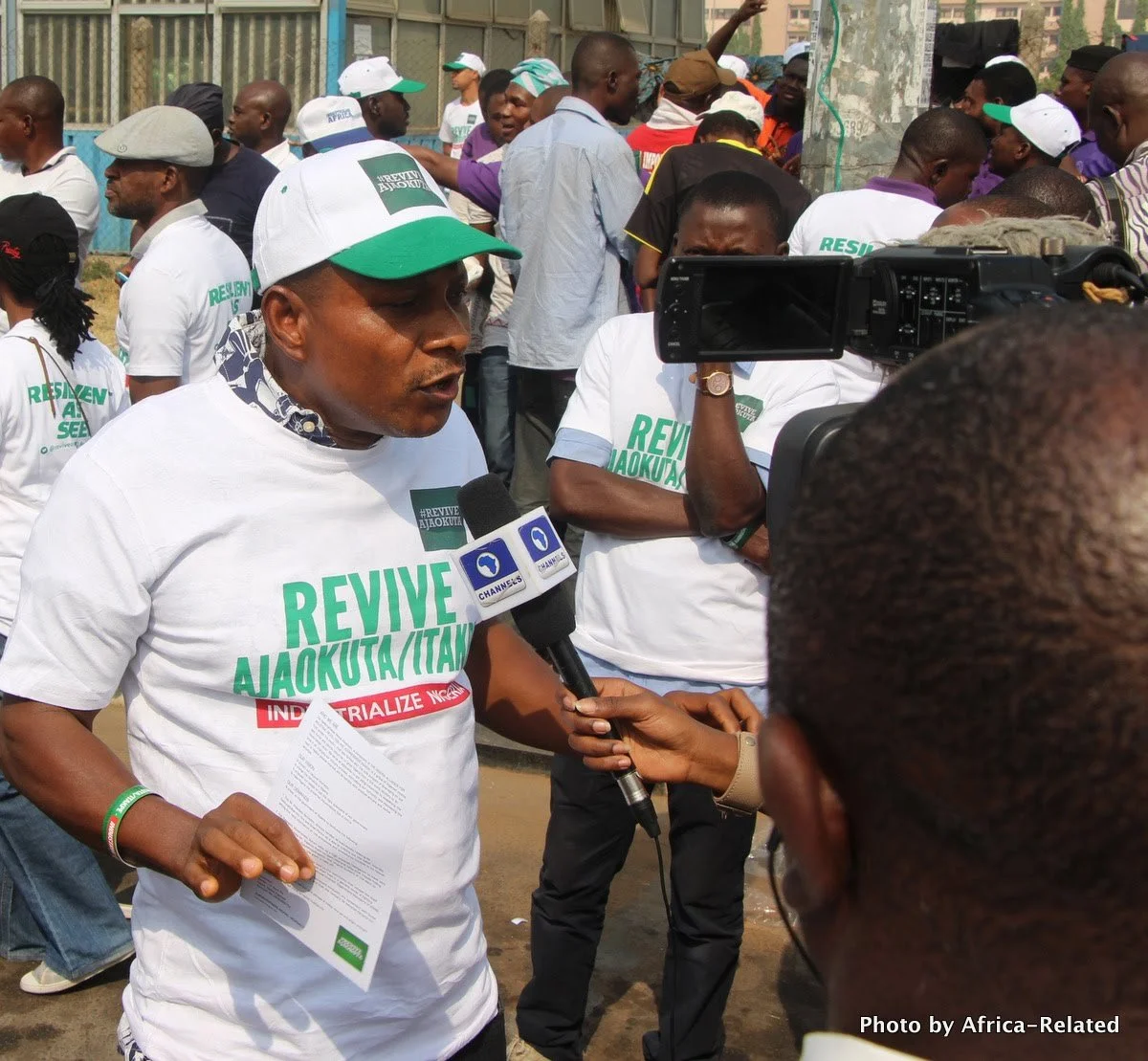
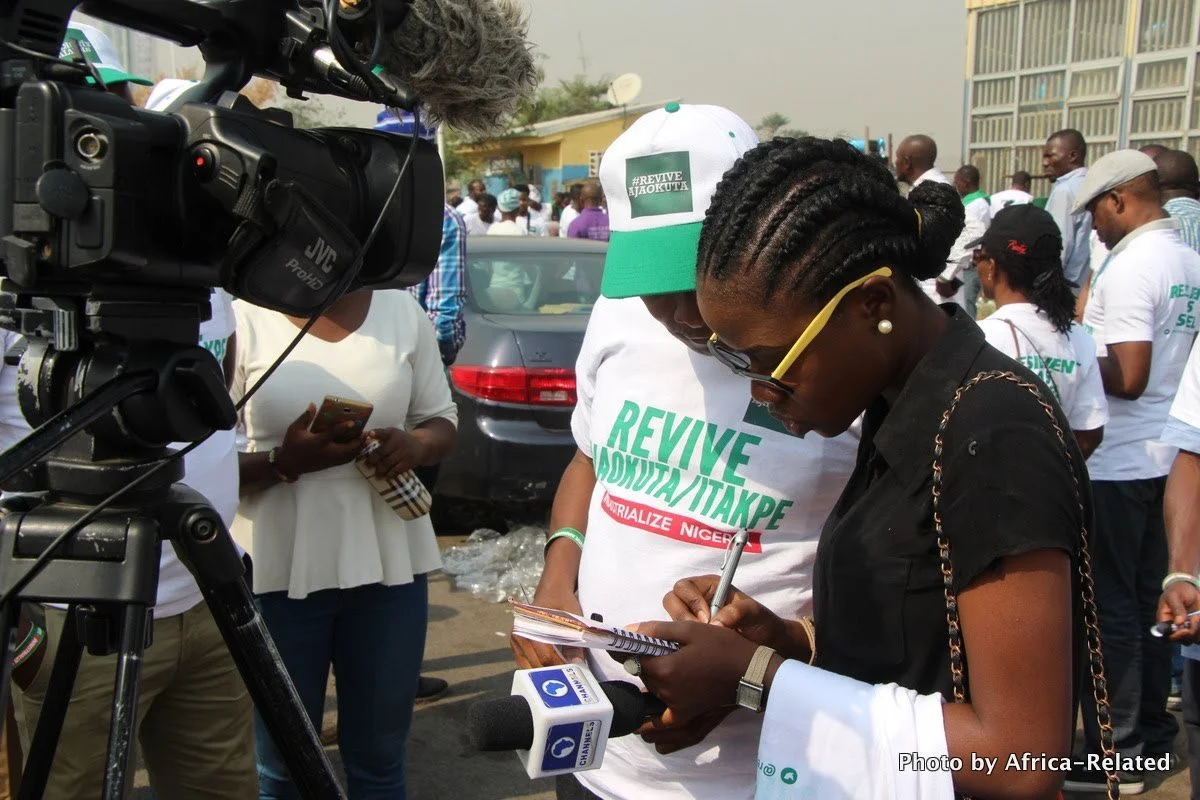
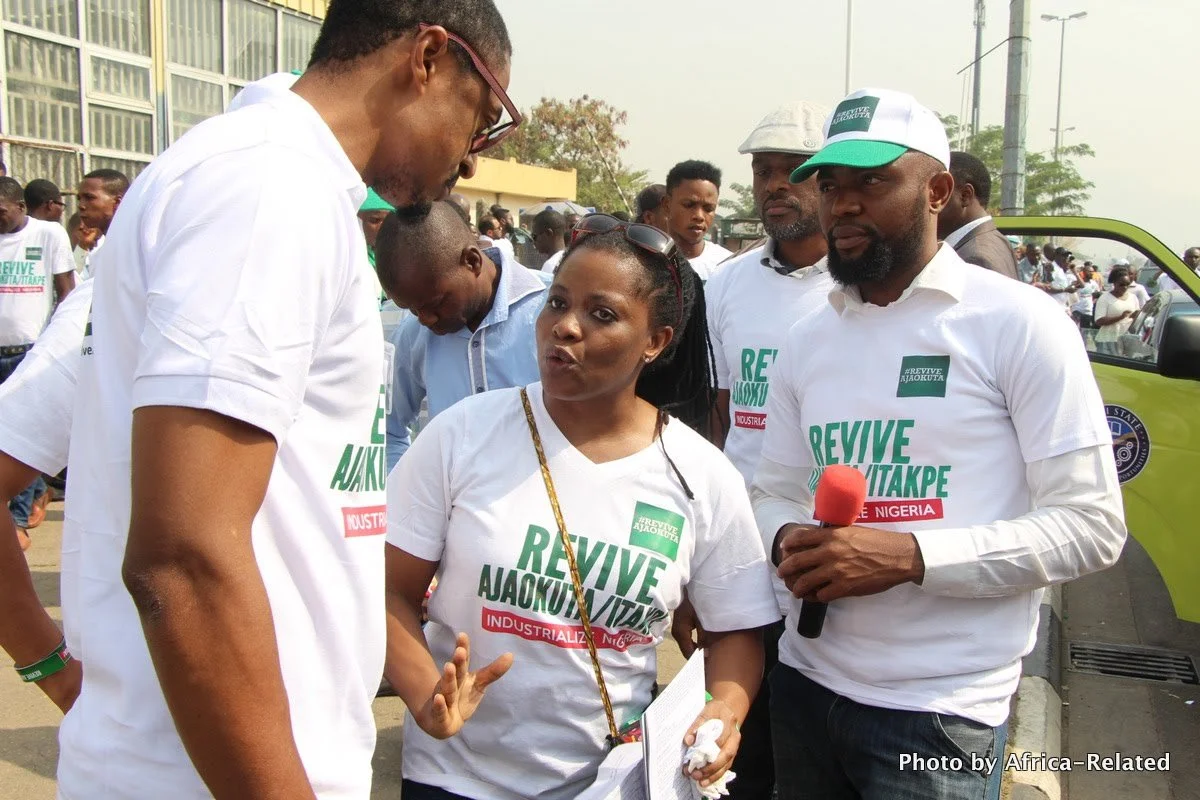
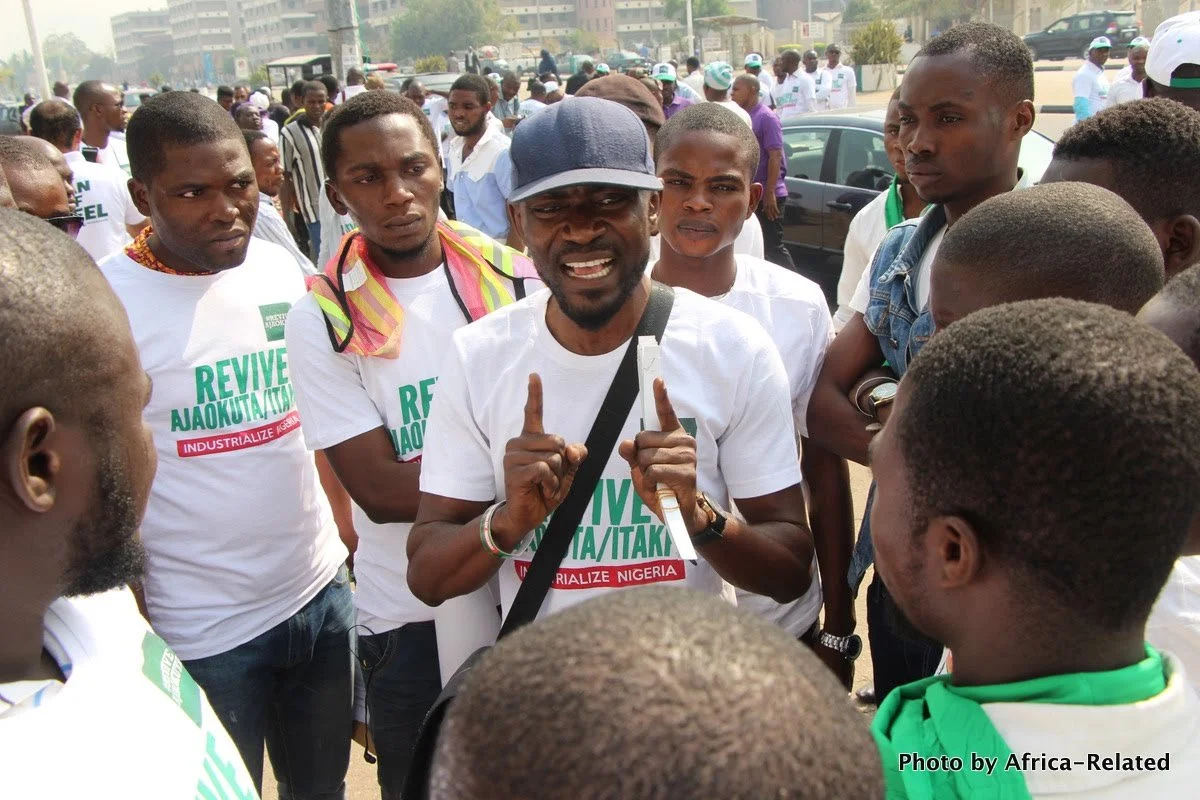
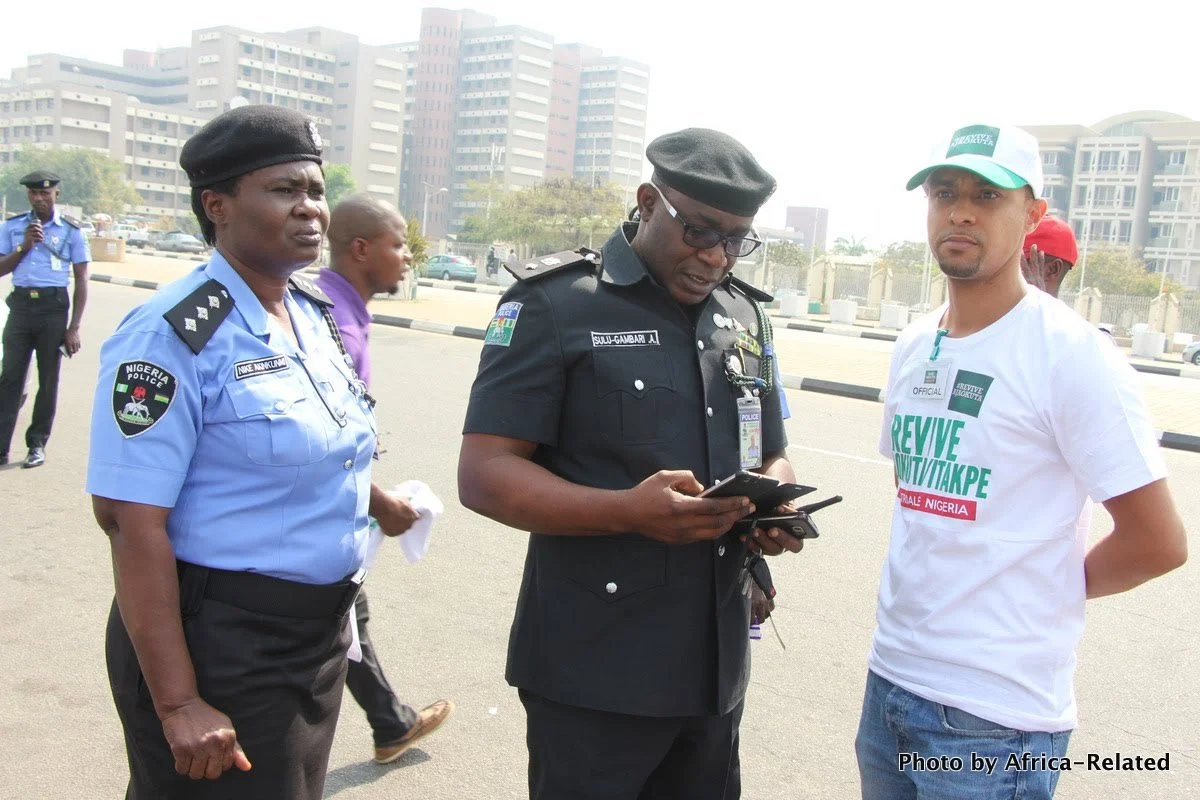
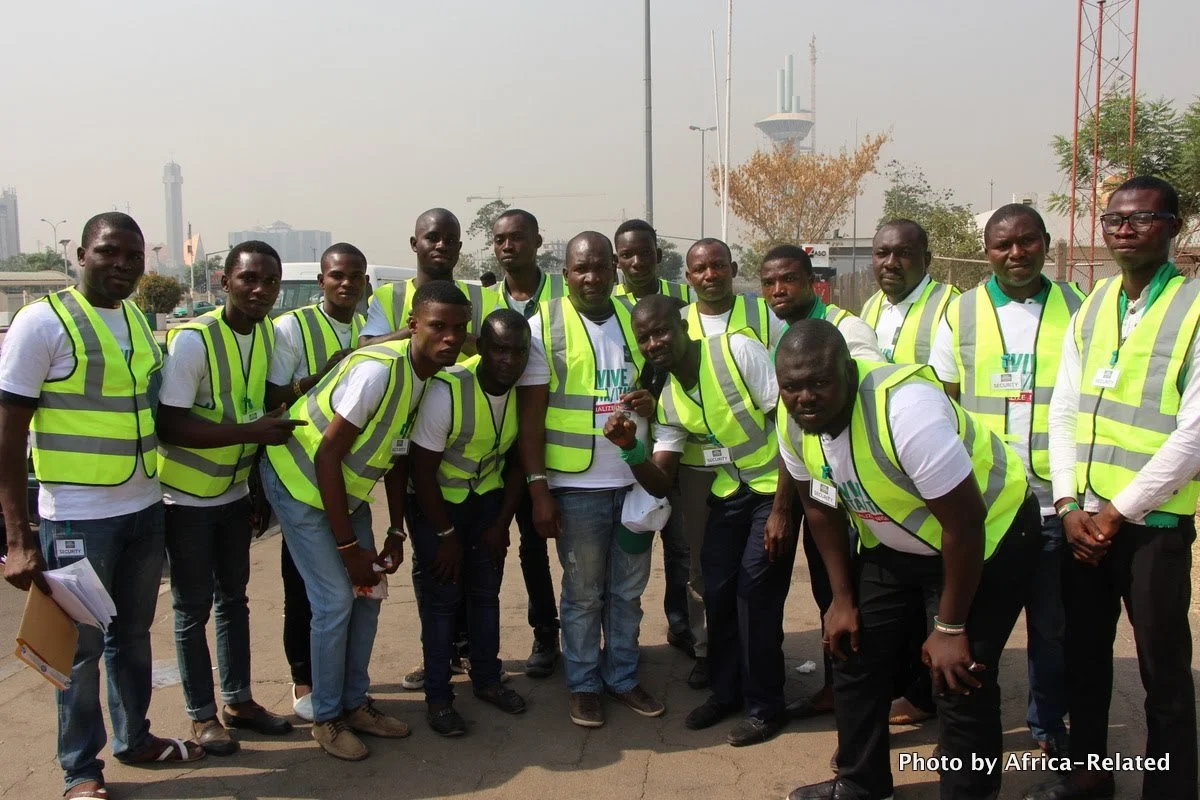
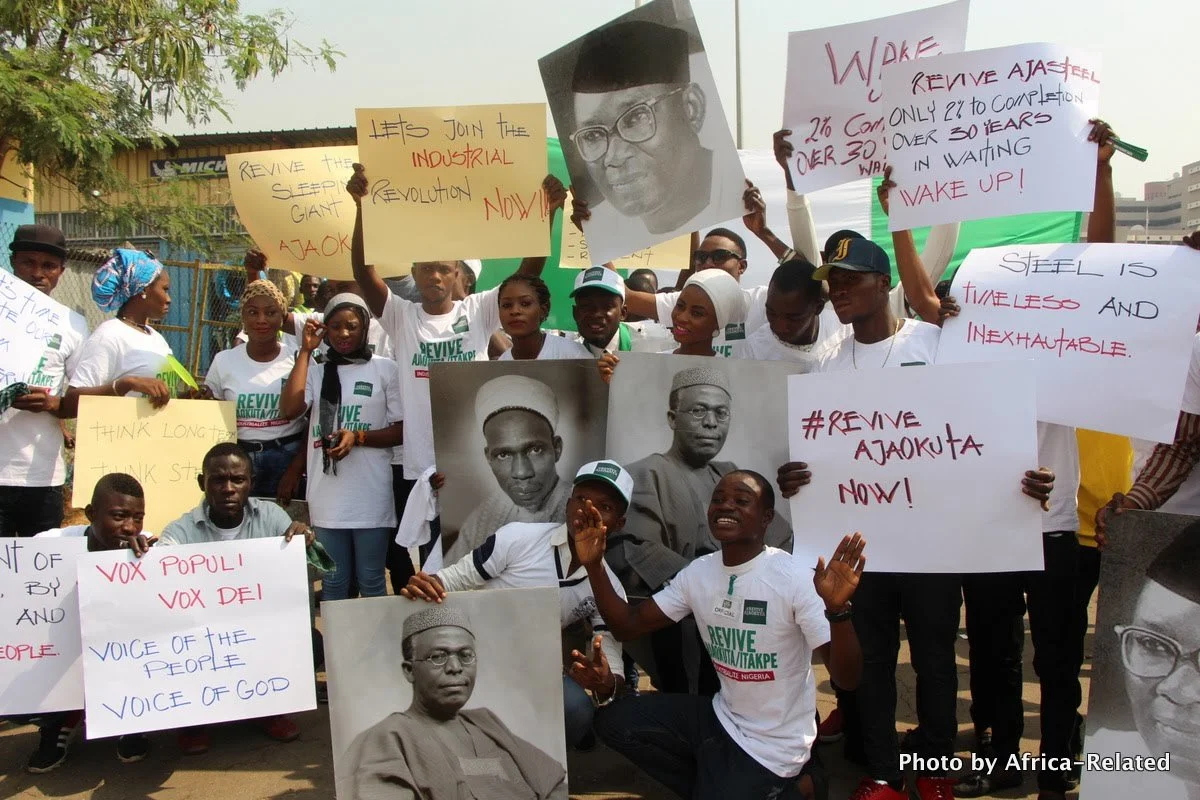
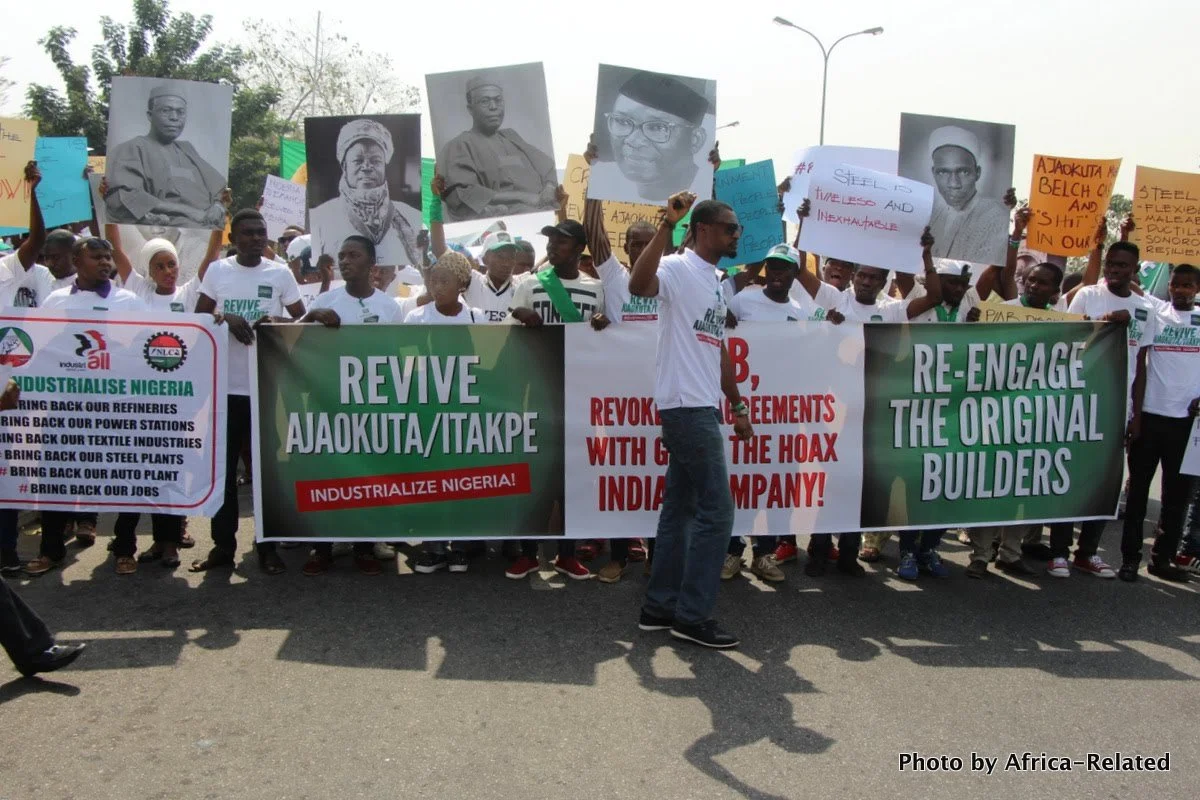
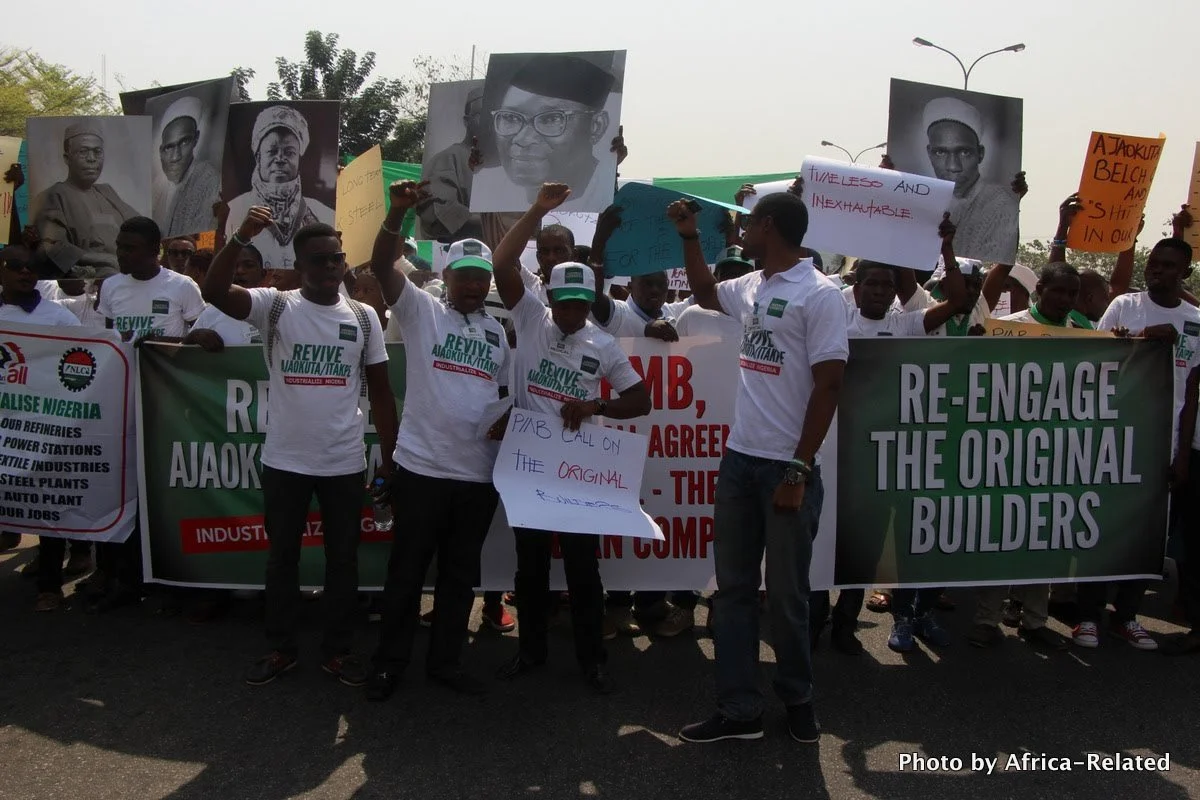
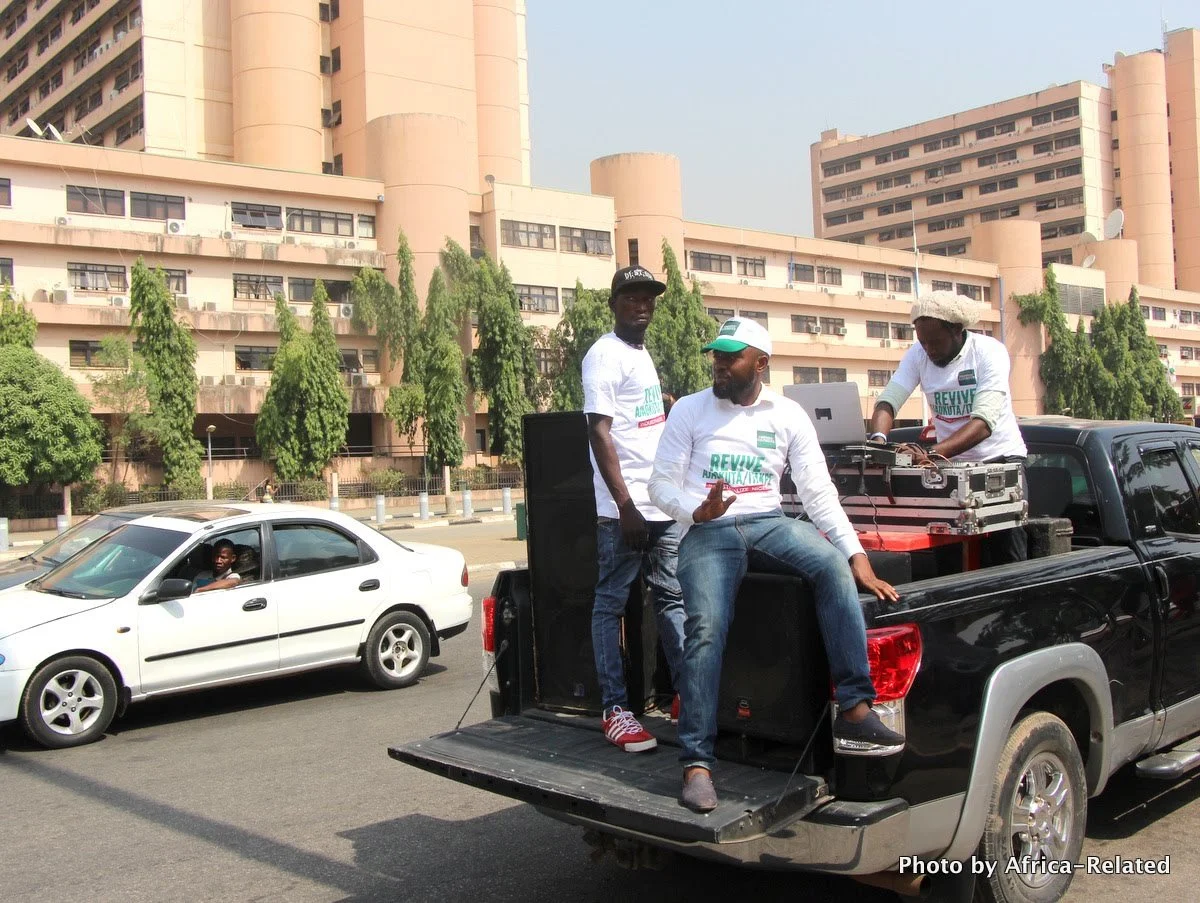
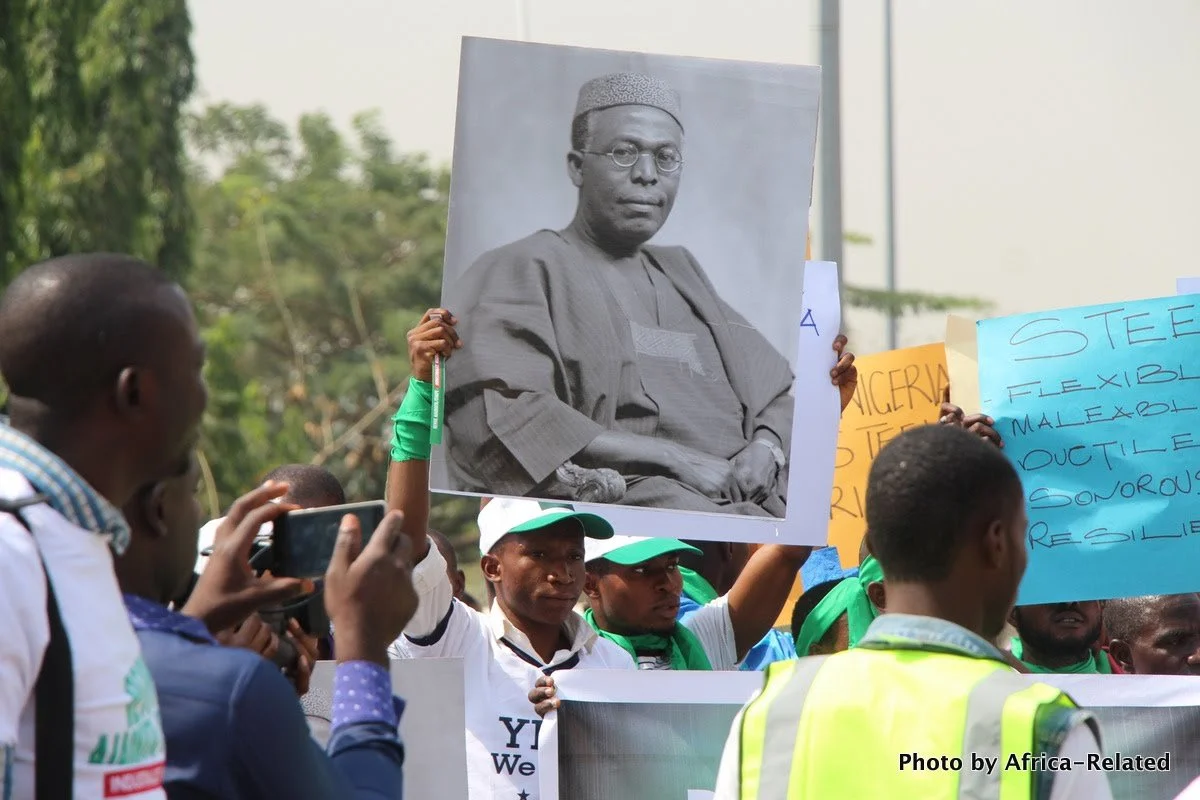
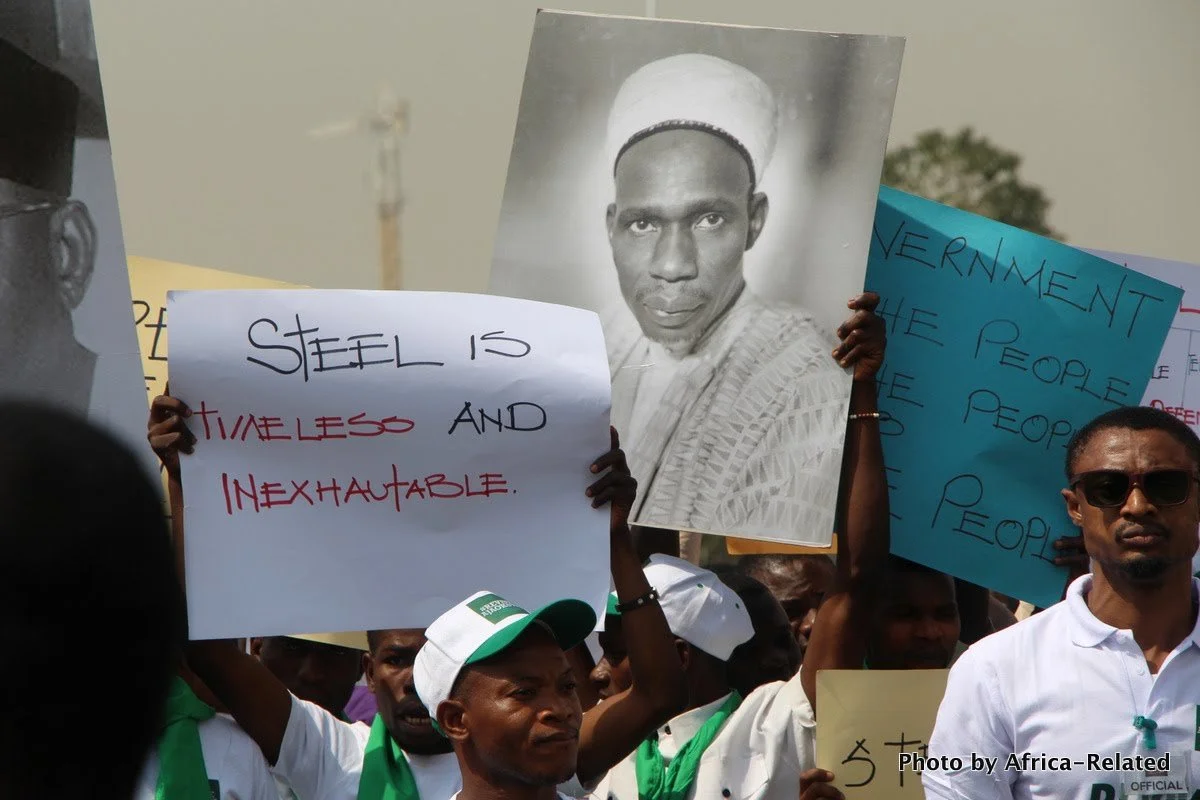
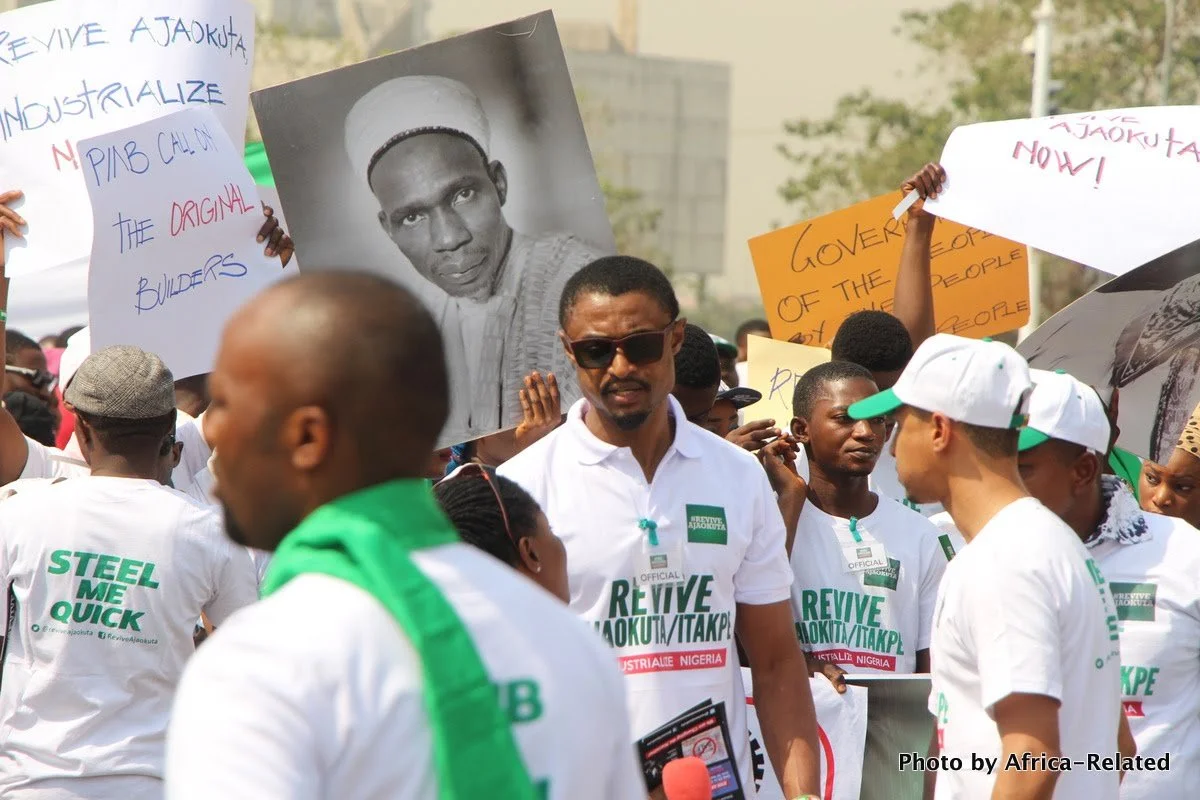
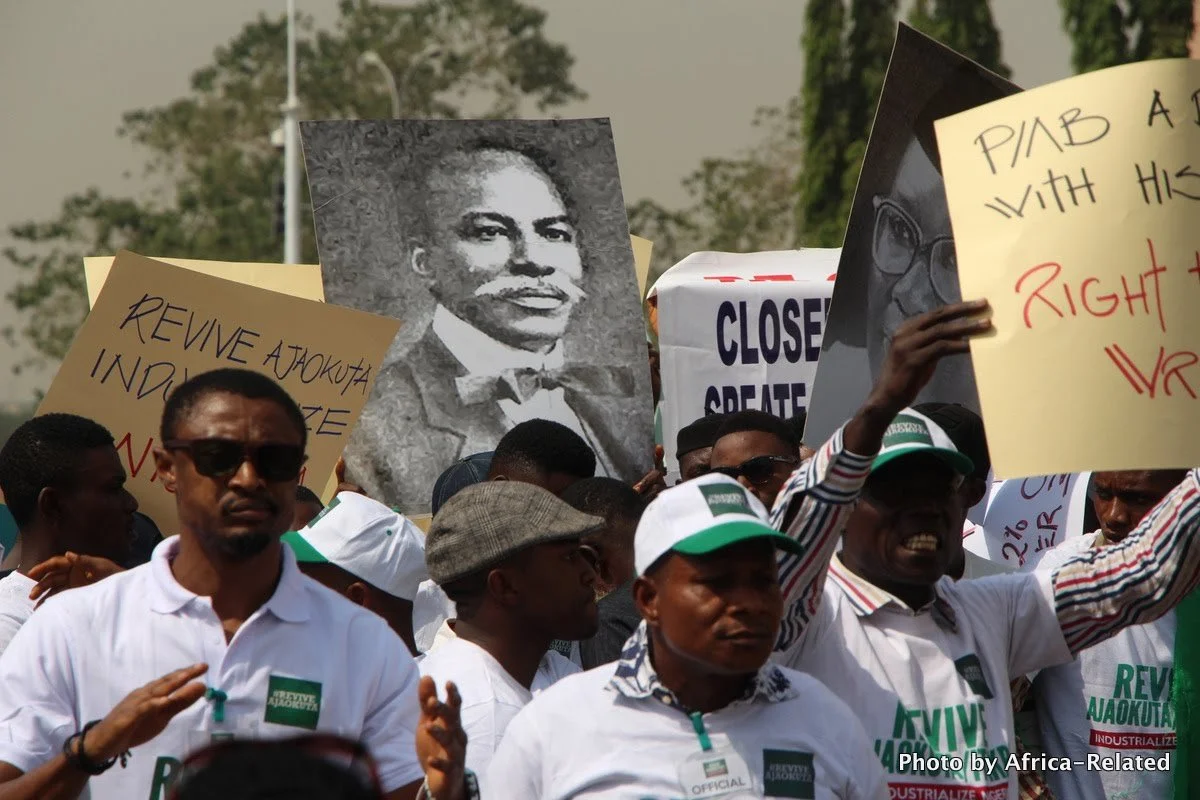
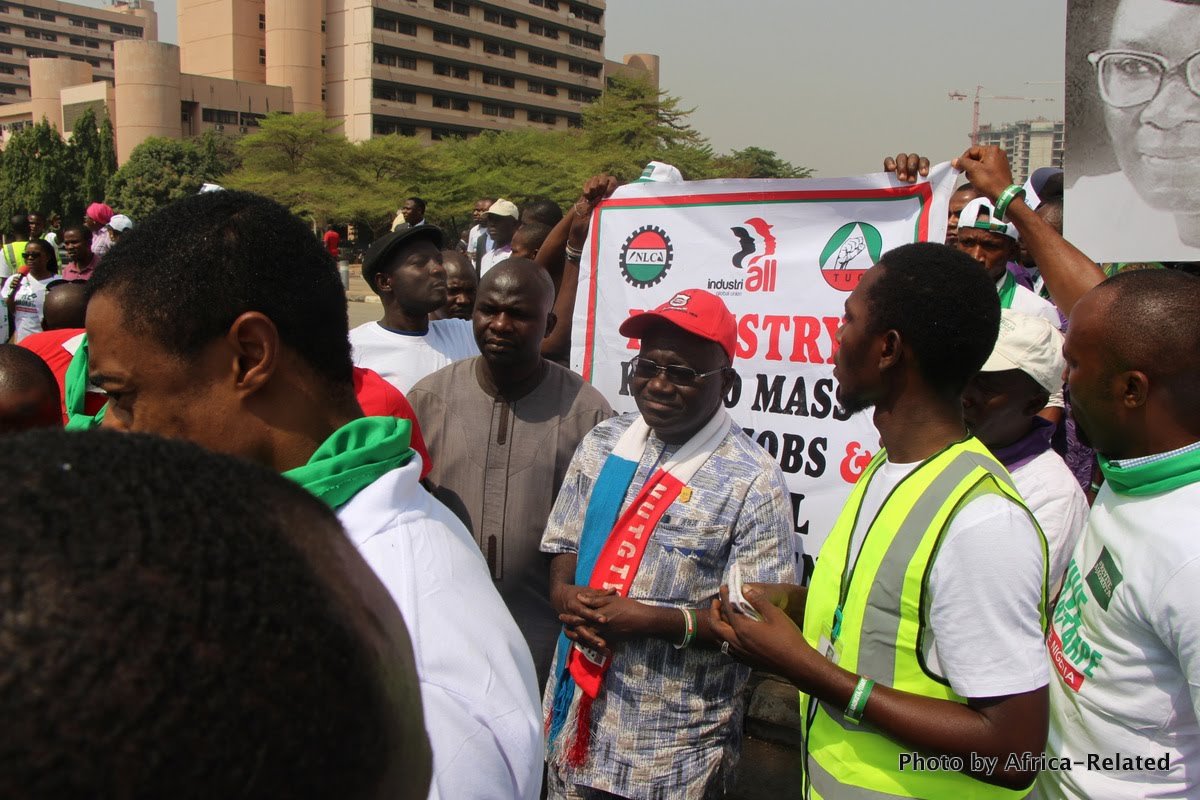
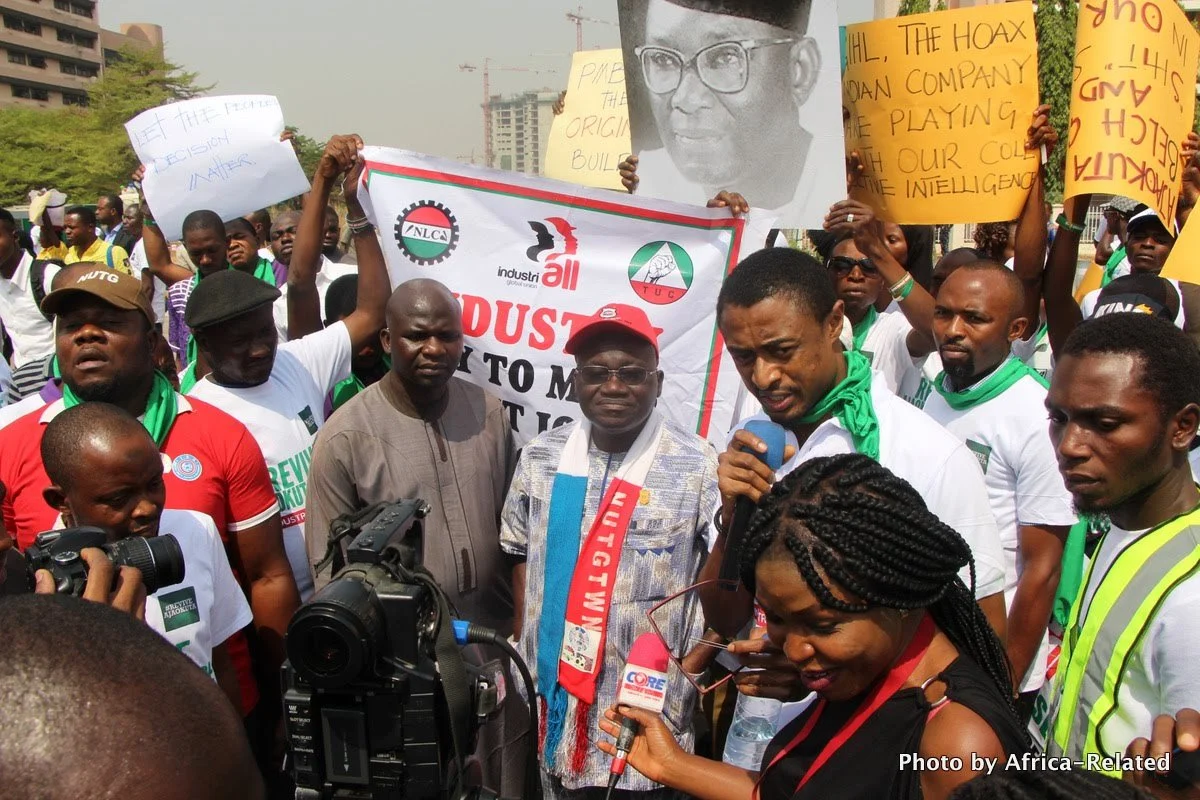
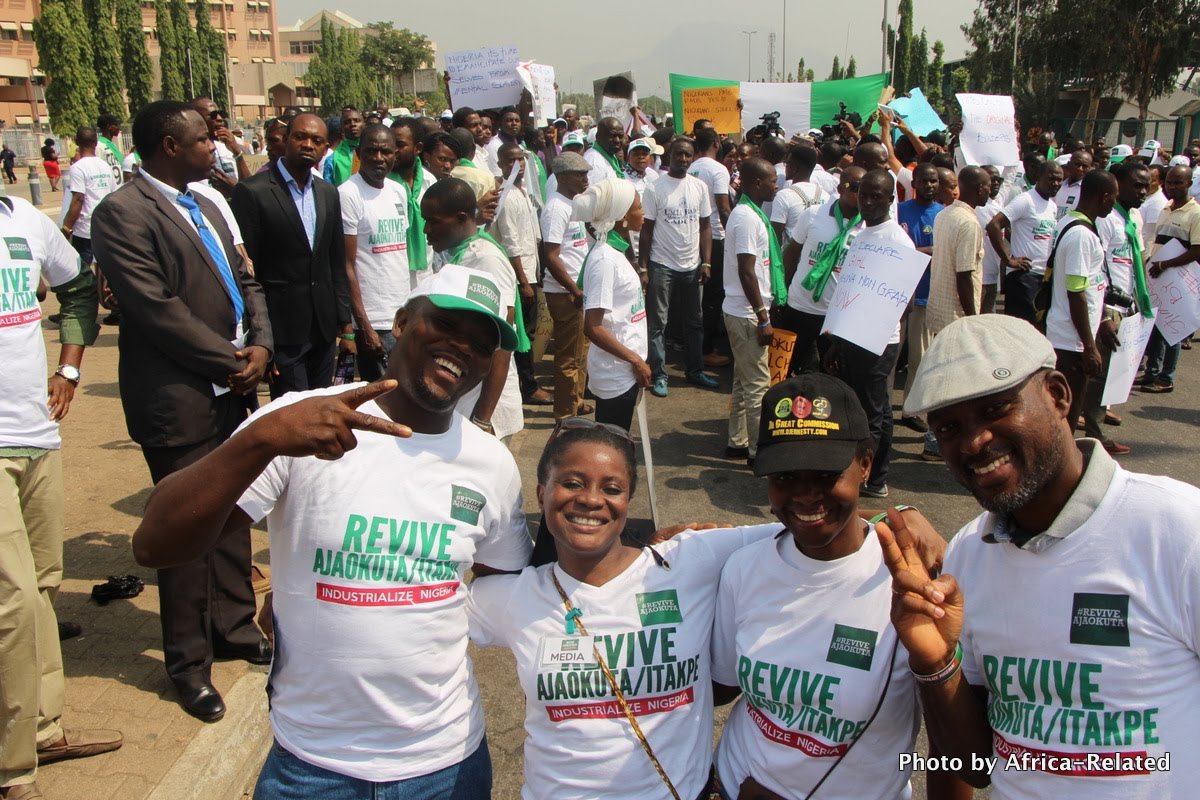
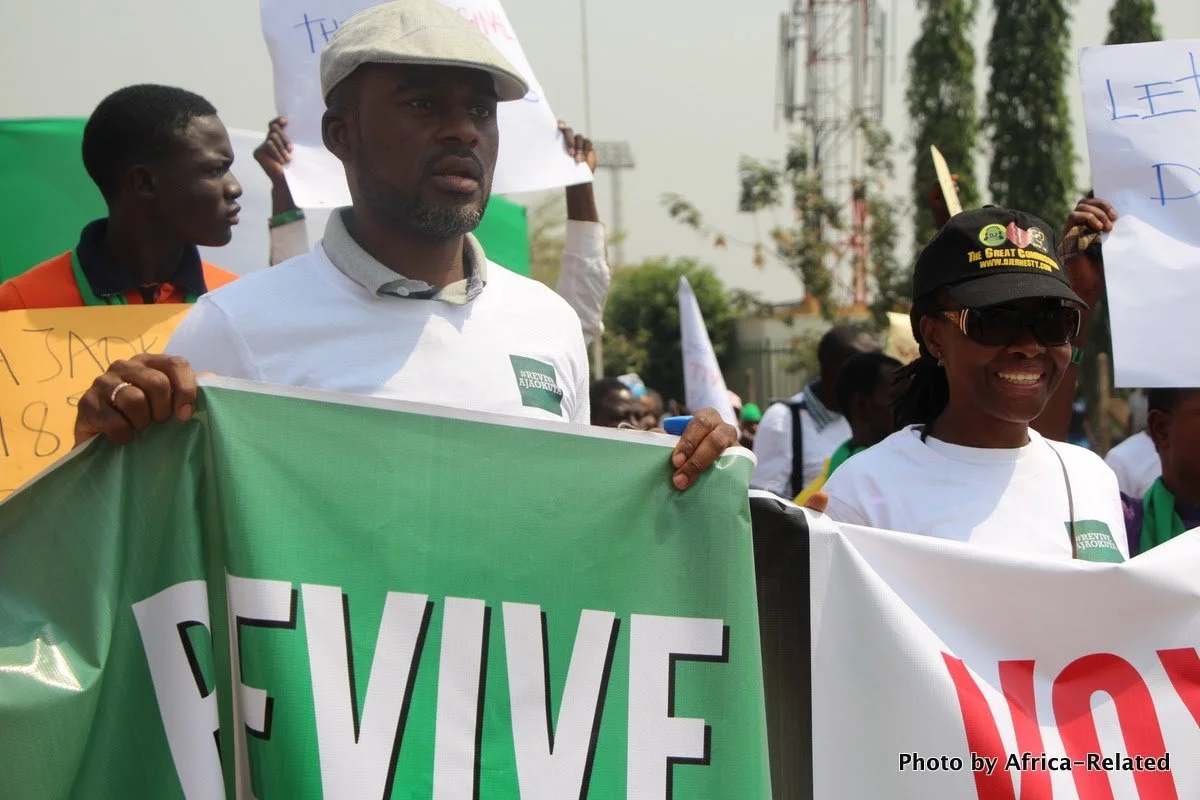
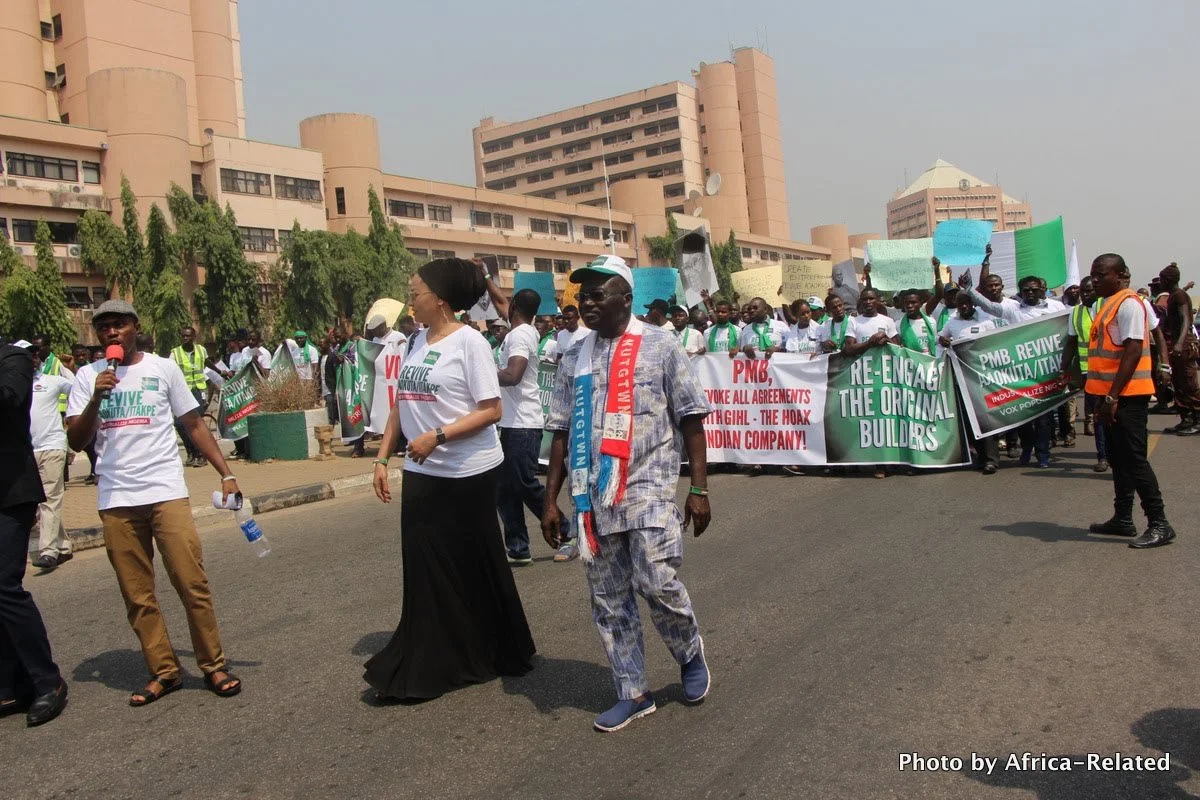
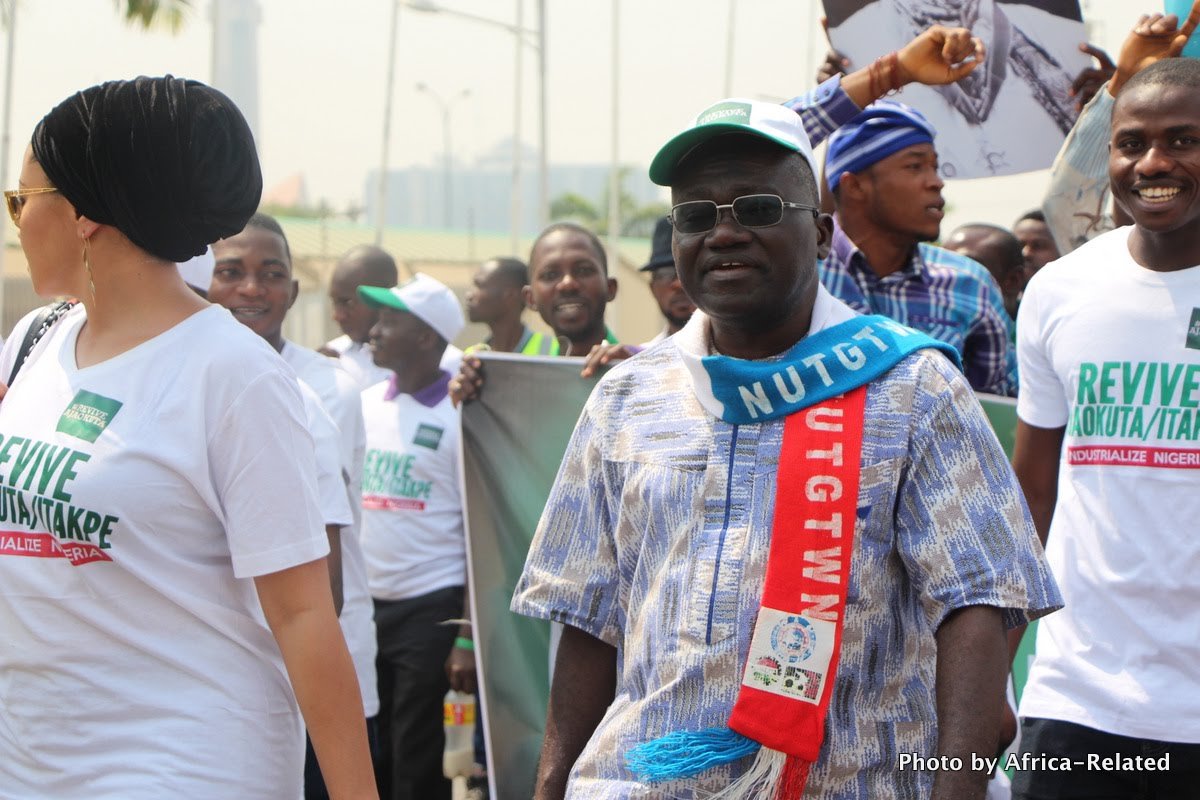
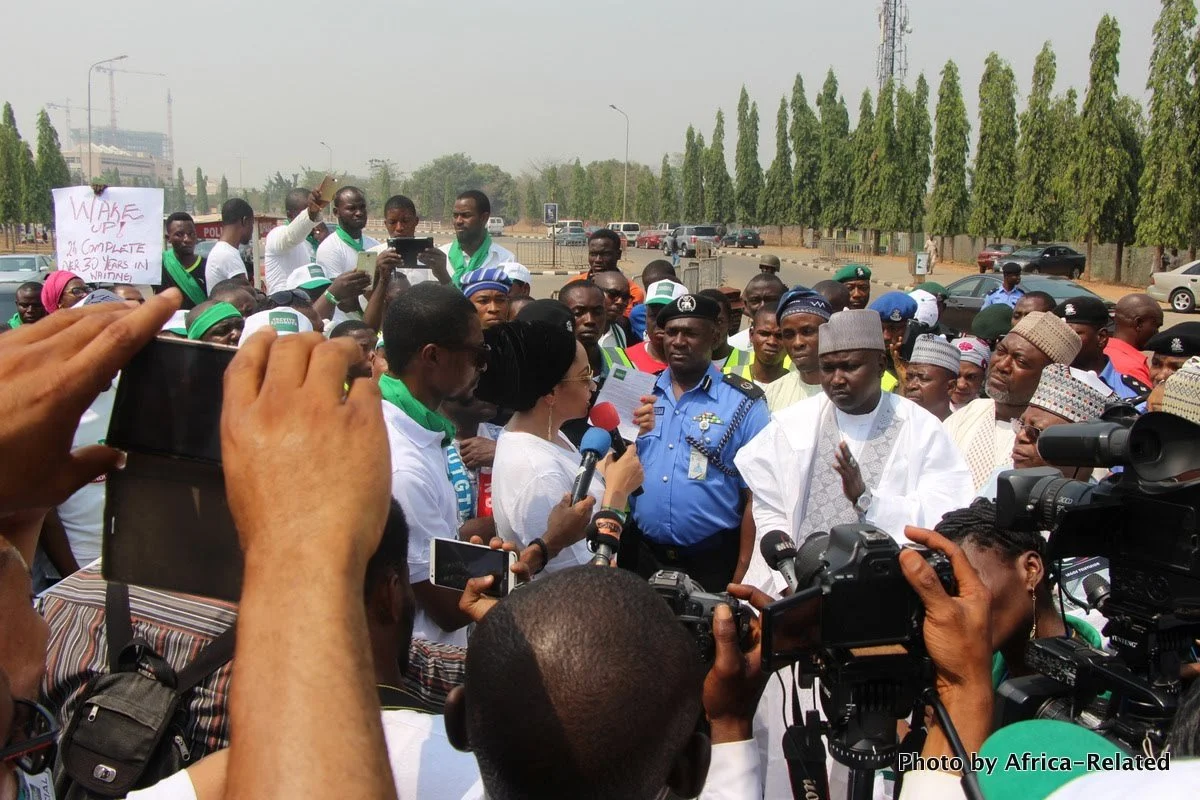
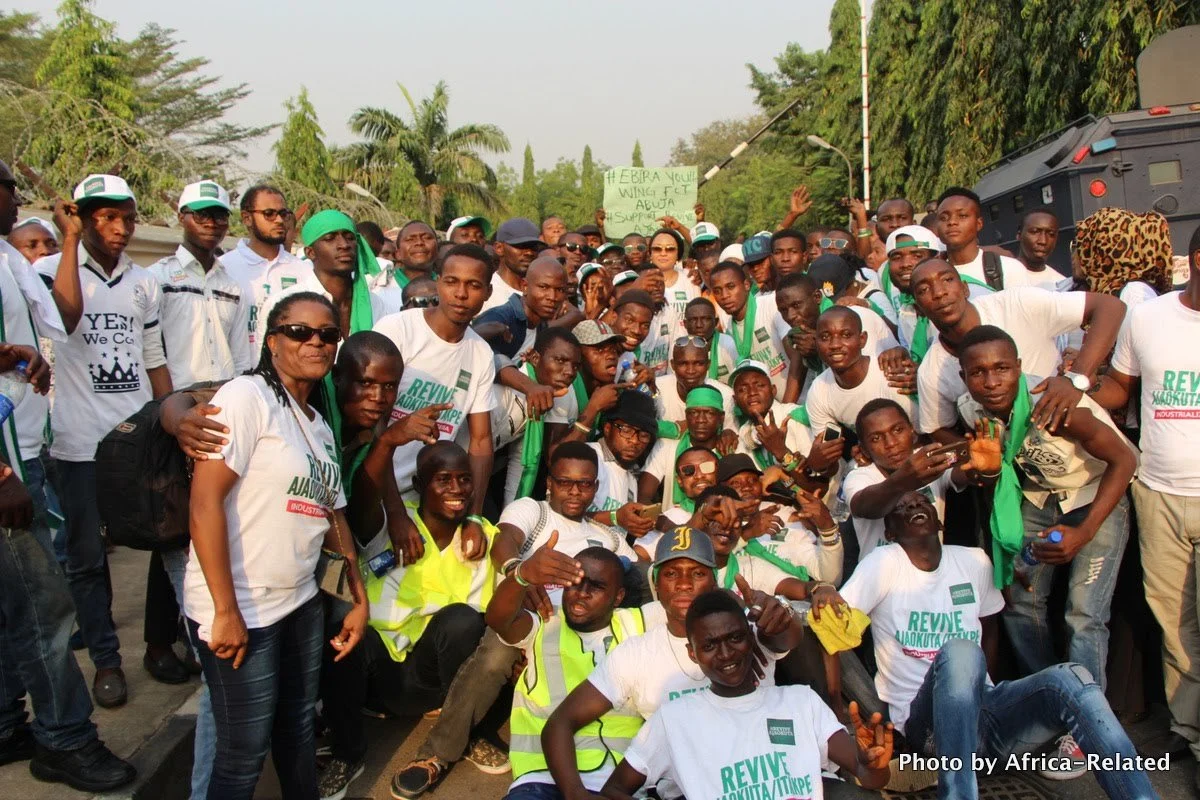
The Ajaokuta Awareness Walk, a sensitization march organized by The Revive Ajaokuta/Itakpe Movement, a group of advocates for the revival of Nigeria’s existing moribund industries held in Abuja on Jan 25, 2017.
BY OYIZA ADABA | AFRICA-RELATED NIGERIA
ABUJA, Nigeria January 25, 2017
Photos: AFRICA-RELATED
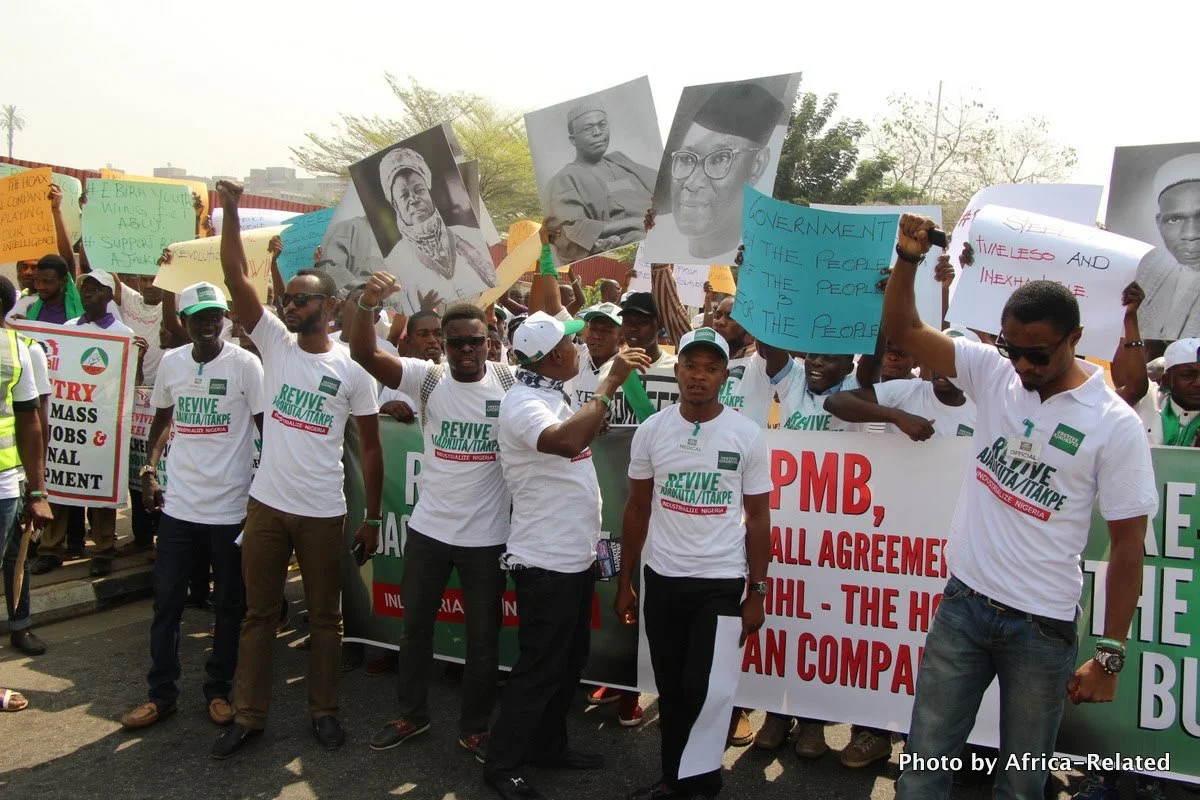
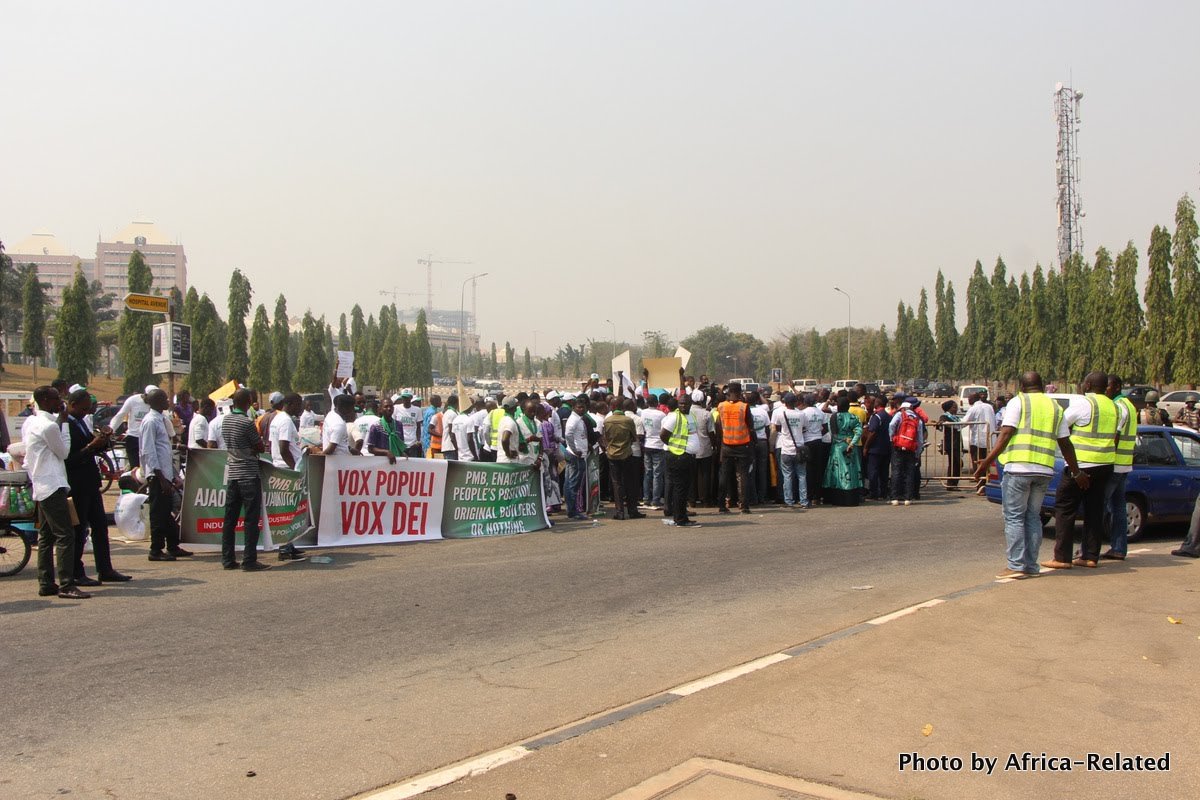
The Ajaokuta Awareness Walk, a sensitization march organized by The Revive Ajaokuta/Itakpe Movement, a group of advocates for the revival of Nigeria’s existing moribund industries held in Abuja on January 25, 2017.
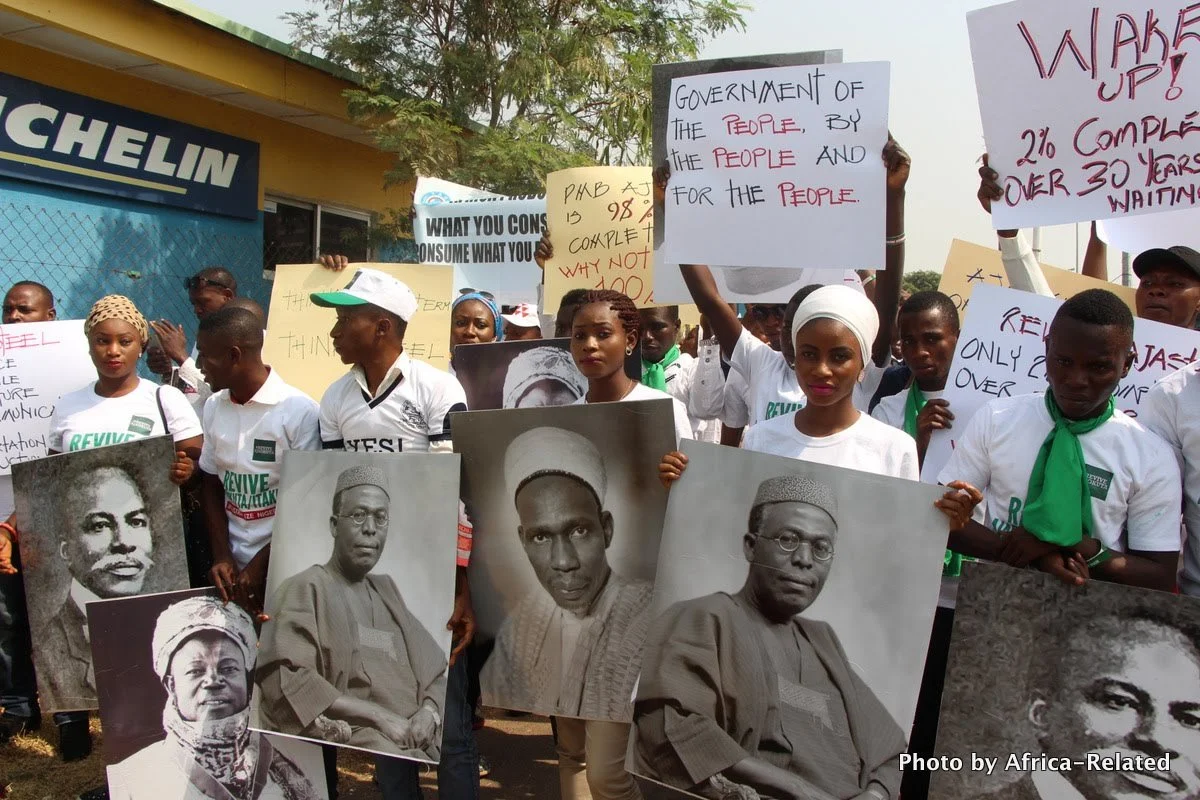
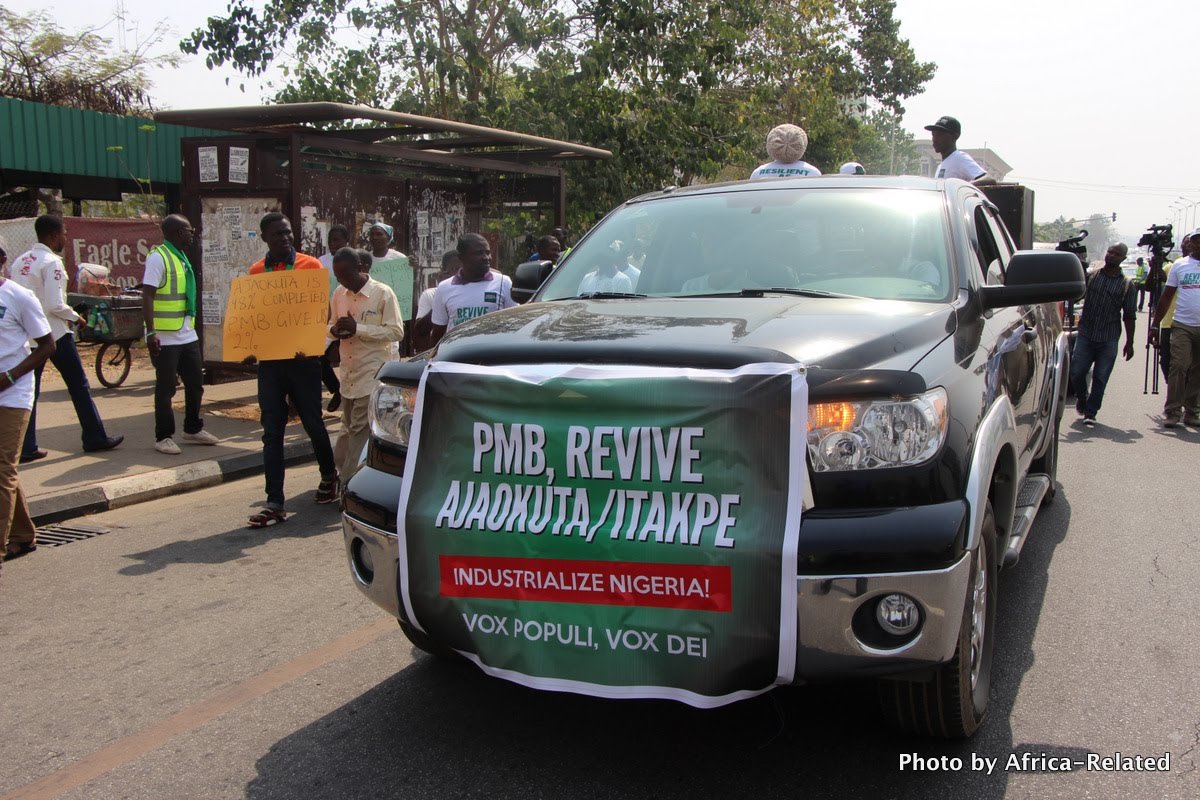
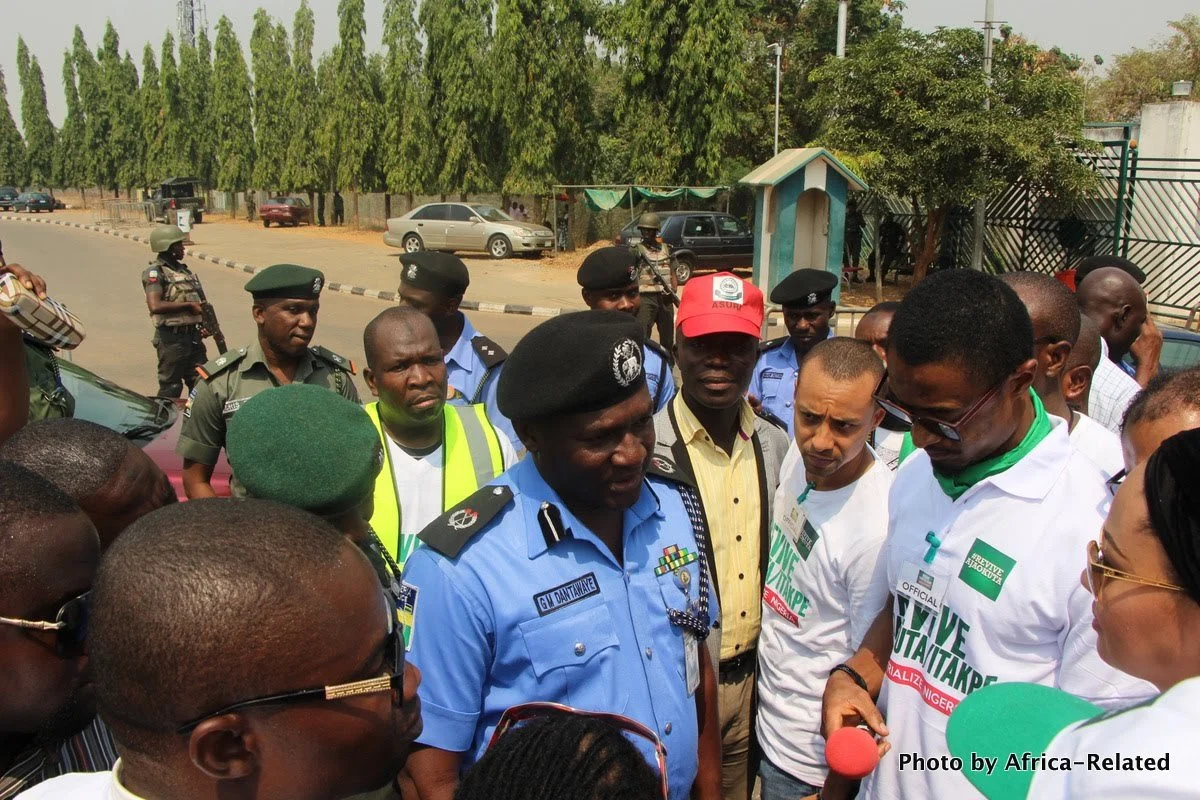
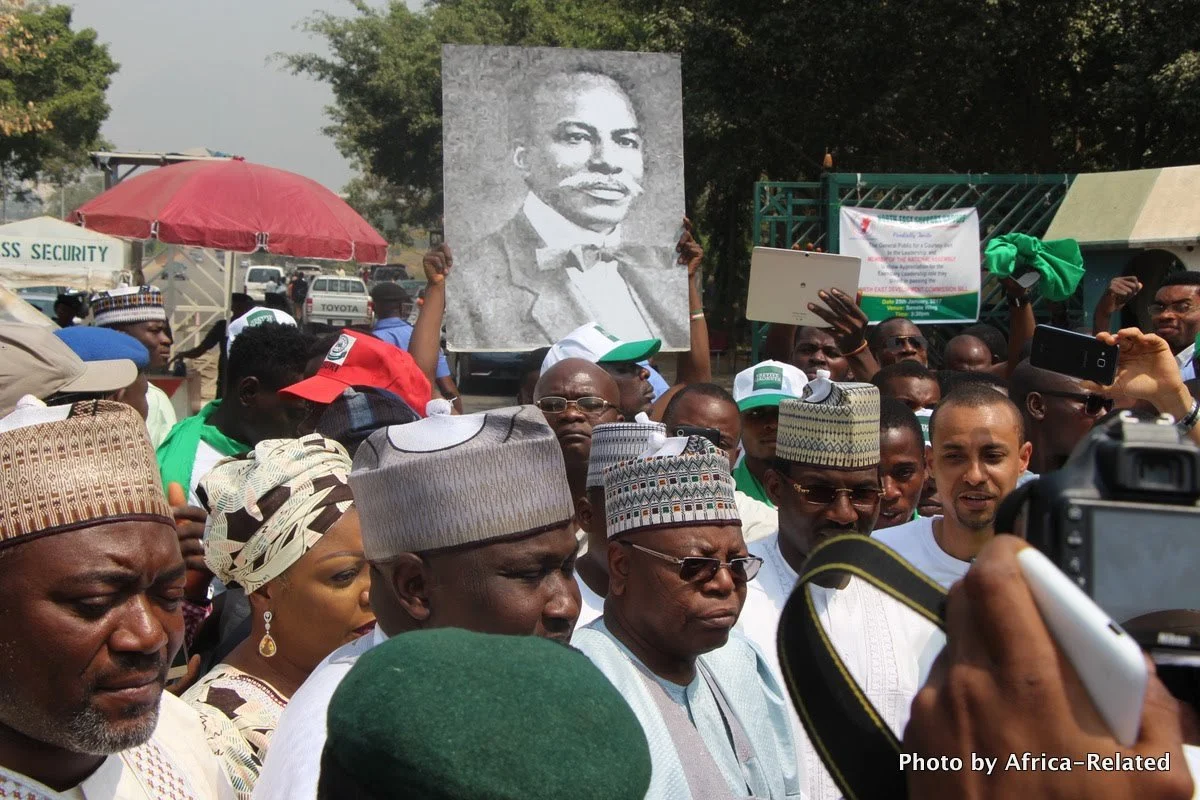
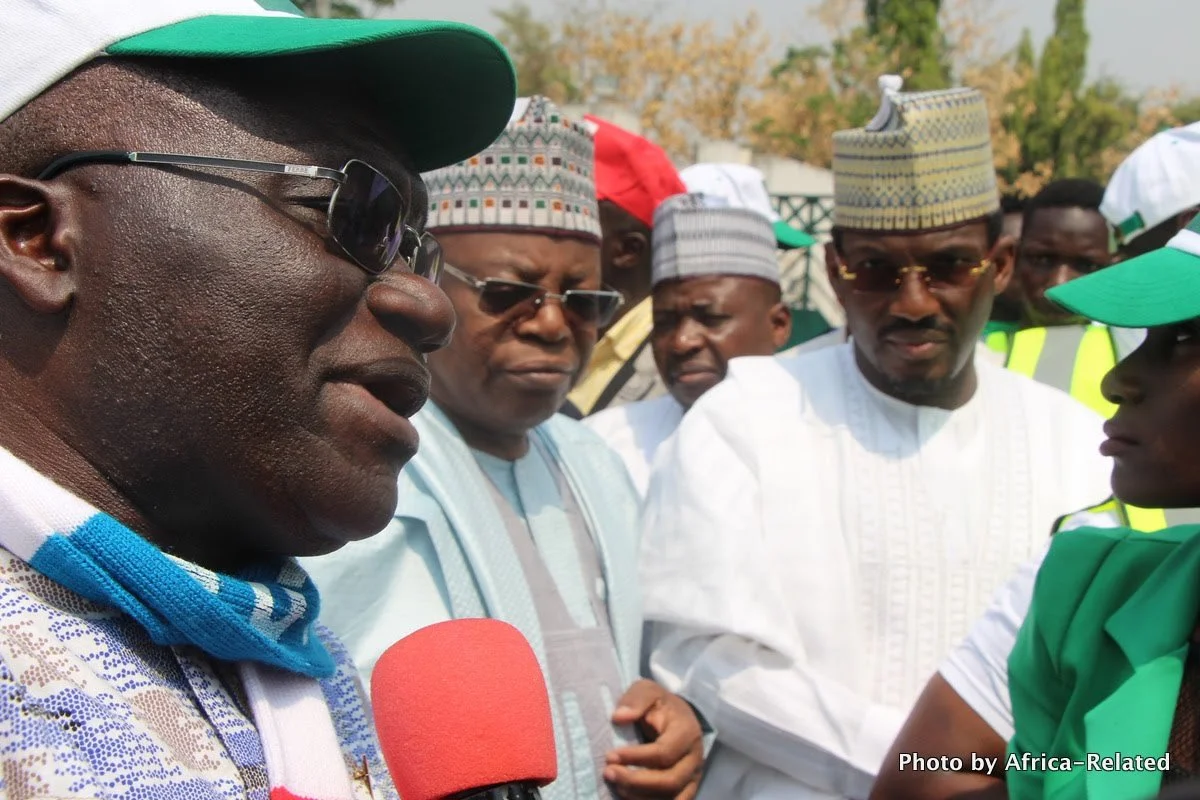
Over 300 marchers from across the country, started the walk from Eagle Square to the National Assembly where they were received by members of the Senate, and ended at the Ministry of Justice.
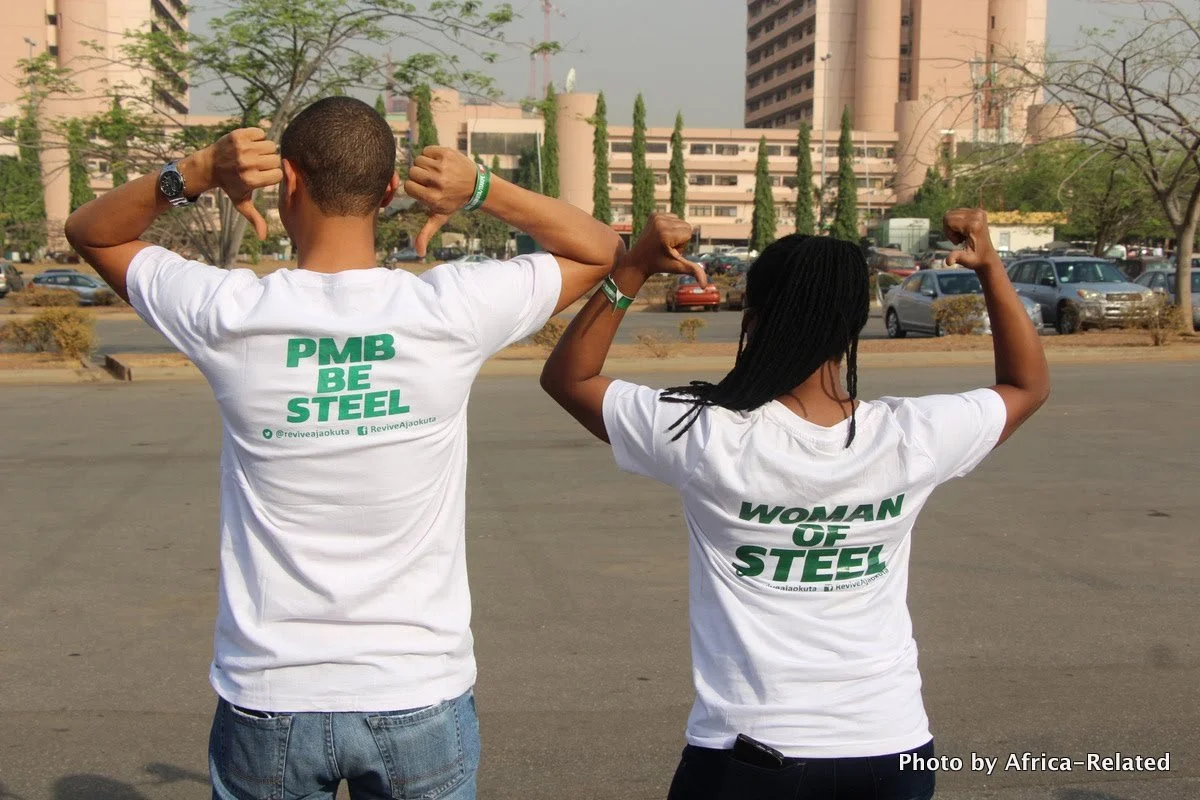
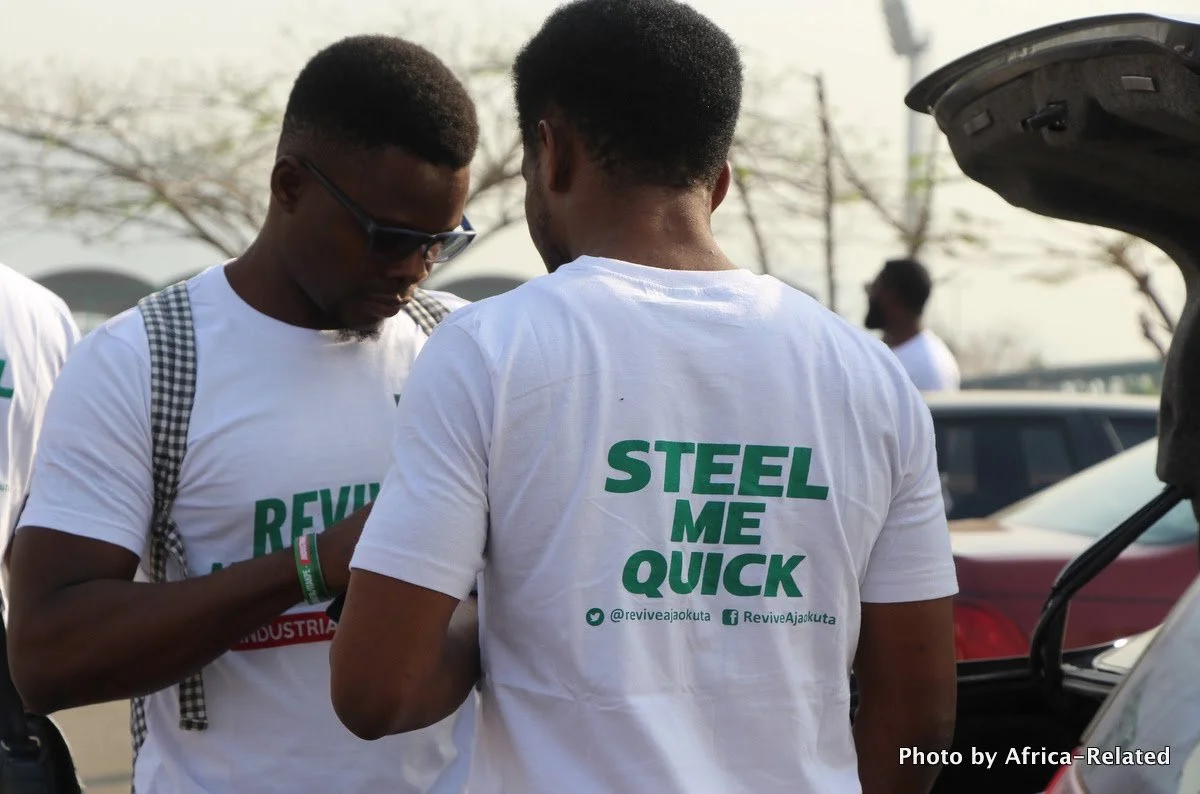
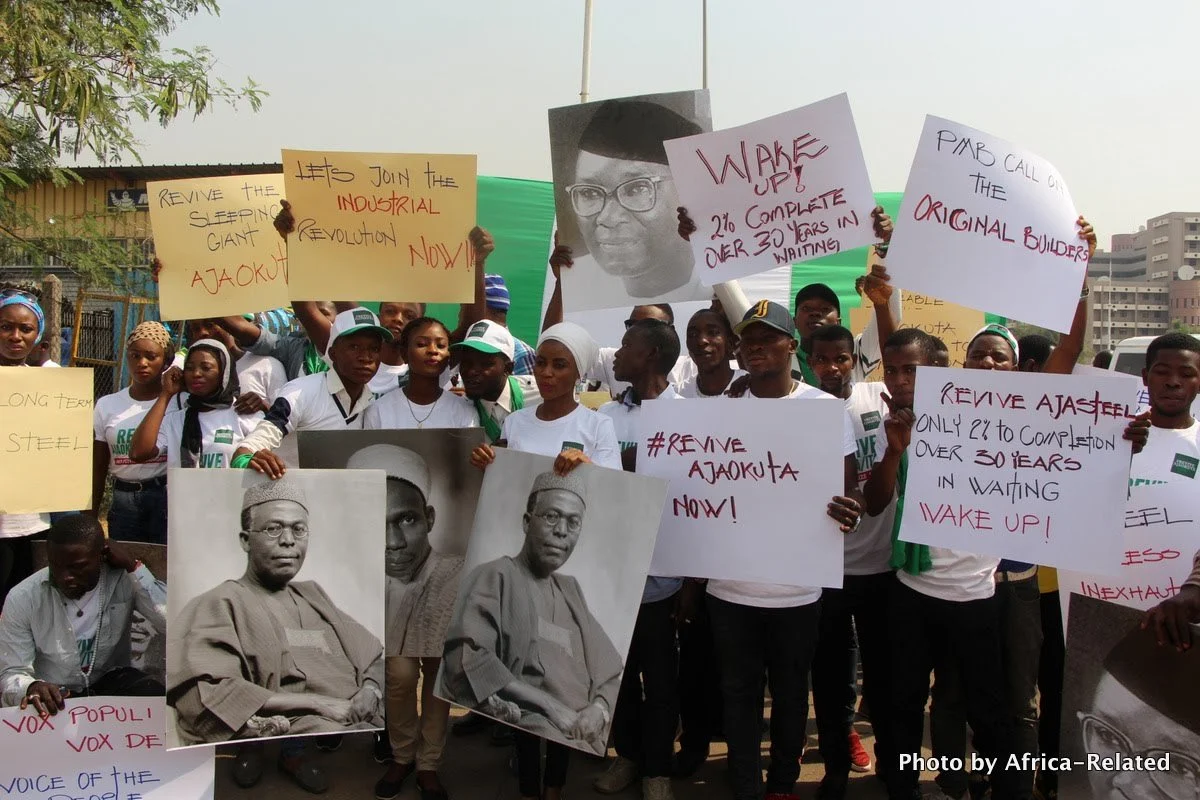
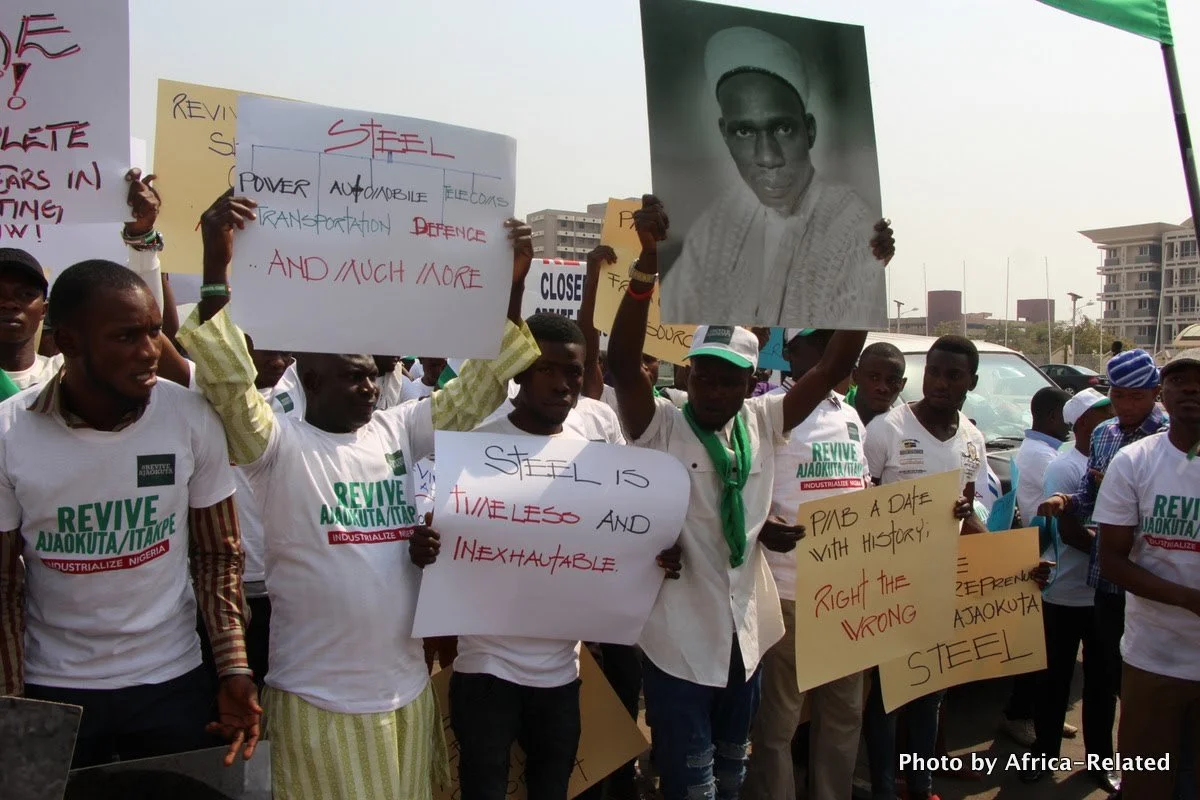
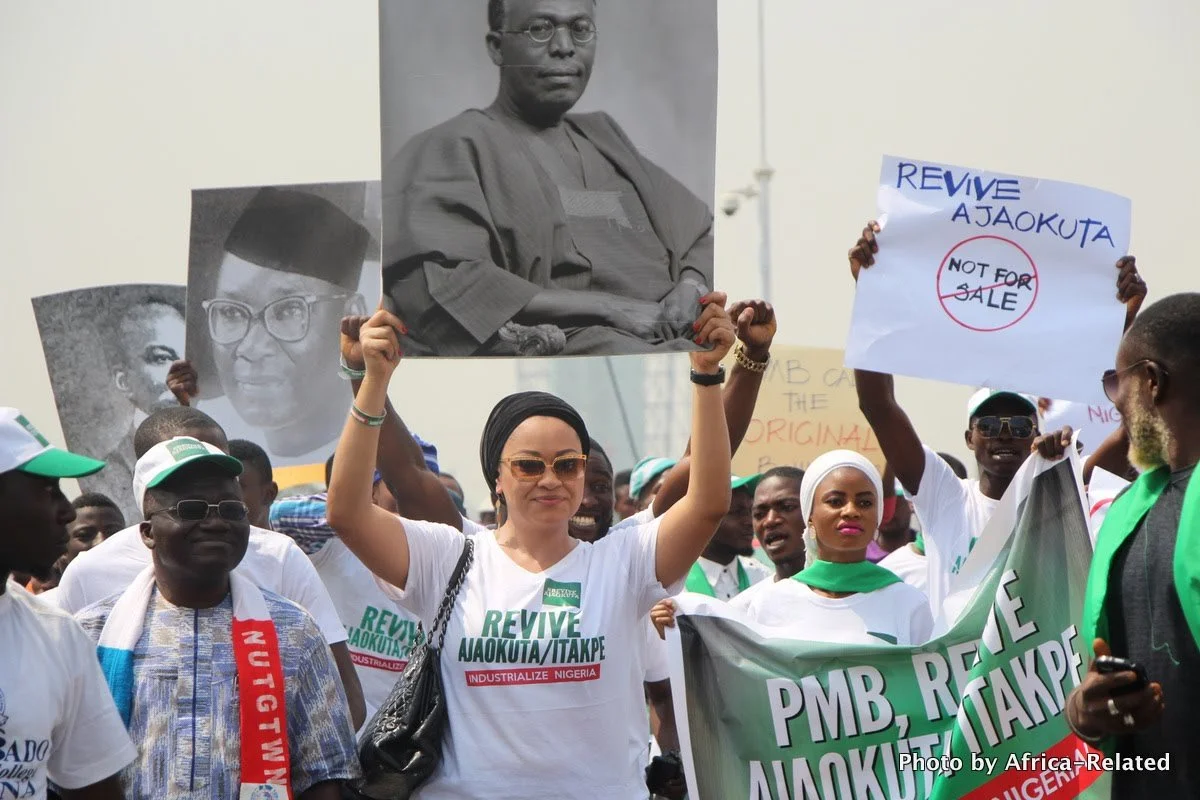
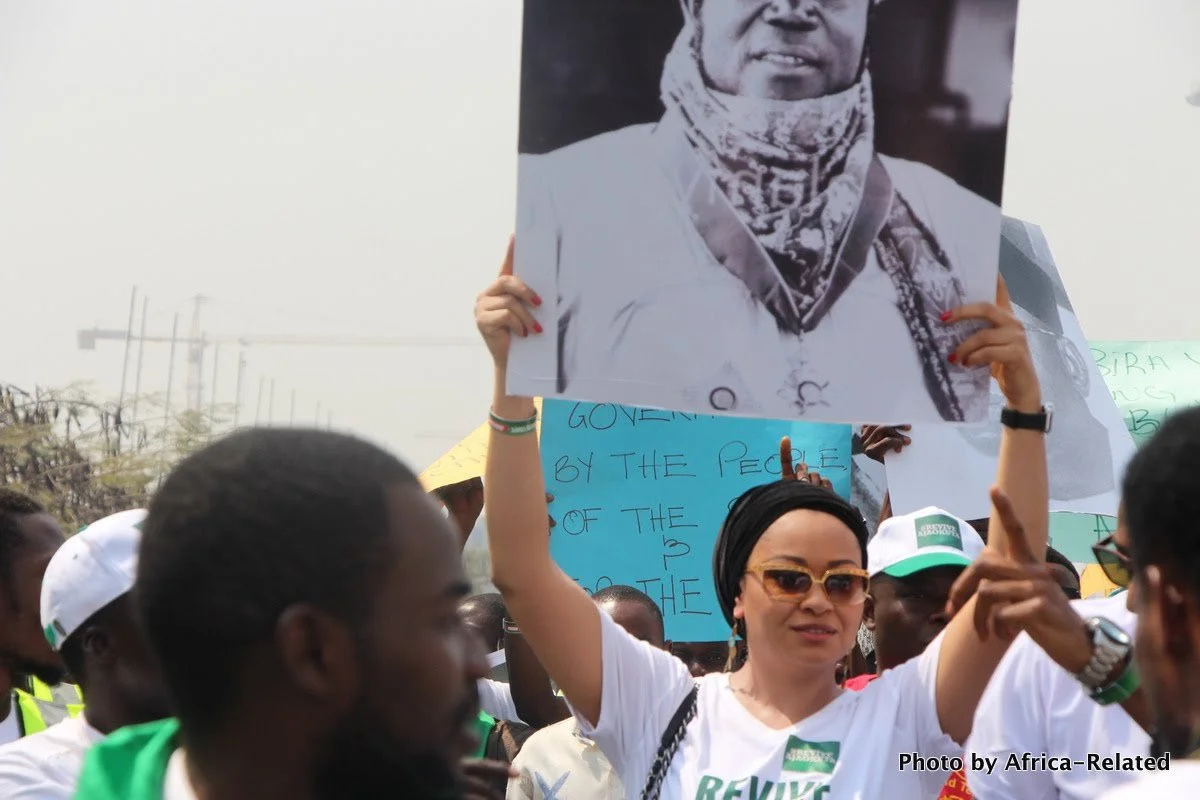
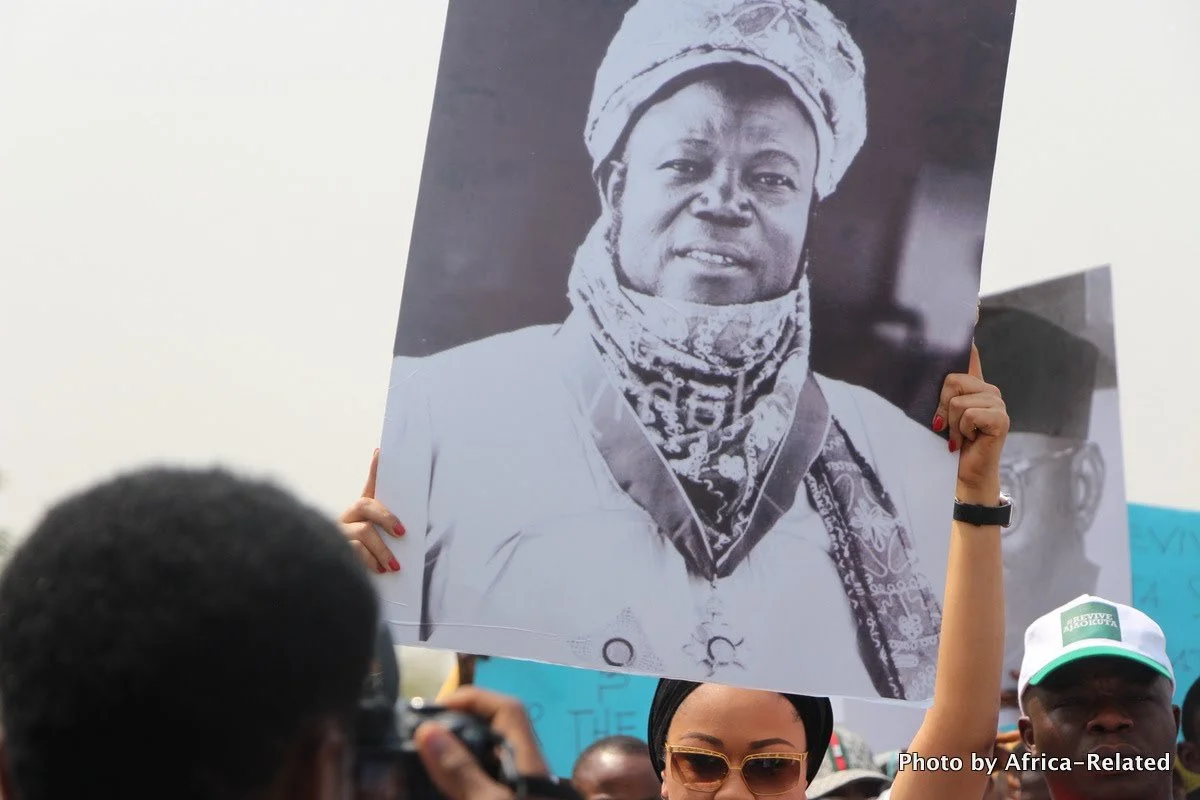
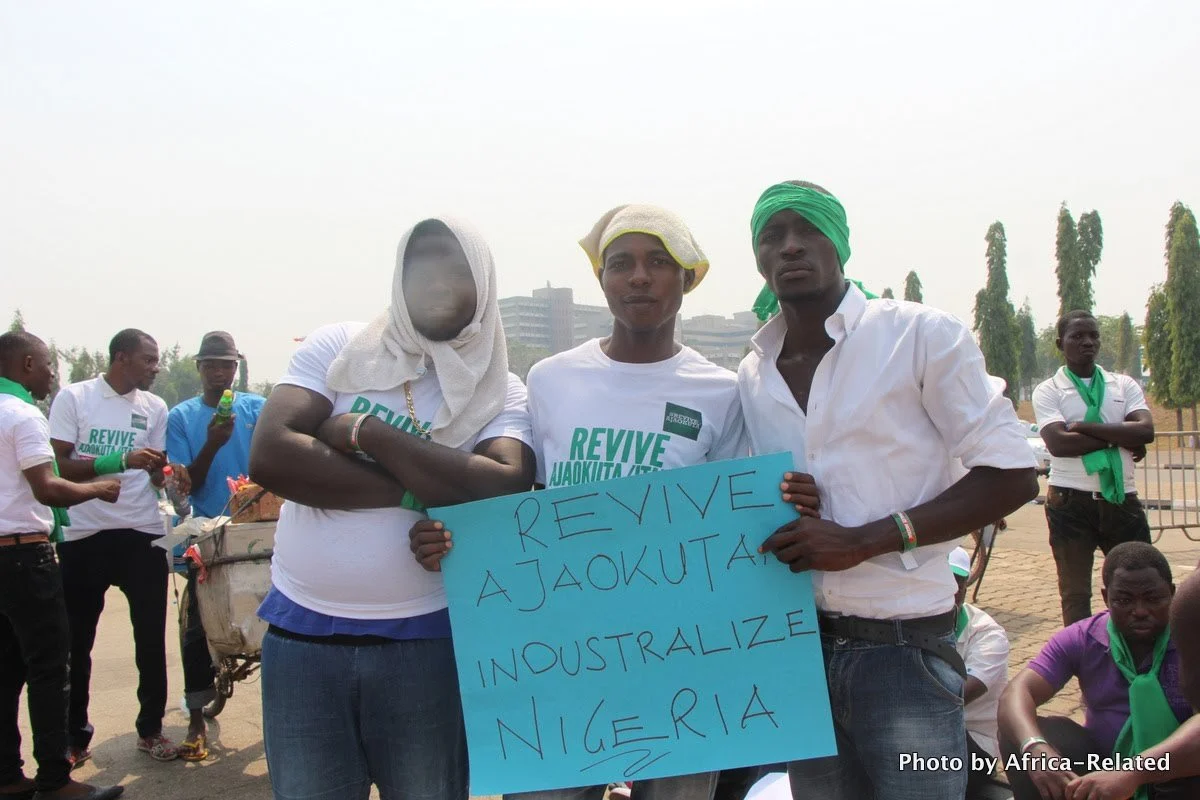
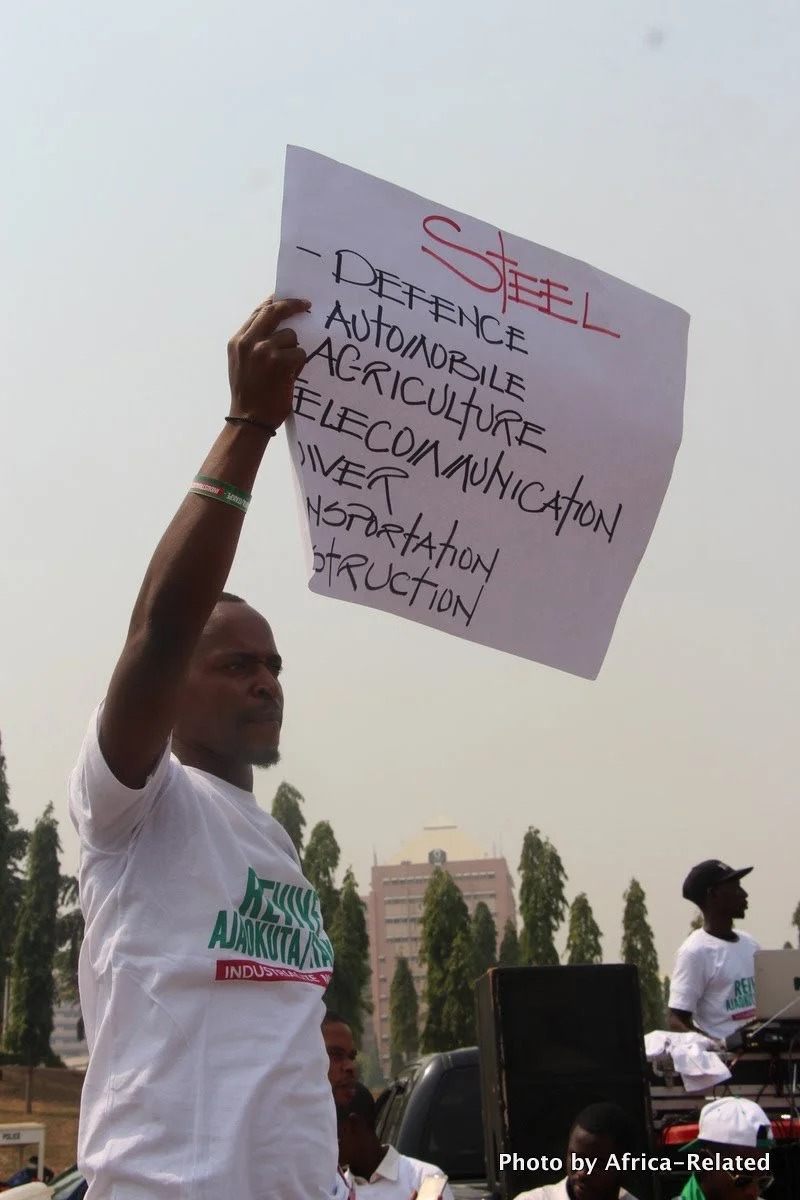
Dressed in national colors and holding placards with various advocacy messages alongside photos of Nigeria’s founding fathers, their aim was to draw the government’s attention to the state of Nigeria’s industries especially the steel company in Ajaokuta, which has been dormant for over 30 years with only 2% to completion. They called for the original builders to be brought back to Nigeria to complete the project that will in turn diversify the dwindling economy and create jobs for Nigerians.
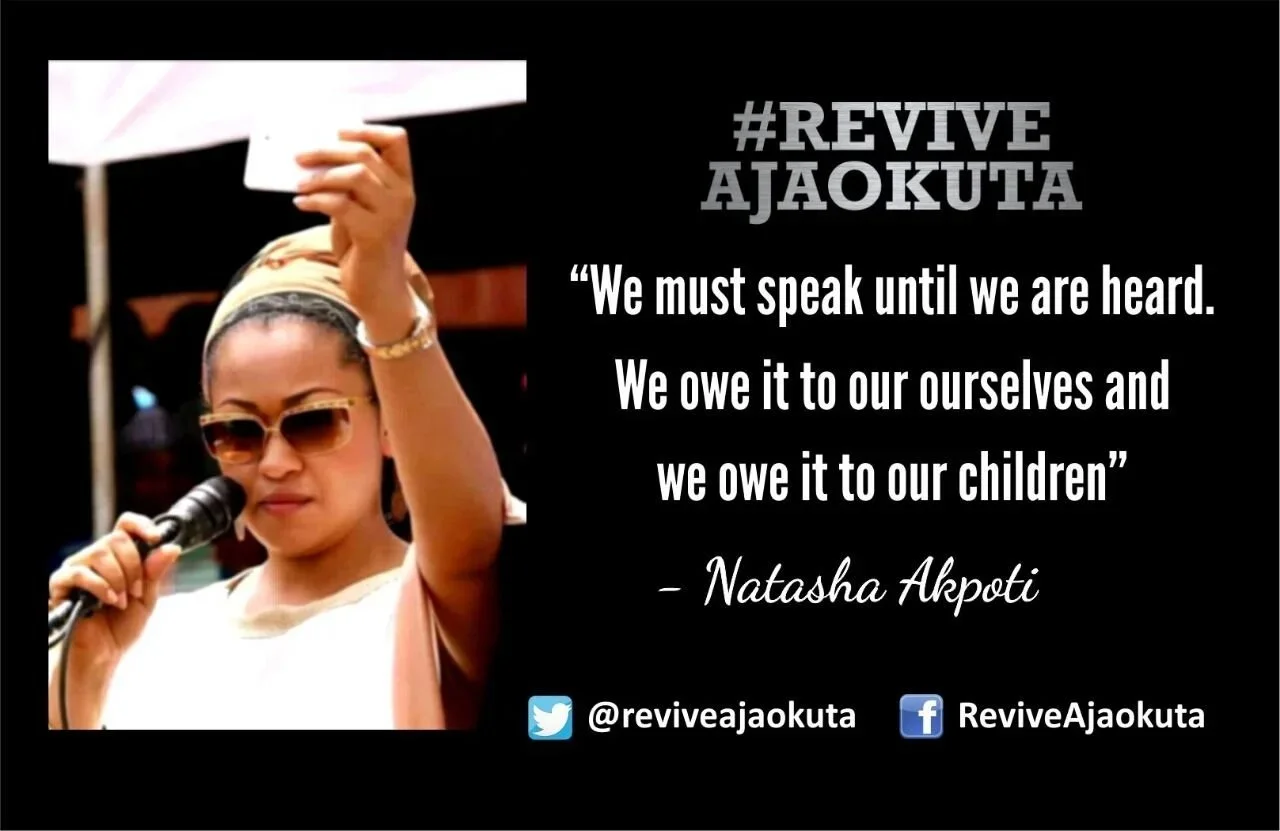
Key highlights include speeches by featured speakers and advocates such as Dr. Okeme Arome (Convener), Ajaokuta activist Barr. Natasha Akpoti and Comrade Issa Aremu of the NLC.
SIGNAGE, CHANTS AND SLOGANS

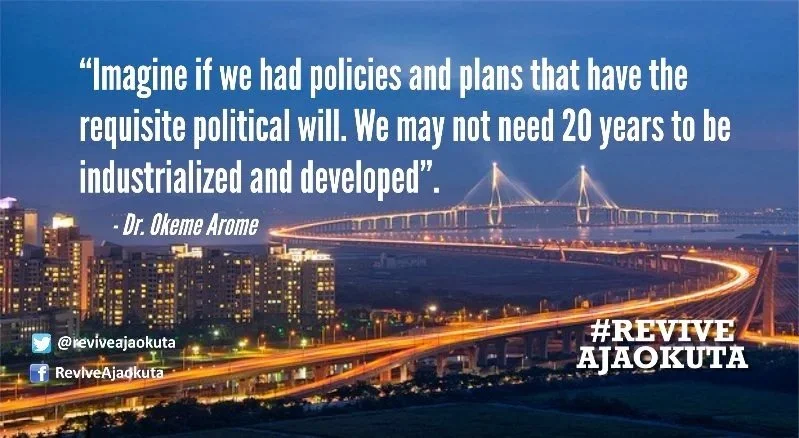
Various signage, banners and placards carrying informative message conveyed the spirit of the group. Examples include: TRADE NOT AID, STIMULATED BY STEEL, REVIVE OUR INDUSTRIES, 2% TO COMPLETE 38 YEARS IN WAITING Etc…
The marches chanted slogans like
Revive Ajaokuta! Industrialize Nigeria!
Ajaokuta is… NOT for sale!
2% to Complete! 38 Years in Waiting!
Photo Highlights

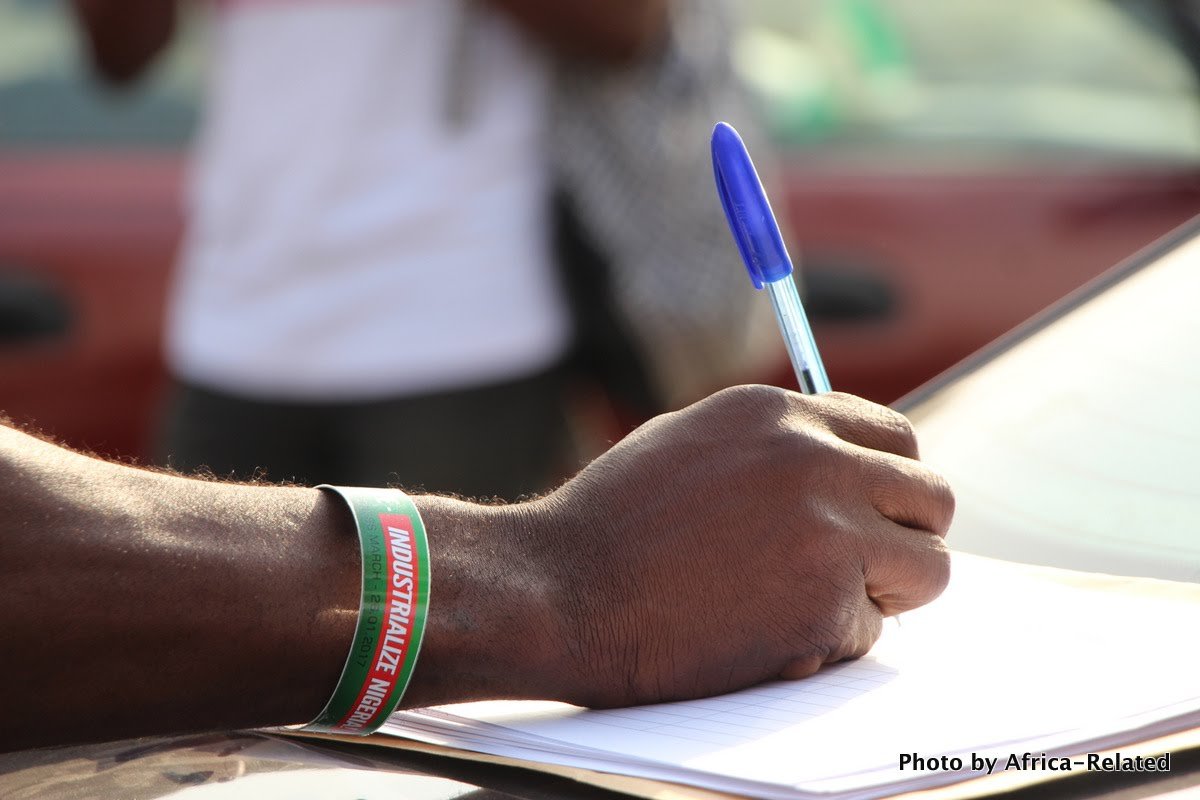
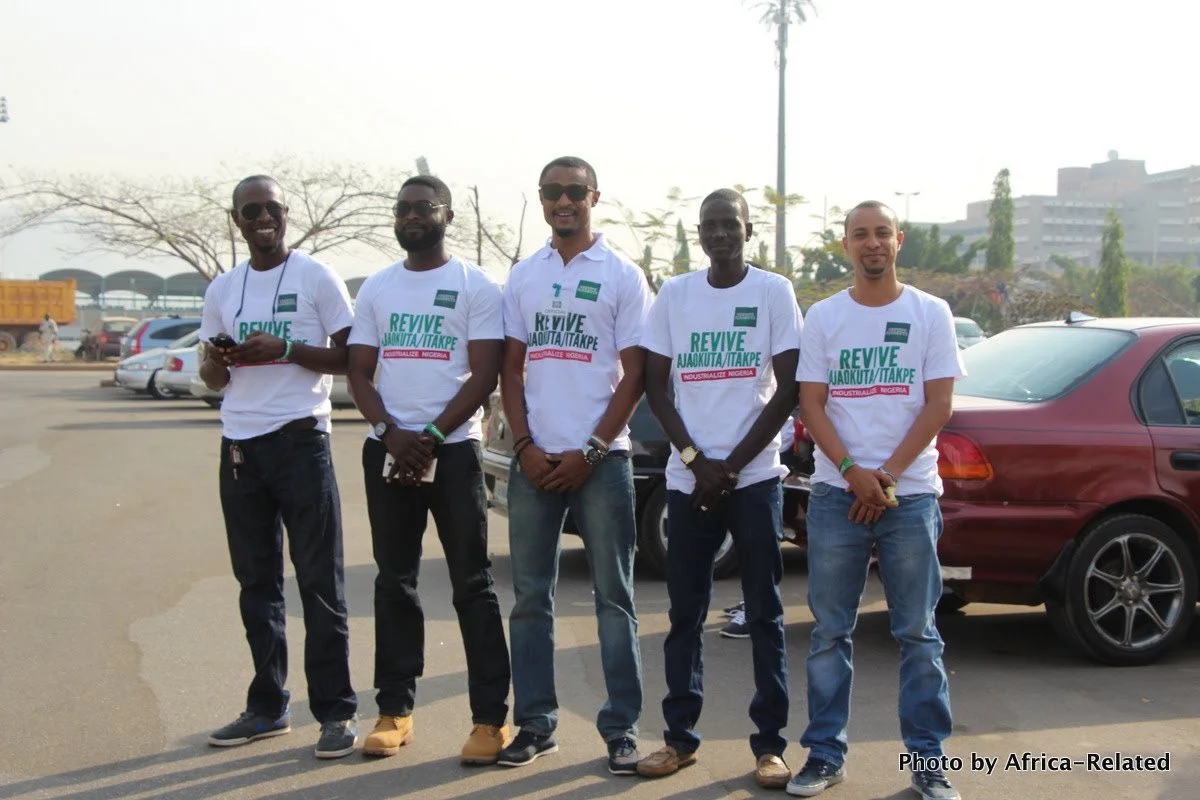
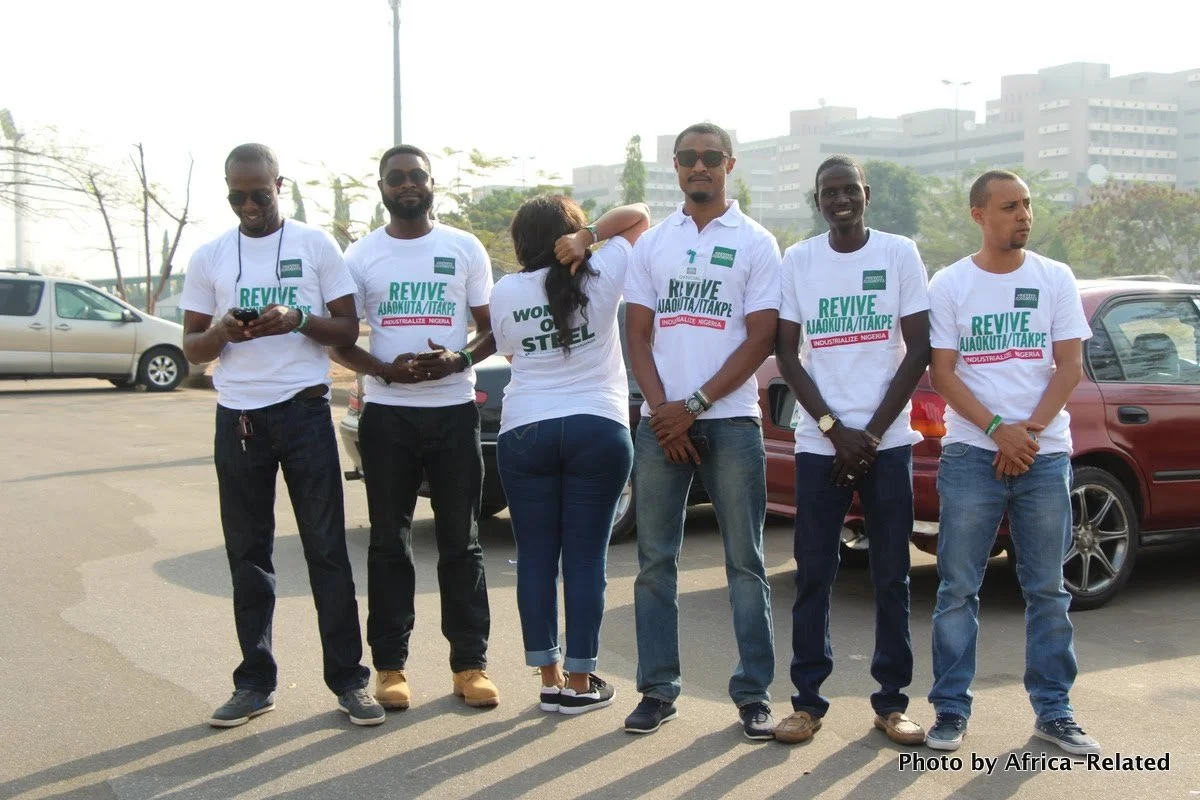
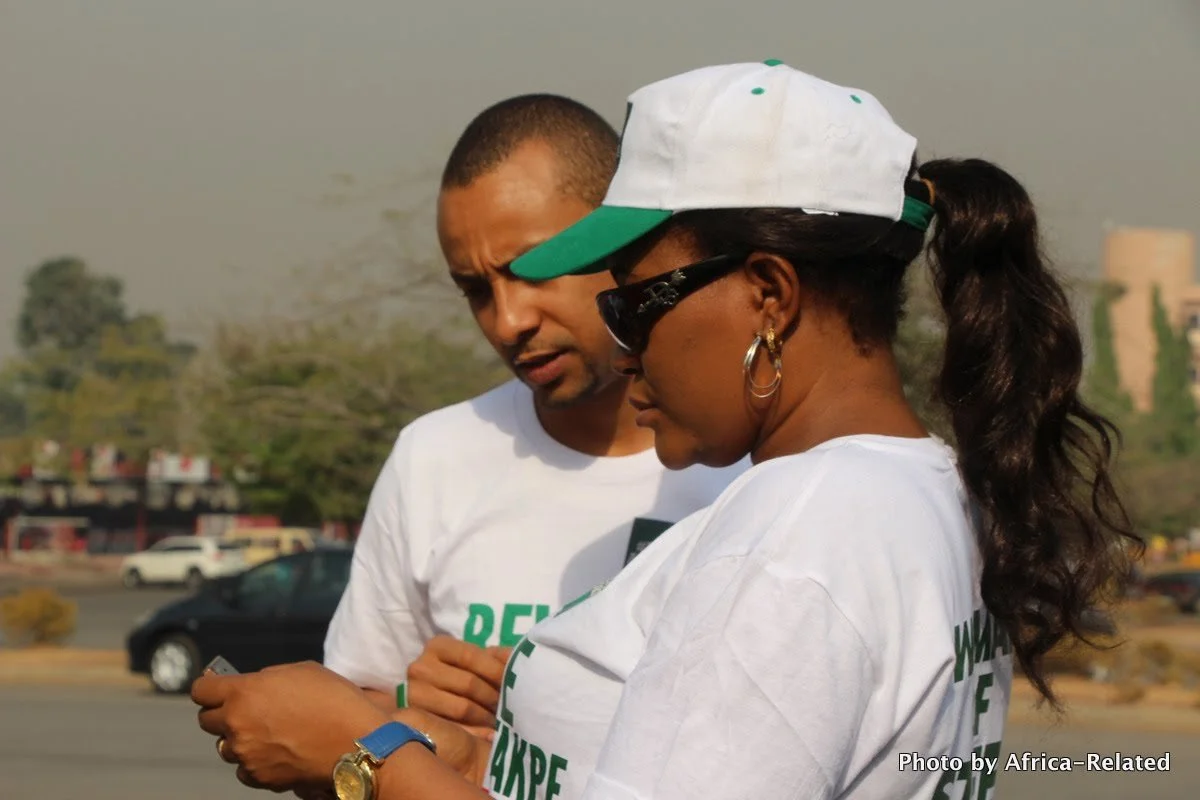











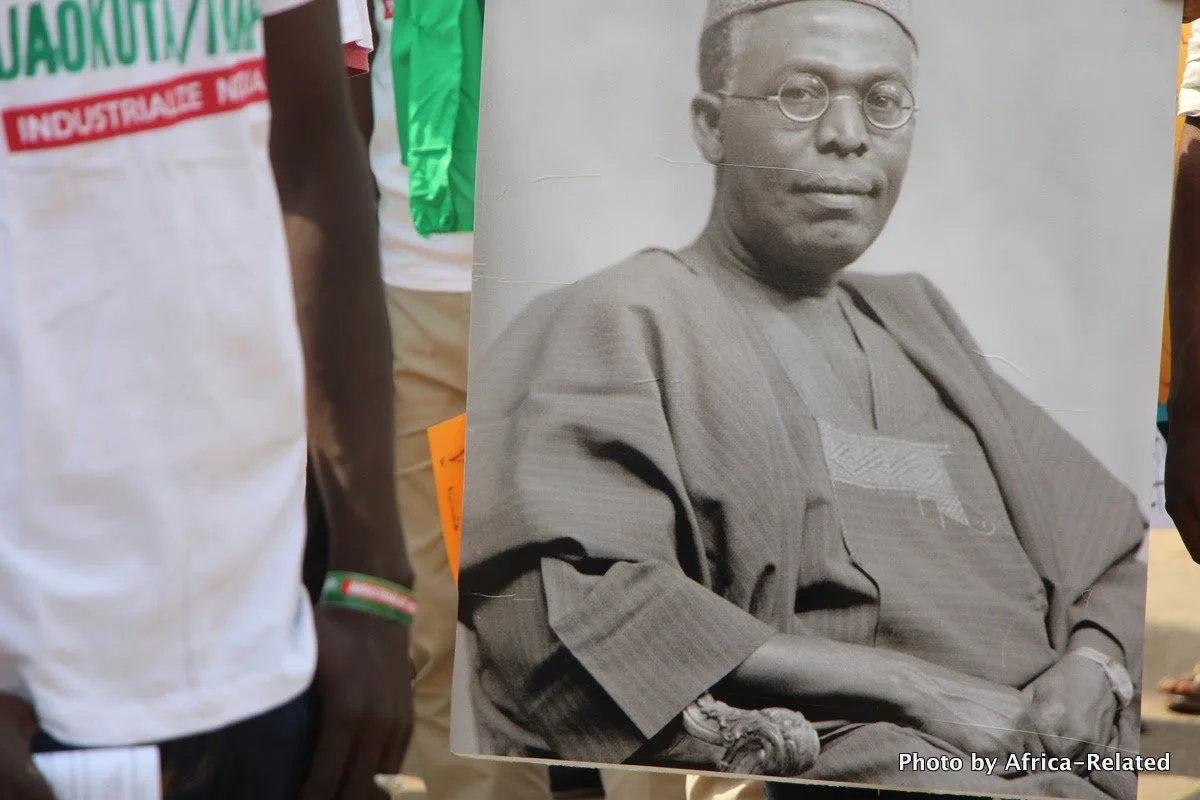
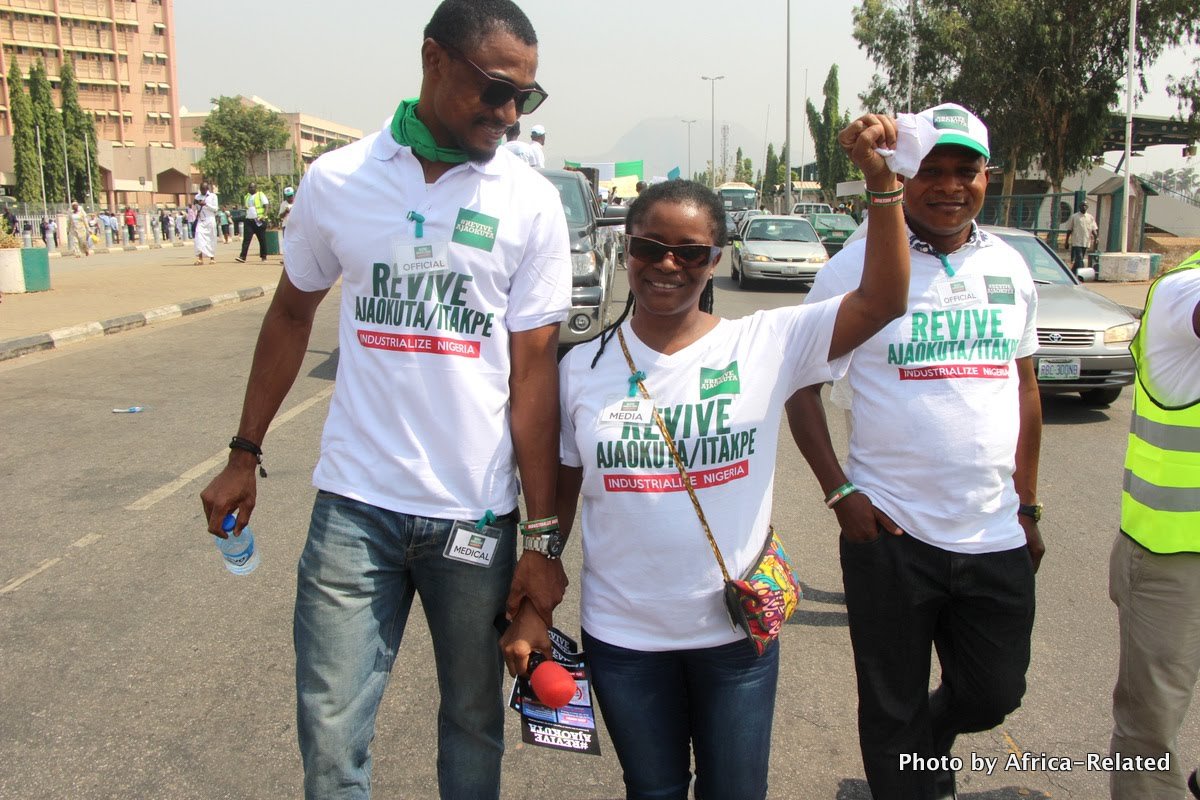
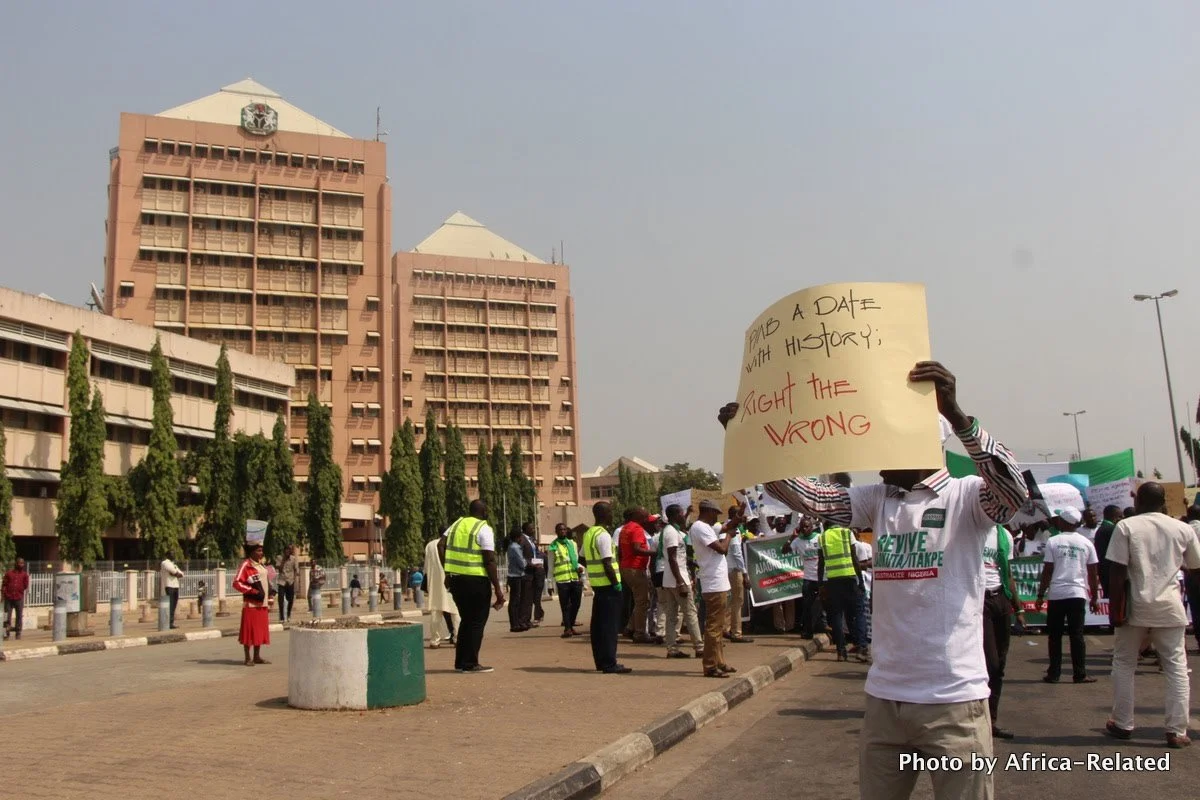
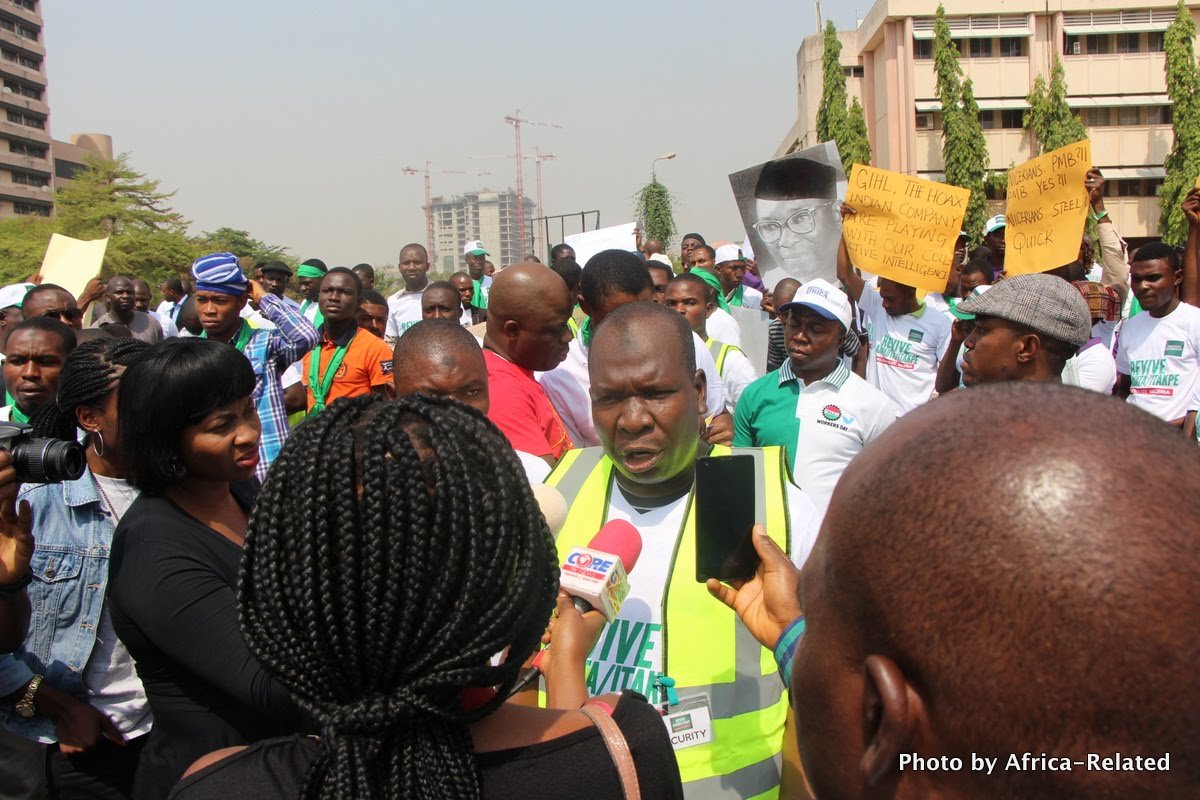







Oyiza Adaba is a journalist with Africa-Related
SHARE THIS STORY
Highlights of Anya Fụlụ Ugo 2015
An Interdisciplinary African Arts Conference in honour of El Anatsui and Obiora Udechukwu that took place at the Faculty of Arts, University of Nigeria, Nsukka, Nigeria. The maiden edition was held in honour of Professors El Anatsui and Obiora Udechukwu.
By oyiza adaba - Africa-Related, Nigeria
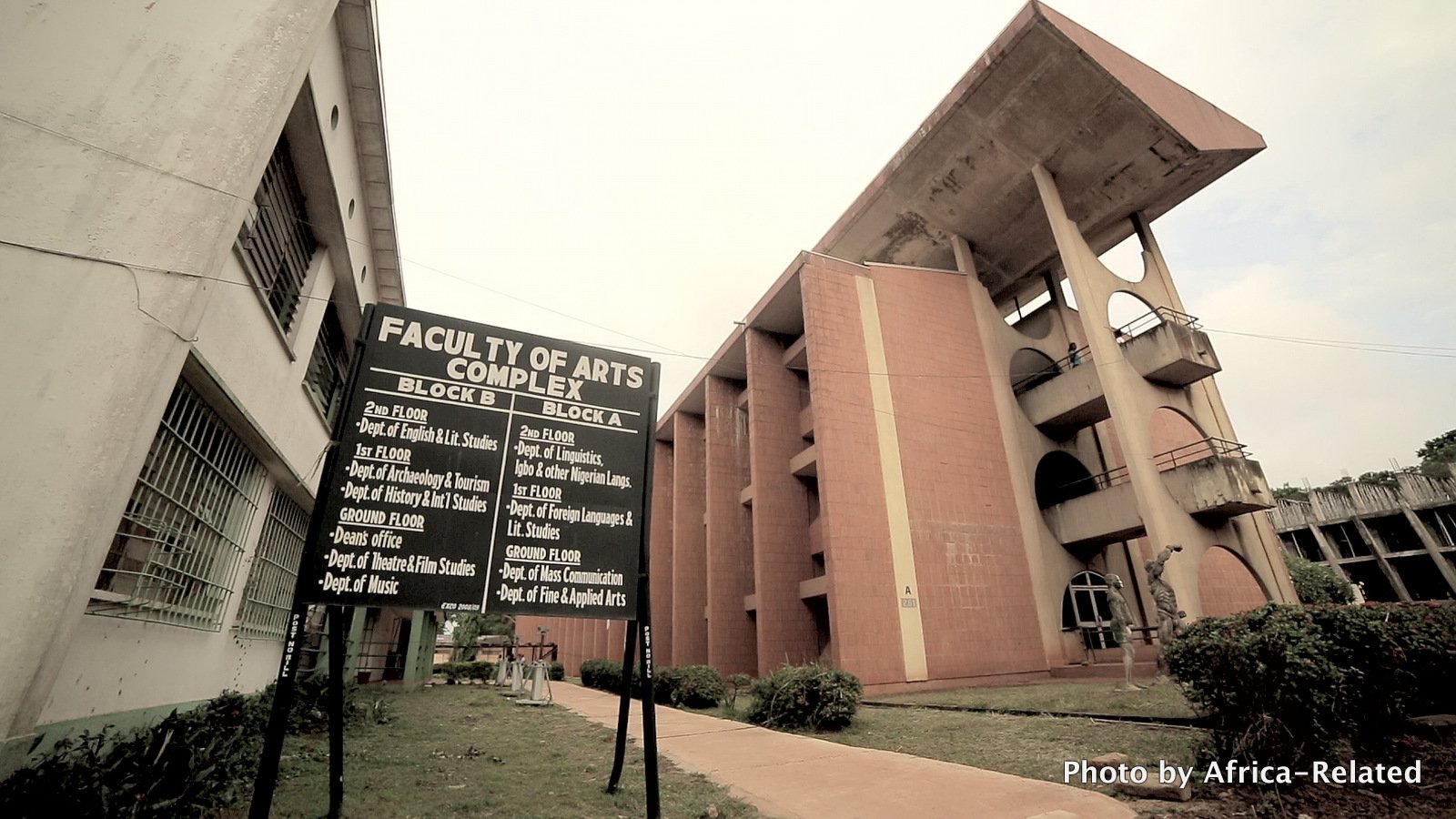
Faculty of Arts Complex, University of Nigeria, Nsukka. Photo: Africa-Related
anya fụlụ ugo jaa ya mma, na-adi afụ ugo kwa daa
- the eye that sees an eagle should adore it, for only rarely are eagles seen -
Video Courtesy of Africa-Related

Interdisciplinary African Arts Conference of the Faculty of Arts, University of Nigeria, Nsukka, Nigeria in honour of El Anatsui and Obiora Udechukwu
Theme: African Art and Artists after the Millennial Turn
Venue: Princess Alexandria Auditorium, University of Nigeria, Nsukka, Nigeria
Date: 24-27 June 2015


This conference adopts an interdisciplinary approach to the discourse of the current state of art and artists in Africa and in the African Diaspora. It is our tribute to two important global artists associated with the Faculty of Arts at the University of Nigeria, Nsukka, whose work over the past four decades demonstrates the multiple layers of critical, historical, and other narrative contexts that African art engenders today. Professors El Anatsui and Obiora Udechukwu are acclaimed for creating a respectable body of works that have grown to defy any marginal critical or historical narrative - a microcosm of the form and content of African art today.
The four-day even was attended by artists and educators from various countries including UK, Spain, The United States, Germany etc. The program was packed with activities such as breakout sessions, art exhibitions, guided tours etc.
The broad theme of the conference, “African Art and Artists after the Millennial Turn” proposes an interdisciplinary approach to the discourse of the current state of art and artists in Africa and in the African Diaspora. Under the banner “Anya Fulu Ugo”, this maiden edition was held in honour of Professors El Anatsui and Obiora Udechukwu.