THE NIGERIAN NATIONAL RUINATION: And the Prophetic Mission of the Christian Church
I want to begin by congratulating my dear friend and Senior Apostolic Leader, Pastor Sam Aiyedogbon, his amiable wife, Pastor Grace, and all the pastors and ministers of the Realm of Glory Churches here present, for this laudable initiative of an annual conference at the very beginning of each new year. I thank my friend for inviting me to visit you all today, to share a few thoughts with you. As I stand before you today, may the prayer of David in Psalm 19:14 be realised in us all.
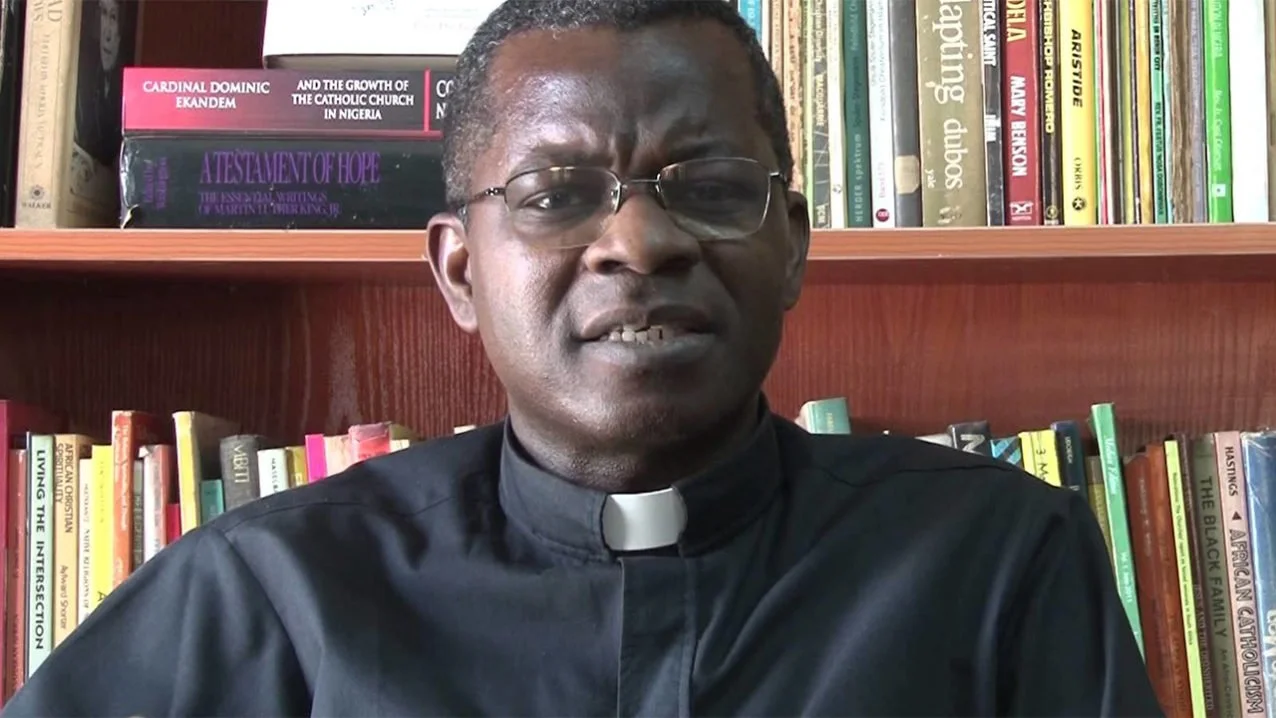
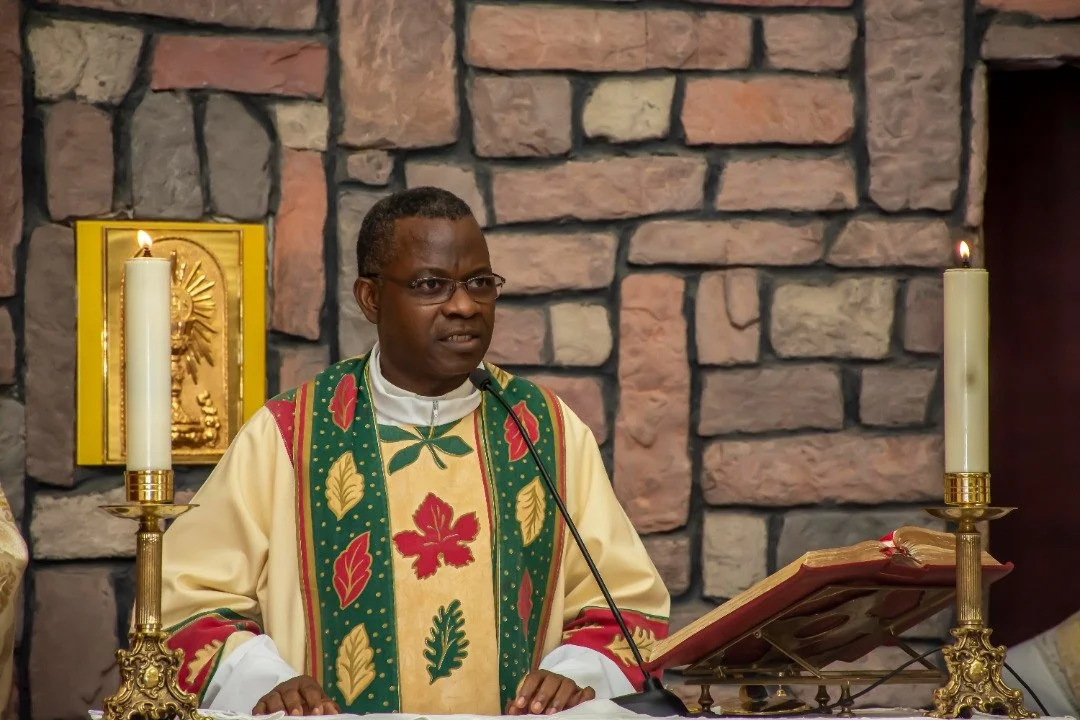
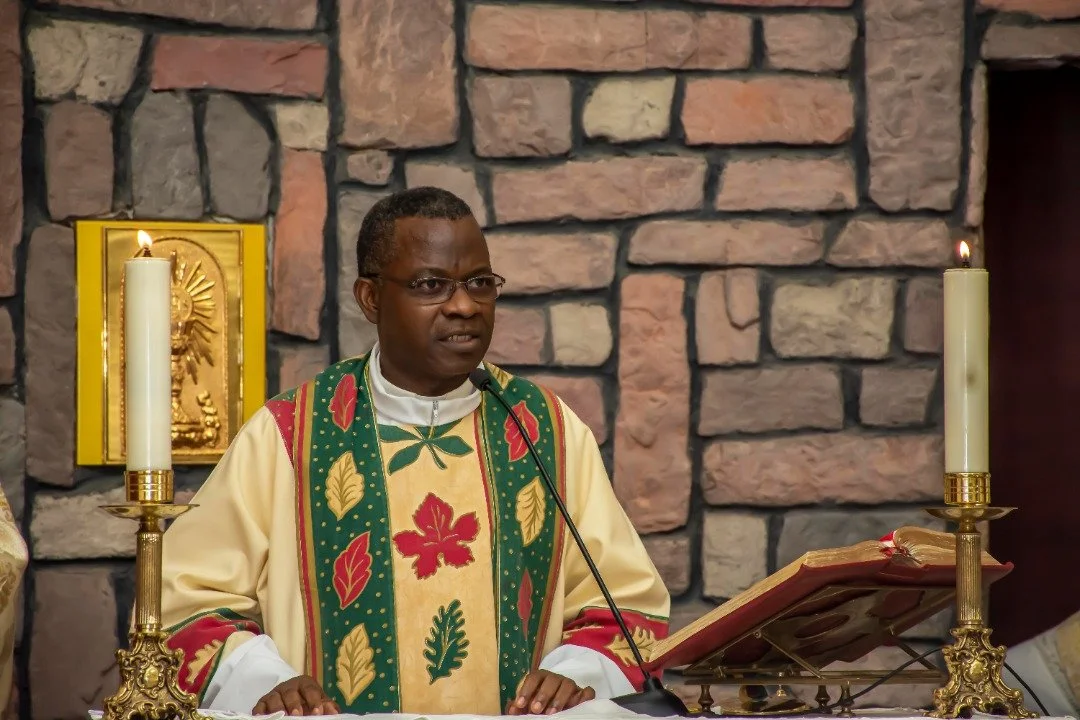
A Presentation at the Annual Pastors’ Conference of the Realm of Glory International Churches Lagos, January 15, 2025 By Rev. Fr. George EHUSANI Executive Director, Lux Terra Leadership Foundation
I want to begin by congratulating my dear friend and Senior Apostolic Leader, Pastor Sam Aiyedogbon, his amiable wife, Pastor Grace, and all the pastors and ministers of the Realm of Glory Churches here present, for this laudable initiative of an annual conference at the very beginning of each new year. I thank my friend for inviting me to visit you all today, to share a few thoughts with you. As I stand before you today, may the prayer of David in Psalm 19:14 be realised in us all. Yes, that the words of our mouths and the meditation of our hearts may be acceptable in the sight of the Lord our God. Amen. And may the Good Lord always demonstrate his powerful presence each time you gather together here, and in your various churches. Amen.
Let me begin my presentation with a poem I composed several years ago that sadly has remained relevant to our ongoing precarious national circumstances.
SCANDAL
Daddy has eaten/ the sour grapes
And today/ My brothers and sisters
Are gnashing their teeth.
Mummy has tasted/ the forbidden fruit
And now/ the kids are out
Naked in the cold.
They have desecrated/ the Tree of Love
And violated/ the Sanctuary of Justice
And so the children flee/from Wisdom's Child
And fall/ into the callous embrace
Of the angel of death.
Tomorrow has become/ a stone wall
That my brothers and sisters
Stare at/ with angry desperation.
Cursed be that blind day/ when daddy resolved
To steal food/ off the hands
Of his own children
Alas for that dark hour/ when mummy chose
To mortgage tomorrow
For the fleeting pleasures/ of today.
--From George Ehusani, Petals of Truth, 1998, page 105
As we engage today in one more reflection on our ever worsening socio-political, economic and security circumstances, and as we attempt to seriously interrogate the role or responsibility of the Christian Church and Church leaders in the evolution of a nation that is now clearly at the perilous crossroads, let me draw your attention to what I consider a very critical, but often missing, often neglected or often insufficiently highlighted element in our public debates on Nigeria’s multiple developmental challenges. It is the place of leadership integrity in nation building and national stability and prosperity. I have become more convinced today than ever before that leadership debauchery and elite idiocy will ruin any nation, no matter how perfect the political, structural and governance blueprint they adopt. And it has indeed been well established by social historians that the collapse of powerful civilisations and empires, is hardly ever precipitated by external attack, but instead by internal decay, as demonstrated in the corruption, immorality and wickedness of successive generations of leaders in those nations. Unfortunately, many well-meaning Nigerians, including highly placed Christians and Christian leaders, who complain endlessly about the sorry state of our nation, are often unable to see the nexus between corrupt leadership and the downfall or destruction of nations. Let me use passages from the Judeo-Christian Scriptures to illustrate the point: We read in Proverbs 14:34 that righteousness exalts a nation, but that sin is a reproach to any people. In Proverbs 29:2 we read that “When the righteous are in authority, the people rejoice; but when the wicked rule the people groan.” In Proverbs 29:4 it says, “It is by justice that a king gives stability to the land.” And in Proverbs 29:18 it says, “Where there is no vision, the people perish.” Some translations render this verse as, “Where there is no leadership integrity, the people do perish.” What this means is that leadership integrity is fundamental and critical to national development, national unity, and national peace and prosperity, or that the socioeconomic and political fortunes of a people are tied up to the integrity or lack thereof of its leaders!
This idea is very well illustrated in the history of Israel. When they had good, god-fearing leaders like Joshua, David, Hezekiah, Josiah, Jehoshaphat, Nehemiah, and Ezra, they conquered their enemies, they experienced restoration, and they enjoyed peace and prosperity. But when they had leaders who lacked integrity and the fear of God, like Saul, Jeroboam, Ahab, and Nadab, they were easily defeated by enemy forces, who often went ahead to loot and pillage their resources. In one case Israel was not only conquered by their adversaries; they were expelled from their land and deported to Babylon for 70 years! To illustrate the point further, there is this report in the book of Sirach or Ecclesiasticus 47:23-25 that, Solomon rested with his ancestors, leaving one of his stock as his successor, the stupidest member of the nation, brainless Rehoboam, whose policy drove the nation, to rebel. Next, Jeroboam son of Nebat, who made Israel to sin, and set Ephraim on the way of evil; from then on, their sins multiplied so excessively as to drive them out of their country; for they tried out every kind of wickedness, until vengeance overtook them.
Recall that (as is recorded in the 12th Chapter of the 1st Book of Kings), it was Rehoboam who succeeded his father Solomon as King of Israel and Judah. When he ascended the throne, the elders of Israel went to him and complained about how hard life had been for them under King Solomon, saying, “Your father made our yoke heavy. Now therefore we beg you, lighten the hard service of your father and his heavy yoke that he placed on us, and we will serve you.” His counsellors advised him on how to respond to the elders with compassion, but he disregarded the advice of his counsellors, and instead told the elders that, “My father beat you with whips, but I will beat you bloody with chains.” When the elders heard the response of King Rehoboam, they resolved to separate themselves from the kingdom of David. So, they shouted: “To your tents, O Israel! Look now to your own house, O David.” This was the beginning of the disintegration of the kingdom that was united under David and Solomon. 3 What the above Scriptures tell us, and what has been sufficiently demonstrated in human history and in our own recent national trajectory, is that the socio-economic and political fortunes of a people often hang peremptorily on the integrity or lack of integrity of its leaders. Where there is moral integrity among the ruling class, the people make economic progress and experience stability and peace. But where the leaders are illegitimate, corrupt, unjust, wicked, immoral, and lacking in credibility, the people suffer economic stagnation, social discord, widespread criminality, and eventual collapse.
As we reflect on the progressive ruination of our dear country, Nigeria, and what the responsibility of the Christian Church and Christian leaders is, or should be, I wish to remind you my brothers and sisters in Christ, that nations are built primarily and fundamentally on values, and not on the quality of structural blueprints embraced, nor on the abundance of material resources, as indeed the post-independence Nigerian experiment has demonstrated. Nation building refers to the internal, organic and dynamic process by which a society identifies, discusses, contests, and reaches consensus on shared values, principles and norms; the process by which a society galvanises a sense of national cohesion, consolidates a national identity, and forges a sense of common purpose or a set of common goals to which the society is oriented. In other words, nation building is the process of moulding diverse groups into a unified cohesive, harmonious, and stable national entity, with shared vision and collective mission. Essential and of critical importance in the process of nation building is a transparently honest, visionary, self-sacrificing, and therefore legitimate and credible leadership. Such leadership assumes the role of Architects, Engineers, and Project Managers of the emergent nation. Thus, strong, stable, unified, and prosperous nations are built fundamentally on values, the kind of values that we are supposed to be promoting every day in the Church; the same values that built ancient Christian civilisations. Experience has shown that such values are anchored on, and sustained by, self-sacrificing leaders of transparent integrity and credibility; leaders whose very lives encapsulate and personify the values that they seek to propagate in the polity. Otherwise, such value will hardly take root in the society. When however, such critical values for nation building as fear of God, leadership integrity, truth, justice and fairness, as well as a high degree of patriotism and sacrifice for the common good, are missing, what we often have is a free-for-all: intractable conflicts, political tension and social discord, the preponderance of violent crimes, monumental corruption, widespread banditry and rampant impunity. Indeed, 4th Century Philosopher, Augustine of Hippo, declared that kingdoms (or societies) devoid of justice, are “nothing but a bunch of bandits or a gang of robbers.”
What the foregoing implies is that as we engage in one more discussion on our ever worsening national circumstances, we must pay close attention to the reality of widespread moral vacuity among the political, economic, socio-cultural, and sadly, even religious elite of our country, which has scandalised the youth population and as it were, re-wired their brains towards the elevation of primitive greed over a life of meaning, the enthronement of vanity and vainglory over a life of purpose and meaning, and the proliferation of corruption, criminality and gangsterism in place of a culture of truth, honesty, and integrity. As we reflect today on our nation at the crossroads, I ask that we Christians should pay urgent attention to, and address very critically the embarrassment of the naked public square in Nigeria, whereby criminally minded characters, and alleged gangsters in our midst, are more easily finding their way to all levels of political office, than men and women of honour, integrity, discipline, modesty, patriotism and sacrifice.
Yes, as we engage in one more discussion session on the way forward for Nigeria, and what prophetic role Church leaders must play, I ask that we seriously interrogate the situation whereby our nation more easily throws up for political office, crooked and devious characters, including ethnic bigots and religious extremists, those who regularly manipulate the religious sentiments of the people for political capital, those who recklessly exploit the age-old ethnic 4 acrimonies and antipathies in the land for selfish gain, and those thoughtless others who habitually loot the local government, state or national treasury for themselves and their families, and thereby render the population destitute. Until we address this anomaly; until we confront this fundamental error in our concept of political leadership and our leadership recruitment processes, I do not believe that we can make any significant progress towards national transformation.
Many will agree with me that the Nigerian nation is sadly comatose and on the verge of disintegration today, largely on account of the successive generations of thoughtlessly corrupt, senselessly nepotistic, recklessly lawless and astonishingly incompetent elite class that we have been plagued with since independence, and particularly since the first coup of 1966. Though there are a few positive indications here and there, the conduct of the younger generation today does not particularly inspire hope in the immediate future. See where we have put ourselves today: For while the rest of the world is competing in digital technology, and flying high at jet speed in business and economics, and while some others are exploring the outer space and working hard towards colonizing other planets, the citizens of our own country are standing still, weighed down by the vestiges of a profligate past and a confused or clueless present, superintended as it is by a regime of arrogance that is largely born of culpable ignorance. After nearly 64 years of independence, Nigerians are filled with regret and nostalgia about broken promises, dashed hopes, and shallow dreams of a land of unity, peace and prosperity. For many of us here, the story of Nigeria is that of a Paradise Lost. It is the story of the fathers having eaten sour grapes and the children’s teeth are on edge, or the case of the mothers having sown the wind, and the children are harvesting the whirlwind, as expressed in Jeremiah 31:29, and in my opening poem.
It is said that a society grows great when elders plant trees under whose shade they know they will never sit. The embarrassing truth we must acknowledge today however is that many of us who call ourselves Christians, and whom Jesus Christ refers to when he says, you are the light of the world (Matt 5:14), have often not distinguished ourselves from the rest of the madding crowd. Though we parade our Christian identity everywhere, and though we often make a public show of our religiosity, many of us have not conducted ourselves as a city on the hill, which men should see and give glory to God (as described in Matthew 5:16); but we Nigerian Christians, have often functioned as blind guides, greedy opportunists, fraudulent public officers, corrupt contractors, and adulterous parents, who have shamelessly and unrepentantly stolen food off the hands of our own children. Christians are among the successive military rulers and political overlords who have often turned out to be reckless plunderers and mindless looters of the Nigerian commonwealth. Christians are among the Nigerian elite who have often exploited the poverty and ignorance of the majority of our people, and cashed in on the existing ethno-religious antipathies and polarities, for selfish political and economic gain.
Over the last sixty-four years, as we the leaders, the parents, the teachers, the pastors and preachers, became more enterprising in greed and political mischief, and as we failed to inspire the young people in the pursuit of higher values, we lost control of the younger generation. Many of our graduates from secondary schools, universities, and polytechnics, became social deviants, internet fraudsters, sexual perverts, drug addicts, criminal kidnappers, murderous bandits, and terrorist insurgents, constituting an embarrassment in our homes, a nightmare in our schools, and a nuisance in our offices. With juvenile bravado, many of these young people have been visiting their vengeance on an adult society that has failed to give them a sense of direction. They have gone about cheating and stealing, robbing and raping, and killing and maiming; and they have often committed these crimes with the sophistication of the Italian mafioso.
Thus, I reason that the collective psyche of our young people has been so seriously wounded, and their delicate consciences so brutally battered, by the atrocities of the adult society, that we now stand the chance of losing tomorrow altogether. Our fear is heightened by the number of delinquent juveniles who are daily paraded on TV by Nigerian security agencies as suspected 5 assassins, armed robbers, kidnappers, bandits, and insurgents. It is amazing how many Nigerians often discuss and lament the rising crime rate among our youths in the country, without taking into cognizance the acrimonious socio-economic and political circumstances that largely gave birth to the phenomenon we are now having to contend with.
We have engaged in a life of debauchery. Like the prodigal son in the Luke 15 parable of Jesus, we have left our palace of pride to dwell in pit of shame. We have often thrown decency and integrity to the dogs, and flushed justice and truth into the septic tank. We have often violated love and trampled on the poor and the weak. We have enthroned bribery and corruption, and elevated the menace to such a high state craft, that government business can almost not happen without corruption. We have badly neglected our educational institutions and made our teachers an object of ridicule in the eyes of society.
Our schools and colleges in turn have lost their sacred character as formation centres, and they have rather become breeding grounds for thugs, touts, secret cultists, gangsters, kidnappers, bandits, rapists, prostitutes and Yahoo-Yahoo fraudsters. We hear these days of school children beating up their teachers, sacking their principals, and burning up their libraries. Examination malpractice in some of our schools has now assumed the frightening dimension whereby teachers and principals actually organize the cheating at external examinations, and parents do resolve each year to contribute money to "settle" supervisors and invigilators. How bad can things get in Nigeria?
My own reflection is that we are about to lose many more millions of our young people whose teeth are on edge as I say, because their fathers have eaten sour grapes. We are about to lose millions of young people who are constipated because their mothers have eaten the forbidden fruit. Our young people, like their peers elsewhere are blessed with numerous talents and they are full of energy and ingenuity, but they lack the necessary pride in their fatherland. Yes, our youths are highly resourceful and creative, but they are often devoid of any sense of purpose, meaning and direction. Our children have not been adequately parented. They have not been adequately taught, nor have they seen enough practical examples of truth and justice, love and compassion, sacrifice and patriotism in the adult community, to motivate them.
There is serious work to be done by all of us Christians and Christian leaders, if our country Nigeria is to be redeemed and set on the path of national rejuvenation. The Christian Church must assume its responsibility as the conscience of the nation, and bestow hope amid the hopelessness and desperation of our people. Each one of us that make up the Christian Church must commit to such values that make for nation building as truth and honesty, and justice and equity. There is much work for leaders of the Church to do, if this nation Nigeria, now tethering on the precipice is ever going to be saved. The time has come for repentance. For us believers in God, the situation may be bad enough but not hopeless. We can experience rejuvenation, if today we begin to retrace our steps, and get back to the basics. After all, we read in 2 Chronicles 7:14 that “if the people called by my name will humble themselves, and pray and seek my face, and turn from their wicked ways, then I will hear from heaven, and will forgive their sin and heal their land.” We should believe that from the rubble of our shattered motherland, a rich, powerful, peaceful and united country can emerge, if today we identify and get rid of the demons that have be-witched this land since independence.
Christians are supposed to be harbingers of hope. To communicate that hope amid a hopeless generation therefore, we must recommit ourselves to the life of truth, justice, and righteousness. Christian parents must be ready to make sacrifices for the sake of their children and their children’s children. Christian teachers and preachers must recognize that they teach more by their lives than by their lessons. It is not more fiery sermons that our young people need today. What they need instead, is to see practical examples of truth, honesty and fairness at work in the family setting, in the conduct of school activities, in the examination halls, in the civil service, in the award and execution of contracts, and in such processes of governance as the just and 6 equitable distribution of opportunities as well as the application of sanctions. Young people are constantly let down and disappointed, when their leaders are fraudulent or when they see teachers assisting unscrupulous students to cheat at examinations. Young people are shocked when they discover that their governors, ministers or parents are liars. Young people are scandalized when they see their pastors and preachers living in reckless and conspicuous affluence, while the overwhelming majority of the people, including their own members, are struggling daily with dehumanizing poverty or destitution. Then they wonder whether a life of truth, honesty, integrity, and sacrifice is ever possible on this side of heaven.
Brothers and sisters in Christ, let us be honest with ourselves: the Nigerian society is not changing for the better, and the Nigerian people are not being radically transformed in our Churches. Though we claim to be very religious, though our Churches and auditoriums are crowded and we host very loud worship sessions, though many of us pride ourselves as being born again, and we can quote passages of the Scripture effortlessly from Genesis to Revelation, and though we host numerous night vigils and deliverance sessions, the truth that stares us in the face (when we look at the Key Performance Indicators), is that Nigerian Christians are not being transformed in any significant way, and consequently, we have consistently failed, and woefully so, in the prophetic task of transforming our society for God.
Yet we all know that the Gospel of Christ is the most potent force for individual and social transformation. Truly committed Christian disciples remain the salt of the earth and the light of the world (Matthew 5:13-14). The power of the Gospel of Christ has not diminished in anyway. The challenge is, as Jesus says in Matthew 9:37, that the harvest is plentiful, but that genuine labourers in the Lord’s Vinyard are very few. The first three hundred years of Christianity sufficiently demonstrate how a small group of 12 committed disciples transformed the whole of the then known world with the power of the Gospel, and the witness of transparently holy lives of love and service, sacrifice and martyrdom.
Nigeria needs Christian leaders of prophetic vision, with sufficient sense of mission, to champion the all-important project of youth formation for national rejuvenation. In an age and in an environment where material power and status are pursued with religious passion, where wealth is made into an idol, where many pastors and preachers have neglected the gospel of repentance and salvation, and have simply become motivational speakers, propagating a cross-less Christianity, preaching material prosperity, and promoting the senseless life of consumerism, vanity and vainglory; in such an environment, we need authentic agents of the Gospel of Christ, whose lives would personify the gospel challenge, serving as beacons of light amid the darkness of elite debauchery and popular idiocy in Nigeria.
In a religious environment with the nauseating spectacle of stinkingly rich men of God, who belong more to the club of billionaire entrepreneurs and business tycoons, than the body of apostles and prophets, a religious environment that features flamboyant Gucci pastors, designer suit evangelists, celebrity jerry coil prophets, trendy gospel music entertainers, and private jet owning overseers, etc.; yes, in such an environment of pleasure-seeking and comfort loving preachers and pastors, who have become ineffective and ineffectual as Christian agents for national transformation, Nigeria is in dire need of true missionaries of the authentic Gospel of Christ, with a heightened sense of the message of the Cross, which St. Paul says in 1 Corinthians 1:25, is “the foolishness of God that is wiser than human wisdom, and the weakness of God that is stronger than human strength.”
Jesus declares in John 15:19 and John 17:14-16 that we are in the world, but not of the world. This has serious implications for the way we live our lives, and the choices we make daily. Christians and Christian leaders should clearly distinguish themselves from the senseless life of materialism, consumerism, show business and vainglory. As unattractive as it may sound to the modern pleasure seeking and comfort loving person, ascetism is the truly characteristic Christian way of life – the way of sacrificial love, self-abnegation, humility, frugality, modesty, 7 simplicity and contentment with very little. Christians of all generations are challenged by the Gospel of Christ to withdraw from the world of excessive cravings for comfort and pleasure, which the ancient Christians identified as “concupiscence” – the lust of the eyes, the lust of the flesh, and the pride of life (as listed in 1 John 2:16). Every sage, every mystic, every holy man or woman, in virtually all religious traditions through the course of human history, has always recognised that ascetism is the key to living the religious life, or pursuing any measure of holiness.
Truly religious men and women have always recognised that frugality, simplicity, modesty, and indeed wilful (self-imposed) poverty, such as exemplified in Jesus Christ and his early disciples, provide the best channel for union with the divine. In a world dominated by the prince of darkness, where men and women are constantly engaged in ever more aggressive competition for material wealth, political power and sensual pleasure, those who truly want to serve the God of Jesus Christ or transform their society for God, must recognise the need to withdraw, to stand aside from, or to be a sign of contradiction to the kind of senseless consumption and unmitigated acquisition, that are actually the instruments of the devil to turn the people’s hearts away from contemplating the more transcendental values, or finding meaning in God alone. From my little study of the saints and scholars of our religion, and my own modest experience as a struggling Christian, I have come to the conclusion that the Christian spiritual life grows in almost direct proportion to the extent we succeed in moderating (or taming) the often-unwieldy appetites of the flesh.
Brothers and sisters, the central paradox of life, sufficiently demonstrated through the course of history, (which is also the principal paradox of our Christian faith), is that those whom God uses to bring about major spiritual, moral, and social transformation in their societies, often have to endure untold suffering and pain, as well as persecution, and now and again, they even have to endure physical martyrdom. Is this not why we say that the blood of the martyrs is the seed of the Church? The Scriptures and the early Church present us with a portrait of those whose transparent lives of sacrificial love, frugality, modesty, simplicity, and selfless service, commended them highly to the pagans who lived around them, to such an extent that many unbelievers were won over to the faith. (See Acts 11:26 and 1 Peter 1:22-23). They included Peter & Andrew, James & John, Paul & Barnabas, Priscilla and Aquila, as well as Stephen and Thekla.
Compare the lives and the travails of such prophets of old as Jeremiah, Amos, Hosea, John the Baptist, and the early Christian disciples referred to above, to the parade of fun-loving, honour-desiring, and comfort seeking evangelists, priests, pastors, and bishops in today’s Nigeria, who appear to have forgotten that when in Mark 10:35-45 the sons of Zebedee went to ask Jesus for positions of glory, his answer was, “You do not know what you are asking. Are you able to drink the cup that I must drink, or be baptised with the baptism with which I must be baptised?” My elementary Theology tells me that Jesus’ cup is the cup of selfless service and sacrifice, and his baptism is the baptism of vicarious death on the Cross of Calvary. In Matthew 16:24, he says, “Anyone who wishes to be a follower of mine, must deny himself, take up his cross, and follow me. For those who want to save their life will lose it, and those who lose their life for my sake, will find it. To paraphrase the words of Jesus here, I would say, “If you want to transform the world, you must turn your back on it.” Recall the Gospel episode of Mark 9:17-29. An epileptic demoniac was brought to the disciples of Jesus, that he might be delivered. The disciples tried, but they could not cast the demon out. After Jesus had healed the boy, the disciples asked him privately, “Master, why could we not cast it out?” Jesus answered them, “This kind can only be cast out through prayer (and fasting).
The point I want to make with this story is that the kind of vicious demons that have all this while terrorised our dear country Nigeria, can only be cast out at the foot of the Cross, and in the desert of sacrifice and pain, not in the comfort of palatial mansions or the cosy compartment of celebrity Private Jets and Rolls Royce cars. Many Nigerian men and women 8 of God think that they can transform our morally depraved, socially deranged and politically dysfunctional society, while being themselves devoted to the same indulgences of the flesh which are the root cause of our national malaise. They are, to say the least, utterly deluded and terribly mistaken. The Apostle John admonishes Christians as follows: “Do not love the world or the things of the world. The love of the Father is not in those who love the world; for all that is in the world – the desire of the flesh, the desire of the eyes, the pride in riches – comes, not from the Father but from the world. And the world and its desire are passing away, but those who do the will of God live forever. (1 John 2:15-17). And in 1 Timothy 6:10, St. Paul warns us all that the love of money is the root of all kinds of evil, and that in the desire for riches, some have inflicted many fatal wounds on themselves.
The aggressive competition among the men and women of God in contemporary Nigeria, for wealth, for power, for pleasure and for popularity or celebrity status; the competition among Church leaders as to who would build the biggest and the most elegant auditoriums; the competition church leaders, as to who would have the president of the country or the governor of the state as his personal friend or church member; such competition is in my humble opinion, embarrassingly scandalous, extremely dangerous, and utterly counter-productive for the prophetic mission of the Christian Church in our society today. In a thoroughly distressed society such as ours, where millions of the people have been reduced to the dehumanising state of utter destitution, when powerful men of God are now and again seen hobnobbing with the rich oppressor; when they are seen driving around with long motorcades of some of the most expensive vehicles in town; when they are seen parading kill and go police escorts and fierce looking begoggled bouncers; and when are seen bypassing protocol at customs and immigration points in the airports, and they head straight to the airport tarmac to board their private jets, etc.; such conduct of some powerful men of God in our society, does not promote the gospel of Christ in any way. Instead, such reckless bourgeoisie display amid widespread destitution, often breeds the kind of resentment that precipitated the French revolution, when, within a 48-hour period in September 1792, over 200 priests, nuns, and bishops were brutally massacred by angry mobs, because the powerful men and women of God at that time were perceived to be friends and allies of the oppressive ruling class. Sadly however, the most consistent lesson of history is that men and women do not learn from history!
On the eve of January 1, 2025, I addressed the members of my Chaplaincy on one phrase I took from the works of the contemporary English mystic, John Butler. As a young man full of youthful idealism, he said he saw so much that was wrong with the world, and he was poised to do something great, something extraordinary, towards changing the world for the better. But while on an extended meditation one day, he heard a voice, loud and clear. The voice said, “To make whole, be whole.” He said it was repeated a couple of times, “To make whole, be whole.” These words changed his perspectives completely, and they directed the conduct of the rest of his entire life, thereafter. To make the world whole – meaning, to mend the broken world, we must first fix the broken fragments of ourselves and achieve a measure of wholeness within ourselves. To heal our society of selfishness, hatred, resentment, religious and ethnic bigotry, etc., we must first be healed of those destructive tendencies within ourselves.
We who are priests, pastors and preachers, cannot transform our society in any significant way, until we ourselves have been sufficiently purged of the very poisonous, carnal and worldly behaviours and inclinations, which have made our country the hell of a place that it is today, namely: the desire for wealth without morality, the pursuit of power without principles, the indulgence in pleasure without conscience, and the conduct of religion without sacrifice. Thus, as Christian leaders, we cannot make any serious impact in transforming our chronically materialistic, blindly consumeristic, and senselessly hedonistic society, until we are sufficiently detached from our own worldly cravings, and learn to live simple, modest, humble, and contented lives, like our Lord Jesus Christ, who, though he was in the form of God, did not cling to his equality with God, but emptied himself, taking the form of a slave… (Philippians 9 2:6-11).
As agents of the Gospel, pastors and preachers, we cannot heal our society of the spiritual ailments that beset it, until we reject in its entirety the grand deception that now dominates our national landscape, whose proponents sadly include a number of pastors and preachers, namely, that you can somehow become a multi-millionaire without sweating, that you can have the pleasure of roses without thorns, that you can have a crown without the cross, and that you can attain glory while avoiding all pain. Those of us who are committed to transforming our society with the power of the Gospel, must reject this fraudulent message, this grand deception, this warped theology, that some refer to as the prosperity gospel, because it has aggravated the problem of corruption in our society.
My dear friends, the challenge of re-engineering society and effecting a paradigm shift in our social orientation and value prioritisation lies squarely on the shoulders of those of us in the Christian Church, who are today sufficiently dissatisfied with the quality of existence of Nigerians in general, and the quality of Christian discipleship in particular, but who have refused to give up on our Christian prophetic responsibility. Those of us who accept the call to take responsibility for the future of our society, must now step forward from the madding crowd and be counted on the side of reason.
Those of us gathered here, and other Nigerians of goodwill, must rise up today and be counted at this critical point in our nation’s history. We must take seriously the words of Brutus in Shakespeare’s Julius Caesar, when he declared: “There is a tide in the affairs of men, which taken at the flood, leads on to fortune. Omitted, all the voyage of their life is bound in shallows and in miseries. On such a full sea are we now afloat. And we must take the current when it serves, or lose our ventures.” I call on you men and women of God here, to think of investing heavily in the formation of our youth population, in the kind of values that would make for a life of meaning and purpose.
The young people in this country must be taught that a better Nigeria is possible, and they must begin today to work diligently and assiduously towards it. They must be taught to shun crass materialism, senseless consumerism, and blind pleasure, which have become the dominant preoccupation of their generation. Young people must be taught that they will never achieve their full potential in life, if they allow the unruly passions of the flesh to overwhelm and enslave them. They must be taught that instead of seeking escape in the plastic wings of sensual pleasure, and the vanity and vainglory daily offered by celebrities on social media, they must invest their youthful energies in the quest for solid, qualitative education, because real power is attained through the cultivation of discipline and the acquisition of knowledge. If today we begin seriously to help the Nigerian youth shape their lives along the path of deferred gratification instead of the instant gratification that is now the order of the day, then the future may still be salvaged, then tomorrow may not be lost. If today we are committed to showing our young people how to choose life in place of the prevailing death-wish that is expressed in widespread violence and crime; if we help them choose the culture of discipline, service and sacrifice, in place of the destructive culture of reckless and unmitigated pleasure; then they may have a brighter future ahead of them. Yes, if we help our young people embrace these higher values and principles, they shall one day sing the National Anthem with a sense of pride in their fatherland, and a sense of belonging to a nation of freedom, peace and unity.
It is not enough to identify the problems and keep bemoaning our plight. We cannot continue to sit idly and complain endlessly of the deplorable state of affairs, for it is better to light a candle than to forever curse the darkness. We must begin by getting all the young people in our sphere of influence to commit themselves to the all-important task of national rejuvenation. Let us all get to work and light the candle of hope in our churches, in our homes, in our offices, and in our schools, by struggling to exemplify the virtues of truth, justice, honesty and discipline. Let us be deliberate and purposeful in modeling for our young people the virtues of 10 sacrificial love, truth, justice, discipline and patriotism, which alone can bring about the desired peace and lasting prosperity. Let us be deliberate in cultivating and propagating a new ethic of life, and pursue such roadmap relentlessly. Let us work seriously on devising creatively new intervention strategies towards changing the narrative of our country, for indeed "where there is no vision, the people perish."
Let me end this reflection by proposing that those of us who are ready to assume responsibility for the future, should learn the following pledges by heart, and teach them to our young people, so they may begin to recite them daily, until we come about the new Nigeria of our dream:
1. I pledge my commitment to the emergence of a new Nigeria, recognising that greed and avarice are a cancer that eats its own host to death; that corruption ultimately kills not only the victims, but also the perpetrators; and that unless we change our course we are bound to end up where we are headed.
2. I pledge my commitment to the emergence of a new Nigeria, recognising that lies, manipulation, and political subterfuge have never, and will never nurture a people; that thievery, robbery, and roguery, by whatever name else it is called, when it becomes king in a land, that land rots; and that when hooliganism and banditry get into high places, the superstructure soon comes crashing down.
3. I pledge my commitment to the emergence of a new Nigeria, recognising that where lawlessness becomes the norm, and illegality becomes the rule, the nation collapses; that righteousness exalts a nation, but sin is a reproach to a people; and that where there is no vision the people soon perish.
So, help me God!
CHRISTIAN EVANGELISM IN OUR CHALLENGING 21ST CENTURY SOCIETY IT IS NOT PARTY TIME. INSTEAD, WE MAY BE BACK TO THE CATACOMBS
Dear friends, sisters and brothers, you are hosting this 2025 edition of your annual Pastors’ Conference in the context of a very vicious, aggressive, vengeful and vindictive form of secularism in the world, that is accompanied by practical atheism, which is openly demonstrated in the lives of many modern-day men and women, including even some of those who fill up our Churches on Sundays. Practical Atheism is the new way of life whereby many people, while not openly rejecting God and religion, are daily making choices and conducting their public and private affairs, as if God does not exit, and in total disregard for God’s commandments, and fragrant violation of critical values and virtues which have always been associated with persons with any measure of religious consciousness.
Paper Presented at the Annual Pastors’ Conference of the Realm of Glory International Churches Lagos, January 15, 2025 By Rev. Fr. George Ehusani Executive Director, Lux Terra Leadership Foundation
Dear friends, sisters and brothers, you are hosting this 2025 edition of your annual Pastors’ Conference in the context of a very vicious, aggressive, vengeful and vindictive form of secularism in the world, that is accompanied by practical atheism, which is openly demonstrated in the lives of many modern-day men and women, including even some of those who fill up our Churches on Sundays. Practical Atheism is the new way of life whereby many people, while not openly rejecting God and religion, are daily making choices and conducting their public and private affairs, as if God does not exit, and in total disregard for God’s commandments, and fragrant violation of critical values and virtues which have always been associated with persons with any measure of religious consciousness. Let me highlight the point with a few examples: In July 2024, the organisers of the opening ceremony of the Summer Olympic games in Paris, decided to desecrate a principal symbol of the Christian religion, by making a public mockery of the scene of the Last Supper in a shameless parody, that involved satanic images as well as homosexual, lesbian or LGBTQ++ symbols. Opinion leaders across the world (including Muslims and even people who are not known to have any religious affiliations), reacted with outrage at this public expression of blasphemy and disrespect for the religious sensitivities of the globlal population of Christians. Last week the news broke out that US Nigerian Professor Uju Anya, is now legally married to her lesbian lover, Dr. Sirry Alang, who is a Cameroonian American. In this country Nigeria, the LGBTQ+ madness is today spreading like wildfire. It is being aggressively promoted around the world by not only individual campaigners and NGOs, but also whole governments.
A number of those we call celebrities in Nigeria today, who have millions of young people following them, have often been recruited by powerful international organisations, as agents, to spread these new gender ideologies, by which strange and unnatural sexual behaviours, which the Christian Scriptures squarely condemns as abominable and damnable (See Romans 1:20- 32); the same behaviours that only a few decades ago used to be diagnosed as mental illness; are now defended and promoted as alternative lifestyles and fundamental human rights, such that those of us who express moral outrage at the normalization of these perversions, are blackmailed as homophobic, condemned as religious bigots, and sometimes subjected to persecuted for defending the traditional Christian position in these matters. In spite of the Same Sex Prohibition Act of 2014, we see homosexual practices being openly advertised in the social and regular media today, and viewed by some as progress. Among the many aggressive LGBTQ+ campaigners in Nigeria today, we even have one who calls himself a Christian pastor. He is Jide Macauly, founder of what he calls the House of Rainbow International Church, where homosexuals and transgender persons are not only warmly welcomed, but earnestly celebrated for their courage to come out openly to declare what they call their sexual orientation. And many of our young people appear fascinated by these horrifying developments. If you do a quick google search on the number of young people following Bobrisky, you would be utterly amazed. He has over 3 million followers on Facebook and almost 5 million followers on Instagram. He has almost the same number of followers on social media as Pastor Enoch Adegboye! Brothers and sisters, are you beginning to see what I am talking about?
Your 2025 Pastors’ Conference on the theme, The Cross and the Altar, is happening at a time of widespread loss of God-consciousness, or the rejection by many of any spiritual reference point for the human person and the human society. You are gathered here amid the growing scourge or epidemic that the famous 20th Century Psychologist, Viktor Frankl, identifies as existential nihilism, which is the widespread loss of any sense of meaning and purpose in human existence. Existential nihilism emanates from the loss of the consciousness of God, and any sense of transcendence in the contemporary society. We are confronted today with a much more serious problem than the fact that people are stealing, cheating, committing fornication or engaging in Yahoo-Yahoo. Many young people do not know why they are alive, and some are ready to end it any day, at the slightest provocation. The widespread rejection of any spiritual reference point by an ever-increasing number of men and women in our generation, gives rise to the existential frustration which Augustine of Hippo alludes to when he declares that “the Lord has created us for himself, and our hearts will remain restless, until they rest in him.” The Scriptures of our Judeo-Christian religion and the testimonies from all other major religious traditions sufficiently demonstrate that the more human beings move away from God, the more they move away from the consciousness of spiritual or supernatural realities, and the more they are motivated wholly and entirely by materialistic, this-worldly ultimate goals; the more confused, senseless, restless and violent they become. Yes, as the men and women of our generation move farther and farther away from God and the things of God, they gradually become disoriented and confused about their true identities, about the purpose of their lives, and about the meaning of the very physical bodies they carry around.
Is it not instructive that multiple psychopathologies, including widespread drug addiction, rampant cases of depression, suicide ideation, and actual suicides, appear to be increasing geometrically in the same age and among the same generation that has witnessed what is called the “sexual revolution,” when men and women are being told that they no longer need to exercise any restraints, and when all inhibitions in sexual expression, are gradually being seen as vestiges of a dying primitive era? The truth that stares modern humanity in the face, is the same one that dawned on Augustine in the 4th Century A.D., namely, that the human heart is either home-bound or death-bound; and there appears to be no resting place in between! Yet, a cursory survey of the dominant segments of our own youth culture in this country, Nigeria, especially as displayed in popular movies, comedy skits, music and dance, including some of what people call Gospel music today, will reveal that even though our Churches are often filled up on Sundays, and though the public practice of religion still appears to be thriving in our society, all is however not well with us. All is not well with us, because our youths are speedily abandoning the path of Christian virtues and values, and they are losing their souls to the social and moral decadence of the age.
Christian youth in this country and elsewhere these days, are often the ones with the least respect for religion and religious persons. They are often the ones denigrating the Church, blackmailing and insulting religious leaders, desecrating religious symbols, and recklessly engaging in acts that used to be identified as blasphemy and sacrilege. Most of the young Nigerians who are today addicted to pornography, and those engaged in internet fraud, Yahoo Yahoo and Yahoo+, or those allegedly engaged in ritual killing (of their mothers, their sisters and girlfriends, for quick money), are often youths brought up Christian homes, but who seem to have lost their way, and are now in the den of the devil. Traditional African religious rituals have suddenly become very attractive for many Nigerian youths, who are today not only enlisting as devotees of traditional deities and ancestral cults in their villages, but many are actually becoming priests and priestesses of some of these traditional African religious cults; the kind of cults that 3 their parents were never exposed to, because their grandparents had abandoned them to embrace Christianity!
Just last week, at the opening ceremony of the annual retreat in Anambra State, of all the Bishops of the Church of Nigeria, Anglican Communion, Governor Chukwuma Soludo raised an alarm over a frightening development that I am well aware of myself. He observed that this is a very trying moment in the history of Christianity in our society today. Though the Anglican Church claims to have up to 20 million Nigerians officially registered in their books, and though the Christian Church as a whole, boasts of more than a 100 million registered members in Nigeria, he wondered how many of these 100 million people, most of who were brought up in Christian homes, are still Christians. He said the question is even more pertinent in the Southeast, as in his view, the fastest growing religion in the Southeast is idolatry. He said from Anambra to Imo, and from Abia to Enugu and Ebonyi, there is a massive resurgence in idolatry, with traditional shrines springing up everywhere, and that they are recruiting young people massively, young people with names like Emmanuel, Joseph, and even some bearing the name Christian, but they are carrying their shrines. He said the leaders of the Church in Nigeria must now engage in a sober reflection, asking themselves the question: Why are the young y leaving Christianity in droves? He said the leaders must constantly re-examine their purpose, asking themselves, “Are we still serving the purpose? Are our ways in conflict with our purpose?” He wondered whether in the eyes of some people in Nigeria, religion has not become a business, where the transactions have gradually overwhelmed the transformation.
We are living through very challenging times, especially for truly religious people, as there is very little sense of spirituality and transcendence left in the popular culture, and sometimes even in some of our Churches that have been turned to theatres of endless entertainment. The powerful agents of the global culture have become increasingly secular, and aggressively anti-religious and vengefully anti-church. These are difficult times indeed. We are at the threshold of a new dark age, and a new era of Christian persecution, when truly committed agents of the Gospel of Jesus Christ will be challenged to embrace martyrdom that will come from different directions, including even from within the Church itself. Today, an increasing number of men and women who were raised in Christian homes and schools, are rejecting the true gospel of Christ, and instead they are choosing to dine with the devil and to give themselves over to the most reckless forms of debauchery, self-indulgence and moral depravity. The religion of many who flock to our churches on Sundays, often has no depth at all. It is often a transactional religion that is devoid of serious elements of Christian spirituality or the godly life, such as is exemplified in Jesus Christ himself and in those we celebrate as the saints of the Christian Church. We cannot see in the life of many who fill our Churches in Nigeria, evidence of people who have truly encountered the God of Jesus Christ and fallen in love with Him; people who have had the same experience of the all-consuming power of God's love, and now and again can exclaim like Prophet Jeremiah (in Jeremiah 20:7), “You have seduced me Lord and I have allowed myself to be seduced; you have overpowered me, and you have prevailed...” Instead, many of those we have in our Churches are still trapped at the infantile (transactional) level in their religiosity; that level at which prayer is not aimed at lifting the heart and mind to God, but aimed at appeasing, bribing, manipulating or twisting God's hands into doing our will; that level at which attempts are even made to coerce the God of love into destroying one's enemies, etc. This kind of religiosity is like a pack of cards that will come crashing down in the face of the enormous existential challenges that are ahead of us.
Our Churches and auditoriums are filled to capacity, yes, but many of our members have not been well formed in Christian spirituality and Christian morality. Yes, indeed, the harvest of the 4 Lord is plentiful but true labourers are few. The vineyard of the Lord today is made up of many ignorant but arrogant, fun-seeking, power hungry, enemies of God and enemies of Christ, who shamelessly display and audaciously promote abominably perverse behaviours that insult the sensibilities of god-fearing people of all times. In this kind of degenerate dispensation, we all must brace up for action, and assume our roles as born-again Christians - priests, pastors and evangelists, faithful witnesses of Christ, and courageous defenders of the Christian faith, not with swords and javelins as in the days of the Crusaders of the Middle Ages, but with the intellectual, spiritual and moral resources of our faith.
To function as faithful witnesses of Christ, and to answer the call to be pastors and agents of evangelism in the 21st Century, is going to be a very difficult and challenging spiritual, pastoral and social enterprise. To live our lives and discharge our duties effectively as witnesses and defenders of the Christian faith today, may be a via crucis – that is, the way of the cross, which may take some of us toward Calvary. When I consider the many forces that are mounting viciously and aggressively against the Christian message today, I feel compelled to go around warning my fellow priests, pastors, and evangelists, that “it is not party time;” that we are being called to thread the painful path towards Calvary. The challenging task before us will daily demand of us a high degree of faith commitment, for the radical witness to the Gospel of Christ which an age of widespread unbelief and debauchery such as ours requires of us.
The good Lord desires to save the people of every generation, but the appropriate character disposition, the depth of spirituality, and the degree of sacrifice required of the agents of the gospel who are to be sent to each generation, will be determined by the peculiarities of each generation. Those of us who embrace the call of Christ to minister in his vineyard today, are in for some very serious business. It is not party time all. These days, when I see Christian pastors and preachers, dressed in expensive clothes and designer jewelry, flying around in private jets or firstclass compartments of air planes, or driving around with motorcades, sometimes with police escorts and civilian bouncers, I often turn to those around me, and say, “Ewo o - awon eleyi o mo nkan nkan!” See, these ones don’t know anything. In other words, such priests, pastors and preachers that still carry themselves around at this point in time, with what we can describe as a high degree of ecclesiastical and clerical triumphalism; such church leaders are reveling in the past glories of medieval Christendom, when bishops, priests and pastors, lived like medieval feudal lords, monarchs and emperors. That era in European Christianity was brought to a brutal end by the violent French Revolution of 1789 to 1892. We in the Catholic Church have learnt a few lessons from the history of medieval Christianity in Europe. That is why you are not likely to see a Catholic Pope, Cardinal or Archbishop, anywhere in the world these days, living an openly flamboyantly lifestyle, no matter how rich his church or his diocese may be.
Now, as the world gets more and more engulfed in the darkness that manifests itself in new forms of paganism, such as we see in the radical Gender, Transgender and Non-Binary ideologies that aim to destroy traditional religious and family values; and as our own youth population are increasingly turning towards new forms of paganisms in Nigeria, Christian pastors, and the generality of Christians, are today called upon to stand up to be counted among the true followers of Christ, by disciplined lives of meaning and purpose. We are called upon to quickly get ourself educated in the complex dynamics of the times we live in, so we may courageously confront the neo-paganism of contemporary society, with the light of the Christian gospel which never dims.
Those the Lord requires as pastors, preachers, and evangelists in our society today, should be persons who daily submit themselves prayerfully as instruments in God’s hands for the salvation of souls. Those the Lord requires as agents of Christian evangelism today, should be persons of extraordinary courage and fortitude, who accept the call to shine the light of Christ amid the 5 darkness of contemporary society, and to constitute themselves into signs of contradiction to a world of ruthless and aggressive competition for wealth and power, and mindless devotion to the cult of sensual pleasure. Those the Lord requires as pastors, preachers and evangelists today, should be persons of faith, who can interpret the signs of the times, as well as offer gospel discernment on the socio-historical circumstances of their people.
Let me be very blunt with you: We are in the midnight hour, and the Ship of Peter (the Church), is battling amid very turbulent waters, as is sufficiently demonstrated in the spiritual and moral crisis to be found in our various Churches today. At this time of widespread mediocrity, hypocrisy and apostacy among many Christians, including even among high-ranking personalities in our Christian Churches, the Lord requires men and women of extraordinary commitment that would be part of his remnant few, who, with a heightened sense of sacrifice, would be holding the fort, standing in the gap, and putting on the whole armor of God against the wiles of the vicious enemies of God’s people. For as St. Paul reminds the Ephesians, “it is not against flesh and blood that we must contend, but against principalities and powers, against the cosmic powers of this present darkness, and against the spiritual forces in the heavenly places…” Therefore (he says), “take on the whole armor of God, so that you may be able to stand firm … and quench all the flaming arrows of the evil one” (See Ephesians 6:10-17).
The challenges I have outlined above are even more pressing for Christian pastors and Christians who are young parents, as we would have to practice our Christian faith and raise our children in a world that is becoming terribly hostile to any form of religiosity and spirituality, and particularly hostile to traditional Christian values; a world that is completely different from the one in which many of the older pastors here grew up in the 1960s and 1970s. When those of us in the older generation of today were growing up, the principal agents of socialisation included the Family, the Church, and the School, in that order. And those whom the children saw as heroes and mentors to be emulated, were from among their parents, their church leaders and their teachers. But all that has changed today. With the mobile phone in the hands of our children, the television in our homes, and the billboards littering our towns, villages, and highways, the more powerful influencers of our children’s values today, are often social media personalities, popular musicians, movie stars, comedians, and sundry entertainers. Many of these celebrities are school dropouts, products of broken homes or dysfunctional families. Many of them are drug and alcohol addicts, serial polygamists, and unrepentant sexual perverts. Some of them are known psychiatric cases. Others regularly display symptoms of one psychopathology or the other. But they are all rich and famous. They all have millions of young followers on social media. This is why they are called social influencers, and they are regularly recruited as “brand ambassadors” by unscrupulous agents of corporate organisations.
Thus, in the absence of good parenting; and in the absence of adequate and effective strategies for appropriate instructions in Christian values and morals for our children and youth, these celebrities who are themselves often in need of spiritual, psychological, and social rehabilitation, have unfortunately become the prime influencers, the principal inspirers, the key mentors, and the chief opinion molders of our vulnerable and gullible young people. So, I really do not envy those who happen to be young Christian parents today. Christian parenting today involves a lot more effort and investment than was required when many of in the older generation were growing up. Those who are still raising young children today should recognize that their children may not turn out to be good Christian children, simply because they pray at home and ensure that the children follow them to Church on Sundays.
Parents of young children will need to do a lot more, with the grace of God. They will need to be Christian parents in all truth and with all seriousness, making their homes domestic Churches, 6 giving loud witness to Christian values, and teaching their children from their earliest days, to become signs of contraction to the evil generation; to stand out and shine their light amid the surrounding darkness; and with all boldness, to defend the hope that is in them, as St. Peter urges believers in 1 Peter 3:15. This is by no means an easy task, but with God all things are possible. After all, the Lord has promised us that the powers of hell will not prevail against his Church. And we know that the One who called us to be Christians and to be ministers of the of the Gospel in season and out of season, will not abandon us in this critical season. May the certainty of his presence sustain, strengthen, and comfort us, as we renew today our commitment to defending the true faith that Jesus left us. Amen.
Before concluding, I would like to challenge all those who, like me, are senior citizens, to take responsibility for the future generation. Many of our young people are today behaving like sheep without shepherds. Many have lost their souls to debauchery and depravity as we noted above. So, we need experienced older people in their 60s, 70s, and 80s, to help these young people answer the most profound and critical question of life’s ultimate meaning and purpose; questions which the young people seem to be grappling with daily. In the face of the tragedies and frustrations of life, and especially in the face of the mess which successive generations of rogue leaders have made of our country Nigeria, we need a “remnant few” from among the experienced members of the Christian community, who have been sufficiently schooled by both the positive and negative experiences of their lives, and who have learnt some of the profound truths of their human existence, so they can now become teachers, inspirers and mentors of the younger generation in a life of discipline, virtue, meaning and purpose. I challenge those of the older generation, to take responsibility for the future, by using their time and resources, their skills and talents, their rich knowledge and privileged exposures, their successes and achievements, but also your failures and disappointments – from which hopefully they have learnt good lessons – to disseminate those values and principles, and promote those norms and habits, that will make for meaningful existence for future generations of humanity. It is in this way that those of us in the older generation today would live the rest of our lives purposefully, that we would age gracefully, and that at the end, when the Lord calls us, that we would have the honour of exiting this world, as it were, gallantly!
Ozioma Onuzulike's exceptional talent has been recognised on a global scale.
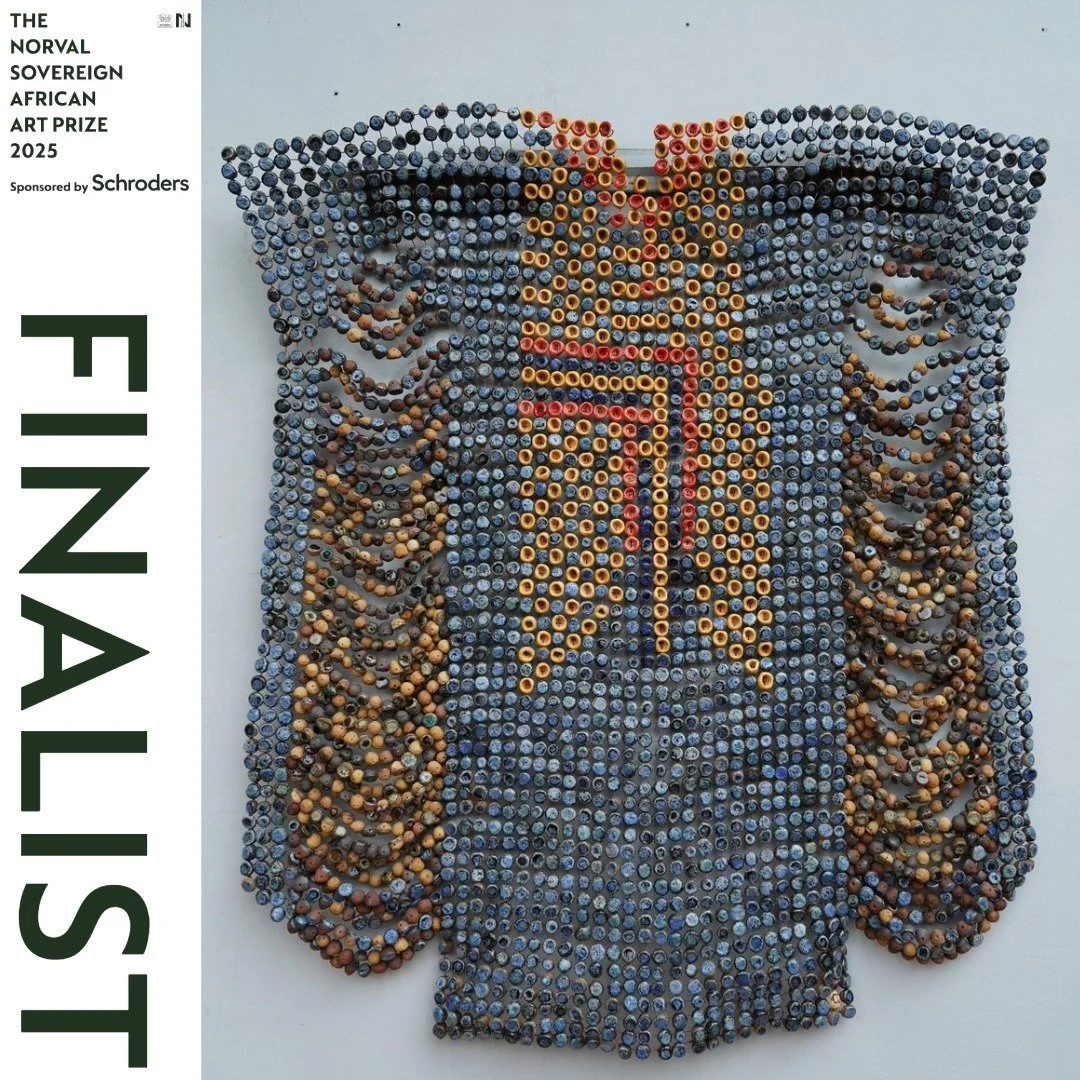
Ozioma Onuzulike's exceptional talent has been recognised on a global scale. He has been shortlisted as one of 29 Finalists representing 18 African countries for The Norval Sovereign African Art Prize (NSAAP) 2025, an annual award for contemporary artists from Africa and its diaspora sponsored by Schroders.
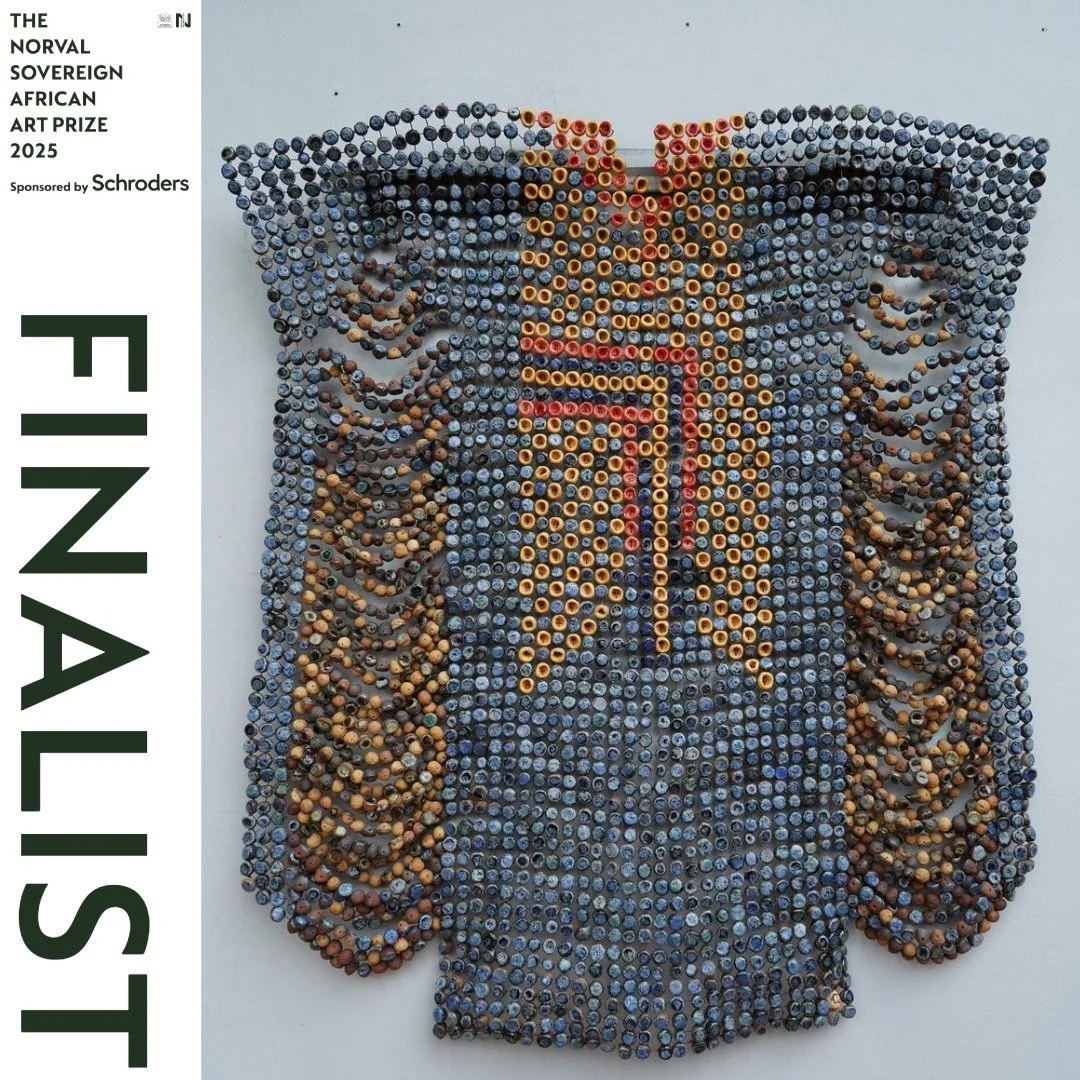
Image: Ozioma onuzulike, Embroidered Babariga Armour for Fubara (Power Series), 2024, earthenware and stoneware clays, glazes, recycled glasses and copper wire, 145x122x5cm.
Ozioma Onuzulike's exceptional talent has been recognised on a global scale. He has been shortlisted as one of 29 Finalists representing 18 African countries for The Norval Sovereign African Art Prize (NSAAP) 2025, an annual award for contemporary artists from Africa and its diaspora sponsored by Schroders. The shortlisted artworks, including Onuzulike's, will be presented to the public in a Finalist Exhibition at Norval Foundation, Cape Town, South Africa, from 4 February to 20 April 2025.
Onuzulike’s ceramic tapestry, titled Embroidered Babariga Armour for Fubara, is a masterpiece of intricate craftsmanship. It has been constructed from 3,189 handcrafted ceramic palm kernel shell beads woven together using copper wire to resemble a sumptuous West African elite gown called “Babariga” or “Agbada”. The clay shells were first bisque-fired, then selectively dipped into glazes before being inlaid with glass from crushed recycled bottles and re-fired to very high temperatures. His laborious studio processes made the shells resemble glass beads, historically used as tokens to buy enslaved Africans. However, beads are now considered prestige items and emblems of high social status in many regions of Africa. Created by Onuzulike at the height of the struggle for political power between the governor of the oil-rich Rivers State in Nigeria and his political godfather, this piece brings to mind both “agbada” dress (emblematic of the affluence of political figures) and the medieval plate-armour and speaks about political turmoil in Africa.
Ozioma Onuzulike is a professor of ceramic art and African art history in the Department of Fine and Applied Arts, University of Nigeria, Nsukka. He is also the Director of the Institute of African Studies at the same university. He is considered a prominent voice in Africa's contemporary ceramic art practice.
To view Ozioma Onuzulike’s other works, you may follow him on Instagram @ozioma.onuzulike.

FILM REVIEW: Unmissable Traces Of DEMAS NWOKO In Animation VAINGLORIOUS
Vainglorious is a studio animation short, creatively conceived as a school project by two talented students of Savannah College of Art and Design (SCAD). Since its release in 2024, Producer Sebastien Abou-Chakra and Writer/Director Gabriel Oshiomati 'Mati’ Ugbodaga have garnered attention and praise, with numerous notable selections and impressive awards wins at global film festivals.
By Oyiza Adaba, New York

Vainglorious Poster: Produced by STL Productionz
Vainglorious is a studio animation short, creatively conceived as a school project by two talented students of Savannah College of Art and Design (SCAD). Since its release in 2024, Producer Sebastien Abou-Chakra and Writer/Director Gabriel Oshiomati 'Mati’ Ugbodaga have garnered attention and praise, with numerous notable selections and impressive awards wins at global film festivals.
FILM REVIEW
Vainglorious is set against the backdrop of the traditional Northern Nigerian boxing style known as "Dambe". The story revolves around the conflict between the talented Haruna, a young boxer dedicated to his craft who must confront Ayeana, a father striving to secure his daughter's future. Both men face painful struggles of identity and risking their loved ones; in a fierce battle between tradition and modernity.
Creative Techniques
The animation team skillfully leveraged body language, visual contrast, facial expressions, and evocative music to effectively and powerfully communicate the characters' exhaustion or remarkable resilience throughout the animation.
The scene where all three characters lie facing the stars, exhausted from fighting, shows how body language and positioning is used to depict the characters' physical and emotional fatigue after their ordeal.
The character Idia is described as “a spirited and caring young girl whose strong will and tough nature are evident in her every action.” The young girl’s small frame contrasts her fierce spirit and shows her resilience and determination despite her stature.
The use of facial expressions and eye contact to convey complex emotional dynamics between the characters, is noticed in the conflict between the father and daughter, where their eyes connect. The emotional connection between the young girl and her father was a key element that heightens the overall impact of the narrative.
The music accompanying these scenes heighten each emotional impact and reinforce the characters' states of mind.
“We wanted the music to be perfect, because Nigeria and music is a big thing. I believe that music makes or breaks a film… We didn’t want computer generated music or anything like that. We needed somebody on that talking drum with their hands. ”
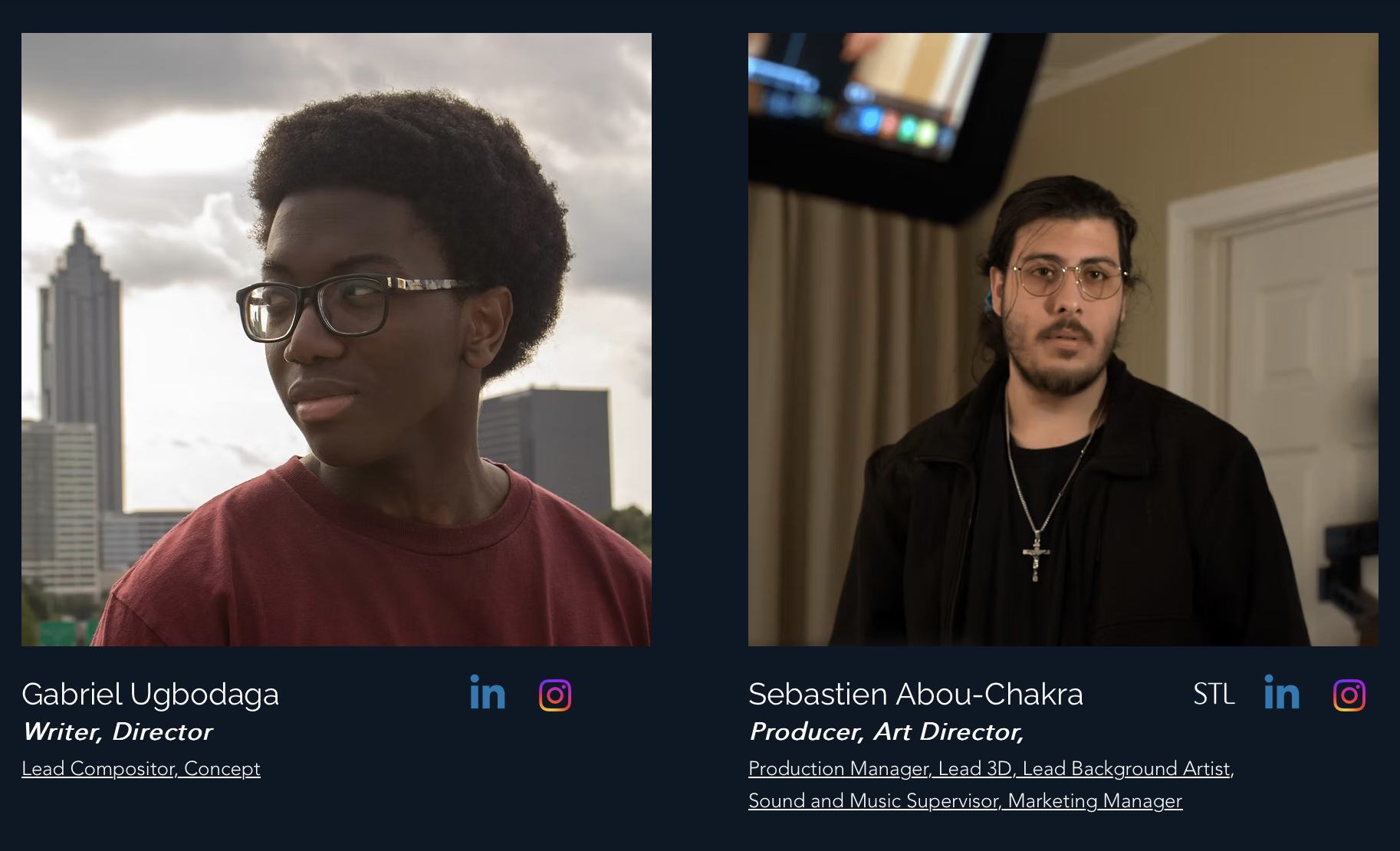
Vainglorious Writer/Director Gabriel Osiomati 'Mati’ Ugbodaga and Producer Sebastien Abou-Chakra (Photo by STL Productionz)
Production Team
The production took place at the Savannah College of Art and Design (SCAD) and STL Productionz, and this alone points to a collaborative academic environment where students and faculty worked together to bring the project to life. The animation team included a large number of talented individuals and this diverse team of artists brought different skills and perspectives that helped elevate the visual quality and storytelling of the animation.
The collaborative approach to the music for example, composition helped create a cohesive musical score that enhanced the emotional impact of the animation. It had additional contributions from Bemba Bangura and other key personnel like animation supervisor Selena Perez, Jonathan Cox, Alexa Morales, and Mahogany Martin as the FX animation lead.



Cultural & Personal Influences
Mati and Sabestien are both outstanding in their passion for animation and storytelling, which was shaped by their upbringing in Nigeria and family backgrounds. Sebastien is of Lebanese descent and grew up in Ibadan, Southwest Nigeria. Oshiomati became interested in animation from a young age, growing up as ‘art royalty’ in Lagos and Abuja. With the "Master Builder" Demas Nwoko as a grandfather, Mati's cultural heritage and family history in Nigeria plays an important role in cultivating his creative and artistic inclinations.
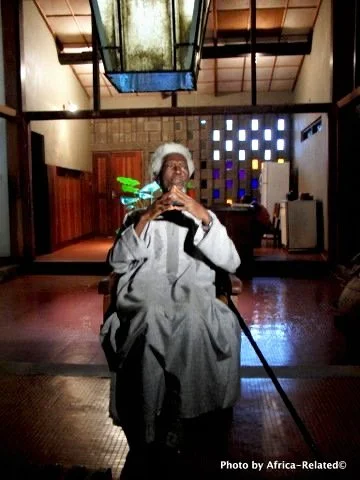

“I always knew I wanted to do something art related. Even before I pieced together what my grandfather was, I was into animation as a child. Finding out more about my grandfather further pushed that, because it added a weight on my shoulders that I didn’t know I had. By then, I already knew I wanted to do art adjacent to my grandfather. I want to make a name for myself as well, and also still honor my grandfather (Demas Nwoko) and his work.”
This film highlights both their creative vision and artistic skills within the animation industry.






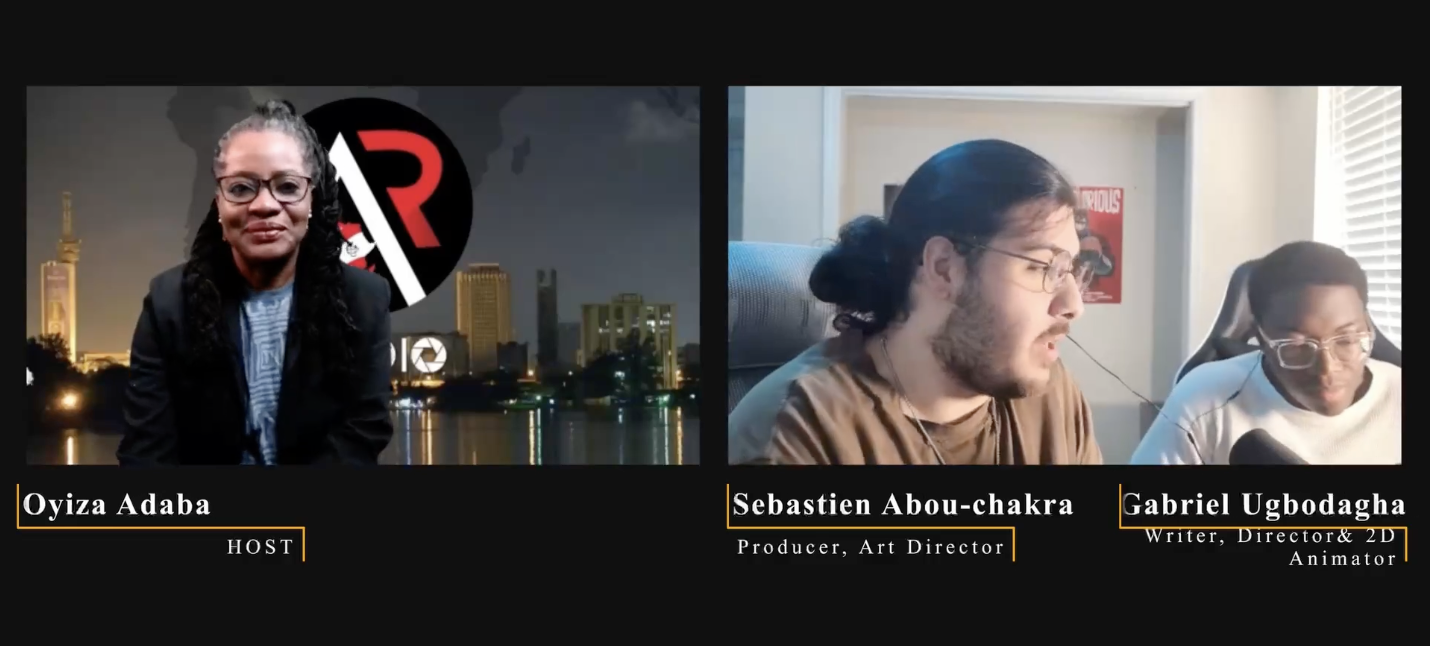
MESSENGERS
Learn more about Vainglorious featured in Season 4 of the TV series MESSENGERS. Coming in Q1 2025. Subscribe to @africarelatedinc for notifications.
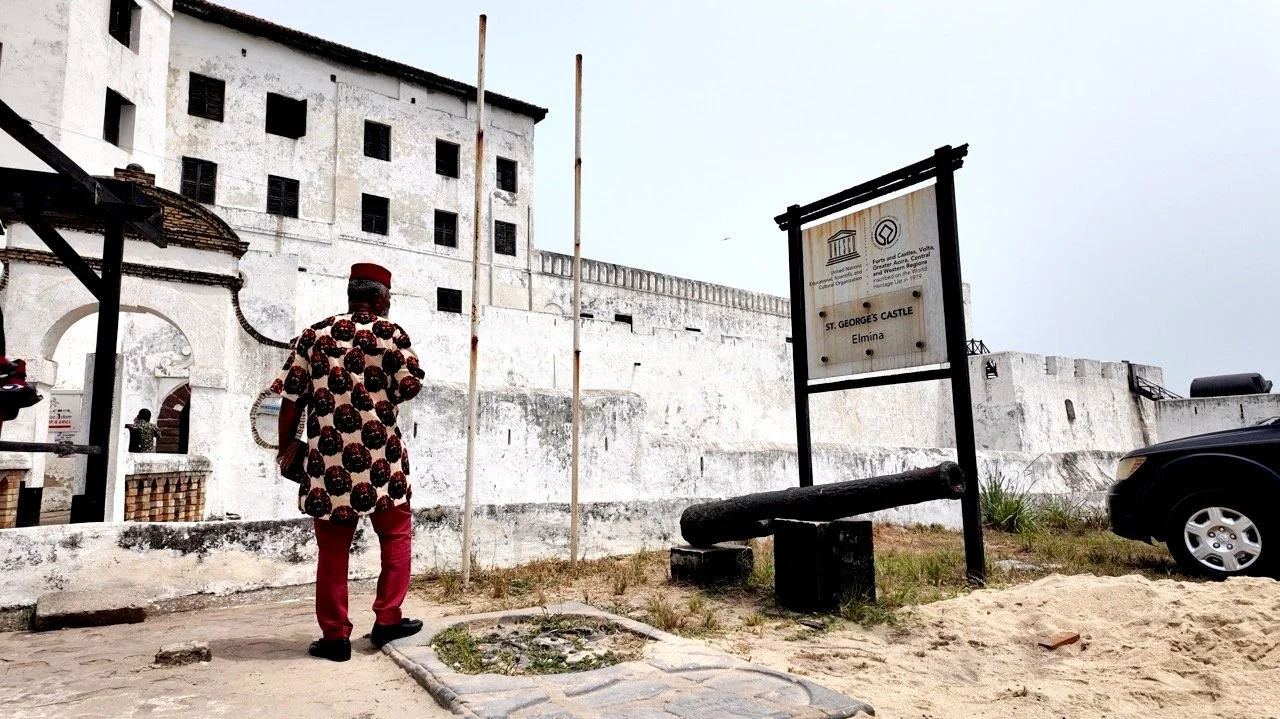
ELMINA: The Struggle Between Suffering and Healing
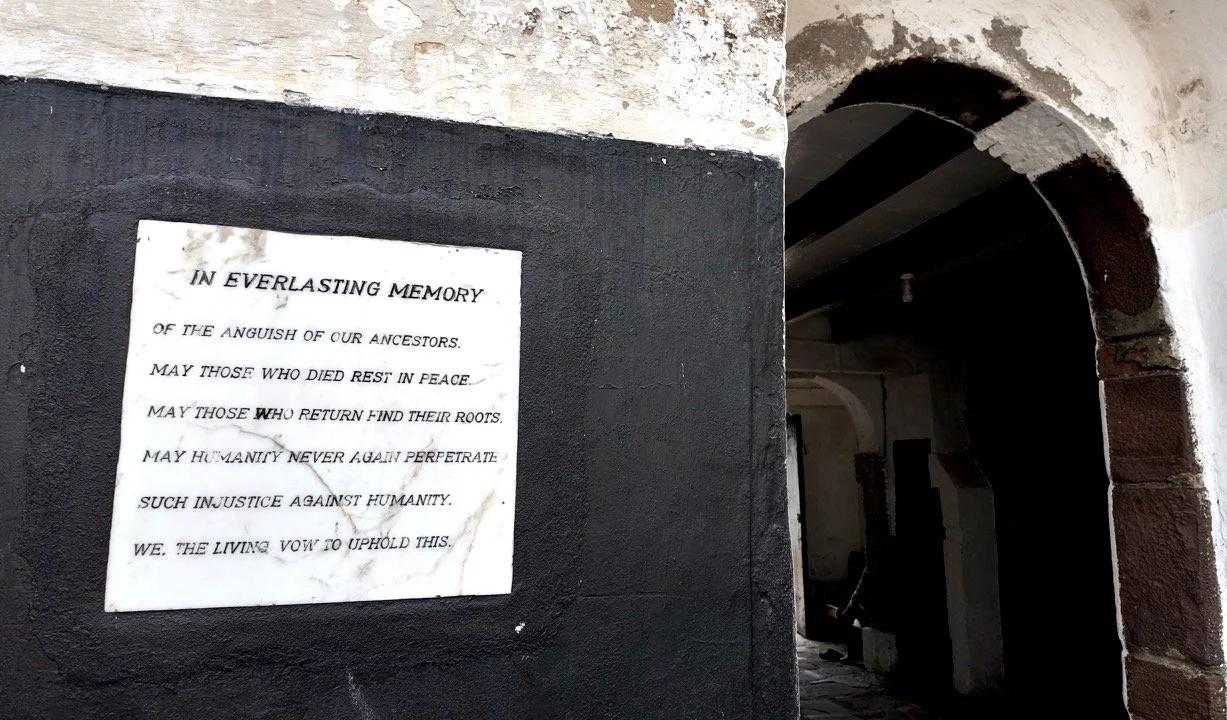
A visit to Elmina Castle, over three hours from Accra, Ghana, evokes strong feelings about our connection to the Transatlantic Slave Trade. As the 1992 Pan African Historical Theater Festival declared, “May we never allow such injustice again. We, the living, promise to uphold this.”
by Oyiza Adaba, New York
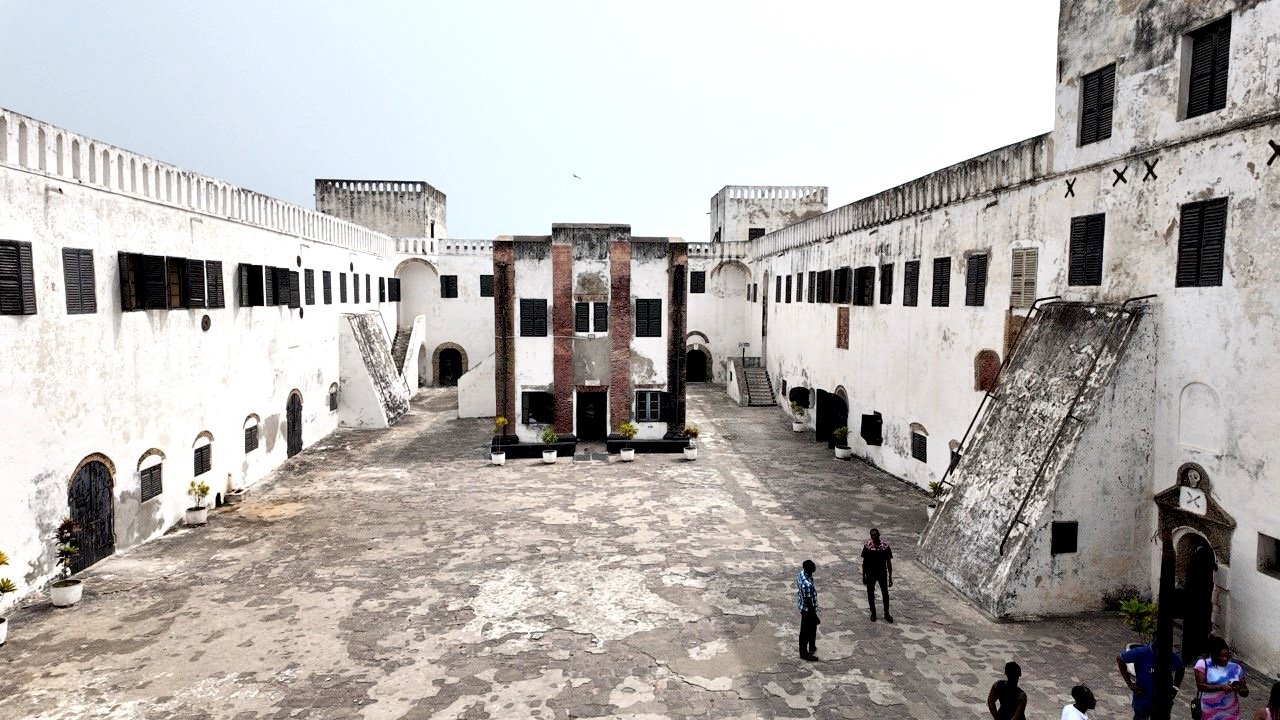
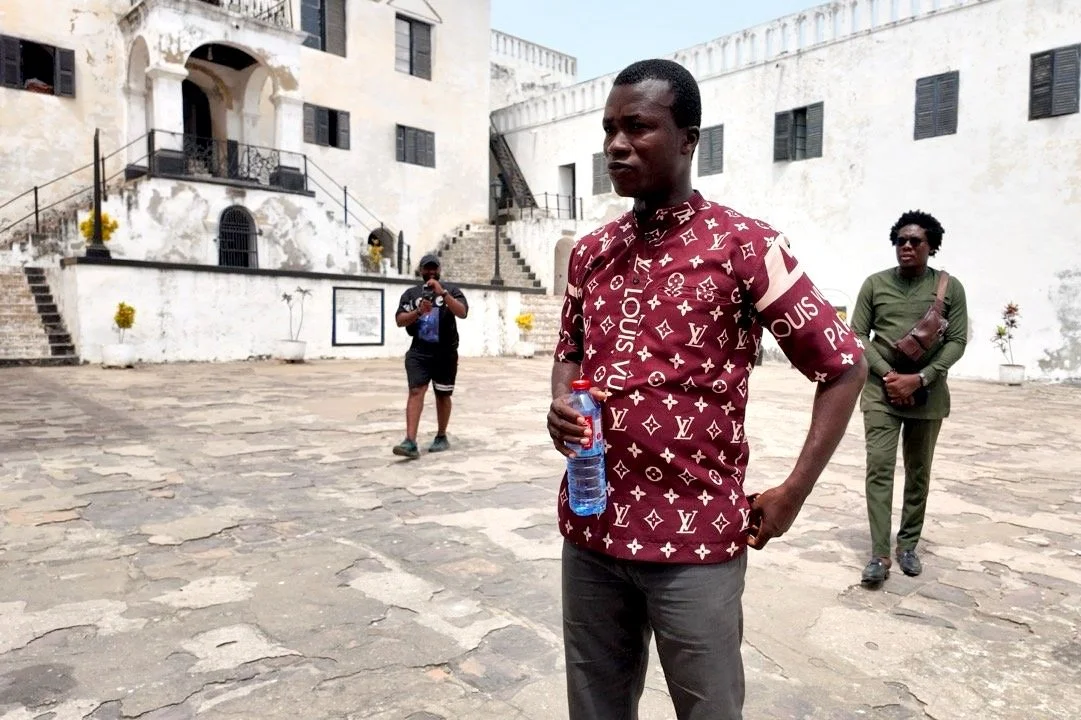
The main courtyard at Elmina Castle, Ghana. Built by the Dutch in 1482. (Photo:Africa-Related)
A SPECIAL REPORT
Made possible by Meridian Creative Center, Tema
A visit to Elmina Castle, over three hours from Accra, Ghana, evokes strong feelings about our collective connection to the Transatlantic Slave Trade. As the 1992 Pan African Historical Theater Festival declared, “May we never allow such injustice again. We, the living, promise to uphold this.”
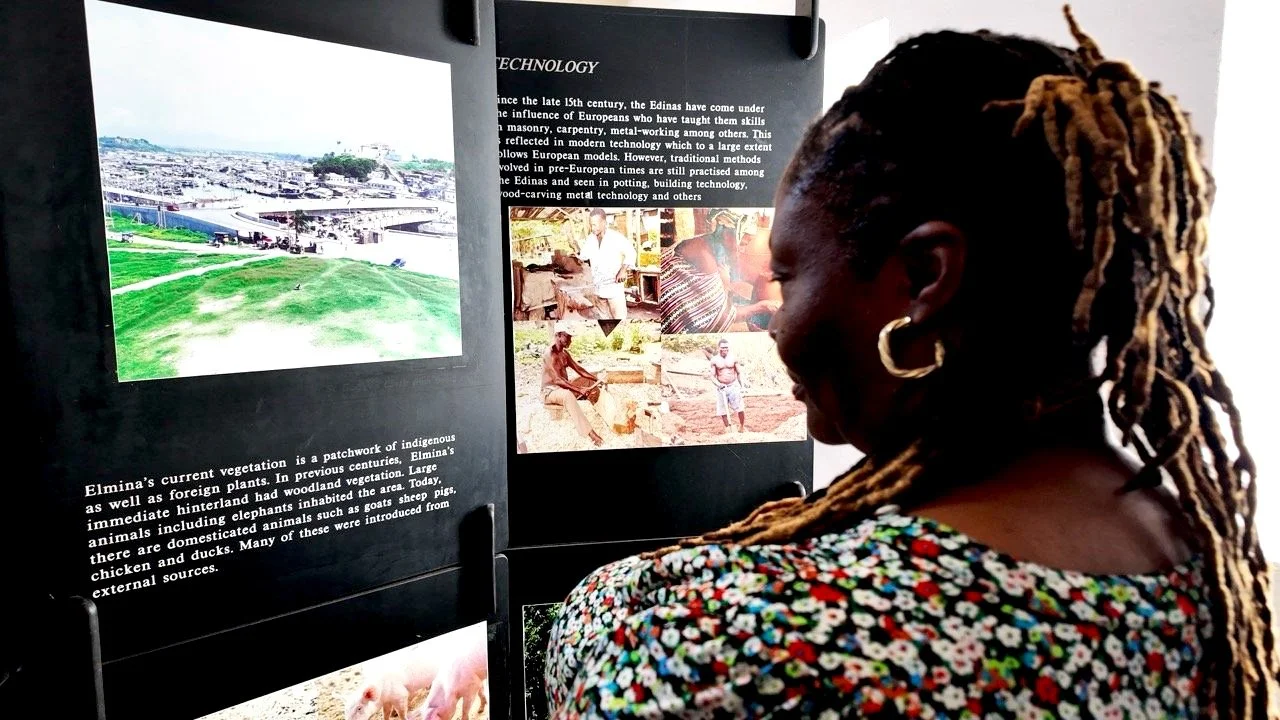
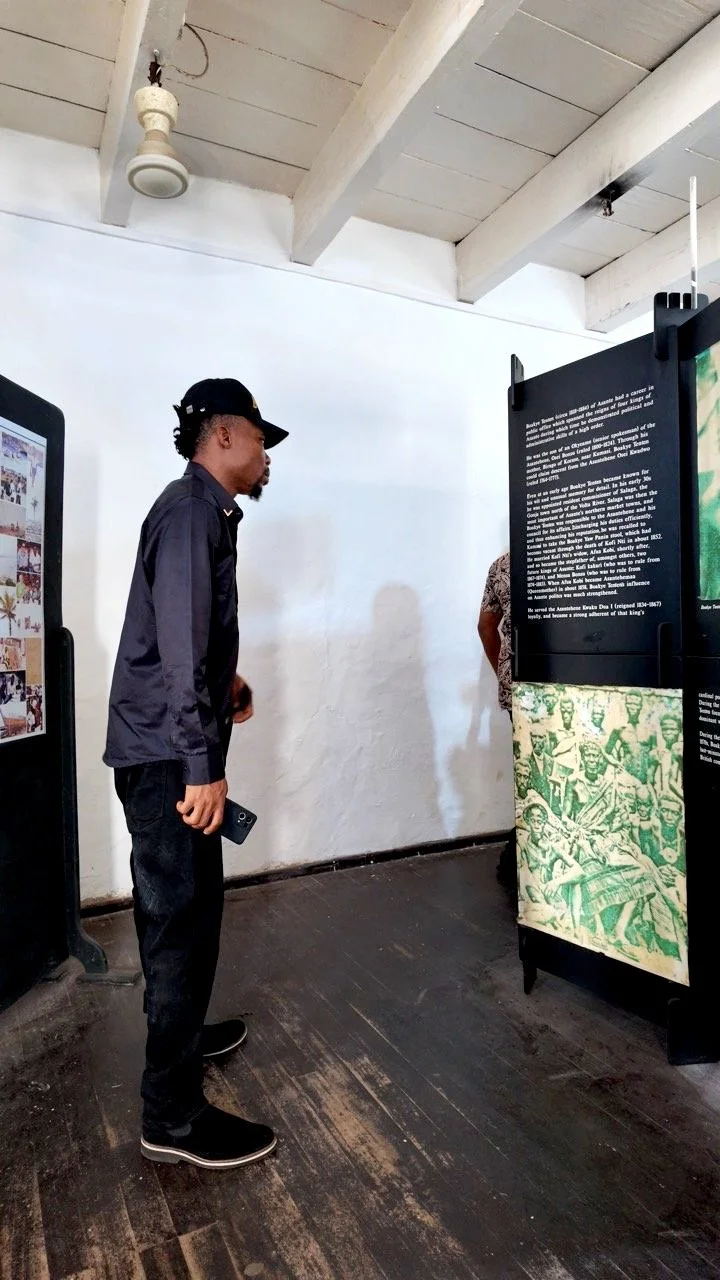
In the coastal town of Elmina, the ongoing struggle between reliving a horrific era and healing unfolds daily. Here, the remnants of a painful past clash with the hopeful emergence of transformation. Locals, guides and tourists alike navigate these intricate emotions, confronting the weight of their history while striving to cultivate a future filled with resilience and recovery. This delicate balance begins the journey toward healing that many individuals undergo.
“In everlasting memory of the anguish of our ancestors. May those who died, rest in peace. May those who return find their roots. May humanity never again, perpetuate such injustice against humanity. We, the living vow to uphold this
”
Video by Africa-Related for #El@80
In February 2024, friends and colleagues of the globally recognized sculptor and Emeritus Professor of Art, El Anatsui, came together to celebrate his significant 80th birthday with a tour of the Elmina Slave Castle. This historical UNESCO World Heritage site is located in the picturesque town of Elmina, which lies approximately a three-hour drive from Ghana's vibrant capital, Accra.
According to Wikipedia, the castle was the very first trading post established on the Gulf of Guinea by the Portuguese back in 1482, originally called Castelo de São Jorge da Mina, but also known simply as Castelo da Mina or Mina, in what is now present-day Elmina, Ghana, which was formerly known as the Gold Coast.
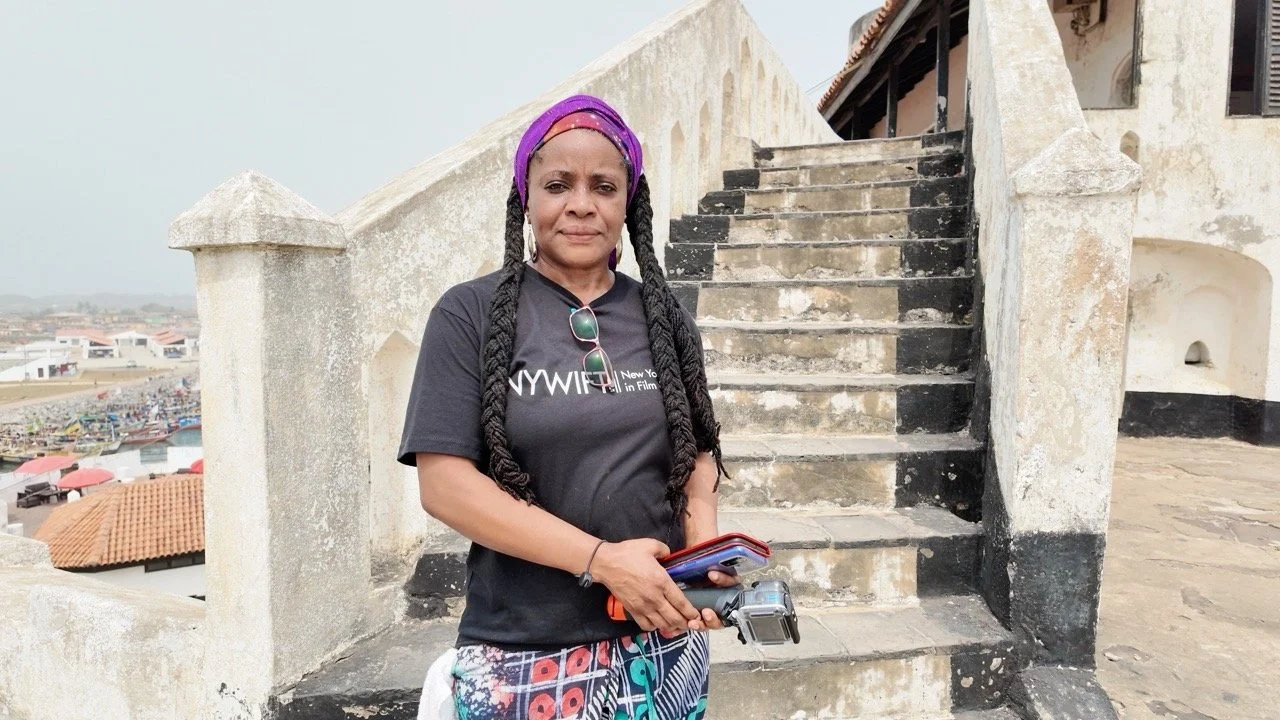
Journalist/Filmmaker Oyiza Adaba at Elmina Slave Castle, Ghana (Photo by Africa-Related)
I have yet to encounter anyone who did not experience strong emotions following an Elmina tour, and this occasion was no different. Not everyone feels at ease when it comes to listening to accounts from what can only be described as a "barbaric" era, one that was paradoxically executed with The Bible in one hand and The Gun in the other, where chapels were ominously built directly above the grim chambers of torture.
Film director Katrina C. Browne thoughtfully tackles this complex subject concerning the church’s role in the Transatlantic Slave trade in her compelling film, Repairing The Breach: The Episcopal Church and Slavery Atonement. This documentary not only examines historical injustices but also seeks a deeper understanding of the implications of these actions within the context of today’s society.
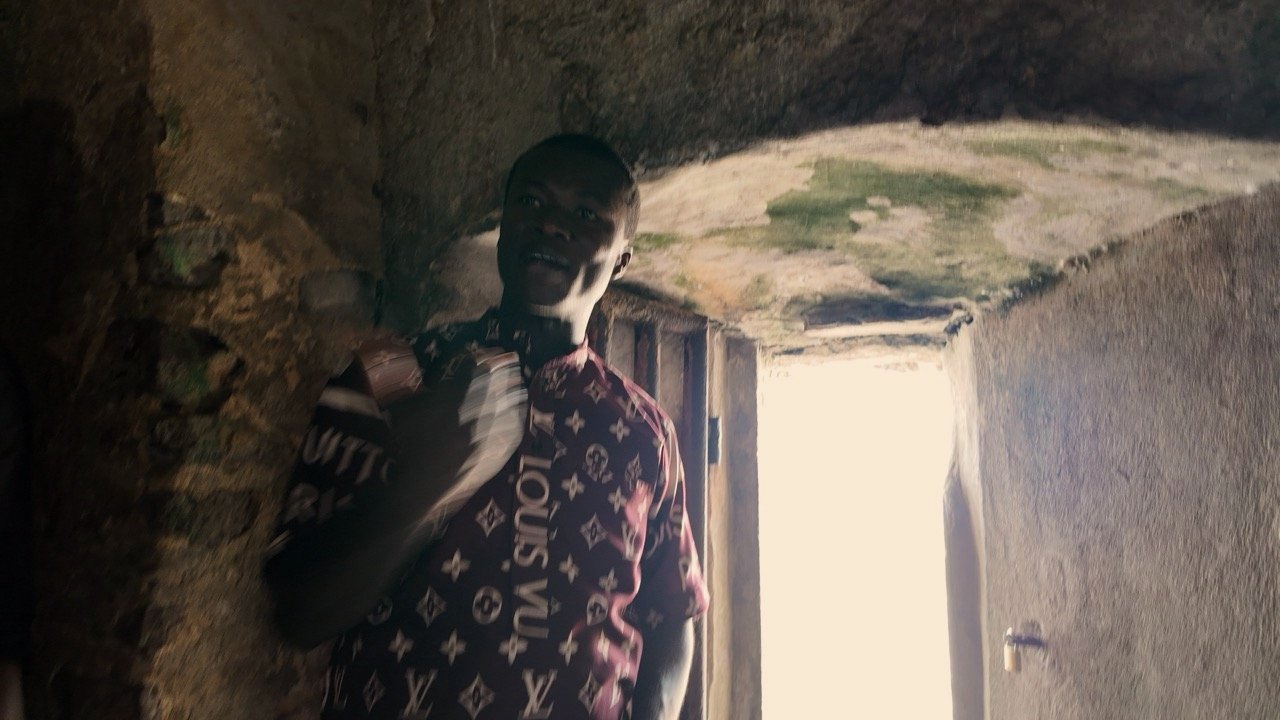
Tour guide at the infamous Door of No Return. (Africa-Related)
There is no doubt that the subject of slavery continues to be a challenging one to confront, affecting all levels of society and individuals from every race that participated. During the poignant tour, the small group, comprised of academics, artists, enthusiastic entrepreneurs, and members of the media, struggled just as deeply with the history and emotions evoked by the experience.
Slavery Theme in El Anatsui’s Works
As an artist who single-handedly redefined comtmporary sculptor, El Anatsui uses bottle caps in his jaw dropping sculptures to highlight the history of alcoholic drinks tied to the European slave trade. His earlier works in wood and ceramics, along with his bottle cap pieces, reflect themes of slavery and the effects of globalization and consumerism in Africa. Some notable titles that evoke strong imagery and deep reflection on these historical realities and contemporary issues, include: Man Resplendent Pissing Around the World (1995), They Saw Us Through Puffs of Smoke; They Made It Happen, Watched It Happen, But Now With Disheveled Hair, Wonder What Happened (1986), and The Elements Threatened Immediately Above While We Still Milled Around in a Mass of Complacency'; Rising Sea (2019).
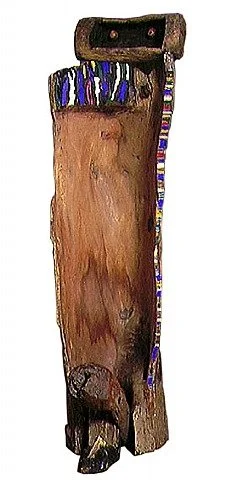


Additional Reading:
- A History of Indigenous Slavery in Ghana from the 15th to the 19th Century by Akosua Adoma Perbi
- A Cry & the Lamentations from the Ancestors: A Chronicle from the Trans-Atlantic Slave Trade: (Voices from the Captive Africans)
The various contrasts that Elmina presents to us is certainly not lost on our awareness and understanding. In its sordid history, accompanied by the distinct 'smell you never forget'‘, lies a magnificent, imposing beauty that serves to keep the memory of the past alive, thereby ensuring that history does not repeat itself ever again.
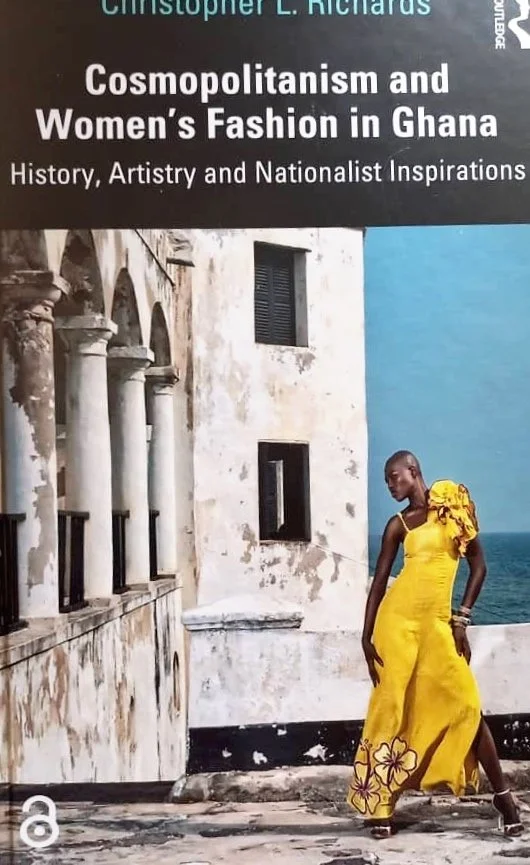
The whitewashed walls of this remarkable place hold significant historical dirt that tells a story of resilience and survival, yet Elmina has also become a hauntingly beautiful backdrop for an array of films, captivating books, and striking photo shoots. Renowned writer and historian Prof. Christopher L. Richards used Elimna as the cover of his book Cosmopolitanism and Women’s Fashion in Ghana History, Artistry and Nationalist Inspirations. He worked with the creative duo of photographer, Dean Zulich and Fashion Curator Beatrice ‘Bee’ Arthur, who recount their unique Elmina experiences on TV Series Messengers, all while diligently capturing the rich history and tapestry of Ghanaian fashion.
Cosmopolitanism and Women’s Fashion in Ghana
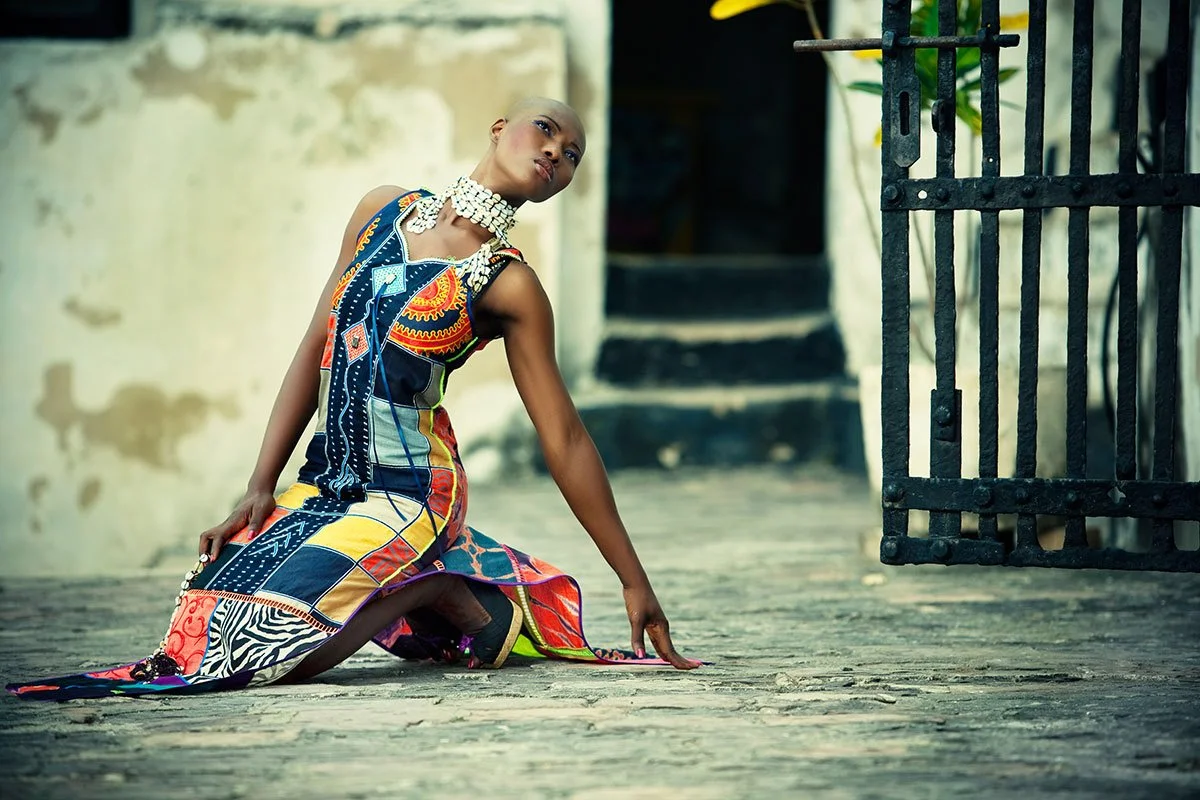
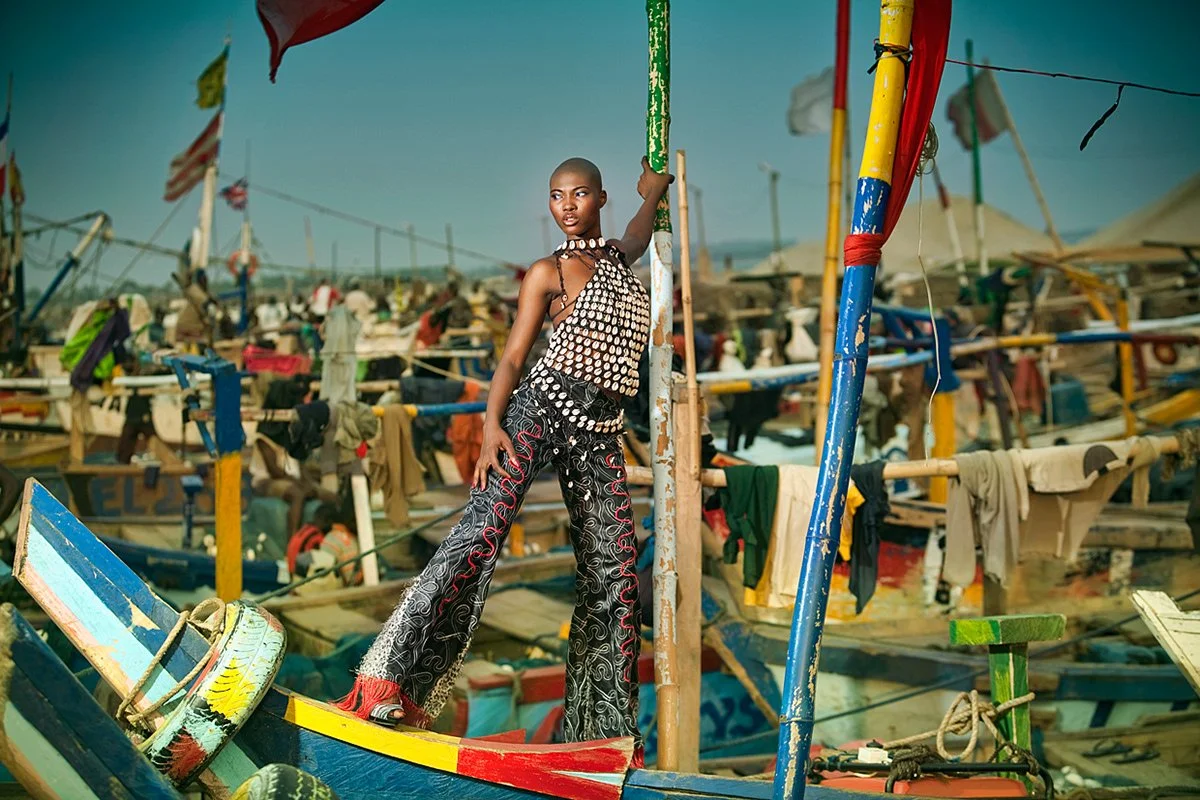
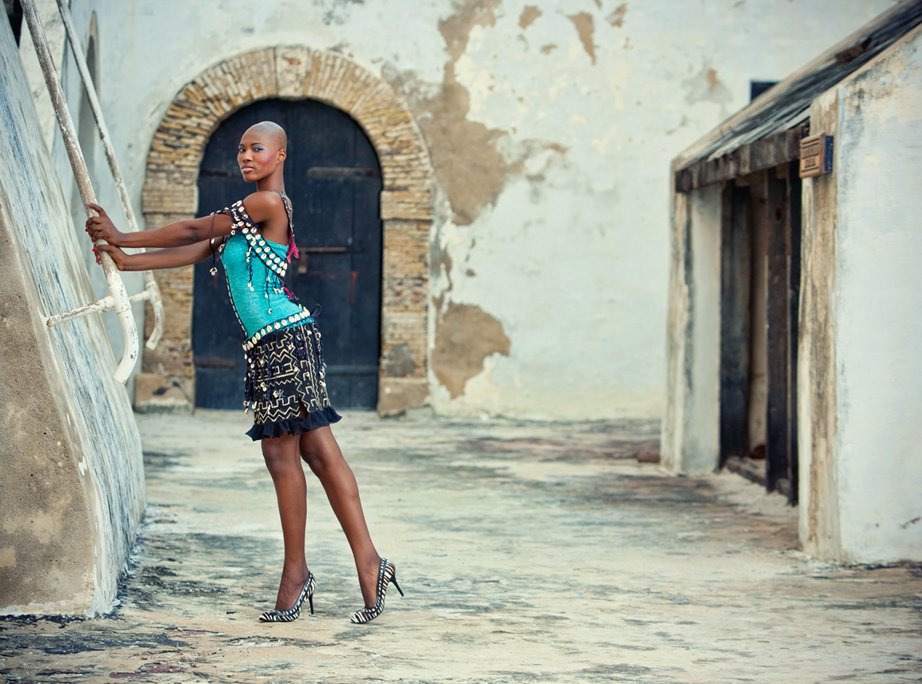
#El@80 elmina tour: PHOTOS BY AFRICA-RELATED
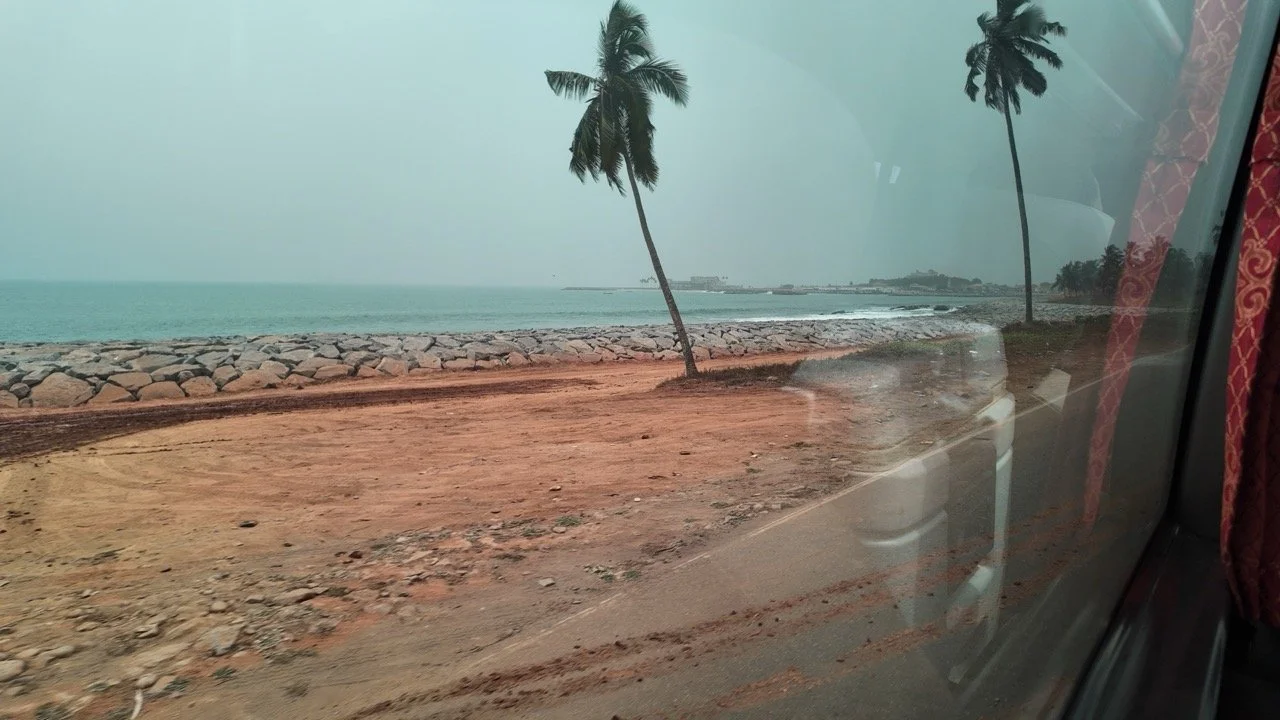
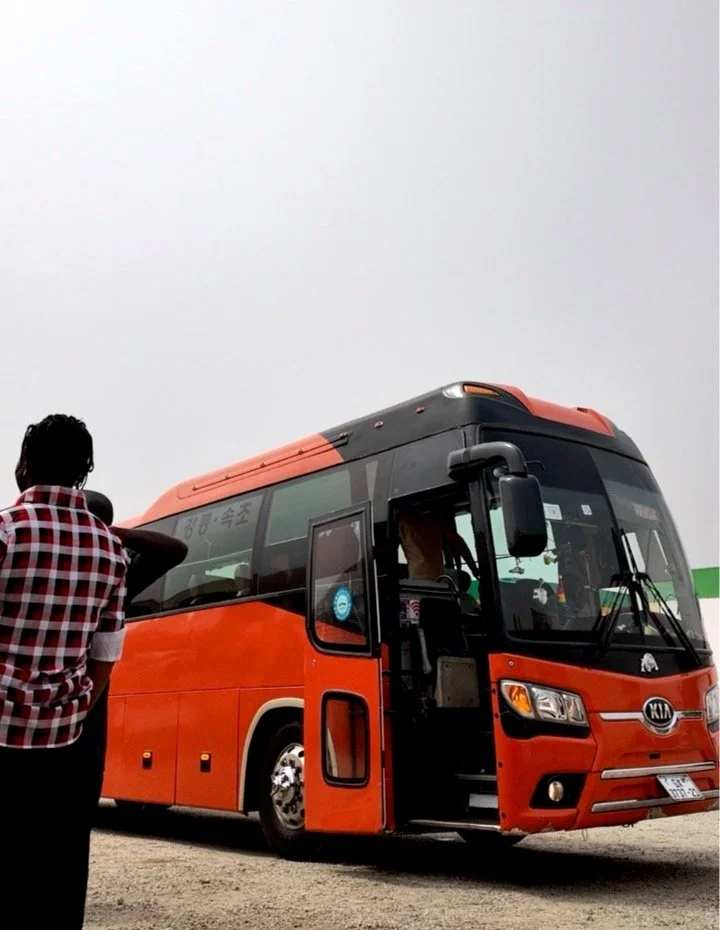
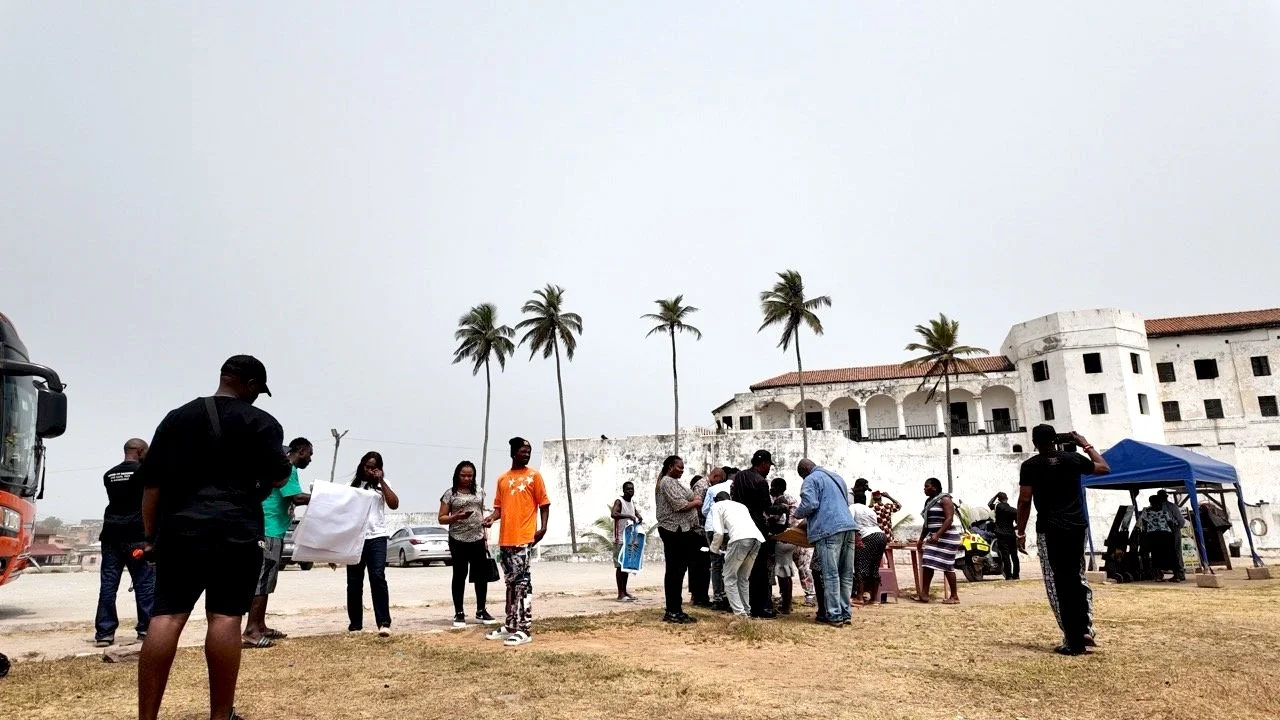
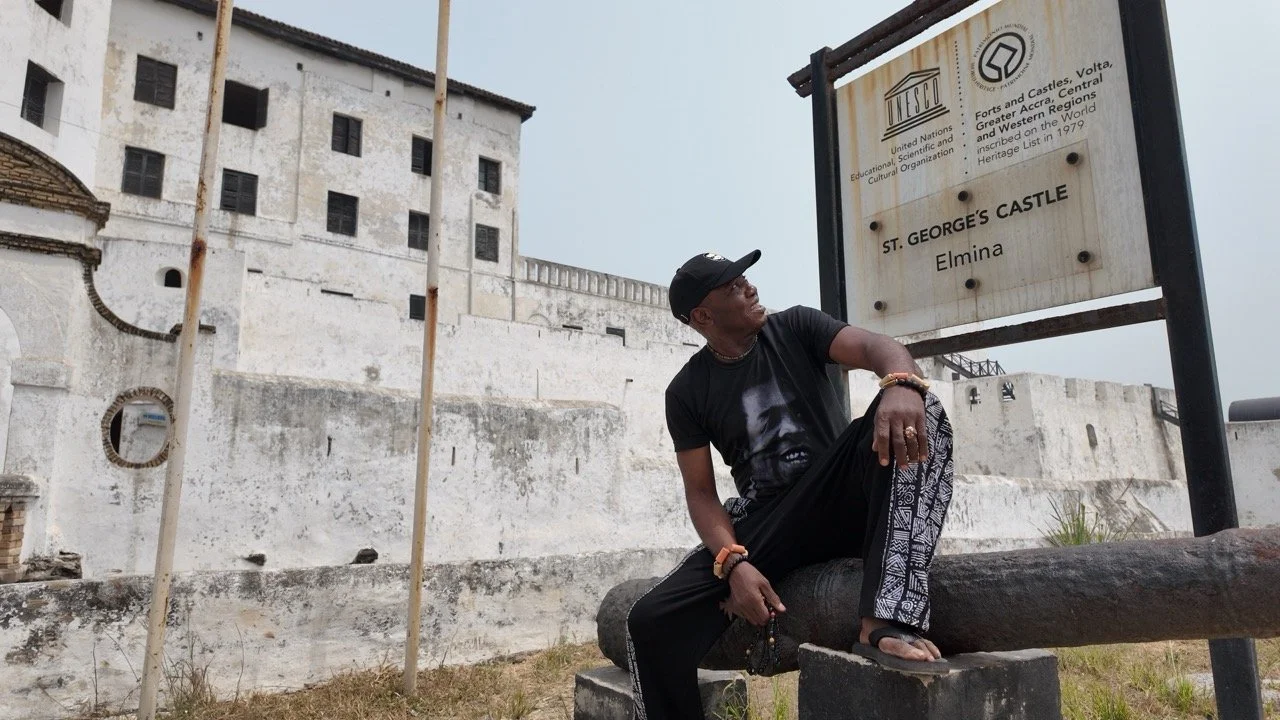

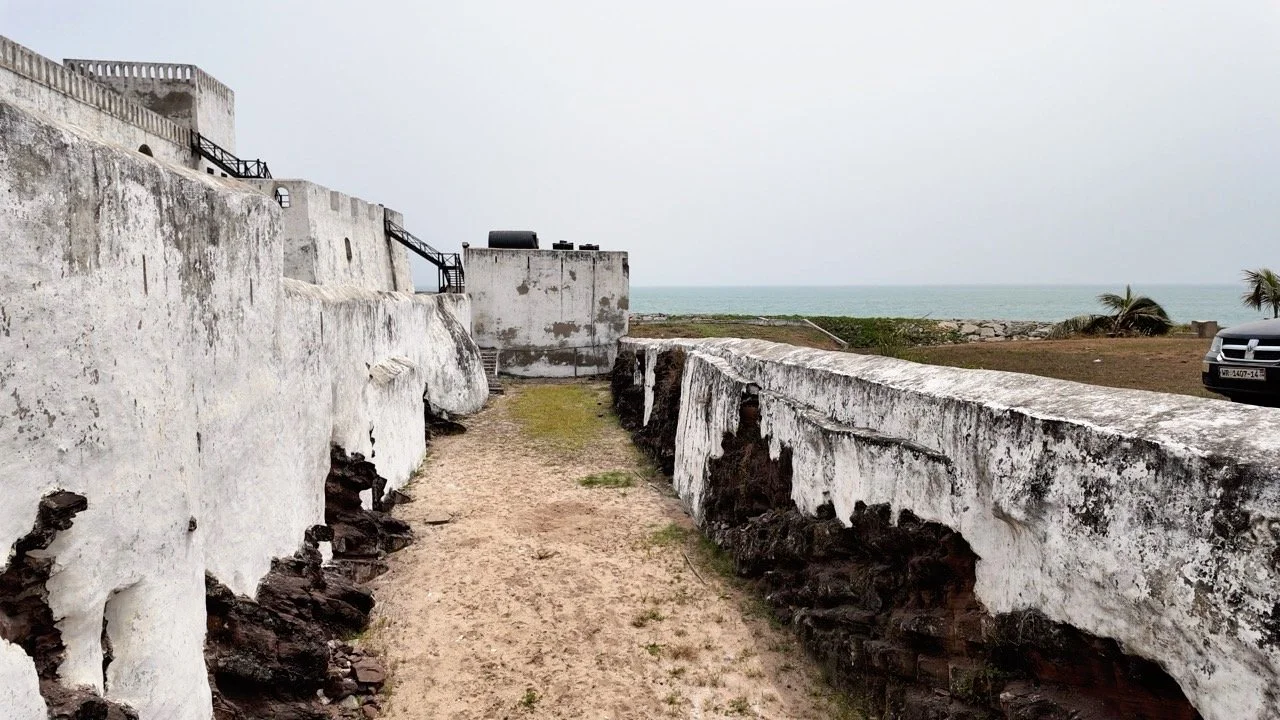
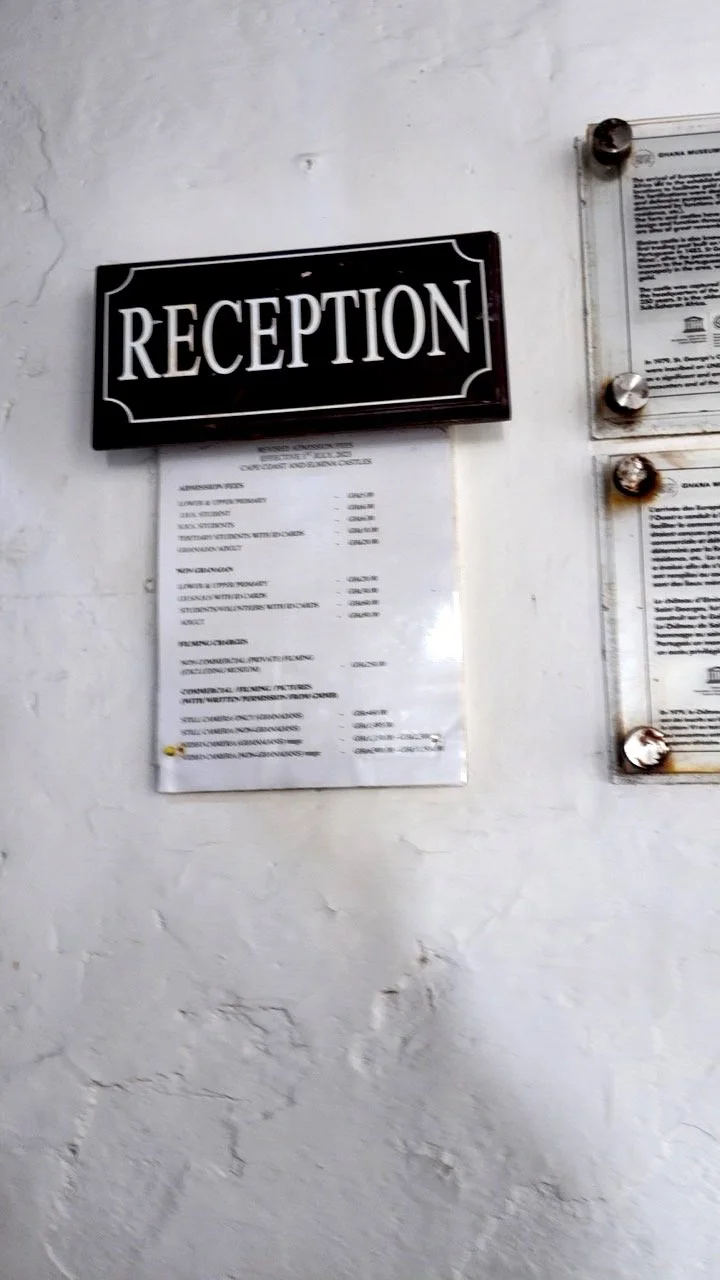
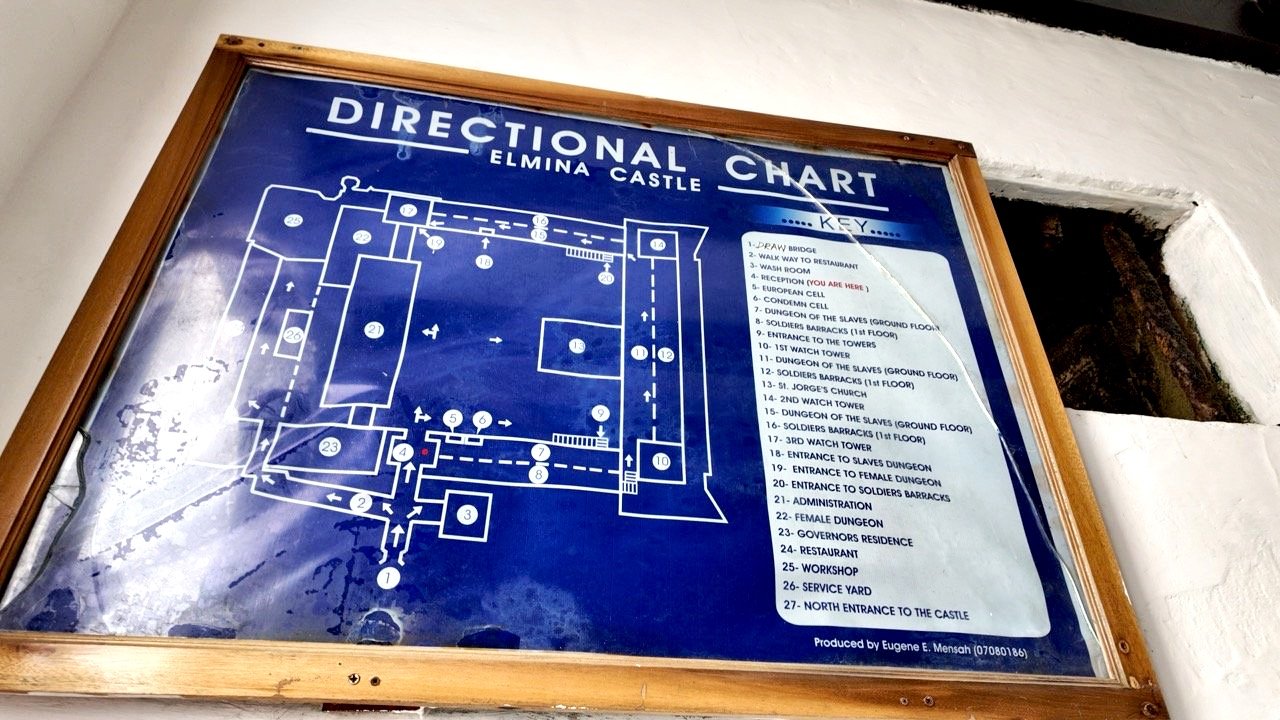

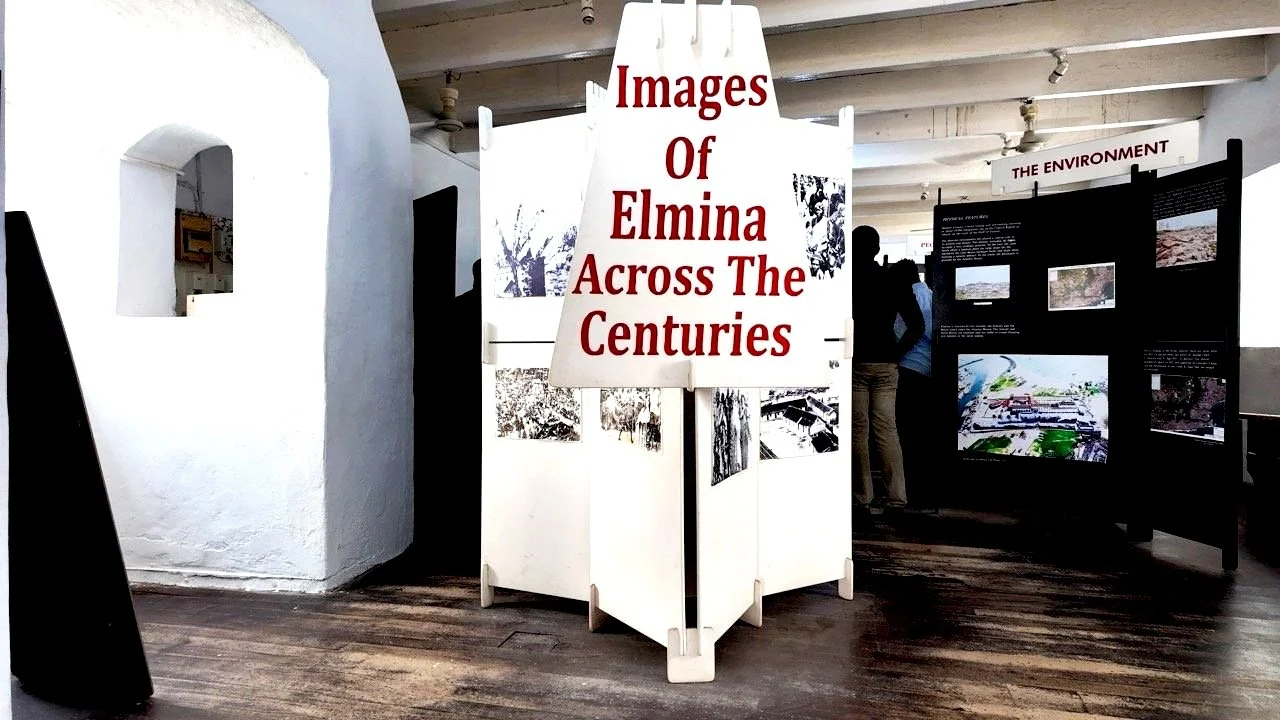

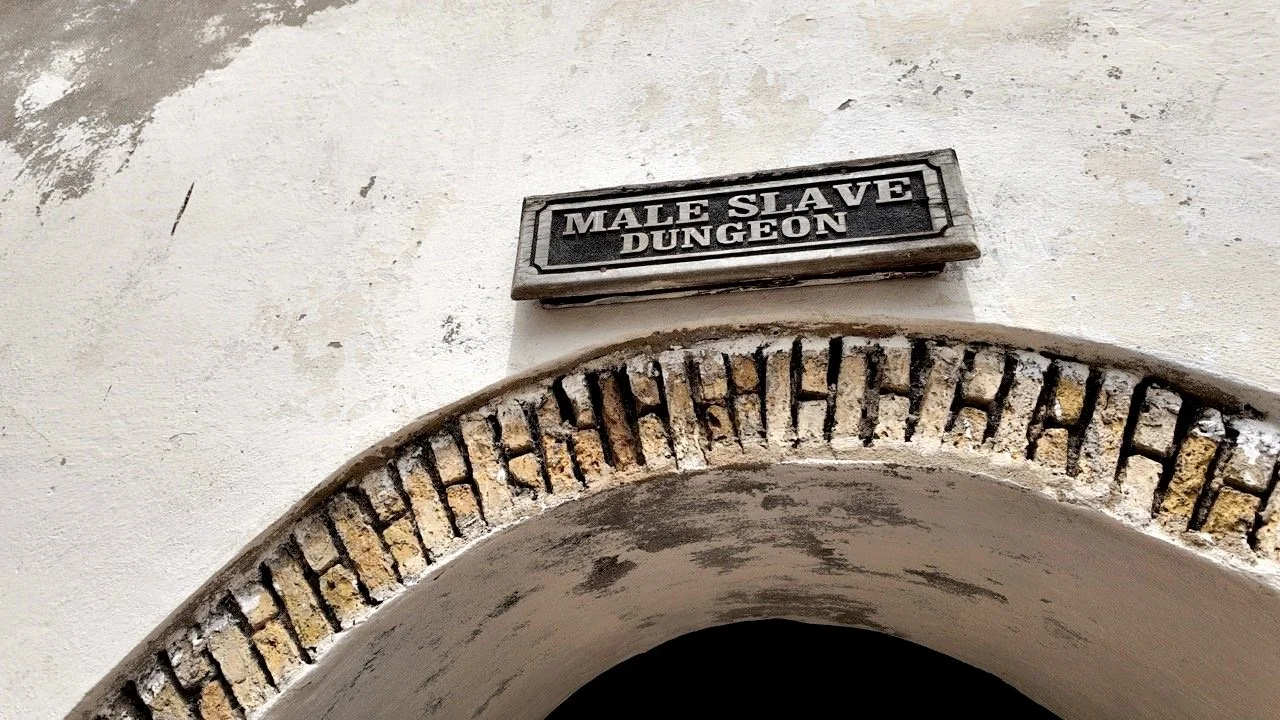
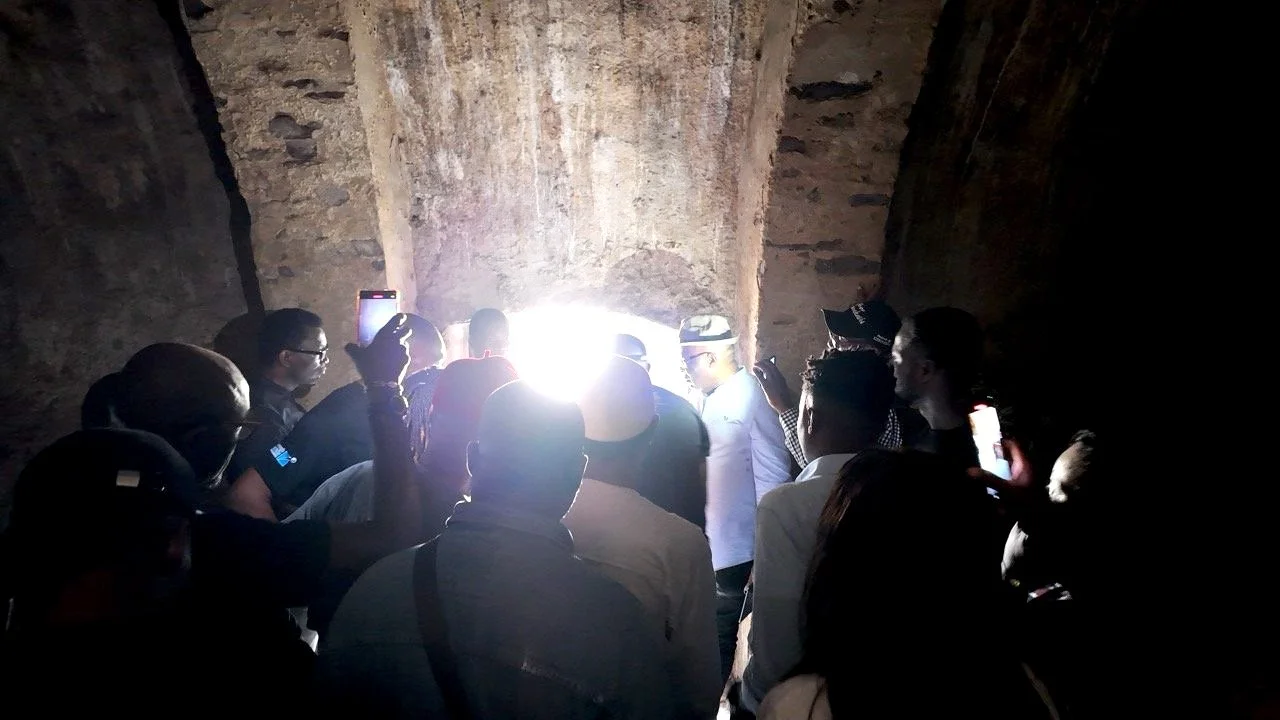
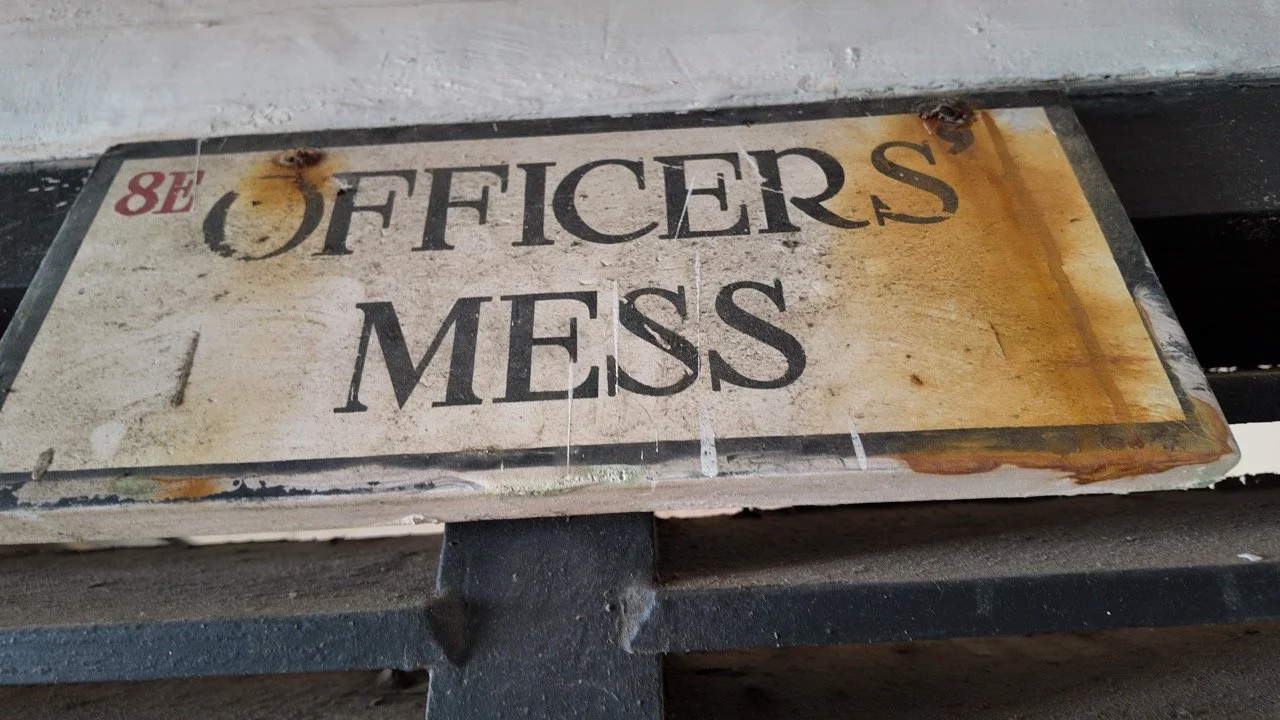
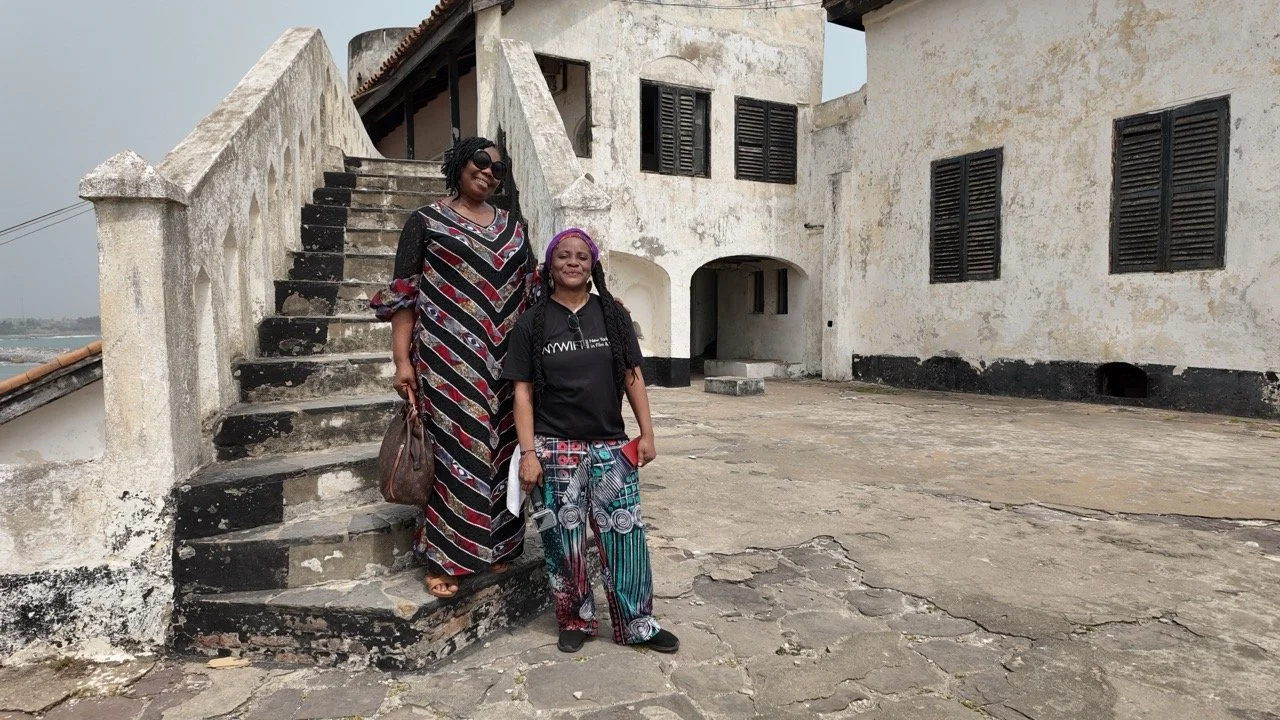
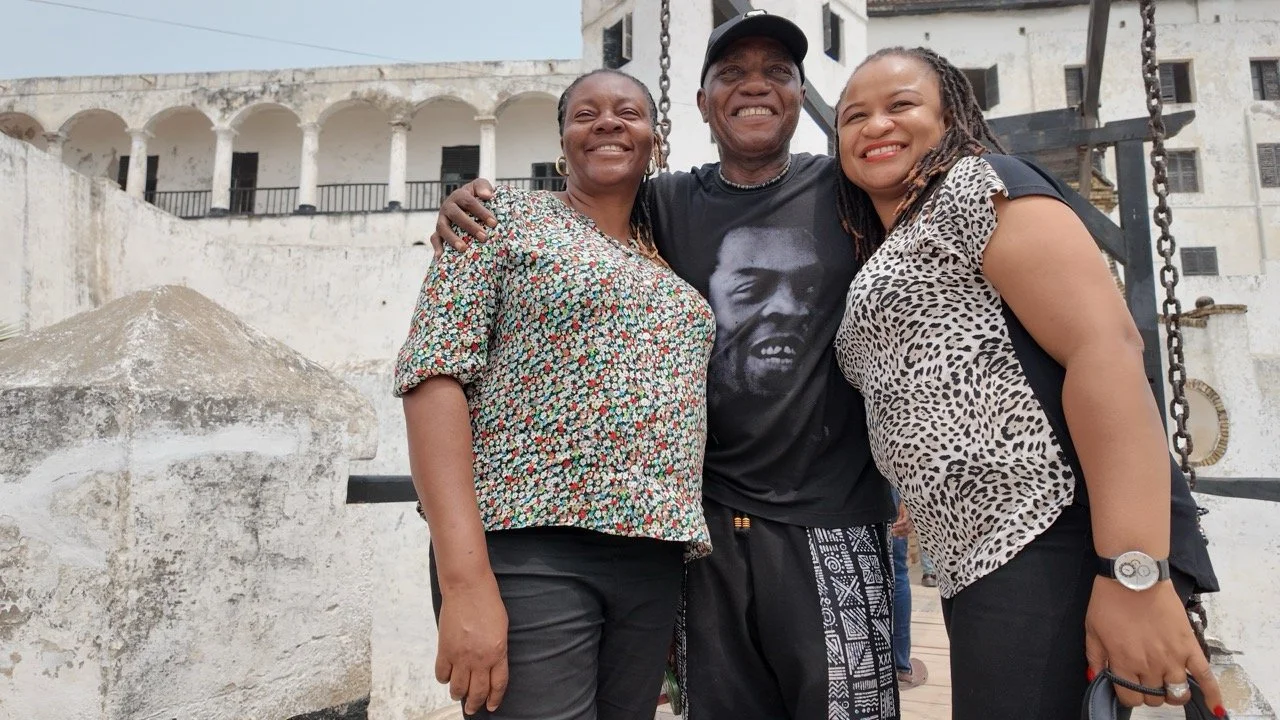
This report was made possible by Meridian Creative Center, Tema with additional images provided by elanatsuifilm.com, elanatsui.art, #el@80, Timothy Doh, Dean Zulich, and Moses Adeyemi.

KIDNAPPED In NIGERIA
A mother’s heart-wrenching story powerfully demonstrates why nowhere in Nigeria is truly safe from the pervasive menace of kidnappers and criminal gangs, least of all the nation’s capital, Abuja. This unfortunate reality underscores the growing fears and concerns among Nigerians, as they grapple with the constant threat that looms over their daily lives.
by oyiza adaba, New york
A SPECIAL REPORT
Deborah Sanni (RIP) was last seen in Area 1 on March 3, 2024. (Photo: Sanni Family)
On March 3, 2024, 29-year old Deborah Sanni, an Area 1 resident of Abuja, stepped out of their family home around 8:00 PM to pick some supplies from a nearby shop. Then the unthinkable happened.
"Every day I wake up with her thoughts on my mind. I sleep with her thoughts on my mind, because it's just like a dream - a nightmare." - Mrs. Matilda. Sanni
Her grieving, yet strong mother, Mrs. Matilda Sanni recalls the heart-wrenching incident, which powerfully explains why nowhere in Nigeria is truly safe from kidnappers - least of all the nation’s capital, Abuja. This unfortunate reality reflects the growing fears and concerns among Nigerians, as they grapple with the constant threat that looms over their daily lives.
In Deborah Sanni's case, her family paid a ransom on the same night, which her captors withdrew before dawn on March 4, 2024. Then they went silent. After a difficult week of searching, her family learned that her body had been found a week earlier and sent to a mortuary in another part of Abuja. This raises concerns about communication between the Nigerian Police, other security agencies, and hospitals.
As we close out our year in 2024, we take a moment to remember all the victims of kidnapping in Nigeria, along with their families who continue to suffer. It is a sobering experience to review these statistics that reflect the plight of individuals who, tragically, will not be spending the upcoming year with their loved ones. The emotional toll this takes on families and communities is profound and deserves our attention and compassion.
SBM IntelLIGENCE 2024 Report
Nigeria’s security crisis has become increasingly complex, with armed groups and non-state actors exploiting the state’s weakened influence. This includes Boko Haram’s resurgence in the Northeast, armed gangs in the Northcentral and Northwest, secessionist violence in the Southeast, and gang-related issues in the Southwest. Amid these diverse security threats, widespread kidnap for ransom has emerged as a common thread.
Grim Reaping: Economics of Nigeria’s Kidnap Industry – A 2024 Update
- SBM INTELLIGENCE -
kidnapping statistics: SBM Intel 2024 Report
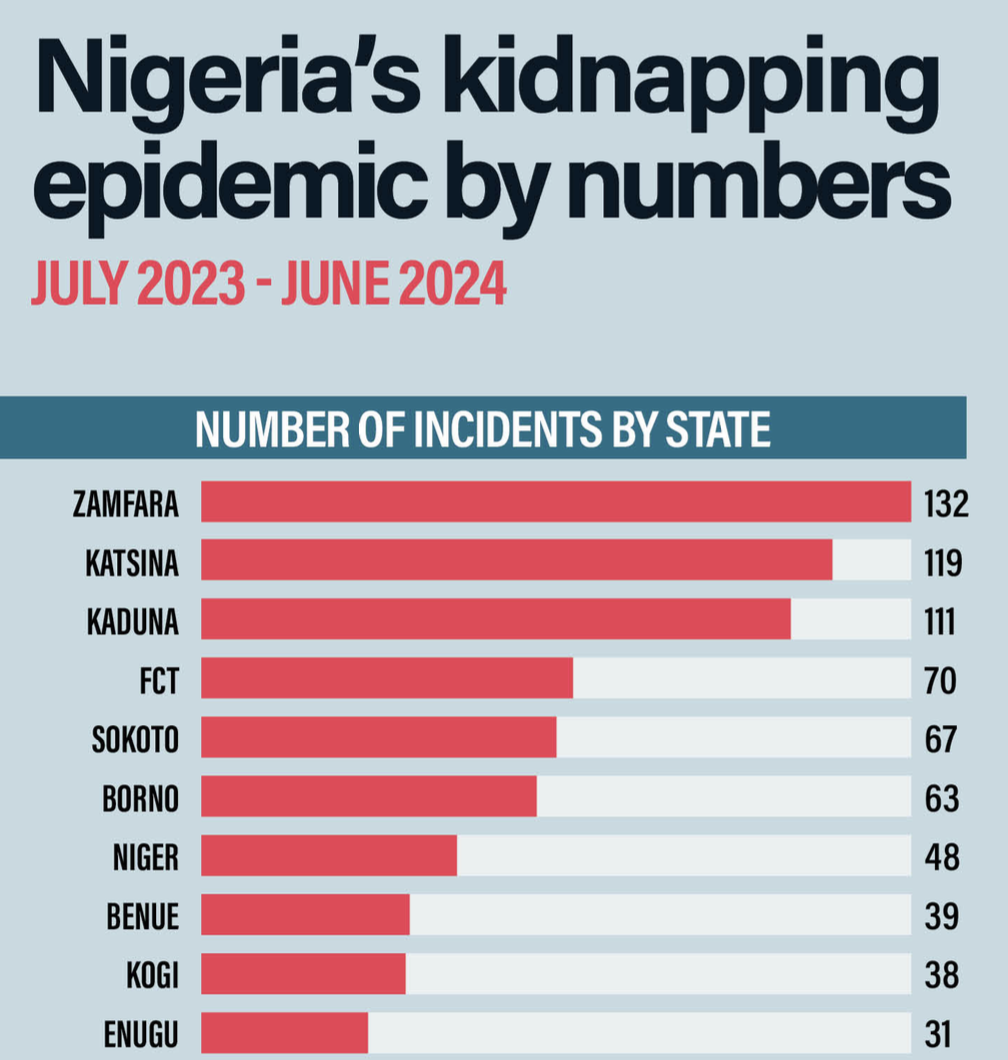
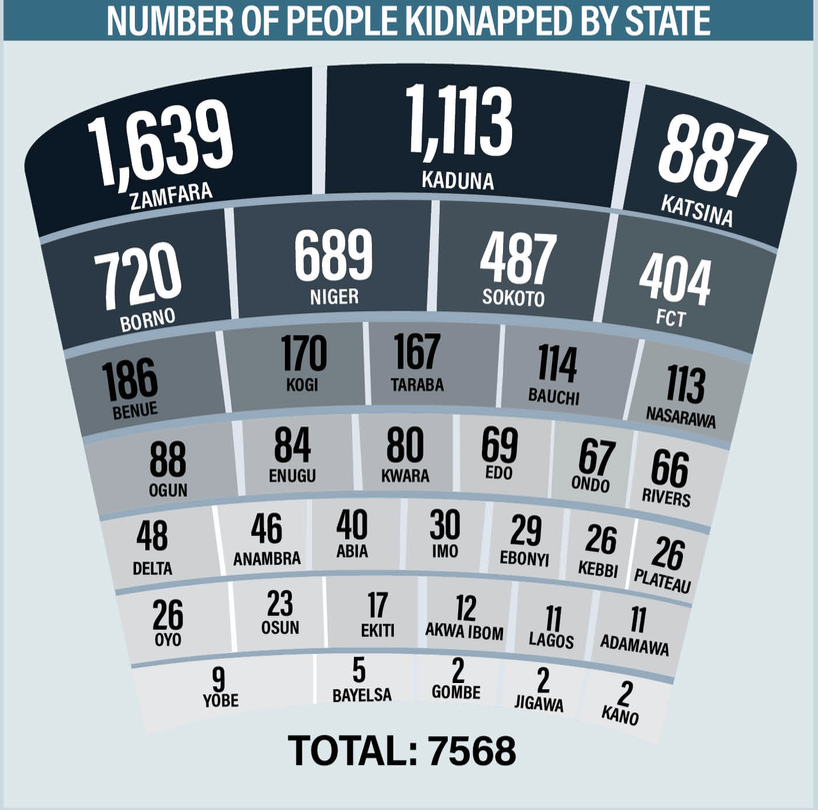
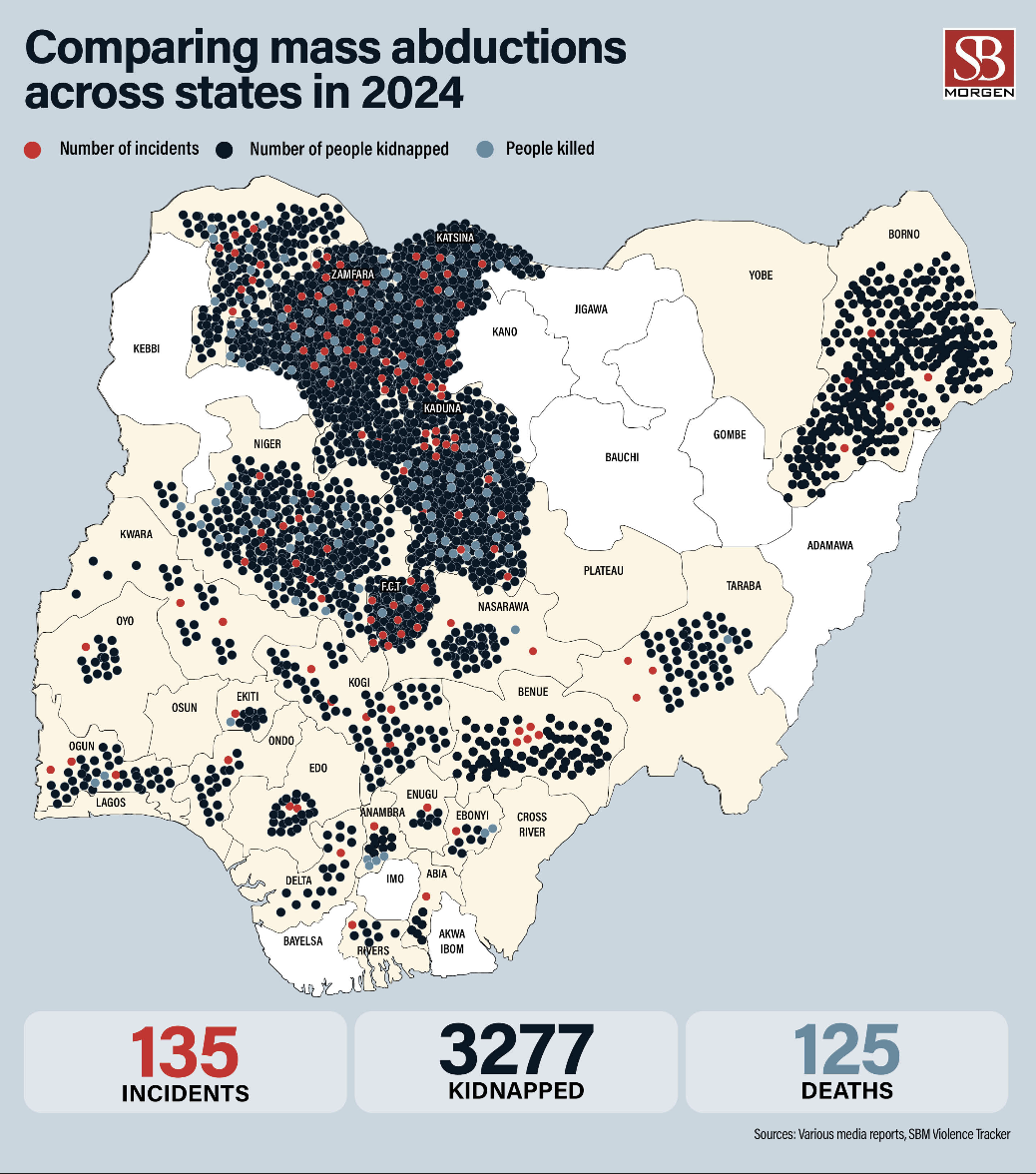
SHARE THIS STORY

ALBUM REVIEW: Godwin Louis Compels in Psalms & Proverbs
Our spotlight is on Godwin Louis's compelling sophomore album "Psalms and Proverbs." We will detail its tracks and discuss the impressive organ piece, showcasing its intensity and the deep thoughts evoked by his musical influences.
By Oyiza Adaba, New York
Album Cover: Godwin Louis’ “Psalms and Proverbs”.
Our spotlight is on Godwin Louis's compelling sophomore album "Psalms and Proverbs," where we will take the time to break down its various tracks in detail. We will engage in a thoughtful discussion about the impressive organ masterpiece featured in the collection, highlighting its profound intensity and the deep thoughts his musical influences evoke throughout the listening experience.
ALBUM REVIEW
Based on my deep and attentive listening of Godwin Louis's album "Psalms and Proverbs,” I can confidently conclude that the diverse musical influences found throughout the album, as well as the various artistic collaborations featured within it, are intricately woven into the overall theme and message that the artist is trying to convey.
African and Haitian influences: Several tracks prominently feature traditional African and Haitian beats, rhythms, and distinctive instrumentation. This musical choice not only reflects Godwin Louis's own roots but also highlights the album's strong connection to his rich cultural heritage and experiences, particularly through his collaborative work with artists in Togo.
Meditative and prayerful elements: The organ opening of “Pwoblem Yo” (track 4) serves as convincing evidence of his deep church upbringing, while other tracks such as "Psalm 121" and the various sections of "Psalm 23" offer a meditative and prayerful quality. . This suggests a pervasive spiritual and reflective theme that resonates deeply throughout the entire album. The lead single single Showers of Blessings/ Kplolanyuiade brings listeners to the church with an offering a jazzy and joyful melange of sounds inspired by hymns and other religious songs from the Caribbean and West Africa. Personally, it is reminiscent of the depth behind John Coltane’s ‘The Creator has a Masterplan’.
Blending of genres: The album skillfully blends a variety of genres, seamlessly incorporating elements of jazz, blues, rock, and carnival-like sounds. This rich diversity reflects the album's broad appeal and its ability to reach a wide range of listeners from different musical backgrounds, whether they are fans of jazz, gospel, Latino, African music, or world music.
New York influence: Tracks 11 and 12 distinctly highlight the album's connection to the vibrant New York jazz scene, thereby adding yet another significant layer of cultural influence. One cannot help but notice Godwin's upbringing in Harlem resonating prominently throughout the journey of “Psalms and Proverbs.”

Band Group photo (photo credit Blue Room Music)
The album features Louis on alto and soprano saxophone, Billy Buss on trumpet and flugelhorn, pianist Axel Tosca, organist Johnny Mercier, drummer Obed Calvaire, percussionist Markus Schwartz, bassist Hogyu Hwang and Trinidad-born trumpet star Etienne Charles.
Overall, I would assert that the diverse musical influences displayed by Godwin Louis in "Psalms and Proverbs" significantly contribute to a rich and multifaceted album that genuinely celebrates the artist's cultural heritage, spiritual journey, and impressive artistic versatility. Ultimately, this creative work serves to uplift and bless the listener in meaningful ways, as I experienced it.
About the artist
The Grammy-nominated Godwin Louis (pronounced god-win lou-ee) is a celebrated saxophonist and composer. He was born in Harlem, New York to Haitian parents and raised in Bridgeport, Connecticut and in Port-au-Prince, Haiti. He is a professor at the prestigious Berklee College of Music in Boston and also teaches at the summer music camps of the Connecticut jazz nonprofit Back Country Jazz. “Psalms and Proverbs” is Louis’s follow-up to his debut “Global”, released in 2019. The album is available internationally through the Blue Room Music label
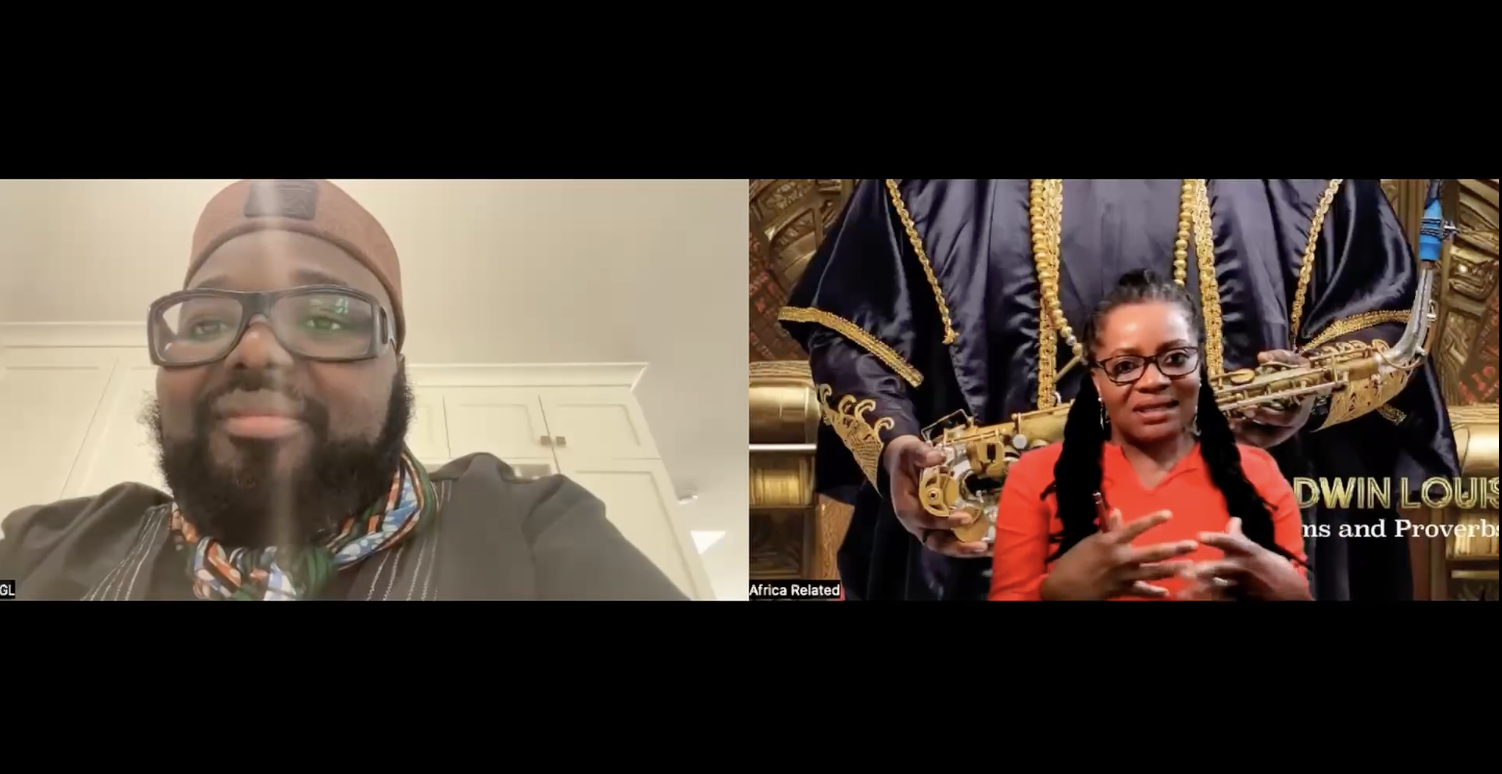
MESSENGERS S4
Discover Godwin Louis in Season 4 of our TV series MESSENGERS, arriving in early 2025. Subscribe to @africarelatedinc for updates.
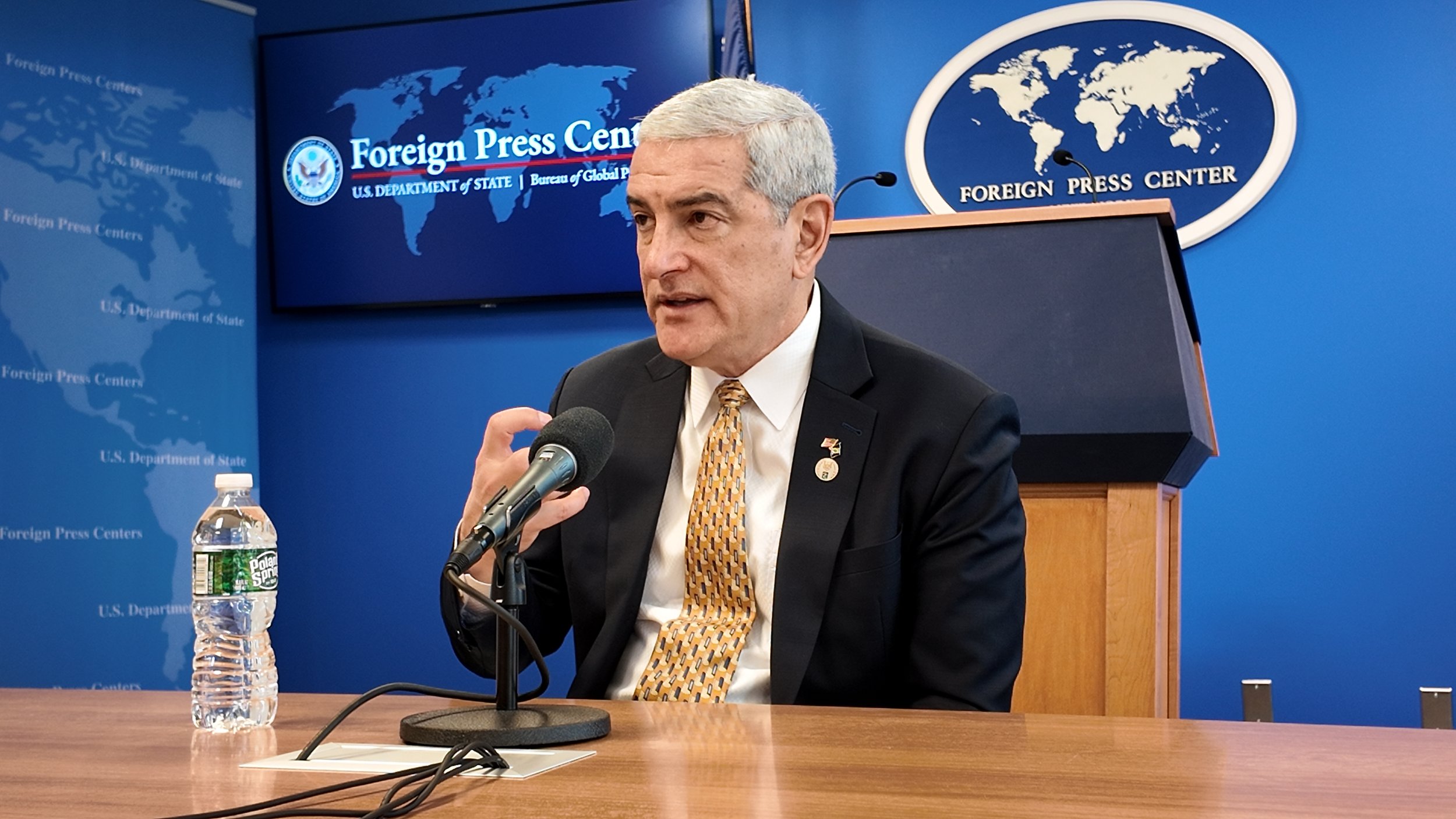
Meet The U.S. Defense POW/MIA Accounting Agency
Today, we are set to meet with a small yet impactful agency within the U.S. Department of Defense that focuses on finding prisoners of war and those individuals who are currently classified as missing in action. This engagement opens up a significant question: what are the circumstances faced by POWs in your country?
By Oyiza Adaba, New York
A SPECIAL REPORT
Today, we are set to meet with a small yet impactful agency within the U.S. Department of Defense that focuses on finding prisoners of war and those individuals who are currently classified as missing in action. This engagement opens up a significant question: what are the circumstances faced by POWs in your country, and in what ways can your country collaborate with or gain insights from the operations of the U.S. Defense POW/MIA Accounting Agency (DPAA) to address these issues more effectively?
Mr. Kelly K. McKeague, Director of the Defense POW/MIA Accounting Agency (DPAA) (Africa-Related)
This exclusive report sheds light on what actually happens to remains of POWs or prisoners of war, those considered MIA or missing in action. We spend time today with a little know agency in the US Department of Defense that does commendable work around the world in recovering missing American soldiers in global conflicts.
Mr. Kelly K. McKeague, Director of the Defense POW/MIA Accounting Agency (DPAA), spoke extensively at a press briefing organised by The Foreign Press center New York, about America's efforts to investigate, recover, identify, return 81,000 missing persons from past conflicts as far back as World War One to the Korean War, Afghanistan which recorded less of those types of cases due to the United States effort in perfecting the effort in recovery and bringing back such military personnels as soon as the situation occurs or with better immediacy when previous leave fought conflicts.
Special Report by Oyiza Adaba on POWMIA Accounting Agency
Did you know that the United States is one of a handful of countries that still maintains this practice of bringing back Prisoners of War?
From the dense jungles of Vietnam to the serene underwater landscapes off the picturesque coast of Eastern Europe, the work undertaken by the DPAA serves as a crucial tool of engagement for the United States with numerous nations around the globe. Identifying those who lost their lives in the battles of war is a task that is not taken lightly or approached with indifference. Often, news regarding the fate of family members who have been waiting in anticipation for their loved ones to return, only reaches the descendants, sometimes third or even fourth generation members, who have been handed down the painful oral tradition from one generation to the next.
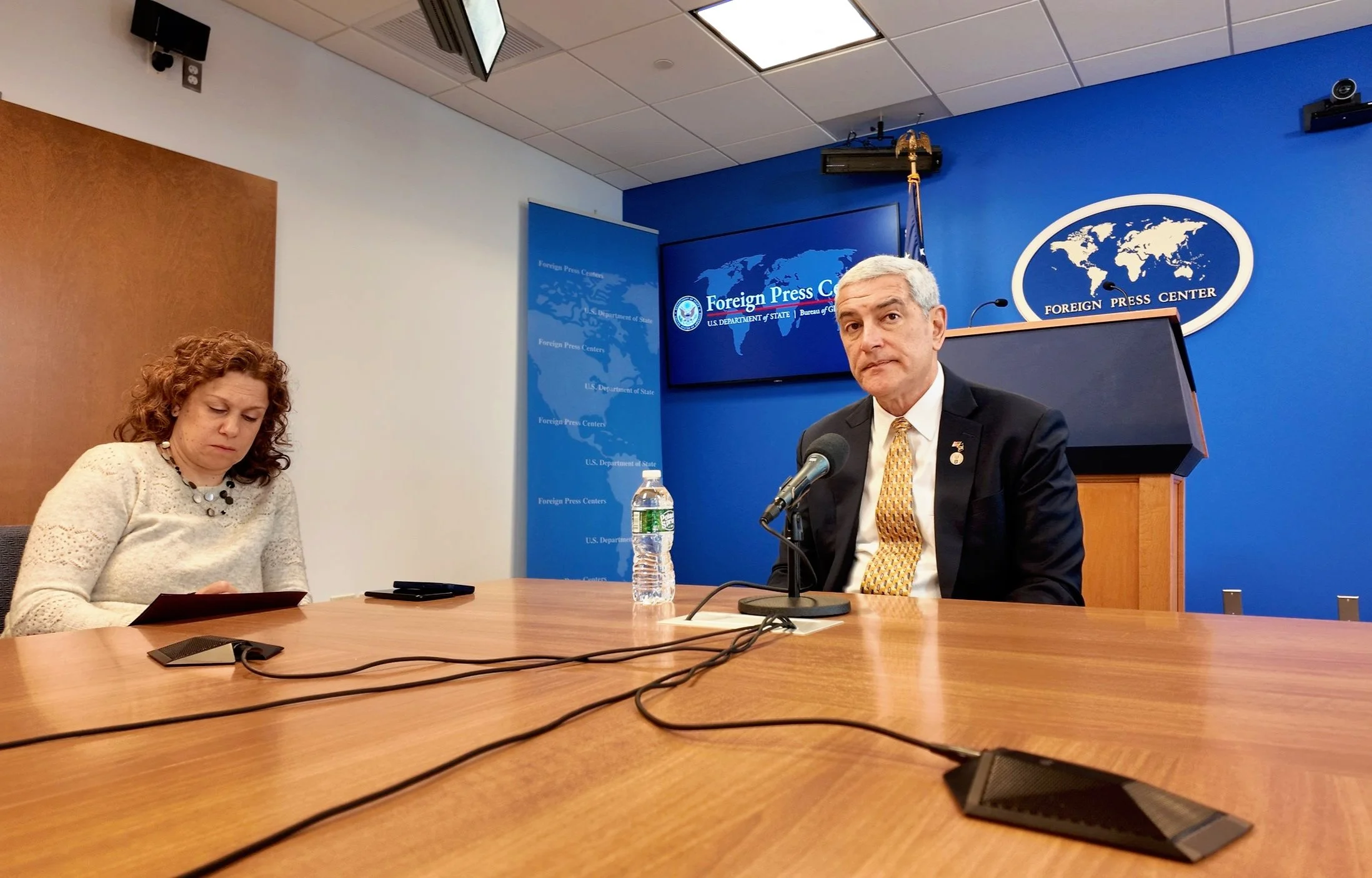
Collision for a great cause: Mr. McKeague explains how science, history, service, diplomacy, a budget of 190 million dollars, missions in 45 nations and more than 100 worldwide partner institutions; collide as the Defense POW /MIA Accounting Agency. (Africa-Related)
This report concludes with historian and award-winning documentary filmmaker Emeka Ed Keazor, who sheds light on his 2020 historical documentary “Company Yaya”. The piece follows the forgotten African soldiers of world war 2 who fought for Britain in WW2 in North Africa, Kenya, and as far away as Burma.
This story is deeply personal to me because my grandfather, Joseph A. Adaba, bravely fought with the RAF Regiment 2 during a significant historical conflict. He was fortunate to survive a tumultuous war that saw the recruitment of more than 1 million African troops, among which 126,000 hailed from Nigeria alone. Tragically, out of these brave men, 15,000 did not return home, leaving behind a legacy of sacrifice and courage that continues to resonate through our family and community. These numbers are just estimates
Oyiza Adaba
PHOTOS BY AFRICA-RELATED
Biden-Harris: Last-Minute Call To Protect Black Immigrants
On December 17, 2024, the Nigerian Center joined Congresswoman Yvette D. Clarke (NY-09) and other leaders for a press conference on Capitol Hill, urging the Biden-Harris Administration to take urgent action to protect African immigrant communities during the lame-duck session.

Photo credits: @thornbaires
FOR IMMEDIATE RELEASE
“The U.S. Is All In on Africa’s Future” – Now Is the Time to Deliver for Black Immigrant Communities
On December 17, 2024, the Nigerian Center joined Congresswoman Yvette D. Clarke (NY-09) and other leaders for a press conference on Capitol Hill, urging the Biden-Harris Administration to take urgent action to protect immigrant communities during the lame-duck session.
The press conference followed a letter to the administration, signed by Rep. Clarke and over 40 members of Congress, calling for executive actions to extend TPS, clear processing backlogs, and protect vulnerable communities. Nigerian Center Executive Director Gbenga Ogunjimi highlighted President Biden’s promise that “the U.S. is all in on Africa’s future” during his recent visit to the continent.
“Earlier this month, President Biden made a bold commitment to the future of U.S.-Africa relations during his visit to the continent. He declared, and I quote, ‘The U.S. is all in on Africa’s future.’ Today, we are here to hold this administration to that promise. Granting immigration protections would align with the U.S. Strategy Toward Sub-Saharan Africa, affirming a commitment to human rights, economic opportunity, and global solidarity. Temporary Protected Status would offer a lifeline to vulnerable populations fleeing armed conflicts and humanitarian crises,” said Gbenga Ogunjimi.
Read the full press release [here] View the event photos [here]
##
A statement on TNC Instagram account reads:
“Regardless of the outcome, we are proud of the relentless efforts and progress we've made with this administration and we look forward to continuing our advocacy with the incoming Trump administration. This campaign has been a two-year journey, and it has been a privilege to mobilize our community around a policy shift that once seemed unthinkable.”
If you or someone you know needs immigration assistance, please call The Nigerian Center immigration assistance hotline at 1-800-395-9272.
SHARE THIS STORY

Ambassador Beth Van Schaack on U.S. efforts to advance transitional justice in Africa
Ambassador-at-Large for Global Criminal Justice Office of Global Criminal Justice, Beth Van Schaack
Ambassador Beth Van Schaack on U.S. efforts to advance transitional justice in Africa
Press Briefing with the Ambassador-at-Large for Global Criminal Justice Office of Global Criminal Justice, Beth Van Schaack. Ambassador Van Schaack discusses her recent travel to East Africa and provides an update on U.S. government efforts to advance transitional justice.
MODERATOR: Good afternoon to everyone from the U.S. Department of State’s Africa Regional Media Hub. I welcome our participants logging in from across the continent and thank all of you for joining us. Today, we are very pleased to be joined by Ambassador-at-Large for Global Criminal Justice in the Office of Global Criminal Justice, Ambassador Beth Van Schaack. Ambassador Van Schaack will discuss her recent travel to East Africa and provide an update on U.S. Government efforts to advance transitional justice.
We will begin with today’s – today’s briefing with opening remarks from Ambassador Van Schaack, then we will turn to your questions. We will try to get to as many of your questions as we can during this briefing.
And so with that, I will turn it over to Ambassador Beth Van Schaack for opening remarks.
AMBASSADOR VAN SCHAACK: Great. Wonderful, Johann. Thank you so much, and thank you to everyone for joining. I really appreciate your interest in the incredible innovations in justice that are happening across the African continent, and I’m really pleased to have the opportunity to talk about some of the newest developments, including my recent trip. So I just wrapped up a trip to Addis Ababa, in Ethiopia, where I met with a number of governmental actors, civil society groups, other individuals, members of the diplomatic community who are really interested in promoting and contributing to the transitional justice process that’s underway within Ethiopia. We’re also – I also engaged with principals at the African Union on transitional justice efforts that are happening across the continent.
So supporting these types of justice efforts has been a real priority for the Biden-Harris administration. Earlier in December you may have seen that President Biden became the first U.S. president to visit Angola and to deliver a speech at the Angolan National Museum of Slavery. And it was an incredibly poignant speech; I really commend it to you. I hope you’ll pull it up. He discussed in it the United States’ unfinished reckoning with racial injustice in our own country and how it is our duty to face our own history – the good, the bad, and the ugly – and basically to accept the whole truth of that history. This, I think, is a really powerful message for all justice advocates across the world who are fighting every day for truth and accountability.
The field of transitional justice emerged and developed to help societies affected by atrocities move forward towards lasting peace, stability, et cetera. And it’s really essential that such processes be victim-centered and to ultimately hold those most responsible for atrocities to account. How exactly this looks like and the balance of different transitional justice mechanisms and responses is really specific to each circumstances – to each circumstance or society. And this was really brought into stark relief as I’ve traveled across the globe, meeting with transitional justice experts, practitioners, government entities that are implementing these measures all over the world and all over the continent of Africa.
Every survivor and every community has different needs, which is why it’s really essential that their voices be a part of the process. We need to understand what survivors expect, what their preferences are, what their vision for holistic justice is. And the United States has always sought to support and provide technical and other forms of assistance to credible, transparent, and inclusive transitional justice processes that are responsive to these individual community needs.
In Addis Ababa I was really honored to speak at a conference at the African Union that convened youth leaders from across the continent who are vital voices in these processes. They were from West Africa, Southern Africa, really – north of the Sahara – the whole continent was represented by these incredible young people who are really going to be vital in their efforts within their own countries. I also participated in an Ethiopia-focused gathering of experts that was convened by the ministry of justice to discuss emerging transitional justice legislation in Ethiopia. Participants addressed a number of really compelling questions, both specific and profound: So what are the different ways in which a country can deliver justice post-conflict? How do we compensate victims equitably where resources are limited and so many have suffered? How do we hold wrongdoers to account while also facilitating some form of forgiveness if the victims are so inclined to forgive? And how do we memorialize atrocities so that they are not forgotten and so that a shared history can emerge?
We heard from participants working in The Gambia who provided really compelling insights from their own ongoing efforts to address the catastrophic harm caused by the Jammeh regime. They spoke about the importance of their Truth, Reconciliation and Reparations Commission shining a light on atrocities while also issuing compelling recommendations for justice and for institutional reform. Now, while that effort is underway, the nation turned to radio broadcasts that carried the testimony of individuals who had committed horribly violent acts, and the broadcasts also amplified the voices of victims who expressed the deep and lasting pain that they continue to experience. And sometimes these hearings of the TRRC even shared intimate moments of forgiveness between victims and perpetrators.
The Gambians, however, have decided that this open conversation is not enough to address the harms of the past, and the United States is now working to support The Gambia’s efforts to create a hybrid court – in other words, a court that has international and national elements – to prosecute human rights violations committed during the Jammeh regime. And I was thrilled to see this week that the ECOWAS heads of state and government have decided to help establish this special tribunal for The Gambia. This is a landmark achievement and will be an agreement between ECOWAS and The Gambia, one of the first regional or even subregional internationalized institutions, and this offers another example of African innovations in transitional justice that builds on the Habre tribunal, builds on the Special Criminal Court in the Central African Republic, and builds on the Rwanda tribunal.
So we really look forward to continuing to work with our Gambian partners to ensure accountability. We also hope that the process will bring additional evidence to light, including in terms of who is responsible, where bodies may be buried so that they can be returned to their loved ones, and ensure that wrongdoers do not enjoy impunity.
While The Gambia’s process is still ongoing, Liberia’s is more at a beginning stage. Liberian participants at this event in Addis Ababa reflected on justice delayed for more than 20 years after the country’s concurrent civil wars, and also the current efforts to create a war and economic crimes court of their own. The office has been established; a director has been identified, drawn from the legal academy within Monrovia. This is also a remarkable, new, and innovative endeavor, and I was really pleased to meet with the new head of the office to create the war and economic crimes court while I was in Addis.
It was wonderful to see so many African justice actors coming together to learn from each other, to build on the knowledge that is developing across the continent, and to build on the experiences of those who came before. For example, there were a number of South African participants who shared the lessons learned from their groundbreaking Truth and Reconciliation Commission, which was really one of the first of its kind. And they also noted that their process remains ongoing even now, years later. South Africa’s efforts to heal the wounds caused by decades of brutal apartheid still carry lessons for others today.
So I’ll just end here with my – a little more detail about my recent visit to Ethiopia. The international community is really eager to support Ethiopia’s transitional justice process. The inclusion in this gathering of – and a series of previous gatherings – of external international experts from all over the world, including this recent workshop, will only strengthen the process. It will build trust among the populus, many of whom remain understandably skeptical of state institutions, and it will also validate the efforts of the ministry of justice and other ministries within Ethiopia.
It was really interesting to hear from a participant in Colombia who has an ongoing transitional justice – which has an ongoing transitional justice process that involves a truth-telling component, it involves accountability, it involves reconciliation, it involves reparation. It’s an interesting model to the situation in Ethiopia just given the size of the country and the various dynamics of violence during the multiple conflicts across Ethiopia.
We’re really encouraged by the process so far in Ethiopia, but we’re also cognizant of closing civic space and ongoing reports of atrocities, particularly in Amhara and in Oromia. This, of course, will make comprehensive transitional justice now difficult if not, frankly, impossible. We know that people cannot participate in justice processes if they do not feel free to speak out, to tell their truth, and the ongoing conflicts in these other regions must be resolved through political dialogue. We are waiting to hear from the government about what actions are being taken to lay the work – to lay the groundwork for a more comprehensive transitional justice that can address a long history of atrocities and also the contemporary conflicts we’re seeing today.
One meaningful measure that should be considered would be to remove those implicated in abuses from positions of power – namely, putting members of the military, for example, who are accused of crimes on administrative leave pending a fuller investigation. And another step would be a public acknowledgment from the federal government for the abuses that occurred. We stand ready to be a partner if these processes are transparent, inclusive, and victim-centered going forward. But we’re really pleased to see the emergence of five pieces of legislation that are very solid starts, and we commend the government for being willing to open their draft bills to criticism, to suggestions, to input from experts within the international community.
And finally, on another subject, the United States is committed to fighting impunity for perpetrators. To that end, last week the Department of State designated four nationals from the Democratic Republic of Congo under the Global Criminal Justice Rewards Program that my office administers. These four individuals are wanted by the DRC High Military Court for the war crime of murder. They are – stand accused of being involved in the 2017 killings of a U.S. citizen and United Nations expert Michael Sharp, his UN colleague, and three Democratic Republic of Congo nationals who were assisting these UN experts in their work.
This program offers a reward for up to $5 million for information that leads to the arrest, transfer, or conviction of certain individuals who are wanted for war crimes, genocide, or crimes against humanity by either a national, hybrid, or international court. This program is one of our foremost tools in fighting impunity for atrocity crimes worldwide and for supporting justice efforts and institutions around the world. This program has contributed to more than 20 cases and has already paid out more than $8 million over its lifetime, and so we really encourage those in the region that might have information about the killings of these individuals to come forward with information. And if you go to our website, there’s a WhatsApp number and also an intake form that you can take and additional information about the program.
So with that, I will end my opening remarks, and I really look forward to our conversation. Thank you so much for joining me this morning.
MODERATOR: Thank you, Ambassador, for those opening remarks. So we’ll now proceed to the Q&A, the questions-and-answers portion of the briefing.
All right. So we do have a question from Mr. Abel Tsgabu from Tigrai Television in Ethiopia: “Ambassador, given your recent visit to East Africa, what specific measures is the U.S. Government taking to support transitional justice mechanisms in the region, particularly in conflict-affected areas like Ethiopia and Sudan? Additionally, how does the U.S. plan to balance accountability for atrocity crimes with ongoing peacebuilding efforts after the signing of the Pretoria Agreement?”
Ambassador.
AMBASSADOR VAN SCHAACK: Yeah, terrific. Abel, thank you so much. It’s really a great question. I’ll try and touch on all elements of it. As you will have seen from the beginning of the conflict in northern Ethiopia, the United States Government has advocated for comprehensive, victim-centered, transitional justice. The Secretary did an atrocity determination and determined that war crimes were being committed by all parties to the conflict, and we were also seeing crimes against humanity and ethnic cleansing on the part of certain actors within that conflict. My team and I have taken several trips to Ethiopia over the last four years to provide technical advice and expertise on this process. Obviously, the United States Government was extremely active in the Cessation of Hostilities Agreement, which very importantly includes a specific provision whereby the parties agree to submit to a comprehensive transitional justice process.
We’re also continuing to explore other ways that we can provide support, including in partnership with other members of the diplomatic and donor community. And all of this, of course, is contingent upon this process being credible, genuine, inclusive, participatory. Transitional justice was a central part of the Pretoria Agreement, and the government is taking these very concrete steps, as I mentioned, including the issuance of five pieces of new legislation. All of this will be essential to peacebuilding and to long-term stability, to ensuring that that Cessation of Hostilities Agreement holds. Over the history of Ethiopia, there’s never been a fully comprehensive or credible transitional justice process, and the cycles of impunity continue to fuel ongoing insecurity.
With respect to other situations around the continent – you mentioned Sudan in particular – obviously the situation there is extremely worrisome. It’s one of the worst, if not the worst, humanitarian crisis in the globe. We’re continuing to really push the parties to contribute to and to commit to a genuine resolution of that conflict, knowing that there is no military solution to that conflict. In the meantime, we can work with justice advocates and with documenters to help gather information for future accountability efforts.
MODERATOR: Thank you very much, Ambassador. Abel had a follow-up question, which is: “How does the U.S. approach the atrocities committed in Tigray, particularly considering the Ethiopian Government and Eritrean forces being accused of international crimes during the war? Is it realistic to pursue justice and accountability with the Ethiopian Government, which is itself implicated in these allegations?”
AMBASSADOR VAN SCHAACK: Yeah, thanks. I think I partially answered that. But to put a finer point on it, as I mentioned, the Cessation of Hostilities Agreement committed all parties to transitional justice, and that includes, of course, the government, which is implicated in abuses. As I mentioned, the Secretary determined in March 2023 that all parties to the conflict had committed atrocity crimes, including Ethiopian forces, also, of course, Eritrean forces, and then the Tigrayan forces and related militia.
I’m really encouraged at this stage by the Ethiopian Government’s commitment to transitional justice, and it is manifest in these five pieces of comprehensive legislation that think about accountability and the creation of a special prosecutor’s office, that think about some kind of a truth-telling process, that think about deep institutional reforms, and also a process of vetting individuals who were associated with previous abuses. The legislation is generally well-drafted, but I do think it benefited from all of the expert input from Colombia, from other parts of Africa, South Africa, from experts from the United States and Europe, who really dug in line by line and examined that legislation and are putting together a comprehensive collection of feedback. There’s really hope that this process, when it’s implemented in the comprehensive fashion, will bring some peace, justice, reconciliation to victims.
However, of course it will be essential for the government to be honest about its past and to take real measures to hold those responsible in its own ranks accountable. And we, of course, as a member of the international community, will continue to push them to do so. There have been some trials and proceedings, disciplinary proceedings, before military courts, but they’re very non-transparent. We don’t have any visibility into who was prosecuted for what crimes, what the resulting sentences were, and so for it to be part of a comprehensive process, there needs to be some visibility into how that process has played out.
MODERATOR: Thank you, Ambassador. So you mentioned before collection of data. We do have a question from Martin Plaut of Fair Observer in the UK. His question is: “What can you do to encourage the collection of data from Africa’s most repressive regimes, including Eritrea, Rwanda, and Equatorial Guinea?”
AMBASSADOR VAN SCHAACK: Yes, thanks so much, Martin. We don’t – my particular office does not work directly on those particular countries, in part because there isn’t a justice process underway. The International Criminal Tribunal for Rwanda has essentially shut its doors at this point. All of the individuals whom it indicted for genocide, complicity in genocide, conspiracy to commit genocide, they’ve all been accounted for. They’ve either been brought to justice before the tribunal itself, they’ve been referred to national courts – including within Rwanda – or it has been conclusively determined that they are dead and so the cases against them have been closed.
But what I can say more broadly is the United States Government and other donor states have invested heavily in documentation, in ensuring that information about atrocities, as they’re being committed, can be collected and safely stored to an international standard. And even when human rights organizations don’t have access to the territory itself, they’re able to use increasingly sophisticated open-source methodologies to collect information from open sources like Facebook posts, Instagram posts. The metadata of those posts can be mined in order to determine where the individual is located, who they may be connected with, when the image was taken, where the image was taken, and those can be saved for future accountability efforts.
And so documentation is really essential to a whole range of transitional justice measures that might be employed once a society reaches a point in which it’s ready and able to carry out transitional justice. Of course, the situation in Eritrea is not at that point yet, but if and when there is a political transformation in repressive states around the world, inevitably a conversation begins about transitional justice. And having that documentation will be really critical to ensure that those processes are comprehensive, and they really reflect the experience of victims and survivors.
MODERATOR: Thank you, Ambassador. We have a couple of questions now which will take us a little but farther afield. The first one comes from Mr. Charbel Barakat of Aljarida newspaper in Kuwait. His question is: “Drawing on your extensive experience in advancing transitional justice, what key lessons or recommendations would you offer to the Syrian people as they navigate the challenges of establishing a safe, inclusive, and effective transitional justice process in the aftermath of the Assad regime, considering the profound and widespread violations committed by all sides during the protracted civil war?”
AMBASSADOR VAN SCHAACK: Yes. Thank you so much, Charbel. Obviously, this does not involve Africa, but here’s an opportunity to think about what comprehensive transitional justice looks like. And I personally kind of appreciate the question because I wrote my PhD thesis on that exact question, so I do have some ideas in this regard.
The Syrian people have experienced a vast array of atrocity at the hands of the Assad regime, but also other armed actors that have been active in that conflict, including, of course, the Islamic State, which at one point attempted to establish a truly repressive caliphate in parts of northern Syria. And so, over the course of this conflict – which, of course, now has ended so dramatically, as we hope – the Syrian people have been engaged in a whole range of documentation efforts. There have been conversations amongst the free Syrian lawyers and others about what justice might look like. There have been population-based surveys that have been undertaken. And the real takeaway from all of this preparatory work is that no true political transition can take place without some measure of accountability. Because individuals have experienced some of the most harrowing human rights abuses known to humankind over the past 13 years, they deserve a measure of justice, they deserve a truth-telling process that reveals the causes and consequences of these harms.
There are many different mechanisms that exist to be able to deliver this form of comprehensive justice to the people. And so now it turn – it comes to this interim government to establish an inclusive process that must include ethnic minorities, women, young people, the whole range of different segments of Syrian society that were impacted by these abuses, and to look for ways to deliver a measure of justice in this regard. And this would complement what’s already been happening around the world in courts in Europe and now in the United States as well. You may have seen that our Department of Justice has issued indictments against individuals involved in abuses within Syria as well. And so we’re seeing these national courts around the world respond to this endemic impunity, and now it really falls to the new government to create a victim-centered, inclusive, participatory process.
Sadly, there are still over a hundred thousand individuals who remain missing and unaccounted for. That has to be a primary responsibility now. But this needs to be done in a way that is organized, that is measured, that is participatory. I’m a little concerned by what we’re seeing on the ground. It’s a bit – it’s very chaotic. Survivors are looking through documents themselves, trying to find some final news of where their loved ones may have been held in detention. Recently released detainees and prisoners need immediate assistance in terms of psychosocial rehabilitation, psychological first aid, and then long-term counselling to deal with what will be extreme trauma that they would have experienced within detention, knowing what we know about how endemic torture was within the Assad regime’s detention centers. They’ll have medical needs, they’ll have economic needs. Of course, you have millions who remain displaced internal to the country, and also in neighboring countries who want to return. But they need to return home in a way that is dignified and not chaotic and they have access back to their property again, some of which was taken by the Assad regime.
We also see an immediate and acute need to preserve the millions of documents that were previously stored in prisons, detention and military facilities, and other government buildings. These documents will be really essential and instrumental for future accountability efforts, and for the search for the missing and disappeared.
We also need to secure mass and clandestine graves until such time as that forensic experts can properly document, excavate, identify the remains, and return them to their loved ones for a proper burial. And also importantly, we need to be tracking the movement of fugitives. Obviously, the understanding is that the Assad immediate family has been given safe haven in Russia, the former – their former protector before the UN Security Council and elsewhere in multilateral gatherings, but Russia is not going to take every perpetrator and those guys are going to need to find a place to be. And so we need to be tracking their movements, understanding whether they’re traveling under their own names or a new identity that they may try and develop for themselves.
And fortunately, as I mentioned, the international community has really stepped up in terms of delivering accountability when perpetrators are found within their midst. So already we have vast files on the architecture of atrocity within the Assad regime, and so prosecutors and investigators around the world are ready and survivors will inevitably recognize their former tormentors when they show up at the local Arab market or when gossip emerges that somebody may have arrived within a particular community in Germany or elsewhere where there’s a large Syrian diaspora. And so those prosecutors and investigators have developed fruitful relationships with diaspora communities, and the presence of those perpetrators will come to light.
So this is where we are in the immediate future. We need a much longer-term participatory process to really think about what justice looks like for 13 years of terrible atrocities which includes the use of chemical weapons against Assad’s own – against Assad’s own compatriots. So thank you so much for that question.
MODERATOR: Thank you, Ambassador. So, I know your time is limited; I hope that we have enough time for maybe one more quick question.
AMBASSADOR VAN SCHAACK: Sure.
MODERATOR: Okay. So, there’s a lot of interest on the call about eastern DRC and Rwanda. And so let me just pose the question from Bill Muamba of B-One TV in the DRC. His question is: “The announcement of an award for information of perpetrators of abuses in the Kasai region DRC is a strong signal. Would you take similar action regarding perpetrators of other human rights violations in eastern Congo, namely M23 combatants and Rwandan military officers?”
AMBASSADOR VAN SCHAACK: Yeah, thank you for that question. Really appreciate it, Bill. So, our – the way our program works is the individual has to be accused of war crimes, crimes against humanity, or genocide – so one of the three core international crimes. We cannot issue a reward for either unnamed or even identified bad actors unless there are charges pending against those individuals.
So, as I mentioned, the International Criminal Tribunal for the former – for Rwanda, pardon me – has closed its doors at this point. There are no outstanding arrest warrants. In fact, the last individual who was at large – Fulgence Kayishema – was recently identified in South Africa. We had a reward for his identification and capture, and was finally found and now is fighting extradition essentially back to Rwanda where he will ultimately stand trial after making a pit stop in Arusha to transfer the file to Rwanda itself. So obviously the situation in the DRC is really troubling to see the re-emergence of the M23 after we had thought that it was – it had concluded its work and had been routed in that region. That’s obviously extremely troubling. And we’re also extremely troubled by external efforts to foment violence within that particular region. But until there are charges leveled against individuals, I can’t utilize this particular tool. That’s just the way it’s been designed.
We have, however, issued rewards for other bad actors. So for example, we have rewards issued for individuals who stand accused by the International Criminal Court of committing abuses within Darfur, and that is a matter that’s before the ICC investigation – that’s before the ICC now and subject to an active, open investigation. So it’s another example of how I can use this tool.
But thanks for your question, and thanks everybody for being a part of this conversation.
MODERATOR: Thank you very much for your time, Ambassador. Just do you have any final words to wrap up? I know your time is very limited, but anything we didn’t get to?
AMBASSADOR VAN SCHAACK: No, it’s just to say that Africa is now the source of some of the most creative and innovative thinking around transitional justice. We are seeing a whole range of new models emerge, and I really encourage everyone assembled here to continue to follow those efforts. These will be the models that then will serve as the basis for new efforts in Syria and elsewhere that may experience a political transition, where there’s a space open to think about justice and accountability.
So we should all be supporting and following and ensuring really accurate coverage of what’s happening in Liberia with the war and economic crimes court, what’s happening in The Gambia now with this new, exciting hybrid model with ECOWAS, what’s happening in the Central African Republic with the Special Criminal Court that just had another case come to finality even in very insecure operating conditions, and then future efforts that are happening within Ethiopia with these new pieces of legislation and really encouraging the full implementation of those new statutes to ensure a comprehensive transitional justice process for the people of Ethiopia. So really exciting time to be doing this work in the continent, and I really appreciate your interest and willingness to cover these issues. So thank you.
MODERATOR: All right. Fantastic. Thank you so much, Ambassador. So that concludes today’s briefing. I want to thank Ambassador Beth Van Schaack, Ambassador-at-Large for criminal – Global Criminal Justice, for joining us today, and thanks very much also to all the journalists who join us today. We will be producing a recording and a transcript of today’s briefing, and we will distribute it to participating journalists as soon as they’re ready. If you have any questions about today’s briefing, please contact the Africa Regional Media Hub at afmediahub@state.gov. That’s afmediahub@state.gov. And please also follow us on Twitter or X at our handle @AfricaMediaHub. So once again, thank you very much and great day to everybody.
# # #
BIOGRAPHY:
Ambassador-at-Large for Global Criminal Justice Office of Global Criminal Justice, Beth Van Schaack
Dr. Beth Van Schaack was sworn in as the Department’s sixth Ambassador-at-Large for Global Criminal Justice (GCJ) on March 17, 2022. In this role, she advises the Secretary of State and other Department leadership on issues related to the prevention of and response to atrocity crimes, including war crimes, crimes against humanity, and genocide. Ambassador Van Schaack served as Deputy to the Ambassador-at-Large in GCJ from 2012 to 2013. Prior to returning to public service in 2022, Ambassador Van Schaack was the Leah Kaplan Visiting Professor in Human Rights at Stanford Law School, where she taught international criminal law, human rights, human trafficking, and a policy lab on Legal & Policy Tools for Preventing Atrocities. In addition, she directed Stanford’s International Human Rights & Conflict Resolution Clinic.Ambassador Van Schaack began her academic career at Santa Clara University School of Law, where, in addition to teaching and writing on international human rights issues, she served as the Academic Adviser to the United States interagency delegation to the International Criminal Court Review Conference in Kampala, Uganda. Earlier in her career, she practiced law at Morrison & Foerster, LLP; the Center for Justice & Accountability, a human rights law firm; and the Office of the Prosecutor of the International Criminal Tribunals for Rwanda and the Former Yugoslavia in The Hague.
Ambassador Van Schaack has published numerous articles and papers on international human rights and justice issues, including her 2020 thesis, Imagining Justice for Syria (Oxford University Press). From 2014 to 2022, she served as Executive Editor for Just Security, an online forum for the analysis of national security, foreign policy, and rights. She is a graduate of Stanford (BA), Yale (JD) and Leiden (PhD) Universities.
Twitter/X: Join the conversation at #AFHubPress and follow us on @AfricaMediaHub.
Call for Side events: UNESCO-Guillermo Cano Prize - World Press Freedom Day Global Conference 2025
The World Press Freedom Day global conference to be held in Bucharest on 5 - 7 May 2025 will address the intersection of freedom of expression and artificial intelligence. The announcement was made during an official formal handover ceremony at UNESCO Headquarters in Paris.
World Press Freedom Day Global Conference 2025 to focus on Artificial Intelligence, Press Freedom and the Media
The World Press Freedom Day global conference to be held in Bucharest on 5 - 7 May 2025 will address the intersection of freedom of expression and artificial intelligence. The announcement was made during an official formal handover ceremony at UNESCO Headquarters in Paris.
Titled "Reporting in the Brave New World: The Impact of Artificial Intelligence on Press Freedom and the Media," the conference will highlight the risks and challenges to the right to information; advocate for an improved AI governance, and ensure AI is designed, used, and deployed in accordance with international human rights standards.
With Romania as a host, World Press Freedom Day global conference returns to Eastern Europe after a decade since the event took place in 2015 in Riga, Latvia.
The ceremony was led by H.E. Ms. Simona Mirela Miculescu, in the presence of Ambassador Extraordinary and Plenipotentiary Permanent Delegate of Romania to UNESCO; H.E. Mr. Raúl Fernández Daza, Ambassador Extraordinary and Plenipotentiary to France and Permanent Delegate of the Republic of Chile to UNESCO, host country of the 2024 Conference; and Mr. Tawfik Jelassi, Assistant Director-General for Communication and Information Sector, UNESCO.

Registration is now open
You can now register to attend World Press Freedom Day Conference in Romania ! We are thrilled to invite you to join us for an exciting global celebration that promises to inspire and engage.
Don't miss this opportunity to be part of an incredible event dedicated to press freedom and the vital role of journalism in our societies.
Save your seat and register now. Stay tuned for more details coming your way soon! We look forward to seeing you there.
Call for Proposals for Side-Events
Are you interested in organizing a side-event in Bucharest? UNESCO is calling for proposals for side events on the occasion of World Press Freedom Day Global Conference in Bucharest. Side events will take place on the "Day of Action" on May 5.
The Conference will spread over three thematic tracks:
Challenging the Future of Journalism in the Era of AI
The Struggle to Seek and Receive Reliable and Accurate Information in the Era of AI
Old and Emerging Challenges and Opportunities for Freedom of Expression and Freedom of the Press
Each of these three thematic tracks will cover multiple sub-themes, offering a platform for participants to share experiences, success stories, good practices, and innovative ideas. UNESCO recommends organizing side events around the themes of these tracks. The organization of these side-events does not fall under UNESCO’s purview. UNESCO’s role only involves the selection of the side-events proposals.
Submit your application before January 30.
Please note that:
The selection of side events will depend on the availability of the rooms, the relevance, creativity, innovation, diversity and inclusion of the event proposed.
Side events are a direct responsibility for the organizers. Travel costs and accommodations have to be covered by side event organizers themselves.
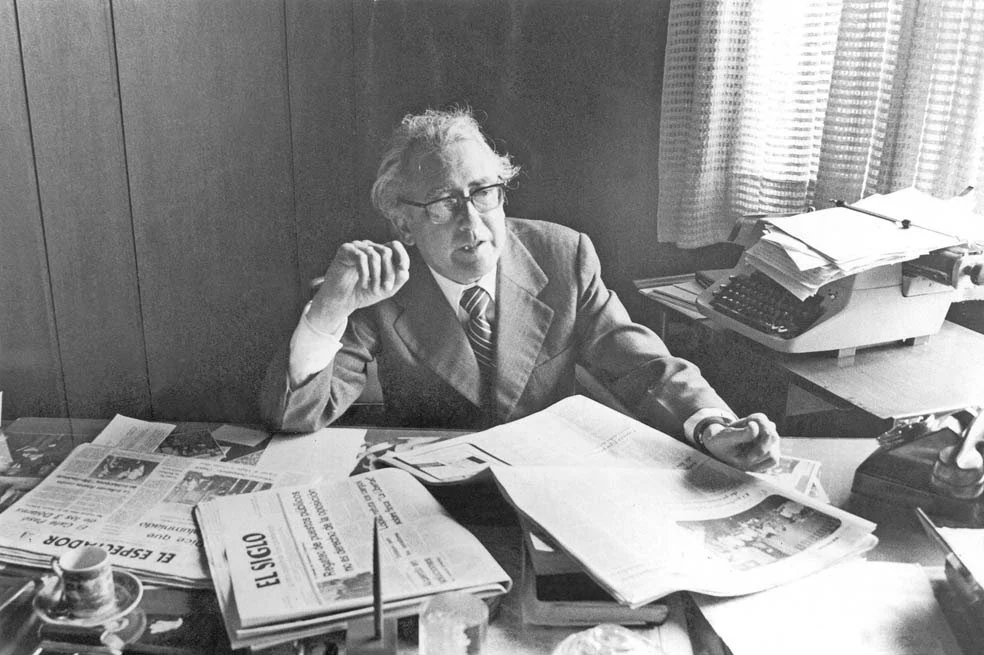
Call for Nominations: UNESCO/Guillermo Cano World Press Freedom Prize 2025
UNESCO is pleased to announce the call for nominations for the 2025 edition of the prestigious UNESCO/Guillermo Cano World Press Freedom Prize. Established in 1997, this annual award honors individuals, organizations, or institutions that have made remarkable contributions to defending and promoting press freedom globally, especially when achieved in the face of danger.
Member States, as well as international and regional professional and non-governmental organizations working in journalism and freedom of expression, are invited to nominate up to three candidates for the Prize.
To submit nominations, complete the form and send it before February 15, 2025.
The Prize is supported by the Guillermo Cano Isaza Foundation, the Namibia Media Trust, and Democracy and Media Foundation.
For more information, visit UNESCO's website.
For more information, contact
Guilherme Canela, Chief of Section,
Freedom of Expression and Safety of Journalists.
g.godoi@unesco.org
SHARE THIS STORY
Two UN Exhibitions Shed Light On Human Rights & Gender-Based Violence
Two exhibition are showing at the lobby of the United Nations HQ in New York - Pictures for the Human Rights features 30 pictures by 30 artists of 30 articles of the Universal Declaration of Human Rights; while Uprooted: Resilience in Crisis sheds light on the impact of gender-based violence, exploring the resilience of survivors.
by Oyiza Adaba
Free guided tours at the United Nations Headquarters in New York. (Africa-Related)
Exhibition
UN Exhibits
United Nations HQ, New York
Two exhibitions are showing at the lobby of the United Nations HQ in New York - Pictures for the Human Rights features 30 pictures by 30 artists of 30 articles of the Universal Declaration of Human Rights; while Uprooted: Resilience in Crisis sheds light on the impact of gender-based violence, exploring the resilience of survivors.
Pictures for the Human Rights
According to UN Exhibits, this exhibition features 30 pictures in which artists from many countries have interpreted the 30 articles of the Universal Declaration of Human Rights in their own visual language. These images make human rights easier to understand in words and pictures, inspiring visitors to defend and promote Human Rights for everyone everywhere. The exhibit is in connection with Human Rights Day (10 December).
This exhibit is organized by the Pictures for the Human Rights e.V and endorsed by the Permanent Mission of the Federal Republic of Germany to the United Nations.
This exhibition is on display until 10 January 2025


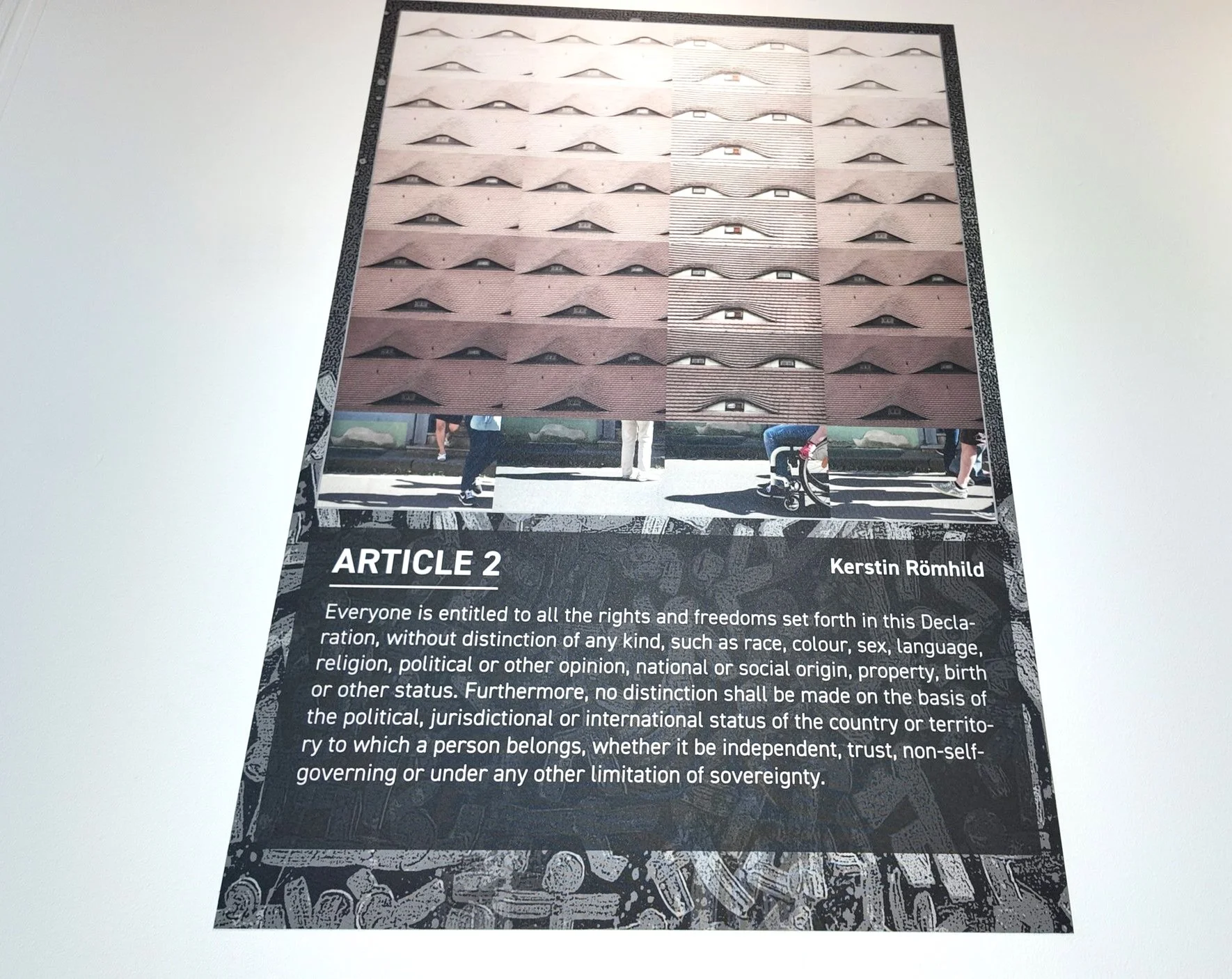



Uprooted: Resilience in Crisis (Photos by Africa-Related)
According to Un Exhibits, this exhibit seeks to shed light on the impact of gender-based violence, exploring the stories of survivors, the resilience of affected communities, and the ongoing struggle for justice and healing. Through a diverse array of art forms, it offers a platform for survivors to share their experiences and for audiences to engage with this urgent issue. This exhibit is organized and endorsed by the UN Population Fund (UNFPA).
This exhibition is on display until 7 February 2025
Photos by Africa-Related



share this story
Food Bank America Tackles Food Insecurity
Member of the Foreign Press had the opportunity to visit Food Bank’s 90,000 sq. ft warehouse and speak with some of its top leadership executives about the organization, how they function, what they do and the current issues in New York City with food insecurity.
By Oyiza Adaba
SPEAKERS: Zac Hall, Senior Vice President, Programs at Food Bank For New York City; Carmen Boon, Vice President, Public Affairs at Food Bank For New York City; Zanita Tisdale, Vice President of Agency and Organizational Impact, Food Bank For New York City.
Food Bank For New York City Warehouse
Inside Food Bank’s massive 90,000 sq. ft warehouse in The Bronx, New York.
Thanksgiving in the United States is an occasion to mark with reflection, gratitude and giving back to community and that often takes the form of collecting canned goods, donating warm coats and volunteering. This press engagement is an opportunity to learn about Food Bank For New York City’s mission of empowering New Yorkers to achieve food security. Currently, there are more than 1.3 million food-insecure New Yorkers living in the city. The holiday season is a time of joy and celebration for many, but for over 1.3 million New Yorkers, it can also bring heightened financial strain. This year, Food Bank’s goal is to provide 40 million meals to its neighbors facing food insecurity, ensuring they can enjoy the warmth and comfort of the holidays without the added worry of where their next meal will come from.
Photos by africa-related





share this story

DELA @ DART BARCELONA
DELA: The Making of El Anatsui enjoyed a successful screening at Dart Festival, Barcelona, Spain. Q+A with Director Oyiza Adaba.
Opening Night: Festival Co-Director Enrichetta Cardinale addresses guests at the opening night screening of Lee Shulman’s I Am Martin Parr
DELA: The Making of El Anatsui enjoyed a successful screening at Dart Festival, Barcelona, Spain. Q+A with Director Oyiza Adaba.
Follow the journey
elanatsuifilm.com
DELA Director Oyiza Adaba introduces the brigraphical documentary @ Dart Film Festival
The Art of Making It documentary directed by Kelcey Edwards dives into the complexities of the contemporary art world.
Video by DART Festival
Dart is the meeting point between cinema and art in Spain. It is the first documentary film festival dedicated to contemporary art whose main objective is to intertwine culture and knowledge with the general public, and it does so through documentaries on photography, art curatorship, painting, performance, architecture, artistic movements and, in general, on contemporary art, paying special attention to artists, their creative processes and the stories behind their work.
DELA: The Making of El Anatsui debut alongside other art films and events like: I Am Martin Parr, Depot – Reflecting Boijmans, Artefacto 71, Joaquín Torres Garcia. PAX IN LUCEM, Arte Povera, Notes For History, Jean Cocteau, FRIDA, Jeff Koons, A Private Portrait, El Nombrador de Plantas: Abel Rodriguez, Robert Rauschenberg – Taking Venice, The Pilgrimage of Gilbert and George, Elements of a Journey: Antoni Tàpies, Tàpies, el joc de saber mirar, György Kepes. Interthinking Art + Science, Dahomey, The Art of Making It, Acció>Cinema: Renzo Martens I CATPC, The Wisdom of Wonder, Eugènia Balcells Once and Again, Lolo & Sosaku. The Western Archive, Laie Course: Art and Eroticism – A Journey from Jeff Koons to Classical Art, Laie Laboratory: A Glimpse into the Future of Art Documentaries – Video Games, Androids, and Twin Towers.
Images byLeafhopper/Video by Dart



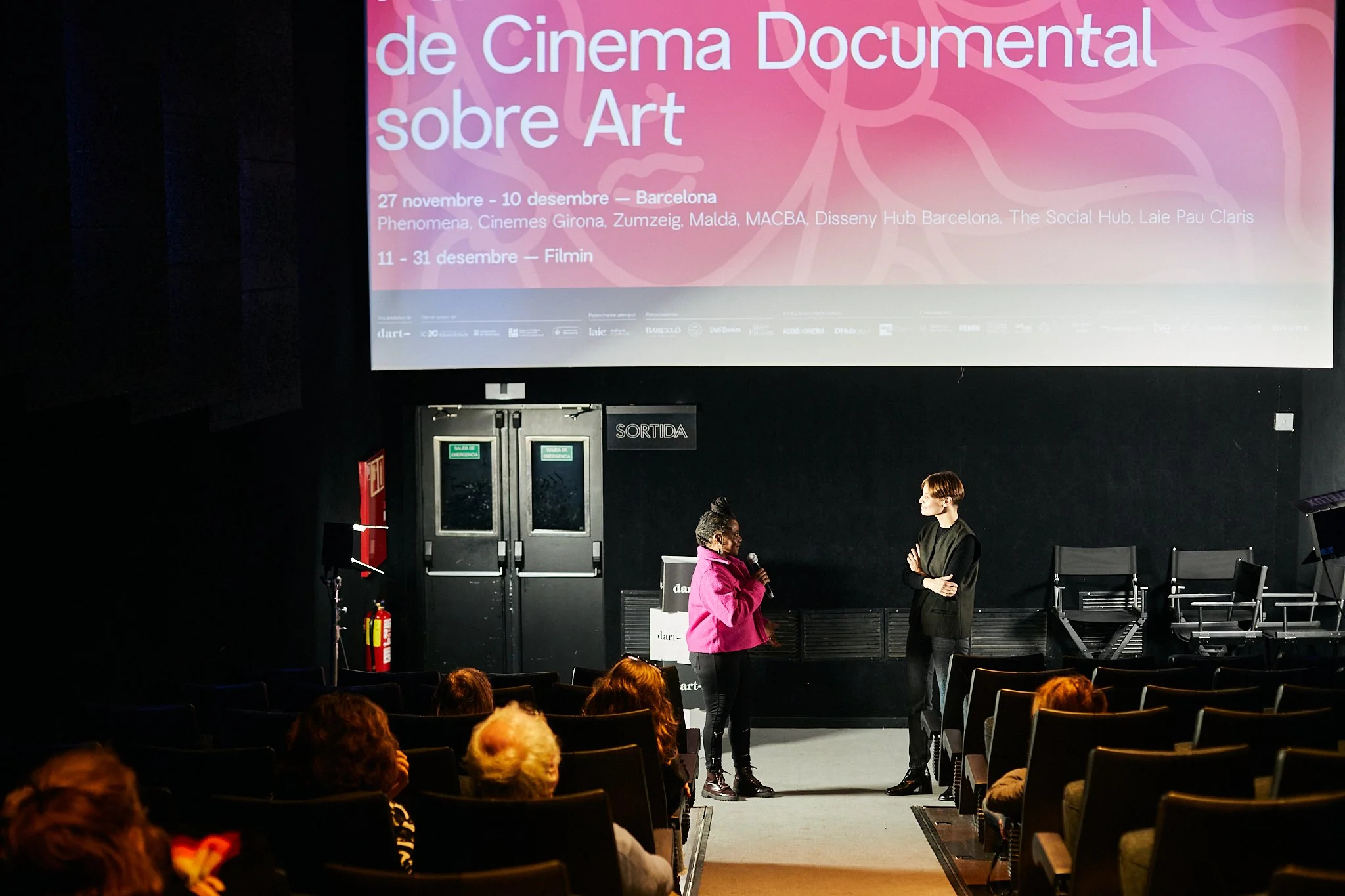
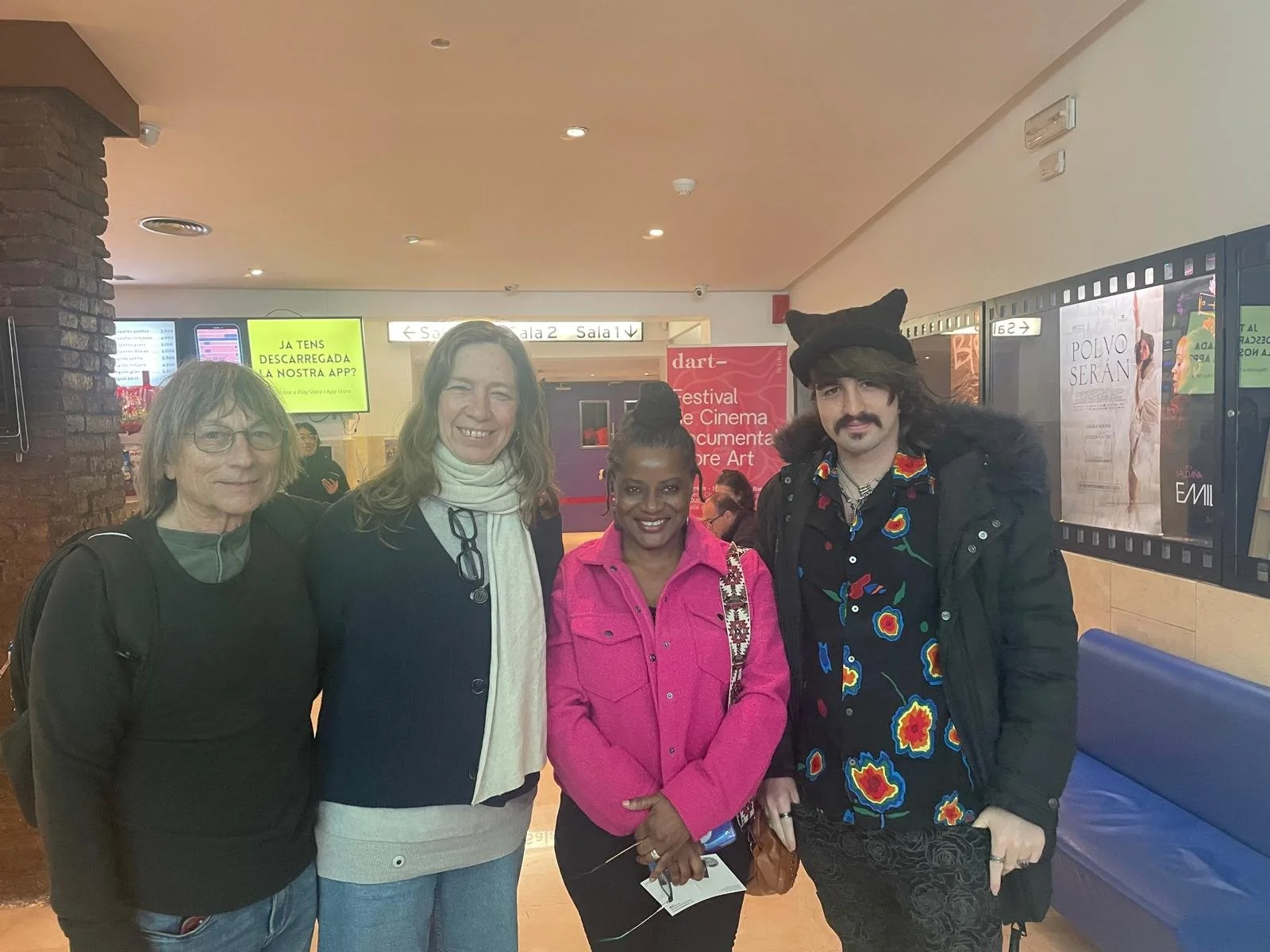

United Nations Women's Guild Annual Bazaar
Highlights from United Nations Women's Guild Annual Bazaar
by Oyiza Adaba
UN Women’s Guild Bazaar 2024
Highlights
United Nations Women's Guild Holiday Bazaar
Date: December 5, 2024.
Time: 2.30pm
Venue: UN HQ Lobby, New York
Women and artisans from around the world gathered to showcase and sell their products at this annual bazaar. There were outstanding raffle draw prizes including @kenyaairways tickets, apparels from @itaiourcloth and exclusive designs from @nubaarts. The Hansol Music Group provided the entertainment.
UN Women’s Guild Event Organizers
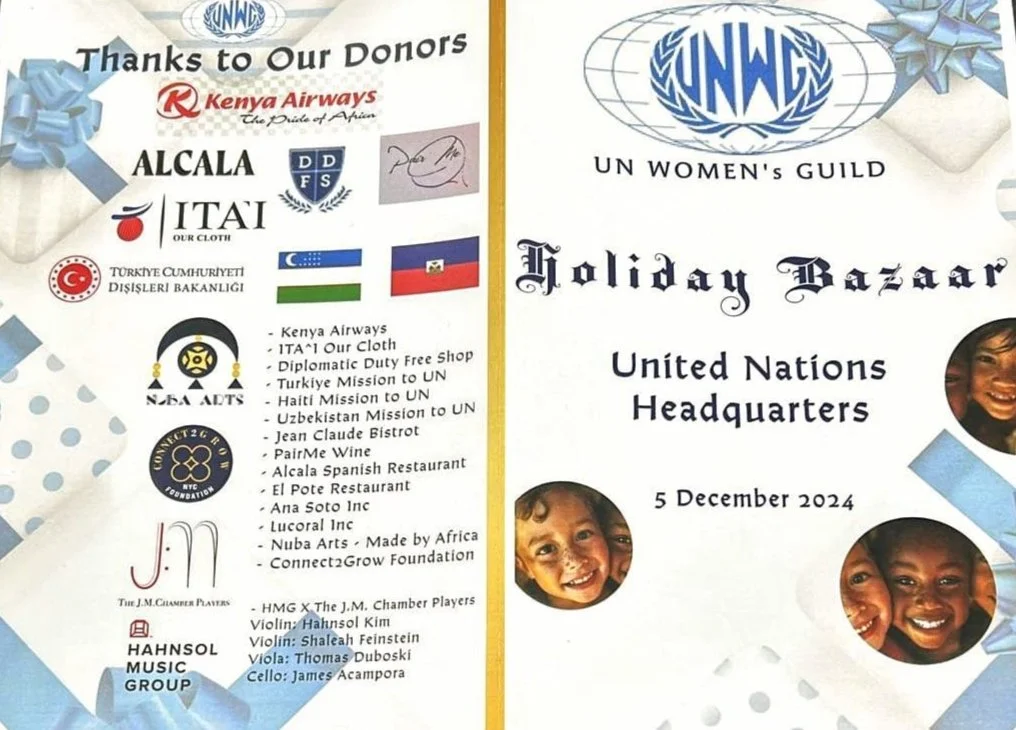
Event Flyer
All proceeds benefit women and children around the world.
Photos by Africa-Related
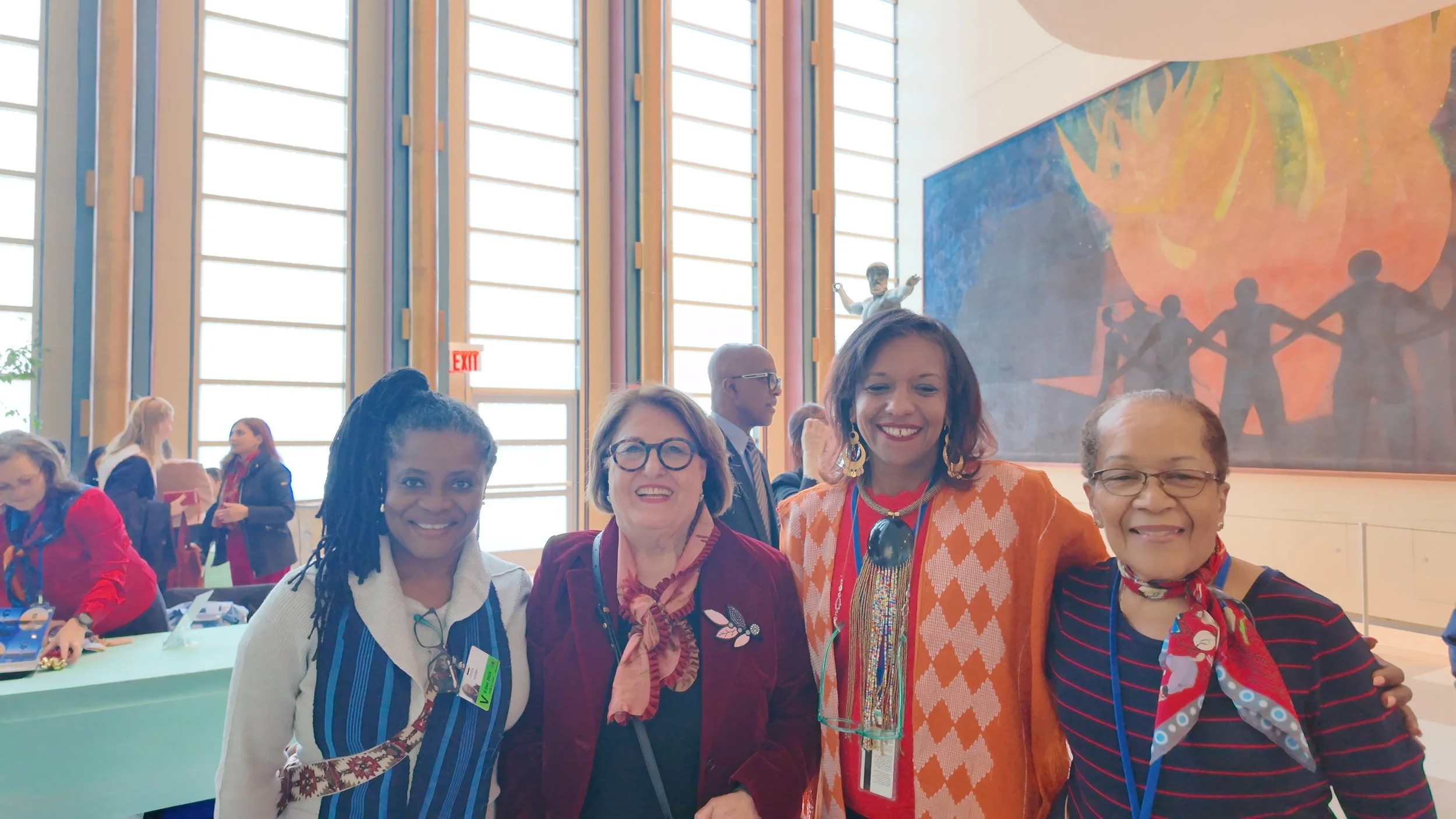


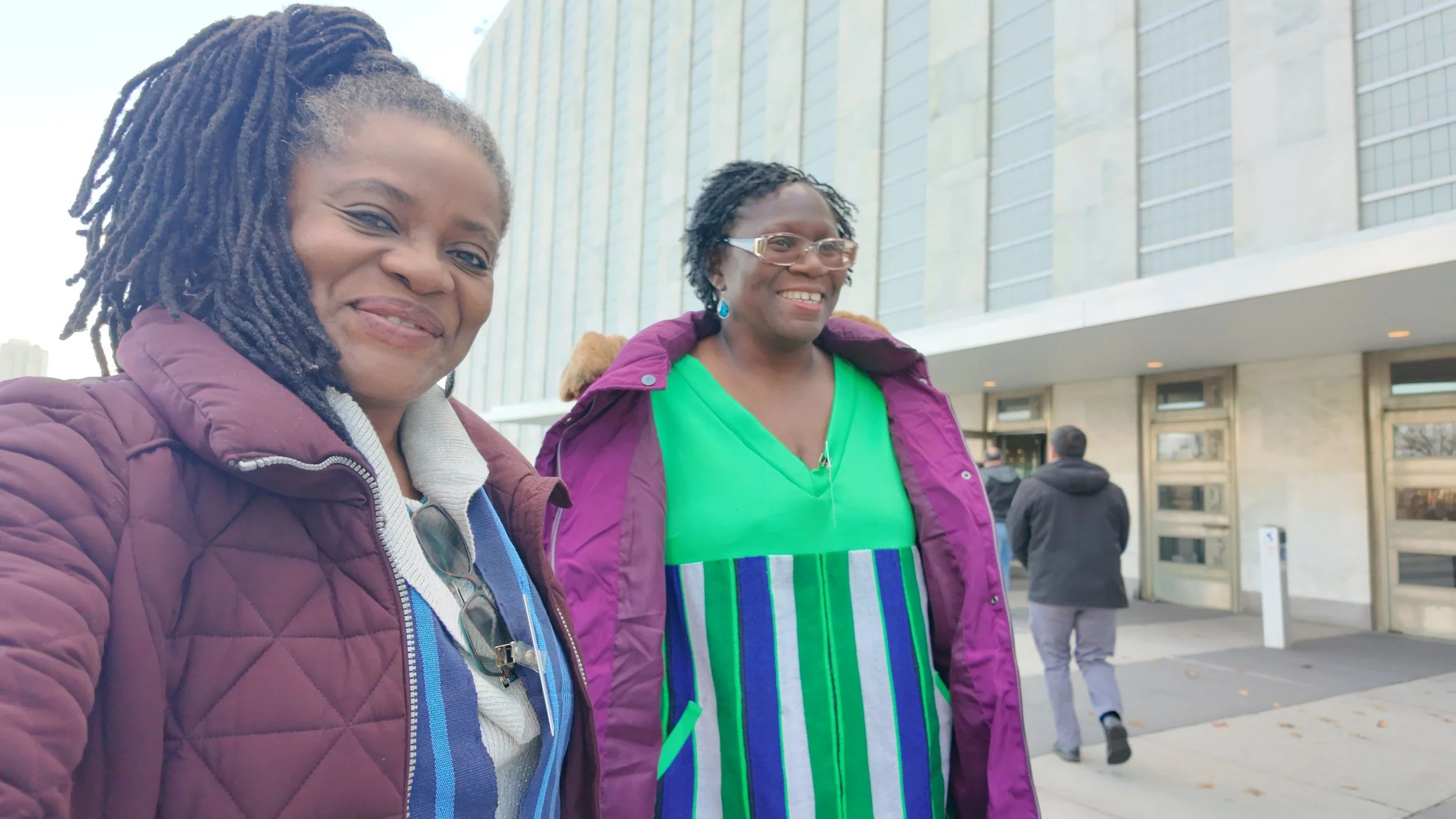
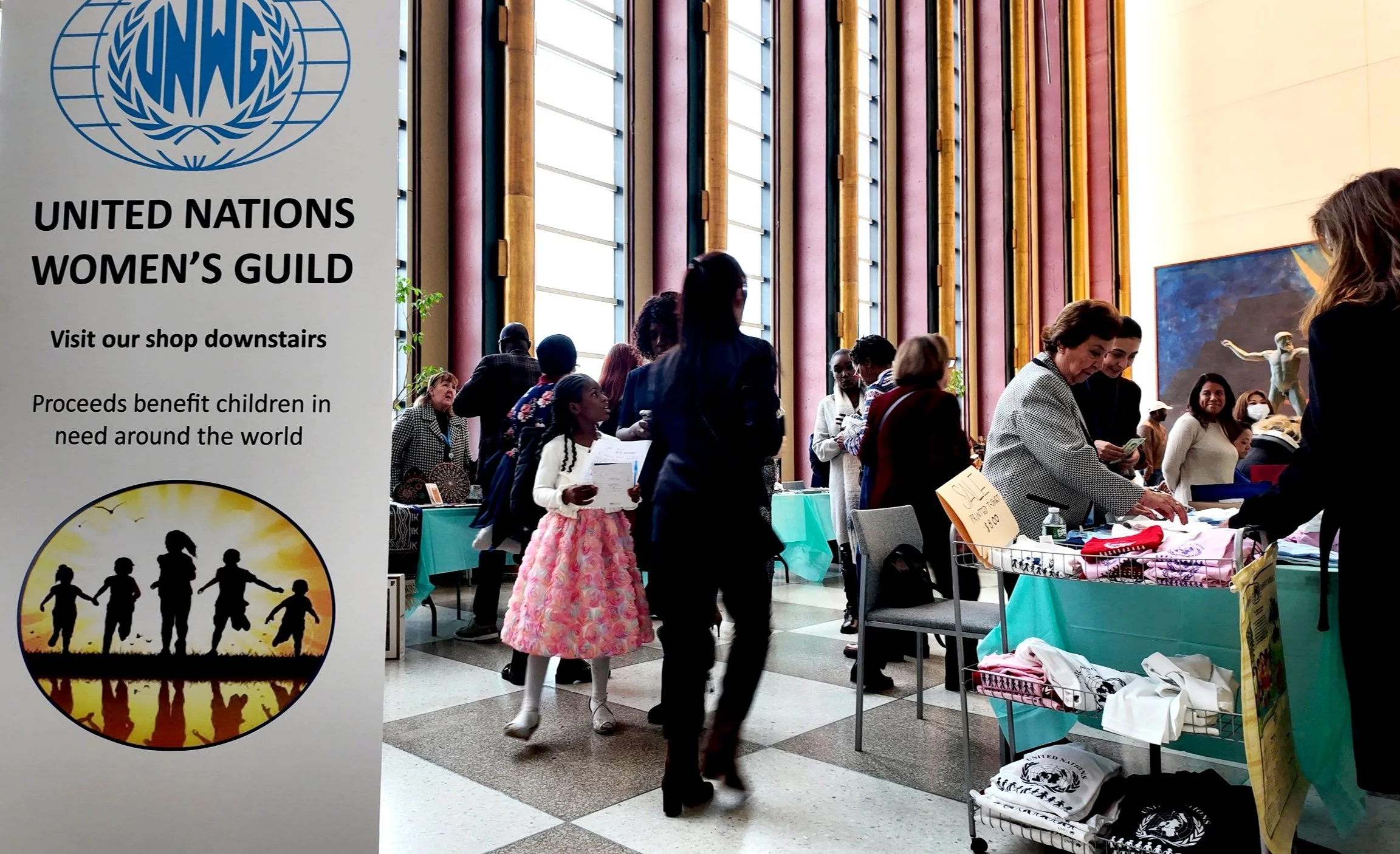




share this story

DECEMBER 9 | Special Screening of the Award-Winning Film MEDIHA
MEDIHA is the story of one girl’s fight to find her missing family members, revealing the strength and determination of a young survivor as she reclaims her voice and future. From executive producer Emma Thompson, this award-winning film from Hasan Oswald is an incredible story of resilience.


Please join us for this film screening and discussion hosted by
The United Nations Association of New YorkMediha
Hasan Oswald
Director and Producer
Mediha Alhamad
Main Participant and CinematographerModerated by
Susanna Petrin
Journalist____
Monday | 9 December 2024 | 6:30 to 8:30 p.m.
Admission:
UNA Members: $10
Non-Members: $15New Plaza Cinema @Macaulay Honors College
35 West 67 Street
New York, NY 100236:30 p.m. | Film Screening
8:00 p.m. | Q+AScreening begins promptly at 6:30 p.m. followed by a Q+A panel discussion
NOTE: the New Plaza Cinema is located inside Macaulay Honors College. Theater policy for attendees: there is no food/beverage, other than water, allowed in the screening room.
___
Register for this event here
MEDIHA is the story of one girl’s fight to find her missing family members, revealing the strength and determination of a young survivor as she reclaims her voice and future. From executive producer Emma Thompson, this award-winning film from Hasan Oswald is an incredible story of resilience.
Winner of the Grand Jury Prize | 2023 Doc NYC
Mediha, a 15-year-old Yazidi girl, roams the fields surrounding a refugee camp in Northern Iraq with a camera, making intimate, poignant video diaries. Captured by ISIS and sold into sex slavery at age 9, Mediha was traded among four different men, while her mother went missing, her younger brothers were also enslaved, and her entire community systematically murdered.
Director Hasan Oswald sensitively tracks the devastating aftermath of her escape and survival, empowering Mediha to share her experience through her own eyes and voice, as she seeks legal justice with the help of Yazidi rescuers and mounts a courageous search for her mother, and most of all, fighting for healing.
Mediha Alhamad was an integral part of the making of the documentary. She filmed herself and her family for three years, bringing the audience into the most authentic telling of her story, with a courage and determination beyond her years.
Emma Thompson, one of the film’s executive producers, said that she was “so honored to be a small part of this incredible film, which shines a light on forgotten voices and overlooked injustices. From the earliest versions I watched, I could see how gracefully and empathetically made the film was.”
Selected for many international film festivals, Mediha went on to win many Grand Jury as well as Audience Award prizes, including at the DOC NYC Festival.
We invite you to attend our special screening of this powerful film, when we will be honored to have both Hasan Oswald and Mediha Ibrahim Alhamad, the film’s director and subject, present after the film for an interaction with the audience. The conversation will be moderated by journalist Susanna Petrin.
Press Release - Coalition Urges Biden Administration to Grant TPS to Nigeria Before End of Term
WASHINGTON, DC —On November 18, 2023, a coalition of organizations advocating for immigration relief for Nigeria met with representatives from the Department of Homeland Security (DHS), the U.S. State Department, U.S. Citizenship and Immigration Services (USCIS), and other federal agencies. The coalition, which includes the Nigerian Center, Nigerian American Lawyers Association, Amnesty International, and The ONE Campaign, called on the Biden administration to designate Nigeria for Temporary Protected Status (TPS) and Special Student Relief (SSR) before the administration’s term concludes.

FOR IMMEDIATE RELEASE
November 19, 2024
Coalition Urges Biden Administration to Grant Temporary Protected Status (TPS) & Special Student Relief (SSR) to Nigeria Before End of Term
WASHINGTON, DC —On November 18, 2023, a coalition of organizations advocating for immigration relief for Nigeria met with representatives from the Department of Homeland Security (DHS), the U.S. State Department, U.S. Citizenship and Immigration Services (USCIS), and other federal agencies. The coalition, which includes the Nigerian Center, Nigerian American Lawyers Association, Amnesty International, and The ONE Campaign, called on the Biden administration to designate Nigeria for Temporary Protected Status (TPS) and Special Student Relief (SSR) before the administration’s term concludes.
During the engagement session, the lead of the TPS Coalition for Nigeria emphasized the urgency of the request:
“We urge the administration to grant Nigeria Special Student Relief (SSR) designation, or, if possible, Temporary Protected Status (TPS). We request that the Biden administration extend these critical protections to Nigerian nationals and students in the U.S. before its term concludes. As the United States transitions to a new administration, we recommend prioritizing this request as a policy recommendation for the incoming administration, particularly given its stated commitment to favoring merit-based immigration. This approach is especially relevant for individuals with skills in demand in the U.S. economy.”
said Gbenga Ogunjimi, Director of the Nigerian Center and lead of the TPS Coalition for Nigeria.
As of 2024, Nigeria faces one of the most challenging periods in its economic history, marked by surging inflation and severe currency devaluation. The Naira has depreciated drastically, with $1 USD now equivalent to 1,664 Naira. For context, in 2019, the exchange rate was approximately 360 Naira per USD. This represents a staggering 362.2% devaluation in five years, causing an unprecedented loss of purchasing power.
“This sharp decline has severely impacted families sending remittances to students in the U.S., rendering them unable to afford tuition, housing, and basic necessities. These hardships are why, in April of this year, a coalition of over 50 immigrant rights, human rights, faith-based, and community organizations petitioned the Biden administration to designate Nigeria for Special Student Relief (SSR),”
said Nkechi Ilechie, Policy Director of the Nigerian Center and co-lead of the TPS Coalition for Nigeria.
Individuals seeking immigration assistance are encouraged to contact the Nigerian Center online or via phone at 202-330-0352.
About the Nigerian Center
The Nigerian Center is the first immigrant and cultural center for the Nigerian diaspora. Based in Washington, D.C., the Nigerian Center provides social justice opportunities, culturally sensitive transition programs, and support for newly arrived immigrants to achieve self-sufficiency. While the center primarily serves the Nigerian American community, it is dedicated to supporting all immigrant communities in the United States.
###

DELA Premieres at Spain's International Festival of Art Documentaries
A "powerful" biographical documentary about one of the world's most celebrated artists El Anatsui, is nominated for the Dart International Award, and will premiere in Barcelona, Spain on November 30, 2024 at the 8th edition of the Art-focused DART festival.

“DELA” premieres in Spain
A "powerful" biographical documentary about one of the world's most celebrated artists El Anatsui, is nominated for the Dart International Award, and will premiere in Barcelona, Spain on November 30, 2024 at the 8th edition of the Art-focused DART festival.
DART FESTIVAL 2024
November 27 -Dec 4, 2024


Dart is the meeting point between cinema and art in Spain. It is the first documentary film festival dedicated to contemporary art whose main objective is to intertwine culture and knowledge with the general public, and it does so through documentaries on photography, art curatorship, painting, performance, architecture, artistic movements and, in general, on contemporary art, paying special attention to artists, their creative processes and the stories behind their work.
DELA: The Making of El Anatsui will debut alongside other art films such as: I Am Martin Parr, Depot – Reflecting Boijmans, Artefacto 71, Joaquín Torres Garcia. PAX IN LUCEM, Arte Povera, Notes For History, Jean Cocteau, FRIDA, Jeff Koons, A Private Portrait, El Nombrador de Plantas: Abel Rodriguez, Robert Rauschenberg – Taking Venice, The Pilgrimage of Gilbert and George, Elements of a Journey: Antoni Tàpies, Tàpies, el joc de saber mirar, György Kepes. Interthinking Art + Science, Dahomey, The Art of Making It, Acció>Cinema: Renzo Martens I CATPC, The Wisdom of Wonder, Eugènia Balcells Once and Again, Lolo & Sosaku. The Western Archive, Laie Course: Art and Eroticism – A Journey from Jeff Koons to Classical Art, Laie Laboratory: A Glimpse into the Future of Art Documentaries – Video Games, Androids, and Twin Towers.
SPAIN PREMIERE
DELA: The Making of El Anatsui
A brief Q+A with the films director, Oyiza Adaba will follow the screening on November 30, 2024.
Date: Saturday, Nov 30, 2024
Time: 6:30 p.m.
Venue: Cinemes Girona - Carrer de Girona, 175, L'Eixample. BARCELONA
Follow the journey
share this story

Bronx Council on the Arts Community Engagement
Since its founding, BCA has been committed to offering direct services and funding to systematically underresourced and underrepresented groups - artists of color, women, veterans, and the LGBTQ+ community, among others. This legacy of sharing space, connecting, and building brought the community together on November 8, 2024
by Oyiza Adaba

Event Flyer
Event
Artsist Engage - Get Together
Since its founding, BCA has been committed to offering direct services and funding to systematically underresourced and underrepresented groups - artists of color, women, veterans, and the LGBTQ+ community, among others. This legacy of sharing space, connecting, and building brought the community together on November 8, 2024
With drinks, music, light refreshments to go, the Bronx Council on the Arts (BCA) hosted a night of connection and reflection at their East Tremont location in the Bronx, New York.
In attendance were artists, staff, and community leaders such as Elena Martínez (Co-Artistic Director, Bronx Music Heritage Center) and Daniel Freeman (Director, Inspiration Point, and Chanelle Aponte Pearson, BCA Programs Manager, who shared experiences and community initiatives.
Photos by Africa-Related


share this story
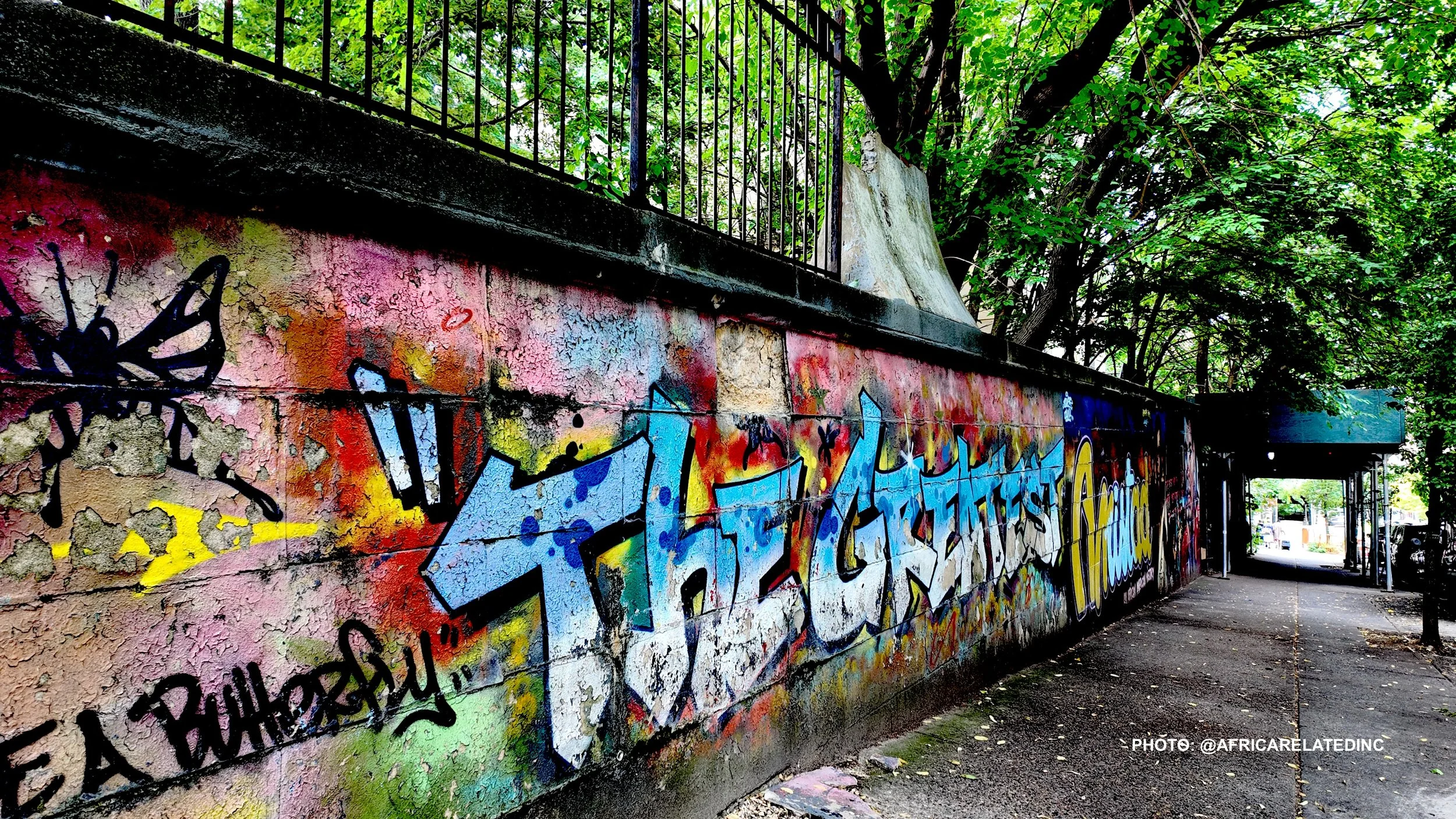
The South Bronx Inspires BIG TIME! Album Cover
Three artistic figures with an intricate historical tie to the South Bronx, seemingly come together on a project targeted at celebrating a borough that is home to global talents and trends. Learn more about André Trenier, Andrew Freedman and Words by MOE.
by Oyiza Adaba

The 2024 Album Cover: BIG TIME! Words By MOE that brought three South Bronx fixtures together.
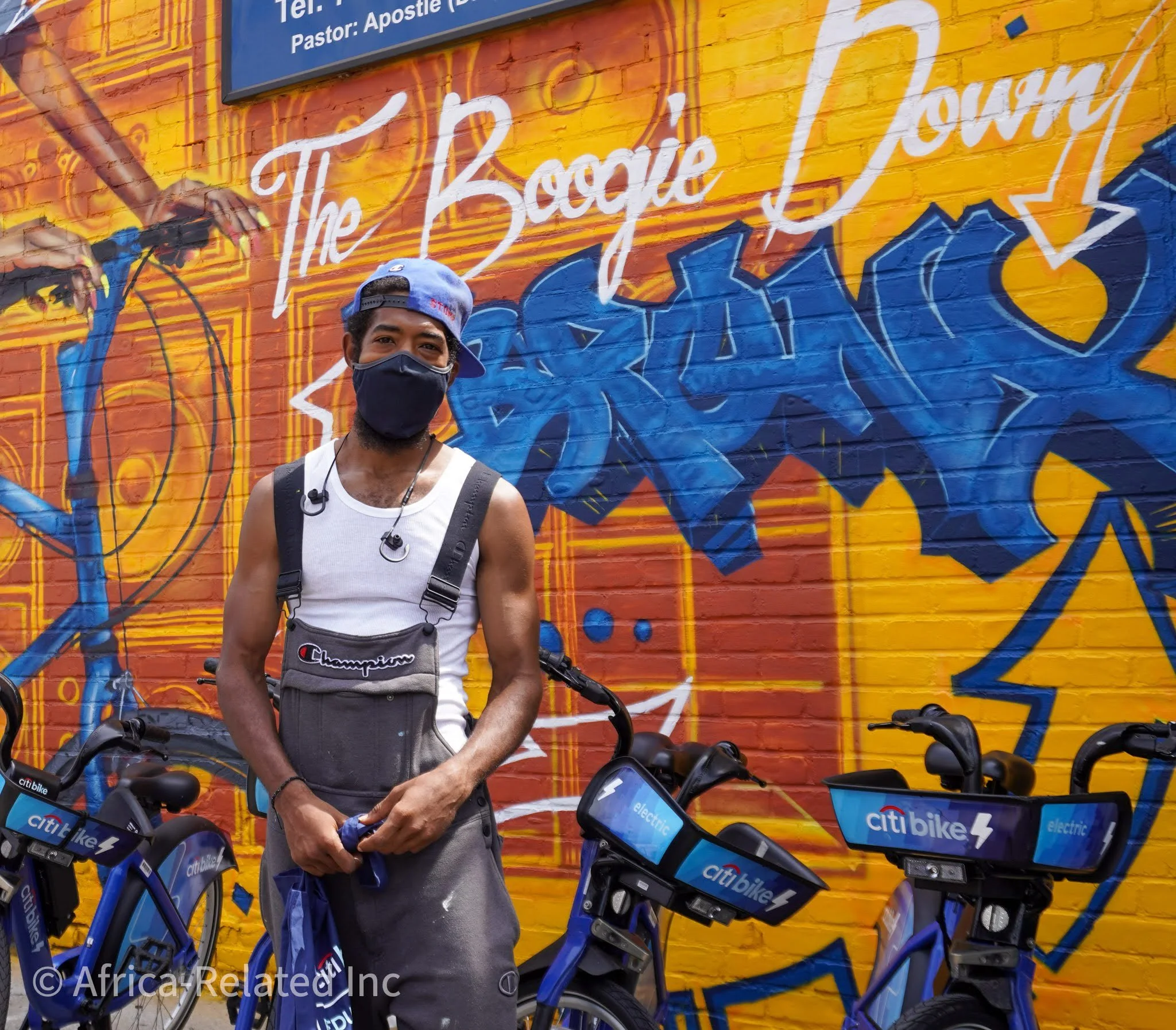

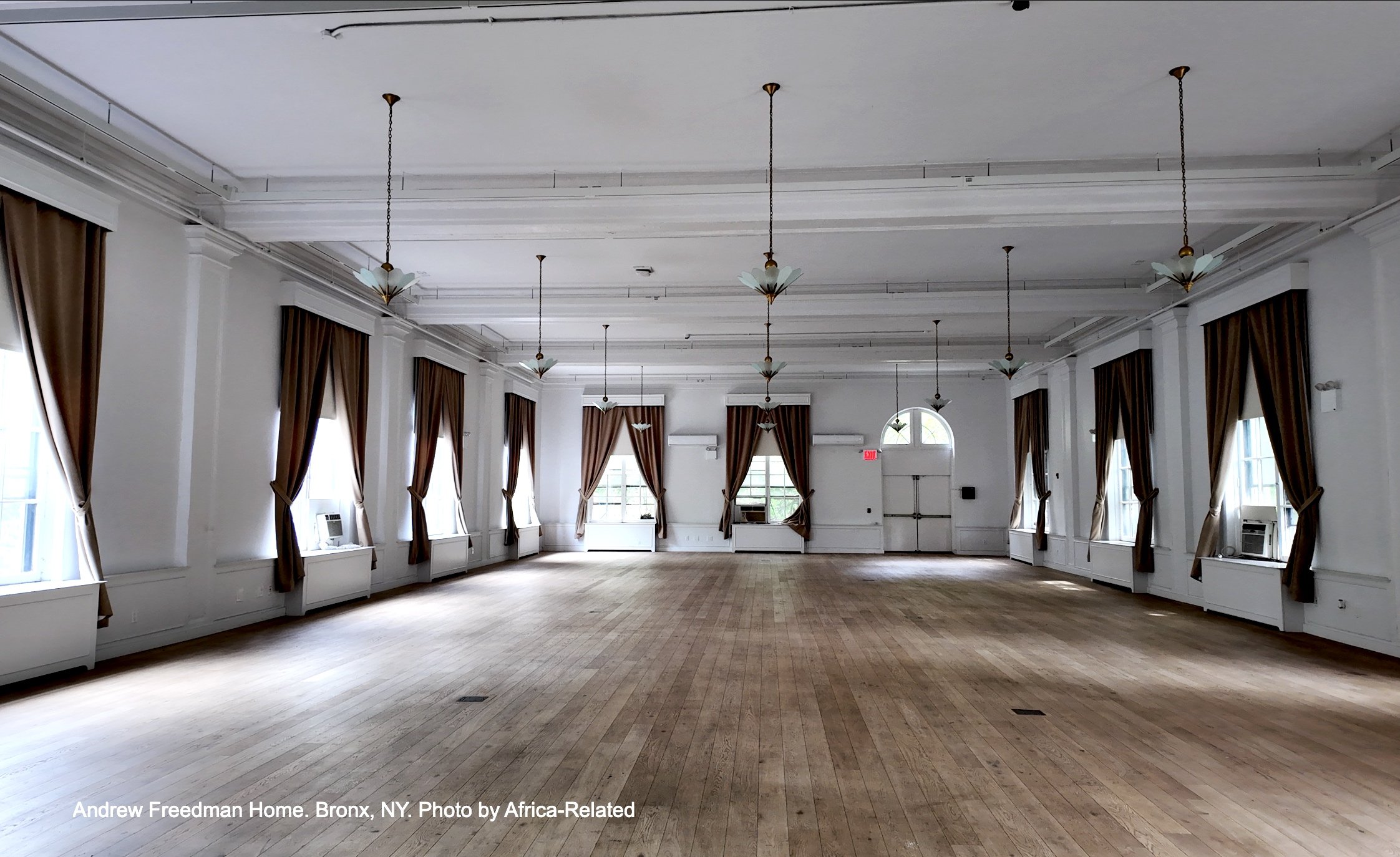
Three artistic figures with an intricate historical tie to the South Bronx, seemingly come together on a project targeted at celebrating a borough that is home to global talents and trends. Learn more about André Trenier, Andrew Freedman and Words by MOE.
it’s worth the read
““I have traveled all over the world painting and competing in International Art Competitions and made a lot of friends. I love to see new places, meet new people, and learn new things. Let’s combine my talent with your vision and CREATE SOMETHING!” ”
BIG TIME! Inspiration Behind the Album Cover
The inspiration for the debut album cover for Spoken Word artiste Words By MOE, comes from the South Bronx, specifically a mural painted by graffiti artist and muralist, André Trenier.
The mural is located at The Andrew Freedman home, a historic site and designated New York City landmark located on the Grand Concourse in the South Bronx. It is not lost on us that the location is known for its musical history and graffiti art.
Muhammad Ali mural by André Trenier at Andrew Freedman Home in the South Bronx, NY. Photo by Africa-Related
The mural features significant historical and cultural elements, including Muhammad Ali, his butterflies and bees with a positive "wake up" call to transforming dreams into reality. It also has The Amistad painting with Senbge Pieh a.k.a "Jospeh Cinque", the slave sold in 1839, who headed the revolt on board the Amistad ship. Later, he and others would be fareed to return to his native Sierra Leone.
The Historical Significance of the Andrew Freedman Home
Imagine being a self-made millionaire with a morbid fear of losing your wealth in an instant. This is what drove Andrew Freedman to create a charitable trust to build a retirement home in 1924, for older individuals who had formerly been of good financial circumstances.
At its peak, the home could accommodate about 130 residents, housing 130 residents at a time in comfortable quarters that had Italian-tiled bathrooms. The tenants came mostly from victims of the Wall Street crash and World War II veterans.
The Andrew Freedman home has four-stories with formal English gardens and well-manicured lawns, public rooms with fireplaces and rugs, and each private residence had white marble shower stalls.
In 1992, the Andrew Freedman home was designated as a New York City landmark. Today it serves as a hub for artists, organizations, residencies, exhibitions, daycare center and event space, with works that address themes like immigration and memory.
Historical Ties
André Trenier and Words by Moe are both South Bronx residents, whose works are relevant to their immediate communities.
André Trenier grew up in the Bronx where he” lived to create”, and began painting murals in 2003. Since 2013 André has painted several dozen murals in the Bronx and beyond, including a 150- foot wall on the side of Spring Bank on 167 St and Gerard Avenue, commissioned by the Bronx Museum. He has depicted baseball legends like Jackie Robinson (Babe Ruth), Derek Jeter, Roberto Clemente, Joe DiMaggio and Thurman Munson. His renderings of the great Muhammad Ali, his portrait of rapper Sean Price, Citibike mural at Word of Life In’l have all garnered acclaim.
Words By Moe is a South Bronx artiste with West African roots. He writes on various subjects dealing with grace, truth and love. His 2024 debut album Big Time! offers original writings with an easy flow delivery of poignant and inspirational messages that are relevant to today’s living. As his work takes root, he continues to attract listeners and readers from different corners of the globe.
The artistic contributions of these three who have the South Bronx in common, highlights the significance of conversations that bridges the gap between historical figures like Andrew Freedman and contemporary artists like André Trenier and Words by Moe. It celebrates their overall contributions to the history, music, culture and art scene.
PHOTOS BY Africa-Related